
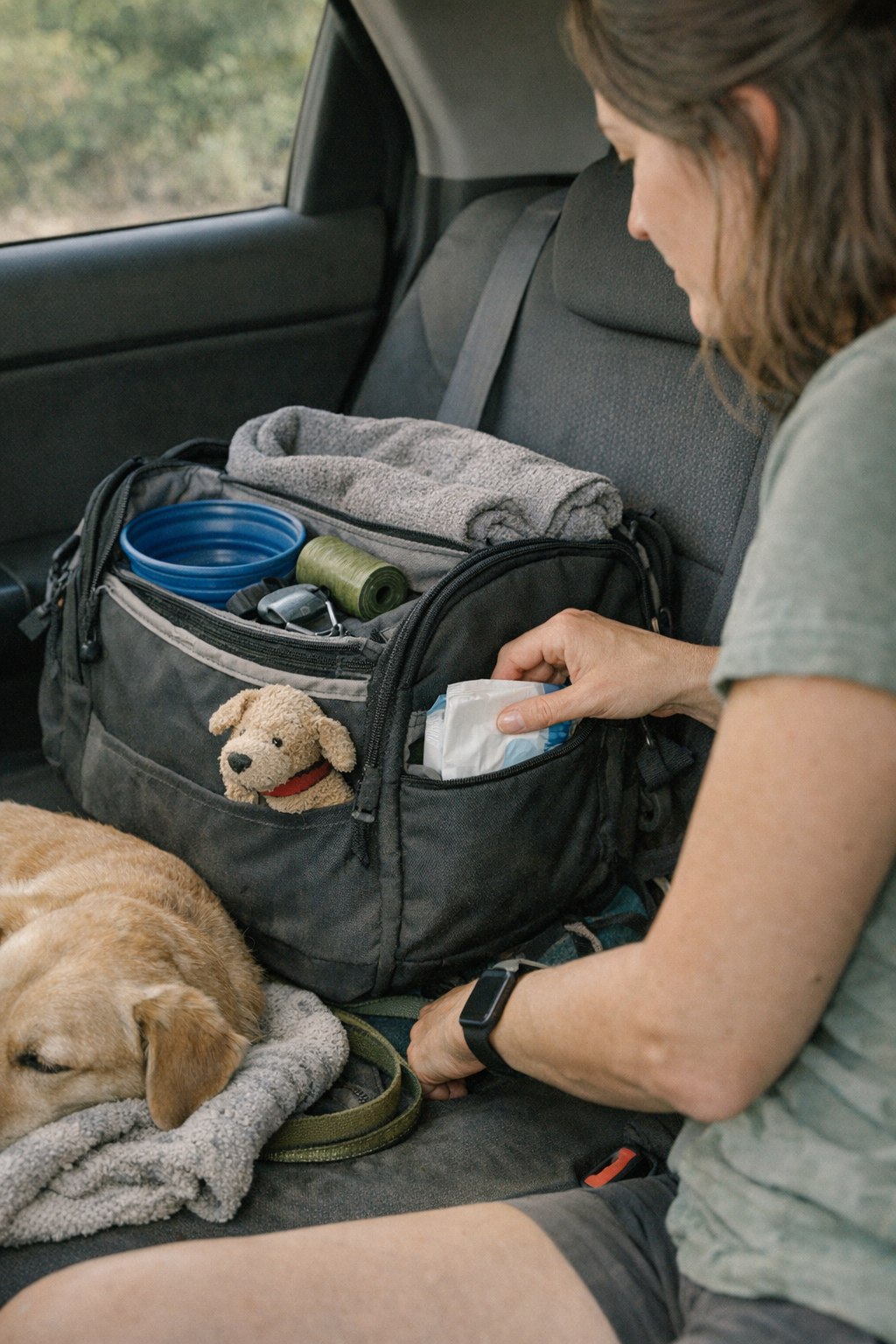
Most pet travel bags look organized—until the trip actually starts. The zipper glides, every item has its place, and for the first two minutes you believe this time will be smoother. But the first muddy rest stop or sudden detour snaps that illusion fast. Need a wipe? Now you’re balancing a shifting pet while digging under toys and blankets, hunting for something packed “logically” but now just out of reach. Reach for the spare bowl, and a leash coil unspools onto the floor. Your pet—restless, waiting—watches every fumbled move, and each second spent shuffling your own setup turns a settled moment into rising tension.
The Hidden Trouble with “Organized” Bags
Calm from the front seat, chaos by the third stop—most pet travelers know that pattern all too well. A bag that sits neatly in the rearview becomes a scramble the instant something small is needed. Too often, “organized” really means layered, with quick-cleanup supplies trapped below comfort items, or a treat pouch wedged behind blankets meant for later. Every grab becomes:
- Wipes buried under extra bowls
- Comfort toys blocking access to cleanup bags
- “Quick-access” pockets blocked by tangled leashes or folded blankets
The tightest packing usually causes the most disruption—because real travel means reaching, reshuffling, and re-stowing in motion.
Repeated Stops Turn Small Problems Into Real Friction
It’s the routine, not the one-off disaster, that grinds you down: a quick errand that turns into three, or an ordinary travel day with repeated in-and-out. After the first stop, it’s just a minor delay. By the third, you feel tension rising, bracing for another round of unpacking just to grab a wipe or re-find the toy that’s meant to calm your pet but keeps getting lost in the shuffle. Your pet senses it too—eyes up, movement on edge, waiting as the “organized” system begins to fight back against both of you. Repeated friction steals momentum, and every restart feels heavier than it should.
One Familiar Scene: The Back Seat Reset
The car pulls over, your pet settles, sunlight warm on their side. Now, try to reach that wipe before muddy paws hit the seat—a zipper jams on a leash, the bowl tips out, and the blanket for later naps now blocks your pocket. Your pet stirs, head up, calm slipping away with every second spent sorting the “ready” kit. By the end of a day full of these resets, even the simplest break becomes a hassle instead of relief.
The Difference Between Looking Ready and Feeling Ready
An organized pet-travel setup isn’t measured by how perfect it looks before you leave—it’s judged by what happens when routines break down. The toughest pressure points appear where cleanup gear and comfort items overlap, or where pet and owner essentials share a pocket “to save space” but just end up merging into a mess. Quick-access pockets stuffed with too many “essentials” only guarantee that the one you need is impossible to spot when you need it. Function disappears under the polite surface of packed order.
Small Adjustments That Actually Help
One pocket swap can reverse the whole trip’s direction. Moving wipes and the go-to toy into a dedicated, slim side pouch does more than any amount of pre-trip shuffling. Now, at the park or outside the vet, you grab what you need in one reach—no bowl to move, no leash to untangle, no seat-edge chaos. That adjustment means:
- Single-motion access—grab and go, without item pileups
- Comfort and cleanup can be handled instantly, without sumo-wrestling the rest of the kit
- Pet settles sooner, and every restart feels lighter
It’s rarely about adding more: it’s about tuning structure to repeated habits, addressing friction points that only show up after real use, not just on packing day.
Real Use Scenarios: Where Smooth Access Proves Its Value
The test moments aren’t dramatic—they’re the basics you repeat every trip:
- Leash break: Wipes should be grab-ready, not hidden under a stray bowl yet again
- After the vet: The anxiety-soothing toy shouldn’t require a five-item dig through waste bags and blankets
- Snack or water handoff: No more unpacking hydration just to find that one treat, with your pet’s focus dissolving each time you delay
These aren’t rare. Every blocked reach, every repeated reshuffle leaves both you and your pet more unsettled. When the structure matches the actual flow of travel—one hand, one motion, one calm restart—the difference isn’t smoother packing, but fewer small failures building up. You fix the hidden interruptions, not just the visible mess.
Why “Looks Organized” Isn’t the Same as “Works for Travel”
An impressive-looking setup can ruin a trip by hiding frequent-use items, demanding slow, silent repacks at every stop, or forcing awkward tradeoffs between order and speed. The real payoff comes when you stop noticing your bag—access gets quiet, resets are near-instant, comfort stays in reach, and you spend more time moving than rearranging. It’s not about a perfect bag, but about one that finally stops stealing your time and momentum.
Not Perfect, Just Better
Every pet trip has rough edges, but you can shave off the worst friction without expecting perfection. The best setups earn their keep not through surface neatness but by letting the repeated problems fade—fewer panicky resets, fewer restless pets waiting, and less of your energy spent managing a bag that’s supposed to help. Real improvement means you spend less time thinking about your kit, because the little annoyances finally go quiet.
See how PawGoTravel setups can make your next trip easier to handle, not just better organized: http://www.pawgotravel.myshopify.com