Category: Tools & Workshop

  • Why Functional Workshop Storage Beats Perfect-Looking Setups Every Time

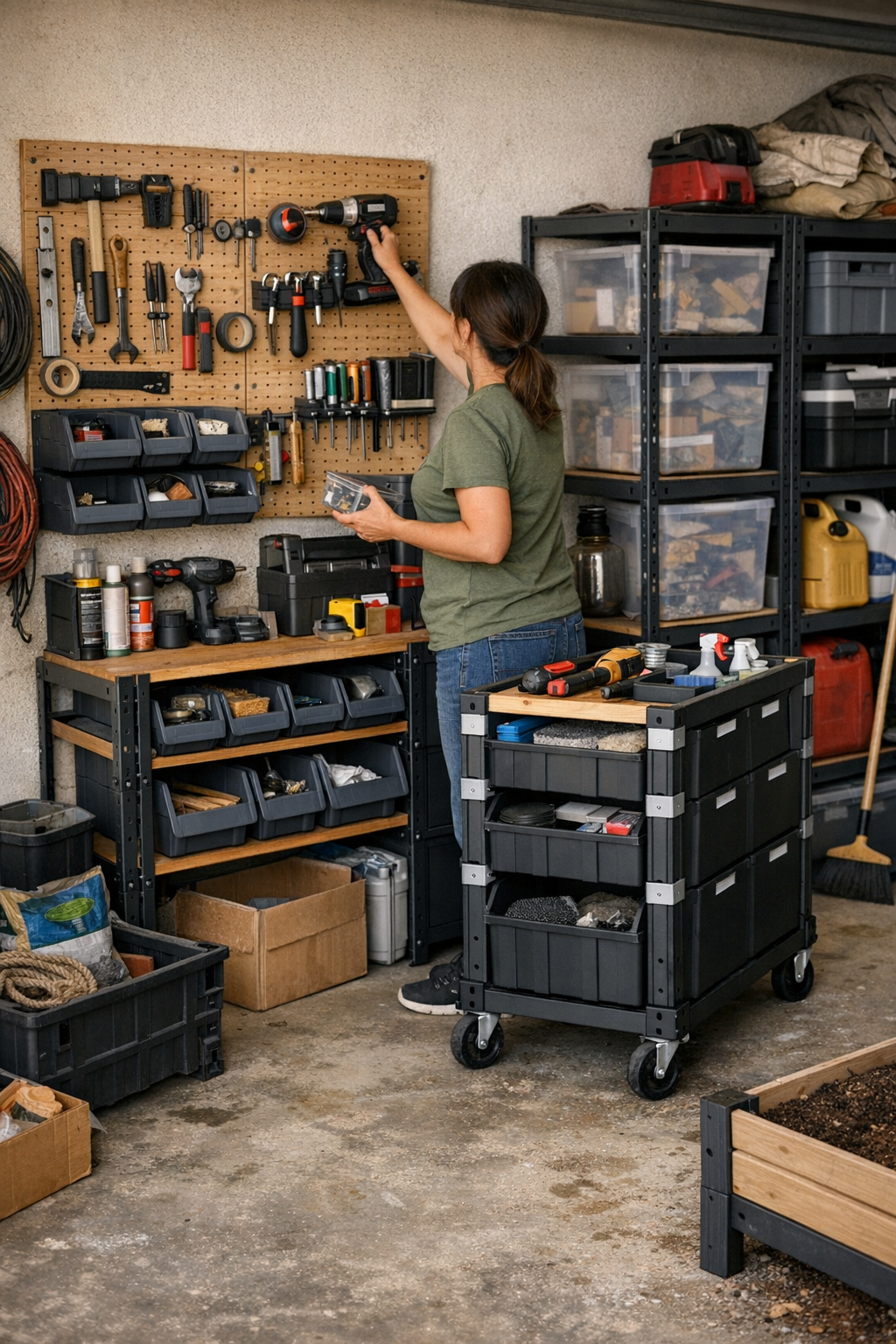
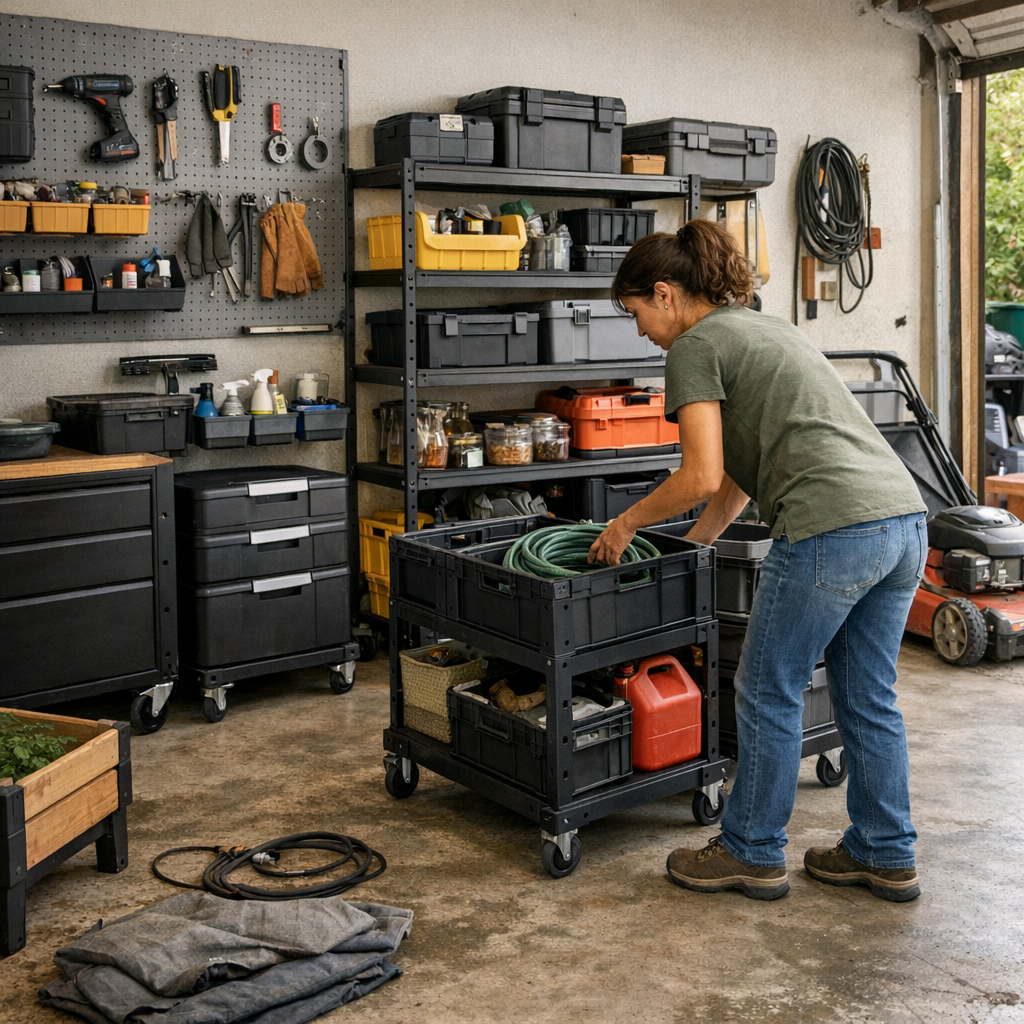
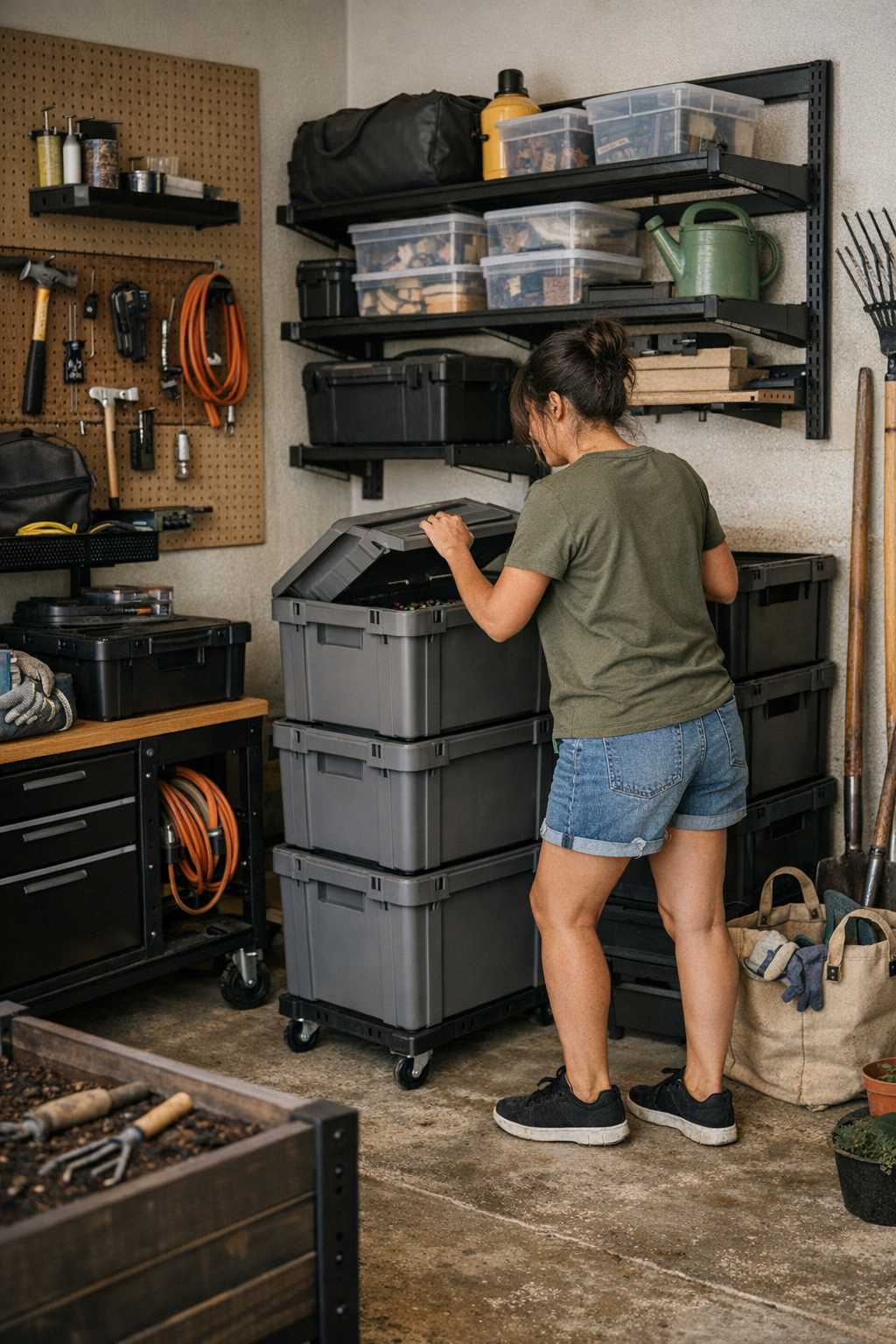
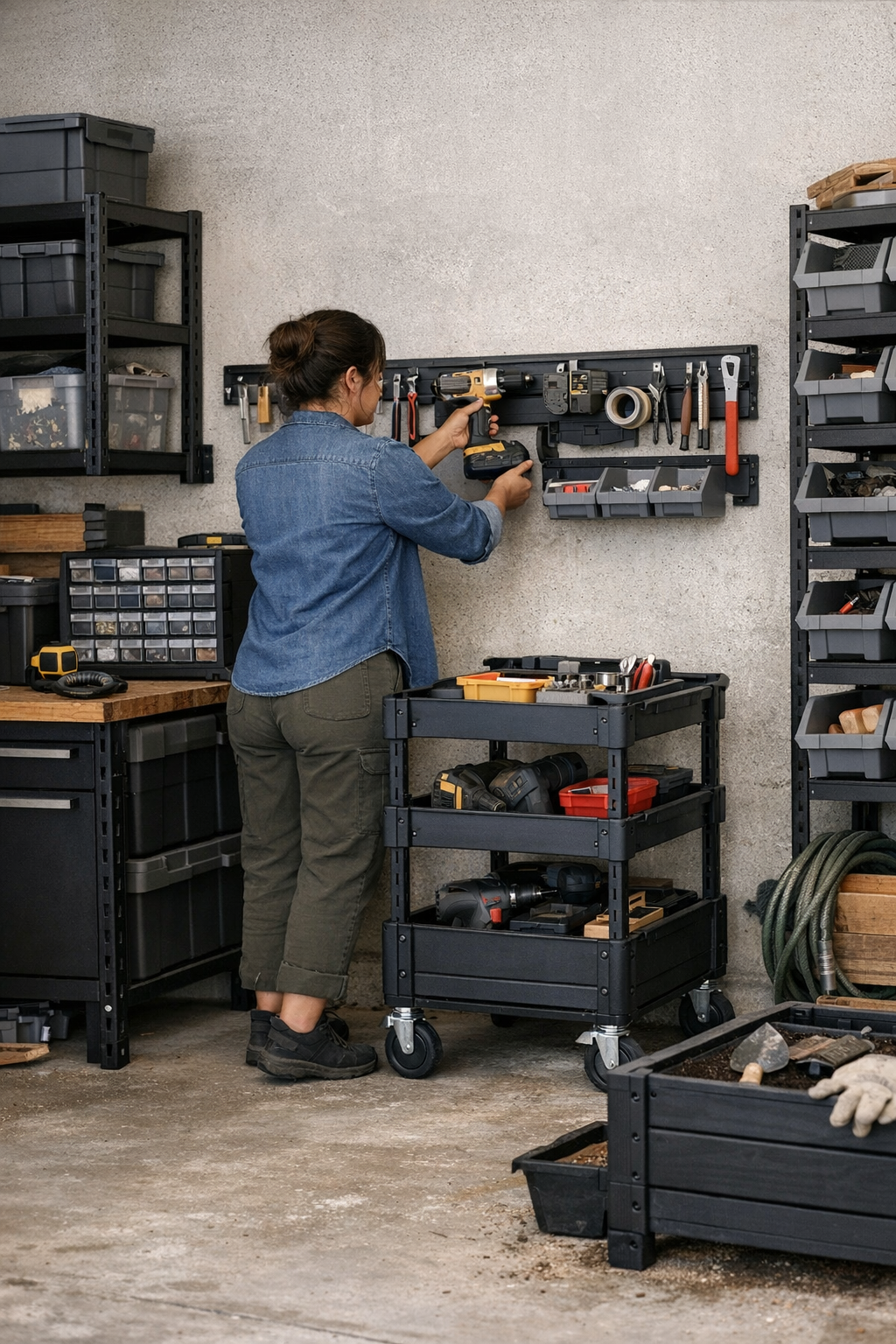
    There’s a hard reality to storage: it’s not about how organized it looks on day one—it’s whether you can move, grab, and put things away with zero friction after a month of actual use. Anyone who’s had to muscle the same rolling cart aside for the fifth time just so you can cross the room, or just left a tool on the bench instead of trekking it back to an awkward bin, knows that it takes exactly one week for “perfect” setups to become daily annoyances. In garages, workshops, and those utility corners where every square foot matters, the gap between tidy plans and practical routines is where clutter sneaks back in. Lasting order comes from a setup that survives real, repeating habits—not showroom symmetry.

    Where Picture-Perfect Setups Start Failing

    On installation day, it all looks promising: neat shelves, crisp labels, carts lined up like puzzle pieces. But by the second week, the trouble spots reveal themselves. That rolling tool cart that seemed like a clever anchor now blocks the walkway, needing to be shifted, nudged, and realigned every time you want to pass. A shelf turns into a dumping ground for the “deal with it later” pile—overflow that didn’t quite fit the original bins. Returning a handful of fasteners or a clamp means contorting around the same shelf corner over and over, and there’s always one area that somehow becomes the catch-all for whatever’s in your hands near quitting time.

    You don’t notice order—you notice bottlenecks. Very quickly, that layout you admired feels more like a puzzle you can’t quite solve: movement is pinched, traffic lanes zigzag, resets creep from two minutes to ten, and you realize your system is getting in the way, not smoothing routines.

    How Routine Grinds Up Even Logical Layouts

    The real test isn’t first impressions, but daily rituals—the tool runs, bench resets, and the 30-second cleanup as you close shop. Here’s what keeps happening:

    • Paths get choked. The cart that tucks in nicely empty becomes a blockade when loaded. Each reset means a tug-of-war—pull, pivot, push back. Enough hassle, and it becomes a half-hour sinkhole.
    • The overflow shelf never empties out. No matter how logical your bin labeling, you end up stashing things wherever there’s a gap. The stuff you need most starts showing up in the least intentional places.
    • Dead corners don’t come to life. Bins installed “just to use space” along the wall or near a cabinet edge often sit empty or make you stretch, twist, or double back—so they get ignored and settle into being dead zones.

    The rhythm is always the same: resets slow down, piles gather, and instead of “using” the system, you’re working around it. The fault isn’t messiness—it’s a layout that prioritized surface-level neatness over frictionless flow.

    What Real Use Looks Like on the Floor

    Give it two weeks and weak points announce themselves. In one garage, boxes made laps from floor to cart and back, with every reset slowed by a cart jammed diagonally into a corner. It became routine to hesitate before returning something—each move felt like triggering a minor rearrangement. Watch two people try to put away tools at once and you see the pinch: both reach for items crammed near the same crowded shelf, sidestepping around each other in a nervous shuffle. The gleaming setup quickly becomes a collection of tiny, persistent obstacles that strain every routine.

    Tweaks that Actually Remove Roadblocks

    The smallest change can erase daily irritation. In one shop, simply rotating a cart so it aligned along the bench—rather than sticking out—turned a squeeze zone into a clear lane. Moving a shelf just twelve inches closer to the main work area, or relocating a bin from an awkward edge to eye-level near the bench, can be the difference between an automatic return and a tool abandoned “just for now.” The difference isn’t abstract—it’s immediate: hands stop catching, feet move freely, and resets shrink from a dreaded job to a two-minute sweep.

    Real improvement means you stop planning your moves around a bad footprint. Suddenly, corners open up, traffic flows, and the layout bends to your habits—instead of demanding you adjust for it.

    Why Reshuffling Keeps Happening

    Beneath a clean surface, chronic clutter often signals setup friction. Even if everything is labeled:

    • Mini-piles reappear each week. Items land in limbo not because you’re careless, but because putting them away is awkward or out of sync with how you work.
    • Furniture is the bottleneck. You find yourself inching sideways, twisting to reach a bin, or giving up and dropping items at the first open spot—because moving a cart or shelf is just too much of a pain.
    • The same zones always fill up first. That’s your layout sending a clear signal: it’s not following your routine, it’s interrupting it.

    Prioritize Flow—Not Just Storage Density

    The instinct to fill every square inch—stuff bins under benches, stack up every wall—often backfires. If clearing a path or returning tools turns into a maze of obstacles, you waste movement every day and reset frustration levels skyrocket. Spaces crammed to the limit turn your most valuable areas into high-traffic headaches, not efficient work zones.

    The goal isn’t max storage. It’s an environment you can move through, clean up, and adapt without grinding gears—no matter how many resets or quick reorgs you have to do.

    The Lasting Setup: Fix, Nudge, and Keep Moving

    No system is permanent. The workshops and garages that work best are those you fine-tune as real-life habits make trouble spots obvious. Don’t hesitate to:

    • Relocate a cart that gums up movement, even if it throws off your initial design.
    • Shift shelves or bins closer to where tools naturally pile up—not where you wish they belonged.
    • Reclaim dead corners by freeing up wall space, or simply removing what’s always in the way.

    Every micro-tweak that eliminates one repeated bottleneck adds up. Spaces don’t just look more controlled—they finally act friction-free. By chasing a routine-first approach, your layout becomes a living system that stays tidy because it’s effortless to use, not just nice to look at.

    One Small Principle: Make Each Zone Serve the Real Routine

    When you see the same shelf or cart gather a certain kind of clutter again and again, don’t work harder—move it, swap it, or redefine its job. Let your most-used tools migrate ever closer to your work zone. Bins or hooks that feel just out of reach? Mount them where your hand naturally goes. These small, consistent adjustments are the secret to a setup that sticks—and that you actually enjoy coming back to, reset after reset.

    If you’re slogging through daily reshuffles, blocked passages, or setups that look organized but never actually work smoothly, you’re facing the same battle as every real garage and workshop. Durability isn’t about a “perfect” first plan—it’s about layouts that adapt to you, not the other way around. For storage systems that actually hold up through weeks (and years) of real use, visit StackNest.

  • Choosing Between Shelf Dividers and Bins for Lasting Closet Organization

    You don’t realize a closet system is failing in a single, dramatic moment—it creeps up in the everyday scramble. One morning you reach into what should be a neat stack of shirts, but half the pile slumps toward your hand. Next, you grab a bin for leggings and end up sifting through yesterday’s tee, stray socks, and a forgotten tank, all clumped together near the bottom. That perfectly organized look from last month? Gone. The closet isn’t a disaster, but it’s losing ground—friction returns, slow and steady, every time you try to just get ready and go.

    Where Closet “Neatness” Fades: The Pressure of Everyday Use

    It’s easy to feel victorious on day one—dividers fastened, bins perfectly labeled, stacks standing tall. The illusion holds until you actually live with it. Each grab, slide, or quick reshuffle tests the setup in ways you didn’t anticipate.

    • Pull one workout shirt, and two others threaten to tumble after it.
    • Reach behind a stack for your favorite sweater, and the whole row leans dangerously.
    • Hunt for a small accessory and the bin’s careful order falls apart before lunch.

    A system that “looks organized” is different from one that feels easy when you’re rushing through a weekday morning. That difference worsens as the days roll by—and fresh order slides toward daily shuffle.

    Dividers vs. Bins: How Real Closets Push Back

    Shelf dividers and bins are the standard answers, and at first, both work. Dividers create clear, tidy lanes for jeans, tees, or sweatshirts. Bins gather up small items and hold what doesn’t stack.

    Why Dividers Don’t Stay Heroic

    • Stacks bow and tilt after just a few pulls—especially if you want something from the bottom or middle.
    • Dividers can’t stop a pile from sagging when you lean in for one buried piece.
    • Over time, clothes drift out of their assigned lanes—one bulky hoodie derails the whole row.

    The Bin “Catch-All” Trap

    • Deep bins hide anything at the bottom—out of sight, out of mind, out of reach.
    • Opaque or unlabeled bins force you to dig and mix, creating clutter under the surface.
    • Full bins actually compress and misshape softer pieces, making them harder to identify or retrieve.

    It’s not that these systems fail outright—they just start sliding back toward mess, one normal day at a time.

    What Real-World Friction Looks Like

    Picture a tense routine: you’re in a hurry, reaching for your go-to black tee. You nudge the divider aside just enough to pull it out, but two more shirts spill sideways. What should take seconds turns into an awkward pause, maybe an annoyed sigh, and a silent promise you’ll fix it this weekend. But “fixing” often means a full refold—lost time, again, just to get back to zero.

    Switch to bins and the issue shifts. You slide one out only to realize nothing is visible on top that you actually want. You dig, piece by piece, until the bin’s contents are jumbled and you stuff it all back in—now more mixed, less sorted, and far from the original tidy vision.

    When Systems Mix—And Clutter Creeps Back

    Most closets blend dividers and bins, but without clear zones, boundaries fade. Stacks migrate into bins, bins overflow onto shelves, and what was once a clear system gets blurred. Soon, socks wander into the shirt zone, jeans peek out from under scarves, and “category” becomes a memory. You spot the problem every time you hesitate before reaching—unsure if grabbing one piece will collapse the pile or trigger a five-minute search-and-rescue.

    If you’re constantly “fixing” a closet—resetting categories, pulling mixed items back to their zones—the system isn’t broken, but it isn’t working with your routine either. Instead, it’s adding micro-friction, slowing you down and amplifying clutter over time.

    How to Nudge Order Back in Place (Without Starting Over)

    More bins or dividers aren’t always the answer. The real win comes from blending what works, trimming what doesn’t, and adding one key trick: a buffer zone. Dedicate a foot of shelf space as your “landing strip.” It’s where the jeans you wore yesterday, today’s hoodie, or tomorrow’s workout gear can sit without crowding or collapsing everything else. This cushion means less pileup and fewer emergency resets—items cycle in and out without wrecking your main stacks.

    Small Shifts Worth Trying

    • Keep divider stacks shallow: limit to four or five per stack—enough to see and grab without sag.
    • Swap bulky bins for wide, shallow trays: socks, hats, and small essentials stay visible and at hand.
    • Label bins you can’t see into: even a simple tag prevents the “dig, mix, lose” cycle.
    • Edit shelf categories monthly: stash anything you haven’t used this season in another zone—space reappears quickly.

    Want one realistic improvement? Place a small, soft bin beside short stacks—not as a catch-all, but for those odd-sized or delicate pieces that topple a pile: scarves, a knit hat, or the heirloom sweater you never fold right. The main stacks last longer, the rhythm is smoother, and your closet behaves more like it was supposed to.

    What Functional Storage Feels Like—Day In, Day Out

    The version of “organized” you want isn’t posed or showroom-level perfect—it’s practical morning speed. You reach, grab, and move on, without the clatter of falling tees or the mystery of the lost glove. Adjusting and resetting stops feeling like a chore; quick tweaks keep everything steady. A stack might lean slightly, but you’re not refolding from scratch. A bin might need a five-second sort, not a full excavate.

    The friction eases, clutter stops spreading, and it’s clear—both visually and practically—what needs tweaking and what’s working. The storage adapts to you, not the other way around.

    You don’t have to pick bins over dividers, or vice versa. The real balance is a working mix—a system shaped for real mornings, fast resets, and fewer interruptions.

    ClosetWorks practical storage solutions

  • Why Livable Storage Layouts Outperform Neat Garage Setups Over Time

    Every garage and workshop knows this story: The day you finally finish installing shelves, lining up bins, and sliding in that last cart, your space looks like something from a catalog. For about six hours, it stays “done.” Then real life rolls in—the first time you reach for a tool or return from a garden project, those sharp storage lines reveal their flaws. You edge a rolling cart out, only to nudge it sideways for clearance. Reaching the toolbox means leaning around a cabinet door that’s always half-blocked by stacked bins. What felt like a win quickly unravels into a series of tiny workarounds. The room is “organized,” but using it is more work than it should be.

    When “Organized” Isn’t Actually Useable

    The problems sneak up in the middle of busy routines. One weekday afternoon, you go to stash the extension cord, but there’s no clear path—last weekend’s project cart is half in the way, backed up against bins blocking the shelf you need. You bump a tower of containers relocating one just to reach another. Putting items away at the end of the day becomes a two-step shuffle: move the overflow to clear the walkway, drop your tools, then put back what you moved in the first place.

    You start to notice the pattern every time you return from a project: the “tight” setup forces you into awkward reaches, forced sidesteps, or stacking odds and ends where they don’t quite belong. The logic that looked smart at rest makes every in-and-out reset a slow dance—tools linger on the bench, bags collect at the door, and the one open corner morphs into a silent disaster zone.

    Why Neat Isn’t Enough—The Friction Behind the Facade

    The frustration isn’t about clutter itself. It’s what the setup quietly steals: freedom of movement, predictable access, and a quick reset. Wall racks and cabinets flush with the drywall look sleek, but they can choke the walking path. Stacked bins feel efficient until you need the one at the bottom. Even mobile carts that “fit” the floor plan become obstacles—never gliding home without a nudge, never quite tucking away on the first try.

    • Walkways narrow to tightrope width, forcing awkward sideways steps and shoulder-checks
    • Bins need shifting before you even reach what they’re storing
    • Carts demand pivoting, pulling, pushing just to return them to a “parking spot”
    • Overflow—the inevitable extra tarp, unopened package, or random tool—settles in dead wall zones and corners, never really joining the system

    A layout that looks sharp at rest can become an obstacle course in motion. Routine use exposes every hidden choke point, turning basic storage into a low-key, high-frequency hassle.

    The Real Cost of Resetting—And Resetting Again

    Every setup that’s “efficient” in theory but awkward in use demands constant shifting. If taking out or returning items involves sliding three containers, rerouting a cart, or pushing through a pinched walkway, there’s no such thing as a quick reset. The bigger the routine—the more tools, lawn care, sports equipment, or seasonal gear moves in and out—the more this friction multiplies. Corners become holding zones. Wall space gets half-used, never really accessible. Each week, the setup feels a bit heavier to manage.

    What should be a two-minute reset—returning tools, clearing a path, restoring order—starts taking five, ten, fifteen minutes. Instead of efficiency, you breed congestion. Neatness turns into an obligation instead of a help. Over time, every return becomes a negotiation with the layout, quietly piling on frustration and making true order feel out of reach.

    The Shift: Designing for Movement, Not Just Storage

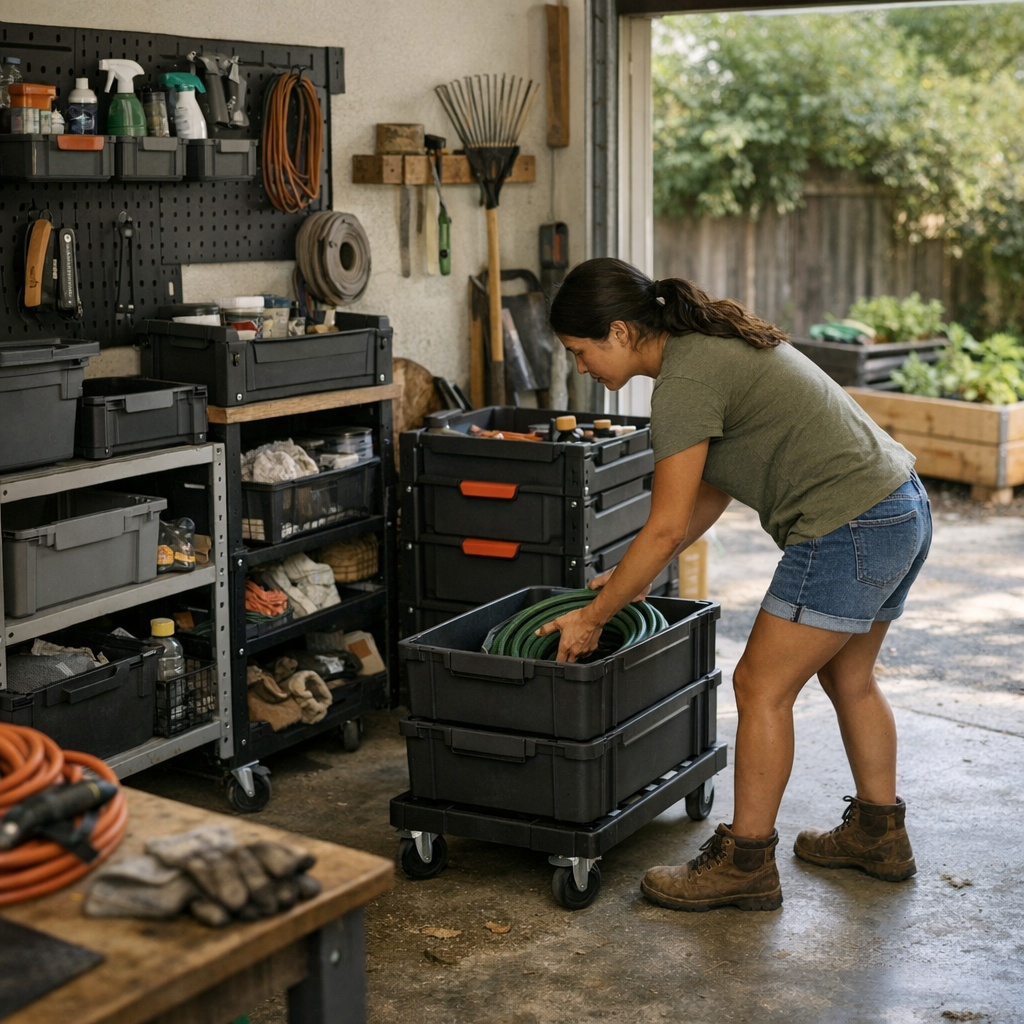
    Real breakthroughs don’t come from adding yet another shelf. They come from surrendering the fantasy of perfect density and making space for movement and return. After a string of resets that leave you sweating, you start carving a 12-inch margin clear along the paths you actually walk—no stacking “just one more” bin, no pushing carts up against critical shelves. Suddenly, the rolling cart slips in on the first attempt, instead of bouncing off the baseboard. Stowing that seasonal hose takes seconds, not a round of bin-Tetris. Overflow finds a place to land for triage, not for long-term limbo. There’s an immediate, lived-in ease to the space. It’s less about looking sharp and more about working right—reset after reset.

    How to Spot a Setup That’s Slowly Failing

    • Carts require awkward maneuvers to park or retrieve—sometimes left half-in the way “until next time”
    • Walkways disappear under piles or stacks intended to “go somewhere else soon”
    • Bins end up as semi-permanent barricades, hiding everything behind them
    • Corners become graveyards for stuff you can’t deal with right away

    If every step feels like a small negotiation, or if you find yourself constantly justifying why things can’t go back where they belong, your system is signaling it’s too rigid. Leave real, measured gaps along major movement zones and resist the urge to fill to the edges. The everyday flow—rolling, retrieving, returning—should happen without second thought.

    Building Order That Stays Put

    Perfect symmetry and wall-to-wall bins market themselves as “done,” but they rarely survive repeated use. The setups that actually stay organized don’t choke every inch; they provide genuine breathing room for movement and overflow. The result? Easier resets, shorter cleanup sessions, and a layout that adapts when plans change. What you lose in showroom lines, you gain in a steadier workflow and fewer moments hunting or shifting what’s “in the way.”

    Test Your Setup—Not Just for Looks, But for Traffic

    After installing your system, put it through a normal week: bring in your tools, stow away groceries, run a quick project. Where do you hesitate? What always ends up temporarily out of place? Notice which paths actually stay open and which ones jam up. A consistent inch of open floor or a shorter bin column can deliver more long-term order than any additional unit stuck in the margins.

    Order That Moves With You

    True organization shows itself when you’re in motion—pushing a cart through, grabbing gear mid-job, resetting fast before the next task. It’s not just about looking tidy but about freeing you from unnecessary reshuffling. When your layout respects how your routines actually flow, order sticks. The space helps you out, not just show off.

    Find storage solutions built for real movement at StackNest.

  • Choosing Between Shoe Racks and Open Shelving for Entryway Storage Solutions

    When Entryway Storage Starts Slowing Everyone Down

    The entryway is supposed to make coming and going smooth—a place to kick off shoes without thinking, grab them again, and keep moving. But what happens after a normal week of school runs, grocery trips, and weather surprises? Even the best shoe setup—the one that looked perfect after last Sunday’s reset—can unravel in a matter of days. The real friction isn’t the obvious pileup; it’s the constant little slowdowns: shoes you have to dig for, pairs that crowd each other out, and the routine quietly sabotaged by a system that doesn’t flex with real life.

    Where the Trouble Really Starts: Shoe Racks vs. Open Shelves in Practice

    The promise of a shoe rack is tempting: everything lined up, every pair visible, nothing touching. For a brief stretch, maybe it holds. But by Wednesday: one pair of size 12s hogs two slots, kids’ shoes double up, and that “defined space” gets overrun. The rack’s order asks you to play along—if a boot doesn’t fit, tough. You find yourself shifting three pairs just to fit one back, or tossing shoes off-balance, watching the neat rows sag by Friday.

    Shoe racks are built for routine, but real households don’t move in straight lines. Their structure can actually make resets harder. You can’t just toss and go—every slot resists overflow, but life keeps bringing more to the door.

    Open shelves seem like a fix—no wiggling, no precise fitting. You drop shoes wherever, boots finally have a landing place, nothing has to sit upright. It feels liberated until the floor under the shelf starts to disappear. Pairs spread, migrate, and soon nothing’s where you expect. Pulling out a daily pair means shifting a slide of shoes or untangling sandals from laces. What started as an “anything goes” landing turns into a daily scavenger hunt.

    Midweek Mayhem: When Reset Fails and Clutter Spreads

    Come Thursday morning, the scene repeats: shoes jammed at the ends of the rack—none in the middle. The only slot left holds winter boots, months out of season. In a rush, someone kicks their sneakers onto the floor because the rack is full (again). Open shelves aren’t spared, either: kid shoes pile up on the bottom, adult shoes drift to the side, a wet pair leaks behind the bench. By the end of the day, you’re moving stacks to reach what you actually wear, and the overflow colonizes new corners.

    This isn’t a breakdown, exactly. It’s a slow spread—each shortcut (I’ll fix it later, just toss it there) making the system heavier. Instead of a quick grab-and-go, you’re now committed to daily minor reorganizing before leaving the house.

    The Silent Warning Signs of a Broken System

    Lost time is the tip-off. When you catch yourself always fishing behind three other pairs, scooping shoes off the floor, or navigating a jumble just to find two matching sneakers—it’s not just messy, it’s friction you pay for every day. These aren’t rare failures; they’re routine symptoms that the storage logic gave up long before you did.

    The Real Divide: Boundaries or Bust

    The core difference isn’t whether you pick a rack or a shelf. It’s whether there’s a boundary—a line shoes can’t sneak past. Racks promise structure, but can’t flex for off-script days. Shelves grant freedom, but let clutter sneak in sideways. When no one is assigned clear cleanup, Sunday resets wash away by Tuesday; when every pair stays “just in case,” chaos creeps in faster than you notice.

    The result: either the setup demands precision you don’t have, or it offers endless leeway—and both quietly tire you out. In every case, default habits win: people drop shoes wherever is fastest, and the entryway starts to look (and feel) like a slow-motion game of Tetris you can’t finish.

    Enforce a Limit: The Only Rule That Actually Works

    After enough crowded hallways and failed resets, one change finally makes a difference: cap how many pairs live in the entryway. Not “theoretically,” but for real—say, eight pairs you actually wear. The overflow? It moves out. No exceptions, even for rain boots or impulse buys.

    Suddenly, there’s a reason to put away the extras, to stop letting low-use pairs loaf around, to make resets fast. With a set number, it becomes frictionless: routine doesn’t require a total reorg—just a quick scan and a swap when new shoes come in. Even shelves get easier; with half as many pairs, you can spot what you need without rearranging a mountain. If boots don’t fit, they get their own corral, not forced into the main flow.

    Make Categories Obvious—And Stick to Them

    Assign zones that make sense: kids’ shoes down low, adult pairs at eye level, boots off to one side or on a drip tray. This isn’t about putting labels everywhere, but about making it easy to see when things drift. Out-of-season and “maybe next month” shoes move to a deeper closet—entryway space is only for what you reach for most.

    For wet shoes, a tray keeps puddles from spreading. Keep pairs to a minimum per zone—layering too much is just a slow leak towards the same old mess. Leaving things accessible and not overly dense lets you do wipe-downs and micro-resets in a minute or two, not half an hour.

    When to Admit It’s Not Working Anymore

    These are the flags: You’re shifting pairs, not just grabbing them. You avoid the main rack because it’s more work than the floor. More shoes sit sideways than straight. You can’t remember the last time every pair had a clear spot. When boundary lines blur, the system isn’t just “lived in”—it’s overdue for a reset. Before the annoyance builds, clear out the surplus and tighten the cap again.

    Build for the Reset You’ll Actually Do

    The dream is an entryway that stays pristine. The reality that works is one that’s designed for quick, constant resets—because in real households, chaos is never farther than a busy week. The setup that actually lasts is the one with:

    • A strict limit on daily-use shoes
    • Zones set by use or person—not just available space
    • No tolerance for overflow clogging the first grab
    • Resets that take minutes, not willpower

    This kind of entryway doesn’t pretend to be showroom perfect. It just puts order where you actually need it, survives the daily churn, and keeps the mess contained—so you get out the door faster, instead of fighting a losing game of storage whack-a-mole.

    Shop ClosetWorks for practical entryway and closet storage solutions.

  • How Modular Storage Transforms Everyday Closet Organization and Flow

    Step into your closet or mudroom and you’ll notice: what looked organized two weeks ago now feels off. Hats teeter in unstable stacks, gloves and scarves blend into the same tangle, and the shoes you need have somehow migrated under a cascade of bags you barely use. What starts as a clean-out effort rarely stays that way. Routines shift, seasons flip, kids grow, and suddenly the “system” loses its grip. The tension isn’t just mess—it’s the irritation of digging behind bins, moving piles for one small item, and watching order break down under daily habits. That’s where the real difference between fixed and modular storage is felt.

    The Everyday Limits of Fixed Storage

    The first pass at organizing an entry closet usually looks promising: labeled baskets, orderly shelves, matching containers lined up like a catalog photo. But as weeks pass, friction builds. That catch-all bin for hats fills to bursting, scarves spill over their edge, and a neatly folded stack of gloves collapses the first time you reach for the bottom pair on a busy morning.

    Mornings amplify these weak points fast. Picture this: you’re running late, reaching for your kid’s gloves, but the only way to grab them is by first shifting two baskets, then untangling them from scarves accidentally tossed in days ago. Each retrieval is a mini obstacle course, eating up precious minutes. Instead of your storage working for you, you fall into a cycle of accommodating its limits—reshuffling, restacking, always adjusting your routine to squeeze into systems that don’t flex with you.

    When Storage Works With You, Not Against You

    Modular storage shifts the entire reset routine. Instead of living with overflowing bins or awkward shelf gaps, you continually tailor the space to fit your real habits. Need more room for winter gear? Drop in a larger bin. Too many scarves creeping into the gloves? Slide in a divider tonight, not someday. The system grows, shrinks, and moves with your life—no overhaul required.

    In a family mudroom, that’s not theory. Maybe you start the year with every child’s items in their own zone. Once snow season hits, gloves multiply, hats outgrow their baskets, and the winter boots pile up. Modular shelves let you raise the jackets out of kid reach for summer and lower those bins for easier after-school drop-offs. When a soccer season ends, swap out the cleat basket for a storage tray—done in moments, not weekends. Each change means less shoving, less wasted vertical space, and fewer “I’ll fix it later” clutter buildups.

    Walking Through a Modular Morning

    Imagine a hallway closet where kids, pets, and parents all collide each morning. In a fixed setup, gloves slide into the hat basket, umbrellas are wedged on top of whatever’s open, and by midweek, there’s always a rogue shoe poking out of the door. Closing it without a spill turns into a careful balancing act.

    Swap to modular: gloves slot into shallow bins at kid height, hats rest on a slanted shelf up top, hooks slide to store dog leashes or keys as routines demand. The categories stay distinct because the storage changes before the clutter snowballs. Grabbing an umbrella means one motion, not a mini excavation. Vertical space that was just air before now actually holds the things you reach for most. The system resists the slow drift toward chaos—not by magic, but by making adjustment part of routine, not a special project.

    The Unseen Payoff: Less Reset, More Flow

    The real payoff of modularity isn’t how it looks after a deep clean—it’s in the ten-second resets that become possible after a burst of activity. With fixed shelves, a weekly reset means sorting out one bin that’s gone feral, then re-layering stacks that don’t really hold. With modular setups, changing a bin or shelf stops one overflow before it cascades into other categories. Dropping muddy gloves into their own bin or nudging a divider to make space for extra scarves means less crowding, fewer lost items, and almost no reshuffling across the rest of the closet.

    One family who swapped stiff shelves for variable bins and pegs said resets went from a full-family ordeal to individual, two-second drop-offs—no more precarious piles teetering on the edge. Even younger kids got into the habit fast. Instead of constant reminders, the clear zones and eye-level storage made returning items just obvious enough to stick.

    Keeping Flexible Storage Actually Flexible

    Modular storage shines only if you keep it responsive, not static.

    • Notice overflow or empty bins? Change sizes or shelf heights before mess multiplies. If you wait for chaos, you’re back to square one.
    • Hold to clear categories. Shift bins and dividers only when habits or seasons change—otherwise, too many tweaks can muddle the system and reintroduce clutter.
    • Labels aren’t just decorative. In busy spaces, clear, readable bins are an invitation for everyone to reset quickly, not a chore list for one person.

    Storage That Stays Useful (Not Just Tidy)

    The real test is months down the line—the rushed Tuesday after rain, or the spring where boots, sports gear, and school bags all seem to triple. Fixed storage crumbles under shifting loads: bins overflow, folded stacks collapse, and everything takes longer to access. With decent modular storage, zones stay defined, visibility stays high, and resets still only take seconds.

    If storage still works for you—items are easy to find, categories don’t keep blending, the door shuts without a shove—then the system is doing its job. The payoff isn’t flawless perfection, but the erosion of that persistent, invisible effort every time you grab or return an item. That’s a shift that sticks, season after season.

    http://closetworks.myshopify.com

  • Why Real-World Use Reveals the True Value of Storage Systems

    Most setups start with ambition—and then grind down under real use. Stand in any freshly organized garage or workshop and you’ll see the classic first-day layout: walls lined with shelving, carts snug against benches, storage bins stacked high, every tool slotted neatly onto rails or pegboards. Everything promises order. But clean lines and clever modules only last until reality hits. A month later, and the smooth setup you were proud of feels less like a system, more like a slow-motion obstacle course. The truth is, organization isn’t tested by how it looks at the start, but by how it survives the messiness of regular routine—and where it starts to get in your way.

    How “Clever” Turns Into Clumsy—Fast

    You rarely see the breakdown as it starts. The cart that was perfectly tucked beside the workbench? Now you’re nudging it out of your walking lane for the third time this week. That streamlined shelf by the back door hosts a sprawl of items that never found a better spot. Pegboards morph from sharp tool displays into gridlocked tangles—daily-use essentials squeezed together so tightly that pulling out a screwdriver means prying free a dozen other things first. These aren’t minimal setbacks. It’s the steady friction that comes from layouts built to impress, not built for motion.

    If you’re sidestepping around bins that “fit” but block walkways, or rolling carts aside just to uncover your air compressor, you’re losing minutes and momentum—sometimes without even realizing it. A setup designed for visual appeal is one thing; a layout that makes every return and reach feel seamless is something else entirely.

    Spot the Warning Signs in Your Own Space

    Most setups don’t fail loudly. The breakdown comes in little glances and repeated workarounds:

    • You drag the same mobile cart away from the door every time you need to get through, even though it was supposed to be “out of the way.”
    • Overflow builds up at the end of your shelving run—an awkward dead zone that keeps attracting odds and ends you don’t want to deal with mid-task.
    • Hooks and bins are so crowded that stowing a tool means rearranging the entire row, so you start piling items wherever there’s space.
    • The shadowed corner behind the cabinet is basically a black hole for stray hardware that you only rediscover when you finally do a deep clean.

    These friction points reveal the real dividing line: It’s not whether you have “enough” storage, but whether access and reset flow actually match how you move and work. Until the layout fits the way you return, reach, and cycle through your routines, the system fights you more than it helps you.

    How Real Routines Expose Design Flaws

    Sure, a dense pegboard covered edge-to-edge looks efficient. But work a few sessions and you’ll notice the annoyance: unhooking a wrench to get to a hammer, or dancing around clutter building at the bottom. Even spacing—just a couple extra inches—on heavily used hooks can make or break a routine. That’s not a design flourish; that’s the difference between grabbing and griping.

    And carts—especially the “modular, mobile” kind—can be the worst offenders. On paper, they glide between projects. In reality, they hover awkwardly in high-traffic areas, drifting into prime walking lanes or settling somewhere that blocks your best return route. By the time you catch yourself parking and re-parking it, you realize: its supposed flexibility just slowed you down.

    Even static wall shelving plays tricks. Spaces that seem generous at setup reveal themselves as dumping grounds. Zones far from your main table attract overflow, while the most convenient real estate crowds up, slowing you down every time you reset for the next job.

    Reality Check: What Happened in My Own Garage

    Take my last supposedly “final” overhaul. On day one, everything sparkled. By week three, my driver bits were buried—either tangled under clamps or occupying a shelf an arm’s length away from where I actually needed them. The rolling cart developed a habit of sliding into my main aisle, quietly tripping up my routine. Even when shelves were technically available, tools started collecting elsewhere because the return flow was blocked or the access just felt awkward. The result wasn’t chaos, but a persistent, low-level frustration that undercut every project.

    Tweaks That Turned Setup Into a System

    Fixing it didn’t mean buying new organizers. The watershed change came from confronting the daily movement habits my initial plan ignored. I cleared a section of pegboard—shoulder height, one hook deep—and gave it to the tools I grab every session. Hooks got more space. No more tangles, no more knots. Each tool could go back without a thought.

    I repositioned the mobile cart just enough to stop it from drifting into the main walkway. Maybe it looked a bit less “optimized,” but for the first time, gear wasn’t in the way—resetting the space felt quick again. The fix wasn’t radical. It was just a matter of seeing zones as living spaces, not photo setups: who needs access, where does overflow creep in, what little blockages keep piling up? Small tweaks—scaling back, sliding a cart a foot left, clearing one overstuffed shelf—did more for my workflow than any new modular system ever did.

    Real Test: Walk Your Flow, Not Just Your Layout

    Before declaring any setup done, walk through your full routine several times. Where do you trip up? Which bins get moved most, which tools collect out of place, and what makes you double back or hesitate? Often, it’s not that you’re missing an organizer—it’s that a single dead zone or awkward parking spot has been sabotaging your efficiency. Clarify those spots and you’ll find your “organization” suddenly starts to serve your routine, not just your sense of order.

    Real User Questions, Real-World Answers

    How do I know my setup is slowing me down?
    You notice the delay every time you reach for a must-have tool and hit a snag—be it moving a cart, untangling hooks, or squeezing past overflow that always piles up in the same spot. If you’re reshuffling just to make space for a simple return, your flow is off.

    Why does my setup look organized but feel clumsy?
    Arrangements built to look tidy almost always fall apart under real routines. Symmetry, tight stacking, perfectly filled walls—none of it matters if it interrupts movement. Daily use quickly proves where function trumps form.

    Can I overdo modularity?
    Definitely. Over-modular spaces become patchworks of mismatched bins, modules that slide when bumped, and panels that never quite settle in. More flexibility adds friction if pieces don’t genuinely fit your repeated habits.

    The Small Shifts That Make a Setup Last

    The best setups aren’t the ones ready for a photoshoot. They’re the ones that let you reset in seconds, keep walkways clear, prevent homeless overflow, and allow you to return tools without a second thought. Real efficiency shows up in the minor routines—the fast resets, the absence of wasted steps, the long stretches between deep cleans.

    Over time, you’ll feel the improvement as less gear piles up on the floor, fewer tools wander away from their zones, and resets get shorter. The difference isn’t just surface-level neatness—it’s an everyday rhythm that runs smoother because your setup finally fits how you actually work.

    See more practical storage solutions at StackNest.

  • Why Mobile Storage Solutions Outlast Fixed Setups in Busy Workspaces

    The illusion of a perfectly organized garage, backyard, or workshop doesn’t last long. On setup day, it all looks immaculate: cabinets pressed to the wall, shelves aligned like a showroom, bins snapped flush into every corner. But the moment real life kicks in—hauling out heavy tools, dropping garden bags after a muddy job, or searching for that lost socket—the cracks show. Gear piles up in odd corners, paths get cluttered, and “organized” starts to feel like just another obstacle. Storage meant to make things easier turns into the main source of friction: blocked movement, constant reshuffling, and frustrating dead zones you never planned for.

    When Form Collides With Function

    The difference between “looks organized” and “actually works” sharpens with every use. Tightly packed cabinets are satisfying on day one—until you need to grab a leaf blower from behind two stacked bins, or squeeze into a corner to plug in the shop vac. The next day, you’re tiptoeing past a row of unmoving cabinets just to mop up a spill or retrieve hose fittings for the backyard. Searching for one rarely-used tool becomes a minor excavation; putting away a single item means shuffling three others first. The so-called finished system quickly exposes its weak spots once routine sets in and the space stops flexing to fit each job.

    It doesn’t take a major project to highlight the problem. Rolling out a mower from behind a fixed shelf, untangling an extension cord wedged between wall and bin, or trying to sweep up sawdust trapped behind a heavy cabinet—these “minor” frustrations add up. By week three, the friction of accessing what you need can undo the hours you spent getting organized in the first place.

    Fixed Storage: Why “Set and Forget” Doesn’t Work

    Walk into any garage with a wall of built-in cabinets, and you’ll spot it: the overflow. Stacks of odd-shaped boxes on top, seasonal gear squeezed into gaps, cords draping awkwardly over closed doors. Those static units become permanent blockers. Outlet hidden? Prepare to awkwardly reach around a cabinet edge—again. Need the pruning shears behind a stack of pool floaties? Move one thing, then another, then another. Returning items starts to feel like an extra chore rather than a reset, and every tidy-up after a project drags out as you negotiate cabinet footprints you can’t shift.

    The contrast with flexible storage is immediate. Need a clear route to the back wall? You simply roll the cart aside. Want the hose reel for an unplanned garden job? You can swing the shelving unit out of the way, no heavy lifting required. Adapting the zone for new equipment or rearranging for a seasonal change doesn’t mean tearing down your setup—just a quick adjustment. That means resetting after a long session is actually doable, not another hour lost to pushing heavy cabinets or repacking tight shelves.

    The Trouble with Dead Zones and Overflow

    Nearly every real-world garage or workshop hides at least one “catch-all” corner—a spot where items accumulate and never seem to migrate back. Look closely and you’ll see the pattern: these dead zones almost always form in the shadow of static, hefty storage pieces. That solid wall of cabinets creates awkward gaps along the floor and in corners that turn into unofficial dumping grounds for overflow—bags of mulch, last season’s decorations, extra hoses, or half-used paint trays. These are the opposite of high-use spaces; you end up bending awkwardly, shifting two things to reach another, or abandoning the cleanup entirely because it’s just too much work to unearth the bottom layer.

    The problem isn’t laziness—it’s the fixed footprint. When every storage unit feels bolted down, routine shifts become hassles. Bringing in a new tool means stacking it wherever it fits, not where it belongs. Sweeping up means working around everything instead of just clearing a lane. Over time, the thoughtful “layout” gets clogged, and you lose track of both space and stuff.

    Real Reset Speed: The Five-Minute Versus Fifty-Minute Cleanup

    A workshop owner once swapped a long wall of anchored cabinets for just a few sturdy rolling shelves and a fixed corner unit. Suddenly, the end-of-day reset went from a dreaded marathon to a breezy sprint. Paths could be cleared in moments; the back wall was within reach without a massive unload. Returning stray hand tools didn’t mean shuffling bins; zone swaps for the changing season became a matter of minutes. That small change—mobility over permanence—cut cleanup time in half, and made the space feel accessible again instead of hostile.

    Mobility and Modularity: The Routine Changer

    Too many people imagine mobility is just for light gear or small spaces. In reality, it’s the release valve that keeps busy zones from locking up. Wheels on a cart mean you can slide supplies to whatever project needs them today—and bring them back without a full reshuffle. Modular shelves let you squeeze in a last-minute plant haul or adapt for outdoor gear when the weather turns, without rearranging your whole setup. That ability to move things on your terms—without heavy lifting or frustration—is what makes a space workable in real life.

    Take the practical route: don’t fill every corner with something you’ll dread moving. Keep a lane open. Deploy carts and movable bins in “traffic” spots, not just off to the side. Notice which zones collect the most overflow, and swap those pieces for something on wheels or with handles. A handful of modular elements can clear persistent clogs and give you the flex to actually enjoy the space you worked hard to organize.

    Usable Organization Beats “Perfect” Organization

    Spaces with a pulse—garages, workshops, mudrooms—are never spotless for long. A smart storage system isn’t the one that stays photo-ready; it’s the one you can actually reset after a Saturday project or a storm-driven pile of gear. The true win isn’t about untouched surfaces, but about clearing your path quickly, keeping zones flexible, and avoiding the slow creep of permanent mess.

    Mobility and modularity might look unimpressive on setup day, but over time they keep your storage working instead of just sitting. The difference is obvious: less blocked space, less overflow, a layout where you can actually get stuff done. That’s not showroom-perfect, but it’s unmistakably better—and it’s a setup you’ll want to use, week after unpredictable week.

    Find practical, adaptable storage for garages, workshops, and backyards at StackNest.

  • Why Certified Eye Protection Matters for Power Tool Safety and Efficiency

    Nothing derails a workday faster than eye protection that lets you down the moment the sparks fly. If you’ve ever fired up a grinder in a tight shop or torn into framing with a miter saw, you know the routine: you reach for whatever safety glasses aren’t too scratched to see through. Maybe it’s a bargain pair from the bottom of the toolbox, maybe a set meant for lawn work, or maybe whatever was left behind by the last guy on the shift. At first, it feels harmless—just a few pilot holes, a quick run with the jigsaw, a brush pass on the belt sander. But then dust starts swirling, saw chips bounce up, and even simple tasks like fastening drywall screws become a chore when your cheap eyewear fogs, shifts, or blinds you with scratches. Suddenly, you’re working half-blind, wiping lenses every few minutes, losing your line, and the risk is no longer hypothetical. In the real world, what sits on your face can be the difference between finishing the job and finding yourself sidelined by an eye injury—or a blown cut you have to rework.

    When Standard Glasses Can’t Keep Up With Real Work

    Step onto most jobsites—whether you’re crawling under a deck to drive ledger bolts, running heavy timber through a circular saw, or leaning into a ceiling to hang lighting—and the difference shows up fast. Unrated, generic glasses weren’t built for repeated tool use. Cut a dozen sheets of OSB in the sun, and you’ll watch sweat drip inside your glasses, blurring each line you mark. Drill overhead into metal bracing, and fine shavings slip behind loose-fitting lenses. Switch from a router to an orbital sander, and layers of airborne grit start etching the plastic before break time. Meanwhile, a sudden kickback from a saw or a stray finish nail can crack a flimsy lens before you even react.

    The friction isn’t just more wiping and less seeing—it’s the broken concentration, losing track of where your drill bit lands, hesitating on plunge cuts because your view is smeared. When a tool kicks up debris or you have to adjust your grip mid-cut, wearing weak eyewear turns every shift into a guessing game where your focus has to fight against your own gear.

    Why Jobsite Standards Like ANSI Z87.1 Aren’t Just Bureaucracy

    ANSI Z87.1 and EN166 aren’t for show—they’re there because real work never stays clean or predictable. Serious safety glasses are built to handle the ricochet off a spinning grinder, the fine powder from cutting cement board, and the greasy sweat that comes with all-day sandblasting. Certified pairs are tested to take impacts you can’t predict and maintain visibility when every cut adds more airborne mess to the job. Fog-resistant coatings, solid side shields, and optically clear polycarbonate aren’t marketing fluff—they mean you can step from outdoors into a muggy basement, or shift from drilling steel to trimming MDF, and still see what matters.

    You’ll notice the difference when the work gets ugly. Try a full day punching holes through joist plates or fast-cutting trim against a stacked miter saw schedule. Unrated glasses end up trashed: cloudy, spotted, and so uncomfortable you want to pull them off. Certified eyewear, by contrast, usually needs only a quick sleeve wipe to keep clear, and stays planted even when sweat has you blinking through grit. You keep your peripheral vision working for the entire shift—no hesitation when measuring, marking, or pulling off tight fastening work where you can’t stop to swap out fogged lenses.

    Real-World Moments That Separate Good from Useless

    Picture late afternoon, jobsite corner littered with ripped plaster and bent nails. You’re perched on a ladder, aligning a light box, while below, the circular saw spits sawdust six feet across bare subfloor. You’re halfway through, sweatifying your brow in thick summer air, when the multitool flicks a chip off ceramic tile straight toward your left eye. If you’re wearing gas station wraparounds, you find out quickly if they’re just for show—the lens might crack, or a gap lets debris in. With a proper ANSI Z87.1 pair with anti-fog and full side shielding, you barely register the impact, retighten your grip, and finish the job without a pause. The work stays messy. What changes is whether your gear absorbs the chaos—or lets it through to you.

    The Hidden Costs: Fatigue, Haze, and Interrupted Workflow

    Eye injuries aren’t the only problem with weak gear. More often, it’s lost time: pausing every ten minutes for a lens cleaning, fidgeting to pull foggy glasses off, or working through artificial haze right when you should be watching the blade meet your pencil line. Shake a piece of maple on the jointer while squinting, and suddenly you’re chasing a crooked edge. Try fitting drywall up high with glove marks smearing your lenses, and you’re back on the ground losing pace. What disappears isn’t just vision—it’s control and accuracy, and the steady flow that gets projects done right the first time.

    Making the switch to true ANSI Z87.1 gear means the difference of a few, necessary wipes per hour versus a dozen interruptions every shift. Eight-hour days on the saw, the drill press, the sander or the impact with proper glasses equal less eye strain, better focus, and fewer reasons to take risks. You keep a cleaner cut and smoother finish, whether snapping deck boards or routing cabinet doors, simply because you never have to choose between blurry vision and bare eyes to keep moving.

    The Checklist That Actually Matters: Picking Job-Ready Glasses

    Skip the flashy packaging—on real jobs, what counts is the marking and the fit. Before you trust your eyes to a pair, make sure “ANSI Z87.1” is molded into either the frame or lens. No stamp, no trust—it’s that simple. Look for wraparound coverage or sturdy side shields: loose ends and fine shavings come from every direction, not just the front.

    Comfort isn’t a luxury, it’s non-negotiable. Glasses you can’t stand wearing end up abandoned—so find pairs with anti-fog tech, vented frames for humid days, and a fit that doesn’t slide when you’re sweating through a ladder fix. Test for compatibility: can you wear them with your dust respirator, earmuffs, or under a hard hat? The last thing you want is gear that buckles when the vibration ramps up or when you’re shifting from one tool to another mid-task.

    What Reliable Eye Protection Really Delivers

    The real payoff for proper eye protection is invisible: shifts that run without interruption, eyes that aren’t burning ten minutes into cleanup, a line of work that doesn’t get slower or rougher as the day wears on. The wrong pair seems fine—until a loose fastener or splinter finds your weak spot, and “good enough” suddenly isn’t.

    Reliable safety isn’t theoretical. It shows up every time dust, chips, or a surprise recoil push your gear to the limit. Before you pick up the next tool, check your glasses—choose the ones ready for the day you actually have, not just the one you wish for. It’s a small decision that keeps your workflow sharp, your vision clear, and your focus exactly where it needs to be: on the cut, not on your gear.

    Gumboll power tools, accessories, and jobsite safety gear

  • Choosing Storage Furniture That Maintains Order Beyond First Use

    Putting together new shelving is its own brief victory—panels locked, lines clean, bins tucked in tight, and for a moment, the space feels tamed. You’ve turned an overloaded closet or messy hallway into a zone of order. But by week two, cracks show. Shoes refuse to stay corralled. Folded shirts start their familiar slide. That surface you promised yourself would finally stay clear? It’s attracting piles again. Suddenly, the “solution” is demanding more of your time than the mess ever did.

    Where Quick Assembly Hides Persistent Hassles

    Flat-pack shelving lures with promises: light boxes, picture-guided instructions, and the kind of options that let you rearrange whenever you get the urge. The first day feels great—you load up your bins, file everything by category, step back and breathe. But then the rhythm of daily life starts pulling it apart.

    Here’s where reality intrudes: bins slide out of alignment after that quick reach for a winter scarf; stacks of jeans sag into loose towers that topple at a touch. Maybe your entryway shelf was supposed to keep shoes in neat rows—only the bins slowly migrate, so sneakers wind up sprawled half outside and gloves drop behind. It doesn’t take long for a system that looked organized to become a game of “find and shift” every time you need something simple.

    “Looks Organized” vs. “Survives a Real Routine”

    Most storage fails quietly. Two identical-looking units sit in your hallway; one lets you grab a bag without anything shifting, while the other trembles if you slide a bin too fast. What does breakdown actually look like?

    • Hardcovers nudge paperbacks into a sideways slump, turning once-straight lines into chaotic tilts.
    • Baskets creep forward, creating odd, empty space behind and mixed-up contents up front.
    • That faint shelf bow isn’t just visual; it funnels every stack toward the middle, inviting overlap and mess.

    This isn’t just a matter of aesthetics—living room shelves double as drop zones for keys, remotes, or this week’s mail. If the whole row wobbles when you reach behind a bin, you start hesitating to use it at all. Grab for one thing and end up nudging three. Over time, categories bleed together, and the “organized” space starts crowding out calm with small, recurring annoyances.

    Friction That Doesn’t Go Away

    The daily clutter grows from these micro-failures. A towel gets tossed carelessly into a bathroom bin, but without a clear divider, it flops across boundaries. Your kids’ gloves overtake the scarf section. Shoes meant for one cubby crowd another, the bins drifting after a week of hurried returns. The “simple reset”—just tossing things back—keeps getting longer as each round of mixing and stacking erases yesterday’s progress.

    Sturdiness Shapes How You Actually Use the Space

    What actually holds up is what gets used. Shelving with real support—a brace down the center, reinforced hardware, or just solid construction—stays steady as bins are dragged, kids dig for board games, and laundry baskets come and go. A shelf that resists the slow dip in the middle means you spend less time nudging piles back into line and more time actually finding what you need.

    Picture your garage: the top shelf is for cleaners, batteries land in one basket, light bulbs in another. On a flimsy setup, bottles all huddle to one side, baskets get caught on warped boards, and targets blur—grab for a screwdriver, spend two minutes untangling cords and shuffling other tools aside. When storage fights you, every errand feels like another mini-cleanup. Sturdy pieces, in contrast, lock everything in place. The categories you worked to create stay visible, distinct, intact—no matter how often you dig through.

    Everyday Routines Reveal the Weak Link

    Every put-away is a test. Does your shelf greet you with the categories you created, or hit you with teetering stacks and rogue bins? When storage works, grabbing and returning is so uneventful you barely think about it—one motion, done. But when it doesn’t, the evidence piles up fast: overflow corners, flopped stacks bleeding into each other, socks and belts migrating because dividers never stay put. That’s when “I’ll organize soon” becomes a mantra, and quick resets quietly turn into another chore.

    The Smallest Upgrade Makes a Noticeable Difference

    It doesn’t take a major overhaul—sometimes, one stabilizer bar or a more solid shelf frame is all it takes. Suddenly, you can put a book back on the shelf without causing a cascade. Bins land in their niche and stay there, even after a week of rushed mornings. The motivation to tidy “before company arrives” disappears—not because you forced yourself to clean, but because nothing drifted out of place in the first place.

    • Hardcovers slide into place and don’t tip the rest of the row out of balance.
    • Bins that used to wander just stay where you left them—no more shoving them back after every use.
    • Resetting the space becomes a rare, almost invisible ritual, rather than a nightly necessity.
    • The whole system quietly supports you—less time hunting, repairing, or reshuffling; more time living.

    The impact is less about that tidy, “after” photo and more about the fact that, day-to-day, the setup simply works—leaving you with more clear surfaces, steadier stacks, and less friction everywhere you look.

    Smart Steps Toward Smoother Storage

    • Test for stability where you put the real weight. If the middle of a shelf is sagging—visibly or not—it’s inviting chaos. Longer shelves need a center brace or beefed-up support.
    • Use bins or dividers that actually anchor categories. A tight bin means gloves can’t invade the scarf pile, and a clear shelf divider stops stacks from turning into one mound. Don’t settle for loose baskets that crawl with use.
    • Prioritize function over showroom-perfect looks. A lightweight shelf may carry the first load, but if bins are shifting by week’s end, the promise falls apart. Ask: does the separation and shape hold under real traffic?
    • Evaluate by reset speed, not just the first day’s reveal. A good setup lets you restore everything in seconds—not with careful stacking, but a quick, reliable toss-back that keeps categories intact.

    The True Test: Effortless Order (Most Days)

    In practice, you know a storage system is working not because you see it, but because you don’t have to fight it. You’re not reshuffling the same pile after every errand, scrambling to keep bins in place, or dreading the inevitable collapse of a once-organized shelf. Instead, everything feels easy to find, quick to return—whether it’s the front hall in winter, the bedroom closet at laundry time, or that “catchall” corner by the door. Give your shelves the bones to match your daily reality, and you reclaim not just surfaces, but actual time—and a sense of calm that doesn’t slip away by Thursday.

    Shop ClosetWorks storage systems built for real daily life

  • Why Stackable Storage Bins Often Fail in Daily Use and How to Fix It

    The first day, stackable storage bins feel like a solve-it-all setup. Everything fits flush along the wall, the floor magically reappears, and the idea of “just add another bin” makes your storage system seem endlessly adaptable. But fast-forward a month, and the cracks show up in the routines that actually matter: tossing clutter becomes a late-night hassle, and you find yourself stuck—again—lifting and restacking half the tower just to fish out a charger, a trimmer, or a box of screws buried in the middle. The promise of endless flexibility slides into a familiar grind: more stacking, less movement, and a layout that stores plenty but never quite works for real life.

    Where Stackables Stall: Pressure Points in the Actual Routine

    Stackable bins advertise a clean visual result—neat towers, open floors, every bin snug to the wall. On install day, it looks like you’ve unlocked hidden square footage in the garage, shed, or workshop. But that “wow” moment is short-lived. The real test is when you’re actually moving through the space—arms full, in a rush, just needing to drop something where it belongs and get on with your day.

    Three months in, it’s not the order but the friction you notice: dragging a tower out again just to pop the lid, bracing with a knee so you don’t topple over the stack, always a little careful not to scuff paint or jam your fingers. The more you stack, the more hesitant your movements become. Floor stays clear, but only because the effort has multiplied elsewhere—one blocked path traded for another. You still can’t get to what you need without a shuffle dance.

    The Return Problem: Permanent Clutter in Disguise

    Picture the usual scene: you finish up outside or in the shop, hands dirty or loaded, and on instinct you head for the storage wall. But the bin you need—cable, paint roller, hand mower—lies beneath the others. Lifting the top stack isn’t quick; it’s an interruption, so you compromise and set things “temporarily” in the nearest open spot. The pile that’s supposed to reset the area instead becomes semi-permanent. Soon, you’re edging around bins near pathways, sliding a rolling cart out just to swing past, or reaching one more time around the side of a cabinet because the “perfect fit” blocks your movement, not clutter.

    The Illusion of Order—Day-to-Day Upkeep Slows

    A wall of perfectly aligned bins can make a disorganized space look tamed. But if every return means fishing for a lid or shifting weight, the speed of the routine grinds down. What starts as visual order quietly blocks momentum. Each reset, instead of taking seconds, becomes its own little project. The space isn’t flowing—it just appears to.

    When Storage Bites Back: A Closer Look at Friction

    Here’s how it plays out: late spring swap, winter gear out, garden tools in. Where’s that short-handled rake? Middle of the tower, naturally. One by one, you:

    • Grab the two upper bins—awkward, never as light as you remember. Both hands needed, extra caution as you shift the stack.
    • Pray the remaining bins stay upright as you dig into the middle layer.
    • Find yourself creating a drop pile with whatever doesn’t return instantly—tools, gloves, cords—because the whole process is too slow.
    • Restack, knowing the order will never be as crisp as that first setup. Glance back, and there’s already the start of a “temporary” overflow zone at your feet.

    Run this play enough times, and you’re no longer saving space—you’re spending it differently, in the form of overflow piles and move-it-later piles. Each use fills up your mental corners as much as your physical ones. A system built for flexibility slowly loses its edge, demanding more out of each reset and leaving dead corners stubbornly unhelpful.

    Breaking the Stack: A Simple Tweak, Real-World Payoff

    Not all stackable setups fail outright. But as towers grow—five, six, even ten bins high—the system shifts from efficiency to obstacle. One of the quickest fixes shifts everything: split one tall stack into two (or three) shorter sets. Immediately, you cut the teardown steps; what you need is only one lift away. Access speeds up, and “temporary” piles fade because you’re not dodging a multi-bin puzzle every time you tidy up. The path through the area gets wider, and overflow drops off as up-front bins get used and reset in seconds, not minutes.

    Another trick: exile the rarely-used gear to shelves or cabinets. Reserve direct-access bins for the things you’re always reaching for—extension cords, gloves, gardening tools, charging cables. Once you sort what’s “in play” from what’s just “in storage,” your daily reset becomes almost automatic. That’s the kind of modularity that pays off in practice, not just on install day.

    Stackables vs. Shelves: How Each Holds Up Under Routine

    Compare bin stacks to mounted shelves or a solid cabinet. In theory, all free up floor and hide clutter. But only shelving keeps pace when cycles pick up. With stacked bins, every added bin slows you down: more shuffling, more heavy lifts, more decisions. With shelves, nothing is blocked. Pull, return, move on—no rearranging required, no dead zone behind a leaning tower. The space stays in sync with your routine, not in the way of it.

    • Stackables: Compress things fast, but force a disruption for anything not on the very top.
    • Shelves/Cabinets: Everything stays accessible. No reshuffling, no surprise logjams during cleanup.

    The contrast is sharpest for “hot” zones. If you use the contents every week, rigid bin stacks become a drag. For stuff you touch once a season, they’re fine—until you start piling up gear that should live at arm’s reach.

    Are You Organizing the Room—Or Just Rearranging the Problem?

    Great storage isn’t defined by how tidy it looks the day you set it up. It’s about whether your routine stays smooth for months. Watch for these cues:

    • Paths blocked by vertical stacks or disconnected clusters of bins.
    • Overflow zones quietly growing because returning items feels like a chore.
    • Awkward corners where nothing ever feels convenient, no matter how you stack.
    • Tools and supplies getting “temporarily” benched because putting them away is never quick.

    The real test of modular storage? It disappears into your workflow. If you find yourself constantly nudging bins, shifting carts, or creating semi-permanent piles just to get by, your layout isn’t modular—it’s just crowded. Lower stack heights. Move less-used items off the busy wall. Make sure your best storage spots serve what you actually need, not what just fits in a diagram.

    Organization That Makes It Through the Week

    The clean, vertical look is tempting. But a layout that resets fast always beats one that demands an elaborate teardown just to keep pace. Stackables aren’t doomed—but they need to be tuned to your real routine: capped heights, separation between active and archival storage, and walk paths that don’t rebuild clutter right where you’re supposed to move. That’s the difference between a room that stays organized week after week and one that reverts to slow, friction-heavy chaos the minute things get busy.

    StackNest creates storage that’s meant for repeat use: shelves, carts, cabinets, and garden organizers that reset fast, flex with your daily flow, and don’t demand a second thought every time you cross the room. The result? A setup that looks right on day one—and keeps working long after. Explore the practical options:

    http://stacknest.myshopify.com