
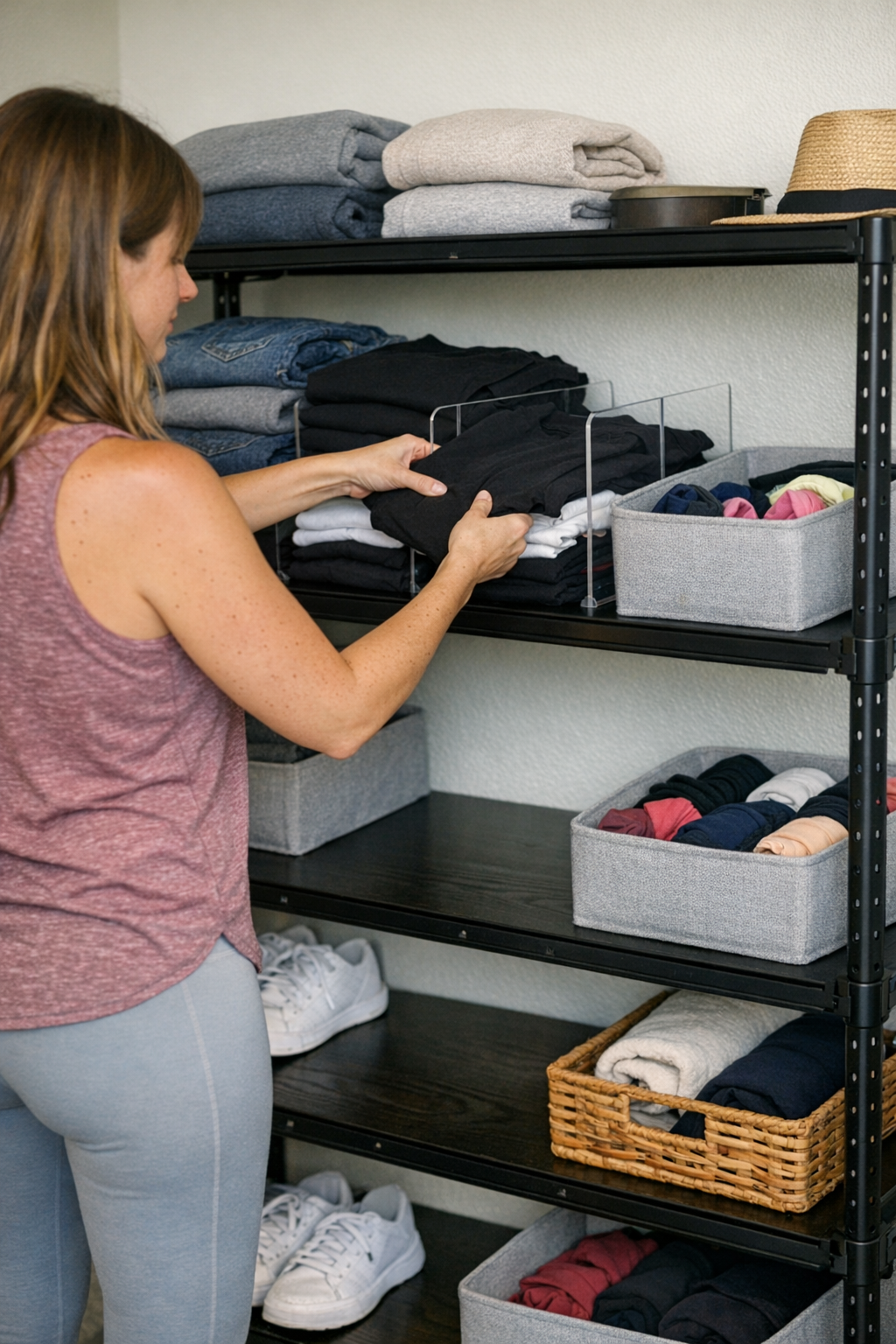
You don’t realize a closet system is failing in a single, dramatic moment—it creeps up in the everyday scramble. One morning you reach into what should be a neat stack of shirts, but half the pile slumps toward your hand. Next, you grab a bin for leggings and end up sifting through yesterday’s tee, stray socks, and a forgotten tank, all clumped together near the bottom. That perfectly organized look from last month? Gone. The closet isn’t a disaster, but it’s losing ground—friction returns, slow and steady, every time you try to just get ready and go.
Where Closet “Neatness” Fades: The Pressure of Everyday Use
It’s easy to feel victorious on day one—dividers fastened, bins perfectly labeled, stacks standing tall. The illusion holds until you actually live with it. Each grab, slide, or quick reshuffle tests the setup in ways you didn’t anticipate.
- Pull one workout shirt, and two others threaten to tumble after it.
- Reach behind a stack for your favorite sweater, and the whole row leans dangerously.
- Hunt for a small accessory and the bin’s careful order falls apart before lunch.
A system that “looks organized” is different from one that feels easy when you’re rushing through a weekday morning. That difference worsens as the days roll by—and fresh order slides toward daily shuffle.
Dividers vs. Bins: How Real Closets Push Back
Shelf dividers and bins are the standard answers, and at first, both work. Dividers create clear, tidy lanes for jeans, tees, or sweatshirts. Bins gather up small items and hold what doesn’t stack.
Why Dividers Don’t Stay Heroic
- Stacks bow and tilt after just a few pulls—especially if you want something from the bottom or middle.
- Dividers can’t stop a pile from sagging when you lean in for one buried piece.
- Over time, clothes drift out of their assigned lanes—one bulky hoodie derails the whole row.
The Bin “Catch-All” Trap
- Deep bins hide anything at the bottom—out of sight, out of mind, out of reach.
- Opaque or unlabeled bins force you to dig and mix, creating clutter under the surface.
- Full bins actually compress and misshape softer pieces, making them harder to identify or retrieve.
It’s not that these systems fail outright—they just start sliding back toward mess, one normal day at a time.
What Real-World Friction Looks Like
Picture a tense routine: you’re in a hurry, reaching for your go-to black tee. You nudge the divider aside just enough to pull it out, but two more shirts spill sideways. What should take seconds turns into an awkward pause, maybe an annoyed sigh, and a silent promise you’ll fix it this weekend. But “fixing” often means a full refold—lost time, again, just to get back to zero.
Switch to bins and the issue shifts. You slide one out only to realize nothing is visible on top that you actually want. You dig, piece by piece, until the bin’s contents are jumbled and you stuff it all back in—now more mixed, less sorted, and far from the original tidy vision.
When Systems Mix—And Clutter Creeps Back
Most closets blend dividers and bins, but without clear zones, boundaries fade. Stacks migrate into bins, bins overflow onto shelves, and what was once a clear system gets blurred. Soon, socks wander into the shirt zone, jeans peek out from under scarves, and “category” becomes a memory. You spot the problem every time you hesitate before reaching—unsure if grabbing one piece will collapse the pile or trigger a five-minute search-and-rescue.
If you’re constantly “fixing” a closet—resetting categories, pulling mixed items back to their zones—the system isn’t broken, but it isn’t working with your routine either. Instead, it’s adding micro-friction, slowing you down and amplifying clutter over time.
How to Nudge Order Back in Place (Without Starting Over)
More bins or dividers aren’t always the answer. The real win comes from blending what works, trimming what doesn’t, and adding one key trick: a buffer zone. Dedicate a foot of shelf space as your “landing strip.” It’s where the jeans you wore yesterday, today’s hoodie, or tomorrow’s workout gear can sit without crowding or collapsing everything else. This cushion means less pileup and fewer emergency resets—items cycle in and out without wrecking your main stacks.
Small Shifts Worth Trying
- Keep divider stacks shallow: limit to four or five per stack—enough to see and grab without sag.
- Swap bulky bins for wide, shallow trays: socks, hats, and small essentials stay visible and at hand.
- Label bins you can’t see into: even a simple tag prevents the “dig, mix, lose” cycle.
- Edit shelf categories monthly: stash anything you haven’t used this season in another zone—space reappears quickly.
Want one realistic improvement? Place a small, soft bin beside short stacks—not as a catch-all, but for those odd-sized or delicate pieces that topple a pile: scarves, a knit hat, or the heirloom sweater you never fold right. The main stacks last longer, the rhythm is smoother, and your closet behaves more like it was supposed to.
What Functional Storage Feels Like—Day In, Day Out
The version of “organized” you want isn’t posed or showroom-level perfect—it’s practical morning speed. You reach, grab, and move on, without the clatter of falling tees or the mystery of the lost glove. Adjusting and resetting stops feeling like a chore; quick tweaks keep everything steady. A stack might lean slightly, but you’re not refolding from scratch. A bin might need a five-second sort, not a full excavate.
The friction eases, clutter stops spreading, and it’s clear—both visually and practically—what needs tweaking and what’s working. The storage adapts to you, not the other way around.
You don’t have to pick bins over dividers, or vice versa. The real balance is a working mix—a system shaped for real mornings, fast resets, and fewer interruptions.