
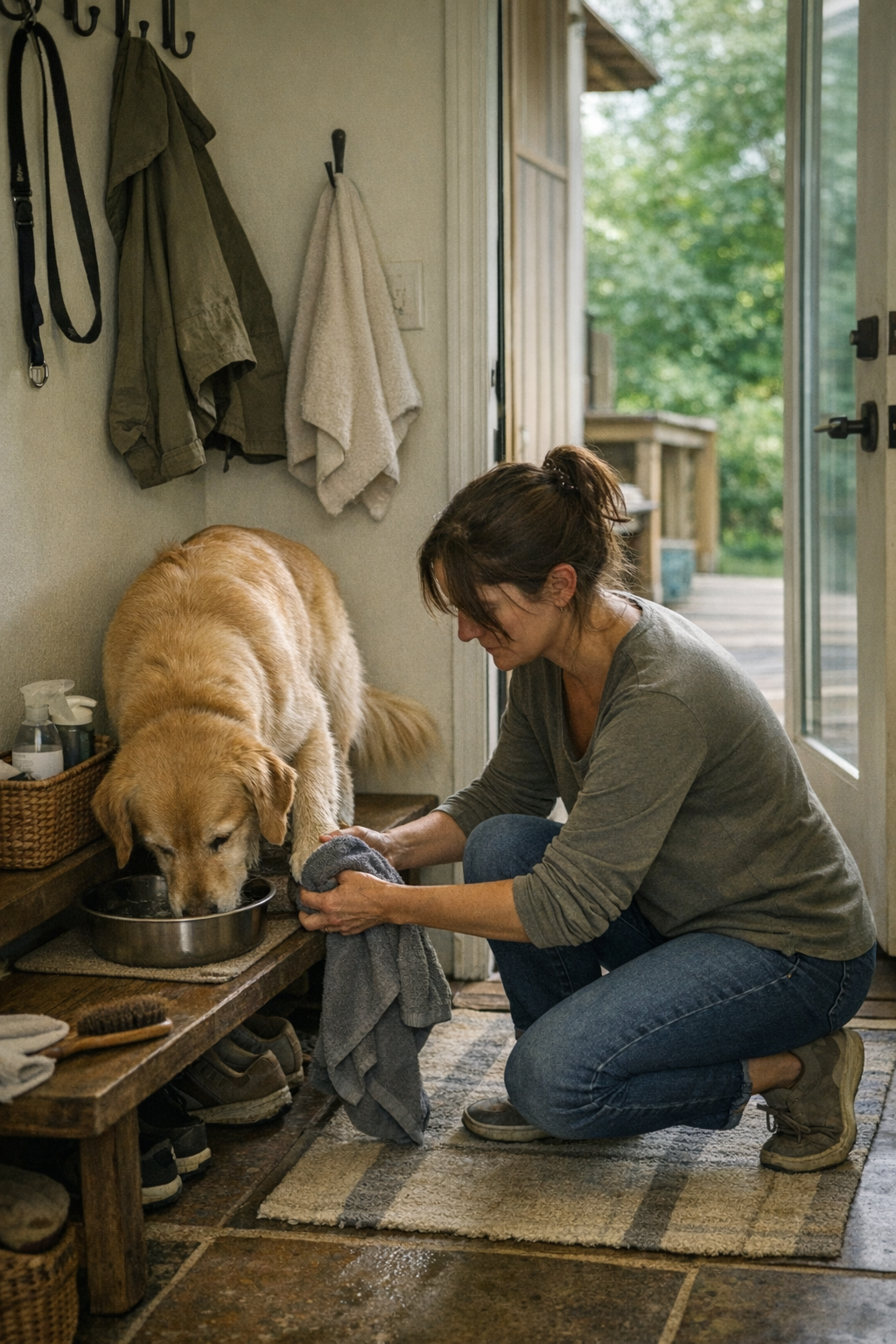
You refill the water bowl first thing, scoop out the food, and reset the towel for after-walk paws—expecting the routine to stay simple. By day three, that confidence slips: water has splashed past the mat, a leash lies tangled by the door, and the towel you thought was ready is crumpled out of reach. If your daily setup turns a basic care loop into a series of sidesteps and extra bends, it’s not solving friction—it’s multiplying it. That’s the CalmPetSupply world: real daily setups tested by use, not just appearance.
The Subtle Build-Up of Clutter and Delays
Consider a water bowl just inside the entry—easy to reach, supposedly efficient. But each trip in brings a new, familiar snag: puddle near the base, shoes knocked from their spot, towel unfurled and damp before dinner. None of these slow-downs is catastrophic, but their repetition leaves you wiping, moving, and redoing steps each time. Dismissing one as a “bad day” works until they start stacking, and routine moments quietly double in effort—spreading out cleanup and forcing you into a loop of resets when you need the day to keep moving.
Everyday Friction Points Revealed
What slows you down isn’t the single spill or missing wipe, but how often the same snag reappears. You reach for the water bowl and find the leash stand jammed against it—or try to grab grooming wipes, discovering they’re somewhere behind the bag or mail. Entry shoes, once corralled, fan out further by evening because of detours around stacked gear. Each return home means an unscheduled task: clearing a puddle, reshuffling items, or hunting for the towel that never quite stays put. By the week’s end, the area looks organized but functions like a low-level obstacle course—slowing you at the exact moments that routine should be easiest.
The Cost of “Almost” Organized
The problem isn’t just mess in view. Slowness creeps in when basic care tools end up blocked or out of reach, turning what should be fast into fumble. Maybe the brush fits behind a bench—until the leashes jammed there mean you have to fish everything out just to clean muddy paws. The towel migrates to a drape across the room, or hangs just far enough away that wiping down gets pushed later, again. The essentials—wipes, scoops, towels—don’t truly disappear, but they drift to the edges, so you keep interrupting yourself to fetch, clear, or reset one more piece. Functional order falls apart piece by piece, even if the surface still looks uncluttered.
When Look Doesn’t Match Function
Many setups trick you: the floor is clear, bins are closed, but friction hides just under the surface. If you’re reshuffling each time just to put down groceries or settle a pet after a walk, you’re managing looks, not flow. Returning toys means skirting a water patch or a bowl blocking the bin, so the “tidy” corner works against you. Shoes pile up not because you have too many, but because the daily shuffle never lines up with the real path you walk, and order on Monday drifts by Thursday. The difference between organized and actually usable shows up in those repeated, visible pauses—when you know exactly what’s wrong, but it’s built into the path itself.
How Small Adjustments Have a Big Impact
One move—shifting a water bowl a few inches beneath a bench, instead of leaving it mid-path—turns a mess-prone access point into an afterthought. Side-mounting the towel just inside the door puts it always within reach, making post-walk cleanup possible without hunting. Over a week, you notice you’re not stopping for unplanned wipes or kicking shoes out of the way. A leash, once lost in a gear heap, finds its place on a wall hook, so late-night walks don’t start with a search. Even just dropping grooming wipes in an open tray instead of a closed drawer removes a whole layer of fumble. These aren’t overhauls—they’re fixes that survive actual repetition, not just first-day setup.
What Really Works for Everyday Calm
Durable calm comes from setups that absorb repeated use, not just tidy up for show. The details that matter:
- Keep leashes, bowls, and towels where you can grab them mid-flow, not where you have to stop and move things just to reach one.
- Separate shared tools—don’t let a brush, refill scoop, or wipes get buried behind less-used gear.
- Spot where your routine always lags or clogs up, then adjust that one placement first—don’t wait for everything to break down before moving a bowl or hook.
- Don’t over-value bare surfaces; check if quick-access actually works right after walks or meals.
The best setups don’t disappear into perfect visuals—they work exactly when and where you need, with nothing blocking a quick grab. Instead of chasing one-off tidiness, track the friction that returns, and change just that point. The shift is obvious: less time resetting, less interruption, and care steps you no longer dread. That’s the visible calm of a setup that’s easy to keep up—one that stays in sync with real, repeat use.
Explore CalmPetSupply setups trusted for daily resets and real-world ease here.