
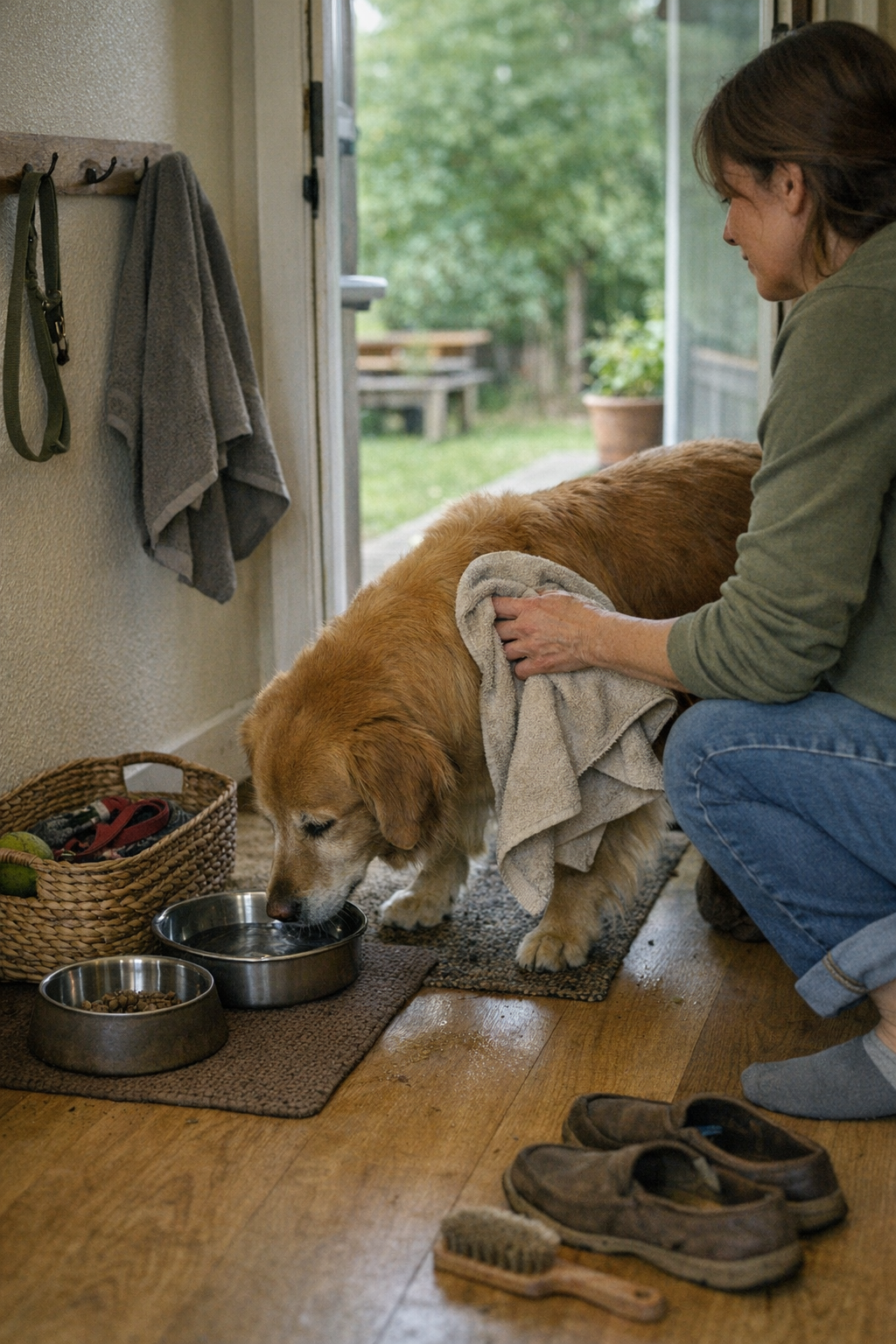
Calm, low-hassle pet care at the entryway isn’t an accident—it’s shaped by how well your setup handles the repeated, sometimes rushed moments that define daily life with a dog or cat. Every feeding reset, water refill, and quick cleanup either works smoothly or hits a snag: the water bowl slides into the path again; you bend to grab a towel, only to find it on the floor, just out of reach; you fumble with the pet brush that’s migrated from its spot and now blocks a quick exit. These aren’t just annoyances. They’re friction points that turn routine care into a cycle of minor disruptions, undercutting the calm you want at the door. The CalmPetSupply world zeroes in on the difference between a setup that genuinely fits daily rhythms and one that quietly chips away at them, no matter how tidy it looks once a week.
Everyday Obstacles Add Up Fast
The friction is there before you spot it: reaching for the water bowl means bumping a brush knocked loose earlier; feeding time is delayed as you shift bowls out of the traffic lane; a towel meant for muddy paws lands on a chair, then vanishes when it’s actually needed. Each small pause—the stuff you don’t plan for—adds up, slowing your entry and exit until the trip in or out feels like a gauntlet of tiny corrections. It’s not about big messes, but about seconds lost and a daily routine that drags you into repeated, low-level fixes.
What starts as a quick walk-through becomes a pattern of mini-resets: nudging a food mat aside for the third time in a day, lifting a spray bottle out from under a leash pile, finding a brush tucked behind the shoe basket. These don’t demand an overhaul, but left alone, they guarantee extra steps and interrupted flow, every single day.
When “Tidy” Doesn’t Mean Functional
A weekly tidy hides more than it solves if the core problem keeps coming back. Place water bowls, dishes, leashes, and towels anywhere near main pathways, and a single rushed morning puts everything back in disarray. Tools that should speed you up—quick wipes, bowl mats, cleaning sprays—end up blocking fast access if their “homes” aren’t right where you need them in the flow of actual use. A towel hook two feet from the door looks organized but means wet paws stomp onto the rug because the grab wasn’t instant. That handy brush, left by the door, starts snagging jacket sleeves or knocking over bags by day three.
The space can look neat in snapshots, but if normal movement forces you to stop, shuffle, or reach repeatedly, the setup isn’t truly functional. You aren’t fixing clutter—you’re reworking the same little obstacles, making a “clean” entryway into a loop of interruptions, not a real point of calm.
Practical Scenes from Real Home Routines
Here’s what happens in actual daily flow: You reach to refill the water bowl after dinner, but it’s slipped into your walkway again, nudged by a tail or kicked during the last trip. As you reposition it, a grooming comb rattles into view, half-hidden behind the bowl. When water drips or splashes, the cleaning towels and spray are close—but not grab-ready, wedged awkwardly under a leash, so cleanup is skipped or delayed.
Morning routines show another weak spot: leashes tangled by the door block your bag from reaching its hook; the right brush for after-walk fur is missing because it was “put away” somewhere less visible the night before. At night, a soggy patch greets you, evidence that the water bowl’s position—just inches off the clear path—still hasn’t solved the repeat spill.
The Weak Point in an Otherwise Orderly Setup
Even with a new system, one stubborn flaw always reappears: a single loose item without a fixed, easy-to-grab spot. Towels technically present, but if not at arm height or near the door, muddy paws land on carpet. Food or water mats, if they slide every refill, guarantee an endless “straighten up” loop. Most of these breakdowns are too minor to feel urgent, but their effect compounds—more time spent restoring what should already be set, more missed chances for an actual smooth routine.
Finding Simple Fixes that Hold Up
What changes this isn’t big design—it’s alignment with real behaviors: water bowls placed just outside the collision zone so you stop mopping daily puddles; towel hooks right at the entry, not near it, so wiping paws doesn’t feel like an extra chore; a single, stable bin or basket for active-use tools so the right item is found every time without a search. Move something one foot out of the walkway or shift a hook to true hand height, and the old interruptions fade—not because the room looks better, but because routine care gets out of its own way.
Over time, these shifts mean fewer “fix it real quick” resets. Entry and exit move back to neutral, not tense. What feels like a small adjustment delivers steady relief from the constant shuffle—so calm isn’t luck, but the result of a setup that can keep up with daily care instead of tripping over itself.
To explore solutions tailored for daily pet life, visit calmpetsupply.myshopify.com.