
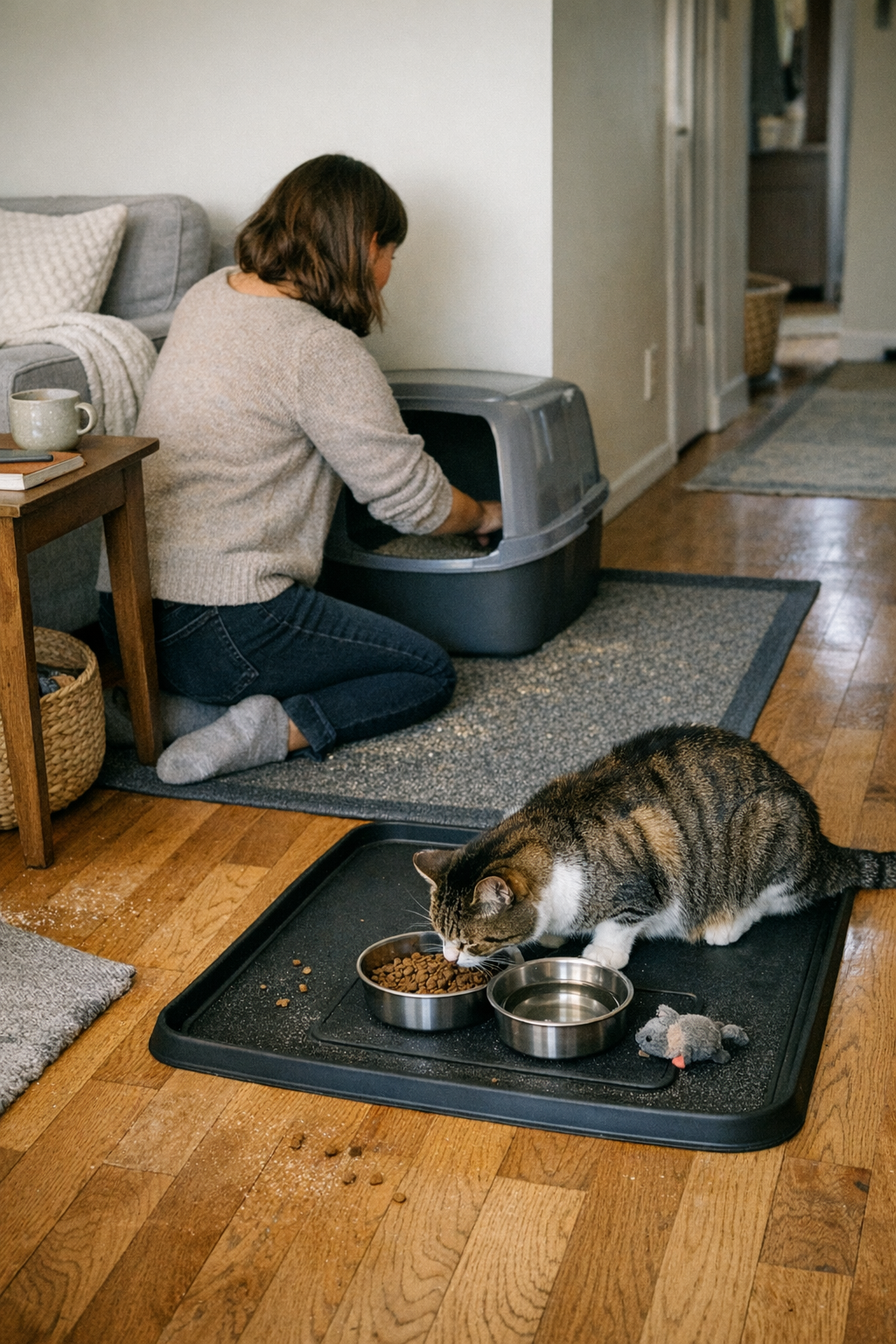
Most indoor cat setups look calm for a day—then the breakdown starts. Food bowls line up, water dishes nestle on a mat, and the litter box sits in its assigned corner. But after a few feeding cycles, cracks show: dry kibble escapes just past the mat, water spreads with every refill, and litter drifts, dotting the hallway. What started as a “neat cat area” quickly becomes a shifting mess zone. The difference isn’t subtle—the line between cat space and shared living space blurs, demanding more resets than you counted on. The StillWhisker world isn’t about decor. It’s about structure that survives the real routine.
When the Boundary Blurs: Real Cat-Life Friction
Most owners miss the slow failure, not a sudden disaster. The debris creeps: kibble migrates under the chair, water marks the floor an inch beyond where you wiped, and a tracked litter sprinkle reaches the hallway before you even notice. Pick up a toy under the table? There’s always a trail—food bits, dust, last night’s treat—lurking nearby. After a week, quick swipes aren’t enough. Routine resets drag out: you’re scooping, sweeping, and finding a damp spot long after “tidy-up” was meant to be done. The zone doesn’t hold—it expands, pulling your time with it.
Why Visual Order Isn’t Enough
The standard fix looks organized but acts like a false promise: A slim mat below the bowls, a towel by the fountain, maybe a thin rug at the litter box exit. It looks contained—for now. Then repeated use exposes every weak spot.
Spotting the Breakdown Before It Spreads
Within days, crumbs hide at the mat’s back edge. Litter dust advances past its supposed stop-point, leaving rough spots to step on. Cat traffic turns those borders into suggestions rather than boundaries. By then, “contained” just means out of direct sight—until your next walk-through ends with litter crunch underfoot or a damp sock from quiet water creep. Visual order cracks under daily pressure.
The Daily Impact of an Imperfect Edge
Between “it looks fine” and “it’s easy to live with” is a gap measured in extra wipes and repeated finds. If you’re dragging the mat out to catch what’s hiding underneath or making multiple passes with a towel, you’re in the same fix as most indoor-cat owners:
- Resetting slows down. What used to take two minutes—quick straighten, wipe, refill—now interrupts other tasks with extra rounds of picking, mopping, or bending.
- Cleanup piles up outside the zone. Spills and debris spread to new spots, crossing into your walkways and living corners.
- The rest of the room gets involved. What began as a single corner now claims the space in front of the sofa or the path to the hallway—routine paths turn into detours for cleanup.
Practical Example: The Family Room Drift
Start the week with feeding and water neatly stationed on a mat just off the main walkway. By midweek, a sprinkle of food makes the line fuzzy, a puddle seeps out just under the dish, and a stray toy disappears beneath the chair—dragging dry food with it. Every reset becomes a pattern: sweep, scoop, hunt for one last bit of kibble hidden below. The time adds up, the mess spreads, and the problem never fully resets—just reshuffles.
The Consequence: Chores Multiply Across the Room
This isn’t about how it looks. A weak boundary turns a minor zone into a room-wide intrusion. The litter mat’s short edge lets particles escape—now there’s a faint dusting across the entryway. Post-dinner water overflow quietly soaks through hardwood, forcing a real mop-up hours later. Cat area becomes house area, and the “contained” solution quietly invades until every room stands in as the backup cleanup zone.
Mechanical, Not Decorative: Upgrading the Boundary
Past a certain point, you stop caring about cute prints or colors and start looking for actual containment. Swap a light mat for a weighted, rubber-backed version with a raised lip—suddenly, stray kibble stops dead, water pools instead of escaping, and the mess never makes it to open floor. Reset speed doubles: scoop the pile, wipe the puddle, done. The shape of the cat area holds up—not just in photos, but on a Thursday night after a triple refill run.
Containment That Just Works
The right structure matters more than the look. Start using a mat with real edges and the drama collapses—reset slips into the background, cleanup tools stay in their place, and the “problem zone” shrinks. You’re not fussing with corners or chasing scatter to the far wall. The gains aren’t decorative—they’re mechanical and they last longer than a tidy-up for company.
Choosing and Positioning: What Actually Makes a Difference?
Real edges stop real mess. Mats with raised lips and weight block debris from rolling or sliding out. Thin, lightweight, or foldable mats can look organized but shift, letting the problem get worse. Textured mats grab stray litter and food long before those bits crawl to the other side of the room.
- Reduce open floor gaps. Push boundaries against furniture or the wall—don’t leave bare floor patches between the setup and the rest of the room.
- Litter tracking? A heavy, textured runner right at the exit stops most of it; if you spot dust lines beyond, add height or reposition the entry for less spillage into the main lane.
- Repeat offenders matter. If you keep finding food under mats, dust scattered out of reach, or the same damp line by the bowl, you’re seeing a structure problem—not a fluke. The fix isn’t more wiping; it’s a better barrier.
Cleanup Burden: When Supplies Help or Hurt
Supplying wipes and paper towels nearby sounds smart—but if you’re still reaching for them after every routine refill or reset, the underlying setup is failing. A mat or tray that actually catches debris lets cleaning supplies rest more than they’re used. When cleanup gear becomes background, not your plan A, the setup is finally doing its real job.
Comfort vs Reset: The Tradeoff That Catches Everyone
Your cat loves a soft mat or blanket, but comfort alone doesn’t hold the line. Edges that fold or cushions that shift undo a fast reset—they spread, bunch, and expose open floor after every nap or leap. Before picking the fluffiest bed, check: will this need readjusting every time the cat moves? The best setups balance softness with a defined stop. If you’re always straightening, the convenience failed.
Recognizing The Real Upgrade: Looks Versus Lasts
If your feeding zone looks organized but debris shows up in new places after almost every meal, the setup only works for appearances. A weighted mat, raised lip, or strategic runner cuts daily friction and locks the mess to its corner—no extra resets needed. When debris keeps coming back, you don’t need more effort. You need a solution built for the cycle itself, not just the initial look.
Tips and Adjustments: Making Containment Part of the Routine
Containment isn’t a set-and-forget deal. If edges are too low, size up; if drift returns, double up the barrier. Shared spaces call for mats that grip the floor and sit flush to furniture—otherwise, the mess migrates again. The goal isn’t just to clean faster, but to make messes stop traveling entirely. When the structure fits, resets are fast, stray mess stays local, and your day stops revolving around chasing the edge of the cat zone.