
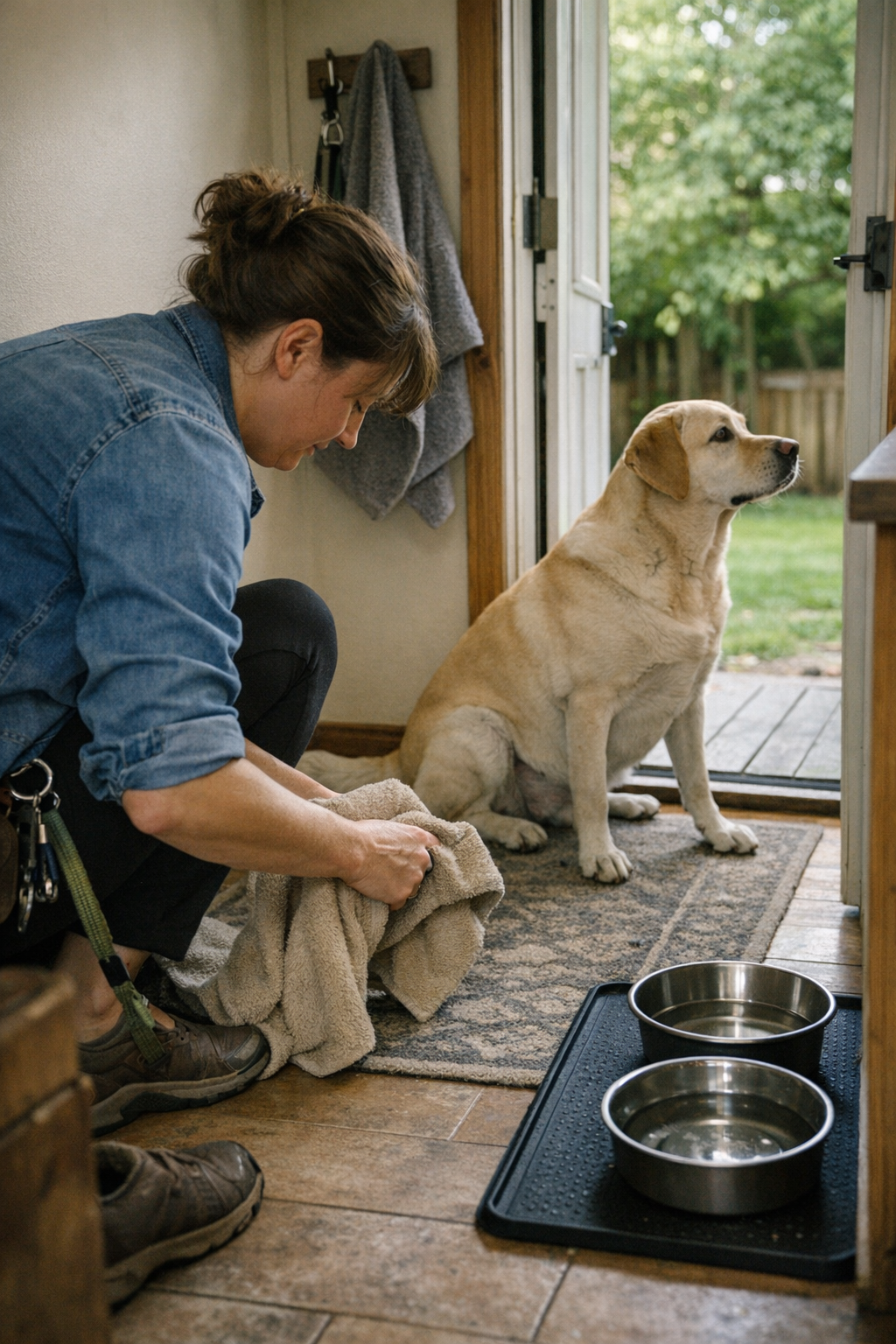
When Calm Routines Break Down at the Door
Every pet owner knows the moment: you come in from a walk, arms full, and the entry clogs instantly. One bowl edge blocks your step, the paw towel’s nowhere within reach, a leash gets tangled, and your dog crowds in excited. The simple sequence—drop keys, wipe paws, refill bowl, hang leash—turns messy just because supplies drift too close to the threshold or go missing after one rushed return. What should take seconds drags out: blocked by a feeding mat, lost towel, or a pet determined to stand right where you need to reset.
Left unchecked, these small stalls chip away at routines that seemed simple. You put off wiping muddy paws, feeding spots creep off-track, towels show up bunched in corners instead of hanging by the entry. The tidy look doesn’t last. Instead, clutter edges further inside, cleanups stack up, and a setup that felt organized starts revealing its weak points—every time the door opens.
The Signs of Entry Routine Friction
It doesn’t take chaos to start seeing problems—a drizzly afternoon, grocery bags in hand, or a dog sprinting to greet you is enough. Entry friction usually shows up as:
- Reaching for the food bowl but shifting clutter aside or prying it from under your dog’s nose before you can pour kibble.
- Stepping in with wet shoes because the paw towel is out of reach—not lost, just not in its place from yesterday’s hurried reset.
- Trying to refill water but blocked by a mat, toys, or bowls inching closer to the entry each day.
- Backtracking for a wipe or supply that keeps drifting out of arm’s reach—turning quick resets into awkward workarounds.
- Cleaning the same floor patch twice because a missed paw wipe or jostled bowl happened the second the front door opened.
These aren’t major disasters; they’re quick interruptions that pile up, doubling the effort and draining the pace from what should just be in-and-out care.
Use Scenes: How Entry Bottlenecks Creep In
Imagine a regular afternoon. You crack open the door, groceries pressing your arm, leash trailing, dog hovering. There’s no space to turn—a feeding bowl edges too close, the towel’s already slipped off its hook. Instead of dropping bags and moving on, you have to shift pet items just to clear a few inches of floor. Kibble scatters. A bowl slides underfoot. The next arrival only scrambles things more, making the entry feel less like a routine and more like something you manage on the fly every single time.
Straightening up doesn’t last: bowls creep back, towels migrate, and toys drift into the walk path after the first round of care. The area might look organized for a moment, but—one missed reset later—the whole sequence feels askew, and soon you’re back to working around clutter rather than through your routine.
What Placement Changes Actually Fix
The most reliable fix isn’t more discipline or new habits, but shifting supplies out of the hot zone. Move feeding and water stations several steps away from the entry; set a clear division between the greeting space and care area. Now, muddy paws aren’t pawing at the bowl, and there’s less risk of tripping over pet gear during busy entrances.
Make each supply truly reachable, but not transferable. Hang the towel on a dedicated hook—within natural grab range, not drifting onto the floor. Lay down a visible mat as a pause marker; it cues your dog to hold back. Not everything needs to look perfect, but each item should have a spot that sticks through repeated use.
This setup doesn’t just cut out visible mess—it trims away the silent repeat-work that comes with a cluttered entry. Instead of doubling back to hunt down a towel or straighten a bowl, your care sequence lines up: walk in, reset, move on. The space supports the routine instead of scrambling it.
Maintenance vs. Appearance: What To Expect Over Time
Most entryways pass the test right after a deep clean—but few setups hold up to repeat care if the basics aren’t truly accessible. When bowls or towels don’t have fixed spots, mess creeps back and routines stall. The real test isn’t a staged photo but the next five arrivals: does the layout support quick feeding and cleanup, or does every step require backtracking, searching, or reshuffling?
For example: You rinse a bowl, but another item’s slid back into the same spot. After-walk paw wipes get skipped because the towel’s missing—one reset further delayed. The longer it takes to re-place things, the more likely you are to put it off entirely. Soon, you’re resetting in catch-up mode, and yesterday’s clutter is already setting up tomorrow’s hassle.
Real homes aren’t for display. Entry setups have to hold up across real, repeated routines: feeding, refilling, wiping, night check-ins. The strongest setups aren’t the neatest, but the ones that avoid double handling and routine drag, even when care happens on autopilot.
Quick Answers to Common Reset Issues
How can I get my dog to pause back from the door?
Shift feeding and water stations several feet from the entry and place a visual marker (like a mat) to signal the greeting line. Pause behind that marker when arriving, reinforcing the habit every time—this boundary makes a difference without adding extra steps.
Why does bowl and towel placement matter so much?
Bowl and towel location sets the speed and order of your whole routine. A bowl by the door attracts mess and crowding on arrival, while a towel somewhere else turns paw wipes into a chore you’re likely to skip. Placement isn’t about neatness; it’s about unblocking care at the only moments it really matters.
What’s the fastest way to reset after a walk?
Return the towel directly to its hook and keep pathways clear, even if you’re in a rush. One minute spent resetting placement means tomorrow starts smooth—instead of in cleanup mode.
Designing for Quiet, Reliable Entry Routines
Calm, reliable entries aren’t built from tougher training—they run on a layout that stops supplies from drifting into the way. When bowls hold their ground, towels are always grab-ready, and toys don’t take over the threshold, the chaos shrinks. Calm isn’t effort; it’s a pattern you can keep all week.
The payoff is visible: fewer repeated wipe-downs, less block-and-reshuffle after feeding, water, or walks, and an entry that resets in less time each day. The real difference? You can move from outside to inside, reset, and move on—no slowdowns, no doubled back steps, no sense that pet care keeps leaking into the rest of your routine.
Ready to see what a practical, do-able entry setup actually feels like? See the daily care basics at CalmPetSupply.