Blog

  • Optimizing Ceiling Lighting for Busy Rooms to Eliminate Shadows and Clutter

    Clearing away floor lamps and covering up cords can make a room look “solved”—but watch how fast small lighting failures return when routines heat up. Ceiling lighting that looked perfect on move-in day often starts falling apart as soon as real-life habits kick in. Suddenly you’re shifting chairs, dragging out clip-on lamps, or squinting at your laptop in a shadowy patch at the table’s edge. A room can appear finished—wires hidden, surfaces clean—while corners go unused and “clutter-free” setups quietly trigger daily workaround fatigue. The real verdict isn’t how the lighting looks at rest, but what happens after a week of actual use.

    When a Clean Look Masks Lingering Problems

    Flush ceiling lights promise order. No lamps tripping up the walkway. No cords in sight. But in practice, this calm is paper-thin. The second someone stretches out homework or starts a group puzzle across the table, dim patches emerge at the edges and effort shifts from work to lighting triage. The desk that looked polished at first gets steadily eaten up by improvised solutions: loose bracket arms clamped to shelves, power strips trailed over corners, a flashlight angled precariously across the page. You tidy one problem, and a new tangle forms every time the room sees actual activity.

    In a compact home office, it shows up quick. A flush-mount fixture sits perfectly centered, but by afternoon, the far edge of the desk is murky enough that someone drags a clamp lamp back into service. Cables snake into the “clean” setup. Glare hops from the ceiling onto glossy workbooks, forcing everyone to play musical chairs just to keep a clear view. The cycle is familiar: temporarily solved in the morning, unraveled by nightfall.

    Coverage Gaps: How Ceiling Lights Fall Short in Real Use

    The average ceiling light floods the center and leaves the rest in polite shadow. It’s installed for symmetry—not for task clarity or busy surfaces. The result: a wide “bright zone,” but edges where printing, writing, or reading routines routinely collapse. The fix is rarely more wattage—what fails are the angles. Move to the fringe and the fixture’s light falls off fast, especially when surface needs shift daily.

    Common Signs of an Underperforming Setup

    • Edges of desks and tables never feel fully lit—no matter how clean the room looks.
    • Shadow bands creep in as you use ends, corners, or side nooks.
    • Someone always borrows a clip-on, a portable lamp, or even holds up a phone just to reclaim basic surface clarity.
    • New extension cords and brackets spring up anywhere actual work happens, undoing the original “cordless” plan.
    • Glare blooms at the center, overpowering nearby zones, leaving the periphery dull or actively uncomfortable.

    These aren’t one-time annoyances. They’re signals that coverage never matched how the room is actually used, and every workaround erodes the appearance the ceiling fixture once promised.

    Surface Clarity vs. Surface Usability

    It’s easy to mistake a neat tabletop for a usable one. A clean ceiling fixture keeps up until routine changes—extra homework, late-night spreadsheets, multiple projects forcing laptops and books to opposite sides. The “clear” look shatters fast: unused desk lamps are pulled from storage, cables wind over surfaces, and adapters clog outlets. Your work surface that once felt expansive now shrinks in invisible ways—blocked by shadows or made awkward by stumbling over cords and supplementary lights.

    The new friction is smaller than a major outage, but more draining. Reaching for a light, angling a notebook, or awkwardly shifting a chair becomes a repeating choreography just to keep up daily flow. That’s where ceiling-only plans break down: they’re visually satisfying, but operationally fragile, exposing weak points the minute every area gets used for real.

    Real Improvement Is in the Details (and the Placement)

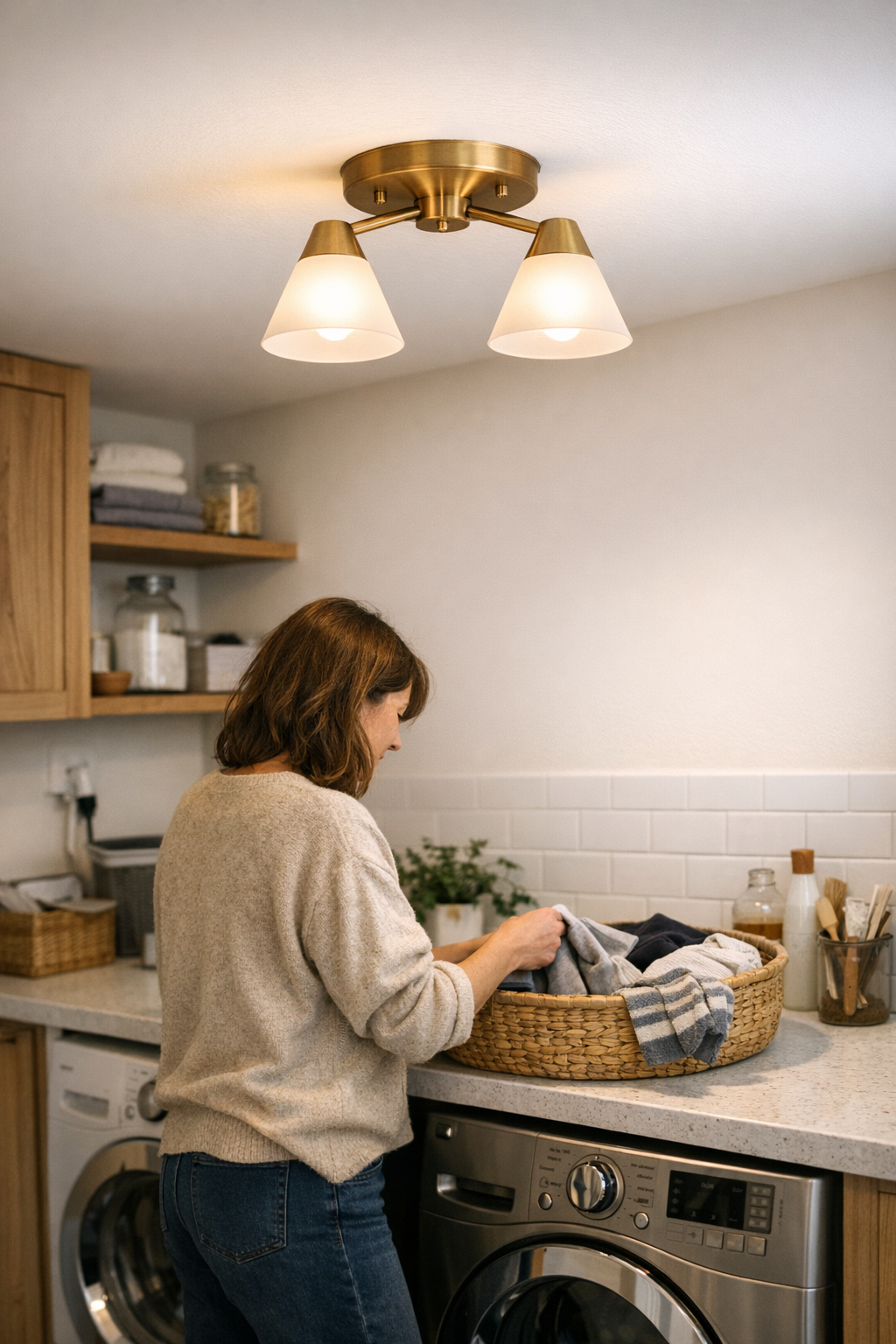
    The fix isn’t “more light”—it’s targeted coverage. In one home, swapping in a low-glare panel fixture just 15 centimeters toward the work wall covered the long-missed desk edge. For the first time, no one reached for a clamp lamp all week. The result wasn’t just visual: cables stayed stowed away, surface shuffling vanished, and everyone stopped improvising just to see clearly. Week after week, the friction just stopped showing up. The gain isn’t a photo-op—it’s noticing silence where frustration used to be.

    Small Shifts, Lasting Results

    If you catch yourself nudging a lamp, shifting to escape glare, or crowding around the only “good spot,” your ceiling light is missing where it matters. Sometimes a 15cm move, a shallower bracket, or a swap to a broader panel is enough to sidestep an entire cycle of daily fixes—and the setup finally stops fighting your routine.

    Panels, Linear Fixtures, and Better Shared Zones

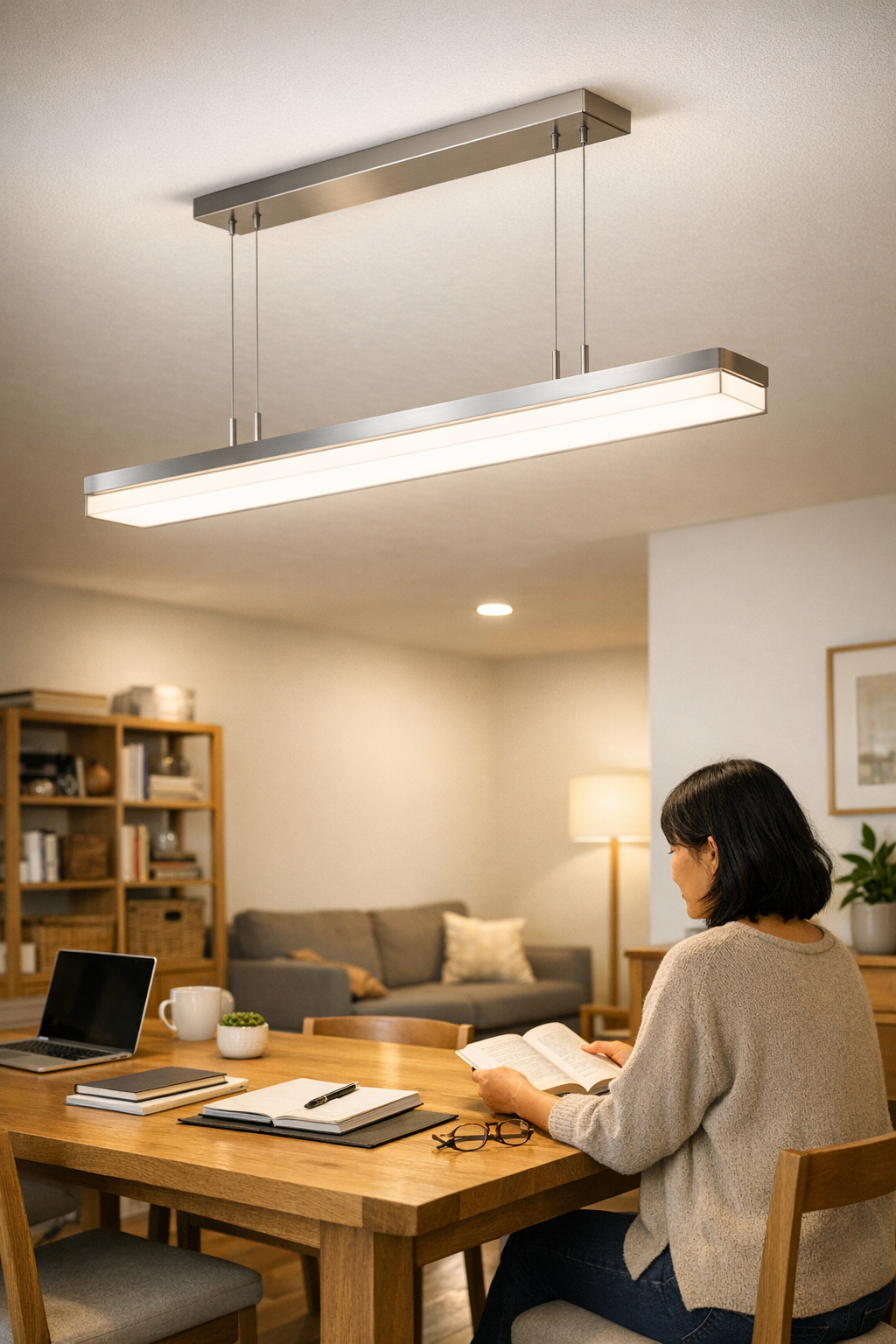
    The shape of ceiling lighting changes everything for busy, multi-use surfaces. Panels and linear fixtures are built to throw light all the way to the edge—over tables, wide desks, under shelves. This isn’t just about brightness. It’s about reducing the “gray border” where clutter and ad-hoc lights return.

    • Surface edges stay bright, not just the center, so you don’t default to extra lamps by week two.
    • Desk zones stay open and cable-free during actual use, not just after a cleaning sweep.

    With wide fixtures, rearrangement isn’t a daily disruption. Someone can shift to the far side, start a project at the other end, or work across from a partner without patching in a stop-gap lamp each time. The setup flexes with routines rather than working against them.

    Spotting the Real Coverage Gaps

    The telltale signs show up in use, not after a fresh setup. Questions that matter:

    • Are certain corners, seats, or table ends quietly avoided—especially for reading or detail work?
    • Are “solved” surfaces beginning to sprout new lamps or extension cords a month after install?
    • Does a pristine setup break down the minute group work or an unplanned project lands?

    “Yes” to any means a placement or fixture shift may do more than any bulb swap. Coverage and spread—not just intensity—are the levers that change everyday comfort.

    A Setup That Feels Solved, Not Just Appears Tidy

    Lighting support only works when each part of the surface gets the light it needs—without recurring side solutions. Tightening fixture placement, swapping to broader or lower-glare panels, or rerouting cable runs can erase entire categories of daily fixes. The difference is quiet: surfaces stay easy, cables stay out of sight, and routines flow, not stall. In the end, it isn’t about a space looking finished—it’s about it actually running smoother, no matter how often the routine shifts.

    LightSupport store

  • Why Drywall-Only Mounts Fail Under Real Entryway Loads and How to Fix It

    The first clean entryway never lasts. The wall hooks and slim shelves might hold steady for a few mornings, but any real routine exposes their weak points fast. One heavy bag swings from a screw, raincoats pile up after a wet commute, and yesterday’s perfect shoe row starts drifting outward, breaking the clear path you thought you had. Instead of frictionless order, the space slips back toward blocked passages and shoes scattered underfoot. What looked organized on day one now demands constant vigilance: every drop-off, every return, another unpredictable test for the threshold zone.

    The Hidden Stress Test of Real Entryways

    Wall-mounted hooks show well in photos, but in live use, the entryway is never empty or static. It absorbs the unplanned: dripping gear, a grocery bag heavier than yesterday’s load, someone tossing a backpack onto an already-crowded row. These aren’t rare accidents—they’re routine. As each person squeezes in, the pressure multiplies. A lunch tote slides into the space meant for neatly staged shoes, and one heavy load makes a hook sag. The attractive symmetry sold by drywall-mount storage warps under these daily collisions, erasing the sense of control by midweek.

    The pain isn’t just the occasional collapse. The real cost is slow, layered failure: hooks that lean a little more every day, a shelf that starts to tilt just enough to annoy but not enough to fix tonight, a reset that takes longer each time. Re-entry becomes a tactical shuffle—and lightweight fixes (tightening a screw, straightening a mat) never fully catch up with the pressure of repeated, shared use.

    When Temporary Becomes Semi-Permanent

    There’s a moment—the first time you step over a dropped tote or squeeze past a bench now crowded with overflow—when the flaw clicks into focus. Setups designed for neatness get swamped under normal traffic: one rushed morning, one stack of mail, one too many pairs of boots crowding the welcome mat. The wall system that “fit perfectly” starts drifting: shoes push past the edge, bags dangle unevenly, coat piles become semi-permanent because nobody has a simpler spot to dump them. Each day without resetting piles on extra disorder, until the bench becomes a permanent catch-all and the path tightens further.

    Drywall-only anchors fracture first. The moment the pace picks up—kids cutting through on a rainy afternoon, armloads of sports gear arriving late—the repeated weight and hasty drops stress every attachment point. Wall hooks lean farther. Shelves threaten to tip. Resets that once took seconds stretch into a full disruption: hardware repairs, deep reorganizations, or a stealthy hunt for extra mounting points behind the drywall just to keep things functional.

    Unplanned Resets and Blocked Passages

    • A fallen bag blocks the main path, so what should be a walk-through becomes a dance around an obstacle.
    • Shoes overflow beyond their “zone,” squeezing entry traffic and forcing everyone onto the edge of the mat.
    • Damp or muddy gear spreads a “do not touch” zone, making a whole corner unusable after a storm or practice run.

    Each small breakdown feeds the next. Instead of correcting the clutter, people adapt around it—bags dumped on the bench stay there “just for tonight” but quickly become permanent. Coats overflow from wall hooks to backs of doors. Resetting is no longer a quick fix, but a drag on the day: picking through piles, navigating blocked doors, or having to clear a path before you can even bring in groceries.

    Why Studs, Benches, and Floor Supports Change the Game

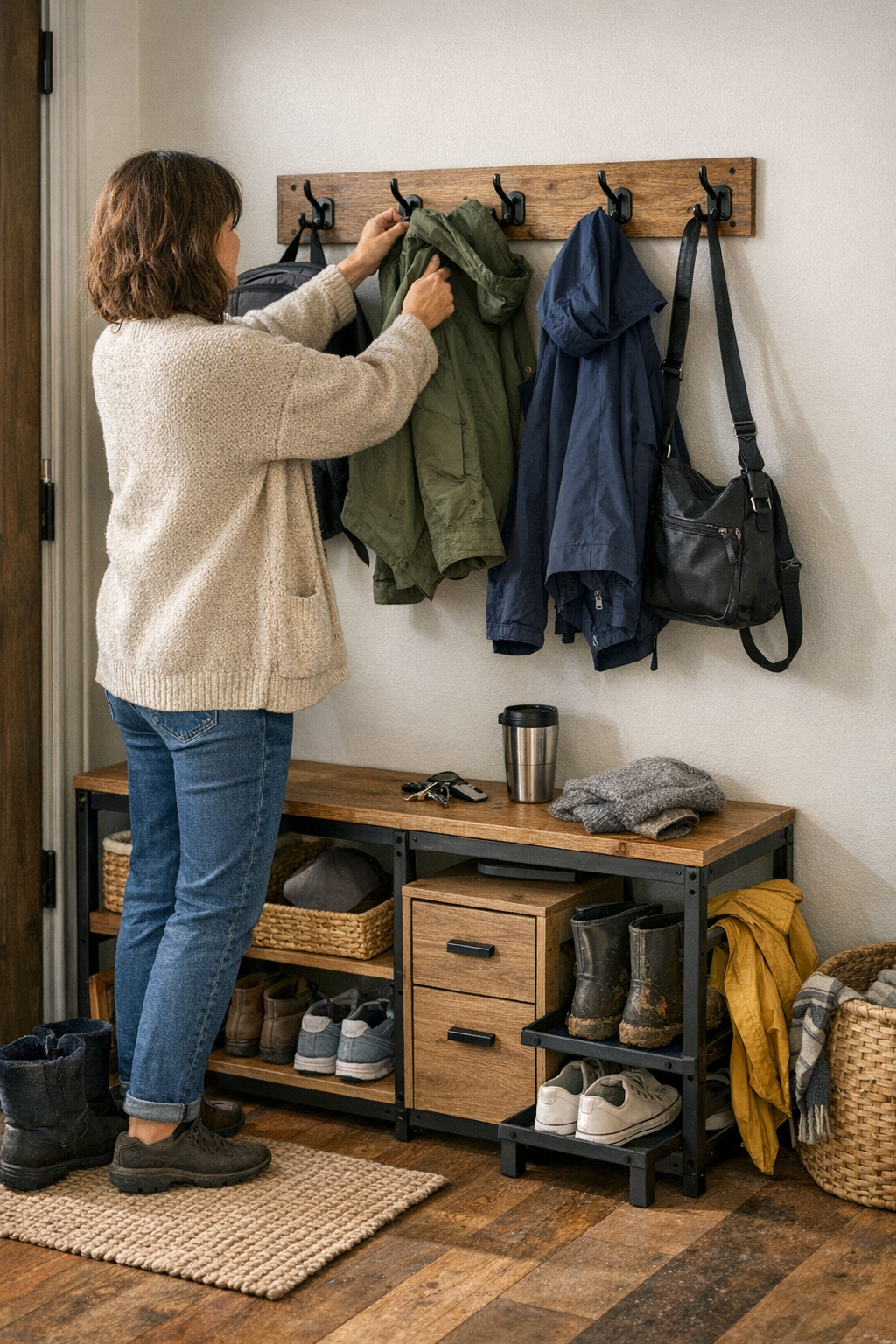
    After cycling through a few failed resets, the value of hybrid setups becomes obvious. Wall hooks anchored into studs (not just drywall) hold up to repeated, real pressure: a full bookbag or bulk winter coat doesn’t threaten to pull them down. A slim bench or grounded cabinet below creates a forgiving “overflow tier”—if hooks fill up or rain hits unexpectedly, shoes and bags land on a stable base instead of crowding the entry walk. There’s breathing room for everyday chaos: boots can sprawl temporarily without toppling the entire organizational plan, and resets are limited to clearing the bench, not rehanging hardware.

    With supports where weight actually lands—stud-anchored hooks, strong benches, and cabinets meant for edge overflow—you gain a margin for error. Bags drop, shoes spread, but the infrastructure doesn’t collapse. You spend less time reacting to failure and more time simply passing through, even when the routine is less than tidy.

    A Quiet Fix: Find and Anchor the Weak Spots

    If hooks are leaning again or a coat rack feels loose after a busy week, it’s a clear sign the mounting can’t match your routine. Tighten any visible fasteners, and—especially where the loads are heaviest—grab a stud finder and anchor at least one or two hooks directly into the supports behind the wall. Spreading out the points of pressure offloads strain from every weak anchor, helping the whole entry system last through more unpredictable weeks.

    The Reset Rhythm: Faster, Smoother, Repeatable

    The best setups shrink the reset burden. After a normal day, instead of a ten-minute cascade—untangling bags, straightening wall hooks, re-lining up shoes—you face only minor shuffles. Overflow goes onto the bench or low cabinet, not the floor. Wet gear lands in a stable drip zone, not sliding from an overworked hook. Most importantly, the natural flow through the entryway stays open: no blocked door, no dance around scattered boots, no hesitation to move quickly when schedules collide in the threshold space.

    Don’t Be Fooled by Day-One Order

    There’s a gap between a system that “looks finished” after install and one that survives daily collision. Drywall-only setups may stage the area attractively, but repeated, shared use exposes their limits. Anchoring to studs and backing up regular hooks with grounded storage is what quietly resists the expansion, tipping, and blocked thresholds that every high-traffic entryway sees. Real entryway performance isn’t about first impressions—it’s about absorbing daily pressure, shrinking the clutter creep, and giving you a zone that resets itself faster than it unravels.

    http://www.betweenry.myshopify.com

  • Why Leaving Space on Closet Shelves Improves Daily Organization and Access

    Open your closet after a typical day and you’ll see it: a scarf dumped on a shelf, a lone sneaker wedged sideways, last night’s laundry balanced on top of an already-teetering pile. At first, filling every shelf, bin, or basket edge to edge looks like the mark of organization. But the real test is what happens the moment real life intrudes—and suddenly, there’s no room for the extras. Bins look full, stacks are flush, yet as soon as something needs to be put away—a sweater you won’t wear until next season, a bag that always seems to float between uses—you’re forced into a game of closet Tetris. Categories blur, folded shirts collapse, and before you know it, overflow spreads to chairs, floors, or anywhere there’s a sliver of open space.

    The Hidden Aggravation of Maxed-Out Shelves

    Standing in front of a closet packed to the gills, you get a short-lived sense of completion. Every surface covered, not a spare inch left—surely you’ve made the most of the space. But try putting the closet to work. Need to grab a sweater from under a pile? You have to move half the stack. That extra pair of shoes? They won’t squeeze into a row that’s already jammed. One returned laundry load, one errant backpack, and you’re back to reshuffling the whole setup.

    The tighter the fit, the faster systems start to come undone. Neatly defined areas turn into catch-alls. Categories blur as you shove “just one more” item wherever it’ll fit. What looked efficient quickly becomes fiddly and slow—each small access, every quick return, is another opportunity for chaos to creep in.

    The Everyday Toll of No Buffer Space

    That empty stretch of shelf you might call “waste” is actually your shock absorber. Skipping a buffer means you’re always making micro-adjustments: shifting one bin to get to another, disturbing a whole row just to tuck away a single hat. Return a library book or empty a gym bag and there’s suddenly nowhere for them to land, except in the middle of an existing stack or on top of something else. Over time, stacks slouch, bins overflow, and the boundaries between “clean” and “catch-all” dissolve.

    Without intentional breathing room, every reset grows more tedious. Finding a favorite shirt buried behind three others? Take out the pile, restack, hope the next person doesn’t knock it all over. One missed reset and your system falters—this isn’t organization that holds, it’s organization on the edge of collapse.

    Scenes You Know: When Storage Breaks Down

    Consider a morning before work. You snag a shirt you need from the bottom of a pile and three neatly folded sweaters topple sideways. Later, you come back with clean laundry and discover every bin is filled right to the brim—not an inch to spare. Where’s the quick place for keys or a rain jacket after a wet commute? With every available slot spoken for, things get left wherever you last touched them: hooked over a closet rod, stowed in the wrong box, or left outside altogether.

    Entryway shelves behave the same way. Maxed-out shoe storage means the extras—wet boots, totes, stray mittens—spill onto the floor. Stacked bins without a gap gradually mix their contents. Categories that felt clear erode as you start to ignore dividers for the sake of “just getting through the day.” You find yourself repeating the same fix-it shuffle—dumping, sorting, and resetting—far more than you’d ever plan.

    Why Reset Speed Matters More Than Shelf Space

    What separates genuinely usable storage from purely decorative “organization” is how quickly you can restore order after real daily use. When every shelf is crammed, resetting after a single day feels like untangling a knot. Grab a hat from the bottom bin? That means emptying everything above it. File returns into a shelf with no space? Get ready to build a new stack from scratch. So things pile up: first a stack on the hallway bench, then a basket on the closet floor, until you’re working around semi-permanent overflow.

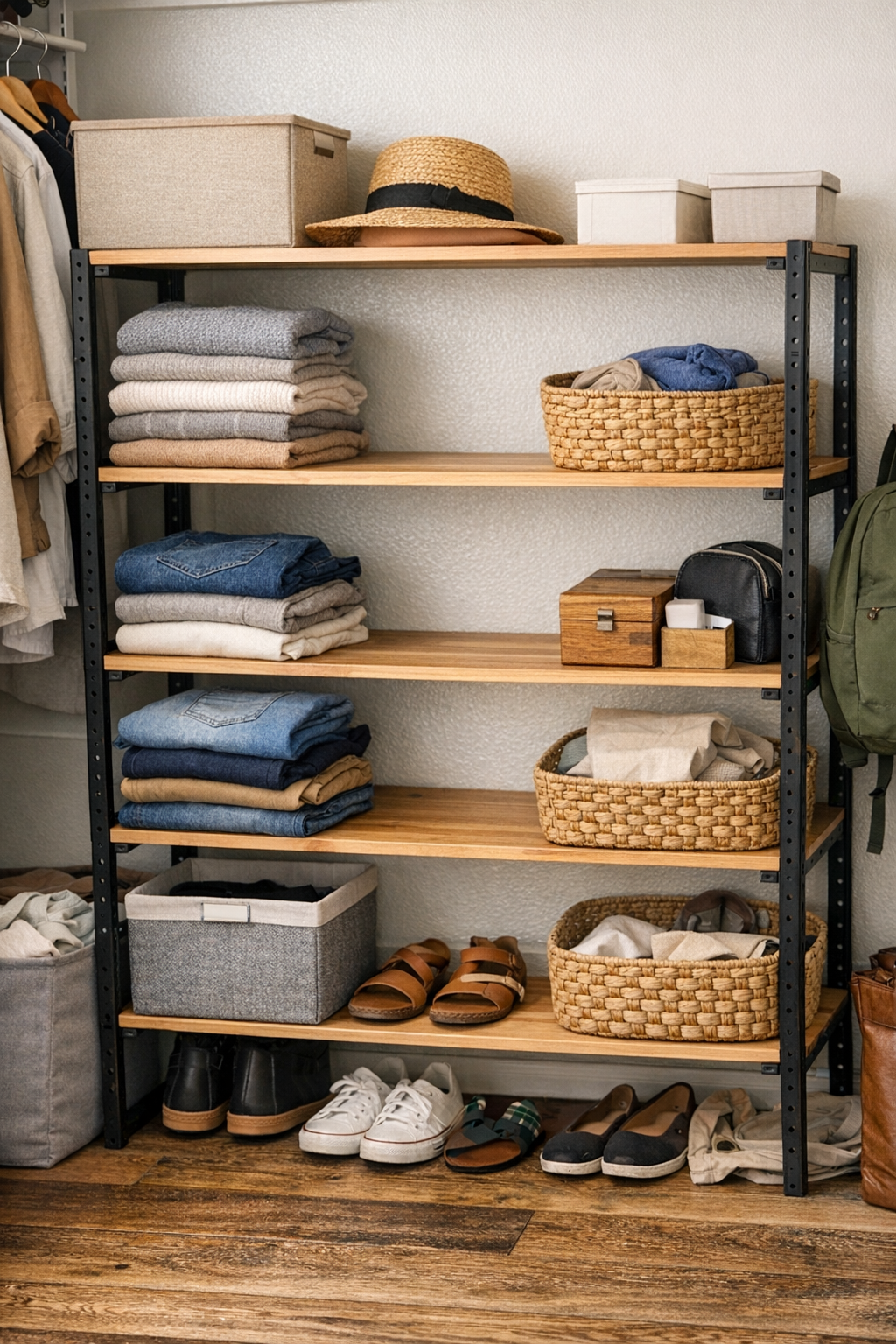
    Deliberate buffer zones short-circuit all of this. With a hand-wide empty space, adding today’s laundry becomes as simple as dropping it in. The next week, “tidy up” is a five-minute pass, not a total restack. There’s no mental tax each time you interact with your closet—just easy, smooth resets that keep pace with your routines, not against them.

    Flexible Storage Survives Real Life

    What looks unfinished—an empty stretch, an under-filled basket—quickly proves its worth. That gap absorbs whatever doesn’t fit the normal pattern: the jacket you wore once, the pair of socks for tomorrow’s run, a blanket you might need if the weather turns. Instead of scrambling to invent new spots or letting items roam, you have a ready-made landing zone. The closet stays flexible, not brittle.

    Without this point of give, most setups eventually break down. Socks migrate to coat bins. Loose books or bags sprawl wherever there’s a crack in the system. Laundry resets stretch into twice the time as you push, shift, and dig through already-mixed storage. If “putting something away” regularly means moving two other things first or just hiding them out of sight, the setup has already lost its edge.

    How to Build in Buffer, Step by Step

    If you’re always clearing, restacking, and improvising new spaces, it’s time to experiment with a structural fix: leave a hand-width gap on every shelf or in every bin. This isn’t wasted real estate—it’s the practical safety margin that keeps daily cycles smooth and categories from getting crossed. Your future self—laundry in hand, shoes unlaced and wet, holding three things at once—will thank you.

    • Position the buffer where returns and quick drops are most common—often by the closet door or at shelf midpoints for easier reach.
    • If you share space, mark the buffer off with a slim basket or bookend so it doesn’t slowly get swallowed by regular storage drift.

    This tweak works whether your closet is built-in or just a set of shelves and bins you’ve cobbled together. The payoff isn’t a prettier space—it’s a system that absorbs mess before it spreads, lets you reset almost on autopilot, and keeps piles stable longer.

    Signs You Need Breathing Room (and What to Do)

    If you find yourself moving the same stuck pile, rooting through mixed bins for lost socks, or using floors as overflow parking, your closet has tipped from “organized” to overloaded. More baskets won’t help—what you need is strategic empty space. Give yourself that margin and watch how quickly categories hold together, clutter stops spreading, and the number of times you have to redo the whole shelf drops sharply.

    Almost every closet, shoe rack, and laundry shelf gets easier to use with this one adjustment: treat intentional emptiness as essential, not accidental. The steady system isn’t the one with every inch filled, but the one that leaves room for the unpredictability of real life.

    http://closetworks.myshopify.com

  • Transform Your Small Yard with Smart Modular Outdoor Storage Solutions

    Small yards live and die by storage choices—you notice the difference in a week, sometimes in a single day. One wrong bin, a bulky chest, or a “space-saving” cabinet that claims a corner, and suddenly the best outdoor plans choke and stall. If you’ve ever tried grabbing a single tool and ended up stuck behind plastic bins or dodging deck box lids pinching the walkway, you know: the right setup isn’t about what fits on paper, but how the space actually moves around you after the first reset. In side strips, patio edges, narrow garage thresholds, even a few inches lost to a bad decision can jam up the whole routine.

    When “Functional” Storage Makes Things Worse

    The big-box promise is always the same: more cubic feet, problems solved. Until you live with it. Delivery day, the new upright cabinet looks solid—tight to the fence, “out of the way.” Three days later, you’re already sidestepping open lids, or bumping handles when crossing to the back. The good intention leaks out fast:

    • Bumping a shed door every time you want to pass, even when your hands are full.
    • The main walkway squeezed down to a shuffle, where one bin divides yard from garden.
    • The “extra” storage morphs into a pile-up—sports gear jammed behind, tools balanced on top, folding chairs wedged in sideways when you’re in a rush.

    Outdoor storage that looks organized in photos starts breaking the flow in real life. It isn’t just about space used—it’s the new friction. Storage that keeps you shifting, rerouting, or doubling back means every quick grab is its own routine, every return bogs you down, every small reset takes more effort than it should.

    How Setup Friction Grows (and Spreads)

    No small yard is single-purpose. One patch is a shortcut in the morning, a play zone after school, a grill station by dinner. But if getting the ball means dragging a chest forward, or putting the hose away buries the gardening gloves further, routines start clashing instead of overlapping. The pressure builds quietly, but quickly:

    The lived-in struggle: Return a trowel at dusk and realize the hose now blocks the only open spot. Fetch a ball, only to see it’s rolled behind a stubborn deck box. A system that stutters on the basics—gear returns, clear movement, quick resets—doesn’t just slow you down. It turns every main route into a narrow, cluttered gauntlet. The area you thought you’d “maximized” is soon robbing back square foot by square foot.

    Scenes That Signal a Bad Fit

    • Getting out a folding chair means wrestling two bikes leaning precariously on a bin, plus a rake that’s found its way into the tangle.
    • The fence path used to be the clear line through—now overflow and spillover (buckets, tools, soccer balls) stack up, waiting on another reset that never happens fast enough.
    • Corners stay wasted, collecting old debris and whatever you couldn’t fit anywhere else—the worst kind of “out of sight, out of mind.”

    These aren’t rare blips. In a tight layout, every misplaced inch turns into repeated bottlenecks, small annoyances multiplying with each new use.

    Why Wall-Mounted and Modular Storage Resets the Flow

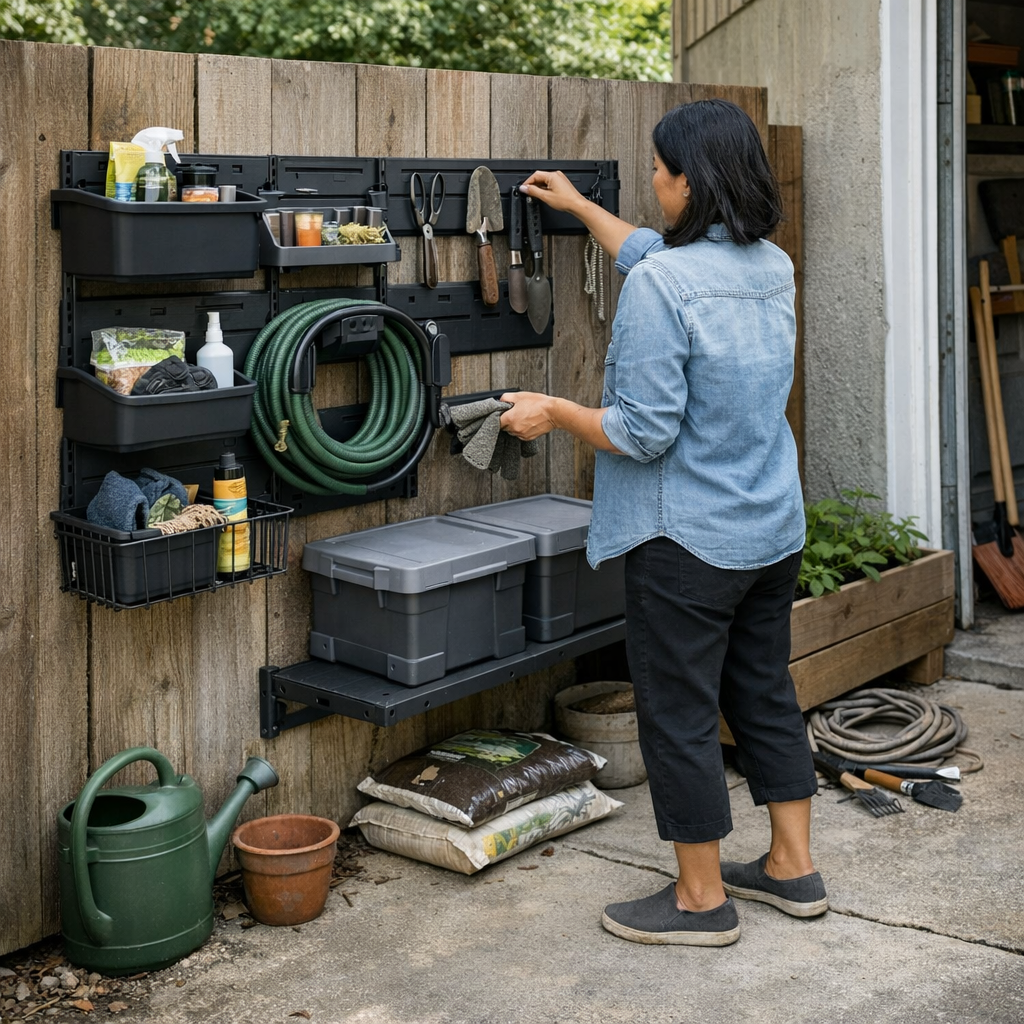
    The fastest relief usually comes from the least-used space: walls, fences, shed sides. Floor units sprawl, but a modular rail or hooked shelf at waist height reroutes the whole routine. This isn’t just theory—you feel it nearly right away:

    • Tools and hoses in reach, never buried or blocked behind a bin lid.
    • No more precision sidestepping—pathways stay open, the width is real, not theoretical, and moving a stroller or cart or a pair of bikes takes seconds, not a full minute of choreography.
    • Cleanups become a straight, direct “return flow”—hang, shelf, move on—no multi-step shuffles or unstacking.

    One week in, the shift is obvious. The end of the day isn’t a mini-move: you work your way down the line, everything goes back up, no piles gather and corners don’t quietly fill with the overflow. Every foot of walkway works as planned. The zone flexes instead of bogging down.

    Modular Systems: Keeping Up When the Yard Changes

    No real outdoor area stands still. It’s a garden and a tool drop. Play area and project bench. Movable racks, hooks, and shelves mean you don’t need to empty the space just to set up for a BBQ or finish a repair. Hooks adjust. Rails shift. Shelves pop off or move location when the kids’ gear grows. You’re not locked into a “forever footprint” for gear you use differently each month.

    Oversized chests or fixed cabinets—once convenient—are suddenly the biggest headache when priorities pivot. Anything immovable becomes a magnet for mess. Each change of season means another dreaded overhaul and a reminder the setup never really matched the way you use the yard.

    Avoiding the Routine Traps

    Look for repeat friction. If opening a gate or crossing a path always means picking up—then putting down—two items that “fit” but block the way, that spot is a problem, not a solution. Test every route with full hands; the places where you slow down, or have to shift storage just to pass, are the true trouble points.

    Think down the wall, not just at eye-level. Pegboards or rail setups at arm’s reach (for both adults and kids if you need it) let you restore order fast—without stacking or reaching dangerously. Leave high racks for long-term stashes—stuff that stays put, not your everyday gear.

    Does the Yard Feel Ready, or Always Waiting for You to “Fix” It?

    Patio-showroom looks don’t matter if the setup quietly steals time every day. The real test: after the rush of a weekend, or when the work week is in full swing, are the paths still open? Is every item returned without a dance, or do you see gear trickling back to the ground, gathering in corners, waiting for another big reset?

    The setups that actually work don’t demand constant rearranging. They keep the main spaces moving, keep clutter out of the motion zones, and never make you feel like you’re working for the storage itself. When storage flexes to match the way you use the space—the difference is obvious, and the yard finally feels like it’s keeping up with you, not holding you back.

    Find practical storage and setup options for real outdoor spaces at TidyYard.

  • Why Shared Tool Storage Systems Fail Without Clear Return Zones

    If you’ve ever shared a garage or workshop, you know the letdown after a fresh reset. The floor is wide open, shelves are flawless, tools line up like they’re posing. But the promise of order dissolves fast. Within days, the setup that once looked so right begins to slide under pressure: carts drift into new pathways, wall racks go ignored, and clutter zones emerge where the design left no margin. The hope for “once-and-done” organization butts heads with everyday habits—and by the second or third round of real work, the difference between a tidy Monday and a functional Friday is painful enough to slow you down.

    Micro-Movements: Where Friction Hides

    The real enemy isn’t just clutter—it’s wasted steps and awkward workarounds. Every scramble for a misplaced driver, every trip from bench to wall for the right wrench, costs a little time and a little patience. At first, wall-mounted rails seem like the gold standard: immaculate, visible, floor untouched. But if the wall isn’t at arm’s reach, those “few extra steps” multiply. By the middle of any busy week, benches sprout their own layer of tools. Repeated use exposes every weak link: unplanned footpaths, cart bottlenecks, dead corners overflowing with stuff that’s got nowhere to go.

    Suddenly every routine reveals the cracks—nudging carts aside just to get through the aisle, grazing a cabinet door that never quite stays closed, or inching past corners where overflow piles up. Even when the space looks “organized,” daily movement gets pinched and the area loses its rhythm.

    How Each Storage Setup Performs Under Real Pressure

    Wall-Mounted Racks: Everything Shown, Nothing Truly Handy

    Wall racks make it possible to see every tool—but rapidly expose weaknesses in real-world use. If they aren’t mounted within arm’s reach of your main work zone, they become another detour. Add more people to the mix and tools get waylaid: left on the bench “just for now,” only to stick there all week. The system relies on everyone’s memory of exactly where each item lives. After a few quick jobs, the wall display is out of sync with real needs, and suddenly there’s a drift—three hammers at the vise, empty prongs on the wall, and no one remembers who left what where.

    Floor Cabinets: Out of Sight, Out of Flow

    Floor cabinets hide mess but often slow things down. The lure of a closed door soon gives way to drawers packed unevenly and front shelves piled with whatever was in your hands at quitting time. Smaller gear migrates to whichever spot is easiest—not where it’s supposed to go. Soon enough, the thing you need is buried behind three other jobs’ leftovers. All that containment can turn into a time sink: quick resets get slower, and clutter just shifts from view to view.

    Mobile Carts: Flexible Helpers, If You Keep Them Anchored

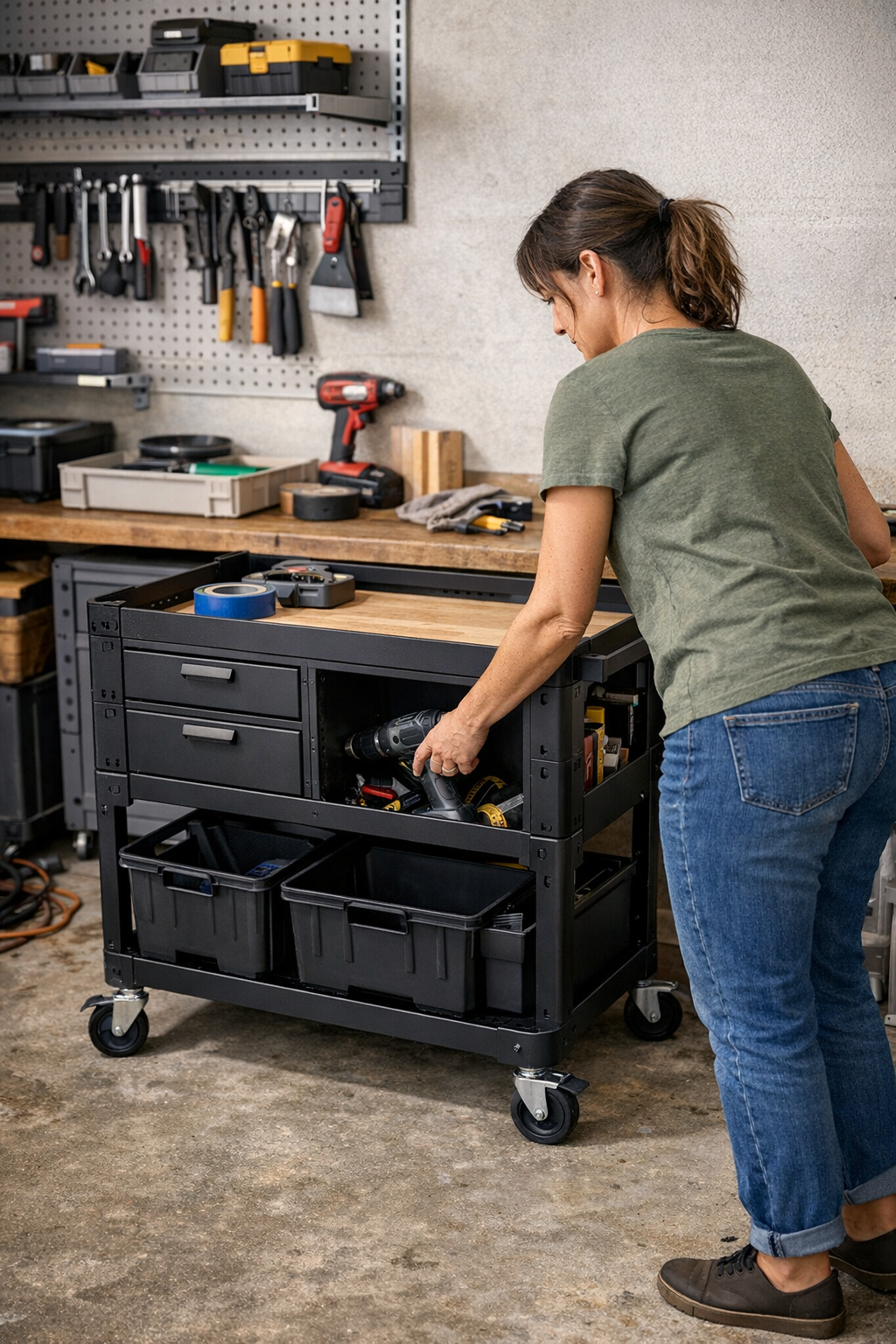
    Rolling carts and tool trolleys offer flexibility—until they become wanderers. For the first project, bringing everything to the workstation feels efficient. But carts drift; someone wheels one out of the way, then leaves it blocking a key pathway or too close to a bench. Without a clear “home base,” the cart becomes a catch-all: loose bits, stray tape, tools waiting to go back but never quite making the trip. Instead of smoothing workflow, carts become speed bumps—footprints in the wrong spot, shelving that starts collecting overflow rather than helping clear it.

    Breakdown Moments: Where the System Stalls

    Most storage systems fail not in theory, but in the rhythms between projects. It’s the “just for now” moments—a tool left out during a fast fix, a shelf filled with half-done work, a cart hijacked for something else and never returned to its spot. If three people share the space, watch what piles up by Friday: hammers and drivers stacked on a bench, carts drifting from dock to dock, cabinets packed at odd angles. The intended order gets replaced by micro-stashes and drop zones, making every reset another round of hunting, stacking, and reshuffling.

    These breakdowns aren’t dramatic. They’re silent—but they require constant small workarounds, and over time, the space simply doesn’t flow. You keep bumping the same cabinet edge every day, or slide a cart aside for the third time in one morning.

    No More “Afterthought” Return Zones

    The setups that hold together don’t just store tools; they make put-away frictionless. The quiet productivity hack: carve out a clear “return zone” near where work actually happens. Not permanent storage—just a short cart shelf or a marked bay for live returns. In one three-person shop, reserving even a foot of cart space for drop-offs changed the pace entirely: benches stayed usable, random piles shrank, and resets became second nature. The key is obviousness: you don’t have to think about where the just-used wrench goes. It’s easier to return it right away than to drop it just anywhere.

    One Adjustment, Real Flow

    Something as simple as parking the cart parallel to the main bench—never blocking the aisle, always close at hand—kept resets quick and eliminated the shuffle. Instead of stepping over wayward carts or dragging shelving back and forth, everyone stayed in motion. The layout stopped fighting your routine and started working for it.

    Make Setup Fit the Work—Not Just the Room

    The best system helps the space work the way people actually use it. Wall racks work only when the route to them is never a detour. Carts are assets when they’re anchored and always include a visible return bay. Cabinets, unless strictly managed, hide mess but slow you down and conceal overflow. The setups that survive real use don’t just store tools—they protect movement paths, prevent dead zones, and resist the slow creep of clutter into corners and aisles.

    If your shop is constantly rerouting paths, losing track of small parts, or shifting the same cart again and again, it’s not the gear—it’s the way the storage collides with reality. The most effective tweaks are practical: keep benches clear, pathways open, and return zones where they’re actually used. The difference: by Friday, you’re still moving free—no ongoing rearrangement, no tool hunts, just a shop that holds up to the work, not just the first reset.

    Find practical storage solutions for real-world use at StackNest.

  • Why Open Cat Feeding Areas Make Daily Care Easier and More Efficient

    A cat zone that looks organized on Sunday often falls apart by midweek—not because the design is wrong, but because the daily realities of refilling, wiping, and resetting reveal every weak spot. If you’ve ever dragged a chair aside just to reach the water bowl, found food under furniture because the “feeding corner” won’t actually stay contained, or skipped wiping up because your cleaning supplies are one step too far away, you’ve already felt how quickly “tidy” setups create new hassle. Most home cat arrangements pass the first glance, but the test comes after daily routines grind against overlooked obstacles: a bowl jammed behind a chair, a mat that bunches up and blocks cleanup, a litter “corner” that leaks mess into the wider room. It all feels controlled—until the slow friction makes you dread even simple tasks.

    Why “Tidy” Cat Setups Break Down with Real Use

    The gap between “looks organized” and “actually works” is easy to underestimate. Many cat owners install feeding stations snug against walls, tuck water bowls out of sight, or squeeze litter setups near furniture to keep pet gear from spilling into shared space. But every tight fit or clever hiding spot increases the odds that your next reset will steal more time from your day.

    Picture a water bowl stashed behind the kitchen stool. It sits out of the walkway, which looks fine for guests. Then you’re kneeling at awkward angles just to pour water, juggling the bowl, and shifting the stool—usually when you’re rushed or carrying something else. Edges catch drips under furniture you can’t reach. Feeding mats jammed into cupboards curl and collect debris you can’t swipe away. Every reset becomes slower: you start cleaning after the cat’s dinner, not before, and end up postponing chores because the work feels out of proportion for “just a bit of mess.”

    Hidden Friction: How Repeated Routines Turn Setups Against You

    Setup friction isn’t dramatic—but it builds. A mat needs force to stay flat. Spills sneak under bowl edges. Bowls edge farther from reach every time they’re nudged. The once-organized spot asks for more effort on each pass: what looked “settled” at first quietly starts requiring shuffling, extra bends, or a second cleanup round.

    The end result? Even if the area looks under control, routines drag—simple steps turn into multi-task faff, and reaching for one item means negotiating with everything else. Each day asks you to tweak, adjust, and interrupt. The original “finished” look now masks a string of everyday slowdowns.

    Access First: Why Unblocked Setups Last Longer

    If you’re moving a chair, tilting sideways, or unsticking a mat every time you reset your cat’s area, your setup is quietly working against you. Stylish corners and matched gear fade in value when they force physical work just to perform basic upkeep.

    Visual Order vs. Everyday Usability

    It’s easy to prize a “tight” zone—out of the way, lined up along the wall, or hidden near furniture—especially if you want to keep pet mess away from your main living space. But appearances don’t save you if every refill, wipe, and sweep is slowed by blockage. A “neat” layout may cost you more time and hassle over weeks, with your real life bending to suit the furniture instead of the routine.

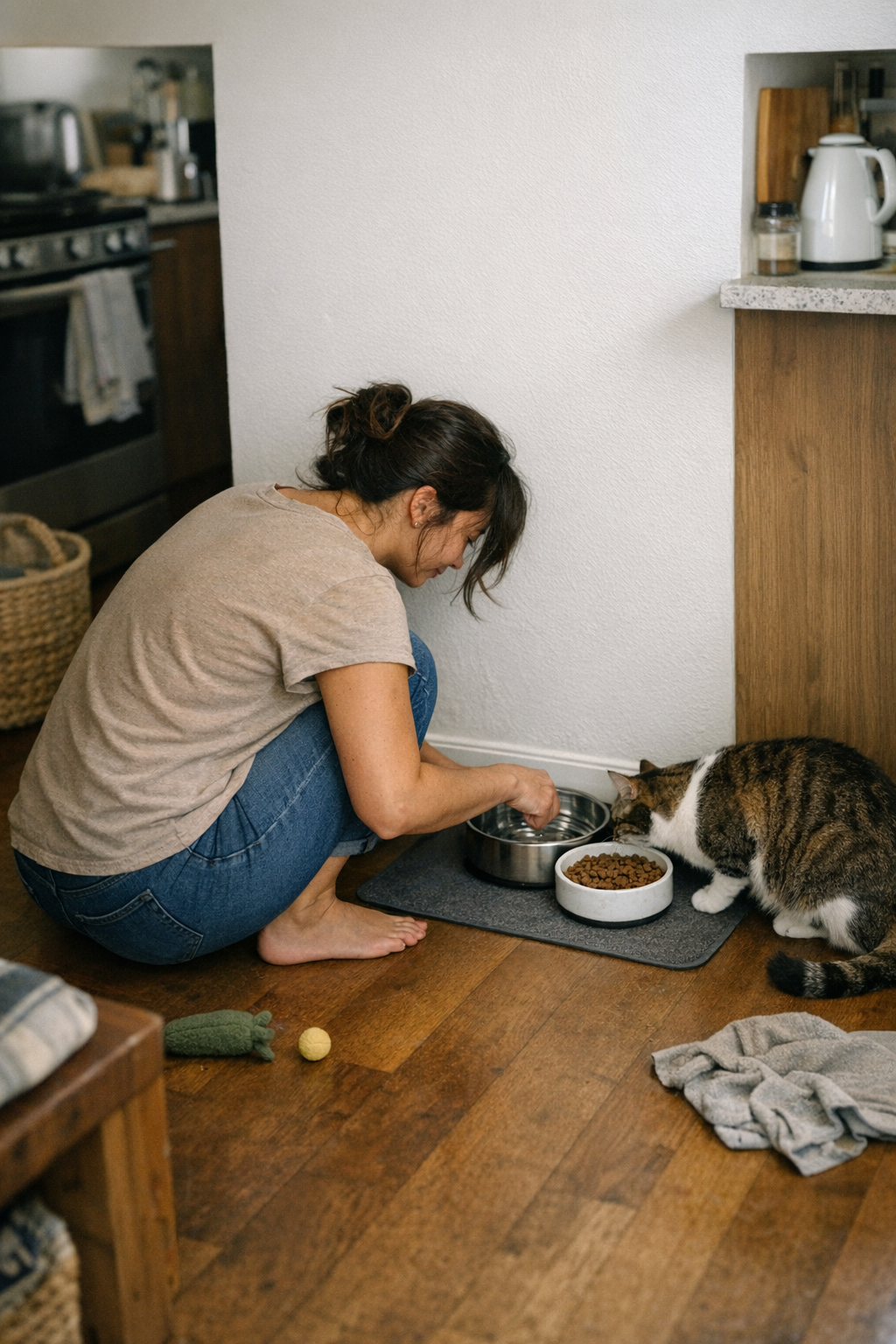
    Contrast this with an open setup: water and feeding bowls pulled away from corners, room to approach without shifting anything, mat edges out in the clear. It might look more “spread out” but each routine is faster—no spare maneuvers, fewer missed spills, easier sweep under the mat. Instead of detouring around obstacles or letting crumbs accumulate, you reset without delay—often without thinking.

    Everyday Friction Points: Where Cat Setups Start to Fail

    Weaknesses in cat setups only become obvious when they’re lived with for more than a day. Here’s what crops up as routines repeat:

    • Blocked Reach: Every water or food refill means shifting a table, moving stools, or clearing a pile of bags—without fail.
    • Mat Slippage and Curl: After each meal, mats drift or curl at the corners, catching fur and crumbs that defy a quick sweep.
    • Mess Expanding Outward: Litter and pet food trail outside their assigned “zones,” reaching under sofas or into walkways and demanding work on hands and knees.
    • Persistent Toy Sprawl: No matter how many baskets or bins, toys resurface in the busiest household paths. “Organizers” drift, making retrieval another repeated round of crawling or nudging furniture.
    • Cleanup Tools Always One Step Away: Wipes or brooms live in a cupboard or behind something else, making on-the-spot cleanup rare and leaving small messes to grow.
    • Resetting as a Project: Realigning bowls, smoothing mats, and regrouping toys goes from “just a moment” to a full, awkward process—repeated at bad angles, every day.

    These frictions don’t feel urgent the first week. Soon you let mat lines skew, crumbs accumulate, and mess expands outside the cat zone. What was “controlled” on day one now feels like a set of daily interruptions—none big, all persistent, and each deferring cleanup until tomorrow’s list.

    Scenes from Indoor Cat Life You Actually Live

    1. Arms Too Full—And One Bowl in the Way

    You’re carrying groceries into the kitchen. The cat’s water bowl is crammed between table legs. A spill happens, but cleaning means setting everything down, shifting bowls, squeezing into that gap—so it waits. Later, dried residue resists a single wipe, and the annoyance repeats. The setup looks “under control” from the edge of the room, but every interaction proves otherwise.

    2. Feeding Mat Never Flat

    The feeding mat is always buckled after breakfast. You wedge your wrist between bowl and cupboard, trying to flatten corners and catch crumbs while balancing everything in place. Over days, little delays multiply; the area that took seconds to reset now eats ten minutes because mats drift, crumbs scatter, and cleanup tools are farther than they should be.

    3. Toys Never Where You Need Them

    After every effort to corral toys in a basket, they spill into hallways—ending up under furniture you need to move just to retrieve them. The organizer itself slips behind things, so collecting toys becomes a circuit of crawling and reshuffling. Each tidy-up almost guarantees tomorrow’s interruption as scattered balls wander right back into walkways.

    4. Litter Zone That Slowly Breaks Loose

    A litter box pressed between wall and cabinet looks tucked away—but the scooper’s blocked behind a chair, wipes are a reach too far, and stray litter breaks the boundary every day. The result: three separate cleanup routines, extra reach around obstacles, and regular vacuuming you can’t actually finish midweek.

    Turning the Setup Around: Structure That Survives Repeat Use

    The true test isn’t “does this look tidy today?”—it’s “how quickly can I handle this after five resets?” Layouts that seem ideal on day one will drain patience by Friday if every use means squeezing, shifting, or chasing mess. To break that cycle, focus on:

    • Prioritizing direct paths. Set up feeding and water spots where you never fight with furniture or bump into corners. Even half a meter of clearance makes a refill tomorrow much faster.
    • Understanding your real movement. Place essentials where you actually pass, not where they fit best by sight. Routines that work when you’re distracted—or carrying things—mean less cleanup lags.
    • Visible, grab-ready supplies. Wipes, scoopers, and bins belong by the action, not behind a cupboard. Hanging them on a hook or placing them at zone edges is a small shift that saves daily effort.
    • Allowing visible “sprawl” for easier upkeep. A mat or tray that pushes further into the open room might lose style points, but it gains you time—if you can sweep under it in three seconds, upkeep stops being a project.

    Arrangements That Stop Demanding Constant Correction

    Strong setups look unobtrusive but give enough room for real movement. For example: moving a feeding station to an empty kitchen wall—away from anything blocking side access—makes it possible to reach bowl rims, flatten mats, and sweep up before spills get sticky or unsafe. The zone isn’t just visually “cleaner”—it behaves better, too. Cleanup returns to a single-step job. Crumbs don’t travel. Mats, bowls, and tools stay where you left them, not where they drifted after a week of workarounds.

    There are always small compromises—a little more shared space given over to the cat, a mat you notice more often, or a

  • Why Proper Oscillating Multitool Storage Matters for Jobsite Efficiency

    You’re swapping blades in a tight kitchen, covered in drywall dust, and your multitool kit feels like a junk drawer on wheels: missing pads, mixed-up blades, everything coated in grit. If you’ve logged even a few real days on a job site, you know exactly how accessory chaos eats away at the flow of the work itself. The reality hits hardest when the job speeds up and you’re reaching for a universal accessory kit that—on the shelf—looked “organized.” Suddenly, the pouch or plastic box that promised order delivers only delay, frustration, and another lost minute with every swap.

    How Bad Storage Becomes Another Job to Manage

    The first time you load up a multitool accessory pouch, it seems like you’re set. All those blades, pads, and scrapers in one place—ready for drilling out rusted screws, sanding into a tight corner, or making a quick plunge cut. It should work. But after a week of real use, the cracks show. Dust seeps in, loose items jostle, and you start wasting time: pawing through patches of sawdust, untangling bent blades, and smoothing pads that now feel worn or even slightly warped.

    The real friction isn’t just the wasted seconds. It’s the toll on every tool and job: blades that come out dull or chipped before they’ve seen wood, sanding pads mysteriously warped, and a slow drain on patience as you sort through a growing pile of “almost good” accessories. The grab-and-go idea quickly turns into grab-and-groan when your storage is working against you under real, gritty pressure.

    Storage Design: Where Small Choices Cause Big Hassles

    Most cases will claim to “organize,” but step onto a busy job and you’ll feel the difference between storage that works—and everything else. After all, what works on a clean bench in a store rarely survives a jobsite week of shoving, stacking, and quick hands.

    Why Deep, Tight Slots Actually Matter

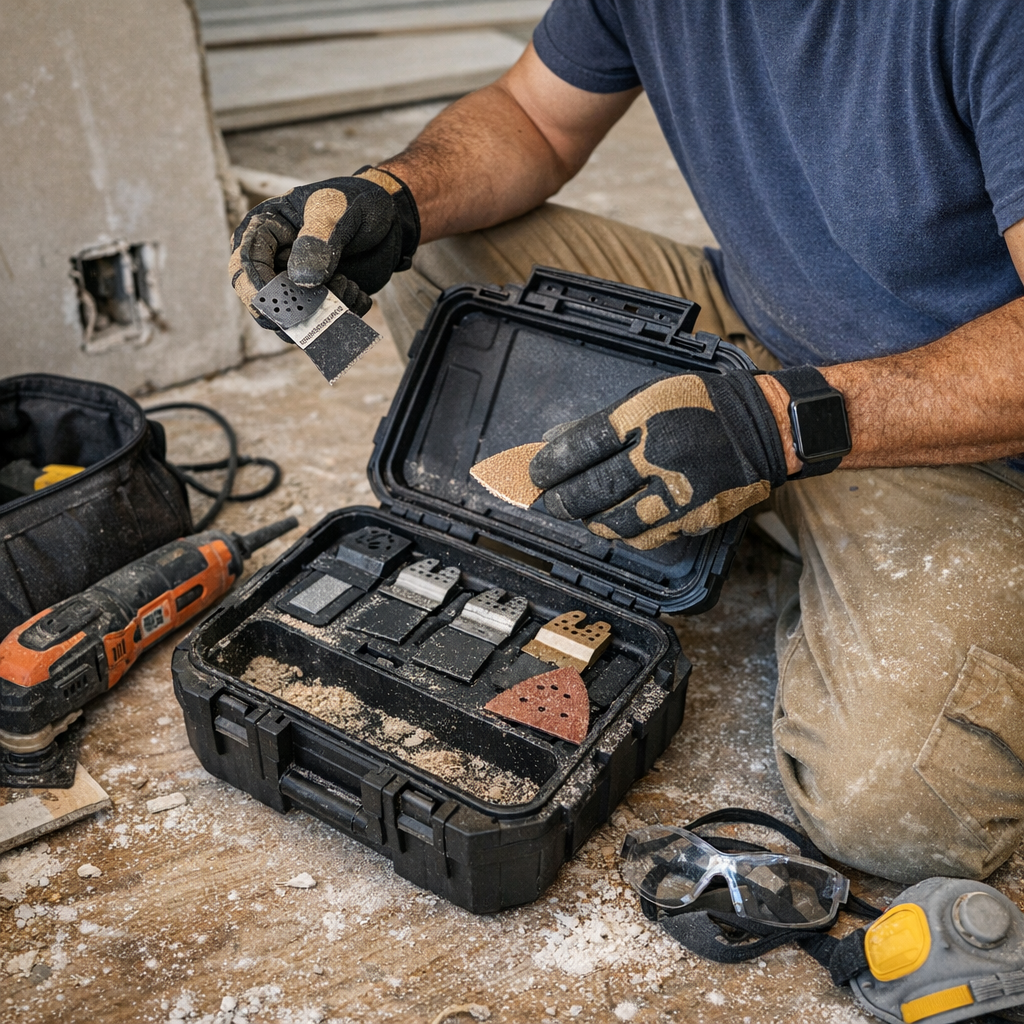
    Hard cases with custom-molded slots or dense foam don’t just keep pieces sorted—they clamp each blade in place, edges protected, teeth untouched. Open that lid after hauling through doorways and up stairs, and every piece is where you left it, clean and easy to grab. Even after rough transport, sanding dust clings to recesses, not your cutters. When it’s time to switch between a diamond grout blade and a wood-cutting bit or swap for a sanding pad mid-task, nothing’s gummed up or hiding.

    Soft pouches and generic trays? They quickly turn into a rattle trap. Blades shift, teeth grind against metal, dust packs into gaps, and you’re left with battered accessories—sometimes before you’ve even powered on. A set of saw blades bouncing in a fabric pouch starts to look, and feel, like a handful of old pocket change. Tight spaces wedge pads, and even the right part for the job can come out looking used before its time.

    Small setbacks become a pattern: a bent blade jamming in your multitool, sanding pads with mystery divots, or that moment when half the kit’s vanished under a blanket of site grit. Each seemingly tiny hassle is another loss of control and focus right when you need precision most.

    Field Test: The Renovation Pinch

    Mid-renovation, you’re bouncing between scraping residue off subfloor, trimming a stubborn door jamb, and cutting into paneling—all while dust thickens in the air. The clock is ticking. You swap from a carbide rasp to a fine-tooth blade, but the open tray you’ve tossed them in is already packed with debris. By the time you dig out what you need, one blade is wedged into a corner and the next is dulled—rubbed raw from days of being loose and rattled beside sandpaper pads. Fast-forward a few hours and a sanding sheet is missing, wedged so deep in the pouch liner you give up and reach for a replacement that isn’t quite right.

    This isn’t the rare day when things go wrong. It’s the standard rhythm on any realistic job. The cost isn’t just delays—it’s lost sharpness, more fatigue, unpredictable tool performance, and missed details at the end of a long day.

    Moving from Makeshift to Purpose-Built

    Upgrading to a fitted, hard-shell case doesn’t transform your day overnight. But the difference is steady and unmistakable. Now, each blade has its own no-wiggle seat, pads separate, and grit settles where it can be cleared—never coating your whole kit. You spot what’s missing at a glance. Swaps are faster and more predictable: it’s a one-handed grab, not a scavenger hunt. The pace quickens—not because the tool is “new,” but because the things you reach for actually work as intended, every time.

    Across days or weeks, what started as a “minor” upgrade pays out: no dulled blades from knocking together, no mystery sandpaper wear, and far less time wasted on little searches when focus should be on the cut. The interruptions disappear and you’re left with that rare sense of everything clicking—cut, sand, swap, repeat—even when the site is chaos and you’re feeling the weight in your hands and arms by lunch.

    Tool-Side Questions That Keep Coming Up

    Why do open trays cause so many headaches?

    Because loose bits move. They collect dust and knock together, dulling edges or rounding corners within days. Tracking accessories becomes a job in itself, especially after a few dumps in the truck or quick shifts between tasks.

    Is a hard-shell case overkill for basic jobs?

    If your blade changes are rare, you may not need rigid storage—yet. But if you cycle through attachments in one session, fight with stuck or lost parts, or replace accessories too often, a molded case saves time and keeps your kit lasting longer. Pros know, but even serious DIYers feel the difference by week’s end.

    How can I tell if bad storage is hurting blade life?

    Blades that feel “off” right out of the case, edges chipped before use, or pads that come out stiff and uneven—these all point to storage issues. If you’re running through accessories faster than before, take a hard look at how they ride between jobs.

    What Sets the Standard: Predictability and Performance Under Pressure

    Reliable storage doesn’t just tidy up your kit—it gets out of your way when the job gets messy. Blades are clean, pads are intact, and you lose fewer minutes to simple friction. Whether you’re grinding through remodels, fine-tuning a cabinet, or fixing a subfloor at the end of a long day, knowing exactly where—and in what shape—each tool head will be means less wasted effort and steadier results.

    Check your kit: Are blades going dull before they hit wood? Are accessories buried, bent, or grimy before you even start? Make the switch to purpose-built storage and feel how much easier, faster, and less frustrating every cut, sand, and swap can be—without needing a brand-new tool to feel the difference.

    http://gumboll.myshopify.com

  • Small Changes That Transform Daily Pet Care Into a Smooth Routine

    The cracks in your pet-care setup rarely show up when everything goes as planned. They appear the moment real life breaks the routine: a delivery at the door, a roommate passing through, or you scrambling to refill water right before heading out. That “tidy” corner—bowls pushed against a wall, wipes tucked away, the brush balanced on a shelf—starts to slow you down at the worst times. It’s not about appearances; it’s how fast you can recover when habits collide and outside interruptions force you to improvise. Here’s when the difference between a system that only looks organized and one that really works for daily resets becomes unavoidable—and why CalmPetSupply setups shift the daily grind before it turns into daily frustration.

    Invisible Gaps Show Up When Routines Get Interrupted

    At first glance, sliding the food bowl a few inches under the table or parking the grooming brush by the door feels efficient—until real conditions start stacking up. Suddenly you’re reaching for your cat’s water bowl during a quick lunch break, only to find it jammed behind a kitchen stool. Or the brush, “temporarily” set on a shelf by the entrance, disappears under a week’s worth of mail. Instead of a one-move reset, you’re stuck moving bags, shifting chairs, and explaining traffic to a confused pet that always seems in the way. What worked during a calm morning now drags out every time the flow is interrupted.

    These friction spots don’t care how neat the space looks. The towel left out for “later” gets buried behind groceries. Bowls inch into walkways, doubling as tripping hazards in days when foot traffic picks up. Toys drift into shared corners, and every disruption means micro-searches or stopgap substitutes. Organized-on-paper becomes reset-on-repeat.

    Setup Choices That Seem Tidy Can Slow You Down

    Tidy and usable aren’t the same. Reaching for the feeding mat, only to bump into a dropped backpack, turns a three-second refill into fumbling. Grabbing the bowl means nudging a pile aside, risking a coffee spill—or scattering kibble onto your laptop bag. On paper, everything is “stored away.” In practice, the setup hands you more cleanup.

    The same trap appears with cleaning gear. Maybe you “keep the towel handy” on the kitchen counter, imagining quick paw wipes after a muddy walk. What actually happens: the towel floats, lost among grocery bags and freshly delivered parcels. The first puddle you notice earns a raid on the paper towels—since the pet towel is, once again, missing. Reset time stretches, and your own mood nosedives, all because the setup looked manageable rather than actually being easy.

    One Weak Point Can Upend the Flow—Even in an “Organized” Setup

    No routine breaks down from every angle at once. It’s almost always a single fault line: the supply that’s close, but not grab-and-go. Wipes are “right there”—but sealed in a cabinet behind other stuff. The water jug is nearby, but not in your path after a meeting. At first, it’s a non-issue. By mid-week, it’s low-level routine drag: an extra trip, a forgotten refill, a tool that only surfaces when you no longer need it. The flaw repeats, quietly, every time the flow is just slightly off.

    In small spaces, tools migrate into whatever nook is free at the moment—then disappear into temporary homes for days. The hook by the food bowl is empty; the brush is with the leashes in the coat closet. A system that should erase hassle turns into repeated reshuffling—moving the bowl so you can sweep, stepping around a scoop dropped in the walkway, searching for wipes after last night’s snack run. This is how one missed return spot infects the whole routine.

    Repeated Use Scenes: How Interruptions Expose Routine Weakness

    Visualize your actual morning: coffee in one hand, your other hand nudges the pet bowl forward for breakfast, and your phone pings you away. The water refill bottle is left stranded on the kitchen table. By dinner, a roommate moves it to stash groceries, and now the bottle is missing—or worse, half-blocking the coffee maker. Nothing dramatic, just an item out of place that drags down every next step.

    After a rainy walk, you toss your dog’s towel onto the bench, meaning to put it back. Next day, you need it quick for muddy paws—only to find it buried under yesterday’s mail. You’re left dabbing mud with napkins, while the towel is just far enough out of sight to be forgotten until the next mess. Each setback adds a useless search for what should be right there.

    Smarter Setup: Reduce Steps, Shrink the Mess Window

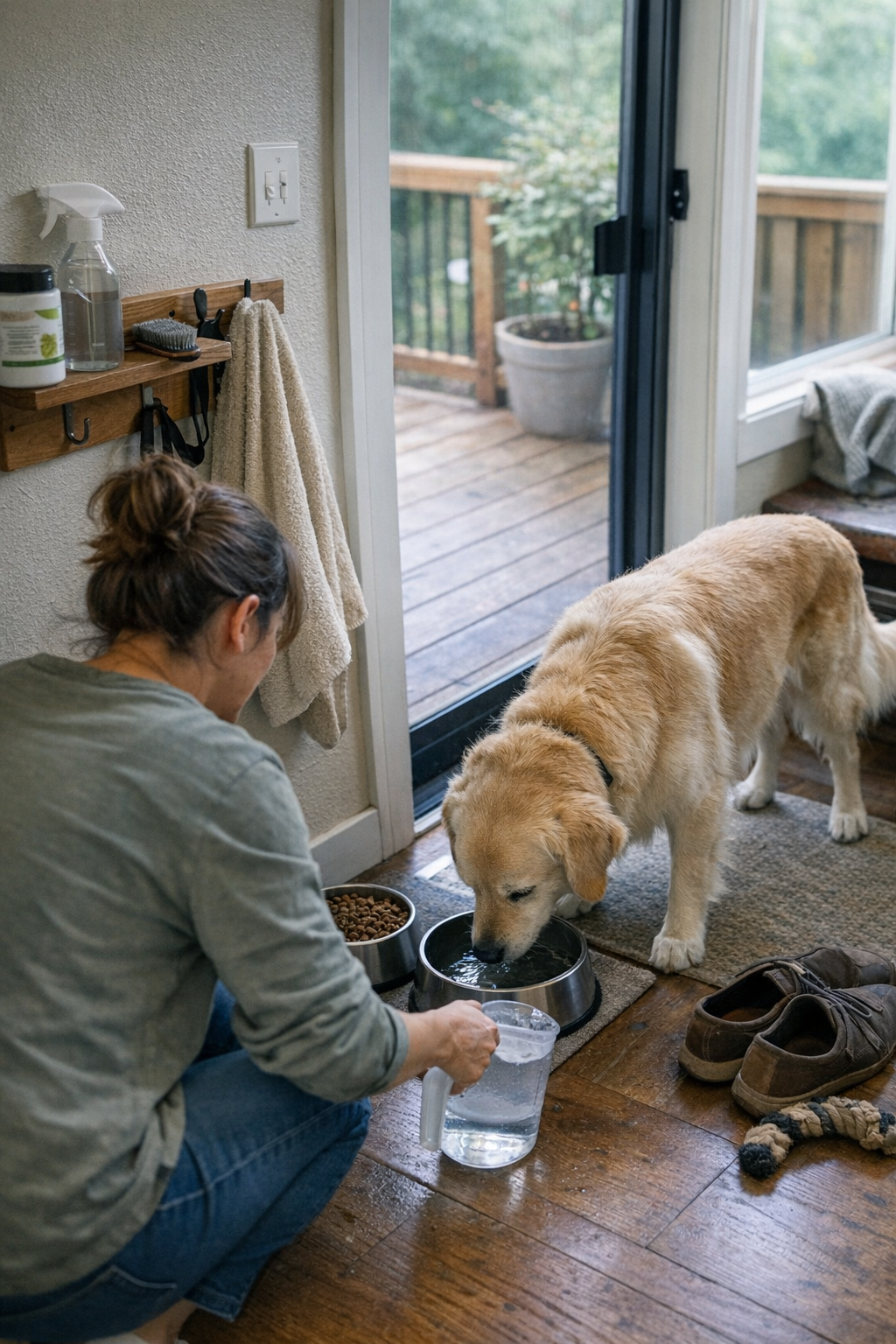
    The practical fix? Items need to live exactly where and when you’ll want them, not where they hide best. Hang a hook immediately by the feeding spot so the towel and brush never migrate. A bin for wipes or grooming tools—placed right near dog bowls or the litter box—makes spills a two-second fix, not a multi-room hunt. Storage that keeps basics in the flow of movement, not just “out of sight,” shrinks cleanup time and routine drag. The difference shows clearest when routines collide or guests cut through your space: resets get faster, and chaos doesn’t accumulate.

    A setup that works with your real daily flow cuts out repeat friction before it wears you down. You aren’t forced to tidy between uses. There’s no late-night tripping on toys, no climbing over bowls to sweep, no scavenger hunt for the grooming tool before a call. Return moves and grabs become almost automatic—leaving visible surfaces clearer not because you’re constantly resetting, but because the system makes disorder less likely in the first place.

    A Calm Routine Means Less Work—Not Just Less Mess

    A truly effective pet-care setup is measured by how smoothly it returns to ready after the routine gets knocked off course—not by how well it hides clutter in quiet moments. Any system that relies on surface tidiness will start faltering as soon as the tempo picks up: missed water refills, the “handy” towel draped somewhere new, cleaning wipes always a room away.

    Strip away the extra steps and the after-effects of micro-mess: the system flexes, and most annoyances never even form. What used to feel like an endless cycle—refill, wipe down, search, repeat—starts to fade into the background. The result isn’t spotless calm; it’s a daily rhythm that finally matches the pressure and overlap of a real home with pets—even when things get off-track mid-day.

    See how practical setups, ready for real-world resets, can change your daily flow at CalmPetSupply.

  • How Proper Kitchen Shelving Prevents Countertop Clutter and Boosts Efficiency

    Spot the first sign your kitchen storage is failing: counters that were clear yesterday are crowded again tonight. Deep shelves trap infrequently used bottles behind a front row of mugs; a single awkward cabinet leaves prep tools too far from reach, while the items you use every night—spices, strainers, spatulas—begin piling up in your main workspace anyway. The original shelving hasn’t reduced clutter; it’s just shuffling the overflow from one zone to another. As routines adjust, you spend more time doubling back, sliding aside jars, and untangling a fresh layer of disorder with every reset. The cost is subtle but persistent: what looked organized on install day simply can’t keep pace with the real repetition and movement of daily cooking.

    The Real Impact of Poorly Chosen Utility Shelving

    Only by living with a mismatched shelving setup do you realize that wasted effort adds up fast. On paper, it sounded efficient—a roomy rack, neat labels, everything visible. Three days in, you catch yourself slipping a bowl out from behind a trapped colander, or reaching around a bent shelf for that lost spice tin. Poor depth or odd placement means storage becomes a series of workarounds: essentials wander back to any available surface. Clearing yesterday’s “overflow zone” becomes part of your nightly reset, and the friction never fully leaves.

    Overflow Zones: Where Kitchen Routines Break Down

    In a real kitchen, every step matters. Put your shelved items even a foot too far from the core path between stove and sink, and retrieval turns into a detour. By midweek, fruit bowls creep onto the prep board, spices are stranded next to the burner, and your dish rack migrates to a patch of counter you thought you’d freed. The ideal “reset” you imagined is replaced by a three-step shuffle: reach, backtrack, nudge three items aside, then finally put something away. What should take seconds quietly drags into a mini reorganization—every single evening.

    Depth, Distance, and Category Logic: Why Setup Details Matter

    It’s not the idea of extra shelves that backfires—it’s the fit. Shelves deeper than 12 inches reliably invite double-stacking and hiding; suddenly, you’re guessing whether the tomato paste is behind the blender or under the mixing bowls. Category drift is just as fast: mugs edge into snack storage, utensils blend with plastic wrap. Each trip to the shelf grows more complicated, and each “quick return” leads to a pile-up at the edge. The system loses discipline, and every part of the kitchen works a little harder, only to feel less organized by the week’s end.

    How Small Choices Create Consistent Chaos

    The mess rarely explodes all at once. Instead, shelves turn into holding pens for “just for now” items: lids without containers, opened boxes balancing where they don’t belong, forgotten gadgets wedged out of sight. Eye-level shelves fill and rotate naturally because they match the way you move—upper shelves become “out of mind” drop zones for anything that doesn’t have a proper home. What’s truly lost isn’t space, but flow: routines break up, resets require backtracking, and the energy you hoped to reclaim is lost in repeated, invisible interruptions.

    Real Scene Shift: Resetting the Counters With Smarter Shelving

    The difference shows up the first time you don’t need both hands to find a pan or clear the counter after dinner. Swapping from a single, deep rack to two open, clearly divided shelves—placed at eye and elbow height—changes the math entirely. Each category (bottles above, tools below) gets a visible resting spot, and the end of night reset is a one-motion process: nothing to stack, nothing to search, no step skipped. What’s left is an open counter, even after a week of cooking, simply because the shelves match the real flow of prep and return.

    Category Zones: The Key to Ongoing Order

    True order isn’t about filling up shelves—it’s about strong zoning. Shelves in the 8–12 inch range support single-row storage: nothing gets buried, nothing is hidden behind another layer. Instantly visible categories—spices all together, utensils as their own row, prep bowls with clear separation—erase the reset headache. Neglecting clear divides means the shelf becomes just another landing pad, one doomed to bleed categories and invite the same old spillover in days, not months.

    Not Just Looks: How Shelving Choice Changes the Daily Flow

    Resets that take longer every week signal a storage system that quietly resists you. The creeping return of clutter isn’t a failure of cleaning—it’s a failure of fit. When shelving doesn’t match how you move, you’re forced to shift, stack, or restack daily just to make your own space work. That constant, minor rearrangement is the hidden drain behind setups that never quite feel “done.”

    Small Shifts, Big Relief: Spotting Better Use Moments

    The difference is measured not by decor but by movement: reaching for a tool and finding it in one step, or finishing the reset without circling the room. Responsive shelving follows the real rhythm—prep, cook, reset—making each step less about locating things and more about using them. The goal isn’t perfection; it’s the steady relief of knowing you’ll never have to reorganize the whole system just to cook dinner or reclaim your counters.

    Practical Tips: What Actually Works (And What Doesn’t)

    Stick to accessible depths: Shelves between 8 and 12 inches deep keep storage single-layered—no shoving, no buried rows.
    Mount storage near high-use zones: When shelves are beside your main prep surfaces, you eliminate the distance that encourages drift.
    Maintain strict categories: Give every shelf a single job—don’t let “just put that here for now” crowd out true zones. Shelves without strict categories always revert to random overflow.

    Why Storage Needs to Match Your Real Kitchen Routine

    There’s a sharp difference between looking organized for a photo and functioning clearly for daily life. The right shelving setup preserves open counters by eliminating double handling, hidden overflow, and nightly re-sorting—no matter how hectic the week. Good storage isn’t invisible; it’s the quiet discipline that lets the kitchen stay as usable on Friday night as it was Monday morning.

    Visit Gridry for more practical storage solutions

  • How Smart Carry-On Design Eases Stress During Sudden Travel Changes

    The real test of a carry-on isn’t how clean it looks at the start—it’s what happens after your third unexpected gate change or the fifth time you dig for your passport in a moving security line. What works on your hotel bed can become a minor disaster on airport carpet: pouches that seemed perfectly labeled rearrange themselves into a barrier course; outer pockets meant for “quick access” turn into black holes mid-rush. If you’ve ever stood still, unzipping one compartment after another with people queuing behind you and a tray teetering on your arm, you already know—friction isn’t about mess, it’s about interruptions that multiply every time you reach for something that should be ready but isn’t.

    Where Carry-On Friction Builds Up in Real Travel

    Your packing system feels solid—until it’s actually in transit, not just staged for photos. The first cracks show up in the constant churn of real airport traffic:

    • Security lines: You reach for your passport, but it’s layered below a web of chargers or tangled up with unrelated paperwork, forcing stop-and-go digging under strict time pressure.
    • Gate changes: Suddenly you’re pulling headphones from a tangle, then shoving things back together as the gate crowds shift. What was “neatly wound” in the hotel is loose and confusing two hours later.
    • Boarding and seat entry: A slim bag shows off its silhouette, but every grab for sanitizer or ID turns into a blind search through nested pen loops and stray cables. Movement stops cold while you detangle, with aisle traffic stacking up behind you.
    • Overhead bin access: Want one thing? Instead, you unload a whole layer of pouches onto your lap—or worse, the floor—just to get to that single needed item.

    The real drag isn’t clutter—it’s compounding delay. Every time a zipper, compartment, or tangled pouch stalls you, it quietly drains your spare seconds and steadiness. By your third repack or the fourth misplaced passport check, the original “order” feels more like a script for minor failure, chipping away at your focus and patience.

    When ‘Organized’ Isn’t Actually Usable

    It’s easy to trust your setup while stationary—coiled chargers, tidy folders, everything slotted with care. But the first unscheduled check or tray shuffle exposes the gap: suddenly, pulling a simple document means digging through a puzzling stack in front of other travelers and impatient staff.

    • You unzip the front pocket and find only boarding passes—passport is wedged behind a battery pack, separated from what actually needs to be together.
    • That pouch you thought streamlined? The zipper grabs a charging cable, unspooling both just to access your wallet.
    • Moving lines force you to shove items back anywhere, breaking your original order and leaving you second-guessing if something vital slipped loose.

    What holds up to a photo collapses under real travel pressure. If “organized” means stacking, hiding, or overlapping compartments, the system buckles—each access stalling the process, breaking your stride, making common airport moments feel oddly complicated. The difference isn’t in design—it’s in repeat use: some bags perform, others just look like they might.

    The Hidden Cost of Repeated Repacking

    On a tight layover, you feel it. You’re moving fast, juggling ID retrieval, grabbing headphones, unearthing a snack—all while balancing your bag on a bench edge or your forearm. What looked “streamlined” translates into multiple failed searches and resets:

    • Miss the intended pocket, and the rest become a guessing game of pouches—slower, less precise each round.
    • Every new access slides items further out of place, stacking the mess even as you try to keep up.
    • No real reset is possible: you stuff things wherever they fit, knowing you’ll pay for the disorder at the next checkpoint or seat squeeze.
    • The outer pocket holds everything—but makes you claw past the wrong objects every single time you simply want your boarding pass.

    Stillness hides most errors. The moment you step back into motion—moving from terminal to gate, from queue to scan—the weak structure shows itself. Cables pile in the wrong pocket, documents vanish under toiletries, and sanitizer hides somewhere you can’t reach on the move. You feel it in fumbled trays, in the sideways glance from a flight attendant as you block the aisle to repack—again.

    Simple Shifts That Change the Travel Experience

    Not every weak spot needs a fancy product. A single change—a proper exterior access pocket, a no-overlap document compartment, or a stand-alone quick-essentials section—can eliminate nearly all the slowdowns that pile up in airport flow:

    • Single-path retrieval: Place passport, phone, boarding pass each in a discrete, quick-access spot—no nested digging, no cross-pouch confusion. One zipper, one grab, done.
    • Vertical stacking minimized: Essentials aren’t buried; immediate-use items ride at the top or outer edge. No need to scatter contents chasing a single object deep in the pile.
    • Consistent access after real use: Whether after multiple gate changes or repeat security screenings, your structure holds—access speed and order don’t degrade over time, and your trip doesn’t turn into a cycle of correction.

    Switching to a setup where every “hot” item sits in one simple, wide-access pocket is the silent fix: gate rushes, in-seat retrieval, even double-backing for documents becomes routine, not a reset. Unconscious reach replaces conscious anxiety—your system preserves your flow. You notice not because it’s perfect, but because the obstacles that made you pause before have mostly disappeared.

    Spotting Small Weak Points Before They Grow

    New organizers, fresh pouches, or trendy wallet inserts often look effective—until the third access in busy conditions. Weak points are rarely dramatic; they’re the slow leak of efficiency you notice too late:

    • Documents drift out of place during a quick walk, ending up out of reach when it matters.
    • Small, tight-fitting pouches become blind spots—good for order, terrible when in-transit hands are busy.
    • Cables or pens catch on zippers, snagging every opening, adding seconds that matter in a moving line.
    • A configuration that wins “tidy” points at first but fails to move fluidly, forcing resets and resets again with use.

    Test your setup in motion, not in stasis: Can you reach for documents, chargers, and sanitizer with one hand while standing? Does order persist after two rushed repacks? How quickly can you move from security tray to boarding pass, from seat stow to midflight snack—all without hesitation? If you’re constantly restoring “organization” just to keep up appearances, your structure is out of sync with actual travel pace.

    When Small Changes Make All the Difference

    The point isn’t a perfectly photographed layout—it’s a structure designed for live, repeated movement: no pileups, no buried must-haves, no extra steps every time you need what you actually use. Structural choices—clear path to documents, non-tangling organizers, single-motion outer access—swap stress for flow. After a dozen short retrievals or rushed repacks, the “small” changes separate a bag you can live with from one that quietly messes with every trip.

    At CarryOnSupply, the focus is never just on packing smart—it’s on setups that remove these real friction points so your carry-on actually does its job, not just hides the mess. Shop at CarryOnSupply