
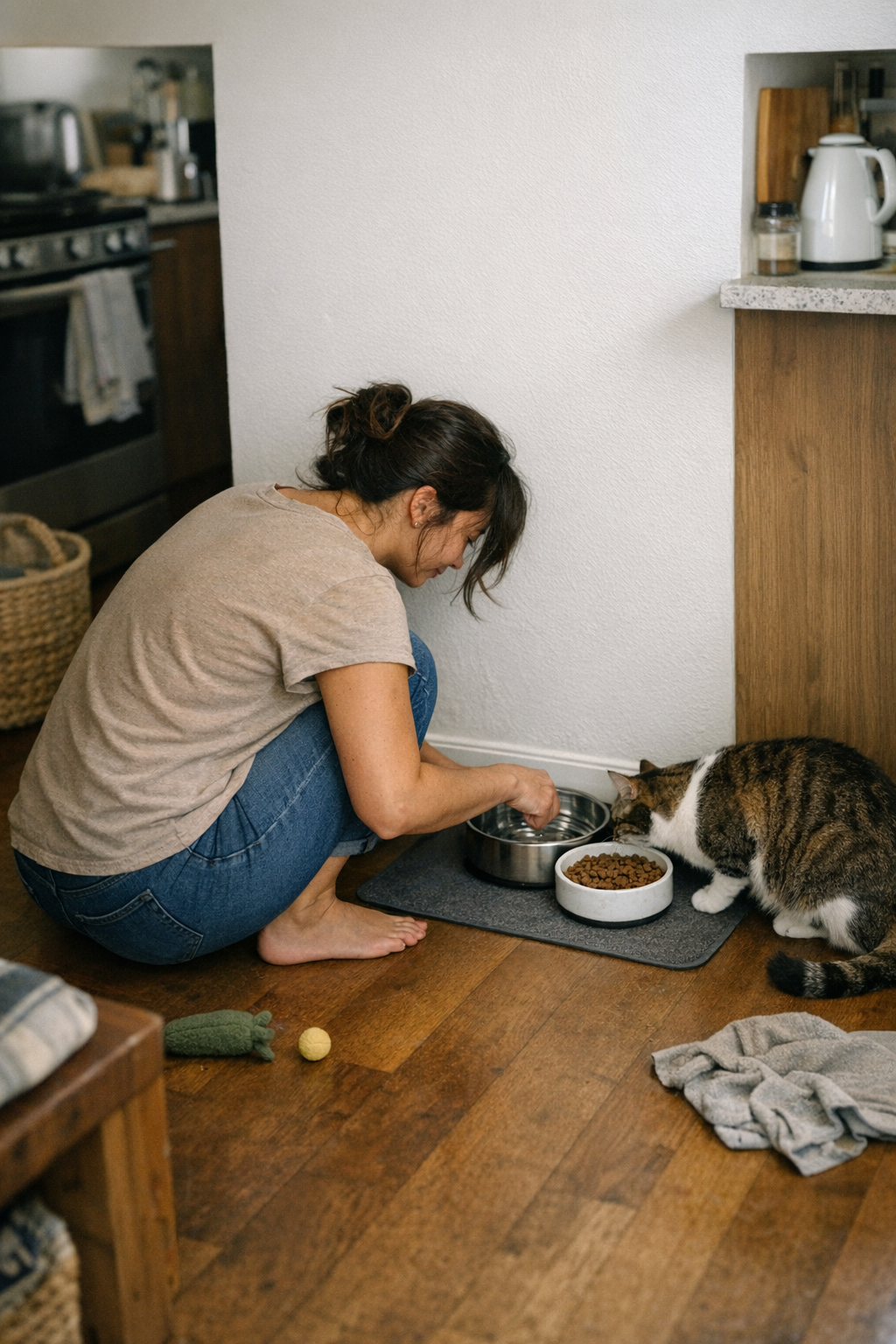
A cat zone that looks organized on Sunday often falls apart by midweek—not because the design is wrong, but because the daily realities of refilling, wiping, and resetting reveal every weak spot. If you’ve ever dragged a chair aside just to reach the water bowl, found food under furniture because the “feeding corner” won’t actually stay contained, or skipped wiping up because your cleaning supplies are one step too far away, you’ve already felt how quickly “tidy” setups create new hassle. Most home cat arrangements pass the first glance, but the test comes after daily routines grind against overlooked obstacles: a bowl jammed behind a chair, a mat that bunches up and blocks cleanup, a litter “corner” that leaks mess into the wider room. It all feels controlled—until the slow friction makes you dread even simple tasks.
Why “Tidy” Cat Setups Break Down with Real Use
The gap between “looks organized” and “actually works” is easy to underestimate. Many cat owners install feeding stations snug against walls, tuck water bowls out of sight, or squeeze litter setups near furniture to keep pet gear from spilling into shared space. But every tight fit or clever hiding spot increases the odds that your next reset will steal more time from your day.
Picture a water bowl stashed behind the kitchen stool. It sits out of the walkway, which looks fine for guests. Then you’re kneeling at awkward angles just to pour water, juggling the bowl, and shifting the stool—usually when you’re rushed or carrying something else. Edges catch drips under furniture you can’t reach. Feeding mats jammed into cupboards curl and collect debris you can’t swipe away. Every reset becomes slower: you start cleaning after the cat’s dinner, not before, and end up postponing chores because the work feels out of proportion for “just a bit of mess.”
Hidden Friction: How Repeated Routines Turn Setups Against You
Setup friction isn’t dramatic—but it builds. A mat needs force to stay flat. Spills sneak under bowl edges. Bowls edge farther from reach every time they’re nudged. The once-organized spot asks for more effort on each pass: what looked “settled” at first quietly starts requiring shuffling, extra bends, or a second cleanup round.
The end result? Even if the area looks under control, routines drag—simple steps turn into multi-task faff, and reaching for one item means negotiating with everything else. Each day asks you to tweak, adjust, and interrupt. The original “finished” look now masks a string of everyday slowdowns.
Access First: Why Unblocked Setups Last Longer
If you’re moving a chair, tilting sideways, or unsticking a mat every time you reset your cat’s area, your setup is quietly working against you. Stylish corners and matched gear fade in value when they force physical work just to perform basic upkeep.
Visual Order vs. Everyday Usability
It’s easy to prize a “tight” zone—out of the way, lined up along the wall, or hidden near furniture—especially if you want to keep pet mess away from your main living space. But appearances don’t save you if every refill, wipe, and sweep is slowed by blockage. A “neat” layout may cost you more time and hassle over weeks, with your real life bending to suit the furniture instead of the routine.
Contrast this with an open setup: water and feeding bowls pulled away from corners, room to approach without shifting anything, mat edges out in the clear. It might look more “spread out” but each routine is faster—no spare maneuvers, fewer missed spills, easier sweep under the mat. Instead of detouring around obstacles or letting crumbs accumulate, you reset without delay—often without thinking.
Everyday Friction Points: Where Cat Setups Start to Fail
Weaknesses in cat setups only become obvious when they’re lived with for more than a day. Here’s what crops up as routines repeat:
- Blocked Reach: Every water or food refill means shifting a table, moving stools, or clearing a pile of bags—without fail.
- Mat Slippage and Curl: After each meal, mats drift or curl at the corners, catching fur and crumbs that defy a quick sweep.
- Mess Expanding Outward: Litter and pet food trail outside their assigned “zones,” reaching under sofas or into walkways and demanding work on hands and knees.
- Persistent Toy Sprawl: No matter how many baskets or bins, toys resurface in the busiest household paths. “Organizers” drift, making retrieval another repeated round of crawling or nudging furniture.
- Cleanup Tools Always One Step Away: Wipes or brooms live in a cupboard or behind something else, making on-the-spot cleanup rare and leaving small messes to grow.
- Resetting as a Project: Realigning bowls, smoothing mats, and regrouping toys goes from “just a moment” to a full, awkward process—repeated at bad angles, every day.
These frictions don’t feel urgent the first week. Soon you let mat lines skew, crumbs accumulate, and mess expands outside the cat zone. What was “controlled” on day one now feels like a set of daily interruptions—none big, all persistent, and each deferring cleanup until tomorrow’s list.
Scenes from Indoor Cat Life You Actually Live
1. Arms Too Full—And One Bowl in the Way
You’re carrying groceries into the kitchen. The cat’s water bowl is crammed between table legs. A spill happens, but cleaning means setting everything down, shifting bowls, squeezing into that gap—so it waits. Later, dried residue resists a single wipe, and the annoyance repeats. The setup looks “under control” from the edge of the room, but every interaction proves otherwise.
2. Feeding Mat Never Flat
The feeding mat is always buckled after breakfast. You wedge your wrist between bowl and cupboard, trying to flatten corners and catch crumbs while balancing everything in place. Over days, little delays multiply; the area that took seconds to reset now eats ten minutes because mats drift, crumbs scatter, and cleanup tools are farther than they should be.
3. Toys Never Where You Need Them
After every effort to corral toys in a basket, they spill into hallways—ending up under furniture you need to move just to retrieve them. The organizer itself slips behind things, so collecting toys becomes a circuit of crawling and reshuffling. Each tidy-up almost guarantees tomorrow’s interruption as scattered balls wander right back into walkways.
4. Litter Zone That Slowly Breaks Loose
A litter box pressed between wall and cabinet looks tucked away—but the scooper’s blocked behind a chair, wipes are a reach too far, and stray litter breaks the boundary every day. The result: three separate cleanup routines, extra reach around obstacles, and regular vacuuming you can’t actually finish midweek.
Turning the Setup Around: Structure That Survives Repeat Use
The true test isn’t “does this look tidy today?”—it’s “how quickly can I handle this after five resets?” Layouts that seem ideal on day one will drain patience by Friday if every use means squeezing, shifting, or chasing mess. To break that cycle, focus on:
- Prioritizing direct paths. Set up feeding and water spots where you never fight with furniture or bump into corners. Even half a meter of clearance makes a refill tomorrow much faster.
- Understanding your real movement. Place essentials where you actually pass, not where they fit best by sight. Routines that work when you’re distracted—or carrying things—mean less cleanup lags.
- Visible, grab-ready supplies. Wipes, scoopers, and bins belong by the action, not behind a cupboard. Hanging them on a hook or placing them at zone edges is a small shift that saves daily effort.
- Allowing visible “sprawl” for easier upkeep. A mat or tray that pushes further into the open room might lose style points, but it gains you time—if you can sweep under it in three seconds, upkeep stops being a project.
Arrangements That Stop Demanding Constant Correction
Strong setups look unobtrusive but give enough room for real movement. For example: moving a feeding station to an empty kitchen wall—away from anything blocking side access—makes it possible to reach bowl rims, flatten mats, and sweep up before spills get sticky or unsafe. The zone isn’t just visually “cleaner”—it behaves better, too. Cleanup returns to a single-step job. Crumbs don’t travel. Mats, bowls, and tools stay where you left them, not where they drifted after a week of workarounds.
There are always small compromises—a little more shared space given over to the cat, a mat you notice more often, or a