
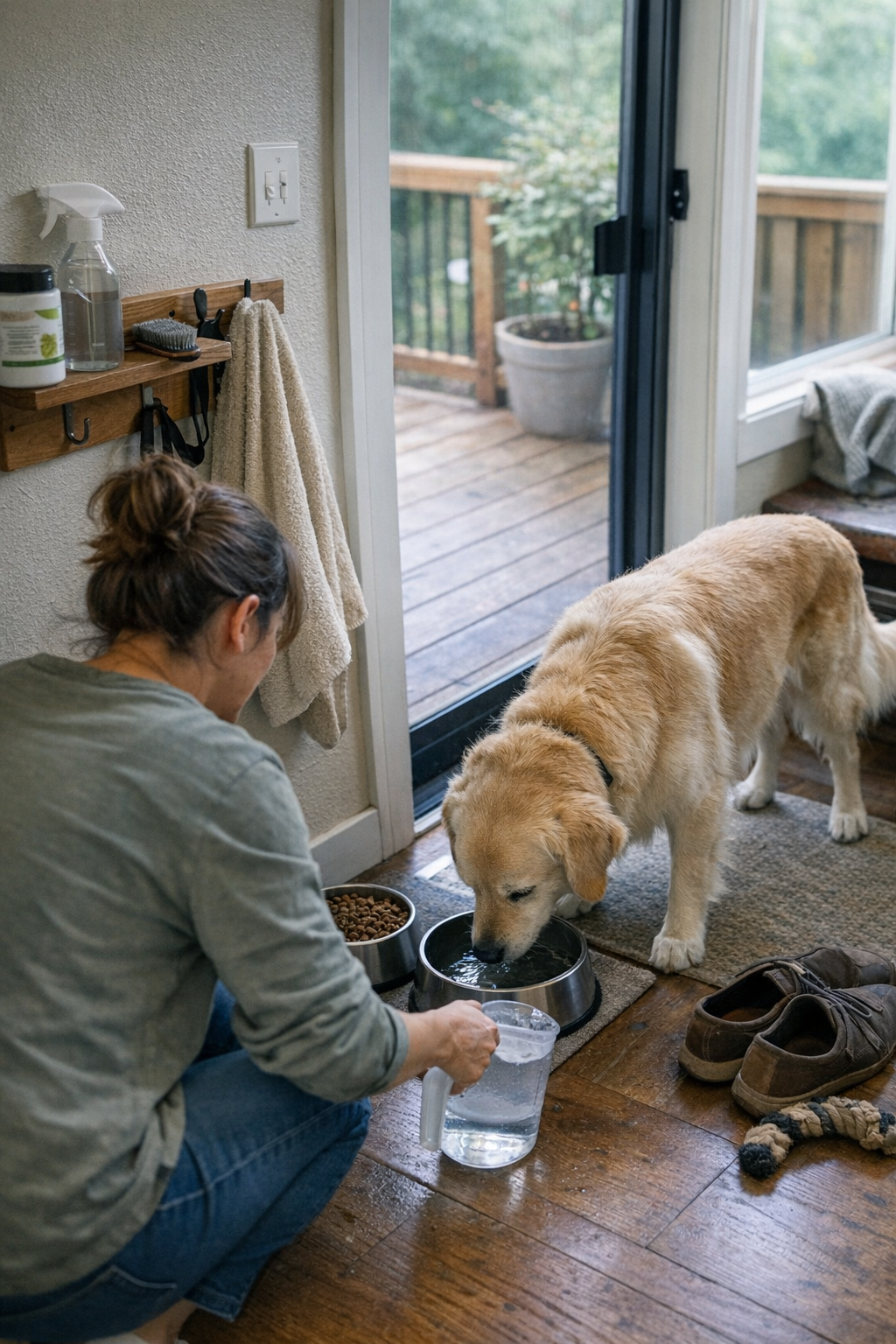
The cracks in your pet-care setup rarely show up when everything goes as planned. They appear the moment real life breaks the routine: a delivery at the door, a roommate passing through, or you scrambling to refill water right before heading out. That “tidy” corner—bowls pushed against a wall, wipes tucked away, the brush balanced on a shelf—starts to slow you down at the worst times. It’s not about appearances; it’s how fast you can recover when habits collide and outside interruptions force you to improvise. Here’s when the difference between a system that only looks organized and one that really works for daily resets becomes unavoidable—and why CalmPetSupply setups shift the daily grind before it turns into daily frustration.
Invisible Gaps Show Up When Routines Get Interrupted
At first glance, sliding the food bowl a few inches under the table or parking the grooming brush by the door feels efficient—until real conditions start stacking up. Suddenly you’re reaching for your cat’s water bowl during a quick lunch break, only to find it jammed behind a kitchen stool. Or the brush, “temporarily” set on a shelf by the entrance, disappears under a week’s worth of mail. Instead of a one-move reset, you’re stuck moving bags, shifting chairs, and explaining traffic to a confused pet that always seems in the way. What worked during a calm morning now drags out every time the flow is interrupted.
These friction spots don’t care how neat the space looks. The towel left out for “later” gets buried behind groceries. Bowls inch into walkways, doubling as tripping hazards in days when foot traffic picks up. Toys drift into shared corners, and every disruption means micro-searches or stopgap substitutes. Organized-on-paper becomes reset-on-repeat.
Setup Choices That Seem Tidy Can Slow You Down
Tidy and usable aren’t the same. Reaching for the feeding mat, only to bump into a dropped backpack, turns a three-second refill into fumbling. Grabbing the bowl means nudging a pile aside, risking a coffee spill—or scattering kibble onto your laptop bag. On paper, everything is “stored away.” In practice, the setup hands you more cleanup.
The same trap appears with cleaning gear. Maybe you “keep the towel handy” on the kitchen counter, imagining quick paw wipes after a muddy walk. What actually happens: the towel floats, lost among grocery bags and freshly delivered parcels. The first puddle you notice earns a raid on the paper towels—since the pet towel is, once again, missing. Reset time stretches, and your own mood nosedives, all because the setup looked manageable rather than actually being easy.
One Weak Point Can Upend the Flow—Even in an “Organized” Setup
No routine breaks down from every angle at once. It’s almost always a single fault line: the supply that’s close, but not grab-and-go. Wipes are “right there”—but sealed in a cabinet behind other stuff. The water jug is nearby, but not in your path after a meeting. At first, it’s a non-issue. By mid-week, it’s low-level routine drag: an extra trip, a forgotten refill, a tool that only surfaces when you no longer need it. The flaw repeats, quietly, every time the flow is just slightly off.
In small spaces, tools migrate into whatever nook is free at the moment—then disappear into temporary homes for days. The hook by the food bowl is empty; the brush is with the leashes in the coat closet. A system that should erase hassle turns into repeated reshuffling—moving the bowl so you can sweep, stepping around a scoop dropped in the walkway, searching for wipes after last night’s snack run. This is how one missed return spot infects the whole routine.
Repeated Use Scenes: How Interruptions Expose Routine Weakness
Visualize your actual morning: coffee in one hand, your other hand nudges the pet bowl forward for breakfast, and your phone pings you away. The water refill bottle is left stranded on the kitchen table. By dinner, a roommate moves it to stash groceries, and now the bottle is missing—or worse, half-blocking the coffee maker. Nothing dramatic, just an item out of place that drags down every next step.
After a rainy walk, you toss your dog’s towel onto the bench, meaning to put it back. Next day, you need it quick for muddy paws—only to find it buried under yesterday’s mail. You’re left dabbing mud with napkins, while the towel is just far enough out of sight to be forgotten until the next mess. Each setback adds a useless search for what should be right there.
Smarter Setup: Reduce Steps, Shrink the Mess Window
The practical fix? Items need to live exactly where and when you’ll want them, not where they hide best. Hang a hook immediately by the feeding spot so the towel and brush never migrate. A bin for wipes or grooming tools—placed right near dog bowls or the litter box—makes spills a two-second fix, not a multi-room hunt. Storage that keeps basics in the flow of movement, not just “out of sight,” shrinks cleanup time and routine drag. The difference shows clearest when routines collide or guests cut through your space: resets get faster, and chaos doesn’t accumulate.
A setup that works with your real daily flow cuts out repeat friction before it wears you down. You aren’t forced to tidy between uses. There’s no late-night tripping on toys, no climbing over bowls to sweep, no scavenger hunt for the grooming tool before a call. Return moves and grabs become almost automatic—leaving visible surfaces clearer not because you’re constantly resetting, but because the system makes disorder less likely in the first place.
A Calm Routine Means Less Work—Not Just Less Mess
A truly effective pet-care setup is measured by how smoothly it returns to ready after the routine gets knocked off course—not by how well it hides clutter in quiet moments. Any system that relies on surface tidiness will start faltering as soon as the tempo picks up: missed water refills, the “handy” towel draped somewhere new, cleaning wipes always a room away.
Strip away the extra steps and the after-effects of micro-mess: the system flexes, and most annoyances never even form. What used to feel like an endless cycle—refill, wipe down, search, repeat—starts to fade into the background. The result isn’t spotless calm; it’s a daily rhythm that finally matches the pressure and overlap of a real home with pets—even when things get off-track mid-day.
See how practical setups, ready for real-world resets, can change your daily flow at CalmPetSupply.