
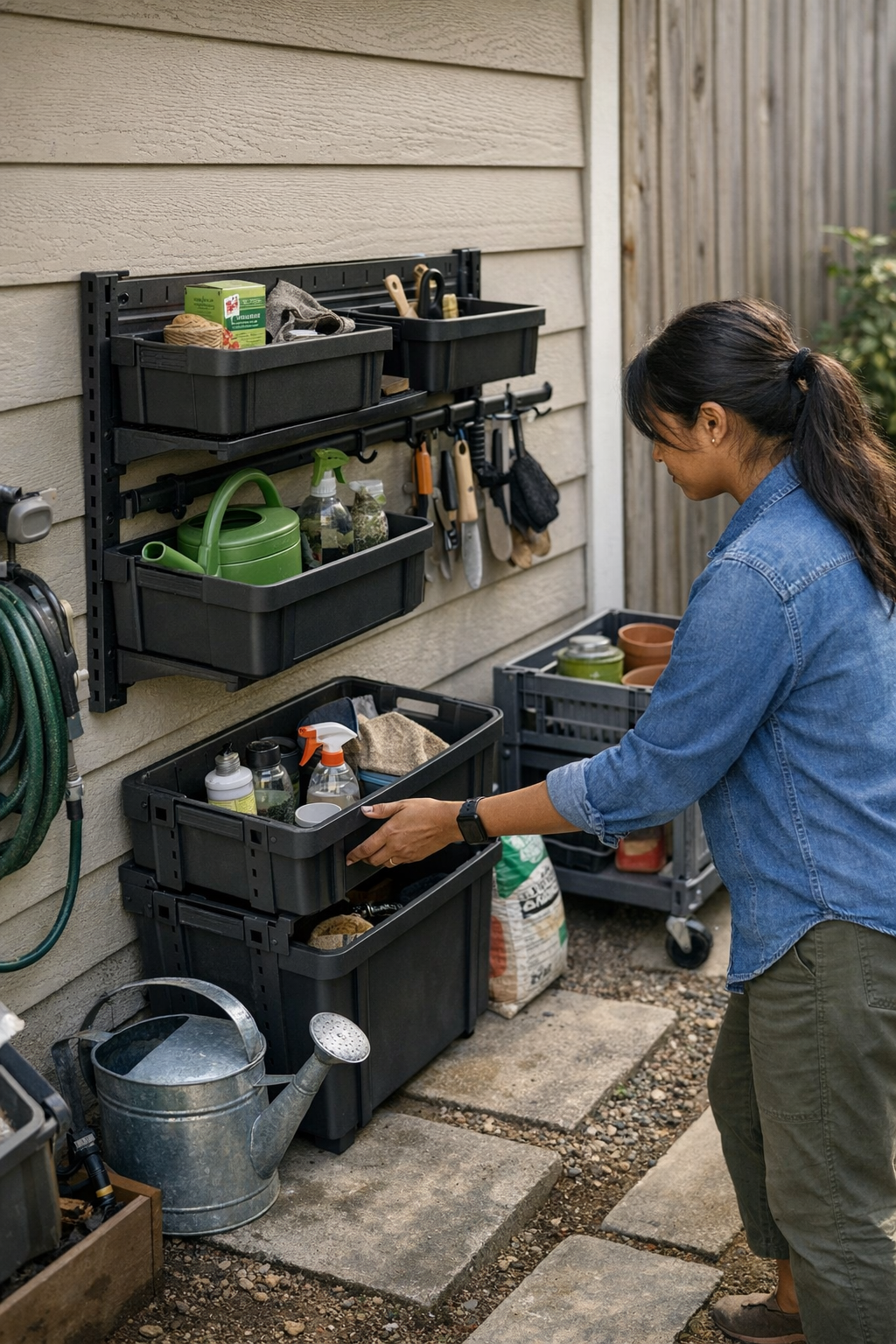
Outdoor storage isn’t neutral—it can open up your yard or quietly choke its usefulness. Step outside and you’ll see it: shoes crowd the side path, hoses loop across the walkway, hand tools sprawl under the back steps. You’re not just fighting clutter; you’re fighting blocked routes, broken routines, and the slow build-up of obstacles that turn a weekend reset into a familiar slog. The real problem isn’t “not enough storage”—it’s storage cut off from where it’s actually needed. Move bins, racks, or boxes just a few paces away from the action and suddenly, “I’ll put it back later” wins. Paths fill up with what should have disappeared. By Friday, you’re shuffling the same gear back and forth, stuck in a cycle where the setup seems organized but movement is broken.
When Storage Doesn’t Match Routine
If you’ve ever tried to keep a narrow backyard or lanky side strip under control, you know order is less about form than flow. When storage drops out of your route, even by a step, resets get clumsy. You finish watering—gloves get tossed onto a step, not back into a box. The sprayer sits by the hose instead of disappearing. A spade rests near the beds. Soon, it’s not just a pile in one corner—awkward footprints and drip zones block the gates, a bike trip becomes a balancing act, “quick fixes” stay stuck in mid-task. Every day, you find yourself nudging boots or kicking hoses just to get through.
So you add another bin. But most yards already have enough “solutions.” The issue is timing—can you actually return gear when it counts? If a bin’s lid jams or a wall hook asks you to detour, order collapses. The telltale signs pile up: a back corner behind a storage chest where overflow settles, a fence line that catches whatever’s in your hand as you head inside, a paved edge you keep promising to clear “this weekend.” The wrong setup quietly guarantees repeat mess.
Placement and Flow: Where Setups Fail or Succeed
The difference comes down to inches and instincts. Look at floor storage eating up walking space: a bin in a high-traffic zone actually triples its footprint, trapping access and making you step over, not through. Freestanding boxes at the far end of the yard almost never get used for daily tools—the useful stuff piles up where you actually work, not where a catalog said it should “fit.” Wall racks that cut across a path—so you have to dodge boots or duck past a ladder—swap one pinch for another. The flow gets slower, not smoother.
Shelving seems open-handed, promising speed, but a half-emptied rack just advertises the next mess, making you avoid it instead of using it. Closed cabinets look neat for a day—but if you need to step out of your normal loop to reach them, leftovers collect outside, and the chore of “resetting” grows. Placement that’s off isn’t just inefficient; it quietly sabotages every reset you attempt.
Real Yard: The Setup in Practice
Picture a yard where everything—watering, pruning, sweeping—ends at the same bottleneck. For months, a lidded storage chest lived two strides beyond the hose bib. The result: gloves and pruners never made it inside. Gear clustered on top of the lid, then migrated—one piece at a time—along the fence or into the main walk, until blocking the path was just the way things were. A single extra step was all it took for “putting things away” to become “stashing things out of the way.” Every Friday, energy for another “proper reset” wore thin, and the setup that looked organized failed the only test that mattered—routine use.
Just relocating the storage—a modular rack right by the fence, where the hose ends—instantly changed the pattern. Gloves or sprayer needed no detour to drop. Suddenly, the side path stayed open; gear stopped wandering, and the patch that always collected overflow actually cleared. The reset shrank from a full chore to a five-second move—the real result was fewer bottlenecks and an outdoor space ready for the next use, not stuck in catch-up mode.
Setup Habits: Tiny Friction, Big Impact
Clutter is only the symptom—the real fight is against little barriers that turn returns into chores. It only takes one awkward hinge, one out-thrust rack, or the wrong-sided bin lid to make a “solution” slower than leaving things out. A shoe rack poking into a side gate, a bin lid hinged away from the hand you carry gear with, a storage seat that won’t open unless you move everything stacked on top—these are the slow leaks that kill good intentions week after week.
Dead corners and blind strips set the trap: what doesn’t have a proper return zone starts pulling the rest of your gear out of line. If a wall system soaks up overflow faster than you can deal with it, or your reset speed drops midweek, it means your storage matches the blueprint, not your habits. The patio looks tidy from a distance, but the routine—the moving, reaching, fixing—still gets stuck. That drag is what makes a place feel “off,” not a few weeds or scattered tools.
Making Storage Match Real Movement
The most resilient setups aren’t the ones that check every box—they’re the ones where organization takes no extra thought. Position storage at task endpoints. Hang caddies right by the faucet or mount utility hooks where shoes come off naturally. Trade out bins you have to step around for wall racks that use dead air, not floor space. If a corner keeps snagging stray gear, make it the new drop spot—not a last resort.
Even small tweaks matter: a hook placed within reach of the garage entry trims seconds off every reset and cuts back visible mess. Swap a deep chest for a shelf at shoulder height, and you stop squatting but also stop blocking the way. The faster you can move through a routine drop-and-return, the less likely clutter is to migrate—so resets get lighter and the cycle of “should sort this out” actually breaks.
Real-World Reset: Accepting Imperfection, Stopping the Slide
No outdoor setup erases hassle, but the best ones make everyday resets more like muscle memory, not another weekend burden. Don’t chase a static, pristine shed or a patio ready for catalog photography—aim for setups that flex and recover through wet weeks and busy evenings. Fast resets, obvious drop points, paths you can actually use—even when things aren’t perfect, those are the wins that last.
Watch your own patterns: what zone pulls in the leftover boots after a rainy day? Which entry gets blocked first, and which “solution” secretly creates one more mess? Reset your storage to match those daily routines, not what looks best in a brand photo. Every yard, big or small, develops its own use-rhythm—effective organization simply rides that beat, not the other way around.
Explore practical outdoor solutions at TidyYard.