Category: Travel & Drive

  • How a Night-Before Reset Transforms Carry-On Travel Efficiency

    Most carry-ons fail right when you need them most: packed with precision at home, then unraveling at every airport checkpoint. The structure that looked smart in your living room—pouches zipped, cables wrapped, documents slotted—starts showing cracks the moment you hurry for your passport at security or fumble for a boarding pass while juggling trays. The problem isn’t organizing once; it’s surviving every rushed reach and awkward reset. What works for one tidy night rarely works for three cycles of pressure, especially when you’re pressed for time at gate entry or forced to repack with a line building behind you. This is where a bag that “looks organized” often drags you down, and where real carry-on design—spotted at CarryOnSupply—shows its difference.

    When Neatness Collides with Movement

    The bag you felt smug about at home can turn on you fast after two airport turns. Slide it into a security tray, and layers that seemed orderly become a slow-motion obstacle course. One pouch blocks your passport; an “organized” document gets lost behind a cable wrap. Unzipping for a laptop means fishing past snug pockets, unstacking organizers now stacked on top of each other. Each layer adds seconds—or hands—where you only wanted one quick pull. What once looked like organization now demands a full partial unpack, just to retrieve one item amid the crowd.

    Even minimal layouts backfire if they require an exact reset every single time. That neat row of pouches turns into a cascade on the security belt. Hunting for a pen or a phone cord mid-boarding means juggling slots and stacking organizers in your lap. Unless a section survives the push and pull of real travel—with items used and returned under stress—being “organized” quickly becomes another friction point.

    The Drag of Over-Controlled Packing

    Perfect-at-home systems—layered organizers, double-stacked pouches, ultra-nested inner pockets—start to suffocate the minute you move. Packing every inch for “maximum control” builds booby traps in actual use: the zippered pocket you can’t reach without emptying a layer, the tech organizer that makes you detangle three cables to grab one, the “safe” compartment that hides your boarding pass during back-to-back checks. Packing control turns into micro-delays, each reset slowing movement instead of speeding it.

    • Tray logjam: That tight document holder you tucked behind a pouch at home makes you dump half the bag for a passport scan.
    • Organizer gridlock: A complex cable case that snags your only charger with three others, forcing a reverse Tetris game each time you recharge.
    • Blocked access: A zipper pocket you thought was “secure” at home is now buried when it’s time for an ID at boarding—turning the quick check into an awkward scramble.

    With every repeat, the control you designed in becomes a chore you have to unwind before moving forward again.

    Resets That Restore Flow—Or Create New Snags

    Most travelers have their “reset ritual”—everything refolded, compartments reassigned, every item in its lane the night before a flight. But under airport conditions, neat packing is only half the battle. Lived-in flow depends less on perfect stacks and more on keeping high-frequency items exactly where fast retrieval won’t jam up the rest of your setup.

    • Where do you feel a snag—zippers catching, pouches wedging, pockets overlapping?
    • What have you had to pull out entirely just to get one thing back in motion?
    • Do you need to split your bag open just for a single boarding card or charger?

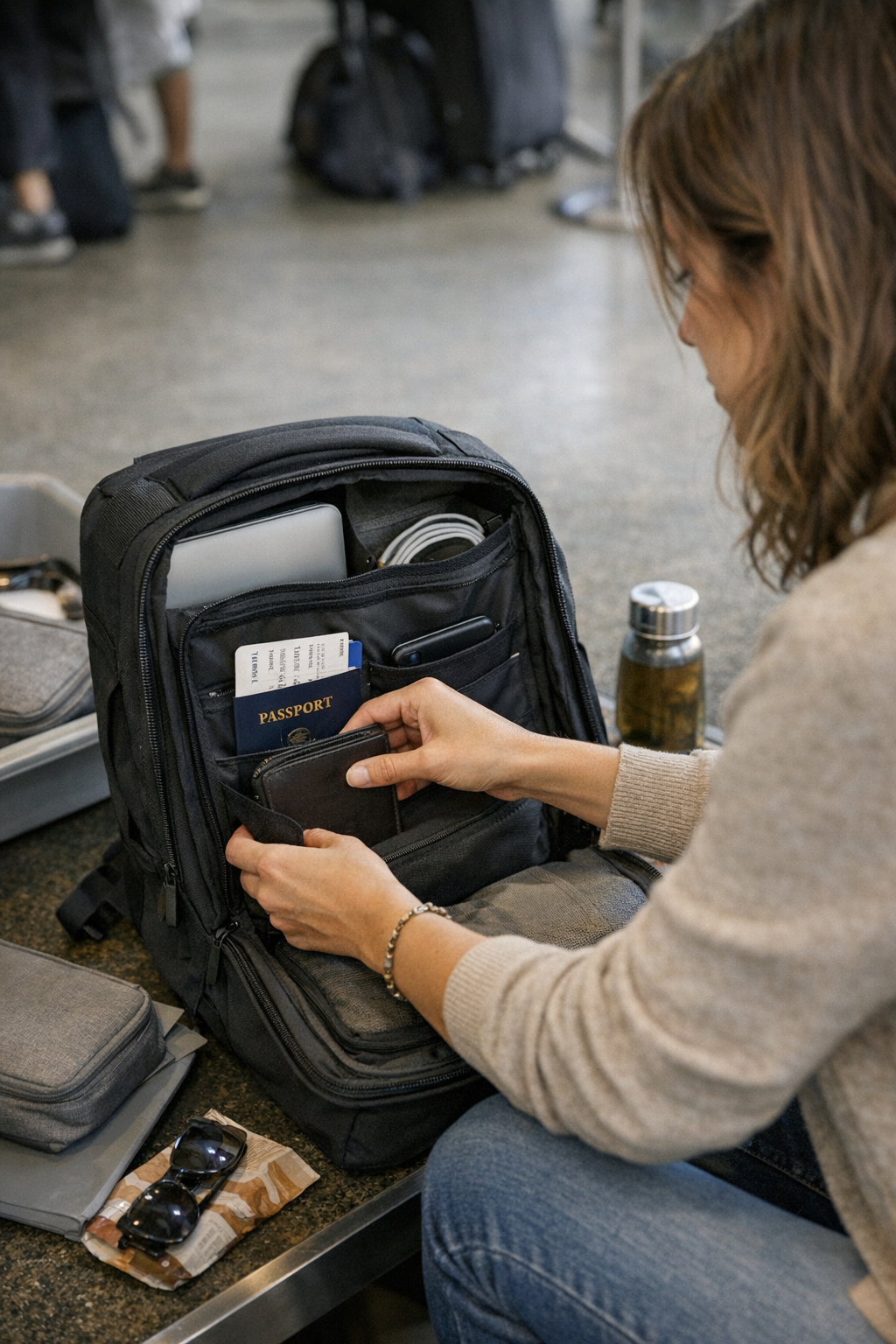
    Real resets protect your fastest grabs: passport, phone, wallet, tickets. These don’t belong deep in a tactile maze. Design that endures airport stress means fewer doubled-up compartments, flat easy panels for high-use items, and one zip—never three—to reach what you actually use at each checkpoint. It isn’t the neatest section that works; it’s the one you don’t have to think twice about at boarding or security.

    The Real Test: Returning After Repeated Rounds

    It’s easy to be “organized” once—hard to stay that way after a day of transfers, tight gates, and three rounds of partial repacks. With every lap, slick setups often collapse where it counts:

    • Gate pressure: Boarding group called—are you digging through half your bag for the phone, panicking as people wait?
    • Bin access: Needing a charger mid-flight—can you grab it without spilling the contents, or do you wedge the bag between seats for awkward access?
    • Security repeat: Every time you slide the laptop out, does it unravel the careful sequence you set up at home?

    Bags that pass one test often fail the second or third. The repetition exposes where a bad pocket, unnecessary overlap, or rigid layout turns a five-second task into a clumsy minute-long wrangle. At a certain point, friction multiplies; your setup goes from “looks under control” to “slowing you down with every routine action.”

    Overlapping Compartments: The Source of Repeat Friction

    Nested, overlapping, or cross-stacked compartments—the minor mistakes that don’t show up in your bedroom mirror—compound every airport routine. That snack sleeve covering your wallet, or the tech pouch in front of key documents, adds a new step every time you reach. Each overlap that felt harmless at home magnifies when:

    • ID buried two-deep: You need to fish out two pouches before you find the one with your boarding pass.
    • Disappearing act: A pen or headphone slides behind a toiletry kit, not to be seen until touchdown.
    • Forced repacks: After one rushed grab, the only way to reseat your items is to start from scratch while the line behind you grows impatient.

    The pattern stays the same—every added step shaves speed off your travel routine, making the bag feel less like a tool and more like a chore to manage. A crowded or over-featured organizer punishes you with drag, even if it hides the mess for a moment.

    What Actually Makes a Carry-On Setup Work?

    After missed layovers, sprinted connections, and multiple rounds of “just one more check,” the difference always comes back to: Can you get to what you use most without breaking your own setup? For most travelers, the best switch isn’t adding organizers, but leaving certain sections open and uncongested. One fast-access panel for documents, tickets, and a pen beats a stack of zippered helpers nine times out of ten—especially during checkpoint sprints or repacks outside the arrival gate. The setups that last aren’t the ones that only look good after a reset, but those that move as smoothly on the third use as on the first.

    After trying the “open zone” approach—one dedicated spot, always unburdened for essentials—the endless pouch shuffle faded fast. Resets stopped collapsing at the next squeeze through security, and the whole bag started feeling… lighter. You see the contrast: setups that survive real-world cycles, versus those that only hold together for a single photo.

    Design Choices That Survive Real Airport Routines

    • Protect core pockets for high-frequency items—don’t double them up or stack behind zippered layers.
    • Limit overlapping compartments near main access points; avoid pouch nesting where it slows your hand during the busiest moments.
    • Keep retrieval a one-move task, not a multi-draw process. Each delay during a checkpoint is a design flaw, not just a packing error.
    • See how your setup holds after two airport cycles, not just a tidy kitchen table reset.

    If you travel back-to-back, hustle between terminals, or often reset in cramped spots, these choices translate directly into smoother movement and less dead time. The right carry-on design takes weight off your transitions, not just your shoulder.

    After the Reset: Does Your Bag Still Move With You?

    When you arrive, don’t just check whether your bag “looks orderly”—test how it moves. Does grabbing your passport, re-seating a laptop, or pulling a charger still require digging through packed layers? If your “reset” only restores appearances, it hasn’t solved repeated drag. True improvement comes where overlap is minimal and items needed most are always a clean reach away. The margin between an “organized” carry-on and one that lets you move lighter is stubbornly specific: fewer barriers between need and access, especially as the travel cycle repeats.

    Explore carry-on tools and travel organizers at CarryOnSupply.
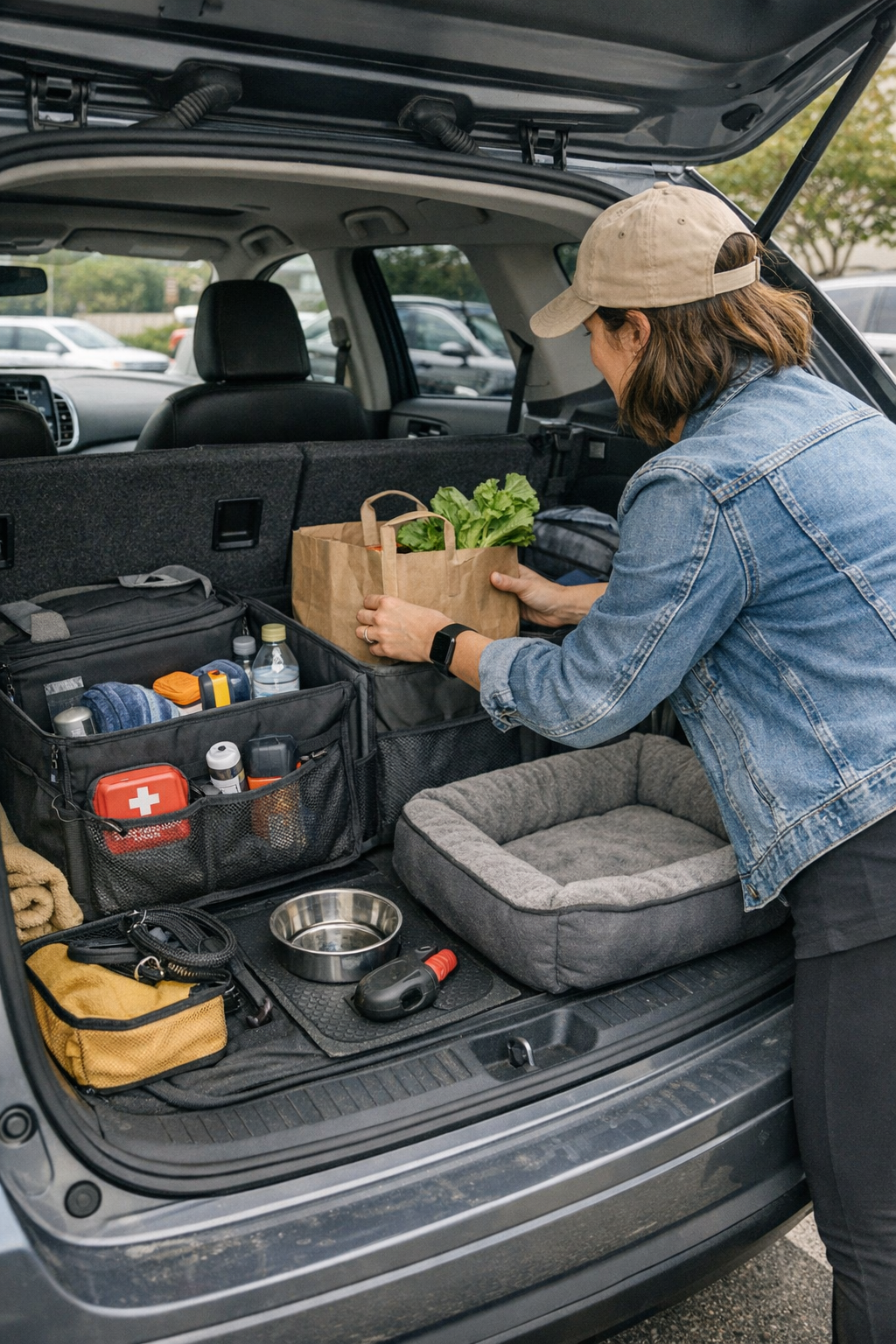
  • How Smart Car Organization Reduces Daily Driving Distractions and Fatigue

    A car that looks organized isn’t always easy to use. Most drivers know the gap: you open the door after work, spot the neat console, but still need to sweep aside a drifting charger, fish a receipt from the cupholder, or wrangle a jacket that’s migrated to the footwell. The hard truth—outward tidiness doesn’t survive real daily routines. Setup shortcuts, bins, and mats bought for control end up creating new trouble once you’re actually driving: shifting mats, tangled cables creeping near pedals, hidden essentials that slow you down. The difference between “looks neat” and “works smoothly” shows up fast, and the friction comes back even after last night’s cleanup.

    When Tidy Looks Don’t Add Up to Smooth Use

    What works for looks rarely works for repeated action. A cable, coiled out of the way when parked, finds its way under your heel mid-commute. A closed-lid organizer hides clutter, but turns a quick grab for your phone or parking card into a hassle. The right floor mat slides or buckles in a week, jamming by pedals or trapping dirt along the edge. Solutions that start tidy begin to feel like soft obstacles: every re-entry, acceleration, or stop exposes their limit.

    The routine repeats: you’re nudging that charger, smoothing a mat, or collecting rogue coins at almost every stop. Each minor fix interrupts your flow. Over a week’s worth of errands and commutes, these friction points add up—trips slow, quick actions turn into a hunt, and the promise of order morphs into a cycle of low-level annoyance. Looking organized isn’t the same as feeling in control behind the wheel.

    Everyday Routines Where Setup Friction Shows Up

    The “Clean” Car That Still Slows You Down

    Errand loops make the mismatch obvious. By the second or third stop, that cable looks smartly tucked until you have to untangle it from a water bottle. An organizer bin corrals receipts, but blocks access to your charger or favorite gum. Every fast corner, the cargo in your trunk slides and thuds—forcing you to re-stack groceries or bags before heading home. The smarter your setup looks at noon, the more disarrayed it feels by evening.

    Slippery Seats and Wandering Items

    Seat protectors, meant to control mess, can slip out of place or bunch up during normal entry. A jacket, tossed neatly on the seat, slides into the footwell on the very first turn. Grooves in the mats gather keys or coins escaping the intended bin. The same escape and retrieval cycle happens day after day: scooping up fallen items, resetting covers, reaching awkwardly for things that didn’t stay put, and never quite fixing the daily break in flow.

    How Repeated Use Exposes Weak Points

    Repeated car use makes neat solutions fail where they aren’t built for routine movement. You install a trunk organizer for groceries—but if you need to load something big on the fly, you fight the structure or have to lift bags high over stiff sections. A fashionable bin hides small items so well you end up hunting under seat gaps for your parking pass. Good intentions backfire: the “solution” now creates new slowdowns or hides clutter in harder-to-reach spots. For shared cars, these weak points multiply—one person’s smart fix is another’s obstacle every single trip.

    That’s the irony: what looked solved at a glance—tidy cables, covered bins, covered seats—becomes a source of fresh micro-annoyances the more often you drive, park, recharge, or reload. With every re-entry, the practical limits of a poorly-matched setup show themselves, sometimes in new ways only obvious after days of use.

    Stable Structure: The Subtle Upgrade That Reshapes the Routine

    When you switch to structure built for actual use—anchored cable guides that don’t shift, low-profile trays, divided drop-zones, seat covers with grip, open coin and card slots—the friction eases. Actions that used to stop you—a charger wrapped underfoot, a mat curled by the pedals, a phone sliding halfway off the seat—stop happening. Loading groceries, the trunk organizer flexes aside or grips bags instead of blocking your reach. The daily flow restores itself: get in, grab, go.

    Fixed Cable Routing in Action

    No more tracing a charger with your toes or ducking under the seat for a cord. Cable channels keep lines exactly where you left them—pinned along the console, out of the footwell, ready every time. With hands full, plug in as you sit. The result: no more cable shuffle or under-dash wariness, even as you hit multiple stops. It doesn’t just save seconds—it changes how seamless errands and commutes feel over an entire week.

    Open Trays and Unhidden Essentials

    Open trays don’t hide mess, they block it from scattering. Keys, coins, small cards—easy to grab, less likely to vanish on turns. Phone mounts and uncovered drop spots beat stylish bins for anything you touch often. You spend less time rummaging and more time moving. The improvement is practical: no more last-second fishing for toll change or dropping items between seats when you’re already running late.

    From Organizing Looks to Organizing Action

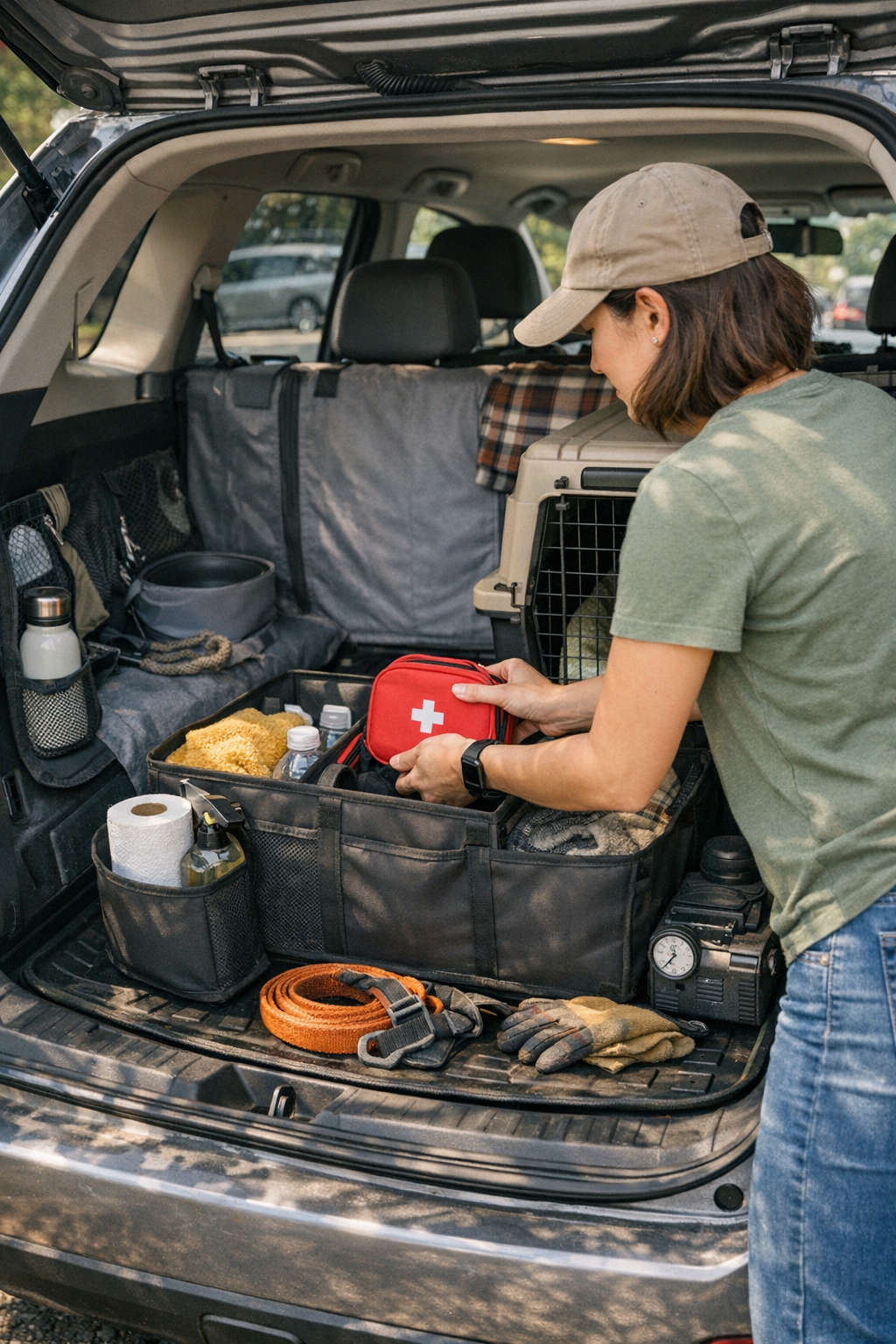
    The best car setups defend against daily mess not by hiding it—but by shaping where things live and how they move. Mats that grip, organizers that resist sliding, chargers routed away from pedals, dog barriers that keep pets and gear from wandering up front—these become routine. Even one small upgrade, like swapping a deep bin for a divided tray, or clipping cables to fixed guides, can cut re-entry cleanup and rescue time by half. A car that stays usable through real cycles—trips, stops, loading, and quick exits—makes the difference clear within days.

    The purpose isn’t museum-level neatness—it’s having a car you can return to, reach in, and drive off without pausing to reset or untangle the same obstacles every day. True order is proven by repeated use: the bits that never shift out of place, the cables that don’t return underfoot, and the gear that supports your drive instead of slowing it.

    See practical products for easier car routines at DriveWellSupply.

  • How Thoughtful Pet Travel Gear Transforms Every Walk Experience

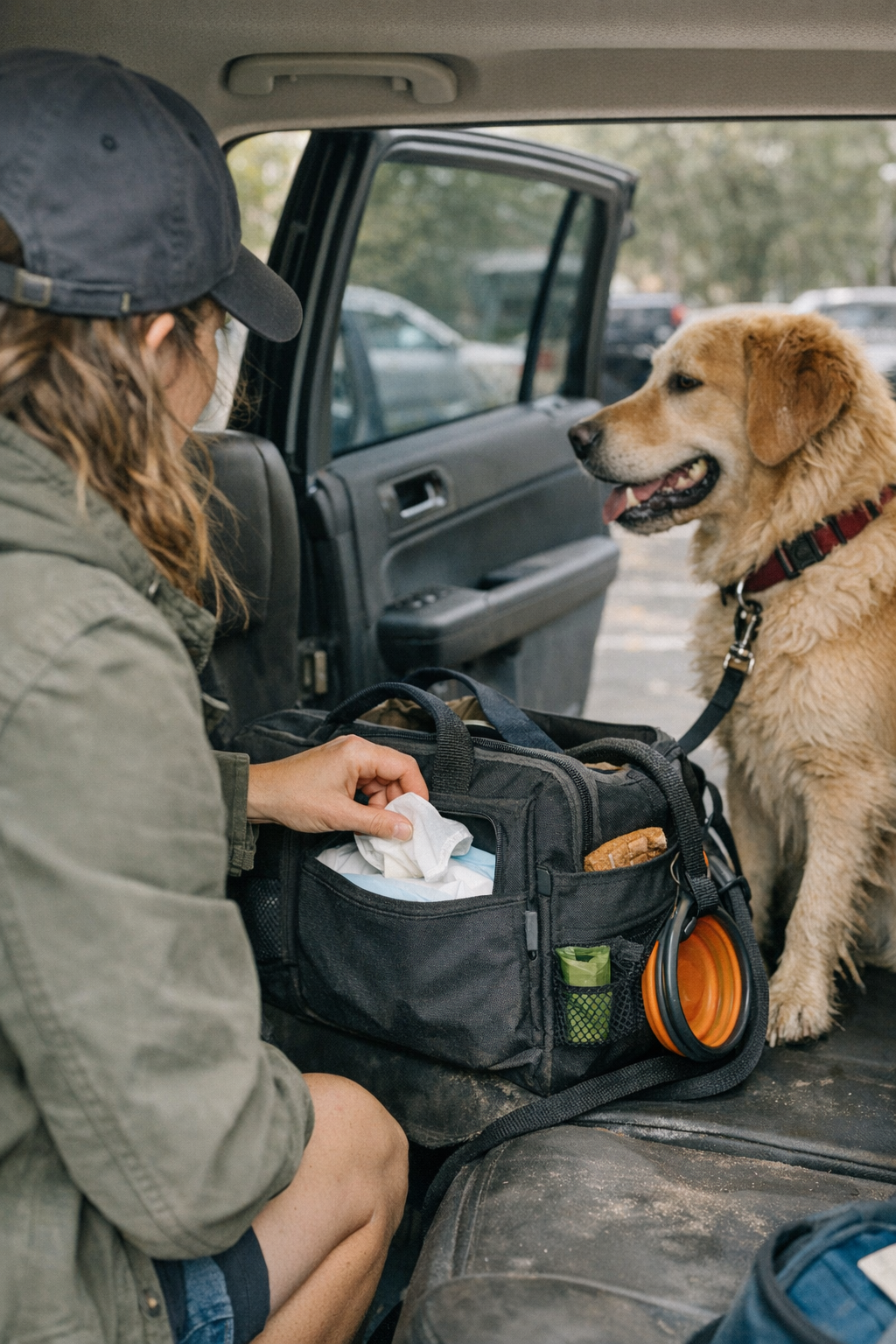
    What looks “organized” at home can fall apart the second real travel starts. You think you’re ready: leash clipped, waste bags peeking out, travel bowl folded flat, treats stashed up front. But as soon as you hit your first stop—muddy paws on the curb, traffic in the lot, your dog pulling sideways—order collapses. Try grabbing wipes and you find them under a packable bowl, snared by a leash loop. Dig for treats and you lose track of the waste bag pocket, or fumble with gloves that always seem to slip. Suddenly, every movement costs extra effort, and “ready to go” turns into another awkward shuffle at every stop.

    Looking Ready Versus Being Ready: Why Real Use Exposes Hidden Problems

    A travel bag that looks complete isn’t always ready for the repetition of actual pet travel. The real test appears during that stop-and-go flow: wrangling your dog after a short ride, balancing one hand on the leash, reaching for wipes to handle a mess you didn’t plan—and hitting overlap, tangles, or blocked pockets again. The problems rarely show during packing, but surface at every ordinary pause, restart, or roadside break. It’s the real movement—gloves half-on, dog tugging, keys in the wrong spot—where setups prove themselves, or fail.

    Repeated motion is where weak design gets exposed. Even a well-packed kit will frustrate you if you need to dig beneath a toy for wipes, or go through two pockets before finding the waste bags—especially when it’s the third time you’ve done it in one afternoon.

    The Slow Drain of Small Delays

    A minute lost here or there seems minor, until it compounds. Overlapping pet and owner items, tangled seatbelt loops, and out-of-order packing means:

    • You try to grab waste bags, but the leash handle or seatbelt clip blocks the pocket—so you untangle, again.
    • Treats slide under a blanket, so your fast reward moment is always just out of reach.
    • Your wipes are always present, but by the time you dig past bulkier gear, the mess has already spread onto the floor mat or seat.

    The result isn’t just lost seconds—it’s lost focus, and small moments where handling your pet turns clumsy or stressful. The more stops you make, the heavier these flaws feel.

    When Overlap Means Delay: The Real Cost of Mixed Gear

    Mixed, overlapped packing—pet and owner gear sharing pockets, comfort items stacked with essentials—seems efficient. But each new stop exposes the downside. First you unzip, then shuffle toys aside, shift a raincoat, and finally dig for wipes or a treat. The result: real travel turns your tidy setup into a source of repeat interruption. Every unnecessary reach puts attention on your bag instead of the dog—or the situation you needed to handle.

    Common Trip Trouble: The Post-Park Cleanup Fumble

    There’s a reason this scene keeps repeating: you get back to the car, dog muddy and antsy, your wipes buried again. You pin the leash with your elbow, glove catching on the strap, and blindly feel around for what you need—hoping your pet stays in place this time. No matter how neat the pockets were at departure, in motion, you’re right back to awkward scrambling. Packing “better” rarely solves it because the overlap comes back the second you repack, shift gear, or stop unexpectedly.

    A Single Change: Dedicated Access That Holds Up Under Stress

    Bigger bags and more compartments can’t solve a basic friction point: needing one high-use item, instantly, without clearing a path. The real improvement happens when each essential—wipes, treats, waste bags—has a pocket that’s only for that one thing. No overlap. No shared space. Always outside or at the very top. Even a single outer pocket for wipes, never doubled with treats or toys, cuts seconds and stress from each transition. This isn’t about perfect packing—it’s a structure shift that holds up on the fourth stop as well as the first.

    Simple pocket separation lasts longer than careful repacking. If one thing (like wipes) stays always-reachable, you handle muck and mess before it becomes a bigger interruption. The rest of the bag can jostle inside, but the top-contact gear stays put and saves every restart.

    Why Dedicated Zones Win on the Move

    When you can grab wipes, treats, or waste bags without moving a second item, travel gets less tangled—even if you’re hurrying. Dedicated zones mean gear stays accessible no matter how many times the bag’s been set down or repacked. Overlap adds seconds, but also tension—a pause that gets noticed more as the day goes on. The payoff for the right structure? Recovering speed, focus, and an easier reset with every repeat break, cleanup, or quick reward.

    Typical Setup Pitfalls: What Looks Neat vs. What Actually Works

    • Pockets stay organized until the bag shifts or tips—then quick-grab gear is blocked or hidden
    • Extra “just in case” packing means the essentials are never truly near the surface—every reward or wipe is slowed down
    • Start-of-trip order evaporates when you dig for the leash mid-walk or after a quick stop
    • The right gear is present, but reaching for it disrupts every post-walk or seat-side moment—nothing ever feels smooth

    The real mark of a smart pet-travel setup is that your seventh stop goes as smoothly as your first—nothing buried, nothing slowing you down, and no mental effort wasted searching for the basics.

    Structure Over Image: Why Setup Is the Secret to Smoother Pet Travel

    Feeling “prepared” only helps if your gear actually responds to repeated use. If your routine includes always moving blankets, sidestepping a tangle, or digging to the bottom for a single essential, that’s not a personal failing—it’s a signal your current structure isn’t right for how you move. These small frictions build up until they feel like a bigger burden than any single mess or accident.

    Get the setup that fits your travel rhythm: separate zones for the things you reach for the most, easy resets between stops, and less handling time with every loop through your day. The right arrangement means you regain attention for the one thing that matters most—your pet, not your gear. For gear built to keep moving with you, see PawGoTravel.

  • Why Carry-On Packing Breaks Down on the Way Home and How to Fix It

    Every organized carry-on looks ready for anything—right up until the first real test. That crisp setup: grid of packing cubes, zipped pockets, folders stacked neatly, offers the illusion of total control. But give it an airport—one security line, one gate change, a few reach-and-replace scrambles—and the cracks start showing before you even board. The wrong item surfaces; must-haves get buried; just as pressure climbs, your access gets slower, not smoother. What begins as order, fast becomes a new kind of travel drag—hidden until your bag sees real, repeated use.

    The Hidden Flaws of “Departure Order”

    The classic hotel ritual—everything boxed, grouped, and zipped into place—seems rational. Devices lined up in one sleeve, documents pocketed, cables coiled with care. Yet, on the move, perfection unravels fast. The first time you need your passport—standing at a cab or a checkpoint—you’re already peeling back layers, second-guessing where things went. Outside that neat hotel room, “organized” turns into shuffled layers, and what looked efficient now feels like friction multiplied across real airport routines.

    Packing Neatness vs. Access Pressure

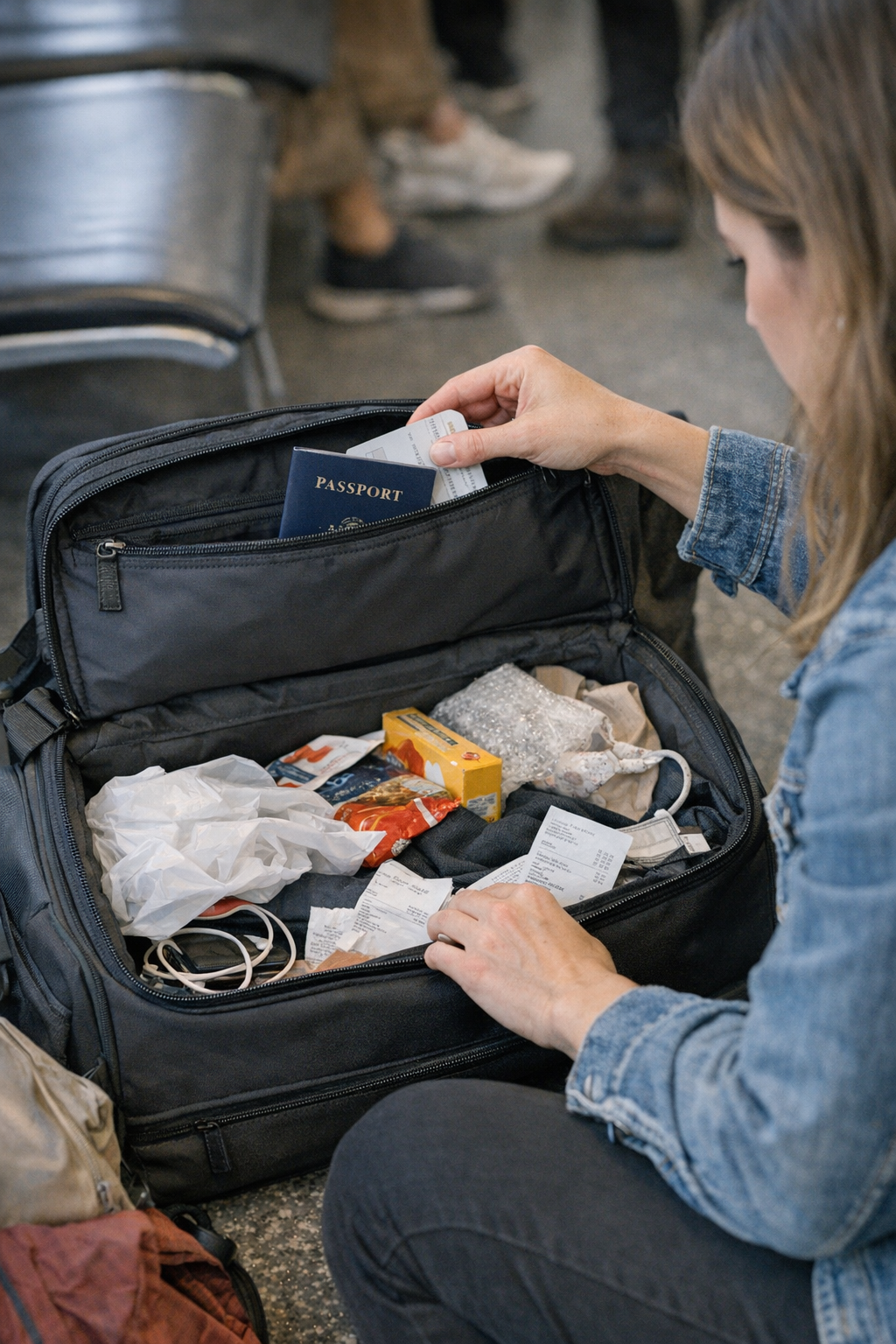
    The tidy departure map doesn’t survive the airport shuffle. Chargers migrate, snacks wedge themselves above your critical tech, and the outer pocket—once Passport Central—is now a snarl of wrappers, scribbled receipts, and tangled cords. The original plan collapses under each new addition or last-second repack; needing one thing means unpacking three, slowing you down just when moving faster would matter most.

    When Order Fails Under Real Movement

    This tension plays out in a hundred tiny scenes: unzipping pouches in the security queue while people sigh behind you; digging elbow-deep past a shaving kit to reach a boarding pass; pausing in the aisle as you reshuffle half your bag just to show one document. The system you built for clarity now ensures every needed item takes its own small detour—adding up to frustrating, repeated delays.

    Checkpoint Stress: Where Structure Gets Exposed

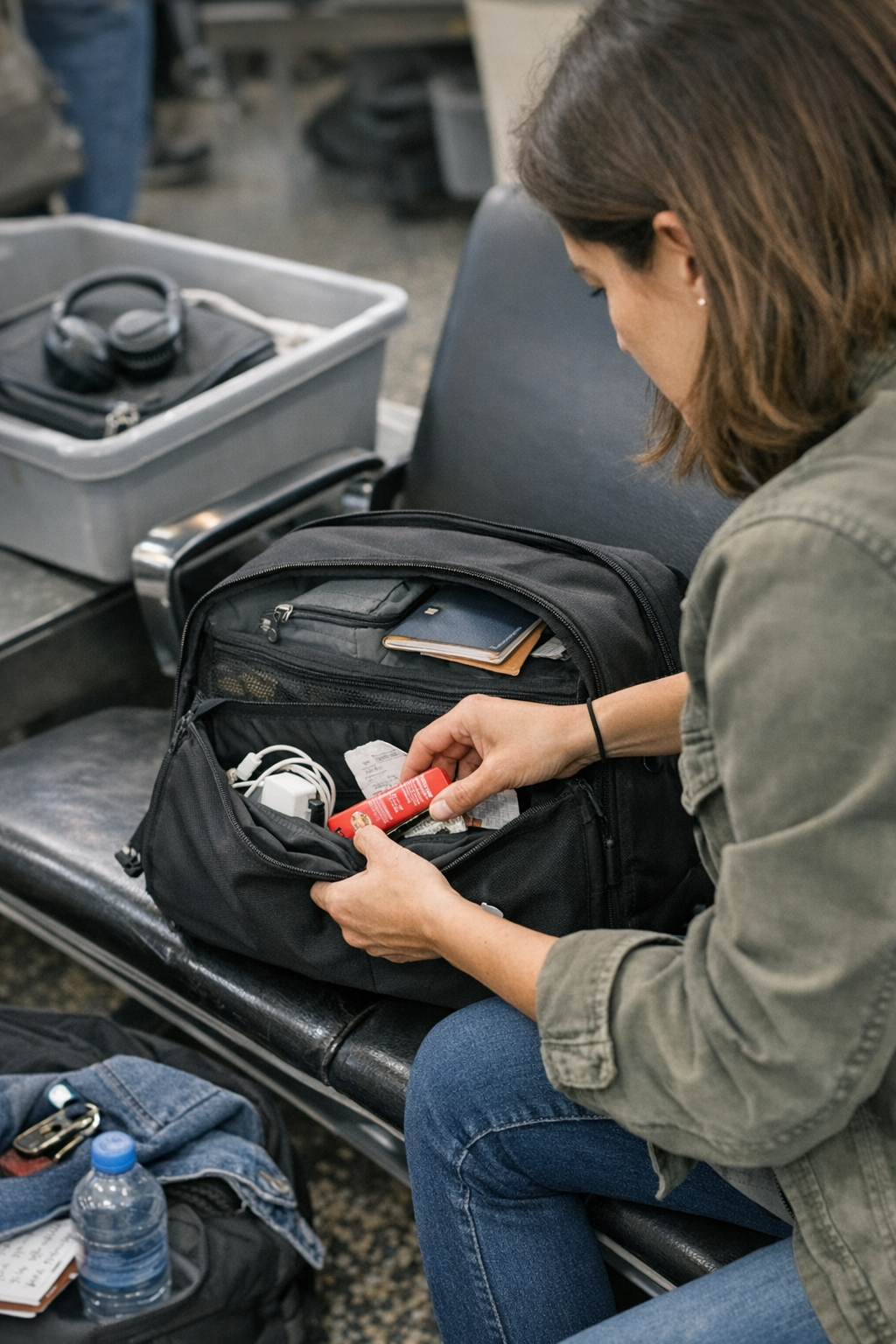
    No moment exposes packing mistakes quite like airport security. At each checkpoint or boarding shuffle, you become a test case for your packing logic. Tray after tray, a passport slipped under a charger or a pouch that slumps below what you need becomes a mini-obstacle course. Suddenly, a “neatly organized” setup just means more steps to get anything out.

    How Quick Access Slides Out of Reach

    Sections marked “quick access” at first? They sink, literally, under the day’s debris. The outer pocket meant for travel docs slowly turns into a dead-drop for whatever you had in your hand last. Each reach turns into a blind grab—snags, cables, wrappers—leaving you second-guessing every placement, and slowing down for one more zip, one more hunt.

    Boarding Lane Fumbles

    Final boarding, and here’s the familiar script: carry-on swinging by your side, one hand searching for a charger or snack, the other balancing everything else. Quick entry gets derailed; you stop mid-aisle, blocking traffic while digging for a ticket now buried beneath travel detritus. What was meant to hide disorder now hides access. You notice who moves smoothest: it’s not the best-packed, but those with one clear reach for the essentials.

    Why Perfect Packing Rarely Survives the Return Trip

    Leave home with everything sorted; return with each pocket a mix of survival improvisations. New receipts mingle with socks. That “temporary” snack now lives in the document sleeve. By the time you’re chasing a connection or waiting to reclaim your bag, the failure is obvious: it isn’t how neatly you packed, but how quickly you can get to what you actually use that determines if your system works under pressure.

    Access Over Appearance: The Shift That Actually Helps

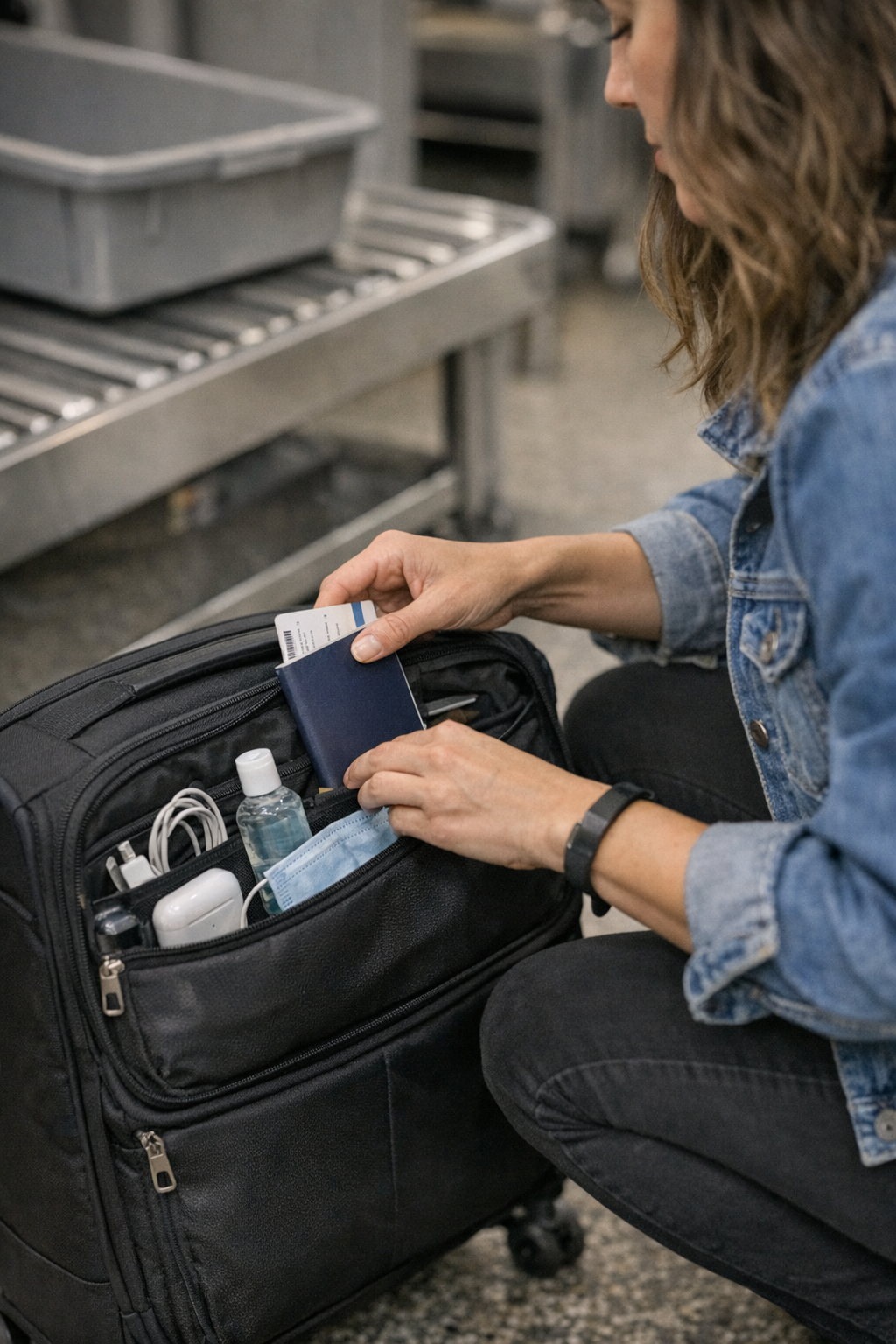
    The difference-maker isn’t another clever pouch. It’s giving up on restoring showpiece order for your return and making practical, in-transit access king. Before checking out, strip away performance packing habits. Gather only what you’re guaranteed to use—passport, boarding pass, critical tech and charger, sanitizer, snack, maybe a mask—into a single outer access point. It refuses perfect symmetry, but under travel stress, you’ll spend zero time searching, and skip the failed “quick tidy” before every hand-off.

    One-Zip Control: The Hidden Upgrade

    By clustering all essentials in an accessible front pocket or section, you slash the number of movements at every checkpoint and gate. One zip. One reach. Everything else—rolled t-shirts, backup pouches, hotel folders—stay untouched. The visual appeal of the main compartment is untouched, but you’re no longer sacrificing flow for neatness when things get crowded or time gets tight.

    The Repeat-Use Reality: Smoothness Beats Symmetry

    Pure order works for photos and first impressions, never for real, repeated travel. An organized carry-on doesn’t guarantee you’ll glide through security or boarding if every access point triggers a domino effect of repacking. With every trip cycle, the demand for smoother operation exposes the limits of “perfect packing.” Real travel chips away at pretty order until only functional setups survive.

    The Case for Sacrificing “Perfect” for Practical

    Most travelers try to recapture initial neatness before the flight home, only to block direct access to what the airport will repeatedly demand. A better rule: access beats aesthetics, especially under stress. Instead of reshuffling for looks, front-load the stuff you’ll grab most. If outer pockets fill with chaos but nothing important is lost or delayed, that’s a travel win, not a packing failure.

    Simple Setup, Real Change: What to Try Next Trip

    Skip the mirror-image repack—run a fail-proof exit check:

    • Relocate every must-grab item (passport, ticket, tech, charger, mask, wipes, snack, pen) to one instantly reachable outer section, even if it looks a little more lived-in.
    • Ignore the urge to restore “departure order”—if one-zip access works, don’t mess with it for appearances.
    • Use each trip to adjust: if you kept reaching for something tucked away, give it a better spot next time. Each leg is a live test.

    In the end, the best carry-on setup isn’t the neatest—it’s the one that keeps you moving through real travel strain with the least interruption. Order matters, but friction (or the lack of it) matters more in the long run.

    For more practical travel tools that survive real-world carry-on routines, visit CarryOnSupply.

  • How Smart Organization Transforms Your Pet Travel Routine Effortlessly

    The real test of any pet travel setup starts when the trip stops being new—right around the third or fourth repeated stop, when the same moves keep coming back and the “just-in-case” bag starts fighting back. What looks organized on your kitchen floor—zippered pockets, sorted treats, stashed toys—gains weight and friction in real use. Suddenly, the wipes are hidden under a nest of squeaky toys. The leash tangles with yesterday’s bowl. Pulling out snacks scatters items meant to be separate. On every repeat, the system that was “ready” drags you into new mini-delays: reaching the wrong compartment, pulling out too much, wasting time on cleanup instead of moving. Even the best-seeming setup starts working against you, not with you, once routines become muscle memory and you want speed, not order for its own sake. PawGoTravel doesn’t just sell carriers—it designs around these fault lines.

    What Happens After the Setup’s First Impression Fades

    The gap between “neat” and “actually easy” shows up as soon as your travel pattern repeats. Maybe you’re aiming for a post-park rinse or a quick snack at your usual roadside pull-off. Now the routine is leash, bowl, wipes, treat, seatbelt—same objects, same order, again and again. If your gear buries the quick-grab items beneath comfort add-ons, you end up digging or moving stacks. Wipes end up wedged behind toys. A bowl shifts out of reach, making quick stops into scavenger hunts. The bag is never empty—just always out of order, and every reach feels slower. Speed drops, energy drains, and the prepared look hides the slow-burn drag of managing the same five items three different ways.

    How Setup Friction Creeps In—One Stop at a Time

    A travel bag feels like a solution only until real repetition exposes every weak point. The first stop—fine. By the second or third, the leash is a tangle magnet; bowls move somewhere less sensible; cleanup wipes take a back seat to treats or blankets. A comfort item meant to reassure ends up blocking the main zipper. These aren’t emergencies—they’re compounded minor failures, each one stacking into a frustrating cycle. The “organized” bag quickly becomes the main cause of slowdowns, not a shortcut for the routine.

    Familiar Routines, Familiar Frustrations

    Breakdown is most obvious where you know the drill. At the park exit or trailhead, your pet’s moving at full speed—and you’re pausing to unjam a zipper or grope for those mystery-location wipes. A leash caught behind fabric, a wipe bag crushed beneath stray snacks, a comfort toy now blocking the only direct pocket: each stutter isn’t catastrophic, but the pattern is stubborn. Four stops later, the whole setup “looks packed” but throws up interference every time you go to move. It’s a manageable mess, but the repetition makes it unavoidable: no single flaw, just a cumulative sense that you’re starting over on every grab.

    The Return of One Persistent Weak Point

    Some trouble spots keep resurfacing. Water bowls, which start out in easy reach, migrate under toys. Cleanup gear always present, never perfectly handy. Small tools or supplies wander out of their “zone.” Stops don’t vanish—they build up physical and mental drag, every step a little heavier, every reset a little more crowded, like invisible clutter multiplying inside the bag.

    Dividing Access: The Small Change That Lifts the Routine

    Eventually, the difference between an “ordered” bag and a “usable” bag is impossible to miss. The real upgrade? Outfitting quick-access items—wipes, bowls, leash—into dedicated side or exterior pockets only you touch during movement. Deep-storage comforts stay sealed inside. This single adjustment halves the time (and effort) to grab what you actually need at a curb or seat edge. The essentials live where you need them, not wherever they landed after last use. Instead of the whole kit getting scrambled, your go-to supplies are insulated from the churn. Each return to the car or the sidewalk gets faster—less fumbling, less shuffling, fewer mistakes during the ordinary stops that make up actual travel.

    Seat-Side and Street-Side: Handling in Motion

    Clean separation of quick-access and storage zones transforms transitions. Mid-movement—dog half-in, half-out, leash in one hand—there’s no digging or risk of dumping blankets just to reach wipes. Outside, at fast reward moments, you aren’t lost in comfort gear just to locate the bowl. This split isn’t theory: with every repeated stop, the gain in speed, calm, and control builds. You start noticing fewer dropped items, shorter pauses, and a more reliable return to movement, across every phase of a routine trip.

    Managing Overlap: When Owner and Pet Items Collide

    Owner essentials always find their way into pet space. Phone chargers, sunglasses, and grocery receipts sneak into the very pocket meant for wipes or leashes. The more comfortable you get with the routine, the higher the odds of accidental crossover: wires by the snacks, wallet under a pet blanket, keys trapped with comfort toys. Every forced overlap—cleanup pouch fighting for space with headphones—turns a simple reach into another reset. Reliable structure means every zone (pet, owner, comfort) has a reason, and every movement stays predictable. You stop thinking, and just act—because the setup forces less chaos, not just less clutter.

    Real-World Shortcuts That Stick

    Where Should You Really Keep Wipes?

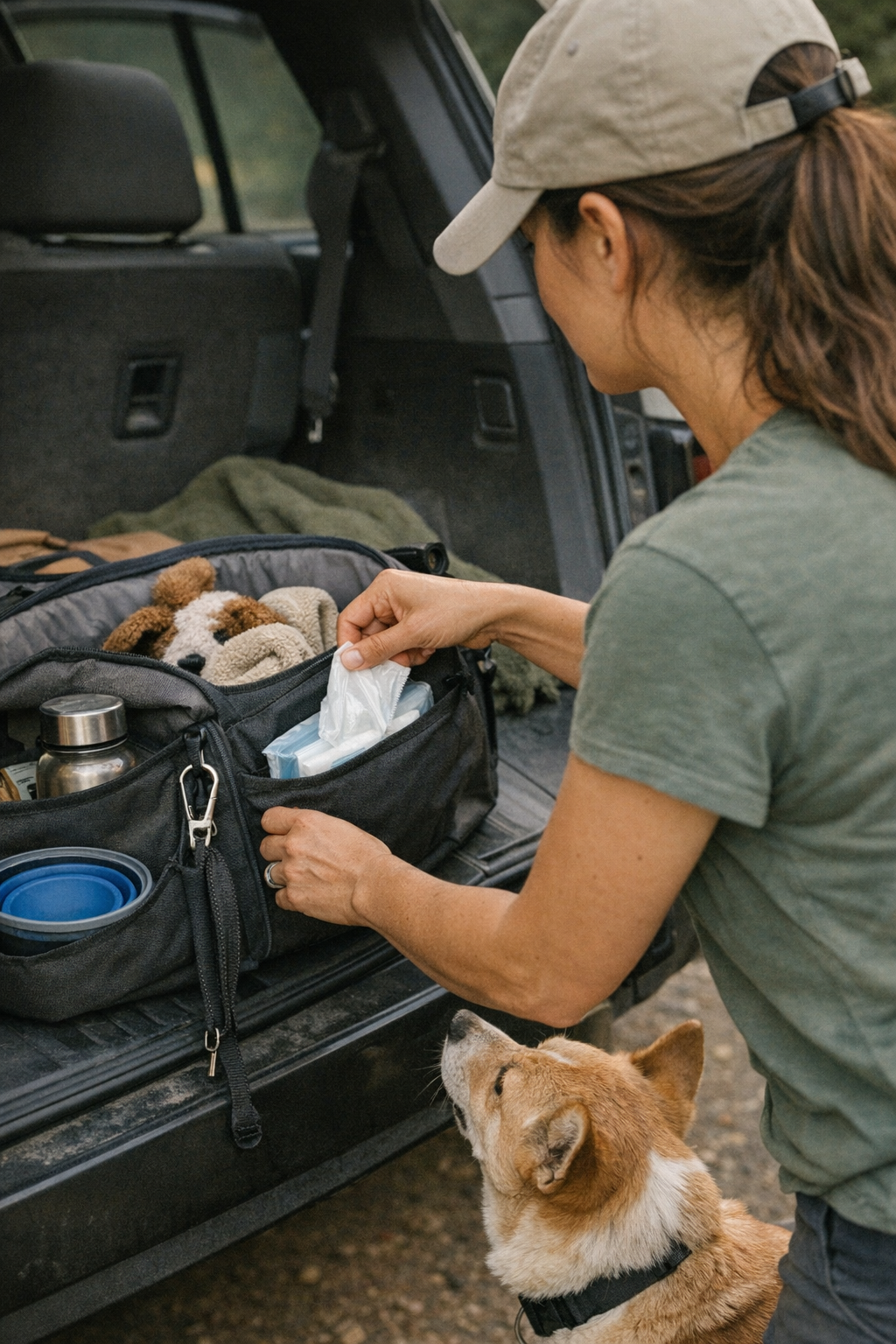
    Wipes belong in a dedicated, outside-facing pocket, always separate from snacks and toys. Done right, grabbing a wipe should take two seconds, even with a leash in hand and the car door open. If you’re using two hands or opening the main bag, friction is already winning.

    How Do You Keep Leashes Tangle-Free?

    Clip your leash to an exterior ring or hang it from a visible loop outside the bag. This single shift slashes tangles—and ends the routine of fishing the leash out of a mess of blankets or chasing stray treats around the seat.

    Why Does the Bag Feel Heavier After Several Stops?

    It’s not new gear—it’s handling drag. Bowls wander into the main pouch, comfort layers ooze into quick-grab spaces, and every “one-time” overlap sticks unless you intervene. Honor the original structure at every reset. The lightest-feeling setups don’t just look clean for a photo—they resist slide and tangle through every interruption, no matter how many stops you make.

    The Payoff: A Setup That Stays Light in Use, Not Just in Looks

    After enough real-world trips, you stop believing in one-and-done packing. A workable pet travel setup isn’t “organized” in a static way—it stays ready by keeping friction zones cut off and repeated motions free. Quick-grab layers for action, comfort gear sealed for later, owner items kept from migrating—every reach, pause, and restart runs smoother because the bag is built for movement, not just storage. The difference isn’t theory; it’s time, energy, and comfort returned to you and your pet with every repeated outing.

    Keep your next trip working for you, not against you, with setups designed for real repeated use. Explore more pet travel solutions at PawGoTravel.

  • How Predictable Placement Transforms Daily Car Organization and Driving Flow

    Car organization isn’t proved by the first five minutes—it’s what holds up by the fifth errand. If you’ve ever returned to what looked like a neat interior, only to grope under seats for a charger or wedge your hand past a drift of keys and receipts, you know surface order means little. Most clutter isn’t one obvious mess. It’s the repeated tangle of charging cables slipping between seats, loose gear creeping into footwells, pocket items dropping out of reach—turning what should be a simple grab-and-go into a silent contest of hunting, shifting, and re-sorting with every short drive. The real cost? Delays build up, routines snag, and “organized” ends up just another layer you have to work past.

    When “Good Enough” Fails: Repeated Friction Hiding in Plain Sight

    Most setups start strong: a new tray for your phone, a pocket for the charger, a container for car masks or pens. But by midweek—after school runs, tight parking squeezes, fast-food detours—order collapses. A cupholder bin spits out coins on a hard turn. A cable, once perfectly looped, dangles and catches your hand at the gearshift. Floor mats might hide crumbs but can’t stop that sanitizing spray bottle from rolling to the far side with every stoplight. Friction doesn’t scream; it grinds away quietly, layering seconds of lost time and micro-irritations you never meant to sign up for.

    The pattern repeats: sprinting to your car in the rain, you expect to grab your charger and dash, but find yourself stabbing at shadowy crevices where things have migrated. The structure you trusted falls apart right when pressure is high. These aren’t dramatic breakdowns—they just slow you, again and again, every time you think a system is finally “good enough.”

    Open Trays vs. Anchored Placement: Why Tidy Isn’t Reliable

    Drop zones and open organizers give you that showroom look—for about as long as your car stays still. The moment driving starts, so does drift. Face masks edge toward the pedals. Emergency cash slips behind the console. You catch a pen clattering out from a catch-all with each half-mile. Even as your eyes sweep a “neat” surface, your hand meets one patch of friction after another—always adjusting, always rescuing items from where the car’s motion has tossed them.

    It’s the classic micro-mess: not dramatic enough to call “clutter,” but persistent enough to slow you down every time you slip behind the wheel. Each shortcut taken early—like tossing keys into a loose bin—adds up to later effort, as small items stack, slide, and bury each other just out of reach.

    Making Placement Predictable, Not Perfect

    Predictable beats perfect every day. Anchoring your phone on a true mount, locking a charger cord into a low-profile clip, or stashing keys in a fixed spot shifts your routine from searching to autopilot. Take the everyday sprint—a five-minute grocery run, rain at your collar, arms full. If your phone is always in an eye-level mount, you’re reaching for what’s actually there, not doing blind fingertip sweeps around the seat seam. A charger cable, anchored at the seat edge, doesn’t snake into the footwell or kink with every exit. Instead of matching memory to mess, your actions stay in sync with your setup—even when you’re juggling six things at once, never mind the car door swinging shut behind you.

    Everyday Annoyance: The Wandering Charger

    The charger cable is a repeat offender. Dangle it from the center console and it’ll slip, loop, or wedge itself into the least accessible spot on even the tamest drive. Soon you’re reaching under the seat mid-parking lot, yanking a cable out with half the car’s lint attached. The fix—a decent cable anchor along the seat edge—is a five-second install but a total shift in flow: grab, connect, drive, done. No more crouched fumbling, just a routine that finally works the way you hoped it would the first time.

    Spotting the Difference: Looks Organized vs. Actually Works

    A clean interior can still trip you up at every turn. Containers mask what’s happening underneath. Cupholder “organizers” jam when you actually want to use the holder. Pens roll under the mat. A surface tidy enough for carpool is often a scavenger hunt for everyday use, especially as you load and unload repeatedly. Function comes down to consistency: groceries stay upright, chargers stay findable, nothing important slides out of reach after the third errand or the first hard stop.

    Knowing exactly where each tool or item will be on every entry changes the car’s role from obstacle to assistant. Structure holds up under pressure—from food runs to school carpools, from dog park detours to urgent errands—making sure you’re moving, not resetting, each time you return.

    The Real Payoff: Less Reset, More Momentum

    The surest test of a working car setup isn’t how spotless things look, but how rarely you get dragged into mini “cleanup mode.” Anchored chargers, fixed phone mounts, and spot-on pockets mean your time goes to the drive, not the hunt. Short trip after short trip, you skip the fidgeting and start on what matters next. Your mental energy moves forward, not back to whatever just slithered under the seat or flipped behind the storage bin.

    But any system can slide, often without warning. Maybe the new seat organizer blocks your quick exit. Maybe your latest bin collects more trash than tools. Once the pattern of “one more reach” creeps back, it’s time to see the cost: routine, not just cleanliness, is being interrupted—and it’s only going to build if you wait for mess to get obvious again.

    Turning Friction Into Flow—One Adjustment at a Time

    Order that doesn’t work is just a delay in disguise. Building in predictable placement—whether it’s a single anchor point, re-routed cable, or a better access habit—means each trip through your car feels a bit smoother, a bit less wasteful. The right fix isn’t about chasing perfection, but about seeing where small shifts pay off: fewer repeats, fewer rollbacks, more time moving through your day the way you meant to. That’s what finally keeps your car working for you, not against you.

    DriveWellSupply

  • How Dedicated Pouches Keep Carry-Ons Organized During Travel Shopping

    The carry-on that looks perfectly organized at home rarely survives a single airport shop before its setup starts breaking down. The moment you pick up an unexpected snack, collect a handful of new receipts, or accept a souvenir bag, your efficient packing structure starts slipping—sometimes even before you reach your gate. Headphones get pinned under snack wrappers, that easy-to-grab passport is suddenly camouflaged by store packaging, chargers vanish behind impulse purchases. Order collapses fast, not from overpacking, but from the way real travel introduces new, badly placed objects into every pocket and gap. No matter how tidy your bag looked at the hotel, friction hits hard after just one or two airport stops: reaching slows, movement stalls, and “organized” means less than you thought.

    When Shopping Joins the Carry-On

    The myth is that your careful packing will withstand the chaos of airport life. But within one layover—or even the first pass through duty-free—the pattern breaks: a last-minute gift, snacks for the plane, receipts you meant to tuck away but suddenly forget. With nowhere planned for these extras, they end up wedged in the first available space—jammed next to pouches, buried beneath what was once a flat layer, or piled on top of everything else. The cost is immediate: grab your passport at a checkpoint and instead you drag out a tangle of stubs; reach for headphones at the gate and crush a chocolate bar somebody handed you ten minutes ago. Each access point doubles as a friction point, slowing you down and sapping your travel flow.

    It isn’t just about mess—it’s about movement, about the way every small addition interrupts the carry-on you’re trying to use on the fly. Every attempt to retrieve an essential forces you to shuffle aside new obstacles, or pause and rethink your reach-path. The line behind you moves. Your own progress, even moving from gate to gate, starts to drag.

    Repeated Reach, Repeated Friction

    The typical cycle looks the same every time: zip your bag closed, feeling in control. Then, after one checkpoint, your system unravels. Receipts slip out and scatter, snack wrappers block access to chargers, that compact souvenir is now blocking the tech pouch you actually needed. Every “quick” retrieval becomes a mini detour. You catch yourself pausing mid-queue, digging through pouches you didn’t mean to open, running your fingers through layers that felt simple an hour ago and now leave you stalling in public, visibly disrupting the flow you thought you’d preserved.

    The wear shows most clearly with single-compartment bags. Even well-packed cubes can’t offset the entropy that creeps in once unplanned items spiral throughout the main cavity. Each repeated retrieval takes longer—sometimes just seconds, sometimes enough to irritate the person behind you at a checkpoint. By the second or third search, essentials might as well be invisible, lost under a shifting layer of new, unordered stuff.

    When “Tidy” Stops Working

    A bag that zips up looking calm isn’t actually organized if it can’t protect fast access from last-minute chaos. This becomes painfully clear at crunch moments: boarding pass buried under a gift bag you forgot you had, ID jammed next to snack wrappers, headphones tangled with receipts. The system you trusted on departure starts to feel actively hostile just hours in—because appearance doesn’t survive airport reality if your structure can’t bend without breaking.

    Where Most Carry-On Setups Fail

    The real risk isn’t overpacking—it’s failing to plan for the unplanned. Almost everyone stumbles here, usually for the same handful of reasons:

    • The surprise overlap: Souvenir bags or receipt piles settle right on top of daily essentials, hiding what you need mid-trip.
    • Awkward blends: Loose snacks drift into “tech gear” territory, forcing re-sorting at the worst possible moment.
    • Compartment confusion: Single, open spaces absorb new objects deep inside, so even simple retrieval turns clumsy and multi-step.
    • Visual order, physical mess: What looked neat in a hotel mirror collapses as soon as you’re at the tray transfer; small things vanish instantly or jam in zipper paths you thought were protected.

    Each micro-delay on retrieval might seem ignorable, but the sum adds up—especially when it’s repeated for every routine check or boarding sequence.

    The Compounded Cost of Tiny Interruptions

    This isn’t about “just seconds lost.” The hit comes from repeatedly pausing, awkwardly, for items you should already have in hand—hauling a bag down from the overhead bin to find a cable lost behind a snack pack, or shuffling for documents while blocking the aisle. Each interruption feels trivial in the moment, but stacked together, they sap travel energy and turn simple movements into a running reset.

    If your structure focuses on looking good, not on adapting, the cost is cumulative: after every checkpoint, you’re forced to reorganize. Essentials for quick access drift out of reach. The entire sequence—security, shops, boarding, even hotel check-in—becomes choppy, and your mental load goes up just keeping track of what’s moved where. Bags that seemed minimalistic can become stressful just by the third airport stop.

    The “Waystation” Fix: Segregate New Shopping Instantly

    The fix isn’t necessarily a new bag, but a repeatable setup: a flat, surface-access pouch set aside for anything you acquire in motion. Think receipts, last-minute snacks, stubby souvenirs, shopping bags. This pouch sits at the very top of your main compartment or slides into a dedicated outer pocket—never invisible, never buried. Every new object goes there first—nothing blends into your base packing. The pouch isn’t just extra organization; it’s a quarantine zone for chaos, one layer separating the predictable from the unpredictable.

    Every quick add—snack picked up at the terminal, receipt handed across the counter—goes to the pouch, not your main layers. The real advantage: at security or boarding, you know exactly where floating items live, so every “quick grab” is actually quick. Your base system isn’t punctured with every unplanned stop; your essentials remain accessible, untouched by the day’s random acquisitions.

    How It Changes Actual Travel Flow

    The stress test is real-world security, not home trial runs. Unzip your carry-on at a tray checkpoint and only your shopping pouch moves—no paper explosion, no food packaging rolling over your tech setup. Pull out your passport without brushing aside snacks, retrieve headphones with zero interference. After the first airport stop, you’re not rebuilding your bag while hunched over a gate seat—just unzipping the waystation, moving on. Instead of a “good enough” visual reset, you get a real operational reset for each cycle of movement.

    Choosing a Carry-On That Won’t Break Down Mid-Trip

    Some bags make this routine painless. Segmented compartments or modular insert systems often work best; top-access or externally zipped outer pockets provide a built-in “incoming” zone for new items without disturbing everything else. Bags built around one large cavity, no matter how minimal they look during packing, tend to break down first in real use—just a few floating items later and every retrieval is a forage. Choosing a structure that routes new stuff to a controlled spot—immediately—means you spend less time fixing and more time moving.

    What to Avoid With In-Transit Packing

    The baseline mistake is letting new clutter mix deep into the core compartment. Once snacks, receipts, and shopping bags weave themselves directly into your packing cubes or gear pouches, every access becomes multi-step. This is how you end up re-stacking clothes at the gate, losing small items between layers, or repacking in a cramped aisle as the queue grows. Predictable separation—not picture-perfect order—is the real measure of carry-on effectiveness when actual movement counts.

    Organization That Survives the Realities of Travel

    The point isn’t a bag that looks organized, but a setup that endures disruption without crumbling at each checkpoint. Frequent travelers know: every trip guarantees new receipts, snacks, and extras, and bags that can’t keep those separated from your essentials fall apart under repeated use. Building a “waystation” pouch into your travel logic—always surface-accessible, always the first landing zone—turns ordinary travel breakdown into routine, stress-free motion. Carry-on order, instead of being temporary, becomes something you can actually trust during real movement, not just admire in a packing photo.

    Find practical carry-on solutions built for real movement at CarryOnSupply.

  • Optimizing Pet Travel Bags for Smooth and Efficient Loop Walks

    The difference between looking organized and traveling smoothly with your pet is rarely obvious until the trip begins. At home, setting up a pet carrier or travel bag feels under control—bowls neatly stacked, wipes zipped away, leash and treats in clear view. But the first actual stop exposes what those “ready” setups hide: reaching for a cleanup bag blocks the leash path, a treat pouch vanishes under the wipes, or the side pocket is now backwards against your seat. Each pause or reroute reveals friction built into the system: what seemed perfectly placed loses its logic once you’re moving, stopping, and handling leash tension alongside a restless dog. That’s where the PawGoTravel world starts—where real pet travel isn’t just about tidy layouts, but repeatable access, quick recovery, and gear that keeps up with real, repeated stops.

    What Looks Prepared Isn’t Always Ready for Repeated Use

    It’s a common trap: you pack up for a short walk or drive, feeling sorted, only to end up rummaging frantically at the second curb. Those pauses—at the car door, crossing the street, waiting for the elevator—are when the hidden flaws show. A waste bag that was visible in the living room now sits buried beneath snacks. A tissue pack slides over your wipes every time you shift the carrier. The patterns repeat not because you forgot where things go, but because “logical” at home collapses under live travel demands. The need to reach, reset, and juggle around shifting layers keeps breaking your flow far more than any forgotten item.

    The split between stationary order and moving friction comes fast. By the third stop, “organized” feels tangled. Frustration isn’t about memory or planning—it’s about whether you can dig out core items on the fly, with one hand, while keeping your pet from darting away. The micro-failures build: sliding wipes, a bowl that drops out, a cleanup bag just out of reach. The hassle isn’t just a one-off; each pause means new reshuffling, and the cost of repeated corrections only piles up. A setup that seemed solid turns into a subtle drag, making each outing a slow grind instead of a steady routine.

    How Small Organizational Gaps Become Daily Friction

    Most breakdowns aren’t dramatic. It’s the quiet blockages—item overlap, stacked pockets, or “clever” double-duty sections. At home, layering your treat pouch or stacking wipes over your leash clip feels efficient. Once you’re in motion, that stacking becomes a time sink. A treat bag slips under a shifting bowl, leash handles wedge behind snacks, and cleanup pouches require two-handed digging. Suddenly, pausing at the curb or seat-side means untangling rather than reaching. Each minor slow-down gets replayed at the next stop if structure hasn’t kept roles separated.

    This isn’t about forgetting—it’s about predictable trip interruptions. Every restart after a short pause brings a new reshuffle: wipes hiding the leash path, a comfort blanket blocking the main zipper, items trading places after the bag tilts at a crosswalk. Reach delays and repeated fixing become part of the routine. The result? Time wasted, a tenser dog, and growing reluctance to make quick stops—even when you need to.

    The Hidden Cost of “Orderly” Packing

    What looks perfect in a lineup—leash clipped, bowls nested, waste pouches set aside—collapses in live use. A pet’s pull twists the carrier; one bowl knocks another item loose; wipes end up jammed somewhere new. By the second or third stop, you’re no longer just accessing, you’re re-packing. Instead of single-move simplicity, travel becomes a cycle: hunt, rearrange, hope nothing else shifted. Each minor tangle costs seconds, but the frustration lasts much longer. “Order” for photos rarely survives the seat-side or city-street scramble.

    Scenes from a Typical Outing: Where the Setup Breaks Down

    1. The Curbside Hunt

    You pause at a crosswalk. The leash tugs, the travel bag slips low, and wipes or bags are layered under another pouch. You try for a cleanup bag, but end up with tissues or sliding bowls. Your dog’s patience wears thin while you fumble. Even a one-minute delay feels endless when you’re fighting your gear, not just the sidewalk.

    2. The Seat-Side Shuffle

    Back at the car, you reach for a quick wipe or a snack hand-off. The side pocket you trusted for wipes has shifted under the seatbelt; treats block your main access zip. Every try to grab something means bending, retucking, or rearranging with a hand already half-full. You start skipping quick resets just to avoid the hassle—leaving comfort and cleanup behind next time.

    3. The Blocked Restart

    Restarting after any pause, you’re counting on easy access, but an overlapping pouch jams the leash clip. A comfort item now obstructs the zipper. These aren’t design flaws in theory—they’re repeated-use failures that show up block by block. Every stop means another round of the same interrupted movement, a minor-but-persistent grind you can’t just organize away once at home.

    What Actually Fixes the Real-Use Flow?

    Better pet travel isn’t about re-packing more carefully; it’s about redesigning for motion. The fixes are physical, not theoretical: an outer edge pocket for wipes that you can hit in a hurry, a bowl attached to the side not mixed with interior gear, pouches set apart from one another, not pressed into one shared compartment. Real improvement isn’t layering smarter—it’s separating completely so access points never block each other. Motion-proof bags let:

    • Wipes rest at the edge, never under a bowl.
    • Each cleanup bag has its own quick zip, never jammed together.
    • Bowls ride away from leash paths—always hanging, never drifting below.

    When compartment roles stay separate, friction disappears: one-hand reach at the seat, instant access at the curb, zero need to reshuffle. The “mini-hunt” becomes a non-issue and even surprise stops lose their drag. Instead of shuffling, you’re moving.

    How to Spot a Pet-Travel Bag Built for Repeated Use

    Real-use bags signal their worth by compartmentalization, not just looks. Test gear by simulating fast stops—can you access core items without moving others? Does the bag keep wipes, treats, and cleanup separate and accessible? Overlapping or stack-heavy designs always slow down a travel routine that pauses frequently. Run a personal trial: pack as usual, then do three mock stop-and-go drills. If it gets harder—if you’re reaching deeper as you go—structure, not style, is the weak point. Only bags built for physical separation, fast reach, and repeat recovery hold up outside the living room.

    Packing logic doesn’t always match live motion. The right structure—side pouches, top zips, external hooks—wins not by looking neatly packed, but by surviving real stops, starts, and re-entries with the dog pulling, gear shifting, and cleanup always one hand away.

    The Practical Take: Less Mess, Fewer Interruptions, and a Smoother Restart

    Pet-travel gear should crush the small snags, not just tidy up your look. Every problem solved by instant access saves a fumbled curb, a tense pet, or an unnecessary delay. A structural fix—end-pocket for wipes, hook-hung bowl, slot that physically separates items—translates into fewer restarts, less time fixing, and more reliable movement. Noticing where your routine still drags—what you have to dig for, what requires untangling—signals exactly where better structure matters. You don’t have to tolerate gear that slips from “organized” to “awkward” just because it looked good at first. Move toward setups that work with, not against, your real travel flow—because repeating the same annoyance shouldn’t be the price of “prepared.”

    Find travel bags and organizers designed for real-use access—not just first-glance order—at PawGoTravel.

  • How Structured Car Organization Saves Time and Reduces Daily Friction

    You clean out your car and for a day or two, it looks under control—but function quickly falls apart in the real world. Cables drift from their charging spots and wedge out of reach. Floor mats glide an inch at a time, leaving mud trails right where you step. A pack of wipes you expected to grab during a drive-out leans into the footwell, now visible only if you kneel and hunt. A supposedly “organized” car slips back into minor chaos, with every short trip revealing another spot where something slides, snags, or blocks your flow—and that’s before you even factor in pets, emergency gear, or loading groceries fast.

    When Organization Doesn’t Cut It: Recognizing Everyday Car Friction

    A quick scan might tell you your interior “looks fine.” But after a week of repeated commutes, city loops, and errand runs, reality shows up in small, persistent problems: charger cables vanishing between seats, mats exposed at heel-wear points, wipes you keep re-anchoring, still loose again after the next drive. The surface is tidy, but every routine action—reaching, plugging in, cleaning, getting back in—runs into friction. Instead of real convenience, you get micro-pauses, untangling, and redo work, even when nothing looks overtly messy.

    This isn’t just clutter. It’s the slow buildup of flaws a vacuum or quick sort can’t touch: cables that wriggle back under, organizers that seem solid until you brake, inserts that hold together for one drive and then create a new snag the next. Over a few days, these subtle fails multiply, making every drive a little more awkward—and making “organized” feel like an illusion built for the first photo, not the fiftieth mile.

    From Looks to Lasting Function: Why Structure Matters

    The difference between a car that just looks put together and a car that actually works is structural. Without fixed boundaries, every item is just waiting to slide, shift, or block access on a random Tuesday, no matter how good the system seemed right after install.

    Picture your charging cable: it’s draped over the center console Sunday night, easy to grab—by Wednesday morning, you’re digging it out from beside the seatbelt buckle, cord twisted and phone low on battery. Or a trunk bin that’s meant to anchor groceries: take one corner a little too hard, and you’re picking apples from way under a folding chair. Even a seat protector, well-placed the first week, can bunch up just enough so every entry or exit is a shuffle, and the carpet you meant to protect ends up spotted anyway.

    What Real Repeated Use Reveals

    It’s easy to feel you’ve solved the problem after adding a new bin or cover—until three days later when you notice that charger isn’t reachable, the wipes aren’t where you expected, or you’re on hands and knees during a gas stop reconnecting tools that slid loose. These moments aren’t major disasters; they’re signs that the “organizer” isn’t actually fixing the routine breakdowns you face each week.

    The point isn’t flawless appearance; it’s a setup that absorbs daily movement, protects where you step, keeps essentials anchored, and doesn’t force you to reset things every single drive. Convenience fades if every solution brings a new pocket of interruption—especially in real driving, not showroom stillness.

    Daily Driving, Real Interruptions: Common Friction Points

    The Cable Slip Phenomenon

    A loose or floating phone cable can look placed—until start-stop traffic, quick braking, or everyday bumps send it sliding under the seat or into the far side of the center console. Now “charging on the go” becomes “reaching blind while balancing your coffee and waiting for the red light change,” again. Every week, more time goes into finding or untangling a vital cord than actually charging your phone.

    Shifting Mats and Floor Protection That Miss the Mark

    Floor mats are supposed to trap mess, but if they shift every time someone gets in, corners peel back. Suddenly, the exact spot you mean to safeguard becomes the exact spot that collects mud and slush. One sloped entry after a rainy day, and you’re scrubbing twice as much as expected—or tracking the mess inside because the mat moved at the wrong moment.

    Trunk Trouble: Organizer Bins and the Law of Unintended Slowdowns

    Cargo bins that appear orderly on Monday become moving targets by Friday. A bin without a secure base rocks with turns, soft bags spill out on sharp brakes, and now every stop for groceries means restacking, shifting, or moving multiple bins just to stash an awkward bag. Supposed quick routines lose minutes to “fixing” storage meant to save time.

    Where Anchored Solutions Smooth Out the Mess

    The solution isn’t about adding more containers or covers, but about putting the right anchor where problems actually repeat:

    • Seat-edge cable clips that hold chargers in the grab zone—no more fishing blindly or rerouting wires mid-drive.
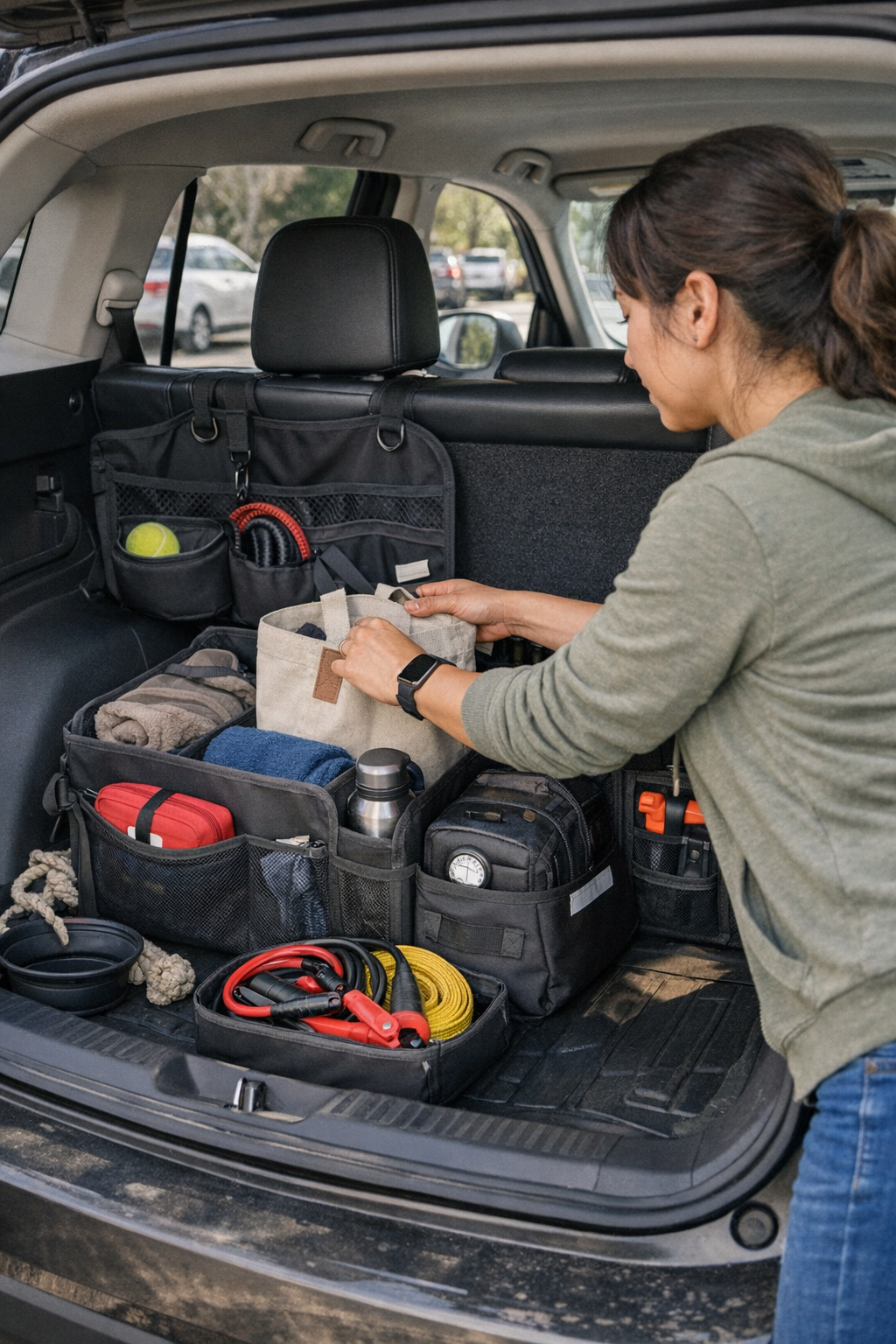
    • Fixed bins for tools and emergency gear—so nothing slides, even on sharp turns or panic stops.
    • Non-slip mats or seat covers that stay locked to carpet or seat edges, so you aren’t cleaning the same muddy spot twice after it slips again.

    Anchored structure rewires how the car behaves on every single trip. Plug in or reach for essentials and they’re there, not migrated out of sight. Cleanup means less reset—not a total overhaul after rain or routine use. If it takes three seconds to drop something back into place every time, you’ve eliminated an entire category of micro-annoyance.

    Repeated-Use Signals: How to Spot If Your Car Setup Is Still Dragging You Down

    Spotting friction is simple: consistent cable drop, needing to lift one organizer to get to another, lost tools reappearing where they shouldn’t, re-cleaning the same patch of floor or seat edge over and over. If errands end with another quick reshuffle or you find yourself reconfiguring storage after every family outing, your setup is defending tidiness at the expense of actual function.

    Even protection can create problems. A seat cover meant to block spills can slide off every time someone gets in, bunching beneath you and threatening to trip kids or snarl leashes. Cargo bins that can’t handle on-the-fly reloading become hurdles instead of help. The signal isn’t big visible mess—it’s the return of these daily micro-issues, signaling a structure problem, not just a cleaning gap.

    The Real Payoff: Predictable Flow After a Week of Use

    The difference shows up after a real week of drives, loading, errands, and returns: the best setups stay quiet in the background. Anchored cables never tangle. Mats hold their line through wet boots and muddy paws. The charger sits where it should. Essentials that leave with you land back in a fixed spot, without scavenger hunts or shuffle games. With structure, cleanup is a fast sweep, not a patch job on shifting mess.

    No setup makes every drive perfect, but good boundaries change the feeling: the car is ready, not waiting for you to pause, fix, or hunt for something that slipped. Routine friction isn’t “tidied away”—it’s genuinely absorbed and avoided. The next trip doesn’t start with a mental tally of what’s out of place; it just begins.

    Find practical solutions for every repeated-use car routine at DriveWellSupply.

  • How to Keep Your Carry-On Balanced and Easy to Access While Traveling

    A carry-on that looks perfectly organized at home can turn into a liability the moment you actually need to move through an airport at speed. Standing at your front door, you see clean lines, neat divisions, and every pouch zipped just so. But two hours later—while digging for a passport in a tense security queue, squeezing past travelers in a jammed jetway, or grabbing snacks with one hand in a crowd—every carefully planned section starts to fight back. The “orderly” bag that made sense in your living room now slows you down with every retrieval and repack. What feels like smart packing when stationary often reveals hidden friction as soon as real travel movement and repetition set in. Here’s why the wrong carry-on setup adds frustration you can’t ignore—and what to watch for if you want smoother travel momentum.

    The Tidy Trap: When Too Much Order Slows You Down

    Over-organizing a carry-on—using dozens of dedicated pouches, tight pockets, and subdivided organizers—can backfire in airport conditions. In theory, it means predictable homes for every cable, card, and charger. In practice, it means threading your arm past stacked zippers just to grab your passport, shuffling through layered tech sleeves for a phone at security, or wrestling snacks out from under a nest of receipts. The logic of neat compartments falls apart the moment you’re forced to repeat the same access sequence under pressure: security agents waiting, boarding lines compressing, tray tables in your way. Each retrieval interrupts your rhythm, and every “fix” piles on another small delay for the next rush moment.

    Disorder rarely erupts—but subtle drag eats at you all trip long. Pulling out and replacing the same essentials (passport, boarding pass, earpods) ends up requiring a mini unpack and repack every time. A system that looked perfectly maintained becomes increasingly unwieldy, especially when you have to squeeze in a last-minute item, or when one rushed addition breaks your neat logic.

    Airport Reality: Where Visual Order Doesn’t Equal Smooth Movement

    A bag’s real test is always in motion. The setup that seemed optimized on your packing table reveals its weaknesses after your second security tray, as you angle to avoid elbowing the person behind. “Good organization” means little if your layout can’t flex quickly when travel gets unpredictable. Watch for:

    • Security stalls: If your liquids or devices are buried, you’re left unzipping, shifting, and reshuffling at the x-ray—the line behind you growing impatient as your orderly system unravels in public.
    • Gate and boarding slowdowns: Retrieving your ID or a snack on the move? If it sets your bag off-balance because a jacket is wedged in, or you have to dig around items now stacked on top of each other, the rhythm breaks instantly.
    • Overhead bin fumbles: Stuffed pockets mean resistance. Zippers catch, compartments bulge, and suddenly stowing your bag for takeoff requires prodding, shifting, or apologizing to the row behind you.

    Repeat Visits Expose Setup Weakness

    Setup flaws appear fastest when you have to pull the bag down from an overhead bin, slide it past cramped seat arms, or jam it underfoot. If a charger cable or snack is behind layers of “organized” gear, a 10-second grab becomes a full pause and reshuffle mid-flight. Fix one jam, and the bag erupts elsewhere; nothing returns to that original, tidy reset. Order recovers visually, but you still feel the interruption every time you reach inside.

    Overflow Happens: Why You Need a Quick-Add Zone

    Even the best packing plans break down—real travel means sudden extras: cables, gum, receipts, new chargers, half-eaten bars. The bag that started flexible and neat starts to feel rigid, overbuilt, and resistant to last-second additions.

    Enter the quick-add pocket. Instead of forcing overflow into the main compartment, a loose, easy-access sleeve by your primary zipper acts as a “mess buffer.” Not beautiful, not posed for photos—but it works. Drop a new phone cable, worn boarding passes, or the snack you just bought without derailing your system. That one pocket absorbs the unpredictable, so your main pouches and planned-out sections stay undisturbed, making repeated use less stressful and more adaptable.

    A Real Travel Test: One Adjustment, Noticeable Difference

    After a recent stretch—three airports, two missed connections, four security trays—I switched to using a single outer sleeve for all last-minute items. The pattern changed: no more stuck zippers, faster security sift, easier flow between gates. Carrying the bag past aisle seats felt steadier, and no last-second addition threw off the balance or forced a rebuild. The quick-add pocket didn’t look tidy, but it made the entire setup work better in the moments that count.

    When Structure Becomes Its Own Problem

    It’s easy to blame travel chaos on crowds or airline rules, but the pain often starts at the packing design stage. Pouches, compression cubes, and layered slots manage obvious clutter, but can’t “flex” for real-life use:

    • The cable you grab mid-flight is pinned under the coat jammed in the outer sleeve.
    • Receipts jammed for expense reports become unreachable behind toiletries you added at the last minute.
    • Returning your passport after inspection takes three moves instead of one, blocking the line while you work the zipper sequence in reverse.
    • Lopsided weight builds up, so the bag tips over or strains your shoulder on the next terminal dash.

    Soon, you’re opening three compartments for each find, pausing for an off-balance reset in busy terminal traffic, and the patience of your bag vanishes with every new interruption.

    The Mark of a Reliable Setup: How Well Does It Reset?

    The best setup isn’t just what fits at packing—it’s what resets itself, fast, after a rush or a repack. If your bag quietly absorbs the passport grab, cable return, or snack drop without asking you to mentally sort everything again, it’s doing its job. Systems that require full attention after every access point—not just at the start—wear you down miles before landing.

    Make space for one low-resistance, rapid-access “overflow” pocket. That buffer pocket for inevitable extras keeps daily movement smoother. Don’t judge your setup by its pre-trip look—judge it after your third tray dump and repeated headphone hunt. That’s when real order counts.

    Packed for Looks or for Repeated Use?

    The pressure becomes clearest when travel goes sideways. Does your organization let you keep moving once reality interrupts, or does it protect its own design at the cost of repeated hassle? The long-lasting carry-on setups are rarely photogenic. They’re simply the ones that stay usable—minute after minute—through access, overflow, repack, and the next boarding sprint.

    Find carry-on tools and travel organizers built for real-world rhythms at CarryOnSupply.