Category: Travel & Drive

  • How Thoughtful Carry-On Design Reduces Travel Delays and Stress

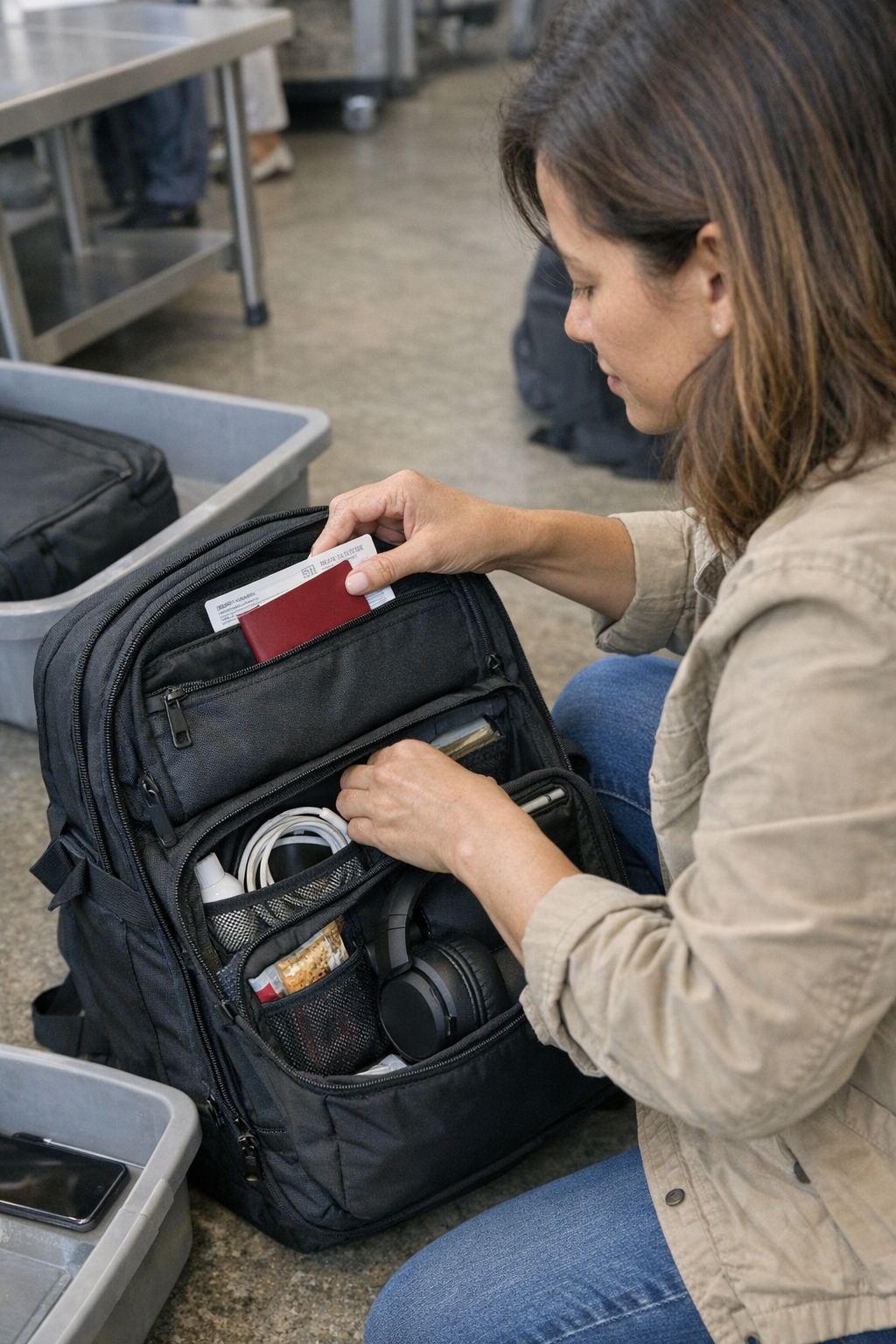
    Most travelers don’t realize their “organized” carry-on is primed to fail until airport movement turns simple pockets into friction points. At home, it looks ready: lines neat, compartments zipped, everything in reach. But the moment you’re in a real queue—security trays moving, agents watching, people pressing behind—a micro-delay reveals itself. Zippers snag on pouches that slid since you packed. Boarding passes wedge behind charging cables, or quick-access pockets jam up with whatever you stuffed in last. The illusion of order vanishes under live conditions; the bag that promised control instead drags at your every stop.

    When Visual Order Collides With Real Travel Pace

    The bag on your entryway bench might look dialed in: tech stacked, paperwork visible, snacks tucked away. But a travel rhythm exposes design flaws—reachable at rest isn’t the same as reachable in movement. You reach for your ID and a charger shoulder-blocks it. The “quick-access” pocket? It’s full of mixed cords, and you’re stuck unzipping the wrong pouch—twice. With each line, fresh obstruction: a zipper blocks a pass, a passport scrunches under wrappers, headphones come out knotted and cost you another five seconds. These interruptions aren’t embarrassing, but they’re relentless. Every fix chips away at your pace, especially when you hit the same hitch at every checkpoint.

    The real strength test isn’t first glance—it’s mid-rush retrieval. If grabbing what you need under pressure means negotiating overlapping compartments or shifting contents, the structure fails. What starts as small re-adjustments becomes a loop of slowdowns—passport tangled in cable, headphones buried beneath pouches, boarding card stuck behind chargers. Each pause is minor; the frustration is that it shouldn’t be happening at all, much less on repeat.

    Scene: The Security Tray Stall

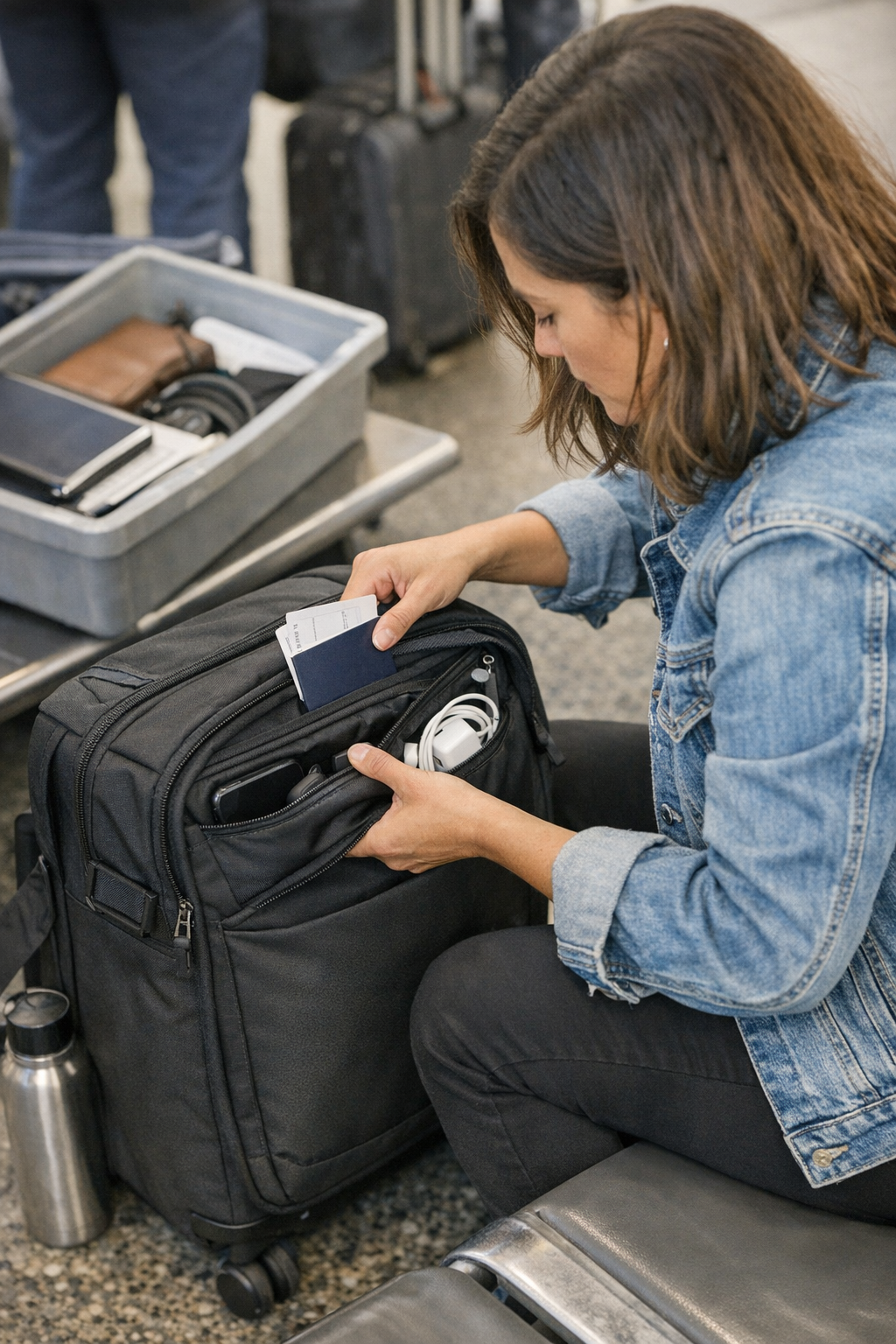
    You’re finally at the x-ray belt, bag on tray, about to show your boarding pass. Simple—except the pocket meant for it is pinched tight with two cables, stuck to a half-eaten snack. You root around, produce a power bank instead, shuffle again—the agent is waiting, the queue is closing in, and a pass that was “on top” an hour ago now costs you small bits of dignity. These aren’t single-trip surprises; they’re repeated frictions built into a setup that looks fine at rest and fails under even modest airport pressure.

    When Every Five Seconds Repeats

    The pain point isn’t a dramatic failure—it’s the low-grade hassle that keeps happening. Over and over, you dive for the same document, repack the same pouch, hope something stays where you left it only to meet the same resistance. Fresh city, old problem: ID buried again under snacks and tech. One fumble is nothing, but by the third, fourth, or eighth search in a day, your patience wears thin and the compounding drag becomes real travel fatigue.

    Static Packing, Dynamic Friction

    That color-coded, compartmentalized system built at your kitchen table unravels after the first real shake. One snagged cord yanks a wallet free; an overstuffed charger pouch compresses your documents. Arrive at your seat to find headphones strangled by a toiletries kit, forcing a repack that blocks the aisle and draws side-eye from the boarding line. Airports punish static structure: it never matches up against the bumps, pulls, and seat-side twists of the actual route. Most travel mess isn’t dramatic, just constant: every extra zipper to open, every scavenger hunt in a crowded gate area, every retracing to find something you should already have in hand.

    Carry-on frustration rarely arrives as chaos; it’s built from the burden of micro-corrections. Each time you double-back on your own setup—two zippers instead of one, three pouches to rifle for the usual passport or pass—you burn momentum and draw out the awkwardness for yourself and the people behind you.

    The Structural Test: Movement, Not Appearance

    On the packing table, separation and order look perfect. But the real pressure test comes mid-transit, after you’ve been through three checks, a gate change, and a hotel reset. Suddenly, the aesthetic decisions—passport nestled with tech, chargers floating with snacks—start failing. By the afternoon, “organized” just means you’re always repacking after every retrieval. You’re not operating from flow; you’re patching the same holes, grumbling as you dig through sliding layers of gear for the item in heaviest rotation.

    When “Neat Enough” Is Nowhere Near Smooth Enough

    The difference between a functional carry-on and a photo-ready one is only clear when interruption persists. If your setup demands repacking after almost every access—if every “quick” grab means stopping to sort, dig, and reset—the visual order is just masking routine interruption. Each minor rummage signals a bigger design fault: tidy lines mean little if your travel beat is always getting tripped up.

    Small Adjustments, Real Efficiency

    Strict separation turns theory into practical flow. Carve out truly distinct homes: one flat, open slot for your boarding pass (never shared, always top-facing); a pouch exclusively for chargers and headphones (cable snags, gone); snacks with snacks, documents with documents. Suddenly, retrieval is tireless—you don’t break movement or pace, even with a last-minute gate change or another ID check. Yes, abandoning the “unified, sleek compartment” has a superficial cost, but the functional payoff is immediate. You grab, use, and return everything with predictable ease. Repetition isn’t dreaded; it’s managed. Nothing migrates or tangles by mid-trip.

    True improvement surfaces when the zipper you reach for behaves exactly as expected: it gives you the one thing you need, not a mixed handful or another retrieval step. Headphones go back to one spot. The passport is always right side up, never knotted to cords or buried under emergency snacks. These edge-of-movement tweaks are lightweight, but over the life of a single trip—or a dozen cycles in and out of gates—they mean you move forward, not sideways, at every handoff.

    What a Better Carry-On Structure Actually Delivers

    The gain isn’t showy; it’s revealed by what you no longer notice. No boarding pass hiding under your power bank. No impulse repacking at your seat. No five-second delays at every turn. Instead, your travel rhythm holds. Checks, pulls, tray transfers—they all happen without friction, without wasted motion, and without costing you another minor apology to the boarding line. Your carry-on finally works like an extension of your plan—not an ongoing patch job you need to monitor and tweak. Over the course of a real journey, this carries more weight than any “unboxing” moment or perfectly square interior photo.

    A truly workable carry-on isn’t perfection at rest—it’s low-friction reliability in constant movement. When structure matches the pace and signals of real travel, you stop repeating fixes and start moving with more control, every step and stop in between.

    Find tools and organizers that make this difference at CarryOnSupply.
  • How a Simple Morning Reset Transforms Your Pet Travel Routine

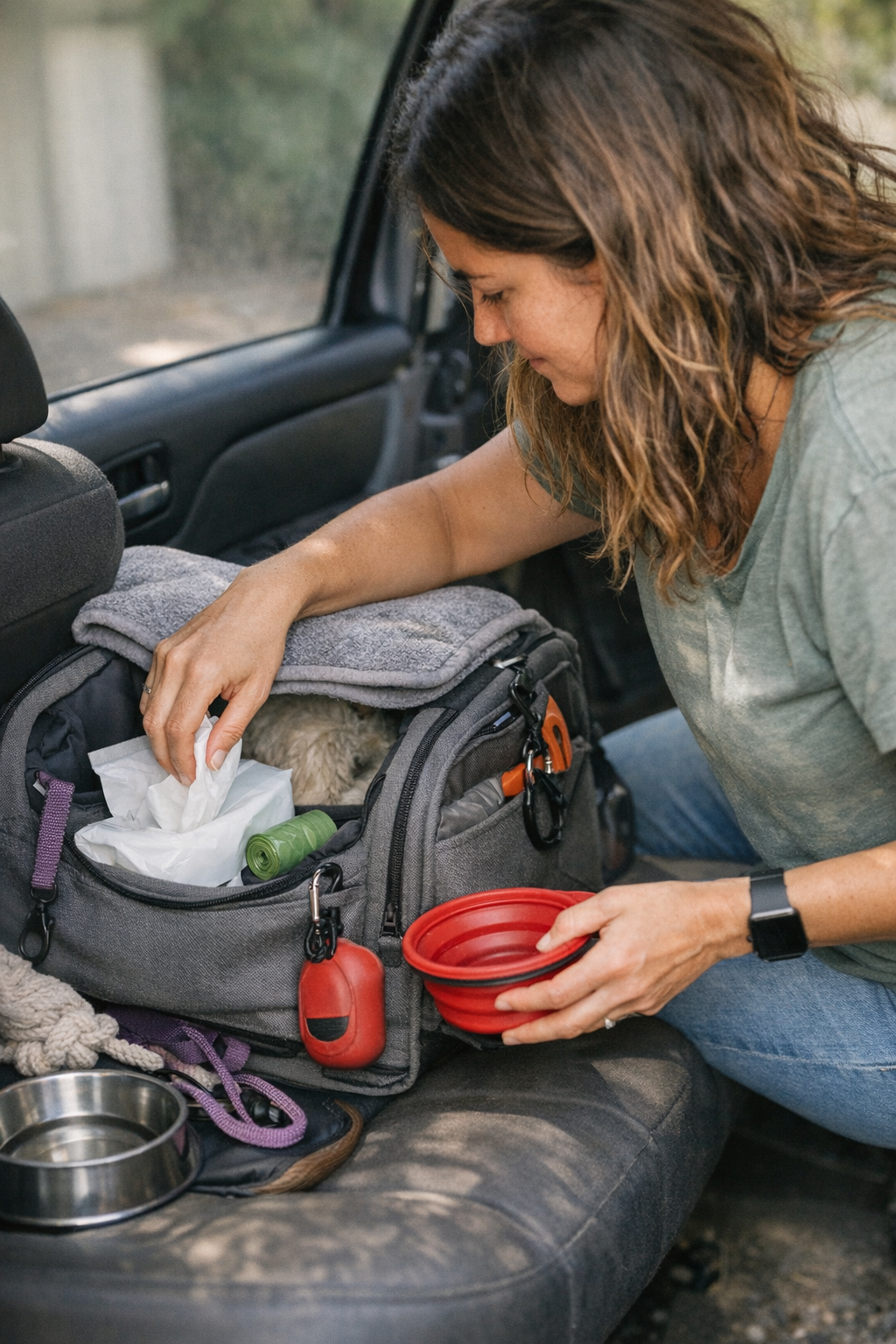
    There’s a difference between a pet-travel setup that looks sorted and one that actually works on the fourth stop of a busy day. What starts as a perfectly packed bag—wipes on top, leash in its place, bowl ready—can unravel within a few short outings. By the second errand, the wipe pouch you used earlier has drifted out of reach. The water bowl you dried hours ago is wedged under bulky gear, still damp and hard to grab. One rushed car-side cleanup turns into digging through layers you thought were organized—while your dog watches, restless, and your own patience thins.

    How Pet Travel Setups Break Down—Even When They Look Ready

    The stress points in pet travel setups are rarely visible at first glance. On the first walk, order holds. By the third or fourth, repeated grabs push quick-access items below pads or beneath less-used gear. Wipes end up buried, the leash tangles with the bowl, and a once-ready kit starts turning routine pauses into hidden stalls. If you’ve ever torn apart a neat setup hunting for a single item you know you packed, you’ve felt this gap—what looks prepared on the outside can become friction stacked up inside.

    It’s a quiet failure: the structure built for one-time ease can’t cope with layered use. Instead of a sudden mess, you get gradual slowdowns—each new search stealing seconds, each reshuffle making the next one inevitable. True readiness shows up after the real world has tested the system and found its weak points.

    Small Friction Points, Big Daily Slowdowns

    Digging through bag sections for the cleanup pouch. Unpacking half your carrier just to reach the leash under a comfort blanket. These moves don’t ruin a trip, but they stack up. Every extra search interrupts your routine, especially at seat-side as you exit the car: wipes tucked under a pad, leashes knotted with bowls, or a treat pouch blocked by bedding. It’s at these transitions—moments built for speed and calm—that awkwardly overlapping gear forces you into one-sided balancing acts and blunted momentum, while your pet senses the delay and restlessness builds.

    Why Organization Isn’t Enough—The Ready vs. Usable Gap

    Packing for visual order isn’t the same as packing for repeated, quick use. Waste bags out in the open at the start. Treats in your line of sight. But once the day gets going, the setup’s tidy appearance can’t guarantee fast grabs. A bowl zipped under everything means either upend the setup or make your pet wait. A leash stowed for neatness under a comfort pad triggers a full unpack the moment movement restarts. Each misplaced item costs you not just time, but smoother handling—especially if you face repeated stops with no break between them.

    Fast-access items need to stay visible and unblocked. Once those lines blur, the distinction between “packed” and “truly ready” emerges fast. The gap shows itself in split seconds lost, in the repeated reach that takes five times as long on trip number three as it did on trip one.

    The Reality of Overlapping Pet and Owner Needs

    Shared bag space creates its own snags. Your key fob winds up jammed among waste bags. Hand sanitizer rides under the same flap as treats. Owner and pet gear compete for the best pockets, so every return to the car starts another quiet scramble. The end result? Misplaced items and minor reset times that slow everyone—owner distracted, pet fidgeting—instead of the smooth, return-to-motion flow you planned for when first organizing.

    Recognizing When Your Setup Is Underperforming

    If you keep pausing at the same awkward point—baited by wipes buried under a pad, or forced to untangle the leash from a mashed comfort blanket—this is more than bad luck. Repeated stalls mark a structure flaw made obvious by real use, not by how the kit looks. These snags eat up energy, make transitions clumsy, and chip away at the good intentions behind careful packing. Each friction point repeated through the day means less patience and a rhythm that never quite recovers.

    Real-World Example: The “Quick Trip” That Isn’t

    Take a standard Saturday: three errands, two walks, car rides bracketed by seat-side stops. The first trip runs fine. But by lunch, after a couple of stops, wipes once close by slip beneath a comfort mat. The next muddy-paws cleanup turns into an awkward juggle: one hand on the bowl slipped between other gear, the console crammed, your dog wriggling for the exit. A process built for “grab and go” now staggers—simply because fast-use items couldn’t hold their turf after the first round of real movement.

    The Reset: Restoring Access, Not Just Appearance

    Resetting is more than putting things back “where they belong”—it’s making sure what you need is instantly grabbable in actual movement. This means that at least once a day, outer pockets or open clips get wipes and leashes, not just less-used gear. Comfort mats and bedding move to a spot that doesn’t block high-turnover items. For repeated quick stops, even a zipped pouch needs positioning that won’t shift under heavier kit after three in-and-out cycles. Adding one more clip or switching the wipes to a direct-access flap saves time on every reach, especially when the pace picks up.

    It’s a small adjustment—a clip repositioned, wipes migrated to a side panel—that clears the runway for the next transition. Cleanup doesn’t turn into a hunt. The leash doesn’t vanish. Resetting for real use means less sorting mid-routine, more time moving instead of fumbling car-side while your pet gets antsy.

    Preventing the Return of Clutter and Delay

    The difference-maker? Mini resets—quick, less-than-a-minute realignments between stops—are what stop your setup from degenerating, even if it starts out organized. Not a full overhaul. Just bringing wipes and leashes back to the front. Untangling overlapping items, or pulling owner supplies clear of pet fast-grab needs. The repeat offenders—repeated awkward reaches, one-handed digs, bowls buried again—signal it’s time for a reset before everything jams up by early afternoon.

    If you notice reach friction creeping in, don’t wait for a total mess. Each reset closes the gap between how things look and how they’ll work at the next exit or cleanup rush. Overlook these signals, and the best carrier or organizer devolves into constant minor correction.

    From Clumsy to Fluid: What Real Improvement Looks Like

    Apply even two or three of these changes, and the pattern shifts fast. Less cross-compartment shuffling, fewer repeated holdups, a transition speed that fits real-life chaos—walks, errands, pit stops—without your setup failing quietly halfway through. It’s not about perfect looks; it’s about a bag, carrier, or kit that stays responsive after repeated motions, loads, and returns. High-visibility placement and quick resets make friction points fade, so you’re not stuck fighting the same interruptions trip after trip.

    True pet travel isn’t curated for photos; it’s built for the loop: move, reset, move again. Each small structure fix goes further than fresh packing or decorative organization. And that’s the world PawGoTravel equips for: setups that don’t just promise preparedness—they survive the real, repeated pace of travel with your pet.

    Explore reliable pet-travel gear at PawGoTravel

  • How Smart Carry-On Organization Reduces Travel Delays and Stress

    The first time your carry-on setup gets dragged through airport reality, its true strengths—and weaknesses—show up fast. At home, everything looks disciplined: pouches stacked neatly, chargers coiled, documents slotted for easy reach. But that tidy order almost never survives real airport movement. The minute you hit the security queue, watch as “organized” turns into a slow-motion scramble—repeated digging for documents, shifting pouches, re-zipping. What looked efficient becomes friction you can feel: a bag that feels less accessible every time you reach for the same item again.

    When “Neat” Isn’t Fast: Travel Turns Order into Obstacles

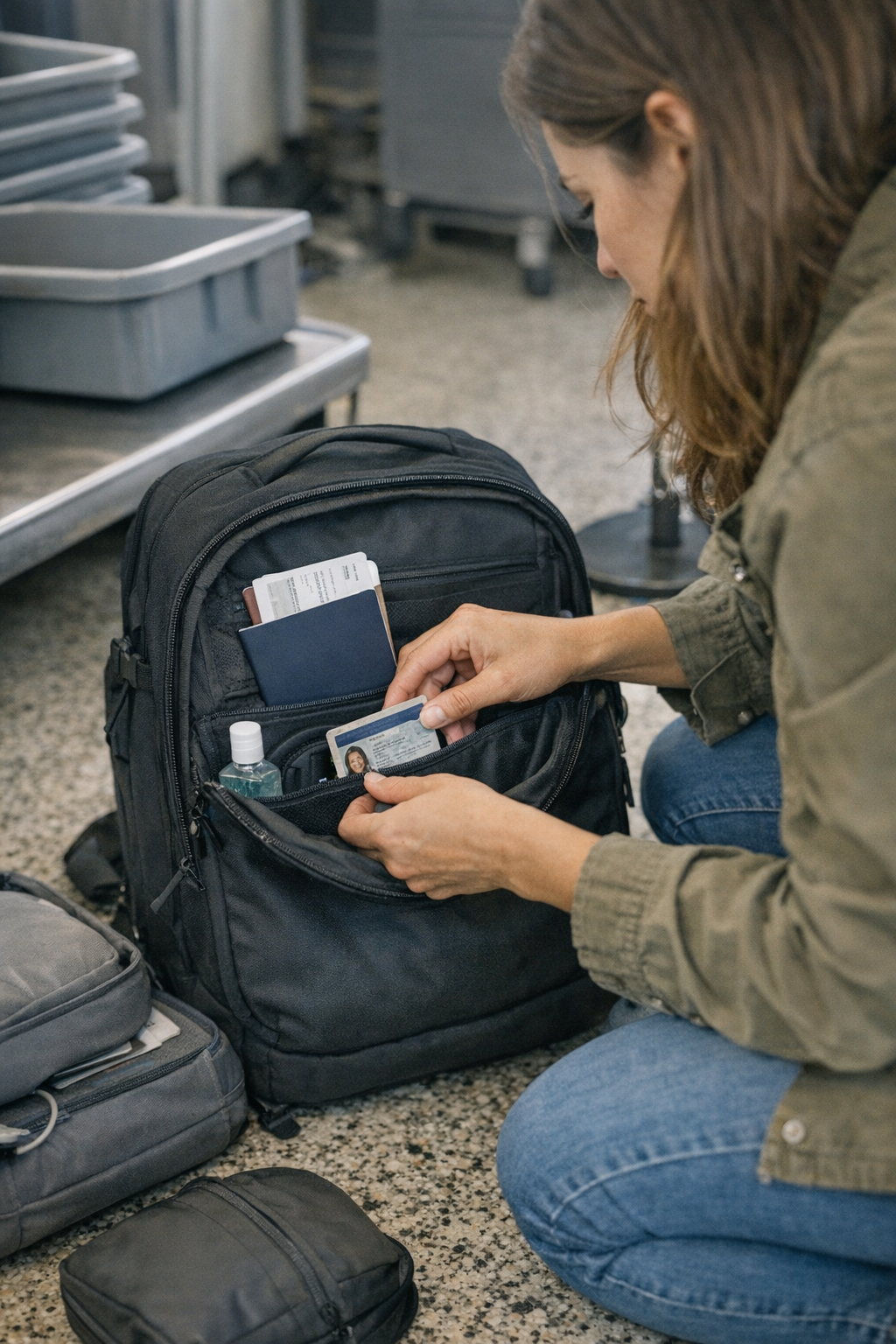
    Real friction surfaces the moment you’re pressed by lines. You’re in security, blocking the lane as you fish out your ID. Suddenly, your passport is hiding below the charger pouch, sanitizer is wedged under headphones, and the quick zip you relied on at home now catches on something you stashed “just for this trip.” Each delay multiplies: five seconds lost retrieving a document, another ten spent repacking after everything shifts. Organized at first glance, but in real use, every reach exposes a new snag.

    These aren’t one-offs; they stack up. The first fumble is just a hiccup. By the third, your rhythm’s broken and your sense of control fades. You start noticing you’re the one holding up the queue or rushing to close zippers before boarding is called. A “well-packed” carry-on that turns against you drains more than time—it draws your focus away from what actually matters in transit.

    Spotting Friction in Your Setup: What Hidden Slowdowns Cost

    The difference isn’t about how pretty your bag looks when fully zipped. It’s whether you can actually get to what you need, when you need it—without disrupting the whole system. Pouch categories that made sense on your bed become dead weight at the gate if items get buried under layers. Most travelers don’t spot the weak link until they’re forced to reach past two barriers just to get a boarding pass. On a day with three security stops, that slow crawl becomes a visible liability: each time, digging deeper, pulling out what you already packed away once, and quietly losing a beat in the flow of everyone around you.

    Quick Example: When Minor Setup Gaps Go Major

    Picture this real sequence: first checkpoint, you’re delayed as your card’s trapped at the bottom of an “organized” sleeve. Next round, your headphones pouch blocks access to your pouch with liquids—forcing you to unpack mid-line. By the third stop, your quick-access system has turned into a repacking routine, with every reach inside a reminder that the neat layout at home doesn’t match the order you need under pressure.

    This isn’t just an airport thing. Friction follows you: reaching for headphones at takeoff, sliding a bag into the overhead but catching on a misplaced strap, or stopping in a crowded aisle to hunt for sanitizer. Each event is a direct result of overlooked setup weaknesses.

    Visual Order vs. Movement-Ready: Judging Setups That Don’t Keep Up

    Looks don’t tell the story. A flawless grid of gear inside your carry-on is only as good as its ability to serve you on repeat. Most initial packing systems curb visible mess without accounting for live movement—how you’ll actually need to grab, repack, and retrieve in quick succession. If your layout requires a “hunt” each time you want your passport or headphones, it’s just another form of friction wearing on your progress.

    Too many setups focus on compartmentalized organization—three pouches for three categories, all zipped and stowed. On the ground, this can mean dumping out half of what you organized just to grab hand sanitizer as people flow around you. Moments like swapping boarding passes or re-upping on comfort items don’t wait for you to decode your own layout.

    The Value of Effortless Pauses: How True Organization Feels

    Real order is found in the split-second pauses between movement. When you stop at a gate or ease into a seat and don’t need to scramble through layers, your setup proves its worth. The simplest setups put repeated-use items—travel docs, sanitizer, comfort gear—within a single, direct path. If your bag lets these small tasks happen smoothly, stress fades and the airport rhythm changes; if not, the “pause” is lost to another repacking session.

    Real Travel Example: Shifting from Buried to Immediate Access

    Notice the change when you assign all high-frequency items to one external pocket or easy-grab path. The improvement is visible: quick retrieval at security, no more unzipping three sections for ID checks, faster seat entry. Instead of navigating a padded pouch maze, you run your hand along a known zipper track and move on—no mental inventory required. Movement isn’t frictionless, but interruptions now pass as flickers instead of full stops.

    The real difference: your carry-on goes from being a delicate puzzle to a reliable tool under pressure. The moment you stop hovering over your layout and simply move, you’ve found the structure that works for repeated use.

    Finding Hidden Friction: Are Repeated Stops Draining Value?

    Start tracking how often you pause for the same reason: fishing under pouches, spinning your bag to reach a pocket, or hesitating while someone waits behind you. If entry into your seat means a shuffle to clear blocked zippers or if you find your documents stuck behind “more secure” organizers, your setup is quietly costing you time and energy with every cycle. Strong carry-on systems leave almost nothing to multi-layer hunts, especially under streaming travel conditions.

    The signal isn’t frequency of travel—it’s the feedback of each retrieval. If grabbing a passport creates hesitation, or if headphones require a full unpack, your organization isn’t tuned for movement—it’s tuned for static display. The best setups beat repetition by working with, not against, airport patterns and in-flight routines.

    Adjusting for Real Use: Practical Fixes That Actually Change Flow

    Start by mapping your must-grab items—passport, ID, sanitizer, headphones—into the zone you can access with one smooth motion, even when your bag is upright or squeezed between seats. With every movement (security, boarding, aisle slide), notice the moments your hand lingers or reverses step. If the new layout cuts the drag and drops your retrieval time, you’ll feel the difference immediately.

    Tested over a couple of trips, these changes reveal where good intentions bottleneck in real use. Rethink what you pack where—switch pockets, reduce pouch depth, use travel-specific organizers built for repetition—and let repeated exposure, not just initial order, shape each upgrade.

    Luggage Structure That Keeps Up: Moving Past One-Time Display

    Effective carry-on structure survives real travel interruptions: repeated document checks, tray handoffs, boarding-lane bottlenecks, or aisle-seat shuffles. When things get tight, the highest value comes not from how the bag looks under your bed, but from how it responds to rapid retrieval and repack routines. The carry-on that’s movement-ready shrinks every point of friction from “small delay” to “barely noticed pause.”

    Every setup has its limits, but shrinking each friction point keeps you moving forward. If your carry-on is shaped for movement—not just neatness—real organization means the bag adapts to your pace, not the other way around. That’s how structure becomes support, not a subtle drag you only find out about after your third security line.

    Find gear designed for repeated-use ease at CarryOnSupply.

  • Simplify Your Car Setup to Extend Gear Life and Ease Daily Use

    The trap is familiar: By day three after a deep clean, your car still looks sharp, but every bit of daily use exposes the cracks. The charging cable is no longer “right there”—now it’s wedged under the seat, forcing a fumble each time your phone runs low. That backseat cargo bin slides off-center after a single stop, so grabbing a grocery bag is suddenly a mini obstacle course. The protective mat you so carefully pressed flat is now curling at the edge—enough that gravel creeps underneath and cleanup is already losing ground. And the seat cover, supposedly snug, now pins your jacket with every re-entry. The “organized” look fades fast under real routine; your car stops feeling easy to use, even if it still seems tidy at first glance. Surface order, it turns out, doesn’t guarantee a smooth daily drive.

    Order That Looks Good—But Interrupts Your Flow

    Most drivers wrestle with the same letdown. The drive to keep everything clean and tucked—cables hidden, organizers stacked, floors spotless—often creates its own set of headaches by midweek. In practice, flawless setups reveal small design betrayals with actual use: a phone mount positioned out of the way becomes out of reach; floor mats that “almost” cover leave a gritty weak spot along the edge; tightly packed bins slow you down instead of speeding routine returns. Quick stops and real driving habits test every shortcut and show where appearances overpower real function.

    Repeated Friction in Everyday Car Routines

    Real-world trouble points stack up fast:

    • The charging cord continually vanishes beneath your seat, so every commute starts with a wrist-twisting hunt and a few seconds of lost patience.
    • Cargo bins that seemed stable on clean asphalt flex loose after a sharp turn, blocking the very path you need to unload groceries or work gear.
    • Seat edges become a tangle of escaping cables or creeping organizers, so “grab and go” turns into “move and untangle first.”
    • Every minor return—just for coffee, just for school drop-off—means another tiny correction, slowly eroding the promise of a friction-free setup.

    Why Simpler Car Setups Hold Up Under Repeated Use

    Practical setups outlast perfect-looking ones. Real-life car routines punish complexity: overlapping floor mats refuse to stay put, multi-bin storage calls for constant adjustment, and “out of sight” cable runs start interfering with normal reach.

    The Case for Single, Stable Components

    Car setups that survive the week share one trait: less overlap, less shift, less chasing loose ends. Anchored cables follow a fixed route—always in the same spot, never twisting under the seat. One-piece mats lay flat edge-to-edge, so dirt can’t sneak through or get trapped at seams. A fixed, low-profile organizer stays where you left it, making returns and pickups one-motion jobs instead of multi-step chores:

    • Anchored cables: Always find the cord where you expect it. Less snap, less hunt, and no more half-plugged fumbles at awkward angles.
    • One-piece mats: No more gravel or road debris escaping underneath. Forget daily readjustment, even in bad weather.
    • Fixed organizers: Load, unload, and return items in a single instinctive motion. No need to fight a drifting bin or reshuffle cargo between errands.

    Any setup that needs straightening, re-threading, or realigning after a couple days? That’s wasted motion, a sign the structure is fighting your routine instead of cooperating with it.

    Recognizing the Real Difference: Functionality Over Surface Order

    A “sorted” car can fool you—no cables showing, organizers in line, mats spotless. But the test isn’t how it looks just after cleaning. Real drain shows up when the weather breaks and grit gathers along mat seams, or when you open the door on a Monday and your emergency kit bin blocks your backpack again. A “good-looking” setup often asks for repeated work—small, persistent corrections that chip away at the convenience you thought you’d built in.

    The Small Failures That Add Up

    It’s not the big messes—it’s a series of low-stakes, persistent trouble points:

    • Persistent cable tangles lead to ignored charging or unreliable connections—until your phone dies at the wrong moment.
    • Cargo bins stay crooked, so you start working around them instead of with them, making quick stops less quick.
    • Seat covers bunch and catch, snagging clothes and collecting grit right where you slide in, even when you “fixed” them days ago.

    Ignore these small failures and mess leaks back in, essentials get lost, and every return-to-car becomes a little harder than it should be. Reclaiming convenience means less straightening, fewer mental adjustments, and a setup that always matches your daily moves.

    Living With a Setup That Actually Works

    A truly usable car setup isn’t showroom-perfect after a week—it’s resilient. Fewer standalone parts and less layered “stacking” means each routine feels unblocked: no cable hunting, no pushing aside bins every time, no cleaning up after your own protection system. The right choices show themselves every time you get in and get moving.

    • One-step returns and pickups: Phone, bag, charger—each has a reachable spot, no detour or detangling required.
    • Protection that sticks: Mats and covers that stay put actually control mess and delay deep cleans—routine touch-ups, not a full reset after every weather change.
    • Flow stays open: Fixed organizers keep cargo clear of doors and footwells. Entry and exit are clean, even after fast stops or heavy loads.

    This isn’t about perfection—dirt and loose items will creep in. But you should spend less time re-fixing your “fixes,” and more time just using your car. When order recovers easily after every use, it starts to actually help, not just look good for an afternoon.

    Practical Lessons From Routine Use

    The best car setup almost disappears into your commute. After weeks of real errands and fast re-entries, the simplest, most stable options prove themselves not in appearance, but in how little you have to think about them. The right setup won’t eliminate all friction, but it does keep daily annoyances from building momentum—and over time, that difference is what saves your patience and brings real convenience back to car use.

    For practical gear that makes your car easier to use—not just easier to look at—visit DriveWellSupply.

  • How Organized Pet Travel Bags Can Ease Rest During Multiple Stops

    The gap between a “packed” pet travel bag and a bag that actually works on the road is bigger—and more annoying—than most owners expect. Your setup looks neat at home, zipped and ready on the floor: bowls, treats, wipes, everything in place. But three stops in—balanced on the edge of a car seat with a restless pet and your hand fishing for that buried water bowl—the design flaws show up fast. What’s missing isn’t a supply; it’s the ability to reach what you need, when you need it, without breaking the flow of the trip.

    What a Pet-Travel Setup Looks Like—And How It Actually Works

    An organized bag is only a win if it keeps pace with the trip. On Day 1, every item has its pouch; by Stop 2, routines splinter. That comfort blanket, useful at night, now blocks quick wipe access. The leash tangles around bowl handles; a pocket that held treats at home forms a cluttered blockade after things shift in transit. After a few cycles—out, back, reach, repack—the kit becomes a guessing game, not a solution.

    The real test comes at that late-night rest stop or a gas station pull-over, when speed matters. Each time you unzip for one item and get another, you feel the setup dragging time and patience. Worse, the pet senses it: their rhythm breaks, waiting extends, and the short pause for rest turns into yet another moment where everything waits on the bag.

    Overlapping Items, Blocked Access, and the Rise of Travel Friction

    Travel friction is often invisible—until it slows you down, again and again. Leash and wipes tangle together just when you need to act quickly. That toy that soothes your cat on the move? It’s now wedged across the cleanup pouch, blocking speedy access. Each reshuffle to grab one thing presses others further out of reach. At home you see “organized”—mid-journey, it’s just another obstacle.

    Minor, repeated inconveniences don’t feel dramatic, but they stack up fast: leash clips hidden by bedding turn a planned one-minute break into three. A cleanup bag under dog treats turns a spill into a fumble. Outwardly tidy, the kit inside is layered confusion—especially after repetitive stops break whatever order you started with.

    Recognizing the Real-World Weak Point: Repeated Access Demands

    The reality check on your pet-travel setup isn’t that first, fresh departure. It’s at Stop Three, with low energy, an impatient pet, and urgency rising. If your hand goes into the same “organized” pocket only to find a jumble, that’s your weak link. With each repeated dig, the initial promise of order is replaced by the predictable chore of repacking or spreading everything across the seat to find a single wipe.

    Picture the scramble: your dog tugs at the leash, water bowl trapped under the blanket, and you’re shuffling through layers with one hand while blocking the exit with the other. Each round, the “prepared” setup feels more like a set of hurdles than a helping hand—a source of pause rather than the flow you expected.

    When “Prepared” and “Usable” Fall Out of Sync

    Every pet owner recognizes the shift: what starts as a well-packed bag slowly becomes something you work around. By the fourth stop, the only way to find supplies is to empty half the bag onto the seat or memorize the flipped-around layout. Instead of smooth movement, you wind up building temporary workarounds—wedging zippers open with a finger, tucking treats into bags they weren’t meant for—just to speed up the next reach-in.

    How a Better-Structured Bag Changes the Routine

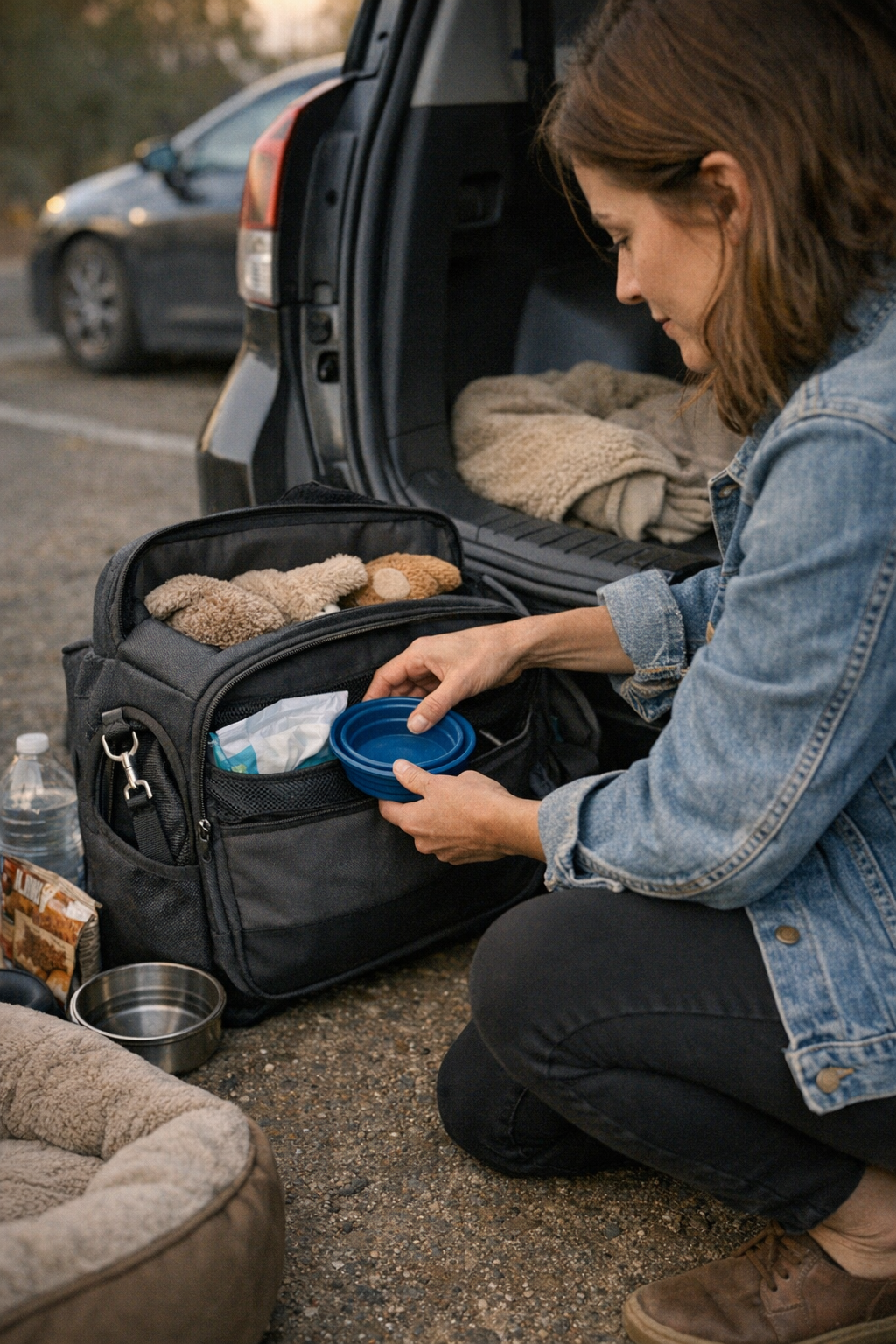
    Structure, not just organization, is what relieves the grind of repeated stops. A split compartment design—a wide opening for bowls and wipes right near your reach, a side pocket that always presents the leash clip—transforms the routine. On the move, it means one motion for water; another for cleanup; each high-use item in its own predictable spot. No digging, no car-wide reshuffle, no waking your pet just because a towel is at the bottom.

    The effect compounds over the trip: less rustling, a pet that drinks before they get agitated, cleanup that wraps before frustration sets in. Repetition no longer erodes order; it reinforces it. The bag stops being the bottleneck and starts syncing with real-world travel rhythms.

    Example: No More Seat-Side Scrambling

    It’s 10pm in a dark parking lot, your pet riled up and you balancing awkwardly on one foot, bag gaping on the back seat. In the old setup, it’s a five-step circus: hunt for the leash, chase loose treats, unearth bowls by unfolding the blanket—nothing you need is where you expect it. With a compartmented design, the leash slides out first try, bowls are in their slot, door closed before tension builds. The visual difference is small; the moment-to-moment relief is real. Every stop feels less like a reset, more like part of the flow.

    Practical Tips: What Actually Helps After Several Stops

    Prioritize true one-step access for anything you use more than once per stop. Wipes, bowls, and leashes belong in separate anchor points, never buried below low-use supplies. If anything blocks a routine grab—even something comforting, like a blanket—it needs its own lane. Avoid “bucket” interiors: they look flexible at first, but turn chaotic with use and tired hands.

    Internal organizers or inserts, even a single divider, cut down overlap that delays every move. A side-access wipe pouch at bag’s edge saves yourself the full search. In practice, the least fussy setups are the ones where you know—always—what lives where, and you never have to upend half your travel kit just to clean up a mess.

    Why “Organized” Isn’t Always “Easier” in Repeated Pet Travel

    A pet-travel setup that looks organized isn’t enough—it has to behave under real repetition. The right structure absorbs rough handling, resists mid-trip chaos, and makes restarting after any pause frictionless. When bowls, towels, or leads slide back into their own pockets without guesswork or reshuffling, your own tension drops, and your pet’s routine settles with it—again and again, through every stop.

    That’s when a well-built organizer justifies itself—not because it looks neat, but because it takes the drag out of repeated movement, makes each restart easier, and keeps messes contained to a single moment, not a cycle of delays. Small structure choices shift the whole experience—from stalling at every stop to feeling like the trip actually moves on your timing.

    Find more practical travel setups at PawGoTravel.

  • How Organized Carry-On Setups Prevent Travel Delays and Frustrations

    The real test hits after the first flight: An organized carry-on that looked efficient in your room can turn chaotic with just a few airport hurdles. The zippers close, the pouches stack, but twenty minutes into real movement—boarding lines, sudden security checks, or a scramble for documents—neatness starts breaking down. What looked set for effortless access actually delays you at every grab point: the passport you thought was “in the easy pocket” is now buried under chargers, and reaching in for one thing drags out three more. If you’ve felt the drag of a too-compact setup in a live airport sprint, you know the visual order means nothing if retrieval fails when pressure rises—especially across multiple movement cycles.

    The Carry-On Illusion: Organized Yet Clumsy Under Pressure

    Packed pockets should mean smooth travel, but the illusion fades fast after just a few real-world document checks. You unzip expecting to grab your boarding pass—only to meet a headphone cable tangle or a zipper blocked by an awkwardly wedged power bank. The real slowdown isn’t because you forgot something, but because you keep having to rescue the same items that slid or drifted after each movement.

    Repeat friction is the true penalty: Instead of a single fix, you face a pattern of small interruptions—hunting for your ID in a hurry, restacking items at security, or jamming essentials back into an already overstuffed pouch as impatient travelers collect behind you. The order you built at home drains away in airport time.

    How Repeated Friction Surfaces in Real Travel

    Airport routines are ruthless at exposing weak carry-on setups. Here’s how real problems show up again and again:

    • Security checkpoint fumble: In the tray line, you realize your passport slid out of its “spot”—now chargers and snacks topple out as you dig, and that careful system collapses by the first scan.
    • Overhead bin shuffle: Needing headphones or a tablet mid-flight could mean unloading half your bag, because the outer pouch shifted and now blocks a document you need to show.
    • Seat entry slowdown: The pen you want is tangled with boarding passes, or earbuds migrated to a random corner—the clean categories at home blur at every turn and repack.

    Looking tidy only gets you so far—the real question is what happens on reach number fifteen, when repetition has erased every visual plan. Movement exposes flaws fast: quick-access design has to survive constant slide, repack, and unexpected checks, not just look neat before you leave.

    Why Zone Separation Outperforms Compactness

    It’s tempting to believe an “everything in its place” layout will guarantee speed, but unless you have a true dedicated quick-access zone, friction returns fast. The most common failure: What started as sorted ends up cross-contaminated after two checkpoints or a single seat change. Your earbuds and boarding pass now sit in the same pouch; your charger is folded into your document slot.

    • Unzipping the wrong section—every time you hurry
    • Spreading gear across a tray to unearth one lost ID
    • Replacing items just to have them drift by next use

    When the “quick-access” idea breaks, so does your flow—minor mishandling compounds during boarding rush, random checks, or a last-minute change of gate. Instead of a tidy first impression, you get a series of rediscoveries that stall movement just when you need to keep moving with minimal thought.

    Classic Setup Shortfalls: Overlap, Drift, and Rediscovery

    • Pocket overlap: Looks fine until travel starts—high-use and low-use items blend in the same slot, so your passport shares space with gum and tossed receipts. Every grab re-shuffles the mix.
    • Unsorted pouches: Compact, but you end up reshuffling gear multiple times by the first gate, with order never quite rebuilt.
    • No fixed home: Without an always-known spot for documents, tech, or comfort gear, retrieval turns into a guessing game at every checkpoint.

    Reducing visible mess is not enough. If your carry-on still forces the same repeated search or reshuffle after each move, order isn’t real—it only looks the part.

    Stress-Testing Real Solutions: One Pocket, One Job

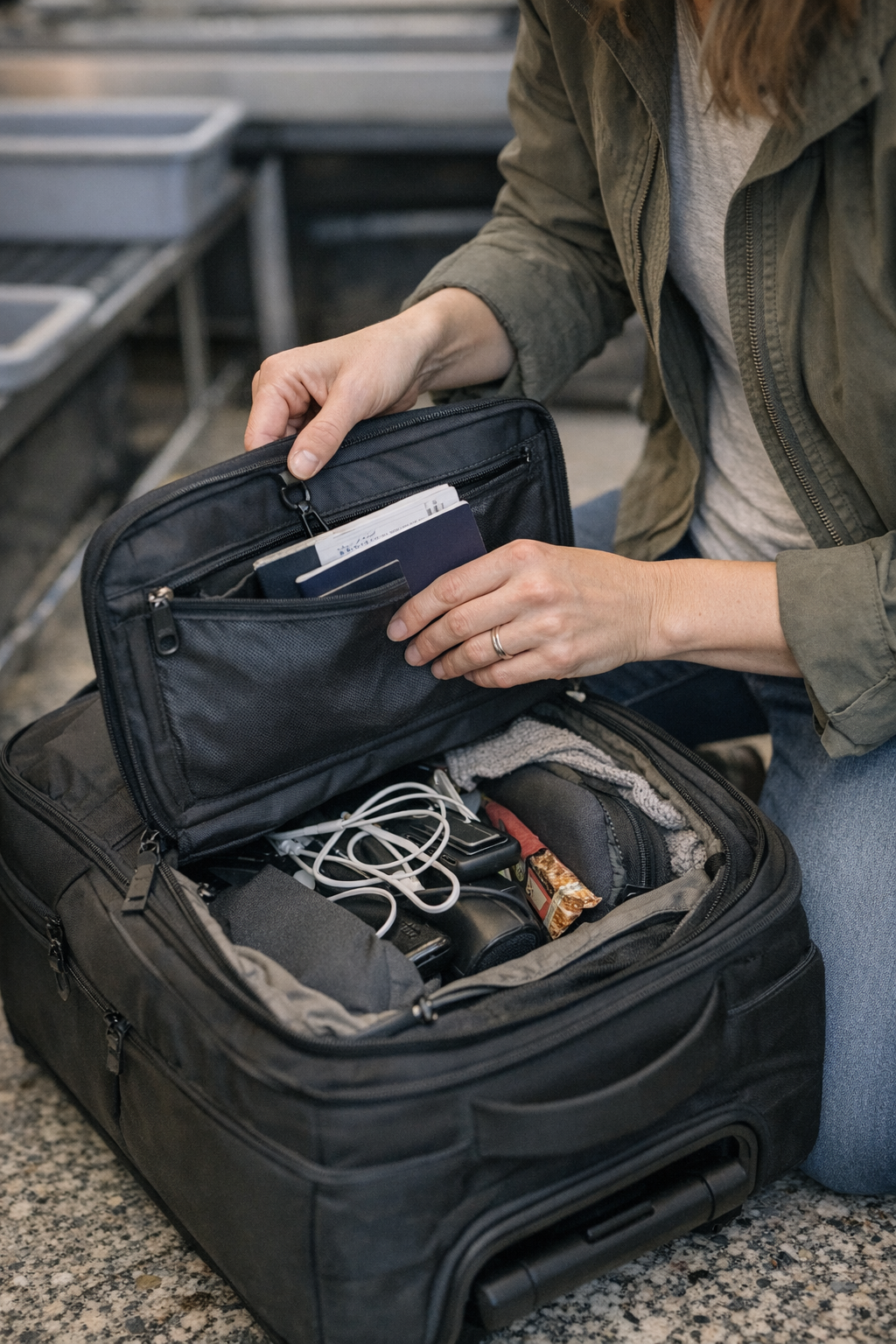
    The shift that actually holds up: Assigning a non-negotiable, single-use spot—usually a stand-alone zip pouch high in the main compartment—for must-grab travel essentials. No overlap. Passports, boarding passes, and IDs go into this anchored pocket only. Tech cables, chargers, and comfort items get their own separate organizers or zones further apart, so they never drift into the document flow.

    • Every document check is done with one grab—no more searching, stacking, or accidental drops.
    • Headphones, chargers, and pens stay put, not sliding into your document zone mid-journey.
    • Security and in-seat access are faster—no awkward reach-around, no rushed transfer, and no splitting your attention across badly mixed pockets.

    Nothing eliminates every travel pause, but crossing over essentials loses its power to throw off your rhythm. Line blocks become rare. Repacking mid-trip shrinks to a minimum. The difference is sharpest in the scrambles—when a single misplaced ticket once meant a trayful of gear, now it’s one zip and move on.

    Small Wins, Real Impact—The Ongoing Difference

    • No more hunting for lost items after each flight segment—especially when fatigue sets in late in the day
    • Faster transition through gates and checks, since you’re not patching up scattered pouches with every stop
    • In-seat access feels smooth; you can pull what you need without disturbing everything else

    It’s the difference between quietly keeping pace with airport flow and feeling a step behind at every critical moment. Travel doesn’t get less complex, but your carry-on stops fighting you every time you move or repack.

    If you’ve felt your carry-on order fail by the second airport or third boarding call, it’s not your habits—it’s the missing structure for repeat-use travel. Build for real movement, not just tidy looks.

    For carry-on travel tools, organizers, and repeat-use essentials that hold up under movement pressure, visit CarryOnSupply.

  • Why Your Car Organizer Slows You Down and How to Fix It

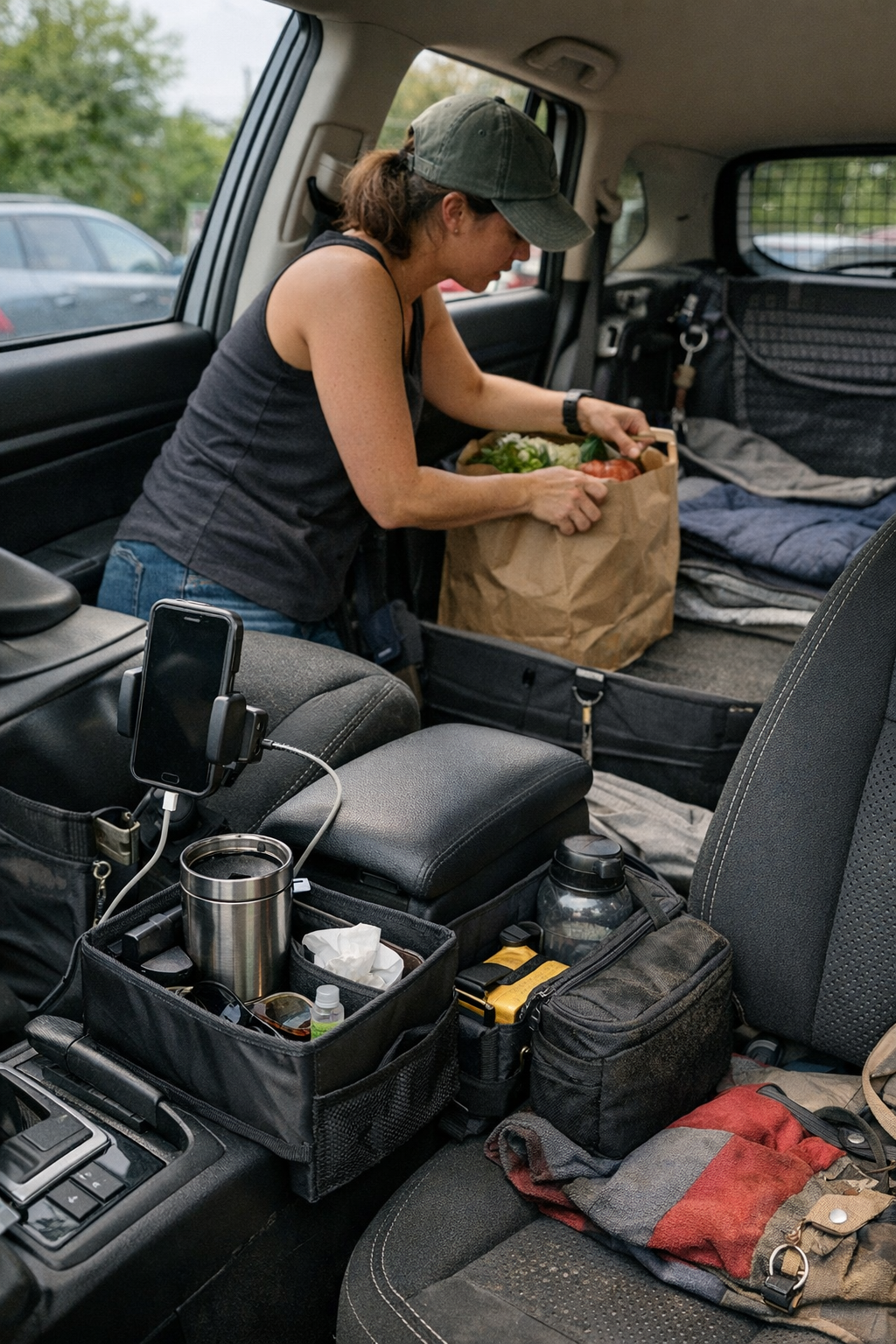
    There’s a difference between a car that looks organized and one that actually works under pressure—most drivers only notice once the routines start to break down. You finish a cleanup: dashboard wiped, phone chargers hidden, pockets lined up. It feels like order—until your third short trip, when you’re groping under the seat for a charging cord again, or nudging the seat bin back into place so your bag will fit. The setup you admired in calm moments keeps slowing you in motion: a charger out of reach, wipes shifted just out of sight, organizers that block what you need when you need it most. Tidy isn’t the same as usable, and it rarely holds up once errands, re-entry, and actual driving routines start exposing every shortcut.

    How Surface Tidiness Hides Real Friction

    Neat setups look perfect at rest, but start a week of pickups, quick stops, or commutes, and you’ll hit the hidden frictions. The phone mount that’s flush on the dash means an awkward twist at the green light. That thin organizer pressed tight to your seat? It’s fine while parked—until a rush of bags or drinks knocks it just enough that you’re hunting for it on the floor. Hide the charger cable for the photo, and by your second errand, it’s trapped under another accessory or tangling underfoot. These aren’t one-time hassles. Every extra motion—finding a cord, shifting an organizer, rearranging a cover—breaks your focus at the exact moment when you need your setup to work, not just look “done.”

    The real test isn’t a calm, clean interior—it’s how your car handles mid-errand, mid-reach, or mid-rush. If you’re pausing to search, realign, or fix something every drive, the structure is serving appearance, not usability.

    Return-to-Car Moments: Where Structure Breaks Down

    Picture returning after a grocery run. Hands full, keys wedged, drinks unsteady, bags grazing the door. Your muscle memory should land on a charger or wipes, but—nope—cord slipped off the console, mount angled wrong, cleaning wipes buried behind the door pocket’s curve. The “organized” setup felt right in a quiet garage, but now it fights you, turning a simple grab into an awkward hunt. You wedge bags, fumble for what’s lost, and sink into the seat already slowed. Multiply it: post-school chaos, night shift returns, or loading sports gear. With every return, the same problem appears—neatness fades, but friction repeats. In a shared car, or one that juggles routines, today’s logic is tomorrow’s annoyance, and your best system becomes another obstacle under actual pressure.

    Organized Isn’t Always Easy Access

    Every organized car risks the same trap: hiding what you need, just to keep surfaces clear. That seat-edge bin? Great until cables trap underneath and you’re straining for the missing cord. Door pockets solve one mess but create a dipping/searching routine that adds seconds on every drive. The hesitation builds: you know it’s there, but you have to glance, pause, and reach—at exactly the wrong time. If you’re catching yourself in the same repeats—grabbing at the floor, checking the bin again, pausing before pulling out—your system’s fighting your routine. The real evidence isn’t clutter, but the split-second stalls and mis-grabs. In a car, function is tested not by stillness but by how the structure helps (or blocks) your hands under normal, hurried, or cluttered return-to-car pressure.

    Testing Setups Under Real-World Pressure

    Where do these “looks right” setups keep failing? Always in those routine, repeated-use cycles:

    • Chargers vanish under a stack of organizers after the first reload.
    • Phone mounts force a twist or odd reach after every activity.
    • Protective seat covers keep the mess off but steal your usual spot for a bag or water bottle.
    • Cargo organizers tame rolling groceries, but suddenly, reloading is slower or bags catch on the dividers.
    • Each drop-off or pickup knocks a cable out of position, so you’re always resetting it before plugging in.

    The more you use the “organized” car, the more subtle inconveniences creep in. Soon, you don’t question them—you re-fish, re-set, re-align, and accept it as just part of driving. But those friction points are signals: your setup is working against how you actually use your car.

    Redefining What “Works” in a Car Setup

    True car organization doesn’t mean hiding every item or lining up every pocket. It means arranging chargers, wipes, keys, and dog leashes so they’re always in your natural reach zone—without digging or detouring.

    • Keep charging cables anchored and visible along the center or seat edge, so the grab is always smooth—not tucked and tangled under accessories.
    • Trade deep, narrow containers for shallow, open caddies that let you grab top-down, not elbow-deep.
    • Pick low-profile holders or clips that float in the natural hand path after sitting—instead of “cleaning up” until nothing is accessible in motion.
    • Reserve some visible spots—maybe not perfectly styled—where wipes, chargers, or keys reset in plain sight, ready after every return or rushed start.

    These aren’t sweeping changes. They’re small physical shifts that let you reload, connect, or wipe down in a single motion—no pause, no search, no reset ritual before you even start driving.

    Finding the Balance: Visibility Versus Visual Calm

    The instinct is to hide every cord, close up every cubby, and keep the cabin spotless. But real driving—errands, loading, kid pickups, heat, re-entry—is less forgiving than a showroom. The right test isn’t “does it look calm?” but “does it actually make each drive, return, and reach simpler?” If the answer is always a split-second pause or a new mini-hunt under the seat, the structure is wrong for your real routine. Visual calm that disrupts access is a trade that costs you—daily, not just occasionally.

    In practice, a car stays truly usable not by what’s hidden, but by what’s habit-ready—essentials where your hand expects them, resets that survive a week of stops, and setups that don’t demand extra cleanup just to feel under control. Test your routine this week—see which setups actually cut out the pause, the hunt, or the repeated fix. The improvement is obvious: not a prettier interior, but a friction-less grab, reload, or drive every time real life interrupts your plans.

    Shop DriveWellSupply for practical car-use solutions that hold up to real routines.

  • How Thoughtful Pet Corner Setup Transforms Hotel Travel Experience

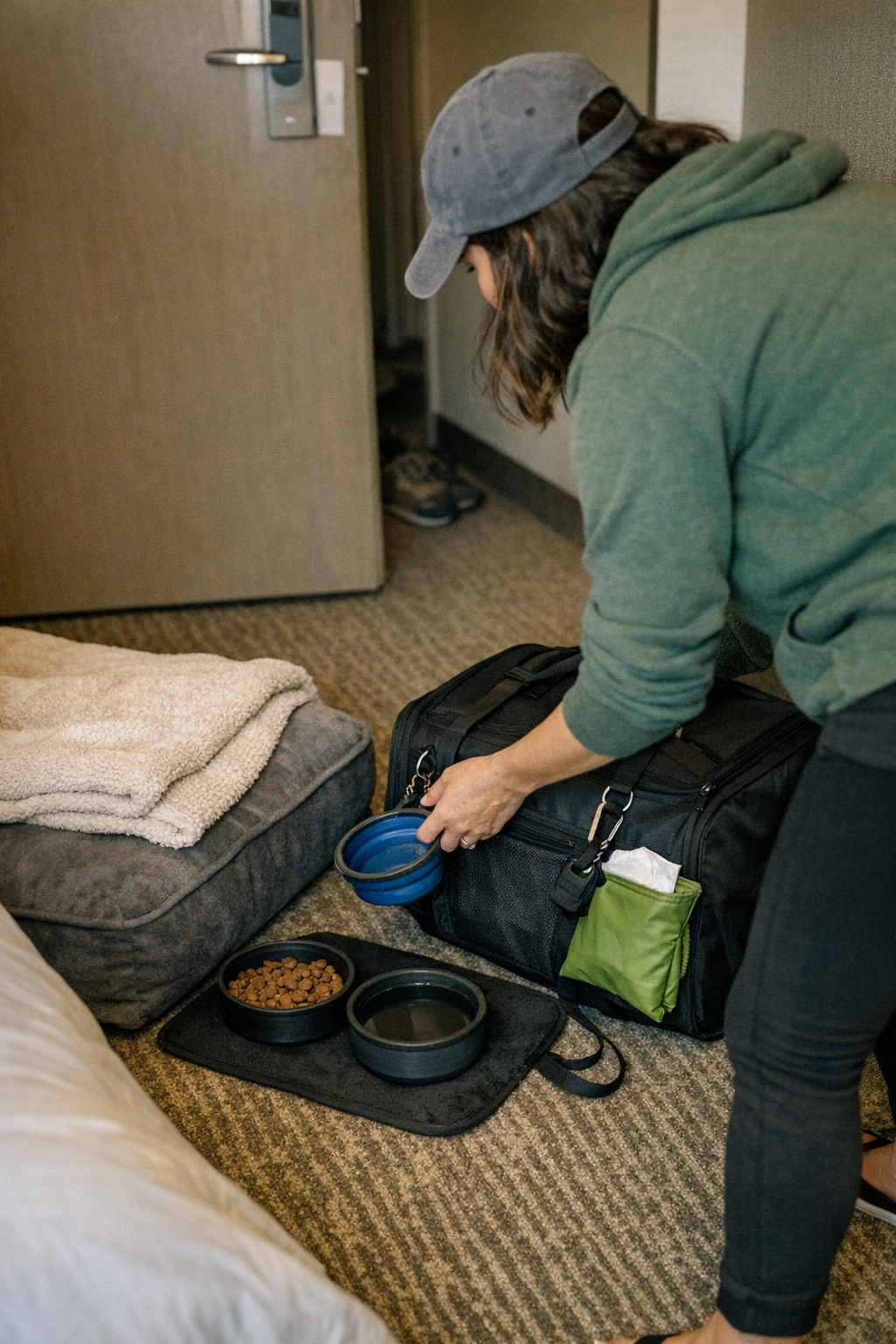
    Looking prepared in a hotel room with your pet is easy—until you actually start moving in and out, over and over. The first setup always seems organized: bowls stacked by the door, wipes tucked in a pouch, leash coiled beside a bedroll. On the first run, that order holds. But after three quick exits, or your pet’s second muddy re-entry, the “neat” layout gives way to awkward grabs, blocked pouches, and the slow drag of repeated reshuffling. Suddenly, that organized corner reveals its weak spots—not in what’s packed, but in how fast you can get at it when your routine kicks into high gear. This is where true pet-travel setups get tested—under repeated strain, not first glances.

    Why “Looking Prepared” Isn’t Enough for Repeat Hotel Pet Routines

    The surface calm of most hotel setups masks deep friction the moment you move at speed. Neat rows and zippered bags hide their faults until you try grabbing wipes with one hand, leash in the other, and realize the pouch you need is pinned under a folded bed. It’s not about initial tidiness—it’s about staying functional after the third or fourth outside dash, when energy and patience both run short. One misplaced item sends you digging; one overlapping bag layout means the right pouch becomes the hardest to reach.

    This isn’t about “making it look nice”—it’s about surviving repeated handling without slowdowns. When every trip out the door means unstacking half your kit, annoyance builds. Fatigue piles up fast—especially when your pet’s energy spikes late in the day. A good hotel setup should let you reset fast, not make you dread the next trip outside.

    Common Hotel Pet Setup Frustrations: Seeing the Same Weak Point Return

    The real test comes after that fourth, fifth, or sixth hallway round-trip. That’s when hidden flaws resurface, no matter how polished things seemed at check-in:

    • Reaching for the wrong compartment: Leash tucked with toys, wipes stuffed under the travel bed. Everything’s packed, but nothing’s accessible in the right order.
    • Cleanup gear buried just when you need it: The wipes pouch exists, but grabbing it means dropping the leash or juggling your pet mid-mess. One slowdown, and paw prints march across the tile.
    • Comfort blocking essentials: Bed or blanket solutions keep things tidy—until they cover the food bowl or block your quick reach, making snack time one more obstacle course.
    • Reset friction with every stop: Even a five-minute pop outside turns into another round of “unpack, dig, repack,” tangling your routine more with each repeat.

    If you catch yourself thinking, “I had this perfect five minutes ago,” you’re seeing the real cost of setups that only look ready. The pain isn’t from big emergencies, but from small stresses multiplying every time you return.

    Access Beats Arrangement: The Real Test of a Functional Pet Hotel Corner

    Reliability is about fast access, not ornamental symmetry. Strong setups hinge on motion: can you complete cleanup, resets, or re-leashing without pausing, searching, or reshuffling? The difference jumps out after repeated cycles. You remember which setups let you move in 30 seconds and which make you groan. True improvement arrives when:

    • Wipes are clipped or hooked up high. One-hand grab, no rummaging. No buried pouches.
    • Bowls ride in a grab slot or outer sleeve, right by the leash clip. One reach, two problems solved. No cross-room scavenge.
    • Your essentials move together. No redraw, no item dance—your cleanup, walk, and feed tools stick as a unit, following you in or out.

    This changes the routine: instead of dreading the next walk, you cut the doggie midnight dash from a two-minute ordeal to half a minute—less stress, less mess, tighter control.

    Scene from the Real World: When the Setup Breaks Down

    It’s midnight; your pet just raced through damp grass outside. You throw the hotel door open, aim to clean up—then realize the wipes are wedged under bedding, the bowl’s stuck behind cushions, and the leash is somewhere in the layered bag. While you shuffle and dig, your pet twirls fresh mud into the entryway. Not chaos—just another pile of slowdowns, each one extra movement you’d hoped to skip.

    These aren’t rare events; they’re the norm across five or six stops in a single short hotel stay. Every layer that looks “organized” becomes one more step between you and clean, fast reentry. When tools you need vanish under extra layers, friction returns. Each repeat exit loads more hassle onto what should be a basic routine.

    Small Fixes, Big Wins: Reducing Reset Friction in Tight Hotel Spaces

    It’s the tiny adjustments that pay off in pet-travel. Clipping the wipe pouch outside the bag or right to the door handle buys back seconds with every pass. Bowls that live at seat-edge height—not under the foldable bed—mean you never pause or crawl for dinner time. When leash, wipes, and bowl cluster together as a mobile kit, you stop “reorganizing” with every round-trip and start moving as one, even when you’re tired or the night gets hectic.

    The real metric: Can you reach and restart instantly, or do you always pause to re-sort and untangle? Strong setups mean less hesitation, faster resets—the payoff multiplies when you’re repeating the cycle all day.

    It’s About Lasting Use, Not Just First Impressions

    The myth is that hotel pet organization is a single hurdle. But every walk, return, and quick cleanup is a new chance for weak setups to slow you down. Durable systems that survive five or ten repeated uses—without constant refreshing—beat anything that only looks sorted right after check-in. It’s not about matching an Instagram “before” shot, but about being able to grab, clean, and go in one motion, even on the sixth muddy paw run. The real win: when your travel corner quietly erases hassle, holds up under repeated pressure, and lets you trust your setup despite the grind of travel routine.

    Explore practical hotel pet-travel solutions at PawGoTravel

  • Why Your Carry-On Fails Under Pressure and How to Fix It Fast

    A carry-on bag that looks organized in your bedroom can fall apart the first time you hit a crowded airport checkpoint. The real make-or-break moment for any “smart” setup comes not when you first zip it closed, but when you’re forced to yank out your passport in a moving security line, or reach for a charger while someone elbows past you at your gate. Every second spent unzipping a pouch, fishing through layers, or repacking in the aisle isn’t just lost time—it’s unnecessary friction, visible not just to you but to everyone stuck in line behind you. That’s when a neat-looking system reveals whether it actually works under pressure, or just slows you down in ways you only notice too late—right when it counts.

    When “Neat” at Rest Becomes Messy in Motion

    What survives airport reality is rarely what looked neat at home. The passport pocket that seemed so accessible becomes a blind spot when facing a boarding agent and four hundred people behind you. Your labeled pouches are still color-coded—but the boarding pass has slipped under a charger, and now every retrieval triggers a full-bag scramble. The difference isn’t subtle: small flaws repeat, drag out, and stack up each time you need a single item in the middle of a rush.

    This is where so-called “organized” setups betray you: waiting in line, hand hovering over the right pouch, only to discover documents are stuck two layers down. There’s no smooth landing zone to work out of; your top compartment’s zipper jams against another bag. Suddenly, your well-packed kit isn’t saving you time—it’s making you the holdup.

    Repeated Reality Checks: Where Smart Design Collides With Real Use

    Perfect order has a short lifespan under airport repetition. These are the slowdowns you’ll notice most:

    • Pouch-Within-Pouch Overload: What started as smart separation turns into digging through a matryoshka of pouches just to grab headphones or a passport. Each retrieval means unpacking, then repacking, with no quick reset.
    • Snagged Zippers, Delayed Access: An outer pocket that snags at the worst moment—leaving you bent awkwardly over your luggage, while your ID is seconds away but out of reach.
    • Two-Handed Fumble: Tech kits designed for neatness require a table or flat lap, but airport reality gives you one hand, no space, and the need to grab a charging cable fast.
    • Layer Confusion: Compartments overlap so closely that each zip for your phone means spilling out five unrelated accessories first.

    These aren’t rare annoyances—they’re the quiet, repeated missteps that chip away at airport momentum, turning tidy “solutions” into a time tax you pay at every checkpoint and every bottleneck.

    Typical Scenes: Friction You Can Feel, Trip After Trip

    Security Tray Slip-Ups

    You reach for your laptop and liquids at the checkpoint, but your compact packing means your laptop sleeve is behind two zippers and the charger tangled three layers deep. Now you’re unpacking your whole setup onto a gray plastic tray as the line builds. That “clever” separator just became a scramble zone—multiplied by every connection, every airport, every return trip.

    Document Retrieval in Tense Moments

    All smooth until you need your boarding pass again. It’s under two pouches this time, and your hands are already full. Every repeat access ramps up stress, not just once, but at every gate, every document check—no matter how perfect it looked before you left home.

    Overhead Bin, Underwhelming Access

    You toss your carry-on above, settle in, then realize your headphones are in a side pocket that’s now completely blocked by armrests and other passengers’ gear. To get them, you have to dig, lift, and repack—risking dropped items and impatient looks from everyone behind you. A second saved on initial packing, lost tenfold in the aisle.

    The Invisible Cost: When Looks Override Function

    Visual order is a false comfort if your setup can’t handle the test of actual transit. The “clean” arrangement—organized pouches, crisp dividers, triple-bagged toiletries—lasts only until you need the third item in a row and realize that each barrier slows the whole routine. The drive to declutter at home actually invites mid-trip disorder when every layer and gate becomes an extra hurdle. Obsessive tidiness morphs into access-blocking complexity, defeating the real goal: smooth movement through the airport maze, not just a neat look when still.

    Where Practical Adjustments Make the Difference

    If you’re recognizing any of this, you’re seeing the shift that every frequent flyer eventually makes: ruthless prioritization of speed and simplicity over decorative stacking. The fix isn’t “add another pouch”—it’s clearing layers between you and what you touch most, and designing routes for documents, chargers, or headphones that won’t get blocked mid-trip. The strongest setups share some rules:

    • Direct-access for repeat-touch items: Anything handled more than once per leg—boarding pass, phone, charger—goes in top or external pockets, not inside a pouch inside a pouch.
    • No deep nesting for essentials: The more items you bury, the more time you’ll waste unpacking at pressure points.
    • Instant retrieval trumps photo-tidy: If you can’t grab it standing up, with one hand, that “order” is just a future bottleneck.

    Switching all my in-transit essentials to a main top zip pocket didn’t just make security faster; it ended the cycle of mini-unpacking before every gate and every seat. No deep dives, no second-guessing, just a clean motion—making the bag not only look good but finally work in real situations, over and over again.

    Signs Your Carry-On Could Move Smarter

    Watch for these signals that your setup still privileges appearance over flow:

    • Pausing or stalling with each basic retrieval in a line or terminal.
    • Full or partial repack after every travel document or device check.
    • Multiple zips, pouch dumps, or item shifting just to grab what you need next.
    • Bag neatness returns only after you stop—but every real access still adds drag or distraction.

    The best structure is the one that stays agile under stress: repeated security, last-seconds boarding, inflight access, terminal transitions, and hotel resets. Reliability isn’t a stack of pouches—it’s flow that stays easy after the sixth checkpoint, not just at departure.

    Building a Carry-On That Works in Motion—Not Just at Rest

    Forget showroom-perfect packing. Build your carry-on to handle back-to-back access, cramped aisles, and sudden document checks. Organize not for photos, but for the messy, repeated hands-on moments travel always brings—when every extra zip or pouch layer only adds time and stress.

    What wins is practical structure: true quick-access pockets, purpose-built document slots, and a minimum of overlapping sections. Order that breaks down less under real use will always beat picture-perfect neatness that can’t survive airport pressure. Accept every small compromise that gives you fewer stops and smoother resets—trip after trip, airport after airport. The difference is immediate: a carry-on that stays in rhythm, not just in order.

    Find tools, organizers, and carry-on solutions shaped by real movement at CarryOnSupply.

  • Creating a Structured Car Setup to Avoid Daily Clutter and Hassles

    A car interior might look organized for a day, but real use exposes weak spots fast. By Tuesday, that tidy center console turns into a mess of drifting chargers, lost wipes, and another parking-lot shuffle to find your essentials. The difference between “looks organized” and “actually works” is obvious in the seconds you lose: knuckles scraping beneath seats, cables wedged beneath floor mats, and the uneven reach-arounds everyone swears they’ll fix next week. If you’ve ever started Monday with everything in place, only to spend Thursday morning wrestling a phone from under the seat or fishing out receipts that block your wipes, you’ve met the problem head-on. The result? Every errand, re-entry, or quick stop reveals how quickly surface order gives way to silent disorder—and how small inconveniences stack up trip after trip.

    The Trouble with “Looks Organized” vs. “Works Organized”

    A car can appear under control, but a few commutes and quick stops strip the illusion bare. Tune your setup for a photo and it’s fine—until daily routines start to rattle everything loose. Phone cables just long enough to migrate into the footwell, wipes slipped into a door pocket but buried by the end of the week, “organized” essentials scattered after a hard brake or a grocery run. Visual neatness often does little for repeated, high-friction use—every trip reveals new delays or lost items. The trade-off isn’t just aesthetics; it’s time wasted and focus broken, again and again.

    The real gap is cumulative: a sanitizer bottle that always tumbles, emergency tools locked away by your own cargo, a phone charger you have to untangle before driving off. Instead of a car that helps you move, you’re caught in resets and recoveries—seconds lost every time you load up, park, or try to start moving again.

    Scenes from Real Routines: Where Order Falls Apart

    The Phone-and-Charger Cycle

    Start with your phone and cable placed near the center console—looks good, feels accessible. By errand three, the phone’s bounced into the passenger footwell; the cord is half-pinched under the seat, half dangling somewhere you can’t reach while buckled. Pull into the coffee drive-thru, and those missing 30 seconds untangling the cable happen every time. Visual tidiness slips fast when cables and gadgets aren’t truly anchored—what seems like a small nuisance becomes a pattern of repeated, avoidable slowdowns.

    Everyday Entry and the Glove Trap

    After a cold-morning walk, you quickly toss your gloves into the door pocket. By midweek, they’re walled in by receipts, napkins, and last week’s parking stubs. When you reach for them, it’s a minor excavation project—a setup failure repeated daily. The more you try to “restack” the pocket, the deeper the pocket traps whatever you’re actually trying to use, turning convenience into a time capsule of buried stuff and micro-delays.

    Cargo Corners and Blocked Access

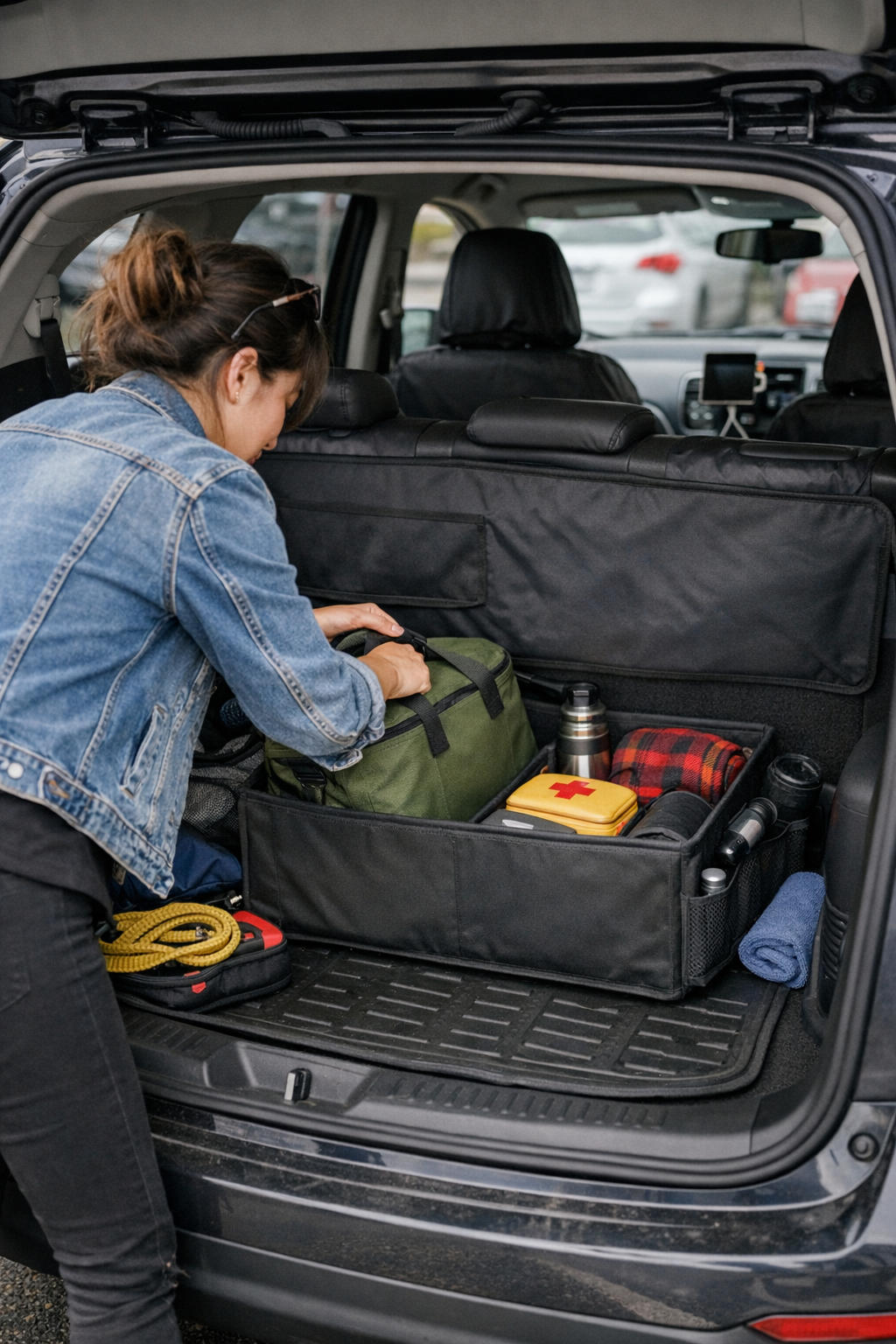
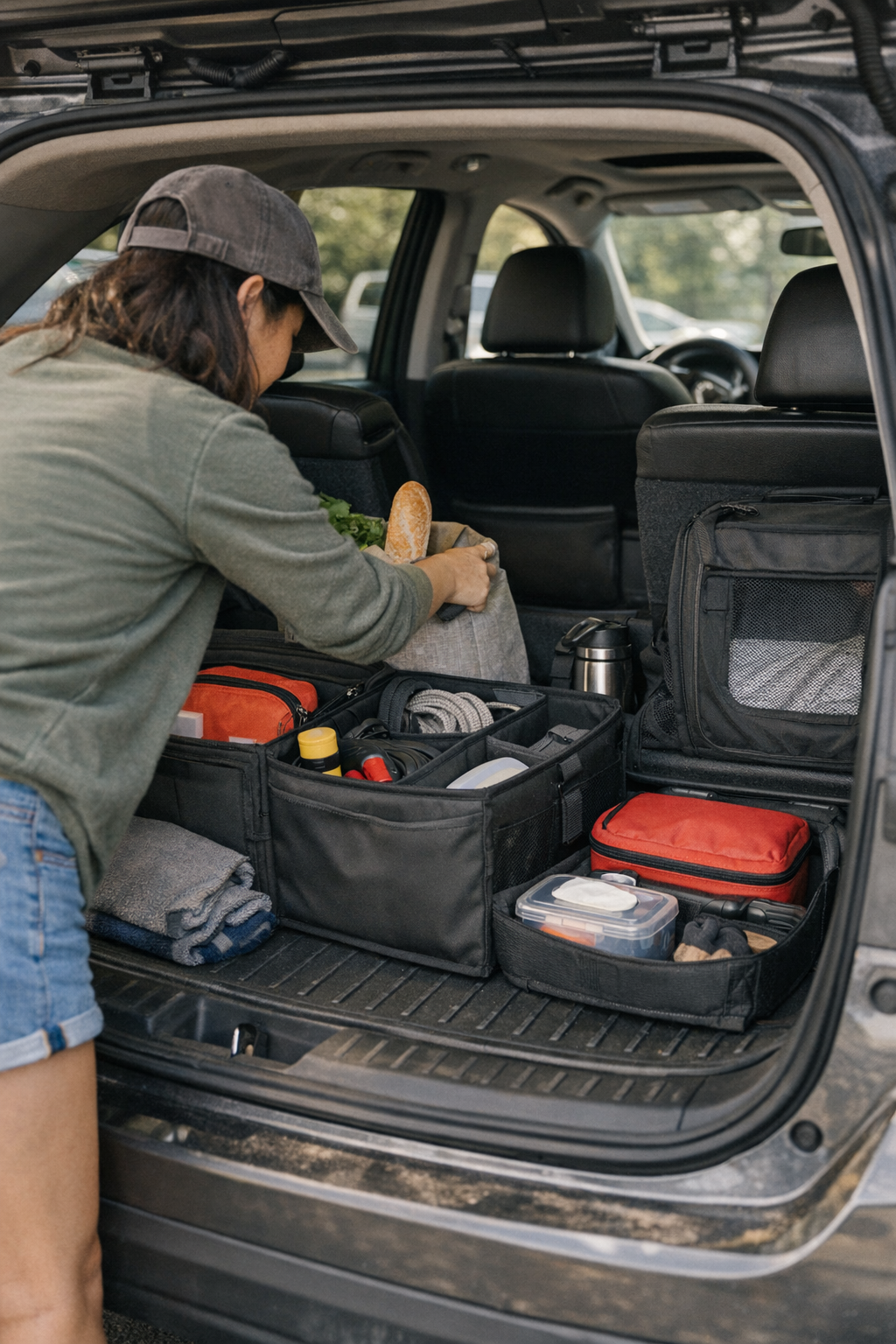
    Suppose you place your emergency kit in the trunk’s rear corner, neatly alongside a reusable grocery bag and some returns. Fast-forward two stops: the groceries shift, the returns topple, and your kit is blocked just when you need it. Now unloading means shifting heavy bags just to reach what matters—a well-meant organizer creating its own obstacle course. The cargo might look tidy at a glance, but functional access grinds to a halt under real loading pressure.

    Why Assigned Spots Outperform Every “Good Enough” Fix

    True improvement comes from giving each must-use item a fixed home that stands up to movement, not just looking sorted at rest. No more improvising—each charger, wipe, or tool belongs in a dedicated, repeatable slot designed for actual driving, not just display. This is where the right organizers matter: structure survives what the commutes, re-entries, and cargo-shifts throw at it.

    • Dedicated cable organizers near the shifter prevent charger lines from tangling in the footwell or losing reach between stops. No more downtime untangling at each light.
    • Rigid seat-side pockets for wipes or sanitizer stop small items from slipping out of reach or jamming into seat creases that steal precious seconds.
    • Hard console organizers give daily-use items like keys or extra masks visible, repeatable access without letting them shuffle under wrappers or stray receipts.
    • Built-in trunk bins for emergency gear keep your critical items reachable, even when new groceries or team sports bags pile in unexpectedly.

    Some fixes make a difference instantly—no more kneeling to retrieve a cable. Others reveal their value over a week: less mid-trip sorting, fewer forgotten supplies, and a routine that does not bottleneck when you’re running late or your hands are full. Organization that moves with you, not just sits pretty.

    Where Clutter Hides: Pinch Points That Hurt Your Flow

    Clutter rarely piles where you expect. Instead, it wedges into seat gaps, packs itself into cupholders, or disappears under the center-console edge—right where you need access. The “organized” cupholder on Monday becomes, by Thursday, a tangled pile of coins, wrappers, and an immobile charging cable. Each rescue attempt takes longer, raising the friction with every drive. Real organization lives and dies by these choke points—the difference between smooth reach and constant fumble.

    It isn’t just a minor annoyance: every micro-delay nudges your attention from driving to problem-solving. Over a handful of days, each failed reach compounds, turning your organized setup into an invisible source of stress and wasted time.

    One Setup Shift: From Acceptable to Actually Smooth

    The single most reliable change? Don’t settle for “good enough” arrangements—demand a dedicated spot for each high-use item, and stick to it. For many, installing a fixed pocket by the passenger seat for your charger and cable means no more hunting or cable drag—every time you reach, the item is there, not lost to the seat gap. Give disinfectant wipes their own rigid upright slot, instead of hoping a door pocket will hold. Put the “daily” essentials in a hard-sided or zipped organizer, so nothing drifts beneath receipts or slips under trash. Even in the busiest week, these upgrades mean fewer resets, smoother transitions, and far fewer “Where did it go?” moments when it’s time to move.

    Making Organization Work Across a Full Week

    The real difference shows across a mixed week: stressful commutes, unexpected stops, fast errand loops, and the daily routine of loading and unloading. In this pressure, every shortcut—cramming a cable somewhere “for now,” tossing a mask in the cupholder—unravels what little order you had. Only stable, specific homes for each recurring item keep your hands free, cleanup light, and access immediate. Setups that stand up to the messy, real pace of life spare you the drag of midweek resets and the creeping frustration of minor, repeated mishaps.

    It isn’t just that the car looks better—it moves with you, resists clutter drift, and hands over your essentials on the first reach, not after a mini search party. The right setup doesn’t just match day-one order: it holds against the week’s chaos, supports your flow, and makes actual use feel easier every single time.

    Discover practical organizers and setup solutions at DriveWellSupply.