
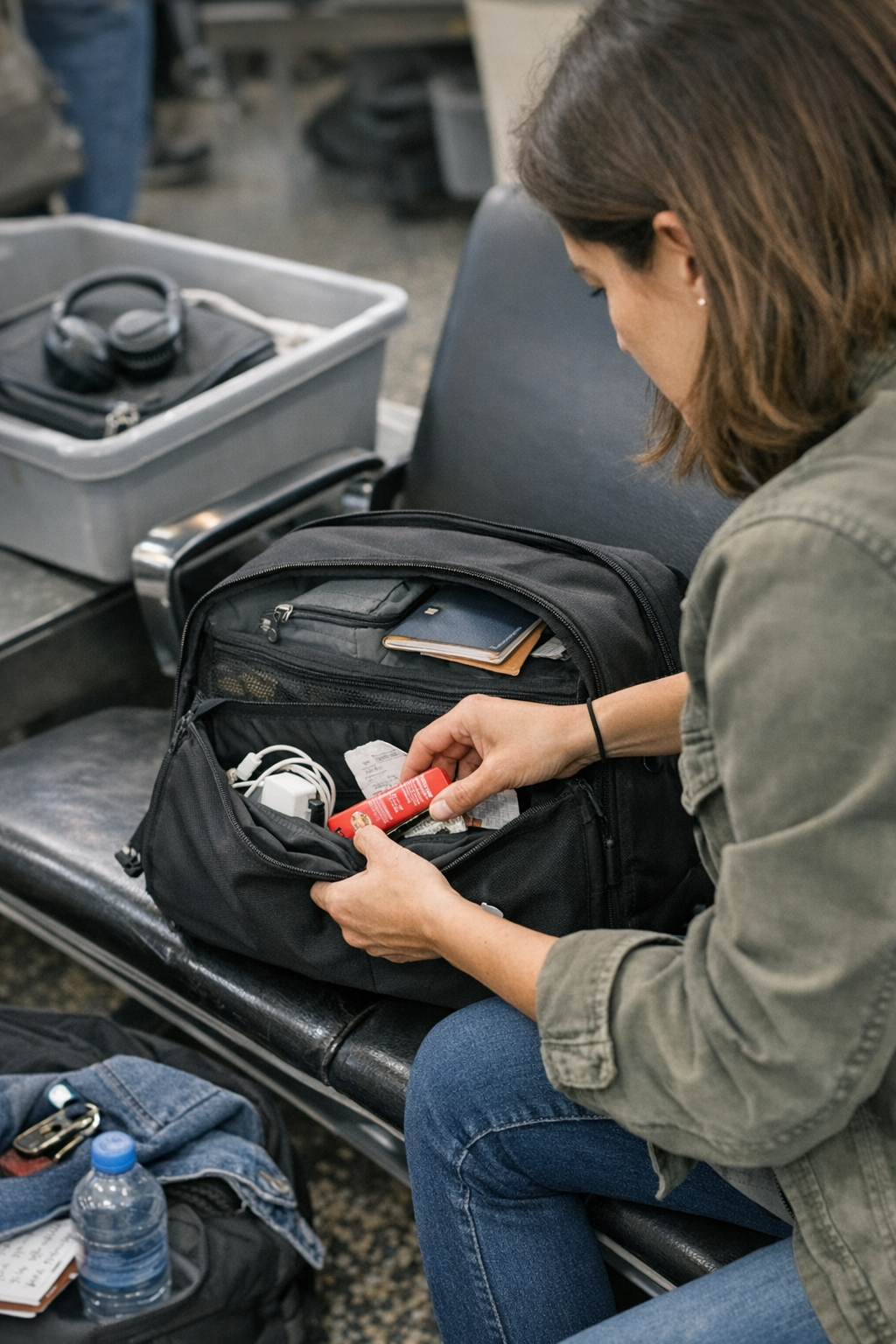
A carry-on that looks perfectly organized at home can turn into a liability the moment you actually need to move through an airport at speed. Standing at your front door, you see clean lines, neat divisions, and every pouch zipped just so. But two hours later—while digging for a passport in a tense security queue, squeezing past travelers in a jammed jetway, or grabbing snacks with one hand in a crowd—every carefully planned section starts to fight back. The “orderly” bag that made sense in your living room now slows you down with every retrieval and repack. What feels like smart packing when stationary often reveals hidden friction as soon as real travel movement and repetition set in. Here’s why the wrong carry-on setup adds frustration you can’t ignore—and what to watch for if you want smoother travel momentum.
The Tidy Trap: When Too Much Order Slows You Down
Over-organizing a carry-on—using dozens of dedicated pouches, tight pockets, and subdivided organizers—can backfire in airport conditions. In theory, it means predictable homes for every cable, card, and charger. In practice, it means threading your arm past stacked zippers just to grab your passport, shuffling through layered tech sleeves for a phone at security, or wrestling snacks out from under a nest of receipts. The logic of neat compartments falls apart the moment you’re forced to repeat the same access sequence under pressure: security agents waiting, boarding lines compressing, tray tables in your way. Each retrieval interrupts your rhythm, and every “fix” piles on another small delay for the next rush moment.
Disorder rarely erupts—but subtle drag eats at you all trip long. Pulling out and replacing the same essentials (passport, boarding pass, earpods) ends up requiring a mini unpack and repack every time. A system that looked perfectly maintained becomes increasingly unwieldy, especially when you have to squeeze in a last-minute item, or when one rushed addition breaks your neat logic.
Airport Reality: Where Visual Order Doesn’t Equal Smooth Movement
A bag’s real test is always in motion. The setup that seemed optimized on your packing table reveals its weaknesses after your second security tray, as you angle to avoid elbowing the person behind. “Good organization” means little if your layout can’t flex quickly when travel gets unpredictable. Watch for:
- Security stalls: If your liquids or devices are buried, you’re left unzipping, shifting, and reshuffling at the x-ray—the line behind you growing impatient as your orderly system unravels in public.
- Gate and boarding slowdowns: Retrieving your ID or a snack on the move? If it sets your bag off-balance because a jacket is wedged in, or you have to dig around items now stacked on top of each other, the rhythm breaks instantly.
- Overhead bin fumbles: Stuffed pockets mean resistance. Zippers catch, compartments bulge, and suddenly stowing your bag for takeoff requires prodding, shifting, or apologizing to the row behind you.
Repeat Visits Expose Setup Weakness
Setup flaws appear fastest when you have to pull the bag down from an overhead bin, slide it past cramped seat arms, or jam it underfoot. If a charger cable or snack is behind layers of “organized” gear, a 10-second grab becomes a full pause and reshuffle mid-flight. Fix one jam, and the bag erupts elsewhere; nothing returns to that original, tidy reset. Order recovers visually, but you still feel the interruption every time you reach inside.
Overflow Happens: Why You Need a Quick-Add Zone
Even the best packing plans break down—real travel means sudden extras: cables, gum, receipts, new chargers, half-eaten bars. The bag that started flexible and neat starts to feel rigid, overbuilt, and resistant to last-second additions.
Enter the quick-add pocket. Instead of forcing overflow into the main compartment, a loose, easy-access sleeve by your primary zipper acts as a “mess buffer.” Not beautiful, not posed for photos—but it works. Drop a new phone cable, worn boarding passes, or the snack you just bought without derailing your system. That one pocket absorbs the unpredictable, so your main pouches and planned-out sections stay undisturbed, making repeated use less stressful and more adaptable.
A Real Travel Test: One Adjustment, Noticeable Difference
After a recent stretch—three airports, two missed connections, four security trays—I switched to using a single outer sleeve for all last-minute items. The pattern changed: no more stuck zippers, faster security sift, easier flow between gates. Carrying the bag past aisle seats felt steadier, and no last-second addition threw off the balance or forced a rebuild. The quick-add pocket didn’t look tidy, but it made the entire setup work better in the moments that count.
When Structure Becomes Its Own Problem
It’s easy to blame travel chaos on crowds or airline rules, but the pain often starts at the packing design stage. Pouches, compression cubes, and layered slots manage obvious clutter, but can’t “flex” for real-life use:
- The cable you grab mid-flight is pinned under the coat jammed in the outer sleeve.
- Receipts jammed for expense reports become unreachable behind toiletries you added at the last minute.
- Returning your passport after inspection takes three moves instead of one, blocking the line while you work the zipper sequence in reverse.
- Lopsided weight builds up, so the bag tips over or strains your shoulder on the next terminal dash.
Soon, you’re opening three compartments for each find, pausing for an off-balance reset in busy terminal traffic, and the patience of your bag vanishes with every new interruption.
The Mark of a Reliable Setup: How Well Does It Reset?
The best setup isn’t just what fits at packing—it’s what resets itself, fast, after a rush or a repack. If your bag quietly absorbs the passport grab, cable return, or snack drop without asking you to mentally sort everything again, it’s doing its job. Systems that require full attention after every access point—not just at the start—wear you down miles before landing.
Make space for one low-resistance, rapid-access “overflow” pocket. That buffer pocket for inevitable extras keeps daily movement smoother. Don’t judge your setup by its pre-trip look—judge it after your third tray dump and repeated headphone hunt. That’s when real order counts.
Packed for Looks or for Repeated Use?
The pressure becomes clearest when travel goes sideways. Does your organization let you keep moving once reality interrupts, or does it protect its own design at the cost of repeated hassle? The long-lasting carry-on setups are rarely photogenic. They’re simply the ones that stay usable—minute after minute—through access, overflow, repack, and the next boarding sprint.
Find carry-on tools and travel organizers built for real-world rhythms at CarryOnSupply.