
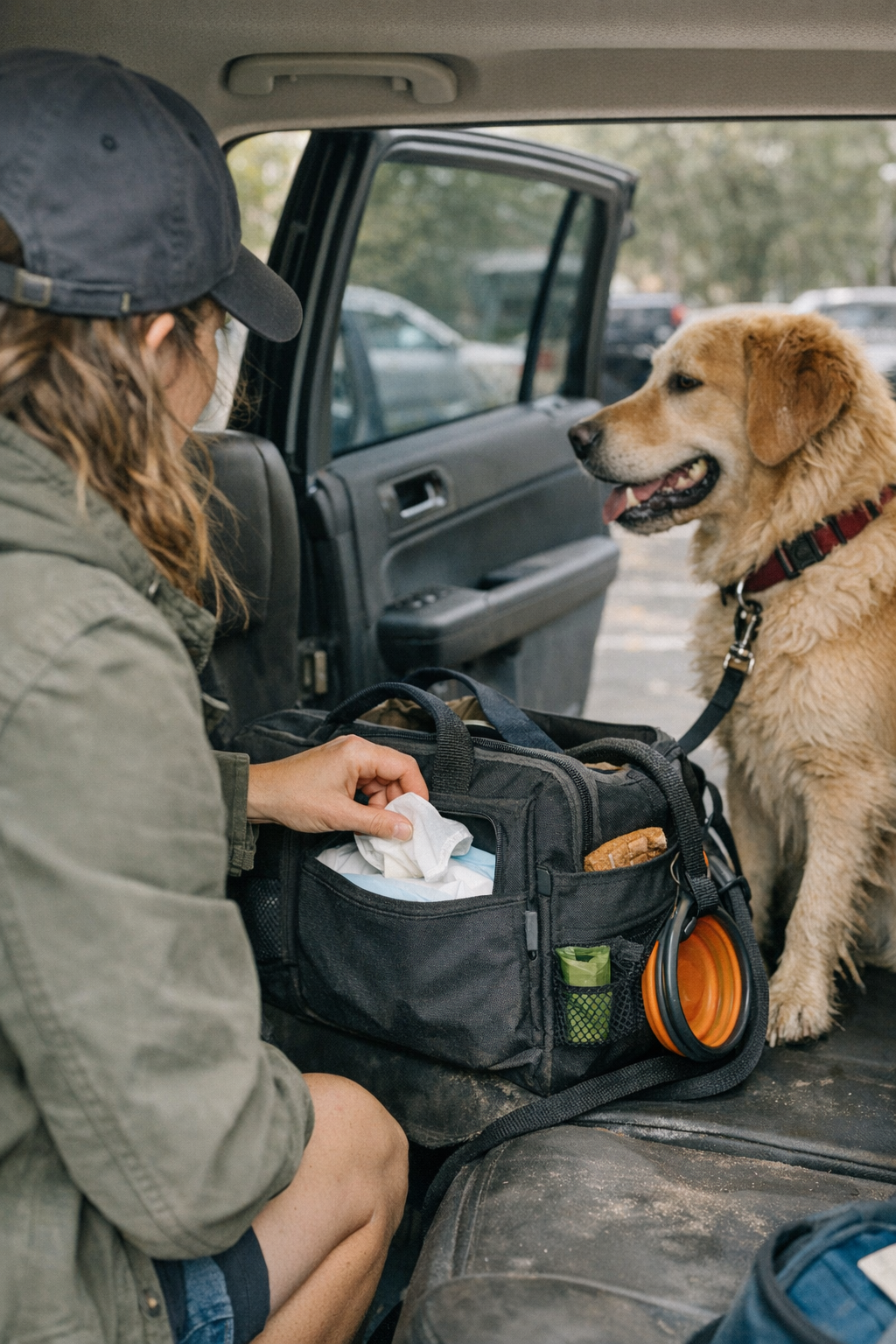
What looks “organized” at home can fall apart the second real travel starts. You think you’re ready: leash clipped, waste bags peeking out, travel bowl folded flat, treats stashed up front. But as soon as you hit your first stop—muddy paws on the curb, traffic in the lot, your dog pulling sideways—order collapses. Try grabbing wipes and you find them under a packable bowl, snared by a leash loop. Dig for treats and you lose track of the waste bag pocket, or fumble with gloves that always seem to slip. Suddenly, every movement costs extra effort, and “ready to go” turns into another awkward shuffle at every stop.
Looking Ready Versus Being Ready: Why Real Use Exposes Hidden Problems
A travel bag that looks complete isn’t always ready for the repetition of actual pet travel. The real test appears during that stop-and-go flow: wrangling your dog after a short ride, balancing one hand on the leash, reaching for wipes to handle a mess you didn’t plan—and hitting overlap, tangles, or blocked pockets again. The problems rarely show during packing, but surface at every ordinary pause, restart, or roadside break. It’s the real movement—gloves half-on, dog tugging, keys in the wrong spot—where setups prove themselves, or fail.
Repeated motion is where weak design gets exposed. Even a well-packed kit will frustrate you if you need to dig beneath a toy for wipes, or go through two pockets before finding the waste bags—especially when it’s the third time you’ve done it in one afternoon.
The Slow Drain of Small Delays
A minute lost here or there seems minor, until it compounds. Overlapping pet and owner items, tangled seatbelt loops, and out-of-order packing means:
- You try to grab waste bags, but the leash handle or seatbelt clip blocks the pocket—so you untangle, again.
- Treats slide under a blanket, so your fast reward moment is always just out of reach.
- Your wipes are always present, but by the time you dig past bulkier gear, the mess has already spread onto the floor mat or seat.
The result isn’t just lost seconds—it’s lost focus, and small moments where handling your pet turns clumsy or stressful. The more stops you make, the heavier these flaws feel.
When Overlap Means Delay: The Real Cost of Mixed Gear
Mixed, overlapped packing—pet and owner gear sharing pockets, comfort items stacked with essentials—seems efficient. But each new stop exposes the downside. First you unzip, then shuffle toys aside, shift a raincoat, and finally dig for wipes or a treat. The result: real travel turns your tidy setup into a source of repeat interruption. Every unnecessary reach puts attention on your bag instead of the dog—or the situation you needed to handle.
Common Trip Trouble: The Post-Park Cleanup Fumble
There’s a reason this scene keeps repeating: you get back to the car, dog muddy and antsy, your wipes buried again. You pin the leash with your elbow, glove catching on the strap, and blindly feel around for what you need—hoping your pet stays in place this time. No matter how neat the pockets were at departure, in motion, you’re right back to awkward scrambling. Packing “better” rarely solves it because the overlap comes back the second you repack, shift gear, or stop unexpectedly.
A Single Change: Dedicated Access That Holds Up Under Stress
Bigger bags and more compartments can’t solve a basic friction point: needing one high-use item, instantly, without clearing a path. The real improvement happens when each essential—wipes, treats, waste bags—has a pocket that’s only for that one thing. No overlap. No shared space. Always outside or at the very top. Even a single outer pocket for wipes, never doubled with treats or toys, cuts seconds and stress from each transition. This isn’t about perfect packing—it’s a structure shift that holds up on the fourth stop as well as the first.
Simple pocket separation lasts longer than careful repacking. If one thing (like wipes) stays always-reachable, you handle muck and mess before it becomes a bigger interruption. The rest of the bag can jostle inside, but the top-contact gear stays put and saves every restart.
Why Dedicated Zones Win on the Move
When you can grab wipes, treats, or waste bags without moving a second item, travel gets less tangled—even if you’re hurrying. Dedicated zones mean gear stays accessible no matter how many times the bag’s been set down or repacked. Overlap adds seconds, but also tension—a pause that gets noticed more as the day goes on. The payoff for the right structure? Recovering speed, focus, and an easier reset with every repeat break, cleanup, or quick reward.
Typical Setup Pitfalls: What Looks Neat vs. What Actually Works
- Pockets stay organized until the bag shifts or tips—then quick-grab gear is blocked or hidden
- Extra “just in case” packing means the essentials are never truly near the surface—every reward or wipe is slowed down
- Start-of-trip order evaporates when you dig for the leash mid-walk or after a quick stop
- The right gear is present, but reaching for it disrupts every post-walk or seat-side moment—nothing ever feels smooth
The real mark of a smart pet-travel setup is that your seventh stop goes as smoothly as your first—nothing buried, nothing slowing you down, and no mental effort wasted searching for the basics.
Structure Over Image: Why Setup Is the Secret to Smoother Pet Travel
Feeling “prepared” only helps if your gear actually responds to repeated use. If your routine includes always moving blankets, sidestepping a tangle, or digging to the bottom for a single essential, that’s not a personal failing—it’s a signal your current structure isn’t right for how you move. These small frictions build up until they feel like a bigger burden than any single mess or accident.
Get the setup that fits your travel rhythm: separate zones for the things you reach for the most, easy resets between stops, and less handling time with every loop through your day. The right arrangement means you regain attention for the one thing that matters most—your pet, not your gear. For gear built to keep moving with you, see PawGoTravel.