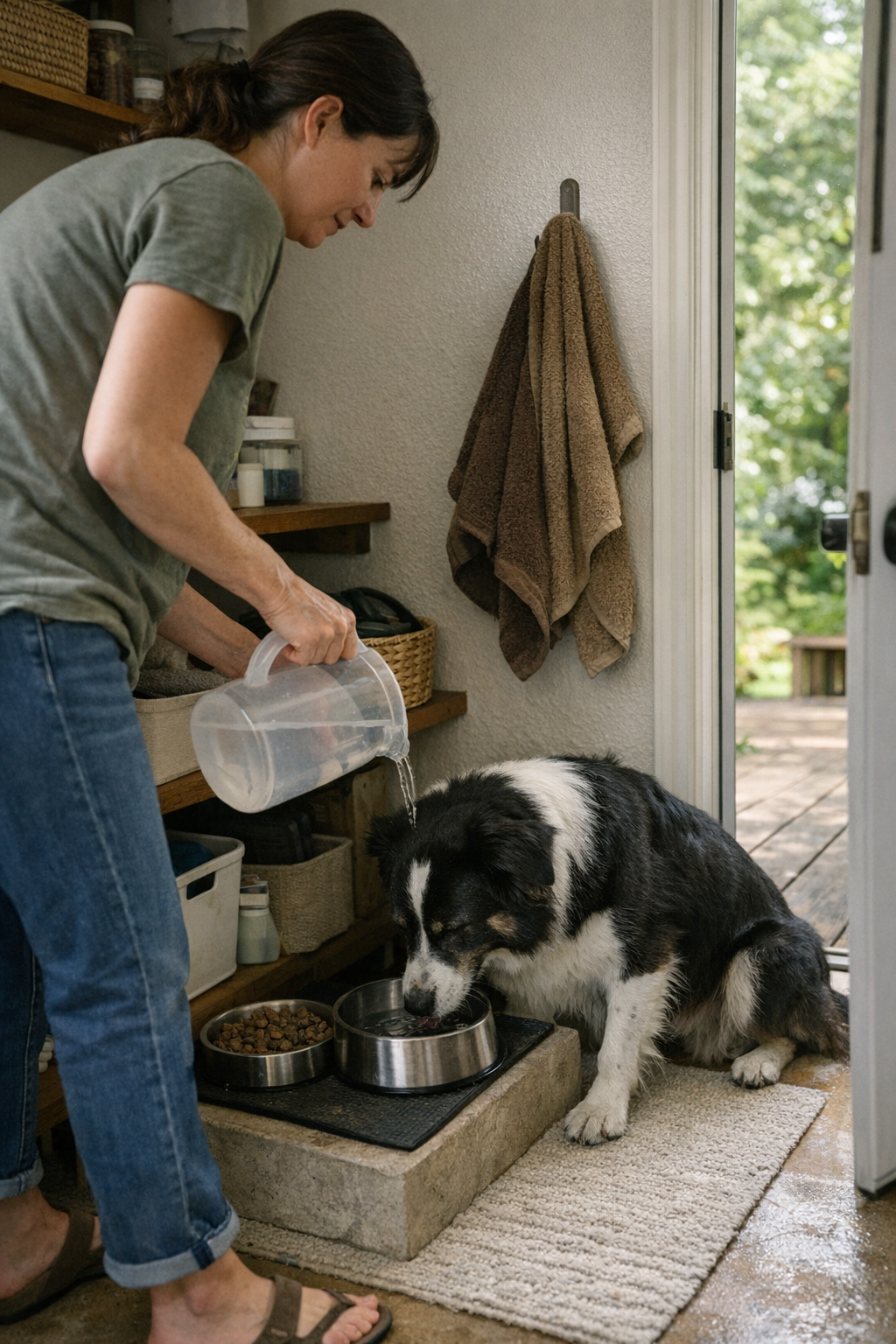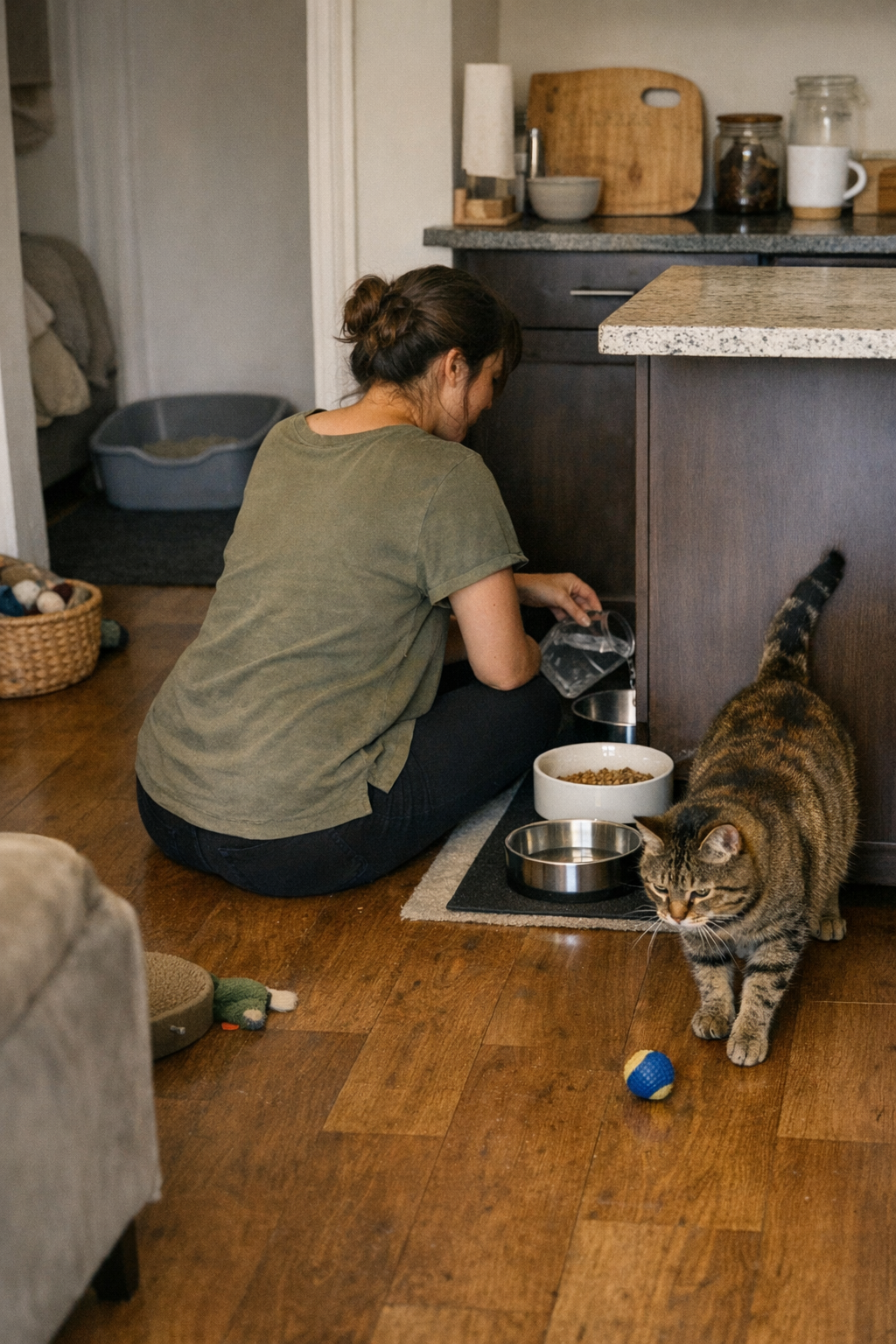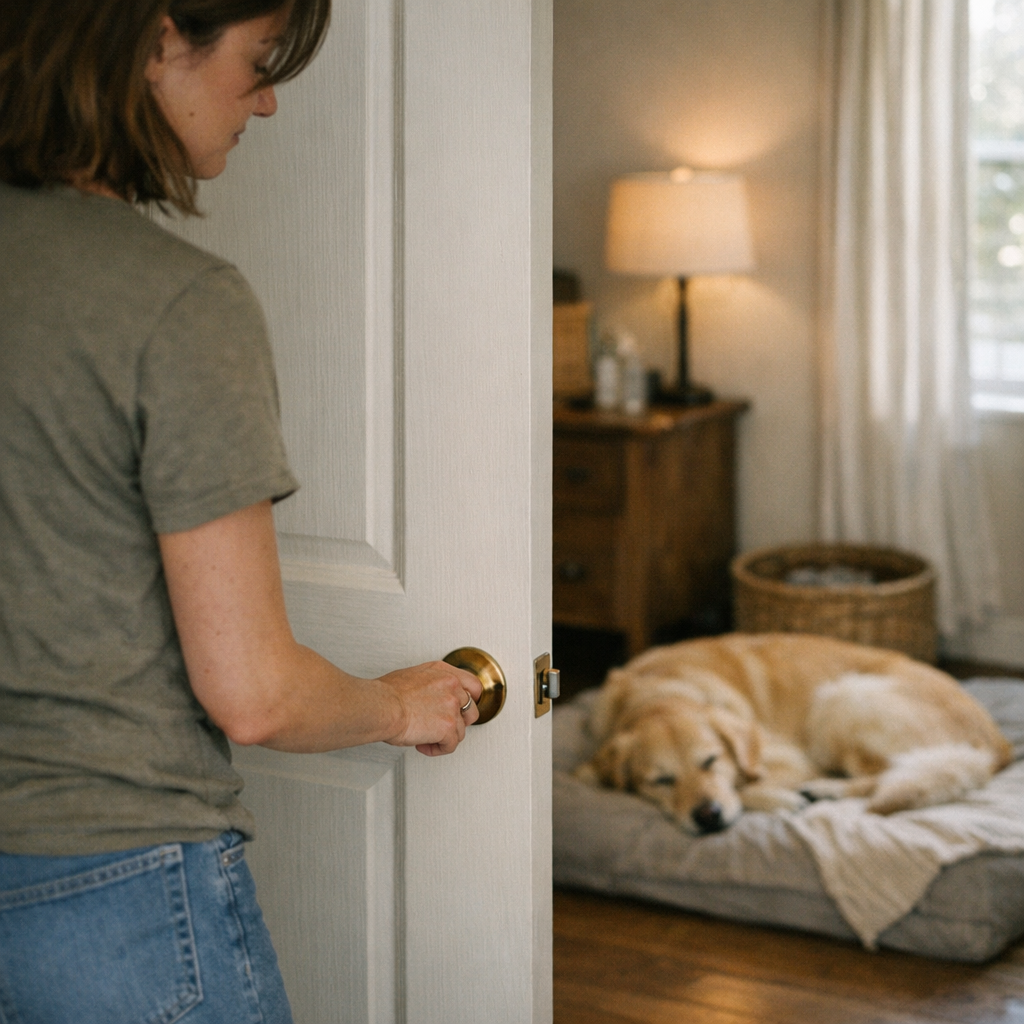
Category: Pet Life

  • Streamlining Your Dog’s Paw Wipe Routine for Faster Cleanups

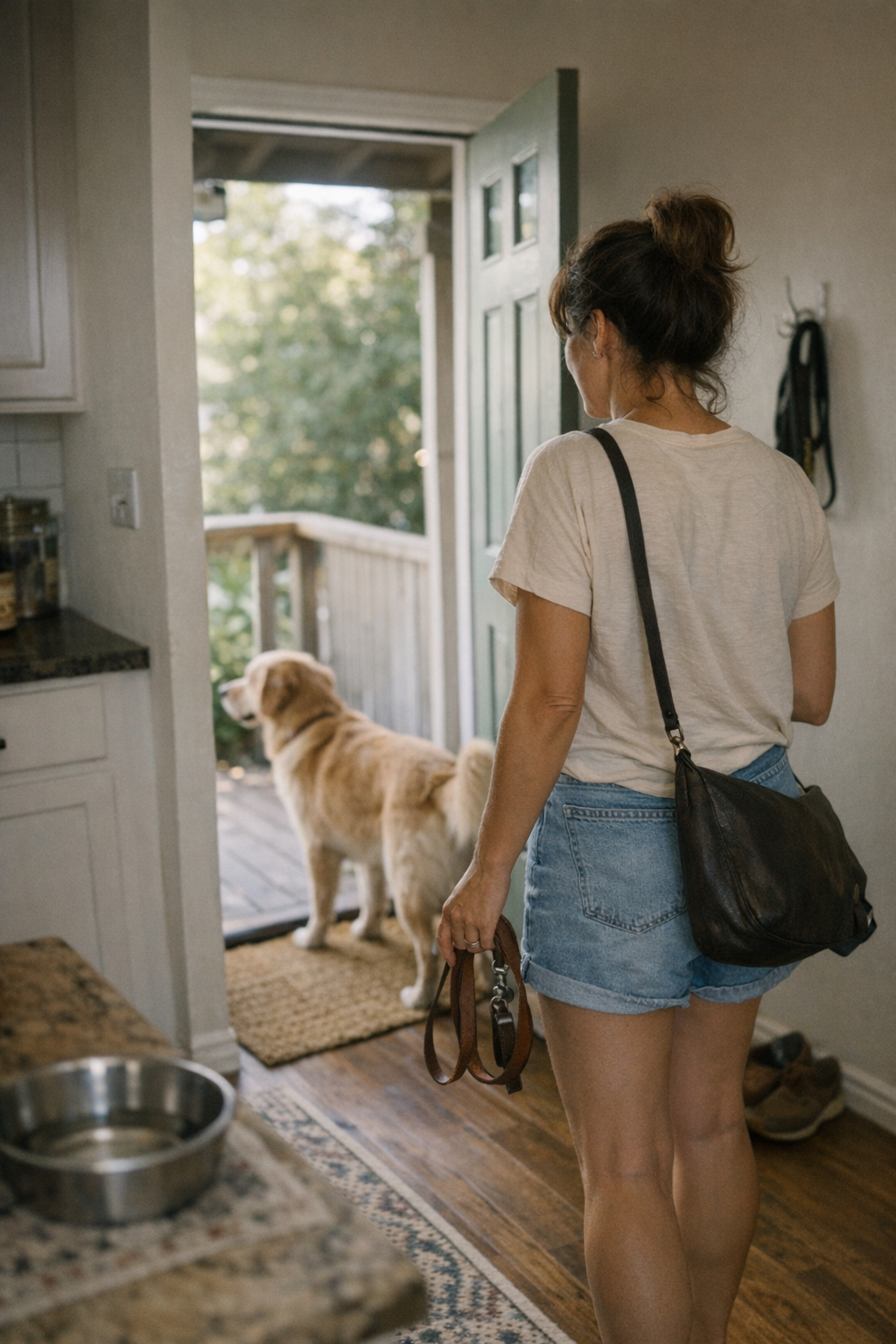
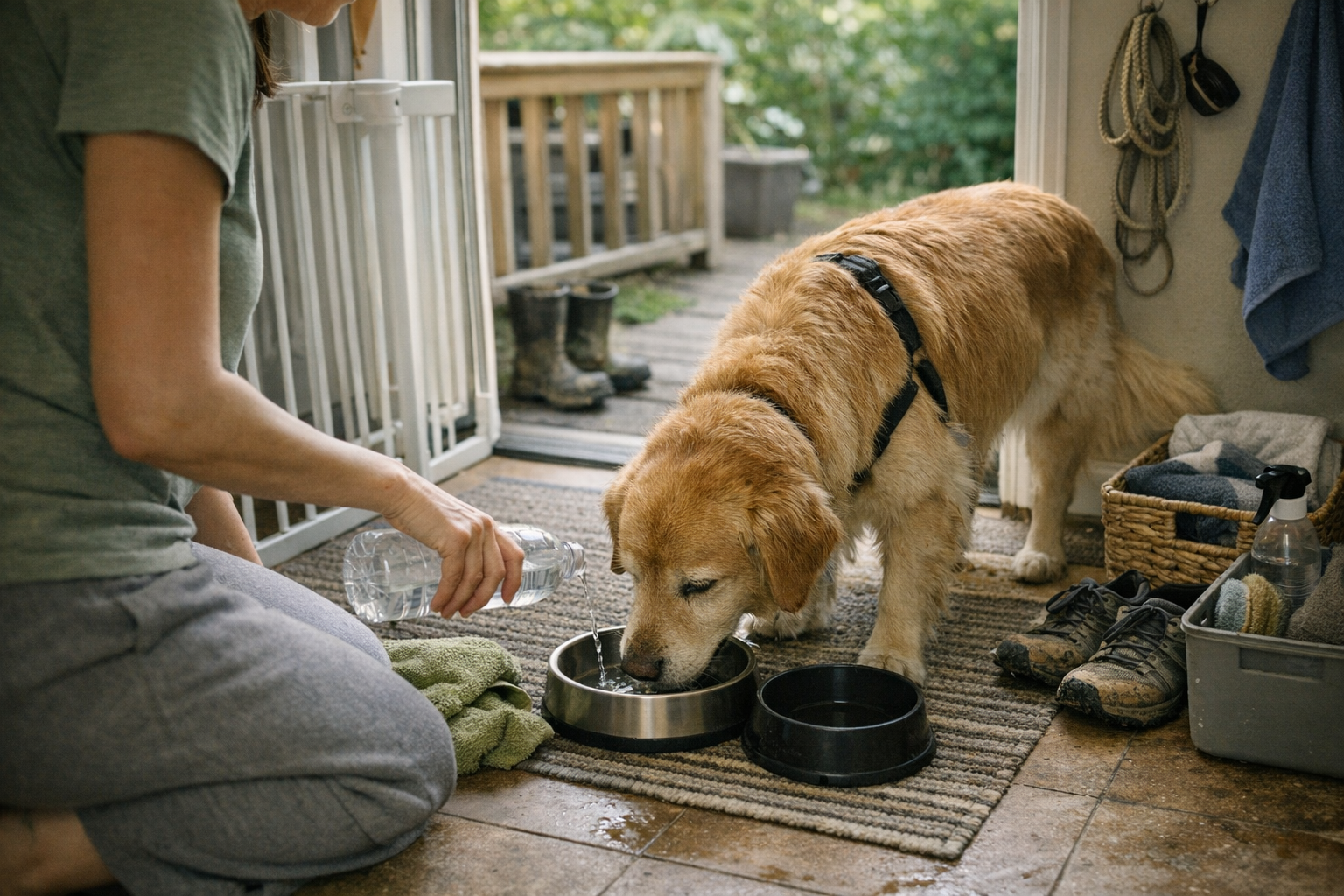
    The mess after a dog walk doesn’t start on the street—it begins the second you hit the door, leash in one hand, hunting for that missing towel while your dog circles, already dropping grit. Every return home turns on this nagging gap: do you grab the towel instantly, or does it take a scramble and a wet trail before settling back in? A routine with a single hesitation—where towel, wipes, or mat aren’t instantly reachable—means your “organized” entry setup keeps sabotaging itself, one muddy paw print at a time. DogPile’s world isn’t about collecting gear; it’s about getting from outside to inside cleanly, with fewer stutters and stops.

    Why the Paw Wipe Bottleneck Refuses to Leave

    Most owners try to control paw mess with a towel by the door or a tub of wipes close by. Usually it “works”—until you need it to be immediate, and the system falls apart. It’s not a lack of cleaning power or care. It’s death by micro-annoyances: towel slid off its hook, wipes buried under the mail, a dog twisting to bolt forward while you lunge with one hand. Every small misplacing gets repeated and each time, it slows your re-entry and leaves you one step behind, again.

    Picture the moment: leash wrapped in your fingers, dog eager to move past you, and you’re scanning for the towel—now shoved onto a chair, just out of reach. Every post-walk return starts with this split-second stumble. By the time you recover, grit’s already moved from paws to hardwood, maybe the dog’s halfway towards the rug. It isn’t a crisis. But with each day, the pattern gets more frustrating and more in the way.

    The problem never comes from just one thing missing. It’s a layer of minute disruptions—the reach too awkward, towel a few feet off, dog picking up on your clumsy pause—turning what should be a reset into a small, repeat mess. That choppy handoff means you’re always patching, not preventing, the dog’s homecoming trail.

    How Tiny Delays Multiply into Ongoing Mess

    These aren’t disasters, just friction that adds up fast. You come inside several times daily. Any repeated slip—towel not right at hand, dog pulling as you hesitate, wipes out of view—forces the routine into extra steps and extra cleaning. A routine that’s “good enough” one day exposes its cracks twice as much the next.

    It becomes visible: sometimes your dog pauses in “the spot,” sometimes they crowd ahead, guessing you’re about to grab for something. A two-second stall becomes a trail of mud, or a damp patch on the dog’s bed. That minor lapse—missing a paw, pushing the towel hunt to “later”—twists into the next cleaning job down the line. Leave wet or grit unchecked, and bedding, floors, or even your own shoes pay the price, not just the entryway.

    The Ripple Effect: Delays That Mess Up the Rest of Routine

    No one names it, but blocked cleanup at the door leaks into the rest of the schedule. That five-minute drag means meal prep starts late; the paw smudge you missed shows on a clean comforter, sending another load to the laundry. Slight damp means the dog’s preferred rest spot turns into a new mess. A single sticky entry step doesn’t just look untidy—it quietly chips away at your momentum and time through the rest of the day.

    The Patterns That Keep Entryways Struggling

    If you’ve got a dog, you know these are the real tripwires in “clean” front-door routines:

    • Reaching for what’s not there: the towel you need ends up out of sight or mixed with other clutter just as muddy paws hit floors.
    • Managing a dog in motion: trying to keep your pup still with one hand while the other searches blindly for the gear you swear you left in arm’s reach.
    • Tidy storage that isn’t fast: baskets or bins set up to look neat—always a step away or under something else when you reach for them mid-motion.
    • Visual order that slows you down: moving cleanup gear aside to clear the hallway, not noticing it’s made the right-handed grab almost impossible when the clock is actually running.
    • Stacking options, solving nothing: multiple towels or wipes piling up but never where your hand naturally rests during the actual, leash-in-hand routine.

    These setups pass a glance test but fold in day-to-day use. Cleaning feels “organized,” but one wrong reach and you’re back at square one, correcting the same mistake you tried to fix last time.

    Placement Clarity: The Real Paw Wipe Fix

    Reach is everything. Most stumbling blocks vanish if getting to the towel or wipe takes zero thinking—no searching, no stretching, no bending. The “fix” isn’t buying something specialized; it’s reworking what you have so the wipe is in hand the instant you step over the threshold and the dog pauses on cue.

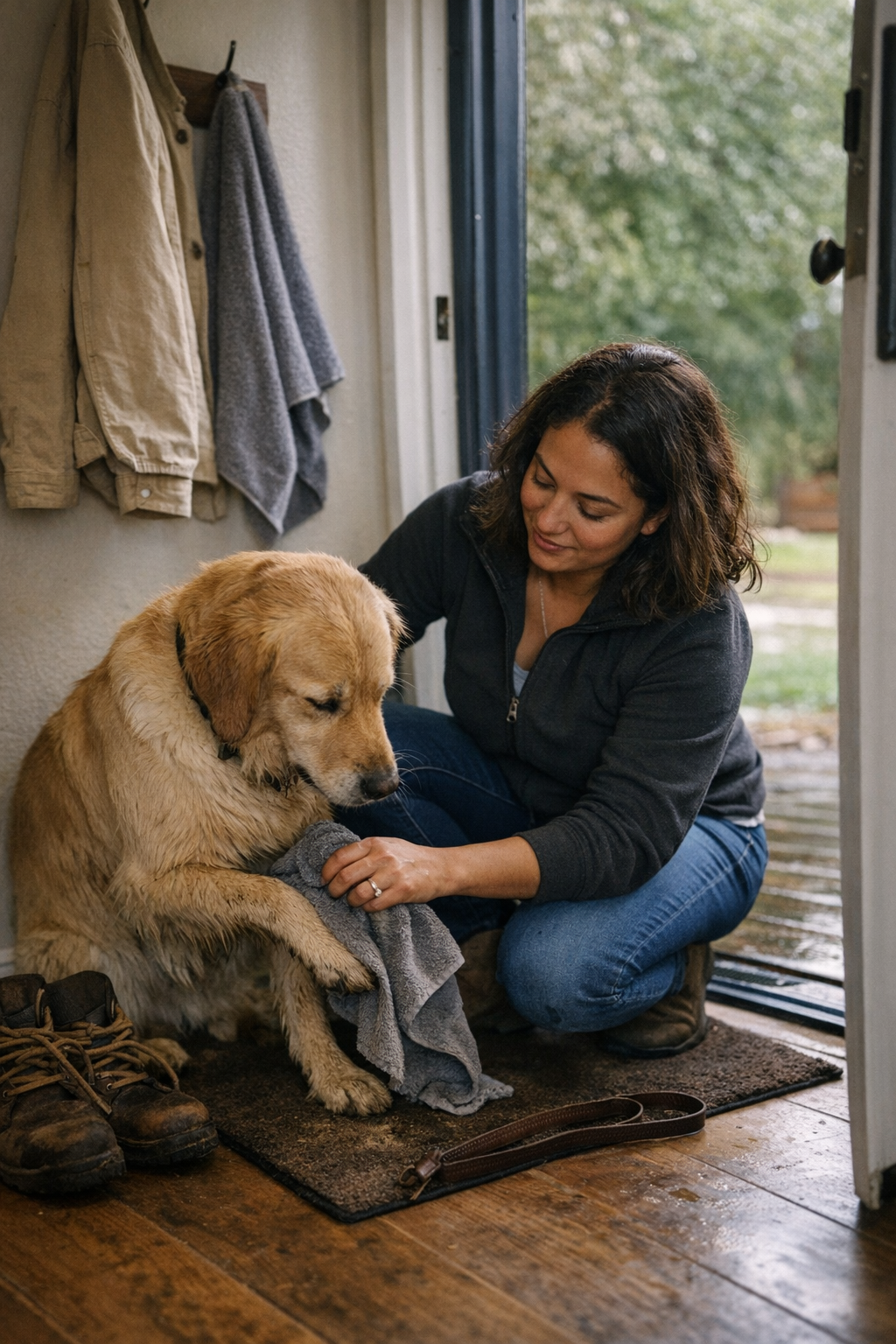
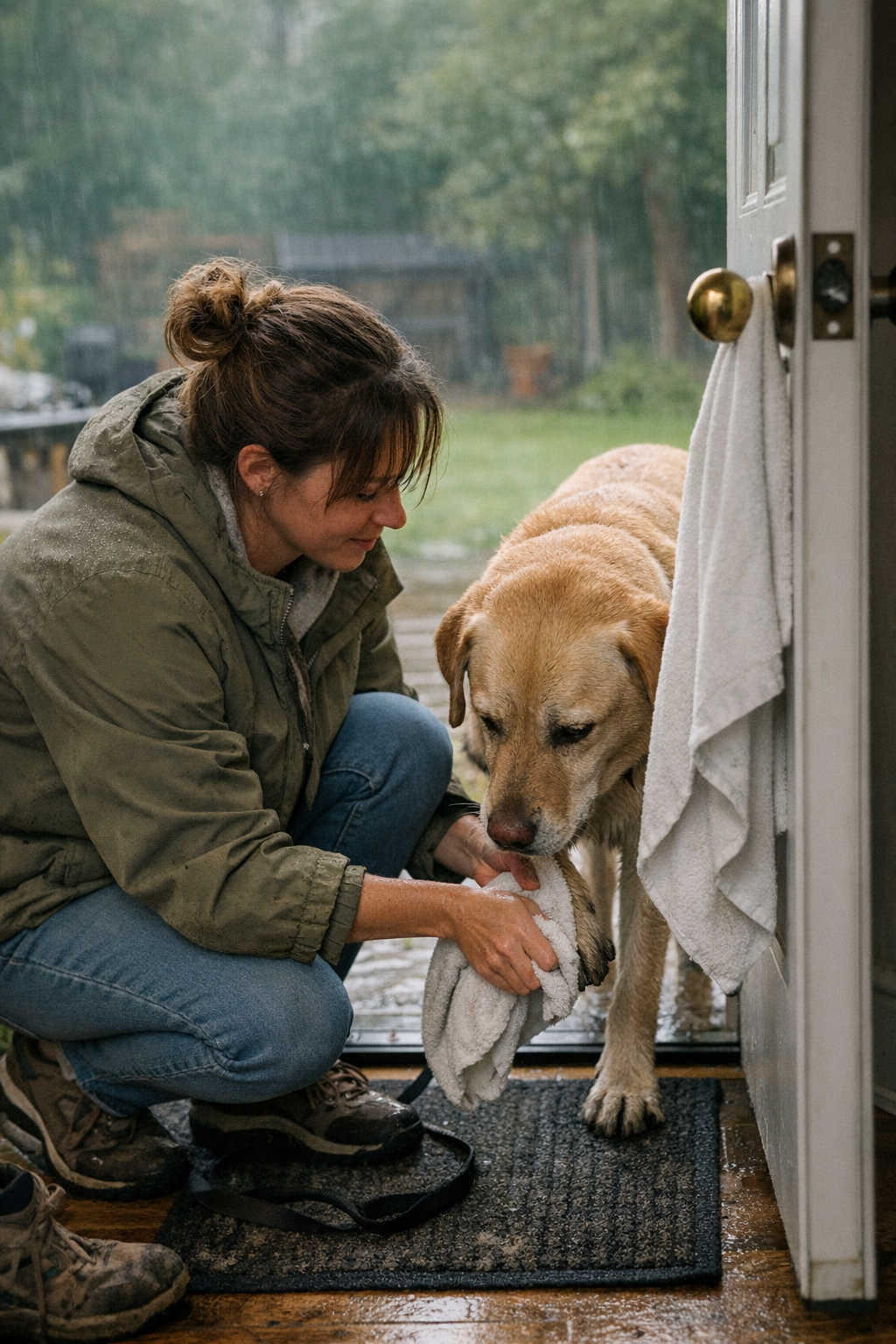
    This is where the doorknob towel beats every other location. Hanging the towel there—always precisely where the door opens—makes the motion direct: reach, wipe, move along. No detours, no “one sec” glances at baskets or under mail, no bonus second for paws to scatter debris.

    Measured out, just that change typically shaves 15–20 seconds off post-walk delay. But the sharper difference isn’t time—it’s the re-trained rhythm: your dog learns there’s only one stopping point, so less fighting, less zig-zagging, and dramatically fewer paw prints where you don’t want them.

    When Comfort Gear Makes the Routine Worse

    It’s easy to “level up” with a plusher towel, scented wipes, or designer caddy. These feel like upgrades—until real speed matters and none of them are where you need them mid-flow. Hide a towel under leashes or inside a closed box, and you’ve traded soft for slow. Oversized baskets corral clutter but make fast grabs impossible. The only thing that matters is: does your hand instinctively find the gear, every single time?

    The Dog’s Wait Spot: More Than a Convenience

    Routine friction isn’t just about your speed. Dogs read your hesitation—shift your hand once, and your dog might bolt, flinch, or circle. Having a fixed pause spot (threshold rug, clear mat, or even a sticker) isn’t a luxury; it’s a behavioral shortcut. “Wait here” only works when your hand lands on the towel at the very same moment, every walk, regardless of weather or mood.

    With repeated practice, a consistent reach for an unmissable towel and a dog that expects the stop—rather than the scramble—means faster resets for everyone. You’re not calming them after the fact, just integrating them into a predictable routine that doesn’t give time for second-guessing.

    Tools Are Optional — Placement Is Mandatory

    Every thick towel and super-absorbent wipe on the market works if it’s the first thing your hand meets. Don’t let the hunt for another “set” or trending gear get in the way. The strongest entry routines skip the temptation to perfect; instead, they make reach, wipe, and move forward a habit that vanishes into the background—even for impatient dogs and rushed mornings.

    Check yourself: Do you waste seconds on every return hunt? Does your dog’s excitement spike when you hesitate? Do you spot the same dirty prints despite all that setup? Those patterns are neon signals: it’s structure, not more stuff, that rewires daily friction.

    Spotting—and Removing—the Real Points of Drag

    “Almost works” is the entryway trap: you see order, but when rushed or dealing with muddy paws, the system collapses. The cleaning gear is present but inaccessible, or easier to trip over than grab. Maybe shoes eat up your dog’s designated wait space, or the leash always knots under hanging baskets. Sometimes the area looks better, but real use is chunkier, not smoother. Every time the slow spot comes back, you lose a little more patience and the willingness to really reset after each outing.

    Your entry doesn’t need a total overhaul. The simple, low-friction fix: make paw wiping instant and consistent—towel or wipes on the knob, pause spot fixed, and gear that requires zero reshuffling mid-flow.

    • Keep cleanup tools at the exact place your hand lands—preferably the doorknob, not beside or below.
    • Set one unmistakable stop for your dog, so they know the pause is always here, never halfway inside.
    • Resist “organized clutter”—if a setup adds grab time in pursuit of looks, it’s the wrong setup.
    • If you’re delayed at the same point after every walk or return, that’s your fix—streamline that spot before reaching for new gear.
    If Your Return Home Still Feels Disjointed,

  • Managing Cat Care Disruptions When Visitors Become Background Noise

    The Real Challenges of Daily Pet Care in a Busy House

    Feeding a cat or dog in a quiet home usually means reaching for the bowl, topping off water, and wiping stray fur—done in minutes, without delay. But in a house where people and packages constantly come and go, that smooth routine breaks down fast. It starts as a minor inconvenience: you go to refill the water, and there’s a delivery box blocking the mat. The food bowl shifts closer to the walkway after someone nudges it with a shoe. Suddenly, that “quick cleanup” isn’t quick at all—now you’re moving bags, relocating bowls, and fishing the cleaning wipe out from under someone’s backpack. A setup that used to work now drags against daily life, revealing why the CalmPetSupply world focuses on repeat-ready basics and easy-to-reach gear.

    How Small Disruptions Build Up

    Pet routines only stay smooth when the core supplies remain in place and ready to grab. With repeated foot traffic, it’s never just one thing out of order: bowls slip out of their spots, water pools just outside the intended area, fur collects along paths no one meant to create. Sometimes you kneel to refill only to find yesterday’s shopping bag or jacket lying right over the towel you need. Wipes and brushes? Always within arm’s reach—or they should be. In a busy house, they’re just as likely to be shoved aside or hidden under another “temporary” item you forgot about until you actually needed it.

    These aren’t dramatic messes; they’re steady, low-grade interruptions. You realize you’re wiping surfaces late, or shuffling three things aside just to reset the bowls. The mat meant to anchor everything creeps toward open space—pushed by shoes or boxes—eventually creating a hazard and multiplying the work. Every improvised “fix” (tucking a mat away, stacking wipes on the shelf) trades one delay for another, masking the real pinch point instead of solving it.

    Everyday Routine Interruptions: How Mess Creeps In

    It shows up around lunchtime: deliveries drop on the porch, someone swoops through the main room, the pet’s bowls inch dangerously close to the high-traffic lane, and a new cluster of fur appears under a chair. No matter how often you sweep or wipe, stray tufts anchor themselves in the corners you just cleared. When you finally reach for the cleaning towel, you’re lifting a tote bag off it. If that towel isn’t right where you finished last time, the mess stays longer—or gets spread further when another person misses it completely.

    What looks like a tidy feeding area on the surface might still mean walking back and forth to fetch supplies that drifted out of place. The difference creeps in: you aren’t just cleaning after meals anymore, you’re interrupting whatever you’re doing—again and again—to re-tidy what seemed handled hours ago. The “organized” setup masks repeated friction because core items keep wandering out of optimal reach, turning care into scattered resets instead of one smooth routine.

    Repeated Reset Friction: Where the Routine Breaks Down

    Over days, the same small complications stack up: bowl realignment after each meal, double-checks for fur before sitting, hunting for that one stray wipe or the misplaced brush. It’s not chaos, but it’s not effortless either. Instead, you’re caught in a cycle of constant mini-corrections—each tidy-up temporarily fixes the space, never the repeat cause. What once passed as “good enough” starts to feel like extra work that only multiplies the more the day fills with movement.

    The contrast is clear: a space that merely looks clean can still demand backtracking or add hesitations to every feeding and cleanup moment. If you need to shift a pile just to reach the grooming brush, or step around a mat that’s migrated near the hallway, the setup hasn’t really solved the underlying drag. Supplies that technically stay available can still jam up the routine if they’re never in the right place when you reach, stretching out tasks that should be over fast.

    Practical Fixes That Shift the Pattern

    The turning point comes from identifying and correcting the patterns that repeatedly slow you down. Moving the feeding station slightly off the main walkway—still visible, now spared from stray feet—reduces bowl drift and means fewer urgent resets. Elevating a towel hook or storing grooming brushes just outside the highest-traffic zone transforms wipe-downs from “whenever you remember” to a quick side-step that doesn’t stall out your whole routine. It’s not about eliminating every spill or fur patch, but about removing the most persistent hurdles so you don’t waste energy doubling back.

    Within days, these small shifts pay off—routine messes shrink, feeding and cleanup happen on time, and care actually fits the day instead of interrupting it. In busy homes, the difference between a setup that looks good and a setup that truly works is visible in the number of times you have to reshuffle, reach, or repeat the same fixes. That’s the practical logic at the core of CalmPetSupply’s everyday solutions: routines should bend to daily life, not slow it down.

    See what fits your daily setup at CalmPetSupply.

  • Why Short-Burst Cleaning Fails to Solve Indoor Cat Mess Challenges

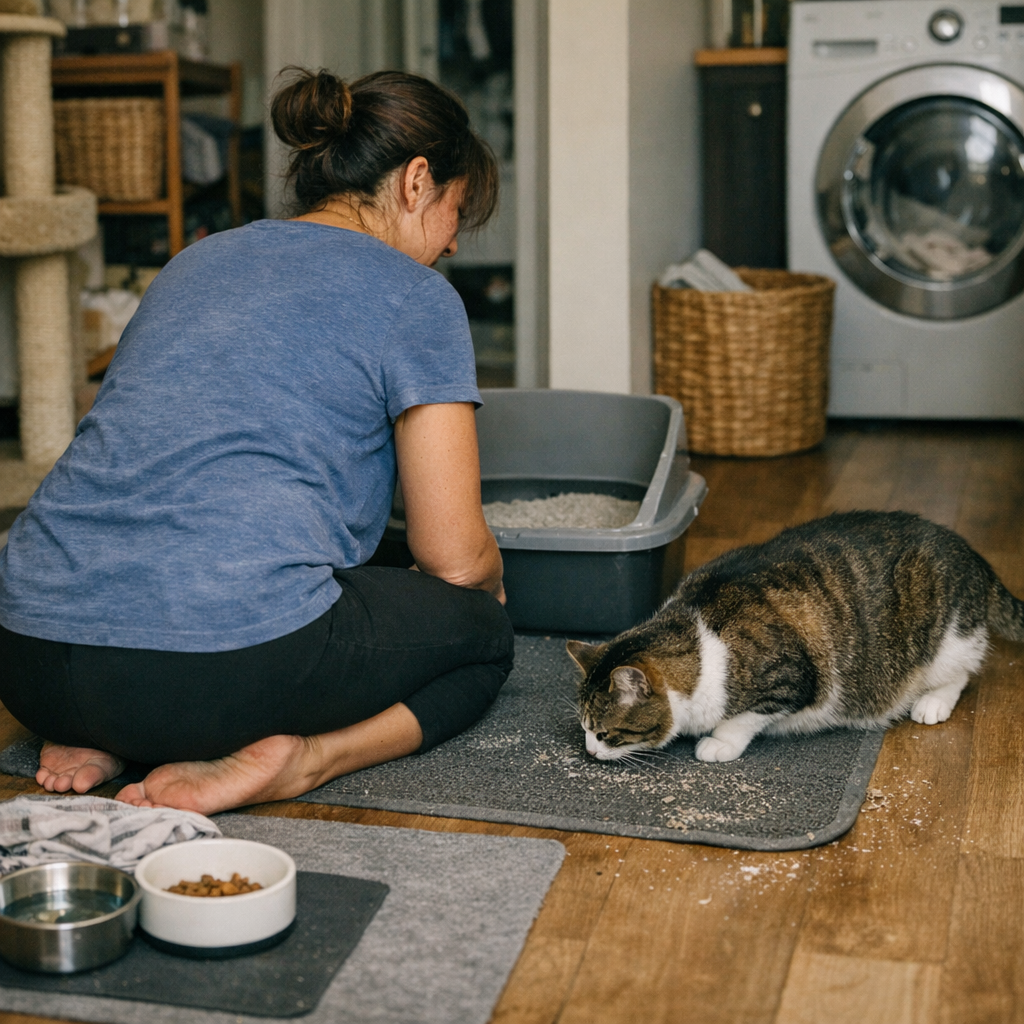
    Every indoor cat owner knows the routine: You spend five minutes making the feeding setup look orderly, push a cloth around the litter box edge, step back for a last look—and for a moment, the room feels settled. But by dinner, the same stubborn mess has returned. Kibble shows up tucked tight along the baseboard, a crescent of litter rebuilds just outside the box, and droplets arc away from the water bowl where cats and feet have both passed through. This isn’t chaos, but it’s a slow drip of annoyance—the constant, low-grade reset that no “quick cleanup” really erases. What feels handled at noon just circles back by night, highlighting how layout, not effort, keeps the mess returning in exactly the same frustrating ways. In the StillWhisker world, the problem usually isn’t how clean the space looks in the moment—it’s whether the structure actually stops the cycle or quietly resets it for tomorrow.

    The Illusion of Control: Why Repeated Messes Keep Coming Back

    Short cleaning bursts—wipe, scoop, straighten—promise a room under control. But walk through two, three, or five days in a row and the same pressure points reappear: scatter at the mat’s edge, water sneaking under the bowl, crumbs drifting behind feeding spots. No matter how fresh the reset, the same tiny messes signal a setup that’s looping you back to the start. “Under control” is only surface-level; underneath, crumbs reaccumulate in grout lines, litter escapes under mats, water stains creep up again. The invisible load isn’t about disaster but about quiet, repeated effort—that creeping sense that the same areas always need one more pass, draining your energy in barely noticeable increments.

    Where Friction Lives: Pinpointing Problem Spots in Real Use

    Certain zones always register the wear and tear:

    • Litter trails crossing into walkways: Even a mat can’t guarantee granules stay put—repeat steps create the same arcs of escape, always in the same spots.
    • Water bowl splash zones: Drops wander out, especially when the bowl hugs a wall or sits just off a travel path, leaving tracks you notice too late.
    • Kibble escape routes: Small, overlooked corners hoard stray food, impossible to clear unless you hunt behind every line and ledge.
    • Toy clutter in shared spaces: Toys always migrate toward feet, clogging walkways and making quick resets yet another repeated job.

    Most friction is invisible at first glance—that’s why it returns so easily. Spot cleaning fixes the present, not the pattern. Come Thursday, you’ll be retracing your Monday steps, right over the same micro-messes the last cleanup left behind.

    “Presentable” vs. Actually Easier: The Hidden Cost of Masking Effort

    A room that looks neat after cleaning can still demand twice the upkeep. You wipe the water bowl edge at lunch, again at dinner; you scoop litter remnants only for the same grit to creep back into the same crack before the weekend. Effort doesn’t disappear—it repeats. Calm surfaces only mask the slow drip of chores you shouldn’t have to redo. This is the real cost of setup friction: a space that demands constant resets, not because it’s messy, but because the structure subtly restarts the mess every time.

    Everyday Breakpoints: When Structure Invites More Work

    Litter Spaces That Reactivate Themselves

    The classic trap: a litter box tucked against a cabinet, mat beneath, out of the way. On day one, it’s clean and efficient. By day three, a dotted trail of litter curls into corners and under doors. Every sweep feels routine—grab, clear, reset—but by Friday, you’re cleaning the same path, because nothing stopped the escape route. The structure looks settled but loses the battle against repeated use, always inviting the mess to reinstall itself exactly where you cleaned before.

    Feeding and Water Areas: Tiny Shifts, Big Changes

    Take the water bowl—pushed close to the wall to save space. Each refill runs a trickle along the baseboard. By Wednesday, a stain or sticky patch marks the spot, even if you’ve kept up with daily cleaning. Food bowls shoved near high-traffic zones mean runaway kibble edges into main walkways, no matter how often you sweep.

    Structural trade-offs show up fast:

    • Bowls and mats that appear tidy but make in-between wiping harder than it should be.
    • Mats a hair too small, letting the first mess slip past the edge and become part of the floor routine.
    • Rest corners that look cozy but block quick cleanup—crevices where fur or crumbs linger between resets.
    • Grooming tools hidden “out of sight,” but out of reach when the right moment hits and fur is mid-shed.

    Nudging the Home Setup: Practical Placement Tweaks That Make a Difference

    Reducing recurring mess doesn’t take more effort—it takes smarter setup, so cleanups don’t pile up twice a day. A few measured changes can disrupt the whole cycle.

    Moving Boundaries: Out of the Way, Not in the Path

    Shifting feeding mats and litter boxes even a few inches off the main walkway keeps spills and drifts contained. When a bowl sits out of the walking lane, water stays on the mat where it belongs. A simple six-inch adjustment can mean the difference between multiple daily wipe-downs and one that’s enough—or eliminate the old mess entirely.

    Mat Sizing and Edge Management

    Upsize the mat, pick a strong lip. Place it so litter drops stay put instead of making the leap to seams or footpaths. Instead of gathering grains throughout the house, you’re scooping up five at the edge—never fifty past the mat.

    Interception, Not Decoration

    Don’t let mats serve as background props. Look for structure and texture that interrupt, not blend. Placement trumps appearance; a mat that fits the look but misses the action will be useless by day two. If the edge doesn’t capture, you’ll see the same evidence outside it after every reset.

    Refill and Access Flow

    Notice reach on repeat: Can you fill the bowl without moving three things? Can you grab the scoop without a search? Setup friction often starts with one slow task—moving clutter, sidestepping blocked spots, losing minutes to rearrangement. Streamlined access is as much about mental load as visible cleanliness; if you’re muttering while refilling, something is off in the structure.

    When Quick Cleaning Hides Bigger Setup Gaps

    Spot-cleaning delivers order for a moment. But when litter, crumbs, or water keep showing up in the same place, you’re fixing a symptom—never the cause. Mess happens in patterns. If cleanup turns into a daily déjà vu, the setup is quietly undermining every reset. When you’re doing the same chore twice a day, every day, it’s not just a mess problem—it’s a structure problem, and it wants more of your time than it gives back.

    Cleanup That Doesn’t Stall the Room

    Practical setups for indoor cats are a constant trade: cat comfort needs, human reset speed, room flow. A mat that’s plush for a nap can slow cleaning; a rest corner that’s inviting for the cat is an obstacle for a human in a rush. The real breakthrough comes with a setup that absorbs a missed wipe, not one that falls apart. If your feeding corner still looks managed after you skip a turn, or your litter zone contains mess for another cycle, structure is finally lightening your daily load. If skipping a cleanup unravels the room, the setup is quietly costing you more—every time.

    Everyday Indicators: Is Your Setup Working?

    • You reach for the scoop and it’s exactly where it should be. No hunting, no drawer shuffle.
    • The mat catches every spill, so you skip the midweek shift—there’s nothing outside the lines.
    • Water bowls stay steady, neither creeping into corners nor leaking into walkways.
    • Toys are corralled the first time—not hidden under furniture until next week.
    • Litter stops at the mat, no longer refilling the same tired gap under the cabinet.

    Watch for the signal: if “clean” resets fade too quickly, there’s friction left in the bones of your setup. Better structure means less repeated work and fewer surprises between reset and real calm. For setups that last longer before unraveling, click through to StillWhisker for practical, tested options built for real indoor-cat homes: StillWhisker

  • How Small Changes in Dog Feeding Areas Improve Daily Routine Flow

    Every morning, there’s a snag you never planned for: after breakfast, your dog stands by the kitchen mat, hesitating. You grab the leash, but the dog just circles the bowl, unsure, delaying the move toward the door. One pause doesn’t matter—until it does, every day. Suddenly, the simple feeding-to-walk routine gets stuck here: one dog waiting for a cue that never comes, one owner stepping and re-stepping over the mat, the walk always bumping into the next obligation. The whole setup looks tidy, but actually moving from eating to outside keeps falling apart in practice. You keep reorganizing bowls and mats, but each morning, you both get delayed by the same awkward transition that just won’t smooth out—proof that one overlooked detail can break the whole dog-life flow DogPile was built to improve.

    The Quiet Slowdown: How a Small Pause Turns Into an Everyday Snag

    At first, that extra loop by the bowl feels like nothing—a blip you blame on stray kibble, a sleepy dog, or your own rushed timing. But day after day, the “post-meal limbo” digs in. Instead of gliding from food to front door, you both get stuck: the dog lingers, you reach for a leash left just out of reach, and your clean handoff becomes a standoff. It’s a pattern now. The rhythm falters, you’re eating your own breakfast with one eye on your dog, and both of you are a few minutes late getting outside, your morning schedule already under pressure from a friction point that doesn’t belong there.

    It doesn’t announce itself with chaos. It seeps in with small, repeated drag: the dog delays, then doubles back, you keep grabbing for the leash behind a pile of boots, and what should be a two-second reset now eats up the buffer you thought you had. The longer it lasts, the less “organized” your kitchen corner feels—no matter how clean it looks, the flow keeps breaking down right in the middle of your morning routine.

    Why Do Dogs Pause? The Subtle Impact of an Unclear Transition

    It’s easy to blame the dog’s mood, age, or quirks, but most post-feeding stalls happen because the setup hides the next move instead of pointing to it. When the bowl sits out of line with the exit, or the mat blocks the clearest route, the cleanest-looking feeding zone sends a scrambled signal. Your dog circles, you both glance around, and nobody’s sure where to go. All it takes is a bowl too far from the door, a mat that becomes a sticky waiting spot, or a leash hook that always requires stepping around something—these are the invisible tripwires that slow a routine without ever making a real mess.

    An Example From the Everyday Grind

    Think about Tuesday: meal done, dog is ready, you’re aiming for “quick exit.” Except the bowl is still in the kitchen’s far corner, mat in the footpath, and the leash is wedged behind boots. You squeeze by, fumble for the leash, and lose momentum. By the time you finally open the door, you’ve added three extra steps and lost trust that this routine will ever be frictionless. Tidy storage doesn’t remove the block if it’s not in the path you actually use. That repeated reach or detour starts small, but the cost is real: breakfast gets colder, shoes get scuffed, and both human and dog feel the morning jam up before it even really starts.

    It Looks Tidy, But It’s Not Working: When Organization Isn’t Enough

    You can declutter, fold mats, and color-coordinate your leash rack, but if the flow from food area to door keeps stalling, all you’ve built is a display instead of a fix. In real homes, you keep hearing: “I put everything away, but I still step over the mat to get the leash,” or “The bowl has a spot, but the dog stalls, staring at me and the wall.” What you see as “organized” is masking the fact that the bowl, mat, and leash aren’t working together to move you forward—they’re slowing you down, one silent pause at a time.

    Setup Friction: Where the Routine Actually Trips

    This is not about clutter—it’s about the minor, repeated hurdles: a leash that requires an awkward reach with a full mug in hand, wipes tucked away from the actual walk path, a mat that blocks the fastest exit, or a bowl left in the spot that turns your dog’s finish into another circle. This kind of friction doesn’t scream for a dramatic fix—and that’s why it keeps coming back each morning. The weak point isn’t how the setup looks; it’s how it fails under repeated, real-use conditions.

    Making a Micro-Adjustment: Shifting the Bowl, Resetting the Flow

    One overlooked nudge usually does more than a weekend overhaul. Shifting the food bowl and mat six inches closer to the hallway made a bigger difference than any “reset” ever promised. Suddenly, the dog’s focus lines up with the exit, not with the empty bowl. That end-of-meal circle disappears, and with one move—eat, walk—you cut out the hesitation. The mat stops acting like a speed bump, and the routine regains flow. It saves less than a minute, but it also saves your patience. The kitchen end of the feeding zone isn’t designed to look perfect—it’s set up to clear the path. That’s the signal of the DogPile world: routines made easier not by more stuff, but by better arrangement for how you really move.

    How This Small Change Pays Off—And What It Doesn’t Solve

    No, your dog won’t sprint out the door every time. One tweak doesn’t erase all hesitation, but it does change the pattern: now, feeding cues walk time, not another round of doubt. The leash is still yours to grab, but you both know what comes next. The improvement doesn’t show up in style photos, but you’ll feel it the next morning you’re running late—flow matters most when you have the least time. If small adjustments feel invisible, check your mood after a week: less repeating, more moving, fewer delays layered into your day.

    Other Spots Where Setup Quietly Slows You Down

    The feeding-to-walk choke point is only one weak link. Most routines hide traffic jams in plain sight:

    • Leash Storage: A hook or bin that’s technically “organized” but never easy to grab if your dog bounces or your hands are busy. A leash caught in the boot cluster turns quick access into slow untangling, every single morning.
    • Cleanup Supplies: Wipes that are “there somewhere,” but placed so you’re drying paws by the wrong entry or doubling back into the kitchen with a wet dog, realizing only too late that grab-and-go wasn’t built in.
    • Toy Overflow: Play zones slowly migrate into your walking lane. Now, two toys are underfoot on the way to the door—forcing you to sidestep or scoop as part of every exit, not just after a play session.
    • Rest Corners: The softest bed always ends up right where you need to cross. The dog loves it; you step over it four times a day, breaking stride after every outing. A cozy corner can create its own bottleneck if it crowds the main route you actually use.

    The setups aren’t broken—they just choreograph extra steps that sap time and calm out of your day. That’s the quiet difference between “looks organized” and “works smoothly”—and you only notice after enough slowdowns pile up.

    Resetting the Feed-to-Walk Routine: Practical Tips

    1. Trace the Dog’s Movement, Not Just the Room Layout

    Watch your dog from bowl to exit—where does the extra loop start? Are you forced to step across their path, or reach across their waiting spot? These seconds matter. The actual path tells you more than any storage plan or tidy line ever will.

    2. Move (Don’t Redesign) One Item at a Time

    You don’t need a full makeover. Slide the bowl toward the door, move the leash bin where you naturally reach as you pass. Eight inches in placement can erase hesitation that no new organizer will solve. Stick to micro-moves so you can see which one changes the pattern—skip the urge to rearrange everything at once.

    3. Signal the Next Move: Use a Clearer Cue

    Uncertainty is a delay multiplier. A short phrase, gesture, or even a visual “go” cue (like nudging the bowl away or pointing at the door) links the finish of one task and the start of the next. You’re training the flow, not the dog.

    4. Observe How the New Setup Holds Up Over Time

    The only test is repeat performance. If a change only works for one day, it’s not fixed yet. Watch for the old pattern to sneak back: if you’re still seeing the same delay after a week, something else is out of line. The true signal is less stopping and less second-guessing—for both of you.

    Recognizing the Signs: When a Routine Needs a Tiny

  • Managing Dog Greetings to Simplify Daily Care and Reduce Mess

    The real cost of a messy dog-care routine is rarely obvious until the morning you’re already late. You reach for the water bowl by the door—and instead catch a stray leash, or find the bowl itself kicked off to the corner from last night’s greeting chaos. Suddenly, a task that should take seconds drags into a loop of searching, stepping over scattered toys, and mopping up extra puddles. Most “manageable” pet routines don’t fail all at once—they break down through these silent bottlenecks, where a missing scoop, blocked hook, or absent wipe slows the rhythm and turns every quick refill, cleanup, or feeding into another round of repeat work. Even as things look tidy at a glance, the friction piles up in ways that only show up under repeat pressure. That’s the practical tension CalmPetSupply is built to notice—and to reshape.

    The Slippery Slope: When Everyday Pet Care Gets Tangled

    Real-world pet care isn’t just about having the right tools; it’s about actually reaching them at the right time. You go to grab the water bowl, but a leash left mid-rush is blocking the spot. The scooper you always use has drifted under the bench—again—because it never has a fixed home after cleanup. Towels for muddy paws migrate from entry hooks to the laundry pile, so wiping up happens late, and a gritty trail stays by the door. The friction isn’t one missing item, but a layout that breaks down each time daily chaos resets the space.

    These misalignments get worse when you’re under time crunch: right before leaving for work, or walking in at night. Each round, another item is out of reach, another quick corner cut, and the same routine gets tangled. The towel now doubles as a mop for an earlier water spill. Treats, used to distract barking at the window, multiply across rooms until you’re left searching, not soothing. Each workaround plants a new friction point for the next day, and the cycle continues.

    Routine Weak Spots: Seeing the Patterns

    The trouble isn’t always glaring. You aim for a no-mess feed–refill–go—only to find a dog lunging for a window, one hand juggling treats to redirect, and a run of fresh drips by the entryway. “Quick resets” become multi-step scrambles: pick up toys, shift the bowl, wipe a corner, go back for towels. Even a minimalist setup can unravel if grab-and-go items drift or block each other at crucial moments.

    These pain points often hide behind an organized facade. At first, your doorway looks clear—but real use means you’re still sidestepping errant toys, or shuffling bins to access a daily essential. It’s this mismatch between how a space appears and what it demands in motion that exposes two or three persistent weak spots, stubbornly returning despite your best routines.

    When Solutions partly Work—But Friction Crawls Back

    The reflex is to add more: extra bowls, extra towels, baskets in every room. Early on, this feels like progress, but supplies start to wander. That evening’s paw-wiping towel lands in the living room and stays there. Treat pouches migrate to wherever the excitement erupts next, with crumbs trailing behind. Bulk solutions become new shuffling burdens—your “convenience” turns into rerouting and extra resets.

    This is where many routines stall. A visible shelf by the door seems tidy, but placing a leash over the only water bowl, or storing the refill bottle two rooms away, means daily function keeps losing out to surface order. Mess looks managed, yet the time and irritation wasted on these micro-migrations never really go away.

    The Impact of Repeated Resets

    Pet care should flow: feed, refill, wipe, move on. But a towel missing from the door, a bowl nudged unreachable, or toys rolling into high-traffic spots adds up. Each incomplete step demands correction—an extra trip, or a barefoot journey to fetch what’s not at hand. The friction isn’t dramatic; it’s the silent drag where the expected one-step task quietly turns into two or three.

    The cost grows in active households. Every half-reset at the door leaves muddy prints and restless energy that lingers into the evening. It’s not just minutes lost; it’s that low-level tension of knowing the next routine will also stall somewhere predictable, just when you need it smoothest.

    Practical Adjustment: Meeting Friction Where It Happens

    There’s leverage to be found in small shifts: putting the critical care tools right up against the main friction point. Set a washable mat and use a gate or low barrier at the entry—suddenly, dashes turn into paws contained and debris captured. Stash a refill bottle at the entrance, not in the kitchen; now water messes can be wiped before they multiply. The need to detour elsewhere drops off.

    This isn’t about draining the joy from dog greetings, but about channeling the mess. Over time, baskets and bins pay off only if they meet triggers head-on—not as afterthoughts, but as actively checked parts of the normal flow. The shift isn’t a new product every month, but a setup that cuts the scramble in half because what you need is exactly where chaos starts.

    The Real Difference: Looking Tidy vs. Working Smoothly

    An area lined up with bowls, hooks, and folded towels may look ready—but if you have to step over something every single time, or supplies are always one fetch away, it’s only half functional. The sign your routine isn’t serving you? The same resets, wipe-downs, or supply hunts creep back day after day.

    Real improvement happens by tuning setups to match where mess and rerouting truly happen. Don’t just accept that tools drift or that order slips each week; station essentials where friction builds, and notice what repeatedly gets in the way. Most of the hassle isn’t the tool—it’s that the tool’s home doesn’t match your actual dog-care movement in the house.

    With a bit of observation, the loop starts breaking: not by hoping excitement disappears, but by letting daily placement and smarter readiness soak up most of the mess before it becomes repeat work. CalmPetSupply is made for this kind of practical attention to flow and to what actually fixes—not just hides—routine weak points.

    See practical setups for repeat-use care challenges at CalmPetSupply.

  • How Unscented Cleaners Transform Cat Litter Box Habits Over Time

    A room can look spotless—litter raked flat, bowls set perfectly, mats realigned—yet the cat hesitates at the edge, circling instead of using the box, or pausing at the food without eating. The problem isn’t what you see, but what lingers: a chemical scent or residue from the last wipe-down. Everything seems in place, but some cleaning products quietly sabotage the routine, creating hidden obstacles you only notice as the day stretches on—a little more resistance, a new mess nearby, and an endless cycle of re-cleaning.

    When “Clean” Becomes a Quiet Problem in Cat Spaces

    A feeding station or litter zone may look newly reset—a surface that gleams, no visible debris, nothing out of line. In real life, the trouble rarely shows in the immediate aftermath; it creeps in as low-level friction hours or days later. Not the big messes, but the nagging, repeated problems:

    • Food suddenly scattered along the mat’s edge after every meal, even if you centered the bowl.
    • Litter tracking increases, forming arcs at the threshold right where shoes catch stray grains heading down the hall.
    • The cat investigates, hesitates, then leaves a “near miss” just outside the box—something you only discover late in the day.

    At first glance, these are almost invisible. Over a week, though, the pattern grows obvious: the more you clean, the less the area holds up. Routines slow, the cat avoids what’s “fresh,” and you’re repeating resets you thought were solved.

    The Hidden Cycle: Scent, Hesitation, and Cleanup That Won’t Stick

    Most commercial cleaning sprays promise lasting freshness, but what clears your nose can create sensory landmines for a cat. That lemon or pine you barely register can signal “don’t step here” for hours. Visible disorder you can correct instantly; invisible residue disrupts the routine in slow motion:

    • First reset: everything looks fine. The new scent is almost interesting to the cat.
    • By the next rounds, the cat circles or sniffs for longer, then seeks alternate spots—either skipping the box or pushing food to the far side of the mat.
    • Litter starts turning up outside the setup, sometimes in shared rooms or on the edges of the rug, because the threshold feels wrong.
    • You find yourself wiping down mats and retesting bowls between uses, chasing after small headaches that didn’t exist two weeks ago.

    The space remains visually clean but demands more attention. Every reset adds another interruption, and the sense of “settled” never lasts to the next cycle.

    Real Home Example: The Wipe-Down Trap

    Picture the cycle: you clean the box, spray a strong citrus solution, dry and reassemble. The room looks ideal—but then the cat starts using other corners, or a trail of litter appears near the washing machine. Instead of being done, you’re stuck tracking down new messes caused by the last “reset.”

    In tight spaces—a narrow bathroom, a mudroom without airflow, or a high-traffic laundry corner—the cleaning scent doesn’t clear. It stirs with each pass, mixes with room odor, and keeps returning as a background layer. That triggers avoidance, so every “clean” now means chasing another workaround. Areas that look correct stop functioning smoothly, and your effort starts going to maintenance, not improvement.

    The Invisible Reset: Cats React to What Lingers

    The real test for any cat setup is what happens after you step away: does the cat return naturally, or start sidestepping the reset spot? Cats read scent and residue at a level humans don’t notice. A “barely-there” freshener is still an obstacle—they process it as ongoing, even after it fades to you. So, in ordinary days—pouring new litter, recentering mats, grabbing bowls—one unnoticed film or lingering smell can break the cycle. If you’re wiping more than expected or see the same patchy mess despite resets, too much product may have replaced visible disorder with a new, invisible mismatch for the cat.

    Shared Spaces, Slow Friction

    Many indoor cats use multi-purpose rooms—boxes tucked near appliances, feeding corners at kitchen edges, litter placed just inside hallway boundaries. In these cross-use spaces, even the “tidy” setup can keep triggering the same repeated snag:

    • Box near the dryer seems freshly cleaned, but piles turn up behind it as the cat detours after a sour wipe-down.
    • Filling water is complicated by mats or trays that now feel sticky—last week’s residue not rinsed completely away—or heavy scents that hang around the feeding area.
    • Instead of reducing tracking, every cleaning seems to push litter into shared walkways as the cat avoids entry points.

    When rooms double for both cats and humans, a too-harsh product shifts the workload: now, every reset ripples into more frequent wipes, more moved items, and home routines that feel jumbled whenever you try to keep appearances in order.

    Choosing a Cleaner That Matches Indoor Cat Life

    What actually survives repeated, real-world resets? The answer isn’t in extra scent or more powerful chemicals. It’s a simple, water-based, unscented solution—one that leaves almost nothing behind for cat senses to process, and that doesn’t compound over multiple cleanings.

    This method won’t leave the whole house smelling like “freshness,” and the absence of fragrance might seem boring—but it removes a quiet source of daily hassle: no residue, no hidden trigger points, no leftover scent that sends the cat sideways after every reset. Over multiple uses, this keeps routines reliable and areas needing less reactive maintenance. The difference shows up in ordinary details: bowls stay centered, mats stay put, the cat uses the setup without skipping or circling. Cleanup shrinks back to its intended size—one pass, not a drawn-out troubleshooting loop.

    Spotting the Real-World Signs: Is Your Setup Working?

    You’ll know the cleaning pattern is working—or quietly unraveling—by watching for:

    • Sniff-and-go moves: The cat pauses at freshly wiped areas, checks, then returns only after a long wait or not at all.
    • Edge-mess drift: New accidents “almost” at the box, or food pushed off the mat right after a cleaning that should have made things neater.
    • Unsettled routines: More circling, less predictability, and routines that seem jumpier immediately after each reset.

    If these signs crop up after changing cleaners—especially after switching to something scented—it’s likely the product is now the routine’s weak link.

    How to Test and Switch the Right Way

    Suspect your cleaning basics? Drop scents and heavy-duty sprays for 10–14 days. Use a mild, water-based, unscented option for all surfaces the cat contacts. Track the changes—does pause or tracking drop? Are you spending less time monitoring the spot, and is the cat using each area with less fuss? Improvement is usually quiet but persistent; smooth routines, fewer midweek resets, maintenance that no longer interrupts the rest of the day.

    Small Adjustments, Fewer Interruptions

    It’s not about making cat care delicate or fussy—it’s about reducing unnecessary triggers. Rinse food and water bowls thoroughly, dry them completely, and let mats or boxes breathe fully before returning them. Even an unscented product, if left wet or sticky, can bait new problems the next time your cat sniffs around.

    The real reward: routines that stop pulling attention. A feeding or litter setup you have to think about less, and time saved by not constantly fixing what looks fine but keeps cycling back to you for another round.

    Where Cleanup and Cat Life Actually Cross

    Indoor-cat upkeep is shaped by repetition: the way a bowl goes back after a refill, how a mat gets nudged out of line after every step, whether a cleaning bottle is actually useful in real-time, or just leaves another invisible obstacle. The wrong cleaner makes work feel endless—and it takes a week or two to realize a routine setup is quietly less livable. The right product doesn’t just snap the room into order; it stops the most common interruptions before they start, and keeps shared spaces quietly functional, where you want them, and as easy to maintain as they look.

    Find cleaning options and practical setup tools designed for real indoor-cat routines at StillWhisker.

  • How a Simple Door Towel Transforms Daily Dog Cleanup Routines

    Right after every walk, there’s a split-second test: leash in one hand, shoes half-off, you reach for the towel—and it’s missing. Your dog’s quick paws land on tile, already streaked with yesterday’s tracks. Pause too late and you’ll find a whole day’s grit underfoot, turning a so-called clean routine into a slow-motion mess, all because the one thing needed is out of reach. This isn’t about one muddy day—it’s a recurring friction point that makes the whole routine feel fragile, no matter how tidy you keep the entryway. One misplaced, damp, or vanished towel and the supposed reset spills into cold, interrupted minutes and another round of cleaning later.

    One Weak Point: The Towel That’s Never Where You Need It

    The problem keeps repeating itself. You expect the towel by the door, but it’s been used for something else, tossed somewhere “for now,” or taken out of rotation. So you scramble, improvising with a dish towel, paper towels, or just hoping the welcome mat absorbs enough. For a day or two, these workarounds pass as harmless, but annoyance stacks up just as reliably as your twice-daily walks.

    The pattern hardly changes: dog barrels in, leash tugs, paws find tile—and you’re not ready. Pausing to hunt for a towel means accepting new muddy prints. Every “I’ll get it next time” shifts into more spots to clean, more mess under shoes, and more resentment for a step that should have been automatic.

    How Routine Friction Builds (And Why It Matters)

    Cleanup lag is quiet but relentless. Towel gone, wipes tucked away, cleaner on a shelf no one remembers—each break in the chain adds up to slower resets and creeping disorder. Coming home turns from “we’re back” to “where’s my stuff?” long before you notice the cost.

    The daily slipstream looks like this:

    • Dog at the door. Towel missing. You hesitate, calculate the risk.
    • Try to keep your dog still—usually a losing battle as paws slip or wander.
    • Leave the open threshold, chase down a towel, and return to new prints and a disrupted dog.
    • Cleanup becomes triage—imperfect, rushed, sometimes leaving one paw dirtier than before.
    • The next time, you spot new dirt in the corners—not a big event, just slow, invisible drag.

    Every patchwork fix teaches your routine to crumble right at the point it needs discipline.

    Visual Order vs. Usable Order

    It’s easy to fall for the illusion of “organized.” Benches aligned, bins labeled, hooks unused—but if the towel is blocked, missing, or mixed in with unrelated clutter, the routine stumbles. When the cleanup step is buried or unreliable, form sabotages function—and your floors keep paying for it.

    What Actually Changes With a Towel at the Door

    The real fix: anchor a dedicated towel at full arm’s reach where you cross from outside in. Instantly, the silent hassle at the entry starts shrinking—even more so when it’s pouring rain or after a late-night walk. That first pause gets shorter and less frantic. Mud stops at the right spot, paws are cleaned in sequence, and the chance for a mess to escape drops with every cycle.

    This isn’t a miracle: there’s still grime, there’s still weather, but the doorframe stops being a choke point. The difference is not the absence of dirt but the absence of chase, dodge, and doubled work in the cleanup loop.

    The Routine in Real Time

    Here’s how the setup changes the post-walk return:

    • Dog pauses—leash steady, mat beneath, you don’t need to move.
    • The towel is visible, hanging right where you expect—not stuffed in a closet, not lost to laundry.
    • You wipe—methodically, without the scramble, while your dog starts to wait for the signal.
    • The last paw never touches the inside floor until it’s done; fewer prints, less stress.

    The repeated “where is it?” moment disappears. Clean floors stay that way, not because every step is perfect, but because the weak point doesn’t keep reappearing. Routine takes over where improvisation used to slow everyone down.

    Everyday Obstacles That Don’t Go Away On Their Own

    Most breakdowns happen fast: after rain, with muddy paws, or when other people are walking through. Maybe the first paw is half-cleaned, a towel is still damp from the morning, or you skip the step “just once.” Routine friction masquerades as a minor slip, yet the aftermath repeats:

    • No towel after rain? You’ll feel the wetness in your socks by the next crossing.
    • Morning rush, supplies misplaced? Dog grows impatient, the floor absorbs the chaos.
    • Friends visit, cleanup skipped? Paw prints spotlight the gap the following day.

    One untended gap means more work later—not just now, but in unpredictable sprints every few days unless the setup actively closes it.

    Real Examples From A Week’s Routine

    Look back on your week. By Wednesday, the backup towel is still drying in another room. Last night’s towel is damp, slightly sour-smelling, but you grab it anyway. One evening, you skip cleanup after a late walk, but an hour later the tile shows new prints, almost daring you to ignore them. Each missed reset leaves a trace—and teaches you how easily the system unravels when just one item goes missing.

    The most ordinary detail—one towel out of place, one step skipped—predictably undermines the routine more than any new gadget or deeper cleaning ever fixes.

    Making the Setup Easy to Stick With

    Consistency beats perfection, every time. The solution isn’t a strict routine; it’s about matching physical setup to the way you actually enter and exit. If the towel is exactly—literally—where your hand lands when you pause, the habit builds itself. When anyone else in the house repeats the new order, the dog—and the mess—stay predictable, not spread across every threshold.

    How to Anchor the Routine

    • Pick a real, open spot—not behind bags, not under shoes, but directly on your main route.
    • Signal your dog—a cue or hand motion at the same place, every time, builds their expectation.
    • Keep it short—wipe, praise, move. Overcomplicating is the enemy of habit here.
    • Swap towels often—weekly for normal use, more in wet seasons, to keep texture and smell from breaking the routine.
    • Don’t force a damp towel—replace it when needed, or you’ll skip the step and reopen the loophole.

    This isn’t about discipline—it’s about removing resistance right where the routine can fail. The more friction you clear at the door, the less discipline you (or anyone else) actually need. Quiet, simple changes keep the entry functional without micromanaging every pass-through.

    Less Floor Wiping, More Flow

    The target isn’t a magazine entry—it’s a routine that holds up for real dogs, muddy days, impatient mornings, and distracted households. The towel in the right spot isn’t just cleaner; it shrinks the invisible work and makes coming home frictionless. Dogs get the rhythm. You keep paper towels in reserve. The need to run back for one missed supply drops and doesn’t return just because the rest of the area looks neat.

    This isn’t theory—it’s a structure that outlasts surface tidiness and keeps walk-after-walk residue from reasserting itself, no matter how good things look between the slips.

    When It Looks Fixed But Still Feels Slow

    Even with neat hooks, tidy shoes, and a fresh mat, a missing or awkwardly placed towel drags down every return home. The appearance says “ready,” but your routine still collapses with the first cold or muddy paw. Practical control means the thing you need is at the exact point the problem starts—otherwise the same old tension creeps back in and the reset was just for show.

    Whatever your routine, structure always tells the truth in repeated use. One towel at the door isn’t a magic bullet, but nothing else fixes scattered mess and recurring delay so quietly, every single entry.

    STORE LINK:
    http://www.dogpile.myshopify.com

  • How Small Daily Resets Simplify Pet Care and Keep Spaces Organized

    Most pet setups hide their real problem until you’re in the middle of the day, trying to refill a water bowl and bumping into yesterday’s misplaced toy, or searching for a grooming brush that’s wandered yet again. Pet care isn’t just measured in bowls filled or walks done—it’s in the extra trips, awkward searches, and little resets that eat away at whatever looks like order on Monday. Miss a single return or leave a towel “just for now,” and by Wednesday, the routine’s already stalling—an invisible drag on every refill, wipe-down, or feeding reset. The result: what seemed tidy at a glance turns into repeated reshuffling, clutter quietly building, and cleanup delays you can feel but barely see. The CalmPetSupply world is built for these friction points—where fixing one missing step can mean the difference between a routine that flows and one that keeps snagging.

    Where Daily Routines Really Stall

    The friction isn’t dramatic—it’s the sum of all the small, repeated gaps left in your routine:

    • Going for the water bowl and finding it blocked or knocked off-center by another item you last moved “just for a minute.”
    • Reaching for a towel after an after-walk cleanup and realizing it’s still vaguely damp because it never got fully aired out after the last use.
    • Grooming wipes are “there” but behind a stack of unrelated things, so you hesitate and then put off wiping until later—if at all.

    These aren’t obvious messes, but they stack up. Reset momentum stalls: a mat goes unwiped, a bowl goes unreturned, and suddenly you’re hunting around or doubling back, sometimes two or three times for one basic step.

    What Happens When Early Order Slips

    Pet spaces usually start the week looking functional—dishes lined up, brushes and towels exactly where you expect. But routines break not through chaos, but through one or two shortcuts. Set a brush down across the room, leave a food bowl by the couch after a quick water top-off, or skip a mat wipe “since it doesn’t look that bad.” These tiny breaks in the loop guarantee that by the next meal or walk, you’re making do: reaching for items twice, patching over what you skipped, or clearing up leftovers you meant to handle last time. The reset never lands completely; the setup keeps drifting until you realize you’re always a step behind.

    Real-World Scenes: Chasing Down Supplies

    Think of the after-walk routine. Towel goes down for muddy paws—then instead of drying on its hook, it ends up slumped over a chair while you hurry to refill water. By the time you realize, the towel’s half-dry, the entry is cluttered, and the next walk starts with a pause while you scan for something clean and dry. Or after a quick feeding: the bowl doesn’t return to its mat, but migrates to the coffee table “just for now” during an errand. Next mealtime, it’s a detour involving a missing bowl and a half-hearted surface cleanup before you can even feed.

    Tidiness vs. True Function: What Looks Ready Isn’t Always Ready

    A pet zone can pass a visual check—everything seems in place, no massive mess. But the difference comes at the first snag: stepping over a forgotten toy to pour food, realizing the towel is still perched where it doesn’t belong, or needing to backtrack for a wipe you thought would be closer. Over several days, these little catches repeat. Supplies that look “put away” are actually layered behind other things, so the routine interruptions keep coming—despite a tidy surface.

    Small Changes Make Resets Automatic

    The key isn’t about deep cleaning—it’s about eliminating excuses for delay. Hang a hook exactly where you reach for the walk towel, not around the corner or buried on a coat rack. Store wipes and brushes right next to the feeding spot—within arm’s reach, never across the room or under the sink. Commit to returning bowls to the same mat the second they’re cleaned or refilled, not on the way to do something else. Each micro-adjustment cuts one moment of forgotten effort or double-back searching. Over the week, that difference means fewer interruptions and a flow that holds up even on repeat.

    Making the Routine Smooth, Not Just Clean

    An organized zone is a weak test; a real routine is whether every bowl, brush, or towel is instantly usable, without hunting or extra shuffling. Build in a single, simple check-and-reset every day—right after use, before the inevitable drift kicks in. This habit stops supplies from bleeding into common spaces and keeps each area ready-for-action instead of almost-ready. What feels like a minor discipline becomes the difference between daily drag and effortless upkeep.

    Why Routines Fail: Weak Points Return

    No matter how clean you start, focus slips once: bowls drift, towels go walkabout, wipes don’t reappear. Each awkward-to-return item becomes the first weak link. “I’ll do it later” starts small, but by next round you’re stalling again, redoing what you already solved earlier in the week. In the CalmPetSupply pattern, if a return isn’t easy—if access is clumsy or a storage bin is too far away—routine drag creeps back, and so do the interruptions you think you already fixed.

    Setting Up for Effortless Flow

    Getting pet care to run quietly in the background isn’t about spotless appearances—it’s about setups that make every reach and return brainless and immediate. When tools stay at fingertip distance and supplies snap back to ready-without-effort, daily maintenance shrinks to almost nothing, and interruptions drop away. It’s these small, structural adjustments—a closer bowl mat, a visible bin, a towel always at its hook—that turn routines from a chore into something you barely notice. And if you can spot the one step that keeps breaking your loop, that’s often where the next fix will have the biggest payoff.

    Find practical gear and setups for smoother daily routines at CalmPetSupply.

  • How Small Changes in Cat Zones Cut Down Daily Cleanup Hassles

    Every “neat” indoor-cat setup hides a silent tradeoff: your kitchen looks calm, litter stays out of sight, and toys are stacked in a bin. But by Wednesday, you’re swiping familiar water drops off the floor, stooping for the same stray toy under a chair, and wiping the edge of the mat where grit thickens—again. You don’t need a worse mess to notice the problem; you need fewer repeat interruptions. If you dread the next routine reset even when everything’s put away, your cat’s corner isn’t failing by sight—it’s failing by friction. The real StillWhisker difference isn’t just looks, but the way the smallest misalignments in food, water, or litter setups turn into recurring chores, never visible in day-one photos.

    Why “Tidy” Cat Spaces Still Create Work

    It’s easy to treat “order” as the end goal: set out the bowls, sweep the corner, close the toy bin. But the real test is whether your daily patterns are smoother—or just hiding the same old obstacles. Most “organized” cat setups conceal friction by trapping maintenance in predictable weak zones: that bowl nook that always needs extra wiping, toys that never stay put, a mat edge that still leaks grit. If you keep doubling back—resetting, wiping, shuffling—you’re not outpacing the mess. You’re stuck in routine correction engineered into your setup from the start.

    Snapshots Hide Accumulating Friction

    Freshly cleaned, any cat area feels under control: bowls polished, toys out of sight, mats squared. But by midweek, water lines the floor past the tray, mat edges curl, and litter dust goes further. The gap becomes obvious: a space made for show stalls after two days of real use. Smooth initial order hides the fact that daily friction always returns right at the same pain points.

    Where Cat Zones Quietly Break Down

    The breakdown isn’t dramatic—it’s wearingly familiar:

    • Food bowls positioned so every refill leaves a drip zone just past the mat, or forces you to slide a nearby appliance to pour without bumping things.
    • Litter boxes with mats that stop short, so every exit traces the same faint grit into your hallway—a daily sweep you already resent.
    • Toy bins that never stop the migration: balls reappear under the couch, crinkle mice block the closet, forcing mini rescues when you’re just passing by with laundry.

    These aren’t cosmetic problems; they’re the pinch that lags every routine. Even if the area stays “neat,” the actual order breaks down in the exact same places, day after day.

    What Makes a Setup “Feel Right” For a Cat—And For You?

    The right setup isn’t just cleaner on day one—it’s less disruptive by day five. A space that absorbs repeated-use friction fades into the background. But a setup that simply “looks tidy” amplifies the cycle of minor corrections: you end up spending more time mopping, reaching, chasing escaped toys, or untangling mats than before.

    Real-World Stress Points: Reaching, Refilling, and Resetting

    These stress points stack up, each in their own way:

    Blocked by Bowls or Baskets

    Bowls stashed “out of the way” often end up right where you need to walk. You lean awkwardly over a bin to refill water, or slide the setup back and forth just to prevent streaks and splashes—compounding the friction. Your routine may seem easier, but the same off-angle reach or small swipe slows you down at every mealtime.

    Litter Trails That Loiter Where You Least Expect

    Litter mats only help if they match how your cat actually steps out. Misaligned mats mean dusty footprints land right where your socks land, leading to another unplanned sweep. Traces reappear just past the edge—never quite contained, always needing cleanup in exactly the wrong place.

    Toys That Keep Escaping (and Interrupting)

    A full bin means nothing if toys always make their way under furniture or into shared traffic zones. The true cost isn’t just a missing toy—it’s another reach, another shift, another break in whatever you were doing simply because setups leave escape routes wide open. “Quick tidy” becomes a loop you expect, proof your system doesn’t really hold the line between play and the rest of the house.

    When Comfort Creates New Snags

    Soft beds, plush mats, or inviting rest corners solve comfort but multiply upkeep. A fluffy blanket collects fur, bunches up, and blocks a vent just when you need to sweep. Solving for coziness regularly makes resets messier—what welcomes your cat quietly clutters your workflow. The cost may not show immediately, but over a week’s patterns, it slows every quick pass-down to a more frustrating reset.

    The Cycle of “Last Minute” Cleanups

    Some setups guarantee minor but constant extra steps:

    • Supplies just out of reach: Wipes or bags “stored close” are still an extra few seconds away, making every cleanup feel like an interruption.
    • Cat gear drifting into human space: A station shuffled out of sight spreads further as bowls walk toward open walkways, putting you and your cat in direct traffic, just to minimize visible mess.
    • Comfort items that tangle the flow: A sound-dampening mat that won’t stay put means each reset brings a fresh round of smoothing and shifting—small, but cumulative.

    Scene Update: Small Shifts, Big Change

    Instead of hoping to “keep up” with friction, you can realign your setup to stop it from snowballing. Try shifting food and water to the side of the kitchen island—out of heavy traffic but reachable without contorting or moving other items. Upgrade to a hard-edge food mat just wider than both bowls, and runoff instantly becomes one contained swipe, not a creeping floor stain. You might only gain a couple inches of coverage, but that margin cuts your daily wiping in half. Less bending, less hunting for missed crumbs, more time between actual cleanups.

    Repositioning your litter area for a flush mat/doorway alignment chokes off the main scatter path: instead of daily hallway sweeps, spot-cleaning becomes rare, not routine. Small interventions—lining up mat edges, moving return bins closer to action—mean fewer daily breaks for rescue or reset. When routines stop exposing the same weak points, your mind recognizes it: maintenance pressures fade, and you do less “checking” because the setup holds longer under real use, not just by appearance.

    Barriers, Bins, and Reclaiming Calm

    Sometimes all it takes is a low-edge bin or a soft wedge plugged into toy escape pathways. Block off the classic under-couch gap and toys stop doubling as daily trip hazards. Or, shift toys to an edge zone—still visible, now out of foot traffic—and “return and reset” shrinks to a single sweep, not an endless scavenger hunt. Every small fix adds real margin to your routine instead of just new clutter to supervise.

    The Key: Less Correction, Not Just Less Clutter

    The goal isn’t just tidy surfaces—it’s a rhythm where you stop seeing the same spots yelling for attention. Only then does the line between “cat zone” and the rest of your living space truly hold. Strong setups defeat hidden friction, not just visible mess. The real success isn’t in a photo-ready corner, but in days you don’t even remember checking beneath the table or chasing after another forgotten mess.

    Find more ways to quiet the repeat problems of shared indoor-cat life at StillWhisker.

  • How Quiet Door Closures Improve Your Dog’s Rest and Home Routine

    The way you close the door before your dog’s rest time isn’t just a finishing gesture—it’s the real divider between a room that supports deep rest and a corner that keeps leaking distractions. If you’ve stood in that doorway, debating whether a quiet tug is enough or catching your dog’s half-raised head after every hallway noise, you know what’s really at stake. You can line up the right bed, arrange water just so, and keep the space clear—yet it only takes a careless, barely-closed door to undo the entire reset. Every loose latch, every open crack invites the outside back in: paw taps, the restless head dip, the constant “are we done yet?” stare. The difference isn’t cosmetic; it’s the line between a routine that actually resets the house and one that quietly drains your patience.

    The Familiar Friction: When the Door Never Quite Settles the Room

    Most rest setups look right from afar. Bed’s in place, traffic path is clear, your dog drops into a curl, but that uneasy energy hangs around: is it really rest, or just monitoring from a different angle?

    Real friction: You close the door—too quickly or just enough—start down the hall, and within moments, the pattern repeats. The muffled sound of dog nails against the floor, a shifting shadow under the door seam, the echo of your own steps or fridge door traveling straight through the gap. Instead of calming down, your dog’s body tenses: ears up, ready for anything. Restlessness sets in before you even make a cup of coffee. The “closed” door fails to block the swirl of movement outside, leaving your dog to decode every laugh, cupboard shut, or stray voice. Settlement becomes surveillance: the same cycle, every afternoon, every bedtime, no matter how neat the corner looks to you.

    Why the Door Close Impacts Your Dog’s Rest (and Your Routine)

    This isn’t about eliminating all noise—it’s about sending the right signal at the right moment. When you close the door softly, fully, and with purpose, your dog recognizes a boundary: the rest shift. Any hesitation—the door bouncing off the jamb, a rattled handle, or a careless gap—broadcasts uncertainty. That small difference replays: predictable rest versus repeated interruption. Over just a few uses, patterns lock in. The dog who learns the door will quietly click and stay closed becomes the dog who sets down faster, lasts longer between wakeups, and requires less rescuing. Let it slip, and familiar frictions creep back in:

    • Circling, shifting, or repeated “testing” to check if the coast is clear
    • Heads popping up for every distant step
    • Extended watchfulness, not actual relaxation
    • Breaks that get broken for everyone else—reset after reset

    Real-World Complications: It’s Not Just the Door

    The setup is more than a shut door. Bed placement, sound lanes, and the spaces where dog and human flow cross paths all stack up. Put the bed flush to the door, and every nudge or vibration jolts your dog awake. Space it back with a clear buffer—half a meter or more—suddenly, distant sounds fade, drafts drop out, and the physical divide becomes real. It’s not just about making things look calmer—it’s about making sure the setup blocks the daily friction points you can’t see until you run the routine for real. The edge cases add up: one misplaced bed, one blocked bowl, one door that never quite stays shut, and the cost piles onto every day you try to get your dog to settle.

    The Unseen Downside: Friction Accumulates

    A door left mostly closed seems minor—until it drains an hour across a week. Your dog looks fine, but small flaws show up every cycle:

    • Door not tight? Every pass in the hallway or kitchen triggers a micro-wake
    • Shortened nap: the dog stands in the doorway, half in and half out, waiting for you
    • Chopped-up flow: you pause prepping food, dealing with bags, or moving laundry to resettle the dog over and over
    • Rest morphs into pacing, circling, or vigilance—no one gets a break

    This is the compounding drag: the space looks prepped but can’t actually buy you, or your dog, a stretch of peace before something pulls you right back to square one.

    The Small Adjustment That Changes the Routine

    The real-world fix is simple: guide your dog to their spot, close the door fully, gently but with a final “click,” and make sure no gear (no bowl, no bed, no crate wall) is jammed up against the action zone. That small half-meter of bedding distance from the door buffer absorbs shakes, cuts sounds, and sets eligibility for rest that sticks.

    After even a few runs, the payoffs are obvious:

    • Fewer “half-lift” responses to random sounds outside
    • More uninterrupted downtime, fewer accidental get-ups
    • The dog stops dashing to the door every time something shifts outside

    This isn’t effortless at first. Busy days make it easier to push and move on, but the quick reset—slow door, buffer space—becomes self-sustaining. Over time, less owner intervention is needed. Calm becomes the norm, not the exception inherited only after the third failed attempt.

    The Price of Slipping Back: Why Consistency Matters

    Letting habits go—propped door, bed inching forward, a lazy latch—undoes a week’s focus in one rushed errand. Every less-than-clean step brings the old pattern: standing by the crack, checking the hall light, waiting instead of resting. Only a consistent door close and setup routine keeps rest from slipping back into a noisy holding pattern.

    Why Not Just Accept Some Noise? The Real Difference of a Clean Close

    Acclimating to noise isn’t the same as shedding tension. For most setups, strict silence doesn’t help—but repeatable boundaries do. A firmly shut door signals a predictable block; a partial close leaves unknowns to manage. Your dog stops scanning only when the signals are always the same. A missed signal (door not fully closed, slam, or rattle) reintroduces background static—forcing them to keep one ear and half their brain tuned for the next interruption.

    Everyday Broken Flow: A Setup That Looks Fine But Works Slowly

    The same logic shows up everywhere: reaching for a leash but knocking into scattered wipes, grabbing for a post-walk towel and finding it buried, or losing time reshuffling bowls that keep drifting into walkways. A rest setup can be neat but slow to use—a tidy corner that still involutes your routine with avoidable slowdowns. If you’re repeatedly blocked at key moments (walks, cleanup, settling down, crate resets), the space isn’t supporting the flow, it’s resisting it. The cost is rarely dramatic, but always felt in the background drag it creates.

    Refining the Flow: Practical Adjustments Anyone Can Make

    Better flow doesn’t mean more rules or new gear—it means fixing the points you actually trip over. For rest routines, that means:

    • Always closing the door gently, completely, without shortcuts
    • Keeping bed, crate, and bowls out of the door’s immediate sweep and buffer zone
    • Tracking which outside noises consistently disrupt calm, then moving the setup to reduce their impact before friction builds up
    • Owning the friction up front—don’t chase lost calm after it’s already gone

    The goal isn’t an immaculate space, but a setup that holds firm against the same repeat problems—so you don’t spend each day correcting what the routine could have prevented on its own.

    Small Tweaks, Lasting Payoff

    It rarely takes dramatic change: just a quieter, slower door, a rest zone with a buffer, and gear that stays out of the main action path. The rest is about removing the reasons to reset—letting comfort and routine support each other, not clash. Most days, that’s enough to keep the next hour calm, and the next routine less likely to run off track.

    Find rest setups, cleanup gear, and routine-ready solutions made for real-life routines at DogPile.