Category: Pet Life

  • How a Simple Treat Rule Transformed Indoor Cat Feeding Habits

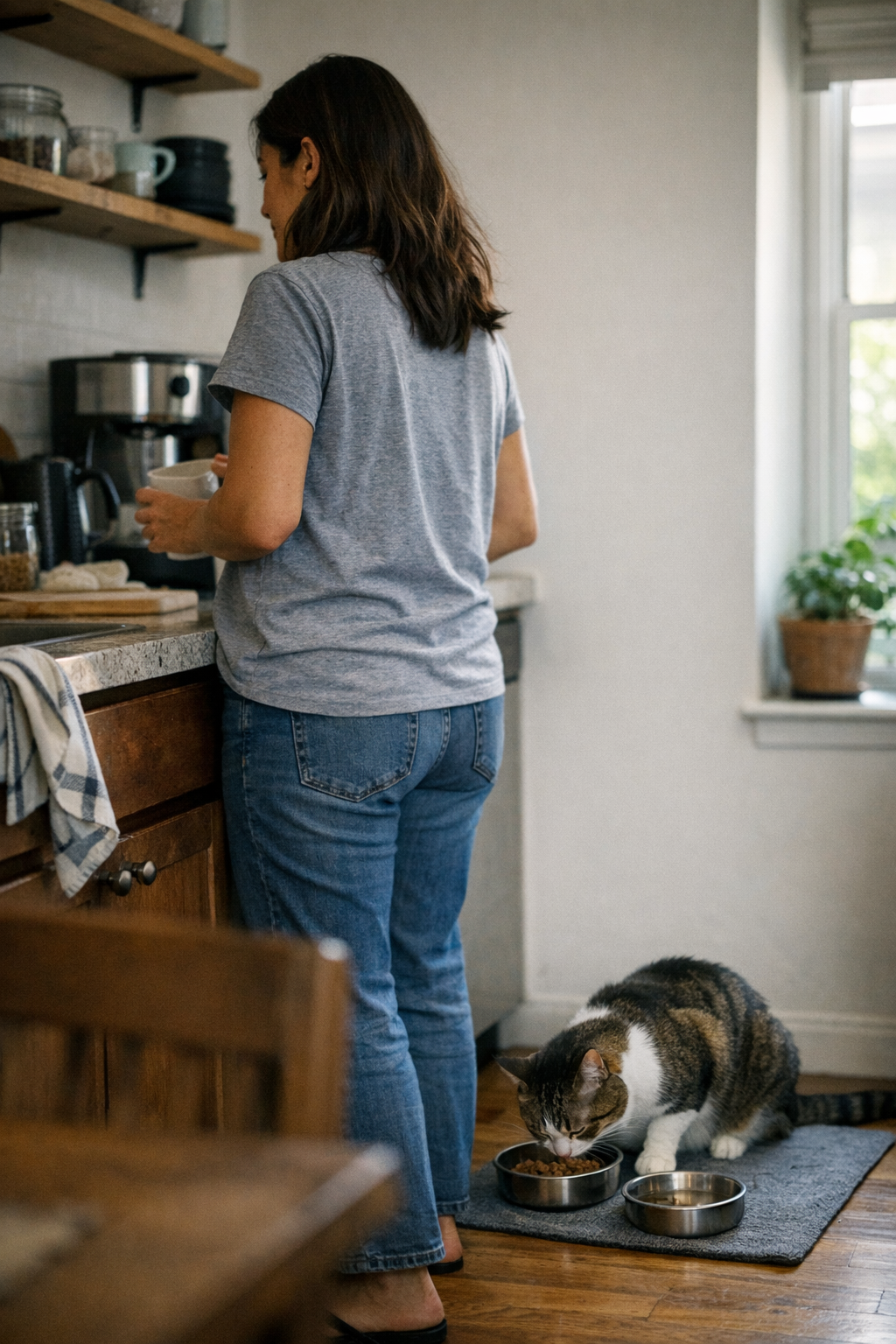
    The first problem sneaks in quietly— a quick treat tossed next to the food bowl, a half-open kitchen drawer left as an unspoken invitation, a crumb escaping the edge of the mat. But these small exceptions don’t stay harmless. Before long, your indoor cat isn’t just parking herself at meal times. She’s circling the kitchen, eyeing the treat spot, blocking your reach as you reset the feeding area or fetch a wipe. Every impulse treat resets expectations, and what looked like a manageable feeding setup turns into a loop of distracted pacing and extra cleanup you did not budget for. Suddenly, the cat’s feeding zone doesn’t signal “finished” anymore; it signals constant possibility—a drifting mess of missed boundaries and repeat chores. In the StillWhisker world, where structure is supposed to make each day smoother, even one off-rhythm treat can throw the whole setup off balance.

    How Treat Drift Unravels a Manageable Feeding Setup

    The hidden cost of scattered, unplanned treats isn’t measured in the price of snacks, but in the repeated disruption of your home’s rhythm. A feeding zone that once felt contained turns into a negotiation stage. At first you barely notice: your cat begins to hover a few extra minutes after meals, then lingers at odd hours, scanning you and the treat drawer for a hint of the next handout.

    The patterns escalate quickly:

    • Pacing along the food mat at random times instead of settling elsewhere
    • Waiting for that sound—the crinkle of a treat bag, the drawer sliding open—and redirecting all focus to that trigger
    • Crumbs collecting just past the edge of the mat, requiring extra wipes not counted in your usual cleanup
    • Interest in actual meals displaced by the anticipation of treats, making feeding less predictable and more work

    The shift from “tidy” to “exhausting” happens in the background. With each unstructured treat, you increase the frequency of small interruptions—loose crumbs, blurred boundaries, and daily feedback loops that quietly erode both your control and your cat’s routine.

    When the Line Blurs: Invisible Work and Quiet Friction

    Even orderly routines show their limits here. What starts as a quick treat detour creeps into refill pauses, mat resets, and every half-step needed just to reach the water bowl. Instead of a clean feeding cycle, now you find treat residue ground into the mat, the small vac never quite put away, and your cat’s attention glued to the feeding station whether it’s time or not. The old boundary between “done” and “maybe something extra” collapses, and you’re left with invisible friction—an accumulation of side chores that pull attention away from the rest of your setup.

    Well-placed storage offers little relief if the treat bag stays too close to other essentials. Resetting after meals looks fine on the surface, until the week stacks up with a series of extra wipes and unscheduled negotiations. Unlike predictable routines—water refills, litter sweeps, toy pickups—treat drift injects ambiguity, exposing the weak seams in your otherwise solid setup.

    Practical Scene: The Real Cost of a Shifting Treat Zone

    Picture this: feeding goes by the book on Saturday morning. But when you reach down later to straighten the mat, crumbs have already crept beyond its edge. The cat, who used to wait elsewhere, now springs up the instant you move toward the treat drawer—even if all you wanted was a fresh cloth. That tension, thickest at the feeding corner, becomes a low-level background drain: slower resets, more wipe-downs, and a feeding zone that keeps pulling you back for fixes it shouldn’t need.

    Setting a Predictable Routine: How a Treat Rule Reclaims Structure

    The fix isn’t a new feeder or another storage hack—it’s a repeatable structure for the treats themselves. A clear, predictable rule, enforced daily or weekly, collapses those negotiations. You don’t need to go rigid, just deliberate: treat time links to one reliable event, in one designated spot, with a setup that guides both cat and owner back to baseline. For example, a single treat after brushing or just before a shared rest period. Same place, same time, same sequence.

    The shifts are immediate and visible:

    • The cat waits for the known moment—no longer pacing, no longer on high alert for random signals
    • The mat resets quickly and stays cleaner, as treat debris is confined to a separate cycle
    • Your attention stops fracturing—cleanup is folded into a single, predictable routine, not endless spot checks
    • The cycle of negotiation evaporates—expectation is clear, behavior normalizes

    When the rule becomes visible in the room, the background tension vanishes—and the feeding zone returns to its original, low-friction state.

    Making the Rule Visible and Easy to Follow

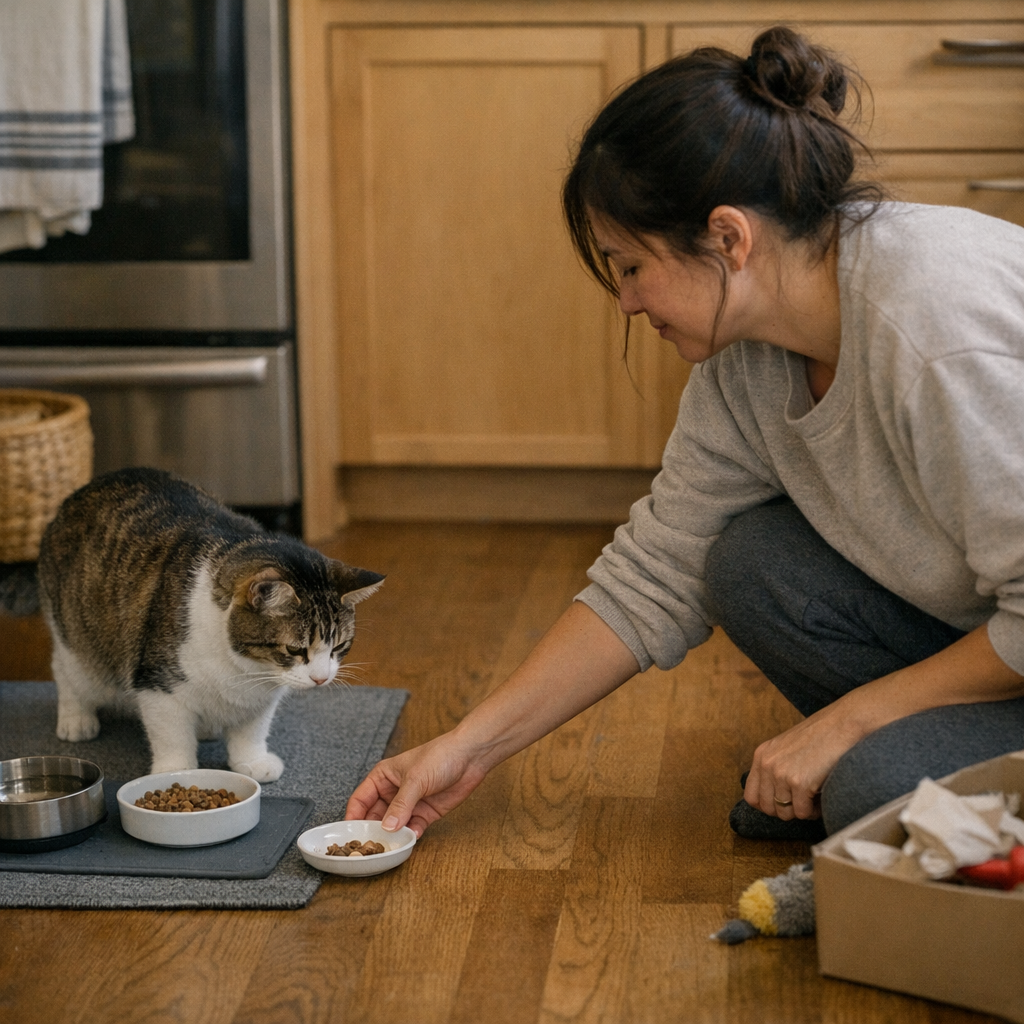
    Simple distinctions make this structural change stick. Never serve treats on the same mat or dish as regular food. Use a specific plate, preferably something shallow and ceramic for faster cleaning, placed just adjacent but always separate from the main feeding station. It comes out for one event, then returns to storage. Avoiding textured mats for treat moments prevents crumbs from embedding, cuts back on debris trails, and lets you reset the area in one step—not ten.

    The Repeated-Use Difference: How a Defined Treat Moment Impacts Daily Flow

    What looks like a small scheduling detail rewires your whole routine. Now, cleanup is contained in a predictable slot—no more scouting for stray bits or doubling back to the feeding zone with the hand vac. The kitchen corner stops being a cat-powered detour every time you walk past. Instead, it works the way the rest of the StillWhisker setup does: smooth, clear, and not constantly nagging for attention.

    Where Setup Meets Reality: Good Intentions vs. Daily Conditions

    Appearances mislead—a visually tidy feeding area crumbles if routine fails. Mats and bowls align, but you still find yourself checking the treat bag’s location or scrubbing a sticky plate that should have been reset hours ago. In a truly functional setup, every routine slots into place without overlap: water, litter, toys, rest, treats—each with its own beat, none tripping over the other. Any repeated stumble—knocking the treat container during a refill, retracing a cat who’s moved in on “treat central”—signals a structure gap that looks minor but leeches hours and energy across weeks.

    Pulling those pain points out of overlap—through an obvious treat boundary—brings daily reality in line with best intentions. You’re no longer habitually interrupted. Your cat gets clarity. The home feels less reactive, more in sync with the rest of your StillWhisker structure.

    Smart Treat Area Practices for Easier Indoor Cat Life

    The difference between stress and effortless upkeep lies in a separate treat zone and strict timing. Keep treats on a dedicated dish—never on the main mat. Only bring it out for the routine you’ve fixed in advance, whether that’s end-of-grooming or calm evening time. Put it away just as quickly. Textured mats only invite crumbs and slow you down—skip them for treat service. This isn’t about removing small pleasures; it’s about protecting the rest of your setup from gradual, invisible sabotage. A feeding zone that resets fast and stays free of non-meal interruptions is worth far more in lowered hassle than a feeding zone that simply looks kept up.

    Unplanned treats rarely ruin a setup in one go. They degrade it gradually—through shifting boundaries, repeat crumbs, and small negotiations that drag the whole house out of sync. In homes where water, litter, toys, and rest already move on set rhythms, letting treats slip into free-form chaos breaks the pattern and makes every next reset harder than it needs to be.

    Watching for Recurring Friction: When to Revisit Your Treat Routine

    If you notice any of these signals, it’s time to audit your treat structure, not just your storage:

    • Vacuuming or sweeping after treat time becomes a weekly ritual
    • Meals are ignored unless a treat is produced first
    • The cat appears at the treat station at all hours, regardless of schedule
    • Cleanup supplies keep drifting closer to the feeding area—out of necessity, not intention

    These clues aren’t solved by better gear alone—they need a singular, predictable treat event to restore order.
    Explore cat-life structure that adapts to real daily use—shop StillWhisker for setups made to work with repeated routines, not against them.

  • How Small Gaps in Dog Care Routines Create Unexpected Daily Delays

    Smoother Dog Care Routines: Why Small Gaps Stall Everyday Flow

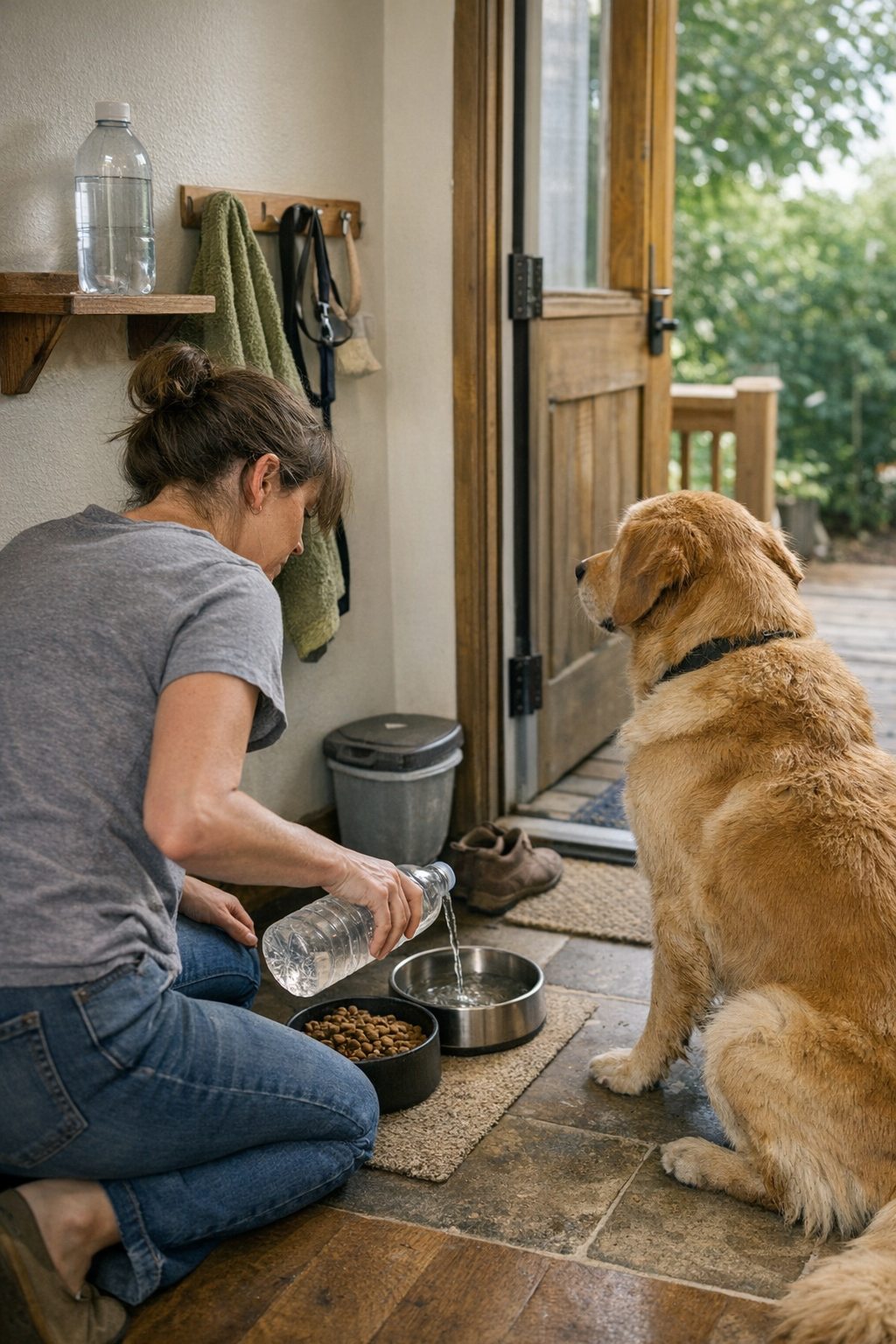
    Daily dog care only feels simple until it’s disrupted by a single missing step. You reach to refill the water bowl, but the bottle’s on the opposite counter. The towel you meant to hang by the door is still in the laundry, just when muddy paws walk in after a wet walk. One out-of-place item, one blocked reach, and what should run on autopilot slows to a frustrating crawl. Instead of a streamlined reset before heading out or winding down at night, your routine demands extra trips and delayed corrections. That’s the difference between a home setup that actually works—and one that just looks organized on day one. CalmPetSupply lives where these “almost” routines break down, making quiet frictions louder until they’re fixed.

    When Routine Slowdowns Sneak In

    Most daily routines depend on everything being at hand. Scoop food, pour water, leash by the door, done. The illusion cracks fast: one morning, you reach for the food scoop and it’s missing—hidden under discarded mail, or stashed two shelves too high during a quick cleanup. Shoes wedge the storage cabinet shut just when you try to refill, or the water bowl sits empty because no one remembered that last quick pour. Every tiny delay builds: a bowl left out triggers a reset, a towel buried in grocery bags lets mud travel deeper inside. Missed steps aren’t rare—they’re a default setting unless your layout matches how you actually move through the house.

    Scenes from Real Routines

    Picture the after-walk scramble: leash off, muddy paws poised, and you realize the towel is two rooms away. Awkward, you stall, your dog freezes, then skips straight onto the clean rug. Feeding time is no relief—the food bowl’s blocked by piles of last night’s mail, and by the time you clear a path, your pet is pacing. You might set up a neat system: bin here, water bottle above, towel on a hook—but by day three, the scoop ends up in a drawer “for now.” Next meal, the drawer’s stuck, or someone else grabs it for something else. Nearly every pet owner knows this friction. When tools migrate or setups drift, the system goes from nearly seamless to nearly annoying, running just slow enough to grind on nerves but not dramatic enough to overhaul.

    Why One Missing Piece Slows Everything

    With daily pet care, the weak point isn’t theoretical. If the refill jug is tucked away across the kitchen, if wipes climb out of easy reach, or the leash migrates to a chair, the smooth chain snaps. Each disruption means one more loop around the room, one more interruption, one more side quest that piles up as days go on. Even your dog senses the lag: instead of a silent “go” at the door, stares and fidgeting replace confidence. After several days, routines that once ran themselves feel stubbornly manual. The real signal isn’t the time lost—it’s the feeling that every step now needs a workaround.

    Not Just Mess: Function vs. Appearance

    Clean counters and tidy feeds hide how poorly a system really works. Hiding wipes in a high cabinet means cleaning waits; stacking bowls out of direct reach means water sits stale just a bit longer. Pet gear creeps into shared walkways—brushes slip under table legs, food bins block the main passage, towels “disappear” into deeper storage. When you finally need them, their inaccessibility matters more than the fact that they were put away. A practical routine is about what’s reachable, not hidden. Placing the water refill bottle directly above the feed bin shrinks the chain; always hanging the towel nearest the door ends the mud-at-the-rug repeat. The goal isn’t just hiding stuff. It’s making sure the setup doesn’t ask for your attention when you’re already mid-task.

    The “Almost Fixed” Cycle

    Every pet owner has fixed, then unfixed, their setup. The scoop is back in its spot—until it isn’t. Water refilled every night—until one missed round leaves the bowl dry by morning. Even after a perfect cleaning, the same gaps sneak back. The lesson turns up when you catch yourself running the same circuit twice: one lap for the missing towel, another for the moved scoop. That’s not a sign your routine is “almost there”—it means the foundation asks for more work than it gives back. Simpler routines, not just neater counters, are what relieve the drag.

    How Small Tweaks Add Up

    You fix repeat friction with almost invisible changes. Place the water refill next to the food—never across the room. Hang the towel every single time you come in, even when distracted. The brush should live where the fur flies most, not in a drawer. After a week of these micro-corrections, the system starts running itself. The routine speeds up not out of effort, but because you took away the reasons it kept slowing down. That look from your dog, suspicious and waiting, fades—not because you’ve trained them out of impatience, but because the moment is already ready for them before they even pause at the door.

    Everyday Details That Change Everything

    Watch for where your own routine actually breaks—not where it “should” run, but where it always slows. Is it a bowl blocked by clutter? The wipe-down cloth out of reach, again? Do toys migrate into hallways and force you to clear a new path before every meal? Each one of these is a real-world signal to tweak, not overhaul. Simplifying where routines stall gives you smoother resets, quicker handoffs, and less silent resentment at your own system. The loop of feeding, watering, wiping, and grooming becomes lighter when each part is ready within arm’s reach—and your energy refocuses from fixing yesterday’s misstep to sliding into the next day’s routine without friction. What the room looks like doesn’t matter nearly as much as what’s ready at the moment you need it.

    See practical setup tools for smoother, lower-friction routines at CalmPetSupply.

  • How Small Changes Can Transform Your Dog’s Evening Routine

    The last hour before bed with a dog sounds easy: quick leash, final walk, fast water check, then crash. But in real homes, that routine jams up everywhere—reaching for a leash that’s tangled under mail, finding towels one room too far when muddy paws hit the floor, noticing your dog circling not out of habit but looking for a water bowl that’s already been shuffled to some “tidier” spot. When the tools and cues drift, what should be an automatic glide into rest turns into a friction loop: delays, detours, and a dog who won’t settle because the signals keep changing.

    The Unspoken Friction of Dog Bedtime Routines

    Every owner recognizes the checklist before lights go out: leash, bowl, last trip outside, pat on the head. Routine should take care of itself. Yet the interruptions pile up—never dramatic, always annoying. Leash lost in a pile of outerwear, water bowl somehow dry for the third night in a row, cleanup supplies nowhere at hand after a wet walk. The late-night search for “just one more thing” becomes standard.

    Disruptions don’t announce themselves loudly. They just stall momentum. A dog pacing after a walk, hovering at the bedroom threshold, or making an extra lap down the hall: these aren’t quirks—they’re your dog waiting for a reliable signal, not a shuffled cue. Over time, these little hesitations carve out a nightly pattern that pulls both of you into slower, less certain territory.

    Where Setup and Routine Drift Apart

    Routines depend on having what you need, when and where you expect it—not just how it looks when straightened up. That soft bed in the wrong spot turns into an obstacle, not a comfort signal. Water bowls drifting room to room confuse the “last call” timing. Cluttered entryways make the “leash grab and go” a daily mini-lottery. The dog notices the inconsistencies: circling for a sign, pausing by bedroom doors, or parking by the spot where a bowl should have been but isn’t.

    Owners end up nudging toys out of footpaths at midnight, doubling back for a towel that isn’t near the door anymore, or fumbling for the right leash under new “organization systems” that slow them down. Even in a neat home, function and routine often don’t line up—and the dog’s hesitation just proves the point every night.

    Slow-Burn Delays: How Small Misses Add Up

    All it takes is one thing out of place—the water bowl left empty, the towel missing from the doorway, the leash hook now hidden behind a stack of bags. None of these problems feel major alone. But strung together, they make bedtime drag. You refill the bowl three steps too late, or shuffle items around after you should be winding down. Dog routines suffer from momentum loss, and the owner’s patience wears thinner each time the night doesn’t close as expected.

    Recognizing Routine Cues (And Mixed Signals)

    Cue mismatch has a cost: A dog that circles, hovers near the door, or walks back and forth for water isn’t bored—they’re waiting for a routine mark they can trust. Stale signals—like gathering up the leash from a new spot every night, moving the water bowl because it “looked messy,” or stacking supplies out of easy reach—tell the dog things aren’t settled. This uncertainty shows up as restlessness, repeat pacing, and that slow creep of bedtime expanding minute by minute.

    Missed cues stack up: unexpected trips outside, double-checks for doors, midnight puddles, and extra towels fetched twice. What looks “fine” in the house at first turns into friction points that the dog—tracking every move—responds to by not responding the way you hoped. You end up trading a calmer routine for a silent string of minor resets that wear out both sides quietly but surely.

    Daily Life: Where Functional and Tidy Don’t Always Line Up

    It’s easy to make the home look organized in daylight. But come late evening, order starts breaking. The water bowl is still in the corner from lunch, not bedside for easy reach. Entryway “solutions” mean the leash is buried, ready to slow every late-night switch; the towel for muddy feet is now out of sight, so wet prints trail behind you for cleanup that’s always just after the fact. The tidy look rarely matches the pattern of real movement—and dogs are the first to notice when routine support slips out of place.

    Specific frictions build up:

    • Your dog sits by the wrong door at 11:45pm. You cross the house because the water bowl wandered—not where you thought, not filled, not helping closure.
    • Rainy nights leave you double-backing for towels—first for paws, then for the surprise trail after. Nothing’s catastrophic, but the cleanup rhythm stays off-balance.
    • Away-from-hand leashes and hidden gear spawn two extra circles from your dog, each adding restlessness instead of winding down steadily.

    Systems That Slow The Routine, Even When Tidy

    Organizing for the human eye doesn’t always solve the dog-life pattern. Plush beds crowd awkward corners; water shifts between rooms for “better flow,” but ends up with the dog circling for the next move. Entryways that look sparse slow you down when gear isn’t in hand. The friction isn’t obvious at first, but builds every time you step around, backtrack, or have to reshuffle gear just to get from walk to sleep without another snag.

    The Subtle Impact of Steady Nighttime Cues

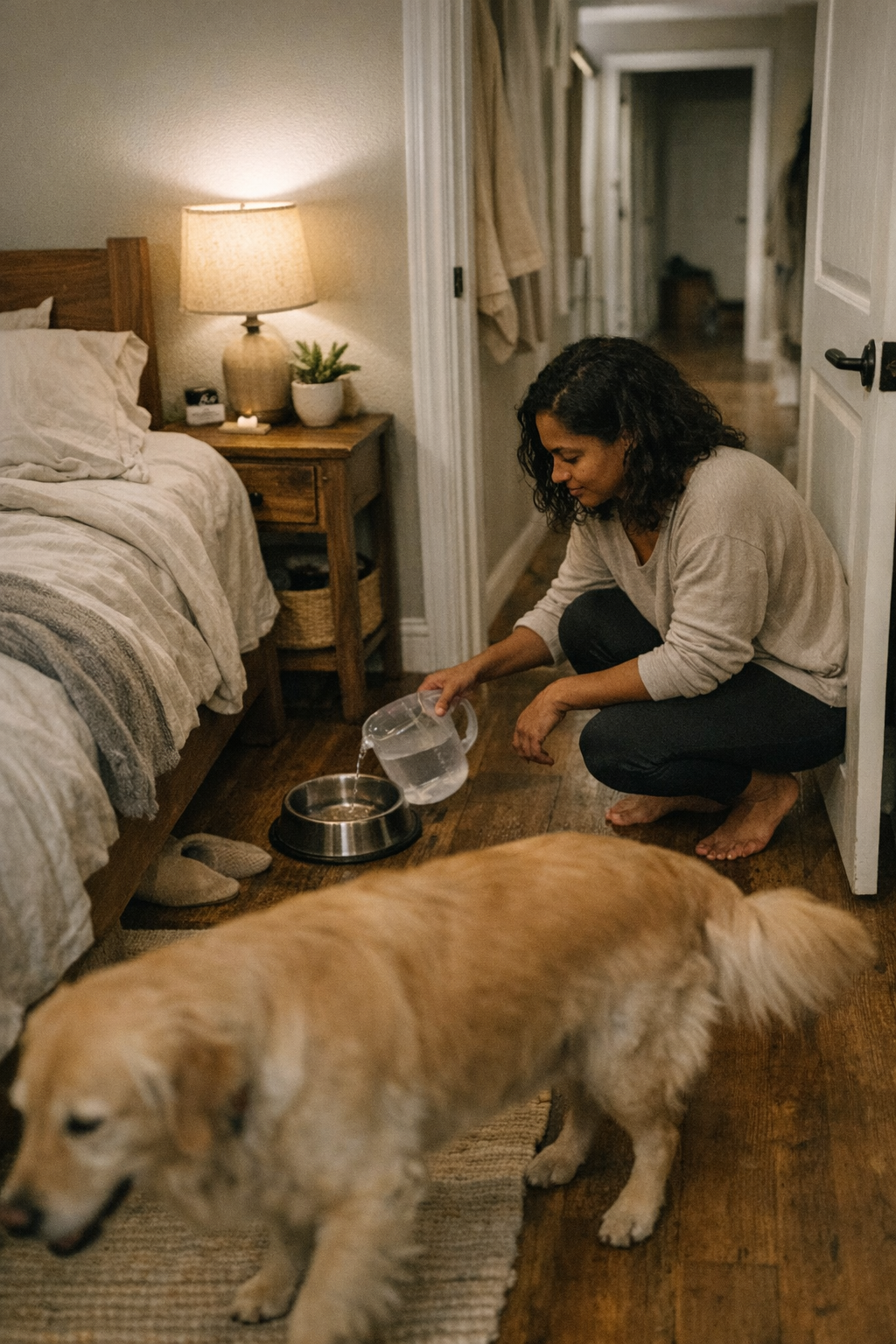
    Fast improvement rarely comes from a full overhaul—usually it’s a single, reliable reset. Take the water bowl: moving it to the bedroom door, refilled just before the last walk, becomes a clear signal every night. Suddenly, the dog doesn’t loop the hall or sit mid-path. They see the bowl, make their final stop, and finally settle—no second guessing, no last-minute signals left open. Bedtime routines shrink not by force, but by removing ambiguity from the path.

    Small Realignments, Noticeable Results

    It’s the repeat misses—mixed signals from gear shifting, or habits that can’t anchor because locations keep rotating—that quietly block the “automatic” feeling. Successful routines show up as smoother transitions: gear always back where it needs to be, towels reset on the nearest hook, bowls never moved out of expected reach. Fix one anchor and you often fix a handful of micro-issues at once.

    The payoff is less about adding, more about reliably removing friction. Declaring “bedtime” doesn’t work unless the signal is in the right place, at the right moment: same walk window, water already waiting, rest spot guiding the movement. Most people overlook small delays—until they realize their dog’s circling is just them waiting for a real closure signal, not a stalled pattern.

    Resetting Your Nightly Routine: What to Watch For

    Use the last hour before bed to spot cues that fail or slow everything down:

    • Dog pauses at the door post-walk—still looking for a sign things are really done?
    • Multiple water trips in different rooms, even as lights go down?
    • Circular movement or slow settling, instead of a single smooth approach to the bed?

    These aren’t energetic quirks—they’re signals that the setup’s logic is fuzzy. Fixing the whole routine isn’t needed; making one or two cues absolutely consistent is. Watch for any moment you see stagnation or hesitation—and track it back to what’s missing in the nightly structure. Reliable placement, timing, and repeat use matter more than the “tidy” appearance that drifts the next day.

    Practical Adjustments for Fewer Nightly Interruptions

    Try resetting one anchor: water bowl prepped before settling in, towels always in the same grab spot, leash back on the same hook—no matter what disorder hits the house for the rest of the day. Dogs respond to repeated, predictable signals that don’t force a second round of searching or second-guessing. Over a week, you’ll see less double-backing, less circling, more visible ease at bedtime—not because routines are perfect, but because the path is consistently clear and simple for both of you.

    The Difference Between Routine That Looks Complete and One That Works

    Outward organization—nice bowls, hidden supplies, neat corners—means little if it trips up the routine in real use. What matters is whether the setup reduces repeated stops, scrambling, or after-the-fact resets. If it feels smooth once and falls apart twice, it’s not working yet. The systems that quietly shrink friction in that last hour are rarely complicated, rarely showy, and always noticeable the next night something shifts. Reliable, practical anchors make each evening’s end more repeatable and less of a question mark.

    Ready to tune your own routine for smoother nights and less last-minute scramble? Explore more DogPile setups and adjustments here.

  • How Hidden Cat Treat Storage Transforms Your Kitchen Routine

    Visible cat treats on the kitchen counter aren’t just a cute convenience—they’re a repeated disruption waiting to happen. By day three, the shortcut of leaving treats within reach backfires: reaching for your bowl means nudging past a determined cat, and wiping a counter is delayed by paws perched in the way. Treat containers left out fuel a constant low-grade interruption—where every meal, refill, or cleanup gets tangled with a hopeful feline and a kitchen that never quite feels reset. It’s not mess you see, but friction you feel, and it doesn’t level out. The room starts working for your cat’s routine, not yours—revealing the overlooked cost behind a setup that seemed harmless on day one. StillWhisker setups exist for exactly this kind of lived, repeated kitchen struggle.

    How visible treats rewrite your kitchen routine

    An open treat jar looks innocent, but it quietly rewires your space. Forget the idea of quick coffee or a one-move meal prep: every entry into the kitchen announces a reward, shifting your cat’s “patrol zone” to your highest-traffic spots. Feeding resets mingle with distracted paw traffic, and every clink of dishes triggers an expectant sit, a stretch to the counter, or a blockade near the cabinet you need. “Cat time” no longer waits for meal cues—it’s blended with every door swing and every second you walk past the treats. Practical surfaces become contested zones by midweek, and what started as “just a few seconds saved” turns into a loop of sidesteps, repeated pauses, and minor reroutes just to keep the flow going.

    Routine disruption snowballs. During the breakfast rush, you’re grabbing the kettle while a cat hovers near the treat box, making you work around a living obstacle. Instead of one quick wipe-down, you’re picking fur or prints off places you didn’t expect. Surfaces feel busy before the day even starts, and “counter time” changes—no longer yours, and impossible to keep predictable.

    The friction between looking tidy and feeling smooth

    Open treat containers might look neat, but the real mess is invisible. The “tidy” setup means less debris, but more body traffic: each time you reach for a utensil or close a drawer, there’s a small but real negotiation to move a cat just to finish the task. Clean-looking doesn’t equal workable. The smooth routine you imagined wears down as you’re resetting after paws edge into the very spots you wiped down ten minutes earlier. The difference shows not in crumbs but in time lost walking around the problem that shouldn’t even be there.

    You start noticing cleanup drag: more time spent circling that smudge at the counter edge, or tracking down wipes because prints—cat or human—keep reappearing at the treat zone. The pattern isn’t about visible debris, but about one misplaced signal making every simple task a multi-step process.

    Where convenience becomes a maintenance headache

    What seemed smart at first—treats in plain sight for quick handouts—turns on you as days pass. Instead of a streamlined routine, you’re managing a kitchen that can’t stay clear. Each treat break ensures your cat shows up for the next round, lingering in the room instead of roaming. Meal prep gets layered with shifting bowls, blocking paws, and reset supplies, putting your own flow permanently second to the cat’s curiosity. Clearing the counter is no longer one-and-done: now it’s checking for crumbs, brushing fur away, and grabbing an extra towel when the handout leaves residue or a surprise pawprint.

    By the weekend, with more family traffic and kitchen use, the pattern worsens. The area looks tidy—at first glance—but it’s actually a zone of constant negotiation. Setup that started as “convenient” doubles back, adding layers of minor friction at every transition between your tasks and your cat’s expectation.

    Moving treats out of sight: what really changes?

    Shift treats to a closed cabinet or high pantry shelf, and the most obvious benefit—clearer surfaces—is only the beginning. Your kitchen regains its intended function: without a visible reward, cats disengage from the routine and stop blocking off paths or camping near the fridge at the sound of bags or containers. Cleanup speeds up. There’s less “extra” wiping, fewer paw-prints materializing at the counter’s edge, and a return to surfaces that actually stay reset after you use them. Mornings become what they’re supposed to be—direct, no rerouting or cat-dodging for simple prep. Evening routines quiet down, too: you’re not answering a meow with a reflexive treat, and you aren’t delaying tasks to clear feline patrols from the path.

    The shift isn’t just for visual order—it rewrites the rhythm. The only cat signal left is the actual feeding mat, not a lingering question mark at every countertop.

    What stays convenient, and what genuinely improves

    Pushing the treat jar out of sight isn’t about forgetting treats entirely—it’s about deciding when a reward actually happens. Some owners worry they’ll skip the treat altogether, but the half-life of that worry is short. Now the reward is on your timing. It’s a choice during feeding, or a deliberate break—not a default response to every step into the room. Impulsive requests drop, and you’re no longer stuck predicting a cat’s next move just to finish basic prep. The kitchen feels less like a negotiation, and both you and your cat settle into more reliable habits.

    Repeated interruptions: noise that never quite disappears

    Most indoor-cat households know the difference between “looks organized” and “feels livable” arrives in tiny, aggravating bursts. If you’ve ever walked away from your tea, found it cold because you lost ten minutes maneuvering around the treat zone, or cleaned the counters only to find new prints hours later, you’ve met the real cost: a pattern that keeps resetting itself as long as the visual signal remains. Even attractive new containers or matching baskets can’t fix the loop if the reward stays in constant view. What slows you down isn’t a style issue, but persistent, low-level interference—a cycle you spot only after living through it day after day.

    The only way to truly break the cycle is to move the treat signal out of the flow zone. Not all resistance is visible—but when you finally clear the pattern, you notice fewer stops, fewer double-cleanups, and a kitchen that serves human routines first again.

    Practical tips for smoother kitchen routines

    • Move treats to a closed cabinet or high shelf that isn’t part of your daily-use path. Keeping the signal distant means the area functions for prep and cleaning, not repeat reward breaks.
    • Keep cleaning tools within easy reach—a nearby closed drawer with towels or wipes ensures you aren’t stopped cold by new prints at an awkward moment.
    • Reserve counter “prime space” for items in permanent use. Don’t let a convenient treat jar gradually claim real estate needed for mixing, storage, or everyday tasks.
    • Watch for shifting patterns. If your cat starts waiting in a new part of the kitchen, adjust placements before paw traffic reclaims a surface you need most.

    Takeaway: the gap between “looks ready” and “feels ready”

    The hardest truth about indoor cat setups is that what looks settled can still feel slow, cluttered, or inconvenient in repeated use. Something as minor as a visible treat jar can quietly rewrite your entire daily flow—turning easy resets into multi-step interruptions and a tidy surface into a repeatedly contested zone. Retreating the treat signal isn’t a cosmetic move—it’s the key to getting your kitchen function back, restoring smoother movement, fewer delays, and mornings and nights that finally work for you first, not the cat’s next reward loop.

    For tools and setups designed with real, repeated indoor-cat routines in mind, visit StillWhisker.

  • Maintaining a Cat Perch: Practical Tips for Daily Care and Organization

    Every cat perch or small dog area starts out looking manageable: bowls lined up, a wipe-down just done, a fresh mat in place. But within days, the cracks show. The water bowl slides just out of reach. Fur collects under the sill trim. The brush you counted on yesterday is missing or buried under a pile of toys. What looked tidy on Sunday is cluttered by Tuesday—not from big messes, but because the routine breaks down at the exact moments daily care is supposed to be frictionless.

    The Shift from Tidy Setup to Repeat Effort

    The illusion of low-effort fades fast in real use. Morning routines expose the gaps: you reach for the water bowl and find it wedged behind the leg of the perch, almost empty. To top it up, you move a couple of toys that weren’t where you left them. There’s a wipe for crumbs, but it’s in another room. Every step turns a two-minute reset into a series of micro-dilemmas: search, reach, shift, repeat. These aren’t crises, but they’re why yesterday’s setup keeps getting harder instead of easier.

    Even when cleaning supplies exist, they’re usually just out of place, or buried behind other items. You spot a line of fur along the ledge—but the soft cloth slid behind the organizer, or the brush is tangled with a cord you didn’t notice before. Each extra movement, each delayed wipe or search for a missing tool, nudges the routine from a smooth pass into another low-grade hassle.

    When Small Obstacles Become Everyday Friction

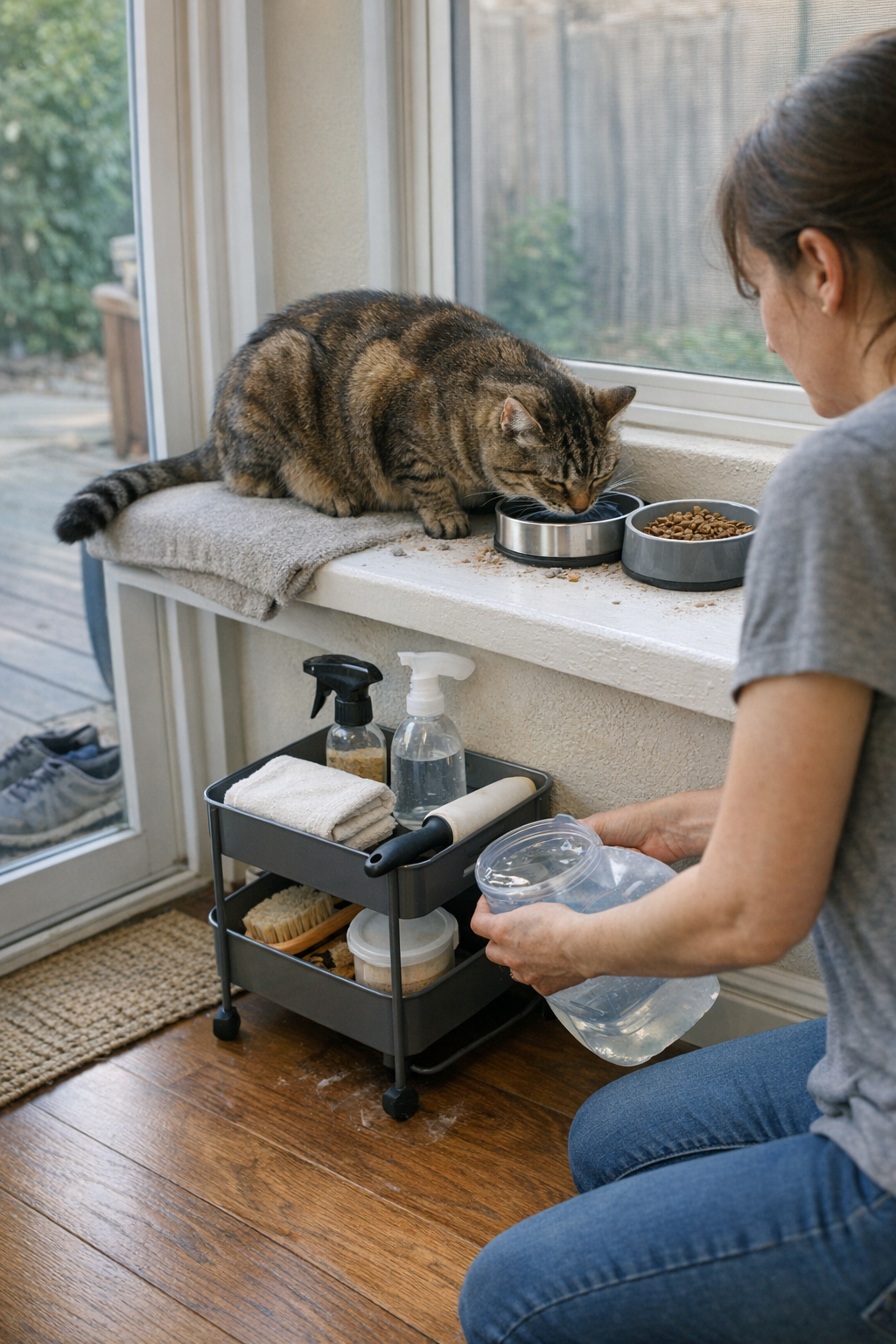
    The difference between a corner that looks orderly and one that actually works is sharpest on busy days. You check in quickly: your cat jumps to the sunny sill, and at a glance, you see dry water rings and tufts of fur have built up again. You reach for wipes—then have to clear a treat bag blocking access because last night’s play session ended with an armload stashed in the wrong spot. Instead of a quick reset, you’re stuck realigning bowls, sweeping under the mat, poking around for the misplaced brush—always a few steps behind as micro-obstacles compound.

    Over time, these missed resets accumulate. Feeding basics, grooming tools, or wipes aren’t gone, just scattered, low, or hard to grab. Even after a thorough evening tidy, it takes only one tired morning for clutter to creep back. One bowl out of place or one missing cloth later, and “handled” pet care quietly becomes routine drag.

    Real World Scenes: Hidden Disruptions in the Pet Care Flow

    Repeated use tests any setup. After a late dinner, you spot crumbs on the ledge, the mat slid sideways, and a bottle knocked off its hook. A quick sweep can’t start until you clear space—supplies crowd together, and what was once “organized” is just another obstacle course. Or mid-call, your dog’s water needs a refill, but the closest clean towel is on the other side of the room. The perch might still look good from a distance, yet every interaction is slower, every fix interrupted or deferred.

    Attempting to solve one problem often creates another. A thicker mat soaks up stray fur, but now it blocks the walking path, forcing you to step over or around during busy moments. Adding a bigger organizer keeps supplies at hand, but now grabbing one item means shifting two others. None of these slips look like visible clutter, but they chip away at any promise of ease.

    What Actually Makes a Pet Perch Work Day After Day?

    Actual improvement comes from setups that survive repeated care, not just initial tidying. After one too many laps to fetch the lint roll or a replacement water bottle, moving a small caddy under the perch changed the pattern: cloth, brush, and backup bottle stayed within arm’s reach, saving steps and stalling less. The routine didn’t shrink, but the wasted motion did.

    Still, every extra item is another spot for loss or delay. Put too much on a shelf and the system slows. A setup that worked at week one—just enough supplies, clear hooks, one mat—now needs a tweak when new toys, spilled food, or shifting pet habits reveal blind spots. Functional setups are less about one big fix and more about small, repeated reviews.

    The Quiet Difference: Tidy Versus Functional

    Order isn’t just how a corner looks after you tidy—it’s in how few steps you need to stay ahead of mess. If it takes an extra search or a second trip every time, clutter isn’t really solved. In the right CalmPetSupply setup, friction points get closed off where they start: one cloth always waiting where fur appears, bowls that snap back when bumped, supplies in reach before you notice they’re low. A space that handles resets easily stays ready without you having to overhaul it every time.

    For everyday pet care, focusing on repeated ease—not just appearance—keeps both you and your pet calmer. Less hidden work, more automatic resets. The difference isn’t flashy, but once you live it, the old friction is hard to ignore.

    Find practical feeding, grooming, and cleanup basics ready for repeat use at CalmPetSupply.

  • How Subtle Lighting Changes Can Improve Your Dog’s Bedtime Routine

    Most bedtime stalls with dogs don’t start with barking or chaos—they show up as a pattern: your dog hovers uncertainly at the door, circles the bedding, or pauses instead of settling. You tidy the space, arrange every blanket, and call it “ready,” yet your dog still hesitates, every single night. It’s tempting to pin this on skipped walks or stubborn routines, but in real dog-life, small setup mistakes—like the wrong light at the wrong time—quietly drag out the entire bedtime process in ways that keep you stuck repeating the same fix over and over.

    Why Lighting Disrupts the Routine You Thought You Got Right

    A too-bright lamp or mismatched lighting scrambles your evening signals. The space may look organized—with the bed in its corner, toys in a basket, and bowls out of the walkway—but if light falls the wrong way, your dog’s body language shifts: head tilts at the doorway, slow-motion circling, restless sitting that turns into more pacing. What seems cozy for humans can signal the opposite for dogs—especially if the lamp is aimed right at the rest area or jumps between moods night after night. The physical signs are subtle: one extra loop, another return to the hallway, a blank stare at the bed instead of that heavy “all done” exhale. Over weeks, it doesn’t just waste time; it trains you both to expect a dragged-out wind-down, even as you redo the setup, trying to spot what’s off.

    Hesitation Patterns: Where the Real Friction Hides

    You only catch on after the pattern repeats: setup looks right, but the dog’s hesitation repeats. Instead of a calm walk to bed, you get alert circling and reluctant half-steps, followed by you guiding them (again) or waiting through their slow decision. If you listen, you realize your voice grows less patient, your bedtime routine gets extra steps, and in the morning, everything feels just a bit less rested—including you. Little bedtime failures multiply: more leash tangles at the stand, more stalling around the food bowl, and a routine that keeps showing its cracks wherever a detail gets missed.

    Looks Tidy, Acts Messy: Clean Corners Hide Setup Weakness

    Neatness means little if your setup fights your routine. Owners line up beds in “quiet” spots, keep floors clean, or use plush blankets—but let a bright lamp pour straight over the rest area and watch hesitation return. Too much direct light, an undimmed bulb, or inconsistent lamp placement quietly resets your dog’s cues every night. The result: bedding gets circled but not claimed, the dog pops up again after almost lying down, and what looked like a “fixed” setup becomes a nightly hassle that steals extra minutes and patience.

    Actual Adjustment: When One Change Resets the Routine

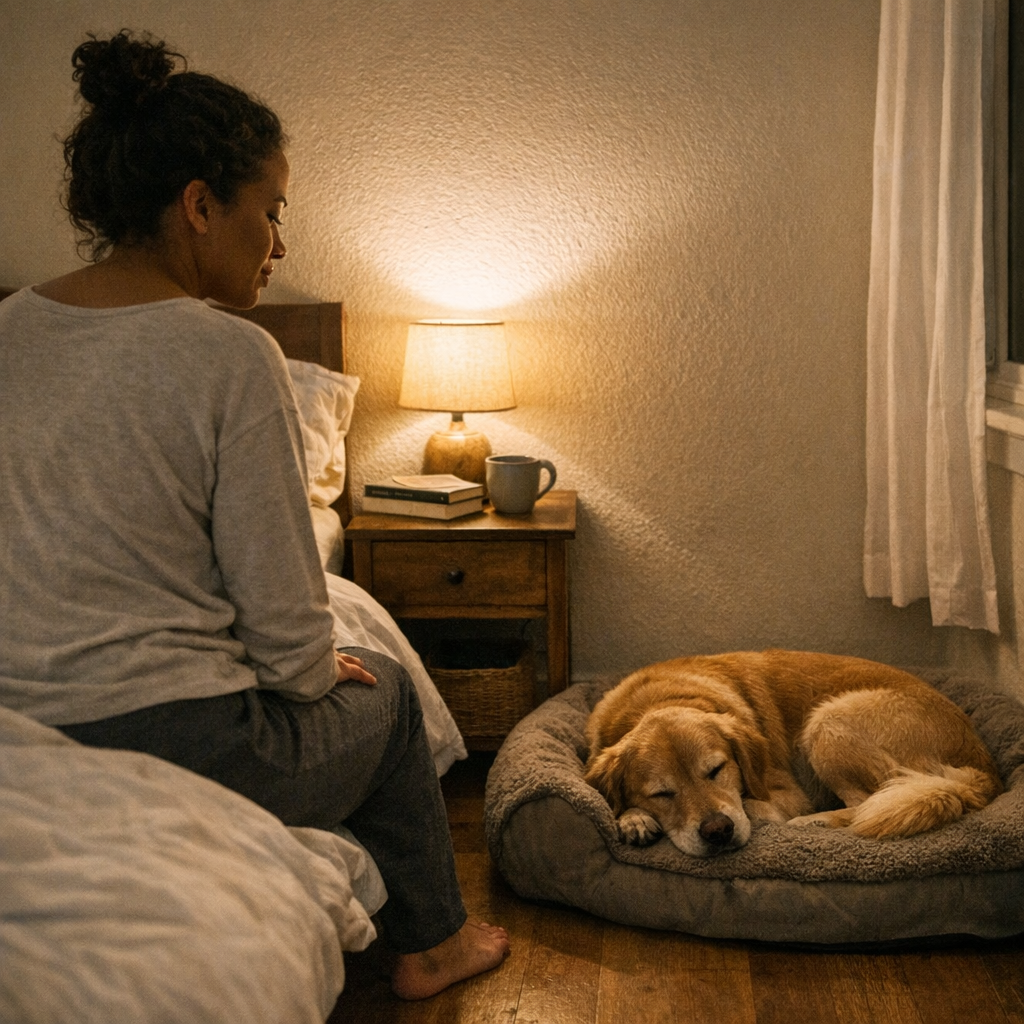
    Here’s a real example: moving a lamp behind a side table and lowering the brightness so light bounced softly off the wall instead of hitting the dog bed directly. Immediate difference. Instead of five minutes of pacing and tail-thumping, there’s a single circle, one deep sigh, and actual settling. The rest of the setup—bed, cleanliness, corner—stayed the same. What changed was the signal: indirect, steady, non-confrontational light. No more repeated verbal correction or drawn-out waiting. Bedtime began to run on autopilot, matched to how the rest of the room was actually used, not just how it looked.

    Bedtime Friction Doesn’t Stay Put—It Spreads

    Ignore these small nighttime frictions, and they show up everywhere: restlessness before meals, stalling at crate time, resistance at the door when it’s walk time. If every evening ends in hallway lingering, nose-poking, or uncertain movements, check what cues—like lighting, clutter, and pathway flow—might be working against you. The problem isn’t just late-night energy; it’s repeated mixed signals that slow down every other step of the evening and turn tidy spaces into bottlenecks during the busiest moments.

    Accumulated Hassle: When Small Interruptions Stack Up

    Missed signals in one part of the night bleed into the next. Five minutes lost to bedtime hesitation becomes ten more minutes correcting the setup the next day, or unfolding blankets that never stay in place. You fetch wipes late, shuffle beds out of the walkway, or restock bowls around toys that keep escaping the basket. The appearance of order doesn’t matter if your evenings still get eaten up by repeat interruptions, last-second adjustments, or that same old sigh when the “fixed” area doesn’t really reduce the friction.

    Fixes That Actually Change the Flow

    Indirect, Even Lighting—Not a Spotlight on the Bed

    Indirect, consistent light is one of the simplest fixes with the biggest impact. Don’t aim the bulb right at your dog’s bed—move the lamp behind a piece of furniture or angle it so the glow bounces gently across the wall. A dimmer or low-watt bulb helps you control the vibe without plunging the space into darkness or unpredictability. The goal: stable, background lighting your dog can ignore. That shift alone removes a major trigger for restless, alert body language every night.

    Let Lighting Support—Not Distract from—Real Routine

    Lighting only helps if the rest of the bedtime pattern lines up. Pair a predictable, soft light with quieter movement (pick up toys without fanfare, lower your voice, keep door swings minimal), and even high-energy dogs adapt. When the environment stops lobbing mixed messages, settling down becomes a habit, not a nightly project. You spend less time pleading and more time resetting for tomorrow—bedsline up, blankets tuck quickly, nothing gets shuffled more than once.

    Match the Setup to How Real Nights Unfold

    It’s not just about the bedroom—lighting that’s too bright or patchy spills into hallways and crossing points. If your dog’s routine slows at several steps—returning from a walk, pausing outside the crate, investigating the water bowl—check if the lighting pattern throws obstacles where calm should start. Well-placed, indirect light sets up every transition: from muddy paws at the back door to the quick check of the food bowl to that final crossover into the bed area—each stalling point shrinks when the cue is consistent and the setup matches actual nightly movement.

    Everyday Signals: How to See if Your Setup’s Working

    Working Scene:
    Lamp dims, toys are gathered, dog enters the bed zone, makes one loop, lands on the blanket, sighs. Nothing dramatic. No stalling or waiting for a missing “signal.” Bed reset is quick—blanket flattens, bed slides, nothing needs shuffling, your dog falls in without delay.

    Still Failing Scene:
    You flick on a lamp for something else, and light floods the bed. Dog veers toward sleep, hesitates, doubles back to the hallway, resumes circling. You tidy, adjust, lose minutes, and in the morning both of you move slower. The room looks fine, but the flow at bedtime still collapses on the same weak spot.

    Setup is Moving, Not Static

    Dog spots keep unraveling in places owners don’t check: water bowls crowding pathways, toy baskets migrating out of reach, lighting acting as a “stay alert” signal, not a sleep cue. Stability only sticks when you adjust after actual use—a week or two in, move the lamp, shift the bed, check if one part of the setup keeps re-introducing friction, even if the rest of the area looks neat. The routines that last are the ones reset by function, not just appearance.

    Why It Goes Beyond Appearances

    A smooth bedtime isn’t just a cleaner room or fewer scattered toys—it’s a routine that runs itself, needing less intervention each night. Fixing details like the angle of your lamp doesn’t eliminate every rough patch, but it does erase the kind of repeated problems that would otherwise train you and your dog into frustration. A better setup shows up in the speed and ease of the return to rest—not in decorative order but in nightly routines that stop eating up your patience.

    The most effective improvements show up not in the way a space looks, but in what you no longer have to keep fixing. The DogPile world is built for setups that stop the slow buildup of routine drag and make every return-to-rest a little smoother.

    See practical setups for calmer night routines at DogPile.

  • How Structured Treat Routines Reduce Mess and Stress with Indoor Cats

    Rewarding your indoor cat for calm seems harmless—until it quietly rewrites your daily flow. What began as a quick treat for silence soon leaves you wiping up crumbs wedged at mat edges, steering around cats camping by the treat shelf, and slowing down every feeding reset for an extra cleanup pass. The friction is never dramatic, but the cost is visible: what should feel like a smooth, low-effort part of cat life quietly becomes a string of micro-interruptions—all rooted in how those “calm cat” treats fit (or don’t fit) the routine structure you already have.

    When Positive Reinforcement Becomes Repeated Friction

    Day one feels easy. You toss a bite-sized treat, no mess, your cat’s happy, and nothing slows you down. But by midweek, every treat handout is a new ripple. The bowl you once grabbed without thinking now drags attention—paper towels join the routine, the mat never seems fully cleaned, and you catch your cat posting up by the treat station with every kitchen pass. The surface still looks in order, but your routine takes more steps: a wipe here, a steered paw there, constant brief pauses that accumulate into low-grade resistance you can feel.

    The wear shows up fast: instead of calming your cat and clearing space in your day, unplanned treat rituals scatter the flow—pulling you into repeated reset cycles that didn’t exist before.

    Crumbs at the Edges, Interruptions in the Flow

    The early symptom isn’t noise—it’s placement drift. Mats that needed a light wipe only once a week now show crumb rings after a day or two. Large or loosely stored treats break up, landing debris anywhere you handle them: slipping under water bowls, trailing past the litter corner, or grinding into walkways on the next step through. Suddenly, you’re chasing stray bits under the table or fishing a half-dissolved treat fragment from the hallway before anyone tracks it further.

    Behavior Shifts: When Cats Anticipate the Reward

    It’s not just mess. Most cats adapt quickly, turning casual treat locations—bowl, jar, open pouch—into points of expectation. By week’s end, you’re no longer steering the routine. Cats camp out early, start sidetracking you for every trip near the treat spot, and the “good behavior” you’re trying to encourage begins doubling as a quiet demand.

    The effect isn’t dramatic enough to call disruptive, but it’s persistent. Each treat becomes a new mental negotiation: Do you pause to give in? Dodge around the cluster? Add one more thing to the reset list? Each answer takes a small toll on the day’s flow, replacing calm with low-level tension—extra time, extra reaching, a chain of decisions you didn’t need before.

    What Really Slows Down the Treat Ritual?

    Break the process into real-world sticking points and the weak spots jump out:

    • The treat container slides behind dry food bags, making you hunt or reshuffle just to reach it.
    • Crumbs tumble from counter to floor, requiring a sweep—or stick to socks and track through the kitchen before you notice.
    • Water bowls placed too close to the treat area pick up stray debris, forcing an extra wipe or water change that wasn’t in the plan.
    • Refilling anything near the treat zone now draws a cat who expects another handout, lengthening every chore into a mini standoff.
    • Dipping into a pouch or bag leaves treat dust or oil on your fingers, nudging you toward the sink between each routine step.

    No single detail is a household emergency, but these moments pile up—creating a pattern where the reward scheme quietly demands more maintenance, not less, even if outward order holds. A system that looked “set” now sprouts weak points at the join: longer resets, small interruptions, friction that lingers in your mind each time you round the corner.

    Setup Structure: Where Routines Break Down—or Recover

    The real leverage isn’t the treat—it’s how and where you deliver it. Small rewards can support calm, but there’s a reason some routines collapse and others run quietly in the background. Uncontained, “grab-and-go” treat setups lead directly to clutter and anticipation spirals; contained, structured delivery reduces both mess and the repetitive prompt cycle.

    Treat Storage: Seal, Sightline, and Snoop-Proofing

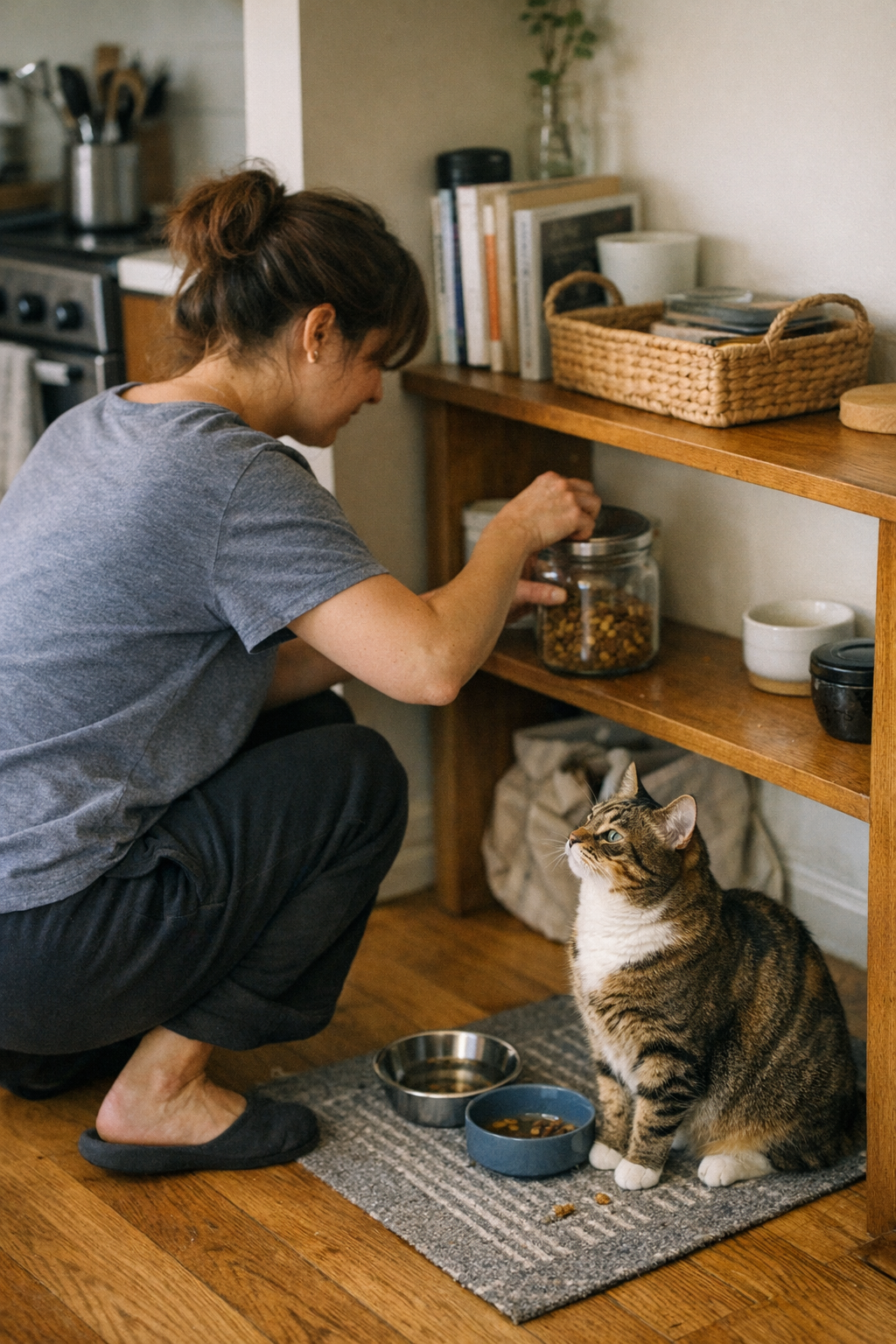
    Leave a pouch open on the counter and you’ll attract noise, spills, and a cat always listening for the crinkle. Contain treats in a jar with a calm, tight lid and you gain control in two ways: fewer stray crumbs, and less audio signaling to your cat that it’s treat time. A mid-shelf jar—high enough to put out of paw’s reach, low enough for you to snag without a stretch—shrinks the treat zone back to something neutral: not an invitation for clustering, but another tool at your calm home setup.

    Treat Format: Bite-Size Wins, Mess Loses

    Oversized treats fracture, scatter, or roll, spreading cleanup into every room you cross. Single-bite, compressed treats are easier to portion out, cut down on residue, and rarely end up wedged beneath furniture. You spend less time on your knees fishing for “just a crumb” and more time sliding straight through daily chores.

    Routine Timing: From All-Hours to Predictable Pauses

    The more random the delivery, the more cats hover and routines unravel. Tying treat handouts to anchored moments (after breakfast, post-evening meal, or only in the rest corner) makes “calm” treat time finite—not an open-ended negotiation. Your cat adapts within days, the clustering fades, and the rest of your living spaces start to feel less disrupted by off-schedule reminders.

    Setup in Action: Real Households, Noticeable Change

    One household shifted treats from an open dish beside the table to a closed jar on a pantry shelf, swapped out crumbly bars for denser single bites, and only opened the container in timed evening windows. Within days, the mat that used to collect residue daily held its first week of undisturbed, crumb-free surface. Walkways stopped catching stray bits, water bowls stayed free of drifted debris, and the litter-adjacent area lost its constant treat-dust drift. For the first time, resetting didn’t feel like catch-up work—it became background maintenance, not a source of ongoing interruption.

    The effect on behavior was nearly as clear. No more silent stakeouts at the treat spot, no constant dance to reroute cats underfoot. With the trigger contained, both human and cat routines moved back toward a less interrupted flow.

    Limits of the Fix: When Structure Still Trips You Up

    Even a controlled system finds new tangles. The sealed jar can end up wedged behind other items, making one-handed grabs awkward just as you’re finishing a water refill. Or a stray envelope gets left by the treat shelf, introducing a new layer of reach-around just when you think you’ve solved it. As conditions shift, the old friction returns—one weak link smoothed out, another exposed—which quietly reminds you that “organized” isn’t once-and-done, but ongoing containment and easy re-tuning. The payoff comes from repeated reach struggles and random resets slowly dropping away, not from abandoning the routine altogether.

    Clean-Up and Mental Fatigue: The Actual Stakes

    Containing your treat routine isn’t just about a neat countertop. The bigger difference is what it does to your attention: fewer negotiation points, fewer messy hands, less need to review every zone before you sit down. Cleanliness is only part of the reward. What you really gain is a sense of the day staying close to its plan—treat encouragement for your cat without the seepage of extra chores into every corner.

    Even in tight spaces, this matters. Small apartments can feel overrun when treat routines leak into living zones, while an optimized setup keeps mess boxed in and treats as real breaks—not an endless, circulating distraction. The space becomes ready for regular life: not photo-studio tidy, but reliably easy to settle, reset, and move on from.

    Time to Rethink? See the Warning Signs

    Wondering if your system is pushing back more than you realized? Watch for:

    • Wipedowns slipping later or being skipped until mess is obvious
    • Treats or wrappers drifting away from their home zone
    • Chores stretching as you field repeated cat interruptions for treats
    • The room looking orderly, but cleanup taking just as long as before
    • Small new frustrations creeping in around the “quiet” reward moments

    These aren’t just quirks—they’re build-up signals the current setup needs a nudge: maybe tighter container control, smaller portions, or a firmer routine boundary to keep the cycle in check.

    Locked-In Habits or Flexible Flow?

    Tidy is good, but your routine wins or loses in the grind of repeated use. A treat setup that actually supports daily flow is silent about its success—it doesn’t need rescue resets or repeat negotiation to hold together. When structure, location, and

  • Small Adjustments That Transform Your Daily Pet Care Routine

    When “Tidy” Isn’t Enough: The Routine Friction in Everyday Pet Care

    The pet care setup might look orderly—bowls neatly aligned, supplies corralled in a basket, leashes on their hooks—but all it takes is a water spill pooling beside the bowl, a brush just blocking your path, or a towel that’s always in the next room. This is where “tidy” backfires: what appears organized on the surface keeps slowing you down, one small interruption at a time. You find yourself wiping up drips after you’ve already sat down, moving bins just to reach the water bowl, and stepping over today’s “temporarily placed” brush or towel. When every feeding, refill, or after-walk cleanup triggers a new awkward reach or extra shuffle, the frustration is more than cosmetic. These repeated snags accumulate, turning pet care from a smooth routine into a string of delays. At CalmPetSupply, this gap between what looks controlled and what actually feels manageable is where the real difference—and relief—shows up.

    Spotting the Weak Points in Daily Flow

    A typical morning: you try to refill the water bowl but have to nudge a food bin aside first. You reach for the brush, but it’s knotted together with a leash on the entry table. Just as you’re ready to walk out, the towel for muddy paws is missing—last used, now tossed aside. These are not big problems, but repeating them every day turns seconds into stress. When a setup means extra moves or little searches, the friction is subtle but constant. If care for one pet is tight, the routine with two or three starts falling apart, especially on rushed mornings.

    How an Adequate Space Makes All the Difference

    Squeezing pet items into corners or baskets under tables looks neat after a single cleanup—but real use exposes the flaws. After a few meals or quick grooms, you’re back on your knees mopping splashed water near the door, or hunting for the towel that slid behind a shoe rack. The shared space clogs up, and grabbing one thing means untangling two others. The area never descends into chaos, but it also never works on autopilot. Each day brings another round of hunting, resetting, and re-stowing what was “just put away.” Organization that doesn’t stand up to repeat cycles starts turning minor chores into sticky habits.

    Scenes from a Day: Real Interruptions in Pet Care

    Walk in with your dog and realize the cleaning towel is buried in last night’s laundry pile. You search for a backup, and now both towels—fresh and used—are draped across the entry instead of handy. Feeding time with the cat? The food bin stands in the way of the water bowl again. Later, you go to sweep up fur but there’s a container of treats wedged on top of the brush. Each task leaves something else in the wrong place, until a “tidy” corner has become an obstacle course of supplies waiting to be put back. This isn’t mess—it’s routine out of sync, costing you a few slow steps, every single time.

    Functional Improvements: Small Shifts, Big Difference

    The biggest changes don’t show up as decor; they show up where old routines break. Scoop bowls away from foot traffic, and a spilled water slick is no longer a daily wipe-down. Mount that brush on a hook beside the leash—no more sorting every time you go out. Hang a fresh towel right by the door you use, rather than folded on a chair across the room, and muddy paws get handled on the spot. These aren’t upgrades for looks, but for shaving off those seconds where routines stall or tools go missing. The less visible the fix, the more practical it becomes.

    Recognizing When a Setup Needs to Change

    If you’re constantly shifting items or cleaning the same spot every day, your care area is undersized or misaligned for real life. Having a towel in plain sight doesn’t help if you can’t reach it while wrangling a damp, restless pet. Supplies aren’t truly “in place” if using them forces another round of sort-and-reset. When both feeding and cleanup require extra steps or repeated backtracking, you’re wasting movement that adds up—not in theory, but through constant, low-level inconvenience that never quite goes away.

    The Practical Difference Between Tidy and Useful

    An area freshly cleaned might appear calm, but the true test arrives after three care rounds: do you have to bend, pause, or shuffle items that should be out of the way? Real organization holds up to repetition—no blocked corners, nothing hiding behind a lid or stashed just out of reach, nothing that makes you double back for a forgotten supply. The true win is finishing a routine without circling back to tidy up again. If your setup lets you end a walk or feeding and move straight on, the care fades into the background. If not, you’re caught in a cycle of micro-fixes and slowdowns.

    Refining the Setup, One Adjustment at a Time

    Every home has its own care bottlenecks. To fix them, focus where you always pause, reshuffle, or delay: move feeding bowls out of corners that make spills stick around, hang brushes or leads at the spot you naturally grab them, keep towels within reach of the entry for quicker paw cleanups. Don’t aim for a stylized “after” photo—look for tweaks that speed up the tasks you actually repeat. The less often you need to fix, reset, or search, the more reliable every routine becomes. That’s how pet care shifts from tolerated friction to something you barely notice—until, for once, the day actually runs smooth.

    For setups that focus on everyday routines, starter-level fixes, and making daily care less of a repeated hassle, visit CalmPetSupply.

  • How Consistent Kitchen Sounds Shape Your Dog’s Evening Routine

    Dinnertime ends, dishes clatter into the sink, and the dishwasher hum starts up—or doesn’t. If your dog lingers around the kitchen door, paces the hallway, or resists settling after a meal, it’s not always about the light, the floor, or the temperature. Often, it’s the lack of background signal—a routine cue missing—that unravels the evening flow. The dishwasher’s cycle isn’t just background noise. For many dogs, it’s the unmistakable signal that the action is over and it’s finally time to rest. When that cue disappears, so does the household’s ability to downshift smoothly.

    The Hidden Routine in Kitchen Noise

    Evenings with a dog have a choreography of their own, and the kitchen is the main stage right after dinner. Cleanup might look finished—counters wiped, food bowls stacked, water refilled—but one missed cue still jams up the reset. The dishwasher’s cycle, quiet or not, usually acts as an “all clear” for your dog: time to move out of traffic, drop out of alert mode, and claim their spot for the night. When the rhythm changes—even by just skipping that consistent appliance hum—unpredictability creeps in. One night’s deviation rarely registers, but four or five skipped cycles in a row and you’ll see a slower wind-down, more dog traffic underfoot, and rest that seems just out of reach.

    This isn’t about noise level, it’s about pattern. A dishwasher that runs at the same point every night cements a subtle flow: the last plate racks, the door clicks, and the dog knows nothing more is about to happen. Delay or miss that cue and you get a steady trickle of evening friction—visible not just in “bad” behavior, but in restless setups: the bed moved askew, ears angled towards the kitchen, and routines that linger past when they should have faded.

    Why a Silent Kitchen Slows Down Everyone’s Evening

    The missed signal doesn’t just cost your dog rest—it costs you convenience. With no “shutdown” sound, the kitchen feels technically clean but never quite done. The stacking effect shows up in small but persistent interruptions: you dodge your dog between fridge and counter, navigate around a tail parked half-in the hallway, or repeat a leash-grab only to redirect the dog again and again.

    Restlessness sneaks in quietly. You notice your dog taking shorter naps, casting glances at the kitchen, or standing alert just off the tile—waiting for a nonverbal handoff that doesn’t arrive. It becomes clearer over several nights when bedtime creeps later, and you’re rerouted around an unsettled dog, burning minutes and patience long after cleanup should be finished.

    Example: The Unrun Cycle and the Waiting Dog

    Picture a night when the sink is empty, the trash bin is emptied, but the dishwasher stays off because the load is “almost full.” The kitchen looks reset, but your dog’s still posted on cold tile, poised between the hallway and the door, tail low, muscles wound. Call them to their bed—they drift over, settle with a half-hearted sigh, but a minute later, they’re back in the threshold, as if pressing pause, waiting for a signal that never comes. After several nights of this, the routine’s edge starts losing its grip. You’re giving extra reassurances and the wind-down feels more like another round of interruptions.

    Routine Friction: When Small Gaps Add Up

    This is not a quirky one-off. It’s a repeated-use headache: a micro-gap that chips away at both dog calm and evening convenience. You’ll notice:

    • Your dog patrolling under the table, refusing to stretch out where they usually flop once the dishwasher kicks in.
    • “Hovering mode”—blocking your kitchen lane, nose forward, hoping for another signal, slowing your last chores.
    • Pausing at the kitchen entrance, head cocked, instead of retreating fully into the rest area.
    • Needing to prompt your dog out of “ready” mode multiple times before true relaxation finally starts.

    A silent kitchen pulls everyone into a holding pattern. Everything looks wrapped up, but it doesn’t feel off-duty—small misfires that keep you from actually clearing the floor and resetting for the next day.

    Anchoring Calm: Using Background Cues to Reset the Evening

    This is friction you can fix by tightening a signal you already control. It isn’t about rearranging the whole setup or buying add-ons—it’s about restoring predictable cues, night after night. Routine sound—whether dishwashers, fans, or background hum—anchors your dog’s shift from “wait and watch” to “done for the day.”

    What Happens When the Routine Holds Steady

    Lock in a reliable kitchen hum and the nightly grind gets easier—almost automatically. Place the bed so the background sound reaches but doesn’t clog up your crossing point: you’ll see your dog settle faster, curl up rather than patrol, and release that first deep sigh right on cue. Your movement becomes simpler too—no more double-backs to clear a “dog doorstop,” no rerouted paths or lost time telling your dog to go rest.

    Small Changes with Outsized Impact

    Nailing down a few anchor points does more than smooth the routine. It prevents a messy snowball of micro-frustrations—those repeated interruptions you barely notice until they pile up. Shuffling the cycle time by half an hour, skipping a dishwasher run because the load’s small, or moving the bed too far from the sound all create ripples that stretch your wind-down, drag out the “reset,” and confuse dog and human alike over whose move comes next.

    Real-world tweaks might mean:

    • Running the dishwasher every night at the same time—even if the load’s not perfect, because it’s the routine, not the soap, that matters.
    • Adjusting the bed so sound reaches without blocking kitchen passage, trading a softer landing for a traffic-free zone.
    • Quick-checking before lights out: did the grounding cue kick in, or are you coasting into another silent holding pattern?

    Crossing the Gap: How Setup Tweaks Shift the Flow

    On nights when everything is in place—surfaces wiped, water swapped, bowls out of the way—you may still find your dog stubbornly alert, head angled toward the quiet kitchen. Reach for the leash, and instead of bounding up, they blink, hesitate, waiting for the old sound signal. Each missed cue adds an extra round of waiting, slow response, and a wind-down that drags long past when it should end. A simple background hum running on time clips the hesitation. Suddenly, the dog moves off the main path, curling up without reminders, evening chores finish the first time, and the sense of “done” finally sticks.

    When a Setup Looks Right But Feels Wrong

    A kitchen can check every visual box—bowls lined up, corners cleared, bedding plumped—but if the signal flow is wrong, the routine’s still broken. Each night without a clear cue, the gap between “looks good” and “works easily” grows wider. You reach for the leash and find it half-tangled behind a dustpan, or run into toy spillover because storage is just a half-step out of the flow. Cleanup wipes might be on hand but not within reach when muddy paws hit the floor. That difference between tidy optics and real-life flow always exposes itself at the pressure points of evening—just when you want calm, but keep hitting reset friction instead.

    Building Reliability into Everyday Dog-Life Setups

    You don’t have to aim for perfect. Ironing out every snag isn’t the goal. Instead, draw a tighter connection between background cues and real-time function. Whether it’s a dishwasher cycle, a fan’s steady white noise, or even a water bowl refill at the same point in the post-walk loop, the improvement comes not in appearance but in repeatable use. Dogs watch for these signals, and people feel the benefit as routines get less scrambled.

    The difference is direct: fewer “wait, where’s the leash?” lags, less extra kitchen traffic, and a bedtime reset that finally lands the first time, not the fourth. If the cue’s there, calm arrives almost on cue. If it’s missing, the micro-friction returns. Reliable setups don’t just look right from across the room—they hold up where the routine always used to catch.

    Find more practical daily dog-life setup solutions at DogPile.

  • How Predictable Treat Timing Transforms Indoor Cat Behavior and Home Harmony

    The treat routine that started as a lighthearted “just this once”? By week two, it’s rerouting your every kitchen move. If you often find yourself pausing mid-step, coffee scoop in hand, because your cat has planted herself between you and the counter—blocking the fridge, singing out sharp, expectant meows at every hint of a snack—you’re dealing with more than playful begging. You’re experiencing the repeat disruption of an indoor-cat treat habit gone structural: kitchen crossings now come with feline patrols, every cabinet creak can trigger a sprint or a standoff, and what began as harmless is now reshaping how (and how well) your shared home actually flows. The kitchen doesn’t just look different—it works differently, with StillWhisker-level details suddenly at the center of every refill and reset.

    When “Just This Once” Becomes Every Day

    Giving a cat a treat sounds simple—until each treat changes the rules of your home. At first, it’s a single bag hidden away, a quick reward, a happy scramble. But to an indoor cat, scattered treats aren’t random. They teach her to read the kitchen as a daily event. Soon, you’re shadowed to the drawer, intercepted at the pantry, slightly off-balance at the sink while your cat blocks your footing—believing you might turn snack run at any moment. Double-bagged treats or closed cabinets don’t erase the circuit: anticipation lingers, turning non-food routines (anything near the treat spot) into daily triggers. Refill, reset, and even a midnight glass of water now come with feline choreography you didn’t sign up for.

    From Clutter Control to Cluttered Living

    Maybe your setup looks fine: containers lined, a mat by the bowl, clean edges, hidden bags. But functional order breaks down fast once your cat’s new “treat patrol” launches. Head on into a reset and suddenly you’re negotiating with paws in the way, or choosing between prepping food quickly or dragging out the distraction dance. The real friction is the friction that returns with every meal, every cleanup, every movement, never quite leaving—even as the area looks organized. Clutter might be invisible, but daily interruption is not.

    How Treat Timing Shapes Shared Space (and Why It Adds Up)

    Anticipation is the real mess-maker. A scattered treat schedule glues your smallest actions (open a drawer, rinse a dish) to your cat’s “might be treat time” radar. Your kitchen shifts from food prep zone to hope-and-holdout territory. Walking through becomes slower, movements stall at feline checkpoints, and cleaning—especially quick wipes or resets—takes longer because you’re dodging, redirecting, or working around a hopeful audience.

    Every Move Feeds the Cycle

    Here’s how this pattern wears on ordinary routines:

    • Reach for the coffee scoop—cat darts into the line of fire, blocking your next step as she eyes the treat drawer.
    • Late-night water trip? That crinkle means a chorus of meows, hopeful circles, and a cat waiting right in front of the food zone.
    • Cleanup stalls as crumbs or bags bring instant feline attention, making it harder to finish resets without detours.
    • Wiping the counter happens late, slowed by the need to intercept your cat before she leaps up or noses into the treat cabinet the moment you’re distracted.

    The result? Kitchen flow stalls—not because it’s messy, but because your routine is now split between “my task” and “feline management.” Treat anticipation leaks into every refill and reset, splitting your attention and stretching basic tasks into a series of interruptions.

    Invisible Wear, Real Friction

    This isn’t just an occasional annoyance—it’s visible if you look for it:

    • The kitchen mat grows a bald patch right in the waiting zone, showing just how many hours are logged on treat patrol.
    • Circling cats shed fur onto prep surfaces, raising cleanup frequency—and making quick wipes feel never quite finished.
    • Small tools migrate to new, awkward spots so you can keep them cat-free and reachable mid-interruption.
    • You start handling tasks with one hand, always angled to redirect a determined paw without dropping the coffee scoop.

    It’s not the appearance of mess—it’s a practical loss of flow. Every reset, every refill, is a little harder than it should be. Organized storage only shields the surface; the underlying pattern is constant friction fighting what should be smooth home movement.

    Why Predictable Treat Routines Change Everything

    The fix isn’t just a better-looking setup—it’s structure. Treats tied to fixed, predictable moments (after meal prep, or as part of a set evening reset) pull anticipation away from every random kitchen move. Instead of a cat on edge for each creak or step, you get gaps in feline attention: the house settles, the routine clears. You regain the use of your space, with interruptions shrinking and maintenance finally back to planned resets instead of constant detours.

    The Shift: Less Hovering, More Usable Space

    After just a few days on a fixed-rhythm treat schedule, owners repeatedly see changes like:

    • Cat downtime moves out of kitchen high-traffic areas, letting you reach the fridge or prep zone without a barricade of paws.
    • Vocal demands decrease—less insistent meowing, fewer “just-in-case” reminders at every kitchen trip.
    • The mat recovers as cats spend less time camped in one spot, showing less visible wear.
    • Resets happen quicker—fewer quick stops to redirect a cat, easier batch cleaning, less back-and-forth.

    The kitchen isn’t transformed into a cat-free zone, but it becomes usable in the way it’s supposed to: one owner, one cat, real space to complete each task without layered delays. Structure beats optics; what matters most is a routine that removes obstacles from repeated daily work.

    What “Organized” Looks Like Versus What Actually Works

    Closed cabinets and matching bins set a hopeful visual—but if the treat rule is “whenever I pass by,” real friction remains. Storage alone won’t short-circuit expectation. In practice, a cat will abandon even her nap zone to shadow every movement that’s treated as a maybe. The true test is when the cleanup or reset falls apart despite how good the area looks five minutes after a deep clean.

    Real Example: The Calm-After-Meal Routine

    Notice the kitchen mat: one owner found a worn spot always under feline watch. She shifted treats to after meal prep and a second slot post-cleanup. Days later, the mat’s wear faded, the cat returned to distant napping corners, and kitchen flow—fridge to counter, drawer to sink—became routine again instead of an obstacle course. Cabinets hadn’t changed, but the tempo of paw vs. person reset entirely. Real order wasn’t just visual—each pass through the room felt smoother, resets took less time, and feline interruptions moved out of the way of actual use.

    What Works: Linking Treats to Rhythm, Not Randomness

    Winning setups don’t hide chaos under storage bins—they assign a rhythm. Treats follow a daily marker (lunch breaks, evening resets, or after returning home), not every stray trip past the food zone. What to try:

    • Select one or two routine events per day—lunch reset, post-dinner batch cleanup, or returning from errands.
    • Keep treat storage steady, but don’t depend on hiding it; the timing shapes behavior more than the container location.
    • Give the new rule a week—less loitering in traffic zones, fewer random meows, and smoother resets typically follow.

    This isn’t about strict control—it’s about outgrowing repeat friction and making the space work closer to how it looks: organized and, more importantly, fully usable, even with a cat who’s always part of the action.

    Recognizing The Real Setup Win

    The improvement isn’t measured just after a deep clean. It’s in quick noon resets, end-of-day meal preps, coffee runs, or those fifteenth trips for grocery bags when the routine either jams up or keeps pace. With a predictable treat rhythm, the difference is clear: kitchen traffic thins, resets slide back toward done-in-one, and you stop negotiating every movement. Every setup—feeding, water, cleanup, or rest—runs closer to its purpose, not just in looks but in daily use, making each interruption rarer and each maintenance task less of a battle, even when the surface is ordinary and the schedule is busy.

    See the StillWhisker home setup collection