
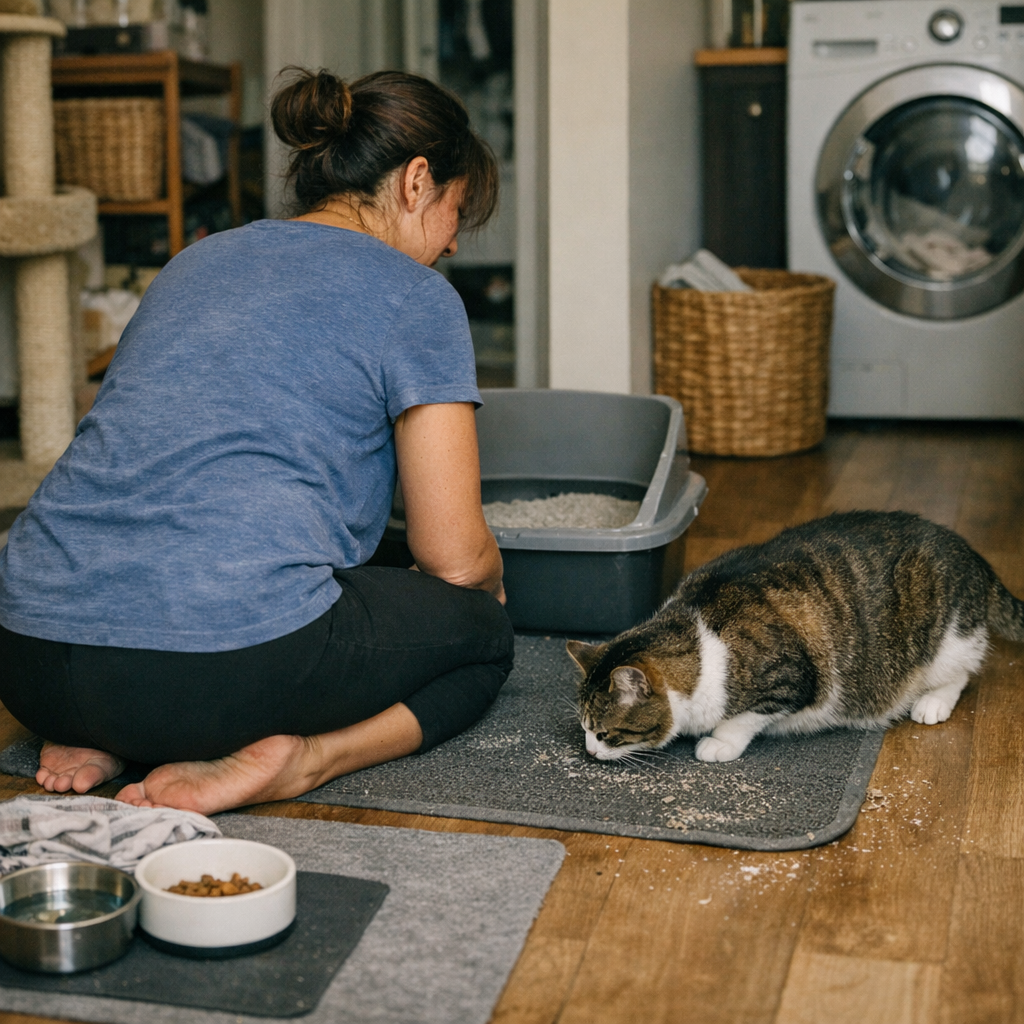
A room can look spotless—litter raked flat, bowls set perfectly, mats realigned—yet the cat hesitates at the edge, circling instead of using the box, or pausing at the food without eating. The problem isn’t what you see, but what lingers: a chemical scent or residue from the last wipe-down. Everything seems in place, but some cleaning products quietly sabotage the routine, creating hidden obstacles you only notice as the day stretches on—a little more resistance, a new mess nearby, and an endless cycle of re-cleaning.
When “Clean” Becomes a Quiet Problem in Cat Spaces
A feeding station or litter zone may look newly reset—a surface that gleams, no visible debris, nothing out of line. In real life, the trouble rarely shows in the immediate aftermath; it creeps in as low-level friction hours or days later. Not the big messes, but the nagging, repeated problems:
- Food suddenly scattered along the mat’s edge after every meal, even if you centered the bowl.
- Litter tracking increases, forming arcs at the threshold right where shoes catch stray grains heading down the hall.
- The cat investigates, hesitates, then leaves a “near miss” just outside the box—something you only discover late in the day.
At first glance, these are almost invisible. Over a week, though, the pattern grows obvious: the more you clean, the less the area holds up. Routines slow, the cat avoids what’s “fresh,” and you’re repeating resets you thought were solved.
The Hidden Cycle: Scent, Hesitation, and Cleanup That Won’t Stick
Most commercial cleaning sprays promise lasting freshness, but what clears your nose can create sensory landmines for a cat. That lemon or pine you barely register can signal “don’t step here” for hours. Visible disorder you can correct instantly; invisible residue disrupts the routine in slow motion:
- First reset: everything looks fine. The new scent is almost interesting to the cat.
- By the next rounds, the cat circles or sniffs for longer, then seeks alternate spots—either skipping the box or pushing food to the far side of the mat.
- Litter starts turning up outside the setup, sometimes in shared rooms or on the edges of the rug, because the threshold feels wrong.
- You find yourself wiping down mats and retesting bowls between uses, chasing after small headaches that didn’t exist two weeks ago.
The space remains visually clean but demands more attention. Every reset adds another interruption, and the sense of “settled” never lasts to the next cycle.
Real Home Example: The Wipe-Down Trap
Picture the cycle: you clean the box, spray a strong citrus solution, dry and reassemble. The room looks ideal—but then the cat starts using other corners, or a trail of litter appears near the washing machine. Instead of being done, you’re stuck tracking down new messes caused by the last “reset.”
In tight spaces—a narrow bathroom, a mudroom without airflow, or a high-traffic laundry corner—the cleaning scent doesn’t clear. It stirs with each pass, mixes with room odor, and keeps returning as a background layer. That triggers avoidance, so every “clean” now means chasing another workaround. Areas that look correct stop functioning smoothly, and your effort starts going to maintenance, not improvement.
The Invisible Reset: Cats React to What Lingers
The real test for any cat setup is what happens after you step away: does the cat return naturally, or start sidestepping the reset spot? Cats read scent and residue at a level humans don’t notice. A “barely-there” freshener is still an obstacle—they process it as ongoing, even after it fades to you. So, in ordinary days—pouring new litter, recentering mats, grabbing bowls—one unnoticed film or lingering smell can break the cycle. If you’re wiping more than expected or see the same patchy mess despite resets, too much product may have replaced visible disorder with a new, invisible mismatch for the cat.
Shared Spaces, Slow Friction
Many indoor cats use multi-purpose rooms—boxes tucked near appliances, feeding corners at kitchen edges, litter placed just inside hallway boundaries. In these cross-use spaces, even the “tidy” setup can keep triggering the same repeated snag:
- Box near the dryer seems freshly cleaned, but piles turn up behind it as the cat detours after a sour wipe-down.
- Filling water is complicated by mats or trays that now feel sticky—last week’s residue not rinsed completely away—or heavy scents that hang around the feeding area.
- Instead of reducing tracking, every cleaning seems to push litter into shared walkways as the cat avoids entry points.
When rooms double for both cats and humans, a too-harsh product shifts the workload: now, every reset ripples into more frequent wipes, more moved items, and home routines that feel jumbled whenever you try to keep appearances in order.
Choosing a Cleaner That Matches Indoor Cat Life
What actually survives repeated, real-world resets? The answer isn’t in extra scent or more powerful chemicals. It’s a simple, water-based, unscented solution—one that leaves almost nothing behind for cat senses to process, and that doesn’t compound over multiple cleanings.
This method won’t leave the whole house smelling like “freshness,” and the absence of fragrance might seem boring—but it removes a quiet source of daily hassle: no residue, no hidden trigger points, no leftover scent that sends the cat sideways after every reset. Over multiple uses, this keeps routines reliable and areas needing less reactive maintenance. The difference shows up in ordinary details: bowls stay centered, mats stay put, the cat uses the setup without skipping or circling. Cleanup shrinks back to its intended size—one pass, not a drawn-out troubleshooting loop.
Spotting the Real-World Signs: Is Your Setup Working?
You’ll know the cleaning pattern is working—or quietly unraveling—by watching for:
- Sniff-and-go moves: The cat pauses at freshly wiped areas, checks, then returns only after a long wait or not at all.
- Edge-mess drift: New accidents “almost” at the box, or food pushed off the mat right after a cleaning that should have made things neater.
- Unsettled routines: More circling, less predictability, and routines that seem jumpier immediately after each reset.
If these signs crop up after changing cleaners—especially after switching to something scented—it’s likely the product is now the routine’s weak link.
How to Test and Switch the Right Way
Suspect your cleaning basics? Drop scents and heavy-duty sprays for 10–14 days. Use a mild, water-based, unscented option for all surfaces the cat contacts. Track the changes—does pause or tracking drop? Are you spending less time monitoring the spot, and is the cat using each area with less fuss? Improvement is usually quiet but persistent; smooth routines, fewer midweek resets, maintenance that no longer interrupts the rest of the day.
Small Adjustments, Fewer Interruptions
It’s not about making cat care delicate or fussy—it’s about reducing unnecessary triggers. Rinse food and water bowls thoroughly, dry them completely, and let mats or boxes breathe fully before returning them. Even an unscented product, if left wet or sticky, can bait new problems the next time your cat sniffs around.
The real reward: routines that stop pulling attention. A feeding or litter setup you have to think about less, and time saved by not constantly fixing what looks fine but keeps cycling back to you for another round.
Where Cleanup and Cat Life Actually Cross
Indoor-cat upkeep is shaped by repetition: the way a bowl goes back after a refill, how a mat gets nudged out of line after every step, whether a cleaning bottle is actually useful in real-time, or just leaves another invisible obstacle. The wrong cleaner makes work feel endless—and it takes a week or two to realize a routine setup is quietly less livable. The right product doesn’t just snap the room into order; it stops the most common interruptions before they start, and keeps shared spaces quietly functional, where you want them, and as easy to maintain as they look.
Find cleaning options and practical setup tools designed for real indoor-cat routines at StillWhisker.