
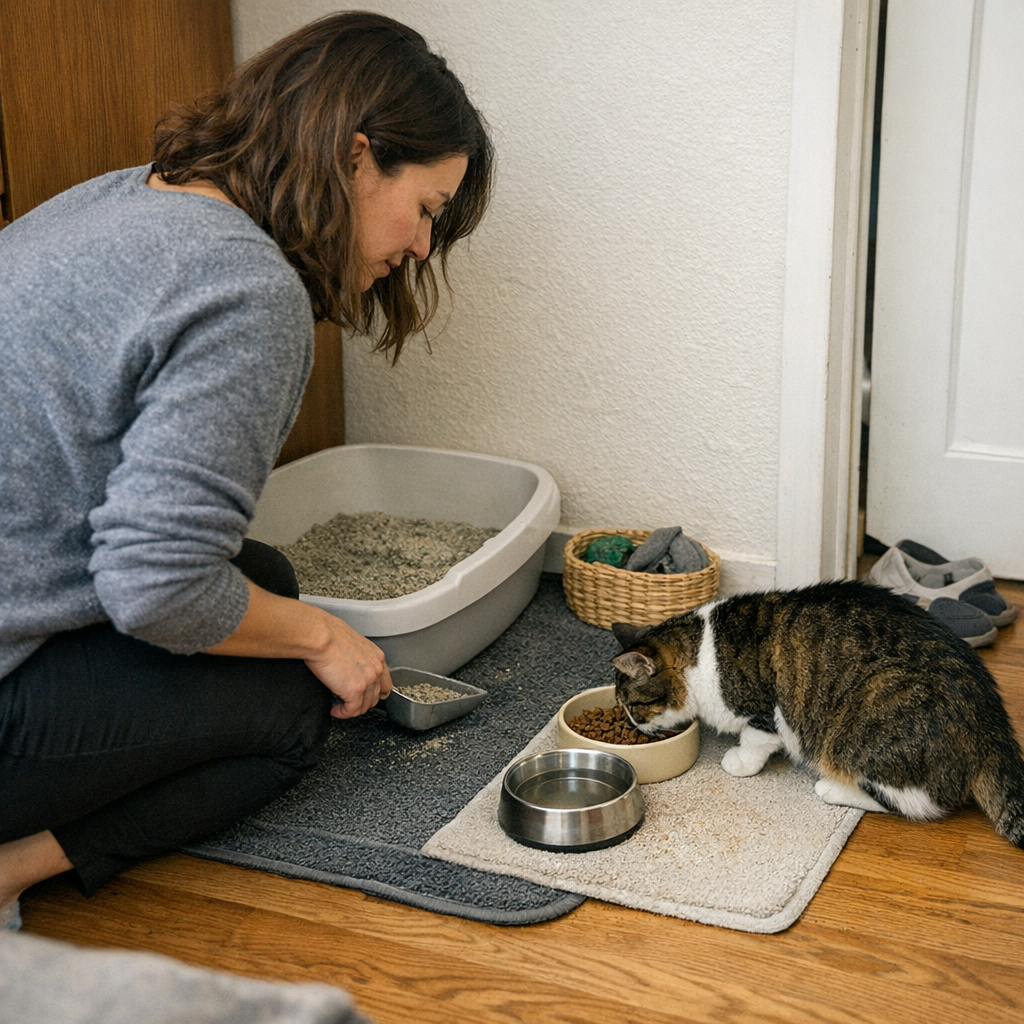
Every indoor cat owner knows the routine: You spend five minutes making the feeding setup look orderly, push a cloth around the litter box edge, step back for a last look—and for a moment, the room feels settled. But by dinner, the same stubborn mess has returned. Kibble shows up tucked tight along the baseboard, a crescent of litter rebuilds just outside the box, and droplets arc away from the water bowl where cats and feet have both passed through. This isn’t chaos, but it’s a slow drip of annoyance—the constant, low-grade reset that no “quick cleanup” really erases. What feels handled at noon just circles back by night, highlighting how layout, not effort, keeps the mess returning in exactly the same frustrating ways. In the StillWhisker world, the problem usually isn’t how clean the space looks in the moment—it’s whether the structure actually stops the cycle or quietly resets it for tomorrow.
The Illusion of Control: Why Repeated Messes Keep Coming Back
Short cleaning bursts—wipe, scoop, straighten—promise a room under control. But walk through two, three, or five days in a row and the same pressure points reappear: scatter at the mat’s edge, water sneaking under the bowl, crumbs drifting behind feeding spots. No matter how fresh the reset, the same tiny messes signal a setup that’s looping you back to the start. “Under control” is only surface-level; underneath, crumbs reaccumulate in grout lines, litter escapes under mats, water stains creep up again. The invisible load isn’t about disaster but about quiet, repeated effort—that creeping sense that the same areas always need one more pass, draining your energy in barely noticeable increments.
Where Friction Lives: Pinpointing Problem Spots in Real Use
Certain zones always register the wear and tear:
- Litter trails crossing into walkways: Even a mat can’t guarantee granules stay put—repeat steps create the same arcs of escape, always in the same spots.
- Water bowl splash zones: Drops wander out, especially when the bowl hugs a wall or sits just off a travel path, leaving tracks you notice too late.
- Kibble escape routes: Small, overlooked corners hoard stray food, impossible to clear unless you hunt behind every line and ledge.
- Toy clutter in shared spaces: Toys always migrate toward feet, clogging walkways and making quick resets yet another repeated job.
Most friction is invisible at first glance—that’s why it returns so easily. Spot cleaning fixes the present, not the pattern. Come Thursday, you’ll be retracing your Monday steps, right over the same micro-messes the last cleanup left behind.
“Presentable” vs. Actually Easier: The Hidden Cost of Masking Effort
A room that looks neat after cleaning can still demand twice the upkeep. You wipe the water bowl edge at lunch, again at dinner; you scoop litter remnants only for the same grit to creep back into the same crack before the weekend. Effort doesn’t disappear—it repeats. Calm surfaces only mask the slow drip of chores you shouldn’t have to redo. This is the real cost of setup friction: a space that demands constant resets, not because it’s messy, but because the structure subtly restarts the mess every time.
Everyday Breakpoints: When Structure Invites More Work
Litter Spaces That Reactivate Themselves
The classic trap: a litter box tucked against a cabinet, mat beneath, out of the way. On day one, it’s clean and efficient. By day three, a dotted trail of litter curls into corners and under doors. Every sweep feels routine—grab, clear, reset—but by Friday, you’re cleaning the same path, because nothing stopped the escape route. The structure looks settled but loses the battle against repeated use, always inviting the mess to reinstall itself exactly where you cleaned before.
Feeding and Water Areas: Tiny Shifts, Big Changes
Take the water bowl—pushed close to the wall to save space. Each refill runs a trickle along the baseboard. By Wednesday, a stain or sticky patch marks the spot, even if you’ve kept up with daily cleaning. Food bowls shoved near high-traffic zones mean runaway kibble edges into main walkways, no matter how often you sweep.
Structural trade-offs show up fast:
- Bowls and mats that appear tidy but make in-between wiping harder than it should be.
- Mats a hair too small, letting the first mess slip past the edge and become part of the floor routine.
- Rest corners that look cozy but block quick cleanup—crevices where fur or crumbs linger between resets.
- Grooming tools hidden “out of sight,” but out of reach when the right moment hits and fur is mid-shed.
Nudging the Home Setup: Practical Placement Tweaks That Make a Difference
Reducing recurring mess doesn’t take more effort—it takes smarter setup, so cleanups don’t pile up twice a day. A few measured changes can disrupt the whole cycle.
Moving Boundaries: Out of the Way, Not in the Path
Shifting feeding mats and litter boxes even a few inches off the main walkway keeps spills and drifts contained. When a bowl sits out of the walking lane, water stays on the mat where it belongs. A simple six-inch adjustment can mean the difference between multiple daily wipe-downs and one that’s enough—or eliminate the old mess entirely.
Mat Sizing and Edge Management
Upsize the mat, pick a strong lip. Place it so litter drops stay put instead of making the leap to seams or footpaths. Instead of gathering grains throughout the house, you’re scooping up five at the edge—never fifty past the mat.
Interception, Not Decoration
Don’t let mats serve as background props. Look for structure and texture that interrupt, not blend. Placement trumps appearance; a mat that fits the look but misses the action will be useless by day two. If the edge doesn’t capture, you’ll see the same evidence outside it after every reset.
Refill and Access Flow
Notice reach on repeat: Can you fill the bowl without moving three things? Can you grab the scoop without a search? Setup friction often starts with one slow task—moving clutter, sidestepping blocked spots, losing minutes to rearrangement. Streamlined access is as much about mental load as visible cleanliness; if you’re muttering while refilling, something is off in the structure.
When Quick Cleaning Hides Bigger Setup Gaps
Spot-cleaning delivers order for a moment. But when litter, crumbs, or water keep showing up in the same place, you’re fixing a symptom—never the cause. Mess happens in patterns. If cleanup turns into a daily déjà vu, the setup is quietly undermining every reset. When you’re doing the same chore twice a day, every day, it’s not just a mess problem—it’s a structure problem, and it wants more of your time than it gives back.
Cleanup That Doesn’t Stall the Room
Practical setups for indoor cats are a constant trade: cat comfort needs, human reset speed, room flow. A mat that’s plush for a nap can slow cleaning; a rest corner that’s inviting for the cat is an obstacle for a human in a rush. The real breakthrough comes with a setup that absorbs a missed wipe, not one that falls apart. If your feeding corner still looks managed after you skip a turn, or your litter zone contains mess for another cycle, structure is finally lightening your daily load. If skipping a cleanup unravels the room, the setup is quietly costing you more—every time.
Everyday Indicators: Is Your Setup Working?
- You reach for the scoop and it’s exactly where it should be. No hunting, no drawer shuffle.
- The mat catches every spill, so you skip the midweek shift—there’s nothing outside the lines.
- Water bowls stay steady, neither creeping into corners nor leaking into walkways.
- Toys are corralled the first time—not hidden under furniture until next week.
- Litter stops at the mat, no longer refilling the same tired gap under the cabinet.
Watch for the signal: if “clean” resets fade too quickly, there’s friction left in the bones of your setup. Better structure means less repeated work and fewer surprises between reset and real calm. For setups that last longer before unraveling, click through to StillWhisker for practical, tested options built for real indoor-cat homes: StillWhisker