
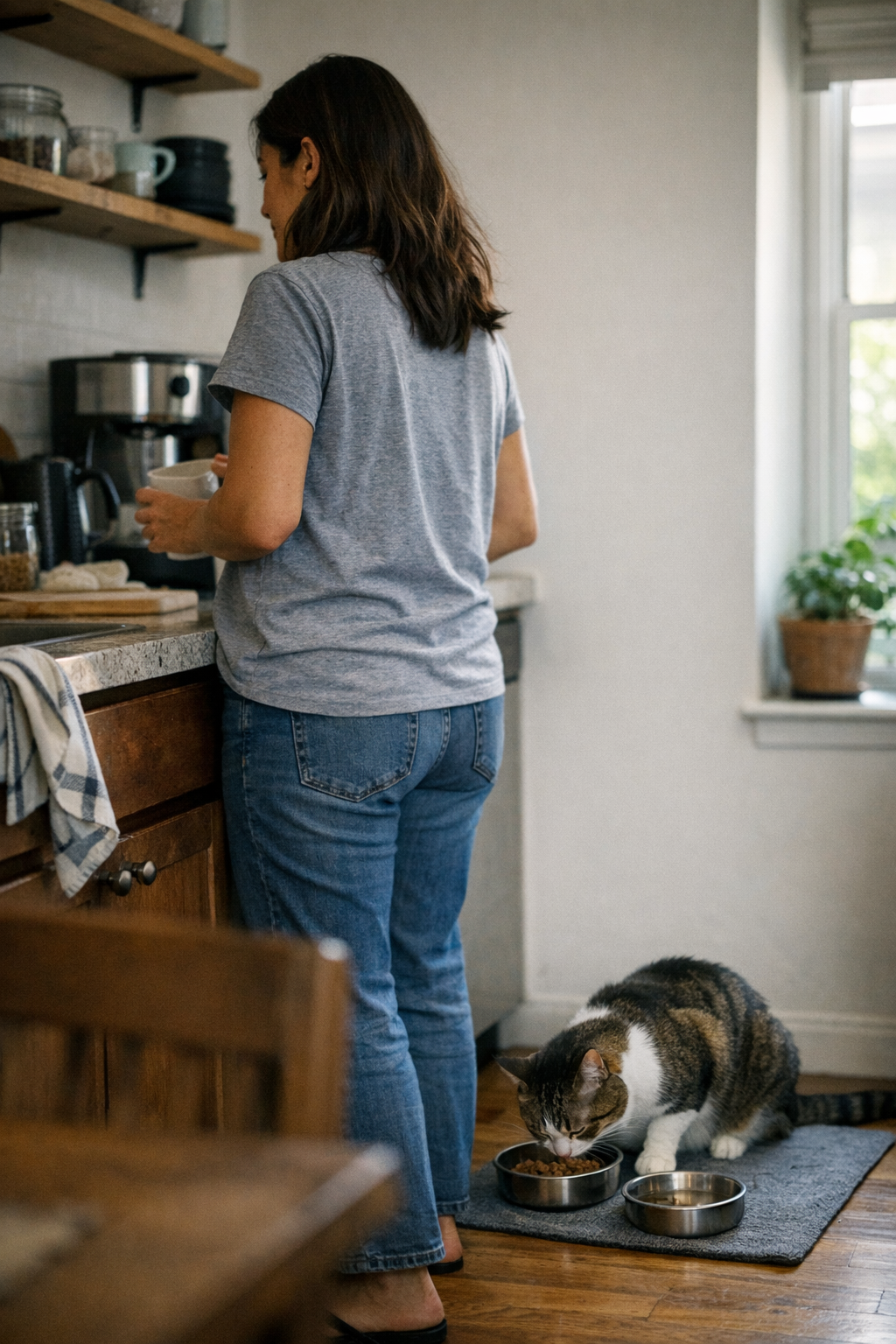
Visible cat treats on the kitchen counter aren’t just a cute convenience—they’re a repeated disruption waiting to happen. By day three, the shortcut of leaving treats within reach backfires: reaching for your bowl means nudging past a determined cat, and wiping a counter is delayed by paws perched in the way. Treat containers left out fuel a constant low-grade interruption—where every meal, refill, or cleanup gets tangled with a hopeful feline and a kitchen that never quite feels reset. It’s not mess you see, but friction you feel, and it doesn’t level out. The room starts working for your cat’s routine, not yours—revealing the overlooked cost behind a setup that seemed harmless on day one. StillWhisker setups exist for exactly this kind of lived, repeated kitchen struggle.
How visible treats rewrite your kitchen routine
An open treat jar looks innocent, but it quietly rewires your space. Forget the idea of quick coffee or a one-move meal prep: every entry into the kitchen announces a reward, shifting your cat’s “patrol zone” to your highest-traffic spots. Feeding resets mingle with distracted paw traffic, and every clink of dishes triggers an expectant sit, a stretch to the counter, or a blockade near the cabinet you need. “Cat time” no longer waits for meal cues—it’s blended with every door swing and every second you walk past the treats. Practical surfaces become contested zones by midweek, and what started as “just a few seconds saved” turns into a loop of sidesteps, repeated pauses, and minor reroutes just to keep the flow going.
Routine disruption snowballs. During the breakfast rush, you’re grabbing the kettle while a cat hovers near the treat box, making you work around a living obstacle. Instead of one quick wipe-down, you’re picking fur or prints off places you didn’t expect. Surfaces feel busy before the day even starts, and “counter time” changes—no longer yours, and impossible to keep predictable.
The friction between looking tidy and feeling smooth
Open treat containers might look neat, but the real mess is invisible. The “tidy” setup means less debris, but more body traffic: each time you reach for a utensil or close a drawer, there’s a small but real negotiation to move a cat just to finish the task. Clean-looking doesn’t equal workable. The smooth routine you imagined wears down as you’re resetting after paws edge into the very spots you wiped down ten minutes earlier. The difference shows not in crumbs but in time lost walking around the problem that shouldn’t even be there.
You start noticing cleanup drag: more time spent circling that smudge at the counter edge, or tracking down wipes because prints—cat or human—keep reappearing at the treat zone. The pattern isn’t about visible debris, but about one misplaced signal making every simple task a multi-step process.
Where convenience becomes a maintenance headache
What seemed smart at first—treats in plain sight for quick handouts—turns on you as days pass. Instead of a streamlined routine, you’re managing a kitchen that can’t stay clear. Each treat break ensures your cat shows up for the next round, lingering in the room instead of roaming. Meal prep gets layered with shifting bowls, blocking paws, and reset supplies, putting your own flow permanently second to the cat’s curiosity. Clearing the counter is no longer one-and-done: now it’s checking for crumbs, brushing fur away, and grabbing an extra towel when the handout leaves residue or a surprise pawprint.
By the weekend, with more family traffic and kitchen use, the pattern worsens. The area looks tidy—at first glance—but it’s actually a zone of constant negotiation. Setup that started as “convenient” doubles back, adding layers of minor friction at every transition between your tasks and your cat’s expectation.
Moving treats out of sight: what really changes?
Shift treats to a closed cabinet or high pantry shelf, and the most obvious benefit—clearer surfaces—is only the beginning. Your kitchen regains its intended function: without a visible reward, cats disengage from the routine and stop blocking off paths or camping near the fridge at the sound of bags or containers. Cleanup speeds up. There’s less “extra” wiping, fewer paw-prints materializing at the counter’s edge, and a return to surfaces that actually stay reset after you use them. Mornings become what they’re supposed to be—direct, no rerouting or cat-dodging for simple prep. Evening routines quiet down, too: you’re not answering a meow with a reflexive treat, and you aren’t delaying tasks to clear feline patrols from the path.
The shift isn’t just for visual order—it rewrites the rhythm. The only cat signal left is the actual feeding mat, not a lingering question mark at every countertop.
What stays convenient, and what genuinely improves
Pushing the treat jar out of sight isn’t about forgetting treats entirely—it’s about deciding when a reward actually happens. Some owners worry they’ll skip the treat altogether, but the half-life of that worry is short. Now the reward is on your timing. It’s a choice during feeding, or a deliberate break—not a default response to every step into the room. Impulsive requests drop, and you’re no longer stuck predicting a cat’s next move just to finish basic prep. The kitchen feels less like a negotiation, and both you and your cat settle into more reliable habits.
Repeated interruptions: noise that never quite disappears
Most indoor-cat households know the difference between “looks organized” and “feels livable” arrives in tiny, aggravating bursts. If you’ve ever walked away from your tea, found it cold because you lost ten minutes maneuvering around the treat zone, or cleaned the counters only to find new prints hours later, you’ve met the real cost: a pattern that keeps resetting itself as long as the visual signal remains. Even attractive new containers or matching baskets can’t fix the loop if the reward stays in constant view. What slows you down isn’t a style issue, but persistent, low-level interference—a cycle you spot only after living through it day after day.
The only way to truly break the cycle is to move the treat signal out of the flow zone. Not all resistance is visible—but when you finally clear the pattern, you notice fewer stops, fewer double-cleanups, and a kitchen that serves human routines first again.
Practical tips for smoother kitchen routines
- Move treats to a closed cabinet or high shelf that isn’t part of your daily-use path. Keeping the signal distant means the area functions for prep and cleaning, not repeat reward breaks.
- Keep cleaning tools within easy reach—a nearby closed drawer with towels or wipes ensures you aren’t stopped cold by new prints at an awkward moment.
- Reserve counter “prime space” for items in permanent use. Don’t let a convenient treat jar gradually claim real estate needed for mixing, storage, or everyday tasks.
- Watch for shifting patterns. If your cat starts waiting in a new part of the kitchen, adjust placements before paw traffic reclaims a surface you need most.
Takeaway: the gap between “looks ready” and “feels ready”
The hardest truth about indoor cat setups is that what looks settled can still feel slow, cluttered, or inconvenient in repeated use. Something as minor as a visible treat jar can quietly rewrite your entire daily flow—turning easy resets into multi-step interruptions and a tidy surface into a repeatedly contested zone. Retreating the treat signal isn’t a cosmetic move—it’s the key to getting your kitchen function back, restoring smoother movement, fewer delays, and mornings and nights that finally work for you first, not the cat’s next reward loop.
For tools and setups designed with real, repeated indoor-cat routines in mind, visit StillWhisker.