Category: Pet Life

  • How Centralizing Cat Essentials Simplifies Daily Care and Reduces Mess

    The moment a “tidy” indoor cat setup turns into extra work isn’t dramatic—it just shows up during another loop through the house. That feeding corner you labeled as settled suddenly means sidestepping a backpack or shifting a stool to reach the water bowl. The litter box “out of sight” becomes an out-of-mind cleanup, pushing you to cross rooms again when grains turn up under your socks in places you swore were cat-free. With every pass, what once seemed organized reveals friction points: the cleaning tools that are never where you are, forgotten toy clusters under the couch, and surfaces that stay messy longer just because the reset zone was split too far. The difference between a setup that simply looks under control and one that stays easy to live with becomes obvious when small annoyances stack up—fast. StillWhisker’s world starts where these points of friction show: the actual flow, not the initial look.

    Where Good Looks Start to Strain: The Visual Calm Versus the Living Flow

    Arranging your cat’s world by spreading food, water, litter, and toys across different corners can make your living space seem more open. A dish in the kitchen avoids crowding the hall; toys slide under the edge of the couch; the litter sits behind a laundry door. You get two days of feeling tidy—until you’re refilling before work and must weave around a chair just to deliver water, only to realize the scoop or wipes you need are nowhere near the action.

    Soon you’re not just cleaning up cat mess; you’re repeating laps for left-behind supplies while bits of kibble and tracked litter collect outside their supposed “zones.” Instead of one maintenance sweep, every reset spreads out: longer detours, more steps, less completion. Day by day, the smooth, compartmentalized look forces scattered effort in ways you can feel every morning.

    Spotlight on Invisible Costs: Ordinary Moments That Add Up

    One missed cleanup doesn’t wreck a routine—but cat care runs on reruns, and every small lag multiplies over a week. When the only litter scoop lives across the hall, tracked grains get nudged further each time you wait. Wipes stored with cleaning products two doors down turn a spilled water puddle into a sticky spot you ignore “until later,” which quickly becomes tomorrow. Each roadblock is minor alone, yet together they quietly inflate the work—so what looked like separation for neatness means more repeat hassle, not less.

    A midpoint most people hit: you bend for runaway toys after breakfast, notice a line of litter trailing past the mat, then have to cross to the laundry or under-bathroom cabinet for supplies—by the time you’ve circled back, another round of mess has started somewhere else. This “one quick fix” grows into a five-minute loop, especially if you’re pressed for time or if guests are coming and the pressure for visible order ticks up. Layout starts to matter less than how fast you can actually get through the routine.

    Centralization: Shrinking the Loop, Saving the Routine

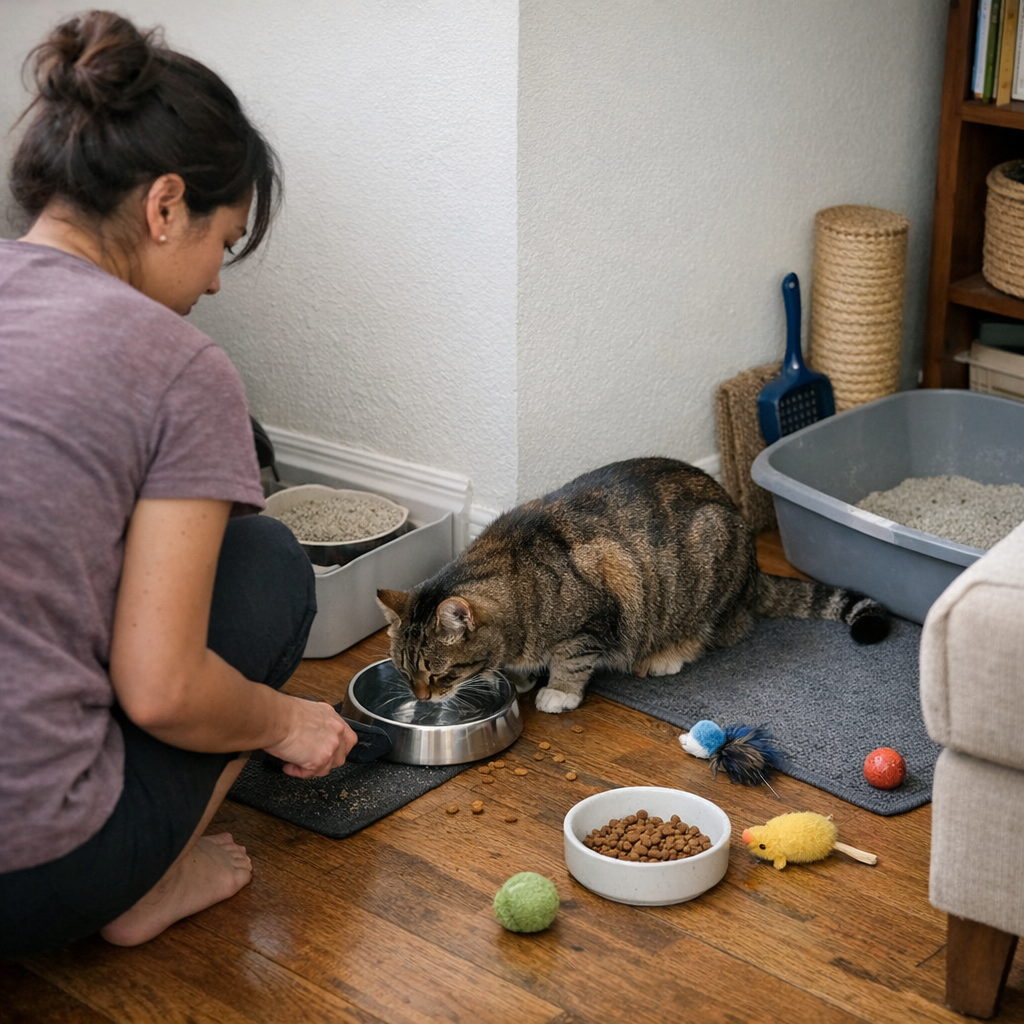
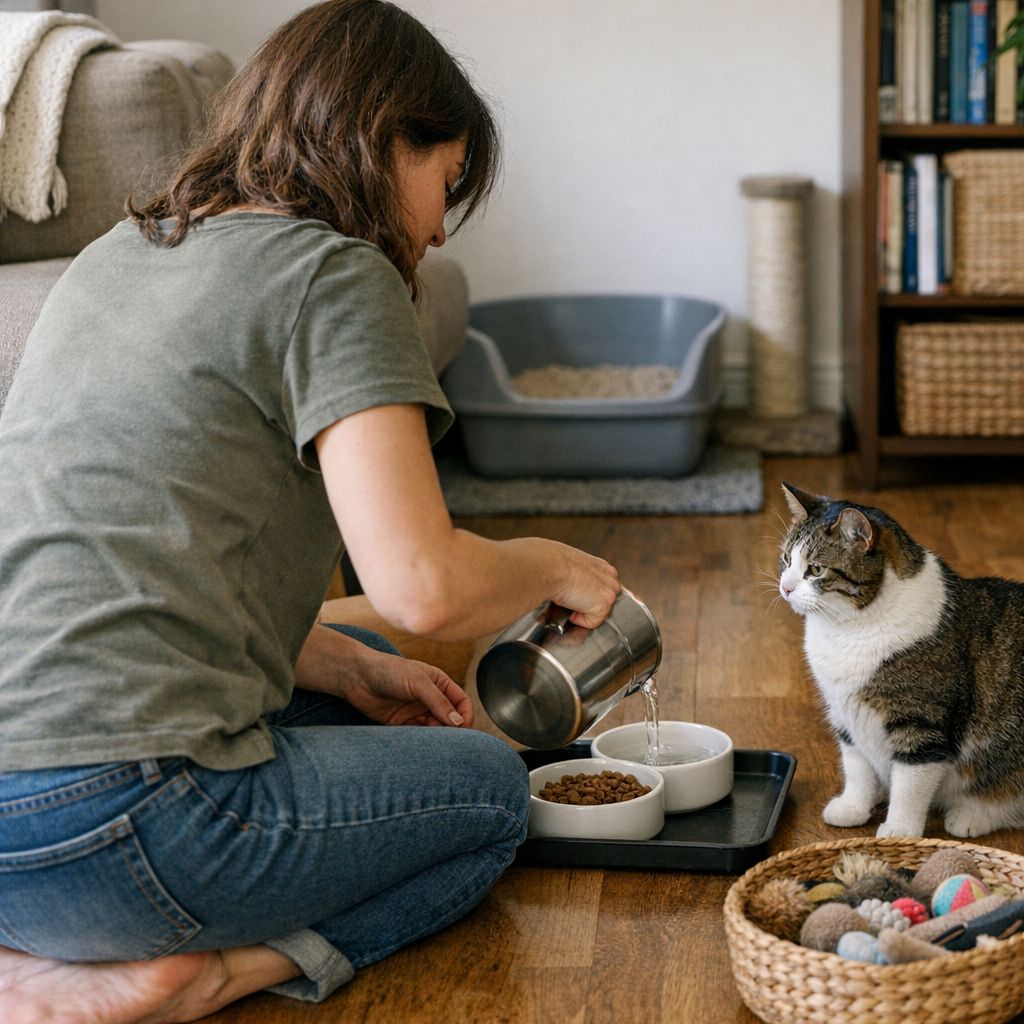
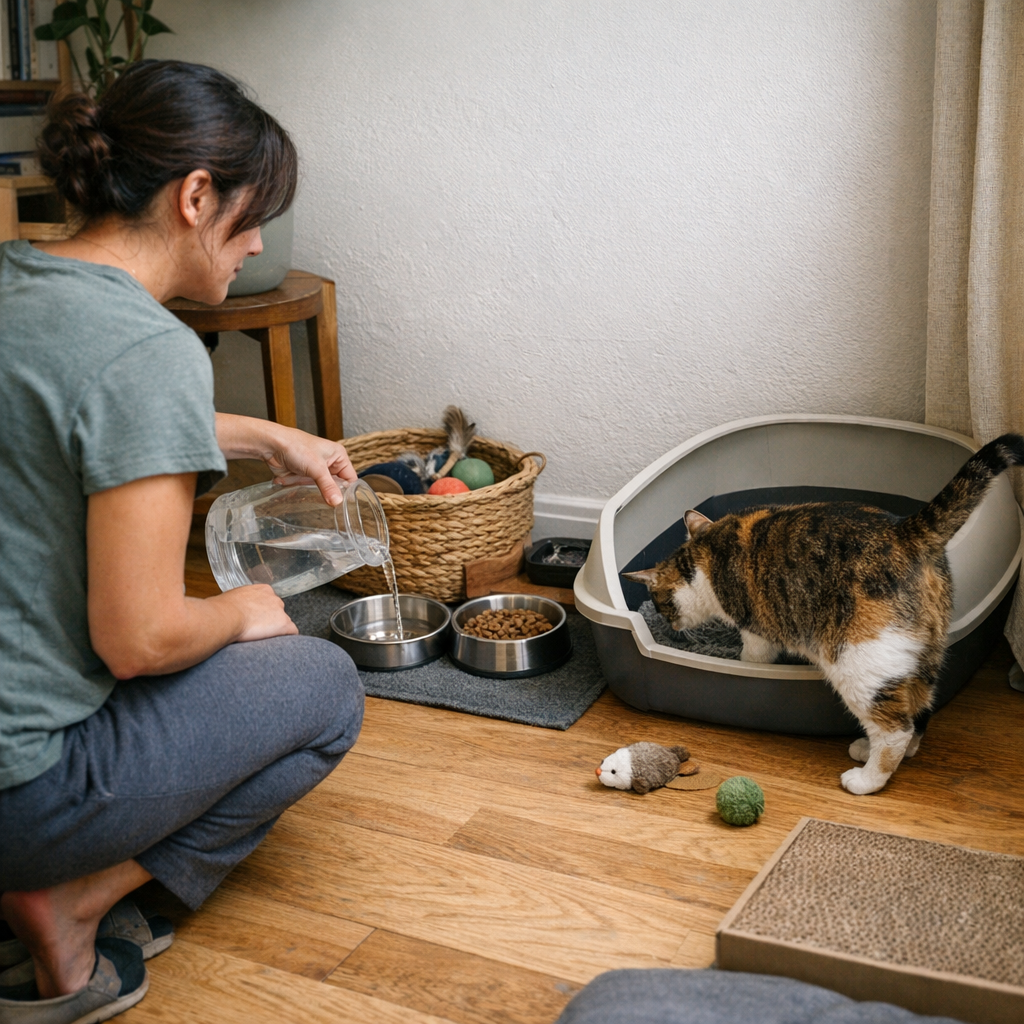
    Pet blogs love the idea of clean separation: bowls here, water far off, and the litter box banished to its own corner. But real daily use rewards a different approach—centralizing everything you need within arm’s reach. Instead of pristine minimalism, you lock feeding, water, litter, wipes, and toy storage into a single functional zone, tucked but unbroken. A washable mat can hold both food and water side by side; a short divider puts the litter nearby without inviting a cross-room trek. Supplies stay in a shallow caddy close enough that picking up, wiping down, and returning all happen in a single round, not a scavenger hunt.

    Now, when dishes need a refill, you lift both in a single movement. When kibble scatters or a water splash hits the mat, the cleaning tool is already there—no detour, no accumulating mess for later. Even the toys that want to roam end up dropped into a bin you can reach without walking away. Suddenly, resets aren’t slow—they’re what happens in the same space, in real time, without thinking about it twice.

    The Mess Behind the Mask: When “Tidy” Isn’t Actually Easier

    A setup that seems calm because every category has its siloed corner can backfire as soon as life gets busy. You walk into a room that looks spare, but there’s a sticky bowl edge you keep ignoring because the cleaner is across the house. The extra step between water drop and available towel means puddles linger longer. Restoring order after play turns into another cross-room journey for scattered toys and the bin you’re wishing wasn’t always out of the way.

    This isn’t uncommon: a laundry-room litter setup designed for “order” can mean twice the cleaning area, as tracked litter stretches away from its source, never fully under control. Each visually clean separation reveals new work not because you’re lazy, but because the routine simply isn’t built for fast correction in the main zone. The room’s tidiness is no match for daily movement—and you feel the gap every time you’re delayed by one supply that never seems close enough when needed.

    Tradeoffs That Don’t Disappear: Crowding, Cleanup, and the Line Between Order and Ease

    Of course, bringing cat life into a central zone tests your comfort with “fuller” corners. Grouping food, water, and litter tighter can turn that area into the busiest visual spot in the home. And a real zone, if it drifts toward piling up, can start to feel cluttered if you don’t maintain clear boundaries—a washable mat, divider, or supply tray that holds the line between contained and chaotic.

    Even when boundaries are set, there’s no perfect neutrality; the core zone will look denser. But now, everything you need to restore order is right there. Toys cycle back with zero detour. Messes created and messes cleaned live in one place. Litter scatter is corralled, not tracked through living spaces. Under time pressure, the whole zone resets in minutes instead of spiking into a major chore when every category plays out in different rooms. The tradeoff: a busier core for way less friction everywhere else.

    How Real Use Shows the Weak Link—And Where Improvement Pays Off

    The weak point of any setup isn’t obvious on day one—it’s what breaks down in real use after a week. A misplaced towel, a drawer that sticks, a scoop that drifts too far from the core zone: these hiccups slow resets, forcing half-done loops and extra chores. Catalog images show ideal lines and pure surfaces, but cats (and people) nudge, move, and unsettle anything not anchored to the daily routine. Improvements show up not in permanent neatness, but in how much less you have to think about cleanup, how little retracing you do for a single mess, and how fast you return to “done” status—even when interruptions hit.

    No setup erases friction completely. Cat routines change, preferences shift, supplies migrate, and even the tidiest arrangement becomes imperfect over time. But the leap from an area that simply appears orderly, to one you don’t mind resetting again and again, is often what saves your patience. The best arrangements survive housemate interference, crowded mornings, and a cat’s habit of rewiring the whole scene—while keeping your effort low, even on the busiest day of the week.

    Key Habits That Make the Core Zone Work

    Limit Toy Rotation to Avoid Clutter Creep

    Keep just a few toys in the main bin, directly in the core zone. This avoids spread-under-furniture scavenger hunts and makes quick returns realistic. Swap toys bi-weekly or monthly—not daily—so your cat gets novelty and your floor stays navigable.

    Keep Refill and Cleanup Supplies on Hand—Not Across the Room

    Stash scoops, wipes, or sprays within the same area as food and litter. A lightweight caddy or shallow drawer by the core zone eliminates the excuse to “do it later”—meaning scatters, spills, or stray food get handled on the spot, not hours after they appear.

    Revisit the Layout After a Week of Real Use

    The first setup never survives a week as-is. Recheck: Is the mat wide enough? Does the divider work, or does it get in the way? Has someone in the house “tidied up” by removing supplies you rely on? Reshape the layout after honest use—it’s not a snapshot; it’s an ongoing circuit for both you and your cat.

    When Calm Looks Different: Accepting That “Neat” Isn’t Always the Goal

    Some setups never look perfectly guest-ready—and that’s fine. What matters in StillWhisker’s world is not surface neatness, but how much less work you face in repeated routines. Each friction point solved in the zone means spills stay contained, toys are easier to tuck away, and resets get short enough that daily life with a cat stays both liveable and clean enough to enjoy.

    Explore practical setups and accessories for real, routine-tested indoor cat life at StillWhisker
  • Creating a Calm Cat Routine That Stands Up to Guest Visits

    Daily Pet Care: Why an “Organized” Setup Can Still Slow You Down

    A pet care corner can look organized—bowls lined up, towels folded, care tools tucked away. But as soon as the routine speeds up—filling a water bowl before work, grabbing a towel with muddy paws waiting, or clearing fur before a guest walks in—the real trouble shows. That “neat” setup becomes a bottleneck: supplies hidden behind each other, basics drifting out of reach, and one missing item triggering a chain of slowdowns. The difference between a calm home and a repeatedly stressful reset isn’t always mess—it’s how quickly you can complete the routine, even under pressure. The CalmPetSupply world isn’t about decorative order; it’s about setups that actually hold up when real daily routines keep returning to the same weak spot.

    Little Barriers, Big Interruptions: Where Routine Falters

    When your system forces you to dig through bins for the scoop or unwind a leash knotted around a stray towel, it’s already slipping—even if the shelf looks organized. The evening you postpone water bowl refilling because the right jug is blocked, the morning you put off a wipe-down since the spray is buried behind clutter: these aren’t big problems the first time. But as they stack up, small frictions turn pet care from a quick check-in into an annoying scramble. You don’t notice the cost until it’s routine—one delayed reset after another.

    Picture the weekday pace: you reach for the cat’s food, run into a misplaced bag of treats, lose track of the scoop, and pause for a second search. The so-called “spot” for the grooming brush feels more like a guessing game every time fur piles up. After a quick walk, the towel that should dry paws is balanced somewhere inconvenient, so containers tip and supplies scatter onto the floor. Each small detour adds up, nudging routine pet care from simple to overly complicated.

    The Quiet Cost of Non-Ready Supplies

    An organized look hides fatigue in daily use. When a system keeps tools out of hand or demands awkward steps—shuffling bins, lifting lids, backtracking to another room—pet care drags. Every missing brush or blocked bottle costs time and patience, while crumbs, fur, and water tracks creep deeper into your living space. “Hidden” inefficiency is rarely obvious when you’re standing still—only when your routine asks for speed, or when someone else tries to help and hits the same friction, does the strain show.

    The worst friction appears at “invisible” moments: refilling water at night, but the bottle sits across the room; wiping bowls after visitors leave, finding hardened food bits because a cloth wasn’t nearby. Decluttering on Saturday fixes appearances, but not the repeat drift. If daily-use items keep migrating or are repeatedly blocked, today’s surface fix becomes tomorrow’s mess. Real improvement comes from setups that resist these daily resets—not just rearrange where things hide.

    Looking Tidy vs. Working Smoothly

    A pet care zone can pass the glance test at noon and fail completely by dinnertime rush. A towel folded neatly but stored two rooms away puts every wet pawprint back onto your floor. A brush kept under a pile looks “organized” until you’re chasing fur around the couch because grabbing it wasn’t fast enough. Visual order is only part of the story—if basics are even briefly hard to grab, the routine slows, and disorder creeps back in.

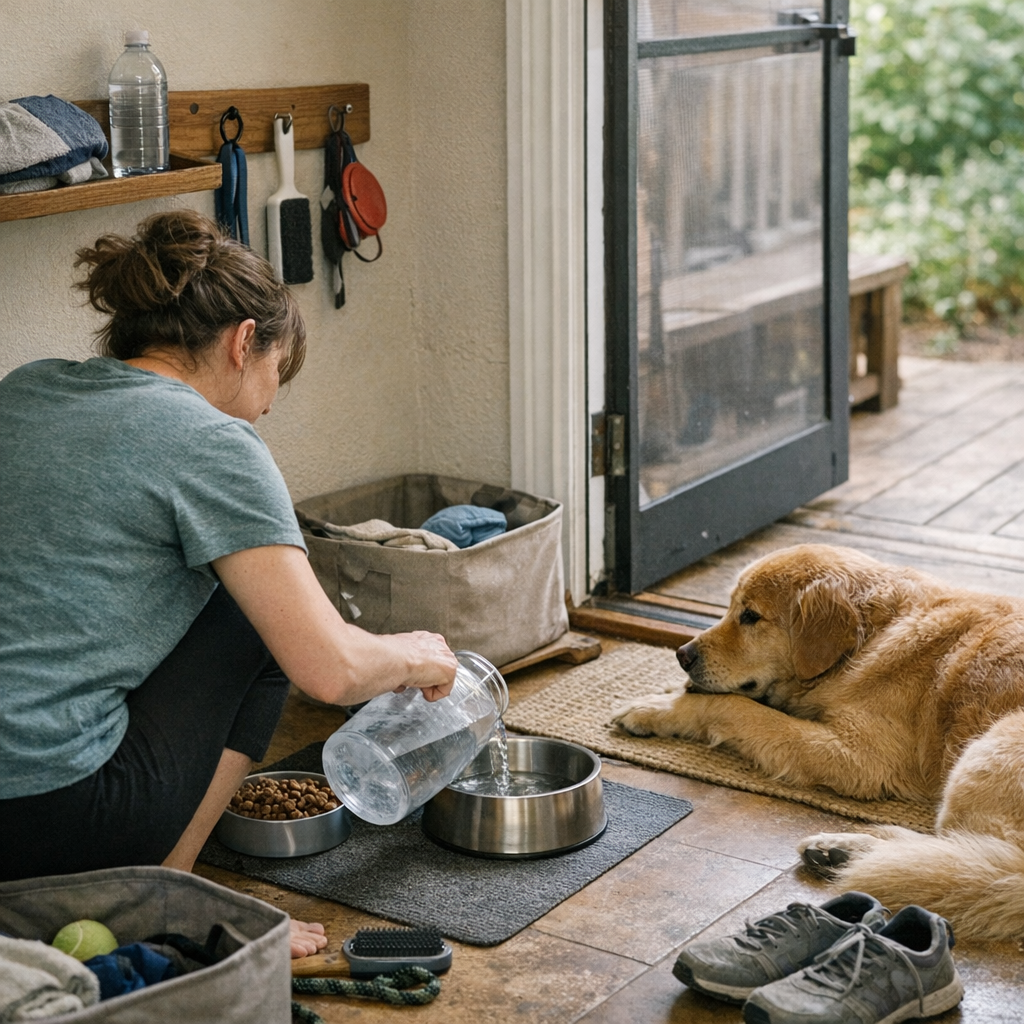
    Smooth routines run on obvious access. Hanging a brush inside the entryway where fur actually gathers, parking a backup jug above the feeding station, or keeping wipes at the hand-level spot where messes begin: these moves cut out wasted steps. With each supply in its true daily-use zone, you fix things early and leave fewer gaps for clutter or confusion to return.

    Real Scenes from Day-to-Day Life

    Think about the end of a regular evening: bowls sit waiting for a rinse, but your hands are already full, and the scrub sponge is at the kitchen sink. The next day, those bowls have crusted bits, and cleaning now takes twice as long. Or you start a quick late-night groom and realize the one brush that works is stuck in a laundry pile. In hours, stray fur spreads through two rooms simply because a tool wasn’t easy to grab on the spot.

    These aren’t rare glitches—they’re the natural result of setups that look fine but break down over time or when routines change. If more than one person shares care, or schedules shift, hidden weak points get worse. When you need speed—a doorbell, a toppled bowl—it’s the blocked supply or absent item that turns an easy habit into frustration, every time.

    Practical Improvements: Making Calm Routines Stick

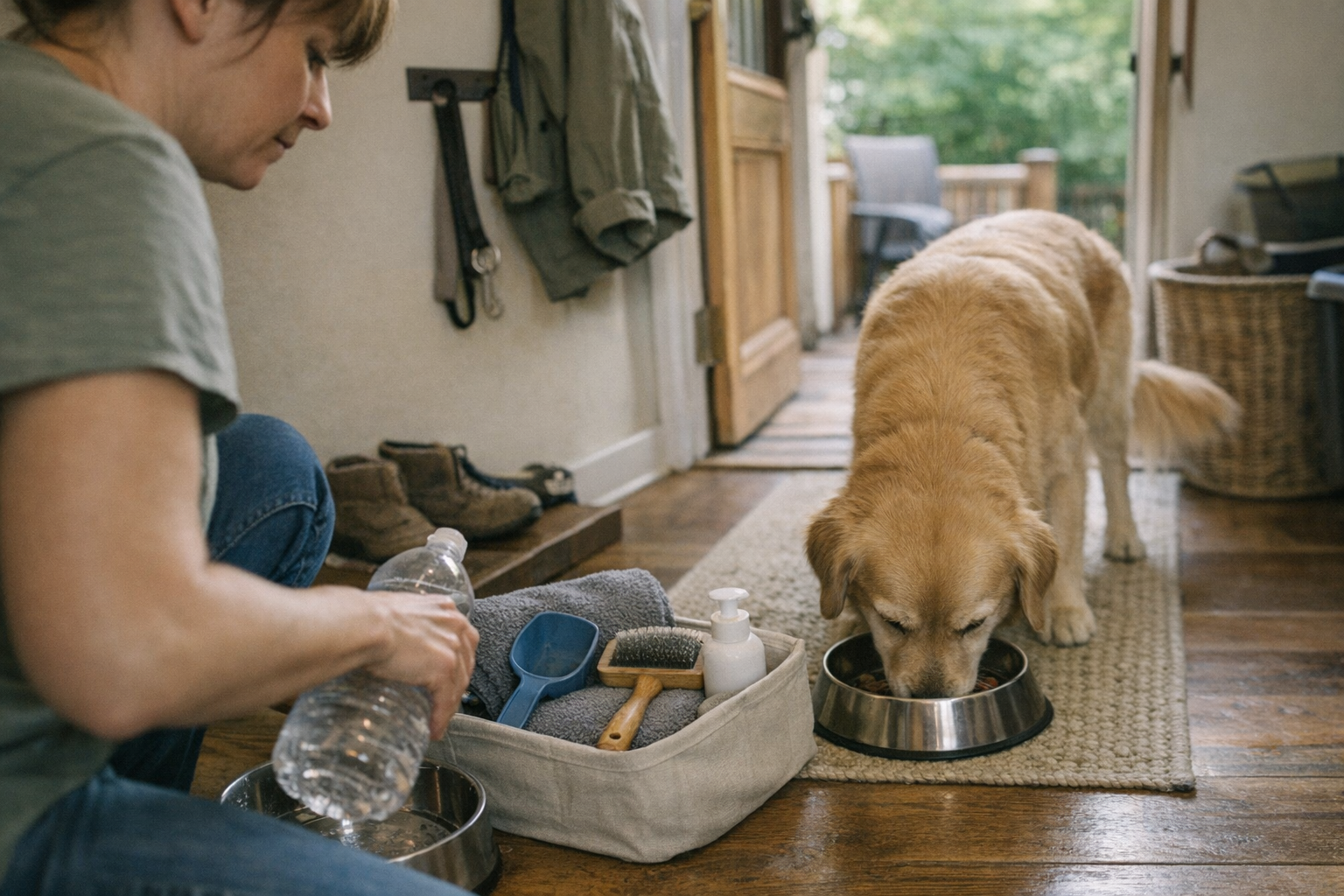
    Fixes don’t come from more baskets or hiding pet mess better. Real improvement is the simplest tools always ready, in the zone where you’ll actually use them. Water bottles at arm’s reach, towels on the paw-drying hook, brush where fur actually flies. The fewer steps between need and supply, the less your routine becomes a series of interruptions, and the more it becomes part of the predictable flow of your space.

    When I stopped storing extras in “good” spots and started making them instantly visible—water by the feeding mat, lint brush hooked by the door—night cleanups shrank and resets happened without thinking. The impact wasn’t just less mess: the rhythm of the home changed. My cat relaxed instead of pacing at every odd noise, and the chores that used to stack up slipped quietly into routine, not recovery.

    The Quiet Strength of a Truly Ready Setup

    A pet care routine that holds up to real daily traffic isn’t about show—it’s about function. Supplies stay usable even when your hands are full or life surprises you. You want care zones that protect against repeat interruptions, not just tidy up for a photo. Over time, that calm efficiency shifts your home from constant catch-up to a pace both you and your pet can actually count on—even when things go off script.

    Discover pet care basics designed for low-friction setups and practical, daily resets at CalmPetSupply.

  • Why Indoor Cat Starter Kits Often Create More Daily Cleanup Than Expected

    The reality of an “all-in-one” indoor cat starter kit hits after the first couple days: the neat tray, cluster of bowls, and tidy block of toys that promised order turn into a reshuffling project you didn’t sign up for. By midweek, your food bowl is drifting into water territory, stray kibble outlines the mat edge, and that streamlined look morphs into an obstacle course as you refill, wipe, and navigate around scattered cat supplies. What felt settled quickly becomes friction: a food bowl out of place, water drops you missed earlier, and toys finding traffic lanes instead of staying in their basket. It’s not “cat chaos”—it’s the cost of too much crammed into one spot. The starter-kit shine fades fast, and the friction lands right at your feet.

    When the New-Kit Shine Fades: First Signs of Friction

    The earliest warning isn’t dramatic; it’s accidental contact between items that should cooperate but instead get in the way. The food bowl slides into splash range of the water dish. Kibble grains stick to the mat and cling under the water rim after every meal. Within five days, toys invade the path to the litter box as if the kit’s design never imagined daily movement. You notice the same sponge-ball blocking your path at night and a tangle of catnip mice lurking under the scoop just when you need quick access.

    The kit’s visual order doesn’t hold. Every refill, every mat wipe, you find yourself nudging aside one thing just to handle another. It accumulates fast—interrupted task flow, the sense of the setup quietly working against your routine, and a layer of nuisance you can’t ignore during most resets or cleanups.

    Daily Routines Expose Where Starter Kits Fall Short

    Starter kits feel efficient—until the routines start looping. At first, everything “in one place” seems practical: feeding, water, litter, scratching, play. But your living space isn’t a store display photo. Packed zones create failures that only regular use reveals: kibble drifts into water with two meals, mats shuffle loose by lunch, and toys bypass the “tidy corner” to reappear in high-traffic spots.

    Overlapping Spaces—A Recipe for Repeated Micro-Cleanups

    The first spill in the water area isn’t an anomaly—the spacing forced the mess. The convenience of combined setups turns out to be false:

    • Food and water blend zones: Crumbs migrate, water splashes, and what you thought would mean fewer cleanups just means each bowl’s mess joins the other’s chore.
    • Litter mat loses control: Packed against feeding space, tracked litter finds routes straight to your main walkway. Now you’re vacuuming not just near the box but anywhere the mat “overflows.”
    • Toys break containment fast: Even with a storage basket, balls roll out toward doorways and plushies stack up in corners, constantly underfoot or in the way of a quick litter scoop.

    Every fix—another sweep, a bowl moved an inch, an attempted reset—proves that dense setups can’t keep up with real movement. You’re stuck patching instead of solving.

    The Cycle of Reset, Clean, and Repeat-Adjustment

    Routine maintenance becomes a slow round of minor struggles. By the end of week one, you’re not just tidying—you’re pre-emptively troubleshooting a cluster of items that don’t cooperate. This isn’t a messy-cat problem; it’s the direct result of physical overlap and functional clash.

    Every Reset Reveals the Real Weak Points

    Morning refill rush? Reach for the food bowl, nudge the water, spill a few drops—same crumbs clinging to the mat as before. The wipe-down never feels complete. Each reset uncovers another small mess you missed or created by jostling the crowded arrangement. Cats loop the same routes: grains track, toys sneak under furniture, nothing stays where it should.

    The “compact” kit quietly eats your time:

    • Bending down for a refill turns into a treasure hunt—move a squishy toy out from behind, then finally reach the bowl.
    • That “accessible” scoop clip gets in the way every time you try to swap a litter liner.
    • Your paper towels are nearby—until a quick spill reveals they’re actually blocked by a mat or cluster of bowls.

    Visual Unity vs. Usability: When Looks Work Against You

    Grouping everything for a clean look—a shared tray for both bowls, a mat nudging against the litter box, toys posed around the scratcher—might impress on day one. But the denser the zone, the more you end up tripping over your own organization. Fitting the kit into a two-by-three-foot patch doesn’t mean actual routines become simpler.

    Cleanup and resets devolve into a careful chain reaction: move a bowl to wipe, reset the mat, hope the toys don’t roll out again. Often, as soon as it looks “fixed,” the next round of feeding or play scatters items all over again, sometimes within hours.

    Repeated Interruptions and the Hidden Cost of “Tidy Enough”

    There’s a persistent gap between “kit looks clean” and “kit feels effortless.” Starter kits are best at hiding the difference—until daily routines drag subtle annoyances back out, especially if you share space or need to move quickly.

    When A Setup Looks Under Control, But Still Doesn’t Feel Right

    The irritation isn’t a big catastrophe—it’s the drag of repetitive annoyances:

    • Sidestepping toys you know you just picked up this morning, scattered out again by evening.
    • Tracking stray litter to the hallway, proof your “contained” mat let grains slip past the integration point.
    • Lifting and re-placing the water bowl every time you wipe, never feeling like its position is stable for long.
    • Trying to speed through a refill, slowed down by other items blocking direct reach.

    It’s not just mess, but the daily cost of interrupted movement and small delays—always one more nudge, one more obstacle, one more “quick clean” that never quite makes the system feel under control. A kit built for show turns into a setup that wants constant attention.

    How Real Adjustments Make a Difference: Spacing for Function, Not Just Form

    What actually works is spacing out your setup based on tasks, not the original kit grid. You don’t need an entirely new collection—just a reset based on what keeps colliding or slowing you down.

    Real-World Shifts That Actually Reduce Daily Friction

    • Water bowl: one mat-width separate from food: Shift the dish to a quiet edge of the room, further from feeding crumbs and splash. Suddenly, you deal with water mess and food mess as separate jobs, not an endless two-in-one wipe.
    • Litter: runner isolated from feeding area: Place the box and mat three steps away, and most tracked litter stops at the runner’s edge. Now litter doesn’t scatter through multiple rooms, and you have a defined cleanup zone.
    • Toys: clearly away from feeding/water traffic: Keep play storage at a distance; cats will find the toys, and your routine path is no longer an obstacle course. Resetting is straightforward, not a repeated gathering mission with every pass-through.

    The impact is immediate: refill and cleaning sequences become linear and predictable. No extra detours to move stray items; no repeated frustration over the same mat or water splash. The setup might look less showroom-ready, but you gain time and lose the irritation of overlap that a “kit” can’t actually solve.

    Lessons from Imperfect Improvement: It’s About Day-to-Day Recovery

    Few indoor cat homes last a week with the starter-kit “all-in-one” look intact. The difference after a few real adjustments isn’t perfection—it’s smoother routines: each feeding, cleaning, and reset can happen without tripping over leftover scatter or blocked access. The best setups aren’t about minimal footprint; they’re about making it quick to recover from the day’s mess.

    Real setups trade a tidy look for easier living: Maybe it doesn’t photograph as a “perfect cat station,” but it lets you refill, wipe, and reset in clean steps—making repeat work almost disappear. Instead of circling the same flaws, you find the routine gets quieter and the friction shrinks, even if your space looks a little less staged. That’s the mark of a setup that fits actual indoor-cat life, not just the ad copy.

    For everyday indoor cat life, the best setup looks like one you continually tweak—not because you failed, but

    because you expect to make small changes as real routines bring out what works

  • Creating a Calm Dog Greeting Routine That Lasts Through Daily Use

    Why a Calm Greeting Routine Matters in Everyday Pet Care

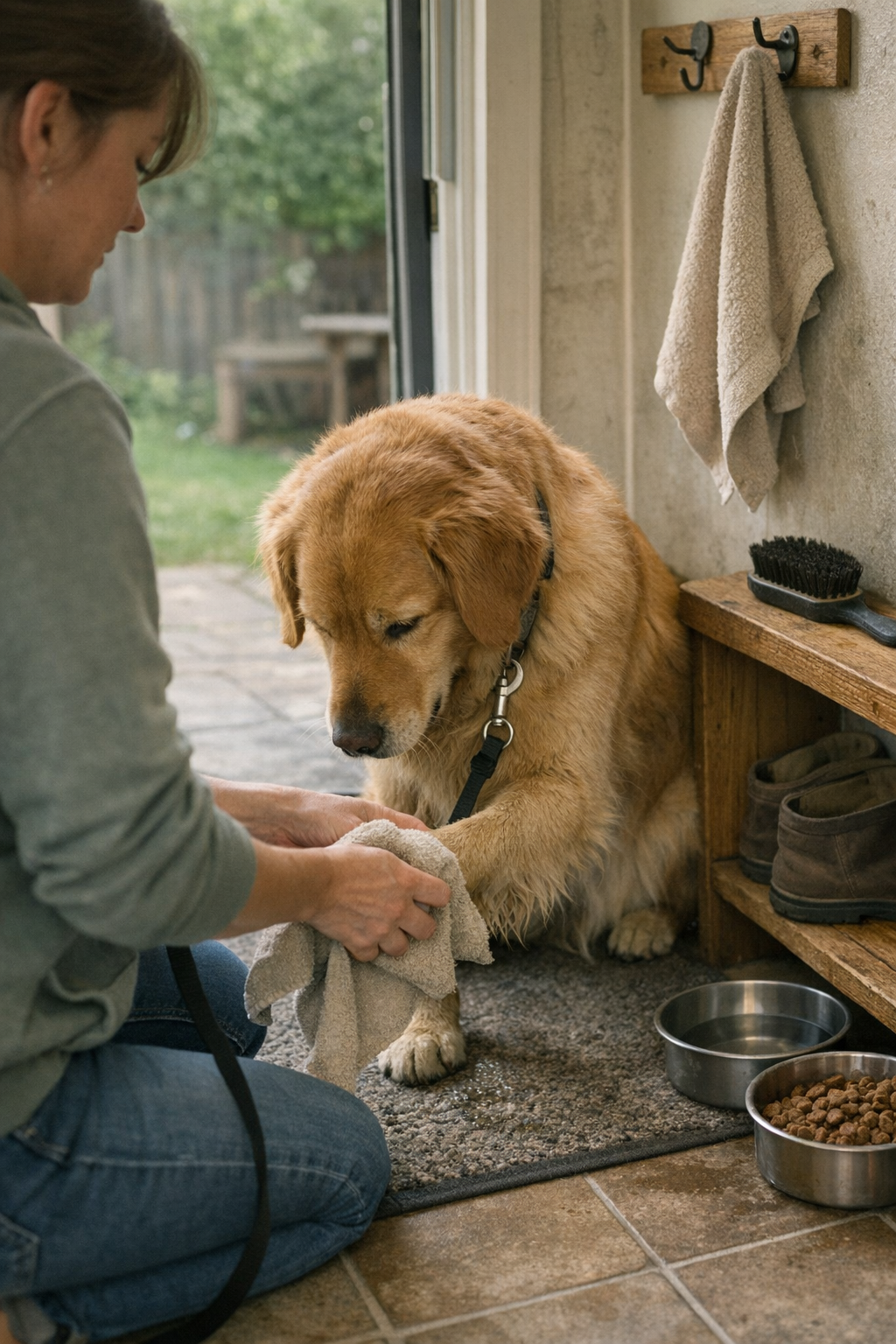
    Most pet setups start out looking organized—maybe there’s a mat by the door, a row of hooks, a tidy bin for towels. But when you’re dragging in a wet dog, juggling grocery bags, and reaching for the one thing you need, the cracks in your routine surface fast. A calm greeting routine isn’t about appearances; it’s what separates a quick, low-stress reset from the constant scramble of searching for supplies, mopping muddy floors, and cleaning up after routines that don’t actually work when life gets busy. The difference isn’t subtle. If your entry zone can’t keep up—even once—the mess doesn’t just pause your day, it spreads. This is where CalmPetSupply’s world of basics fits: not as décor, but as tools that turn real transition chaos into hand-ready order.

    Small Misses, Big Impact: Repeated-Use Scenes

    Coming home in the rain, your dog charges ahead. You reach for a towel—find tangled leashes instead. Maybe the towel slipped to a chair, or ended up damp and unusable. Next, the water bowl’s out of reach, blocked by a forgotten brush, or pushed under a bench from last time. Each step is slowed by something that was supposed to help, but now just gets in the way. Muddy paws edge farther into the house; the domino effect isn’t one bad day, but a pattern: another job you didn’t plan for, another search for the brush, another wiping session that waits too long. These little misses build—not into disaster, but into a harder, messier week.

    Day after day, the same friction repeats. The dog hurries to the feeding mat as you fumble to wipe paws; the towel is missing, or balled up and damp. The brush is buried under mail or tossed behind a door. Instead of a smooth entry, you’re caught in a chain of improvising. There’s never a disaster—just the slow leak of time and order every time the setup falters.

    Appearance vs. Function: The Setup Challenge

    An entryway can look organized but fail under pressure. Extra towels stacked “just in case” mean digging through a heap with muddy hands while your dog shakes off on the clean rug. Bowls stacked at the bottom, grooming tools in the next room, leashes on high hooks—these setups look fine when the day is slow, but crumble during a real rush. The more you need split-second access, the more the wrong placement leads to skipping steps. That towel on the other hook? Nobody grabs it when it’s out of sight. The brush left near coats? Missed until grit is already on the floor.

    Even after a determined re-org, weak points return fast. The mat migrates and no longer catches muddy paw prints. The only towel hook is empty, or the bin is full of clean towels but not one at hand. These aren’t failures in design—they’re signs the setup can’t withstand the real pace and interruptions of daily life with pets. If your system only works when you’re moving slowly and nobody is distracted, it’s not built for actual use.

    The Domino Effect of One Missed Step

    One skipped step at the door starts a chain of extra work. Let wet paws go without a wipe-down, and there are mud streaks winding through every room. Skip the brush, and dust or pet hair travels into shared spaces where it’s harder to clean. Water bowl gets nudged off its mat or blocked? Suddenly you’re mopping a splash instead of moving on. These are not rare emergencies—they’re repeated corrections that chip away at any sense of routine.

    Over time, these constant resets add friction. You slow down, reshuffling bowls and towels again, delaying dinner, retracing steps to hunt for that brush. The gap between setups that “look fine” and those that stay ready even during messy, fast transitions becomes impossible to ignore.

    Practical Adjustments That Change the Routine

    Real improvement isn’t more products, it’s simple, visible switches that stick. Command-hook a single towel directly at entry height—no piles, no excuses, always one dry towel within arm’s reach. Keep the soft brush at floor level next to the mat—never buried, never too far. Designate a low, stable spot for water and food bowls—never under other gear, never lost under a bench. Each change doesn’t just look tidier—it physically reduces the reach, the search, that three-second lag where things unravel. Over dozens of daily uses, these details decide whether care feels light or like an extra chore.

    The routine that lasts isn’t the perfectly staged one; it’s the setup anyone can use on a rainy fifth trip through the door, when hands are full. Consistency beats quantity: the right tool, always where it should be, not scattered or buried out of sight.

    Seeing the Strength of a Reliable Routine

    You only notice the payoff of a calm greeting routine after dozens of busy days. When towels and brushes stay at arm’s reach, resets are instant—no more tracking mud so far inside it means another room to mop, no more skipped wipes, no more bowls drifting out of place. Instead, the entry area becomes stable: pet gear doesn’t creep into shared spaces, feeding and water setups don’t cause repeat mess, and the scramble evaporates. Small, reliable access turns into less cleaning, less reshuffling, and fewer reasons to dread the next walk or meal.

    The invisible weight of repeated, low-grade mess and missed steps is replaced by a rhythm that your household can actually keep up with. When routines click, the pets settle quicker, the gear works like it should, and the basic setup stops being a drain. That’s the practical core of CalmPetSupply: tools and arrangements tested by real use, not just organized for appearance.

    See everyday setup solutions at CalmPetSupply.

  • How Treat Placement Shapes Calm or Noisy Cat Behavior Indoors

    That tidy treat jar by the food mat feels smart—until day three, when your cat’s meows hijack your entire morning routine. In theory, a visible snack spot should streamline everything: you reach, reward, move on. But indoor cat life isn’t theory. That jar may match your kitchen, yet after a couple of mornings, you’re refilling it earlier and bracing for relentless reminders. You bend to wipe spilled kibble or grab a napkin, and the sound triggers a rush: paws on counters, eyes locked, volume up. What looked organized now builds friction—more interruptions, more vocal demands, less actual calm. Too accessible, and a single setup tweak keeps splintering your day in small, persistent ways. The promise of tidy storage slips into another maintenance headache you didn’t need.

    When Treats Stop Rewarding Calm (and Start Fueling Vocal Demand)

    It starts quietly. You want treats ready at hand—maybe beside the food tray, maybe on a reachable shelf. Simple enough, until the routine turns. By day four, the treat jar becomes a signal, not just a container. The cat starts treating the spot as a trigger—a slight clatter or hand motion sparks urgency, not patience. Early risers notice first: the kitchen’s rhythm is dictated by meows before the coffee even starts. Those reminders ramp up; a visible jar teaches the cat that demand, not silence, gets results. Instead of the treat being a rare reward, you end up reinforcing every prompt. It’s not personality. It’s a feedback loop built into your living space.

    This shift isn’t just about noise. A setup that felt efficient turns the room into a negotiation zone. You lose control over timing. Every time you pass the jar or reach across the counter, you’re drawn into a new standoff. Quiet anticipation gets replaced by habit-formed interruptions—your after-work reset, your short pause between chores, even your evening routine. Normal movement becomes bargaining. One setup choice sets a pattern: accessible treats, in plain sight, mean the day starts breaking before the first real task is finished.

    The Hidden Cycle: Visibility Breeds Interruption

    This is pure cause and effect. Cats notice every micro-movement: did you open this jar right after picking up your mug? Did you drop treats last time you walked by? They log these patterns fast. Soon, the treat container isn’t just a background object—it’s a cue that warps the entire room flow. Instead of mealtimes, you get opportunistic reminders every time you cross the kitchen. It’s a hidden cycle: the more visible and handy you make the treat zone, the more you teach your cat that anything can be turned into a snack request.

    The supposed convenience costs you peace. The treat setup calls the shots: louder reminders, more interruptions, tasks sliced into smaller segments because you’re managing the next round of begging. Usually, it takes three countertop sweeps—or just one late-night treat session—to realize your own routine is being run by a container. Instead of structure, you get a schedule shaped by interruption. “Organized” turns out to be a temporary look.

    Setup Friction in Real Rooms: Small Choices, Big Consequences

    No, it’s not your cat “acting out.” The problem is the setup—a practical home structure that backfires. Visual placement matters more than style. A spotless jar in a busy visual line (by walkways, on top of food mats) turns organization into a magnet for disruption. It’s the home flow that suffers: quick stops for water, reaching for a cleanup cloth, or just passing the fridge start launching new demands every time. The treat system reprograms routines, even when everything looks put together in the morning.

    Consider the reset cycle: You’re prepping breakfast, hand darts past the treat jar, the cat yowls—now you’re pausing, negotiating, scrambling for quiet. You didn’t plan a snack break, but the accessibility of the jar has just written one in. One movement, two minutes lost, three minor tasks derailed. That’s the self-reinforcing part: the easier the reach, the more disrupted your regular steps. Organization can mask a loop of micro-interruptions that only become obvious after the third—or fifth—reset.

    The False Sense of “Organized”

    At first glance, the jar by the food mat sells a picture of order—clean, coordinated, within reach. For three days, it almost is. Then the cat parks itself in the kitchen, watching, tracking your every gesture. A quick hand toward the counter sparks a call; leaning for coffee summons a stare. In theory, the room’s tidy; in lived reality, you’re stuck in a loop of shuffling the jar left, right, back behind something, hoping you can trick the system back into silence. The “tidy” corner becomes a moving target, impossible to settle.

    The Evening Reset: When Treat Placement Hijacks Quiet Time

    And it doesn’t stop with breakfast. You’re ready to stop for the day—drop into a chair, reach for a blanket—and the jar, still visible, sets off a whole new round. One tap, a chirp, a yowl: your reset hour flips into a soft-motion bidding war. Evening calm gets split by one physical cue left in the wrong sightline. Your attention shifts from unwinding to managing the next expectation. Instead of peace, you get small rations of focus, traded again and again for quiet that never really lands.

    The problem isn’t even the volume—it’s the chronic adjustment. Your routine bends to the placement, the interruption, the attention shift. What was supposed to be a neutral background item now runs the room’s tempo. Cat and person both shape their habits around a misplaced jar, until every break and pause is a chance for a new demand.

    Breaking the Cycle: Hiding the Jar, Restoring the Rhythm

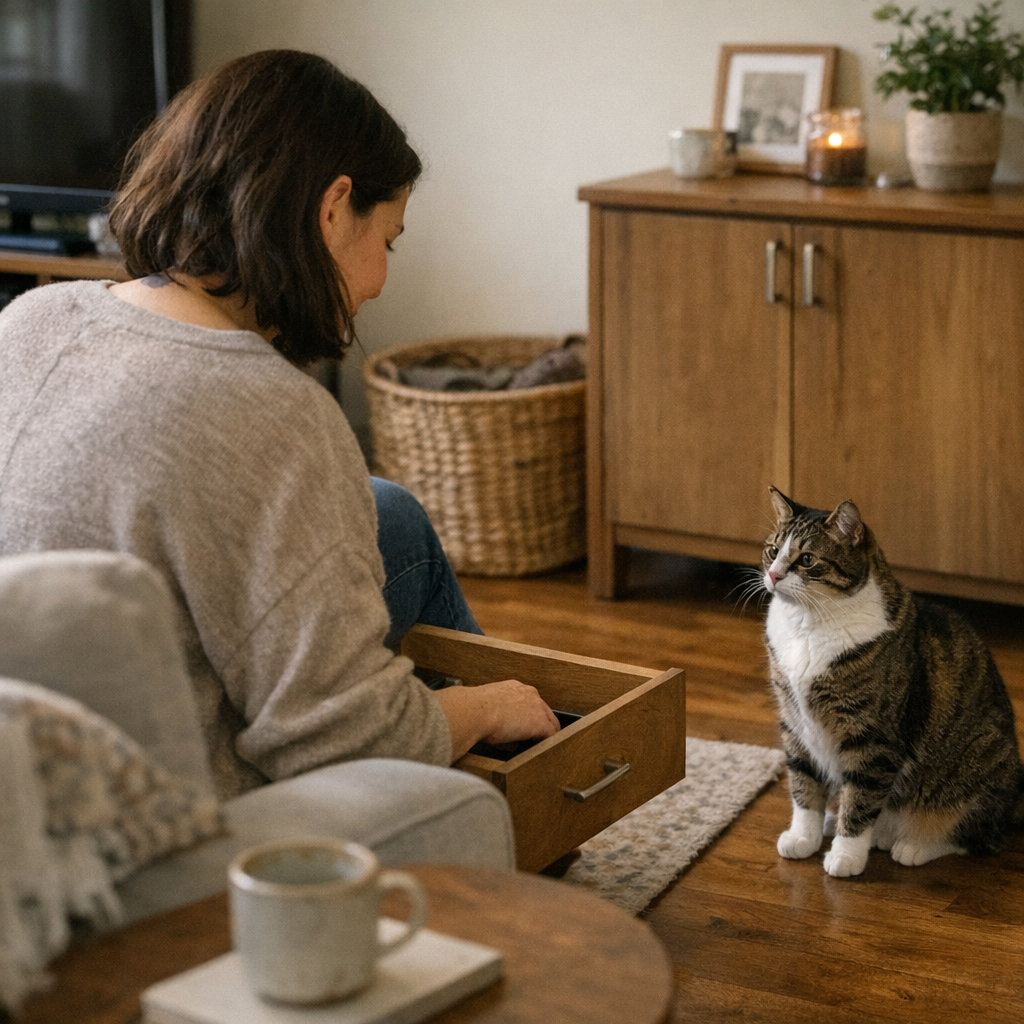
    In real homes, breaking the demand cycle comes down to changing one structural detail: visual control. Shift the jar out of direct sight—into a drawer, a high cabinet, a spot behind something less cat-enticing. You’re not locking away the treats forever; you’re cutting off the reflex chain. Suddenly, a meow gets no echo. No jar periphery, no quick hand flick, no predictable shake. After just a few tries, the cat’s reminders lose their edge. Instead of pausing your routine each time, you move through the kitchen cleanly. By the end of the week, the new normal is less pressured, the old loop broken. Treats are still there for real rewards, but not on the cat’s constant terms.

    The benefit isn’t just quiet—it’s a smoother day. Now, a routine is just that: not a series of negotiations, but a flow you actually control. The little friction you add—an extra step to reach the jar—pays out in hours free of repetition and distraction. The home doesn’t just look calmer. It stays that way, for both sides of the food bowl.

    The Slightly Inconvenient Drawer (and Why It’s Worth It)

    Sure, stashing treats in a drawer turns a quick grab into a short pause. But the change flips the room’s dynamic. Less noise, fewer mealtime shadowings, and a treat ritual that regains its status as a reward—not a standing negotiation. One changed physical cue is enough. After a week, the cat waits during meals instead of every step. You control the rhythm, not the jar. The minor extra reach is real; the payoff is space for everything else that matters in your day.

    Room Flow, Clutter, and Treat-Driven Interruptions

    This treat tension is only one part of the broader setup cycle in indoor-cat homes. Leave litter scoops too close to beds, or water bowls tucked behind towels, and clutter trades places with daily flow. Every “neat” corner can be a stress point if its placement invites the wrong use at the wrong moment. The best setups aren’t just visually ordered—they’re tested by how little they interrupt you. The difference isn’t in how things look after a reset, but how the space behaves after you’ve repeated your routine twenty times. Convenience that triggers constant action is a hidden cost; structure that guides calm, easy resets holds up better in real use.

    The practical rule: a better home setup isn’t just about what’s tidy—it’s about structures that make less friction, less reshuffling, fewer reminders, and more room for genuine quiet. The setups that feel easy after the first week are the setups that quietly reduce pressure, restore forgotten calm, and let you own your routine again—without a new interruption every time you cross your own kitchen.

    You can find practical, real-world setups for every daily cat-and-human routine at StillWhisker.

  • How Simple Storage Changes Keep Pet Care Counters Neat All Day

    Most pet-care corners look orderly—for a moment. Food bowls lined up, wipes stacked, scoops tucked away. But repeat the daily cycle a few times—morning feed, midday water refill, after-walk cleanup—and new friction points show up: scoop left on the counter because the drawer is blocked, towels half-draped over chairs after cleaning muddy paws, water bottles set “to the side” and never fully away. The issue isn’t a shortage of space or lack of effort. What actually makes a setup low-stress is how effortlessly every tool can be put back to its home, immediately, in the middle of ordinary care routines. If a setup looks calm at first but turns cluttered by noon, something in the repeat cycle is always breaking down—and you notice it every extra time you move an item out of your own way.

    The Daily Reset—and Where It Breaks Down

    A care space only stays clear if resets happen at real speed, not just in theory. That’s where daily routines hit invisible snags: returning the brush means opening a crowded drawer, the scoop’s home is across the kitchen, or storage means stacking supplies in ways that block each other. These extra steps don’t matter on the first round, but by the third feed or refill, anything not instantly reset stays out and drifts into the wrong spots. Surfaces start as clean landings. By late afternoon, every “I’ll do it in a second” becomes a new pile to deal with.

    Picture this: breakfast is over, but the scoop goes back on the counter—it’s easier than digging through a drawer packed with treat bags. When it comes time to refill water, you find the brush lying across the bottle; last time, there wasn’t mental space for the extra shuffle to store it. Each neglected reset adds to the next. The feeding area that started out clear now requires navigation just to set down a bowl or grab a wipe.

    Realistic Moments That Slow the Day

    The “I’ll handle it in a minute” promise is a constant trap. A used paw towel lands on the closest chair instead of the hook by the door. It lingers for hours, becoming both a visual drag and a trip hazard. During a rushed grooming, wipes and brushes pile up on the side table. No one plans for clutter; it happens because every “temporary” stop is easier than a slow, inconvenient return.

    These detours creep beyond the pet area. By midweek, kitchen counters double as holding spaces for grooming tools. Water bottles block prep space. Shared living areas get filled with orphaned scoops or supply packs, so every person—including guests—ends up working around evidence of repeated, incomplete resets. The daily care cycle slows, not because the system is truly complex, but because the setup makes quick, one-move returns impossible.

    When “Tidy” Isn’t Enough: Function vs. Appearance

    A spotless-looking area can betray you the second you try to actually use it. Essentials disappear behind closed cabinets or end up buried under last night’s gear. If reaching to store a brush means lifting a heavy lid or bending awkwardly, the “just for now” pile almost always wins out—items resurface on counters and tables, making the space feel busier than it should. The same tools you hid to reduce mess are back out, this time even further from where you need them.

    A functional setup—the kind that lasts past those first neat minutes in the morning—relies on tools having open, immediate homes. Open trays beside the food area mean even the most chaotic feedings end with one real reset move. Wipes land where you wiped last, not where you need to remember hours later. Nothing requires a mental checklist or extra shuffle. The only difference between persistent clutter and mostly invisible order is whether returns happen with one hand in the flow of care, not as their own delayed project.

    Smoothing Out the Routine With Specific Fixes

    If putting a brush away makes you hesitate, your setup’s telling you where the next glitch will be. The fix isn’t more containers—it’s frictionless placement that matches your actual footsteps. Try a low-sided bin right near the feeding area, or place a hook for towels directly at paw-level by the door. Anything that gets left out more than twice a week usually needs a new home within arm’s reach of where you use it. “Clutter” is often just a reaction to storage that’s too far, too closed, or too slow.

    These small adjustments break the cycle of surface crowding and slow resets. Most-used tools go back instantly, so you stop hunting or giving up halfway through. Daily resets shrink to the natural pause at the end of a task—a wipe, a scoop, one clean motion to return. What matters isn’t how organized it looks at first, but whether your pace never stalls even when care happens twice as often or faster than planned.

    From Repeat Reshuffling to Reliable Calm

    Find your main bottleneck: does water refilling always get delayed because the bottle’s out of reach? Is grooming a hassle because the brush floats between rooms, or gets mixed into a pile of unrelated supplies? Pet towels crowding the laundry? Each recurring frustration points straight at a reset step that’s too complicated, too far away, or too disconnected from your natural path through the day. If your setup interrupts your ordinary kitchen or hallway use, it’s stealing time with every shift and shuffle.

    Real calm isn’t about perfect appearances—it’s about having every tool, towel, or bottle land back in one reliable place the moment you finish. Test your setup by seeing how many steps it takes to return each item right after use, not during a deep-clean. If you don’t need repeat reminders, and nothing piles up after a busy day, your care zone is doing its job. When the setup matches the pace of real, repeated care, calm isn’t something you have to restore—it sticks around by design.

    The goal isn’t to win at tidiness—it’s to build a setup that stands up to real life. Start with fast returns, one-move resets, and supplies that don’t spread past arm’s reach. When your routine works at its worst—not just its best—the space stays manageable, even in the middle of actual, daily chaos.

    Find everyday fixes that match your daily care pace at CalmPetSupply.

  • Why Consistent Bedding Scent Matters for Your Dog’s Nighttime Comfort

    Night after night, you watch the same stall unfold: your dog circles their bed, noses blankets, paws at a corner that should be familiar. Instead of curling up, they hesitate—spending just a little too long trying to make sense of their “spot.” What looked like a small quirk starts to reroute your own routine, stretching out bedtime, leaking minutes you can’t get back, and leaving everyone more restless than rested. The setup seems fine, but something about the arrangement keeps breaking the flow. This is a classic DogPile moment—a tidy scene that hides a slow, repeated snag in real daily use.

    When “Restlessness” Isn’t Random: Recognizing Repeated Pre-Bed Friction

    Ending the day with your dog should be easy: last walk, fresh water, lights low, a calm switch into sleep. But real dog-life routines often stall long before that switch. Instead of settling, your dog lingers at their bed, repositions a blanket, or circles while the rest of the house waits. What feels like a harmless pause is really a clear signal: for your dog, something in the setup is off. The culprit? It’s usually not softness or size—it’s scent, placement, or a shifted detail that only shows itself at the very moment you expect the routine to work.

    How Small Bedding Changes Disrupt the Whole Nighttime Flow

    Swap a familiar blanket for a freshly washed one after laundry—maybe flip it by accident or line things up slightly differently—and suddenly, your dog’s habit short-circuits. That night, your dog sniffs, circles again, and stalls; finally dropping into a partial, restless sleep. It’s a subtle interruption, easy to ignore on a busy day. But break the familiar pattern and the friction keeps repeating. Beds look organized, rooms look ready, but your dog’s sense of home is buttoned out by just a shift in scent or spot. The difference between “looks done” and actually smooth, on-the-ground flow is sharpest right when you need the routine to behave.

    Routine Nighttime Interruption: What It Looks Like, Night After Night

    You see the pattern: after a hectic evening, you call your dog to bed—only to watch them sidestep, drag their blanket, or pick another spot completely. Maybe they pause at the edge, paw a corner, sniff for an old marker, then turn away, making you repeat the whole coaxing cycle. These aren’t just quirks. Each disruption grabs a few more minutes from the part of the day meant to power down. Over time, the hassle compounds, and bedtime stops feeling like release, instead taking on the dull ache of repeated mediation between “organized” and “usable.”

    Why Scent Matters More Than Softness

    Beds and blankets may all look equally plush once cleaned—but your dog reads them by scent and trust, not appearance. Every wash, every slight realignment, every swapped-out layer, wipes part of the scent-map they use to mark comfort and territory. Change the lineup, and your dog circles, pauses, and reestablishes their place, night after night. The real trade-off isn’t just a moment of fuss—it’s measurable: lost minutes, broken transitions, less restorative sleep. And because you only notice when fatigue and routine pressure add up, the fix is easily overlooked.

    Settling Delays Aren’t Just Quirks—They’re Feedback Loops

    Ignore these signals, and the consequences multiply. The more irregular the scent or placement, the more the sleep cycle erodes. What starts as a few extra laps around the bed ends with mornings that begin off-kilter—your dog slow to rise, less focused, and you chasing after a schedule already undermined before coffee’s made. The real tension is this: a setup that looks freshly reset can block the very routine it’s meant to streamline, turning the simplest comfort point into a repeated sticking point.

    Examples From Real-Life Routines

    Post-Laundry: Clean, but Less Comfortable

    You do a full bedding reset, return blankets to their “place”—but your dog stalls at the threshold, unsure. A main blanket shifted an inch, or an unfamiliar “fresh” layer, and suddenly the wind-down becomes drawn-out negotiation. The more you swap or rotate, the more each night veers off course, often until you cave and restore the old scent cue. Efficiency in cleaning turns into drag during actual use.

    During the Busy Week: Convenience vs. Familiarity

    Maybe you move the dog bed to vacuum, then forget to return it. The next bedtime, your dog hesitates, noses the new location, and claws at bedding—trying to recapture whatever reference point made sleep feel automatic. One night’s disruption ripples over several days, stealing energy and time from everyone, all because the routine “looked” in order but wasn’t restored where it mattered.

    Visible Order, Hidden Complications

    Beds can look crisp, toys and blankets aligned—but if the core scent cue is missing, your dog’s memory of restful sleep collides with a setup that now feels off. That is the gap: a home that visually signals “settled” but interrupts the routine every night in small, accumulating ways. The cost is quiet but relentless: more resets, more owner-side interruption, and less flow during the very routine that should restore it.

    How Tiny Changes Accumulate Into Bigger Nighttime Friction

    No one piece feels like a big deal—until the pattern repeats. A slight shift, a washed-off scent, or a bed moved midweek adds friction night after night. By day three, you’re both more sluggish; settling is slower, and the “quick” bedtime routine is gone. When the setup breaks, the inefficiency shows in small delays that repeat until you adjust—or stop pretending the tidy look is enough.

    The drag extends into mornings: a dog that clings to the wrong spot, a routine that fights back instead of helping you move forward. In homes where tight schedules, before-work walks, and evening fatigue stack up, these repeated frictions steal focus you need elsewhere.

    Restoring Flow: Consistency as an Everyday Fix

    Usually, the solution isn’t more gear or a bigger bed—it’s discipline: keep the same core blanket, replace it the same way every time, and leave beds where your dog expects them, not just where they look best. Don’t rotate bedding between rooms unless it’s essential, and resist swapping familiar layers for the sake of the “freshest” look. Let scent, not just tidiness, anchor your dog’s sense of routine.

    • Choose one core comfort layer and stick to it.
    • Return bedding to the same orientation—even after cleaning—every time.
    • Avoid shifting the dog’s rest spot or cycling items just for appearance.

    When you hold the line, your dog’s willingness to settle returns. The circling fades, the pre-bed pawing stops, and you win back the flow that always seems just out of reach on disorganized nights. In practical DogPile terms, this is the difference between a rest area that only looks ready and one that actually resets your daily cycle on the first try.

    Routine Improvements You Can See (and Feel)

    After a few nights of sticking with one reliable setup, your dog stops hesitating—approaches their bed, curls up, and the whole routine accelerates. Settling happens in seconds, not a drawn-out stalemate. You recover several minutes each night, and the improvement shows in mornings that let you move on schedule, not start by untangling another leftover delay. The “fix” wasn’t another accessory—just an end to invisible, repeated resets.

    When the Smallest Details Shape the Whole Routine

    The routines that look organized don’t always work when you need them most. True dog-life setups hold up to actual repetition: busy evenings, tired mornings, shuffled cleaning, and the errand-pull that makes shortcuts tempting. Every routine that falls apart—even when things look neat—usually carries the same flaw: what’s tidy isn’t always what works with real, repeated use. The quiet improvement is visible when your dog returns to the same spot and settles on the first try—not just because it’s clean, but because it’s familiar, unshifted, and truly theirs.

    See the setups that keep your routine moving at DogPile.

  • Creating a Stable Indoor Cat Setup to Reduce Daily Maintenance Hassles

    A cat feeding area can look stable—a pair of bowls straight against the wall, the litter box tucked behind a chair, toys stacked neatly in one corner. But if you actually spend your days refilling bowls, scooping litter, and stepping over cushions, the hidden friction surfaces fast. Refilling a water dish turns into a wrist-twist around a cabinet, cleaning means dragging bowls back to the right place, and even a simple toy return ends with a crawling search under the sofa. A setup that looks “together” for a walkthrough breaks down the minute your routine hits the same snag three times in one week. That’s where StillWhisker’s world of trays, catch mats, and sensible structures starts to matter—because real relief shows up not in the first hour, but the fiftieth reset.

    When “Looks Tidy” Isn’t the Same as “Works Smoothly”

    A clean visual line can actually mean more work, not less. At first, a tucked-in water bowl just seems orderly, but by midweek the bowl has scuffed marks and you’re wiping up a puddle pressed tight against the trim—harder to reach, slower to dry. That same toy basket seems fine until favorite toys migrate behind legs and sofas, pulling you into late-night scavenger runs. On paper, nothing looks amiss; in practice, it’s invisible chores stacked into your evening. Tidy looks give way to high-frequency fidgeting, with just enough extra steps to drag your pace every time you’re supposed to move on.

    This isn’t about mess or neglect. You measure your space, lay out mats, and press the box flush with a wall—only to sweep stray litter into the hallway again, nearly every morning. Some setups look organized at first glance, but friction shows up in each moment you hesitate or do the same reset. Water bowls nudge out just far enough to need a whole wipe-down, mats catch most but not all of the litter trail, and every shortcut adds a detour next time you walk by. Small signals add up fast.

    Friction Repeats: The Difference a Real-World Setup Makes

    What most owners face isn’t a battle with clutter—it’s a daily grind with their routine’s weak points. Litter mats that never hold enough, water bowls always drifting, toy collections breaking formation by day’s end. These aren’t single missteps, but source points for routine micro-stalls. Instead of flowing from feeding to clean-up, you zigzag around new mess or misplaced supplies, doubling back after every pause. Over time, even the cleanest-looking setups start costing you: more interruptions, more sidesteps, more overlaps in the routes you walk most.

    Spotlight on Daily Snags

    • Bowl traffic jams: Water bowls slide just far enough into your path that you need to move them before refilling, drying, or wiping around them.
    • Litter creep: Mats promise coverage, but grains still escape—showing up in the next room, or working their way into your socks.
    • Toy migration: “Contained” toys disappear under furniture, forcing crouches and stretches for recovery on repeat nights.
    • Shared space slowdowns: Mats, cushions, or scratchers drift into walkways and prep areas, demanding more sidesteps during daily routines than most setups admit.

    What’s minor at first becomes background stress. You pad your day with tiny check-backs—one more scan after feeding, or a dustpan run after resetting the mat—just to prevent the same mess creeping further. A “neat” room extracts a quiet upkeep tax.

    Room for Improvement: Recognizing Setup Weak Points

    Even the best intentions can fade fast. Organizing bowls on a kitchen mat or tucking away the litter box works until a cushion becomes a blockade, or you start stacking bowls and toys for every single refill. The real cost? When a five-second cleanup turns into a whole string of micro-moves—shifting a rest mat, lifting bowls, pushing toys aside each time you run the reset.

    The “Reset” Problem

    How often do you find yourself putting the same things back, over and over, even after rethinking your layout? Frequent resets are not a personal failing—they point to a setup that quietly asks for too much correction. Good organization lasts through the day; a setup that demands daily rebuilding is leaking time. The best structures don’t just look settled—they cut off the spiral of resets by making each routine stick without fidgeting.

    Contrast: How Small Adjustments Change the Feel of the Room

    Minor placement changes can flip your experience almost overnight. Move bowls from a mat to a tray with a shallow lip and you stop cleaning up after every refill—drips stay contained, and nothing sticks to the floor behind the bowl. Place the tray not jammed by the wall, but just out of the walkway, and now both you and your cat reach it freely—no more stretching over baseboards or maneuvering around cabinets. It isn’t new gear, it’s structure applied right where the old “look” failed in use.

    Same for toys: one basket—positioned in easy arm’s reach but out of the walk zone—turns retrieval from a nightly crawl under chairs into a fast drop-in. The “scattered toys” look becomes a predictable, painless pickup at the end of each night. Neither a bin nor a mat is magic, but each shifts the routine from scavenging or stooping to a single step that holds, day after day.

    Litter Setup Realities

    Litter management is a stress test for any setup. A mat that lines up visually with the box may still miss where your cat exits—if the mat’s light, it shifts, if the grain escapes, you’re chasing bits across tile and carpet weekly. Even a slight reposition—pulling the box forward, separating it from a cushion, or setting the mat heavy side-down—can mean the difference between a cleanup that takes seconds and one that starts a chain reaction into the next room. A neat first placement means little if every scoop starts with dragging something else out of the way.

    Shared Space Is Living Space

    Cat comfort can quietly claim more of your life than you expect. Rest mats migrating into the hallway, feeding bowls inching closer to the kitchen path, or scratchers edging toward high-traffic corners—all eat into the liveable part of your day. A setup shouldn’t make you trade real comfort for constant rerouting. If you find yourself adding extra sidesteps or repeated micro-adjustments, the comfort zone may be working for your cat, but it’s costing you flow. Stable structure beats invisible buildup. The real win is keeping overlap rare and easy—not just out of sight.

    Cleanup and Access: Supplies When and Where You Need Them

    Fast resets depend less on supplies and more on reach. If wipes and a small dustpan are out of sight or across the room, even the best equipment goes underused. A low, open container positioned next to the main friction point—right by the litter exit or under the feeding tray—makes cleanup a one-step act, not another roundtrip. The key: place, don’t store. Rely on speed and proximity to turn what used to stack up for later into part of the routine as it happens.

    Testing for Real Usability: The Everyday Stress Test

    Your setup works for you only if it saves time and movement, not just looks clean. Notice the sticking points:

    • Are water or food bowls always in arm’s reach, or do you twist around the same barrier each refill?
    • Do toys land in their spot on the first try, or do you hunt for strays mid-cleanup?
    • Does litter travel stop at the mat, or make its way to the next room thanks to one missed corner?
    • Is there a spot you sweep daily that never stays clean, no matter how many times you try?

    Repeat hesitations and detours expose which part of your structure isn’t working. These aren’t dramatic failures—they’re the micro-losses that keep stealing comfort and time right out of your day. Spot them early and the path to better routine is obvious.

    Making Practical Adjustments That Last

    Improvement is not about a complete overhaul or a pretty new bin; it’s about fixing the choke points that demand attention again and again. Simple structural moves make the biggest impact:

    • Bowls grouped on a lipped tray, clear of main walkways but not buried—making refills, cleans, and resets one movement instead of three.
    • Toys collected in a roomy, visible basket—no crawling on the floor, no pile-ups in shared zones, just a fast drop and done.
    • Litter mats chosen by your cat’s preferred exit, not only by shape, with placement that avoids moving other items to scoop or sweep.
    • Daily-use wipes and tools in plain sight, set at trouble spots where cleanup wants to happen—never buried “for neatness.”

    If your routine still feels clunky,

  • How Small Routine Changes Can Preserve Calm Moments with Your Cat

    Small Interruptions: Where Daily Pet Care Quietly Breaks Down

    Every pet owner has faced it: you reach for the brush or food bowl, only to discover it’s nowhere in sight—or it’s damp, buried under yesterday’s mail, or blocked behind kitchen clutter. These aren’t just irritations; they grind away at your routines day after day. What should be a quick refill or cleanup is hijacked by missing basics, extra steps, or shifting piles around just to reach what you need. Moments like these, where a simple water top-off is derailed by a missing towel or a food scoop hidden behind groceries, don’t just slow you down—they chip away at the household rhythm and pile up into a cycle of repeated interruptions. The CalmPetSupply world lives in the tension between setups that look organized and those that actually hold up during real-life, repeated routines.

    When “Ready” Isn’t Reality

    Picture sitting with a guest and your cat signals calm, but your mind’s pulled sideways when you notice the food dish is still by the sink, half-dry, or the water bowl—emptied hours before—still waiting to be refilled out of sight. You interrupt the moment, hunting for the right bowl or drying an edge on your shirt. This isn’t just lost conversation; it’s a signal that the setup you thought was “ready” can’t survive actual daily use. The missed reset surfaces at the least convenient time, forcing a scramble when you’d rather be present.

    Common Scenarios That Break Momentum

    Tidy surfaces hide a different reality under pressure. You reach for the food scoop, but it’s wedged behind a stack of mail or tangled up in shopping bags. You want to wipe the food mat but realize the spray bottle never made it back from the kitchen after last night’s dinner. A pet towel you meant to dry is now a damp bundle under a mountain of laundry, turning a two-minute cleanup into five. None of these blockages are dramatic, but they return over and over—each missed storage return or blocked item creating unwanted micro-tasks you can’t see until the next care moment.

    Instead of one smooth sequence, the routine dissolves into scavenger hunts and small workarounds. Missed resets and misplaced storage points turn every water refill, feeding, or grooming task into a chain of detours. The effort you make to “make do” is invisible to others but adds real drag. By the end of the week, the routine that once felt manageable now means retracing steps, improvising, and spending more time on upkeep than on your pet itself.

    The Hidden Cost: Cumulative Distraction

    Setups that look tidy for a day or two fail when every item isn’t in reliable reach. Routines become fragile: the clean bowl is only clean if you remember to rinse it before company arrives; the brush is only handy if it doesn’t disappear with a pile of magazines. Over time, you realize you’re always double-checking—did someone put the scoop back, is the water bowl missing again, will I have to dig through drawers for wipes?

    Each incomplete reset adds ambient friction: stepping over pet toys that never return to a bin, shifting clutter to reach basic supplies, and getting delayed by a missing item at the wrong moment. These aren’t one-offs. The third evening in a row that you run out of ready towels or have to sidestep a feeding mat still waiting to be wiped, you notice a low-level distraction threading through the day—even if the room still looks picture-perfect to a visitor.

    Real Use: How Flow is Interrupted

    Routines don’t collapse all at once—they stall at pressure points. After a walk, you take off your dog’s collar and reach for the grooming brush, but it’s no longer on its hook. It’s half-buried under the day’s clutter. You remember to refill the water dish just before bed, but realize the bottle is now at the back of an overstuffed pantry because putting groceries away displaced it. These are not emergencies; they’re friction points that force resets and physical detours again and again.

    Cleanup gets tangled when the right supply is present but not within easy reach. Wipes stuck too deep in a drawer, a spray nozzle clogged because it isn’t used routinely, or a trash bin wedged by laundry—these stalls halt momentum where you most want ease. The surface may look calm, but interruptions keep creeping in. This is the real split: what seems organized can actually disrupt the flow you need for daily pet care.

    Reset, Repeat, and Routine Stability

    There’s a difference between a setup that looks finished and one that resets cleanly every time. Anchoring items to a fixed hook, shelf, or bin closes the gap—one less bowl to search for, no more drying dishes mid-routine, no improvising with a spare towel because the regular one vanished. When the bowl and brush always return to their place, the cycle recovers: routines go faster, there’s less mental drag, and the weak spots that used to unravel your momentum start to disappear.

    The effect isn’t instant perfection. But once you tie each basic supply to a reachable home, you lose less time, especially at the transition points: settling in after a guest leaves, heading out for a walk, or doing the last check-in before bed. What once triggered repeated mini-interruptions—the hunt for basics, the slow wipe-down, the missing refill—begins to fade. It’s not about deep cleaning or a full overhaul; it’s about making even one essential step reliable, every single run.

    Practical Observations for a Calmer Space

    – Attach essential items (bowls, brushes, towels, scoops) to a visible, always-reachable spot—never hidden or shared with unrelated storage.
    – Guard against drift: keep pet tools from mixing into general household clutter, preventing supply hunts at key moments.
    – Don’t trust “clear” surfaces; check if you can reach everything needed without shifting unrelated items or backtracking during a reset.
    – Pick off one recurring friction point at a time—fix the towel that’s always damp, the bowl that goes missing—so the next steps run smoother automatically.
    – At each care step (feeding, water, grooming, night check), pause to return items right then—so the next time isn’t a repeat of the same avoidable extra work.

    Function Over Appearance

    Pet care routines that survive repeated use are built for low friction, not just for a clean look. Function means calm becomes automatic—even as traffic through shared spaces stays high and daily life reshuffles priorities. When every item has an anchored spot and is easy to reach, routine breakdowns lose their grip, and those minor interruptions fade into the background.

    Small improvements—better placement, easier access, deliberate resets—stack up fast. The aim isn’t spotless perfection. It’s about fewer slipups and less wasted effort for you and your pet, routine after routine, without falling into the same unfinished-reset traps.

    Explore practical pet care solutions and create routines that adapt for you, your household, and your pet’s comfort—without the drag of unfinished resets.

  • How Anchored Dog Beds Improve Sleep Quality and Daily Routines

    You push your dog’s bed into its “right” spot—then, less than a day later, you’re nudging it back with your foot while dragging a leash, a towel, or lunch bags through the same tight spot. The bed drifts: subtle overnight, more obvious during the morning rush, always a half-step away from blocking the door or tripping up the kitchen flow. One sliding pet bed turns a calm rest corner into a slow-moving obstacle course—exactly in the part of the house you’re trying to keep clear for daily routines. If a dog bed keeps wandering and forces repeated resets, you’re seeing more than a minor annoyance: it’s a friction point that keeps snapping routines out of sync and signals a setup that can’t actually keep up with dog life’s real pace.

    How a Drifting Bed Becomes a Real Problem—One Small Shift at a Time

    Most owners don’t notice at first. A bed scoots a few inches as your dog flops down, or quietly migrates as you cross the floor half-awake. Over time, it’s always right where you don’t need it—blocking the bottom of a closet, jamming the path to the feeding bowls, or wedging itself so tightly beside a chair that grabbing a leash or towel is never smooth. You start compensating: sidestepping, stepping over, or nudging with your knee while juggling other dog gear, just to clear your own route. Every little drift means another micro-interruption—especially when one misplaced bed ends up entangled with clutter, bowls, or wipes meant for easy reach.

    It’s not just untidy. Every scramble to fix the bed costs a step you don’t need to spend—amplified when you’re working with full hands, wet dogs, or a dog circling impatiently at the door. As weeks go by, the repetition stacks up: adjusting, correcting, or climbing around something that keeps moving back out of place, no matter how neat the setup looked the day before. It’s a setup that drags against you, at the exact moments you’re supposed to be winding down or speeding up.

    Dogs Notice—Even If They Don’t Complain

    The problem doesn’t always look messy; it lives in movement and hesitation. Watch your dog turn and circle three times instead of settling once, spend extra seconds scratching or nuzzling the edge of the bed to line it up again, or pause and stare when their usual corner has shifted just enough to be cramped. These tiny adjustments aren’t just quirks—they’re a dog quietly troubleshooting a setup that won’t stay reliable after every nap, walk, or commotion. A drifting bed turns familiar comfort into a puzzle. Dogs that “adjust” often seem restless, slipping into lighter sleep or repositioning whenever their space feels shrunken or misplaced. Sometimes the change is so gradual, the only real signal is how many times you both stop for a reset—straightening the bed after the dog does, or calming repeated shuffles during late-night routines that used to be seamless.

    The Real Impact: Routine Friction Builds Up Over Days and Weeks

    Setups that slide don’t just blur routines—they slow them down, right when time and focus are tight. The classic example: leash in one hand, coffee in the other, and suddenly the bed is blocking your way to the door. Or the post-walk moment—wet towels, messy paws, and now the bed is nowhere near the usual wipe-down zone, forcing you to carry everything across the room and trail drips where you don’t want them. These aren’t rare breakdowns; these are daily routines getting tripped up by cleanup triggers and misplaced dog items, all because the anchor that should have kept your space ready keeps leaking friction into every reset.

    Each detour isn’t just a lost second—it’s a mental interruption. When you’re weaving around the bed, bumping other supplies, or flipping back to correct “just one more thing,” your setup isn’t operating as designed. For busy households—morning chaos, multiple dogs or kids, high-speed transitions—a single sliding dog bed spools up more low-level delays than most people expect. You spend extra time managing, and the space never truly stays ready for whatever comes next.

    Blocked Pathways and Awkward Access

    Dog gear is supposed to stay out of the way. But when a bed creeps into walking paths, hides under tables, or lodges by laundry piles, even “organized” setups erode: sudden challenges where hands are already full, and muscle memory fails because nothing’s where it belongs. The physical scramble—reaching, leaning, shifting other items to pull the bed back—keeps dragging attention to a friction point that should have been solved once but seems to reappear every few days.

    The Constant Reset: Why Small Shifts Add Up

    Correction becomes its own routine: foot-nudging the bed after breakfast, resetting at bedtime, straightening after each dog nap or grooming burst. What feels minor in isolation stacks into repeated friction. Pay attention to how often you fix this issue, or how often you quietly take a longer route instead of dealing with the disrupted space yet again. The silent wish is always the same: that the bed would just hold its ground through a week of real use, not just during one Instagrammable moment right after cleaning.

    Looks Decent, But Doesn’t Work: The Hidden Weakness of ‘Mostly’ Fixed Beds

    It’s not always chaos. Some beds only drift a few inches a day—just enough to look okay but still block a door, trap a stray toy, or make the rest corner shrink until your dog hesitates. Surface fixes—spot cleaning, quick fluffing, lining up with masking tape—give a neat impression that dissolves when the morning sprint begins or when you realize the water bowl’s harder to reach than it was yesterday. Clean looks hide functional weak spots: it’s the everyday detours, not visible mess, that reveal an unstable setup.

    That’s the tension: organized in theory, but not in use. When a “tidy” area still creates detours, bumping and blocked hands become the daily feedback. Inching movement accumulates into a steady, low-grade frustration that no amount of superficial straightening covers for long.

    How Anchoring Changes the Routine—For Both Dog and Owner

    Actually anchoring the bed—usually with a working non-slip mat—breaks the pattern. Suddenly, everything starts staying put: dog, bed, and daily rhythm. You get back hands-free transitions and stop factoring in “bed drift” when planning where to stand, towel off paws, or grab grooming wipes. The difference plays out quickly: dogs settle with one turn, not four; you stop circling back to nudge the setup; post-walk resets don’t devolve into a fishing expedition for the right spot. The rest corner stops swallowing attention and goes back to just working—all day, every day, without backup plans.

    Noticeable Difference: Measurable Change by the End of the Week

    Give it a week with an anchored bed and the reset tally drops to almost nothing. Instead of sliding two or three feet, the bed stays in a near-fixed spot—even through rush-hour mornings, food-bowl collisions, and bouncy play. The daily dog routine closes its gaps: transitions at the door happen without side-stepping, resting is predictable, and that tension in the house—searching, fixing, or tiptoeing around a moving target—just drains away. No more living room dirt trails on the way to a missing bed, or blocked doors slowing down the whole household.

    What Disappears—and What Stays

    Shoving friction out of your routine gives back real time and attention. You stop wasting seconds re-centering, re-clearing walkways, or pulling the bed out from under your own chair. Bedtime arrives faster and easier. Mornings run with a bit less stumble and correction. Cleanups, from muddy paw wipes to bowl resets, now follow a load-reducing flow because the rest setup finally supports—not competes with—routine speed. The upgrade isn’t just visual. It’s mechanical: the routine click that marks a setup finally holding up in real life, instead of asking for more hands to keep patching it together.

    Why This Quiet Fix Keeps Paying Off

    After a few cycles, the anchor fades from notice. What stays is the missing hassle: a dog that settles quickly, a routine that runs without built-in detours, less energy spent on tiny corrections. No one romanticizes a bed that just stays put, but if you know the micro-frustrations of a sliding one, the upgrade is obvious. If you keep nudging, unblocking, or reshuffling gear in what should be a quiet corner, you’re still missing the stable foundation the routine actually needs.

    See how DogPile can quiet the daily routine