
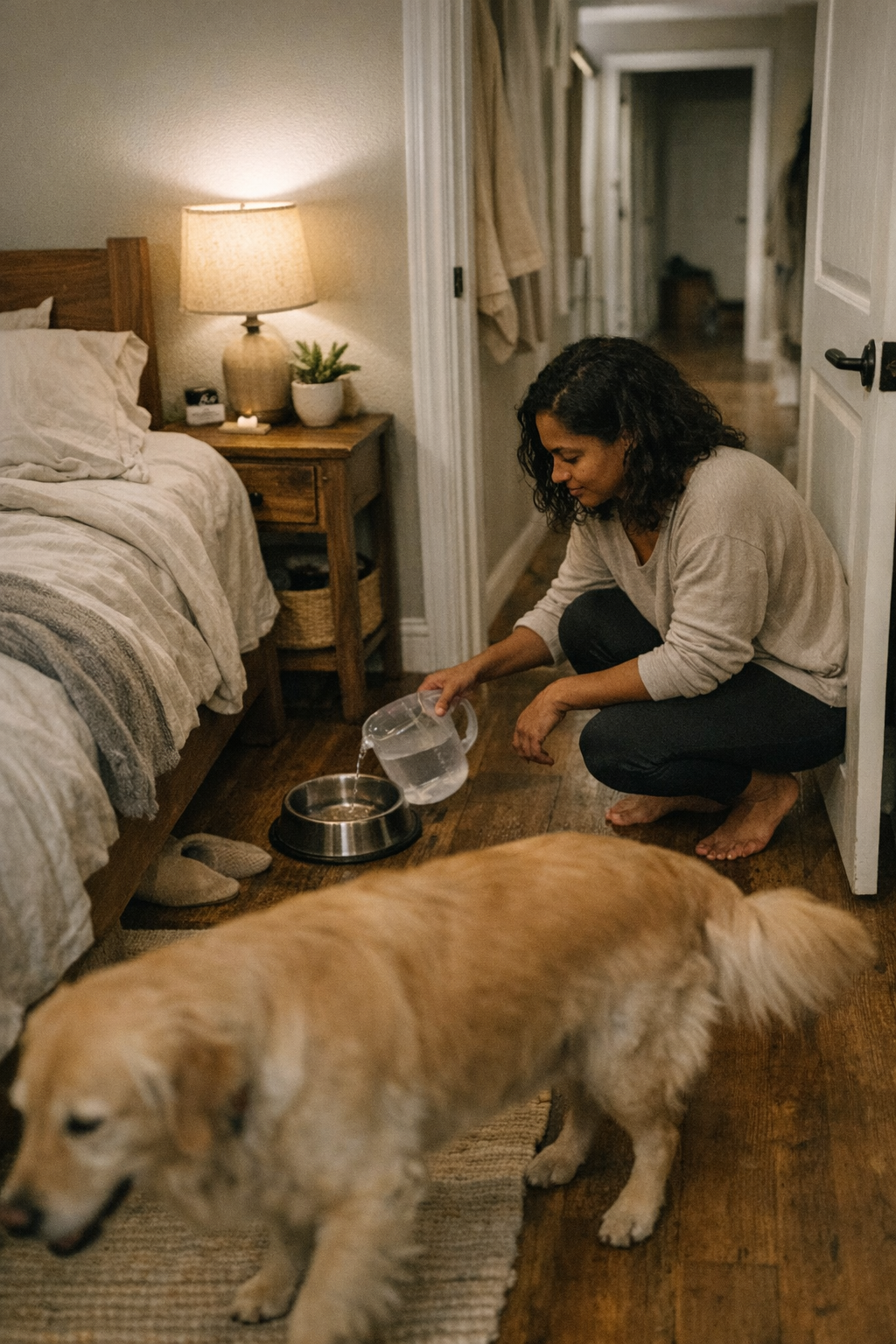
The last hour before bed with a dog sounds easy: quick leash, final walk, fast water check, then crash. But in real homes, that routine jams up everywhere—reaching for a leash that’s tangled under mail, finding towels one room too far when muddy paws hit the floor, noticing your dog circling not out of habit but looking for a water bowl that’s already been shuffled to some “tidier” spot. When the tools and cues drift, what should be an automatic glide into rest turns into a friction loop: delays, detours, and a dog who won’t settle because the signals keep changing.
The Unspoken Friction of Dog Bedtime Routines
Every owner recognizes the checklist before lights go out: leash, bowl, last trip outside, pat on the head. Routine should take care of itself. Yet the interruptions pile up—never dramatic, always annoying. Leash lost in a pile of outerwear, water bowl somehow dry for the third night in a row, cleanup supplies nowhere at hand after a wet walk. The late-night search for “just one more thing” becomes standard.
Disruptions don’t announce themselves loudly. They just stall momentum. A dog pacing after a walk, hovering at the bedroom threshold, or making an extra lap down the hall: these aren’t quirks—they’re your dog waiting for a reliable signal, not a shuffled cue. Over time, these little hesitations carve out a nightly pattern that pulls both of you into slower, less certain territory.
Where Setup and Routine Drift Apart
Routines depend on having what you need, when and where you expect it—not just how it looks when straightened up. That soft bed in the wrong spot turns into an obstacle, not a comfort signal. Water bowls drifting room to room confuse the “last call” timing. Cluttered entryways make the “leash grab and go” a daily mini-lottery. The dog notices the inconsistencies: circling for a sign, pausing by bedroom doors, or parking by the spot where a bowl should have been but isn’t.
Owners end up nudging toys out of footpaths at midnight, doubling back for a towel that isn’t near the door anymore, or fumbling for the right leash under new “organization systems” that slow them down. Even in a neat home, function and routine often don’t line up—and the dog’s hesitation just proves the point every night.
Slow-Burn Delays: How Small Misses Add Up
All it takes is one thing out of place—the water bowl left empty, the towel missing from the doorway, the leash hook now hidden behind a stack of bags. None of these problems feel major alone. But strung together, they make bedtime drag. You refill the bowl three steps too late, or shuffle items around after you should be winding down. Dog routines suffer from momentum loss, and the owner’s patience wears thinner each time the night doesn’t close as expected.
Recognizing Routine Cues (And Mixed Signals)
Cue mismatch has a cost: A dog that circles, hovers near the door, or walks back and forth for water isn’t bored—they’re waiting for a routine mark they can trust. Stale signals—like gathering up the leash from a new spot every night, moving the water bowl because it “looked messy,” or stacking supplies out of easy reach—tell the dog things aren’t settled. This uncertainty shows up as restlessness, repeat pacing, and that slow creep of bedtime expanding minute by minute.
Missed cues stack up: unexpected trips outside, double-checks for doors, midnight puddles, and extra towels fetched twice. What looks “fine” in the house at first turns into friction points that the dog—tracking every move—responds to by not responding the way you hoped. You end up trading a calmer routine for a silent string of minor resets that wear out both sides quietly but surely.
Daily Life: Where Functional and Tidy Don’t Always Line Up
It’s easy to make the home look organized in daylight. But come late evening, order starts breaking. The water bowl is still in the corner from lunch, not bedside for easy reach. Entryway “solutions” mean the leash is buried, ready to slow every late-night switch; the towel for muddy feet is now out of sight, so wet prints trail behind you for cleanup that’s always just after the fact. The tidy look rarely matches the pattern of real movement—and dogs are the first to notice when routine support slips out of place.
Specific frictions build up:
- Your dog sits by the wrong door at 11:45pm. You cross the house because the water bowl wandered—not where you thought, not filled, not helping closure.
- Rainy nights leave you double-backing for towels—first for paws, then for the surprise trail after. Nothing’s catastrophic, but the cleanup rhythm stays off-balance.
- Away-from-hand leashes and hidden gear spawn two extra circles from your dog, each adding restlessness instead of winding down steadily.
Systems That Slow The Routine, Even When Tidy
Organizing for the human eye doesn’t always solve the dog-life pattern. Plush beds crowd awkward corners; water shifts between rooms for “better flow,” but ends up with the dog circling for the next move. Entryways that look sparse slow you down when gear isn’t in hand. The friction isn’t obvious at first, but builds every time you step around, backtrack, or have to reshuffle gear just to get from walk to sleep without another snag.
The Subtle Impact of Steady Nighttime Cues
Fast improvement rarely comes from a full overhaul—usually it’s a single, reliable reset. Take the water bowl: moving it to the bedroom door, refilled just before the last walk, becomes a clear signal every night. Suddenly, the dog doesn’t loop the hall or sit mid-path. They see the bowl, make their final stop, and finally settle—no second guessing, no last-minute signals left open. Bedtime routines shrink not by force, but by removing ambiguity from the path.
Small Realignments, Noticeable Results
It’s the repeat misses—mixed signals from gear shifting, or habits that can’t anchor because locations keep rotating—that quietly block the “automatic” feeling. Successful routines show up as smoother transitions: gear always back where it needs to be, towels reset on the nearest hook, bowls never moved out of expected reach. Fix one anchor and you often fix a handful of micro-issues at once.
The payoff is less about adding, more about reliably removing friction. Declaring “bedtime” doesn’t work unless the signal is in the right place, at the right moment: same walk window, water already waiting, rest spot guiding the movement. Most people overlook small delays—until they realize their dog’s circling is just them waiting for a real closure signal, not a stalled pattern.
Resetting Your Nightly Routine: What to Watch For
Use the last hour before bed to spot cues that fail or slow everything down:
- Dog pauses at the door post-walk—still looking for a sign things are really done?
- Multiple water trips in different rooms, even as lights go down?
- Circular movement or slow settling, instead of a single smooth approach to the bed?
These aren’t energetic quirks—they’re signals that the setup’s logic is fuzzy. Fixing the whole routine isn’t needed; making one or two cues absolutely consistent is. Watch for any moment you see stagnation or hesitation—and track it back to what’s missing in the nightly structure. Reliable placement, timing, and repeat use matter more than the “tidy” appearance that drifts the next day.
Practical Adjustments for Fewer Nightly Interruptions
Try resetting one anchor: water bowl prepped before settling in, towels always in the same grab spot, leash back on the same hook—no matter what disorder hits the house for the rest of the day. Dogs respond to repeated, predictable signals that don’t force a second round of searching or second-guessing. Over a week, you’ll see less double-backing, less circling, more visible ease at bedtime—not because routines are perfect, but because the path is consistently clear and simple for both of you.
The Difference Between Routine That Looks Complete and One That Works
Outward organization—nice bowls, hidden supplies, neat corners—means little if it trips up the routine in real use. What matters is whether the setup reduces repeated stops, scrambling, or after-the-fact resets. If it feels smooth once and falls apart twice, it’s not working yet. The systems that quietly shrink friction in that last hour are rarely complicated, rarely showy, and always noticeable the next night something shifts. Reliable, practical anchors make each evening’s end more repeatable and less of a question mark.
Ready to tune your own routine for smoother nights and less last-minute scramble? Explore more DogPile setups and adjustments here.