Author: jaesoon_admin

  • How Three Points of Contact Lighting Enhances Safety in Every Home Space

    Most homes “look bright” on paper—until daily routines reveal the truth: You’re halfway through the hallway or rounding the stair turn, and a stretch of flooring simply disappears into shadow. You fumble for the rail, slow down at the bend, or tilt the laundry basket for a better angle. The ceiling light boasts plenty of lumens, but one reach or step off-center, and surfaces turn unpredictable. The problem isn’t just mood—it’s practical: poorly placed or single-point lighting quietly stalls everything from moving laundry to finding the edge of a counter. The right fixture isn’t just what fills the room with glow; it’s what makes each repeated step, grab, or glance obvious and effortless. Most routines break down not from lack of light but from light falling in the wrong place at the wrong moment.

    Why “Looks Bright” Doesn’t Mean “Works Right”

    Traditional flush mount and semi-flush ceiling fixtures promise evenness. In reality, they often cast dramatic shadows right where daily movement demands clarity—a stair tread, hallway crossing, laundry corner, or face in the mirror. The “impressive glow” overhead can leave whole zones unreliable the minute you cross into them. You’ll see it in scenes like:

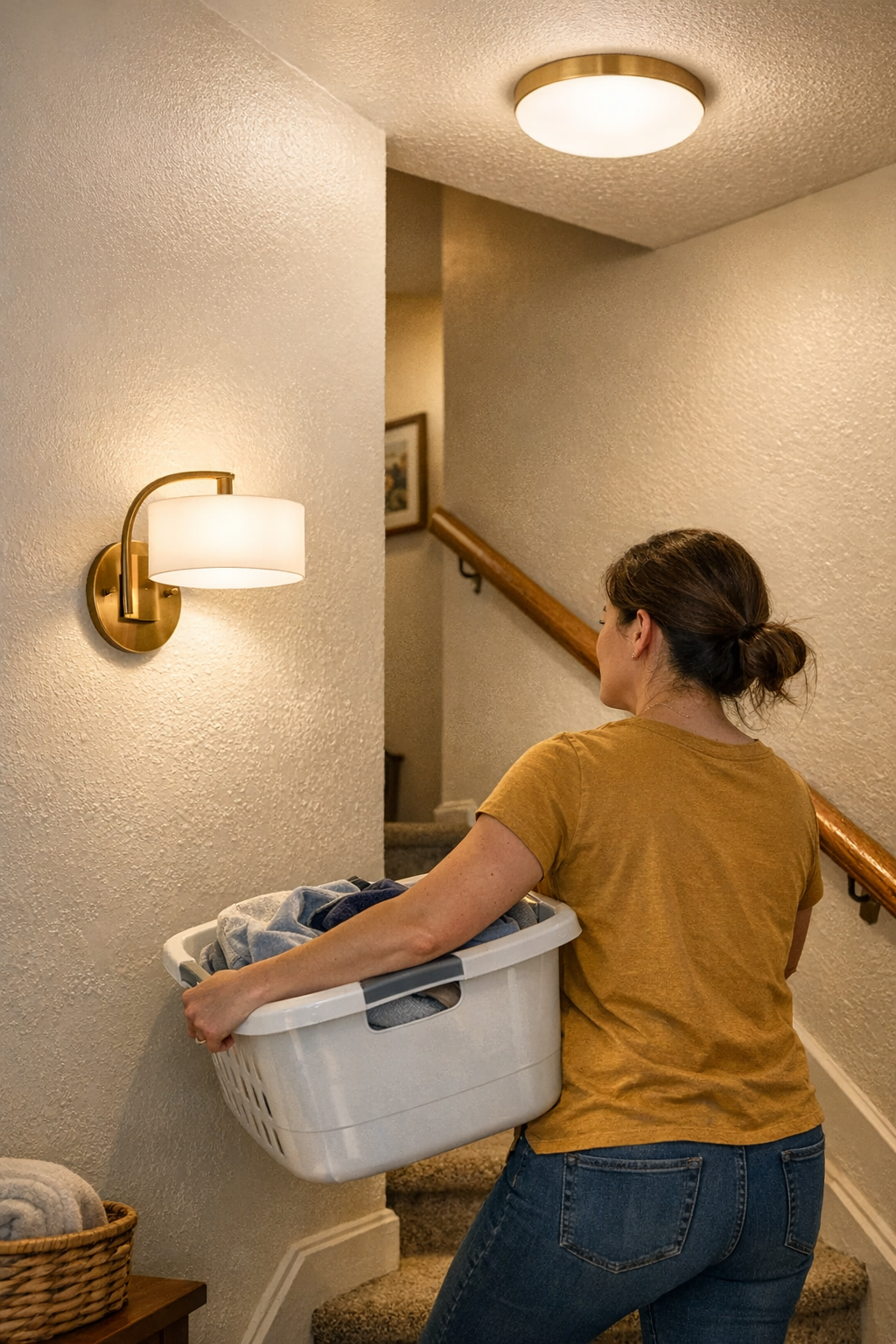
    • Climbing the stairs, the first few steps are visible, then a pocket of shadow breaks your pace at the curve.
    • Hallways look lit, yet the threshold near the door or wall edge fades out, forcing anyone carrying groceries or a hamper to hesitate or steady themselves.
    • In the laundry room, you lean forward, and your own shadow darkens the washer’s edge, obscuring spills or stray buttons.
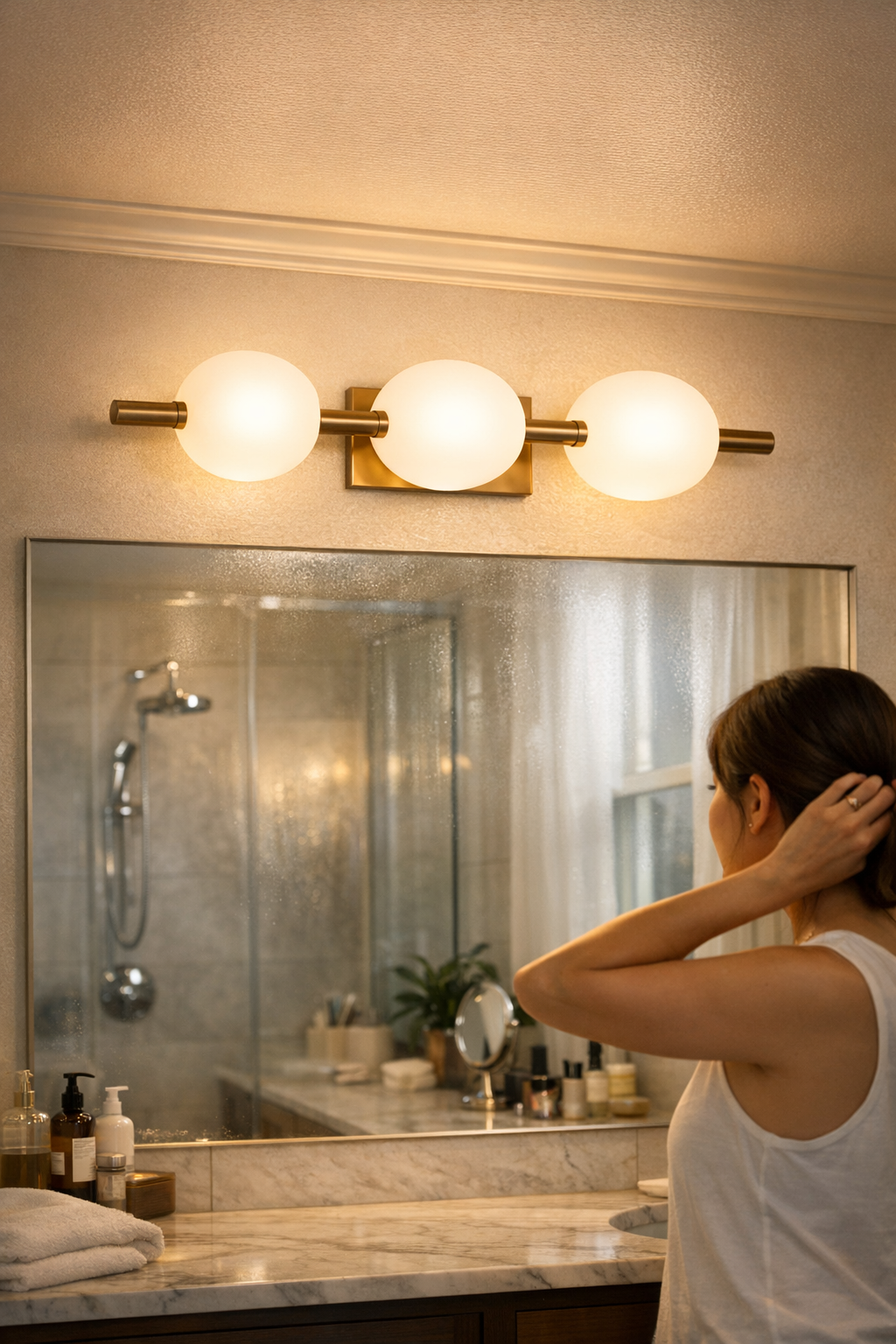
    • At the bathroom mirror, top-down light carves deep face shadows, so you have to crane for an even reflection or miss small details during your routine.

    These aren’t minor quirks—they’re repeated friction points that slow you down, chip away at your confidence in the space, and raise the risk of missing spills, tripping at turns, or missing the small hazard you meant to catch early.

    Shadow, Glare, and Broken Routines: How Lighting Friction Builds Up

    Relying on a single “bright” fixture means improvising around its failings: pausing at a dark stair mid-turn, blinking through glare above the bathroom mirror, or making multiple passes across the laundry counter because the far edge remains in partial darkness. Movement that should be automatic turns tentative. Glare forces your eyes to recalibrate; shadows hide the very surfaces you need. The result isn’t dramatic—but it adds friction to every trip, every reach, and each repeated task. Over time, the invisible costs stack up as slowdowns and small slips you never needed.

    The “Three Points of Contact” Indoor Lighting Method

    Borrowing from the principle of keeping three points of physical contact on stairs, three points of lighting contact means using a combination of ceilings, walls, and task fixtures. The aim: every key surface, stair, mirror, work area, and turn point stays both visible and free from harsh contrast—no dark wedges, no glare, no missing edge when you move.

    Ceiling Lights: The Wide Sweep

    Flush and panel-style ceiling lights deliver the field of general brightness, but as soon as the room bends, narrows, or the cabinets create overhangs, the single-source setup starts missing patches. In long corridors or L-shaped spaces, you might notice one wall clear while another side loses detail, especially away from the dead center. Ceiling fixtures set the baseline but rarely finish the job on their own.

    Wall Lighting: Closing the Gaps

    Wall sconces and hardwired wall lights let you position light exactly where overhead coverage fails. For example, putting a sconce just before a stairway curve eliminates the unseen edge that causes hesitation. Eye-level wall lights in hallways or corners polish off shadow lines and let your vision “track” forward naturally, reducing the urge to slow down or scan with a phone flashlight. You see where you intend to step—without second-guessing.

    Task Fixtures: Precision Where You Need It

    Task-focused and under-cabinet lighting exists to make sure you’re not working against your own shadow. Mounting a strip beneath kitchen cabinets, above the washer, or beside the vanity mirror switches the surface from a guessing game to fully visible. This means finding lost buttons, checking for stains, or shaving in even light actually becomes possible, instead of improvising with poor angles and missed spots. The difference: it fixes what matters most, right where your hands, face, or work zone are actually in use.

    How Real-World Improvements Play Out Over Time

    After a week, the effects are plain: the stair sconce kills the urge to hesitate at the turn; the under-cabinet light in the laundry means missed change and detergent smears become obvious before you close the lid. Bathroom mirrors stop producing harsh “face halves”—making routines faster and less awkward. The gain isn’t just brightness or aesthetics, but reliable, interruption-free paths through daily spaces. The lighting now serves your routine, not the other way around.

    Two Small Fixes With Outsize Impact

    • Keep pausing in the same spot? A well-placed wall sconce there may outperform any “brighter” bulb overhead—placement beats power every time.
    • Edge of your workspace always dim? Drop a task or under-cabinet light exactly where you lose visibility. One addition can free you from years of tiny, repeated workarounds.

    Most adjustments are simple add-ons or swaps—no redesign needed if you target where you actually move and work, not just where the old plan said the ceiling bulb belonged.

    The Shift from Visual Brightness to Practical Clarity

    Piling up brightness in a single fixture only goes so far—true comfort means layering light where it fits the task, angle, and real texture of your routines. Until wall lights or task lamps fill in the weak spots, your home may look “done” yet still frustrate you in motion. The three-contact method turns spaces from visually impressive to genuinely usable. When critical steps, edges, and surfaces get their share of real, directed light, your path through the day actually becomes easier—even when your hands are full or focus is elsewhere.

    Find lighting solutions for ceilings, walls, and task surfaces at LightHelper.

  • How Sudden Noise Disrupts Dog Routines and What Owners Can Do

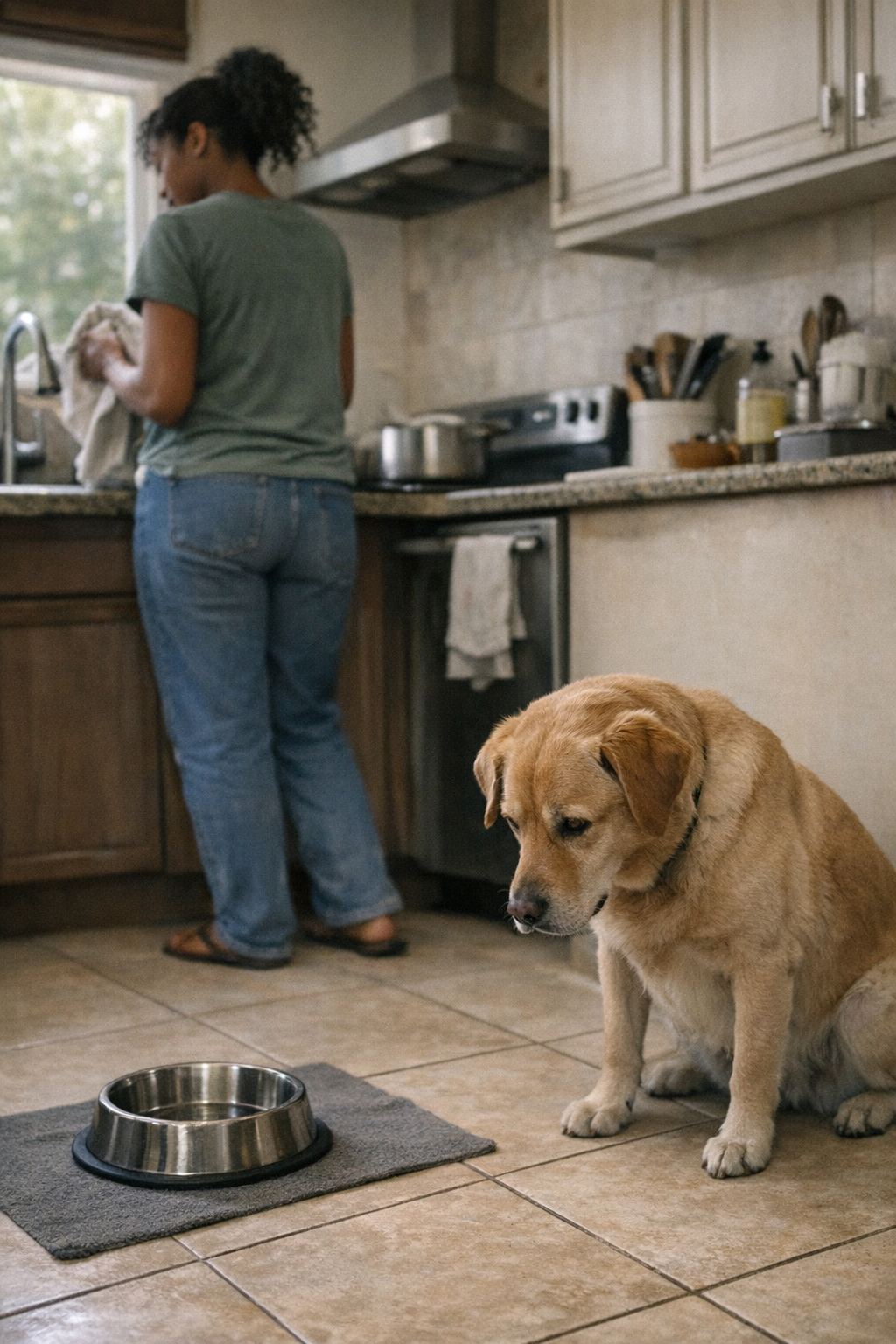
    One sharp noise—pan, door, or sudden laugh—can turn a rapid, fluent dog routine into clumsy stop-starts that don’t recover on their own. It’s not the loud moment itself that breaks things, but how every routine after feels slower, slightly off. You notice it at feeding: the dog hovers before bowls, not sure if it’s safe. At the door, the leash is ready, but your dog hangs back, scanning for another shock. A rest area looks tidy, yet settling takes extra laps and coaxing. On paper, nothing has changed—items are in their usual places. In practice, everyday flow is jammed by delays, awkward reaches, and routines now burdened with extra resets that didn’t exist before.

    How Sudden Noise Reshapes Daily Dog Routines

    Dogs rely on tight patterns: bowl, walk, wipe, settle. But after one sudden noise, the pattern fractures. The shift isn’t dramatic—just invisible drag. A normal food approach turns into anxious circling, weight shifting from paw to paw; at the door, a leash within arm’s reach isn’t enough, because the dog now needs a double cue to step past the threshold. The tension leaks into crate use, too: you open the door, but your dog waits, head low, looking for some quiet reassurance. Most setups feel “fine” unless you track these tiny stalls hour by hour.

    Real Life: When the Routine Doesn’t Flow Anymore

    Right after dinner, a plate crashes into the sink. Your dog gets up, alert and uneasy. You call for dinner—halfway to the bowl, they stop cold, checking your face as if asking, “Is it really safe?” Later, you grab the leash, but after another startle, your dog stays planted until you repeat their release word. Coming back inside from a muddy walk, you reach for a towel, but it’s in another room; too late—your dog’s already pacing muddy circles. By bedtime, the dog bed looks carefully arranged, but now takes three passes before your dog finally folds in.

    Routines That Work—Until They Don’t

    The routines seem organized: bowls lined up, leash hung by the door, cleanup mat nearby. But the weak points show up when reality interrupts. Cleanup gear is right there—until you need a wipe instantly and end up rooting through a basket, muddy pawprints multiplying. Bowls stay put, but the dog never gets all the way to them on first try. The rest corner is orderly, but after a jolt, it’s just a harder place to settle, with extra hair and dust building up because every pause means more scatter.

    The difference isn’t about “messy” or “tidy”—it’s about whether the system still works when routines don’t go to script: Does a misplaced towel derail cleanup? Does delayed crate entry burn ten extra minutes? Is the neat leash hook just out of fast reach when your dog is finally ready to go?

    Small Frustrations Adding Up

    It’s rarely a major event—it’s a string of minor delays. Dogs start eating slower, water bowls are left unfinished, mud isn’t intercepted before it hits the hall rug. Getting out the door means coaxing a dog who now hesitates every time. These moments multiply: sticky mats under half-eaten food, walks that begin five minutes late, rest spots that never fully clear off. The house appears organized, but the actual pace and ease of care spiral down. Owners who once barely noticed routines now find themselves improvising extra signals, fetching gear after the window closes, and spending more time on backup fixes than planned resets.

    Cleanup, Reset, and the Problem of Reach

    Any setup looks finished at first glance—until you run it after a disruption. You need a towel by the door—not one room away. Wipes should be ready by the crate, not buried under the secondary leash. Feeding mats hold crumbs, but delayed eating means mess travels outside the “safe zone,” making basic cleanup drag on. A single missed beat exposes rigid systems built for order, not for recovery. If you’re always moving after the fact, “organized” shortcuts start costing you more in time and calm than visible clutter ever did.

    When you need to move fast—before mud spreads or nerves turn mealtime into another endurance test—it’s painfully clear if supplies force awkward reach, extra steps, or shuffling. The right item in the wrong location keeps routines on edge and turns every reset into an unplanned detour.

    Micro-Adjustments: Repairing Flow Without Chasing Perfection

    No home is silent forever. The fix isn’t to seek absolute quiet—it’s to redefine the reset. Quiet, practiced cues (“all done,” “ready now”) restore calm, but only if they’re paired with setups that let dogs—and owners—start again quickly. Move bowls so they aren’t behind a tangle of door shoes, stash towels at grab-level, lay out wipes where a startled dog actually pauses. Over days, routines recover: food gets finished, walks start smoother, and cleanup isn’t held captive by hesitation.

    Don’t mask every pause with extra comfort, but don’t ignore them either. Build one neutral reset into each sticky routine: a clear cue, a beat of waiting, then the invitation to start. Skipping this step means old delays keep returning. Making it standard lets both dog and owner move with less coaxing and more direct flow, even when life stays noisy.

    How to Notice the Slower Spots—And Why They Matter

    Most homes seem “put together” at a glance, so repeated hesitation is easy to miss. Start watching for:

    • Pauses at food, door, crate, or bed—especially after a sharp sound
    • Cleanup stalling while you search for what’s supposed to be ready
    • Reluctance to move through doorways or routines that used to feel automatic
    • Mealtimes or walks that now require fresh encouragement every round
    • Resets that stall because items aren’t within true quick reach

    These friction points don’t fix themselves—every repeat signals a setup that needs a practical repair, not just tidying. Sometimes this means shifting gear location by two feet, carving a straight path to the door, or adding a firm but neutral reset cue. The bottom line: routines that recover quickly are built by setups that can be reached, used, and reset in real time—no matter how good they look after a cleaning spree.

    Beyond Looking Organized: Living With Smoother Flow

    There’s a gap between setups that only “look organized” and those that work while routines are stumbling. Slower eating, circling before rest, delayed leash handovers—these aren’t quirks but signals that a functional setup needs a tweak at actual points of stress. Over time, every few seconds lost to hesitation expand, dragging out simple care into a sequence of micro-recoveries. The true marker of a good system isn’t visible order but reliable response: can you and your dog recover rhythm after surprise, or does your system force you to start improvising under pressure?

    Tracking slowdowns—how long it takes to fetch a towel, cue the next meal, or restart after noise—reveals where your setup costs more effort than it saves. The aim isn’t perfection, but fewer roadblocks: less energy spent on missed cues and more on routines you barely have to think about. A home that absorbs shocks and resets itself keeps dog life smooth, even when “organized” never quite matches “easy to live with.”

    Find practical, easy-to-live-with solutions for everyday dog routines at DogPile.

  • Why Hidden Car Storage Creates Daily Frustration and How to Fix It

    You know your car’s “clean” setup is failing the moment you reach for your charger, phone, or sanitizer—and your hand lands on empty plastic, tangled cords, or a bottle that’s somehow migrated away from its spot. The floor looks neat, but every grab becomes a small hassle. The real frustration of car organization isn’t a visible mess—it’s the seconds lost fumbling for essentials that should be ready at hand, especially when you’re in a rush to re-enter, load, or get moving again. On paper, your interior might show order. In daily use, those split-second delays multiply: the phone slides behind the seat after one corner, chargers coil around the cupholder, or keys drift under a footwell tote. Every extra second spent digging, tugging, or kneeling yanks you out of rhythm and saps the payoff of that “organized” look. If a setup can’t keep pace with repeated, rushed routines, “tidy” is just friction with a cover on it.

    When Orderly Looks Still Mean Awkward Reach

    Most car organization hacks focus on hiding things: stashing clutter in bins, threading cables through pockets, parking your gear in deep compartments. Visually, it works—until the first busy errand loop. You walk back after a quick stop, expecting flow: in, out, toss, grab, repeat. Instead, a bag has drifted into the console space, cables have twisted themselves out of reach, and your phone sits somewhere weirdly behind your seat instead of in its intended spot.

    “Orderly” setups tend to fail in routine motion. After even a fast grocery stop, you’re fishing for your wallet in a sliding bag, or kneeling to recover a charger that slipped beneath the edge. The surface stays neat, but your access gets more awkward, posture shifts, focus breaks. Stack in school pickups or baggage shuffles, and every re-entry becomes a quick scan for where things have escaped to this time. The setup doesn’t collapse, but it never quite cooperates with your actual flow.

    Hidden Friction in Repeated Use

    Every “little” inconvenience—digging for your phone, untangling a cable, having to move a bag to reach sanitizer—might fade into the background on its own. But day after day, the cost builds up. A design that keeps your charger one drawer deeper for tidiness, or routes your cables under seats to banish clutter, soon reveals its weak points. You notice it most in:

    • Back-to-back errands, where reaching for essentials means encountering something shifted or blocked nearly every time you park.
    • Coming back after school, work, or a pet run—when sanitizer, sunglasses, and receipts have all found ways to pile into the same tight spot you need first.
    • Quick departures, when what should be an instant grab becomes a five-second lunge because sanitizer is hidden behind another bag, or your cable’s suddenly gone limp and tangled.

    After each trip, some items return to the wrong places. You end up spending more time than expected on repeated micro-cleanups—just to keep what should be “fixed” in place. An organizer that looked promising now asks for a daily reset just to maintain that controlled appearance. Visual calm, but practical drag.

    The Loop of Fixing and Re-Fixing

    You adjust: stash chargers deeper, corral loose gear in door pockets, coil wires, pack away the messy-looking lanyards. It removes surface clutter, but every access takes longer. The routine shifts from “grab and go” to “unwrap, uncoil, extract, reposition.” You end up crouched beside the seat fishing out sanitizer for the third day in a row, or tugging a cord around the seat base because it always escapes with motion. What hides mess now builds in more steps, turning each drive into a slow-motion fix-up—proof that surface neatness, without matching real access habits, bakes friction right back into your week.

    Spotting the Clues: Your Setup is Slowing You Down

    Look for these unmistakable signals:

    • Repeat “search and rescue” grabs. If you move something else to reach the same item twice a week, your setup is collecting friction.
    • Frequently used gear journeys out of reach. Phones, keys, sanitizer, or toll tags that shift after routine stops are clearly missing a fixed anchor or tray—and a bin won’t fix what keeps moving.
    • Organizers look right—until used. Closed bins or hidden pockets stay neat only if you rarely touch them. If every school run or errand means opening, digging, or resetting, you’re losing time where it matters most: everyday access, not storage display.

    These aren’t just tiny delays. They chip away at focus and add tension—turning driving into a repeating obstacle course of item retrieval and reorganization instead of straightforward motion.

    Making Small Shifts for a Major Difference

    The difference between a setup that actually works and one that just looks “done” is ruthless practicality. The best car layouts give essentials a fixed, fast-access point that stands up to repeated jostling and hurried routines. Example: Skip burying your charger in a closed console—use a shallow tray so cables take a simple, direct path, always in easy reach, never balled up or buried. Mount your phone where it’s stable and “findable” after rough braking or sharp turns—staying visible and ready, call after call, with zero drift.

    Give sanitizer and keys permanent homes—a door tray, or a slim organizer locked between the seats—and quit rerouting your own reach dozens of times a week. Even moving a cable from a tangling gap to a fixed guide cuts down the invisible chore of repeated untangling. The point isn’t a sleeker look—it’s killing the cycle of small slowdowns so your routines finally fit your car instead of fighting it.

    From “Looks Good” to “Works Every Time”

    Success isn’t a pretty finish. It’s an interior you can actually use—single-motion reach, secure essentials, access that survives backseat chaos, fast parking, and real-world hurry. If every routine errand means slowing down to dig, open, reset, or rescue gear, your “order” is working against you. True improvement means open trays for frequent-grab gear, cable guides that keep reach instant, and organizers that stay stable—so car time is just drive and go, not constant management.

    The visible difference: A setup aligned with real use—open organizers where you need them, cable anchors where reach doesn’t snag, trays that stay put—shrinks cleanup, restores habits, and lets your car work with you instead of demanding attention in every stop-and-go.

    Want car organization that lasts beyond the first clean-out? See practical gear built for real driving routines at DriveWellSupply.

  • Why Carry-On Organization Often Fails During Real Travel Movement

    The “perfectly organized” carry-on can fail you at exactly the wrong time. At home or in your hotel room, every pocket and pouch seems ideal—everything zipped, visually quiet, feeling sorted. That illusion breaks within hours of real airport movement. The minute you rush for your boarding pass, headphones, or charger (the item you thought you made easy to find), you meet resistance: overlapping pouches, layered organizers, zip paths that jam when you’re in a hurry. What looked calm and controlled in private becomes a series of blocks as pressure builds. That’s the part that most neat-packing advice ignores.

    When “neat” packing collides with real airport movement

    A bag that looks excellent on a tidy floor can turn instantly frustrating in airport reality. You step into security—already in a line, bags nudging forward—and you need to pull devices and liquids fast. Suddenly, your “organized” tech pouch is under two other containers, and the single zip you’d visualized opening is now a chain reaction. Every retrieval or return means shifting a wallet, stacking a pen case somewhere, propping open a half-zipped section just to get that one cable out. Friction mounts fast, and by the time you grab what you need, your main compartment is a jumble, and people behind start shifting weight. The gap between packing pride and in-transit function is nowhere more obvious than at checkpoint trays.

    The hidden cost of “too tidy” setups

    Packing with layers—pouches, stacks, meticulously separated categories—promises control but rarely survives more than two or three flow interruptions. Imagine: security staff waves for “electronics out,” you go in for your charger, but it’s under toiletries, under a passport wallet. Remove, prop, balance, try not to drop anything. Moments later your earlier structure is gone; every item put back now feels less certain. Repeat this process for gate checks and sudden document verifications, and the “ideal” setup reveals itself as a slow-motion obstacle course.

    Repeated tension at the wrong time

    The first time it happens, you shrug it off. By the fourth, each small retrieval (passport, phone, earphones) is a hassle—awkwardly stacked in your palm, bag refusing to close, movement bottlenecked in the aisle. Every repetition is a micro delay that adds up over a long trip: slower through lines, more stressed during repack, always a nagging sense that your cool setup can’t keep up once you’re moving for real. Travel drag isn’t theoretical; it’s a slow erosion you feel in every repeated access moment.

    The tipping point: When access beats aesthetics

    Carry-on performance gets exposed in motion, not in the first satisfied glance after packing. A setup can look pristine, but if it blocks you in three separate steps every time you need something, it’s hurting you. The root friction? Organizer overload. Popular packing advice pushes stacking, nesting, maximizing every interior wall. But “perfect visual order” turns obsolete the minute you need speed, reach, or single-handed retrieval. When airport routines repeat, the difference stops being subtle—it’s what slows you down, or lets you move on.

    Why repeated use exposes packing weaknesses

    The decline sneaks up: a bag that survived the hotel lobby falls short at each checkpoint. Tightly nested pouches, deep dividers—smart at first—become a gridlock as you hunt for that same cable, document, or pill bottle over and over. Every time you set the bag down, the retrieval gets slower. The system that felt “done” at packing gets messier and less dependable with use, not more.

    The most common friction point: essentials—documents, chargers, headphones—buried under layers instead of placed up front. The smoothness you expected at packing becomes repeated interruptions, just when your attention is split between lines, trays, and crowds. The difference isn’t minor. It’s the pinch you feel at the worst possible moment, reminding you that calm-looking doesn’t mean efficiently usable.

    Security trays and boarding lines: The real-world test

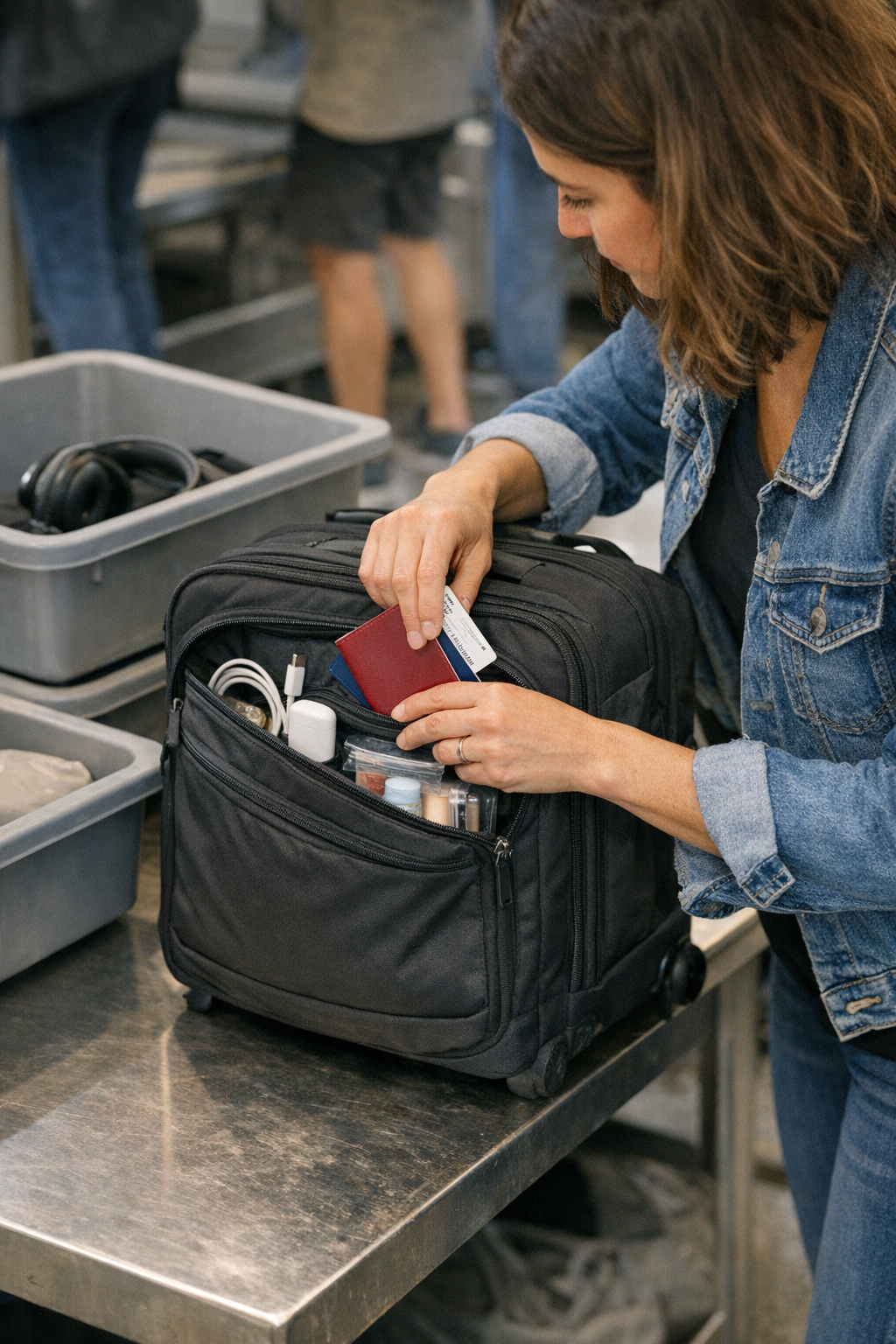
    No setup hides in a security line. Guards bark for electronics, trays fill, and now you’re juggling two pouches, a document holder, and a half-zipped main compartment—all on display, under a time crunch. Even a rationally-packed bag can fail here if essentials aren’t “grab and go” accessible; fighting with layers or blocked pockets creates drag for you and everyone within arm’s reach. The day’s pace gets defined not by how organized your bag looks, but by how unblocked (or blocked) your movement becomes in these pressured routines.

    A setup that looks right, but works wrong

    The room for error is real. Bag looks smart on the bed, then doesn’t cooperate when wedged beneath a seat or hoisted above into an overhead bin. Every time you fumble for tickets, cables, or IDs, you unspool the structure you started with. That’s the memory you take from the flight—not the initial neatness, but the repeated hassle of getting what you need without the bag fighting back.

    Small changes, big impact: Resetting the pocket routine

    The breakthrough pattern? Single-move front-pocket access. Field-tested: high-frequency items—passport, charger, headphones, pill bottle—move to one outer pocket, strictly reserved. No more unlocking three pouches or reopening the main lid every time security, boarding, or mid-aisle motion demands speed. A simple slide along the front zipper, and you have what’s needed—minimal disruption, no impromptu restacking sessions.

    This isn’t anti-organization. It’s recognizing that over-layering trades future flow for first-glance calm. The most workable carry-on setups put fast-use items in “live zones”—not buried for symmetry, but staged for retrieval. It may look a touch less curated, but in the escalation of actual travel, having reliable access is everything. The payoff shows up the moment a security tray approaches unexpectedly or the plane boards out of sequence—you grab, reset, and move, not juggle and re-pack as everyone pushes past.

    Real-life movement: The difference you feel

    Try picturing an airport transfer: you close the overhead, race down the concourse, get flagged for a random ID check. With essentials staged up front, you don’t break your stride: one pocket, one motion, it’s done. Without that, you’re by the seating area, unzipping, unstacking, trying to keep inserts from dropping. The difference in stress and time is small per access—but becomes the key advantage the more cycles you repeat in three terminals, two checkpoints, and a return journey.

    What to avoid: Packing traps in repeat use

    • Too many nested pouches: Every extra pouch means another round of searching and shuffling—retrieval turns into a multi-step routine.
    • Hiding essentials for appearance’s sake: When go-to items are placed deep for “clean lines,” finding them just creates more chaos when under pressure.
    • Wasting outer pockets on overflow: Resist stuffing these with leftovers; reserve them for crucial, fastest-turnover gear and nothing else.

    The urge to keep things visually flawless runs deep—but travel doesn’t reward it. The setups that survive repeated security and boarding aren’t the ones that hold their tidy look, but the ones that reduce the cycle time and stress for every new check, scan, or sudden repack. In the end, order that interrupts you is just another drag. Make your bag hand control back to you, not just give you a surface-level sense of calm.

    Explore practical, tested carry-on tools and organizers designed for real travel movement at CarryOnSupply.

  • How Simple Entryway Setup Transforms Your Dog Walk Cleanup Routine

    The Small Details That Slow Down Daily Pet Care

    Feeding, walk returns, and water refills seem simple until you’re halfway through and a basic supply is missing, buried, or just out of reach. The towel’s still in the wash. The wipes have migrated behind bottles. The scoop you always need is across the room, or blocked by dog food stacked in the way. Instead of a quick reset before moving on, you’re shuffling bowls, searching shelves, and cleaning up twice—the cost of setups that look organized but interrupt routines at the worst moment. This is where daily pet care hits friction: not in the core steps, but in small gaps that turn an easy routine into a series of avoidable slowdowns. CalmPetSupply starts every category from that pressure point—the stuff that breaks flow, costs minutes, and leaves mess or work where only order should be.

    The slow drain doesn’t come from once-a-week deep cleans; it’s the towel missing for a muddy dog, the brush tucked away during evening mess patrol, or the water bowl that’s impossible to grab without moving half your supplies. Each minor miss sounds small, but repeated across days, these friction points add up to household drag—a cycle of repeated reach, rummage, and reset that’s too easy to overlook until routines feel heavier and time gets lost.

    Where Routines Really Break Down

    Pet routines rarely collapse at the big jobs—they unravel at the small point of failure: the missing wipe, the towel not on its hook when you really need it, the feeding dish that stayed in the wrong room. Open the door on a wet evening without a towel within reach, and by the time you’ve searched two cabinets, muddy paw prints are already sinking into your rug. A brush stationed out of sight means loose fur stacks up before you can respond. These aren’t occasional slipups; they’re patterns made worse by setups where “easy to find” never survives a busy week.

    On the best days, you glide from walk to cleanup to feeding. On the days when one thing’s out of place—even if the area looks organized—every step requires a detour. Stashed wipes, towels used elsewhere, cleaning rags gone missing: with every missing or misplaced piece, small interruptions compound, turning pet care into a sequence of stumbles that force delayed cleanup and missed resets. It emerges not as one big mess, but as a repeated grind against small, fixable details.

    Repeated Interruptions: Real Scenes at Home

    You reach to refill the water bowl and have to shift two stacked bags of food first—morning and night, every day. After a muddy walk the towel’s in the house, but shoved under a leash pile; by the time it’s free, dirt’s spread across the floor. Even with labeled hooks or tidy bins, routines veer off when tools go missing after laundry or a worn-out day. Instead of reaching for what you need, you’re filling the gap with whatever’s closest—an old shirt, kitchen rags—leaving the “organized” zone looking untouched but letting real cleanup slip.

    Brushes put away “for now” don’t return for days, turning quick grooming into a hunt while the fur multiplies on the couch. Wipes visible on counters slip behind bottles, delaying paw cleanups and turning transitions into awkward pauses. The pattern repeats: even solid setups drift as daily action scatters supplies, and each untidy moment echoes back through the routine, making next time slower.

    Beyond Looking Tidy: Function Over Appearance

    Surfaces might look calm enough: toys binned, dishes stacked, everything “put away.” But if you have to cross the kitchen for a brush, dig behind cleaning products for pet wipes, or move storage bins before you can pour kibble, the order is a facade. Neatness that hides everyday tools creates invisible speed bumps—pet mess lingers, bowls wait for refill, and each routine gets just a bit longer. Setup friction doesn’t show up in decor, but in how often you double back for something that should’ve been at arm’s reach.

    The difference isn’t about owning more organizers—it’s about putting every daily tool (towel, scoop, brush, wipes) in a fixed, grab-ready spot, never farther than your next step. When the towel returns to a hook by the door, or brush and wipes are always within sight at the “landing zone,” after-walk care is one motion, not a juggling act. These small placements trim both the mess and the wasted motion—shrinking cleanup time, reducing missed spots, and keeping routines repeatable under real daily strain.

    Solving for Repeated Use—Not Just One-Time Cleanups

    Strong daily routines aren’t built by adding more storage options—they survive by minimizing slowdowns in the spots that get used most. A low basket for a brush beside entryways or a dedicated towel hook by the exit can make after-walk care sudden and automatic, not optional or easily forgotten. When the scoop always lives next to the bin, or wipes are stashed by the door—not hidden away—transitions run smoother and messes don’t linger.

    The cracks reveal themselves after any feeding, refill, or end-of-day check: if the brush ends up at the sink, if the towel walks off in laundry, if any essential tool migrates away from its spot, the drag returns at your next pass. Setups that only “look” right—without resisting this drift—force new friction every cycle, trapping you in routine reshuffling no matter how tidy the space appears on inspection.

    From Clutter to Consistency: What Actually Lasts

    Breakdowns in daily pet care almost always trace to a basic supply not reset at the right place, at the right time. Towels wander to other rooms, brushes go forgotten outdoors, wipes get lost among kitchen cleaners—and every time, a feeding or cleanup turns into a small scavenger hunt. The mess isn’t just what you see—it’s the silent buildup of lost seconds, blocked flow, and interrupted home routines.

    The most resilient setups leave every key supply at a fixed, reachable spot—at the entryway, beside the food station, along the walk route, or by the couch where grooming actually happens. With this level of readiness, cleanup shrinks to a single reach and routines become sustainable enough to live alongside your day, not as another hidden chore stringing through the house. Pet care blends into the rhythm, because the right tool is always waiting at the moment it’s needed most.

    The lost minutes and nagging messes of daily pet care don’t disappear by hiding tools—they disappear by anchoring basics where your routine needs them, every day. That’s the real shift: fewer delays, faster resets, and a calmer space that keeps up, not just keeps looking clean.

    See practical daily-care setups at CalmPetSupply.

  • Why Modular Shelving Transforms Daily Access and Organization Efficiency

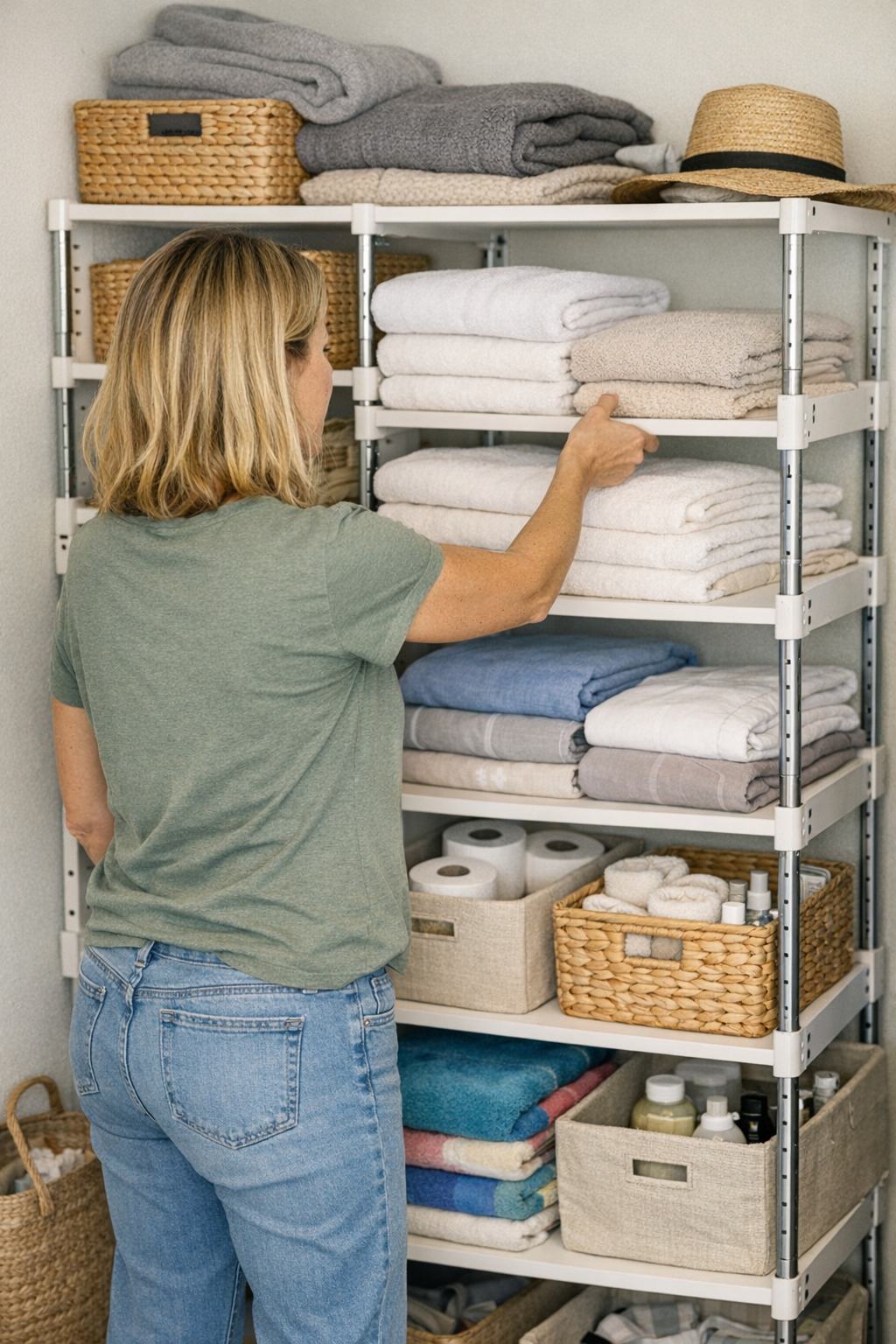
    There’s a difference between a closet that looks tamed for a day and one that keeps pace through the week’s real chaos. You notice it around Thursday, when stacks that started crisp collapse into leaning towers, bins blur with stray socks and scarves, and the morning scramble means poking behind lopsided piles for the “good” towel—again. The root of it? Fixed shelves that insist your stuff, your routines, and your categories stay frozen, even as everyday life frays the order.

    The Slow Slide Back to Mess

    Open any hallway linen closet or kitchen pantry and the signs show fast: piles edging higher than you ever planned, bins carrying a week’s worth of last-minute dumps, and categories once tidy drifting together by midweek. On fixed shelves, the neatness you started with always has an expiration date. The first time you dig for the right shirt or the back can, you trigger a small cascade, leaving the shelf a little messier each time. Resets stretch longer, and “organized” shifts from feeling possible to feeling like a lost cause.

    When Your Routine Collides with Fixed Shelving

    Think through any morning in a stacked closet. You reach for a towel, but grabbing one means steadying a pile about to tip. Towels rest on one mountain, sheets balloon in another, and hand towels wedge somewhere in the shadows at the back. By Wednesday, those careful stacks blur—slopes between categories, singles folded on top of the wrong set, and every “quick grab” threatens an avalanche. It’s not that you’re messy; the shelf forces your routines to fit a shape that doesn’t suit how you use the space.

    Every retrieval becomes a micro-obstacle. The deeper you reach, the more likely you’ll set off a silent reshuffling session—especially when you’re in a hurry.

    How Modular Shelving Actually Changes the Game

    Modular shelving breaks that noisy compromise. Shelves adjust to your stuff, not the other way around. Bring a shelf down to stop towels from stacking too tall. Set a new level for that pile of jeans that always wobbles, or carve a lower row for sheet sets so you can finally put them away without battle folding them to fit. Instead of one forced configuration, you get clear lanes: every category has its own space, shaped for what you put there.

    The real upgrade? Stability with less effort: you grab a towel without disturbing the rest. Separate shelf levels mean stacks don’t lean, bins don’t mix, and you’re not stuck refolding half a closet just to reclaim order. When a season’s needs shift—from sweaters to swimwear, or school lunch snacks to baking flour—just realign the shelf. It takes minutes, not an afternoon overhaul.

    Access Without the “Jenga” Moves

    On fixed shelves, grabbing something halfway down means a one-handed balance act. You brace the tower, dig for your target, then spend an extra minute rebuilding what you disturbed. Modular shelving turns that chaos into a single-motion reach: set stack heights and section widths so nothing has to give, and pulling out an item is as simple as sliding it free—no collapse, no side shuffles. Just as important: putting things back is straightforward. No more cramming towels onto a teetering heap or guessing which bin is safe to nudge open.

    What Looks Neat Can Still Work Against You

    Baskets lined on a deep shelf, or bins packed tightly, show well for a photo or a calm Sunday reset. But daily use exposes the flaws—overflow items crammed wherever there’s space, lids left off bins too hard to reach, and “just for now” placements that gradually unhinge any system. Fixed shelves ask you to stack higher or push occasional-use items farther out of sight, so your “quick grab” becomes a frustrating, slow puzzle more often than you’d admit.

    Modular shelving answers with shorter stacks and tighter borders: no spreading piles, no mixed-up baskets, just clear separations that last. It’s not about containing clutter so much as preventing its constant return—when every item actually fits its space, there’s simply less room for mess to spread.

    Scenes from a Real Closet Reset

    I spent too long rebuilding the same towel stacks on a shelf so deep and tall that nothing ever stayed tidy for more than a few days. Moving to modular shelves, I set a limit—nine inches high, nothing more. Suddenly, each towel came out and went back in without a topple. The edges stayed neat, towers didn’t sag, and I stopped budgeting Saturday mornings for re-folding and re-sorting. The most telling part isn’t that a shelf looks tidy for a photo. It’s that—after a week of hasty mornings and late-night drop-offs—you can restore that order in little more than a minute, not with the exhausting resets that fixed shelving demands.

    Modular shelving turns an endless battle for order into an occasional, near-effortless touch-up.

    Spot the Subtle Signs of Storage Friction

    If you find yourself pausing before pulling out a plate, rebalancing a pile of jeans to reach one t-shirt, or shimming bins in a closet every few days, you’re managing friction—not organization. Watch out for bins filled with a mixture of categories, stacks that tip after two uses, or the familiar two-hand pull. These are the red flags that your storage isn’t working for you—it’s quietly doubling your effort in ways you notice most on rushed or tired days.

    Actual Adjustability or Just Marketing?

    Not every “modular” shelf truly adapts to your needs. Some systems promise flexibility but only let you move shelves an inch or two—barely enough to matter when piles still outgrow their spots. Before committing, check that you can set shelf heights exactly where you need them. Genuine modularity means being able to convert a closet, pantry, or mudroom section in minutes, not facing the same overcrowded shelves every season.

    The Difference That Lasts Beyond One Clean Day

    The real reward isn’t a space that’s only photo-ready after a four-hour reset. It’s a closet, pantry, or laundry shelf that stays usable—where you know what’s where, categories don’t slip, and a five-minute pickup on Friday actually restores the whole system. When stacks aren’t forced too tall and every item has an obvious landing zone, the slow spread of clutter—and the dread of “organizing day”—finally fades. It isn’t perfection, but it’s daily, lasting clarity.

    Find shelving, closet systems, and practical storage tools that fit daily life at ClosetWorks.

  • Why a Small Repair Box Transforms Entryway Clutter Management

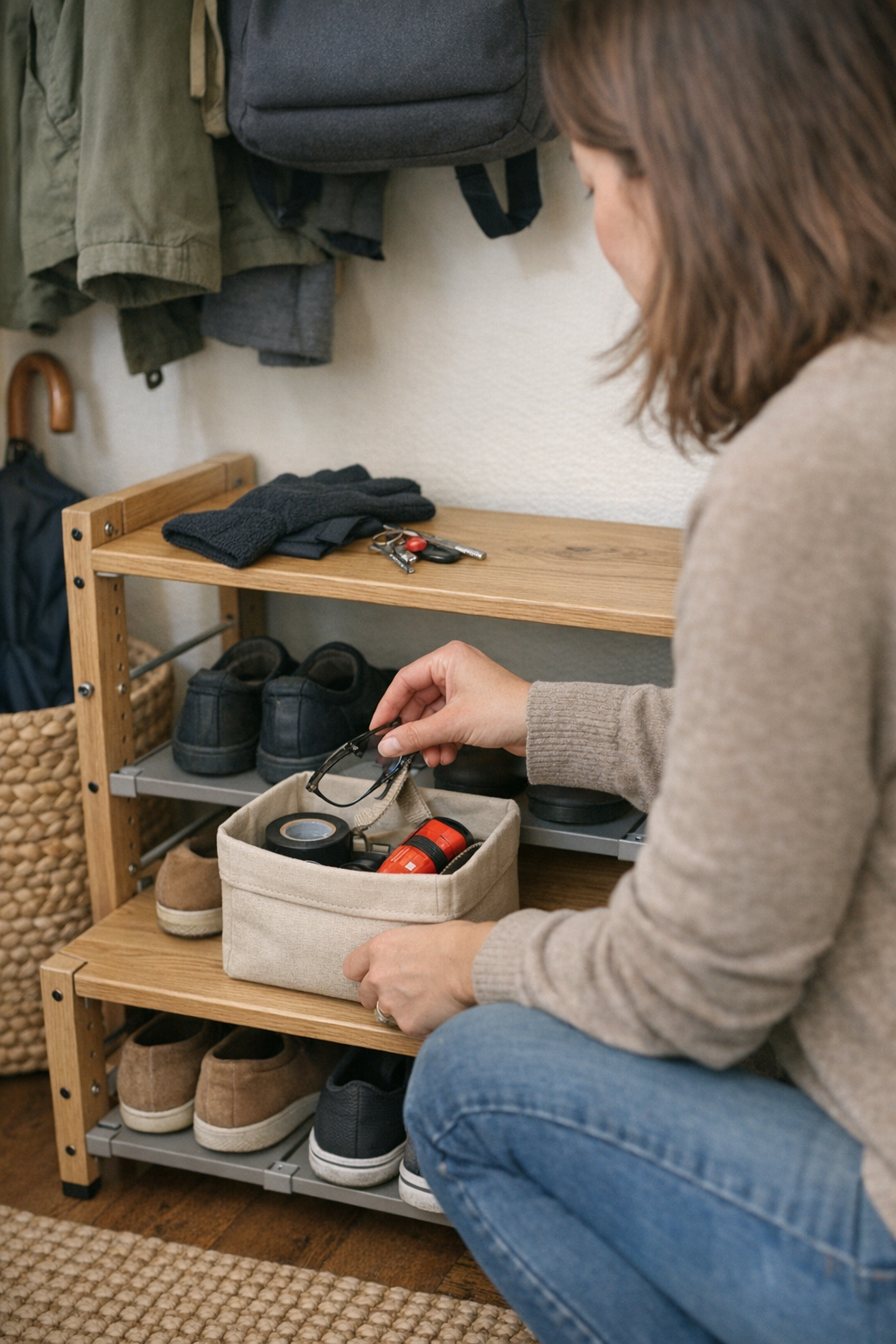
    The first sign isn’t clutter—it’s a blocked path. That “repair later” box you squeezed into the entryway was supposed to keep mess at bay. But too often, it turns a clean threshold into a slow-motion obstacle course. It never happens on day one. Give it a week of wet arrivals: a snapped shoelace, a leaky bike light, gloves with torn seams. These repairs-in-waiting quickly multiply, crowding out shoes, edging bags to the wall, and forcing the “clean zone” to shrink. Suddenly, the daily flow stalls at the threshold. A repair bin meant to help is now squeezing the entry routine, not just storing tomorrow’s problems.

    Why Oversized Repair Boxes Break the Flow

    At a glance, a big repair bin by the door feels like good prevention—just toss any broken item in and reclaim the surface. But extra capacity rewrites the rules: instead of solving problems, it collects them. The bin suggests every snag is someone else’s future job. What belonged in a quick-reset zone becomes a semi-permanent backlog—umbrella missing a spring, jacket with the ripped cuff, mug with a cracked handle—none fixed, all lingering underfoot.

    This doesn’t just create visual clutter. The oversize box tempts everyone to ditch “one more thing,” shifting responsibility to the pile. You notice it in the hesitation—no one sorting, everyone bypassing. Instead of urgent fixes, the box becomes a holding pen for abandoned repairs, half-resolved jobs mixing with your gear. Within days, the space meant for a quick handoff slows to a crowded detour.

    Seeing the Slow Creep: Real-Life Entryway Scenarios

    The “just drop it” habit: Someone comes in, drops their bag, and the box is full or almost toppling. Instead of a clean transition, there’s a shuffle—maybe a glove slips out, or a bag lands in a splatter of “to-be-fixed” scraps. Quick drops get interrupted by a balancing act.

    The shoe row story: Shoes lose their zone as the repair box colonizes part of the bench or floor, so the row of boots and sneakers spreads into the walking path. Mornings become a dance, dodging both repairs and gear, dragging the reset time longer after every busy day.

    The bench-edge clutter trap: The corner you use to tie shoes now has a spillover repair basket poking into your seat. Every time you want to sit or set something down, there’s a micro-shuffle—moving the box, steadying it, dodging another precariously perched item. Miss the edge, and a flashlight tumbles onto your foot.

    Blocked entry resets: The moment you try to return a coat or drop your lunchbox, the oversized repair container is in the way. What should take five seconds turns into tiptoeing and nudging the box aside—if you don’t, you risk toppling it or mixing up repaired and unrepaired items until the reset slows from habit to hassle.

    A Smaller Container Creates Just Enough Useful Pressure

    The fix isn’t getting rid of repairs altogether—it’s shrinking the space they can invade. A box sized for only three or four small fixes—what a household can reasonably address inside a week—forces backlog into the open and caps the spread. Now, pressure moves from storage to action. Every new addition to the box is an obvious cue: delays can’t hide. Overflow means immediate triage—fix something now, or move it out. The entryway regains flow, not just aesthetic order.

    In practice, the right size container prevents the invisible creep. You can handle a busy repair week, but a smaller limit keeps everyone from using the box as a permanent exile for broken items. The container signals when it’s time to act or clear space—no more finger-pointing or letting repairs “live” in the main flow.

    What Happens When the Box Shrinks

    The transition is tangible. Where once forgotten umbrella tips and broken toys settled in strata, a right-sized bin now holds only what you’ll address soon. The visible pile never gets deep enough to hide things. On busy days, you scan what’s in, grab what needs a fast fix, and keep movement snappy—thirty seconds, not another mini-cleanout. If overflow creeps in, it’s a signal, not a failure: time to move old repairs to a utility cabinet, out of the high-traffic flow.

    If the box fills, don’t try to force it—shift sluggish repairs to a slower zone (like a storage cabinet or garage shelf). High-traffic entryways thrive on rules. Repairs that can wait for weeks simply don’t belong in the path you walk through daily.

    Not Just Neat—Actually Functional, Day In and Day Out

    A photogenic entry is easy—an efficient one is elusive. Most repair bins look fine for a day but reveal their true limits in daily churn. A right-sized repair box puts pressure where it belongs—on keeping the entry clear and functional, not just tidy. Shoes don’t get squeezed out by tools, keys don’t vanish under gadgets, the bench doesn’t morph into overflow. The smallest reduction—a slimmer box, a vertical container swapped for a deep one—makes walkways feel wider and returns the bench to its intended use.

    Daily Behaviors That Signal It’s Working

    • Resets are brief and automatic—not another project on the list.
    • Repair items stay visible and move quickly, never getting buried for weeks.
    • Shoe and bag space holds steady—new repair jobs can’t shrink the zone.
    • The household learns the loop: if the bin is full, it’s a cue to act or relocate, not to add “just one more.”
    • Footpaths unclog, and pass-throughs happen smoothly, even on rushed days.

    The setup isn’t flawless—everyday use keeps things fluid—but the entryway stops falling into the same old pattern of backlog and blockages. Instead of each surface attracting another stray, they reset for next use almost on their own.

    When It Looks Organized Versus When It Feels Usable

    A box can look under control while quietly sabotaging the flow. The real test comes a week later: does it nudge you to finish jobs, or does it anchor an ever-growing backlog? Something that holds “just enough” repairs for one week forces friction early before small problems turn into daily interruptions. Functional entry setups aren’t the ones that store the most—they’re the ones that prevent drift, crowd-out, and hesitation when crossing the threshold.

    Choose the repair zone that stays nearly invisible because it keeps moving—never the one that comfortably grows old with things no one’s fixing.

    Practical Tip: Build In a Weekly Reset Routine

    The best transition spaces run on habits, not just containers. Set a fixed time—end of the week, right after school, Sunday evening. Glance at the repair bin: if it’s more than half-full, clear anything you won’t fix in days to deeper storage. Old tasks get priority or get moved out. Over weeks, every inch of the entryway starts supporting momentum instead of slowdowns, making each arrival a non-event, not a miniature reset challenge.

    If your entry system keeps the threshold open, stops new blockages, and lets you reset the space in seconds, the repair box is doing its real job—not stealing the entryway, but returning it to daily use.

    http://www.betweenry.myshopify.com

  • Transform Your Desk Outlet Corner with Open-Access Cable Management

    The neatest-looking desk can still bait you into a daily tangle. Try swapping one device, and the “organized” outlet corner turns on you: cables drag out, adapters bunch up under your feet, and that last bit of desk space you cleared is suddenly lost to another sprawl. Even with every cord tucked, every strip hidden, you’re still kneeling under the desk mid-task—searching for a plug, bumping a drawer, or yanking a whole cable mess loose just to reach your charger. A tidy setup lures you in, but in the crush of real work, the outlet corner is where order keeps eroding, and every fix seems to unravel faster than the last. It isn’t just a workspace issue—it’s the bottleneck the rest of the desk can’t ignore.

    Why tidy-looking solutions keep getting in the way

    Looks clean. Works awkward. That flush cable box or sleek tray delivers five minutes of calm—cables tucked out of sight, adapters masked, the illusion of control restored. But the next device swap breaks the spell: to trade one charger for another, you need to slide trays, pop lids, or wrestle coiled cords out of their slot. Closed organizers hide mess, but turn every plug-in into a thumb-wrestling match. Where you wanted friction-free access, you’ve built a micro-maze—especially if device changes happen more than once a day.

    Actual workflow exposes the trap: set a notebook down, reach to plug your phone, move a monitor—within minutes, a “clean” corner holds you up. Cables resurface, plug swaps turn into little battles, and you break working rhythm just to reach power. A spotless look forces extra motions—none of them visible until you’re in the middle of a real task.

    The repeat-realities that reveal where setups fall short

    Hidden clutter, new friction. Fast-paced work punishes bad decisions fast. Let’s say it’s Monday: you dock your laptop, unfurl the monitor cord, go to charge your phone, then realize the ring light needs in. Suddenly, the box “organizing” your cables wants you to lift it, coax cords out, and—more often than not—it never sits back the same. Every mid-session tweak—new charger, loose cord, last-second accessory—becomes a clumsy reset just to maintain basic function.

    The cost isn’t mere seconds. Each forced reach, dragged drawer, or clattering adapter wastes focus. Multiply that over a week: you start skipping device swaps to avoid the friction, letting clutter win back space inch by inch. The so-called efficient station is now quietly slowing you down—less of an upgrade, more of an invisible anchor on your routine.

    Making the outlet corner invisible—and easy

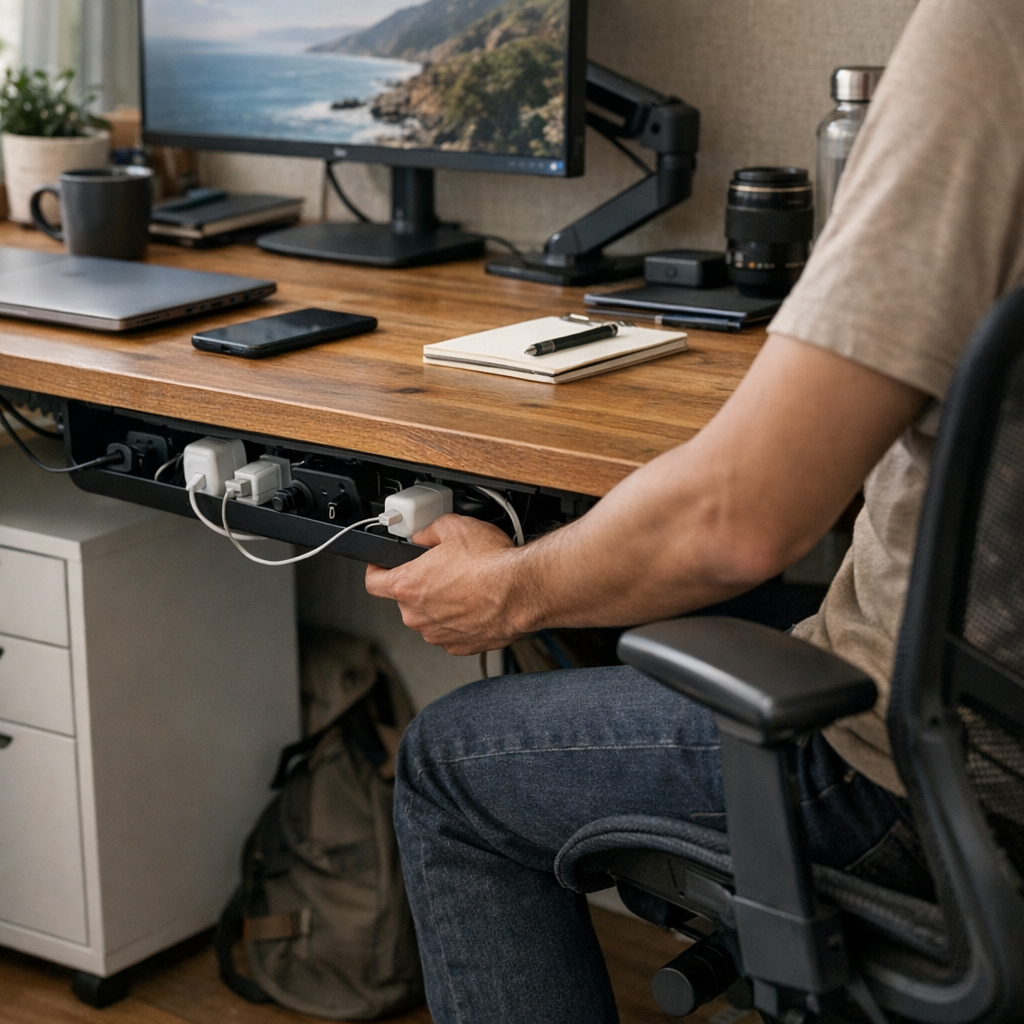
    The real improvement isn’t about hiding the problem—it’s about removing friction. Swap the closed cable box for a slim open-access tray, fixed below or behind the desk edge. Cords run clear in a single untangled path: out of sight from above, but one-reach accessible. Need a new device? Slide the plug in—nothing to lift, fish out, or push aside. Cables don’t fall or catch. No two-handed resets, no awkward fishing mid-task. Everyday plug-ins collapse from a sequence of steps to a single, smooth action.

    This shift changes behavior: you no longer hesitate to trade chargers, refresh a connection, or add another cable for a pop-up task. The outlet corner fades—there when you need it, backgrounded when you don’t. Floor clutter vanishes, under-desk tangles are gone, and your line of sight stays clean without any corner drama creeping back into each session.

    Everyday examples of the hidden difference

    Morning setups get frictionless. Walk in, dock your laptop, stretch the cable over—there’s no pile to dodge or cable to fish up from behind a drawer. The first plug-in of the day feels like pressing a switch, not untangling a net.

    Midday device changes don’t kill momentum. Snap from a call to a tablet session—charge ports are always in reach, no box lid to fight or charger to hunt down. You maintain flow between roles instead of resetting your space for each tiny transition.

    Shared desks avoid compounding mess. Where people swap stations all day, open trays block the rise of cable nests and dangling adapters. Every user finds their port instantly. The cleanup before closing is a two-second sweep, not a five-minute cable sort.

    Quick FAQ: Open-access outlet corners

    How do I keep my outlet corner tidy without losing easy access?
    Install a shallow, open cable tray beneath or behind your work surface. Position it where you reach forward—not below knee level—so cables stay hidden when seated, but can still move freely. This cuts floor tangles and ends the daily ritual of popping lids, shifting drawers, or ducking under the desk.

    Why do sealed cable boxes keep snapping back to messy?
    Because every hookup disrupts the setup. Closed boxes only hold their form when rarely touched. With daily swaps, wires stick out, lids get left half-off, and the whole shell traps yesterday’s chaos—putting the tangle out of sight, but never out of life.

    What’s the most common outlet storage mistake?
    Over-spec’d, under-used organizers: deep or lidded boxes in the busiest zones. You trade a row of cables for a barrier you have to navigate every day. The true upgrade is direct, nearly invisible routing—accessible but protected, hidden but not buried.

    The outlet corner that stays quiet, session after session

    The best desk setups don’t just snap into place for a photo—they stay frictionless when the real work starts. An open cable tray keeps the corner silent and low-maintenance, so resets happen in a blink and no cord pile creeps across your feet by Friday. The truly lasting difference isn’t how organized it looks, but how rarely you have to think about it at all. When the outlet area stops demanding your attention, the desk supports you rather than sets a trap—whether you share your space or work alone, the payoff is a routine that finally matches what you expected from a “well-organized” setup.

    Explore the full WorkBasic collection

  • Choosing Outdoor Storage That Matches Your Yard’s Real Needs

    On the first day, backyard storage can look perfect. Everything lines up—tools on a rack, bins tucked away, walkways clear. But after a week or two of real use, the cracks show fast. The watering can ends up stranded behind stacked shovels, the kids dump soccer balls by the gate, and the “quick grab” garden gloves get buried under last night’s cleanup. Smooth movement is replaced by sidestepping tangled hoses or shuffling bins to get at the one thing you actually need. Most setups don’t fall apart because they’re missing storage—they fail because they don’t match the grind of everyday routines.

    The Big Choices: Matching Setup to Routine

    Slick wall hooks, tough sheds, smart bins, rolling carts—every outdoor storage idea looks organized when nothing’s been touched. But after even a few normal weekends, the difference between “storage” and “function” gets obvious.

    Does your setup actually fit the way your yard lives? Nobody asks this when they’re staring at an empty system. You only notice when resets drag out—when you’re working around what was supposed to make things simpler. Even “organized” layouts can become the new source of friction if they’re out of sync with how people genuinely use the space.

    Wall Storage: Vertical Hopes, Real Limits

    Wall-mounted racks promise relief from chaotic floors. They’re great—briefly—at the garage edge or along a fence when tools pile up. Suddenly, a cluttered stretch feels under control.

    But in practice, wall space isn’t always working for you:

    • Interrupted Runs: That “free” wall almost always has something in the way—an outlet, a window, the corner of a gate—so racks land in fragments. Half the system sits empty. The other half turns into a swing hazard as long-handled tools jut into the walkway.
    • Seasonal Buildup: Wall racks thrive until the gear changes. Off-season tools claim the back hooks, but when umbrellas and snow shovels rotate in, what looked like plenty of room now means piling three things on one hook, forcing a full reshuffle to get at anything buried.
    • Overflow Creep: The “return” plan quickly unravels. Hoses droop, tarps sag off overcrowded hooks, and the side yard or garage threshold becomes an obstacle course of stuff “just put here for now.”

    Scene: You return barbecue tongs after a cookout, only to shove them onto a crowded rail—trapping a rain jacket you needed to dry. By the next gathering, you’re halfway inside before you realize where things were left.

    Freestanding Units: Clear Floor, Blocked Flow

    Cabinets and sheds sell a vision: all mess sealed away, backyard path wide open, nothing to trip over. If you’ve got a genuinely unused nook or corner, a freestanding unit can finally bring order—but the “easy fix” is rarely that simple.

    • Pinch Points: The shed that looks small in the catalog turns massive when its doors swing open—blocking half the patio and forcing sideways squeezes to get to the bins behind it.
    • Permanent Obstacles: Drop a big unit into any active space, and it becomes a landmark you’re forced to move around. Storage needs change—your shed doesn’t, and the floor plan stops flexing.
    • Broken Paths: Even a clean cabinet can turn a clear zone into a dead end, splitting up routes and leaving you circling around to retrieve just one ball or bag.

    Tip: If you’re hoisting a half-full bin out just to crack a door wider, or dodging around open lids, the “storage solution” is now in your way just as much as the mess ever was.

    Modular Systems: Flexible, Until They Freeze Up

    Stackable bins and modular racks arrive with big promises: switch things up whenever you need, reclaim space for parties, adapt all year. For changing seasons or families with shifting hobbies, modular is a lifesaver—on paper.

    • Awkward Sizing: Many systems look custom, but miss real-life needs. Long-handled tools flop out of shallow bins; hoses overflow baskets fitted for cushions; oversized boxes eat the path and shrink clear space.
    • The Edge Effect: Resetting gets slower. Bins that once rotated now collect layers of “for now” gear—a broken bat this month, off-season gloves next. What should have been fast becomes a sorting exercise every time you clean up.

    Scene: By mid-summer, you’ve divided pool toys from weeding buckets. Two months later, both bins spill out, and finding a single rake means pulling everything apart—again.

    Mobile Options: Roll to Help, or Roll to Nowhere?

    Rolling carts appeal when your outdoor life keeps changing. One day it’s a backyard game; the next it’s family repairs or garden planting. A mobile bin brings tools where you need them—so long as the ground cooperates.

    • Stuck in Place: Hit a patch of gravel, a lifted paver, or an uneven stone path, and your loaded bin stalls. The “mobile” solution now lives off to the side, a chunky obstacle reblocking a route you fought to clear.
    • Load Clash: High-use light items roll fine; awkward gear—hedgers, heavy planters—don’t. Most mobile storage ends up split: some things left behind, others forever stuck on a half-moved cart.
    • The Forgotten Cart: A bin meant to free up space ends up parked against the house, full of mixed gear, not moving at all—creating as much new frustration as it was supposed to relieve.

    Tip: If you’re dragging a cart backward to clear a bump, or splitting loads that never get recombined, rethink what actually needs to roll (and what should stay put).

    Setup Scenes: Where the Friction Builds

    Side Yards: From Shortcut to Choke Point

    The side yard strip seems perfect for storage… until a few returns pile up. Wall racks help, briefly—then a surprise rain, a found bike, or a couple of new tools squeeze the path to shoulder-width. Suddenly you’re stepping around a daily pileup, or detouring onto the wet grass just to avoid a stuck-out handle.

    Freestanding cabinets are no better when everyone wants “just one more thing” tucked away. The overflow jams up the narrow space, transforming the “smart storage” corner into a slow-motion obstacle course.

    Under-Pressure Patios: Reset or Relapse?

    Shared patio zones require flex. But a rolling bin left out after a gathering becomes a half-permanent fixture, killing square footage that was meant for relaxing. If nobody remembers to reset modular racks, that lounge spot quickly fills with abandoned returns—leaving everyone dancing around clutter that’s now just a part of the landscape.

    Garage Edges: The Gateway Clog

    Garage-side walls start efficient: a few hooks, a row of bins, easy access right at the threshold. But as soon as winter gear or extra sports supplies come home, the slim storage zone floods. Overflow leaks into the driveway, bins start stacking at awkward angles, and the “quick drop” turns into a 3-step process every time you pass through.

    Small Yards: Where More Storage Means Less Flow

    In tight spaces, one ambitious shed or stack of bins can kill the reset. If bins rise too high—beyond reach—or the shed blocks a narrow pass, old gear accumulates, and each reset gets heavier. A setup that stored everything now pins you into a loop of picking up what you just moved last weekend.

    Pressure Check: Is Your Setup Helping, or Slowing You Down?

    Ask yourself in the middle of any busy week:

    • Do certain corners always sprout new clutter, no matter the plan?
    • Are tools or supplies blocked behind unrelated bins—making every “quick grab” a multi-step shuffle?
    • Does one side become a dumping ground, again and again?
    • Is resetting the area truly quick, or does it now feel like undoing a slow collapse every time?

    If you’re sidestepping “temporary” piles, hopping over hoses dropped after use, or dreading resets that require moving things twice, your storage is fighting your real routine—not helping it.

    What Actually Works

    Better outdoor setups clear the way for movement—without becoming their own obstacle. Signs your setup is working with you:

    • Movement paths stay open, even right after heavy use
    • Items
  • How Carrier Placement Transforms Cat Comfort and Home Routine

    An open cat carrier seems like an easy win—leave it out, skip the closet shuffle, help your cat chill before the next vet trip. But as the days tick by, the logic starts missing its mark. Instead of a seamless routine, you keep hitting the same hidden snags: brushing bedding away from the water bowl, nudging the food mat back into position, picking kibble or toys jammed under the carrier’s half-open door. The setup that looked so practical starts to slow you down exactly where you need speed—during the daily circuit of feeding, refilling, wiping, and resetting the room. The StillWhisker world is about setups that work, not just look tidy, and this is where the cracks first show up.

    How an Open Carrier Quietly Reshapes Everyday Routines

    The first day, an open carrier tucked into a corner looks harmless. Your cat investigates, maybe curls up inside, and nothing feels out of order. But home routines are built on repetition. With every reset—feeding, water top-offs, litter sweeps—small soft frictions surface. The carrier, meant to ease cat anxiety and owner stress, now quietly creates micro-complications you feel in your hands, feet, and patience.

    Comfort in One Zone, Complications in Another

    Those tiny obstacles barely register at first. Maybe the carrier door nudges the edge of the food mat, or a paw-marked blanket flops into the refill zone, or toys find shelter under a barely-open door. One day you flick bedding aside without thinking. But after a week, all those half-second fixes add up—until your so-called “low-profile” carrier is the most persistent obstacle in your daily reset loop.

    Yesterday’s minimal setup now means every task is slightly out of sync:

    • Water refills paused by bedding that creeps toward the bowl edge, always one swipe away from a spill.
    • Extra fur build-up hugging the carrier, making broom work a bend-and-reach exercise.
    • Toys willfully trapped under or behind the carrier, never where they’re supposed to be.

    The Difference Between Looking Under Control and Feeling Under Control

    Rooms with every item in its “place” do look calm on the surface. An open carrier in the corner feels like a tidy solution, saves closet trips, and gives your cat a steady den. But as routine blends into routine, visible order splits away from functional order. What looked set now keeps you circling back, fixing what the carrier placement keeps undoing.

    Clutter Creep: When Small Moves Add Up

    Picture a morning where you just want to top off the water and sweep tracked litter. Now the food mat catches bedding, and the water bowl presses against the open carrier door. Avoid soaking the carrier fabric is now an extra dance step—and when something does spill, it’s spot cleaning, not just a quick towel. Litter and fur ride out of the box into your path, drawn by the edges and lips of the open carrier, always in the line you just cleaned. If your routine feels slower each cycle, this is the reason, not bad luck or messy pets.

    The Reset That Never Quite Resets

    Quick resets are the lifeblood of indoor cat life. Scoop, wipe, refill, and move on—that’s the plan. But when the carrier lives too close to feeding or traffic lanes, every “quick” task has a hidden extra: move the blanket off the corner, wrestle a toy out from under the door, swipe fur from a spot your slippers land every morning. The setup resets, but you never really get ahead. It’s a game of catch-up with the same frustrating piece.

    Why Placement Makes the Real Difference

    Open-access isn’t enough. Where the carrier lands in your room—relative to food, water, and cleaning lines—determines if your setup lessens or multiplies repeat work. A carrier just inches too far into the path of daily routines doesn’t look like a problem, but it’s where everyday friction keeps coming from.

    When Comfort Becomes a Tradeoff

    You imagine less stress for your cat, maybe more naps in the carrier. What you get: food mat edges squeezed, dishes jostled by every pass, toys funneling under the open door. Your cat’s comfort pulls nightly; your flow fragments with each minor rescue or reset. Grooming and bedding bring it home—cats always shed and settle where they rest, so the new favorite den now means more shed fur and more bedding bunched up right where you need quick, clean access.

    Scenes From a Typical Week: Real-World Carrier Friction

    Reaching for the Bowl, Finding an Obstacle

    You’re hungry, your cat’s hungry, you try to refill the bowl. The carrier door catches your sleeve. Tomorrow, it’s a stray toy between mat and carrier. By day three, you’re awkwardly shifting the whole setup just to do what used to be automatic.

    Cleanup That’s Never Quite Done

    Nightly sweep: fur sticking wherever broom bristles can’t reach cleanly, litter making a new lineup next to the carrier—not where you intended your “line” of clean to land. Even water bowl wipes multiply if a scrap of bedding soaks up a drip and starts a new load of laundry. You don’t “see” bigger messes—but the effort adds up all week.

    Shared Space Becomes Shared Frustration

    Cross the room with coffee? Now it’s a sideways step, every pass. Your partner heads in with groceries—a quick detour around the carrier cluster. Nobody complains, but both of you clock that this easy-looking setup demands attention at the worst moments. The inconvenience isn’t dramatic, but it saps the sense that your space is really yours.

    The Surprisingly Simple Fix: Redefining Carrier Zone

    Among all these small, sticky disruptions, placement is the one variable you can always shift—no special gear, just better zones. It’s not about banishing the carrier, but recognizing when its footprint leaks into the routes you use most. Moving the carrier a couple of feet away from water, food, or major walkways often erases half the repeated pain points instantly.

    • The food mat clears, allowing honest refills without bedding edge drama.
    • Bedding stays inside the carrier—no more fishing out blankets or toys stuck in the under-door gap.
    • Litter drift slows or reroutes, making sweeping once land where it counts instead of creating a secondary mess zone.
    • Your sequence—refill, scoop, wipe, reset—returns to the unthinking flow you had before.

    Tips for Long-Term Flow

    • Keep one bowl’s width between the carrier and feeding or water setups.
    • Turn the carrier door away from traffic and reload routes so it can’t drift into cleanup work zones.
    • Swap thick, floppy bedding for snug padding that won’t crawl out with your cat—or use carriers with higher bedding lips to keep loose ends in check.
    • Test carrier placement during your most active daily resets—don’t trust “out of the way” when the room is quiet.

    Comfort for Your Cat, Calm for Your Routines

    Most cats trust the carrier more when it’s always there, but owner-side comfort matters too. If the carrier works for your cat but means more resets, spilled water, or surprise laundry, both sides lose. StillWhisker setups focus on layouts that flex—catering to your cat’s hiding and grooming, while letting you keep the daily upkeeps quick, sharp, and clean. If relocation doesn’t help, or the same blockage keeps cropping up, weigh swapping the carrier for a softer hideaway or tucked-in rest spot that doesn’t crowd your high-traffic areas.

    What Lasts: Setup That Reduces Repeated Work

    The clean look on day one fades fast if it steals time by week three. The setup worth keeping is always the one that shrinks invisible extra work—less nudging, less bedding cleanup, fewer side detours, and more uninterrupted time. Indoor cat routines are sharpest when nothing quietly drags them out—not even “solutions” that seemed like wins at first glance. Small shifts in carrier location or bedding control repair the flow of daily resets, and the difference you’ll notice is in the reduced friction, not just a neater floor.

    Ready for a carrier setup that saves seconds—and patience—every day? See what StillWhisker setups look like in real-world use.