Author: jaesoon_admin

  • How Small Changes in Entry Setup Can Transform Your Dog’s Greeting Routine

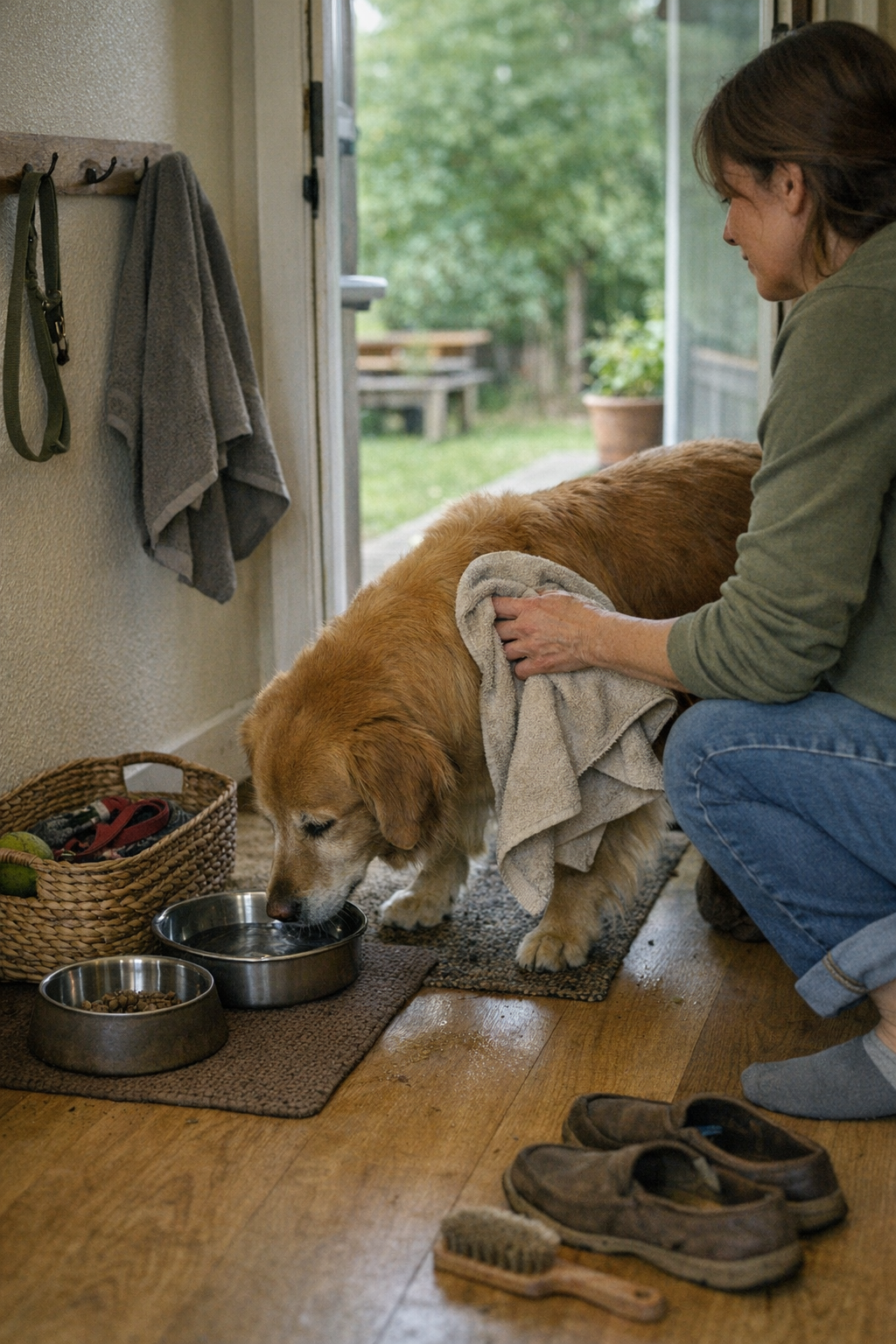
    You refill the water bowl first thing, scoop out the food, and reset the towel for after-walk paws—expecting the routine to stay simple. By day three, that confidence slips: water has splashed past the mat, a leash lies tangled by the door, and the towel you thought was ready is crumpled out of reach. If your daily setup turns a basic care loop into a series of sidesteps and extra bends, it’s not solving friction—it’s multiplying it. That’s the CalmPetSupply world: real daily setups tested by use, not just appearance.

    The Subtle Build-Up of Clutter and Delays

    Consider a water bowl just inside the entry—easy to reach, supposedly efficient. But each trip in brings a new, familiar snag: puddle near the base, shoes knocked from their spot, towel unfurled and damp before dinner. None of these slow-downs is catastrophic, but their repetition leaves you wiping, moving, and redoing steps each time. Dismissing one as a “bad day” works until they start stacking, and routine moments quietly double in effort—spreading out cleanup and forcing you into a loop of resets when you need the day to keep moving.

    Everyday Friction Points Revealed

    What slows you down isn’t the single spill or missing wipe, but how often the same snag reappears. You reach for the water bowl and find the leash stand jammed against it—or try to grab grooming wipes, discovering they’re somewhere behind the bag or mail. Entry shoes, once corralled, fan out further by evening because of detours around stacked gear. Each return home means an unscheduled task: clearing a puddle, reshuffling items, or hunting for the towel that never quite stays put. By the week’s end, the area looks organized but functions like a low-level obstacle course—slowing you at the exact moments that routine should be easiest.

    The Cost of “Almost” Organized

    The problem isn’t just mess in view. Slowness creeps in when basic care tools end up blocked or out of reach, turning what should be fast into fumble. Maybe the brush fits behind a bench—until the leashes jammed there mean you have to fish everything out just to clean muddy paws. The towel migrates to a drape across the room, or hangs just far enough away that wiping down gets pushed later, again. The essentials—wipes, scoops, towels—don’t truly disappear, but they drift to the edges, so you keep interrupting yourself to fetch, clear, or reset one more piece. Functional order falls apart piece by piece, even if the surface still looks uncluttered.

    When Look Doesn’t Match Function

    Many setups trick you: the floor is clear, bins are closed, but friction hides just under the surface. If you’re reshuffling each time just to put down groceries or settle a pet after a walk, you’re managing looks, not flow. Returning toys means skirting a water patch or a bowl blocking the bin, so the “tidy” corner works against you. Shoes pile up not because you have too many, but because the daily shuffle never lines up with the real path you walk, and order on Monday drifts by Thursday. The difference between organized and actually usable shows up in those repeated, visible pauses—when you know exactly what’s wrong, but it’s built into the path itself.

    How Small Adjustments Have a Big Impact

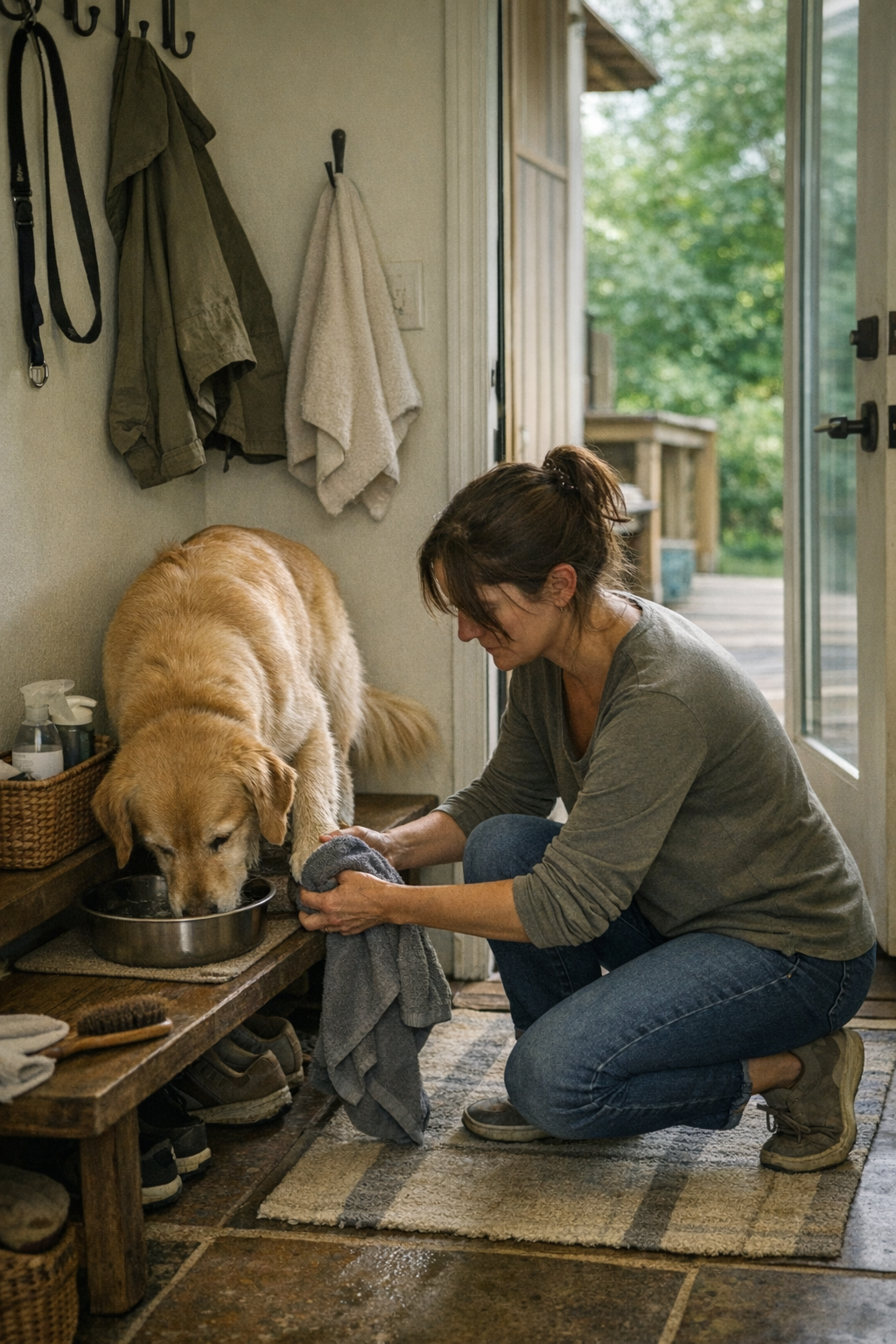
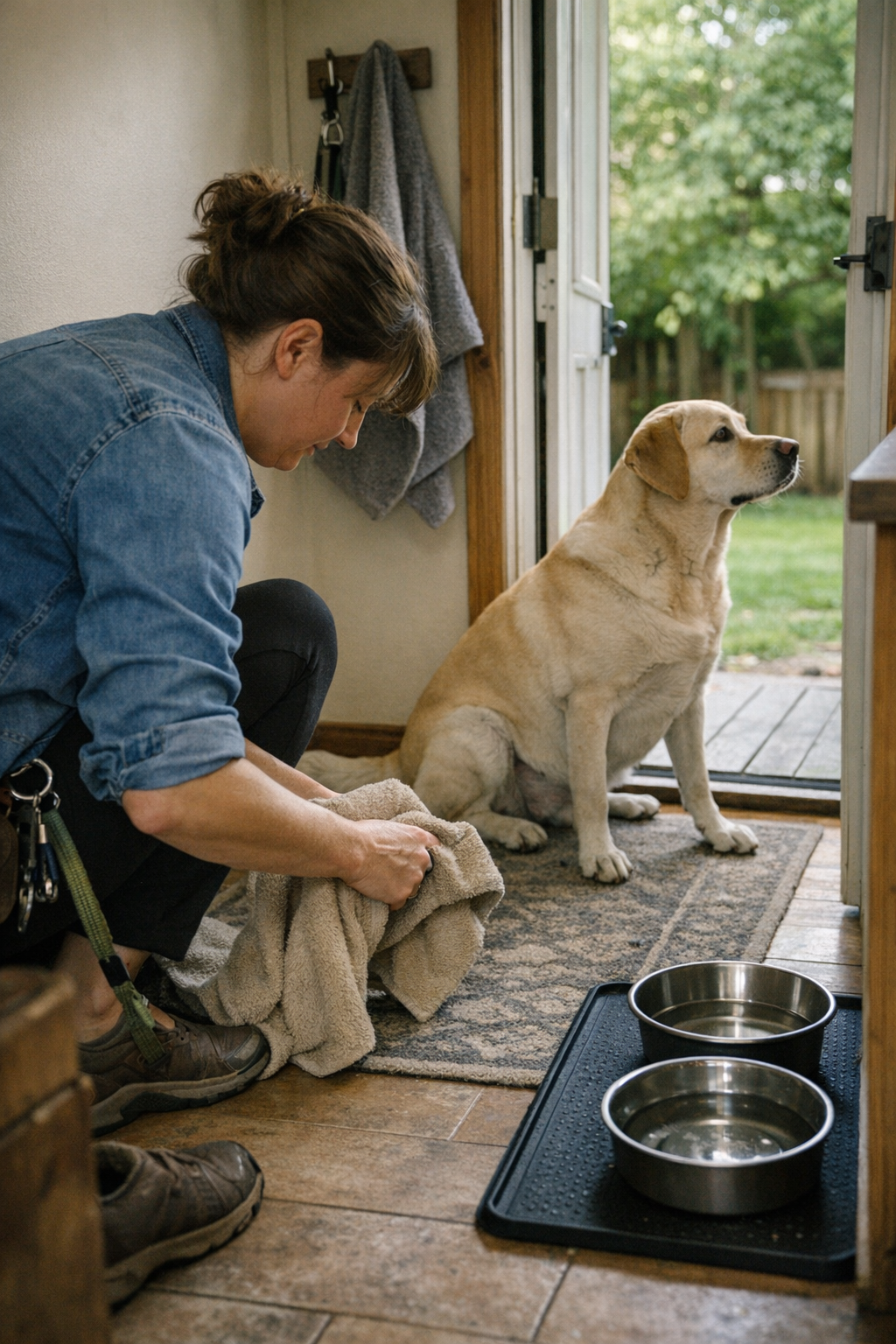
    One move—shifting a water bowl a few inches beneath a bench, instead of leaving it mid-path—turns a mess-prone access point into an afterthought. Side-mounting the towel just inside the door puts it always within reach, making post-walk cleanup possible without hunting. Over a week, you notice you’re not stopping for unplanned wipes or kicking shoes out of the way. A leash, once lost in a gear heap, finds its place on a wall hook, so late-night walks don’t start with a search. Even just dropping grooming wipes in an open tray instead of a closed drawer removes a whole layer of fumble. These aren’t overhauls—they’re fixes that survive actual repetition, not just first-day setup.

    What Really Works for Everyday Calm

    Durable calm comes from setups that absorb repeated use, not just tidy up for show. The details that matter:

    • Keep leashes, bowls, and towels where you can grab them mid-flow, not where you have to stop and move things just to reach one.
    • Separate shared tools—don’t let a brush, refill scoop, or wipes get buried behind less-used gear.
    • Spot where your routine always lags or clogs up, then adjust that one placement first—don’t wait for everything to break down before moving a bowl or hook.
    • Don’t over-value bare surfaces; check if quick-access actually works right after walks or meals.

    The best setups don’t disappear into perfect visuals—they work exactly when and where you need, with nothing blocking a quick grab. Instead of chasing one-off tidiness, track the friction that returns, and change just that point. The shift is obvious: less time resetting, less interruption, and care steps you no longer dread. That’s the visible calm of a setup that’s easy to keep up—one that stays in sync with real, repeat use.

    Explore CalmPetSupply setups trusted for daily resets and real-world ease here.

  • How Adjusting Your Dog’s Entry Setup Creates a Smoother Home Routine

    When Calm Routines Break Down at the Door

    Every pet owner knows the moment: you come in from a walk, arms full, and the entry clogs instantly. One bowl edge blocks your step, the paw towel’s nowhere within reach, a leash gets tangled, and your dog crowds in excited. The simple sequence—drop keys, wipe paws, refill bowl, hang leash—turns messy just because supplies drift too close to the threshold or go missing after one rushed return. What should take seconds drags out: blocked by a feeding mat, lost towel, or a pet determined to stand right where you need to reset.

    Left unchecked, these small stalls chip away at routines that seemed simple. You put off wiping muddy paws, feeding spots creep off-track, towels show up bunched in corners instead of hanging by the entry. The tidy look doesn’t last. Instead, clutter edges further inside, cleanups stack up, and a setup that felt organized starts revealing its weak points—every time the door opens.

    The Signs of Entry Routine Friction

    It doesn’t take chaos to start seeing problems—a drizzly afternoon, grocery bags in hand, or a dog sprinting to greet you is enough. Entry friction usually shows up as:

    • Reaching for the food bowl but shifting clutter aside or prying it from under your dog’s nose before you can pour kibble.
    • Stepping in with wet shoes because the paw towel is out of reach—not lost, just not in its place from yesterday’s hurried reset.
    • Trying to refill water but blocked by a mat, toys, or bowls inching closer to the entry each day.
    • Backtracking for a wipe or supply that keeps drifting out of arm’s reach—turning quick resets into awkward workarounds.
    • Cleaning the same floor patch twice because a missed paw wipe or jostled bowl happened the second the front door opened.

    These aren’t major disasters; they’re quick interruptions that pile up, doubling the effort and draining the pace from what should just be in-and-out care.

    Use Scenes: How Entry Bottlenecks Creep In

    Imagine a regular afternoon. You crack open the door, groceries pressing your arm, leash trailing, dog hovering. There’s no space to turn—a feeding bowl edges too close, the towel’s already slipped off its hook. Instead of dropping bags and moving on, you have to shift pet items just to clear a few inches of floor. Kibble scatters. A bowl slides underfoot. The next arrival only scrambles things more, making the entry feel less like a routine and more like something you manage on the fly every single time.

    Straightening up doesn’t last: bowls creep back, towels migrate, and toys drift into the walk path after the first round of care. The area might look organized for a moment, but—one missed reset later—the whole sequence feels askew, and soon you’re back to working around clutter rather than through your routine.

    What Placement Changes Actually Fix

    The most reliable fix isn’t more discipline or new habits, but shifting supplies out of the hot zone. Move feeding and water stations several steps away from the entry; set a clear division between the greeting space and care area. Now, muddy paws aren’t pawing at the bowl, and there’s less risk of tripping over pet gear during busy entrances.

    Make each supply truly reachable, but not transferable. Hang the towel on a dedicated hook—within natural grab range, not drifting onto the floor. Lay down a visible mat as a pause marker; it cues your dog to hold back. Not everything needs to look perfect, but each item should have a spot that sticks through repeated use.

    This setup doesn’t just cut out visible mess—it trims away the silent repeat-work that comes with a cluttered entry. Instead of doubling back to hunt down a towel or straighten a bowl, your care sequence lines up: walk in, reset, move on. The space supports the routine instead of scrambling it.

    Maintenance vs. Appearance: What To Expect Over Time

    Most entryways pass the test right after a deep clean—but few setups hold up to repeat care if the basics aren’t truly accessible. When bowls or towels don’t have fixed spots, mess creeps back and routines stall. The real test isn’t a staged photo but the next five arrivals: does the layout support quick feeding and cleanup, or does every step require backtracking, searching, or reshuffling?

    For example: You rinse a bowl, but another item’s slid back into the same spot. After-walk paw wipes get skipped because the towel’s missing—one reset further delayed. The longer it takes to re-place things, the more likely you are to put it off entirely. Soon, you’re resetting in catch-up mode, and yesterday’s clutter is already setting up tomorrow’s hassle.

    Real homes aren’t for display. Entry setups have to hold up across real, repeated routines: feeding, refilling, wiping, night check-ins. The strongest setups aren’t the neatest, but the ones that avoid double handling and routine drag, even when care happens on autopilot.

    Quick Answers to Common Reset Issues

    How can I get my dog to pause back from the door?

    Shift feeding and water stations several feet from the entry and place a visual marker (like a mat) to signal the greeting line. Pause behind that marker when arriving, reinforcing the habit every time—this boundary makes a difference without adding extra steps.

    Why does bowl and towel placement matter so much?

    Bowl and towel location sets the speed and order of your whole routine. A bowl by the door attracts mess and crowding on arrival, while a towel somewhere else turns paw wipes into a chore you’re likely to skip. Placement isn’t about neatness; it’s about unblocking care at the only moments it really matters.

    What’s the fastest way to reset after a walk?

    Return the towel directly to its hook and keep pathways clear, even if you’re in a rush. One minute spent resetting placement means tomorrow starts smooth—instead of in cleanup mode.

    Designing for Quiet, Reliable Entry Routines

    Calm, reliable entries aren’t built from tougher training—they run on a layout that stops supplies from drifting into the way. When bowls hold their ground, towels are always grab-ready, and toys don’t take over the threshold, the chaos shrinks. Calm isn’t effort; it’s a pattern you can keep all week.

    The payoff is visible: fewer repeated wipe-downs, less block-and-reshuffle after feeding, water, or walks, and an entry that resets in less time each day. The real difference? You can move from outside to inside, reset, and move on—no slowdowns, no doubled back steps, no sense that pet care keeps leaking into the rest of your routine.

    Ready to see what a practical, do-able entry setup actually feels like? See the daily care basics at CalmPetSupply.

  • How Visible Refill Shelves Prevent Last-Minute Supply Shortages at Home

    The instant you realize there are no keys, wipes, or pet bags at the door isn’t a forgettable slip—it’s the kind of disruption that can unravel the whole rhythm of leaving or coming home. If the entry zone fails to flag what’s missing, hassles pile up fast: you’re fishing under benches, rummaging through tote bags, or losing another precious minute at the threshold while someone else waits. A missing refill shelf isn’t just an inconvenience. It exposes how quickly even an “organized” space starts tripping you up under real, repeated use.

    The Real Friction at the Threshold

    Most entryways break down where routines collide. Bags get dropped just inside the door, shoes form a moving blockade, and a utility bench—supposed to streamline exits—becomes a catch-all for stray jackets, delivery packages, and anything “urgent” enough to skip being put away. Order lasts until the second rush hour or rainy day. Shoes spread sideways, mail starts stacking at the wall, and the entire threshold zone narrows: not because there isn’t enough room, but because every reset demands a sweep and sort that never sticks. Movement jams up. The baseline control you had yesterday dissolves with one late morning.

    The true gaps appear in the high-turnover basics, not the deep storage: missing keys, half-used sanitizer, vanishing wipes or empty pet bag rolls. These don’t matter—until you’re sprinting for the door and they’re gone. The crisis isn’t in the setup; it’s in the stumble it causes when you’re already late, and the system is too buried, too cluttered, or too hidden to notice what’s running out before it hurts.

    The Difference an Exposed Refill Shelf Makes

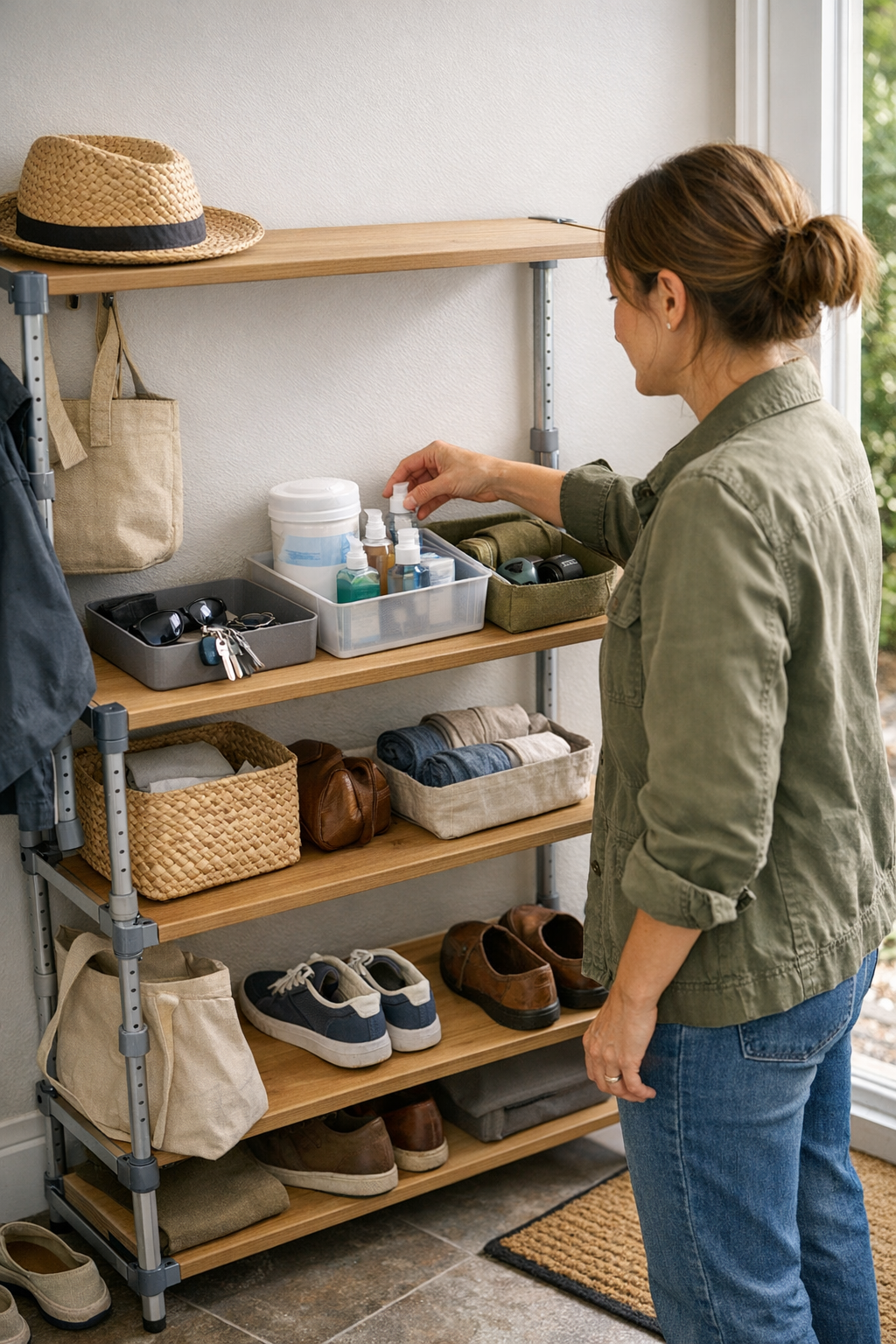
    A refill shelf isn’t just minimalist décor or a mini supply line—it’s a daily checkpoint wired into the main flow. Place it in plain sight, near the main bench or right by the door: every pass becomes a built-in status scan. When the wipes are down to the last sheet or the pet bags are missing, the gap is obvious before it matters. There’s no separate tracking routine. The shelf’s visibility does the work, and shortages show up days earlier than with closed bins or buried cubbies.

    Here’s what breaks down with the “hidden” setup: Stashing basics in deep cabinets might look neat, but it clouds what actually needs attention. Shortages sneak in because the deficit is hidden—by the time you notice, you’re blocking the exit, disrupting the next person’s path, or backtracking for a missing item. That “clean” look caves under real pressure; it trades surface order for routine breakdowns you only see at the worst moments.

    Everyday Setbacks: How Small Misses Add Up

    The limits of a closed or cluttered refill system turn up in the repeated scenes: you drop your shoulder bag, and the slim walkway is instantly a traffic jam. You try to file reusable bags into a shelf that’s already crammed with last week’s mail or winter gloves. You open the door and only then realize, again, that the pet bags are out. Multiply this across a shared space—kids coming in, roommates rotating schedules, frequent visitors layering new clutter—and the breakdowns multiply.

    When the refill shelf stays in the main sightline, every missing or overflow item gets caught before it blocks movement or builds into a mess. If overflow starts—extra keys, umbrellas, random gadgets—the misplaced stuff isn’t hidden. It interrupts. That’s the built-in self-reset. You deal with small problems as soon as they appear, and the threshold stays functional. No more sprinting back for missing keys; missed refills don’t become full-blown disruptions.

    Location Is Everything: Making the Shelf Work

    A refill shelf behind a closet door or tucked out of the main pathway is mostly decorative—its status fades into the background noise. For it to help, it has to compete for attention along the route people actually take: mounted above the bench, by the main bag-drop, close enough that no one misses it in a rush. If you have to step out of the regular flow to check it, you won’t. And once it’s out of sight, it starts failing silently. Hidden storage doesn’t remove pressure—it just delays the consequences.

    Visibility means survival for high-use supplies. The best-positioned shelf turns every entry or exit into a split-second scan: keys there, wipes there, gap there—done. Systems that try for perfect neatness or hide essentials for aesthetics can’t keep up. If you don’t notice the missing item until you need it, location cost you the function.

    How Refill Shelves Shape the Reset Routine

    With bins or cubbies, resets become an event, demanding memory and extra steps. With an open refill shelf, the reset is frictionless: you see the shortfall mid-movement, and the fix is obvious before you have to think about it. A half-empty tub of wipes can’t hide; missing keys are a blank space, not a scavenger hunt. Daily surges—construction dust, wet umbrellas, visiting pets—are flagged as they pile up, not after the zone gets blocked. The reset shifts from periodic to continuous. That’s not more work—it’s less drama, less time spent finding or refilling basics under pressure.

    Even better, a consistent placement reclaims the path: kids, guests, or roommates can all see what goes where, and everyone helps maintain the signal. If the refill’s been skipped, the visual gap nags until you fix it. Overflow—receipts, rogue gadgets, mystery toys—gets cleared because there’s no hiding spot for “later.” Instead, the essentials fight back against clutter creep automatically.

    Controlling Clutter and Overflow: Simple, Repeatable Steps

    The refill shelf puts limits back in play by design. Shallow trays show the difference between daily-use and just-in-case instantly. When someone tries to expand into overflow—adding a magazine, stashing a cord—the category lines spill into plain view. That’s the cue for a fast reset, not a growing mess. The shelf self-corrects, and corrections happen right in the course of passing through, not as project cleanups.

    The smallest tweak that compounds: Build a status check into an action you already take—a weekly bin pass, or a reset as you come in on Sunday and change shoes. That two-minute scan avoids whole weeks of threshold frustration. Over time, the cost of letting overflow creep in is lower than the payoff of resetting it, so the habit sticks.

    Why Not Every “Neat” Solution Actually Works

    Closed bins and matching baskets are tempting—they look controlled in a photo and offer the illusion of permanent fix. But routines expose what the catalog doesn’t show: a lid or door means you don’t see the deficit building until it’s urgent. Over time, what’s hidden is lost, and you keep rediscovering the same holes: an empty hook, misplaced keys, missing dog bags. The contrast isn’t visual—it’s functional: a setup that surfaces shortages keeps up with routines, while a “tidy” one that hides them triggers last-minute resets and wasted motion. What looks neat at first unravels fastest when you actually live with it.

    Real Results After a Week in Use

    Switch an underused cubby or too-deep shelf for a refill shelf just above the bench, and the feedback loop is instant. Shoes and bags still roam, quick drops still happen, but nothing blocks the grab-and-go for essentials. Every exit becomes a micro-reset—grab, glance, move—without stalling out. Entry path stays clear, even when weather shifts, guests arrive, or routines get chaotic. Daily pressure on the threshold falls, because the stress doesn’t accumulate out of sight. It gets flagged and sorted before it clogs up the flow.

    It’s not about having the fewest items or the prettiest shelf—it’s about whether your entry setup cooperates with the way people actually use it, again and again. The best refill shelves are rarely Instagram-neat, but they are always in the line of fire and always functional—helping everyone who passes through avoid those avoidable stumbles that turn small gaps into bigger headaches. When routine resets happen before you need them, the whole space moves with you, not against you.

    Shop practical transition-space storage at Betweenry

  • Small Changes That Transform Your Dog’s Calm Greeting Routine

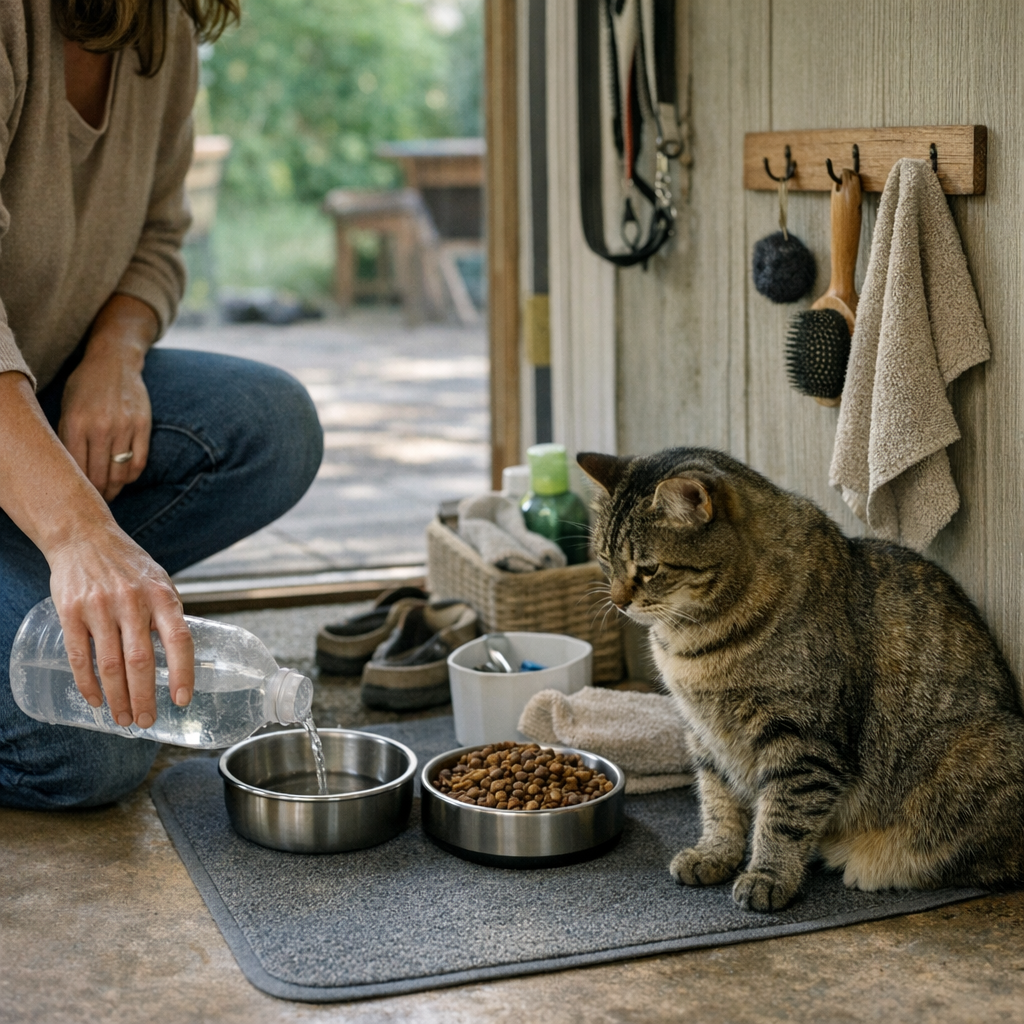
    Calm, low-hassle pet care at the entryway isn’t an accident—it’s shaped by how well your setup handles the repeated, sometimes rushed moments that define daily life with a dog or cat. Every feeding reset, water refill, and quick cleanup either works smoothly or hits a snag: the water bowl slides into the path again; you bend to grab a towel, only to find it on the floor, just out of reach; you fumble with the pet brush that’s migrated from its spot and now blocks a quick exit. These aren’t just annoyances. They’re friction points that turn routine care into a cycle of minor disruptions, undercutting the calm you want at the door. The CalmPetSupply world zeroes in on the difference between a setup that genuinely fits daily rhythms and one that quietly chips away at them, no matter how tidy it looks once a week.

    Everyday Obstacles Add Up Fast

    The friction is there before you spot it: reaching for the water bowl means bumping a brush knocked loose earlier; feeding time is delayed as you shift bowls out of the traffic lane; a towel meant for muddy paws lands on a chair, then vanishes when it’s actually needed. Each small pause—the stuff you don’t plan for—adds up, slowing your entry and exit until the trip in or out feels like a gauntlet of tiny corrections. It’s not about big messes, but about seconds lost and a daily routine that drags you into repeated, low-level fixes.

    What starts as a quick walk-through becomes a pattern of mini-resets: nudging a food mat aside for the third time in a day, lifting a spray bottle out from under a leash pile, finding a brush tucked behind the shoe basket. These don’t demand an overhaul, but left alone, they guarantee extra steps and interrupted flow, every single day.

    When “Tidy” Doesn’t Mean Functional

    A weekly tidy hides more than it solves if the core problem keeps coming back. Place water bowls, dishes, leashes, and towels anywhere near main pathways, and a single rushed morning puts everything back in disarray. Tools that should speed you up—quick wipes, bowl mats, cleaning sprays—end up blocking fast access if their “homes” aren’t right where you need them in the flow of actual use. A towel hook two feet from the door looks organized but means wet paws stomp onto the rug because the grab wasn’t instant. That handy brush, left by the door, starts snagging jacket sleeves or knocking over bags by day three.

    The space can look neat in snapshots, but if normal movement forces you to stop, shuffle, or reach repeatedly, the setup isn’t truly functional. You aren’t fixing clutter—you’re reworking the same little obstacles, making a “clean” entryway into a loop of interruptions, not a real point of calm.

    Practical Scenes from Real Home Routines

    Here’s what happens in actual daily flow: You reach to refill the water bowl after dinner, but it’s slipped into your walkway again, nudged by a tail or kicked during the last trip. As you reposition it, a grooming comb rattles into view, half-hidden behind the bowl. When water drips or splashes, the cleaning towels and spray are close—but not grab-ready, wedged awkwardly under a leash, so cleanup is skipped or delayed.

    Morning routines show another weak spot: leashes tangled by the door block your bag from reaching its hook; the right brush for after-walk fur is missing because it was “put away” somewhere less visible the night before. At night, a soggy patch greets you, evidence that the water bowl’s position—just inches off the clear path—still hasn’t solved the repeat spill.

    The Weak Point in an Otherwise Orderly Setup

    Even with a new system, one stubborn flaw always reappears: a single loose item without a fixed, easy-to-grab spot. Towels technically present, but if not at arm height or near the door, muddy paws land on carpet. Food or water mats, if they slide every refill, guarantee an endless “straighten up” loop. Most of these breakdowns are too minor to feel urgent, but their effect compounds—more time spent restoring what should already be set, more missed chances for an actual smooth routine.

    Finding Simple Fixes that Hold Up

    What changes this isn’t big design—it’s alignment with real behaviors: water bowls placed just outside the collision zone so you stop mopping daily puddles; towel hooks right at the entry, not near it, so wiping paws doesn’t feel like an extra chore; a single, stable bin or basket for active-use tools so the right item is found every time without a search. Move something one foot out of the walkway or shift a hook to true hand height, and the old interruptions fade—not because the room looks better, but because routine care gets out of its own way.

    Over time, these shifts mean fewer “fix it real quick” resets. Entry and exit move back to neutral, not tense. What feels like a small adjustment delivers steady relief from the constant shuffle—so calm isn’t luck, but the result of a setup that can keep up with daily care instead of tripping over itself.

    To explore solutions tailored for daily pet life, visit calmpetsupply.myshopify.com.

  • How a Structured Donate Bin Keeps Your Entryway Clutter-Free and Organized

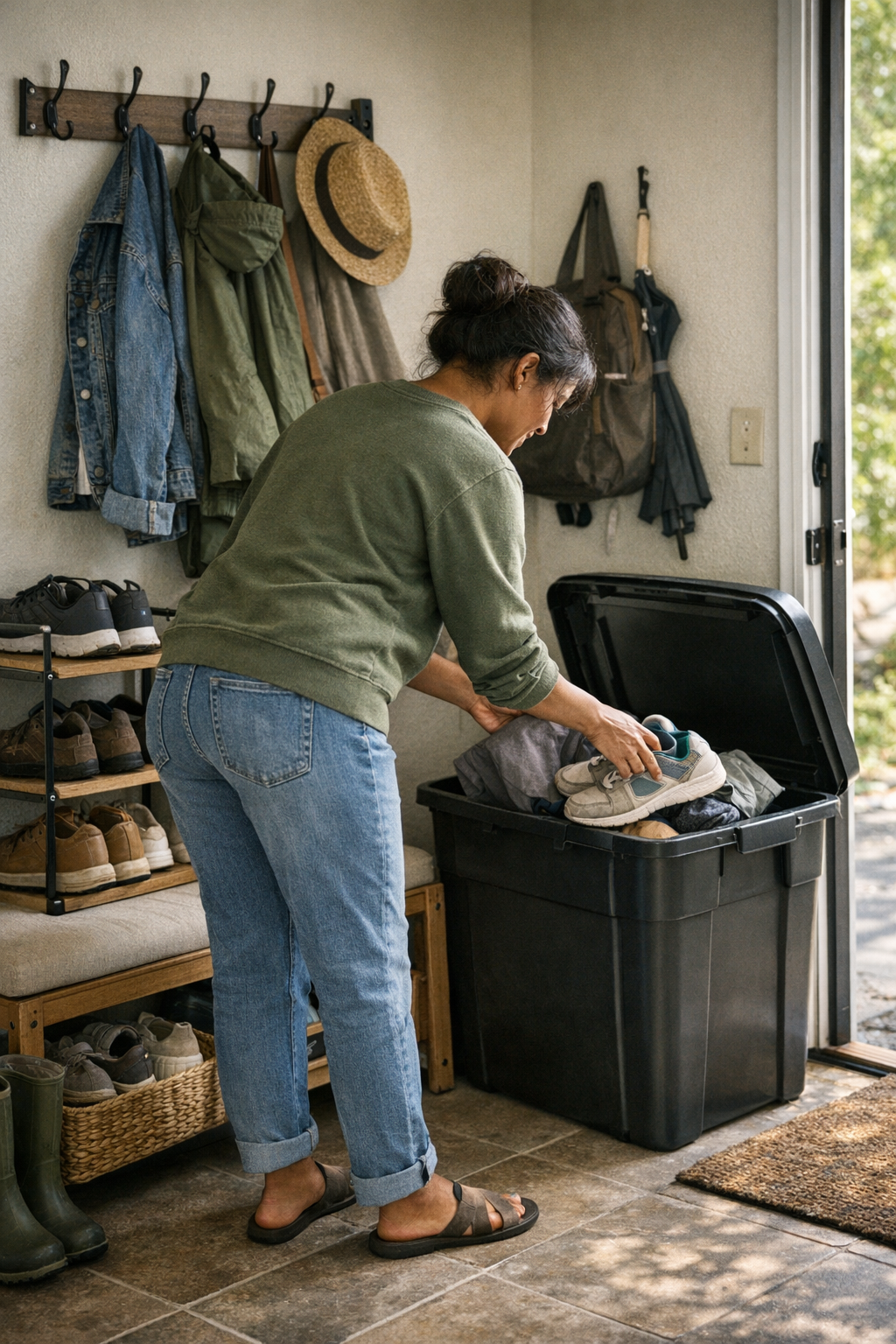
    The entryway donation bin: smart on day one, a problem by week three. It’s easy to mistake a closed bin by the door for an organized, intentional exit path—until daily life unravels that illusion. Shoes you meant to give away resurface for a last-minute soccer run. Jackets waiting for donation slowly blend back into the active lineup. The bin fills, then overflows, and the clear walkway you worked so hard to create slowly chokes off. Instead of streamlining departures, the “donate” station starts running interference—a low-level checkpoint that interrupts every exit or entry, making each pass feel heavier than the last.

    When the Donation Bin Becomes a Roadblock

    Every donation setup hits its turning point: the bin stops serving as a smooth exit channel and starts operating as a holding tank. What seemed like a clean solution collects shoes in limbo, jackets you keep “just in case”—and before long, the divide between outgoing and everyday gear blurs. The result is predictable but frustrating: the path narrows, shoe rows inflate sideways, and you twist around one more bag perched too close to the door. Instead of handling clutter, you’re shuffling it. The bin isn’t helping flow; it’s bottlenecking it.

    You notice the slide. Day one, the area looks clear. By week two, a silent tide of indecision builds: shoes lined up for donation become tomorrow’s after-school pair, and scarves set to go out end up grabbing a hook when the weather shifts. The bin goes from “exit lane” to a silent anchor, clogging up the threshold and making each reset harder than the last.

    Why Bin Structure—Not Just Size—Matters

    Size is tempting to blame, but it’s structure and location that set the real tone. An oversized bin tucked under a bench looks neat for the first week—until its openness invites a mix of outgoing and everyday items. Even matched bins under utility benches can turn the drop zone into overflow, not order. All it takes is one muddy boot edging onto the mat or one backpack dropped “just for now” to throw the system off. If retrieval is too easy, anything you meant to donate can quietly slip back into use, while unrelated gear creeps in. The space fills, but nothing actually moves out.

    When a Drop Zone Turns into a Holding Tank

    The friction isn’t obvious until you live with it: the bin fills after one clean-out, but within days, someone reaches in for a jacket when a cold front hits or sifts for a pair of shoes on their way out. If you stash the bin out of sight, everyone forgets about it and nothing leaves. Keep it too close, and everything hovers in reach—pausing, not departing. Instead of a transition, the bin becomes semi-permanent storage, draining energy from the entry itself.

    The Cost of Blurred Boundaries

    Clutter reveals itself in moments: a delivery knocks and you need to reshuffle containers just to open the door; a bag left at the threshold means you sidestep with every exit. These small hurdles become routine. If benches and bins lack real separation—active gear from outgoing items—clutter mixes fast. Each “temporary” return becomes another obstacle, multiplying the frustrations of cramped mornings or hurried returns home. The symptom: slowing down to reset, tiptoeing around the threshold, and a visible give-up as the space loses its identity as transit and becomes a landing pad for every maybe-later.

    Intentions don’t beat friction. The fix isn’t bigger storage, but stronger boundaries: bins that are harder to access, closer to the edge but out of routine reach, and separated enough to resist blending back. A proper donation flow only works if the setup fights retrieval and speeds things out, not in.

    Shifting the Setup: From Stalled to Flowing

    Swapping one big bin for several baskets doesn’t solve the core problem—access and flow. After months with a lidded box collecting the same stuck pile, switching to a wall-mounted “donate” bin moved the dial. When mounted just above shoe level and outside routine grab spots, it forces a conscious pause. Suddenly, the family’s outgrown cleats and forgotten coats stop being easy to pluck back. When the bin’s contents rise halfway, it’s a visible signal to schedule a run—not to let things stew. The entry regains its job as a launch zone, not a backlog.

    Scene from the Entryway: Real Setup in Motion

    It’s Saturday. The old soccer shoes go into the bin—finally. Thursday, someone thinks about pulling them back for mud season, but a wall-mounted unit stops the quick grab; retrieving now means real intent, not impulse. By Sunday, seeing the bin fill just short of its top, you’re nudged to act. No more cross-contamination: active gear stays in regular rotation, outgoing items don’t drift back. The rest of the threshold stays clear. No more zig-zag navigation or accidental item swaps at the busiest times. Flow is restored—and resets feel possible, even on the tightest weekday mornings.

    Working Guidelines That Actually Hold Up

    Set a Removal Rhythm

    Avoid the overflow trap. Dump the donation bin as soon as it hits half full—or, at minimum, every two weeks. A firmer cadence means less chance for items to creep back and less risk of the bin turning into a fixed feature that nobody really uses.

    Placement Is the Signal

    Choose a spot visible enough to prompt removal but inconvenient enough to discourage retrieval. Wall-mounting, or at least keeping bins off direct walking paths, is your friend. The point isn’t just to store—it’s to signal movement out, not circulation within.

    Stay Modest, Stay Specific

    A huge bin just concentrates more clutter. Keep it slim: vertical wall units or small, dedicated floor bins. Oversized or low-effort options collect everything and blur categories, while tight, vertical setups keep intent and use divided. In a transition zone, every inch and every rule matters. Don’t let your fix compress the flow instead of clearing it.

    From Semi-Order to Reliable Movement

    The difference between an entryway that stacks up and one that stays sharp isn’t cosmetic. It’s the setup’s controlled movement: is this space prompting you to remove, or just storing things until you run out of patience? Over time, sharper boundaries shift the whole rhythm: less midweek tripping, faster resets, and an area that actively resists sliding back into the “maybe later” sprawl. The donation bin isn’t an accessory—it’s the critical test of your transition-space logic. Treat it as a move-out tool, not a storage box, and the rest of your entry finds room to breathe.

    Explore transition-space storage that actually works at Betweenry.

  • How a Dedicated Donate Bin Transforms Entryway Clutter Management

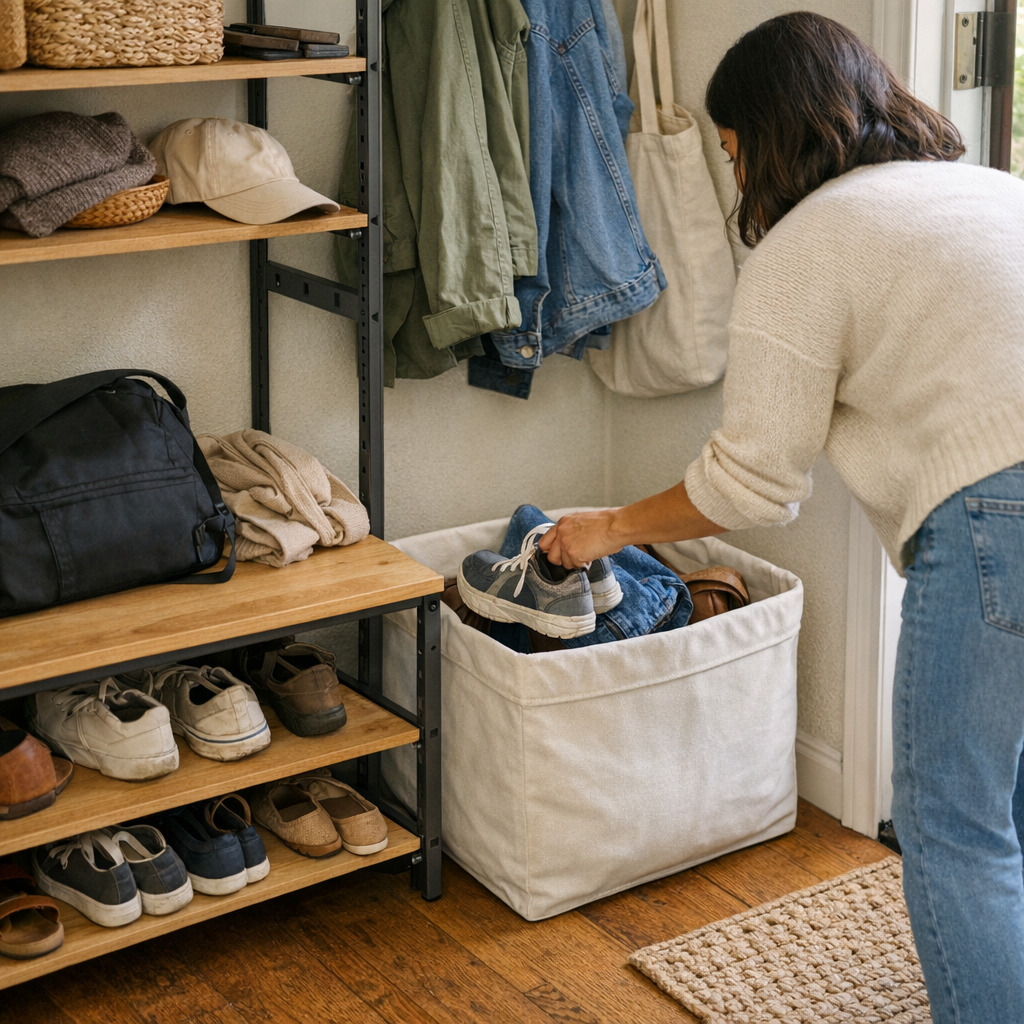
    Entryway clutter doesn’t vanish—it just migrates. Without a clearly marked, reachable donate bin, every “to be donated” jacket, outgrown shoe, or extra tote circles back—stalling resets and tightening your threshold, even after you “tidy up.” Most entryways photograph well after a quick sweep, but that’s not the test: friction shows up in daily motion. Bags get dropped, nudged, or perched “just for now.” Shoes spread sideways, then edge into walkways. Items you meant to remove somehow blend back in, day after day. The result is visible only when you try to move through—there’s always something blocking, crowding, or waiting to be dealt with again. That’s the real breakdown: each reset fixes the look but barely touches the buildup under the surface.

    The Entryway Reset That Never Quite Sticks

    Here’s what actually happens. You come in, drop your bag, nudge shoes out of the way. Someone else repeats the maneuver, their things pushing yours sideways—now the bench is half full, half a seat, half stash zone. By the end of the week, a stray jacket or two settle on the hooks, and the neat shoe row doubles in width, stuffed with pairs nobody’s worn for months but too easy to leave. Each “night reset” means propping up piles, not clearing space. Every item you mean to offload seems to quietly migrate back—never quite making it out of the zone, always returning to the same small bottleneck.

    This isn’t disorder. It’s inertia—without a true outflow, temporary turns permanent. Your bench slowly becomes overflow storage. Hooks strain, walkways shrink, organization bends under the pressure of another week’s “should go outs.” Shoe racks play host to backups you never actually wear. Even the small victories—straightening up before guests arrive—are lost the next day as donation piles blend seamlessly with the everyday shuffle.

    When Outflow Is Missing, Everything Becomes Storage

    Most entryways present a surface order: shoes lined up, bins stashed, everything pretending to stay under control. But without a clear exit route, every “maybe” ends up living there. Any shoes that almost fit, bags that nearly work, jackets not quite ready for storage linger because there’s nowhere obvious to put them out of rotation. Cleanup isn’t a reset; it’s a repeated debate—should this stay, or is it time to go?

    The appearance stays neat, but the function quietly cracks. Items loop: floor to rack to bench, never leaving. Donation bags get filled, stall by the door, and one missed drop-off puts everything back in circulation. This slow recirculation ties up usable space, turning resetting into a pointless rearrangement instead of a true clear-out. Every pass under pressure—leaving quickly, arms full—reminds you that the illusion of control is just that: a temporary look, not a working system.

    How Small Traffic Adds Up

    Even living solo, “later” things add up at the edge. With every shared routine—family, roommates, frequent visitors—the pressure climbs. Forget one raincoat and now half the hooks are blocked. Two pairs of sport shoes arrive, squeeze out everyday pairs, and overflow claims floor and bench. The split between “looks clean” and “actually easy to use” grows obvious with every week until resets feel like clearing a blocked lane, not restoring flow.

    The Power of a Purpose-Marked Donate Bin

    Real change starts at the exit, not the shelf. Adding a dedicated, unmistakable donate bin—especially one that can take a little weather, and sits just outside the daily-use path—ends indecision. Suddenly, there’s an immediate spot for anything you’re done with. You don’t hesitate, don’t set it down for “later”—it moves from hand to bin before inertia wins.

    Where you place this bin matters more than its label. Stuff it between the regular bins and it fades into the blur. Park it off to the path—narrow, sturdy, unobtrusive by the garage or backdoor—and it becomes a one-way lane for offloading. Off-season jacket? Straight in. Kids’ shoes that don’t fit? Out of the lineup in a single move. Trial bags? Gone before becoming background clutter. When the exit route is part of the physical flow, you stop cycling the same “maybe soon” objects and let your storage breathe.

    From Draining Chore to Reliable Reset

    With donate outflow available, resets hit actual zero—not just cosmetic order. Instead of picking through piles or digging out bench space, you move through the area cleanly. The bench holds people instead of overflow. The floor reopens. If that early-morning exit requires speed, the path is clear—no dodging “pending” items, no tripping over reuse bags, no forgetting the “to be donated” pile blocking the door. It’s not just easier; the invisible pressure disappears.

    Scenes That Reveal the True Problem

    • Dropped Bag, Again: A donation bag dropped by the door is sat on, tripped over, and buried under random jackets—never moved out, always back in play.
    • Shoe Rows Expand: Shoes lined up on Sunday morph into double-depth by Wednesday. Each housemate adds a pair for “just inside,” nobody claims the strays, and the line sprawls until walking through means stepping over unknown shoes.
    • Bench Overrun: The seat meant for pulling on boots is now a catchall—donate piles, stray groceries, gear for tomorrow, all stacked together. Sitting requires clearing it, every single time.
    • Blocked Threshold: Reaching for the door, you angle around a low mound—every day’s pass adds to it, and sidestepping just becomes routine. No space regains itself without effort.

    Making the Setup Hold Up in Real Life

    Organization for photos is one thing. Actual transition spaces are stress-tested by repeated, impatient, hands-full use.

    • Place the donate bin out of daily drop but near the exit: If it’s next to the bench, you gain outflow without swapping clutter for new clutter.
    • Use a bin that stands up to real conditions: If it might take rain or muddy shoes, make sure your bin (lidded, hard-sided, vented, or weather-resistant) won’t become another “problem” to step around or excuse for delay.

    Above all, keep departure zones clear and categories distinct. The donate bin should not look or feel like just another storage basket. Bold labels and a physical gap work better than good intentions. The moment you have to pause and decide “where does this go?” is when clutter cycles right back in.

    Tips for Smoother Resets

    Tie your sweep to a quick check of the bin. If it’s filled, carry it to the car trunk now—don’t wait for the next pile to grow. Return the empty bin immediately. And if your path from door to bin gets blocked again, that’s the signal: move the bin or reset the categories before it drifts into background buildup again.

    Why the Right Bin Placement Feels Like a Real Fix

    Transition-space order collapses fast when there’s no direct exit for surplus. A visible, well-placed outflow doesn’t just “reduce clutter”—it keeps movement and path open. Each time an unwanted item drops straight into the bin rather than blending back in, your threshold recovers. The difference is practical: shoes don’t re-spread, bench seats remain usable, and “reset” means the space is genuinely clear, not just optimistically arranged. Over time, this relief is real. Instead of rearranging an endless series of “almost out” objects, you build an entryway that actually carries you through, not one you have to repeatedly force your way past.

    Let your setup solve real problems—not just look organized for a day. For storage and outflow solutions that withstand repeated threshold pressure, find practical entryway answers at Betweenry.

  • How a Donate Bin Transforms Entryway Organization and Reduces Clutter

    The entryway is where easy routines start breaking down—fast. Set up your storage once, and the illusion of order lasts a week—maybe less. Then the old friction returns: bags pile up, shoes sprawl until you’re side-stepping a spreading row, and last month’s “donate” jacket sneaks back onto a hook because there’s no real exit. The more you try to reclaim the area, the quicker it refills with overflow. In transition spaces, control feels temporary and the true bottleneck is what keeps coming back.

    When Entryway Storage Isn’t Enough

    At first glance, labeled cubbies and a row of hooks promise structure. They hold—until outgrown cleats and donation-marked gear creep back, quietly mixing with daily essentials. You might spot a half-used tote on the bench edge or a jacket you meant to remove now hiding among current coats. The slow recirculation doesn’t announce itself. It appears as a tightening path, a bench blocked by overflow, resets that take longer, and a creeping sense that you’re fighting yesterday’s clutter every time you come home.

    The Quiet Return: How Outflow Problems Undermine the Setup

    This is the daily headache: without a real route for outgoing items, what’s leaving gets stuck. High-traffic homes feel it most. Kids drop their bags, someone swaps shoes last-minute, and overflow meant for Goodwill ends up right back in the main fray. By week’s end, half the donation pile is tangled back into daily rotation, only visible when you trip on it, not when you try to find it. The reset now means sorting out what should’ve left last week—all because nothing marks a clear threshold for what goes out.

    Temporary piles harden into semi-permanent fixtures. That donation bag under the bench settles in, and the shoe rack—designed for rotation—becomes overflow storage for what no one uses. The result: every reset takes longer, and the threshold narrows until just getting through the door feels like wading through a backlog.

    Why a “Donate” Bin at the Threshold Reshapes the Routine

    Add a visibly marked “donate” bin and you break the cycle. Not because it polishes the look, but because it gives outgoing gear an exit. The point isn’t perfection. It’s making the flow one-way for what’s meant to leave, so nothing quietly recycles back and builds hidden clutter.

    Placement matters:

    • Hide the bin and you guarantee unused items sneak back into storage. It just becomes invisible overflow.
    • Place it where you naturally drop shoes and bags—but out of the main rush path—and it becomes a habit, not a hurdle.

    The donate bin draws a visible line: shoes too small, jackets never worn, bags meant for somewhere else now have a destination that isn’t “back in.” The daily split—what stays, what goes—happens at the threshold rather than getting buried until the next big reorganization.

    Real-World Reset: What Changes After a Week

    Install a donate bin and within days, you see the shift: the bench edge stays clear, less energy is wasted relabeling what’s already supposed to go, and resets get quicker. Instead of resorting the same pile over and over, you deal with items once—right at the door, right in flow. The headache of repeating the same reset shrinks fast because the routine itself divides what’s active from what’s out.

    Surface Order vs. Functional Dividing Lines

    It’s a common blind spot: color-coded bins and matching hooks look organized, but unless something intercepts outflow, storage becomes slow accumulation. Here’s how the gap shows up:

    • The shoe row inches out, squeezing passage even when it looks lined up from afar.
    • That labeled cubby fills with limbo items, so “stored” just means “deferred.”
    • The bench becomes a catchall, so sitting—or even pausing—is an afterthought, not an option.

    What matters most isn’t appearance—it’s whether your setup forces a decision at the threshold. Does it let things go, or just hide what’s undecided? A dedicated bin means questionable items get a deadline, not a free pass back into the mix.

    Tactics That Make Entry and Exit Smoother

    Where the Bin Belongs—and Where It Doesn’t

    Place the bin near where shoes and bags land—close enough that dropping things in is automatic, but never in the way when the whole family moves through at high speed. Usually, that’s a wall-adjacent spot, right at the edge of the transition zone. If you tuck it out of sight, it loses power; if you place it in the traffic lane, it becomes another obstacle.

    Don’t let it fill up and stall out. A weekly (or midweek, for busy households) empty keeps the donate bin from becoming just another holding zone. A stuck bin is worse than none—it underlines that the flow is broken.

    Small Adjustments for Big Relief

    • Label it obviously. Use “Donate,” “Going Out,” or a high-contrast tag so it signals its purpose—no ambiguity for kids, guests, or teammates.
    • Match the size to your churn, not your ambition. Oversized bins just invite backup, and tiny ones lose authority. It should fit your likely outgoing volume for that week, not become the next drop zone itself.
    • Make it part of reset, not an afterthought. Donation drop-offs go on the same rhythm as your entryway refresh—so exit flow stays as routine as the rest of your week.

    What You Gain: A Threshold That Lets Go—and Stays Ready

    With a working donate bin, entryways stop pretending at control and actually hold it. Footpaths aren’t squeezed by mystery shoes and last season’s gear. Resetting isn’t a separate, dreaded chore—it’s standard, short, and lets everyone move through without pausing to negotiate with old clutter.

    The payoff is quiet, but clear: instead of path-blocking drift, you get a daily entry route that stays workable, routines that don’t break under small stress, and a front zone that actually helps life move forward—not back into last week’s patterns. Even as routines shift or more gear comes in, the space stays ready, because it sheds old weight before it takes up the zone again.

    See practical entryway storage solutions for real transition spaces at Betweenry.

  • How Small Disruptions Can Slow Down Your Cat’s Daily Care Routine

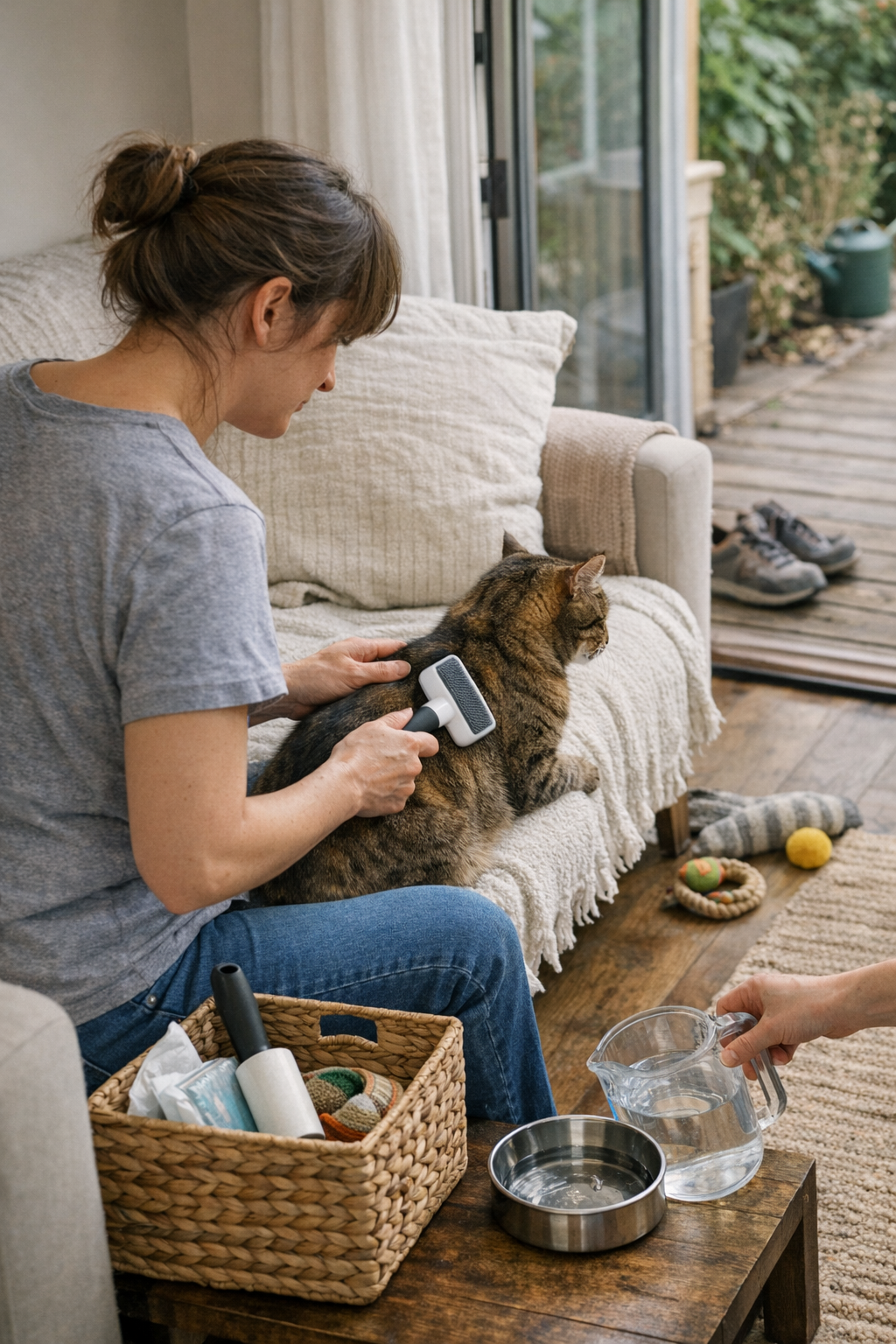
    The line between a working pet-care routine and a slow-motion mess is thinner than it looks. You set up the food station, water bowl, and cleaning supplies, thinking you’re covered for the week—until the bowl is still in the sink at breakfast, or the only scoop is buried in laundry from last night. One delay might feel harmless, but once it’s repeated—each time you reach for lint rollers that drifted off or towels that never came back—the morning care routine quietly loses its rhythm and momentum drains away. The CalmPetSupply world isn’t just about what you own, but whether your setup can keep pace with real daily patterns, without friction returning after every reset.

    Small Interruptions, Big Impact on Routine

    Routines rarely break down in dramatic ways. Instead, it’s small, routine gaps—a spray bottle that migrated to the bathroom, a food scoop missing from its usual spot, a towel nowhere within reach—that start tripping you up. At first, these are just hiccups. But when “almost ready” becomes the norm, every refill, wipe-down, or meal reset is slower and choppier, leaving both you and your pet keyed into the hesitation. That quick feeding sequence—the reach for a bowl, the refill, the easy cleanup—turns into a clumsy set of retrievals and delays that dent both comfort and schedule.

    Even when the setup looked picture-perfect the night before, a missing bowl left to dry or a cleaning spray hidden behind bulky bins can derail the next feeding or cleaning. The cat pauses, you pause, and an easy task turns into scattered back-and-forth. A tidy setup alone doesn’t guarantee flow; one obstacle or missing tool quickly shifts the whole routine from direct to disrupted.

    Real-World Scenes: Where Routines Slow

    The weak spots reveal themselves during the most basic tasks. By Wednesday, pet bowls somehow end up balanced on dryer lids, towels stay lost after a spill, and the grooming brush switches homes three times before you even notice. One morning, you’re holding food but the scoop’s vanished; midday, the brush is handy but the towel is missing. Night check-ins drag as you chase down supplies scattered outside their “spots.”

    Sometimes, “clean and tidy” hides slow downs: a bed pushed out into the hallway forces a detour, or food containers crowd out your quick cleaning cloth access. Shelves and closets hide essentials just out of regular reach—a reminder that, no matter how organized things look, a routine that requires rummaging, reshuffling, or awkward sidesteps isn’t really working. Over time, pets pick up on these stutters: hesitating at the bowl, circling slowly, or waiting while you shuffle supplies back to where they should have been.

    Visible Order vs. Smooth Function

    It’s easy to mistake a neat feeding corner or wiped-down area as proof of a solid system. In reality, function trumps looks: if bowls are always set high above the counter after washing, or supplies are hidden to minimize clutter but now hard to grab mid-routine, care slows. A setup can look organized but still force you into constant recovery mode—a missing refill bottle, an awkwardly stashed brush, a towel left two rooms away. A visible flaw can be fixed, but the invisible friction of poor placement or inconsistent reset lingers, quietly undermining the whole process.

    The true difference comes with disciplined resets. When every primary tool—bowl, towel, scoop, cleaning spray—returns to the feeding area after use, the process becomes automatic. But let this slide, and reset friction returns: fumbled setups, slower routines, and more time spent on what should have been a straightforward refill or wipe-down. Looks are deceiving; functionality only lasts with consistent, easy-to-reverse storage and habits.

    Practical Adjustments for Steadier Care

    Most slowdowns clear up when items are kept at the exact point of use—pre-filled water bottles on the feeding mat, brushes hung on reachable hooks, towels re-stacked by the food station instead of tucked in random closets. This close grouping means you can walk in and start, without trip wires or retrieval missions, so your pet can match your unbroken flow—approaching for food or grooming without waiting for you to chase down missing pieces yet again.

    If you look after more than one pet, overlap creates even more friction: shared bowls confuse routines, grooming tools switch hands too often, and a feeding reset for one pet blocks the other. Assign each pet their own station—separate bowls, brushes, and refill spots—so the routine for one never slows the other, and everyone’s rhythm stays intact.

    Observing and Addressing Repeat Friction

    Don’t just look for big messes. Instead, track what keeps slowing you down: the cleaning spray you only grab after moving two bins out of the way, or a food bowl that spends more time in the drying rack than at its station. A tool that helps the morning routine but is lost by evening leaves a gap you’ll keep stumbling over, like a towel that’s migrated to the laundry or a scoop misplaced two days ago. When handling gets slower across the week or after busy days, it’s a sign something in the setup needs adjusting—not just another round of tidying.

    Every small snag—whether it’s a missing brush, a blocked cloth, or reset supply that never fully returns—adds trouble to the daily routine you and your pet rely on. On calm days, it blends into the background, but when the schedule tightens or home gets busy, each extra step is another tug away from smooth, low-pressure care. The setup that looked “good enough” at first quickly reveals its faults as soon as you push through several rounds of actual use.

    Return to Reliable Comfort in Daily Pet Care

    No one’s pet routine is flawless. But the routines that last are the ones with every core item within reach and restored after use—so the process never devolves into scavenger hunts or multi-step detours. Smoothing just one repeated snag, syncing feeding tools and cleaning supplies with the places they’re actually needed, makes each round of dog or cat care a little steadier and calmer. Skip perfection, aim for real flow—so daily pet care finally stays as easy to maintain as it looks at a glance.

    For more observations and solutions, visit calmpetsupply.myshopify.com.

  • Why Simple Storage Solutions Outperform Complex Systems Over Time

    Every new workshop storage setup starts the same way: lined-up bins, fresh wall racks, open floors, and a wave of optimism. Look closer a few weeks later—after two hectic weekends or one unfinished project—and the shine quickly fades. Doors no longer open wide. A rolling cart blocks the aisle, while one high-traffic “return zone” fills up with pile after pile. Forget the clean grid for a moment: does movement feel easier, or are you constantly squeezing, side-stepping, and reworking your path? This is where most systems break down, and where the gap between “looks organized” and “actually works” shows up fast.

    Efficient on Paper, Clumsy in Practice

    Most modular systems seem brilliant at first: customizable racks, slot-in bins, neatly labeled towers. But after a few real cycles—move a toolbox, drag in lumber, return three things at once—the pain points multiply. Pathways narrow with each add-on. That one dead corner always seems to collect junk. Zones that looked smart on a diagram end up causing routines to double back. The evidence isn’t subtle—it’s the daily shuffles, the awkward detours, the feeling that every restock or cleanup is a minor puzzle.

    If you’re reorganizing your route just to live with the storage, it isn’t working. Real efficiency isn’t about how many bins you own. It’s about moving, returning, and resetting with near zero friction—even when the space is busy, messy, or both.

    Why the “Boring” Setup Refuses to Fail

    What keeps working, month after month, isn’t the most customized setup—it’s the one that disappears into your habits. Bare wall shelves. Long, open racks. The old “boring” solutions no one ever brags about. Why do these last? Because nothing asks you to sidestep obstacles, two-hand a container, or decode the right cubby while you’re carrying gear. Instead of offering options, these setups offer consistency: every return is obvious, every path stays open, and nothing blocks your way to a wall or doorway for the sake of looking modular.

    One open shelf along a wall might look plain. But after a dozen rushed cleanups, it’s the spot you trust to always be unblocked, always ready, perfectly suited for both lazy drop-offs and hurried returns—no Tetris required.

    When Over-Organization Stops Helping

    The tighter you try to design every inch, the more you risk crowding yourself out. Nestled zones, sliding compartments, and mobile pods all promise more capacity—but in reality, they often turn core areas into obstacle courses. Each “temporary” drop-off hardens into an overflow pile. Each step for order adds an extra motion tomorrow. Clutter grows not where you’re messy, but where your system expects too much planning while you just want to put things down and move on.

    The pile in the corner? That’s just your setup telling you where returning things feels like work. If the “fastest” path is blocked, your energy for maintenance will drain—until only the least-efficient habits survive.

    Scenes from a Cluttered Saturday

    End of a typical Saturday: you’ve wrapped up, tools in hand, extension cord slung over your arm, gloves tossed in a bag. Doorway’s half-blocked by the rolling cart you shifted earlier to fetch a drill—now it’s back in the wrong place. The wall panel with storage bins is visually perfect, but the front row bins fill up first, so the deeper ones stay virtually untouched. Every trip to put something away has a catch: shift a cart, dodge a half-open cabinet, or pile gear “just for now” where you know it’ll stay all week.

    These aren’t accidents or lapses—they’re the routine friction that accumulates when storage looks engineered but ignores how you actually move. The result: slow resets, doubled-up handling, and the creeping sense that organization has become a second job.

    Simple, Open Setups: Real Relief, Fewer Steps

    The magic of stripping back to basics is felt immediately. Remove the cart. Replace a wall of bins with a straight, sturdy shelf. Suddenly, nothing stands between you and a clean reset. No re-sorting or maneuvering around awkward angles; just drop the tool and move on. The “I’ll deal with it later” pile shrinks—because it’s as easy to return something right away as it is to put it off. Pathways stay open, and so does your willingness to use them.

    The effect isn’t just less clutter. The real win is mental: zero overthinking, zero need to memorize which compartment fits what. Returning is as brainless as pulling something out—and you stop burning time wrestling with your own system.

    When the System Fights Your Routine

    The most honest measure of your setup? Where do you keep “resetting” things that never quite stay fixed? Is the path between your workbench and the wall always a squeeze? Does the rolling rack camp in a high-traffic spot, just so you can close the back door? Does at least one cubby become a dumping ground for anything you don’t have the energy to properly return?

    If these patterns keep popping up, the message is clear: your storage is designed for organization’s sake, not actual use. If every reset takes two steps when it could be one, or if clearing up feels like untangling a mess you just finished sorting, the setup isn’t earning its keep.

    Clear Path, Lasting Utility

    The most resilient storage isn’t the flashiest—it’s whatever leaves your main walls and pathways available so you don’t have to think. The system doesn’t demand precision. There are no “just for now” piles left to deal with because the quickest, laziest return path is also the right one. Instead of managing overflow, you avoid it altogether.

    Over time, these plain arrangements require less and less attention. No need for another storage “refresh.” Just a space that always works, because it’s tuned to movement—not aesthetics or maximum compartment count.

    Practical Moves for Smoother Returns

    Forget how empty it looks—test how it flows at the busiest moments. Position open shelves where you find yourself stopping at the end of a job, not just where there’s spare wall. Notice the tight spots and rearrange before adding containers. If a cart or divider forces a sidestep or makes a pile inevitable, try removing it—and see how cleanup changes.

    If you’re hesitating or rerouting—even once per session— it’s a sign to revise, not add. In storage, simplicity isn’t modesty. It’s speed, clarity, and fewer problems to solve after a long day.

    The best system isn’t the most intricate on day one. It’s the one that never interrupts you, never adds a new obstacle, and always leaves you with enough space to work—no matter how many projects you start (or finish) each month. The clear path is the real mark of a setup that’s built for repeated, real use.

    Explore practical, real-use storage at StackNest

  • Streamline Your Pet Travel Setup for Faster, Safer Transitions

    The difference between a “packed” pet travel bag and a bag you can actually use mid-journey becomes painfully clear the first time your routine unravels at a stop. It’s one thing to close a bag and feel prepared. It’s another to reach for a leash, wipes, or water bowl—and realize they’re all layered or buried, never quick to grab when your hands and eyes are already full, your pet is restless, and the clock is running. This is where most setups break: not by missing items, but by forcing you into clumsy digging, stressful pauses, and repeated mini-disasters at every pause to walk, calm, clean, or move your pet.

    When “Organized” Still Means Frustrating Stops

    Picture yourself outside a busy motel, after hours on the road—bag on one arm, leash in the other, pet tugging impatiently. You carefully packed at home, but now, the leash has slipped under a bag of treats and a towel. Wipes are buried beneath a blanket. You block the entry, one knee nudges your bag open, but there’s still a scramble to unearth whatever’s needed next. Crowds move around you, and your sense of “everything in its place” dissolves in seconds. The irritation isn’t about missing gear—it’s the endless, awkward interruptions that undercut any feeling of being truly ready.

    Recognizing the Real Repeated-Use Weak Point

    This is a cycle, not a fluke. The real friction in pet travel isn’t the one-off crisis—it’s the mounting cost of small failures: wipes forgotten at the bottom after restocking at a rest stop; comfort toys sliding under food bowls after a bumpy drive; cleanup bags tangled with your phone charger. What seemed “set” before leaving home now fights you every time you need to move quickly. The first two pauses might feel annoying but manageable. By the third or fourth stop, you start dreading each new exit. The system isn’t failing all at once, but the workflow clearly keeps breaking in the same spots.

    The Moment It All Unravels

    An “organized” bag that hides essentials turns a quick pitstop into a stress loop. Every time you dig for a leash, the treat bag spills, wipes slide under a jacket, and you’re suddenly improvising in narrow doorways with a pet who’s had enough. Even a system that looks neat at rest can become its own obstacle—forcing you to disrupt the flow, lose time, and build frustration with repeat interruptions.

    How Setup Structure Shapes the Whole Trip

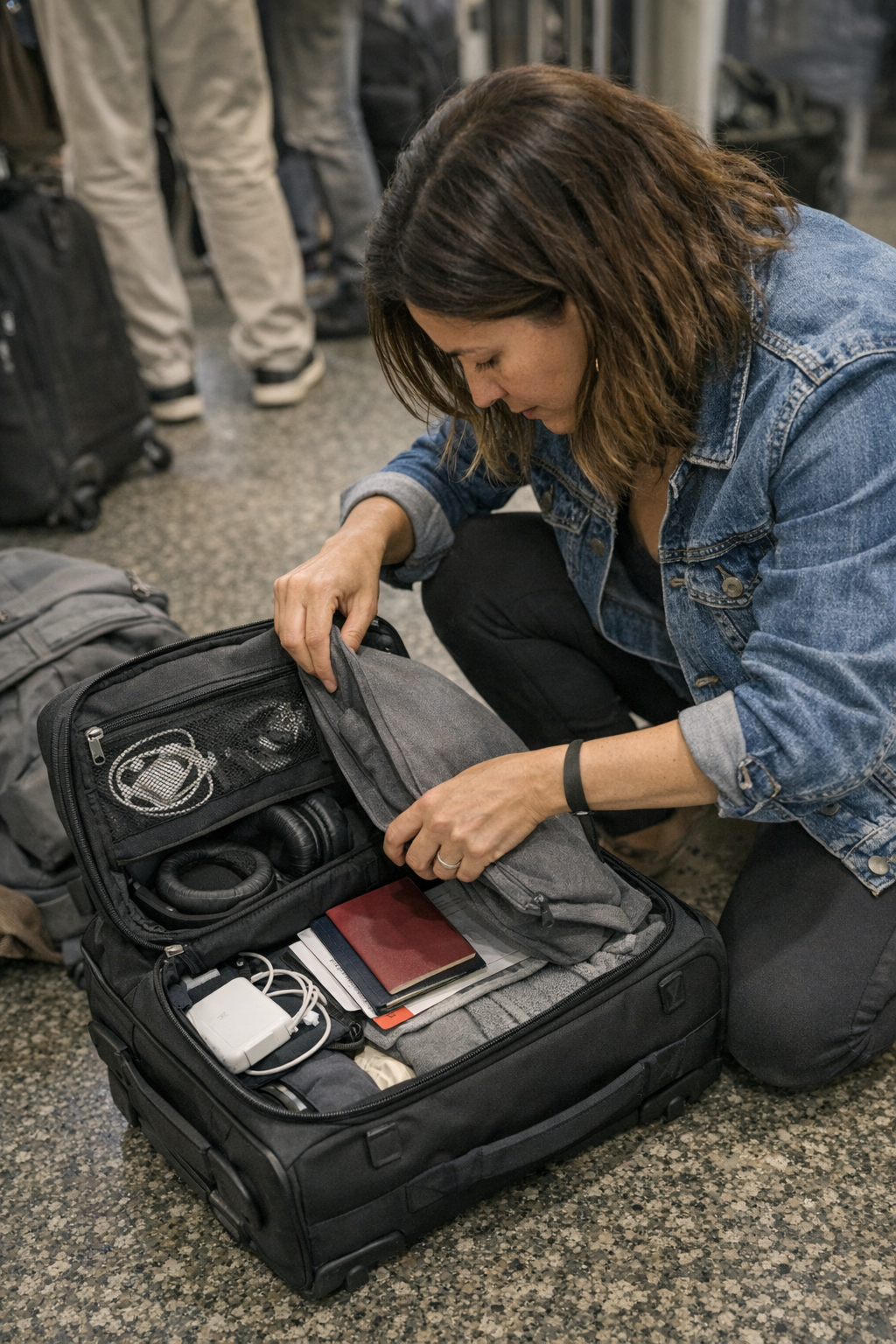
    A pet travel bag succeeds or fails on repeated, one-handed access to essentials—their visibility, separation, and fixed locations matter more than looks. Leash clipped to the outside. Wipes in a front pouch. Water bowl free of nesting. Comfort toy always top or side-facing. These adjustments sound small, but the impact across multiple stops is big: instead of reshuffling everything, you grab what’s needed in one motion, settle your pet immediately, and face each new leg without a reset ritual. Done right, your bag becomes an extension of your routine, not a source of friction.

    Real-World Flow: From Pause to Restart

    Two types of setups reveal their true colors at every stop:

    • Buried-access: Every pause, you’re prying open the main compartment, double-checking pockets, pushing aside food containers and blankets just to seize the core item—meanwhile, your pet gets worked up and space tightens as others try to get by. You tell yourself you’ll rearrange at the next stop, but the cycle repeats.
    • External-access: At a rest area, the leash unclips from a side ring. Wipes slide out a dedicated slot—no need to unzip or rummage. The bowl is ready, not entwined with towels. Your pet calms down sooner, and you’re already moving back to the car before anyone’s impatient glance reaches you. Essentials naturally return to their anchored place, so nothing gets lost or crammed deeper with each use.

    This isn’t just about saving seconds—it’s about turning an unpredictable, stressful travel rhythm into something manageable and repeatable, with less mess, fewer delays, and a pet who moves at your pace, not against it.

    The Downside of Perfectly Packed… but Poorly Designed Bags

    Perfect packing can defeat itself if structure fails real-world use. Many travel bags offer “organization” only on paper: every item has a home, but comfort toys share space with food bowls, wipes nest under containers, and leashes coil with wet towels. The bag looks ready, yet nothing key is at hand. Most trips then turn into a pattern—one hidden pocket, one section too many, and you’re awkwardly blocking a doorway, arm-deep in your pack, while your pet’s patience and your own both run thin. What’s worse, these slowdowns stack up, amplifying tension across the whole journey.

    Small Delays, Growing Mess

    One hard-to-reach wipe leads to muddy paws indoors. A “lost” comfort toy means a pet gets jumpy, ramping up mess and slowing every restart. That minor flaw in reachability keeps inflating stress and increases workload at the next stop. The more the setup blocks smooth access, the messier both the travel and the recovery get—not just for you, but in every space you and your pet pass through.

    A Repeatable Structure That Pays Off in Motion

    The right fix isn’t only about buying new gear—it’s rethinking how gear loads and resets. Setups that work in motion share a few critical traits:

    • High-use items (leash, wipes, travel bowl, calming toy) move to the most immediate-access locations—side ring, front pouch, mesh pocket—never buried or nested.
    • Those spots never change, so you develop “muscle memory” for grabbing and resetting between stops.
    • Fast-exit items stay out of internal compartments, so nothing gets tangled or wedged under other contents after a drive.
    • At every pause, a comfort item is ready—not just for arrival’s sake, but the moment you reach a door, allowing for rapid pet settling and smoother transitions.

    Set this up, and every stop feels less like a disruption. Bag and routine both reset easily, stress doesn’t accumulate, and even post-movement clutter stays contained. Pets match the calm, sensing less owner frustration. The whole setup stops working against you—and starts making the trip easier instead of harder.

    Handle Reality, Not Just Appearances

    Perfection isn’t the aim—recoverability is. The best-ordered layout will get undone by traffic, pet energy, or one rushed moment. But a strong structure is about how quickly you bounce back, not whether the bag absolutely holds its shape. Essentials should never demand a pause-and-dig—especially when your pet bolts, a line forms, or your hands are full. Bad structure draws your attention again and again to the same small friction—in every trip, at every stop—until it finally gets fixed.

    Beyond “Organized”: Making Every Stop Easier

    If every restart feels like a reset—dig, fumble, reshuffle, repeat—it’s time to diagnose the structure, not the packing list. Lock in the anchor spots for high-use items so you can grab what’s needed even after a trunk shake, traffic rush, or five hurried stops. When the real-world rhythm works—less scramble, faster grab, pet calmer sooner—you don’t improvise every time you open a door. You just move.

    Find practical pet travel solutions at PawGoTravel.