Blog

  • Why Modular Units Offer Safer Flexibility for New Storage Systems

    The line between a closet that stays calm and one that quietly breeds aggravation isn’t about how much you own—it’s about whether your storage can bend to the realities of everyday life. You’ve experienced it: that pile of folded clothes you stacked on Sunday sags by Tuesday, the bin meant for gloves slowly fills with tangled charging cords, scarves, and yesterday’s receipts. Every morning, you find yourself moving three things just to reach one, promising you’ll “fix it this weekend”—even though next week will bring new clutter anyway.

    When Fixed Shelves Start to Fail Your Routine

    Every closet starts out as a vision: shelves smooth and empty, baskets perfectly labeled, everything slotted into its “forever” spot. But after a handful of rushed mornings and a couple of extra shopping bags, the order cracks. That fixed shelf, once promising, now groans under the weight of winter boots tossed in hastily. Scarves intended for a single basket blend with hats and a missing mitten. You end up rearranging the same piles—move a backpack to reach a pair of shoes, lift coats to snag your umbrella, disrupt one shelf to get at the bag tucked all the way at the back.

    Instead of a single loud disaster, the breakdown creeps in quietly. Baskets overflow, stacks slouch, categories blur. The space that looked efficient on day one becomes a game of shifting things aside and putting off real resets until they’re unavoidable.

    Why Modular Storage Actually Works Day-to-Day

    Modular units—cubes, adaptable bins, movable dividers—aren’t just about modern style. What matters is flexibility on demand. They step in where fixed systems fail: when your kid brings home muddy cleats, when winter coats suddenly need more room, or when a new hobby kit appears out of nowhere. With modular storage, a crowded bin can move to a lower shelf for easier grabs, or merge with another unit to make room for something bulkier. You’re not locked into your first plan—you react in real time, without a full teardown every single week.

    The Real Price of Permanent Shelving

    Fixed shelves lure you in with a “finished” look. But the reality: every tweak is a chore. Want to reorganize? It’s never a two-minute fix—it’s hauling out every box, dismantling a pile of towels, or accepting that half your accessories will migrate out of view. That weariness builds: why bother resetting categories if you’ll just have to shuffle everything again in a few days?

    Everyday Reality: The Hallway Closet Slide

    The first week after installing crisp new shelves in your hallway closet, it looks like a catalog. By Thursday, boots edge out of line, a lunch bag blocks access to gloves, and that bin for hats devolves into a mix of everything abandoned on the way in. Need boots fast? You’re juggling three bags that all ended up piled in the way. Fixed shelves force you to disrupt any order you try to enforce—so items go wherever there’s a gap, and “sections” become imaginary lines.

    How Modular Units Keep Pace With Real Life

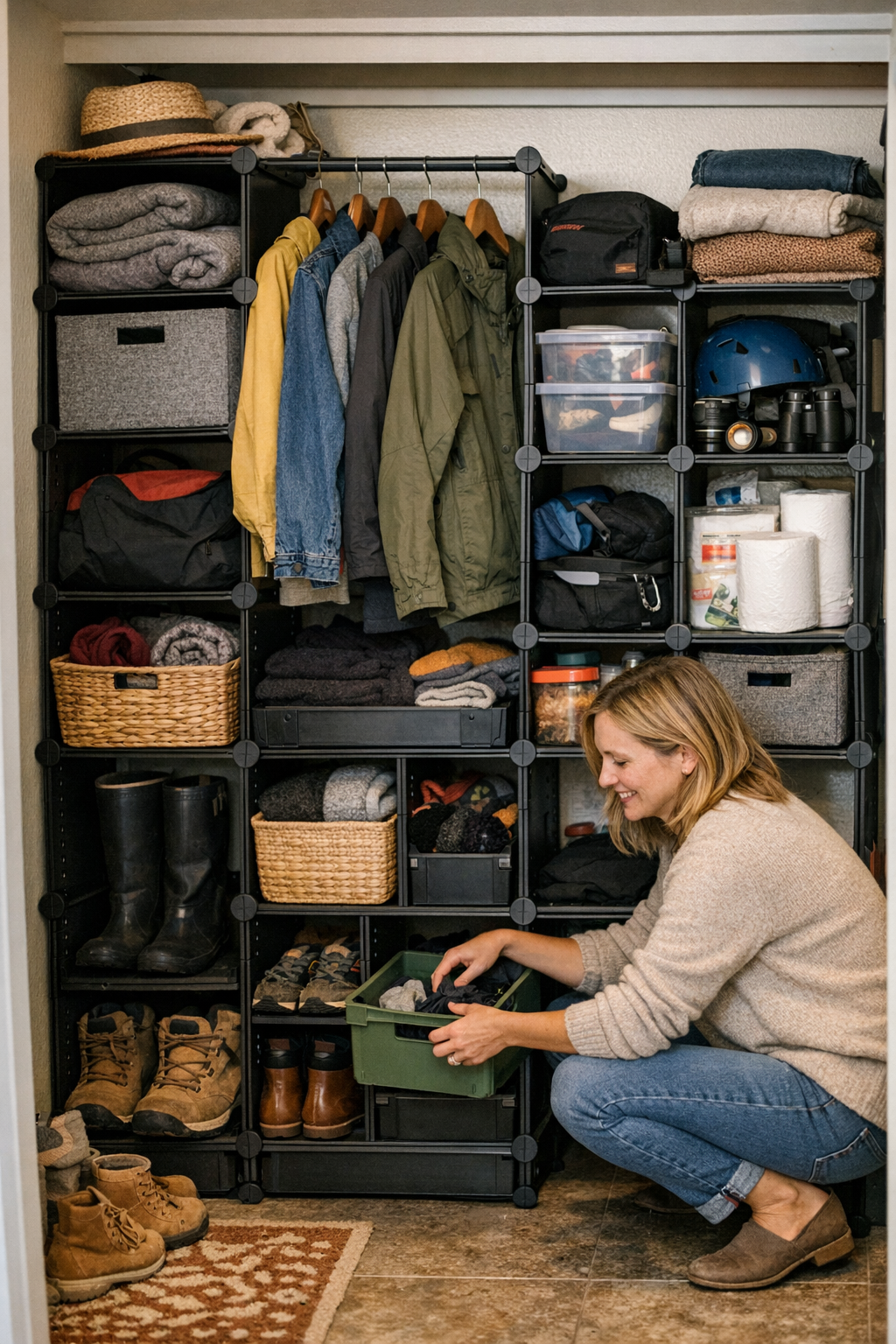
    Picture the same closet with modular cubes and bins—not fixed, but built for rearrangement. Suddenly, the gloves and hats are at kid level, not hidden under last season’s shoes. Soccer season means one bin slides forward for quick cleat access, while bulky jackets simply get more space for a few chilly weeks. When things need to move, you just lift and reposition a cube. No tools. No domino effect.

    After switching from a single long shelf to three-high stacks of modular cubes, everyday resets dropped to under two minutes. No pulling out an armful just to tuck boots away. No hunting for a loose hat buried under a lopsided tower. Each category holds tight to its zone, and a quick change doesn’t unravel your whole system.

    Storage That Shifts When You Do

    Closets are constantly in flux, whether it’s a sudden surge of off-season blankets, a family member’s new hobby, or just the normal chaos of living. The biggest storage regret? Installing a “final” system before you really know your patterns. Modular options let you keep pace with these shifts: stack higher for a growth spurt, split bins when clutter creeps in, pull a unit closer for daily use and push others back in low season. You set the rules as your routine evolves.

    Quick tip: Assign one cube as a loose “inbox”—temporary, random, overflow items land here first, so you spot patterns and prevent small messes from spreading out of control.

    Organized Isn’t Enough—Easy Reset is Everything

    It’s possible to have a closet that looks organized and still trips you up every day. The real test isn’t neatness after a once-a-month deep clean. It’s seeing how well the system rebounds after a normal week of hurried mornings, new groceries, weather changes, and last-minute rummaging. If you’re always reaching past three piles or warning kids not to “mess up the shelf,” your system isn’t helping you—it’s holding you hostage.

    Ultimately, genuine storage improvement means you spend less time fighting your closet and more time seeing what you need, grabbing it fast, and returning things without a ceremony. Look for a setup that serves your life as it is—not a closet that expects your life to fit a rigid plan.

    Shop ClosetWorks for practical modular storage and customizable closet solutions.

  • Why Functional Workshop Storage Beats Perfect-Looking Setups Every Time

    There’s a hard reality to storage: it’s not about how organized it looks on day one—it’s whether you can move, grab, and put things away with zero friction after a month of actual use. Anyone who’s had to muscle the same rolling cart aside for the fifth time just so you can cross the room, or just left a tool on the bench instead of trekking it back to an awkward bin, knows that it takes exactly one week for “perfect” setups to become daily annoyances. In garages, workshops, and those utility corners where every square foot matters, the gap between tidy plans and practical routines is where clutter sneaks back in. Lasting order comes from a setup that survives real, repeating habits—not showroom symmetry.

    Where Picture-Perfect Setups Start Failing

    On installation day, it all looks promising: neat shelves, crisp labels, carts lined up like puzzle pieces. But by the second week, the trouble spots reveal themselves. That rolling tool cart that seemed like a clever anchor now blocks the walkway, needing to be shifted, nudged, and realigned every time you want to pass. A shelf turns into a dumping ground for the “deal with it later” pile—overflow that didn’t quite fit the original bins. Returning a handful of fasteners or a clamp means contorting around the same shelf corner over and over, and there’s always one area that somehow becomes the catch-all for whatever’s in your hands near quitting time.

    You don’t notice order—you notice bottlenecks. Very quickly, that layout you admired feels more like a puzzle you can’t quite solve: movement is pinched, traffic lanes zigzag, resets creep from two minutes to ten, and you realize your system is getting in the way, not smoothing routines.

    How Routine Grinds Up Even Logical Layouts

    The real test isn’t first impressions, but daily rituals—the tool runs, bench resets, and the 30-second cleanup as you close shop. Here’s what keeps happening:

    • Paths get choked. The cart that tucks in nicely empty becomes a blockade when loaded. Each reset means a tug-of-war—pull, pivot, push back. Enough hassle, and it becomes a half-hour sinkhole.
    • The overflow shelf never empties out. No matter how logical your bin labeling, you end up stashing things wherever there’s a gap. The stuff you need most starts showing up in the least intentional places.
    • Dead corners don’t come to life. Bins installed “just to use space” along the wall or near a cabinet edge often sit empty or make you stretch, twist, or double back—so they get ignored and settle into being dead zones.

    The rhythm is always the same: resets slow down, piles gather, and instead of “using” the system, you’re working around it. The fault isn’t messiness—it’s a layout that prioritized surface-level neatness over frictionless flow.

    What Real Use Looks Like on the Floor

    Give it two weeks and weak points announce themselves. In one garage, boxes made laps from floor to cart and back, with every reset slowed by a cart jammed diagonally into a corner. It became routine to hesitate before returning something—each move felt like triggering a minor rearrangement. Watch two people try to put away tools at once and you see the pinch: both reach for items crammed near the same crowded shelf, sidestepping around each other in a nervous shuffle. The gleaming setup quickly becomes a collection of tiny, persistent obstacles that strain every routine.

    Tweaks that Actually Remove Roadblocks

    The smallest change can erase daily irritation. In one shop, simply rotating a cart so it aligned along the bench—rather than sticking out—turned a squeeze zone into a clear lane. Moving a shelf just twelve inches closer to the main work area, or relocating a bin from an awkward edge to eye-level near the bench, can be the difference between an automatic return and a tool abandoned “just for now.” The difference isn’t abstract—it’s immediate: hands stop catching, feet move freely, and resets shrink from a dreaded job to a two-minute sweep.

    Real improvement means you stop planning your moves around a bad footprint. Suddenly, corners open up, traffic flows, and the layout bends to your habits—instead of demanding you adjust for it.

    Why Reshuffling Keeps Happening

    Beneath a clean surface, chronic clutter often signals setup friction. Even if everything is labeled:

    • Mini-piles reappear each week. Items land in limbo not because you’re careless, but because putting them away is awkward or out of sync with how you work.
    • Furniture is the bottleneck. You find yourself inching sideways, twisting to reach a bin, or giving up and dropping items at the first open spot—because moving a cart or shelf is just too much of a pain.
    • The same zones always fill up first. That’s your layout sending a clear signal: it’s not following your routine, it’s interrupting it.

    Prioritize Flow—Not Just Storage Density

    The instinct to fill every square inch—stuff bins under benches, stack up every wall—often backfires. If clearing a path or returning tools turns into a maze of obstacles, you waste movement every day and reset frustration levels skyrocket. Spaces crammed to the limit turn your most valuable areas into high-traffic headaches, not efficient work zones.

    The goal isn’t max storage. It’s an environment you can move through, clean up, and adapt without grinding gears—no matter how many resets or quick reorgs you have to do.

    The Lasting Setup: Fix, Nudge, and Keep Moving

    No system is permanent. The workshops and garages that work best are those you fine-tune as real-life habits make trouble spots obvious. Don’t hesitate to:

    • Relocate a cart that gums up movement, even if it throws off your initial design.
    • Shift shelves or bins closer to where tools naturally pile up—not where you wish they belonged.
    • Reclaim dead corners by freeing up wall space, or simply removing what’s always in the way.

    Every micro-tweak that eliminates one repeated bottleneck adds up. Spaces don’t just look more controlled—they finally act friction-free. By chasing a routine-first approach, your layout becomes a living system that stays tidy because it’s effortless to use, not just nice to look at.

    One Small Principle: Make Each Zone Serve the Real Routine

    When you see the same shelf or cart gather a certain kind of clutter again and again, don’t work harder—move it, swap it, or redefine its job. Let your most-used tools migrate ever closer to your work zone. Bins or hooks that feel just out of reach? Mount them where your hand naturally goes. These small, consistent adjustments are the secret to a setup that sticks—and that you actually enjoy coming back to, reset after reset.

    If you’re slogging through daily reshuffles, blocked passages, or setups that look organized but never actually work smoothly, you’re facing the same battle as every real garage and workshop. Durability isn’t about a “perfect” first plan—it’s about layouts that adapt to you, not the other way around. For storage systems that actually hold up through weeks (and years) of real use, visit StackNest.

  • Choosing Between Shelf Dividers and Bins for Lasting Closet Organization

    You don’t realize a closet system is failing in a single, dramatic moment—it creeps up in the everyday scramble. One morning you reach into what should be a neat stack of shirts, but half the pile slumps toward your hand. Next, you grab a bin for leggings and end up sifting through yesterday’s tee, stray socks, and a forgotten tank, all clumped together near the bottom. That perfectly organized look from last month? Gone. The closet isn’t a disaster, but it’s losing ground—friction returns, slow and steady, every time you try to just get ready and go.

    Where Closet “Neatness” Fades: The Pressure of Everyday Use

    It’s easy to feel victorious on day one—dividers fastened, bins perfectly labeled, stacks standing tall. The illusion holds until you actually live with it. Each grab, slide, or quick reshuffle tests the setup in ways you didn’t anticipate.

    • Pull one workout shirt, and two others threaten to tumble after it.
    • Reach behind a stack for your favorite sweater, and the whole row leans dangerously.
    • Hunt for a small accessory and the bin’s careful order falls apart before lunch.

    A system that “looks organized” is different from one that feels easy when you’re rushing through a weekday morning. That difference worsens as the days roll by—and fresh order slides toward daily shuffle.

    Dividers vs. Bins: How Real Closets Push Back

    Shelf dividers and bins are the standard answers, and at first, both work. Dividers create clear, tidy lanes for jeans, tees, or sweatshirts. Bins gather up small items and hold what doesn’t stack.

    Why Dividers Don’t Stay Heroic

    • Stacks bow and tilt after just a few pulls—especially if you want something from the bottom or middle.
    • Dividers can’t stop a pile from sagging when you lean in for one buried piece.
    • Over time, clothes drift out of their assigned lanes—one bulky hoodie derails the whole row.

    The Bin “Catch-All” Trap

    • Deep bins hide anything at the bottom—out of sight, out of mind, out of reach.
    • Opaque or unlabeled bins force you to dig and mix, creating clutter under the surface.
    • Full bins actually compress and misshape softer pieces, making them harder to identify or retrieve.

    It’s not that these systems fail outright—they just start sliding back toward mess, one normal day at a time.

    What Real-World Friction Looks Like

    Picture a tense routine: you’re in a hurry, reaching for your go-to black tee. You nudge the divider aside just enough to pull it out, but two more shirts spill sideways. What should take seconds turns into an awkward pause, maybe an annoyed sigh, and a silent promise you’ll fix it this weekend. But “fixing” often means a full refold—lost time, again, just to get back to zero.

    Switch to bins and the issue shifts. You slide one out only to realize nothing is visible on top that you actually want. You dig, piece by piece, until the bin’s contents are jumbled and you stuff it all back in—now more mixed, less sorted, and far from the original tidy vision.

    When Systems Mix—And Clutter Creeps Back

    Most closets blend dividers and bins, but without clear zones, boundaries fade. Stacks migrate into bins, bins overflow onto shelves, and what was once a clear system gets blurred. Soon, socks wander into the shirt zone, jeans peek out from under scarves, and “category” becomes a memory. You spot the problem every time you hesitate before reaching—unsure if grabbing one piece will collapse the pile or trigger a five-minute search-and-rescue.

    If you’re constantly “fixing” a closet—resetting categories, pulling mixed items back to their zones—the system isn’t broken, but it isn’t working with your routine either. Instead, it’s adding micro-friction, slowing you down and amplifying clutter over time.

    How to Nudge Order Back in Place (Without Starting Over)

    More bins or dividers aren’t always the answer. The real win comes from blending what works, trimming what doesn’t, and adding one key trick: a buffer zone. Dedicate a foot of shelf space as your “landing strip.” It’s where the jeans you wore yesterday, today’s hoodie, or tomorrow’s workout gear can sit without crowding or collapsing everything else. This cushion means less pileup and fewer emergency resets—items cycle in and out without wrecking your main stacks.

    Small Shifts Worth Trying

    • Keep divider stacks shallow: limit to four or five per stack—enough to see and grab without sag.
    • Swap bulky bins for wide, shallow trays: socks, hats, and small essentials stay visible and at hand.
    • Label bins you can’t see into: even a simple tag prevents the “dig, mix, lose” cycle.
    • Edit shelf categories monthly: stash anything you haven’t used this season in another zone—space reappears quickly.

    Want one realistic improvement? Place a small, soft bin beside short stacks—not as a catch-all, but for those odd-sized or delicate pieces that topple a pile: scarves, a knit hat, or the heirloom sweater you never fold right. The main stacks last longer, the rhythm is smoother, and your closet behaves more like it was supposed to.

    What Functional Storage Feels Like—Day In, Day Out

    The version of “organized” you want isn’t posed or showroom-level perfect—it’s practical morning speed. You reach, grab, and move on, without the clatter of falling tees or the mystery of the lost glove. Adjusting and resetting stops feeling like a chore; quick tweaks keep everything steady. A stack might lean slightly, but you’re not refolding from scratch. A bin might need a five-second sort, not a full excavate.

    The friction eases, clutter stops spreading, and it’s clear—both visually and practically—what needs tweaking and what’s working. The storage adapts to you, not the other way around.

    You don’t have to pick bins over dividers, or vice versa. The real balance is a working mix—a system shaped for real mornings, fast resets, and fewer interruptions.

    ClosetWorks practical storage solutions

  • How Thoughtful Pet Travel Setup Improves Every Walk Loop Experience

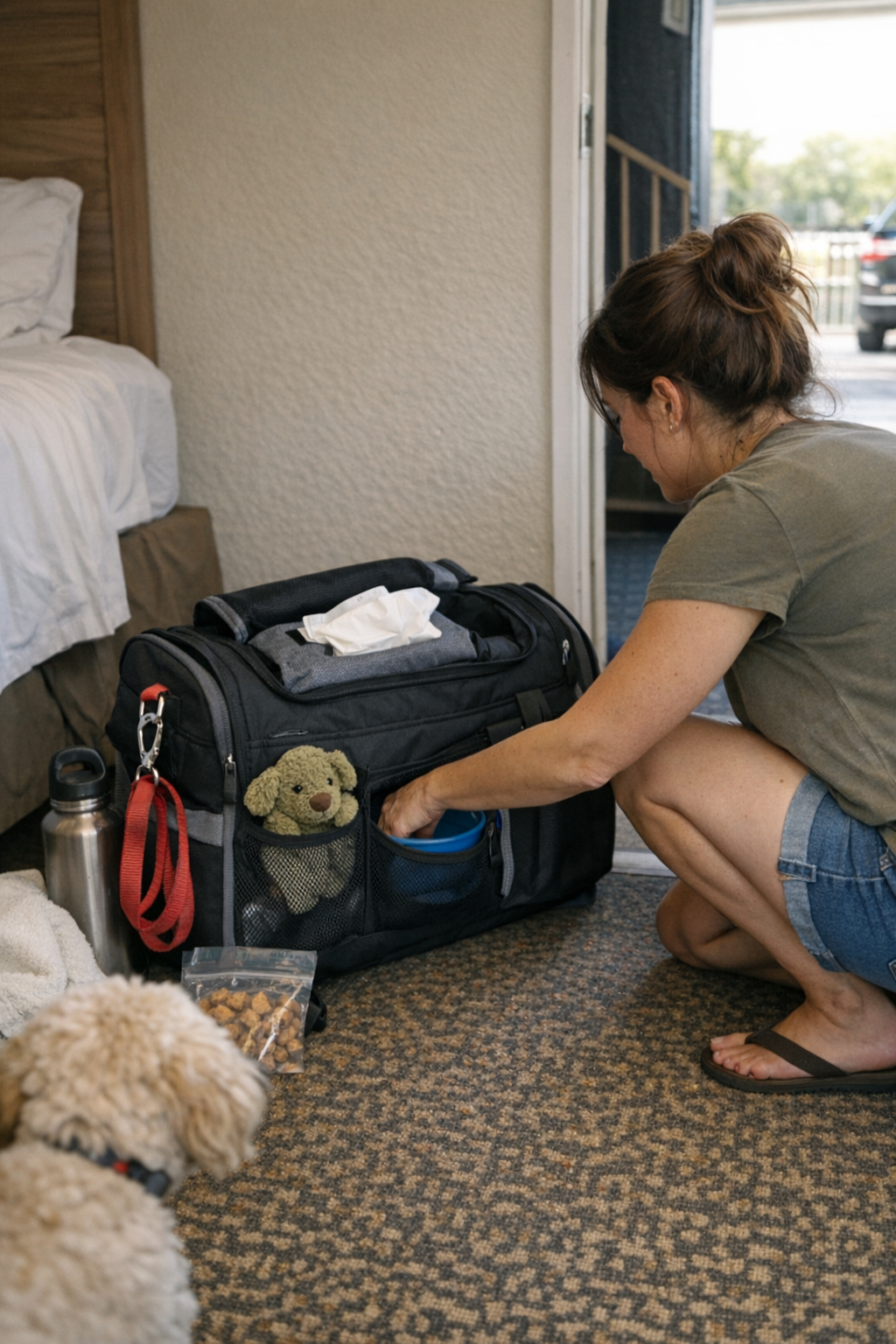
    Every “organized” pet-travel setup looks ready in your hallway. Every leash, wipe, bowl, and toy zipped into its own spot—until you actually hit the road. Fast-forward to the first curbside pit stop or gas station loop: what began as sorted turns into a series of reaching grabs, blocked zippers, and items buried under the wrong pouch. You’re not calmly retrieving a leash—you’re contorting your wrist past stiff dividers while your dog hovers, reading every hesitation as confusion. The packed bag that looked dialed now drags you into a struggle every time movement breaks, stalls, or restarts. This is the gap: what functions on paper often stalls in real motion, and nowhere does it show faster than during repeated, everyday stops—and that’s exactly where smart PawGoTravel setups try to redraw the line.

    When a Neat Setup Fumbles in Real Time

    At home, any travel kit can look travel-ready. On the move, repeated stops expose every weak link. The leash that started atop the stack is wedged under a folded blanket by the second gas station. Wipes you tucked for easy cleanup now hide behind a collapsible water bowl, just as you need them, one-handed, for a muddy paw. Treats once in reach manage to slip beneath heavier gear. The difference between “organized” and “usable” is clearest during these real, repeated stops—the orderly plan unravels when you need speed, not symmetry.

    The Routine That Exposes Every Flaw

    Short trips, frequent pauses, and in-and-out-of-the-car cycles repeatedly stress your packing logic. Hooks for leashes claim to keep things “secure”—until you twist the carrier to reach for one and get caught in a web of straps. Owner items—phone, keys, wallet—slide into pet-space, so urgent grabs force you to shove essentials aside just to find a bag or treat. Cleanup gear? Trapped under a comfort toy during the only two seconds you have to react to a mess. Each movement becomes a micro-obstacle. By midday, you’re not repacking the bag because of disaster, but because the layout simply can’t keep up with motion.

    Your dog isn’t oblivious to the friction. Every missed beat—waiting as you invert the carrier, watching you fish for items—teaches your pet to brace for delay. Each extra second handling “organization” erodes the flow that makes travel work for both of you.

    Recognizing the Repeated Pain Points

    What actually separates an efficient travel setup from an ongoing hassle? Not the number of zippered pockets or how “neatly” things stow, but whether you can instinctively reach essentials, every single time:

    • Wrong-first grabs: Hand finds the obvious zipper, but the leash is elsewhere, out of sight and muscle-memory.
    • Delayed cleanup: The wipes are always somewhere, but when speed counts, it takes a full-hand search or unzipping two layers.
    • Owner-pet item overlap: Rummaging for a toy means brushing past your keys—messy on a moving day, forgettable at home.
    • Comfort blocks function: A blanket meant for pet calm now blocks fast actions—you reposition it at every single stop.

    Each small failure isn’t dramatic; it’s the friction that kills travel rhythm. Your “organized” start rarely survives the churn of real, repeated use.

    Seat-Side Handling: The Unseen Bottleneck

    Most travel gear gets its truest test at the car seat edge. Door open, bag half-on the seat, your pet ready to jump; any poor design in pocket angle or opening direction shows up instantly. If your quick-grab section faces away from the seat—requiring an awkward reach over a restless dog—every fast movement turns slow. “Logical” layouts made for tabletop access force you to rotate the bag, fumble, even tip out contents just to grab a leash. The difference rarely comes from extra compartments, but from how those compartments open and orient when you’re getting in or out, fast.

    Pocket Choices and Small Structural Tweaks That Matter

    Reducing repeated friction means shifting structure, not adding complexity. Flip the main access pocket so it faces your natural grab at the seat’s edge, and leash reach becomes one move, not a mini-search. Place wipes and quick-clean gear shallow—just one layer from the surface, never under heavy comfort items. These aren’t cosmetic changes; after five or ten stops, every second saved is a tiny win that keeps both your head and your pet’s routine clear. Tiny tweaks in layout fight the silent loop of missed grabs and forced rearrangements that add up over a trip.

    The Difference Between Neatness and Usability

    That day-one pride—everything zipped and perfect—only hides real movement problems until you reach the first clumsy stop. Need to move the same tangle of bedding again? Find the leash gone wandering after a turn? Still guessing which pouch holds the bags—after countless walks? If every repetition leaves you untangling, shifting, and searching, your setup looks organized but isn’t keeping pace. Workflow trumps appearance, every time. The proof isn’t a tidy bag, but a routine where each stop flows faster and the same snags never return.

    Building a Setup That Moves With You—Not Against You

    Repeated travel isn’t about perfection—it’s about setups that don’t constantly get in your own way. Structural wins are subtle: a bag returns to “ready” after every stop without a reset, you reach wipes without tilting everything on the seat, leash handoff is one move, not a dig. These aren’t headline innovations, but the difference stacks in hundreds of small travel moments. When every repeated stop releases more motion—less interruption for you, less guessing for your pet—your setup starts working for real life, not for a photo. That’s the logic behind travel layouts that hold up under repeated use, not just first impressions.

    For products and practical setups designed for real travel routines, explore PawGoTravel.

  • Why Livable Storage Layouts Outperform Neat Garage Setups Over Time

    Every garage and workshop knows this story: The day you finally finish installing shelves, lining up bins, and sliding in that last cart, your space looks like something from a catalog. For about six hours, it stays “done.” Then real life rolls in—the first time you reach for a tool or return from a garden project, those sharp storage lines reveal their flaws. You edge a rolling cart out, only to nudge it sideways for clearance. Reaching the toolbox means leaning around a cabinet door that’s always half-blocked by stacked bins. What felt like a win quickly unravels into a series of tiny workarounds. The room is “organized,” but using it is more work than it should be.

    When “Organized” Isn’t Actually Useable

    The problems sneak up in the middle of busy routines. One weekday afternoon, you go to stash the extension cord, but there’s no clear path—last weekend’s project cart is half in the way, backed up against bins blocking the shelf you need. You bump a tower of containers relocating one just to reach another. Putting items away at the end of the day becomes a two-step shuffle: move the overflow to clear the walkway, drop your tools, then put back what you moved in the first place.

    You start to notice the pattern every time you return from a project: the “tight” setup forces you into awkward reaches, forced sidesteps, or stacking odds and ends where they don’t quite belong. The logic that looked smart at rest makes every in-and-out reset a slow dance—tools linger on the bench, bags collect at the door, and the one open corner morphs into a silent disaster zone.

    Why Neat Isn’t Enough—The Friction Behind the Facade

    The frustration isn’t about clutter itself. It’s what the setup quietly steals: freedom of movement, predictable access, and a quick reset. Wall racks and cabinets flush with the drywall look sleek, but they can choke the walking path. Stacked bins feel efficient until you need the one at the bottom. Even mobile carts that “fit” the floor plan become obstacles—never gliding home without a nudge, never quite tucking away on the first try.

    • Walkways narrow to tightrope width, forcing awkward sideways steps and shoulder-checks
    • Bins need shifting before you even reach what they’re storing
    • Carts demand pivoting, pulling, pushing just to return them to a “parking spot”
    • Overflow—the inevitable extra tarp, unopened package, or random tool—settles in dead wall zones and corners, never really joining the system

    A layout that looks sharp at rest can become an obstacle course in motion. Routine use exposes every hidden choke point, turning basic storage into a low-key, high-frequency hassle.

    The Real Cost of Resetting—And Resetting Again

    Every setup that’s “efficient” in theory but awkward in use demands constant shifting. If taking out or returning items involves sliding three containers, rerouting a cart, or pushing through a pinched walkway, there’s no such thing as a quick reset. The bigger the routine—the more tools, lawn care, sports equipment, or seasonal gear moves in and out—the more this friction multiplies. Corners become holding zones. Wall space gets half-used, never really accessible. Each week, the setup feels a bit heavier to manage.

    What should be a two-minute reset—returning tools, clearing a path, restoring order—starts taking five, ten, fifteen minutes. Instead of efficiency, you breed congestion. Neatness turns into an obligation instead of a help. Over time, every return becomes a negotiation with the layout, quietly piling on frustration and making true order feel out of reach.

    The Shift: Designing for Movement, Not Just Storage

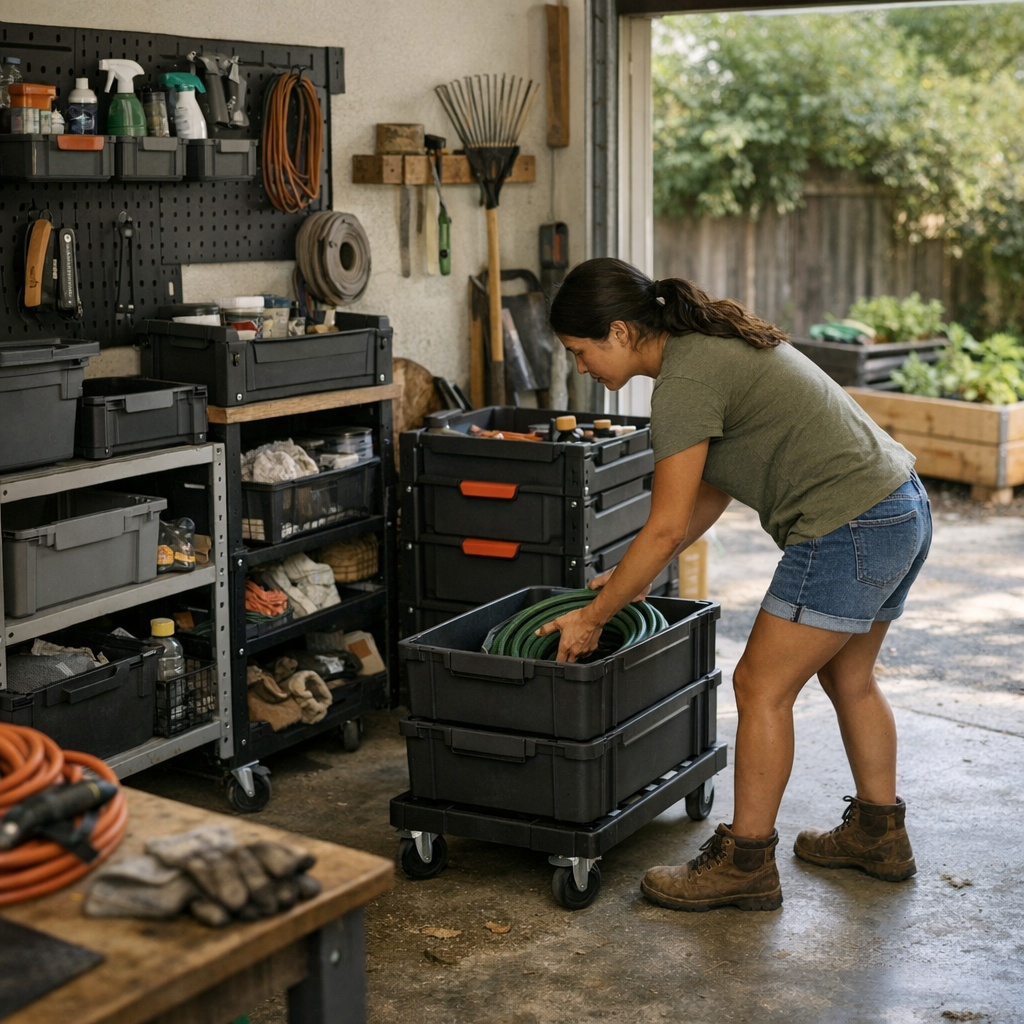
    Real breakthroughs don’t come from adding yet another shelf. They come from surrendering the fantasy of perfect density and making space for movement and return. After a string of resets that leave you sweating, you start carving a 12-inch margin clear along the paths you actually walk—no stacking “just one more” bin, no pushing carts up against critical shelves. Suddenly, the rolling cart slips in on the first attempt, instead of bouncing off the baseboard. Stowing that seasonal hose takes seconds, not a round of bin-Tetris. Overflow finds a place to land for triage, not for long-term limbo. There’s an immediate, lived-in ease to the space. It’s less about looking sharp and more about working right—reset after reset.

    How to Spot a Setup That’s Slowly Failing

    • Carts require awkward maneuvers to park or retrieve—sometimes left half-in the way “until next time”
    • Walkways disappear under piles or stacks intended to “go somewhere else soon”
    • Bins end up as semi-permanent barricades, hiding everything behind them
    • Corners become graveyards for stuff you can’t deal with right away

    If every step feels like a small negotiation, or if you find yourself constantly justifying why things can’t go back where they belong, your system is signaling it’s too rigid. Leave real, measured gaps along major movement zones and resist the urge to fill to the edges. The everyday flow—rolling, retrieving, returning—should happen without second thought.

    Building Order That Stays Put

    Perfect symmetry and wall-to-wall bins market themselves as “done,” but they rarely survive repeated use. The setups that actually stay organized don’t choke every inch; they provide genuine breathing room for movement and overflow. The result? Easier resets, shorter cleanup sessions, and a layout that adapts when plans change. What you lose in showroom lines, you gain in a steadier workflow and fewer moments hunting or shifting what’s “in the way.”

    Test Your Setup—Not Just for Looks, But for Traffic

    After installing your system, put it through a normal week: bring in your tools, stow away groceries, run a quick project. Where do you hesitate? What always ends up temporarily out of place? Notice which paths actually stay open and which ones jam up. A consistent inch of open floor or a shorter bin column can deliver more long-term order than any additional unit stuck in the margins.

    Order That Moves With You

    True organization shows itself when you’re in motion—pushing a cart through, grabbing gear mid-job, resetting fast before the next task. It’s not just about looking tidy but about freeing you from unnecessary reshuffling. When your layout respects how your routines actually flow, order sticks. The space helps you out, not just show off.

    Find storage solutions built for real movement at StackNest.

  • Choosing Between Shoe Racks and Open Shelving for Entryway Storage Solutions

    When Entryway Storage Starts Slowing Everyone Down

    The entryway is supposed to make coming and going smooth—a place to kick off shoes without thinking, grab them again, and keep moving. But what happens after a normal week of school runs, grocery trips, and weather surprises? Even the best shoe setup—the one that looked perfect after last Sunday’s reset—can unravel in a matter of days. The real friction isn’t the obvious pileup; it’s the constant little slowdowns: shoes you have to dig for, pairs that crowd each other out, and the routine quietly sabotaged by a system that doesn’t flex with real life.

    Where the Trouble Really Starts: Shoe Racks vs. Open Shelves in Practice

    The promise of a shoe rack is tempting: everything lined up, every pair visible, nothing touching. For a brief stretch, maybe it holds. But by Wednesday: one pair of size 12s hogs two slots, kids’ shoes double up, and that “defined space” gets overrun. The rack’s order asks you to play along—if a boot doesn’t fit, tough. You find yourself shifting three pairs just to fit one back, or tossing shoes off-balance, watching the neat rows sag by Friday.

    Shoe racks are built for routine, but real households don’t move in straight lines. Their structure can actually make resets harder. You can’t just toss and go—every slot resists overflow, but life keeps bringing more to the door.

    Open shelves seem like a fix—no wiggling, no precise fitting. You drop shoes wherever, boots finally have a landing place, nothing has to sit upright. It feels liberated until the floor under the shelf starts to disappear. Pairs spread, migrate, and soon nothing’s where you expect. Pulling out a daily pair means shifting a slide of shoes or untangling sandals from laces. What started as an “anything goes” landing turns into a daily scavenger hunt.

    Midweek Mayhem: When Reset Fails and Clutter Spreads

    Come Thursday morning, the scene repeats: shoes jammed at the ends of the rack—none in the middle. The only slot left holds winter boots, months out of season. In a rush, someone kicks their sneakers onto the floor because the rack is full (again). Open shelves aren’t spared, either: kid shoes pile up on the bottom, adult shoes drift to the side, a wet pair leaks behind the bench. By the end of the day, you’re moving stacks to reach what you actually wear, and the overflow colonizes new corners.

    This isn’t a breakdown, exactly. It’s a slow spread—each shortcut (I’ll fix it later, just toss it there) making the system heavier. Instead of a quick grab-and-go, you’re now committed to daily minor reorganizing before leaving the house.

    The Silent Warning Signs of a Broken System

    Lost time is the tip-off. When you catch yourself always fishing behind three other pairs, scooping shoes off the floor, or navigating a jumble just to find two matching sneakers—it’s not just messy, it’s friction you pay for every day. These aren’t rare failures; they’re routine symptoms that the storage logic gave up long before you did.

    The Real Divide: Boundaries or Bust

    The core difference isn’t whether you pick a rack or a shelf. It’s whether there’s a boundary—a line shoes can’t sneak past. Racks promise structure, but can’t flex for off-script days. Shelves grant freedom, but let clutter sneak in sideways. When no one is assigned clear cleanup, Sunday resets wash away by Tuesday; when every pair stays “just in case,” chaos creeps in faster than you notice.

    The result: either the setup demands precision you don’t have, or it offers endless leeway—and both quietly tire you out. In every case, default habits win: people drop shoes wherever is fastest, and the entryway starts to look (and feel) like a slow-motion game of Tetris you can’t finish.

    Enforce a Limit: The Only Rule That Actually Works

    After enough crowded hallways and failed resets, one change finally makes a difference: cap how many pairs live in the entryway. Not “theoretically,” but for real—say, eight pairs you actually wear. The overflow? It moves out. No exceptions, even for rain boots or impulse buys.

    Suddenly, there’s a reason to put away the extras, to stop letting low-use pairs loaf around, to make resets fast. With a set number, it becomes frictionless: routine doesn’t require a total reorg—just a quick scan and a swap when new shoes come in. Even shelves get easier; with half as many pairs, you can spot what you need without rearranging a mountain. If boots don’t fit, they get their own corral, not forced into the main flow.

    Make Categories Obvious—And Stick to Them

    Assign zones that make sense: kids’ shoes down low, adult pairs at eye level, boots off to one side or on a drip tray. This isn’t about putting labels everywhere, but about making it easy to see when things drift. Out-of-season and “maybe next month” shoes move to a deeper closet—entryway space is only for what you reach for most.

    For wet shoes, a tray keeps puddles from spreading. Keep pairs to a minimum per zone—layering too much is just a slow leak towards the same old mess. Leaving things accessible and not overly dense lets you do wipe-downs and micro-resets in a minute or two, not half an hour.

    When to Admit It’s Not Working Anymore

    These are the flags: You’re shifting pairs, not just grabbing them. You avoid the main rack because it’s more work than the floor. More shoes sit sideways than straight. You can’t remember the last time every pair had a clear spot. When boundary lines blur, the system isn’t just “lived in”—it’s overdue for a reset. Before the annoyance builds, clear out the surplus and tighten the cap again.

    Build for the Reset You’ll Actually Do

    The dream is an entryway that stays pristine. The reality that works is one that’s designed for quick, constant resets—because in real households, chaos is never farther than a busy week. The setup that actually lasts is the one with:

    • A strict limit on daily-use shoes
    • Zones set by use or person—not just available space
    • No tolerance for overflow clogging the first grab
    • Resets that take minutes, not willpower

    This kind of entryway doesn’t pretend to be showroom perfect. It just puts order where you actually need it, survives the daily churn, and keeps the mess contained—so you get out the door faster, instead of fighting a losing game of storage whack-a-mole.

    Shop ClosetWorks for practical entryway and closet storage solutions.

  • How Pet Travel Setups Can Make or Break Your Trip Comfort

    Arriving with your pet isn’t the victory—it’s the beginning of every friction point that clever packing alone can’t solve. That quick “I’m ready” confidence fades the first time you need wipes or a leash and grab the wrong thing. A carrier that looked organized by your door starts showing its real structure—good or bad—on the first curbside stop. What counted as “prepared” under your kitchen light doesn’t always survive the pressure of repeated stop-and-go travel, fast reach needs, or a restless animal shifting with every pause.

    What Looks Ready Doesn’t Always Handle Smoothly

    Packing in rows doesn’t guarantee you’ll handle the real mess of travel smoothly. Most pet owners jam cleanup wipes, treats, bowls, and extra comfort items into neat layers “just in case.” But real travel exposes every shortcut: the leash that’s visible at packing time ends up buried under blankets. Minutes after landing, you’re already misreaching—tugging out bedding instead of essentials. By the next stop, the sections blur: wipes slip under pads, treats vanish behind your water bottle, comfort toys jam the only pocket you can reach one-handed. What was calm at the start turns into one interruption after another.

    Every Stop Highlights Overlaps—and Grows the Friction

    After the first transfer, every “organized” bag shows its weak points. Reaching for a cleanup pouch means digging through pet bedding mixed with your own home basics. Someone, not always you, drops keys or a phone into the first open pocket—often the one you now desperately need for wipes or a leash. Spaces that showed off matching accessories at home devolve into hidden items and blocked reach at the worst possible time. Even a minor holdup—a squirming pet or urgent cleanup—unmasks the mess: you’re juggling, fumbling, always losing momentum, forced to reshuffle instead of moving. Each new stop slogs through the same routine instead of flowing forward.

    Why Quick Access Makes or Breaks Real Pet Travel

    A travel bag isn’t “working” unless you can pull out what matters instantly, without hunting, shifting, or sharing space. The difference between easy travel and stressful stalls isn’t how many pockets your setup boasts or how neatly it sits at check-in. It’s whether fast-use items are reachable one-handed, never shared, never buried—trip after trip.

    Most setups fail when overlaps turn into confusion: quick-use pouches end up blocked, every pit stop means unlocking, unzipping, and un-layering. Delays stack up. “Organized” is replaced by stop-and-start chaos—reaching, failing, losing your rhythm.

    The Hidden Cost of Overlapping Storage

    A pet blanket or plush toy packed for comfort can be the exact thing slowing you down. You notice it not the first time you reach, but the fourth—lifting the same layer, shifting a loose bowl, working around soft padding just to find a single wipe. Each small delay adds up fast, especially with a tense pet by your side and your attention split. Noticing that slow-down is the first sign your setup is organized for first impressions, not real travel use.

    The Real-Life Annoyance: When Travel Feels Like Damage Control

    Blocked access is more than an inconvenience—it becomes a background drag that wears down every trip. When pet travel bags or organizers force you to reshuffle, what should feel routine turns into repeated stress. Before long, handling cleanups or leash changes means sorting through spilled treats and loose comfort gear. Even if you chose sturdy gear, if every key supply (cleanup, leash, treats, hydration) demands extra motions or a guessing game of pockets, you’re always a beat behind what your pet needs.

    It’s easy to feel out of sync, caught pausing or blocking traffic while you reorganize in public. Every missed cue—a fumbled leash, a hidden pouch, a toy dropped at the wrong moment—pushes both you and your pet further from the “calm travel” the bag promised. It’s a chain of small inconveniences that never makes the trip easier, only more tiring.

    What Actually Shifts the Experience: External, Separated Essentials

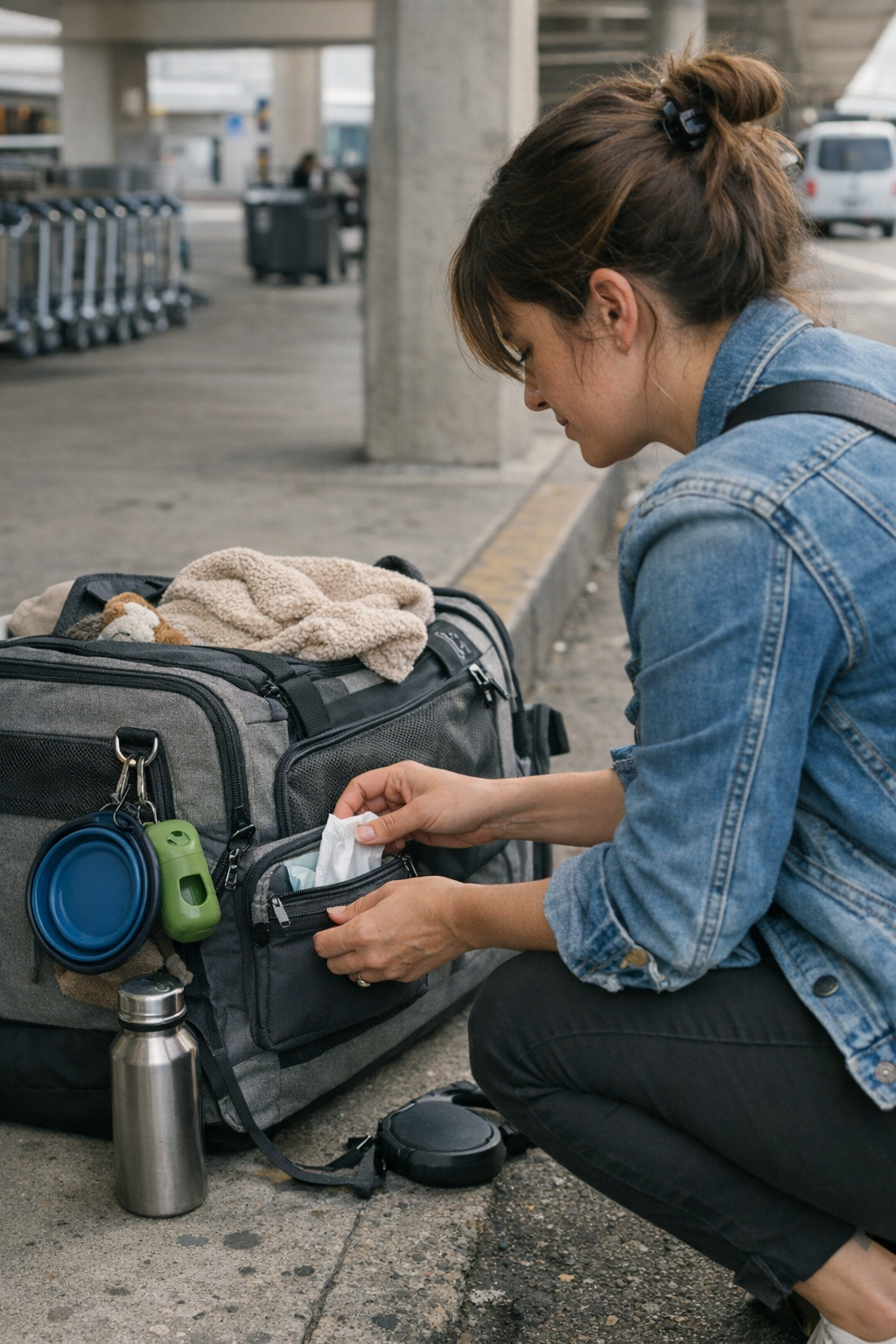
    The change that matters isn’t more storage—it’s ruthless separation for anything you’ll grab on the fly. The moment high-use items get their own exterior spot—an outside wipe pouch, a clipped leash, hydration tools never combined with bedding—scrambling stops. Cleanup wipes on the side, away from toys and comfort items, puts the right tool in reach, even one-handed. Pockets inside stay soft for bedding or treats, but the working gear lives on the outside, always visible, untangled, and ready.

    This is more than avoiding mess. It’s stopping the slow slide into micro-delays and confusion as trip routines stack up and energy flags. The setup actually holds—not just in photos, but after layovers, seat switches, or a string of small setbacks. Less time digging means your focus stays where it should: on your pet and your travel path.

    Why Less Repacking Means Faster Returns to Movement

    Every extra motion is time lost. When cleanup and handling supplies are always externally separated—never squashed by blankets or locked away—your restart after each stop is seamless. No tangled gear, no repeated resets. Every move feels sharper, and the flow of pet travel finally matches the pace you want, not the slow crawl of fixing your own setup over and over.

    Seeing Beyond a “Neat” First Impression

    The neatest setup at boarding means nothing if the access structure collapses after two stops. Zipped pockets and smoothed bedding may win on first appearance, but only dedicated, exposed essentials survive real travel. If you keep finding yourself pausing to reshuffle, or pulling one thing just to find another—your setup is losing. The fix is trading the idea of “everything in its place” for one rule: each quick-use item gets a pocket or clip that stays clear, every time, every cycle.

    Giving up one catch-all compartment for an always-open access point can double your ease of movement. It means you handle stops faster, recover your rhythm, and your pet moves with you—not against your frustration. The success is visible: fewer interruptions, more fluid handling, less chance of a small crisis ballooning into a much bigger one.

    Building a Pet Travel Setup That Survives the Whole Journey

    Most travel routines sell calm but end up delivering repeated friction because the core problem—access—gets buried under aesthetics. The rare setups that truly hold up across unplanned stops, seat swaps, or airport sprints take quick-access and compartment separation seriously. Keep every high-frequency tool visible, externally placed, and never behind comfort gear. Interior spaces serve rest and comfort; exterior clips, side pockets, or snap pouches serve the routine. Get that right, and you stop having to block exits, dig through soft layers, or flatten every delay just to move forward again.

    Comfort isn’t how your bag looks before you leave—it’s how easily it lets you recover after every interruption. The right set of exterior, separated quick-access pockets and non-overlapping zones means your routine adapts—item after item, stop after stop. It’s what keeps the trip moving, no matter how many small, real stops test your patience.

    Find more practical solutions for smoother, real-world pet travel at PawGoTravel.

  • How Modular Storage Transforms Everyday Closet Organization and Flow

    Step into your closet or mudroom and you’ll notice: what looked organized two weeks ago now feels off. Hats teeter in unstable stacks, gloves and scarves blend into the same tangle, and the shoes you need have somehow migrated under a cascade of bags you barely use. What starts as a clean-out effort rarely stays that way. Routines shift, seasons flip, kids grow, and suddenly the “system” loses its grip. The tension isn’t just mess—it’s the irritation of digging behind bins, moving piles for one small item, and watching order break down under daily habits. That’s where the real difference between fixed and modular storage is felt.

    The Everyday Limits of Fixed Storage

    The first pass at organizing an entry closet usually looks promising: labeled baskets, orderly shelves, matching containers lined up like a catalog photo. But as weeks pass, friction builds. That catch-all bin for hats fills to bursting, scarves spill over their edge, and a neatly folded stack of gloves collapses the first time you reach for the bottom pair on a busy morning.

    Mornings amplify these weak points fast. Picture this: you’re running late, reaching for your kid’s gloves, but the only way to grab them is by first shifting two baskets, then untangling them from scarves accidentally tossed in days ago. Each retrieval is a mini obstacle course, eating up precious minutes. Instead of your storage working for you, you fall into a cycle of accommodating its limits—reshuffling, restacking, always adjusting your routine to squeeze into systems that don’t flex with you.

    When Storage Works With You, Not Against You

    Modular storage shifts the entire reset routine. Instead of living with overflowing bins or awkward shelf gaps, you continually tailor the space to fit your real habits. Need more room for winter gear? Drop in a larger bin. Too many scarves creeping into the gloves? Slide in a divider tonight, not someday. The system grows, shrinks, and moves with your life—no overhaul required.

    In a family mudroom, that’s not theory. Maybe you start the year with every child’s items in their own zone. Once snow season hits, gloves multiply, hats outgrow their baskets, and the winter boots pile up. Modular shelves let you raise the jackets out of kid reach for summer and lower those bins for easier after-school drop-offs. When a soccer season ends, swap out the cleat basket for a storage tray—done in moments, not weekends. Each change means less shoving, less wasted vertical space, and fewer “I’ll fix it later” clutter buildups.

    Walking Through a Modular Morning

    Imagine a hallway closet where kids, pets, and parents all collide each morning. In a fixed setup, gloves slide into the hat basket, umbrellas are wedged on top of whatever’s open, and by midweek, there’s always a rogue shoe poking out of the door. Closing it without a spill turns into a careful balancing act.

    Swap to modular: gloves slot into shallow bins at kid height, hats rest on a slanted shelf up top, hooks slide to store dog leashes or keys as routines demand. The categories stay distinct because the storage changes before the clutter snowballs. Grabbing an umbrella means one motion, not a mini excavation. Vertical space that was just air before now actually holds the things you reach for most. The system resists the slow drift toward chaos—not by magic, but by making adjustment part of routine, not a special project.

    The Unseen Payoff: Less Reset, More Flow

    The real payoff of modularity isn’t how it looks after a deep clean—it’s in the ten-second resets that become possible after a burst of activity. With fixed shelves, a weekly reset means sorting out one bin that’s gone feral, then re-layering stacks that don’t really hold. With modular setups, changing a bin or shelf stops one overflow before it cascades into other categories. Dropping muddy gloves into their own bin or nudging a divider to make space for extra scarves means less crowding, fewer lost items, and almost no reshuffling across the rest of the closet.

    One family who swapped stiff shelves for variable bins and pegs said resets went from a full-family ordeal to individual, two-second drop-offs—no more precarious piles teetering on the edge. Even younger kids got into the habit fast. Instead of constant reminders, the clear zones and eye-level storage made returning items just obvious enough to stick.

    Keeping Flexible Storage Actually Flexible

    Modular storage shines only if you keep it responsive, not static.

    • Notice overflow or empty bins? Change sizes or shelf heights before mess multiplies. If you wait for chaos, you’re back to square one.
    • Hold to clear categories. Shift bins and dividers only when habits or seasons change—otherwise, too many tweaks can muddle the system and reintroduce clutter.
    • Labels aren’t just decorative. In busy spaces, clear, readable bins are an invitation for everyone to reset quickly, not a chore list for one person.

    Storage That Stays Useful (Not Just Tidy)

    The real test is months down the line—the rushed Tuesday after rain, or the spring where boots, sports gear, and school bags all seem to triple. Fixed storage crumbles under shifting loads: bins overflow, folded stacks collapse, and everything takes longer to access. With decent modular storage, zones stay defined, visibility stays high, and resets still only take seconds.

    If storage still works for you—items are easy to find, categories don’t keep blending, the door shuts without a shove—then the system is doing its job. The payoff isn’t flawless perfection, but the erosion of that persistent, invisible effort every time you grab or return an item. That’s a shift that sticks, season after season.

    http://closetworks.myshopify.com

  • How Smart Pet Travel Gear Keeps Your Journey Smooth and Stress-Free

    A pet-travel setup that looks ready at home can start breaking down the moment you hit real movement—lines, platforms, quick stops—where every friction point reveals itself fast. That bag that seemed organized by the door turns into trouble when your hands are full, your dog needs a quick treat, or your cat’s carrier blocks you at a cramped waiting seat. All it takes is two or three everyday pauses—a scan at security, a coffee pick-up, a sudden leash grab—and what seemed “prepared” shows its weakness: the right item tucked just wrong, cleanup gear out of reach, pockets positioned fine for storage but backwards for on-the-go use. The PawGoTravel world starts where good-on-paper setups fall apart in actual use—and every repeated stop makes the difference louder.

    When Looking Prepared Isn’t the Same as Moving Smoothly

    A travel bag can look flawless sitting on your hallway bench: pouches zipped, items labeled, everything sorted. But as soon as you squeeze through the terminal crowd, “ready” turns into a tangle. You reach for a wipe—it’s behind a wall of treats, locked in by a water bottle, forcing you to unzip and reshuffle while just trying not to drop the leash or block the line. The less mess you see, the more you notice the slowdowns—digging, unzipping, hunting—none of which mattered until you needed them mid-trip.

    After even a few stops, every action costs time. Those side pouches that looked efficient now face away from you when you wedge the bag at your seat. The comfort blanket packed “for easy access” means pulling half your kit just to reach one treat. Instead of breezing through travel moments, you struggle: tugging zippers, balancing snacks, apologizing to the next traveler as you fish out supplies one-by-one with a dog nudging your knee. “Organized” at home, disjointed in motion.

    Repeated Quick Access: Where Most Setups Falter

    After two or three restarts, the main complaint isn’t lack of gear—it’s the grind of getting to it. Most setups fail not from missing pieces, but by blocking you from the same items, over and over, right when you need them. An “efficient” pack can kill your speed if the most-used zone isn’t instantly reachable or if “quick access” means flipping, rooting, or unzipping the whole bag each time.

    A Real-World Scene: The Pause by the Boarding Monitor

    Picture juggling your boarding pass, phone, and pet carrier. Your dog bolts toward a scent. You need wipes—fast. But they’re inside, behind snack bags and a leash, tangled with loose chews. As your pet fidgets, each extra second turns small mistakes into real hassle. The setup never looked messy—but in use, the flow locks up at the worst moments. Multiply this by every bathroom break, snack stop, or sudden leash adjustment and the hassle compounds each time.

    Structure Stress Points: The Repeat Offenders

    Compact, labeled travel bags seem logical until real movement starts exposing:

    • Stacked pockets: every grab becomes a three-step hunt.
    • Too-tight sleeves: reach blocks when your hand’s at an angle or you’re wedged in tight seats.
    • Overlapping sections: taking out wipes shifts the treats and jams the water pouch, slowing your next grab.
    • Cleanup gear stowed deep: you need to stop everything for a tiny fix, breaking the flow again.

    Owners start tensing before each checkpoint or seat change, already bracing for another fumble or backtrack. The issue isn’t chaos—it’s “almost right,” a setup just off enough to force extra steps or awkward pivots each time routine actions repeat.

    Small Structural Tweaks, Real Travel Relief

    One targeted change—like shifting wipes from a buried sleeve to an outer pouch that faces you in a seat—saves seconds and sanity at every stop. Instead of reshuffling the entire setup, a single quick reach gets you what you need, freeing your other hand for pet control.

    Across a trip with multiple pauses—even a short one—this shaves away the resentment and adds calm to your routine. Those micro-adjustments build: fewer restarts, less scrambling, a steadier pet, and no lost time doubling back for basic items.

    How Setup Choices Shift the Repeated-Use Equation

    Ask yourself: how many times per outing do you actually need towels, snap leashes, or treats on the fly—and how many times do you end up pulling the wrong zipper first? If nested means slow, swap in fewer but smarter outside-access pockets. Anything you reach for most should land in a pouch that’s always facing out when your bag is parked beside your seat or under your arm on a train.

    Build for the reset, not the photo. “Packed for looks” slows everything. Pack essentials to land at your fingertips without shifting half your kit. Every time you stop and have to reshuffle, the friction gets worse. Clean travel is about escaping repeat annoyance, not just tidying before you leave.

    Comfort and Control: Not Every Solution Is Perfect

    No setup eliminates all trip friction. Sometimes your quick-access blanket blocks treat pouches, or that leash snap catches the zipper again—small, persistent tradeoffs that even smart organizers can’t fully erase. The best structures strip out the major pause points and keep interruptions occasional instead of routine. For every frustration reduced, one micro-annoyance sometimes crops up elsewhere.

    The real gain: your most predictable needs (wipe, leash, treat, baggie) snap into reach when you actually pause or restart, not after five extra moves. It’s not about flawlessness, but about turning stop-and-go travel from a chore into a smoother sequence. Less mess is good, but less repeated fiddling is what makes days feel lighter.

    What Really Turns Chaos into Flow

    What separates easy pet travel from the usual grind isn’t how tidy you start, but how your gear behaves through every stumble, seat-jam, or waiting moment. If you’re spending your stops untangling the same two items, or pausing simply to reset your bag again, you’re carrying the wrong friction.

    The trick isn’t layering on features or aiming at perfect order—it’s structuring your bag so wipes, leashes, treats, and cleanup gear live right at the edge of reach, always in the same place, always ready for a one-handed grab. Every trip exposes new weak points, but even a single tweak can save three restarts in a row. The real test is not how impressive it looks lined up at the door, but how it moves once real travel starts.

    The setups that work aren’t just neater—they reduce the drag of repeated small failures. If you want a kit that actually moves at the speed of your travel—not just one that looks organized at the start—look for pet carriers and organizers that keep your essentials in play through every seat change and surprise pause. That’s where smoother, cleaner movement finally clicks into place.

    See practical pet-travel setups at PawGoTravel

  • Why Real-World Use Reveals the True Value of Storage Systems

    Most setups start with ambition—and then grind down under real use. Stand in any freshly organized garage or workshop and you’ll see the classic first-day layout: walls lined with shelving, carts snug against benches, storage bins stacked high, every tool slotted neatly onto rails or pegboards. Everything promises order. But clean lines and clever modules only last until reality hits. A month later, and the smooth setup you were proud of feels less like a system, more like a slow-motion obstacle course. The truth is, organization isn’t tested by how it looks at the start, but by how it survives the messiness of regular routine—and where it starts to get in your way.

    How “Clever” Turns Into Clumsy—Fast

    You rarely see the breakdown as it starts. The cart that was perfectly tucked beside the workbench? Now you’re nudging it out of your walking lane for the third time this week. That streamlined shelf by the back door hosts a sprawl of items that never found a better spot. Pegboards morph from sharp tool displays into gridlocked tangles—daily-use essentials squeezed together so tightly that pulling out a screwdriver means prying free a dozen other things first. These aren’t minimal setbacks. It’s the steady friction that comes from layouts built to impress, not built for motion.

    If you’re sidestepping around bins that “fit” but block walkways, or rolling carts aside just to uncover your air compressor, you’re losing minutes and momentum—sometimes without even realizing it. A setup designed for visual appeal is one thing; a layout that makes every return and reach feel seamless is something else entirely.

    Spot the Warning Signs in Your Own Space

    Most setups don’t fail loudly. The breakdown comes in little glances and repeated workarounds:

    • You drag the same mobile cart away from the door every time you need to get through, even though it was supposed to be “out of the way.”
    • Overflow builds up at the end of your shelving run—an awkward dead zone that keeps attracting odds and ends you don’t want to deal with mid-task.
    • Hooks and bins are so crowded that stowing a tool means rearranging the entire row, so you start piling items wherever there’s space.
    • The shadowed corner behind the cabinet is basically a black hole for stray hardware that you only rediscover when you finally do a deep clean.

    These friction points reveal the real dividing line: It’s not whether you have “enough” storage, but whether access and reset flow actually match how you move and work. Until the layout fits the way you return, reach, and cycle through your routines, the system fights you more than it helps you.

    How Real Routines Expose Design Flaws

    Sure, a dense pegboard covered edge-to-edge looks efficient. But work a few sessions and you’ll notice the annoyance: unhooking a wrench to get to a hammer, or dancing around clutter building at the bottom. Even spacing—just a couple extra inches—on heavily used hooks can make or break a routine. That’s not a design flourish; that’s the difference between grabbing and griping.

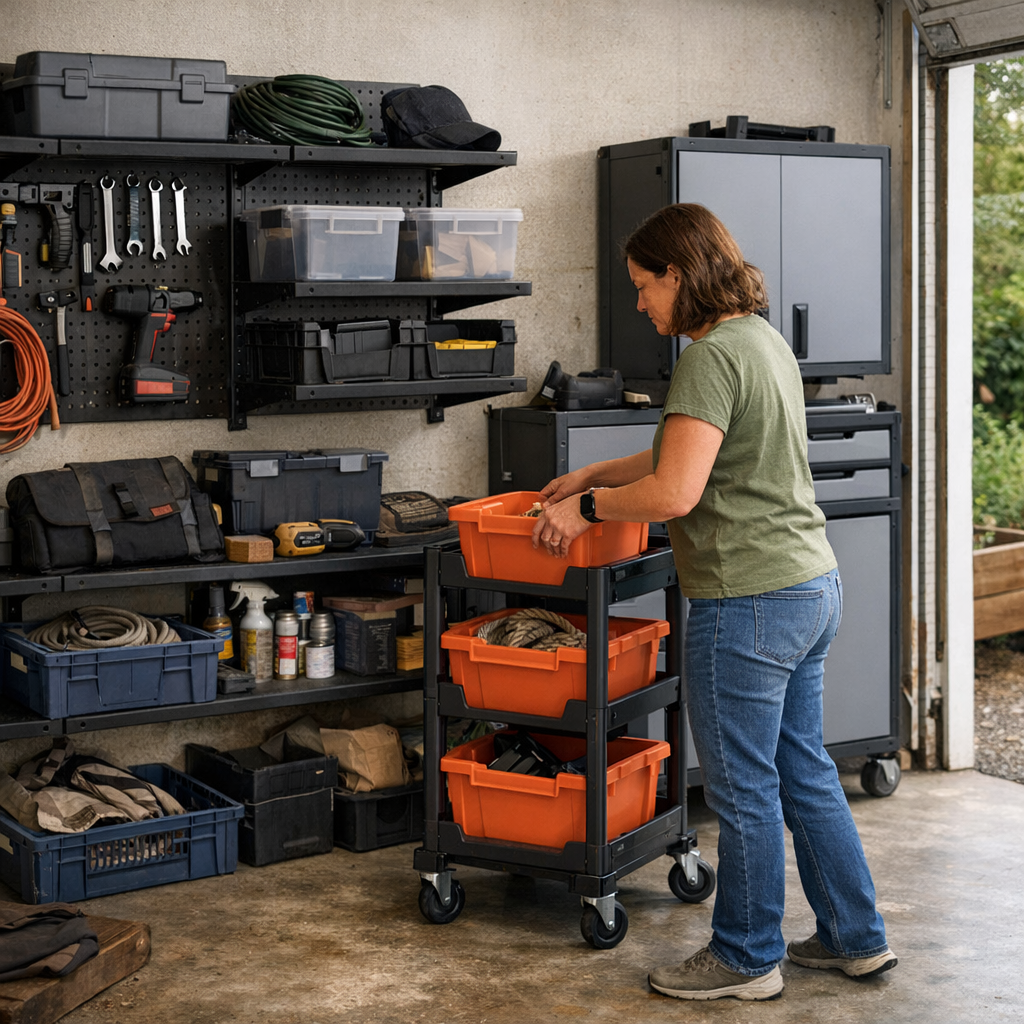
    And carts—especially the “modular, mobile” kind—can be the worst offenders. On paper, they glide between projects. In reality, they hover awkwardly in high-traffic areas, drifting into prime walking lanes or settling somewhere that blocks your best return route. By the time you catch yourself parking and re-parking it, you realize: its supposed flexibility just slowed you down.

    Even static wall shelving plays tricks. Spaces that seem generous at setup reveal themselves as dumping grounds. Zones far from your main table attract overflow, while the most convenient real estate crowds up, slowing you down every time you reset for the next job.

    Reality Check: What Happened in My Own Garage

    Take my last supposedly “final” overhaul. On day one, everything sparkled. By week three, my driver bits were buried—either tangled under clamps or occupying a shelf an arm’s length away from where I actually needed them. The rolling cart developed a habit of sliding into my main aisle, quietly tripping up my routine. Even when shelves were technically available, tools started collecting elsewhere because the return flow was blocked or the access just felt awkward. The result wasn’t chaos, but a persistent, low-level frustration that undercut every project.

    Tweaks That Turned Setup Into a System

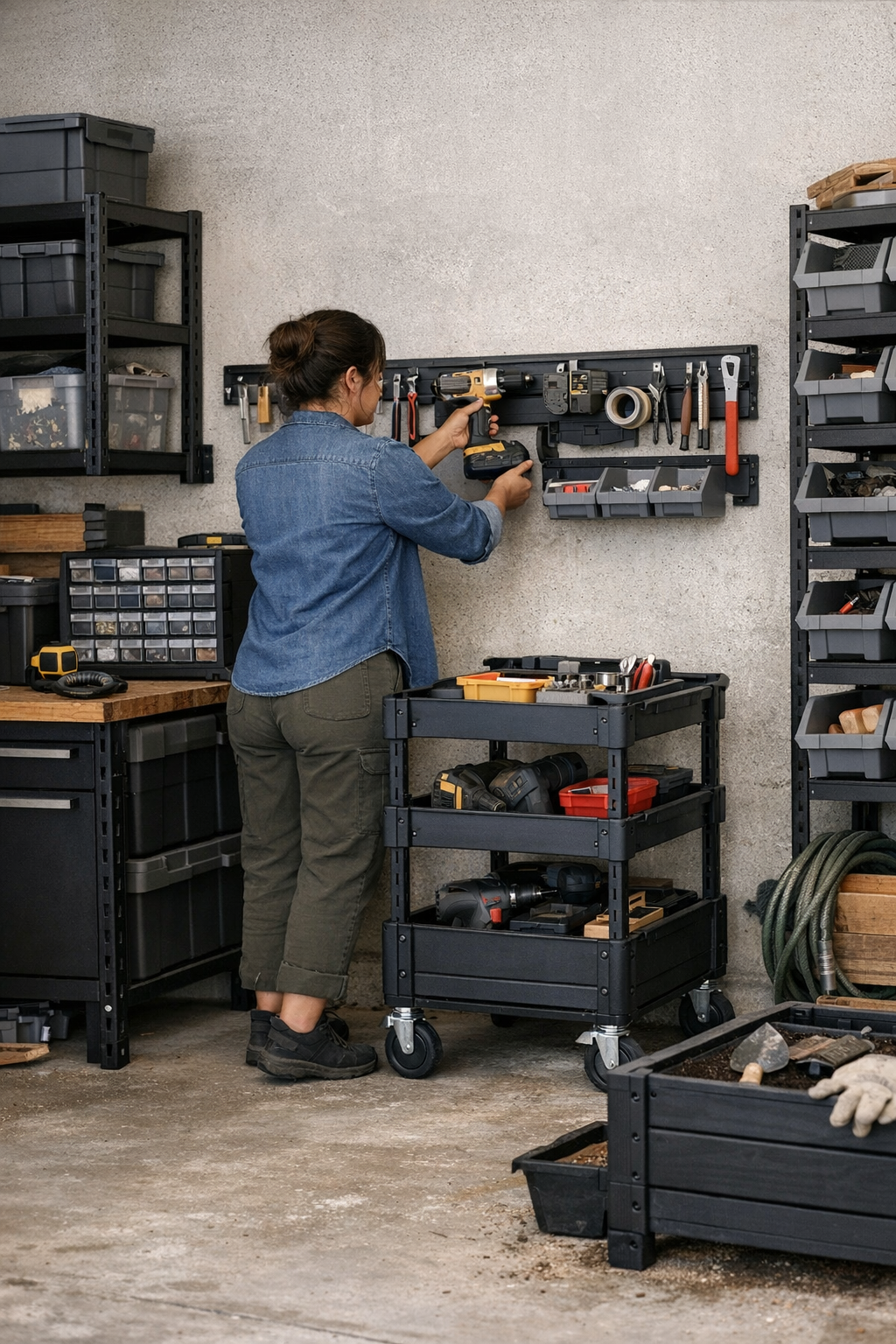
    Fixing it didn’t mean buying new organizers. The watershed change came from confronting the daily movement habits my initial plan ignored. I cleared a section of pegboard—shoulder height, one hook deep—and gave it to the tools I grab every session. Hooks got more space. No more tangles, no more knots. Each tool could go back without a thought.

    I repositioned the mobile cart just enough to stop it from drifting into the main walkway. Maybe it looked a bit less “optimized,” but for the first time, gear wasn’t in the way—resetting the space felt quick again. The fix wasn’t radical. It was just a matter of seeing zones as living spaces, not photo setups: who needs access, where does overflow creep in, what little blockages keep piling up? Small tweaks—scaling back, sliding a cart a foot left, clearing one overstuffed shelf—did more for my workflow than any new modular system ever did.

    Real Test: Walk Your Flow, Not Just Your Layout

    Before declaring any setup done, walk through your full routine several times. Where do you trip up? Which bins get moved most, which tools collect out of place, and what makes you double back or hesitate? Often, it’s not that you’re missing an organizer—it’s that a single dead zone or awkward parking spot has been sabotaging your efficiency. Clarify those spots and you’ll find your “organization” suddenly starts to serve your routine, not just your sense of order.

    Real User Questions, Real-World Answers

    How do I know my setup is slowing me down?
    You notice the delay every time you reach for a must-have tool and hit a snag—be it moving a cart, untangling hooks, or squeezing past overflow that always piles up in the same spot. If you’re reshuffling just to make space for a simple return, your flow is off.

    Why does my setup look organized but feel clumsy?
    Arrangements built to look tidy almost always fall apart under real routines. Symmetry, tight stacking, perfectly filled walls—none of it matters if it interrupts movement. Daily use quickly proves where function trumps form.

    Can I overdo modularity?
    Definitely. Over-modular spaces become patchworks of mismatched bins, modules that slide when bumped, and panels that never quite settle in. More flexibility adds friction if pieces don’t genuinely fit your repeated habits.

    The Small Shifts That Make a Setup Last

    The best setups aren’t the ones ready for a photoshoot. They’re the ones that let you reset in seconds, keep walkways clear, prevent homeless overflow, and allow you to return tools without a second thought. Real efficiency shows up in the minor routines—the fast resets, the absence of wasted steps, the long stretches between deep cleans.

    Over time, you’ll feel the improvement as less gear piles up on the floor, fewer tools wander away from their zones, and resets get shorter. The difference isn’t just surface-level neatness—it’s an everyday rhythm that runs smoother because your setup finally fits how you actually work.

    See more practical storage solutions at StackNest.