Blog

  • Why Visible Emergency Kits Improve Safety and Accessibility in Your Car

    Stowing your emergency kit out of sight feels responsible—until the day you actually need it. The minute something goes wrong, all those clever hiding spots turn against you: under the seat, wedged behind cargo, inside a zippered pocket you can’t see or feel by hand. In a real emergency, it’s not orderliness you remember—it’s how impossible it is to grab what matters when every second drags longer.

    Why the “Neat Car” Look Can Cost You Real Time

    It’s easy to get attached to a clutter-free car. Who doesn’t want the interior looking fresh, floors swept, nothing obvious rattling around? But that visual calm never lasts past a few errands, carpools, or grocery runs. By midweek, the emergency kit that started under the seat is crammed up against someone’s duffel bag, wrapped with a charging cable, or blocked by last night’s takeout. That “organized” feeling unravels the second practical use collides with real cargo.

    This breakdown is familiar: Kids’ backpacks pile up on a busy Thursday, sports gear migrates forward, the footwell turns into a lost-and-found of someone’s jacket, and your kit—once within reach—slides out of memory and sight. No big deal… until it’s needed. With no pressure, hunting for it is a small annoyance. When a finger’s bleeding or a stalled battery is blocking the way, that lost minute is the cost you actually feel.

    The Pressure Test: When Seconds Stretch

    Emergencies don’t wait for tranquil, empty-car moments. More often, they explode during real-world chaos: rain starting as you load groceries, wrangling a cranky toddler, or hustling to a school pickup. It’s in those moments that someone asks, “Where’s the first aid kit?”—and suddenly you’re squatting in the dark, moving bags, rooting under seats, maybe scraping a knuckle on a hidden latch or pushing aside cracked ice melt.

    Every second out of reach makes the difference painfully obvious. When finding a bandage is a blind search—and not a direct grab—“organized enough” means nothing. Emergencies reveal: you need the kit where you reach, not where it once looked tidy.

    Hidden Storage: Tidy, But Treacherous

    The smoother answer seems to be deeper storage: trunk side pocket, floor compartment, or zipped organizer out of view. On a photo or clean-out day, it feels smart—zero mess, nothing announcing “emergency kit here.”

    Reality tests this system fast. Repeated routines highlight fragile spots:

    • Stowed kits get buried by stroller wheels or a sack of dog food after one trunk load.
    • Side pockets slip into chaos—old receipts, random cords, extra gloves—swallowing the kit hole by hole each week.
    • Simple latches jam after a grocery run, or become sticky from leaked detergent, turning a two-second grab into a finger-pinching struggle.

    “Everything in its place” is merely surface-deep, breaking down under rush and confusion. Memory falters. Hands fumble. When it counts, you reach for what you see—not what’s hidden behind layers of planned storage.

    Adding Drivers, Errands, and Life: How Real Use Changes the Game

    Most cars don’t stay under one driver’s control. Partners swap, kids borrow the keys, a friend fills in on the school run. Each swap means the emergency kit drifts: one driver tucks it into the door pocket, another slides it into the trunk. Nobody remembers. Then real life piles on—reusable bags, a stray umbrella, errant soccer shoes—and finding the kit becomes a cold-weather parking lot scavenger hunt.

    Pressure builds in daily scenes: you unload groceries at curbside, balancing bags on one knee, while scrabbling for jumper cables buried behind the spare. Or, on a wet night, you unload muddy boots before realizing the kit fell below a pile of jackets days ago. The car’s surface neatness slips in favor of daily habit, and when routines break down, every extra layer of search is another minute lost. The result isn’t just “not ideal”—it’s friction you feel every time the routine stutters, the weather shifts, or a new passenger rides along.

    Visibility and Reach: The Trade-off That Pays Off

    Making an emergency kit visible changes every step of real use. Mounted in plain view—a seat-back with a zipper out, a labeled cargo panel—it becomes part of muscle memory. Need it? You reach, open, and move on. There’s no scramble; just a known, repeatable gesture.

    The interior feels less ornamental, more functional. You may give up a tiny bit of that showroom flatness—the “just vacuumed” look—but the payoff is confidence: that readiness is visible, and the solution is always in play. Those few square inches of exposed kit beat the illusion of control when real circumstances demand action.

    What the Switch Actually Feels Like

    Difference shows up fast. After errands, your kit’s in the same place—no hunt, no memory test. When someone else takes the car, there’s no briefing required: everyone sees where it is, and the hesitation’s gone. A small accident—jammed finger, low battery—no longer involves setup or retrieval, only action. Cleanup goes smoother too: the kit doesn’t become another missing item under a mat or behind seats. End-of-week unloads are simpler, with no risk of the kit falling out with spilled groceries or rogue crumbs.

    The car still reads as put-together, but now actual function beats the look of order. Nothing critical slides out of routine; the kit stays in circulation, not in hiding.

    Choosing Peace of Mind Over Perfect Appearance

    For anyone who’s prized that “just detailed” look, a visible emergency kit may feel like a concession—an imperfect edge in a sea of symmetry. But time and use prove: grabbing the kit in under three seconds beats searching in circles for three minutes. Especially where stops are frequent, drivers rotate, and cargo changes daily, speed and certainty matter far more than a few square inches of tucked-away order.

    Static, showroom arrangements break instantly under real driving strain. True readiness means being able to reach what matters without searching, juggling, or guesswork—again and again, no matter who drives or what gets loaded next. You want your hand to land where help sits, not waste seconds hoping you remembered your last “perfect” spot.

    Get practical upgrades for real driving routines and more dependable car setups at DriveWellSupply.

  • Why Certified Eye Protection Matters for Power Tool Safety and Efficiency

    Nothing derails a workday faster than eye protection that lets you down the moment the sparks fly. If you’ve ever fired up a grinder in a tight shop or torn into framing with a miter saw, you know the routine: you reach for whatever safety glasses aren’t too scratched to see through. Maybe it’s a bargain pair from the bottom of the toolbox, maybe a set meant for lawn work, or maybe whatever was left behind by the last guy on the shift. At first, it feels harmless—just a few pilot holes, a quick run with the jigsaw, a brush pass on the belt sander. But then dust starts swirling, saw chips bounce up, and even simple tasks like fastening drywall screws become a chore when your cheap eyewear fogs, shifts, or blinds you with scratches. Suddenly, you’re working half-blind, wiping lenses every few minutes, losing your line, and the risk is no longer hypothetical. In the real world, what sits on your face can be the difference between finishing the job and finding yourself sidelined by an eye injury—or a blown cut you have to rework.

    When Standard Glasses Can’t Keep Up With Real Work

    Step onto most jobsites—whether you’re crawling under a deck to drive ledger bolts, running heavy timber through a circular saw, or leaning into a ceiling to hang lighting—and the difference shows up fast. Unrated, generic glasses weren’t built for repeated tool use. Cut a dozen sheets of OSB in the sun, and you’ll watch sweat drip inside your glasses, blurring each line you mark. Drill overhead into metal bracing, and fine shavings slip behind loose-fitting lenses. Switch from a router to an orbital sander, and layers of airborne grit start etching the plastic before break time. Meanwhile, a sudden kickback from a saw or a stray finish nail can crack a flimsy lens before you even react.

    The friction isn’t just more wiping and less seeing—it’s the broken concentration, losing track of where your drill bit lands, hesitating on plunge cuts because your view is smeared. When a tool kicks up debris or you have to adjust your grip mid-cut, wearing weak eyewear turns every shift into a guessing game where your focus has to fight against your own gear.

    Why Jobsite Standards Like ANSI Z87.1 Aren’t Just Bureaucracy

    ANSI Z87.1 and EN166 aren’t for show—they’re there because real work never stays clean or predictable. Serious safety glasses are built to handle the ricochet off a spinning grinder, the fine powder from cutting cement board, and the greasy sweat that comes with all-day sandblasting. Certified pairs are tested to take impacts you can’t predict and maintain visibility when every cut adds more airborne mess to the job. Fog-resistant coatings, solid side shields, and optically clear polycarbonate aren’t marketing fluff—they mean you can step from outdoors into a muggy basement, or shift from drilling steel to trimming MDF, and still see what matters.

    You’ll notice the difference when the work gets ugly. Try a full day punching holes through joist plates or fast-cutting trim against a stacked miter saw schedule. Unrated glasses end up trashed: cloudy, spotted, and so uncomfortable you want to pull them off. Certified eyewear, by contrast, usually needs only a quick sleeve wipe to keep clear, and stays planted even when sweat has you blinking through grit. You keep your peripheral vision working for the entire shift—no hesitation when measuring, marking, or pulling off tight fastening work where you can’t stop to swap out fogged lenses.

    Real-World Moments That Separate Good from Useless

    Picture late afternoon, jobsite corner littered with ripped plaster and bent nails. You’re perched on a ladder, aligning a light box, while below, the circular saw spits sawdust six feet across bare subfloor. You’re halfway through, sweatifying your brow in thick summer air, when the multitool flicks a chip off ceramic tile straight toward your left eye. If you’re wearing gas station wraparounds, you find out quickly if they’re just for show—the lens might crack, or a gap lets debris in. With a proper ANSI Z87.1 pair with anti-fog and full side shielding, you barely register the impact, retighten your grip, and finish the job without a pause. The work stays messy. What changes is whether your gear absorbs the chaos—or lets it through to you.

    The Hidden Costs: Fatigue, Haze, and Interrupted Workflow

    Eye injuries aren’t the only problem with weak gear. More often, it’s lost time: pausing every ten minutes for a lens cleaning, fidgeting to pull foggy glasses off, or working through artificial haze right when you should be watching the blade meet your pencil line. Shake a piece of maple on the jointer while squinting, and suddenly you’re chasing a crooked edge. Try fitting drywall up high with glove marks smearing your lenses, and you’re back on the ground losing pace. What disappears isn’t just vision—it’s control and accuracy, and the steady flow that gets projects done right the first time.

    Making the switch to true ANSI Z87.1 gear means the difference of a few, necessary wipes per hour versus a dozen interruptions every shift. Eight-hour days on the saw, the drill press, the sander or the impact with proper glasses equal less eye strain, better focus, and fewer reasons to take risks. You keep a cleaner cut and smoother finish, whether snapping deck boards or routing cabinet doors, simply because you never have to choose between blurry vision and bare eyes to keep moving.

    The Checklist That Actually Matters: Picking Job-Ready Glasses

    Skip the flashy packaging—on real jobs, what counts is the marking and the fit. Before you trust your eyes to a pair, make sure “ANSI Z87.1” is molded into either the frame or lens. No stamp, no trust—it’s that simple. Look for wraparound coverage or sturdy side shields: loose ends and fine shavings come from every direction, not just the front.

    Comfort isn’t a luxury, it’s non-negotiable. Glasses you can’t stand wearing end up abandoned—so find pairs with anti-fog tech, vented frames for humid days, and a fit that doesn’t slide when you’re sweating through a ladder fix. Test for compatibility: can you wear them with your dust respirator, earmuffs, or under a hard hat? The last thing you want is gear that buckles when the vibration ramps up or when you’re shifting from one tool to another mid-task.

    What Reliable Eye Protection Really Delivers

    The real payoff for proper eye protection is invisible: shifts that run without interruption, eyes that aren’t burning ten minutes into cleanup, a line of work that doesn’t get slower or rougher as the day wears on. The wrong pair seems fine—until a loose fastener or splinter finds your weak spot, and “good enough” suddenly isn’t.

    Reliable safety isn’t theoretical. It shows up every time dust, chips, or a surprise recoil push your gear to the limit. Before you pick up the next tool, check your glasses—choose the ones ready for the day you actually have, not just the one you wish for. It’s a small decision that keeps your workflow sharp, your vision clear, and your focus exactly where it needs to be: on the cut, not on your gear.

    Gumboll power tools, accessories, and jobsite safety gear

  • Consistent Feeding Zones Reduce Mess and Simplify Cat Care Maintenance

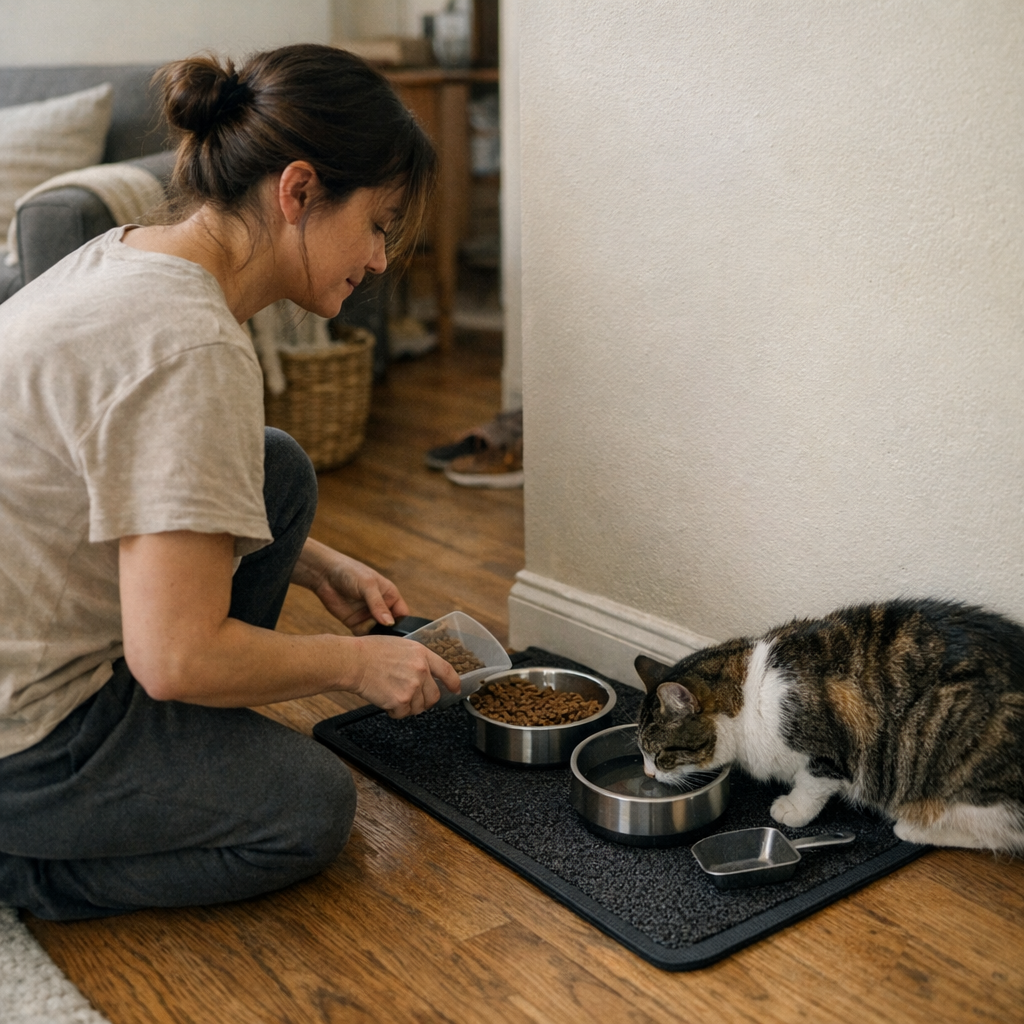
    The truth about your cat’s feeding zone isn’t in how it looks just after tidying—it shows up the third time you crouch to snag runaway kibble, or when water drips again streak the floorboards by Tuesday. Any setup that seems neat for a day can quietly unravel in real use: bowls inch forward after rushed refills, mats bunch under restless paws, and the whole corner creeps into high-traffic space before the week is done. What begins as a tidy, contained zone becomes an unpredictable maintenance loop: stray food kicks under furniture, water rings multiply, and by Saturday you’re stuck reestablishing boundaries you thought would hold. The real signal? A setup that drains more time and energy from your routine instead of quietly making cat care simpler.

    Why Feeding and Water Zones Drift: Everyday Friction in Indoor Cat Spaces

    No matter how carefully you arrange bowls and mats on day one, friction sets in by midweek. Lining everything flush against the wall doesn’t stop bowls from nudging out when you refill them—or keep an excited cat from crumpling the mat edge in a single turn. Even minor shifts add up. By Thursday it’s obvious: bowls rest a foot from their original spot, the mat no longer covers all spills, and the “contained” area has quietly expanded into walkways you wanted clear. Every refill or bowl grab shuffles the whole arrangement, forcing more fuss than expected for a supposedly simple task.

    This drift usually escapes notice in the moment. But you spot clues at breakfast: a water dish that needs dragging back, crumbs trailing halfway to the living room, and a mat that refuses to stay flat. The initial order breaks down, and so does the promise of easy, limited cleanup. You’re not getting more convenience—you’re multiplying interruptions.

    Unseen Mess, Unexpected Effort: The Invisible Cost of Zone Creep

    At first, one or two stray pellets seem harmless. Fast-forward: it’s Thursday and on your way to the coffee maker, you catch a new mess—dry food where nobody meant to feed a cat. This didn’t happen overnight. The bowl slowly inched, mat curled, and each tiny movement erased the invisible border meant to contain the mess. Now cleanup is a mini project: crumbs need separate gathering, a sticky water ring clings under the mat, and recentering everything delays you yet again.

    That’s the hidden problem: the more you have to reset, the more each “easy” routine pulls time and focus. Through the week, small breakdowns lead to bigger ones—a quick sweep turns into a full mop, you crouch to retrieve pieces wedged behind table legs, and keeping the space “contained” becomes its own chore competing with the rest of your day.

    Setup Looks Tidy—But Does It Actually Hold?

    An indoor cat feeding zone can look nearly perfect after you reset it. Bowls close to the wall, mat perfectly flat, nothing out of line. But structure matters more than appearance. Within two days, does the mat still shield the floor? Can the bowls take a rushed refill or a distracted paw without sliding inches away? If not, the so-called order is just temporary—a setup that photographs clean but collapses in daily use.

    Every bowl glide, mat crumple, and corner creep means the same cycle: extra maintenance, lost time, and a feeding process that keeps stretching into nearby spaces. A setup only “works” if it holds its limits through the mess and momentum of real routines—not just for inspection, but for the repeated reach, refill, and wipe-down moments that reveal its weaknesses.

    How Small Shifts Turn Into Repeated Cleanup

    Most cats swipe food or bump bowls as part of their charm—but every nudge has a cost. Feedings blend together: one day you sweep crumbs from the mat, two days later you’re bending to catch them along the hallway baseboard. The water bowl rotates slightly each time it’s topped off, painting that same wet crescent by the cabinet foot that is never in the right spot to catch with a mat. What seemed minor becomes a reliable pattern. The first runaway kibble seems like an accident; by the third time, you’re inventing new cleanup routines just to keep up.

    What Drifting Does to Shared Spaces

    This isn’t just about losing a sense of order. Drifting setups invade the rest of your living space. A bowl edge inches into the walkway where you keep tripping as you pass, mat corners ride up so you catch them with your foot, and now the cat zone interrupts human traffic and chores. Swapping routine for disarray, the feeding corner keeps asserting itself until every pass-through means another reminder that control is slipping—or requires more work to restore.

    Anchoring: Turning a Drifting Zone Into a Dependable One

    The real improvement comes when you anchor the setup and block the migration at its source. Simple choices matter: moving feeding and water stations to a quieter corner and picking a mat with serious non-slip backing turns drifting chaos into stability. Suddenly bowls actually stay put—through rush-hour refills, through cats testing the edge, even when you’re distracted. The mat holds flat, no matter how often paws press or bowls move, so “scatter zones” shrink and cleanup doesn’t spread. The best result isn’t that the area looks undisturbed—it’s that regular use no longer undoes your work every day.

    When boundaries hold, your cleanup shrinks to a true check-in: a few crumbs swept, one quick wipe, no more five-minute retrieval searches beneath furniture. A stable structure outperforms appearances—maintenance finally stays simple because the arrangement actually supports repeated daily use, not just the occasional tidy-up.

    What to Watch for: Early Signs Your Feeding Zone Isn’t Holding

    • Bowls or dishes don’t return to their place after each refill—they wander with use
    • Mat edges curl or bunch, letting food and water slip underneath instead of catching debris
    • Signs of mess outside the feeding area—crumbs, water spots, and pet odors turning up farther from where you started
    • Refilling or cleaning takes longer because you need to reposition, straighten, or clear the whole area instead of just topping up
    • Visual order snaps back after each reset, but within a day or two, the zone falls apart in the same patterns

    Everyday Moments: Where Setup Friction Sneaks Back

    The trouble isn’t always headline-catching—it appears in those short, practical gaps between intentions and reality:

    • Refill rush: Late for work, you reach for the bowl—it’s drifted out, now catching on a wrinkled mat and scattering food into open space just when you need speed.
    • Wipe-down delay: Water splashes when you refill, beading on the floor just beyond the mat. It’s behind the bowl, and by the time you notice, a mark has dried into the baseboard.
    • Cleanup supplies not instantly usable: Your broom’s just out of reach—not because you forgot, but because bowls and mat are blocking a clear swipe, adding clumsy extra steps to a single cleanup.
    • Shared path collision: A mat edge slips into the walking route; one absent-minded step nudges the whole setup, meaning next reset will take longer—and spread further—than last time.

    Structuring for Stability: What Actually Holds the Zone Together?

    Real solutions aren’t about adding bulk—they’re about stopping the repeated breakdowns. What cuts maintenance is:

    • Non-slip mat backing: Stops constant shifting and curling, so the foundation doesn’t undo itself multiple times a week.
    • Bowls with substance: Weighted bases that don’t skate away under paws or hurried hands, limiting the drift cycle between refills and meals.
    • Out-of-the-way placement: Corners or spaces outside main foot traffic means less accidental nudging, so the station isn’t set up to fail through ordinary movement.
    • Easy access for cleaning: If you can sweep or wipe around the setup in seconds—without a full disassembly—routine maintenance shrinks and you dodge those tedious “fix what shifted” resets.

    Why “Looks Tidy” Isn’t Enough: The Difference Structure Makes

    A feeding zone that passes the eye test but fails the week test doesn’t solve the real problem. If your structure breaks under repeated reach, rush, or paws, messes will always leak back into your routine no matter how tidy you make it look. You don’t need perfection—just a setup that reliably contains food and water debris, resists small failures, and doesn’t turn every feeding into a delayed, multi-step reset. In practice, a zone that truly holds makes ordinary cat care feel lighter, quieter, and far less interruptive—so your energy goes into sharing space with your cat, not managing endless micro-crises.

    Discover setups that hold their ground at StillWhisker.

  • Choosing Storage Furniture That Maintains Order Beyond First Use

    Putting together new shelving is its own brief victory—panels locked, lines clean, bins tucked in tight, and for a moment, the space feels tamed. You’ve turned an overloaded closet or messy hallway into a zone of order. But by week two, cracks show. Shoes refuse to stay corralled. Folded shirts start their familiar slide. That surface you promised yourself would finally stay clear? It’s attracting piles again. Suddenly, the “solution” is demanding more of your time than the mess ever did.

    Where Quick Assembly Hides Persistent Hassles

    Flat-pack shelving lures with promises: light boxes, picture-guided instructions, and the kind of options that let you rearrange whenever you get the urge. The first day feels great—you load up your bins, file everything by category, step back and breathe. But then the rhythm of daily life starts pulling it apart.

    Here’s where reality intrudes: bins slide out of alignment after that quick reach for a winter scarf; stacks of jeans sag into loose towers that topple at a touch. Maybe your entryway shelf was supposed to keep shoes in neat rows—only the bins slowly migrate, so sneakers wind up sprawled half outside and gloves drop behind. It doesn’t take long for a system that looked organized to become a game of “find and shift” every time you need something simple.

    “Looks Organized” vs. “Survives a Real Routine”

    Most storage fails quietly. Two identical-looking units sit in your hallway; one lets you grab a bag without anything shifting, while the other trembles if you slide a bin too fast. What does breakdown actually look like?

    • Hardcovers nudge paperbacks into a sideways slump, turning once-straight lines into chaotic tilts.
    • Baskets creep forward, creating odd, empty space behind and mixed-up contents up front.
    • That faint shelf bow isn’t just visual; it funnels every stack toward the middle, inviting overlap and mess.

    This isn’t just a matter of aesthetics—living room shelves double as drop zones for keys, remotes, or this week’s mail. If the whole row wobbles when you reach behind a bin, you start hesitating to use it at all. Grab for one thing and end up nudging three. Over time, categories bleed together, and the “organized” space starts crowding out calm with small, recurring annoyances.

    Friction That Doesn’t Go Away

    The daily clutter grows from these micro-failures. A towel gets tossed carelessly into a bathroom bin, but without a clear divider, it flops across boundaries. Your kids’ gloves overtake the scarf section. Shoes meant for one cubby crowd another, the bins drifting after a week of hurried returns. The “simple reset”—just tossing things back—keeps getting longer as each round of mixing and stacking erases yesterday’s progress.

    Sturdiness Shapes How You Actually Use the Space

    What actually holds up is what gets used. Shelving with real support—a brace down the center, reinforced hardware, or just solid construction—stays steady as bins are dragged, kids dig for board games, and laundry baskets come and go. A shelf that resists the slow dip in the middle means you spend less time nudging piles back into line and more time actually finding what you need.

    Picture your garage: the top shelf is for cleaners, batteries land in one basket, light bulbs in another. On a flimsy setup, bottles all huddle to one side, baskets get caught on warped boards, and targets blur—grab for a screwdriver, spend two minutes untangling cords and shuffling other tools aside. When storage fights you, every errand feels like another mini-cleanup. Sturdy pieces, in contrast, lock everything in place. The categories you worked to create stay visible, distinct, intact—no matter how often you dig through.

    Everyday Routines Reveal the Weak Link

    Every put-away is a test. Does your shelf greet you with the categories you created, or hit you with teetering stacks and rogue bins? When storage works, grabbing and returning is so uneventful you barely think about it—one motion, done. But when it doesn’t, the evidence piles up fast: overflow corners, flopped stacks bleeding into each other, socks and belts migrating because dividers never stay put. That’s when “I’ll organize soon” becomes a mantra, and quick resets quietly turn into another chore.

    The Smallest Upgrade Makes a Noticeable Difference

    It doesn’t take a major overhaul—sometimes, one stabilizer bar or a more solid shelf frame is all it takes. Suddenly, you can put a book back on the shelf without causing a cascade. Bins land in their niche and stay there, even after a week of rushed mornings. The motivation to tidy “before company arrives” disappears—not because you forced yourself to clean, but because nothing drifted out of place in the first place.

    • Hardcovers slide into place and don’t tip the rest of the row out of balance.
    • Bins that used to wander just stay where you left them—no more shoving them back after every use.
    • Resetting the space becomes a rare, almost invisible ritual, rather than a nightly necessity.
    • The whole system quietly supports you—less time hunting, repairing, or reshuffling; more time living.

    The impact is less about that tidy, “after” photo and more about the fact that, day-to-day, the setup simply works—leaving you with more clear surfaces, steadier stacks, and less friction everywhere you look.

    Smart Steps Toward Smoother Storage

    • Test for stability where you put the real weight. If the middle of a shelf is sagging—visibly or not—it’s inviting chaos. Longer shelves need a center brace or beefed-up support.
    • Use bins or dividers that actually anchor categories. A tight bin means gloves can’t invade the scarf pile, and a clear shelf divider stops stacks from turning into one mound. Don’t settle for loose baskets that crawl with use.
    • Prioritize function over showroom-perfect looks. A lightweight shelf may carry the first load, but if bins are shifting by week’s end, the promise falls apart. Ask: does the separation and shape hold under real traffic?
    • Evaluate by reset speed, not just the first day’s reveal. A good setup lets you restore everything in seconds—not with careful stacking, but a quick, reliable toss-back that keeps categories intact.

    The True Test: Effortless Order (Most Days)

    In practice, you know a storage system is working not because you see it, but because you don’t have to fight it. You’re not reshuffling the same pile after every errand, scrambling to keep bins in place, or dreading the inevitable collapse of a once-organized shelf. Instead, everything feels easy to find, quick to return—whether it’s the front hall in winter, the bedroom closet at laundry time, or that “catchall” corner by the door. Give your shelves the bones to match your daily reality, and you reclaim not just surfaces, but actual time—and a sense of calm that doesn’t slip away by Thursday.

    Shop ClosetWorks storage systems built for real daily life

  • Why Properly Ending Outdoor Tasks Transforms Storage Efficiency

    Most outdoor storage setups fail one step at a time: every time you drop muddy gloves by the garage door “just for now,” or wedge a trowel onto the shelf that’s already half-blocked by last week’s potting tray. It’s not the big installation day that proves a system’s worth—it’s the slow grind of daily use. That’s when a storage setup goes from “looks organized” to “actually works”—or doesn’t. If you’ve ever circled the same cluttered spot by your gate, or hesitated before peeling back a lid because you know there’s a wall of random tools inside, you know how quickly order unravels. What’s supposed to save time—the bins, the racks, the clever corner organizers—turns into a silent drag on the whole routine. The area meant to keep things moving just keeps getting in the way.

    The Subtle Creep: How Small Frictions Pile Up Fast

    It starts the first Monday after you sort everything. In that narrow zone along the fence or beside the garage, the setup looks perfect: every rake and glove in its slot, fertilizer stacked to one side, hoses untangled, and the walkway clear. But by midweek, normal movement draws out the cracks. You come out to water in the morning; next thing you’re trimming a shrub, then setting down soggy gloves on top of the fertilizer bag because the proper basket is out of reach. The rack you meant to keep clear now has an “invisible tripwire” of a hand fork resting at ankle height. Each reset gets slower: put one thing away, move two others “just for now.” The neat grid starts to fray, and the open path bottlenecks until you’re sidestepping piles you barely remember making.

    When Storage Becomes Its Own Obstacle

    Going for more bins and deeper shelves promises capacity but creates headaches: “black hole” storage where small essentials sink and drift. What feels efficient—one hefty tote for everything—quickly backfires. The shears you tossed in two days ago are now buried under hose ends, year-old gloves, random plastic pots, and a coil of string. You open the lid, sigh, and dig, then drop what doesn’t fit at the very edge. The result? The bin isn’t empty, but it’s not useful—just an excuse for messes to linger. And the bulkier the container, the more “just for now” items sprawl onto the ground beside it, right where you need to walk.

    Open wall racks don’t get a free pass either. They’re meant for quick access but end up as shelf-catchers for project leftovers: bits of twine, a half-used spray can, yellowed seed packets. Tools rest sideways because the appropriate bin’s overloaded, so the “grab-and-go” shelf quietly jams with overflow. Suddenly, the wall is full and your hand routine is slower, not faster. The problem isn’t what fits, but what’s always in the way.

    Problem Zones You Don’t Have to Imagine

    • Entrances jam up: A mini-mountain of gloves, snips, and garden shoes collects just inside the gate or garage threshold.
    • The “catch-all” shelf: Bulky odds and ends migrate to the same spot, blocking faster access to daily gear.
    • Constant shuffling: To put one shovel away, you scoot aside two other tools and a slouching bag of compost.
    • Dead corners stay dead: Floor spaces behind bins fill with rain boots or tangled hose segments nobody wants to sort.

    The Real Cost: Slowdowns, Blocked Paths, and Resets That Never End

    The promise of a quick cleanup morphs into a ten-minute hunt for the “good” pruners. You’re leaning around a batch of leftover tomato cages, pausing to pick up gloves you nearly stepped on, and working in a corridor that’s somehow half its original width. Even if the area never turns into a junk pile, you notice you’re always behind—a few tools away from a true reset. The failure isn’t always dramatic, but you feel it: more clutter in your line of sight, more time lost on what should be a one-move return.

    Why “Return Flow” Decides If Order Actually Stays

    Success in outdoor zones doesn’t hinge on how much a setup can hold—it’s how frictionless it is to put things back. When every return means rolling a bin out, prying up a lid, or wading through three misplaced tools, you cut corners. Hand tools stop making it into the bin. Gloves land wherever is closest. The boundary between “stored” and “left out” weakens until even the labeled zones get blurry, fast. The more steps each return demands, the less it actually happens.

    The Real Shift: One Setup That Changed the Routine

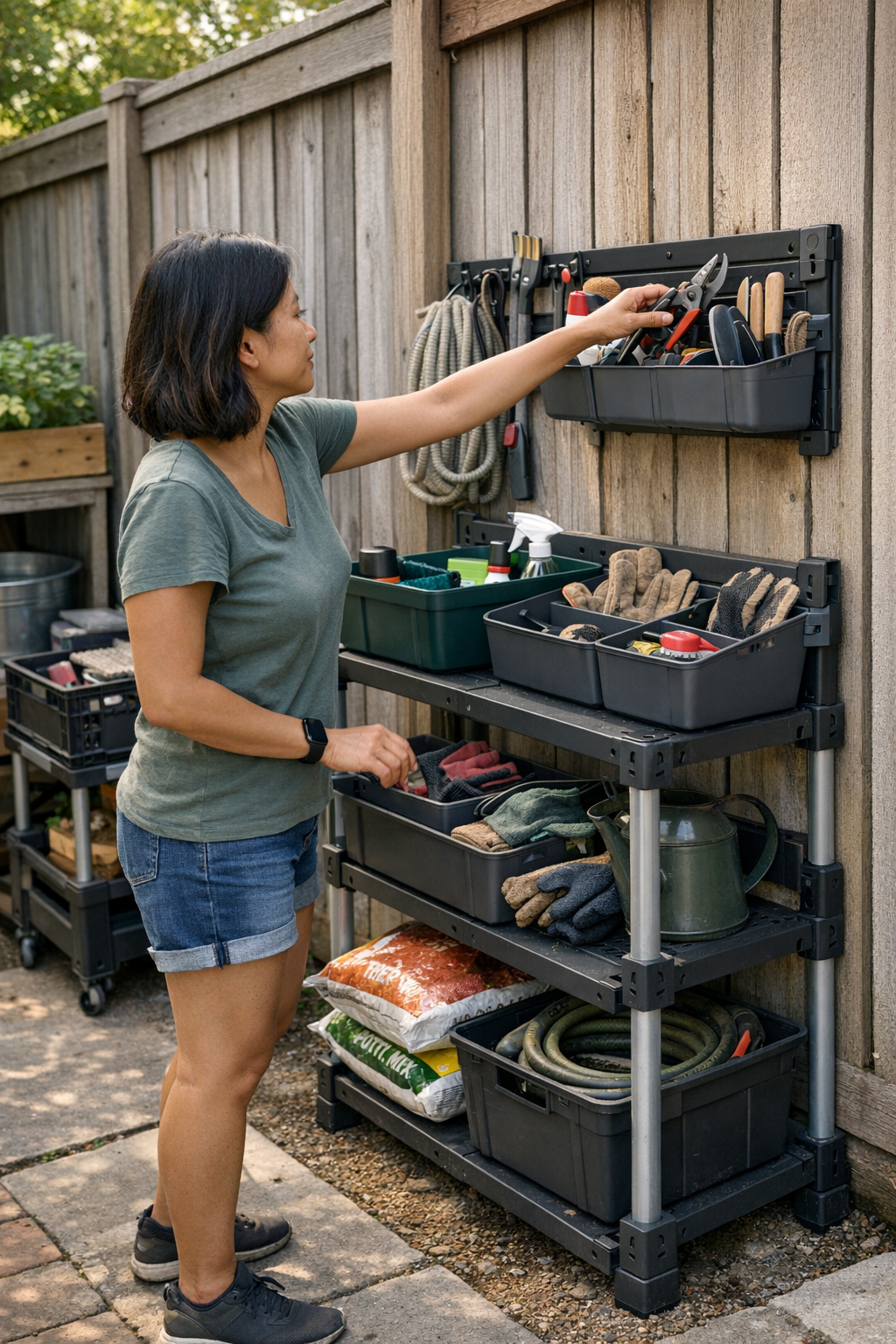
    The fastest improvement came the moment a deep shared bin was swapped out for a shallow, divided wall basket—mounted right at arm height on the way out to the yard. Now returning tools is a forward swing, not a squat-and-dig. Everything has a visible slot: secateurs, multi-tools, gloves, hose fittings. Nothing’s hidden. After a week, it was obvious: the floor stayed open, rushed resets took seconds, and not a single item started migrating toward the walkway. The old routine—“where do I shove this?”—was replaced by one quick motion. There’s still the occasional stubborn item, but zero new piles at ground level and no reshuffling just to clear a path.

    It didn’t turn chaos into magic—the odd straggler still appears—but it changed the tone. Instead of resenting the system, you notice yourself using the space without second thought. The busywork melts away, and resets stick longer—even on high-use days.

    More Storage? No—Better Storage for Real Movement

    It’s a constant trap: thinking that bigger bins or taller racks fix messes. In side yards, garage edges, and between-the-gate utility strips, more space only enables bigger piles and longer hunts. What quietly fixes things is the right division and easy landings—setups that force single-move returns and don’t let overflow build up undetected.

    Shallow baskets and sectioned holders beat bottomless boxes every time. You see what’s most used. You’re not digging past last season’s forgotten projects. The walkways stay clear, and the usual corners stop becoming tool limbos or dump zones. It’s an upgrade you feel in every return—not because the setup’s flawless, but because nothing big gets in the way.

    The Signs That It’s Actually Working

    • Returns are frictionless: One motion, no digging or restacking.
    • Your go-to gear is never hidden: Gloves, snips, and hose heads are in plain sight and easy reach.
    • Hallways stay passable: Floor space and entry spots don’t shrink week to week.
    • No “temporary” pile-up zone: Even when you’re rushing, the default spot isn’t the ground.

    Small Shifts That Make Outdoor Reset Obvious

    Want instant improvement? Make the return path easier than the path out. Hang divided baskets instead of burying essentials in deep bins. Set them at arm height, not ankle. Use wall sections for daily-use tools, not dead storage or “someday” gear. Keep rarely-touched items tucked away, so the stuff you actually need isn’t blocked or shuffled. Every shortcut you bake into the setup keeps the area moving, not bottlenecked by its own organization.

    Looking organized means nothing if resets are a chore. The payoff arrives when the setup becomes invisible—you move, use, and return gear without noticing the system at all. The awkward pauses, workarounds, and creeping piles stop being part of the routine. That’s when you know it’s working—for you, not just for show.

    For more practical ideas on what actually works for real outdoor setups, visit TidyYard.

  • How Small Changes Make Daily Cat Care Smoother and More Reliable

    When Calm Looks Easy—But Isn’t: The Everyday Reality of Daily Pet Care

    A pet-care area can look calm and under control—bowl wiped down, towel hanging straight, everything in place—right up until you actually start your day. It only takes one missing cloth or a single bowl nudged behind the table to remind you that “looks tidy” isn’t the same as “works better.” When routines collide—prepping coffee, guests arriving, your cat circling, or your dog waiting to eat—small setup gaps turn into real friction. Now you’re crouched under a chair to reach the bowl, wiping up spills with paper towels because the real towel is in the laundry, or bending down a second time because crumbs reappear around the water stand. Calm is only as real as your next reset—something the CalmPetSupply world understands in every repeated use.

    Why Gaps in Routine Get Bigger With Real Life

    Alone, you might shrug off hunting for the brush or wiping a mat later. But routines don’t stay solo—life piles on pressure points. A refill becomes a hassle if the water bottle’s jammed behind pantry snacks; the brush goes missing during a haircut of shed fur. Each out-of-place tool chips away at the idea of “quick” resets. The more your mind splits between tasks (talking to a guest, wrangling a kid, answering the door), the less forgiving your setup gets. What looked streamlined five minutes ago now means bumping into clutter, retracing steps, or letting a tiny mess linger because what you need isn’t actually ready.

    Real Use Scenarios: Interruptions That Don’t Show in Tidy Photos

    Scene 1: Reaching for the Bowl—And Finding It Blocked
    Early evening. You squat to tidy spilled kibble, but the feeding bowl has wedged itself behind a chair or under a stray envelope from yesterday’s mail. Instead of a five-second fix, you’re scooting furniture, muttering, and crumbs remain just long enough to become tomorrow’s problem.

    Scene 2: Cleanup Supplies There, But Not There
    The towel for wipe-downs was supposed to hang nearby. Now it’s buried with drying dishes across the kitchen. Spills wait, mats get sticky, and an immediate cleanup gets delayed for hours—meaning the next feeding starts with the last mess barely managed.

    Scene 3: The Brush Blockade
    Fur collects in the corner by noon. The brush? In a storage bin with leashes, behind dog shampoo and bulk food. Suddenly, grooming—which could be a thirty-second swipe—means unpacking, reshuffling, and stalling every time you see tufts collecting on the cushions.

    Scene 4: The Hidden Reset Weak Point
    Morning layouts look photo-ready—bowls aligned, tools stacked, counters clear—but resets come slower as the day wears on. Each grooming touch-up or water refill means fishing around in a drawer or cabinet, stepping into another room, or getting stalled mid-routine because one piece is always just out of reach.

    The Cost of Repeated Small Interruptions

    Most daily pet care doesn’t fail in the obvious mess; it breaks down in the constant minor slowdowns. Needing to move a stack of items for each refill. Leaving fur behind because the brush got reshuffled. Wasting time doubling back for a towel. Over a week, these half-done resets pile up, shrinking your patience and making what should be simple—like a water top-off or grooming swipe—a stubborn source of annoyance that quietly builds stress into your routine.

    What Actually Improves Flow (and Reduces Hidden Mess)

    Small, invisible tweaks—not big overhauls—make routines work. When every tool has a checkpoint at the exact point of use, repeat work evaporates. A dedicated hook at bowl level keeps the cleanup towel within arm’s reach, so every spill is handled on the spot. A refill bottle stored in an open bin near the bowls means water never runs low or waits for a big reset. Brushes tray-staged beside the feeding area sweep up fur before it travels, not after it clings everywhere. That one move—placing an item where your hand goes instinctively—removes “later” from the equation and keeps routines immediate.

    The best setups don’t rely on memory. Keep a grab-and-go cloth by the door if that’s where paw prints appear. Store the brush and scoop in plain sight rather than buried in a bin. Make it so each action—feeding, refilling, wiping, or quick grooming—becomes a single movement, not a scavenger hunt. The gains aren’t just tidier floors, but the absence of nagging backtracking or the build-up of mess that saps energy out of the day.

    Beyond Tidy: Focus on Usability, Not Just Looks

    There’s a difference between a pet zone that snaps into place for photos and one that actually reduces friction hour after hour. The setup that just “looks calm” often hides all the ways you’ll get slowed down—blocked access, missing basics, delayed cleanups. The setup that’s built for actual use means resets are quick, tools show up exactly where you need them, and small jobs don’t spiral into bigger chores. It’s why daily comfort isn’t about perfect order—it’s about setups that don’t let repeated care become a daily catch-up game.

    When repeated actions—refilling, wiping, grooming—become automatic and frictionless, the day moves smoother and your space stays truly ready, not just seemingly so. Out-of-reach tools guarantee invisible messes: lost fur, stray kibble, or sticky mats that come back to haunt you by evening. A neat surface feels calm for a minute; an actually usable setup lets you stay ahead of daily pet care, even on busy, unpredictable days.

    For practical ideas and tools designed to fit into real homes, visit CalmPetSupply.

  • Streamline Your Carry-On with the Light-Day Packing Method for Travel Efficiency

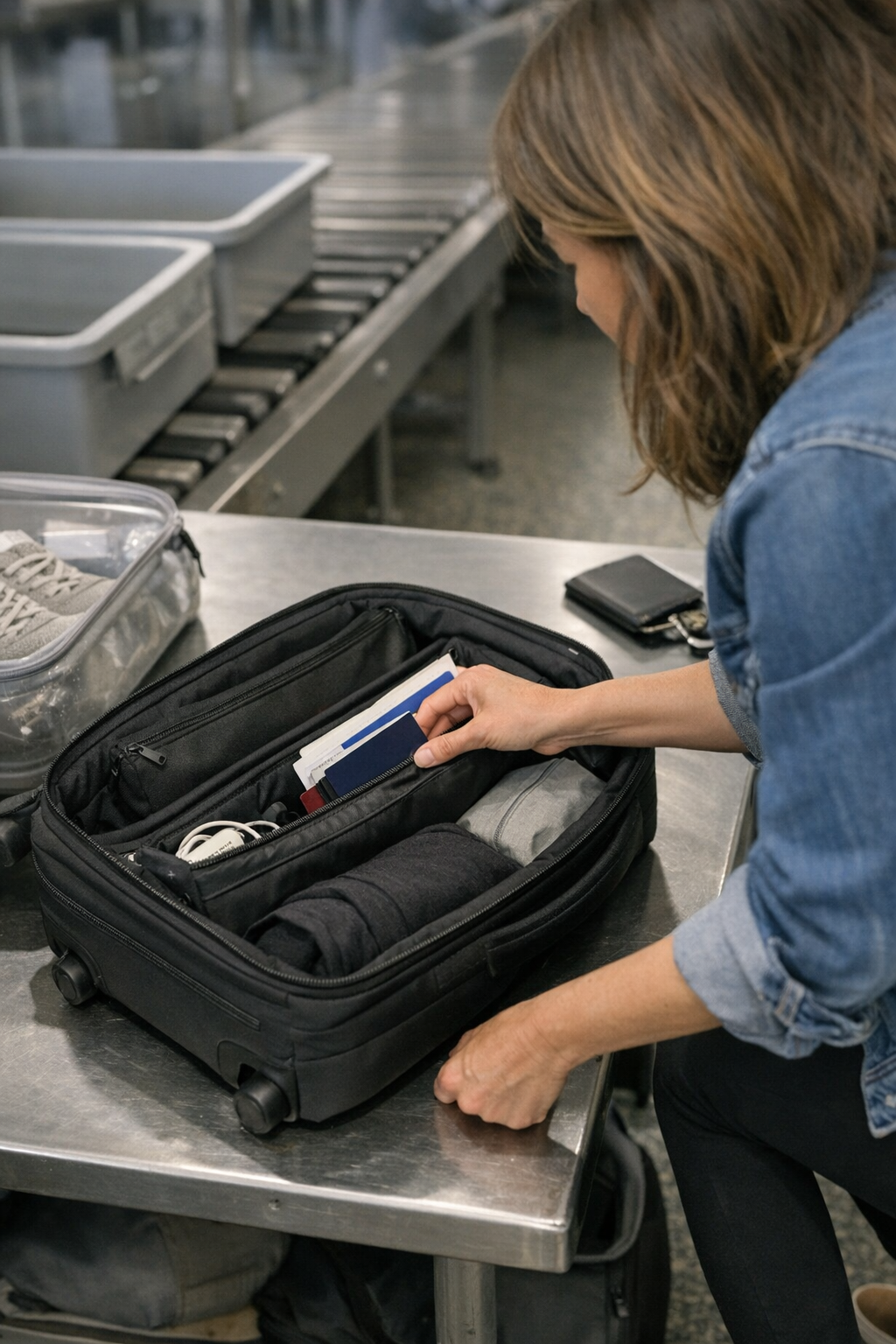
    The first sign isn’t visual—it’s the moment your “organized” carry-on slows you down at the one place you can’t afford delay: airport security or boarding. You reach for your passport or phone and realize what looked tidy at the hotel is suddenly a clumsy, layered obstacle when speed matters. The neat stack of pouches and perfect zipper pulls fooled you in your room, but with three trays ahead, documents to show, and strangers close behind, every extra unzip or pouch shift costs time, pressure, and sometimes, your place in line. It’s the difference between packing for a catalog shot and packing for actual movement: the structure that feels manageable on a calm morning becomes a drag on every checkpoint, tray-transfer, or quick boarding transition.

    When Order Slows You Down: Recognizing Hidden Movement Friction

    It’s not mess that breaks your travel flow—it’s friction. The warning signs start after just a few document checks between curb and gate: a pouch blocks quick reach, or a neatly zipped compartment slows you by one futile motion too many. Your “quick access” pocket is jammed by a sideways organizer; a passport sleeve now sits under a tech pouch; the tidy stack slips and reshuffles every time you dig for ID. Seconds lost reopening and resealing bags at the tray add up fast, and line pressure makes each flustered search feel twice as long. This isn’t a one-off annoyance. It’s the same sequence—pause, shift, repack, reset—repeating until even the most careful setup feels heavy after a half hour of real-world use.

    Real-World Example: The Line That Won’t Wait

    Security at 6AM: trays everywhere, staff waving people through, dozens moving at once. You know your passport sleeve is “in the right spot,” but a tech pouch has edged over the zipper just enough to jam access. You fumble, unstack, and re-stack under the gaze of the impatient travelers behind you. Instead of breezing through, you’re holding up the line, reaching awkwardly, or worse, dropping a card because your setup has turned quick reach into a multi-step puzzle. With every checkpoint, you reassemble your so-called order—each round under time pressure, each round less convinced the arrangement works beyond the hotel room.

    The ‘Light-Day’ Packing Mindset: Fewer Layers, Faster Movement

    Flyers who move fastest don’t chase perfect visual order—they chase practical access, especially after recognizing how the wrong structure collapses under repeated strain. The light-day method throws out maximal sorting for minimal, logical layering. Instead of a vertical parade of pouches, the focus shifts to surface-level essentials: the few things you’ll actually need to reach between security, boarding, and seat entry. Passport, charger, ticket—each sits on the surface or right at the main zipper path. Everything else—snacks, backup cables, toiletries—gets assigned to lower-access, “long stop” zones where slow retrieval won’t matter. This isn’t a neatness downgrade; it’s an upgrade in how little you have to handle or shuffle under time pressure.

    Why Flat Dividers Beat Pouch Stacks

    The classic mistake: trusting a “one-pouch-per-function” system to work during real movement. But in the field, each stacked organizer adds an extra shuffle and every misplaced sleeve becomes a tiny obstacle course. Standing in an aisle or hunched over a tray, you realize that moving one pouch just to swipe your passport or headphone case is friction you can’t afford. Flat dividers or wide sleeves make a difference because they turn access into a single motion—an unzip, a reach, a done—no puzzle, no reshuffling, and no regrets after three or four real uses.

    Packing That Stays Functional, Not Just Tidy

    Structural weakness in a setup surfaces fast during travel sprints: checkpoint resets, last-minute document checks, or seat-side digs for essentials. Several cycles in, most travelers will notice:

    • Visual order decays while friction mounts. Stacked pouches shift against each other, hiding the very pocket you need next.
    • Routine access turns multi-step. Opening one pouch means moving another, then realigning everything before boarding pressure builds up behind you.
    • Repacking steals your flow. What started as an “orderly” arrangement becomes a constant repack-and-reset cycle with each new movement.
    • Stress and error rates rise. Wrong pocket, missing pen, misplaced USB drive—all because you’re shuffling more than you’re moving forward.

    The Moment the System Breaks Down: Seat Entry and Overhead Bin Chaos

    Boarding exposes anything your packing routine hid. Squeezed in the aisle, people behind, you search for two essentials—headphones, ticket stub—only to find everything requires a shuffle and a memory test. There’s no time to calmly unzip and search. Instead, you’re blocking traffic, digging past the well-meant “order,” wishing your carry-on worked for right-now instead of five minutes ago. What looked tidy at home slows down the entire boarding process, while fellow travelers wait for you to solve a puzzle you didn’t notice until it cost you real time and comfort.

    Practical Shifts: How Small Layout Changes Beat Fancy Systems

    You don’t need a new bag—you need a realignment. The breakthrough? Keep essentials right at the surface, always accessible with one zipper, no matter how rushed or crowded the setup gets. Sliding documents into a surface sleeve, anchoring your tech pouch sideways against a main edge, or keeping comfort items only in outermost zones cuts search, cut delay, and builds real trust in your own setup—regardless of what the bag looked like zipped at the hotel. Over repeating flights or tight transfers, these changes erase the “where’s my stuff?” pause and keep your movement fluid, not interrupted.

    A Slimmer Tech Pouch Pays Off in Transit

    Tech is the same story. Bulky, over-segmented pouches impress at leisure, but any organizer that buries cords or chargers you’ll actually use just adds to the clutter. Prune it to the must-use items—keep the pouch slim and flat, and wedge it into a side pocket, keeping prime access zones clear for documents and right-now needs. This isn’t about looking minimal—it’s about not losing time and patience every time you move, reach, or need to reset in line or in the seat.

    Why ‘Neat’ Isn’t the Same as ‘Easy’: Over-Segmenting Creates Its Own Trap

    Too many pockets and sub-pouches lure you into thinking “everything in its place” means “easy retrieval.” But over-segmentation introduces new friction: split-second confusion about which compartment holds a boarding pass, or micro-hesitation unzipping one case too many as the queue tightens. Each extra barrier is a new opportunity to fumble, mistime, or misplace. In peak moments or crowded spaces, the cost is measurable, even if it isn’t obvious when you packed.

    Live Use Over Cosmetic Perfection

    The light-day method puts functional movement above cosmetic perfection. You can spot a setup that works because after three or four checkpoint runs, it still delivers direct, reliable access—no repeated ceremony, no shuffling, no rising anxiety as you approach another tray or boarding call. Cosmetic order counts for less with every real use; flow and instinctive handling count for more. If your bag helps you move, not just repack, it’s doing its job. If not, the difference shows up somewhere between the third zipper pause and the final overhead-bin scramble.

    The true test isn’t how your bag looks zipped and still—but how it handles at speed, under pressure, and after five or six cycles of real airport movement. A bag that stays functional in motion is what makes repeated travel less of an obstacle and more of a smooth sequence.

    CarryOnSupply

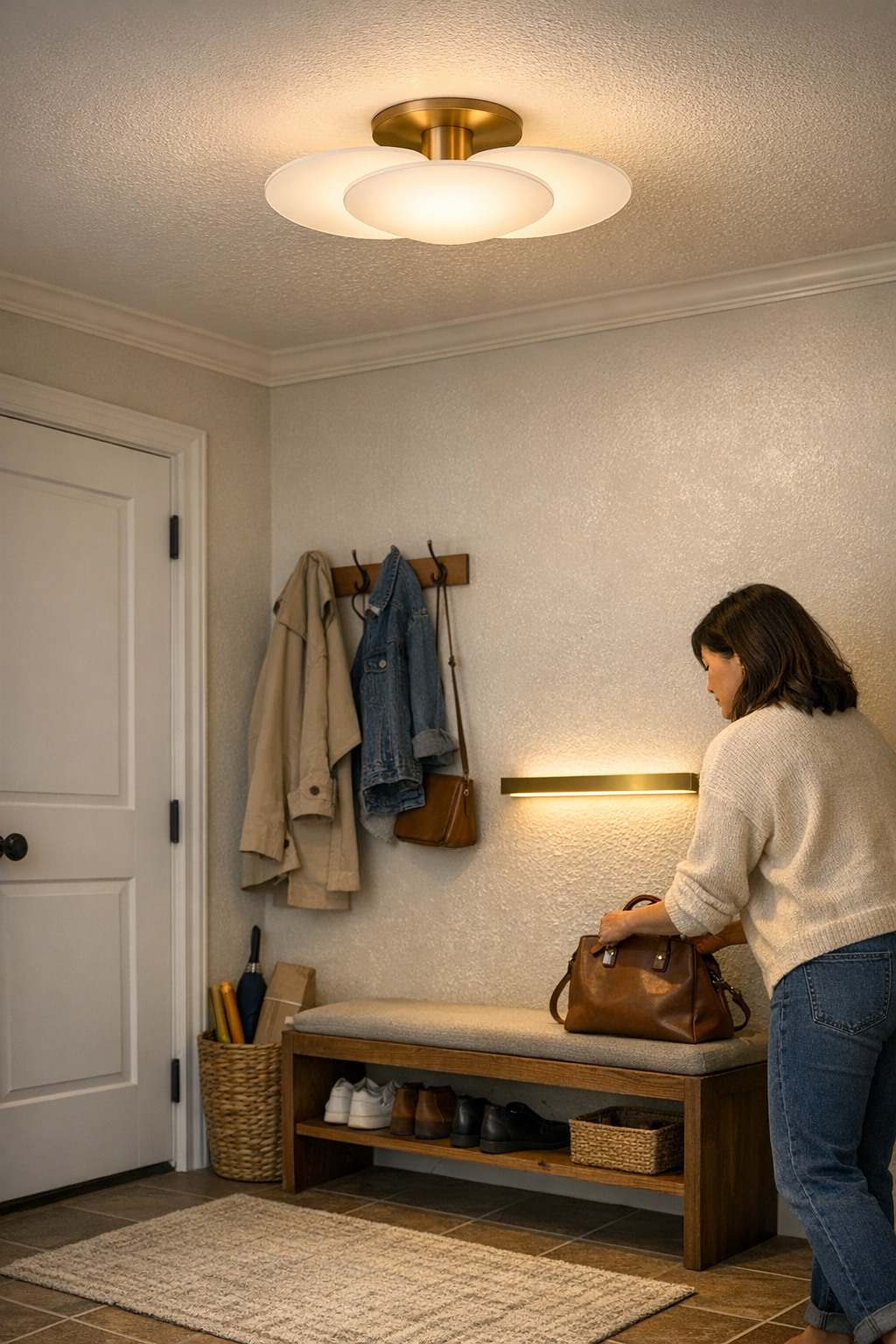
  • How Thoughtful Entryway Lighting Transforms Daily Home Routines

    Entryway lighting isn’t just a design choice—it’s a test you feel every single time your hand juggles keys, bags, or bootlaces as you pass the threshold. The friction isn’t stylish or subtle. It’s a hard shadow where you set down groceries, glare bouncing off tile into your line of sight, or a cable you step over twice daily that only looked tidy on install day. Entryways punish shortcuts: lights that miss the edges, exposed cords snaking along baseboards, hardware that blocks more than it reveals. These aren’t background annoyances; they accumulate, turning what seemed “done” into a minor obstacle each morning and night—and they keeping proving it, one routine at a time, until you finally notice which part breaks first.

    Where Entryway Lighting Fails: Friction You Live With Daily

    At first glance, the entry feels finished—light overhead, walls freshly painted, cords tucked (for now). But as habits set in, every shortcut exposes a flaw: the light that doesn’t reach where shoes actually land, the fixture set high but blinding at eye level, cords bent around every bench and shelf but never staying put. Movement exposes the failure points—muddy boots reroute around a glare zone, an armful of groceries bumps into a poorly placed sconce, shoe racks carve shadows that hide keys just when you’re in a hurry.

    • Bright in the wrong spot, dim where you need it. Overhead fixtures turn tile glossy at the door, but closet corners and bench zones stay murky and awkward to use.
    • Cables that refuse to stay hidden. What looked “neat” during setup becomes a tripping hazard or distraction, especially when pets, kids, or bags join the scene.
    • Low-profile fixtures that disrupt anyway. Sconces at the wrong height create blinding glare, or end up mostly blocked by coats, making entry less safe than before.

    Repeated Use Exposes the Weak Points

    The lure of minimal fixtures or simple installation almost always backfires in motion. That single ceiling light creates an artificial “bright spot” while everything that matters—coat racks, storage shelves, pet zones—sits in partial shadow. Invite someone over after dark, and both of you are crouched in the unlit edge, searching for dropped keys nowhere near the actual glow. It’s not just about appearance; after a week of real use, it’s the small hassles that grind: surface clutter, elbowing for space by the bench, tripping on plugs or lines meant to be temporary fixes but now permanent annoyances.

    • Trying to find a mask or hat by a shelf the lighting never reaches, you realize how much area is just “out of bounds” after sunset.
    • The overhead fixture flattens the room with glare but misses dust lines, dropped gloves, or the actual entry functions you use.
    • You detour around an exposed extension cord, or find a package in shadow you nearly squashed with the door.

    Shared Spaces, Shared Headaches

    When everyone’s routines overlap, poor lighting and messy cable management multiply frustration. The stroller parked by a backlit wall blocks what little visibility you have. Shoe racks or baskets shift shadows, and what was once a clear routine starts including surprise obstacle courses. The promise of a “hidden” cord or tidy wire vanishes after a week—revealing biting hazards for pets, tangle traps for kids, or another reason to crawl on cold tile just to reset a boot-dryer or misplaced adapter.

    Visible Solutions, Hidden Obstacles

    Swapping fixtures is tempting—flush-mount LEDs, slim sconces, and strip lighting promise more coverage. But without planning cable runs, mounting, and real usage paths, every upgrade risks introducing a new annoyance. Plug-in strips above a bench spill light—until the cord stretched across the trim defeats the point. A wall bracket promises tidiness, but a few inches too low and everyone is squinting or bumping their shoulder. The gap between “clean look” and “practical install” only closes when cables, mounting logic, and use habits match up in real time—not just in empty-room photos.

    Placement and path matter as much as style. Mount a fixture a palm’s length above reach, and suddenly the cables stay clear, and the glare lifts. Drop it close to arm’s height, and users pay for it every single pass-through.

    Why Cable Management Makes or Breaks the Setup

    Even premium fixtures are undermined by exposed or unruly cords. Good cable channels—painted to match trim, tight in corners, or designed for one-handed install—quietly solve problems you’d rather not notice twice. The difference turns up after just a few days: no more accidental tugs, no pet chewing, no “temporary” masking tape solutions, less distraction every time you open the door. Smart management isn’t about over-designing, but about preventing those persistent, avoidable friction points once people (and pets and furniture) actually use the entry the way they always do.

    Real Examples: How Everyday Fixes Shift the Experience

    Settling for “good enough” lights and cords lasts until the routine exposes real blind spots. Replacing a dated dome with a flush-mount LED finally pushed light into the storage and coat zones, ending the ritual of feeling your way across a dim bench each morning. A small, low-glare wall bracket above the shoe area killed the worst shadows, letting the floor stay visible—without blinding anyone pulling on boots.

    The biggest shift? Trapping the plug-in cord inside a paint-matched, snap-in channel: a tiny project that kept the floor clear and banished the cable loop you used to dodge. Suddenly, the switch was where you needed it, clutter stopped breeding in the corners, and the routine got back its rhythm—no more pet-level tangles or morning fumbles near the door.

    It’s rarely about sheer brightness. The change happens when lights and supports track with behavior—guiding, not fighting, your routines.

    Tips from Repeated Entryway Frustrations

    • Audit the space by routine, not by design. Mark where shadows hit when you grab shoes or toss a bag—this is where lighting and clutter problems reveal themselves.
    • Position wall fixtures above common reach—this keeps both glare and cables above pet, bag, or kid level, and out of traffic paths.
    • Install cable channels before you fill the room. Don’t trust “tuck behind furniture” methods—they’ll fail with the first furniture move or deep clean.
    • Test fixture placement using real objects: hang coats, leave bags by the entry, stage a package drop-off—then adjust height and angle so light follows actual movement, not just blank walls.

    Making Entryways Feel Ready, Not Just Finished

    True progress in entryway lighting and support shows up when what’s invisible stays that way: no cables waiting to trip, no glare zones you sidestep, no corners hiding clutter or hazards just out of view. It’s not about a staged “after” shot—it’s about proving, daily, that the mix of fixture, placement, and support hardware stands up to real movement and the friction of routines. Your entry isn’t done until the last workaround is gone and the space recedes into comfort, not complaint.

    If your entry still finds ways to interrupt your day, the problem likely isn’t the paint or the furniture—it’s a mismatch of light, hardware, and habit. Addressing those isn’t about a new style; it’s about finally building around the way the space is actually used. www.lightsupport.myshopify.com

  • Why Stackable Storage Bins Often Fail in Daily Use and How to Fix It

    The first day, stackable storage bins feel like a solve-it-all setup. Everything fits flush along the wall, the floor magically reappears, and the idea of “just add another bin” makes your storage system seem endlessly adaptable. But fast-forward a month, and the cracks show up in the routines that actually matter: tossing clutter becomes a late-night hassle, and you find yourself stuck—again—lifting and restacking half the tower just to fish out a charger, a trimmer, or a box of screws buried in the middle. The promise of endless flexibility slides into a familiar grind: more stacking, less movement, and a layout that stores plenty but never quite works for real life.

    Where Stackables Stall: Pressure Points in the Actual Routine

    Stackable bins advertise a clean visual result—neat towers, open floors, every bin snug to the wall. On install day, it looks like you’ve unlocked hidden square footage in the garage, shed, or workshop. But that “wow” moment is short-lived. The real test is when you’re actually moving through the space—arms full, in a rush, just needing to drop something where it belongs and get on with your day.

    Three months in, it’s not the order but the friction you notice: dragging a tower out again just to pop the lid, bracing with a knee so you don’t topple over the stack, always a little careful not to scuff paint or jam your fingers. The more you stack, the more hesitant your movements become. Floor stays clear, but only because the effort has multiplied elsewhere—one blocked path traded for another. You still can’t get to what you need without a shuffle dance.

    The Return Problem: Permanent Clutter in Disguise

    Picture the usual scene: you finish up outside or in the shop, hands dirty or loaded, and on instinct you head for the storage wall. But the bin you need—cable, paint roller, hand mower—lies beneath the others. Lifting the top stack isn’t quick; it’s an interruption, so you compromise and set things “temporarily” in the nearest open spot. The pile that’s supposed to reset the area instead becomes semi-permanent. Soon, you’re edging around bins near pathways, sliding a rolling cart out just to swing past, or reaching one more time around the side of a cabinet because the “perfect fit” blocks your movement, not clutter.

    The Illusion of Order—Day-to-Day Upkeep Slows

    A wall of perfectly aligned bins can make a disorganized space look tamed. But if every return means fishing for a lid or shifting weight, the speed of the routine grinds down. What starts as visual order quietly blocks momentum. Each reset, instead of taking seconds, becomes its own little project. The space isn’t flowing—it just appears to.

    When Storage Bites Back: A Closer Look at Friction

    Here’s how it plays out: late spring swap, winter gear out, garden tools in. Where’s that short-handled rake? Middle of the tower, naturally. One by one, you:

    • Grab the two upper bins—awkward, never as light as you remember. Both hands needed, extra caution as you shift the stack.
    • Pray the remaining bins stay upright as you dig into the middle layer.
    • Find yourself creating a drop pile with whatever doesn’t return instantly—tools, gloves, cords—because the whole process is too slow.
    • Restack, knowing the order will never be as crisp as that first setup. Glance back, and there’s already the start of a “temporary” overflow zone at your feet.

    Run this play enough times, and you’re no longer saving space—you’re spending it differently, in the form of overflow piles and move-it-later piles. Each use fills up your mental corners as much as your physical ones. A system built for flexibility slowly loses its edge, demanding more out of each reset and leaving dead corners stubbornly unhelpful.

    Breaking the Stack: A Simple Tweak, Real-World Payoff

    Not all stackable setups fail outright. But as towers grow—five, six, even ten bins high—the system shifts from efficiency to obstacle. One of the quickest fixes shifts everything: split one tall stack into two (or three) shorter sets. Immediately, you cut the teardown steps; what you need is only one lift away. Access speeds up, and “temporary” piles fade because you’re not dodging a multi-bin puzzle every time you tidy up. The path through the area gets wider, and overflow drops off as up-front bins get used and reset in seconds, not minutes.

    Another trick: exile the rarely-used gear to shelves or cabinets. Reserve direct-access bins for the things you’re always reaching for—extension cords, gloves, gardening tools, charging cables. Once you sort what’s “in play” from what’s just “in storage,” your daily reset becomes almost automatic. That’s the kind of modularity that pays off in practice, not just on install day.

    Stackables vs. Shelves: How Each Holds Up Under Routine

    Compare bin stacks to mounted shelves or a solid cabinet. In theory, all free up floor and hide clutter. But only shelving keeps pace when cycles pick up. With stacked bins, every added bin slows you down: more shuffling, more heavy lifts, more decisions. With shelves, nothing is blocked. Pull, return, move on—no rearranging required, no dead zone behind a leaning tower. The space stays in sync with your routine, not in the way of it.

    • Stackables: Compress things fast, but force a disruption for anything not on the very top.
    • Shelves/Cabinets: Everything stays accessible. No reshuffling, no surprise logjams during cleanup.

    The contrast is sharpest for “hot” zones. If you use the contents every week, rigid bin stacks become a drag. For stuff you touch once a season, they’re fine—until you start piling up gear that should live at arm’s reach.

    Are You Organizing the Room—Or Just Rearranging the Problem?

    Great storage isn’t defined by how tidy it looks the day you set it up. It’s about whether your routine stays smooth for months. Watch for these cues:

    • Paths blocked by vertical stacks or disconnected clusters of bins.
    • Overflow zones quietly growing because returning items feels like a chore.
    • Awkward corners where nothing ever feels convenient, no matter how you stack.
    • Tools and supplies getting “temporarily” benched because putting them away is never quick.

    The real test of modular storage? It disappears into your workflow. If you find yourself constantly nudging bins, shifting carts, or creating semi-permanent piles just to get by, your layout isn’t modular—it’s just crowded. Lower stack heights. Move less-used items off the busy wall. Make sure your best storage spots serve what you actually need, not what just fits in a diagram.

    Organization That Makes It Through the Week

    The clean, vertical look is tempting. But a layout that resets fast always beats one that demands an elaborate teardown just to keep pace. Stackables aren’t doomed—but they need to be tuned to your real routine: capped heights, separation between active and archival storage, and walk paths that don’t rebuild clutter right where you’re supposed to move. That’s the difference between a room that stays organized week after week and one that reverts to slow, friction-heavy chaos the minute things get busy.

    StackNest creates storage that’s meant for repeat use: shelves, carts, cabinets, and garden organizers that reset fast, flex with your daily flow, and don’t demand a second thought every time you cross the room. The result? A setup that looks right on day one—and keeps working long after. Explore the practical options:

    http://stacknest.myshopify.com

  • Creating a Dedicated Home Base to Prevent Mobile Storage Clutter in Entryways

    Every entryway starts out organized—until mobile storage gets unleashed. That rolling bin or gear cart has no true home base, so after a week of real use, the “tidy” setup collapses. Wheels drift, bins stall in high-traffic spots, and the area meant to simplify routines now blocks the way and slows you down. What seemed like a flexible storage win instantly becomes a recurring obstacle, especially once bags land in the wrong spot and never make it back.

    The Invisible Drift: When Mobile Storage Loses Its Place

    By Friday, any busy entryway starts showing the cracks. A rolling bin meant for catch-all containment now hovers halfway into the walkway, no longer neatly against the wall. The cart you tucked aside on Monday is now wedged near the bench—turning “grab and go” into a multi-step detour. In narrow halls, even a slight bin shift slices valuable inches off your walking path; sidestepping becomes routine. What begins as a minor inconvenience fast becomes a threshold traffic jam.

    This isn’t just cosmetic clutter—it’s a creeping slowdown on daily life. Instead of passing straight through, you swerve around bins, nudge carts with your foot, or abandon a shoe drop because the path is cramped. The entryway, built to speed up exits and arrivals, becomes a holding zone for items that rarely return to their place. Each missed reset stacks up until the space starts working against you.

    How Clutter Builds at the Threshold: Real Scenes from a Busy Week

    It’s a simple chain reaction most entryways hide until you look for it:

    • You rush home juggling bags, landing your main tote in a rolling bin “just for now.”
    • Next morning, that cart—still adrift—becomes the easiest place for another bag or loose gear, sidestepping the crowded bench.
    • By midweek, the workaround has turned into a semi-fixed pile, pinching the path and collecting whatever doesn’t have a real slot.

    Multiply that small drift for every person and every day: shoes settle wherever they’re kicked off, carts hang out near the middle, bench surfaces morph into overflow drop zones. Resetting isn’t quick; one fix reveals another stray bin or a new bag heap clinging to an edge. The zone built for flow now holds a scattered set of micro-anchors—each claiming space, each eroding the original order.

    Why a Home Base Makes All the Difference

    Mobile storage doesn’t settle itself. Left unchecked, carts and bins follow chaos, not design; their “temporary” rest stops repeat until the reset becomes wishful thinking. Give them a fixed mark—a line next to the doormat, a bumper against the wall, a section of non-slip tape—and you build a return path right into the daily routine. Instead of improvising, each item actually has a “back to base” rule that sticks.

    Anchoring isn’t decorative: it sorts out how the space actually works under pressure.

    • Movement stays predictable: Door swings open, path is clear. No sharp detours to escape bin traffic as you bolt through with wet boots or groceries.
    • Clutter isolates—doesn’t multiply: Anchored units stop seeding new overflow patches. Shoes and bags land where they should, not wherever the cart drifted last.
    • Reset is routine, not recovery: You finish coming or going by rolling the bin to its mark. No guesswork, no hunting for lost floor.

    Repeated-Use Reality: The Fragile Promise of Day-One Order

    The first day with a new cart or bin always looks promising—lined up, floor open, every shoe and bag in its zone. Five real-world passes later? Someone pushes the rack out of line to sit, another person leaves it blocking half the bench, and pretty soon, routine movement is awkward again. Without a home base, every shifted bin or cart adds to the drift. Thursday comes, and even the most organized person hesitates—“Do I spend fifteen minutes fixing it, or just squeeze through and go?”

    Stationary pieces stay put; mobile pieces multiply mistakes when resets aren’t automatic. That’s why anchoring isn’t a “nice-to-have”—it’s the only way mobile units earn their keep. In most setups, the fix is physical: align to a mat edge, lay down a subtle colored marker, drop a small bumper—anything you can touch and roll against. No more “good enough”—just done.

    Small Anchors, Big Results: Practical Tips for a Stable Reset

    • Leverage what’s already there: Use the line of a doorframe, step, or wall corner to anchor; visible edges help people stick to the habit naturally.
    • Add minimal cues: A slip of non-slip tape, a bumper wedge, or a bold floor mat signals where “finished” really means finished—without adding more clutter.
    • Block, don’t bottleneck: Ensure the home base leaves at least 16–18 inches clear for daily movement. Narrower, and every reset feels like a penalty.
    • Make resetting automatic: Roll the cart back on arrival or before you exit—bake the motion into your process, not your to-do list.

    What Happens Without a Base?

    Letting mobile storage drift without a daily reset triggers compounding breakdowns:

    • Short-term drop spots become long-term clutter—what you meant to fix “tonight” just becomes part of the landscape.
    • Walkways stealthily narrow, waking you up to the problem when you finally trip or have to pivot with a heavy bag in hand.
    • Kickstart resets turn into full-scale rehabs—what was a matter of seconds is now a full evening of unloading and shifting just to get through the door.

    Wall Storage Helps—But Doesn’t Eliminate Drift

    Wall racks and hooks do protect precious floor space; they’re ideal for overflow and vertical control. But they can’t anchor mobile units. Without a built-in reset, bins and carts wander to wherever there’s room, undoing even the best-planned wall storage. Reset habits have to be physical, not just visual.

    Mobile vs. Stationary: The Flexibility Trade-off

    Stationary cabinets and wall-mounted storage keep their ground—what you place there stays there. For homes where layouts change with the season or schedule, mobile storage is essential. But that flexibility self-destructs without consistent resets: what starts as a multi-use helper turns into a moving clutter zone. The structure only works if the routine reinforces the anchor; otherwise, you’re chasing your storage instead of using it.

    You’re not after perfection—just a flow that survives reality. Even in the busiest, most clutter-prone homes, a clear base for mobile storage is the difference between daily access and daily friction. Shoes, bags, bins—they all reappear, but they stop blocking doorways or swallowing the bench, and the reset never feels like a punishment.

    Lived-In Advantages: Anchoring Makes Everyday Life Easier

    With an anchored mobile unit, the drop zone finally behaves. Instead of bumping or rerouting around stray bins, you roll one piece back to its spot and reclaim the path. Exits stay smooth, even in a storm. The contrast is obvious after a few cycles—a once-tidy space that always needs effort, versus one where order snaps back automatically and the entry really works, not just looks organized for a day.

    Entryways That Stay Usable—Even When Life Gets Messy

    Once mobile storage has a true home base, the entry zone actually withstands messy weeks. You stop tripping, squeezing, or reshuffling every time you come or go. It’s not about keeping up appearances, but about an entryway that recovers—fast—no matter how much life is thrown at it.

    The setups worth copying are those that bounce back after five days of use—spaces that don’t demand a reset ritual to keep access open, and don’t punish you for real, messy routines. The difference shows up in daily movement, and the payoff is obvious every time you cross the threshold.

    http://www.betweenry.myshopify.com