Blog

  • Why Cable Sleeves Can Slow Down Your Desk Adjustments and Moves

    The instant your desk needs to slide—even to squeeze in a storage drawer or shift for a new monitor arm—the flaw in cable sleeves stops being theory and turns into wasted time. That neat cable “fix” you zipped up last week? Suddenly it’s a knotted leash, holding every wire hostage and reminding you that workstation order isn’t only about looks. Keyboard, power, USB hub, charger: packed into a sleeve, they seem invisible—until you need to move, adjust, replace, or swap anything in a setup packed with devices. Sleek cable tunnels might win the battle for appearance, but in the real cycle of shifting screens, pulling notebooks forward, and adapting to each work burst, they turn simple changes into a slow-motion struggle.

    When Organized Looks Meets Real-World Friction

    Cable sleeves sell the promise of instant order: run every cord into one sleeve, zip it tight, and for a moment the chaos vanishes. For a shallow desk crammed against a wall, or anywhere leg space already feels pinched by storage boxes or file drawers, it feels like a win. One move and the floor’s clear, the desktop open.

    But routine friction builds fast. The first time you swap a device, scoot a monitor, or yank a charger for a laptop you take to a meeting, you realize every cable is now trapped in a bundle. Need to unplug one camera or gamepad? You end up wrangling the whole bundle, sliding out ties, sometimes even moving the entire tray. What felt like organization at setup turns into a barrier at the exact moment you want speed.

    Adjustment Bottlenecks: How Minor Moves Become Major Obstacles

    Real workstations never stay still for long. One hour it’s a focus screen for a call, the next it’s scribbling notes or shifting a second monitor front and center. Now, every adjustment comes with resistance: push a monitor an inch closer and the cable sleeve strains at the grommet, the cords yank against each other, and even a gentle slide becomes a two-handed job. Instead of a simple move, you get cable drag and sudden tension that can nudge USB hubs loose or lag out webcams. You can watch your own routine slow down—cables bunching as you twist the monitor, desks jammed deeper under their own cabling, and reset cycles grow longer with each device added.

    The Slow Unravel: Move Days and Reset Cycles

    Every full reset makes the cost unavoidable. Move to a different wall, add an under-desk storage box, lend a monitor to a coworker, or just run a fresh cable to a new lamp, and suddenly you’re unzipping sleeves, breaking open bundles, and detangling the entire path for one minor change. You waste minutes tracing the route through the tray—even if all you needed was a little extra slack behind the screen or to slip out a power brick. Instead of a five-second adjustment, you get a full desk tear-down, and the next reassembly is rarely as clean as you started.

    Why Open Cable Management Cuts Down Reset Pain

    Compare this to a modular, open solution: a tray or cable box under the desk, held by loose Velcro or clips, so each cable runs where it’s needed, not trapped in a single path. It doesn’t look showroom-ready—but it means adding, moving, or replacing a device only requires touching the cables that matter.

    Want to shift your monitor? Release a clip, adjust the cable, and snap it back—done. Need to plug in a charger or swap out a tablet? No sleeves to unzip or bundles to untie. Over weeks, these tiny, low-friction moves add up: the desk remains a functional workspace, not a staged photo or a reset headache. You go from fighting your own order to letting the surface adapt with you.

    A Real Routine Change: The Desk After Two Moves

    Two move days and one too many battles with a nine-cable sleeve forced the switch: all device lines now rest in a shallow tray under the desk edge, with only monitor power loosely clipped to avoid sag. Instead of fishing through a tight sleeve, you see each cable, pop the one you want free, and everything else stays put. The time to reroute for storage or change a device drops from twenty minutes to under two. The shift is clear after every “reset”—you stop dreading the cycle where a reorg feels like another round with a cable-shaped anchor.

    Quick-Scan Moments: The Small Decisions That Matter

    • Swapping out a keyboard mid-task? A single reachable clip means the new one’s in place instantly, not as a five-minute detour through bundled cords.
    • Adding a charging brick for a new phone or device? You lift, drop, clip, and continue—without taking apart every under-desk wire just to make a path.
    • Switching monitor positions for a team brainstorm? The cables stay where you want—no pulling tension, no jostling the whole desk to avoid over-tight connections.

    FAQ: Real Answers from Desk Routine

    Do trays just make a new mess?

    If you keep cable clips spaced out and trays tucked under the desktop edge, the mess stays hidden and access stays easy. You lose the tangled path but keep the benefit of a smooth reset—without crowding the visible workspace.

    Are loose cables just visual clutter?

    Not when managed in short, reachable runs. A hook or tie every few inches keeps cables controlled but easy to move. The real trick is tuning visibility to function: keep things “neat but not locked,” hidden just below desk level where they won’t interrupt reach or glance.

    What’s the main functional problem with sleeves?

    Packing all cables together means every change turns into a bundled fight—pull one cable, everything moves. It builds tiny points of tension and leaves regular desk adjustments far slower, straining ports and connectors that should last.

    Choosing a Management Style That Keeps Pace With You

    It’s easy to chase a showroom-calm desktop, but cable sleeves trade friction for looks. If your days involve recurring device changes, monitor tweaks, or even just clearing space for fresh notes or team-side work, modular solutions—trays, ties, clips—keep your setup working as hard as you do. The trade-off: a hint of “real” replaces the illusion of perfection, but in exchange, your desk stops fighting back every time you need to adapt.

    Explore the full WorkBasic collection

  • Why Smart Placement Beats More Outdoor Storage Every Time

    Here’s how outdoor organization usually promises to work: load up a new storage box, hang up some wall hooks, and finally clear your side yard or patio edge for good. But in any real setup—from a garage threshold packed with bins to the narrow strip running along your fence—order falls apart not when you run out of space, but when getting in and out feels like a dreaded reset. It’s never just about what you store. It’s how often you’re forced to lift, shift, or block everything else, just to grab a single tool, hose, or set of gloves—and how fast that “orderly” corner slides back into chaos despite your effort.

    When “More Storage” Means More Steps

    Add another chest, another rack, another tall wall unit—the corner looks conquered for maybe a week. Then daily reality resets the story: you reach for pruning shears and instead slide out half a stack to get to them, shifting a shovel just to reopen your exit. One misplaced tote means you’re balancing bins on the lawn, playing Tetris with garden tools, or shifting a folded chair that now blocks the hose. Suddenly walking a clear path means awkward sidesteps, ducking around handles, tripping over a loose soccer ball that never really had a home.

    The real pressure isn’t overflow. It’s friction: storage that fills the space but turns every basic grab or return into a multi-step effort. Corners clog, access points get pinned by yesterday’s gear, and the walk you intended to make quick becomes another reorganization.

    Why Access—and Not Just Capacity—Matters Most

    Diagrams and storage calculators love to promise, “Look how much fits!” But outside, effort kills motivation faster than any lack of space. The difference is clear after a few uses: the “clean” setup that lets you move straight through, grab what you want, and reset without reshuffling will always outlast the lineup that packs every inch but slows you down. Take a side-yard wall with racks and chests packed tight—it looks sharp until you need something at the back, and that means pulling out everything up front, one by one. Or the garage-edge nook stacked two rows deep: you’re never just grabbing, you’re quietly undoing your own work, every single time.

    Order that only works on paper crumbles in repeat use. As family routines collide—kids reaching for floats, you needing gloves, pool gear tangled with garden supplies—the neatly organized footprint becomes a daily blocker. What started as “maximum storage” quickly reads as “maximum reshuffling.”

    Spotting Weak Return Flow and Hidden Problem Zones

    Most setups crack under return flow—not because you’re lazy, but because the system asks too much just to put things back. Maybe the patio bench is always swallowing loose shoes and pool nets by the weekend. The garage wall hooks are full, but the snow shovel’s always unreachable, hiding behind off-season tools. Overflow doesn’t start as mess; it starts as work you quietly defer: “I’ll sort that later”—and every “later” lands in the same awkward corner or on the closest open step.

    When just dropping something off is its own project, bottlenecks and clutter collect in your fastest-access spots. Over time, the most convenient edge of your setup quietly becomes the “spare pile”—a symptom your layout slows you down instead of backing you up.

    Real Reset Scenes: Where Organization Breaks Down

    The breaking point is almost always a reset moment. You come back after mowing or planting, hands full, and realize the only way to stow the gear is lifting out that tangled hose first—or repiling half a stack just to give the extra potting soil a home. Before a grill night, you’re sorting through buckets of chemicals and forgotten sand to reach tongs you meant to keep within arm’s reach. As soon as return flow stalls, the system unravels: bins stack in front of other bins, gear leans wherever there’s floor, and each “I’ll get to that later” sets up tomorrow’s block.

    The longer the reset takes, the more you leave out. Lawn edges crowd with overflow, and back corners fill with “can’t quite reach” odds and ends. It’s not disorder—it’s the system quietly creating extra work instead of saving it.

    One Real-World Shift: Moving the Wall, Splitting the Flow

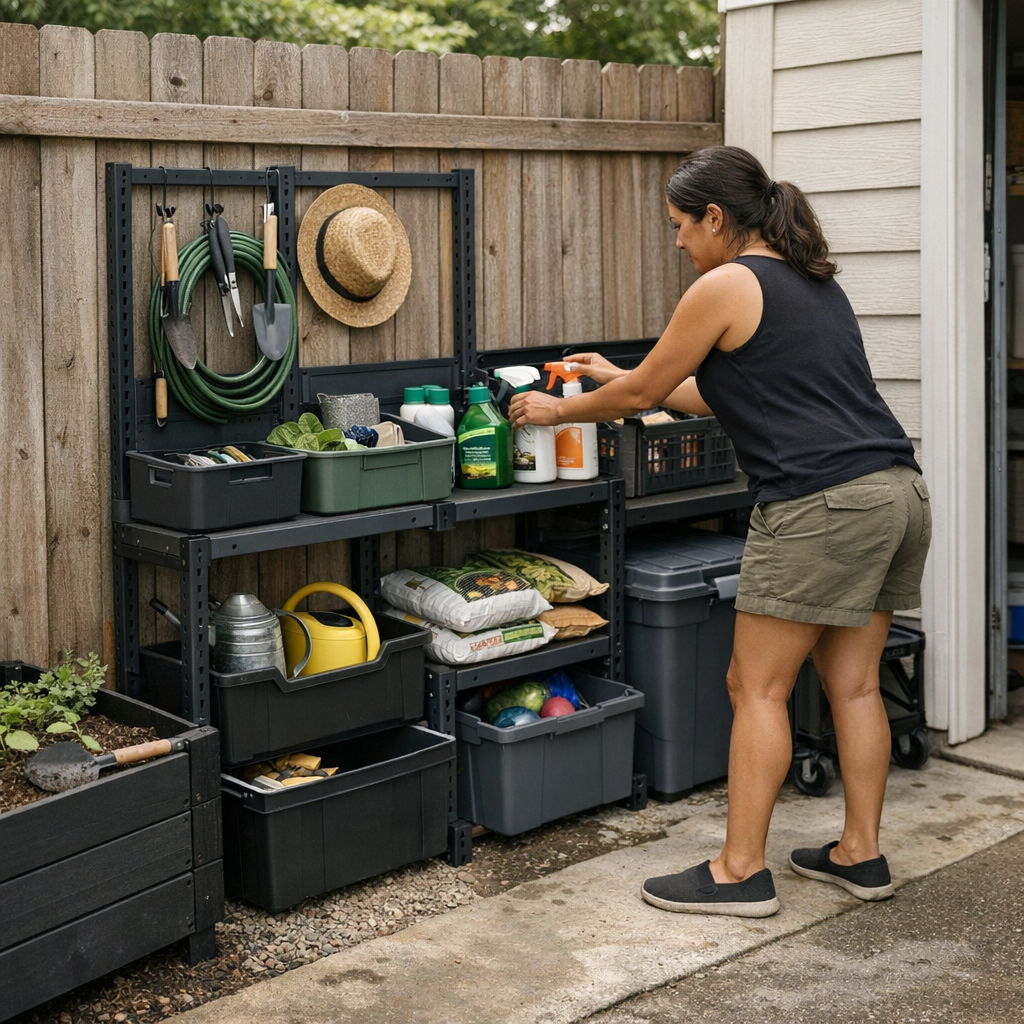
    Improvements rarely mean buying more. In one side yard, just shifting a wall organizer two feet forward and breaking it up at waist height changed everything: a clear separation for garden, grill, and kid gear, shelves left open between sections, a narrow strip of open floor in front. Suddenly there was no reason to stack or overlap—every return was one move, never two. Hose, trimmer, gloves, ball—their homes never blocked each other, resets stayed quick, and nothing migrated out to the walkway.

    The fix wasn’t more capacity, but more natural movement and separation. With each project and return, the area soaked up change. Tools left out less often. Corners stayed open, not jammed. A tiny reconfiguration transformed the “always tidying” zone into a background that just worked.

    Practical Tactics for Smoother Outdoor Organization

    Leave Breathing Room—Even Just 18 Inches

    Open floor trumps packed-in storage. If you can step, reach, and shift without hitting or moving another bin, your setup can breathe. Even a single narrow access path in front of wall units or along a fence makes blockages—and excuses—not stick. Double-stacked bins guarantee daily reshuffling: skip the overlap, or the routine will never last.

    Divide Storage by Activity, Not Just by Category

    Zones beat categories every time. Use open shelves for gardening, a distinct hook for grill tools, clear open space for kids’ gear. When every item has a destination tied to a use, “returning” isn’t just wherever you find a gap. That visible clarity is what gets even rushed resets really finished, not left half-done.

    Watch for Recurring Overflow Zones

    Does the same step, bench, or back corner always absorb random overflow? That’s your setup warning you: its placement, reach, or footprint is off. Sliding a unit out to create better access, switching a chest for open hooks, or reclaiming a blocked corner can shift enough pressure to keep clutter from settling—or returning right away after every use cycle.

    The True Test: How Your Yard Moves With You

    What marks a setup that actually works? Not that it stores more, but that it stays out of your way. The real test is flow: how often you have to move one thing to reach another, and how quickly resetting actually gets done. If it takes more steps to put things back than to use them, or your clean-up is slower than the project itself, your system is setting you up to fail.

    The best arrangement is the kind you nearly forget: open enough to absorb use, tough enough to resist daily breakdown, and practical enough to keep the reset short—even when life gets busy and outdoor projects pile up.

    For practical, tried-and-tested outdoor organization setups that actually handle daily use, visit TidyYard.

  • Creating Indoor Cat Setups That Reduce Daily Cleanup Hassles

    The real test for any indoor cat setup isn’t how clean it looks the first morning—it’s how much it interrupts you by the third or fourth routine reset. Feeding corners that seem perfectly settled at breakfast are soon chipped away by scattered kibble behind the bowl, water droplets trailing underfoot, or toy bits collecting under the table. By midweek, you’re bending down to wipe the same dried gravy you scrubbed yesterday, bumping the water bowl back into place again, and pulling the mat from where it’s bunched against the wall—realizing that “maintained” often just means fixing the same trouble spots on repeat. This is the hidden friction at the center of every indoor-cat home—where even tidy-looking setups quietly create more work than they promise to prevent.

    What Looks Settled Isn’t Always Easy to Live With

    Most indoor cat areas start on paper with order: a feeding mat, side tray, soft bedding, everything in its place. But after a few cycles, the surface calm shows cracks. The mat fits until a paw scoots a bowl off-center; crumbs start piling at the far edge; water seeps past the border line with each refill. Reshuffling becomes routine—mat back, crumbs swept, bowl shifted, but the fixes never stick.

    Improvisation—swapping towels, grabbing whatever’s handy—buys time but builds up work in the background. Small tasks add up: toys showing up where you walk, food bits edging into open floor space, and wipes that leave just enough residue to start over again in hours. The area stays quietly needy, demanding another pass, another reset—more for you than for guests who’ll only see the broad outline of order.

    Where Routines Collide: The Feeding Zone and Shared Home Paths

    The feeding zone is always just a moment away from crossing into your main home path. The quick scoop at breakfast runs into a misplaced toy; water webs connect bowl to hallway; crumbs stretch into spaces meant to stay clean. Shared space means the cat’s routines and your routines keep bumping into each other—literally—forcing daily collisions between pet area and human traffic lane.

    Every refill or fast tilt of the bowl is a small hazard. With busy hands or heads, you’re one distracted motion away from a spill that spreads underfoot or a bowl that skids into open space. Walkways gather what the feeding mat can’t catch. By midweek, the patterns are set: fur stuck where you wiped yesterday, mats drifting into open walking space, small detours around food scatter that never quite stays contained.

    Small Messes That Stack Up

    • Wiping the same dried spot nightly, only for it to crust back up every afternoon
    • Fishing toy mice from behind appliances you never wanted to move
    • Dragging the water bowl back again, leaving a wet trail twice a day
    • Finding gritty litter dust in new places even after multiple sweeps

    The pressure builds through these small, unseen chores. It’s not the one dramatic mess—it’s the cumulative pull of small resets, each one just inconvenient enough to interrupt the day. If a setup feels settled at first but keeps demanding your time, it’s revealing its weak point: the difference between order that sticks and order that just postpones the next hassle.

    Containment That Actually Contains: Beyond the “Tidy Mat” Illusion

    Most feeding mats look like an easy fix, but the gap between looking contained and staying contained is where real-world failure shows. Mats too narrow push kibble outside the boundary. Lightweight liners slide with every nudged bowl. Smooth surfaces route water wherever they please. Hidden bins might shrink the mess visually but put the cleanup just far enough out of reach to make every reset slower and more awkward.

    Spotting False Finishes

    • Frequent hands-on work: centering mats, reattaching bowls, wiping new seepage—not just once a day, but after every bump or refill
    • Repeated escapes—food drifts into walkways, litter flakes escape the tray, toys migrate everywhere except the intended zone
    • Cleanup that divides into too many small jobs, each slowing the entire reset, nudging you to stretch “maintenance” across the whole day

    An arrangement works only if, after a week, mess stays noticeably contained and correction time doesn’t double. Order at a glance is easy. What matters is whether the setup absorbs mess or reassigns it to new trouble spots.

    When Reset Friction Adds Up

    No indoor cat setup is better than the speed with which you can reset it after daily use. When each refresh means kneeling to full-wipe the mat, steering furniture, or re-anchoring a runaway bowl, the friction isn’t solved—it’s just broken into more steps. Slowdowns add up:

    • Trying to refill water only to find a toy wedged in place
    • Mat edges curled under by last night’s spill or a stray paw
    • Food tracked just beyond the “contained” zone—pushing you from a quick sweep into a full-on mop

    If every reset feels like you’re “almost finished” but never done, or if each improvement leads to another micro-interruption, that’s the structure fighting you—not helping. Over time, the cost isn’t just time lost but a setup you can trust less and less to stay put when you’re busy with something else.

    What a Worked-In Adjustment Actually Feels Like

    The difference shows once you move beyond band-aid fixes. One practical change: swapping out sliding mats for a weighted, low-profile, raised-edge mat that actually holds its ground, slightly offset from the highest traffic lane instead of dead center. This caught more mess before it could spread, stayed aligned without constant nudging, and made finding lost toys and crumbs much less frequent.

    That upgrade compressed four or five daily cleanups into one genuine reset. Less bending, fewer splashes outside the zone, less searching for what’s gone missing. The test isn’t how neat it looks in photos—it’s whether the area resets fast and mostly disappears from your mind through the week. Good structure respects actual cat movement, not just where you hope they’ll eat or stay. That means fewer rewinds, less self-defeating reshuffling, and more predictable routines for both sides of the feeding setup.

    Real-World Test: Does the Setup Hold After a Week?

    • Kibble, spills, and toys remain inside a reachable, honest boundary
    • Mats stay anchored—so the pet area and walkways don’t blend
    • Daily checks become brief, usually just one or two resets instead of constant mini cleanups
    • Weak points—recurring pileups or lost items—are obvious and easy to adjust on the fly

    Surface order fades fast if the baseline isn’t reliable after a few cycles. Don’t let the feeling of “freshly arranged” cover up a creeping shift of effort and mess somewhere else in the room.

    Experimenting for a Friction-Free Zone

    No single mat, tray, or bowl position works for every combination of cat and space. Some cats skirt rough edges, some avoid bowls crowded by a mat—real signals show up only in repeated use. Tweak spacing and test edge height; try moving mats slightly out of the walkway. Best-case setups are the ones both you and your cat actually use without struggle—and that you can reset with just one hand while crossing the room.

    • Does your cat avoid or track water onto main floors after each drink?
    • Is the mat still where you want it after dinner, or has it wandered?
    • Are wipes, sweeps, and storage tools actually within reach in the moment you need them?
    • Does the area disrupt your day less—or just look less messy for someone else?

    When Structure Makes the Room Easier, Not Just Neater

    A reliable cat setup doesn’t just cut visible mess—it reduces the need for you to think about it at all. If you’re not pausing to fix, swipe, or rearrange after every meal or refill, that’s the real win. The best indoor cat zones slip from your mind, refusing to add more micro-tasks to your week and letting shared home space stay functional for everyone else, too.

    STORE LINK:

    http://www.stillwhisker.myshopify.com

  • Why Overloaded Wall Storage Slows Down Your Workspace Efficiency

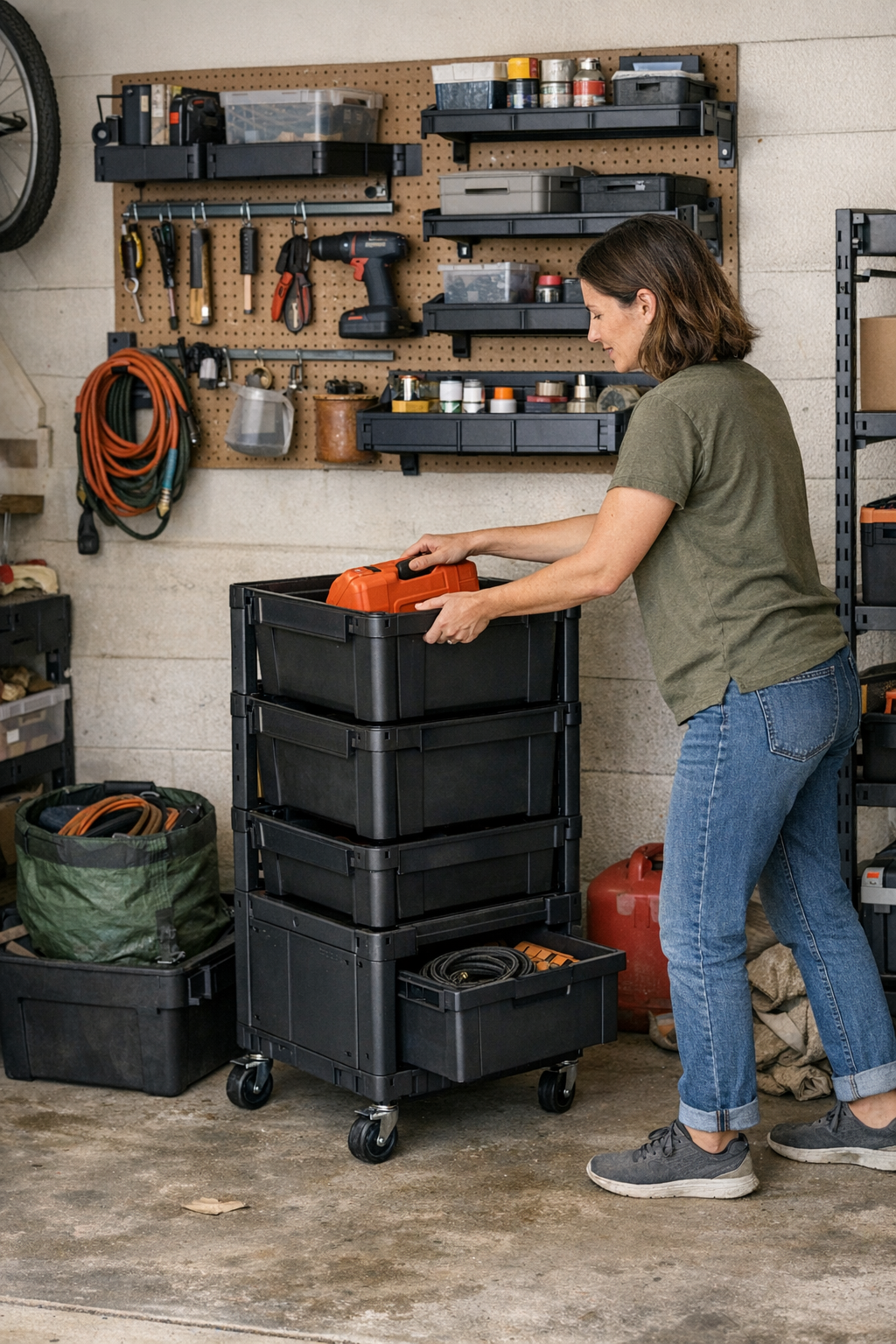
    The promise of a perfect garage or workshop setup kicks in the instant you clear the last pile from the floor: rows of bins, a grid of hooks, every tool finally off the ground. For a day or two, everything looks under control. But as daily routines crank up—school bags dumped near the door, tools rushed back after a weekend project—the old friction returns. What felt “finished” starts grinding at the edges. It isn’t mess; it’s the awkwardness that creeps into the circulation and flow, the spots that never quite work no matter how clean they look.

    Why Getting Things Up Isn’t the Same as Making Space Work

    The pitch is simple: wall storage clears the floor and makes gear easy to grab. In practice, though, actual use exposes the cracks. Day by day, the lines between “organized” and “obstacle course” blur. Between the car roof and the high shelf, crouching to plug in a charger, or edging past a heavy cart parked beneath the bins, you start to feel it: storing more isn’t the same as moving better.

    You notice it when grabbing a hand saw means ducking under a bike wheel. Or when unloading groceries means pivoting around the same garden tools that always block the path. The neat blueprint pinned up in your head doesn’t match the routine you actually walk.

    Maxed-Out Walls, Shrinking Pathways

    The more storage you stack along the walls, the more you chip away at how easily you can actually use the room. That meticulous lineup of bins transforms every wall into storage—unfortunately, it also blunts every shortcut. A hose left draped, a crate nudged in the corner, a backpack “parked just for today”—each one eats into the walkway. Soon, you’re twisting or side-stepping on autopilot just to fetch what you need, and every reset after a busy day feels slower and more frustrating.

    “It Fits” Doesn’t Mean “It Works”

    Most setups chase maximum density: racks, rails, shelves filled edge-to-edge. But then reality hits—reaching above your head to get the drill you use every morning, sliding a section of bins just to put something else away, or stopping to fish around behind one tower to find a missing wrench. There’s enough storage, but not enough slack. Each “efficient” fix winds up adding a new pinch-point or trip hazard, stalling the routine every time you try to return things to order.

    How Real-World Use Reveals the Pain Points

    It’s repeated, everyday movement that finds the flaws—and they’re almost never on the wall itself, but in the patterns the setup creates on the floor and in the corners. Watch what slows you down:

    • Entry Paths Become Zigzags: Wall-to-wall bins or hooks mean every trip—carrying bags, hauling a project, getting a mower out—requires snaking through a tighter maze, sometimes shifting a cart or crunching past jutting storage every time you come and go.
    • One Dead Corner Always Catches the Overflow: That “out of the way” floor zone becomes the permanent drop spot for anything you can’t quite fit—a cardboard box, odds and ends, leftover lumber. Resetting the area gets harder every time, until the pile becomes invisible clutter and the corners never clear.
    • Awkward Reaches and Impossible Returns: Everyday gear winds up on high shelves or buried behind rarely-used stuff. Returning tools becomes a chore—too much reach, not enough room—so things get left out or misplaced.
    • “Clean Floor” as a Mirage: What looks like an open path is really just a slalom between gear. One stray item blocks the way, and the space that felt organized feels boxed in, with every step rerouted or slowed.

    When the Wall-First Approach Starts Working Against You

    Over time, the system meant to restore order quietly starts to dictate your whole routine. Returning a heavy item means unstacking two things first. Beginning a project means five minutes of clearing, not creating. You hesitate to put things back because you know you’ll need to rearrange the setup later. The payoff in “neatness” drains away as each reset becomes another round of shuffling bins, sliding carts, or moving bags just to open a clear path.

    Living Around the Setup Instead of in the Space

    It’s a slow flip: instead of making storage fit your habits, the setup forces new workarounds—always moving that corner bin, always nudging the same cart aside, always leaving the ladder out “just for now.” Spaces that should flex between car drop-offs, projects, and daily comings-and-goings start feeling rigid. The wall’s filled, but the floor is never truly open, and “organized” means extra effort, not less.

    Restoring Flow Without Junking the System

    The fix isn’t tearing down what works—it’s untangling what’s stuck. Try this: pull just a third of the gear off the wall and move it to a mobile cart or tray. Now, the tools you grab daily are at arm’s reach, not buried or perched overhead. Entryways reappear. Instead of pulling a bike past the same lineup of bins, you have a clear line across the most-used routes. The space adjusts with you—rolling carts tuck away, corners are less jammed, and resets get faster because less has to be undone.

    Specific Adjustments That Make a Difference

    • Build in Breathing Room: Gaps between storage zones aren’t wasted—they’re space-saving in disguise. Leaving strips of blank wall lets you adjust, reach, and pivot as routines change, without having to empty the whole wall every time something shifts.
    • Mobilize the High-Turnover Gear: Keep everyday tools and supplies in rolling carts or modular bins that can move with you. Reserve wall hooks for seasonal stuff, long-handled tools, or things you rarely touch. Anything you use weekly should be easy to pull and painless to return—ideally, without a step stool or another round of reshuffling.
    • Monitor the “Reset Cost”: High-functioning setups make it quick to tidy up, not just pretty for a photo. If putting things away feels like a multi-step process, or you’re stacking gear back in waves, that’s a flashing signal to lighten the wall or spread out the load.

    The Pathway Test: Spotting Real-World Gaps

    The difference is clear in the patterns that persist: overflow pooling in the same trouble spot; the cart that always blocks a half-open walkway; the high bin you keep skipping; the stuffed wall that makes moving through the room slower, not smoother. Each missed return or too-tight corner is more than a quirk—it’s a readout of how the setup serves (or stumbles) in reality. No storage system is flawless, but the best ones let you reset without friction and move through the space without rerouting your day around your own gear.

    For storage solutions that keep real spaces flexible, reset-friendly, and genuinely easier to use, explore StackNest.

  • Streamline Your Carry-On Setup to Maintain Travel Momentum

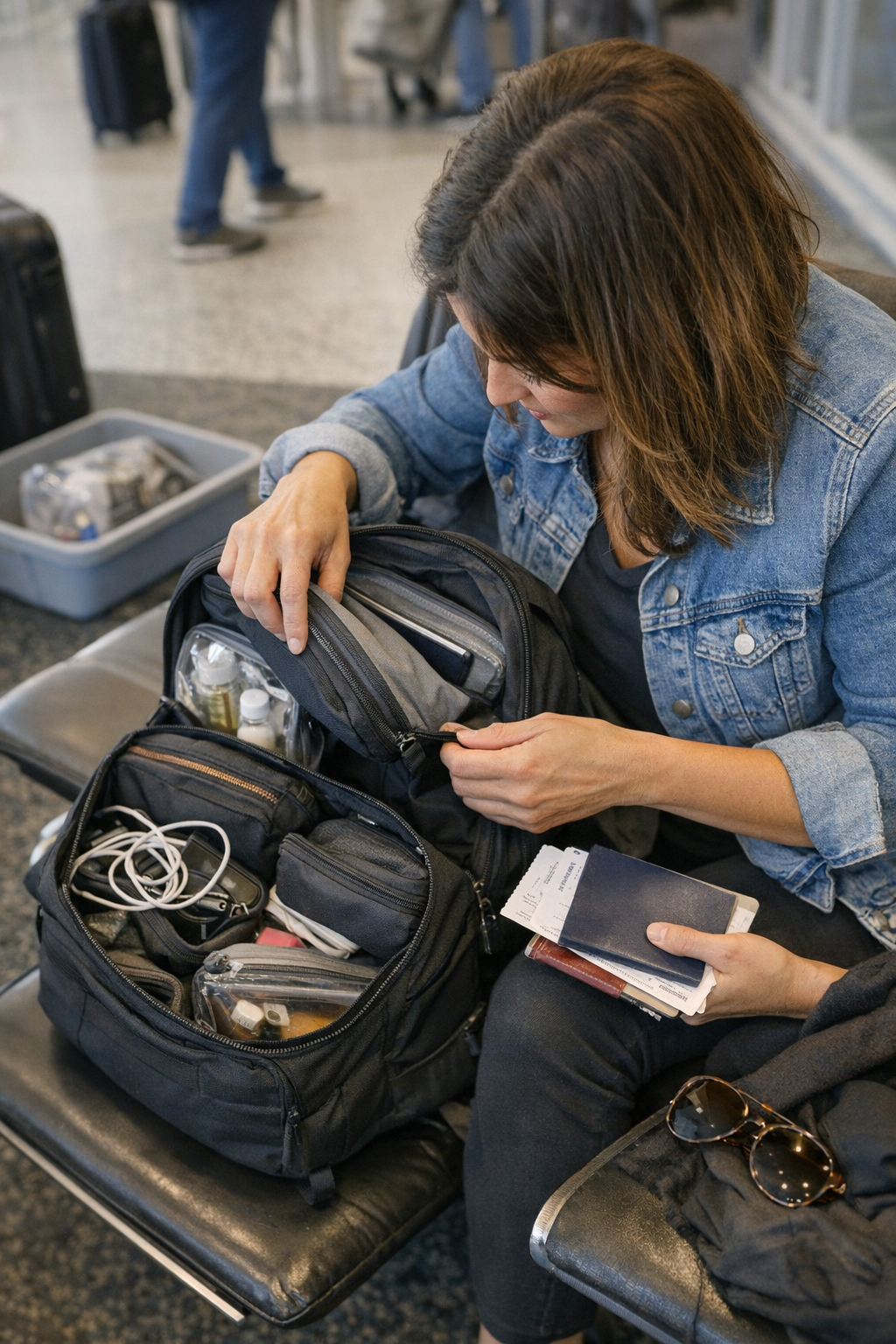
    A “packed and ready” carry-on can feel like a minor victory—until the airport exposes every hidden flaw. At home, zipped pouches and a clean bag layout look controlled, even reassuring. But move that same setup into a boarding queue or security rush, and its tidy seams start snagging: a tangled search for your passport, fingers stuck fishing behind lookalike organizers, or a charger buried one layer too deep when the gate calls your group. That’s when the real cost of a “looks organized, moves slow” approach hits. What keeps things neat on your bedroom floor shows its limits fast in the churn of real travel. CarryOnSupply’s world is built around this friction—not just what fits, but how your setup really moves when every access moment counts.

    Recognizing Where Carry-On Order Slips

    Smooth zippers and lined-up pouches fool you in the calm of home. Once you’re in motion—pushing your bag through plastic bins or inching down a boarding ramp—those same organizers turn into an obstacle course. A bag that closes crisp may open into confusion if your essentials are layered or split across copycat pouches. What seemed effortless to pack becomes a quiet, repeated delay as you chase the right thing at the wrong time.

    Small Delays, Big Impact

    Picture security: unzip, shuffle, tug at a pouch identical to two others, and the document you need is stuck under an earbud case or cable knot. Or at the gate, you need your charger during the five-minute lull before boarding, but you fumble past identical organizers, flipping open each one under the eyes of your row-mates. Every interruption breaks your flow—not just seconds lost, but mental energy sapped each time you replay the same mini-mistake, from security bins to overhead-bin repack and into your seat.

    Over-Organized? When Neat Packing Slows You Down

    The big myth: matching pouches and a main-compartment stack spell efficiency. On paper, it looks orderly—a lineup worthy of an Instagram flat lay. But hours into real transit, that crispness collapses into sly chaos. Each matching pouch blends into the next. Zipper pulls knot together. The pen or boarding pass you need at a pinch slips backwards, forcing a full pouch shuffle at the worst moment. Your supposed “system” turns retrieval into a repetitive obstacle course, every essential needing an awkward, multi-step dance under real pressure.

    Friction Hiding in Plain Sight

    Identical organizers stop being “sorted” and start creating static. Retrieve one thing and two unrelated items fall out. The outer pocket you thought would mean easy access now jams with random overflow. Each stressed search—not just for documents, but headphones, snacks, or sanitizer—pulls apart your tidy stack and turns quick retrieval into repeated interruption. Real order is function, not just appearance: if grabbing a charger means disturbing three zones, your setup is holding you back.

    Checkpoint Crunch: Where Structure Really Gets Tested

    Airport flow is relentless—no one in line pauses because your tech pouch blocks your liquids bag. If your main compartment buries essentials beneath layers, every scan or repack is fraught. Overhead-bin juggling? If pulling a charger from under a stack risks spilling everything, you hesitate, then give up. Structure shapes every decision: visible, single-zipper access usually wins when speed matters, while hidden or “over-protected” systems expose you in real time.

    These friction points aren’t theoretical—they hit hard:

    • Retrieval blocked by pouch layering or deep inside pockets
    • Document checks slowing as access paths shift mid-trip
    • Mixed essentials forcing hand-over-hand repacking of multiple items for every small need

    Real-World Consequences: Routine Interruptions Add Up

    Imagine sliding sideways into a window seat as the line piles up behind you. You need your boarding pass, but it’s wedged behind layered organizers; you end up upending contents into your lap (or worse, someone else’s). Or, at the x-ray tray, you realize your “quick-access” liquids are blocked by your tech kit, causing a hold-up as frustrated travelers queue behind you. These aren’t epic failures—they’re a slow leak of time, calm, and personal space, repeated until your “organization” begins to cost more than it saves.

    The result: the bag that looked efficient at home keeps snapping rhythm in real use. Instead of smooth progression, you’re stuck in a cycle—retrieve, repack, re-find, repeat. The price is constant awareness of the next access point, not freer movement.

    Learning From Repeated Friction

    The real insight rarely comes after one trip. It’s several rounds of double-handling, repeated digging, and repacking before the breakthrough: true function comes from clear, no-more-than-one-zipper-deep zones for each high-use item group. Tech with tech, documents isolated, comfort items in their own lane—each in its own dedicated, direct-access compartment. No more throwing toiletries in with cables, or documents in a pouch under a stack of gadgets.

    What Actually Improved Flow?

    After enough missed retrievals and tray scrambles, reorganizing for movement—not just neatness—flipped the script. Giving tech, documents, and comfort their own logical, no-compete spots trumped any obsession with matched sets. This meant living with a little visible jumble but winning speed and calm at every checkpoint. Travel rhythm returned: no more accidental spillovers, no more fumbled checks, no more starting over every time you dipped into your bag. The final structure didn’t look perfect, but it functioned right where pressure was highest.

    Spotting When Your Setup Needs a Reset

    Not sure if your carry-on is holding you back? Watch for these signals:

    • Grabbing a single essential always means unlocking or shifting more than one zone
    • Items stray or get lost after only a trip or two
    • Fast access—documents, headphones, pen—always triggers a cascade of smaller removals and repacks
    • Security, boarding, and seat entry feel harder than they should, even on simple legs

    If you’ve felt any of this, your setup is quietly working against you. Fixing it isn’t about forcing more order or tighter packing. It’s about new travel logic: less overlap, clearer divisions, and structure built for movement—not just for a tidy reveal at home.

    Balancing Order and Access: Structure That Moves With You

    Packing “perfectly” isn’t the goal. Instead, structure should remove the most frequent friction: repeated unzips for one item, blocked quick-retrieve lanes, endless pouch reshuffling in the face of real airport pace. When function overtakes appearance—when you stop fearing a little visible mix for the benefit of direct access—your bag finally matches your movement. That’s the difference CarryOnSupply is built for: carry-on setups designed to move with your rhythm, not against it.

    Ready to rethink what’s slowing you down? Find carry-on organizers, in-transit tools, and setups made for real repeated use at CarryOnSupply.

  • Choosing Between Adjustable and Fixed Closet Shelves for Everyday Use

    Closet frustration doesn’t usually start with chaos—it starts quietly, with routine snags you can’t quite ignore. It’s the moment you find your shoes stacked sideways because they’ve outgrown their original spot. It’s shelves that once looked perfect but now swallow your favorite hoodie behind a leaning pile of jeans. The difference between fixed shelves and adjustable ones isn’t just about construction—it’s about how your closet copes with your life’s shifting pace: winter boots replacing sandals, new work bags crowding out neat stacks, shared spaces blurring the boundaries between your morning and theirs. The tension isn’t visible in promo photos. You feel it when you’re pressed for time, when a shelf’s missed inch means rummaging, reshuffling, or watching clutter drift to the floor—over and over, day after day.

    The Real Stakes: How Shelf Type Shapes Daily Use

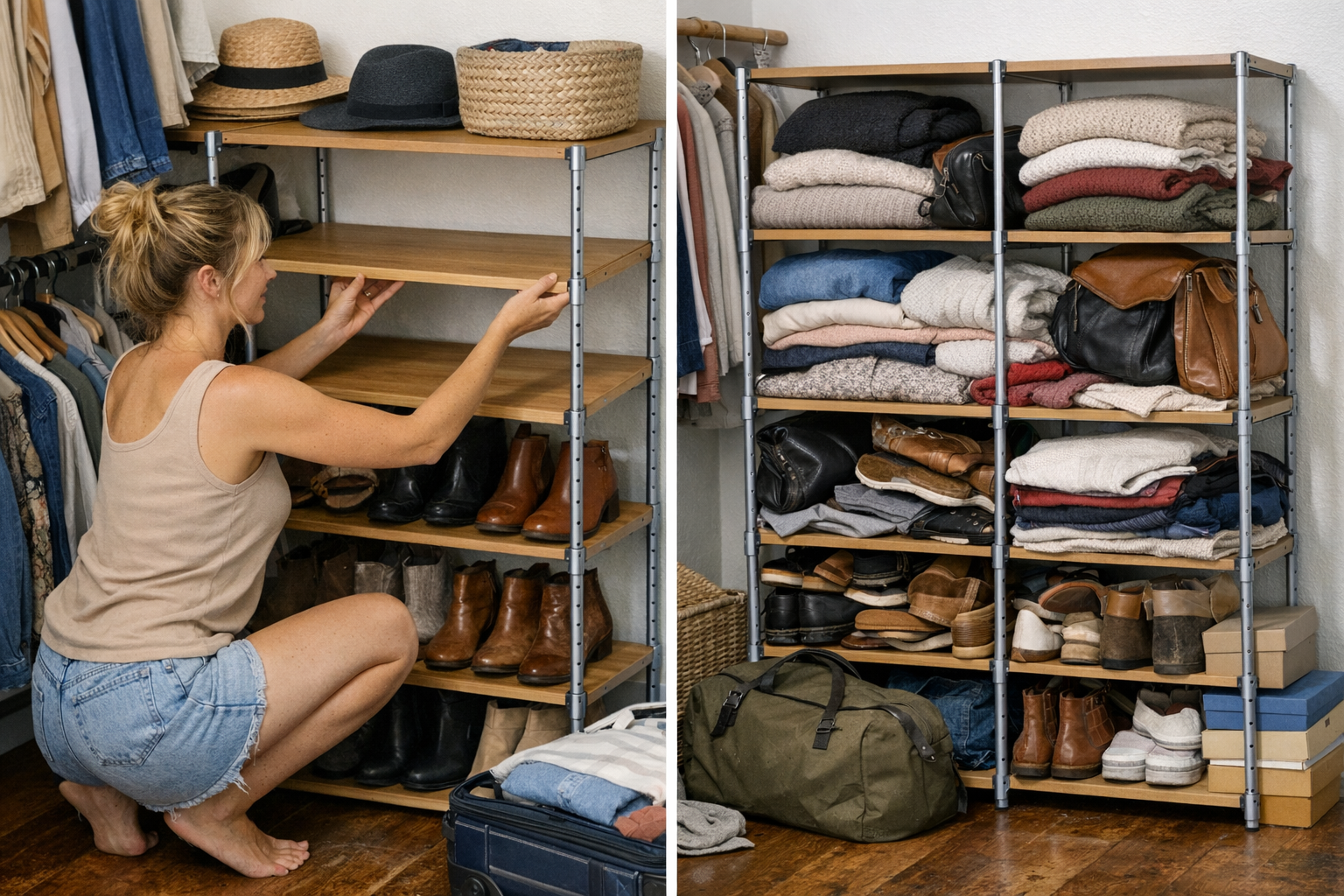
    On day one, whether you install fixed or adjustable shelves, the closet feels transformed—everything seems to have a home. But give it a few weeks of actual living, and the gaps show. The core challenge isn’t that one type is “better”—it’s that life, and wardrobes, don’t sit still for long. Today’s neatly folded sweaters become tomorrow’s toppling tower; the right shoe for the day is always under three others. With fixed shelves, the lines stay crisp but the system locks you into last year’s storage model. Too-tall stacks buckle, while unused air above thinner piles is wasted. Adjustable shelves tease you with flexibility—move one and suddenly your tall boots fit—but only if the reconfiguration matches your real habits and the system holds steady under load.

    Where Closet Systems Get Tested: Ordinary Routines

    Closet stress surfaces during the rush of actual use, not during setup. Shoes overflow onto the floor when a shelf turns into a catchall. Bags wedge themselves in awkward corners or teeter precariously on a too-shallow ledge. You reach for a folded T-shirt and half the stack flops forward—or worse, you tug out one sweater and topple two. In shared closets, someone’s gym shorts sneak into the workwear pile, and suddenly everyone’s searching. Fixed shelves with bad spacing breed overflow zones: baskets fill up, “temporary” piles become permanent, and what started orderly soon loses its structure. With adjustable shelves, the benefit is only real if an inch here or there lets you actually see, reach, and put things away at speed—put a shelf too high and your sweatshirts vanish into an unreachable alcove, too low and you’re stacking three deep just to make room.

    Everyday Trouble Spots: The Scenes You Recognize

    Picture an evening reset: hanging up your coat but having to nudge aside a wobbly pile of pants yet again. Shoes, once lined neatly, are now doubled up—because shelf spacing won’t allow side-by-side storage. You try stashing a new bag on the top shelf, only to yank half the stack with it when you need it next. Order dissolves in inches—a shirt half-off the edge, a bin caving in from one too many “just for now” items. These aren’t dramatic disasters; they’re the slow leaks of time and patience that make “organization” feel like an uphill battle.

    Why Shelf Adjustments Change Everyday Function

    One wrong shelf height can quietly sabotage an entire closet. With fixed shelves, workarounds multiply—spillover baskets, piles creeping onto open surfaces, resigning yourself to whatever the shelf dictates. Few people drill new holes or attempt permanent fixes; most just endure the friction. Adjustable shelving only pays off when you put it to use—and when changes actually bring order. Sloppy, uneven spacing just creates black holes where hangers get caught and folded things get lost. Unstable shelves collect “later” piles: heavy sweaters, odd-sized bags, or anything that doesn’t fit a designated space, quickly turning flexibility into quiet chaos.

    Shelf Spacing: The Smallest Fix, The Biggest Curtain Reveal

    Try never allowing the gap between adjustable shelves to be bigger than a shoebox. It’s a simple rule that pays off. Stacks stay stable, nothing topples, and you regain vertical space without the burden of balancing towers. Properly anchored shelves—no sag, no shifting—mean you can reach for a pair of jeans or a jacket without rebounding from a miniature avalanche. The visual calm isn’t surface-level; it’s faster resets, stacks that keep their shape, and daily searching reduced to a glance.

    Telltale Signs Your Shelf Strategy Is Off

    Problems don’t always announce themselves. More often, you notice it in the small ways: an extra move to fish out that one T-shirt, a shirtpile fanning out until it covers everything, or a row of bins that started neat but now mix shoes with scarves and batteries. If grabbing one thing routinely means moving two or three, or you lose five minutes a day re-tidying, something about your shelf strategy is quietly failing you.

    Beyond the Closet: Entryways, Bath, and Daily Drop Zones

    These lessons aren’t limited to bedroom closets. Entryway shelves too wide invite mail to drift, hats to mix with dog leashes, and keys to vanish under piles by Friday. In hallways and bathrooms, shelf spacing can turn towels into teetering stacks or hide everyday items behind a wall of toiletries. Fixed shelves bring symmetry but don’t forgive when categories multiply: you buy one extra basket, and the entire “system” clogs. Every reset takes longer, clutter never really leaves—it just migrates one shelf over, one corner deeper.

    Stability Vs. Flexibility: What Matters Most When You Live With It

    Fixed shelves deliver serious durability—indispensable for laundry rooms, utility spaces, or anywhere weight comes first. But in real, high-traffic closets, a well-built adjustable shelf can be just as sturdy if supported correctly and not overloaded. If you want flexibility without chaos, look for partly adjustable systems: enough tight anchoring for lasting stability, enough movement in the setup for actual daily adaptation. The best system isn’t strictly fixed or flexible—it’s the one that lets you reset in seconds, not minutes, and keeps the friction low when life gets busy.

    Making Small Fixes That Actually Stick

    Sometimes, a single shelf move is all it takes: anchor that wobbly tray, add just one more shelf to split a too-tall gap, or shift your most-used items to eye level. These are the details that transform “surviving the week” into “putting things away without thinking twice.” See if your space holds up after a busy weekend, not just after a fresh tidy-up—that’s the best proof you’ve landed on a real solution, instead of another short-lived arrangement.

    For more storage ideas built for real, lived-in homes—not just spotless catalog pages—visit ClosetWorks.

  • How Choosing the Right Oscillating Tool Blade Extends Cutting Performance

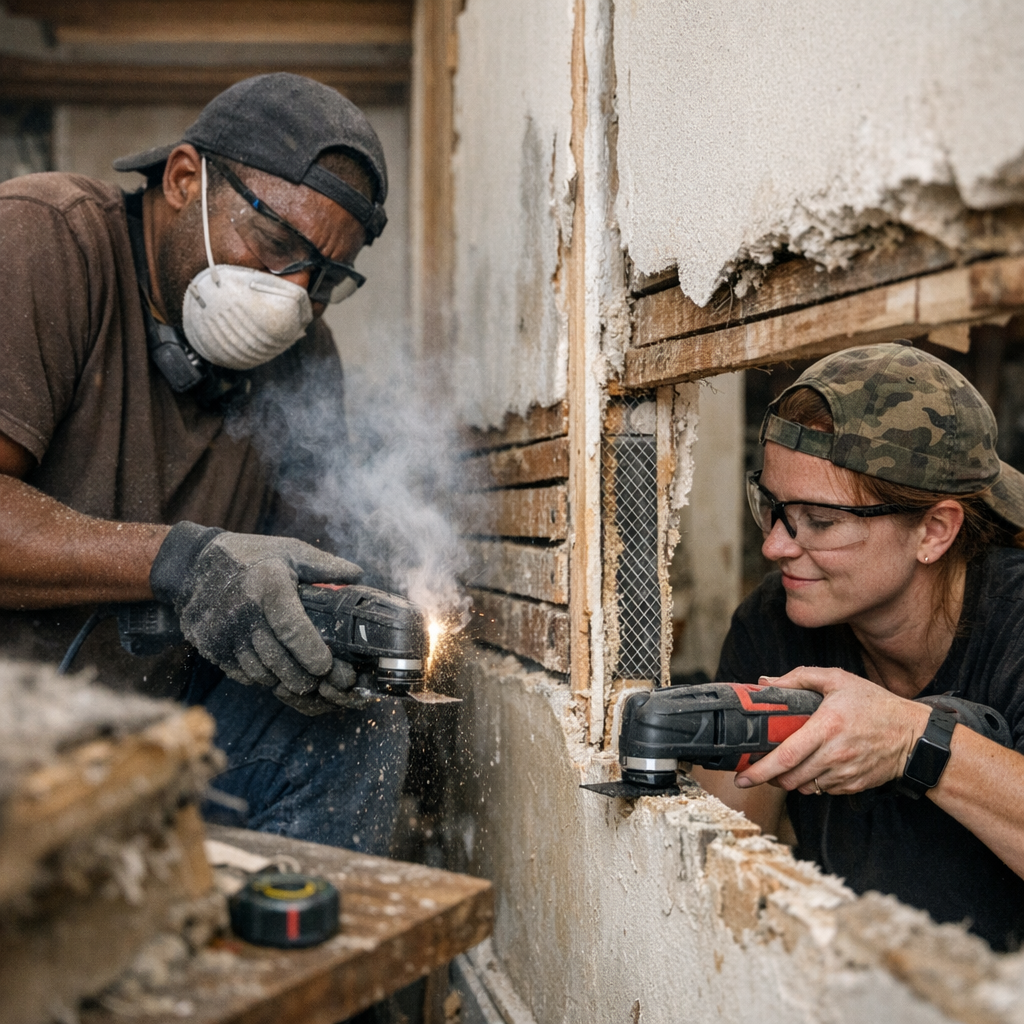
    The right blade proves itself when everything gets tough. There’s a moment every tradesperson or ambitious DIYer recognizes: you’re zipping through drywall with a fresh oscillating blade, thinking, “Maybe all these blades really are the same.” Then the job changes—old pine stud with nails, a crusty length of PVC glued tight, or lath buried in ancient plaster. That’s when the friction arrives: resistance suddenly stiffens, the tool’s vibration sneaks up your arm, and steering the blade starts feeling like wrestling a live wire. The job you thought would stay clean turns personal—edges burn, cuts wander, and you’re left sanding and reworking spots that should have been done hours ago. The difference? The wrong blade goes dull fast—and once that happens, every pass gets harder and every fix gets messier.

    When “Good Enough” Blades Give Out Early

    A fresh blade almost always looks sharp on the first soft material. But predictable jobs end fast. Dense wood, mystery nails, or tilebacker that crumbles like concrete—that’s where the shortcuts reveal themselves. With a lesser blade, progress starts to die by degrees: the tool shakes, the cutline drifts, and every push leaves more ragged fiber or scorched plastic behind.

    Real-world fatigue sneaks in fast. You notice it in small ways: more sawdust clings to a chattering blade, your grip tightens every time the tool bogs, and battery packs drain faster because dull teeth make every pass a power struggle. When you find yourself sanding burn marks or compensating with force instead of control, you’re not saving time—you’re stacking up lost minutes with every slip.

    Why “Universal” Rarely Means Equal

    Package claims don’t sweat on the jobsite. What matters isn’t the label—it’s how the edge survives real punishment. Two blades might look the same out of the clamshell, but add a floor stud with an unseen nail or a batch of cement board scraps, and the true colors show. One blade stays sharp, tracking straight through surprises; the other grabs, stalls, and starts to smoke at the halfway point. That’s not just a small difference—that’s the margin between smooth progress and an afternoon of fixing mangled edges. In real workshops, there’s no pause button: when a blade starts failing, your timeline unravels one jagged cut at a time.

    Real Jobsite Moments That Change Your Mind

    Picture a retrofit: cutting conduit slots in a wall built before WWII. First two passes glide, but on the third, the blade grinds into wire mesh hidden in old plaster—next moment, the tool shrieks, progress halts, and your nose stings from scorched metal. Popping in a carbide-tipped alternative, you’re back in control—mark stays true, progress restarts, and you cut out without risking the tool or your patience.

    Or you’re under a crawlspace, notching joists overhead. The economy blade makes a single heroic cut before sputtering out. Progress slows to a crawl—you’re forced to muscle each pass, risking a slip or worse, a busted blade. Meanwhile, someone with the right blade is finishing up, already packing tools while you’re still scraping splinters out with a chisel.

    Blade Wear Signals—Spotting Them Before Control Slips

    Fatigue isn’t announced, but it’s easy to feel if you know when to check. Tool vibration spikes, edges start to wander, and that faint scorched smell means your precision (and energy) are seeping away. If you’re pushing the tool into every cut, chasing a once-straight line, or compensating for chatter with muscle, the blade’s already spent. These early signals are warnings: ignore them and you’re guaranteed longer cleanup, more sanding, and the risk of damaging your tool—or the work itself.

    Material Is the Real Blade Test

    No two jobs are gentle. Old growth lumber studded with steel, layered wall assemblies packed with mystery debris, fiber cement board that chews up teeth—these are what separate blades built for display cases from blades made for daily work. Even the best edge gets tired eventually, but strong composition and sharper tooth patterns buy you those crucial extra passes where control, speed, and finish hold up. Carbide teeth consistently outlast standard bi-metal for wood-with-nail and abrasive applications, buying you fewer swaps and smoother finishing where the job doesn’t slow down.

    Quick Habit: Swap Blades Before They Fail

    Don’t be sentimental with a dull blade. The number one productivity play isn’t pushing through until the blade is smoking—it’s swapping as soon as you feel the work change. If the tool strains, vibration spikes, or the blade feels hot to the touch, change gears and switch blades. That handful of seconds saves hours lost to sanding, patching, or retracing missed lines. Especially on repeat tasks—like notching every bottom plate in a row—staying ahead of blade fatigue keeps the project moving and your hands out of the red zone.

    This habit pays off beyond tools—smooth cuts keep your workflow intact, precision saves touch-ups, and your arms don’t end the day shot from overcompensating.

    The Compound Effect: Every Cut Adds Up

    Blade choice isn’t just an up-front call. Every stroke either keeps you in the flow or drags the job down. Stronger, longer-lasting blades keep you ahead—on unpredictable jobs, in tight corners, and over the long haul. Don’t tune out the small signals: listen for vibration, watch for wandering lines, notice when the tool feels “off.” That split-second swap between dull and sharp is the simplest productivity upgrade available—keeping your outcomes neater, your fatigue lower, and your day on track, whether you’re cutting, drilling, sanding, or fastening the last piece in place.

    Find blades and accessories built for real workspaces at Gumboll.

  • How Defined Lighting Boundaries Improve Safety in Homes with Kids and Pets

    If your lighting only treats the room as one big “nearby” area, reality pushes its limits fast—especially in a house with restless kids, pets circling for territory, and routines built on movement, not empty space. That ceiling fixture that looked bright and open on day one will start to betray real problems by week two. Toy piles gather back into walking paths. Pets claim the warm spot that cuts through the route you need. What seemed like even light turns patchy, with glare near the ceiling and unpredictable shadows at your feet. Suddenly, the room looks bright but works badly: the difference isn’t how much you see, but what keeps landing in the way—tripping you up, slowing you down, and making the space feel less usable the busier it gets. This isn’t a design quirk; it’s a direct consequence of the lighting setup itself.

    Why Room-Wide Lighting Fails During Real Routines

    Turn on the main ceiling fixture and it feels like you’ve handled the basics. But as routines stack up, the flaws get sharp. Homes don’t work as blank cubes; real life creates conflict zones—main paths, parking edges for bags or toys, pause points for noisy kids or a dozing pet. Central ambient lighting erases these distinctions, blurring lines you need clear. In heavily used hallways or near the utility zone, gradients take over. Parents notice it first: you dodge one obstacle, then another appears, never quite seeing where the “safe to move” area ends because the light never marks it. Tired? You miss it entirely—and risk a stubbed toe or worse.

    Think of a hallway on a Thursday night. Light spills everywhere, but the stuff you need to avoid—bags, scattered shoes, a pet deciding to settle—moves right up to where you walk. There’s no obvious signal: just a slow fade from “clear” to “not quite,” forcing constant split-second choices. You don’t fall—you just learn to hesitate, to curve your step, to scan shadows for what the fixture failed to separate.

    How Shadow Lines Interrupt Simple Movement

    Soft, undefined lighting leaves disorder free to migrate. One moment a child bursts through and drops a backpack near the kitchen. The family pet stretches out—half-on, half-off the edge of the walking lane. Overhead fixtures do little to distinguish zones: sometimes the floor’s edge vanishes in deepening shadow, sometimes glare leaps up from polished tile. What should be a straightforward movement becomes tactical—slowing at turns, bracing to spot hazards just before you hit them.

    This is the slow drag of bad lighting: everyone adapts, but in ways that turn routines jagged and frustrating. You learn to sidestep by habit. Movement becomes a mental task, not a simple walk—never quite trusting what’s beyond the next shadow, never sure where the usable space really ends.

    Real Scenes: Where Weak Lighting Edges Cause Trouble

    Pausing at the stair turn

    The landing is more than a step—it’s a decision point, a pause with consequences. A single overhead light turns the stair’s edge into a shifting gray area. A dropped toy or stray laundry basket lingers unnoticed. Until someone’s foot catches; now the edge matters. Nearly every household endures a near-miss before catching the problem: indistinct shadow means nobody knows exactly where safe ends and risk begins.

    Crossing the hallway with clutter close by

    Children carry, drop, and forget. Pets prefer settled corners. Hallway fixtures that just flood everything don’t warn or shape behavior—they blur it. Every trip down the hall tangles with confusion: Is this gap wide enough? Was that a bag or just a shadow? You catch yourself twisting, changing speed, not trusting what’s ahead.

    Losing the counter edge in shadow

    Faces lean into mirrors, or hands scramble for the last cleaning wipe on the utility counter. Surface lighting that looks “uniform” from across the room can’t stop shadows from one side swallowing half the workspace once you approach. The edge of the basin blurs. What’s safe to grab, what isn’t? You adapt by moving, leaning, craning—because the light won’t do its job.

    The Consequence: Routines That Never Feel Smooth

    These aren’t catastrophic failures—but they’re relentless. When movement lanes and storage edges blend, families start tiptoeing through their own routines, correcting as they go: nudging shoes, barking “stay!” at the dog, giving children an extra warning to keep backpacks clear. This is creeping friction: not enough to bring things to a halt, but enough to create constant, low-level stress, and a chronic sense that home layouts resist rather than support movement.

    What Actually Defines a Reliable Lighting Boundary?

    Boundaries aren’t established just by throwing more lumens at a ceiling. They’re created when lighting makes the “in” and “out” zones visually speak for themselves—a clear, observable edge separating movement and pause, safety and pile-up. Average overhead fixtures fill everything, but they don’t mark territory. If the light doesn’t draw a real line, clutter and behavior slowly creep back into your path, because nothing says “this area’s for walking, that area’s for waiting.”

    The Practical Change: Zoned, Offset, or Downward-Focused Fixtures

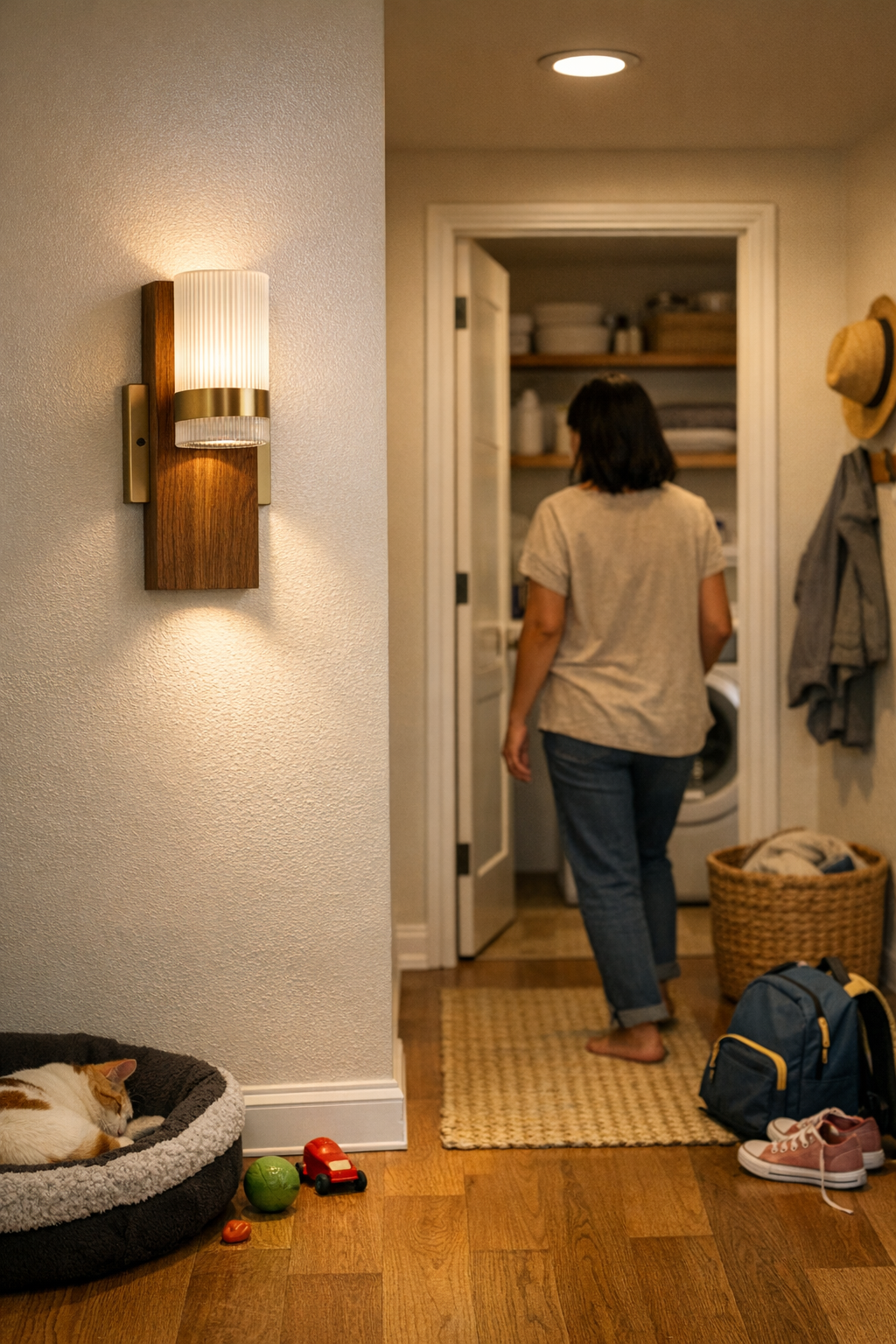
    The difference between ongoing frustration and quiet traffic flow is physical: use lighting to mark, not just light. Offset wall sconces, for example, installed just outside a stair run, cast a repeatable band that reads “safe passage.” Shifting a semi-flush mount fixture toward the main side of the hallway defines a dominant path, with softer spill relegated to the waiting zone. Task lighting over utility counters or bathroom sinks puts brightness right where you need to see and act—leaving the rest softer, less tempting for clutter or temporary holding.

    What really happens after these changes? Slowly, habits shift. Pets nap in the softer shadows. Kids learn, almost invisibly, to drop shoes beyond the well-lit lane. The main path stays clear—without anyone policing it—because the space itself supports what you want to happen, not just what a fixture can theoretically cover on paper.

    Everyday Improvements You Actually Notice

    The signs of better lighting aren’t dramatic makeovers—they’re the smaller frustrations that finally subside:

    • Navigating stairs without pausing to wonder what’s at the edge or dodging an unnoticed toy.
    • Pets choosing the dimmer, safer part of the room, left automatically out of circulation zones.
    • Countertops with visible, shadow-free edges—making cleaning, prep, or grooming straightforward, not guesswork.
    • Hallways that feel designed for motion: clear, direct, free from the slow drift of clutter back into your feet.

    If lighting only suggests where boundaries might be, confusion sneaks back in—every crossing, every sudden pause, every overlooked object. But when the lighting draws true edges, everyone reads them and home routines gain a smoothness you stop noticing for the best reason: nothing is blocking your way.

    Quick Tip for Improving Zone Edges

    To spot weak edges, stand at a usual pause-point—stair landing, hallway corner, or near a counter—with main fixtures on. See where space feels ambiguous, where movement seems tentative. Then turn on a directional sconce, vanity light, or even use a flashlight: does a clearer edge or brighter path reshape how you treat the area? That’s the start of fixing not just how a space looks, but how it works.

    Lighting That Holds Up to Real Life

    The gap between a “bright” room and a functional one opens wide after enough lived-in days. The right indoor lighting isn’t about filling volume with light—it’s about giving daily movement a clear, reliable map. Homes that hold up to repeated family use, shifting clutter, and unpredictable routines don’t just look good; their lighting quietly prevents problems before you even notice them.

    Explore practical indoor lighting that makes your spaces easier to use—day after day—at LightHelper.

  • Creating Calm Moments for Pets Before Visitors Arrive with Simple Daily Routines

    The promise of an easy pause for your dog or cat—before guests show up, or just to reset after a walk—usually breaks down in the same spot: everyday pet chores left half-finished, supplies not in reach, or the “quick cleanup” delayed just long enough to throw off your timing. The friction doesn’t come from lack of care; it’s the bowl still tacky from breakfast, the wipes caught behind a stack of pans, the towel missing from its usual hook. In theory, you’ve got the basics. In practice, the next calm moment either lands smoothly—or gets blocked by a scramble for tools you thought were already set. CalmPetSupply exists right at these everyday tension points: setups that lower friction, not just look tidy for inspection.

    When Small Routines Block Calm Moments

    Routine pet care falls apart in seconds when a single item goes missing or gets buried. Maybe the brush migrated under the couch, or a wipe container ended up behind weekend groceries. The food bowl gets rinsed, but not wiped fully—and now a quick snap inspection turns into a doubly messy job later. Suddenly, what should be a ten-second reset costs you time and focus. The friction isn’t always loud, but each tiny snag chips away at your chance to pause, breathe, and help your pet settle without last-minute hassle.

    Real-World Scenarios: How Routine Snags Add Up

    Five minutes’ warning before your friend walks in. You look at your dog—then spot the greasy bowl, the towel that disappeared, the grooming brush stashed “for later.” Instead of sitting down, you’re backtracking through the kitchen, upending a closet, and speed-searching in corners you thought were already cleared. If your dog picks up your urgency (they usually do), the stress spreads faster than you can hide. These routine interruptions do more than eat up minutes; over weeks, they build a background hum of “almost ready”—until those rare, easy calm moments seem further and further apart.

    Real calm for your pet gets lost in hundreds of micro-delays: a missing towel after a muddy walk, digging for treats that shifted behind a stack, reshuffling a shelf just to find yesterday’s grooming mitt. The cost isn’t disaster—it’s steady interruption, small enough to ignore once, big enough to drain you over time.

    Accessible Supplies Aren’t Always Ready-to-Use

    Most homes own the right basics: towels, brushes, water bottles, food bins. The hang-up is always in actual access. The towel’s on a hook…but two rooms away. The food scoop is technically in the bin…under yesterday’s mail. You’re set up to succeed, but blocked by minor obstacles at the exact moments you want to move fast. The difference between “stored” and “grab-ready” rarely sounds dramatic—until you’re wiping a half-dried bowl after work, or giving up on a grooming session because the brush is at the bottom of an overfilled basket.

    Cleanup becomes a grind if every feeding or water refill means first clearing unrelated clutter, or peeling back layers of not-quite-dry kitchen gear. A setup might look perfectly ordered from a distance—surfaces neatly clear, pet items out of sight—but if you’re always shuffling bins and shifting piles, calm slips away. Routine drag isn’t loud, but it’s what turns simple care into something you’d rather avoid.

    The Subtle Difference: Tidy vs. Functional

    The first week of a new system feels promising—everything tucked into one spot, baskets labeled, a single closet holding toys, towels, and grooming supplies. But real pressure builds after the novelty wears off. If the brush is always under two towels, or food toppers get lost behind stacked bins, quick resets start to fail. Suddenly, a spot that looked streamlined now slows you down every day.

    These friction points rarely announce themselves; they return only in the rush. You organize on Saturday, but by Monday night, the brush is buried in outdoor gear or the wipes have drifted to the laundry shelf. Every late-evening check-in or porch routine brings the same pause—a minor block, then a workaround, then an invisible ding to your energy and your pet’s rhythm. Over time, what started as “good enough” proves too easy to unravel under repeat use.

    Shifts That Sustain Calm—Practical Adjustments

    What makes a long-term difference isn’t owning more gear—it’s doing the last cleanup step while you’re still there. Wiping food bowls fully after dinner, not leaving it “fine for later.” Returning the towel to its hook as part of the final walk, not as prep for some big occasion. Keeping the brush one grab away—on a shelf you don’t have to open. The stress lifts not because your space is styled, but because you’ve made the next care moment frictionless by default.

    When essentials are visible and always in reach, a water refill or after-walk wipe-down becomes as fast as grabbing a glass. The scramble fades. Calm actually lands—not because you scheduled it, but because barriers are gone. Pet-care setups that last aren’t models of perfection; they’re systems where resets can really stick, so comfort for both you and your pet becomes routine, not a rare win.

    Starter-level changes can turn an “acceptable” system into one that quietly reduces slog: shelves placed by main doors, hooks at your dog’s height, a repeat spot for each go-to item. The result isn’t visible order alone, but function that holds up even on a hectic afternoon.

    Everyday Flow Over Occasional Order

    Sustainable calm is less about a deep overhaul, more about the right move at the right moment: wiping down now, not at the next big event; refilling water after use, not as part of rushed prep. The difference shows up in the details—no last-missing brush, no hunt for wipes during the night check, no dog pulling at the door while you clear the same hurdle again.

    True calm isn’t found in picture-perfect setups but in everyday routines where all basics are already ready, not buried or “good enough for now.” When resets are quietly built into your daily flow, you and your pet get to settle in—without always scrambling to catch up. For practical home setups designed around these small but costly points, see more at CalmPetSupply.

  • How Anchored Storage Transforms Daily Car Use and Reduces Clutter

    The car that looks tidy on Sunday feels slow and cluttered by Wednesday—that’s the test repeated use reveals. When you return from errands or park for work, it’s not dramatic spills or obvious trash that slow you down. Instead, it’s the charger cable looped for the third time around the shifter, the sanitizer that escaped its slot and now blocks your heel, or the bag that, once again, found its way from behind the passenger seat back into the footwell. The car appears organized, but each re-entry exposes the same patterns: reset, awkward reach, shift something aside, drive, repeat. Over a week of commutes and short trips, these small obstacles add up, turning “organized” into “surprisingly inconvenient.”

    Spotlight on the “Out of Sight” Problem Zones

    Everyday friction hides in the corners you clear without thinking—then re-clear an hour later. Door pockets fill with forgotten receipts, a loose charging wire finds the path of your left foot just as you merge, and wrappers wedge themselves beyond easy reach. You don’t see the mess until you feel it slow you down: a mat that bunches under your heel, a bottle clattering into the driver’s footwell on a turn, the stop to untangle a charger before plugging in. Tidy looks fade and function slips further after each errand loop. By midweek, the car you “finished” on the weekend demands another round of spot-readjustments before every drive.

    Short Trips, Long Friction

    Major clutter isn’t the real culprit. It’s micro-resets: shifting a cord before shifting gears; picking up the same stray bottle after each trip; removing wrappers from the leg space, again, no matter how recently you cleared them. These low-level interruptions only surface under daily pressure—when you’re racing school drop-off, juggling a supply run, then darting across town for an appointment. What seemed organized proves brittle with each stop-and-go.

    Why “Looks Organized” Isn’t Always “Easy to Use”

    There’s a wide gap between being clear of visual clutter and being frustration-free in daily use. Cupholders stuffed with charging lines or bins hiding wrappers might buy a moment’s relief, but those “solutions” unravel just from normal driving. Each time you sit down, you pause and rearrange before setting off. Each ride means objects migrate outside their zones—resulting in small interruptions that layer into daily annoyance. Over time, you build a habit of unconsciously clearing the same spaces, not noticing your routine has become a slow-motion obstacle course.

    Small Objects, Big Interruptions

    Picture the moment: you open the car, arms full—phone, coffee, keys. The charger you left ready last night is now wedged under a seat anchor. The sanitizer has slipped forward, blocking the pedal. You fix both, but one slips loose again on your next trip. These are not big problems, but they break the flow, making every re-entry slower than the last. When a car’s “order” falls apart after one fast drive, it’s a sign the setup isn’t holding up to actual use.

    The Subtle Burden of Repeated Cleanup

    Hidden clutter isn’t just cosmetic. Any time you need to move a bag to buckle up, or fish a cable out from a pedal zone, you lose momentum. The five-second fix you repeat becomes a recurring source of delay, adding up to frustration you feel more than see. With every commute and errand, you encounter these “solved” problems all over again—they persist because tidiness isn’t anchored, just shuffled between zones.

    When “Protected” Creates Another Problem

    Intentional add-ons—mats, covers, trunk bins—promise order or protection, but if they aren’t physically locked in, they breed new issues. Mats that slide forward collect crumbs at the edge or jam under pedals. Seat covers that ride up demand readjustment each morning. Trunk organizers slide sideways, snagging bags out of reach or blocking fast loading. Protection fails when it requires constant intervention to stay useful during real commutes, not just at rest.

    From “Floating Fixes” to Anchored Solutions

    Real improvement comes from switching to anchored, fit-for-purpose organizers and mounts—the kinds of small upgrades designed for repeated daily use. A mounted phone holder stops the “where do I prop this now” scramble and keeps your sightline clean. Cables routed along hard points or anchored with a clip simply stop drifting into motion zones. Attaching a trash solution to a fixed point—like the seatback—not only keeps floors clear, it kills the backward drift of wrappers and bottles. These aren’t cosmetic tweaks or hidden storage games; they are strategic placements that trade shuffling for flow.

    The flip isn’t filling the car with accessories—it’s removing the cycle of last-minute untangling or repeated pickups. The tiniest adjusters—a cable no longer in reach, a bottle upright, a pocket that holds instead of hides—make the difference you notice on the most routine days.

    How Anchored Setups Change the Driving Flow

    The immediate payoff: resetting your car between trips is no longer a chore. With each spot clearly set, there’s little in the way—no surprise floor mat bunching, no dives after runaway gear, no mid-drive hunts for the charger. What used to cause friction now moves you from stop to go without a cleanup detour. That margin matters when you’re most rushed, not when you have time for a detailed reorg.

    Recognizing Patterns—and Breaking the Cycle

    If you keep moving the same sanitizer, re-routing the same cable, or finding wrappers at your feet every day—your setup fits a photo, not your routine. The true test of car organization is not a brief visual win, but a week of real life: fast errands, shifting loads, unexpected stops, and redeployed seats. With the right anchors, you stop playing cleanup on repeat. Clutter has nowhere to collect, and daily resets become unnecessary, not just less frequent.

    Real-World Switching Points

    Small, practical changes stand up to real routines:

    • Charging lines routed out of reach zones mean the cord never returns to entangle your feet or shifter.
    • Anchored, accessible trash spots stop loose wrappers from creeping back around your ankles.
    • Storage that stays put ensures surfaces stay usable—no more slow drift of bags, tools, or bottles back into your way.

    These aren’t one-time fixes. They keep working after four stops in a day because they’re locked to the way you use your car, not just how it looks when parked.

    Making Car Organization Work for You

    The strongest setups are the ones you barely think about on Friday afternoon—where you step in, reach for what you need, and nothing blocks your route or returns out of place. No scramble, no repeated tidy-up, no running mental inventory. That’s what makes a car ready—not just neat on display, but consistently functional in the push and rush of everyday driving.

    Shop DriveWellSupply for practical car-use essentials