Blog

  • How Small Changes in Dog Care Routines Prevent Daily Chaos at Home

    On paper, a pet care space looks ready—bowls lined up, towel folded, leash in sight. But put the setup to work, and the cracks show fast. Every dog owner recognizes the moment: your hands are busy, your dog is already halfway inside with wet paws, and the towel you counted on is missing. Or you bend down to fill the water bowl, only to realize it’s dry because nobody remembered the last refill. In theory, these are simple fixes; in real life, the smallest gap in routine keeps returning at the worst moment. The CalmPetSupply world starts where most neat setups fail—repeated use, fast resets, and last-minute friction that never really goes away unless the basics stay visible and reachable.

    Repeated Friction in Daily Routines

    Most setups work until the first real rush. A food scoop slides behind dishes, a towel that started by the door ends up across the room, the cleaning spray sits just out of sight—or buried behind shoes. You’re not dealing with single accidents, but the quiet annoyance of pausing to find what you need whenever the pattern repeats. These aren’t flukes: the more often you use the space, the more the missing or misplaced basics interrupt the supposed “flow.” What feels organized at 8 a.m. looks scrambled by noon.

    When the Routine Slows Down

    The breakdown hits exactly when time matters. You’re leaving, hands full—leash, waste bags, your own keys—and pause for muddy paws, but the towel is somewhere else. Or you scoop dog food, only to find a crusted bowl from last night and another pause while you make it useable again. Water refill becomes a juggling act because the bowl shares countertop space with a bag of treats and yesterday’s mug. Routine hardship isn’t dramatic—it’s the persistent drag of starting and stopping. Every two-minute job picks up two extra steps, and the dull frustration builds.

    The Unseen Cost of “Good Enough” Organization

    The Sunday-night reset, the lineup of “essentials”—both deteriorate as days roll on. Tools drift. A brush ends up in the catchall tray, the leash joins a pile near the shoes, toys shift under the couch or coffee table. By Thursday, the once-tidy setup takes an extra minute for every basic task. Wiping paws, finding the scoop, grabbing the leash—all become scavenger hunts, not reflexes. “Good enough” order hides new points of friction: mess piles up, steps get skipped, and real routine demands expose the weak link over and over.

    How One Simple Change Reduces Strain

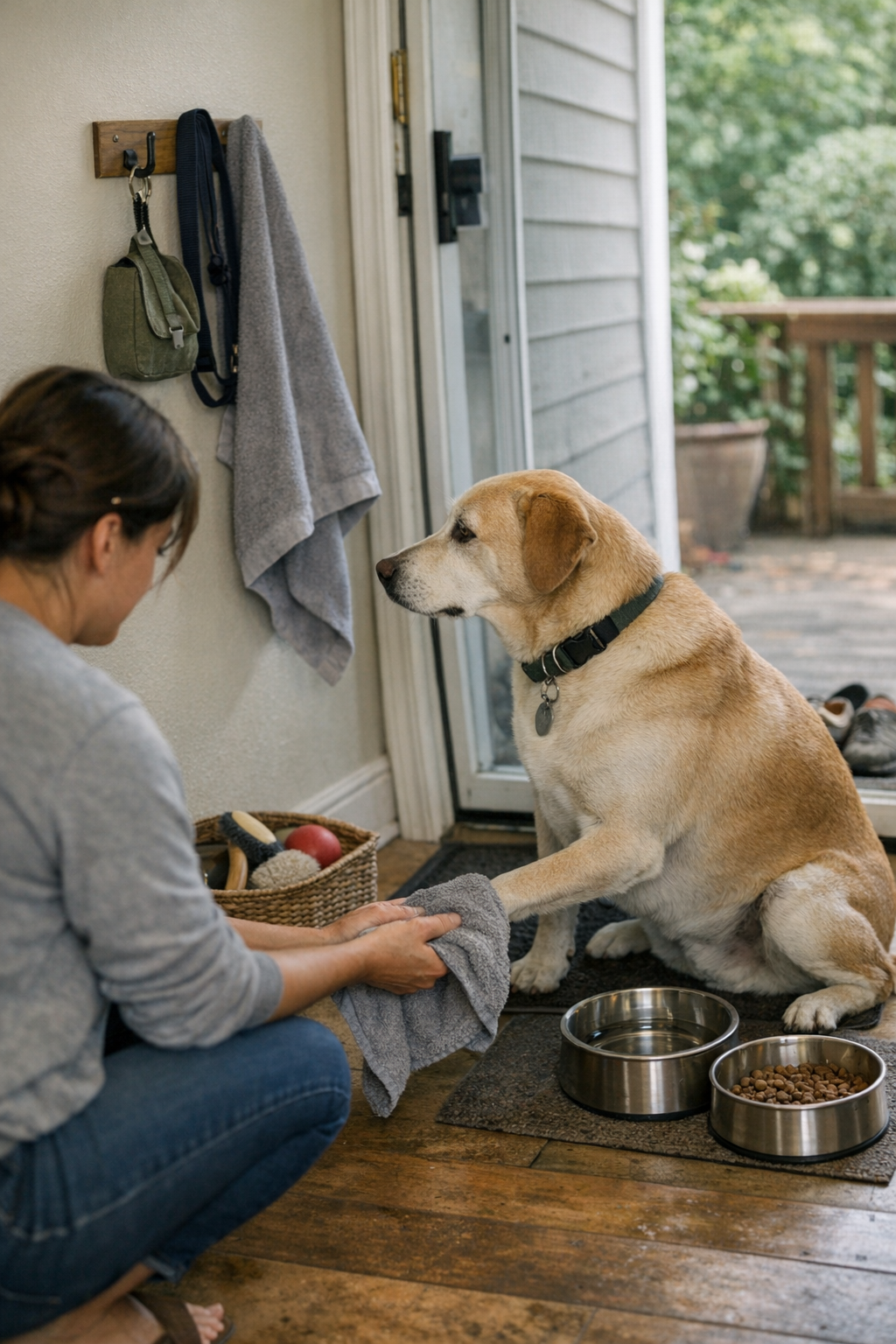
    The turning point almost always comes from placement, not aesthetics. Mount a towel hook exactly where paws meet floor—now the right towel is always there, not drifting or damp or doubled as a dish rag. Bowls stacked by the door, not a cabinet—suddenly water is easy to dump, wipe, and refill. The leash on a visible hook ends the scramble through jackets or the mail heap. These are not upgrades for neatness—they’re anchors for speed and endurance. Every micro-delay you cut is one more routine that stays on track, instead of collapsing into improv and mess.

    The Difference Between Tidy and Functional

    A pretty surface doesn’t hold up under rush or fatigue. Bowls out of the way do nothing if you have to walk across the room for the next meal. A grooming brush on a shelf means nothing if you skip a quick brush midday because you dread climbing for it. Supplies that blend into the décor often vanish when you need them most—turning a five-second task into another round of searching. Function means each tool actually supports your real routine, not just your sense of order.

    Scenes from Real-Life Routine

    Monday morning, your dog sits by the door—leash in hand, bowl still grimy from last night, cleaning spray hidden behind the coffeemaker. The towel is missing. After the walk, you’re left juggling a muddy towel, half-closed bins, leash, and an impatient dog—none of it resetting fast, even though it looked organized at the start. By midweek, it’s clearer: tools are never back in place, feeding means hunting for the scoop, the reset feels more like a daily rescue operation than a routine. The “ready” space is a memory by Friday.

    Habits That Hold Up—Not Just Look Good

    The real lasting fix is physical boundaries. Visible hooks for the leash and towel, a bin that always holds every brush, a canister for kibble right at arm’s reach—these are setups that stop the daily drift. Efficiency builds quietly: you reach for a towel and it’s always there, never ask where the leash went, refill without detouring around kitchen clutter. Each fraction of effort saved in the background means fewer interruptions, less tension, and a routine that doesn’t need constant rescue.

    Why Repeated-Use Resilience Matters

    Pet care setups fail or succeed in the grind of repeated daily use. Surface order fades fast under real pressure. Systems that give you what you need within reach—every time—shrink mess, slash delays, and keep the day moving. It’s not just less visible mess; it’s a routine that works even when your patience is thin and the clock is ticking. Your setup should deliver stability not just on the most organized day, but every rushed, mud-splattered, late-evening reset that dog and owner go through together.

    For more insight into practical daily pet care, visit CalmPetSupply.

  • Smart Car Organization Tips to Keep Your Interior Tidy Every Day

    A spotless car doesn’t stay functional for long if the setup fails under repeated use. Neat trays and tucked-in cables look fine at first, but by your third stop of the day, you’re back to untangling cords, fishing for chargers, and moving items around before you can even plug in your phone. The real issue reveals itself not as mess, but as those constant moments you’re knocked out of routine—just when you need your essentials, they’ve drifted, vanished, or gotten blocked again. That gap between order and actual use is where DriveWellSupply’s world of practical car gear begins.

    When Order Looks Right but Feels Off

    You re-enter your car after a routine store run. Visually, everything’s in place—the cupholder’s clear, the tray holds your phone and keys, and surfaces look managed. But reaching for your charger, the cable vanishes below the shifter—again. Your phone’s there, now wedged under a heavier item that slid during your last turn. You pop open the console to grab a wipe, but sunglasses and spare masks spill over and bury it deeper. “Organized” becomes another reset, forcing you to interrupt your flow and start hunting already.

    This is the trap: a car that passes the visual test can still fail in motion. Minor choices—where a cable’s routed, what bins catch overflow—compound into daily interruptions. Cords tangle near the pedals, organizers become new barriers, and every grab for an “essential” triggers another scramble or awkward reach. The friction isn’t loud; it just never really stops.

    The Real Cost of Repeat Interruptions

    Tossing everything into a central bin or making a catch-all pile feels efficient—until the first sharp braking sends gear off the seat or tips your organizer. Each lurch or turn scatters items, wedging chargers and devices into unreachable corners. That’s how you end up half-kneeling on the curb, arms under the seat, or pausing a drive to unclog a pedal from yet another loose cable. Every “easy” shortcut comes back as a slower start or another lost minute you didn’t plan for.

    Trunk organization isn’t immune. A box that holds everything tightly for a cleaning session becomes pure friction when you need space for groceries or need to swap in new bags on the fly. A setup that looks streamlined when everything’s planned collapses when real errands force change—suddenly, the organizer is the obstacle and not the solution.

    Telltale Signs Your Car Isn’t Set Up for Everyday Routines

    • Cables disappear or tangle, catching in seat tracks or under pedals when you reach for a charge mid-drive.
    • Chargers and phones slide away, ending up under seats or stuck in tight gaps just as you need a fast grab.
    • Everyday items get buried, hidden behind heavier gear that always settles on top during motion.
    • Shared bins overflow with random stuff, so phones, wipes, and keys collide and migrate out of order.
    • Trunk organizers stifle your flow, slowing down load-ins or blocking quick swaps when routines change unpredictably.

    Patterns start to emerge. That “just cleaned” look resets after every drive, as friction points reappear—forcing you to untangle, search, or reorganize nearly every time you return to your car. What passed for tidy yesterday is a new hassle today.

    Real World, Real Friction: The Difference Between Order and Flow

    How does your car setup stand up to repetition? The cracks show up after two commutes or a week of errands:

    • Key items are always one move out of reach, blocked, buried, or forced under something else—even though you “put them back” every time.
    • Accessing wipes or sanitizer is never seamless, so a quick spill or stop means a slow search instead of a quick swipe.
    • Cables sprawl across the floor, ending up underfoot, risking not just frustration but real damage or distraction.
    • Zones set up for sharing—center bins, seat pockets—turn chaotic, again mixing up your essentials and forcing a new round of sorting by day’s end.

    This isn’t about surface-level neatness. The actual difference is whether you reset your system after each use—or if you can move in and out of the car, grab what you need, and leave things intact without re-organizing after every drive.

    Building a Setup That Actually Holds Up

    The right turn happens when you stop organizing for show, and start structuring for reach and momentum. Real convenience means mapping the cabin to your habits—not just grabbing the nearest bin, but placing every high-use item where it’s reliably accessible even in tight parking or mid-errand rushes.

    • Dash-mounted phone holders cut neck strain and keep cables from dragging across controls—one reach, no drop, no tangle.
    • Clipped or routed cables stay clear of your feet, secured above floor level so neither seat movement nor shoes ever snag or loosen them.
    • Wipes sit in a dedicated, open pocket—never buried, so cleanup isn’t a chore, even while double-parked or parked curbside.
    • Routine-based gear splitting—keys, chargers, wipes, and documents assigned by access zone—prevents collisions and repeat reshuffles.

    Sorting by use, reach, and routine, instead of looks, turns “organization” into flow: fewer repeat resets, less last-minute searching, and a more predictable drive every time. Cleanup shifts from overhaul to fine-tune—no more full-tray dumps just to find what you need.

    Small Adjustments, Real Progress

    Car interiors don’t stay perfect, but a few deliberate fixes deliver outsized gains. Anchored cables, assigned gear zones, and one-grab holders for wipes or sanitizer slice through the daily return of “micro-messes.”

    Car organization isn’t about impressing yourself with a just-ordered look—it’s about cutting interruptions. You notice the difference not just after a deep clean, but after a week of real use: fewer clutter rebounds, no more lost minutes chasing cords, and a setup that keeps pace, not just appearances. In the end, small changes compound—until your organization works for you every day, instead of needing a rescue every other drive.

    Find practical, field-tested car organization solutions at DriveWellSupply.

  • How Divided Storage Ottomans Transform Your Living Room Routine

    Living room storage fails faster than anyone admits. Even a well-meant coffee table reset barely lasts: by week’s end, surfaces fill with drift—remotes, chargers, books, a tangle of small tech—while your “hidden” ottoman storage just hides a new kind of mess. The more you try to keep things under control, the more routines stall. The inside looks empty at first, but three days later you’re rooting through a soft pileup to find a missing charger or fishing for the TV remote under a heap of throws, wondering where your last cleanup actually went wrong. Almost every so-called solution—the ottoman with storage, the basket under the side table—makes the room look neat, but quietly restarts the cycle: hidden bulk for one night, surface clutter by morning.

    The Hidden Trap of Deep, Undivided Ottomans

    Most ottomans claim to offer “hidden storage,” but the reality is a deep, single chamber under a bulky lid. Drop in a blanket, shift a magazine, toss in chargers; close the lid with a sense of order. But repeated use shows the problem: items settle into layers, and every retrieval pulls everything else out of alignment. Remotes disappear below throws, glasses slip to corners, and even getting out a book for the night means digging through yesterday’s cleanup. By midweek, you stop opening the ottoman altogether—and start leaving key items out again, right back on the coffee table or in the nearest chair pocket. The storage hides the mess only until it slows you down enough that you abandon the system.

    Friction compounds with every attempt to reset. Play out one real evening’s routine: you need a charger for your phone. The heavy lid refuses to open quietly, or you’re forced to lean across someone’s legs to access the compartment. Pulling out a charger means three other things spill out, and reshuffling them back is annoying enough you skip it “just for tonight.” By the weekend, the ottoman is overstuffed, the lid sits slightly ajar, and the surface clutter is back. Real storage failure isn’t one big moment; it’s a dozen small abuses adding up until your living room becomes harder to use, not easier.

    When Storage Interrupts the Routine

    Most living rooms aren’t short on storage—they’re short on storage that actually matches real, daily use. Surfaces that stay clear do so because two friction points are handled:

    • Ease of access: Can you grab what you need instantly, or do you have to shift people’s feet, clear off the top, or move the piece entirely just to open it?
    • True category separation: Does each nightly-use item have a predictable, single-purpose spot, or is everything blended in a deep bin where you regularly reach twice or three times for the same thing?

    Without both, every storage solution eventually becomes just another obstacle. You waste time hunting for a remote that shifted under a blanket, you find your tech cord bound up with board game pieces, and, with every failed reset, motivation to “put things away” drops off. In tight living zones, every access problem magnifies: stepping around a lid, blocking a path, or slowing down family traffic as someone rummages through a pile.

    Divided Storage: Why Category Clarity Matters

    Switching to an ottoman or storage unit with divided, shallower compartments shifts the entire cycle. The difference is visible by midweek: instead of a bottomless pit, you get clear lanes—one compartment for throws, one for tech, one for books. The contrast is immediate when you’re in a hurry: the remote gets returned to its bay, chargers stop drifting, and throws don’t bury smaller objects. The reset process isn’t all-or-nothing. It becomes a set of two-second actions, not a fifteen-minute dig.

    Think about repeated, real retrieval: you want reading glasses right now, but you don’t want your hand tangling in toys or sliding under slippery throws. With category separation—a small bin, divider, or even a marked section—you find and return items without friction. Kids learn where the game controllers always go. Nightly use flows without the whole storage unit turning inside out. Return flow improves; fewer things get left out because putting them away takes no effort and does not require rebalancing the pile.

    The Real-World Test: One-Week Pattern

    Pay attention for seven days: every object that fails to return to its right spot signals a glitch in the system. If your coffee table keeps capturing the same remotes and notebooks, or if a key charger or pen migrates nightly, your storage isn’t matching the real routine. Divided, clearly marked compartments prevent “category drift.” Suddenly, the refresh process feels plausible—not a once-a-week ordeal, but something that holds up after two movie nights, three rushed mornings, and a game session with kids. Miss this, and clutter rebounds as soon as routines get even slightly off-track. The storage looks organized only when untouched and stops working once real life resumes.

    Floorspace, Movement, and the True Cost of Awkward Access

    Storage should clear space, not claim it. Yet, an ottoman or trunk that blocks a traffic path or demands heavy lifting slows everyone down. You notice this the third or fourth time you have to sidestep an open lid, or when you can’t slide the unit aside for vacuuming without moving half the living room. A clever floor plan alone isn’t enough—if your storage forces detours or creates “dead spots” where people stack overflow, you lose usable square footage. One flawed access point—lid too heavy, compartments too deep, awkward reach—multiplies over a week until resetting feels like a burden.

    Look for solutions that can shift with a foot, open with one hand, or allow fast access to divided compartments even with limited room. Especially in zones shared with others, the ability to access storage without rearranging the whole area is a daily gain—not just a design win. A living room that flows beats one that freezes up every night around a storage bottleneck.

    Absorbing “Everyday Overflow” Without Slowing Down

    No living room escapes overflow. But the true test for storage isn’t how much it can hold once; it’s whether each typical item—two throws, a couple books, multiple remotes, loose charging cases—can be dropped in and later fished out without creating a gantlet. Push the system past a practical limit or leave categories blended, and reset time stretches. For families, a single undivided space means kid toys, wrappers, remotes, and odd notebooks all pile together, breeding frustration by night three. When you fix the internal lines—even with cheap dividers or small bins—reset friction drops. The storage actually “holds the line” rather than just concealing one-night clutter that turns sour with actual use.

    A Few Small Tweaks That Make a Big Difference

    • Use removable bins or baskets inside deep ottomans to separate tech from textiles, or books from toys—even if your unit didn’t come with built-in divisions.
    • Line bottoms with grip mats or felt pads so small essentials don’t vanish beneath denser blankets or heavy books.
    • Discreetly label sections—especially in shared homes—so everyone can do their own quick reset without guesswork. Fewer questions, faster routines.

    Forget aiming for showroom perfection. The real goal is functional, friction-free resets: storage that matches how you actually use your space under pressure, night after night. A setup that works on day three, not just for staging a photo. Choose better lines, purposeful compartments, and simple tweaks—and you’ll see surface clutter stop rebounding, the reset turns into an afterthought, and your living room finally works for real people, not just a clean picture.

    If you want storage that works for your zone—not against it—find more options for divided, accessible indoor storage at Gridry.

  • How a Dedicated Mail Tray Transforms Entryway Clutter Management

    Paper rarely invades your entryway all at once—it seeps in, claim by claim, until walkways close and essentials vanish. One afternoon, a single envelope lands at the bench’s edge. Within days, flyers drift across the shoe row, bills wedge under bags, and forms scatter near the coats. The problem isn’t a minor eyesore—it’s blocked seating, drowned-out storage routines, and the frustration of hunting for paperwork that slid away the very moment you meant to act. If your entry setup seems organized on Sunday only to clog by midweek, it’s likely because mail and loose paper migrate further every time someone cuts through, drops off bags, or tosses a coat—setting off a slow-motion takeover that resets the whole point of your transition zone.

    How Fast Paper Drift Breaks Down Routines

    Setting today’s mail on the bench never feels disruptive—until you come back and find last week’s flyers layered beneath new arrivals and crushed beneath a laptop bag. Add one after-school backpack or a wet jacket tossed carelessly aside, and the ripple spreads: paper clings to shoes, piles creep into seating, and a single missed recycling pick-up turns small drop zones into congested no-man’s-lands. You thought you only needed to clear the surface once a week, but now every return triggers half-hearted shuffling, blocking both the walk path and the reset you keep planning to do.

    This isn’t just mess—it’s friction on repeat. Each threshold pass means a new interruption: shifting piles to find the bench, stepping around a glossy flyer while reaching for shoes, realizing your keys disappeared beneath a delivery insert. Entryways—especially narrow or high-traffic ones—suffer the quickest. Any surface without a true boundary is an open invitation for paper to sprawl and hide what matters, leaving you one forgotten envelope away from missing a bill or stepping on a soggy postcard where you expected clear space.

    Why a Defined Mail Tray Changes the Pattern

    A mail tray isn’t decorative—it’s triage for paper sprawl. The difference is sharp: when every envelope drops into a fixed, bounded tray in reach of your real landing zone, paper stays contained. In routines built on quick entries and faster exits, the tray turns a chaotic stream into a manageable stop. By day five, the absence of drift becomes obvious. Papers hang together, shoes stay accessible, and you no longer need to rescue mail that slipped off a slanted bench or hunt for appointment letters under a pile of grocery ads.

    The Subtle Threat of Improvised Order

    Benches, shelf corners, and ledges seem to corral mail at first. But mixed-use surfaces always lose to the crush of bags, wet coats, and daily exits. Even a neat row of envelopes unravels after a single heavy bag drop or a hurried grab-and-go. The bench meant for shoe-tying becomes an overflow tray. Within days, paper flares out—half under bags, half dissolving into unrelated piles—often at exactly the time nobody has energy for sorting. Improv containment never keeps up with actual traffic.

    Realistic Arrival Scenes

    Picture coming through the door with three envelopes, a grocery tote, and a muffled ringtone. There’s no pause to sort; the mail gets nudged onto the bench. By evening, someone lines up the shoes, only to find a flyer wedged into the middle pair. By week’s end, important documents have slid toward the mud trail or merged blindly into the recycling bag. Every arrival presses clutter further, each exit making the reset slower—and sitting down to clear it means unpiling layers that never meant to be together.

    Placement is Everything: Where the Tray Should Actually Go

    Function beats appearance, every single time. For the tray to break the drift, it must absorb paper at the natural drop point—where you drop keys, bags, or today’s sunglasses. Wall units placed behind the door or awkward shelf nooks just recruit more clutter; anything that forces you to bend past bike helmets, reach across shoe cubbies, or move a row of umbrellas won’t be used. The right spot is within arm’s reach of your main pass-through—a location you hit with your elbow or hip without thinking. When the tray lives where paper already tries to land, it finally wins the territory back.

    Why Decorative Containers Can Backfire

    Baskets and bowls promise to catch everything—so they do: pocket change, pens, lanyards, hair ties, and two weeks’ of receipts. Paper, meant to be visible and short-lived, gets buried in the mix, avoided until a deep clean turns into a dreaded, hour-long purge. A flat, clearly-bounded tray with sharp edges shouts a single rule: “Mail only.” It stops paper from getting sucked into the tide of everyday debris, keeping each sort quick and forward-moving—never lost to the jumble you meant to deal with “soon.”

    The Repeat Benefit: Resetting Without the Hassle

    What actually shifts? Not just less stuff, but less resistance to clearing it. Those minutes spent scraping up flyers from the boot path or sorting damp letters off the bench vanish. Instead, the tray turns “resetting” into a two-second sweep: a one-hand drop as you enter, a one-hand clear each week. Busy stretches don’t spiral into multi-step recoveries—access stays open, and routines don’t stall every time the mail is late or someone dumps their gym bag on the fly. The system serves your habits, not the other way around.

    How Often Should You Empty the Tray?

    Weekly works for most—unless you’re bombarded by mail. Don’t let the tray become long-term storage: once it’s full, that’s your cue to process or toss. Leaving overflow means the drift tries to escape again, sneaking back to anywhere that isn’t the tray. Reaching the reset while it’s easy—when you see paper start to stack—is the real preventative, not just for mess, but for momentum.

    Visible Difference: Controlled, Not Just Neat

    The tray’s job isn’t perfection—it’s daily containment. Mess happens, movement is constant; what matters is that shoes, bags, and gear can shuffle around while paper stays strictly boxed in. The fifteen-minute nightly shuffle collapses to a quick paper sort. Over weeks, you gain hours—plus a threshold zone that actually works for repeated in-and-out, not just for show. The clarity isn’t just visual; it’s felt by everyone pushing through, especially on the days when routines barely hold together.

    Seeing the Difference Over Time

    Setups fool you when they look tidy day one but fail by day five. The grind starts when groceries fill the floor, muddy boots edge into the path, and flyers try to join both. Over time, a bench or shelf without real boundaries can’t defend itself—a misplaced bag or a random flyer on a rushed Thursday, and the reset shatters. A well-placed, flat mail tray stays useful, because its role is obvious and easy to follow, even when arms are full, zones are tight, and the drift is relentless. It works with the pressure, not against it.

    A mail tray isn’t a miracle cure. It’s a quietly stubborn fix that matches how entryways are actually used: quick drop-offs, jumbled returns, constant incoming clutter. Habits and hardware finally team up, letting your threshold zone work with normal life—not just in theory, but in every repeated, everyday pass-through.

    betweenry.myshopify.com

  • How Pet Travel Bag Design Impacts Efficiency on Multi-Stop Journeys

    The travel bag that looks “sorted” in your living room can turn on you by the second or third rest stop. What started as neat compartments becomes an awkward scramble: wipes tangled under toys, a leash caught behind a snack pack, and cleanup supplies somehow always one move out of reach. The difference between feeling ready and actually moving smoothly—stop after stop—shows up fast, and nowhere is this friction more visible than when your bag’s structure meets the reality of repeated seat-side use. PawGoTravel designs for this moment, not just for the organized photo before the trip starts.

    When The First Reach Sets the Tone

    You hit your first stop. Before you even unclip your pet’s harness, you’re reaching—one hand on the leash, the other searching for a bowl or wipes. The system you set up at home already feels trickier: wrong pocket, mislayered items, something in the way every time. That split-second pause—where you’re nudging snacks aside to get at cleanup gear—sets the tone. With each return to the bag, the logic you planned gets harder to follow, and the contents start migrating after every stop.

    This isn’t dramatic friction. It’s the quieter drag of having to reset, re-zip, and re-layer, even when nothing looks visibly wrong—until nothing stays where you placed it in the first place.

    Organization That Breaks Down at Seat-Side

    The “everything in its place” feeling disappears fast beside the car or curb. Out here, layered compartments usually force awkward shuffling: wipes jammed under stuffed toys, water bottles edged deep behind a comfort blanket, nothing grabbing cleanly one-handed. What looked accessible at home breaks down as soon as the bag must flex between comfort on arrival and quick access during a messy pause. Each repetition—trying to grab just one thing—leads to more jumbling and slower resets, while your pet gets restless or tries to bolt.

    Why Surface Order Isn’t Enough

    Most bags survive a single stop. Start adding more—short detours, urgent bathroom breaks, snack waterups—and the “organized” structure unravels. Bowls nudge wipes out of position. Zipped pockets block fast cleanup. Owner and pet items compete for the same spot, forcing three moves for one result. Every quick grab for a cleanup pouch ends with two items unstacked and pet hair stuck to a stray charger. The more you try to work around it, the more the setup drags against the flow you need.

    Common Friction Points on the Road

    Blocked Cleanup Access

    Stacking comfort up front sounds smart—until you need wipes now and they’re under blankets and toys. Mid-mess, you’re digging with an impatient dog dancing at your feet, making a small spill into a full bag-reshuffle. The faster solution is blocked by well-intentioned layering.

    Overlapping Owner and Pet Items

    The all-in-one bag seems efficient. But after you stuff your wallet or keys into a side pouch, they pin down the single roll of cleanup bags or get tangled with treats. Each stop triggers a tiny gear shuffle, making even a short break drag out—momentum broken, your patience thinning, and your pet ramping up for a dash.

    The Repeated Reshuffle Dilemma

    By the third or fourth stop, even an “organized” bag becomes a puzzle. Side pockets pop open, interior items slide out of order, one-handed access stops working. Instead of a quick grab-and-go, you’re fighting with the zipper and pushing aside items just to close the bag— all while a thirsty dog circles or a cat meows for attention.

    The Price of Poor Access: Handling, Comfort, and Patience

    Poorly structured access means real handling cost. Every pause takes longer, your pet feels the tension, and quick cleanup turns into a juggling act. Your rhythm breaks; the pet’s mood shifts. By trip’s end, frustration builds—not just from wasted time, but from the steady interruption of what should be simple, easy pauses.

    The wrong setup makes each stop heavier, messier, and less calm for both pet and owner—especially on multi-stop days when the price is cumulative.

    Recognizing a Setup That Really Holds Up

    The bag that wins is not the one that looks the best at home, but the one that delivers quick access, reliable separation, and one-handed operation—again and again. Cleanup essentials belong in a reachable side pocket, not buried with food or blankets. Pet and owner zones shouldn’t overlap. For example, a dedicated zip side pouch for wipes or bags, and a separate main compartment for bowls and comfort, turns the stop-and-go rhythm smoother immediately:

    • Cleanup never requires shifting half the bag—just reach, grab, and go
    • Water stays accessible, not wedged under playthings
    • Resets are instant; organization survives more than one stop

    This isn’t cosmetic—it’s the structure holding up under real conditions. The payoff is less scrambling and more time moving, so each stop is a simple, brief interruption—not a reset marathon.

    Small Adjustments, Big Difference

    Separating fast-grab travel items from comfort and overflow changes everything in repeated use. Every stop flows more naturally: you go straight from car to curb, hand to wipe, leash to cleanup, without the cross-traffic of mixed-up gear. Comfort stays put for later, and owner essentials stop jamming pet access. That’s not about being “extra organized”—it’s the difference between routine hassle and effortless travel movement, even across a messy, multi-stop day.

    A bag that looks tidy counts for little if it doesn’t reset for real stops. What matters is how a setup works when you’re moving, reaching, cleaning—and restarting again and again, through every trip.

    Explore solutions designed for smoother trips at PawGoTravel.

  • Why Edge-to-Edge Lighting Transforms Under Cabinet and Shelf Use

    The quick win of “minimal” under-cabinet or shelf lighting always looks best in photos—until it starts sabotaging daily routines. The gap isn’t about brightness in the first hour, but about what fades or fails after real use kicks in. Shadowed edges creep into meal prep and cleanup; you slow down to find a label or brush crumbs out of blind corners. You reach and the shiny new fixture stays out of reach—light stuck in the middle, while your working edges stay just out of sight. Instead of solving friction, the setup creates small, persistent interruptions that repeat every time you work along the counter, shelf, or desk.

    How Shadowed Edges Become Daily Friction

    After only a few days, the missed spots start costing time. Under-cabinet or shelf lighting that stops short of the edges—or leaves the far wall in the dark—brings back old problems, just with neater lines:

    • Corners collect dust and crumbs because you simply can’t see what’s settled there, only what’s in the light.
    • Packets, measuring cups, or craft tools slide into shadow and disappear from view until you dig through a pile or move everything around.
    • Everyday motions—scooping flour, sorting folders, sweeping a work surface—feel jagged, not smooth, because half of the surface stays hidden.

    Visual discomfort is only part of it. Loose cables, flimsy mounts, or brackets that shift during cleaning break the illusion of a finished space. The routine stalls: you reach, adjust, glance for a control button or loose plug, then resume. Small hiccups add up, making a “clean look” begin to feel half-baked.

    The Problem with “Clean” Single Fixtures

    Clean lines invite the shortcut—just one slim bar or panel mounted for maximum stealth. It feels finished during install; functional problems surface later. Most single fixtures do not cover the full area actually in use: the front edge, the ends by the walls, the gap below a shelf where items actually move in and out.

    • If you mount too far back, the front zone stays in shadow. Items closest to you—cutting boards, stacks of mail, onions mid-chop—are always less visible.
    • Even a “strong” central light leaves darkness at the edges. Add more objects, more shadow creeps forward. Corners fill up with unlit clutter.
    • Minimal cable runs and flush mounts shift after real handling or cleaning. Power cords start slipping into view, switches end up behind canisters or under piles, breaking both the look and the workflow.

    This isn’t just a detail—week after week, the same interruptions keep breaking the pace of ordinary use.

    Scenes from Real Setups: When Edges Don’t Get Their Light

    Kitchen routines that reveal missed spots

    Supposedly “sleek” under-cabinet strips almost always leave shadows along the backsplash or counter edge. Strawberry tops and coffee grounds lurk in the unlit perimeter; you find yourself bending for a label, tilting jars, or brushing debris blind. Cleaning becomes guesswork—one quick swipe, then a second, just in case the darkness is hiding something sticky. The space seems sorted, but every prep runs up against a limit you can only feel, not fully see.

    The home office shelf where folders disappear

    With one tidy panel dead center, folders and cables banish themselves to the front lip or far side. A flash drive missing for days turns up wedged in the narrow shadow under a loose bracket. You stretch, guess, or scan with your hand—not because you’re disorganized, but because the lighting stays anchored to the “display zone” rather than the working zone.

    Laundry zones where shadows hide what matters

    Above the washer, under-shelf lighting might read as “bright” on install—and yet, try tracking down a detergent cap or cleaning wipe jammed against the back wall. The edge is always dim. Cleaning supplies hide in a shadow line even after straightening up. A cable, knocked loose in a hurry, sags into the field of view with the light itself barely reaching the places you actually grab and move things.

    Why Solid Support and Full Coverage Matter

    Good lighting depends on more than just fixture design: it’s the support and reach that shape every use. One fixture with a loose bracket can create as many hazards, irritations, and “where’s the cable go now?” moments as leaving a space unlit. Lasting improvement means setups designed for how the space is actually used, not just photographed:

    • Brackets and clips that grip through cleaning, stacking, and accidental bumps—so alignment survives more than the first install.
    • Cable management that locks in place, preventing cords from working their way into sight or getting tangled across your workspace.
    • Fixtures that extend to active edges—even if you need two short lights at each end rather than one continuous strip with dead zones.

    These tweaks might seem like extra effort up front, but over time, they end up saving more energy than they cost. When the support pieces survive real movement, and coverage reaches the working edge, you stop noticing the lighting—which is the point. The space finally works without compensations or detours.

    Small Adjustments, Big Improvements: A Simple Example

    One shared kitchen counter, haunted by dim edges under a single slim strip, changed immediately with two tight-run fixtures at the ends—plus a few nearly invisible cord clips pinning wires flat and out of sight. Suddenly:

    • Every corner caught the light. Cleaning was quick and certain, not tentative.
    • Labels, tools, and stray food didn’t vanish into gloom—every position was visible without extra reaching.
    • No cord betrayed the setup or distracted your vision, because nothing drifted out of place after the third wipe-down.

    More than just “brighter,” the upgrade erased all the usual ways a neat setup gets less useful with time. The surface wasn’t just organized—it stayed that way in use.

    Tips for Stronger, Edge-to-Edge Light

    • Test beyond the first-day install. After setup, use the surface normally for a few days. Are you adjusting your habits to chase usable light, or does every inch stay visible?
    • Support matters as much as aesthetics. Use brackets and clips made for tight, repeated handling. If anything wobbles or the cord drifts forward, adjust or lock it down again.
    • Add or move fixtures without apology. If an edge stays dim, bring in a second small light or shift the main one. Actual use beats abstract minimalism—light what you need, not just what looks cleanest from a distance.

    If your under-cabinet or shelf light looks finished but keeps slowing you down, check the far edges, see where cables have started to slide, and watch how the beam really behaves when in motion. Good lighting—matched by solid mounting—doesn’t just solve appearance. It removes the friction that keeps pace with your routine.

    For practical indoor lighting, mounting, cable management, and support setups that help every inch of your space stay usable, see what’s available at LightSupport.

  • How Anchored Cables Can Transform Your Workstation Focus and Flow

    The hardest part of keeping a workstation usable isn’t chaos—it’s the slow grind of tiny interruptions that slip in after the desk looks “clean.” That charger you just organized? By midweek it’s vanished behind a drawer unit, the cord now dragging beneath the desk where your feet catch it. Cables loop around monitor posts, get wedged behind under-desk storage, or snake just out of reach—all while the surface still passes for tidy. What looks organized for five minutes rarely survives a normal cycle of device changes, note-taking, or shifting between screens. The desk ends up visually clear but operationally crowded, and the friction creeps in fast.

    When a Tidy Desk Still Interrupts—What’s Really Happening?

    Most people have lived the frustration: you spend twenty minutes taming cables, slotting them into a box or lining them precisely behind a monitor. The arrangement might survive a single deep work session, but two days later you find yourself reaching for a charger—only to discover it’s slipped out of sight, tangled behind a drawer, or glued to something else by static. The surface can look spotless and still make every cable grab a test of patience. Attempting to write beside the keyboard? Suddenly a cord blocks your elbow, or you’re pushing aside a pen for the hundredth time.

    Visual order doesn’t guarantee workflow ease. Every detour—yanking a cable clear to plug in, kneeling to hunt for a charger tip, nudging a wire away to jot a note—is a drain you feel by week’s end. The cumulative friction slows resets, interrupts momentum, and makes an “organized” setup feel like an obstacle course built out of its own accessories.

    The Real Impact of Drifting Cables on Routine Work

    Distraction at the desk doesn’t start with clutter; it comes from repetition. Plug your phone in and realize, again, the cable dropped between the under-desk unit and the wall. Shift your laptop to make room for a sketchbook and nudge a charging cord behind storage—now you’re tracing its path with your hand, hoping to grab the end before you unplug something else by mistake. It’s not chaos, just an endless, low-level scramble that erodes focus in small bursts.

    This treadmill only speeds up in multi-device work zones—where laptops, tablets, or extra monitors rotate in, cables pile up, and little interruptions multiply. The desk is never more organized than it is before real work starts; once you begin switching modes, that cable-free promise dissolves, and every “reset” feels less effective than the last.

    Why Most Cable Solutions Don’t Fully Solve the Problem

    Most cable management tactics aim for invisibility—boxes, wraps, zip ties tucked under the desk. These look sharp, but break down fast when access is routine. Need to unplug your laptop? Now you’re fishing through a knot of wires behind a storage tray or cracking open a cable box for the charger you use twice a day. Tie-downs and Velcro start to restrict device movement just when you want flexibility. The neat surface hides the real friction: every reset slows down, and every new device means undoing yesterday’s “solution.”

    Real relief follows the movement path, not just the line of sight. Under-desk trays and adhesive clips anchored near the reach zone, not hidden at the rear, change the routine. Suddenly, the charger stays put at the desk edge—always ready for a grab, even after you shift your chair or nudge a monitor arm. It means a cable might be a bit more visible, but your workflow stops stalling each time you plug in or switch tools. The trade-off is clear: less invisible “order,” far more usable speed and focus.

    Small Changes, Noticeable Results: Testing a Real-World Fix

    There’s a reason quick adhesive anchor fixes spread among repeat desk users: they work precisely because they are simple. After a week of chasing cables beneath under-desk storage and bouncing chargers behind a monitor riser, sticking a cable clip at the front right edge—a foot in from the corner—made all the difference. Now, the cord sits ready but out of the writing path, flexes as the laptop or phone move, and never disappears behind the drawer. No overhaul, no new furniture—just one less thing to fix after every break.

    Seven days later, the effect is obvious: transitions are quicker, the old “cable search” is gone, and the reset feels less like a chore. The desk isn’t showroom-pristine, but it avoids that subtle creep of chaos—the kind that makes you sigh and reach under the desk five times a day. The proof comes in the speed of returning to work, not the look of a cleared-off surface.

    Everyday User Moments Where Cable Control Pays Off

    Switching Modes on a Compact Desk

    On shallow desks, even a single stray cable can cut usable space. With limited depth, it’s common for a loose cord to block a notebook or catch the keyboard mid-drag. Anchors at the real grab point—not stashed behind storage—make the path to your working area straight and clean, especially if you’re cycling between laptop, notes, and sketchpad.

    Moving from Sitting to Perch or Standing

    Switching between chairs or shifting to a perch stool means rolling or shifting under the desk; that’s when excess cable or forgotten slack loops around a leg, trips a wheel, or tangles in a footrest. Edge routing and leg-space anchoring keep the area safe and reset-friendly, preventing accidental device yanks and making transitions between postures much smoother.

    Resetting After a Break

    Returning from a break should be simple, but a loose cable or bunched wire means you start by hunting for the right charger, shoving aside a tangle, and maybe craning under the desk to get moving. Routine cable anchors eliminate that reset stumbling block. Instead of starting every work block with a search, you’re plugging in and getting to work in seconds.

    FAQ: Practical Cable Solutions in Real-Use Scenarios

    How do I keep charging cables from falling behind my desk?

    Use adhesive clips or edge anchors right at your hand’s natural reach. Place them along the working edge—away from where your arms sweep but close enough for repeated grabs. This stops cables from drifting and cuts out the under-desk hunt completely.

    Are cable trays better than boxes for constant device swapping?

    When you plug and unplug through the day, open trays or flexible clips beat closed boxes. Boxes hide the mess, but slow down every access—especially if you work with rotating gear or mixed-use surfaces. The more your setup changes, the more critical it is to keep cables ready at hand, not tucked out of sight.

    Does cable management really boost focus?

    The change isn’t a one-time leap—it’s steady prevention. Each cable left dangling or lost to clutter breaks your working flow by just a few seconds. Remove those disruptions, and your day holds more momentum—especially across tasks that demand fast device or document switches.

    What Actually Matters—Not Just Order, But Usability

    Desk friction hides in the little things: a cable slipping just out of reach, a hand scraping along a surface searching, a three-second delay that adds up over dozens of resets. Major overhauls aren’t always necessary. Even a small tweak—anchored cables where your hands expect them—reshapes the entire rhythm of your workday. The difference is visible: less reset friction, fewer accidental snags, and a desk that’s ready for what you actually do, not just what looks good when you leave the room.

    The most organized workstation is the one that works under pressure and repetition—not the one that hides everything away. True cable control keeps the space practical and responsive to real desk cycles. It’s less about impressing with order, and more about making daily transitions smooth and dependable.

    Explore the full WorkBasic collection

  • How Clear Outdoor Walkways Improve Movement and Reduce Clutter

    If every step outside means skimming past a rake or dodging dropped bags, the issue isn’t your gear—it’s a storage setup built for looks, not for the chaos of real outdoor routines. The narrow run beside your house or that side-yard squeeze might look organized after a weekend reset, but it takes just two days of actual use for things to pile up. A kid’s stray soccer ball, a still-damp garden glove, a bucket meant to be put back “later”—one by one, escapees crowd in. Suddenly, your only throughway demands a shuffle, a sidestep, or a flat-out obstacle course sprint just to reach the gate.

    When Your Route Turns Against You

    The gap between what looks organized and what stays usable under pressure becomes obvious fast. Sliding bins and racks up to the very edge of the walkway feels efficient—until you’re forced to tiptoe past a shovel jutting out or squeeze around a “temporarily” parked bag of mulch. Every off-schedule return chips away at that neatness, and before you know it, the main passage is always one dropped item away from blocked. Storage you can’t truly access, and pathways you can’t truly use, add up to one thing: you’re running a reset loop every time you need to get by.

    The Real Toll of Tight Quarters

    After a rainy weekend, what started as a clean walk zone has shrunk to a shoulder-width slot. Even simple tasks grow complicated. Carrying out the recycling means shifting a bin with your knee, bumping into a crooked rake handle, picking up gloves that have fallen (again) onto the path. Side-yards and fence-line trails morphed into holding pens slow down everyone—suddenly, what used to be five seconds out the back is a whole mini reorganizing session just to keep moving forward.

    Overflow Doesn’t Ask Permission

    What breaks most outdoor setups isn’t mess, but overflow— the sneaky, accumulating stuff that arrives with good intentions and never leaves. That one-time hedge trim? It launches a string of gloves, clippers, and twine abandoned at the path’s edge. The weekend project with extra bags? Now there’s a half-filled planter and a stack of pots edging their way onto valuable floor space. Very little of this comes from “too much stuff”—it’s the slow strangling effect when there’s no margin or buffer for returns out of sync with your tidy-up rhythm.

    It shows up with bins too close to the route, wall racks stretching into walking space, or corners that seem designed to attract overflow. The first item sits. Then another gets balanced on top. By next week, dead space is back, and the “organized” plan didn’t hold up to even basic weekend use.

    How Normal Routines Break Things Down

    Picture real Saturday-to-Monday life: you finish gardening, and the tools land by the gate “just for now.” The main storage box is stuffed, so a bag of mulch gets wedged against the fence. Two days later, the whole row’s a lineup of late returns that nobody wants to tackle. Morning routines now mean steering around clusters, moving something just to get the trash bin through—or worse, leaving the clutter because running late trumps tidiness.

    Organize So You Can Keep Moving

    The setups that actually work are shaped for movement, not just for stacking stuff. That means resisting the urge to fill every inch. Leaving a passage—even just a few extra inches—does more for daily life than adding another bin up against the edge. One real-world fix: pushing a storage crate flat to the far fence instead of half-blocking the walkway opened enough space to roll a wheelbarrow and haul yard waste without scraping knuckles or rerouting around stray returns. You barely notice—until a chaotic week goes by and the main path is still a path, not a barricade.

    Real-World Rule: Guard 20–24 Inches of Open Route

    In side-yards, patio edges, and narrow backyard passes, protecting a genuine 20–24-inch-wide stretch, start to finish, is the difference between flow and friction. Squeeze it tighter and backup is guaranteed—return anything off-schedule, and old piles reappear. A functional open space cushions you from the burst of gear, extra garden scraps, or post-party clutter. Give the route enough breathing room, and the reset job shrinks instead of snowballing.

    Too Much Visibility, Too Little Access

    Wall storage seems clever, until the wall hooks fill up and the overflow creeps back onto your main route. The handy rack for tools? It invites more last-minute returns, then another bag, then a stack of buckets, all bleeding into your walking lane. Out-of-sight storage has its own problems: if it’s tucked too far away, nobody actually uses it for fast drop-offs—new piles simply form in the spot that’s easiest to reach. The real friction isn’t just mess, it’s a mismatch between where things actually land and where the setup expects them to go.

    The zone that sits ready for resets is never the one that collects clutter. Storage has to match the busy, lived-in version of your space, not the one right after cleaning. Pathways need to stay routes, not overflow landing pads.

    Testing If Your Setup Holds Up

    Here’s where you know: does your main route stay passable at the end of a real week, or does it need a rescue every time? A use-proof arrangement lets you fetch the shovel, grab a ball, or haul out bulky bags without first shifting piles or clearing a gauntlet. When your walking route holds open through rushes, lazy days, and busy stretches, you’ve made the difference between organized-for-appearances and organized-for-use.

    Set up for movement first. Leave space for the routine to get messy without breaking down. When next week’s returns hit, you’ll nudge something once—not reset everything—because the real path still works. That’s the difference between storing outside and actually living with outdoor storage.

    Visit TidyYard for practical outdoor storage solutions.

  • Creating a Calm Morning Routine for Indoor Cats with Smart Feeding Setup

    Nothing exposes the cracks in an indoor cat’s feeding setup like using it day after day. That corner looks clean at 7 a.m.—bowls lined up, mat uncurled, water topped off—but that surface order unravels fast. By the end of the first week, the truth arrives quietly: you’re nudging the bowl out of your morning path for the third time, straightening a mat you “fixed” yesterday, or following a gritty trail of kibble past the threshold. The problem isn’t disaster—it’s a setup that turns one quick task into five small, invisible chores. You’re not dealing with chaos, but you are picking up the pieces in the background, and the pattern is hard to escape. This is the StillWhisker world: not a catalog of cat decor, but the daily pressure test for where setups genuinely fail or quietly hold up.

    Where Feeding Setups Go Wrong—Even After Careful Planning

    Most cat owners start with a simple fix: bowls and a mat in a quiet-looking corner. For two days, it works. Then the commute from fridge to coffee pot becomes a sidestep routine because a bowl is against your ankle or the mat creeps under the cabinet door. Maybe that “no-slip” mat turns out to slip anyway, or the bowls sit just close enough to the fridge that bumping them is nearly guaranteed during any refill. The logic felt solid, but the lived-in routine exposes every small miss.

    As the days go on, what started as “tucked out of the way” turns into one more obstacle in the household race. Morning means: skip a puddle, correct the bowl angle, pause for stray kibble, and listen as your cat waits impatiently for the setup to return to working order. Every step is a quiet feedback loop you didn’t sign up for.

    The Small Signals That Routine Isn’t as Smooth as It Seems

    Spot these in your own mornings?

    • Refilling the bowl requires smoothing out a mat edge that buckles under the bowl or your hand—nearly every time.
    • The water dish appears in place until droplets show up where your sock lands on first pass.
    • Your cat vocalizes, not because of an empty bowl, but as if to say, “this station still isn’t ready.”
    • Kibble escapes to the hallway—a narrow, visible stream—despite your quick after-breakfast sweep.
    • Even a so-called quick tidy-up means you’re realigning the setup instead of just cleaning.

    This is not a problem of laziness or neglect—it’s a mostly-organized area that never crosses into truly usable. Each “minor” fix tugs at your routine with new, hard-to-ignore friction.

    Repeated Friction Sets In—And Keeps Returning

    The pattern isn’t stopped by a single improvement. It’s what happens when you think you’ve solved the issue—only to spot the mat sliding again, or realize moving everything closer to the wall makes cleanup more cramped. Every adjustment triggers its own compromise. The real line appears after several cycles—not in a dramatic mess, but in steady, quiet demand for correction.

    The crucial difference: some setups invite new work, while others get out of your way. Over time, the better arrangement doesn’t need daily rescue; the weaker one piles up micro-corrections, stretching a one-minute process into a sluggish, sidestep-heavy hassle. You don’t notice it in the first hour, but by day seven, it’s shaping how you move.

    When “Calm” Feels Like More Work Than Cleanup

    Chasing a tidy look often backfires. You end up compensating:

    • Dragging a dish from under a cabinet, then guessing how it should “sit right” for the next meal.
    • Sweeping up crumb trails that keep extending past the linoleum onto shared carpet areas.
    • Flattening a mat that rebounds after every touch, turning small spills into wipe-first, reset-later rhythms.
    • Your cat waits, watching for the moment the area stops shifting and actually opens for breakfast.

    The pain point isn’t mess—it’s friction and the pressure to intervene over and over. A feeding area that only looks calm teaches your household a reality of short-term fixes, not reliable routine.

    Better Structure Means Fewer Hidden Corrections

    A feeding or water corner that stays functional isn’t just “organized”—it works with you. Key factors:

    • Pick a genuinely quiet location, not just a visually hidden one, so daily traffic (both yours and your cat’s) doesn’t collide with the setup.
    • Choose mats with real grip or enough weight to stay put after a paw scrapes or a spill—not just matching the floor for aesthetics.
    • Place bowls where you never have to squeeze past cabinet doors, stand on one foot to reach, or backtrack when cleaning up. Refill should never involve obstacle negotiation.

    The mark of real improvement: by week two, intervention is rare. The setup needs less, not more, of your attention. Practical changes appear across daily details:

    • Calmer cats—because the area is always “ready,” not mid-reset or on pause for a fix.
    • No more crumbs or water tracks bleeding into main traffic areas.
    • The mat and bowls don’t roam, so you stop spending mornings setting things straight.

    Scene: Breakfast in Three Movements—With and Without Friction

    Mornings with friction: You enter, immediately angle your path: the mat has drifted again and must be reset before you can even start. As you refill, two kibbles scatter away—one toward the fridge, one under the counter. Reset, again. Overnight, the water bowl has slid into the walkway; now you’re pushing it back and mopping up a thin splash with a napkin you have to fetch from the next room. Your cat circles, waiting for the routine to finally work.

    With a setup that holds: The bowl remains in place, dead-center in a clear zone. The mat’s edges stay pressed to the floor, not curled, not creeping past its boundary. There’s no waiting—refill is direct, cleanup is just that, and nothing requires shuffling or do-over. Your cat settles in; you move on.

    Why Visible Doesn’t Always Mean Messy

    Concealing the feeding area behind a door or squeezing it beside the utility bins might spare your décor, but function usually suffers. Hidden spots become the new hassle:

    • Every closed door creates one more step or prompt for your cat to scratch or stall.
    • “Out of the way” rarely matches how your household actually moves—you or your cat end up blocked at the worst time.
    • Reaching past brooms, boxes, or storage just to refill water turns a two-second job into a repeat delay.

    Contrary to instinct, a clearly visible—but structurally smart—feeding zone saves you work. You instantly spot escaped food bits, can wipe or adjust in real time, and miss the slow buildup of hidden messes that attack the area after days out of sight. Reliable setups aren’t invisible—they’re stable, easy to check, and impossible to miss when maintenance is needed.

    Placement Details That Save Time—Or Add Work

    Accessories matter less than placement and structure. Inches count:

    • Moving the station even six inches out of the primary footpath can end daily bump-and-reset routines.
    • Give a tiny buffer between bowls and swinging cabinet doors; a one-inch gap can stop weekly spills and creeping mat curl.
    • Pick mats that don’t twist or rise after contact. Soft-edged mats may blend visually, but turn maintenance into two-step jobs—straighten, then clean—every time.

    The proof that it works: Your setup stays still. Location needs one correction, not constant nudging. No mystery kibble in the hallway, no unexpected puddles at the coffee machine, and your cat simply waits to eat instead of waiting for a fix.

    The Ripple Effect: How Setup Friction Spills Into the Whole Day

    Setup friction does not end at the feeding zone. Crumbs migrate to living room rugs; displaced bowls mean morning detours and stray puddles mean more frequent sock changes. Even tiny delays add up: when cleaning spray is one cabinet away, or towels are out of reach, you delay wiping up until stickiness sets in. Toy scatter and feeding mess can intersect, compounding the clutter. The setup that “contains” the mess often just displaces the problem—making every reset slower than it should be.

    How Changes Actually Show Up in Daily Life

    After adjusting feeding and watering

    Find more practical structure ideas at StillWhisker

  • Why Visible-Only Storage Systems Fail Over Time and How to Fix Them

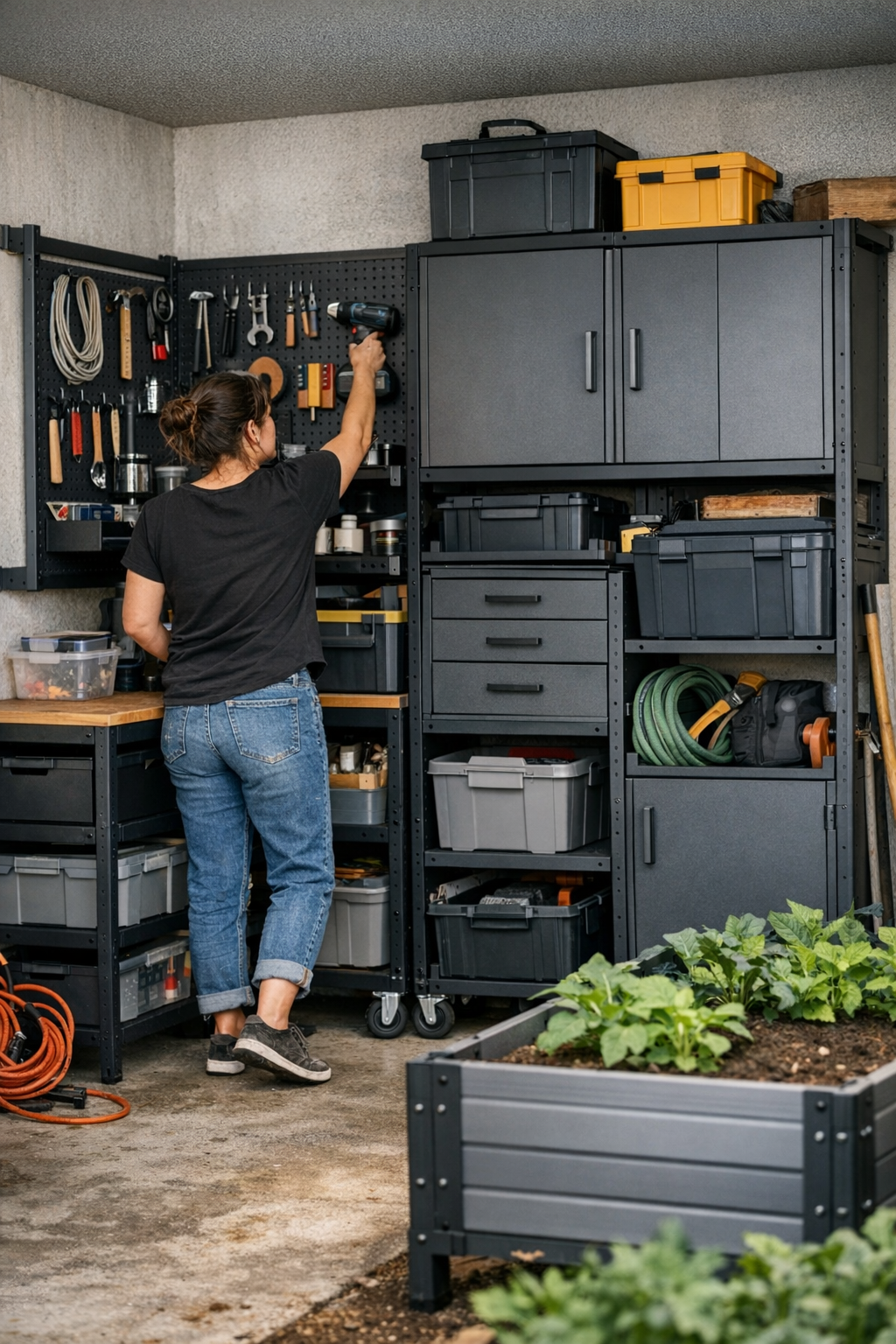
    Visible storage looks like the answer: Line the walls with hooks and shelves until every tool, accessory, and fastener sits in plain sight. On day one, it feels like rocket fuel for productivity—no more searching, no more forgotten gear, just quick grabs and fast starts. The space “looks” ready: racks are full, every slot has a resident, and you can actually see what’s missing at a glance.

    The Creep of Clutter No One Plans For

    But after the first round of real work, the shine fades. The logic of “keep it all visible” gets jammed up by the routines of a real garage or workshop. Projects drift from one weekend to the next; gear moves but doesn’t quite return; and the glimmer of quick efficiency is replaced by a cycle of subtle, daily friction.

    Paths shrink, steps double. Bins and buckets land on the floor “for now” and stay there. That open rack you added for convenience wedges against a cabinet, so now every time you swing the door, you have to nudge the rack out of the way—or, worse, just accept bruised knuckles. A hose loops where your foot wants to go. A cart you thought you could roll around for flexibility ends up stuck as a semi-permanent obstacle, blocking an easy path to your workbench. The more you try to keep everything out in the open, the more you’re forced to maneuver, adjust, and sidestep just to do simple tasks.

    When Clarity Becomes Chaos

    Visibility promises order, but real use guarantees overlap. Tools in heavy rotation migrate to the front of hooks, stacking in front of the gear you only use monthly. What started as a simple row—one tool per hook—becomes a tangle of screwdrivers, pliers, the odd extension cord, and something borrowed that never found its spot. Overflow boxes supposedly in “temporary” exile dig in right where movement matters most—at the edge of the shelf, underfoot by the entry, or in the last bit of open floor.

    Each grab turns awkward: reaching for a drill means moving two other items, or stretching behind a garden trimmer just to snag the only tape measure. Bags of fertilizer take over the floor next to the mower, while your planter supplies squat in whatever corner remains. The wall’s no longer a launchpad—it’s a shifting sea where seeing everything means nothing is actually easy to reach without a mini reshuffle.

    Overflow Corners and Ever-Expanding Dead Zones

    The mess isn’t just visual—it’s functional. Those empty shelf ends take in all the returns that never quite make it home. A bin you swore you’d empty “right after the project” becomes a semi-permanent junk drawer on the floor. Instead of dropping a tool back in its slot, you end up hunting for open space, dodging stacked containers as you work.

    Give it a couple of weekends and it’s obvious: a packed pegboard just means your everyday driver gets buried behind tools you only use twice a year, and stashing a box under the table puts it right in the way of wherever you need to stand. The promise of flexibility is so often undercut by small obstacles—resetting takes twice as long, and the space that should make every job easier instead throws up fresh barriers to getting started.

    The Real Price of Blocked Flow

    Movement is always the first sacrifice of “see it all” storage. Walk in with your hands full and you’re immediately stopped by yesterday’s stack of bins—or a cart that started mobile and ended up a squat, heavy checkpoint. You put these aside just to make a path, but eventually every trip means shifting the same stuff again and again. Handles from wall racks catch doors; corners become dead zones you circle around but never use.

    This isn’t a rare mess; it’s the default when visibility trumps actual workflow. Modular wall units fill every available edge, but leave nowhere reliable to return a spare box or project caddy. Each “put-away” starts to feel like a puzzle: do you pile it onto the stack, start a new catch-all, or just wedge it in wherever there’s an inch to spare? The zone sprawls—until nearly every job starts with a clean-up instead of actual work. Built-in flexibility ends up being a myth: your setup holds more, but supports less.

    Pushing Back: What Balance Actually Looks Like

    The real fix comes when you decide not everything has to be visible. After enough cycles of shuffling equipment, you realize only your true dailies deserve prime wall space. That old box of specialty fasteners? It goes in a labeled bin on a low shelf, out of your way. The trimmer that’s hardly touched this month migrates behind the cabinet door, not at hip height on the main rack. You’re not hiding things—you’re picking what actually earns easy reach, so fast access gear isn’t blocked by once-a-year tools or accidental piles.

    Sometimes a minor shift rewrites your entire reset routine. Drop a crowded shelf down one notch: now screws, gloves, and most-used micro-tools live at a natural, see-and-grab height. Overflow—batteries, specialty bits, out-of-season gloves—shift higher or lower, freeing the middle for the moves you make most. Suddenly, you’re not guessing where anything belongs or clawing through overflow to put things back. Your floor stays mostly clear, and dead zones shrink instead of multiplying.

    Real Habits That Actually Help

    • Cull or rotate gear each cycle: After every major project, take a few minutes to scan what you’re really using. If something’s been untouched for weeks, it doesn’t need prime wall space—it belongs off to the side or out of sight.
    • Adjust shelves so your daily tools aren’t buried: One notch, up or down, can change your whole flow. Give breathing room to the supplies that get grabbed over and over, not the gear that just adds weight to the system.
    • Leave open slots for returns—not just display. When a wall or rack is overfull, that’s a red flag. Don’t cram extras in—shift out the lesser-used, and let essentials breathe. Let cabinets or totes do the work of holding overflow, so only the best-used pieces fill your line of sight.

    Spaces That Actually Support Your Routine

    The shift is subtle, but unmistakable. Instead of tripping through the same tangled path, you’re clearing projects without a reset each time. Wall storage stops being a visual checklist and starts acting as real workflow support: permanent residents—your go-to hand tools—are always ready, while less frequent items stay tucked out of your way until you need them. The floor is for your feet, not for overflow.

    You feel the payoff every time you walk out: returns are easy, resets are barely a thought, and storage works with your habits instead of slowing you down. The space no longer punishes you for getting busy—it flexes, adapts, and holds its organization even through hectic weekends. Your shop doesn’t just look more usable; it actually is.

    See practical storage setups and find modular options that support real use at StackNest.