Blog

  • Maximizing Living Room Order with Footrest Storage Ottomans

    The living room tells on your storage setup every evening: remotes wedge themselves beneath couch cushions, phone chargers snake across the coffee table, and by tomorrow morning, whatever didn’t get put back will be lost, buried, or tripped over. A footrest ottoman with storage promises instant calm and hidden relief—until you’re actually living with it. The contrast is sharp: a room that looks reset from the outside, but inside, every grab for a remote or charger turns into a hunt through cables, wrappers, and things you forgot you even put there. The difference between a neat surface and a truly usable room comes down to what happens beneath the lid, night after night.

    Hidden Storage: Calm on the Outside, Chaos Beneath the Lid

    Storage ottomans sell the dream of clean surfaces, open walkways, and a clutter-free living zone. But real use exposes the flaw: without inner structure—just one big compartment—each reset only piles up what was already buried. End-of-day routines become slow-motion reruns. You lift the lid looking for a controller and end up sifting past tangled chargers and last night’s mail. The mess disappears, but next time you reach for something, the “hidden” system means digging, shuffling, and untangling rather than a quick grab-and-go reset.

    Beneath most ottoman lids, the first week feels smooth—everything slides in, nothing visible. But by the third or fourth reset, the system is slowing down: remotes drift under a drift of cords, headphones tangle into yesterday’s receipts, items crowd corners you forgot existed. The more general-purpose the space, the faster it turns against you, quietly turning every return or retrieval into a minor project.

    Repeated-Use Friction: Convenience Degrades Quickly

    The real test is repeat use—especially in shared or high-traffic spaces. Consider just one ordinary weeknight routine:

    • You go for the remote. It’s there—today. Tomorrow, after it’s tossed back with a pile of chargers, wrappers, and stray game pieces, someone else needs to dig past everything to find it again.
    • Chargers unravel in a rush to tidy; by midweek, they’ve lassoed headphones into an uncooperative ball under last night’s empty snack plate.
    • The ottoman itself becomes blocked—the lid’s covered by a stack of magazines or an off-duty tray, so “easy storage” now starts with moving things just to access anything inside.

    Every micro-delay adds friction: what was once “open, grab, resume movie,” turns into “open, assess pile, shuffle aside, untangle, hunt, close.” The room still presents as organized, but each reset costs a few extra minutes and a little more patience, night after night.

    Internal Order: Why Structure Inside the Ottoman Matters

    The difference between an ottoman that helps and one that frustrates comes down to internal organization. One open compartment invites category drift—remotes bury themselves, headphones vanish, papers and wrappers migrate until finding anything requires a small sort every time. There’s no visible system, so no memory-cues for what you keep inside or where anything goes.

    Add simple dividers, dedicated bins, or small trays—now there’s a spot for each category, and routines change. Remotes go back in their one slot, charging cables coil in their section, controllers or notebooks each get a defined home. The result is visible on first open: resets snap back into place, nothing hides for long, and a missing item gets noticed before it’s lost for days. Perfection isn’t expected—rough days still happen—but if the structure forces just a little order, nightly frustration drops sharply. With one small change, time spent searching shrinks, and the temptation to just leave things out goes down.

    Overcrowding: When Storage Backfires

    The urge to store “just one more thing” is strong, but it’s the fastest way to sabotage an ottoman’s usefulness. Each paper, spare battery, coaster, or leftover device that doesn’t belong makes the inside messier and resets longer. Before long, the hidden pile is as much a nuisance as visible clutter—just one you have to look at up close, bent over, and running late. Storage that collects overflow you’re unwilling to sort becomes storage no one wants to use, and every retrieval pushes more items to the edges, untracked and unclaimed.

    Practical relief means enforcing boundaries: restrict the ottoman to daily-use items, and actively prevent it from swallowing overflow. If you’re sorting mail or storing backup batteries, that’s a sign the main zone is compromised—reset flow is gone, and retrieval will only get slower over time. Storage must do more than conceal; it must make the reset easier, not just the surface cleaner.

    Access Details: The Role of Design in Daily Flow

    Not all ottomans are equal on access. Hinged lids that prop open with one hand let you operate without a second thought—even in the dark or with a tray on top. If accessing storage means shifting furniture or dealing with a heavy cushion, the path to “reset” gets blocked before it even begins. In these cases, the system forces you into short-term shortcuts: piling items on surfaces, leaning devices against table edges, or simply giving up and letting the clutter migrate back out again.

    When Slower Resets Signal It’s Time for Change

    The giveaway is simple: if you or anyone else notices a longer hunt for daily items—chargers, remotes, headphones—or if the lid collects more things on top than get put inside, the storage isn’t working for your real routine. Use this as the cue to clear non-essentials, restore internal order, and re-draw category lines. With just five minutes of reset, the room moves from crowded to usable, and the night’s routine flows instead of stalls.

    From Hidden Storage to Real-Time Usability

    The best inside-storage works with the rhythm of repeat use: not just for presentation, but for the small, constant handoffs—watching a movie, charging a phone, surviving a game night without missing pieces. Ottomans only deliver on their promise when the inner structure fits your living routine: enough compartments to prevent category drift, but not so many that it turns tidy-up into a chore. When the inside mirrors your habits, clutter stays visible only long enough to be returned—no more repeated digging, fewer interruptions, and a living room that remains usable, not just tidy-for-show.

    For practical storage systems made for real rooms and routines, visit Gridry.
  • How Narrow Consoles Keep Entryways Clear Near Inward-Swinging Doors

    Every entryway exposes its setup the moment routines collide—especially when you’re carrying too much or everyone arrives at once. If you’ve ever tried slipping through a door and found yourself pinned between an inward swing and a row of shoes, you know the pain of a bad threshold. The problem isn’t just about clutter; it’s about movement. The first thirty inches inside your door become triage: drop your bag, hop over last night’s boots, realize the bench meant for order now pinches the pathway even tighter. Choose the wrong storage and you’re not organizing—you’re slowing yourself down, every single time you come and go.

    The Hidden Cost of Deep Storage by the Door

    The setup usually starts optimistically—a chunky bench or deep cabinet promising to finally contain the family’s pile. But in an everyday entry, extra depth cuts into exactly the zone you need clear: the patch where everyone turns, pauses, or passes each other. Each extra inch drags shoes, bags, and stray coats farther into your step path. Before long, the stuff you’re trying to tidy collects right in the landing zone. Dropping one item means blocking the next person. Resetting once turns into resetting three times a day, especially with overlap—two people crowding the doorway, a late bag tossed carelessly, or umbrellas dripping into the narrowest spot. Instead of relief, there’s friction—micro-jams and sidesteps pile up, and “deep storage” just means more to dig out of the way.

    The “Slow Creep” of Clutter

    Maybe you start with everything lined up. But as the days pile on—so do the shoes. Row edges drift diagonally. Bags meant for hooks slide down to bench level, then slide off entirely. The open lane narrows, unpredictably, until a single run for the mail turns into a clumsy shuffle. You notice it most with arms full: returning groceries after work, or coming back with muddy boots and a trailing pet. All it takes is one or two things left out of line, and suddenly, the clean reset from Monday morning feels lost by Tuesday night. Messy weather multiplies the problem—wet boots arrive in clusters, crowding out any order for the rest of the day.

    Narrow Consoles—Why Less Depth Works Harder in a Real Entryway

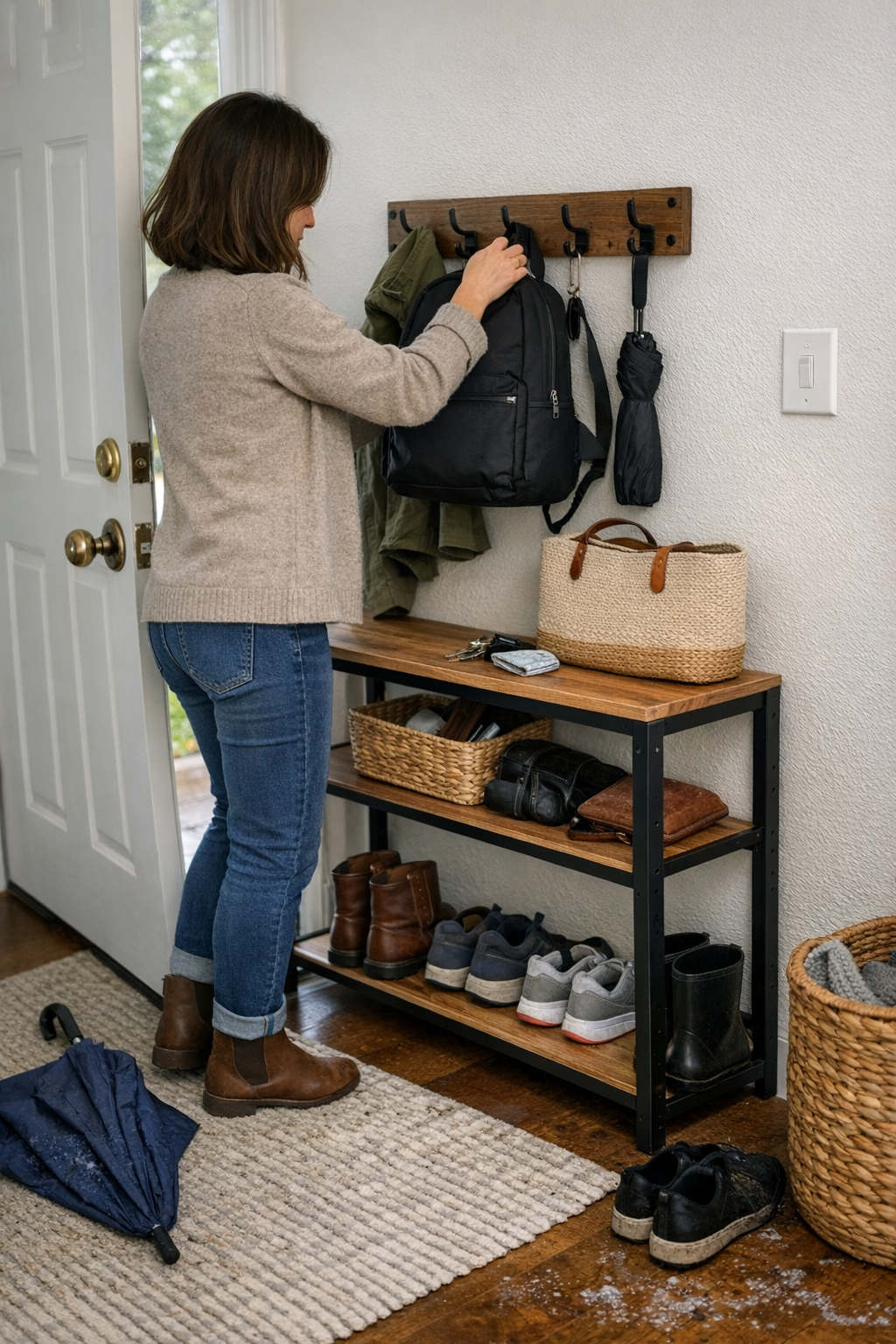
    Switching from deep to narrow isn’t just cosmetic—it directly preserves threshold space where you feel the squeeze most. A slim console, just 10–12 inches deep, creates a nearly invisible barrier; it lines the wall, hugs past the door’s swing, and minimizes overhang so nothing protrudes into the step path. It doesn’t promise to eat every pile, but it reliably protects movement. Shoes line up—parallel, not perpendicular. Bags perch above, not in the center of the floor. Even with simultaneous drop-offs, the walkway survives. Resetting is literally a matter of nudging a row straight, not excavating a hidden drift of gear. The difference isn’t storage capacity, but daily function—thresholds stay crossable, even when exits and arrivals stack up.

    From Photo-Ready to Everyday-Ready

    Magazine photos show wide benches basking in empty entryways. Real life comes at a rush: muddy boots scattered mid-floor, two bags half-falling, the raincoat you needed dumped audibly onto the nearest surface. Wide storage might look inviting uninhabited, but only slim setups hold up once routines start crowding the zone. Slim consoles keep shoe lines tight to the wall. Even when the system slips—everyone rushes in at once—overflow stays obvious and contained. You reset by straightening, not by starting from scratch. The pass-through rarely jams. If it does, it’s traceable: you see what drifted, you fix it in seconds, and you’re back to crossing cleanly.

    Real-Life Scenes: How Entry Storage Plays Out Over a Week

    Monday Morning: Rushing Out, Shoes on the Move

    Morning rush, shoes off, door swings wide. If you’ve got a deep bench, displaced shoes pile up and wedge further into your only open lane. The door catches, you grunt, and the “organized” storage becomes new clutter blocking every escape. By midweek, the pile invades so much floor that walking through means weaving around your own stuff.

    With a slim console, you step out and the line of shoes stays to the side. If the row grows, overflow spreads forward—clearly visible and easy to correct. Even on chaotic days, you aren’t pushing a pile out of the way just to get the door open. Quick resets mean a sideways nudge, not a five-minute dig-out. Routine chaos stays manageable; you can see which row needs discipline before it blocks the whole entry.

    After Wet Weather: Entry Reset Under Pressure

    Rain hits, the whole family barrels in, and suddenly the entry is flooded with wet boots, soggy socks, and dumped raincoats. Deep storage turns into a hidden stash—items migrate to the back until the front fills and the threshold jams solid. Now, the reset is heavy: you have to dig, sort out soaked layers, and haul everything back just to secure one clear spot to step through.

    With a slim console, boots stack beneath where you see them, not in muddled layers. If the walkway narrows, it’s obvious; each extra pair signals its own removal. Overflow doesn’t disguise itself. You aren’t left wondering where things piled up—you’re prompted to address it in real time. No one steps over forgotten bags or week-old sports gear just to find the floor. The entry stays transparent about its limits, and you stay ahead of chaos by responding before it escalates.

    Sizing the Console: Finding the Threshold That Fits

    Check the swing of your door—does anything, even a shoe, jut into the arc? The true test isn’t the storage’s capacity but what it does to your passage. Saving even one inch can reopen a space that’s been pinched closed all season. A 12-inch-deep console is a discipline: enough to fit daily-use shoes and essentials, not enough for overflow to hide or stack up out of sight. This slim footprint pushes you up, not out—inviting wall hooks for bags, floating shelves for mail and keys, narrow trays for gloves. Whenever you claim wall space over threshold floor, you slow the creep of clutter and keep the entry clear at the moment you’re most likely to jam it.

    Give Every Item a True Landing Spot

    Where the narrow zone wins is in boundaries. Shoes get a true row, not a scatter. Bags go above, not ambiguously “nearby.” There’s no wishful, undefined drop zone—every item lands somewhere exact, or it signals overflow instantly. Even during failed resets or chaotic departures, a narrow setup means you’re never reshuffling the whole area—just nudging a few things back. Less time spent fixing means more space for just coming home, and the pain points stay small before they pile up.

    Coping With Trade-offs: When Storage Is Too Deep, Function Fades

    The urge to choose a deep cabinet for “just in case” storage rarely pays off in the real grind of arrivals and exits. Extra space behind closed doors fills with orphaned extras you don’t use—until eventually, the entry itself chokes on the backlog. Grab for a shoe in a hurry, and you’re blocked by a row of castoff pairs or a bag wedged in after a frantic morning. Every attempt to fix it becomes a mini-project; fast movements turn slow, and sudden needs derail the whole day.

    If your threshold never stays clear more than a few days, even after a deep clean, the setup is probably working against you. The best clue isn’t how tidy things look after a reset, but how little you have to fuss with them before the next rush. Storage that works only for snapshots isn’t serving your routine—it’s creating new places for clutter to lurk.

    Practical Tips for Lasting Threshold Clarity

    • Trace your door’s full arc before adding anything. Even a single inch jutting past can jam movement when traffic picks up.
    • Favor narrow, stable consoles that commit to the wall. Thickness is the enemy here—choose form factors that protect width over capacity.
    • Use wall hooks or upper shelves to keep bags and accessories clear of shoe traffic. Don’t let “temporary” bag drops turn permanent.
    • Limit shoes to a single parallel row. If more appears, rotate older pairs out before they sprawl and block flow.
    • Reset fast, reset often. The right setup lets you straighten up in seconds, not force you into full reorganizations every weekend.

    The Everyday Difference: Passing Through with Purpose

    Entryway storage isn’t about perfect rows or magazine layouts—it’s about guaranteeing a clear path when day-to-day life hits max volume. A narrow console draws the real line: this is the crossing, this is where the gear stops. You can tell when overflow starts nudging back into your space, and you have leverage to fix it before the pile wins. Over time, less shoe-dodging, fewer missed steps,

  • Optimizing Pet Travel Bags for Quick Access and Smooth Trips

    The pet-travel bag that seems “organized” at home usually breaks down by the first real stop. You’re balancing a leash, you reach for wipes, and immediately you’re stuck—blocked by comfort items, fishing under toys, losing seconds while your dog tugs forward and dirt spreads. This isn’t mess. It’s the grind of routine friction: easy access vanishes, simple tasks slow, and every stop uncovers a weak point in your setup—even when the bag looked ready on your kitchen table. “Preparation” isn’t a look. It’s how the bag holds up under real movement, restarts, and pet-side interruptions. PawGoTravel exists in precisely these moments—the cracks between curbside need and seat-side access, when an ordinary travel bag feels suddenly inadequate.

    When ‘Neat’ Isn’t Enough: The Real Pressure Points of Travel Bags

    An impressive-looking pet bag—clean compartments, neatly zipped—usually falters by your second or third stop. The bag that seemed streamlined at home turns awkward fast: finding wipes after a muddy walk means shaking out towels first; the quick water bowl is now blocked by a tangle of leash and toys. Every small reshuffle signals growing drag. From bag to curb and back to car, the “orderly” setup unravels; the visual neatness simply hides how poorly it handles searching, repacking, and repeat motion.

    Stuck in the Grind: When Every Simple Stop Feels Harder

    The frustration doesn’t stay subtle. Every errand, dog park visit, or rainy day makes the same pressure points flare up again:

    • Wipes are technically packed—but trapped, so by the time you pull them free, your dog’s tracked mud to a wider area.
    • The water bowl is deep under comfort gear, demanding a full-on dig just for a quick drink.
    • By the third stop, order collapses: fast access becomes guesswork, and your bag feels heavier, more scrambled, less responsive.

    This isn’t just inconvenience. Slow, repeated interruptions mean your grip, movement, and control degrade every time you leave the car or return. The bag drains energy precisely when travel should pick up pace.

    The Cycle of Repacking: The Momentum Trap

    You’ve lived the reset cycle—back in the car, stacking toys, shoving in treats, zipping up with a new hope that, this time, you’ll be set for the next pause. But if “reset” means shuffling the same friction points, progress collapses: wipes never stay up top, leashes knot with bowls, snacks slip out of reach. Every stop is a small battle to re-establish control. The bag asks for patience and handwork, rather than smoothing your return to movement.

    Scene: The Delayed Cleanup Ambush

    A typical park exit: you open the back seat, ready for paw cleanup. Instead, you’re sorting through a mixed heap—soft toys, unbuckled bowl, rolled blanket all blocking the wipes. Your dog fidgets, shakes off more debris, and the small slip multiplies—a messier seat, delayed restart, the illusion of “well-packed” gone. The bag didn’t fail for lack of storage; it failed because the essentials were never ready in the right place for repeated access.

    The Solve: Outermost Access for What You Use Most

    The travel reality: the most-used items need edge access, not layered display. Frequent travelers spot the flaw—bags set for neatness break at the point of action. Wipes buried behind snacks, leash clips under spare gear, bowls mid-stack: beautiful to start, all wrong at the moment of need. Moving wipes to a true side pocket, bowls at the zipper, leash clips on the outmost loop—these swaps refit your routine. Each stop becomes a single motion, not a rummaging session.

    This isn’t about “less structure.” It’s about structure that stays useful after the third, fourth, and fifth stop. Looks matter less than low-friction reach. Once you place essentials up high and outside—wipes, travel bowls, quick-clip leash—your routine regains pace. Every pause and restart turns quick and predictable, instead of another order-busting interruption.

    Packing Order > Packing Appearance

    Easy test: If any high-frequency item requires you to move something else first, your bag is failing at real use. A “neat” layout that delays access builds invisible drag into every routine. The top-performing setups are sometimes visually cluttered but hyper-functional, with wipes ready, bowls loose at the edge, and the leash always clip-in-hand. Travel days with three, four, or six stops quickly expose this kind of utility—the best order is built for quick reach and quick reset, not kitchen-table symmetry.

    Small Reset, Big Change: Keeping Access Repeatable

    After each pause, push wipes back in their side pouch, put the leash clip back up top, and let backup comfort items settle deeper. Don’t rely on the morning’s careful setup—reset your access after every movement. Over time, every saved “grab” turns into less chaos and a lighter-feeling trip, no matter how many restarts pack your travel day.

    Know the Signs: When Your Routine Outgrows Your Setup

    Warning signals crop up quickly with real use:

    • You keep yanking the wrong zipper before finding the right pocket.
    • Cleanup consistently takes longer than the spill or mess that started it.
    • Your quick-grab items start “sinking” behind comfort gear or supplies after each stop.
    • Every pause shuffles your bag further out of sync, making movement stutter instead of flow.

    More pockets won’t save a bag from this cycle—only smarter, repeat-focused item placement can. A truly “travel-ready” setup is the bag that resets to your real routine, not your home layout.

    The Core Shift: From Looking Ready to Staying Ready

    The break point is always the same: “looks prepared” fails once the trip goes live. Repeated friction, not first-glance mess, kills momentum. If every event—mud, curb, water break, cleanup—turns into a hunt for essentials, your setup is draining your energy, not saving it. Winning structure means high-frequency items always stay at the edge, positions reset after each use, and bag flow matches movement—not just storage capacity. Every seat-side reach, curbside clean, or quick unpack is judged in the moment—over and over, all day long.

    The bag that works isn’t the prettiest at the start. It’s the one whose structure doesn’t collapse by stop four, whose essentials can always be grabbed with one hand, and that never turns a two-second task into a twelve-second scramble.

    Find practical pet travel solutions built for real routines at PawGoTravel.

  • How Thoughtful Lighting Placement Eliminates Glare and Boosts Comfort

    A workspace can look flawless and still undermine your focus every day—usually because the lighting or its mounting keeps getting in your way. Sharp glare hits your screen by the afternoon, a cable snakes into your arm zone no matter how many times you push it back, or the under-shelf light glows but leaves the work edge in shadow and your eyes straining. You adjust and rearrange—tilting a screen, rotating a lamp, nudging a pile of papers—until the “tidy” setup becomes a source of constant friction. Surfaces look clear until the first real task begins; function breaks down faster than appearance.

    Why the Neat Look Doesn’t Last

    Minimal fixtures—flush wall panels, hidden cables, slim bar lights—can sell a photo-ready calm. But most setups built for looks fall apart the moment you move, reach, or turn. Comfort isn’t captured by a still image; it’s tested over hours of use. That “finished” vibe evaporates as soon as the first reflection slices across your laptop, the lamp’s rigid stance pins your shoulder in place, or an exposed cord keeps grazing your knuckles.

    Glare lines, visible cabling, and forced positioning aren’t just annoyances—they’re the daily price of setups built for presentation, not for how people actually work or reach for things. Desk, table, or shelf: the same signs show up if design has outpaced function.

    Small Problems Become Daily Obstacles

    You can tuck a cord or push a lamp out of frame, but live with it and certain problems reveal themselves fast. That reflection—always at the same hour. The cable—always finding its way into the one area your hand needs clear. Setup “calm” unravels into focused friction: an edge you can’t see, a lamp you keep dodging, a glowing shelf but a murky desk. After a few days, distraction feels baked in. And you notice you’re working around your lighting, not with it.

    This type of friction doesn’t fade with time; it accumulates. Lost focus, hunched seating, corners left unused—all from small, repeated adjustments subconsciously made to dodge your own lighting or its support hardware. The original logic of the setup turns into a daily workaround routine you never signed up for.

    How to Catch the Real Trouble Points

    If you’re reaching to prop a folder against a reflection, shifting your chair to avoid a glare hit, or angling a monitor to escape a spotlight, your lighting support is out of sync with your needs. A beautiful lamp aimed wrongly becomes a daytime obstacle. The wrong mount means good light in the wrong place, every day.

    There’s a gap between setups that win on looks and those that just work. For example:

    • An under-shelf light washes the wall with a bright, even glow—yet each keypress bounces glare into your eyes, making the surface harder to use than before.
    • A clunky but correctly aimed task lamp misses any style contest but leaves your full work area visible and your routine uninterrupted, even as daylight shifts or projects overlap.

    One setup looks resolved; the other is actually liveable. The difference: You don’t notice the good one at all while you’re working.

    Placement, Spread, and Support: The Deciding Details

    Lighting that works for real life depends on where the fixture sits, how the beam lands, and where cables run once you start using the space. The moment you enter the third work session of the week and still find yourself fighting cord drag or dodging hotspots, tiny mounting details become critical.

    These failure points keep showing up in practice:

    • Wall panels casting perfect ambient light—until you sit down and your monitor catches a sharp line from above, making half the screen unreadable.
    • Under-cabinet LEDs that skip the shelf lip, leaving your hands in shadow every time you write or reach.
    • A cable run planned to look neat, but each time you move your mouse the cord slides forward again, intruding on valuable desk space.
    • Ceiling lights with zero adjustability: whole sections of the table are washed out while corners go dim, demanding extra lamps just to get balanced coverage.

    These aren’t quirks—they’re signs that aesthetics won over use, and now distraction is routine. The tell is always in how many times you have to adjust, shift, or mentally filter out your own lighting or its supports.

    Scenes From Real Use: When Support Makes or Breaks a Space

    The Shared Table Dilemma

    Think of a broad worktable near a window, meant for several people. Built-in wall lights glow evenly and cables are hidden; everything looks deliberate. As the workday unfolds, sunlight shifts, screens tilt, and the designer glow fires straight across laptops and tablets. Soon, people start stacking folders in awkward spots to block the line of light, chairs migrate to less “featured” sides, and eventually everyone huddles near the only clamp lamp—visible cables and all—because that’s the one source they can aim. Style points drop, but the adjustable task lamp survives the workday. What looked seamless is now background noise; what worked wins in silence.

    A Small Change, Big Relief

    Different space, new pattern: A glass top desk beside a window, lamp base set barely forward of the right spot, and the cable runs clean through a discrete under-desk clip. After hours of glare on the work zone, a quick nudge pushes the lamp back a couple inches and tilts the head. Now the cord never strays, the glare line doesn’t return, and the space finally stays usable all day—no more sliding things around to adapt to stray beams or loose cables. The change isn’t dramatic to the eye, but noticeable in how you can actually use every inch of the surface without tense readjustment. That’s what material support does—quietly clears the way for real work, not just a staged look.

    Practical Fixes Worth Trying

    Improvement isn’t about a wholesale upgrade. Adjusting a fixture by inches can revive a whole setup. When overhead or wall lights throw too much glare, adjust the angle or drop in a lower, aimable task lamp outside your immediate eye line. Cable clips, tension guides, or a small wall bracket can push cords out of the performance zone completely—no more taping or tucking after the fact.

    Matte finishes on task lamps crush nuisance reflections. Placing a fixture so beam edges sit just outside your common reach zone removes bright streaks without inviting clutter. The real test: Watch what you’re still adjusting at hour two, or what work area you quietly avoid. Shift the support—lamp, bracket, or guide—first, and see if routine friction finally lets up.

    The Quiet Payoff: Support that Actually Fits

    The best setups disappear in daily use—not because they’re invisible, but because they stop interrupting you. That’s the win a support-first mindset delivers: cables that follow natural room lines, brackets that keep fixtures steady and off your hands, and beams that stay out of your vision. No more constant contorting, guerrilla fixes, or asking “what’s wrong with the light here?”

    When you stop making micro-adjustments and just get to work, you know the lighting—plus its mounting and cable runs—finally fit the way you move and focus.

    Find practical lighting and mounting solutions that work for real rooms and real routines at LightSupport.

  • Why Structural Cable Management Transforms Your Desk Setup Experience

    Every time a cable slithers off the back edge or a phone charger drops behind the monitor, you’re reminded that a good-looking desk can turn unreliable fast. Resetting becomes a ritual: crawling under the surface, fishing out power cords, re-routing what slid out of sight. What stalls progress isn’t a tangled nest—it’s the accumulating drag of cables that won’t anchor, turning a desk that looks organized in photos into a workspace that keeps interrupting itself. The real difference between reliable and awkward comes down to whether your cable management actually holds during real, repeated use—not just when everything is freshly tidied.

    Why Appearance-First Cable Solutions Rarely Last

    The first setup always looks promising: cords routed through crisp sleeves, adhesive clips placed with geometric care, a sweep of clean desk space. But real work exposes the gap between tidy and durable. Sliding a notebook to the side, leaning in to reach your second monitor, or shifting your chair for a midday stretch—all these micro-movements test the strength of any surface-level fix.

    By the end of the first week, visible order unravels: The temporary grip of adhesive clips gives out as cables get nudged, pulled, or switched with each device swap. Any sleeve built for visual unity becomes its own jam point—adding a single new cable requires tugging the bundle apart. The clutter disappears only until the next routine reset, and most “minimalist” systems devolve into frustration: cables that haven’t tangled now hide just out of reach, caught behind drawers or dangling out of sight under the desk.

    The Subtle Frictions That Don’t Appear in Desk Photos

    It’s easy to miss the tension in a staged workspace; the problems show up between tasks. You notice the pause when your charger slides out of reach, the drag as your mouse cable snags on a sleeve edge, the dull moment of recalibrating your posture because a stray loop caught your foot.

    Try picturing a normal setup: two monitors, charging cables weaving between a clamp-on lamp and a laptop, a notebook crowding the space beside your keyboard. By mid-afternoon, the cable that started the week neatly routed is now drooping beneath the monitor or knotted into the drawer track. Push your chair back and your heel hooks a cord loop—or worse, pulls a lamp off its balance. The interruptions aren’t dramatic, just steady: cables drift, pull at hardware, and require another round of fixing before the session can really start again.

    Resetting gets slower every time. What breaks workflow isn’t visible chaos—it’s the ongoing hassle of untangling chargers, reaching behind panels to find missing cables, and re-clearing space that looked organized but didn’t actually stay that way. Each unplanned fix is another interruption, eating away at the usefulness of a space that should stay ready between work sessions.

    What Actually Holds Up in Everyday Desk Use

    The setups that survive aren’t prettier—they’re anchored. After getting fed up with adhesive clips peeling up and sleeves bunching cords together, switching to a metal under-desk cable tray changed the daily logic of the workspace. Suddenly, cables had only one path: up from the floor, across the tray, down within reach, never looping loose or dropping behind hardware. The mess didn’t shift location; it stopped returning altogether.

    Now, plugging or unplugging was routine—nothing to realign after sliding a monitor, no adhesive to replace, no reaching into a sleeve to fish out a missing charger. Even over weeks, the system held up: no sprawled cables under the chair, no sudden loss of leg room, no accidental yank pulling a cord free. The practical improvement wasn’t a cleaner look, but a guarantee that every morning, the same cables stayed in the same accessible places—making each return to the desk feel less like a reset, more like resuming where you left off.

    When Cable Management Choices Really Matter

    The real test shows up in high-change spaces—shared desks, sit/stand workstations, anything with a tight footprint. Loose, appearance-first systems break down first: what seemed organized yesterday devolves after a few adjustments or swaps. In smaller setups, even one or two mobile cables crowd the floor and limit how freely you can shift in and out of your seat. With every device connection, each structural choice reasserts itself: cables fixed in trays or with rigid clamps stay accessible, while everything else migrates, knots, or drops off course.

    It rarely matters how many devices you have. The core failure is weak anchoring: every back-and-forth between desk and chair, every time you plug in a new charger or re-route display cables, anything not properly anchored turns into a self-sabotaging obstacle—one that turns a fast reset into a repeated maintenance task.

    Real-World Cable Management Observations

    Tabletop neatness isn’t the same as lasting use. Cables that disappear for Instagram reappear in real workflows: catching on chair wheels, wedging under drawer units, falling out of reach when you reposition equipment. Under-desk drawers that seemed like extra storage quickly start interfering with movement or cable path, especially if not paired with real cable clips or trays.

    Sleeves look contained but become tedious if you need regular access—every charger or adapter added or removed disrupts the whole run. Cable boxes work for stationery power bricks, but most aren’t designed for quick in-and-out, so swapping or moving high-use cords just adds another hassle. Over time, only solutions that don’t need weekly fixing stick—like fixed trays or hard-mount clamps you set up once, then stop thinking about because they simply keep working job after job.

    Quick FAQ: Test Your Setup’s Real-World Staying Power

    How do I actually stop cables from slipping off my desk during work?

    A hard-mounted cable tray or strong clamp under the desk edge holds cords in place regardless of cleaning, chair movement, or reaching for accessories. Adhesive clips may help at first but almost always loosen over time as cables get handled and flexed.

    Is spending time on under-desk cable management really worth it?

    If you swap laptops, move monitors, or recharge phones and tablets multiple times a day, anchoring cables with fixed structure pays off sooner than expected. You save time by not crawling or fishing for charger ends, and daily resets get faster, not slower—meaning fewer interruptions and less rebuilding your workspace from scratch.

    Are cable sleeves and boxes actually helpful for repeated access?

    Sleeves work best for rarely moved cables. For chargers or accessories you use several times a day, sleeves and tightly packed cable boxes just slow you down, since pulling out one cord usually means untangling or opening up the whole batch. For repeated access, leave high-use cables anchored but separate—tray or clamp, not bundled shut.

    Small Changes, Big Difference—Why Lasting Structure Matters

    Desk setups that look organized but can’t hold their shape under real use end up costing more time, not less. The difference isn’t a neater surface; it’s whether every wire stays where you left it when you come back. Over countless work cycles, durable structural choices—anchored trays, proper under-desk mounts—transform frustrating, slow resets into a background habit you rarely notice. A ready desk isn’t just tidy; it’s one where the cable mess doesn’t keep coming back.

    Explore the full WorkBasic collection

  • Choosing Outdoor Storage Solutions That Fit Small Yards and Busy Spaces

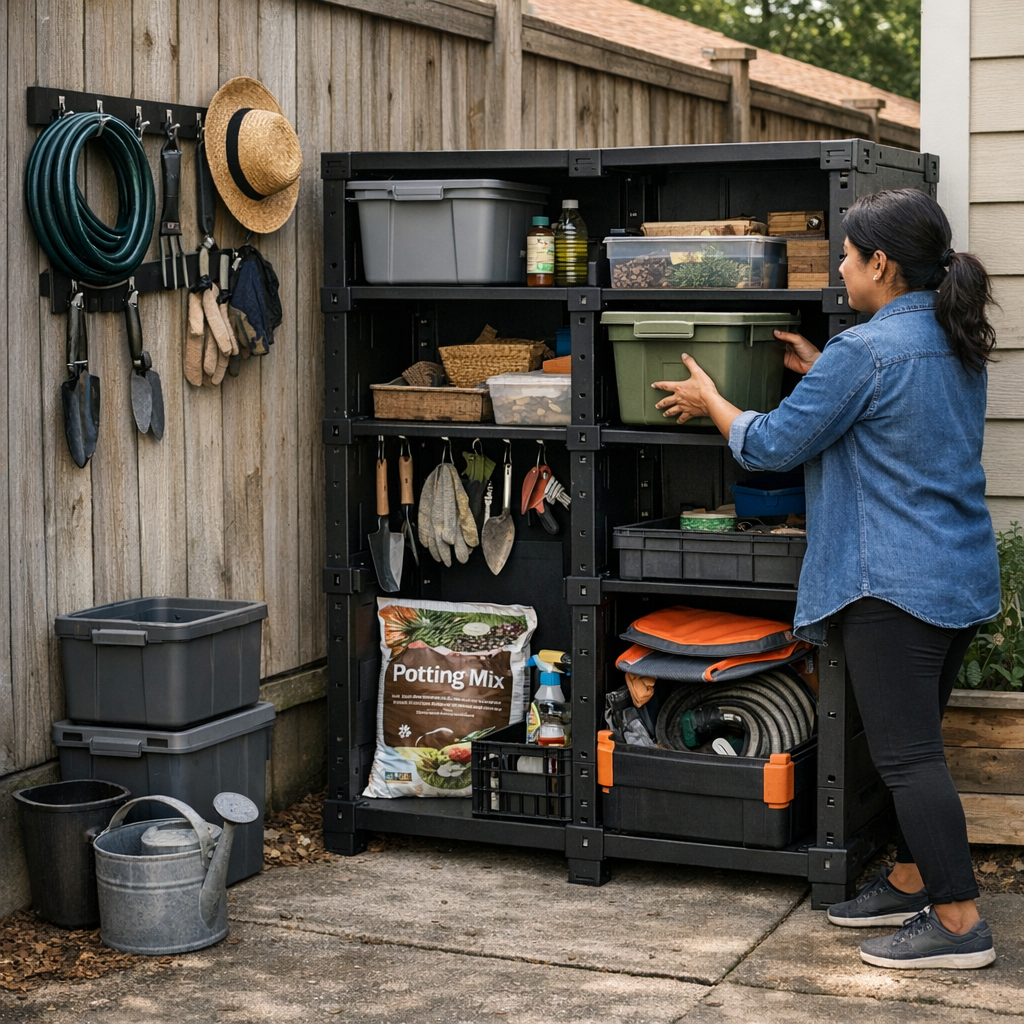
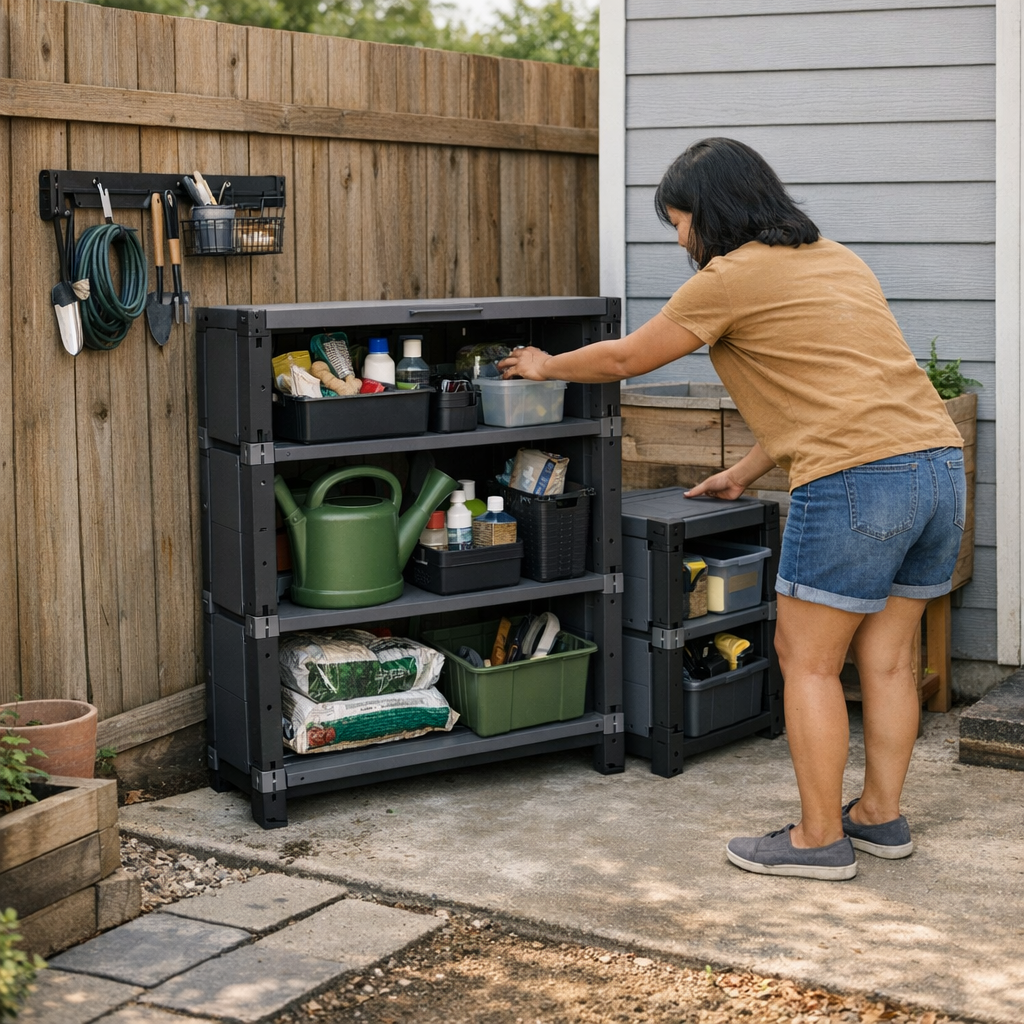
    This is what outdoor storage friction really looks like: You step outside to grab the clippers off the wall rack. First, you kick aside a folding chair wedged against the fence. At the garage door, there’s the bike—angled to just block your path—so you shuffle it, again, to roll out the trash bin. In the blueprint, your setup worked; in real life, even a simple trip means dodging overflow, shifting obstacles, and watching “organization” unravel by Tuesday. The gap between what looks organized and what actually works becomes clearer with every rerun of this outdoor shuffle.

    When “Looks Organized” Falls Apart in Use

    In a backyard corner where the path barely fits a wheelbarrow, or a side strip that turns into a squeeze every weekend, the smallest mismatch between storage and routine quickly snowballs. You install a rack, stack a bin, slide a cabinet along the fence. Day one feels promising. But by week three, bikes have crept back across the walkway, garden tools are camping out on the patio, and cushions are “temporarily” stacked where you swore nothing would pile up again. That slow break is subtle at first—a little more effort to put things back, a little more spillover around the edges—until suddenly it’s the norm, not the exception.

    Wall-Mounted Systems: Floor Space Gained, New Friction Found

    Wall racks and vertical organizers are built to save floor space in those compressed garage-edges, side yards, and fence-line strips where every step counts. At their best, you see what you need at a glance. In reality, the system works only if everyone sticks to the plan. Hooks drift, bins empty, and soon the overflow lands right below the rack—because it’s faster to drop a tool than to negotiate a crowded wall. As gear piles up on the ground, “grab and go” turns into “grab, lift, move, hope nothing falls.” Every shortcut adds another reset to your weekly to-do list.

    Real Scene: The Reset That Keeps Growing

    A Saturday starts simple: garden tools out, kids’ bikes zipped up and down the walk, mulch leaned against the fence. After two hours, the wall system is a casualty—empty hooks above, tools and projects blocking the route back inside. The true reset isn’t just putting gear up; it’s tracing every “just for now” drop spot, unraveling the little traffic jams, and making enough room to move again. Miss a day and the wall zone stays jammed until next weekend.

    Freestanding Storage: Visual Calm, Hidden Bottleneck

    Sheds and outdoor cabinets hide the clutter—at least at first. They eat up pool floats, chair cushions, gear you use once a month. But try storing everyday basics, and the trade-off shows: you stack bags and bins, then shuffle them around so often it’s easier to leave things outside the door. Soon, a visible “halo” forms—all the stuff waiting for its chance to fit back inside, clogging the ground and shrinking your pathway. By rainstorm or reset, the unit itself becomes a bottleneck you have to work around.

    Real Scene: The Overflow Halo

    Picture the sprint to pack up before a sudden storm. The shed door jams; toys and tools tip into the walkway, and someone abandons a half-full bag right in the narrowest spot. Once the storm passes, you’re left with a heap blocking access—not just a shelf to tidy, but a logistical knot to cut through next time you need anything.

    Modular Storage: Flexible Until It Drifts

    Modular bins and rolling racks promise agility—a patio edge can shift from play zone to garden command center and back, right? For a while, it works. But in practice, bins spread wherever space momentarily appears, mobile racks turn into “temporary” drop zones, and boundaries fade. Without constant diligence, your flexible layout steadily nudges into every clear patch until the only thing moving freely is the clutter itself.

    Real Scene: Modular Creep

    Bins that started in the corner are halfway across the patio by Thursday. The rolling rack gets stranded with stray balls and gardening gloves, so you dodge it every time you step outside. Each piece looks movable, but every migration complicates the reset. More flexibility becomes more ground to cover, sapping energy each time you try to get back to “ready.”

    How Storage Choices Show Up in Daily Traffic

    After a month of actual use, the big question is practical: Are pathways clear, or is every move a new shuffle? If the answer involves moving two things to access one, rerouting around last week’s “temporary” pile, or mentally sighing every time you see the reset ahead, friction is shaping your routine. Even clever storage can block you if it’s doing the wrong job for your real patterns.

    Early Warning Signs Your Setup Isn’t Working

    • Tools supposed to hang on walls are piling up behind the gate or next to the fence.
    • The shed door always needs a clear-out before you can even step inside.
    • Portable bins migrate until half the walkway is blocked—again.
    • The “quick tidy” takes longer every time.

    When these signals show up, your storage plan is out of sync with your habits—not just your available space.

    Matching Setup to Reality, Not Just Blueprint

    Focused on a clear walkway or pass-through side yard? Wall racks help unclutter the ground—if everyone returns things, and traffic isn’t too heavy. Need to hide bulk and off-season gear? Sheds and cabinets can work, but watch for overflow rings, especially during busier months. If your space keeps shifting—kids play here, you garden there—modular options give you quick flexibility, but only if you’re willing to reset the zone often or risk permanent drift into chaos.

    Quick Fix: The “Sweep and Return” Habit

    Night falls, gear is everywhere, and the walkway’s gone. Two minutes, one lap: grab stray items, return them to their real place—bin, hook, rack, shed—before clutter sets in. The simpler the return path, the more likely it sticks. The longer you skip it, the harder each new reset gets.

    The Difference the Right Setup Makes

    A practical outdoor storage layout doesn’t just look neat for the first photo—it keeps movement easy, paths usable, and overflow at bay week after week. In high-traffic corners and narrow side yards, the best setup isn’t the fanciest; it’s the one that reduces friction, blocks less, and makes cleanup quick. When storage nudges you into constant reshuffling, take the hint: reset not just the tools, but your whole system—until it actually fits the way you move outside, not just the way it looks on paper.

    See practical outdoor storage options for real-world setups at TidyYard.

  • Creating a Stable Indoor Cat Setup That Simplifies Daily Routines

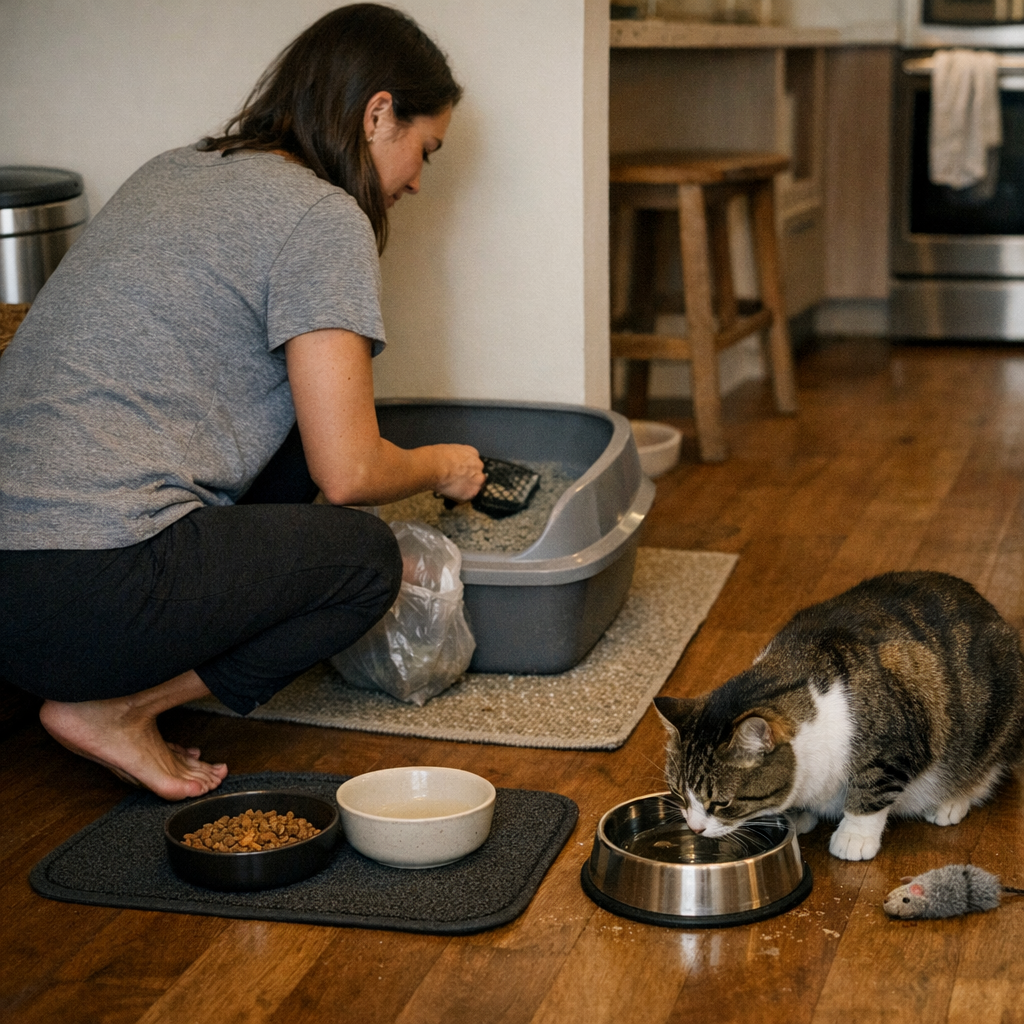
    The difference between an indoor-cat space that looks organized and one that actually works is painfully clear the second you reset after breakfast. The bowls seem lined up, the mat looks fresh, but you’re already nudging scattered kibble off the edge, bending to reclaim a hacky toy from under the couch, or spotting new litter grains escaping the box with every cat lap. What passes for order at early morning inspection falls apart by noon—splashes spreading past mats, bowls drifting out of place after each refill, supplies always an arm’s reach away right when messes show up. A cat setup that looks sorted can still put you five steps behind, stacking annoyance with every cycle and dragging down the day’s flow. The real pressure isn’t in how the setup looks at rest—it’s in the small, repeated failures that turn every routine into a slow war of resets.

    Why “Neat Enough” Setups Drift Off Track—Fast

    No one chooses a daily routine built on patching up cat zones—but that’s exactly what happens when setups stop at surface order. A visually neat space collapses quickly when its logic fails under repetition. It shows up every time you reach for a bowl and shoulder another aside, or when you come back for the scoop only to find it stranded on the wrong shelf. If every refill or wipe-down asks you to untangle mats, step over gear, or retrace steps, the routine multiplies friction instead of removing it.

    The failed promise isn’t visible at first—only after enough cycles do you spot the peripheral scatter, the edge puddles never caught in time, the “big enough” mat that always seems to miss the real aftermath. These aren’t big messes but ongoing slow leaks: seconds and steps that add up until the cat’s stuff feels like it controls your schedule. Instead of just feeding or cleaning, you’re reorganizing on repeat.

    Daily Reset Friction: Where Annoyance Emerges

    Scattered Food and the Endless Mat Shuffle

    The standard feeding zone—bowls nested on a mat, corners swept, everything in alignment—looks “solved” for about a day. By round three, crumbs and slush outpace the mat’s rim, turning each refill into a full shuffle: mat scooted back in place, crumbs brushed sideways, bowls re-nested after another food attack. The “quick feed” turns into a multipart reset—again—before you’ve even uncapped the bag.

    Litter Drift That Creeps Farther Out

    Litter setups break down on repeat use. A mat might corral the first footsteps, but grains soon leap beyond the intended line—especially if the box empties into a busy corner. Each cat exit trails a wider scatter, pulling you into a sweep-and-repeat: here, three steps out, and—on unguarded days—clear to the next room. If the litter sits near any main traffic, the track-out doubles: what started as a “contained” zone becomes a chain reaction across shared flooring.

    Water Zones That Blur the Boundary

    Water bowls introduce chaos far more quietly. If they share space with the food mat, you’re one excited drink away from a sticky mash of food, water, and debris. Every refill, the bowl drifts a little—and suddenly you’re mopping water that creeps toward high-traffic paths, threatening socks and floorboards. “Quick access” disappears when zones start bleeding together and cleanup loses its boundaries.

    When Tidy Zones Take Over the Room—And Your Routine

    The corner setup that makes sense at first soon sprawls. Feeding areas edge into kitchens meant for people. Litter corner “solutions” start to overflow, and living room toy spread becomes its own layer underfoot. Give a bowl a few inches’ drift, and soon you’re hauling out the vacuum for crumbs and debris that now dominate the walking lane. The original plan collapses not with one big mess but with gradual, routine creep—nudging you to adjust, reset, and negotiate room use with every round.

    Blocked Paths and Shared-Space Slowdowns

    Attempting to cluster feeding, water, litter, and rest in one corner can feel efficient—until you start reaching, bending, and sliding everything aside just to perform a basic reset. Each small obstacle multiplies: mat in the way of storage, bowl blocking the litter scoop, a trail that never syncs with where cleanup gear is actually needed. Life in the room shifts from ease to low-level disruption—room for the cat, less for you.

    Breaking the One-Corner Habit: What Actually Changes the Daily Flow

    The real game-changer? Structural separation—not surface upgrades. Moving just one item can shift everything:

    • Offset the water bowl nine inches from the food station. Now, water drips and food debris land on their own mats—not as an inescapable puddle of mush you have to wipe off both zones at once.
    • Place the litter box away from major walkways. Tracked grains stall well before reaching the busiest thoroughfares, and you’re not sweeping half the home for one cat trip.
    • Use mats sized for the mess, not just the item. A bowl that always pushes over the mat edge? Switch to a mat that extends past where food actually lands—or add a separate one if clutter starts merging the stations.

    It’s not “prettier.” But this small split cuts out double- and triple-work in every reset. Less debris chasing, less mat scooting, fewer re-alignments—and a sense that your living space finally holds up to real use.

    Managing Mess at the Source: Mats, Placement, and Spill Flow

    Choose Mats for the Real Mess, Not Just the Gear

    Softness or style makes mats look right, but daily use exposes their actual performance. A lightweight mat slides away; one too small demands constant policing. Sturdy mats with enough border hold the mess where it happens—and if they’re placed away from main walk routes, messes don’t ride out with every step. Run separate mats for each station—close, but not merged. That’s the real leak-stopper, not the design alone.

    Reach and Reset: Trim the Micro-Delays

    With every daily task—refilling, scooping, straightening—you’ll notice if you’re always blocked by a misplaced item or supply stashed out of instant reach. Tiny shifts work: hang the litter scoop above the box, keep towels or sprays in an open basket right where you stand, choose bowl weights that don’t skate with every refill. These aren’t big changes, but they peel off the seconds and hesitations that drain routines over time.

    Shared Home Space vs. Cat Zone: Keeping Both Usable

    A working cat setup isn’t a catalog shot. The best ones:

    • Break up cluster traps; don’t let one “neat” area turn into a mess-magnet that dominates the floor.
    • Use color, mat shape, or surface marker to set clear visual separations between feeding, water, litter, and play—so every person (and cat) knows the map.
    • Let each piece settle where it works without demanding you shuffle others first—good placement beats good storage every time in day-to-day survival.

    Perfect-looking setups fall apart by day ten. Spaces that separate cat jobs hold longer—they don’t keep re-commandeering rooms or interrupting flow when you least need the extra work.

    Cleanup That’s Actually Quick—Not Just in Theory

    Reset Should Mean “Done”—Not a Hidden To-Do List

    A strong setup makes daily cleanup direct: sweep, wipe, reset—done. The proof? No surprises lurking an hour later. Separate mats and split stations show you what to tackle and stop debris from ghosting into the rest of the home. Deep cleans need less panic; daily resets need fewer double-backs—so upkeep falls to minutes, not half-hour grinds.

    Don’t Dress Up a Weak Point. Move It.

    Notice where the cycle always trips up: maybe it’s a sliding bowl, or the scatter always escaping one mat. The first impulse is to buy a better style, but what actually fixes the routine is moving the weak link out of collision. Shift the water station out of the food splash zone, upgrade a mat only if it holds firm, store supplies right where the mess starts. What seemed like a constant “cat problem” usually stems from structure, not decoration—and changing setup position closes out the loop of fixes that never quite held last time.

    The Setup That Holds: Practical Adjustments for Real Days

    The setups that last go beyond looking tidy—they remove repeat friction from daily cat life and make ordinary resets actually stick. When mats, bowls, and boxes live where resets happen fastest—not just where they look straight—the routine shrinks to size, and the rest of your day stays yours.

    Explore more indoor-cat setups that don’t give up under real pressure at StillWh

  • Selective Visibility Transforms Modular Workshop Storage Efficiency

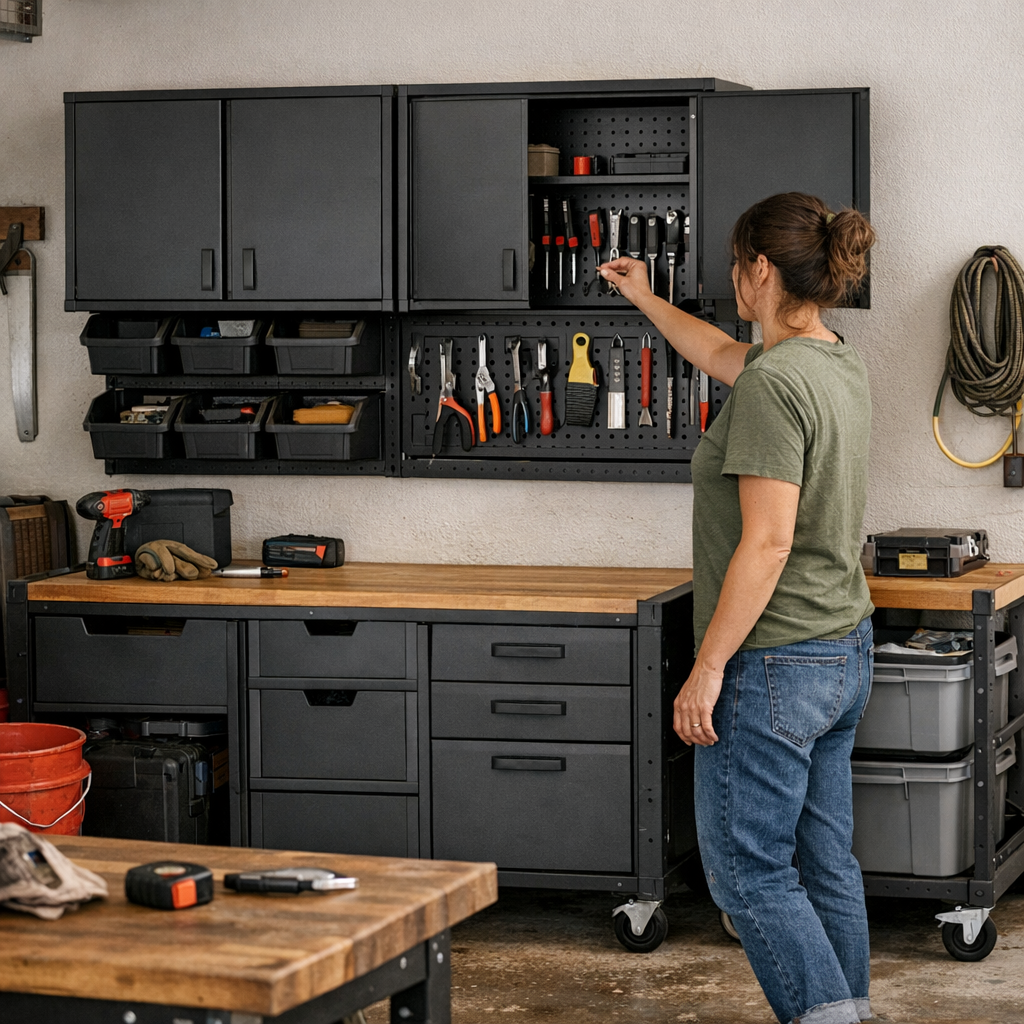
    On day one, every tool has its place. By week three, you’re already sidestepping the promise. Rows of hooks, lined bins, crisp outlines—a modular garage or workshop wall always starts tight. But after even a handful of real afternoons—muddy rakes coming in, drill bits swapped on repeat, bike helmets stashed for “just a second”—the setup fights back. Bins overflow. Trays crawl across surfaces to make space for whatever’s new. “Clear access” turns into a low-stakes shell game, especially after a hectic project or a hurried reset leaves clutter in its wake. It all looked organized, but now it’s a holding pattern. You’re working around your wall, not with it.

    How Fast “Organized” Becomes “In the Way”

    The slip is almost invisible, until it’s not. The neat look fades the moment the system meets real habit. That open-display grid that sold order quickly becomes a scavenger hunt. You reach for one socket and have to double-check—was it this rail, or the next? What should be automatic now takes scanning across near-matches. Hands pause, hunting through duplicates or wrestling the overflow. “Easy access” quickly comes to mean “always shifting something else out of the way.”

    These friction points rarely announce themselves. A rolling cart positioned a little too close so you have to nudge it away every time you need a tool, a tray you leave out once because putting it back takes too many maneuvers, or that dead zone behind a cabinet edge that’s always in the way but never quite usable—each small hitch stacks up. Resets drag out. Two minutes becomes ten. Before long, wall space gets used, but it’s not actually useful: tools wind up on benches, overflow piles in awkward corners, and moving through the area feels more blocked than before.

    When “Everything Out” Means Everything’s in the Way

    All-in-view isn’t always all-in-reach. Those modular layouts layer hooks and holders on every inch, hoping to bring order. But once the wall fills up, clarity fades. Cables snarl with hoses, handles blur, small tools disappear behind a line of clutter. You stop glancing—you have to pick your way through. It’s storage by display, but not by rhythm. Needing a tool means shuffling trays, pushing other things aside just to see what’s underneath. Easy access? More like constant reshuffling, especially when every inch is claimed but none is clear.

    How Overflow and Shuffle Slow You Down

    Picture this: you’re mid-repair, reach for your utility knife, and it’s vanished. Scan the wall—bins block bins, maybe it’s pinned behind a newly perched pliers set. What looked “sorted” is now just visually crowded, and everything you actually reach for is buried amongst items you haven’t touched this month. The mental tax grows. You delay putting things back simply to dodge the awkward moves. Tools land in stacks near your main bench—never a home, always a temporary fix. Every extra shuffle or move costs you time, breaks your flow, and frays the practical order you thought you bought.

    Selective Visibility: Making Prime Space Actually Work

    Don’t show it all, show what you use. After the honeymoon, what steadily improves workflow isn’t more hooks or fancier trays—it’s dialing back on what’s displayed. Real setups thrive when they reserve wall space for the tools that stay in hand project after project, while everything else goes behind panels or into shallow drawers. Keep current essentials out front; tuck backups, bits, and once-a-year gadgets behind doors. The difference isn’t visual flash—it’s every movement feels more direct, with no shuffling just to get started.

    Live-in garages and workspaces make this obvious: project-specific items, neatly rotated, stay visible and accessible. Legacy gear—old hose adapters, an extra socket set, the sander you bring out twice a year—tuck away, freeing up the working surface. No more needing three moves to fetch one tool. No more bench-edge piles. No trays stacked atop trays. Each project starts faster, resets finish quicker, and the routine breathes again.

    Covered Storage: The Quiet Fix for Everyday Slowdowns

    In a small garage that ditched open bins for more covered drawers, the change showed up immediately. Only the active tools needed that week remained out. Everything else faded behind smooth panels. Cleanups stopped stretching. No battles to free up a hook. No running list of “where did that go again?” The reset phase shrank to minutes. Work patterns smoothed out—even when the project list grew, the physical drag didn’t. The wall became a launchpad, not a sorting station.

    Know When Your Setup Is Working Against You

    If you’re pausing just to get moving, your wall is overdue for a reset. Modular systems don’t fail loudly—they fail by inches. That tray you always have to move, the tools that land on the floor, the cart you shove aside every session—these signal a system that only looks organized. The space grinds against your actual routine, with open-access becoming open-obstruction.

    Watch for these visible signals:

    • Overflow piles grow on surfaces even though there’s “space” left on the wall
    • You need two or more moves just to put away—or retrieve—a single go-to tool
    • Cabinets and corners turn into choke points, not shortcuts
    • Sections stay outwardly organized but attract new clutter after every session

    Throwing more hardware at these friction points rarely solves them. The streamlined fix is always the same: remake your workflow for quicker resets. Hide what’s idle, simplify the route for your routine, and use covered storage to carve out repeatable, open paths. You’re aiming for a space that clears itself as much as you clear it.

    Modular, Not Monolithic: Let the System Flex with You

    Great setups flex with changing projects—and clutter patterns. Modular walls aren’t meant to be frozen in their first arrangement. Each season brings a new sort of overflow: early spring means gardening, late summer is bikes, winter’s all about fixing whatever broke in the cold. Your storage shouldn’t fight those routine shifts.

    Instead of maxing out every square inch, rotate what’s forward. Out-of-season gear? Behind doors. Rarely used tools? Covered bins below. That frees the wall for whatever’s genuinely active. In workshops or garages facing tight layouts or awkward footprints, this is the only way to cut down wasted time—less moving, less reshuffling, no more stepping around dead zones or blocked corners. When the arrangement feels stale or clumsy, flex it. The real win is how easily the setup morphs around your routine—not how much it can technically hold.

    Two Small Upgrades with Outsized Value

    1. Build a simple “landing zone” at your main project area. Make a short shelf, a small drawer, or a shallow bin right where you work—a spot to stage items you’re in the middle of using. Reset by clearing this zone first. If things stack up here session after session, it’s your sign that something’s wrong with your flow.

    2. Audit visibility—ruthlessly and regularly. Every month, glance at each hook, tray, and bin. Do you know exactly what’s there—and did you touch it this month? If not, cover or stow it elsewhere. The wall should only show what earns its spot. Clutter comes from over-exposure as much as from neglect.

    The Payoff: A Wall That Fades Away, Not in Effect But in Fuss

    The best modular setups eventually vanish from your mind. In garages and workspaces where the wall adapts, you stop thinking about storage because nothing interrupts your reach or slows your reset. Movement gets easier—you walk through, not around. Trays stay put. Benches clear fast. Dead corners lose their claim on clutter. The setup supports your routine without needing explanation. The real magic isn’t how packed or pretty the wall looks—it’s that you barely notice it at all, even after months of action.

    See real storage solutions and modular setups that keep your workspace working at StackNest.

  • How Carry-On Design Impacts Energy and Efficiency During Travel

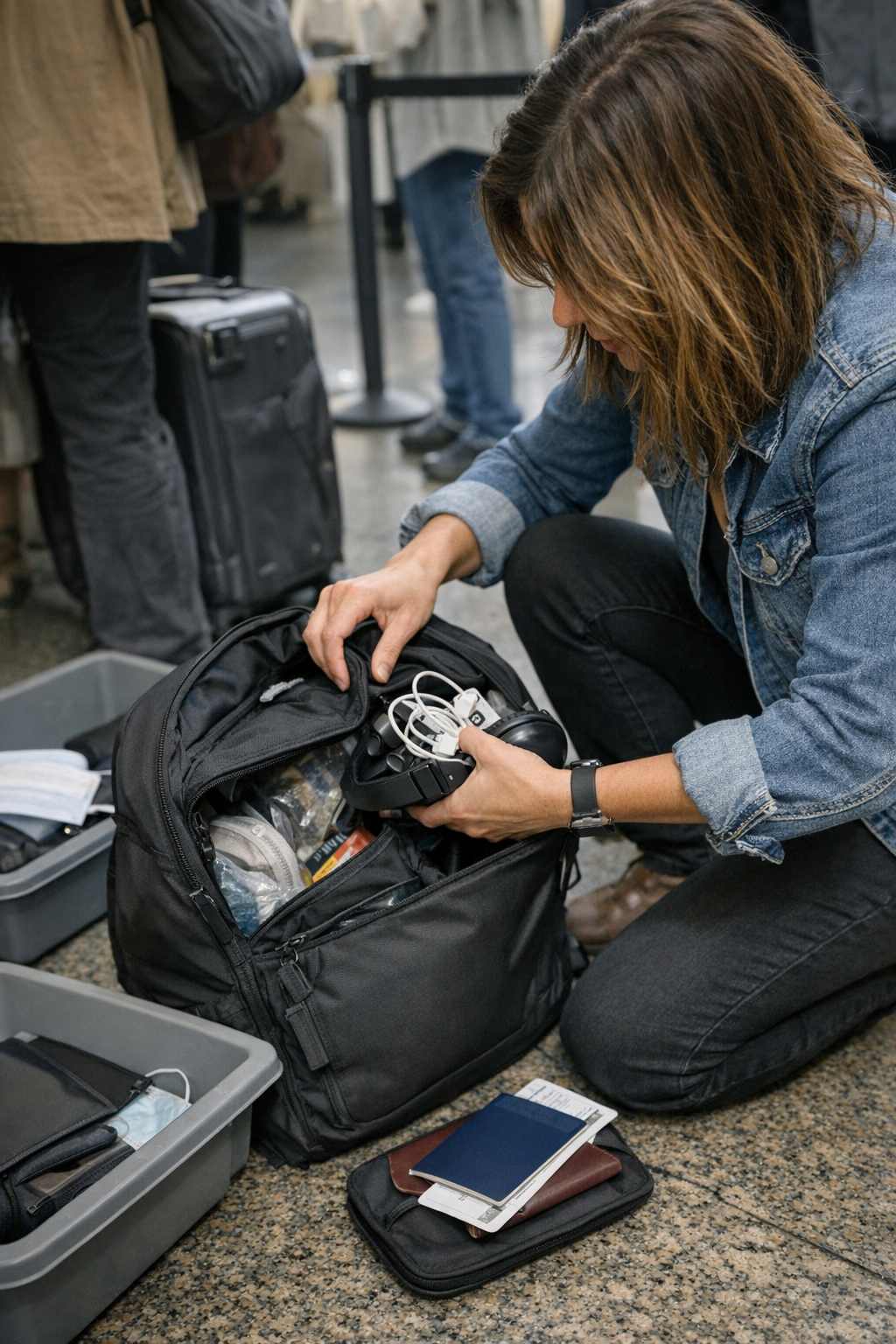
    “Organized” on the bed, awkward at the gate. The problem becomes obvious only when you’re forced to move: lined up at boarding, crowd pressing in, travel documents somewhere “safe,” but now trapped behind over-planned layers. It’s the moment a color-coded, zippered setup—designed for order—turns on you, interrupting each flow point: ID check, security tray, sudden boarding change. What looked neat at the start becomes a repeat access bottleneck, especially as you cycle through more airports in one trip. That’s the real risk: a bag that resists you the more often you try to use it.

    Why neat isn’t always efficient: the hidden cost of tidy layers

    The appeal of a hyper-organized carry-on is strong. Lined compartments and stacked pouches give a sense of control—until actual movement starts. As soon as you hit the first security line, or get called for a surprise gate check, the logic of “everything in its place” turns into a slow-motion unstacking. Your passport is secure, but buried; your charger’s packed, but always under something else. Every retrieval requires a mini-repacking. The very structure that looks sharp in a hotel room quietly works against you on the move, exposing a gap between visual order and speed of access.

    Where friction builds: the frequent-use pinch points

    Most carry-on setups break down fast at touchpoints that repeat—moving trays at security, finding a seat with hands full, making a quick grab for a pen or ID mid-line. Weaknesses show up at these pinch points:

    • Tray transfer stall: If your ID or charger is deep inside a tech pouch, the whole line waits as you work backwards through your own system, under watchful eyes.
    • Seat-entry block: When boarding rows clog up and you need your pass fast, any buried item means you’re blocking traffic, arms overstuffed, patience running out.
    • “One too many pouches” fatigue: Need headphones? That means opening a pouch, then another, just to find them—while juggling a jacket or snack, losing the rhythm you had on paper.

    What starts as a single moment is repeated, accumulating into a low-level drag. By the third or fourth round, this “organized” friction leaves you more mentally spent than you’d expect.

    Repeated repacking: a silent drain on focus and energy

    In theory, repacking after each gate or checkpoint is minor. In reality, it’s a draining loop: stacking cables and documents again and again until every checkpoint becomes a small reset. What felt controlled back in your room turns into constant, low-stakes maintenance—especially visible after two or three full transitions. You’re not just losing time; you’re slowly training your focus away from the airport flow and onto your own bag’s problems. All that precision is useless if key items require a mini excavation every time.

    When structure gets in the way: a real travel example

    During a late connection at Frankfurt, my carry-on’s “secure” system folded fast. I’d buried my passport under a layer of snack pouches—great looking at 5 A.M., but a hassle under time pressure. At every random check, I stopped, balancing a pile of contents on the open bin as the aisle jammed behind me. After the third dig, it was clear: the setup wasn’t helping. It built visual order but failed every time speed or access mattered most—proving neatness is only as strong as its first interruption.

    Making intentional changes: outer-pocket efficiency

    The solution wasn’t another organizer. It was making high-frequency items—boarding pass, passport, key electronics—live in a shallow, outer pocket. One zipper, no buried pouches, nothing fragile. Suddenly, every checkpoint and sudden request became a one-move process. The urge to constantly reset my bag disappeared. Travel rhythm returned: efficient movement, less self-correction, no more line-blocking for a missing document or charging block.

    Next rounds through security and boarding? Faster, lighter, less tense. Key items moved with the trip instead of tripping up the process. It’s not about the appearance—it’s about cutting the real resistance every time you have to reach for the same essentials.

    Packing decisions: where easy access outpaces visual order

    The real difference isn’t how organized your bag looks in photos. It’s how little it interrupts you once you’re moving. Most travel stress isn’t from one big mistake but from a small, repeated ask—digging out a passport for the third time, unzipping a pouch for headphones, searching for a pen at customs. A functional carry-on uses a single, memorable home for high-access items. Deep pockets are for “just in case” gear, not for anything you’ll need before landing. That switch flips your bag from a personal filing cabinet into an in-transit tool.

    A carry-on that adapts with you, instead of one you’re always adapting to, is the only one that actually delivers its promise—order without extra friction.

    Recognizing a reliable setup in daily travel moments

    Real practicality shows up in the quick-draw moments—boarding with the crowd, flashing ID at an unexpected checkpoint, slipping a device out on the move. The outside of the bag might signal order, but the shift is internal: friction points are gone, and the mental load falls away. You notice the difference not when you pack, but when routine disruptions become non-events instead of show-stoppers. Energy goes to catching flights, not reordering headphone cords or snack wrappers after every stop.

    It’s subtle, but measurable: less downtime, quicker recoveries, more flexibility if a gate changes or a line forms. Not resetting your own packing system at every stage frees you to focus on the trip, not your tools.

    Practical guidelines for less repeated repacking

    • Place your most-used items (passport, device, pen, mask) in a single outer or top-access pocket—avoid stacking, avoid nestling.
    • Use main compartments only for bulk items or anything you won’t need until after landing (spare batteries, backup snacks, extra layer).
    • If you’re opening two layers or more for anything you touch each transit, your setup is costing you tempo. Rethink access first, order second.
    • If retrieving something disrupts you at every checkpoint—no matter how neat it looked before—move it to the fastest pocket, even if feels a little less perfect in the mirror.

    Carry-on order that works: moving beyond the surface

    The carry-on that actually works isn’t flawless—it’s frictionless where it matters most. Getting through trays, aisles, and quick checks without falling out of sync, resetting, or building new obstacles is the mark of good structure. You won’t eliminate all disruption, but you can turn your bag into a moving tool rather than a moving target for minor frustration. Each trip, each routine, new airport or familiar one: if access flows, you’re set up for less drag and more momentum—no matter how perfect the packing looked on the bed.

    Shop practical carry-on essentials at CarryOnSupply

  • Why Adding More Storage Can Complicate Your Closet Organization

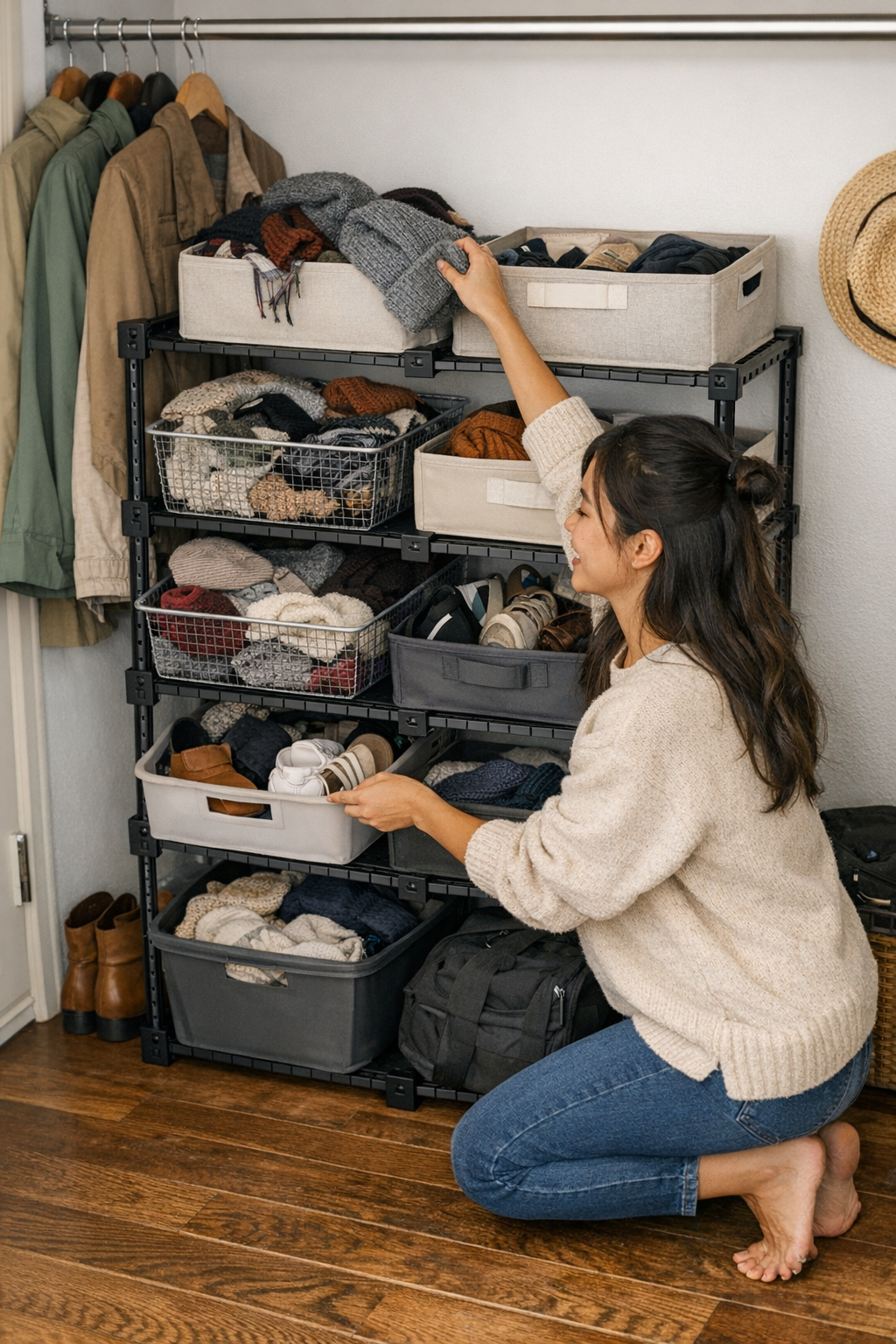
    There’s a hidden snag in the classic fix for clutter: just adding more shelves and bins doesn’t guarantee real order. It often swaps visible mess for invisible hassle. On day one, more storage feels like relief—coats slide easily onto a fresh row, baskets line up, and everything has an official spot. But a few days in, friction creeps back. After a late night, you hesitate with the laundry basket, no longer sure which bin handles overflow socks. You reach behind a stack of scarves to pull out one hat. Folded shirts topple as you dig for a favorite tee. Instead of streamlining tidying, extra storage quietly multiplies tiny storage decisions and makes daily resets slower than before.

    When More Storage Means More Sorting—and Less Flow

    Expanding a closet or utility space can feel like you’ve upgraded your life. At first, every accessory has a dedicated bin, every shelf line is clean, and overflow is gone. But real routines are messy—gloves migrate from their bin, sweaters settle wherever there’s space, and snack boxes inch across pantry shelves. That “reset button” sensation fades as bins fill unpredictably and shelves crowd faster than you planned. The line between organized and chaotic blurs every time you rush to put something away or grab something in a hurry.

    Small Choices, Big Slowdowns: The Trouble with Too Many Options

    Every shelf and bin you add opens a new possibility—and a new place to lose things. The friction isn’t container count but constant micro-decisions: where does this go, will it fit, is this the right spot? Think about those matching baskets labeled “scarves,” “hats,” and “extras.” After the Monday morning scramble, those clear lines dissolve. By Friday, the “hats” basket holds loose mittens, the “scarves” pile is buried under headphones, and you’re rifling through all three to find what you need. The system that looked tight on setup day now feels vague, and you spend more time scanning, guessing, and reshuffling.

    Most people spot the real trouble when it’s time for a quick tidy—before a guest arrives or just to reclaim counter space after a week. If you’re pausing at the closet door, basket in hand, trying to remember your own setup, that’s storage friction making itself known.

    The Real Limit Isn’t Space—It’s Access

    Vertical space is tempting. Stacking bins high or layering shelves feels efficient, but in practice, only what’s in easy reach gets daily use. Eye-level baskets fill up immediately. Anything above shoulder-height becomes “later storage”—the spot for off-season gear or things you half-forget you even own. The higher or deeper an item is tucked away, the less likely you’ll use or reset it fast. That’s when lost gloves surface months after winter, and neglected bins turn into vague catch-alls nobody wants to sort through.

    Shallow vs. Deep: Why Some Containers Actually Slow You Down

    Contrast a giant laundry basket—grab, toss, done—with three mini-bins for socks, lights, and darks. Suddenly each load needs sorting twice, and there’s a decision every single time. Multiple shallow bins mean multiplying your mental effort: does this go with t-shirts or in that odd “workout gear” basket? Over a week, routines stall. Instead of effortless resets, you’re left reshuffling categories and picking up little piles that never seem to stay put.

    Where Storage Friction Hides in Everyday Life

    Real storage struggles show up in all kinds of small, recognizable ways: Entryway shelves that can’t handle a mud-soaked pair of boots, home offices where paper stacks won’t stay separated, closet zones that start off clear but blur into one big jumble by midweek. You might catch yourself moving the same pile of grocery bags from shelf to shelf, or wrestling with an unstable stack of folded towels every time you need just one. These are not dramatic failures, just the subtle signs your system requires too much maintenance.

    When Tidying Up Feels Like a Reset That Never Ends

    If your quickest cleanups get slower and you find yourself in endless “mini-organizing” sessions—a few shirts restacked here, a pair of shoes consolidated there—the storage setup isn’t supporting real life. Instead of routines becoming second nature over time, they feel more like recurring chores. The system’s failing if you’re always a step behind, no matter how much storage you added.

    Small Shifts, Real Gains: Making Your Storage Actually Work

    Sometimes the biggest improvement is not more storage, but less—used better. In our hall closet, swapping five stacked bins for just three at chest level changed everything. Suddenly nothing was teetering above head height, nothing required crouching or reaching blind. Everything was a glance or a grab away. The usual after-work reset—bags, scarves, keys—went from a ten-minute battle to a quick, thoughtless sweep. The system became not only more usable, but visibly less prone to new clutter sneaking in overnight.

    Tip: Instead of adding more containers, try removing whatever’s hardest to reach or least used. Watch if your daily resets speed up and your surfaces stay clearer longer. Real organization comes from effortless, repeatable motion—not just pretty labels or maximum capacity.

    Test Your Setup: Is It Sturdy or Just Styled?

    The most telling measure of storage success isn’t how put-together it looks right after cleaning. It’s how quickly you can return a stray item, find what you need without second-guessing, and keep categories from melting together. If you’re tripping over bins to access basics, or the shelf lines that once looked crisp are now caving under mixed piles, it’s a system that needs rethinking.

    When every item has a clear, reachable zone and resets are so automatic you barely notice them, you’ve landed on a setup that matches your life. It stays ready for action, not just ready for photos. The real win isn’t walls lined with storage—it’s a closet, entryway, or shelf that stays organized because it fits the way you actually live, not just the way you wish you did.

    Explore practical closet and utility storage solutions at ClosetWorks.