
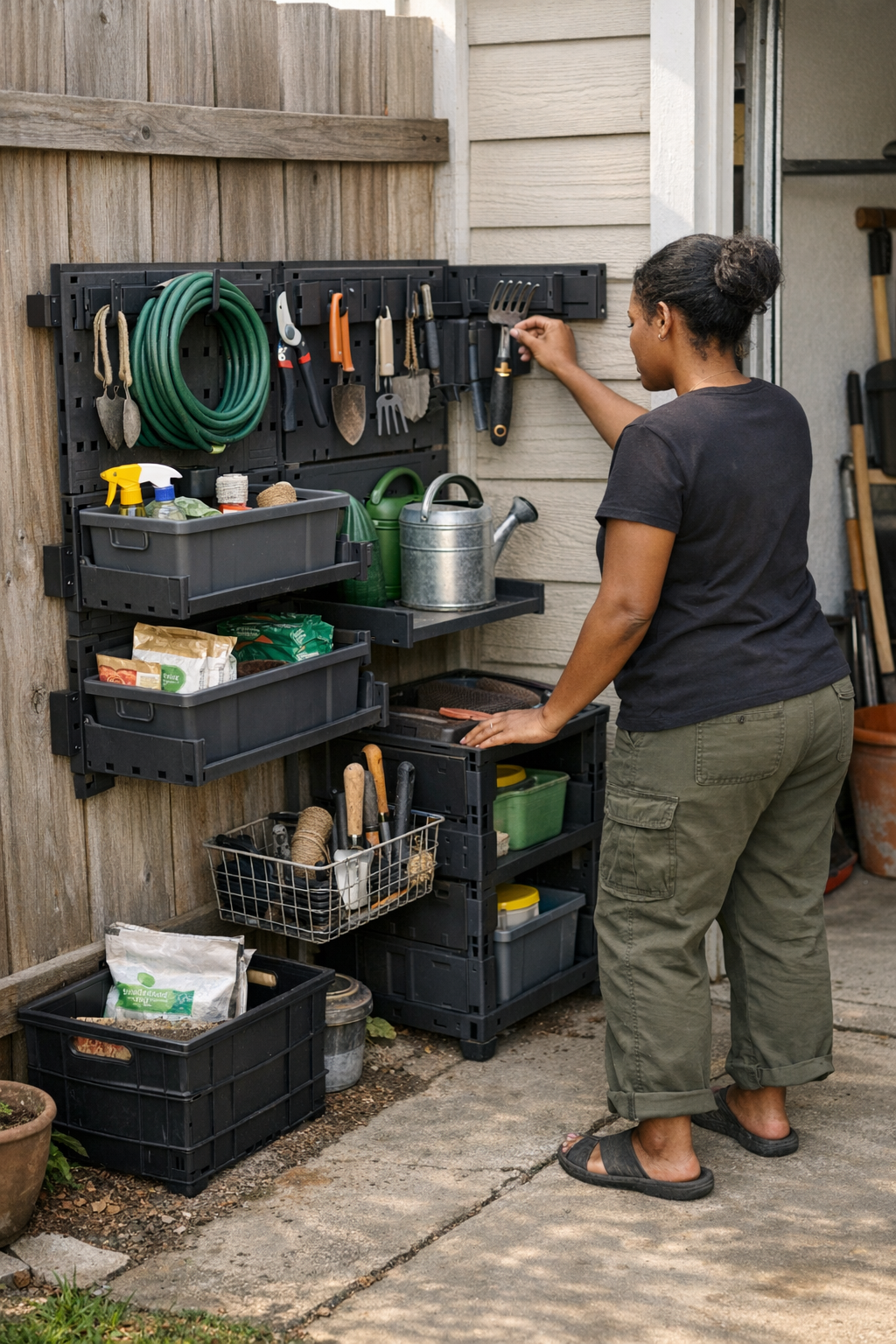
The backyard corner that never stays cleared: Everyone knows it—the one spot where tools and gear keep piling up, no matter how many “deep cleans” or weekend resets you manage. You drag your mower in after a wet mow, try to hang up a tangled hose, wedge the shovel where it might not topple. By Tuesday, garden gloves, old nozzles, and stray hand tools have already formed a new heap. If you share the space—family, roommates, neighbors—the buildup doubles. It’s not laziness. The real burden is fighting a setup that never matches how the space actually gets used. The same gear, the same routines, always push back against the old “fixes” that look organized but fall apart under pressure.
The Single Zone Squeeze
Almost every backyard falls for the single drop zone: one bin stuffed by the fence, one overworked hook near the door, one rack shoehorned into the side-yard. These setups promise order but quietly lock everyone into the same problem: all return traffic slams straight into the same crowded bottleneck. By Wednesday, tools are balanced on top of each other, that roomy bin is stuffed and hard to close, and the tidy row of rakes is now a locked-up wedge. To grab a spade, you have to juggle three tangled handles and hope you don’t send a bucket rolling down the path.
The Real Reason Things Drift Out of Place
In theory, a single wall rack or shared bin should be efficient—a place for everything. In practice, everyone on their way back from a muddy job or quick chore just drops things at the closest empty spot. If you’re coming in with dirt-caked boots or hands full of clippings, the “right” spot barely crosses your mind. Over and over, the area closest to the door or gate absorbs every shortcut. Because there’s never enough spread for return flow, the overflow always floods back into that same corner or bin.
Everyday Problems: When Storage Layout Gets in Your Way
You finish trimming after a surprise rain—the side path is mucky, so you move quick, trying not to track in more mud. The only free hook already holds a coil of wet gloves from someone else. Every other tool is jammed into the same bin, handles sticking out at odd angles. You angle the mower in, brush against a leaning rake, and watch a pair of gloves drop into a puddle. Next day, you need a hand trowel and end up emptying half the bin just to find it under the heap. What started as “everything in one place” turns into “nothing is easy to grab.” Each step means more fishing, more reshuffling, and less actual work done.
Where Standard Bins and Racks Quietly Fail
The problem isn’t obvious at first. Standard bins swallow the first batch of gear, but on a normal week? Short tools disappear under heavier ones. Lids get left open, so rainwater pools by the fence. The side-yard rack looks fine for a day, then every hook is overloaded and all it takes is one misplaced shovel for the pileup to start again. The friction builds slowly: soon, you can’t move through the area without bumping something out of place or tripping over a lost trowel. Resetting turns into a full chore, not a quick fix.
Even modular racks, when lumped in one wall space, end up collecting all the problem overflow. “More storage” is a tempting idea, but usually just grows the pile, not the access. Corners that should free up pathways become clogged dead zones. Too often, what looked organized is back to being a visible, slow-moving mess.
How Distributing Storage Unblocks the Routine
The game-changer isn’t more capacity—it’s dividing where things return. Replacing one bulky bin or unified rack with separate wall panels, spaced-out hooks, or small modular sections gives you actual movement. Instead of everyone shuffling back to the same over-stuffed area, people drop tools at the nearest clear spot. The odds of one return “traffic jam” drop fast—because there isn’t a single spot to jam up.
Does your garage edge have dead stretches? Hang a panel at each end, leaving the center open. That awkward side-yard? Break it into two small sections: one for muddy, heavy equipment, another for quick-grab hand gear. This layout means no single spot can overflow unnoticed, and if one fills up, it’s obvious—and easy to fix before it spreads. The path stays clear. Cleanups go from a weekly grind to a simple once-over.
After the Setup Change: What Actually Shifts
The difference isn’t flashy, but it shows in the routine. No one needs to move five tools just to hang one. The walk from garden bed to wall drop shrinks to a single step or lean. Clutter is easy to spot because it’s actually separated, not stacked head-high. That endless corner pile finally gives up. Resets take minutes, and you stop dreading the “put everything away” step because it doesn’t require a total reshuffle. The wall setups hold—useful, not just neat for a day.
Tweaks That Make Distributed Setups Work
Make usefulness visible: Tools you grab every day go in the easiest spots; heavy or rare-use items get a more out-of-the-way hook. If an area clogs up, call it overflow and reorganize a section, not the whole line. For narrow zones or high-traffic paths, angle sections outward into open space instead of across the passage—no more blocked entries or pinched walkways.
Frequent rain or muddy gear? Drop an absorbent mat or rugged tray beneath the “wet zone” hooks. Small details like this keep the rest of the strip from going slippery and mean less cleanup later. The goal isn’t to look like a catalog but to stop your setup from quietly betraying you after a couple normal, messy days.
It’s About Function, Not Flawlessness
No backyard, garage, or fence-line holds showroom perfection—nor should it try. The setups that work aren’t the ones that stay pristine but the ones that make it harder for clutter to take over in the first place. Distributed storage won’t prevent every tool from vanishing or stop mud at the gate. Gear will shift, gloves will wander, someone will still drop a rake behind the compost bin. The difference is, every reset is smaller. Cleanup is lighter. The same old corner isn’t waiting for that next unmovable pile. In real outdoor zones, it’s the right structure—not just “more room”—that keeps your routines rolling instead of grinding to another messy halt.
See more practical outdoor storage approaches at TidyYard.