Category: Yard & Utility

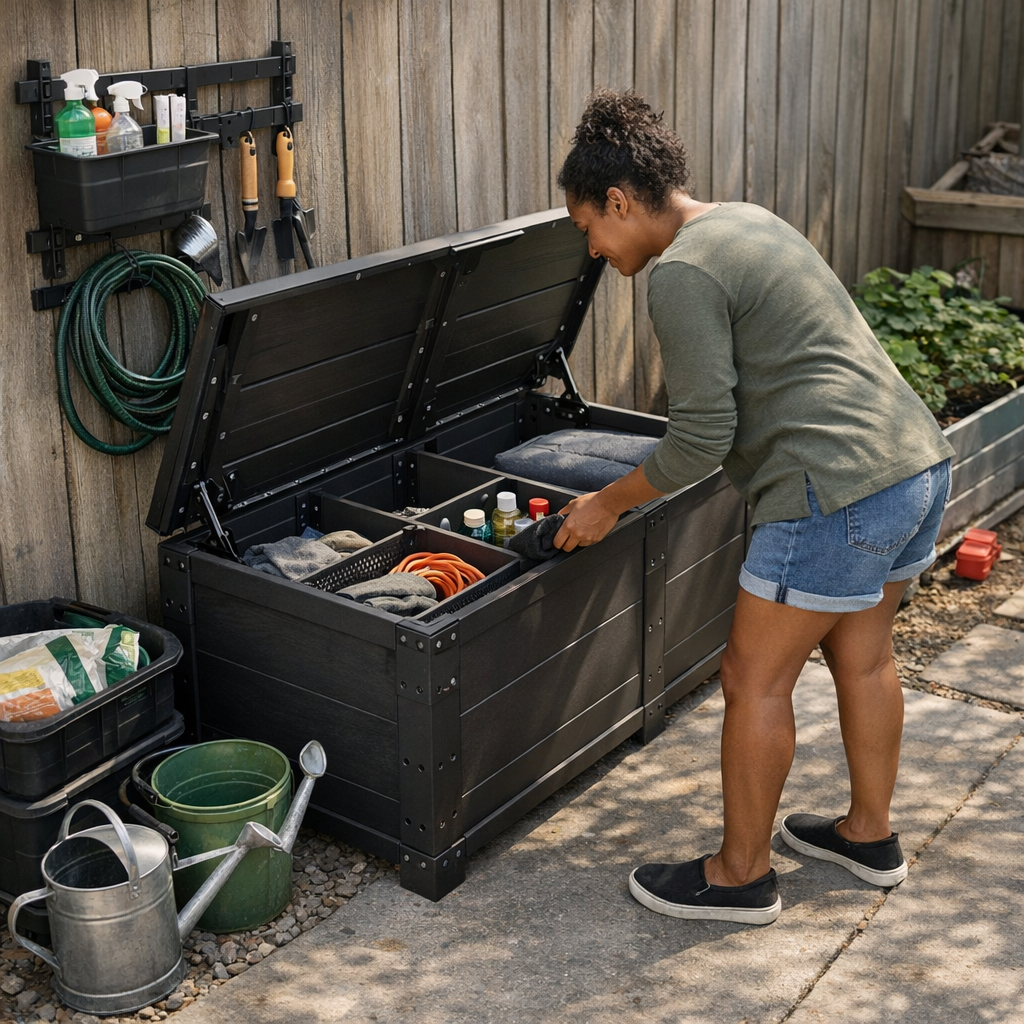
  • Why Lift Top Storage Benches Need Dividers to Stay Organized Long Term

    A lift-top storage bench looks like a shortcut to order—just drop clutter under the lid, close it, and the mess disappears. But that clean surface is a trap if the inside turns into a mixed pile the moment real life resumes. The first time you stash blankets, board games, or chargers, the room feels under control. But within days, finding a single missing remote or tomorrow’s shoes means digging through a jumbled tangle, lid banging open and shut as you hunt. What seemed like instant calm quickly reveals a slower, hidden chaos—the bench gives the appearance of organization while quietly reshuffling the mess into a new, less visible problem. In a high-traffic living room, narrow entryway, or any spot that sees repeat use, poorly organized storage benches start costing extra time almost immediately.

    Where the Easy Win Turns into Hidden Work

    A storage bench promises fast resets—much faster than open shelves that constantly attract surface clutter. But when the interior is one undivided zone, “tidy” becomes “concealed,” not organized. By week’s end, shoes are jammed against bundled cords, game boxes vanish beneath sweaters, and the next retrieval triggers a miniature excavation. From the outside, it looks neat; from the inside, it’s a single undifferentiated drift. Every time you need something, you’re slowed down. Every time someone else adds or pulls out an item, categories blur further, making return flow and next-use even clumsier.

    This isn’t a minor inconvenience: if pulling out a charger or a bedtime book takes shifting half the contents, the bench has traded surface clutter for chronic retrieval work. What looked like a solution turns into a shift in where—and how often—you wrestle with disorder. The friction doesn’t go away; it just gets buried one layer deeper.

    Living with Unstructured Storage: Recognizing the Real-Life Patterns

    Unstructured storage breaks down by habit, not accident. The signs are measurable and familiar:

    • Opening the bench lid twice to fetch the same thing, because it’s slipped beneath heavier or bulkier items—especially in mixed-use areas.
    • Shifting through blankets or bags just to reach the small-but-essential daily objects, like remotes or headphones, now wedged somewhere underneath.
    • Watching one “overflow” corner collect everything light or loose, since each opening and closing shifts items unpredictably, pooling category run-off in random pockets.

    This cycle shows up fastest in spaces that carry mixed categories—entryways where backpacks, shoes, and keys pile up; living rooms serving both entertainment and storage; kids’ rooms where toys and clothes rotate daily. The real cost is a chronic, shifting reset: just as things settle, a single chaotic search unravels the “tidy” system.

    Fast Tidy-Ups vs. Long-Term Friction

    For quick company cleanups, a bench is unbeatable—everything out of sight in seconds. But those “fast resets” keep pushing clutter deeper. The next routine retrieval—a favorite book, phone charger, or that one missing shoe—now drags out, blocked by layers of mixed stuff the bench collected in a rush. In a shared home, this becomes a loop: the more people use the bench, the more its core flaw compounds. Saturday night looks spotless; by Sunday morning, it’s an awkward, time-wasting search, driving everyone back to old surface piles or open shelving just to escape the buried mess.

    Why Open Interiors Create Category Drift

    This is category drift in action: every undivided bin is one step away from chaos. Lighter objects slide to the edge, small things gather in unplanned corners, and “set down” zones quietly collapse. Instead of solving the friction of clutter, the bench just shifts it behind a hinged disguise. You still spend just as much time moving stuff around—the only difference is that now you’re working blind, and the mess is more frustrating to undo. The bench stops you from seeing clutter, but not from living with it.

    Breaking Up the Compartment: How Dividers Make the Difference

    The fix isn’t complex, but it is structural: internal divisions. Add adjustable dividers, small baskets, or soft bins set to actual use patterns—not just to look tidy, but to enforce concrete boundaries.

    • Blankets and throws drop into one deep section—no more tangling with tech gear as people dig and drop throughout the week.
    • Remotes, paperback books, or chargers go into a shallow, easy-access spot rather than vanishing under bulkier items.
    • Shoes and fast-grab gear each get their defined corridor; instead of fishing, you lift and go without disturbing the rest.

    This setup transforms the bench from “anything goes” into a tool for routine. Reset is still one action, but retrieval is sharper, and items land back where they belong, not wherever there’s space. The difference isn’t always visible outside—but fewer lost items, faster daily flow, and no more bottomless pile syndrome make it quietly decisive over time.

    Choosing the Right Bench for Real Routines

    Bench shopping by size alone is a mistake. Go too deep (past 12 inches) and you build a graveyard for small things—lost until the next dump-out. Instead, match the internal structure to your main use: a bit less volume with better compartments is nearly always more practical than a giant undivided trough. Configuration costs more to ignore than capacity ever will.

    How Setup Impacts Movement and Flow

    Footprint and location shape daily use far more than catalog photos show. A bulky bench in a narrow hall fixes paper clutter by creating a new path problem—it blocks fast movement, creates bottlenecks, and exposes the flaw of a single shared bin. With internal dividers, two people can grab shoes or gear side by side. Without them, it’s one slow turn at a time, and the area turns into a choke point that everyone avoids.

    Practical Tips: Optimize for Reset, Not Just for Looks

    • Integrate dividers or baskets right away, even if you start with a simple open bin. Establish the boundary before drift sets in.
    • Audit monthly, because no setup stays sorted by accident. Pull everything out, reset category edges, and clear mix-ups before they harden into habit.
    • Reserve a front-facing segment for grab-and-go stuff—whatever comes in and out daily should be quickest to reach, not buried even for five minutes.

    Does Your Storage Bench Really Work for You?

    An under-lid bench can keep mixed-use zones functional, clear, and calm—but only if the interior is built for how you actually live. Without internal boundaries, it’s one step above a closet floor: clutter traded for harder retrieval, not less work. Compartmentalizing doesn’t just tidy what you see; it prevents daily resets from multiplying into hidden messes. Every lid lift is less of a gamble, and routines flow instead of stall.

    Explore more practical storage solutions and setup ideas at Gridry.
  • Designing Outdoor Storage for Effortless Daily Returns and Less Clutter

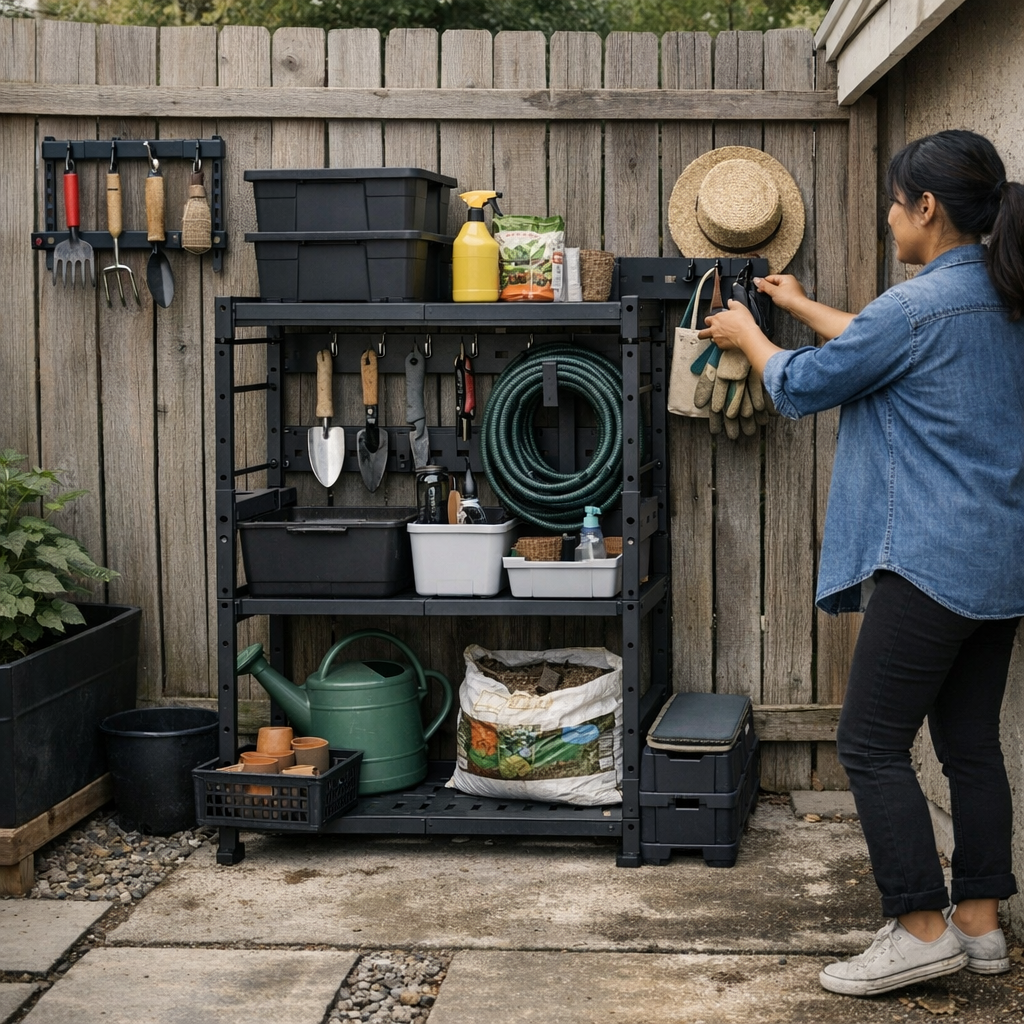
    Most backyard storage fails in the same spot: not when you run out of room, but right after you put the tools down and walk away. That perfect “reset” you did on Sunday slips the moment returning gloves or a hose means navigating around jumbled bins or sidestepping stray gear. If tossing tools on the nearest flat surface feels faster than actually putting them away, that “organized” zone turns into a daily obstacle course that slows you down and builds new clutter almost instantly. Every parted pile or blocked path quietly signals: this setup isn’t helping—resetting is just one more task, not part of the flow.

    Why Does the System Start Slipping?

    Freshly cleaned corners and crisp bin rows look good for a single morning. But step back into real use: ten minutes clearing leaves, then carting grass clippings with muddy gloves, distracted by a neighbor or chasing a restless kid. Suddenly, that line of baskets along the fence is already breaking down. One item dropped “just for now,” then another left balanced on top—and by the middle of the week, the bins are a jumble, the paths are blocked, and the Sunday order is gone.

    The problem isn’t lack of space—it’s the gap between neat storage and how the area gets used. A row of bins, shelves, or patio cabinets lasts exactly as long as nobody’s in a hurry, and everyone’s hands are clean. During real days—with surprise rain, rushed afternoons, or too many hands searching for the same trowel—there’s no patience for careful returns. The spot made for easy access becomes inconvenient just when you need it most.

    The Return Flow Breakdown

    Outdoor organization doesn’t collapse in a dramatic mess—it quietly unravels every time a return is just a little too annoying. If getting the hose back in its bin means dragging past soccer balls or shifting a pile of rakes, “back where it came from” turns into “anywhere for now.” Blocked walkways, jammed entryways, and junked-up corners multiply in places where the return path takes too much thought or too many steps. These friction points feed small, persistent messes: that dead patch between house and fence, the side of the garage door where brooms pile up, or the end of the wall rack you can’t reach without moving a planter.

    Picture this: You push through the side yard, already loaded down, only to find the secateurs wedged under someone else’s boots. You don’t fetch them; you grab the hand fork that’s loose on the shelf instead. When wrapping up, you skip finding any bin at all—just drop the tool on top of the nearest pile, promising yourself you’ll “fix it later.” By Friday, fixing anything feels pointless; the routine break has become the new routine.

    Invisible Bottlenecks and Overflow Traps

    The worst clutter magnets aren’t designed—they just happen:

    • The footpath from back door to gate, always snagging jackets, boots, or yard toys nobody wants to wrangle back inside.
    • A corner where a rolling cart should make things easier, but now can’t budge because it’s boxed in by soil bags and buckets holding “project leftovers.”
    • The fence line loaded with hooks, yet half of them hang empty because returning tools there means detouring behind a stack of planters or tripping over a hose.

    These aren’t storage shortages; they’re weak return routes and awkward movement paths. Even when there’s empty wall and floor, people dodge the setup instead of using it. “Visible” organization means nothing if there’s a step, shuffle, or squeeze before every return. Clutter always collects first in the places where the walking route gets blocked.

    Movement Before Measurement

    Most outdoor storage looks like it fits—until you use it. The setup that squeezed three bins into the side yard now means sidestepping with a rake or garden bag, and reopening the lid means moving something else first. Modular cabinets along the garage wall seem perfect—but only when the path is empty. As soon as a bike gets leaned against them or a week of rain throws gear everywhere, opening a cabinet feels like restaging the whole yard.

    Try the after-rain reset: soggy gloves, muddy trowels, and scattered dog toys dumped “for now” onto the closest lid, or wedged at the gate. Every extra movement—lifting a bin, shifting a planter, reaching around a tarp for a hook—makes the return more likely to get skipped. These aren’t big failures, just small, repeated delays that add up to rooms and corners filling with spillover before the week is half over.

    What Actually Changes the Flow?—The Side Yard Example

    Visualize the no-man’s-land between your house and the fence. Early on, you lined the ground with storage cubes and, for good measure, installed shelves above head height. But after two weekends, the cubes are jammed with mixed tools, the shelves hold old flower pots, and the ground itself is half-blocked by a weed trimmer and hose. The flaw: nothing you use daily has a quick, visible landing spot—returns get jammed into whatever happens to be loose space.

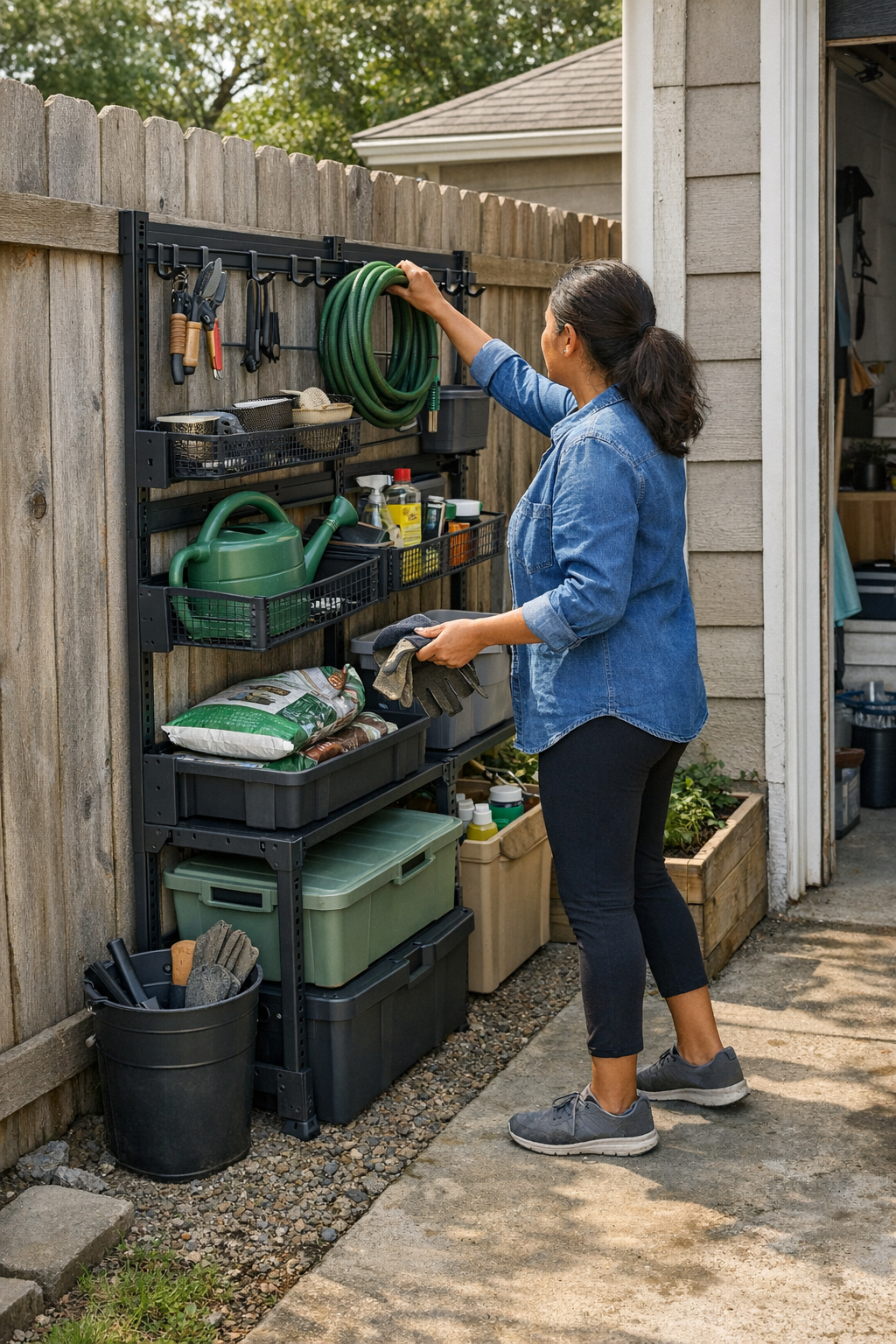
    Replace the floor cubes with a row of wall hooks, all at shoulder height and right next to the gate. Now, there’s no bending, no sorting, no guessing where things go. Gloves, pruners, and the trimmer hang in plain sight. Returning them takes a single, obvious motion—not an act of willpower. If an item doesn’t make it back, it stands out, easy to fix. The shift isn’t in looks—it’s in the rhythm: returns are almost automatic instead of awkward, and resets never pile up.

    Setup Tweaks That Shift the Routine

    The right change is usually small, but targeted:

    • Single-purpose, visible “homes” for the most-used gear: Wall hooks, mini racks, or labeled cubbies at arm’s reach. If you use it every day, it should have a dedicated spot you see from where you stand when you finish.
    • Closed, consolidated storage for rarely-moved items: Cabinets or chests belong in the background, not as the main return path. Daily essentials need to be as open as possible—no lids to lift, no doors to open, no stacks to sort.
    • Short and direct return zones: Place return spots no more than a couple of steps from the work zone—inside the gate, beside the path, at the patio edge. Anything further encourages the “just drop it” habit.
    • No reshuffling needed: Avoid setups that force you to lift or move one thing to put away another. Make sure nothing “blocks” the daily flow—if you find yourself shuffling pieces after any normal use, it’s a sign the layout isn’t matching the rhythm.

    Real Setup, Real Difference

    Outdoor areas work best when storage follows movement, not just measurement. Systems that support quick, in-passing returns beat anything that looks tidy but interrupts use. When the setup makes the most-used path obvious, resets shrink from a dedicated chore to a 10-second habit, no matter how hectic or muddy the day gets. Even on the messiest afternoon, you’re only one or two small moves away from “ready to go” again, not a full reorganization.

    This isn’t about showroom looks or perfect lines. The win is in a storage corner, garage edge, or fence zone that shrugs off resets and never needs a round-two cleanout. Place what you use most right where you naturally walk. If movement feels easier, if returns happen without afterthought, the setup is doing its job—spare yourself the slow returns, constant reshuffling, and those nagging overflow piles.

    See real outdoor storage built around how your space actually works at TidyYard.

  • Why Wall-Mounted Rails Outperform Traditional Hooks in Busy Entryways

    Clutter in the entryway is rarely dramatic, but it’s relentless. The moment two people drop a bag and a damp jacket at the same time, the system breaks: hooks fill, bags spill, shoes creep outside their lane, and a once-clear passage becomes a daily bottleneck. Suddenly, what looked “organized enough” turns into a zone you have to wrestle your way through—nudging shoes, shifting coats, digging for keys—just to get in or out. If you’ve found yourself resetting the same pile five days in a row, the problem isn’t your willpower; it’s a setup that can’t flex as daily routines overlap or weather turns unpredictable.

    Why Fixed Hooks Fall Short When Routines Overlap

    Fixed hooks seem like they should hold the line—a neat row on the wall, each with its role. Until real routines return. The cracks show instantly when:

    • Multiple people pile in together: Three hooks become too few long before you hit the door with two backpacks, a raincoat, and someone’s gym bag.
    • Gear gets bulky, damp, or dirty: One jacket drips onto another, bags press together, and what doesn’t fit gets stacked on benches or left on shoe racks.
    • Resetting gets awkward and slow: Shifting one thing tugs another, knocking keys down or tangling up bag straps, and a quick “clean up” always turns into an annoyed scramble.

    This isn’t just surface clutter. It’s the difference between an entryway you can walk through in one motion and one that stops you to rearrange piles. Over time, overflow spreads—shoes start migrating out from the bench, bags slouch onto the floor, and what’s meant to be “temporary” almost never gets put away. The zone that manages gear turns into the zone that collects it.

    Rail Storage Adds Crucial Flexibility in the Entryway

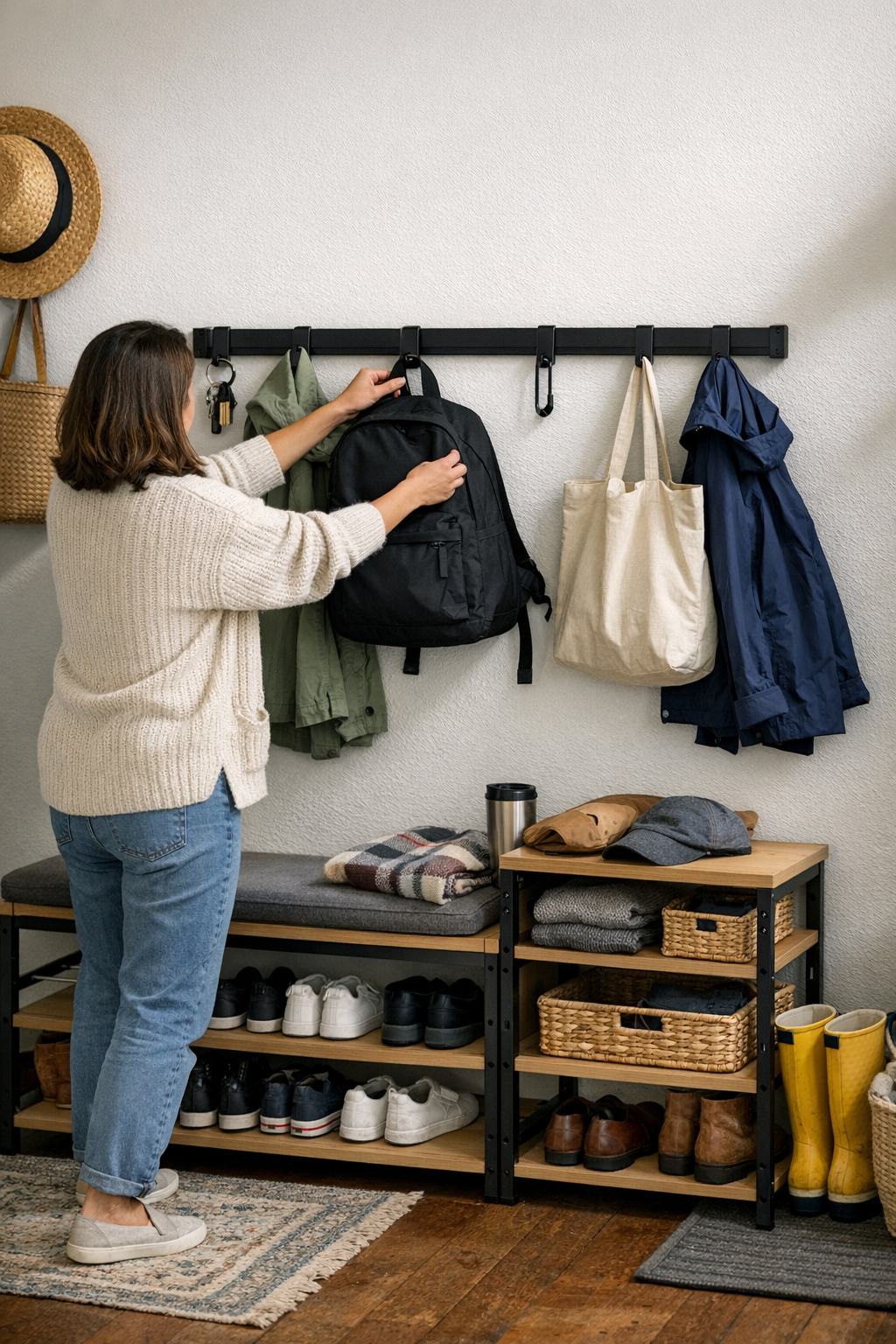
    Install a wall-mounted rail with sliding hooks and you’ll see the difference inside a week. A rail isn’t just decorative—it’s an adaptable zone. Need more space for winter coats? Slide a few hooks tight together. Wet jackets after a storm? Move a hook aside so they don’t drip on school bags or pile up on the shoe bench. Rush hour bulk drop? Cluster hooks on one end to catch the day’s overflow, not block the main path.

    • Group bulky coats away from the door to keep quick-access hooks clear for keys and daily bags.
    • Slide wet items to the end—no more drips on shoes or tangled straps.
    • Re-arrange for after-school gear explosions, then reset for evening calm, all without taking the whole wall down.

    This isn’t about keeping things “pretty.” It’s about stopping regular rushes—or surprise gear dumps—from turning a threshold into an obstacle. The difference: the entry stays usable, not just tidy for a moment.

    Where Fixed Hooks Break Down: An Everyday Scene

    Late afternoon—school bags and a heavy parka arrive just as someone settles on the bench to get their boots off. The hooks are already crowded. The first bag fits, the second half-hangs, shoved against a coat. Going for the keys? They tumble off a hook that’s lost all open space. The shoe row becomes backup storage for whatever can’t be hung. Clearing any of it means juggling armfuls while other feet try to squeeze past. Every item added tightens the zone, and every retrieval becomes a reset.

    How a Rail Handles the Same Pressure

    Rail system: shift a hook. Backpacks move left and clear bench access. The parka slides over—no more drips down on bags. Keys get their own hook, not tangled or dropped. The floor stays visible—shoes don’t vanish under collapse. This time, nobody has to move three things just to reach one. The path is open, even with the usual chaos.

    Real Improvements, Not Just Visual Tidy

    Rail storage doesn’t erase clutter, but it blocks the cycle where stuff crowds every surface until the only option is a total reset. Over a few weeks, you notice:

    • The bench stays clear for sitting—it isn’t just a backup for what can’t hang.
    • Shoes stay visible and accessible—no more getting buried by whatever slips off a too-crowded hook.
    • Pressure gets relieved as needed—clusters, slides, and isolation give you options instead of forcing ugly reshuffles.

    The difference isn’t decor; it’s a daily routine that survives real-life mess. The threshold stays open, resets get faster, and friction drops—even when nothing is perfectly in place.

    When a Rail Really Makes the Difference (and When It Doesn’t)

    Some households—just one or two people, no shared gear, staggered schedules—can get by with a few fixed hooks. But if your entry is regularly overrun by:

    • Morning and afternoon traffic jams
    • Mixed-weather chaos piling up gear in waves
    • Shared drop zones and guest overflow

    —then a wall-mounted rail starts to matter. The detail that counts: you need a minimum of 18–24 inches of wall to let the rail flex. Without that flex, benches and shoe storage will still become overflow zones, no matter how tidy the hooks look. If you’re still stepping over bags and bumping shoes aside, the fixed hook setup is not holding up—it’s just hiding the jam behind better spacing.

    Why Setup Flexibility Becomes a Daily Advantage

    Rail storage doesn’t banish clutter forever, but it delays—and often avoids—the moment when minor annoyances become deal-breaking clogs. Shifting hooks for the week’s rhythm means less blocked movement, less searching for buried shoes, and faster resets. The system flexes; the routine flows. Entryways only look functional on paper—real function comes when storage can bend to absorb whatever real days drop at the door. For most busy setups and shared drop zones, a rail isn’t a compromise: it’s a defense against repeated frustration, letting the entry hold its purpose without constant workarounds.

    betweenry.myshopify.com

  • Entryway Storage Benches with Divided Cubbies for Organized Living Spaces

    The open-bench trap: how easy storage can slow you down

    Most entryway benches look organized for a single day. Line up shoes, slide in bags, and it seems like the clutter problem is solved—at least until real life takes over. After just a few days of actual use, the order collapses: shoes scatter, bags migrate, and the put-it-back routine stalls. Morning rushes turn the neat bench into a blockaded zone. Every exit means stepping over shoes that didn’t return to their spot, or digging through someone else’s gear to find your own. The open design that’s supposed to make things easy actually invites overlap and scramble, especially when more than one person shares the space. That’s when the whole setup stops feeling like storage—and starts feeling like a bottleneck on your way out the door.

    Collision course: shared entry, no boundaries

    When multiple people rely on the same open bench, boundaries disappear. Shoes, bags, gym gear—they all blend into one shifting pile by midweek. You reach for your own pair, but someone else’s are on top. The supposed “system” demands you shuffle items each time just to clear a path or find what you need. On busy mornings, this backfires: blocked access, missing pairs, a last-minute scramble while everyone edges around each other, tripping on overflow. Even a generously sized bench turns into a communal drop-zone, not an organized entry. With no clear divisions, “put away” turns into “drop wherever,” fueling clutter instead of control.

    Cubby solutions: why divided storage changes the daily experience

    Switching to a storage bench with divided cubbies hits differently in real use. Each cubby signals its purpose—a place only for one person’s shoes or one category of item. Instead of digging through a shared heap, you reach once, and the right pair is already in hand. On return, there’s no guesswork: every item lands in a set slot. Kids can identify and use their zones, adults keep categories straight, and problems stand out early. Overflow becomes specific—one cubby crammed full, forcing you to rotate or clear out, rather than letting mess seep across the whole zone. It’s not perfect, but the division keeps resets manageable and missteps visible, where open benches just hide building chaos.

    Why matching the system to your real routine matters

    Cubby benches only work if they fit the daily pattern. One for each routine user, or for each major category: shoes, boots, daily bags. If you find yourself double-stacking or stashing items “just for now,” drift returns immediately. Overflow on top or on the floor signals that your storage setup no longer matches the way the household really moves. Ignoring this breeds more pileups and tension, not less.

    Real-use checkpoint: If clutter starts spreading, check if your storage layout fits your current usage, not just last season’s plan. The best structure tracks the number of people, actual routines, and seasonal shifts—not just what looked organized the first day.

    Spotting the warning signs: when the system pushes back

    The visual illusion of order can last a weekend, but real problems surface fast:

    • Shoes drown each other—making every retrieval a drawn-out search.
    • Bags migrate to unused gaps, shrinking the effective entry path and blocking movement.
    • Pairs and categories mix, so nothing returns to where it started—especially after rush hours.

    Divided cubbies, while not flawless, force these issues to show up where you can deal with them. A cubby that’s jammed can’t hide the problem like an open bench can. You get an instant nudge: rotate, clear, or rethink, rather than letting disorder become background noise. The storage system itself makes friction visible—before routine turns into reset fatigue.

    The morning test: structure that speeds the rush

    Real entryways prove themselves during weekday mornings. In an open-bench setup, several people end up reaching into the same pooling space, blocking each other and slowing down the exit. There’s shuffling, sidestepping, and the inevitable double-check when a missing shoe or lost bag holds up the line. Each minute lost is a direct result of weak separation and poor return logic.

    A bench with cubbies solves this at the ground level. Everyone knows their reach: one person bends for their cubby, grabs what’s needed, and moves clear. The return flow is just as fast—as soon as anything is out of place, it’s obvious. If someone tries to squeeze in more than fits, the overflow stands out, pushing the whole routine to self-correct before chaos builds. It doesn’t keep things pristine, but it absolutely sharpens retrieval and resets—a major difference when every minute counts.

    Keeping up without the chore feeling

    The real value of cubby storage isn’t museum-level tidiness, but how it converts maintenance into a quick, friction-light activity. Each item has a home, overflow is flagged quickly, and you tackle the buildup before the work gets bigger. Instead of marathon cleanups, you get short, regular corrections built into your daily walk by the bench. “Put away” is a one-move task, not a project for later.

    Maintain with routine, not effort: Scan your cubbies once a month for orphaned or off-season items. Swap in what’s used most, and rotate out what clogs the path—so the storage reflects your life, not just your plans.

    Containment and cleanup: the silent advantage

    Divided slots naturally localize dirt and mess. Grit and debris stay in their own mini-zones, so a quick handheld vacuum or single wipe actually feels worth it. The open bench, by contrast, accumulates grime across the whole surface, raising the threshold for doing anything about it. Choose cubby benches with smooth or removable inserts—cleaning becomes a small puzzle, never an overwhelming one.

    Overflow and drift: early signals before reset overload

    When more shoes or bags appear than cubbies allow, the evidence is immediate—overflow piles up loosely on top, or drifts to the floor. That’s not just a cosmetic problem; it points to a gap between the system and your actual routine. “Just for now” items rarely return to a real zone and quickly become permanent clutter. Use these moments to recalibrate: cull, rotate, or set aside a bin for backup pairs. Fix the mismatch before the problem expands beyond the bench zone.

    The cubby model doesn’t promise perfection, just frequent nudges to keep order functional—helping you reset before mess gets invisible or overwhelming. Every new pile is a system feedback loop, not an invitation to tolerate drift.

    What stays useful in the long run?

    A well-matched divided bench turns resets from a chore into a rhythm: less pileup, less search, and clearer boundaries. The point isn’t showroom neatness, but never letting clutter take over the routine flow. The simple act of matching slot count and layout to your real traffic—and refusing to let overflow go unchecked—delivers a storage setup that lasts beyond first impressions. The mess never drops to zero, but when the system exposes small problems clearly, your entry recovers, and life moves through it faster, with less friction each time.

    Gridry practical storage systems

  • Why Centralized Outdoor Storage Outperforms Multiple Scattered Spots

    In a tight backyard or a narrow side yard, you never have to wait long to see if your outdoor storage actually holds up. One tool out of place or one deck box left ajar turns into a tripping hazard half an hour later. There’s no luxury of unused space to absorb mistakes—each loose soccer ball, tossed garden glove, or half-blocked bin instantly becomes an obstacle, and every attempt to fix it feels like starting over. The cycle is familiar: you juggle too many items, push past piles in the walkway, and realize—by sundown—that your “reset” never finished the job.

    One Zone or Many: The Cost of Scattered Storage

    Dividing storage across your yard sounds clever in theory. Hang the rake by the gate, drop balls in bins on the patio, stash gloves by the steps. For a day, it can even look managed. But then a regular weekend hits—kids rush through the side yard with bikes, someone drags out the grill, the dog launches itself at the fence—and suddenly, every carefully chosen storage spot is in the way of something else.

    Repeated use finds every weakness. Going for the hose means nudging aside a stack of folding chairs that migrated “temporarily” to block the compost bin. The soccer ball left near the patio gets buried under a bag of charcoal. A solo gardening project ends with trowels on the fence and knee pads stranded on the deck. Each “for now” drop-off crowds another path, and by midweek, your neat plan has split into disconnected piles.

    Why ‘Convenient’ Turns Into Chaos

    Every new “handy” nook gets claimed as another dumping ground. Hand tools end up behind bikes, a coil of hose lands on the grill, that outdoor cushion shifts between three hiding places—all faster than anyone remembers or returns them. These corners and bins aren’t really organized zones; they’re waypoints for every item that fell outside the main routine, growing muddier with every day of use.

    The small stuff drifts the fastest. Gloves vanish behind the trash cans. Clippers are always farther away than you remember. At cleanup, the effort just multiplies—items get moved, not put away, and the quick reset becomes a scavenger hunt. The more scattered your system, the faster clutter sneaks back in, and the longer it takes to find the walkway again.

    The Side Yard Stress Test

    Picture a narrow, concrete-paved side yard—four feet wide from back door to gate, no cushions or planters to hide what’s really happening. You try spreading storage out: cushions stacked by the door, helmets on hooks halfway, hand tools in a tote wedged against the fence. It feels accessible. But as days pile up, so does the tension. Stray soccer balls kick straight into the deck box lid, bike hooks snag backpacks, reaching for one thing always means shifting three others. Instead of open passage, the main path tightens. Resetting is rarely a single trip; it’s a series of shuffles, bumps, and blocked corners that never seem to clear for good.

    Centralized Outdoor Zones: Where Clarity Begins

    This isn’t about stripping your setup bare. Blank-slate minimalism isn’t practical when your side yard does triple duty: kids, pets, gear, gardening, and the endless in-between. But one clear, shared storage zone changes everything. With a single, well-defined spot, everyone knows where to drop gear—no more guessing, no more scattering.

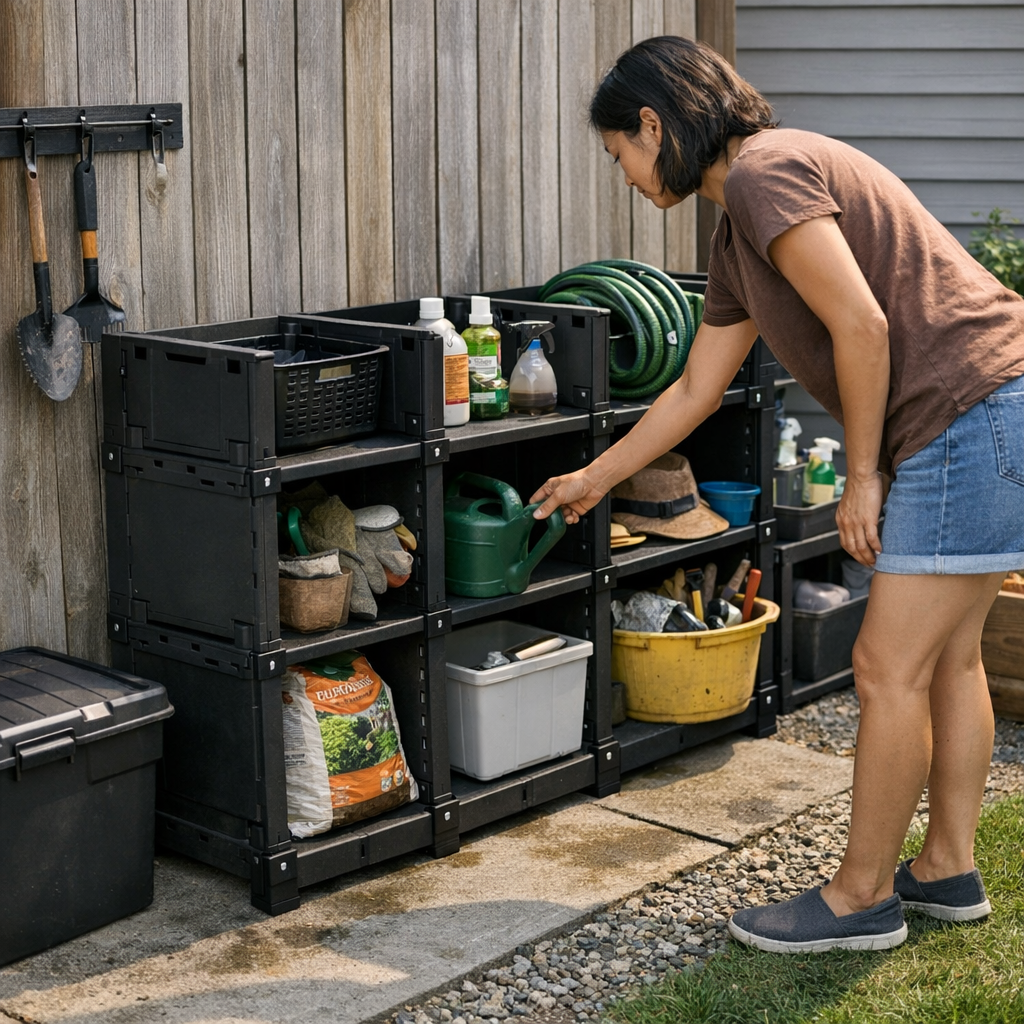
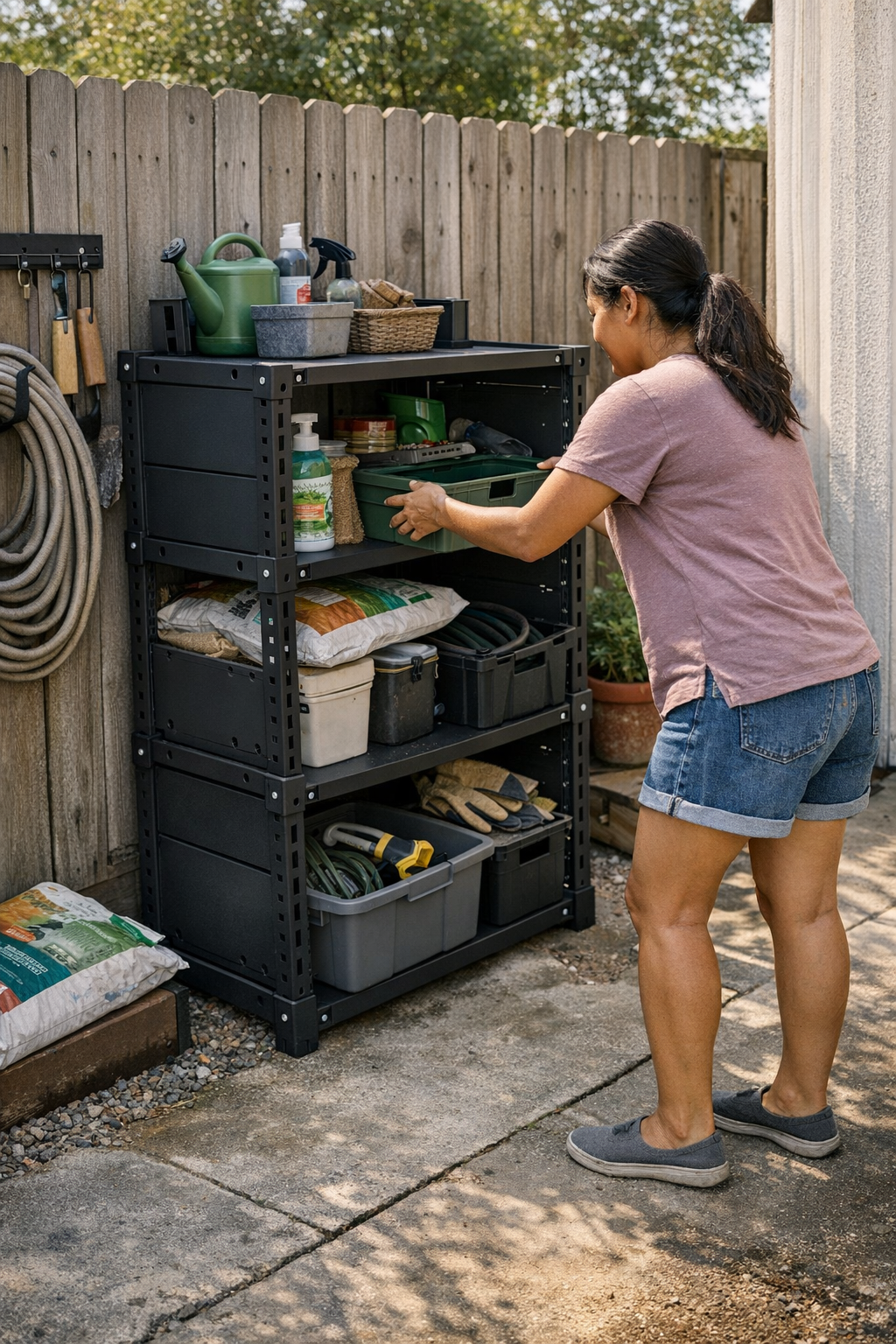
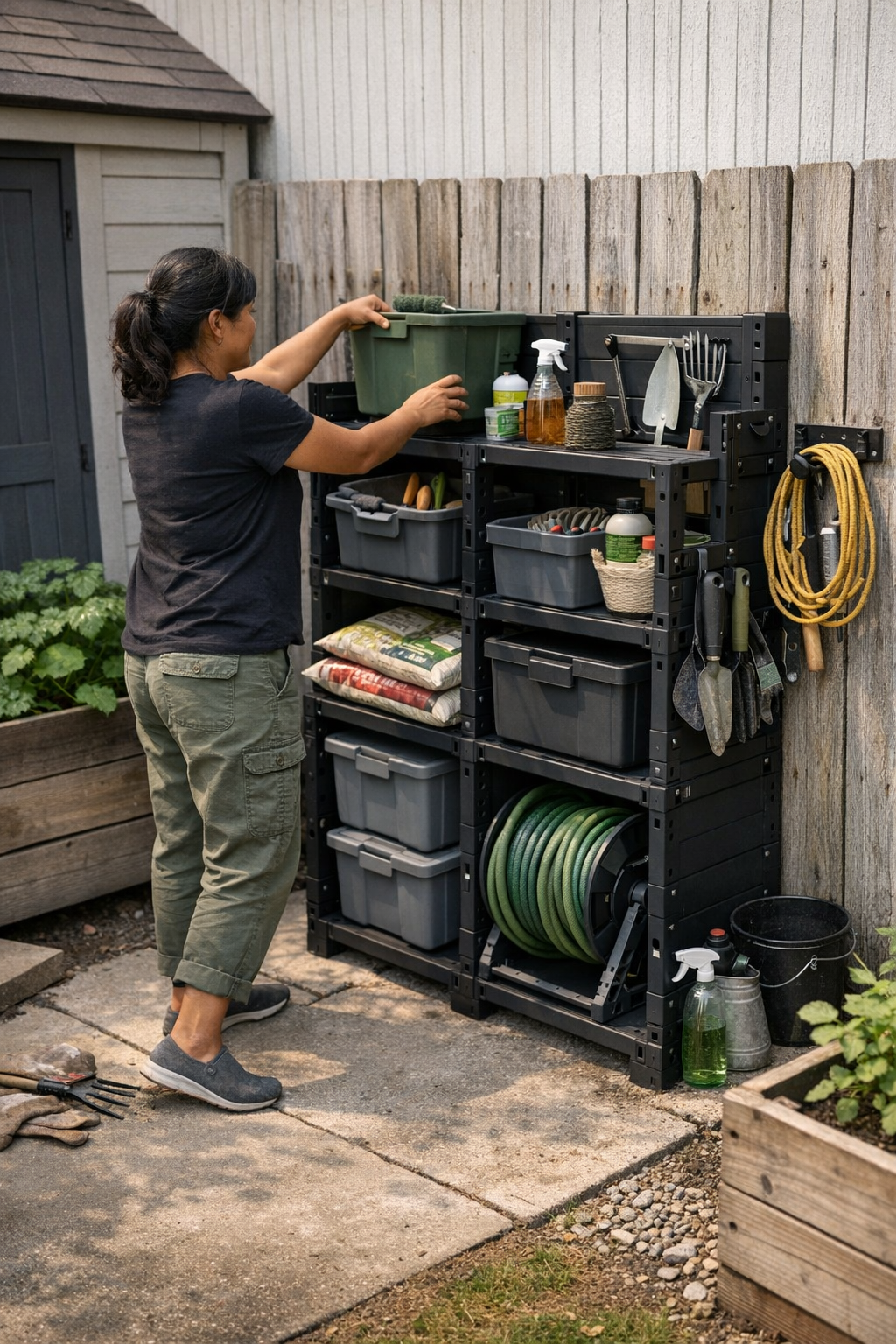
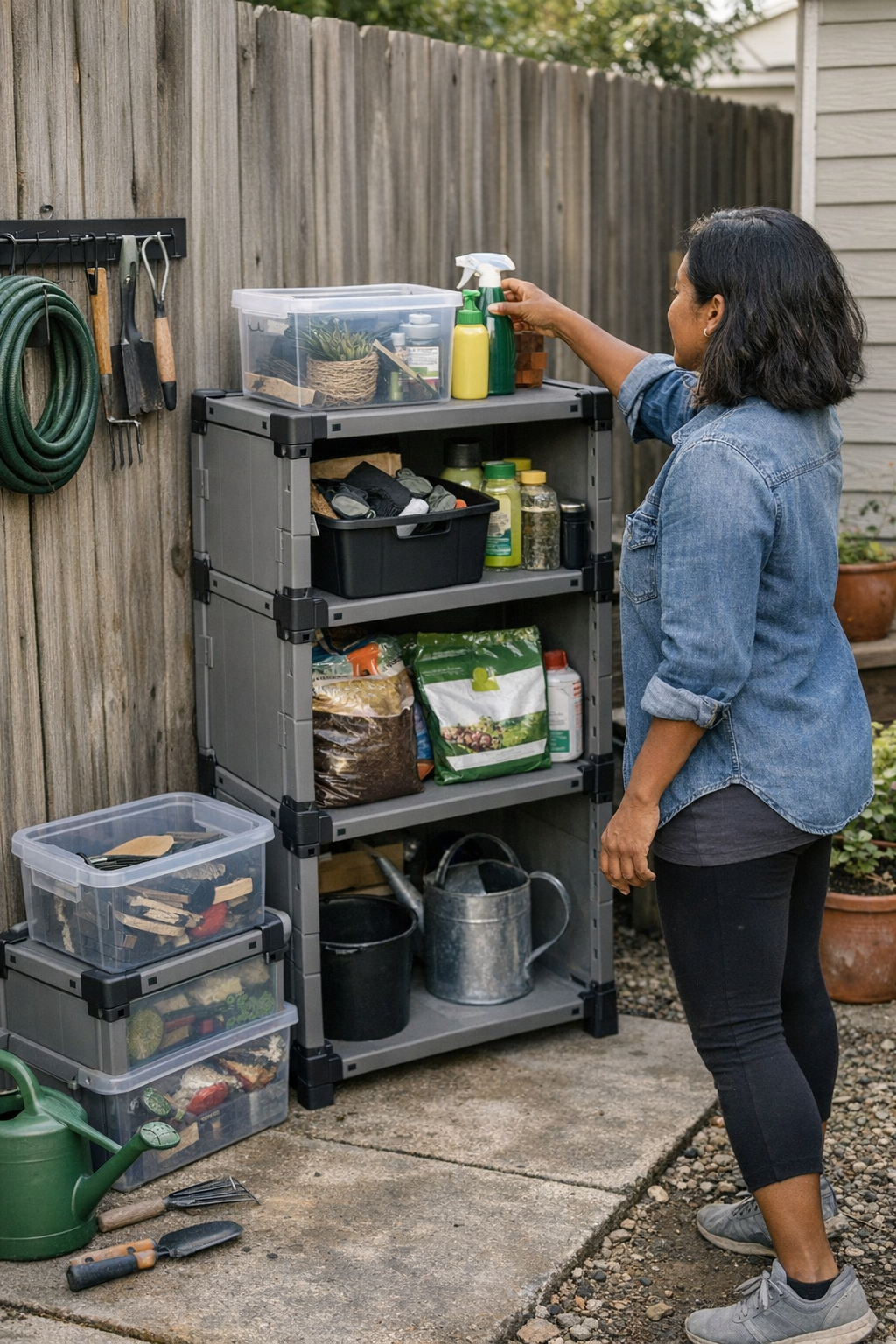
    How does this actually show up day-to-day? Replace the clutter of bins and hooks with sturdy wall shelves or modular racks just inside the side gate. Suddenly, the daily route in or out runs straight past one reset zone—one shelf for shoes, one set of hooks for tools and helmets, one organizer for garden odds and ends. Even with less than three feet of wall, things funnel into a predictable return lane. When something’s missing, you notice it right away. Out-of-place items glare, instead of blending into messy corners. Unused wall sections finally earn their keep, and the floor stays passable instead of shrinking week by week.

    Looks Clean—But Can It Survive Real Use?

    It’s easy to judge a storage setup right after a big cleanup; almost anything looks orderly when it’s been staged for a photo. But real results reveal themselves after normal traffic: the wall rack actually stays in use, the walkway isn’t blocked by Monday night, and bringing in muddy shoes doesn’t force you to step over a fresh pile. A strong single zone quickly shows which details still need attention—maybe a kid-height hook, a tilt-out bin for random balls, or a shelf trimmed to fit tight against the wall.

    Habits don’t change overnight. If “return drift” creeps back—old piles forming outside the new zone—a small nudge can help: a marked mat, an obvious container, or even just a bold label to re-focus the reset routine. Organization isn’t about spotless looks, but about handling a stretch of real, messy days without losing control or blocking yourself in the process.

    Small Fixes for Fewer Frustrations

    You might not be able to rebuild a side yard, but a few honest upgrades make outsized impact:

    • Install hooks or slim shelves on the path you actually walk. When you physically have to pass the reset zone, the odds of gear ending up elsewhere drop fast.
    • Mount modular racks for daily-use items. A tool hung at elbow height is ten times more likely to come back, and less likely to migrate to the next “empty” corner.
    • Mark the drop-off area with purpose. A painted line, a waterproof mat, or even an outdoor label broadcasts, “This is the finish line.” No guessing or silent drift.

    The payoff isn’t a spotless yard—it’s a clear separation between “put away” and “left in the way.” Five minutes of cleanup stays five minutes, not half an hour. You find the gear before you trip over it. The walkways open up enough for two hands or one muddy dog at a time. And the space feels like it belongs to the routine, not the other way around.

    Real organization in small outdoor spaces is measured by what doesn’t get in your way: open ground for a passing bike, a tool that returns to its spot, a wall that actually earns its space. No system is flawless. But shaving down the frustrating resets makes every corner feel less like a trap—and more like a part of your actual yard again.

    TidyYard Outdoor Organization Store

  • Why Closed Entryway Storage Traps Moisture and Odor Over Time

    Change hits the entryway fast: What looks crisp after a reset can shift by week’s end into blocked traffic, shoe clutter, and stale air. A single rainy day, a loaded grocery run, or just overlapping routines—all it takes for closed benches and deep drawers to fill, trapping wet boots and bags out of sight, but not out of circulation. By Thursday, socks pick up dampness, shoes come out smelling worse than before, and “tidy” begins to mean losing five minutes to rummaging through a sealed, humid storage box. The entry zone slips from functional to frustrating, even when it looks clean from the threshold.

    When Out of Sight Traps the Trouble Inside

    The logic feels solid: close a drawer, drop gear inside, shut the lid, and the clutter vanishes. But repeated comings and goings—especially with families, roommates, or guests—reveal the flaw. Moisture from boots and jackets gets trapped under those neat lids. Air stops moving. Yesterday’s weather lingers under the surface. Instead of resetting, you’re piling new clutter on top of old dampness, and by week’s end, even clean laundry thrown on a bench edge emerges with a subtle must.

    What looks organized rarely functions that way under repeated use. Each closed drawer or bench compartment hides mess, but also hides air. The apparent order starts working against you—reset gets slower, and gear gets less usable each cycle.

    Why Closed Storage Backfires in Busy Entryways

    No air means slow resets and stale gear. It’s easy to fill a drawer or lidded bench in a flash—especially after three people come home in the wet, or two days’ worth of routines stack up. The first time you open that bench midweek, you pick up on it: old humidity sealed in, odor left to compound, and now even “clean” sneakers feel off.

    • Remove boots, toss them in the bench, close the lid. Next day, you’re greeted by trapped moisture and a musty edge—even if the surface looks clear.
    • Entry clutter multiplies: umbrellas, backpacks, extra pairs of shoes all jammed together underneath. One item turns to three, and nothing dries right.
    • Tighter packing means zero airflow. Damp piles get damper, and halfway-dry gear never recovers. By the next reset, fresh items pick up whatever’s lingering in the box.

    Wall Storage: Airflow That Actually Outperforms Hidden “Order”

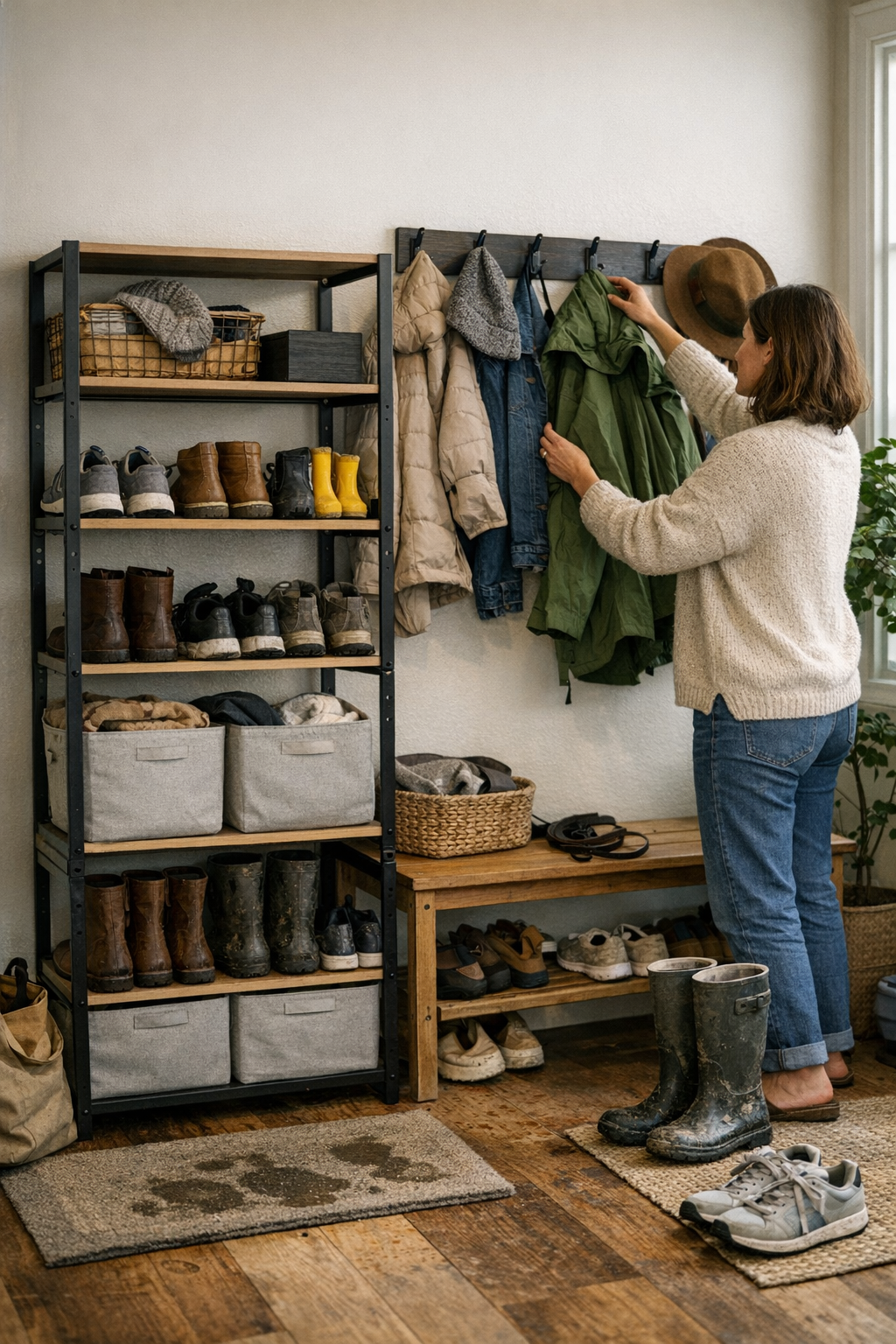
    Open alternatives—racks, wall-mounted rails, or vertical bench slats—don’t hide clutter, but they clear a bigger day-to-day problem: airflow. Place shoes on a slatted rack or hang jackets with breathing space, and every item dries. Even a narrow entry handles active use. Instead of digging in a box or re-sorting a stuffed drawer, you grab what you need in seconds; nothing gets pressed out of shape, and mustiness never really takes hold.

    After switching to a wall rack at home, the difference showed up in lived routine: reset, once a 10-minute dig, now takes a single sweep. Items aired, no surprise odors, no gear forgotten at the bottom of a pile. The drawer went unused—except for things you barely touch in wet weather.

    The Reset Reality: Friction at the Door

    Entryways break down at friction points: overstuffed drawers jammed tight, benches doubling as overflow, wall hooks ignored because they’re out of the direct line of arrival. “Neat” almost always collapses as soon as real pressure hits:

    • Drop a loaded work bag on the bench, and the space purposed for sitting vanishes under stray groceries and mail. Next trip, you’re balancing boots in one hand and a backpack in the other just to find a place to sit—or giving up entirely.
    • Return on a soggy evening, try wedging shoes into a full drawer, and feel the path block up. You reshuffle, items topple out, and still the dampness ends up shut in with the pile.
    • Racks or rails line up shoes side by side, spreading the row but making every pair visible—and dry. Even in a cramped pass-through, grabbing the right item means one motion, not three.

    How Open Storage Handles Real-World Repeats

    Entry gear doesn’t come through once—it cycles multiple times a day. Two kids home from soccer, groceries dropped and retrieved, a wet umbrella returning at midnight. Closed systems slowly grind to clutter; open, ventilated storage lets the gear reset itself. Items dried by air won’t stick together, so each return trip feels less like digging out, more like a clear exit and entry.

    Wall-mounted storage has no blind corner hiding a slow buildup. Mistakes stay visible—and fixable—before they spread. Reset becomes habitual; blocked traffic and unplanned cleaning sprints almost disappear.

    Entryway Reset Tactics That Actually Work

    • Skip the sealed compartment for daily gear. Wet shoes or jackets left even half a day in a closed box start building odor. Use wall racks or open shelves: every item ventilates, every item is visible, nothing festers out of sight.
    • Lidded benches are for off-season or bone-dry gear— never the daily, never the damp. Store your winter boots up high once they’re dry; keep current rotations open and clear so resets happen in under a minute.
    • Shortcuts like dryer packets don’t fix the air problem. Dampness always wins if airflow and structure work against you. If there’s no way for wetness to exit, gadgets only buy you an afternoon at best.
    • If the footprint is tight, mount storage vertically on the wall—edge the racks or hooks right in the path of entry. Every inch gained on the floor means less tripping, less edge buildup, less new clutter drifting into the main zone.

    Looking Ready vs. Actually Working Under Pressure

    Appearance misleads: a flush bench, a smooth line of closed drawers, all can feel under control on a calm day. But routines rarely stay gentle. With three events in one evening, or guests cycling through, overflow appears overnight: drawers jam, surfaces revert to clutter zones, and a single misplaced bag clogs the path for everyone. Returning one pair of shoes means shuffling four other items, and by Friday, the “clean” look is just a shut lid over confusion.

    • Drawers go from half-empty to overloaded, blocking grabs and quick returns. One stuck sole means everything stacked above it comes out, mess multiplying while you’re already late.
    • Benches collect overflow by default; sitting to remove boots turns into a dance around yesterday’s drop-offs. Surface “order” gives way to temporary piles that never really leave.
    • Wall racks keep gear spread instead of stacked—fewer forgotten items, less blocked traffic, and a routine that resets by habit, not by frantic end-of-week cleaning.

    When air can circulate and gear is visible, the entry runs itself. Reset pressure drops, and functional order survives the week’s bumps—without turning small messes into recurring problems.

    Why Visible, Ventilated Storage Changes the Whole Entry Routine

    The clean look is a side effect, not the main win. The real payoff comes in lower reset effort and functional recovery after busy days. When gear has air and space—on a rack, a wall rail, or an open shelf—it dries out, remains fresh, and is ready when you need it. Every threshold crossing is faster, every clutter buildup smaller, and even small entryways can ride out the chaos without bottlenecking. Choosing structure that lets air move means trading in friction and hidden dampness for a zone that flexes and resets, not just once, but every single day.

    Find practical entryway storage solutions designed for daily reset and real movement at Betweenry.

  • How Adjustable Closet Shelving Towers Improve Daily Storage Efficiency

    Closet shelving towers rarely fail all at once—they break down shelf by shelf, in the wear and tear of daily routines. It starts when you’re forced to double-stack shoes on a narrow shelf, or wedge a sweater under an overstuffed pile just to close the door. By midweek, what looked organized after setup has quietly become an obstacle course of tight slots, shifting baskets, and items slipping from their zones. If you find yourself digging for basics or avoiding a cluttered tower entirely, you’re feeling the real cost of hidden design mismatch—a structure that can’t keep up with retrieval, return, and normal life pressure.

    Crowded Shelves, Hidden Friction: Where Closets Quietly Break Down

    The real test isn’t how a closet shelving tower looks the day you arrange it, but whether it can handle the morning rush and evening reset all week. Shelves stacked too close force you to layer or nest bins; on paper, this maximizes capacity, but in practice it creates blockages. Retrieving one pair of shoes can mean shuffling three others, and putting back a folded shirt sometimes means collapsing a whole stack to find space. Each small delay builds friction: what’s quick on Monday turns messy by Thursday, as shirts spill over, baskets drift, and an “organized” system absorbs overflow rather than preventing it.

    At first, you barely notice yourself shifting a bin or adjusting a row. But micro-forced moves pile up. By week’s end, clean categories have blurred; shoes migrate to the closet floor; shirts jumble out of line; and every reset takes longer. These aren’t rare accidents—they’re routine consequences of shelves that were never mapped to fit the real flow of return and retrieval.

    The Mirage of Order: When Looks Don’t Match Real Use

    A closet can look perfect on day one—two towers with crisp shelving, all mapped just so. But shelf spacing that fits only when things are placed carefully breaks down fast. If your shelving is too shallow or inflexible, forced stacking and cluttered overlap creep in. The problem hides in that first morning: you reach for a sweater, but removal means disturbing a precarious pile below. Shoes tucked deep vanish behind the front row. By midweek, the “row” is now a mound, and the fastest fix is tossing whatever doesn’t fit. High-volume setups don’t fail on capacity—they fail when they lose hold of clear zones after a few cycles of actual use.

    Every blocked return and awkward retrieval accelerates breakdown, especially in shared or high-turnover spaces. Mini-resets become major reshuffles. That initial feeling of calm gives way to a closet that resists you, not one that supports your rhythm.

    Is Your Storage Absorbing Routine or Interrupting It?

    The difference between a closet that works and one that quietly drags you down comes down to one question: does the shelving actually match your cycle of retrieval and return? Fixed, shallow, or overcrowded slots invite spillover and mixing, no matter how organized things look in the beginning. Instead of a smooth handoff, you end up pausing—hunting for a landing zone, delaying return, or constantly sliding stacks just to squeeze one more thing in.

    Watch for a tell: you start standing still, searching for open space or debating which pile to disturb. When putting one thing away means moving two others, frustration compounds and categories blend. These small snags are symptoms: the storage structure is bottlenecking your routine, not supporting it.

    Small Shifts, Big Gains: Adjustability and Clear Zones

    Functional shelving towers aren’t about packing in the most slots—they’re about recovery, daily. Adjustable shelves let you create enough clearance so hands can reach, shoes can slide in, and bins don’t compete for space. When every visible shelf has a single, claimed category—a buffer above the tallest boot, a direct landing for folded shirts—returns are automatic, resets are short, and you stop asking “where did that pile move?”

    Contrast this with deep or crowded shelving. Reach too far back and items disappear. Stack too tightly, and second layers become lost before week’s end. Adjustable zones don’t just look better at the start—they make everyday movement faster, and breakdowns less frequent over time.

    Quick Tip: Tune Before You Stack

    Before you start filling any shelving tower, carve out dedicated landing zones and leave a hand’s width of breathing room above even your tallest item. That means reserving open space for hats, a direct shelf for bags, and refusing to jam shoes edge-to-edge just because space seems available. Giving up one “potential” shelf often means reclaiming minutes every reset, minimizing category drift and recovery chaos.

    Overflow and Category Drift: How Small Gaps Grow Into Clutter

    Overflow doesn’t announce itself with a dramatic avalanche—it builds as mismatches between shelf size and real item dimensions. Shoes overlap, small items escape through side gaps, bins get buried behind out-of-season jackets. Each “almost fits” moment weakens the whole arrangement. By month’s midpoint, formerly separate categories blend into a catchall zone, requiring a full teardown just to recover order.

    Critical pattern: Highest efficiency doesn’t mean the most crowded shelf; it means the fastest, least-blocked reset. The best storage makes daily return as frictionless as retrieval, with every bin visible, every shelf single-layered, and category drift held in check by clear separation—not fragile initial stacks.

    From Setup to Routine: Storage That Really Works

    A shelf tower either fits your living routine or quietly interrupts it every reset. That difference is more visible midweek than day one: breezy, one-move returns are a sign the setup matches your use; delayed, careful reshuffling means every small action takes more time. The right structure isn’t about adding more shelves, but calibrating space and category to your habits—leaving real working room, keeping categories clear, and making order easy to recover even when the closet is slammed with use.

    Lasting storage works because it prevents weak return flow, invisible blockage, creeping spillover, and hidden breakdowns inside the towers you depend on. It won’t look sorted just once, but stay actively usable week after week—so instead of a shelf that just holds more, you get a system that quietly gives you back minutes, day after day.

    http://www.gridry.myshopify.com

  • Why Edge Storage Transforms Small Yards Into Usable Outdoor Spaces

    If you have a tight outdoor space, every storage choice either smooths—or complicates—your entire routine. Drop a shed, a storage bench, or even a single rack in the wrong spot, and suddenly movement slows, piles form, and your yard feels smaller every time you try to use it. The difference between “it fits here” and “it actually works here” becomes painfully obvious after just a few days of normal living.

    The Subtle Creep of Center-Heavy Storage

    It’s tempting to drop a big storage bin right in the center of your patio or yard. It looks organized, seems reachable from all sides, and promises convenience on paper. At first, it delivers: grab a cushion on your way out, toss in a tool after you prune—simple.

    But as soon as you stack two or three real-life activities—garden Saturday, impromptu soccer, a neighborhood BBQ—the “convenient” center quickly turns into a traffic jam. Storage planted in the middle stops being helpful and starts blocking everything else. You end up weaving around it with muddy boots or armfuls of toys, setting one thing down just to move another. By the end of the week, you’re not grabbing what you need—you’re shuffling, detouring, and stacking temporary piles, just to make room for the next task.

    A Real Scenario: The Never-Ending Reset

    Picture this: It’s Saturday. You drag out hoses and trowels, dodge a bin set dead center, and start gardening. Halfway through, bags pile up in your “easy access” pathway. The wheelbarrow’s route turns diagonal to avoid the chest. Shoes and tools cluster wherever you hesitate. By midday, your path is strangled by overflow, not order. Finish up, tidy what you can, and it still takes too long to reclaim space for dinner—the “mini-reset” never really leaves things clear. Day by day, your yard gets harder to put back together, not easier.

    Choosing Where Storage Belongs—Why It Makes or Breaks a Small Space

    This isn’t just about cramming things wherever they’ll fit. It’s about how bodies move around those things, every single day. Center-stage storage may look efficient, but in small yards, it steals breathing room and cuts up your natural walking lanes. Movement slows. Every reset gets heavier.

    Edge and wall storage flips the whole equation. Install wall racks or slim lockers along the fence, and suddenly your yard develops an actual “lane”—a clear, unbroken route for push carts, soccer games, wheelbarrow runs, or just refilling the bird feeder. Instead of stepping over an obstacle or dragging bins to reclaim space, you stay in flow. The center opens up. You stop playing traffic cop and start using the yard the way you meant to.

    Repeated Friction: When Storage Fights the Way You Move

    The trap is visible in almost every rushed setup: a central bench or box looks tidy but only works when nobody else is around. The moment two people need something from it, you’re queuing up, pausing for lids, or making awkward workarounds—one person digging while another waits, or stashing wet gloves on top because there’s no space to hand things off. By evening, temporary drops—balls, hoses, backpacks—start filling what little open floor was left. Resetting gets slower, and instead of containing clutter, your storage setup creates it.

    Edge and Wall Storage: Actually Use-Focused

    The best outdoor storage earns its keep during the mess, not just in empty moments. Hanging racks along a fence or tucking modular cubbies against an out-of-the-way wall means the gear and overflow stay out of the movement zone. The useful space stays in the center, not the sides—and that lets you stage, work, host, or play without pushing a bin or detouring around the aftermath of “being organized.”

    Real Use: The Difference After One Change

    Mount a weatherproof wall rack along the back fence and you feel the result instantly. You can push the mower, drag that unwieldy garbage can, or run alongside your kid without zigzagging around a stubborn box. Reset after a muddy project? You hook up tools in seconds. Nothing’s in the path. The difference isn’t extra storage volume. It’s that you never have to move one thing to get to another—or spend five minutes making the path clear again simply to use the space.

    The Hidden Pitfalls of Floor and Corner Storage

    It’s a classic error: see an empty corner and drop in a bulky tote “out of the way.” But real use reveals how fast corners swallow up everything—boots, bags, stashed hoses—until overflow blocks the path or half-buries the gate. Fill every floor inch, and routine tasks become dodging missions. The storage fits, but the movement never does.

    Wall setups aren’t immune to failure. Hooks placed just out of reach, shallow shelves too short for real tools, or racks never used except as a holding zone for that one thing—the result is always the same. Clutter returns. If you keep dropping things on the ground, your wall setup isn’t solving the problem. It’s just shifting it around, and the real reset still demands more bending, lifting, or temporary piles than it should.

    Real-World Fix: One Adjusted Zone

    Installing a vertical tool rack by the garage door instantly rerouted how weekend cleanups happened. No more hedge trimmers sliding around the patio table, or gloves wedged behind a central chest. Instead, everything lands in its own spot—no crossing the yard or working around obstacles to put things back. The path stays open. Ends of task and beginnings of the next connect more naturally, because less is blocked in between.

    Tips to Dodge Classic Outdoor Storage Traps

    • Initial order doesn’t guarantee easy resets. If reclaiming clear space always means moving the same box twice, rethink your zones.
    • Edges and boundaries should direct, not just store. Let walls and fences control foot traffic—not collect rejected clutter.
    • Test the return flow at the end of a full day. Does clean-up happen in one natural sweep, or do you chase piles from zone to zone?
    • Watch for overflow magnets. If a single area hoards stray shoes, hoses, or toys, it’s not about adding bins—it’s about redefining that space’s job.
    • Don’t ignore gear weight and weather. Wall systems only help if they can handle real use—reinforce where needed, or support with slim floor units.

    Setup That Matches Your Actual Routine

    An outdoor setup should make movement automatic—not force you to pause, arbitrage floor space, or repeat the same slow reset after every use. Open flow beats empty floor every time—storage only serves if it lets you glide through the daily pattern without circling barriers or nudging overflow out of the way.

    Real difference happens in small things: the two extra minutes you save not shifting boxes, the trip you skip because tools have a clear return spot, the weekend that doesn’t end with you re-choreographing the same old piles. Ignore flow, and even a perfectly staged space turns cramped. Organize by the way you actually use your yard—not just by what looks neat for a day—and you get a space that feels bigger, moves quicker, and resets itself faster, even when life is messy.

    For outdoor storage systems designed to keep edges working, circulation clear, and resets short, visit TidyYard.

  • Why Wall-Mounted Glove Hooks Beat Closed Drawers for Entryway Storage

    Drop damp gloves in a closed bin by the door, and you might think you’ve solved clutter. But a few days of shifting weather, another round of soaked school runs, and the system breaks: gloves shoved away while still wet, invisible until the day none are dry, and you’re left yanking clammy fabric from the drawer as everyone rushes out. Organized storage isn’t always functional storage—especially in transition spaces fighting wet boots, heavy coats, and the spillover from daily commutes. The wrong setup turns “reset” into a hidden task, slowing you just when you should be out the door.

    When “Organized” Storage Turns Against You

    What looks neat for a week—a sealed basket or deep drawer—quickly becomes a choke point. Wet gloves tossed in with scarves and hats never really dry, and by Wednesday the clean-surface illusion cracks. Each search for a dry pair turns into digging through a limp pile. Every “tidy” solution that closes out of sight traps mustiness and moisture, storing up odor for the end of the week. Over time, the so-called order doesn’t reduce mess; it just moves it below the surface, waiting for the reset burden to spike on a busy morning.

    Airflow Beats Containment: How Drying Hooks Change the Routine

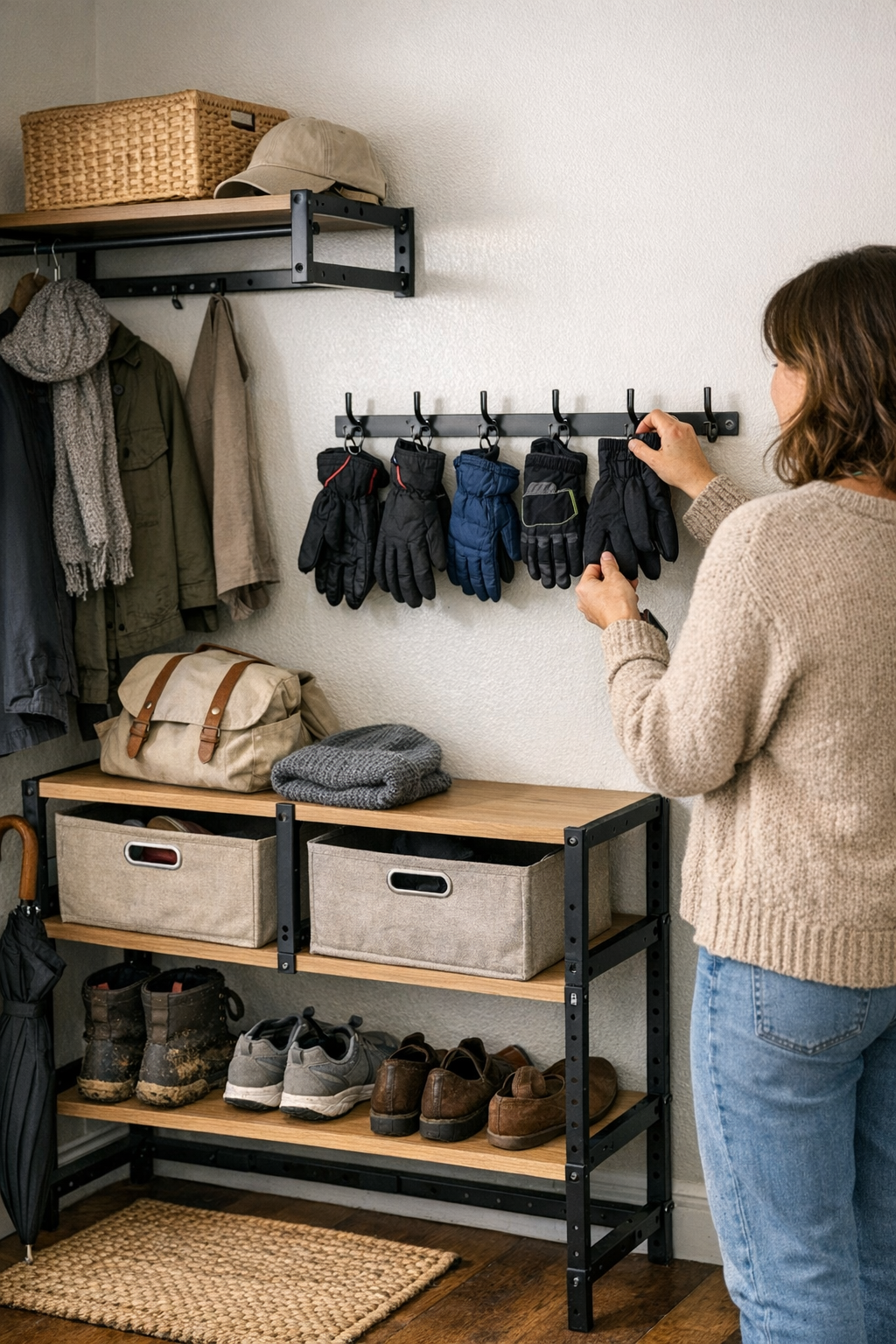
    Switch to wall-mounted hooks, and the difference hits on the first wet morning. Instead of stuffing gloves out of sight, you hang them up—fingers apart, each pair with its own air. No more half-damp linings or mystery smells when you reach for gear before sunrise. By the time you need them again, gloves are far more likely to be actually dry and wearable, with the reset built into the movement: take off, hang up. This is a visible change—no fumbling, no digging, just clear status at a glance. Storage turns from a secret mess to a self-maintaining loop right at the threshold.

    It’s not only about speed, but relief from the low-level stress of never knowing which pair is dry, or how much work a “quick” reset will demand. The routine moves from hidden chores to predictable, sustainable order, especially when the pace of in-and-out accelerates during bad weather or a packed weekday morning.

    What Real Entryway Routines Reveal

    You can spot which setups will fail just by watching a real threshold under pressure. When bags pile up against a bench, the shoe row creeps across the floor, and the only clear path is whatever’s left between yesterday’s drop and today’s rush, hidden storage falls apart. The temptation is always to sweep loose gloves and hats into the nearest drawer—but then the next grab is slower, riskier. Gloves tangle with scarves or are trapped at the bottom, often retrieved still damp. Someone grabs the wrong pair in the confusion; someone else drags more gear out, leaving things half-reset across the bench. Resetting means not just clearing, but untangling and drying gear you thought you’d already handled.

    Wall hooks flip that tension. Each item is out in the open, easy to check, easy to manage mid-rush. Dampness is visible. One glance, one motion, no suspense. The process doesn’t eliminate clutter, but it makes the “necessary mess” obvious and much quicker to reset—clutter you can deal with in flow, rather than clutter that accumulates in hidden, musty waves beneath tidy surfaces.

    The Visual Tradeoff: Clutter or Function?

    Yes, gloves will be visible. On the wall, a few pairs instantly mark the area as “used” rather than staged. Not everyone prefers this look. But anyone who’s spent winter weeks tracking down the least-damp glove in a sealed bin knows the frustration of “clean” concealment that backfires. The visual noise—a handful of gloves drying in open air—is a minor cost for keeping the space genuinely functional. Fewer morning setbacks, no more mildew surprise, no silent buildup of maintenance waiting for one big reset. You see what needs airing out, you see when the system is working, you don’t lose time or peace to the drawer trap again.

    Lessons from Real-World Adjustments

    Switching is low-drama but high-impact. One family replaced a soggy drawer with a series of metal hooks—just a slim strip beneath the bag wall, 40 centimeters wide, above the shoes. Instead of stacking gloves on top of each other, each person had a hook. Gloves dried with fingers apart and space around them. Even if rain lasted all week, gloves were rarely wet two uses in a row. Smells faded, the count of “permanently weird” pairs dropped, and the setup no longer depended on someone remembering to unpack and air out gear before bed.

    The greatest shift came in the return flow. As shoes inevitably spread and bags drifted from the hook zone to the bench and back, the glove area didn’t become a backup mess. Resetting meant one step: hang up and move on, even when the rest of the threshold overflowed or shifted around it. A tiny structure change protected that high-friction spot from collapsing into twice-daily disorder.

    Practical Tips for Effective Glove Hook Setups

    • Choose hooks with a lip or curve: Gloves stay put even when stretched or slightly stiff.
    • Keep spacing at least a palm’s width: Air moves better, damp patches dry instead of brewing mildew pockets.
    • Install above walking height, below eye level: Too close to shoes gets knocked; too high, and even adults skip using it during fast exits.
    • Separate wet from dry items: If you use the same hooks for hats or scarves, carve out a dedicated section for the dampest gear. This keeps moisture and smells from leaping between items.

    You don’t need designer hardware—basic hooks work if spaced and sited for airflow and reach. The function isn’t visual perfection, it’s making drying the default instead of a chore you have to remember.

    Why Airflow Wins in Transition Spaces

    Threshold spaces break down when reset costs rise: shoes migrate, bags pile, and hidden storage just means tomorrow’s disorder lurks out of sight. Closed drawers make things look better fast, but only by delaying and compounding the actual problem—slow resets, stale gear, and messy retrievals. Wall-mounted hooks leverage the chaos instead: they put friction out in the open, make it visible and fixable. Not every annoyance disappears; entryways always collect overflow during real use. But drying hooks absorb the repeated churn directly, letting you see the status, reset with one action, and return to order before the next round of wet weather or weekday scramble.

    The real mark of a functional entry isn’t the absence of clutter—it’s the speed and ease with which you can bounce back to “usable.” A few hooks replace the quiet trap of the drawer with a process you can actually keep up with, storm after storm, school run after late return. For practical, repeatable improvements to entryway and transition-space storage, visit Betweenry.

  • Organize Closet Storage Bins by Season for Faster Daily Access

    The moment a closet stops working isn’t when it fills up—it’s when what you need disappears behind layers of “organized” storage. Standing in front of a shelf of matching bins, you might think the problem is solved. But try grabbing cold-weather gloves on a frantic Monday: now you’re unpacking half a shelf just to reach a single item, with hats tangled under jackets and swim goggles resurfacing in January. The real frustration isn’t visible at first glance. It builds up week after week, as routines break down and supposed order becomes a daily slowdown.

    Why Mixed Bins Always Start Slipping

    Even the straightest, color-matched stack lures you into thinking a closet is under control—until real life kicks in. The trouble starts not when you’re organizing, but when you’re actually living out of the closet. You’re late. You reach for winter gear. Instead of a quick pull, you dig past scarves knotted around beach towels and jackets crushed over a lost sandal.

    • Retrieval grinds to a halt: categories blur, you’re left pawing blindly through random moonscapes of off-season clutter.
    • Bins won’t close and pileups start: one stray item becomes three, then a whole category floods the floor.
    • The “grab and go” promise collapses—reaching means reshuffling, stacking, and eventually creating a mess bigger than what you started with.

    At first, it’s a single misplaced item. After a few wash cycles or season changes, every trip to the closet is slower and more annoying. The system that looked sorted on day one crumbles under real, repeated use. Instead of storing well, you’re stuck re-sorting every time life happens.

    Category-Clean Storage: The Long-Term Edge

    Labeling a bin “hats,” “scarves,” or “jackets” doesn’t sound dramatic on paper. In actual use, the shift is bigger than it looks. Suddenly, you know exactly where to reach, even with arms full or distractions flying.

    • Find what you need—every time: The right item lives in the same spot, retrieval becomes muscle memory, even during a morning scramble.
    • Returns get effortless: Laundry days mean quick drops—no detours, no weighing what fits where. If a bin’s getting crowded, the problem is clear and specific.
    • Overflow reveals itself at the source: A hat bin that’s overflowing signals too many hats, not a closet-wide collapse.

    Category separation isn’t about perfection; it’s about drastically reducing the hidden labor of keeping your closet functional. The major improvement is speed and reliability every time you repeat the routine—not just the tidy look on day one.

    The Hidden Trap of “Looking Organized”

    Uniform bins and a clean shelf line fool the eye. But behind the surface, mixed interiors set daily friction traps. That fresh-looking system breaks down as soon as you try to use it:

    • “Will this be the right bin?” now means opening three in a row just for a single glove.
    • Checks become slow-motion scavenger hunts; what’s needed never lands right on top.
    • Labels lose meaning. A “Winter” bin starts swallowing sock or swimsuit oddments, turning every search into a time sink.

    When there’s a gap between how things look and how they work, organization quietly fails the stress test of daily life.

    Real Life: Mornings that Reveal the Flaws

    Picture the weekday rush: you and your kids both hunting for different gear, no time to spare. Instead of quick pulls, you’re lifting bins, opening a sequence, sifting under out-of-season clutter just to find one matching mitten. The second time in one week, you already know this is a pattern: the closer the deadline, the slower it all moves.

    Every delayed return breeds more drift. Piles form at the closet edge or hang off open bins, waiting for “some weekend.” Soon, every reach in means a risk—something topples or the next layer threatens to slide, and what looked manageable last month is now a clog in your routine.

    The Setup That Actually Holds: One Category per Bin

    A system with one category per bin—clearly labeled, ideally with transparent sides—is the only setup that holds up under repeated, distracted, high-traffic use. Some bins may end up half-empty between seasons; some may be idle for weeks. But boundaries mean peace:

    • No searching through outerwear just for a single scarf.
    • Returns are automatic: every item has a home, so putting things away doesn’t become another task to avoid.
    • Refills and resets are simple, habit-based, not a mini project that burns a whole Saturday.

    Clear bins do this at a glance. With opaque ones, labeling needs serious discipline—if that slips, drift returns and you’re back to square one.

    Fighting the Real Enemies: Drift, Overflow, and the Blocked Floor

    Most-used bins creep forward onto the prime shelf spots. But unless overflow gets actively pushed out, high-traffic zones clog with “extra” until the closet floor is a hazard line—moving one bin means nudging three others or balancing an unstable stack just to reach the back.

    A sharp fix: rotate only the most-used seasonal bins into prime spots and get less-used items out—either relocated to a hallway cabinet, sidelined in an underbed container, or stacked high out of daily reach. The aim is not perfect stasis, but a reset that keeps daily movement friction-free while seasonal or rare-use stuff doesn’t jam the main path.

    Practical Ways to Keep Category Calm

    Never drop a random item “just for now” in whatever bin happens to have room. That’s always how drift starts and resets get longer. When a category shrinks or grows, relabel on the spot—even if it means shifting your whole layout. The small, regular tweak is easier than letting it become crisis cleanup that takes hours.

    Every laundry day is a checkpoint: is everything returning to its right spot without hesitation? If not, adjust immediately instead of waiting for a bigger problem.

    And remember: looking tidy isn’t proof the system works. Real test is when you’re two steps deep in the closet, out of patience, and still able to grab what’s needed without chaos or delay.

    The Difference that Lasts: Not Just Looking Organized, Staying Usable

    Many closet setups only work when nobody’s actually using them—bins stacked tight, labeled just so, never disturbed. As soon as the daily routine begins, those good intentions get tested. Retrieval slows, returns get put off, and storage starts blocking rather than helping movement.

    True organization is less about perfect facade and more about reducing daily friction: can you keep grabbing, storing, and resetting on autopilot, or does every use require a workaround? Category-first bins turn slow jams into simple reach-and-return, and the benefit only grows more obvious the longer you live with it. There’s no need to struggle with “organized” chaos just to keep a closet clean for another week.

    See how Gridry systems are built for practical, repeatable storage.