
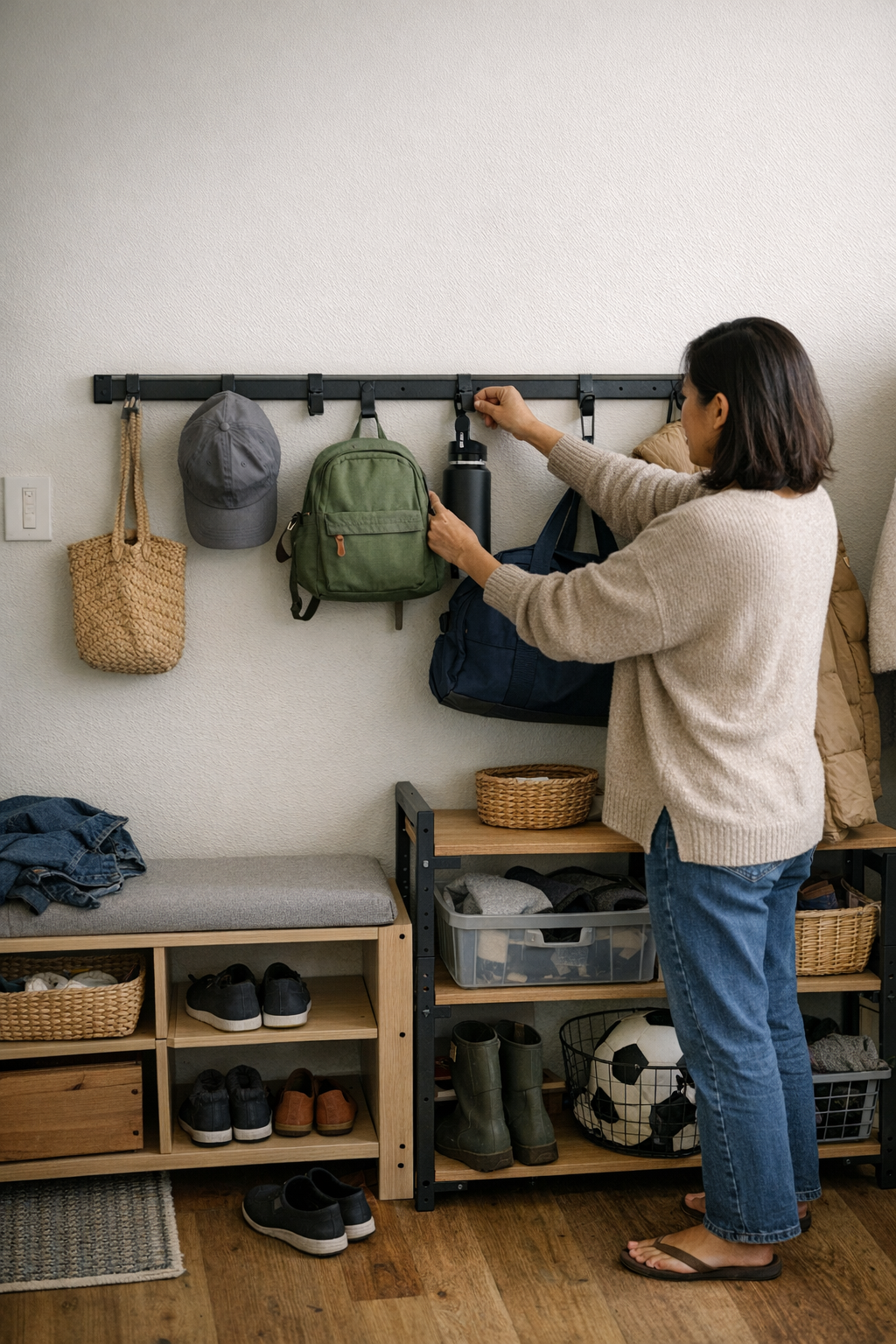
The tipping point for any entryway or mudroom isn’t the moment when coats pile up or the shoe row unravels—it’s when you find yourself improvising just to move through the space. A row of fixed wall hooks and a neat bench promise control, but after a few cycles of real use—morning departures, weekend returns, school sports swaps—the setup stiffens into a bottleneck. Hooks are locked in place, so switched-out jackets and overlapping bags keep fighting for the same narrow strip. Shoes start spreading past their line. The bench intended for calm shoe changes turns into a semi-permanent “just for now” dump zone. Resetting the space gets slower. Walkways narrow. The drop zone becomes a block everyone angles around, not a threshold everyone moves through. Over and over, the return flow stutters on the friction of a system that worked once, but can’t adjust now.
Where Fixed Hooks Break Down in Real Use
On paper, a straight line of hooks looks like a cure. In daily life, those static stations are rigid—indifferent to the churn of bags, coats, and gear that keeps changing week by week. As soon as someone brings in an extra tote or swaps out a coat for a bulkier one, the logic of “a place for everything” fails silently. Typical breakdown points look like this:
- Bags blocking each other—doubling up on hooks, dropping to the floor, or dangling in awkward overlap.
- Shoes drifting out in wider and wider spread, forcing detours or becoming tripping hazards on the edge of the path.
- The bench—supposed to be functional seating—becoming a passive overflow heap for unhooked jackets, ongoing returns, or bags that never fit on the wall.
- Adding or retrieving just one item setting off a domino effect: a coat drops, bags shift, a path narrows, and “resetting” becomes a time-consuming project instead of a two-minute fix.
The whole threshold can look organized after a deep reset, but that order is fragile. Every layer of gear brings back a little more disorder, nudging items further from reach or ready exit. The static system increases friction in small, stacking ways—until the entry zone itself feels like a hurdle.
Adjustable Hooks: Adapting to Mixed Real-World Flow
What makes adjustable hooks work isn’t novelty—it’s the way they answer real pressure points as the routine shifts. In a space where today’s lineup of bags, hats, or jackets may not match next week’s, being able to move a hook lower for a child, space two hooks apart for big gear, or reclaim a bench edge by simply sliding a bracket makes all the difference. The result: gear sorts itself into temporary groups and recovers fast after use. Pileups recede, and access opens back up without a full reset effort.
Every static setup breaks somewhere—what’s perfect for one term can’t flex for wet boots, heavy coats, or rotated-in sports duffels. Fixed wall hooks trap the zone in a single version of order. Adjustable hooks keep the system live: shifting to fit whatever combination of gear and users walks through the door that day.
Scenes from a Real Threshold
Midweek, the illusion of control cracks. A child tiptoes to reach a high hook, but tugs down three entangled jackets. Someone else shuffles a cluster of shoes wider just to reach their pair, bumping into a sports bag leaning off the bench edge. The supposed “seating zone” now catches stray gloves and bags that lost the hook lottery. The one-size-fits-all design traps everyone in the same choke points: awkward reaches, sidesteps, a bench that’s more surface than seat. When hooks are fixed, the system punishes variation—forcing patchwork workarounds, hidden overflow corners, or backup hooks that are more workaround than solution.
When Adjustability Fixes More Than Looks
The real gain from adjustable hooks isn’t just a tidier wall—it’s a recovery mechanism for when normal life tests every threshold. A slim, well-mounted rail with hooks that can slide or swap lets you:
- Drop hooks lower for kids or high-traffic grab points, so bags never pool on the floor or block the hall.
- Spread hooks out for heavy or oversized coats, reclaiming every hanger rather than letting some get buried or unused.
- Slide a hook aside and clear out overflow in seconds, resulting in a bench ready for actual use—sitting, changing shoes, staging the next exit—not default overflow.
- Finish resets quickly: shift hooks, clear bench, move on. No full reorganize needed, no ongoing pile managed by hope or habit.
Each adjustment wipes out bottlenecks before they spread. Instead of forcing “workarounds” or reserve hooks for when the area fails, you adapt on the fly—keeping the flow open, the return path clear, and the everyday re-entry pressure low.
Tips to Strengthen Your Transition Zone
Stability First: Don’t Skip Real Installation
Flexibility fails if the foundation is weak. If rails or anchors are undersized or loose, even the best adjustable system sags under real use. For high-traffic entries, use hardware and rails rated for the highest routine load—not just for display weight. If one anchor gives way, the useful order breaks, and the reset loop restarts.
Match Height to Real Reach
It’s easy to mount hooks where they seem to fit, but mismatched heights silently breed abandoned bags, slipped coats, and shoe piles at odd corners. Watch where users naturally hang or drop bags—and place hooks and rails where they serve those patterns, not just along an empty part of the wall. Order fails where reach or drop points are forced into habits that never quite work in daily flow.
Rearrange Seasonally, Not Constantly
The right setup absorbs change with minimal intervention—major tweaks at the start of school terms, gear shifts, or true season changes. If you’re nudging hooks every day, something about the anchor points or routine isn’t right. The goal is fewer “rescues,” not endless minor rearrangements. Let the system flex at milestones, not every time shoes or bags cycle through.
What You Really Win: Flow Trumps Fragile Order
A transition space built to absorb real-world use stops being a minefield of micro-fixes and overdue resets. Walkways open up. Bench edges belong to you, not to overflow. The reset doesn’t balloon into a half-hour project—a few seconds of rearrangement actually returns control. You move through the threshold, not around it. Clutter becomes a passing event instead of a permanent setup glitch.
Static wall storage looks “solved” but fails the first time the lineup shifts. Adjustable hooks absorb the changes, so the routine can resume—and the transition zone keeps pace with your household’s real exit and return flow.
Your setup isn’t about locking in a perfect display—it’s about unlocking permanent adaptability for every next round of everyday routines. For setups built to flex with real traffic, see Betweenry’s full range at Betweenry.