This is what outdoor storage friction really looks like: You step outside to grab the clippers off the wall rack. First, you kick aside a folding chair wedged against the fence. At the garage door, there’s the bike—angled to just block your path—so you shuffle it, again, to roll out the trash bin. In the blueprint, your setup worked; in real life, even a simple trip means dodging overflow, shifting obstacles, and watching “organization” unravel by Tuesday. The gap between what looks organized and what actually works becomes clearer with every rerun of this outdoor shuffle.
When “Looks Organized” Falls Apart in Use
In a backyard corner where the path barely fits a wheelbarrow, or a side strip that turns into a squeeze every weekend, the smallest mismatch between storage and routine quickly snowballs. You install a rack, stack a bin, slide a cabinet along the fence. Day one feels promising. But by week three, bikes have crept back across the walkway, garden tools are camping out on the patio, and cushions are “temporarily” stacked where you swore nothing would pile up again. That slow break is subtle at first—a little more effort to put things back, a little more spillover around the edges—until suddenly it’s the norm, not the exception.
Wall-Mounted Systems: Floor Space Gained, New Friction Found
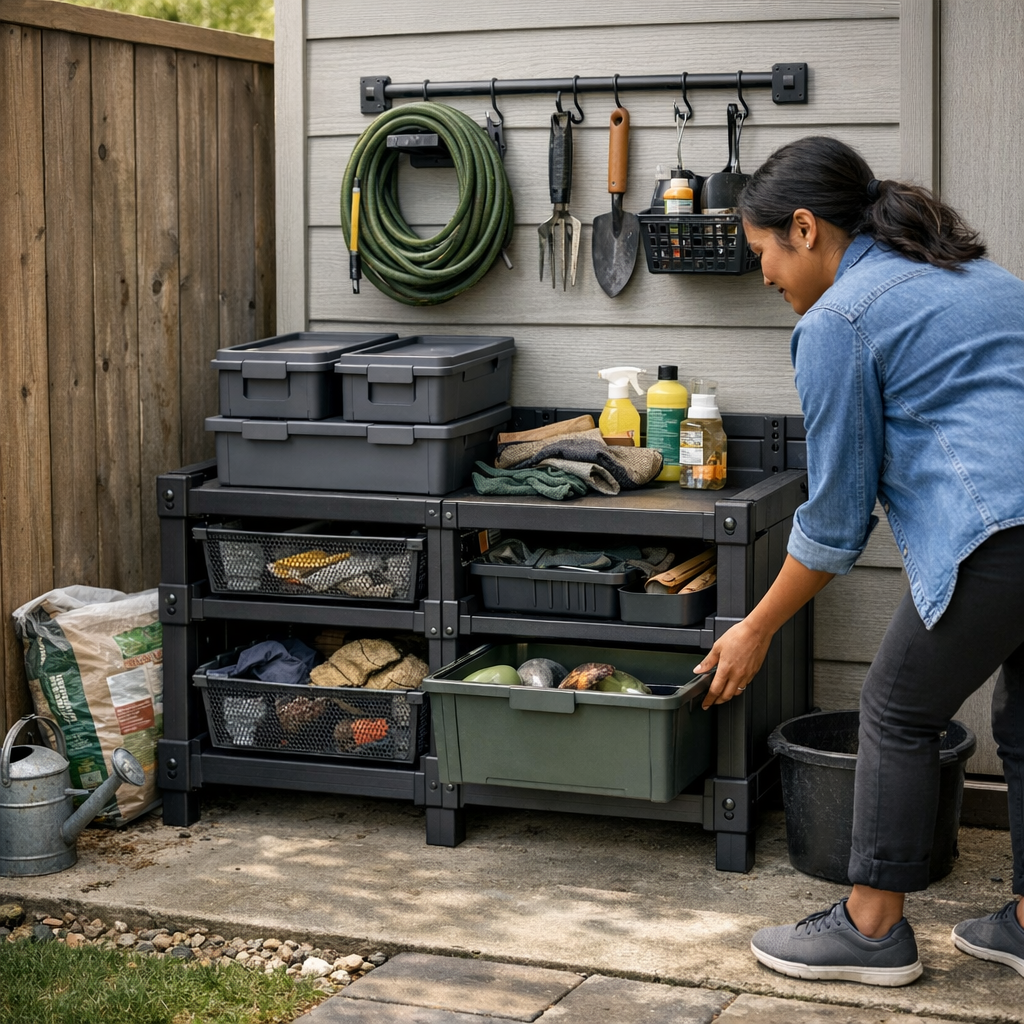
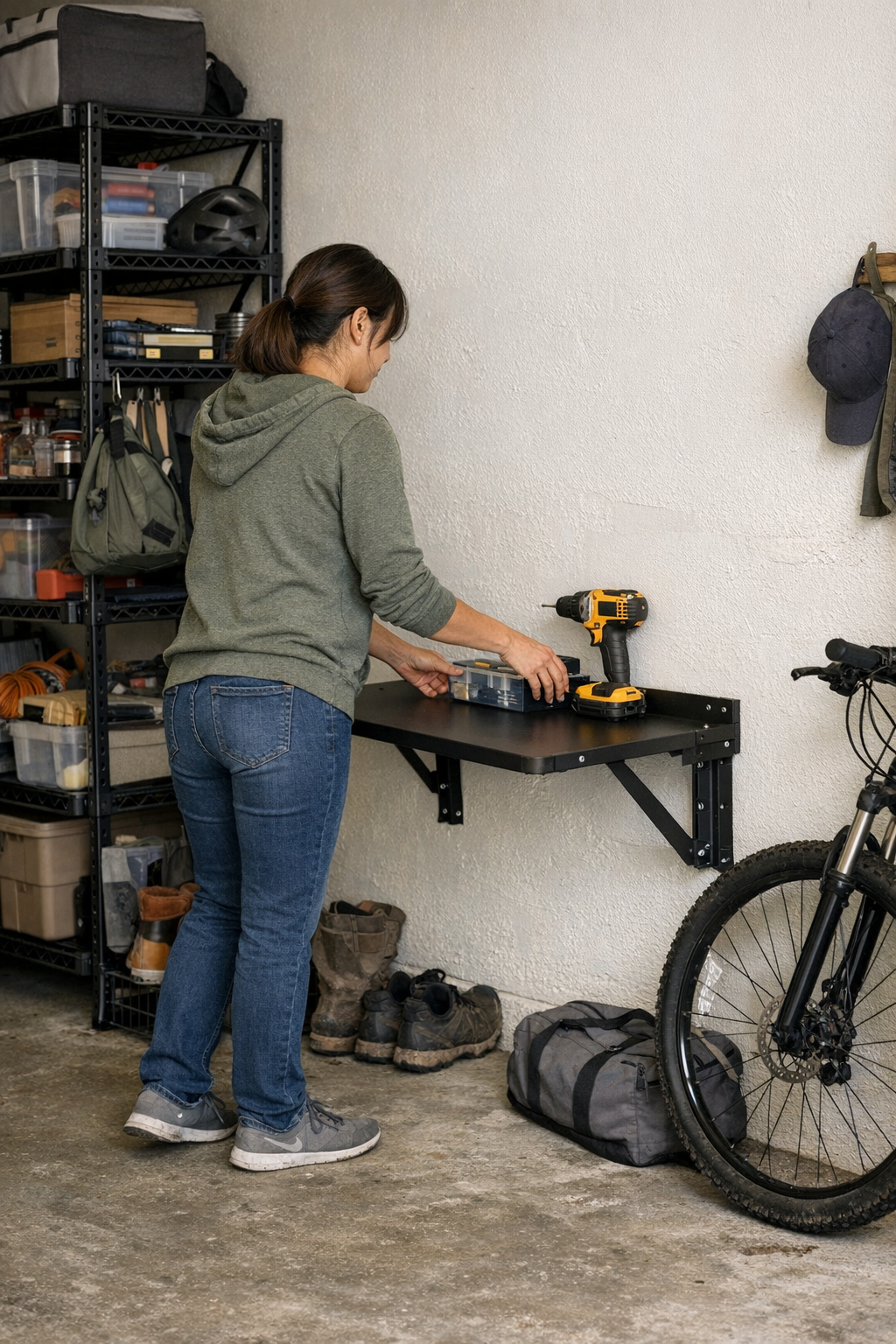
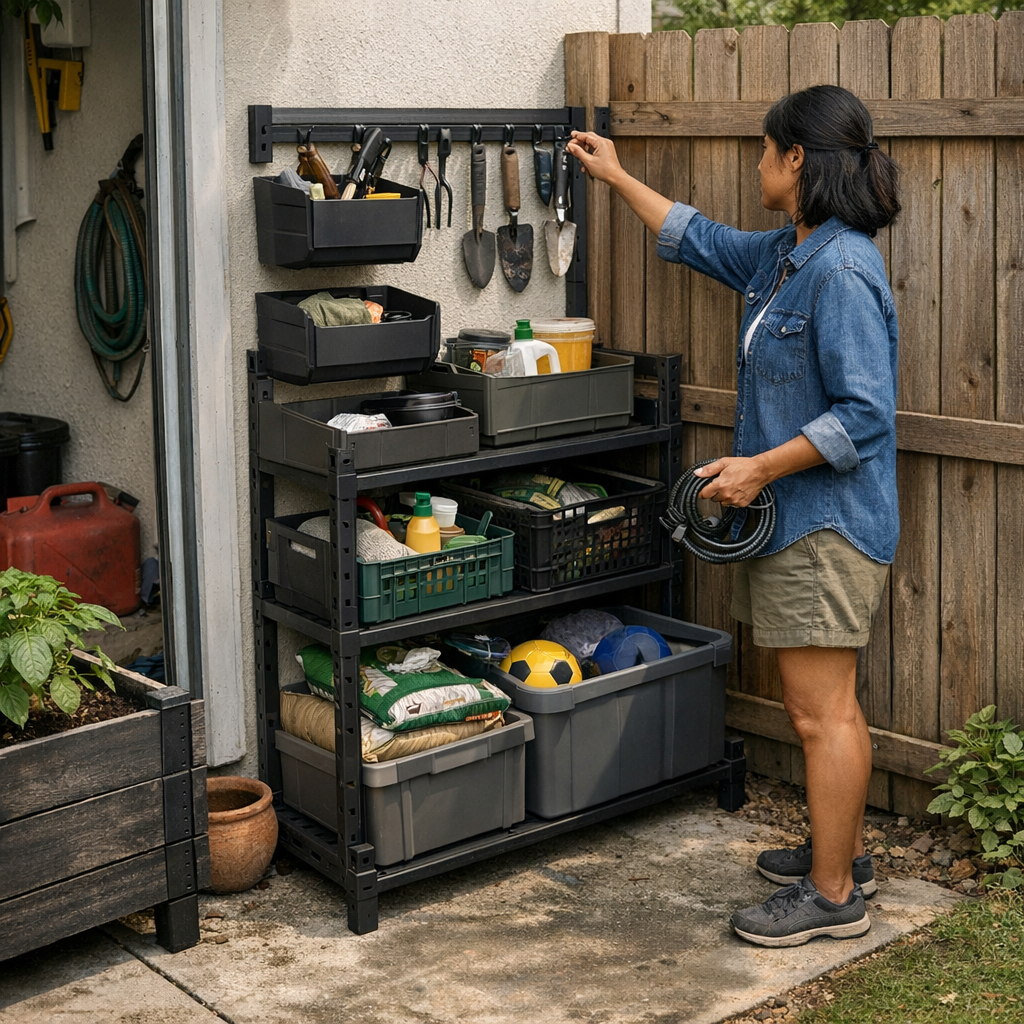
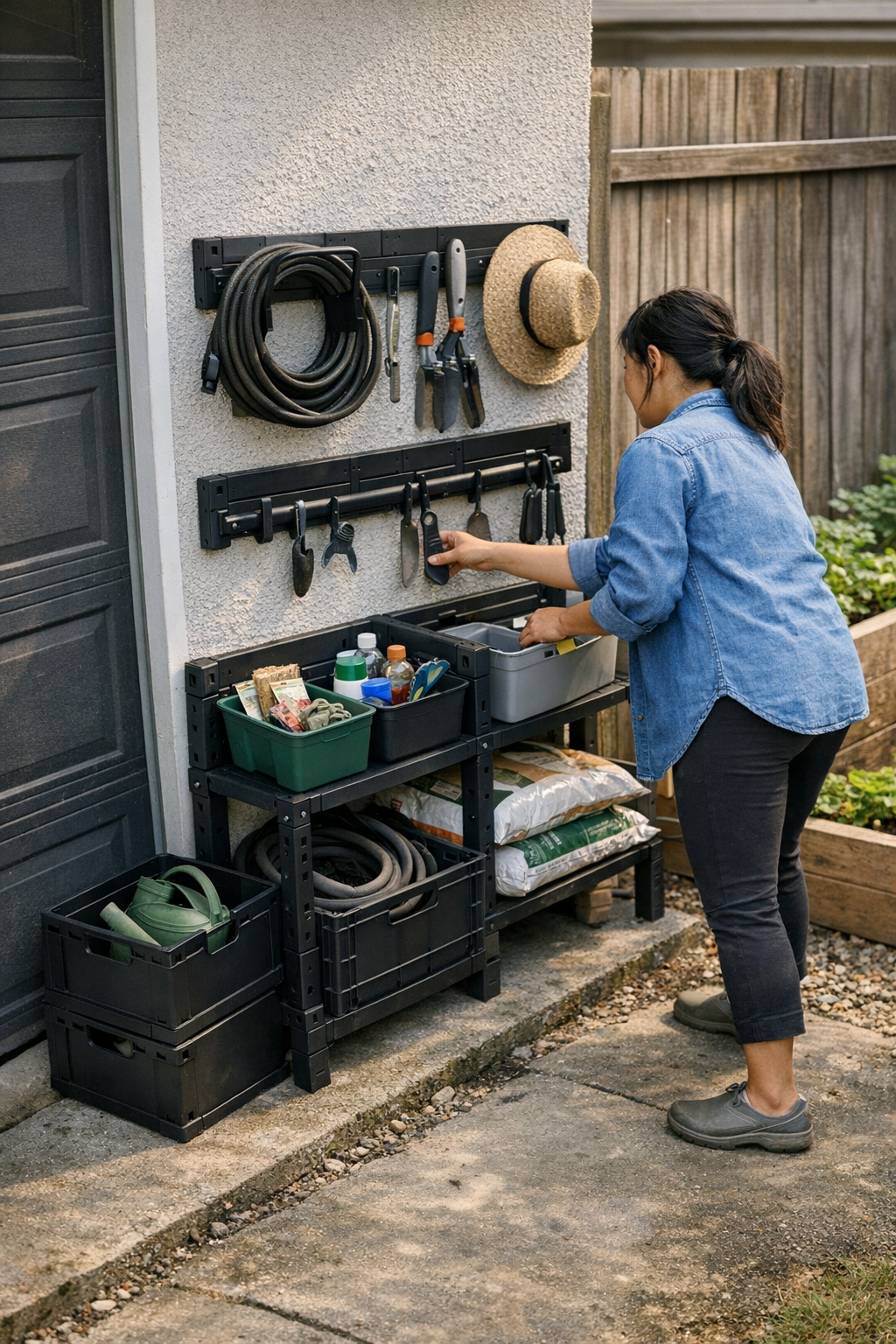
Wall racks and vertical organizers are built to save floor space in those compressed garage-edges, side yards, and fence-line strips where every step counts. At their best, you see what you need at a glance. In reality, the system works only if everyone sticks to the plan. Hooks drift, bins empty, and soon the overflow lands right below the rack—because it’s faster to drop a tool than to negotiate a crowded wall. As gear piles up on the ground, “grab and go” turns into “grab, lift, move, hope nothing falls.” Every shortcut adds another reset to your weekly to-do list.
Real Scene: The Reset That Keeps Growing
A Saturday starts simple: garden tools out, kids’ bikes zipped up and down the walk, mulch leaned against the fence. After two hours, the wall system is a casualty—empty hooks above, tools and projects blocking the route back inside. The true reset isn’t just putting gear up; it’s tracing every “just for now” drop spot, unraveling the little traffic jams, and making enough room to move again. Miss a day and the wall zone stays jammed until next weekend.
Freestanding Storage: Visual Calm, Hidden Bottleneck
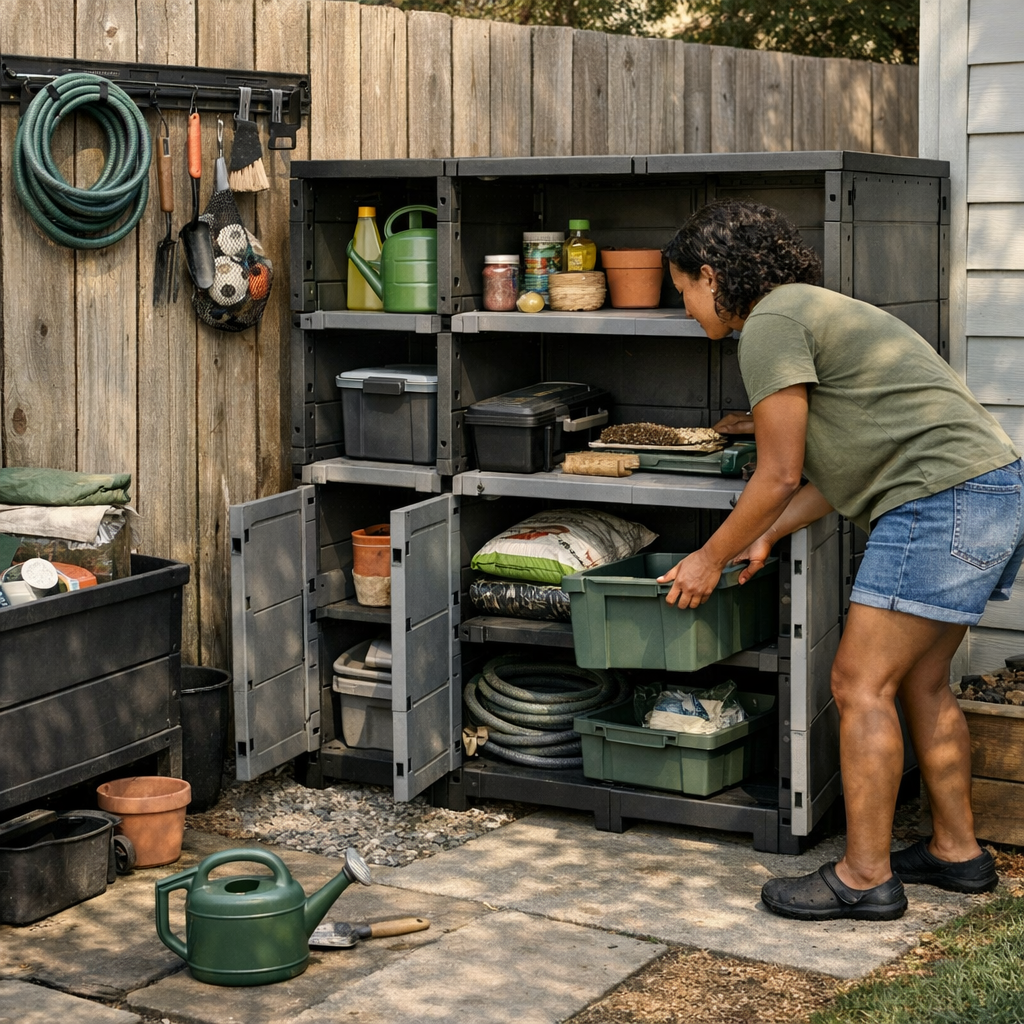
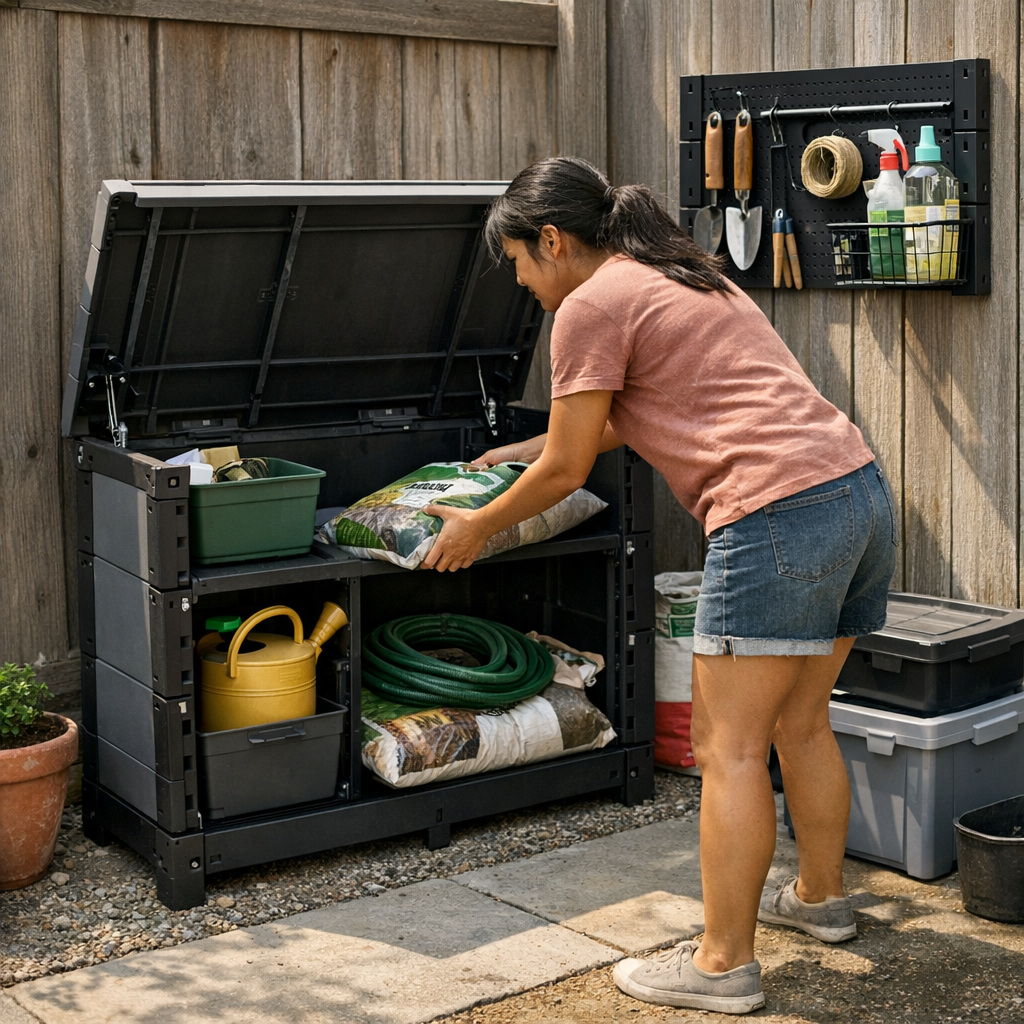
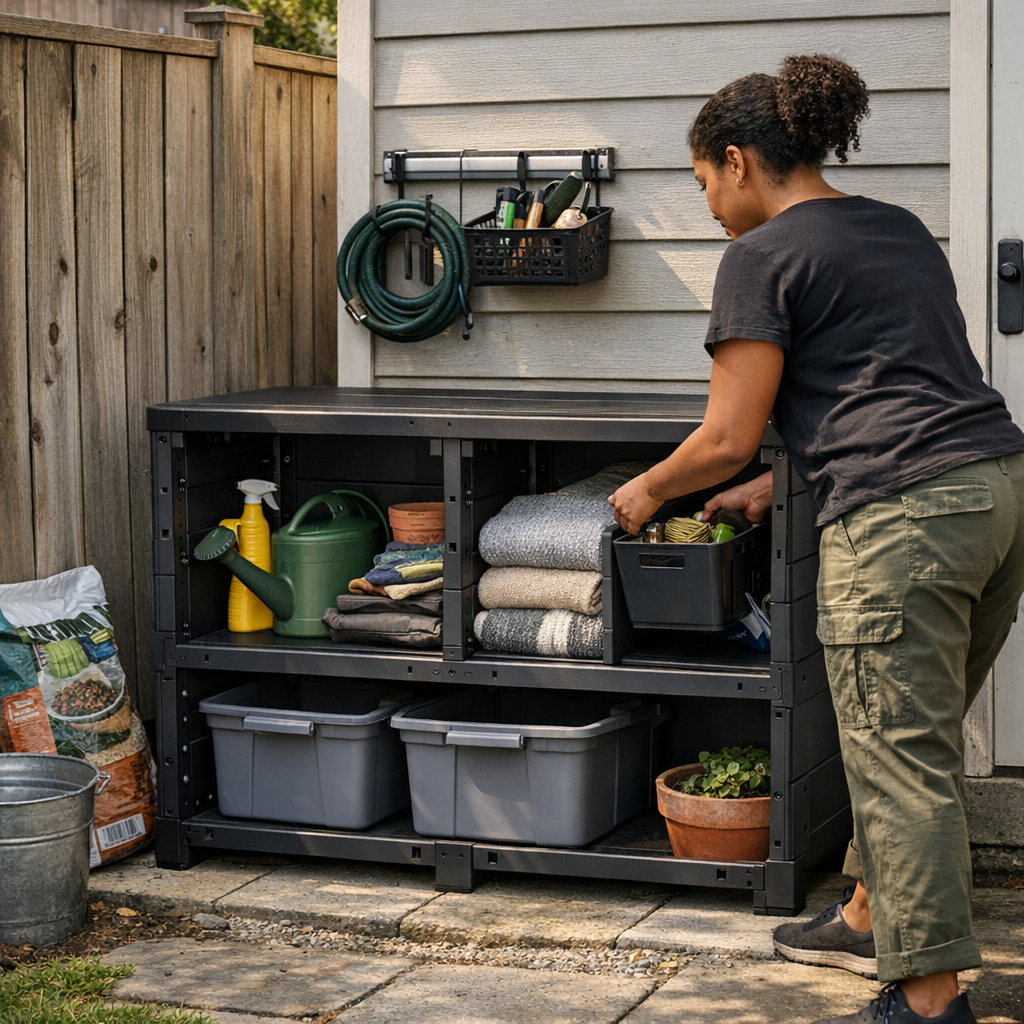
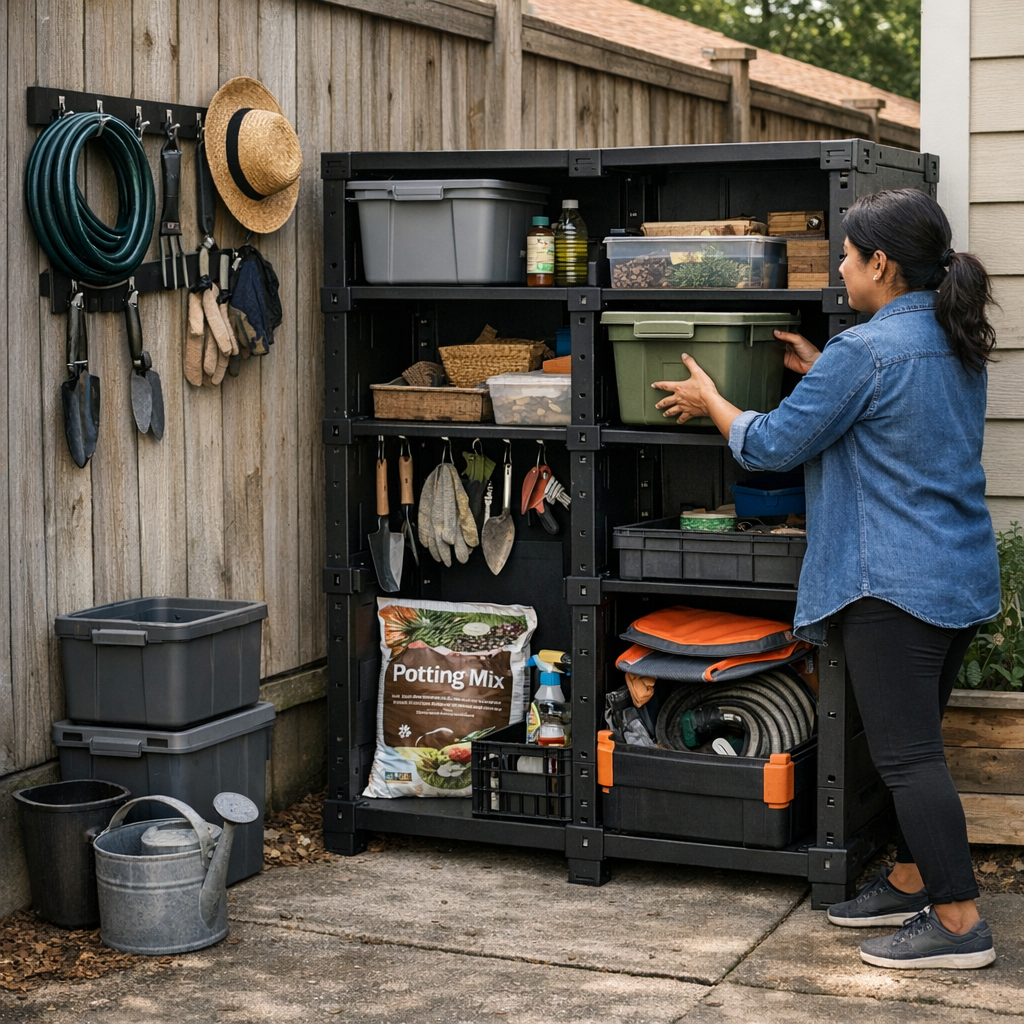
Sheds and outdoor cabinets hide the clutter—at least at first. They eat up pool floats, chair cushions, gear you use once a month. But try storing everyday basics, and the trade-off shows: you stack bags and bins, then shuffle them around so often it’s easier to leave things outside the door. Soon, a visible “halo” forms—all the stuff waiting for its chance to fit back inside, clogging the ground and shrinking your pathway. By rainstorm or reset, the unit itself becomes a bottleneck you have to work around.
Real Scene: The Overflow Halo
Picture the sprint to pack up before a sudden storm. The shed door jams; toys and tools tip into the walkway, and someone abandons a half-full bag right in the narrowest spot. Once the storm passes, you’re left with a heap blocking access—not just a shelf to tidy, but a logistical knot to cut through next time you need anything.
Modular Storage: Flexible Until It Drifts
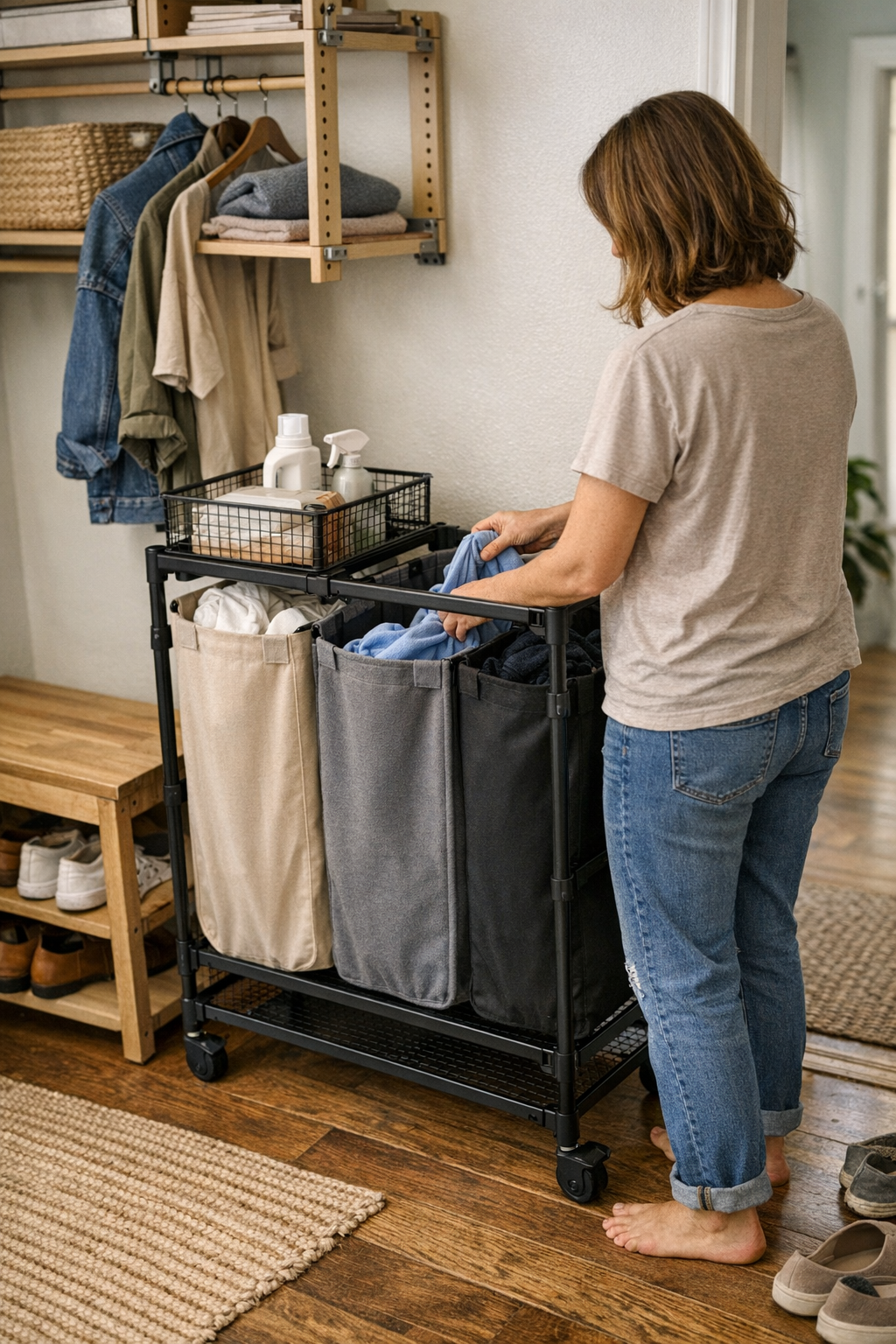
Modular bins and rolling racks promise agility—a patio edge can shift from play zone to garden command center and back, right? For a while, it works. But in practice, bins spread wherever space momentarily appears, mobile racks turn into “temporary” drop zones, and boundaries fade. Without constant diligence, your flexible layout steadily nudges into every clear patch until the only thing moving freely is the clutter itself.
Real Scene: Modular Creep
Bins that started in the corner are halfway across the patio by Thursday. The rolling rack gets stranded with stray balls and gardening gloves, so you dodge it every time you step outside. Each piece looks movable, but every migration complicates the reset. More flexibility becomes more ground to cover, sapping energy each time you try to get back to “ready.”
How Storage Choices Show Up in Daily Traffic
After a month of actual use, the big question is practical: Are pathways clear, or is every move a new shuffle? If the answer involves moving two things to access one, rerouting around last week’s “temporary” pile, or mentally sighing every time you see the reset ahead, friction is shaping your routine. Even clever storage can block you if it’s doing the wrong job for your real patterns.
Early Warning Signs Your Setup Isn’t Working
- Tools supposed to hang on walls are piling up behind the gate or next to the fence.
- The shed door always needs a clear-out before you can even step inside.
- Portable bins migrate until half the walkway is blocked—again.
- The “quick tidy” takes longer every time.
When these signals show up, your storage plan is out of sync with your habits—not just your available space.
Matching Setup to Reality, Not Just Blueprint
Focused on a clear walkway or pass-through side yard? Wall racks help unclutter the ground—if everyone returns things, and traffic isn’t too heavy. Need to hide bulk and off-season gear? Sheds and cabinets can work, but watch for overflow rings, especially during busier months. If your space keeps shifting—kids play here, you garden there—modular options give you quick flexibility, but only if you’re willing to reset the zone often or risk permanent drift into chaos.
Quick Fix: The “Sweep and Return” Habit
Night falls, gear is everywhere, and the walkway’s gone. Two minutes, one lap: grab stray items, return them to their real place—bin, hook, rack, shed—before clutter sets in. The simpler the return path, the more likely it sticks. The longer you skip it, the harder each new reset gets.
The Difference the Right Setup Makes
A practical outdoor storage layout doesn’t just look neat for the first photo—it keeps movement easy, paths usable, and overflow at bay week after week. In high-traffic corners and narrow side yards, the best setup isn’t the fanciest; it’s the one that reduces friction, blocks less, and makes cleanup quick. When storage nudges you into constant reshuffling, take the hint: reset not just the tools, but your whole system—until it actually fits the way you move outside, not just the way it looks on paper.
See practical outdoor storage options for real-world setups at TidyYard.