
Drop damp gloves in a closed bin by the door, and you might think you’ve solved clutter. But a few days of shifting weather, another round of soaked school runs, and the system breaks: gloves shoved away while still wet, invisible until the day none are dry, and you’re left yanking clammy fabric from the drawer as everyone rushes out. Organized storage isn’t always functional storage—especially in transition spaces fighting wet boots, heavy coats, and the spillover from daily commutes. The wrong setup turns “reset” into a hidden task, slowing you just when you should be out the door.
When “Organized” Storage Turns Against You
What looks neat for a week—a sealed basket or deep drawer—quickly becomes a choke point. Wet gloves tossed in with scarves and hats never really dry, and by Wednesday the clean-surface illusion cracks. Each search for a dry pair turns into digging through a limp pile. Every “tidy” solution that closes out of sight traps mustiness and moisture, storing up odor for the end of the week. Over time, the so-called order doesn’t reduce mess; it just moves it below the surface, waiting for the reset burden to spike on a busy morning.
Airflow Beats Containment: How Drying Hooks Change the Routine
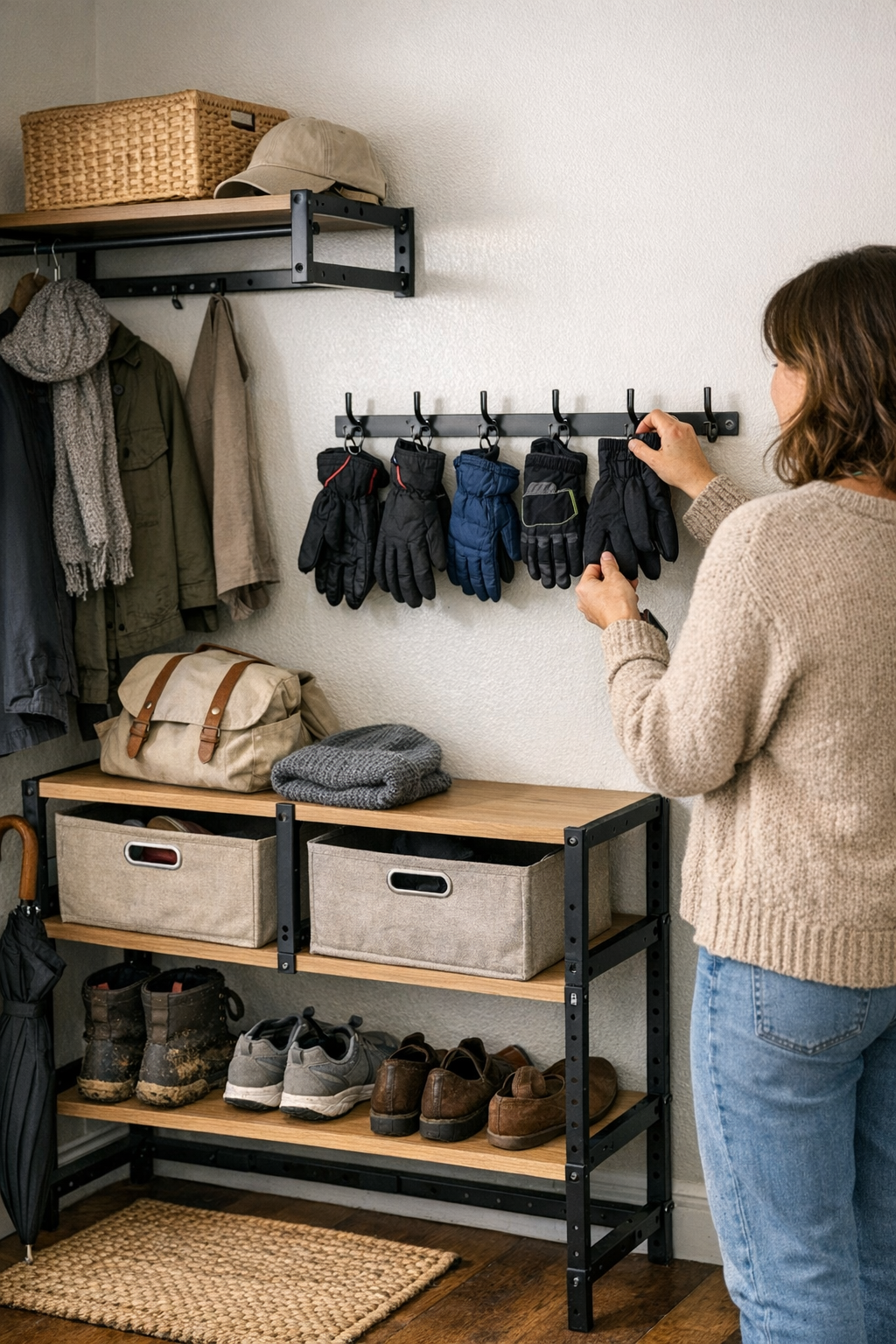
Switch to wall-mounted hooks, and the difference hits on the first wet morning. Instead of stuffing gloves out of sight, you hang them up—fingers apart, each pair with its own air. No more half-damp linings or mystery smells when you reach for gear before sunrise. By the time you need them again, gloves are far more likely to be actually dry and wearable, with the reset built into the movement: take off, hang up. This is a visible change—no fumbling, no digging, just clear status at a glance. Storage turns from a secret mess to a self-maintaining loop right at the threshold.
It’s not only about speed, but relief from the low-level stress of never knowing which pair is dry, or how much work a “quick” reset will demand. The routine moves from hidden chores to predictable, sustainable order, especially when the pace of in-and-out accelerates during bad weather or a packed weekday morning.
What Real Entryway Routines Reveal
You can spot which setups will fail just by watching a real threshold under pressure. When bags pile up against a bench, the shoe row creeps across the floor, and the only clear path is whatever’s left between yesterday’s drop and today’s rush, hidden storage falls apart. The temptation is always to sweep loose gloves and hats into the nearest drawer—but then the next grab is slower, riskier. Gloves tangle with scarves or are trapped at the bottom, often retrieved still damp. Someone grabs the wrong pair in the confusion; someone else drags more gear out, leaving things half-reset across the bench. Resetting means not just clearing, but untangling and drying gear you thought you’d already handled.
Wall hooks flip that tension. Each item is out in the open, easy to check, easy to manage mid-rush. Dampness is visible. One glance, one motion, no suspense. The process doesn’t eliminate clutter, but it makes the “necessary mess” obvious and much quicker to reset—clutter you can deal with in flow, rather than clutter that accumulates in hidden, musty waves beneath tidy surfaces.
The Visual Tradeoff: Clutter or Function?
Yes, gloves will be visible. On the wall, a few pairs instantly mark the area as “used” rather than staged. Not everyone prefers this look. But anyone who’s spent winter weeks tracking down the least-damp glove in a sealed bin knows the frustration of “clean” concealment that backfires. The visual noise—a handful of gloves drying in open air—is a minor cost for keeping the space genuinely functional. Fewer morning setbacks, no more mildew surprise, no silent buildup of maintenance waiting for one big reset. You see what needs airing out, you see when the system is working, you don’t lose time or peace to the drawer trap again.
Lessons from Real-World Adjustments
Switching is low-drama but high-impact. One family replaced a soggy drawer with a series of metal hooks—just a slim strip beneath the bag wall, 40 centimeters wide, above the shoes. Instead of stacking gloves on top of each other, each person had a hook. Gloves dried with fingers apart and space around them. Even if rain lasted all week, gloves were rarely wet two uses in a row. Smells faded, the count of “permanently weird” pairs dropped, and the setup no longer depended on someone remembering to unpack and air out gear before bed.
The greatest shift came in the return flow. As shoes inevitably spread and bags drifted from the hook zone to the bench and back, the glove area didn’t become a backup mess. Resetting meant one step: hang up and move on, even when the rest of the threshold overflowed or shifted around it. A tiny structure change protected that high-friction spot from collapsing into twice-daily disorder.
Practical Tips for Effective Glove Hook Setups
- Choose hooks with a lip or curve: Gloves stay put even when stretched or slightly stiff.
- Keep spacing at least a palm’s width: Air moves better, damp patches dry instead of brewing mildew pockets.
- Install above walking height, below eye level: Too close to shoes gets knocked; too high, and even adults skip using it during fast exits.
- Separate wet from dry items: If you use the same hooks for hats or scarves, carve out a dedicated section for the dampest gear. This keeps moisture and smells from leaping between items.
You don’t need designer hardware—basic hooks work if spaced and sited for airflow and reach. The function isn’t visual perfection, it’s making drying the default instead of a chore you have to remember.
Why Airflow Wins in Transition Spaces
Threshold spaces break down when reset costs rise: shoes migrate, bags pile, and hidden storage just means tomorrow’s disorder lurks out of sight. Closed drawers make things look better fast, but only by delaying and compounding the actual problem—slow resets, stale gear, and messy retrievals. Wall-mounted hooks leverage the chaos instead: they put friction out in the open, make it visible and fixable. Not every annoyance disappears; entryways always collect overflow during real use. But drying hooks absorb the repeated churn directly, letting you see the status, reset with one action, and return to order before the next round of wet weather or weekday scramble.
The real mark of a functional entry isn’t the absence of clutter—it’s the speed and ease with which you can bounce back to “usable.” A few hooks replace the quiet trap of the drawer with a process you can actually keep up with, storm after storm, school run after late return. For practical, repeatable improvements to entryway and transition-space storage, visit Betweenry.