Category: Yard & Utility

  • How Toy Storage Ottomans Transform Living Room Organization Quickly

    The living room floor turns into an obstacle course the moment toys start piling up—blocks underfoot, cars against the wall, plush animals halfway beneath the sofa. Adding a storage ottoman feels like the fast fix: lift the lid, toss everything inside, close it, and walk away with the space “cleared.” But smooth surfaces hide a daily mess beneath. The quick wins unravel by midweek. Blocks vanish under costumes, little wheels bury themselves in corners, and every retrieval means an awkward arm-deep search that drags everything back out. Instead of a reset, each cleanup becomes another shuffle, and the ottoman’s promise—tidy in five minutes—slows to ten and then fifteen as order breaks down inside its single unwieldy compartment. The surface looks calm, but anyone using the space knows: closed-lid order isn’t the same as actual usability.

    How Interior Structure Changes the Living Room Routine

    Storage isn’t just about hiding clutter—it shapes how the room gets used after each real day. A basic floor ottoman keeps things off the carpet, but the friction returns the second you need something specific. Maybe you’re halfway through a conversation when a kid wants the blue train that’s now wedged under last night’s costumes. The only way to find it: spread everything on the carpet, turn one hidden search into a sprawl, and jam a reset cycle right back into your path. Hidden bins that look organized on top often trade visible chaos for daily interruptions underneath.

    Compartment layout changes this entirely. Built-in dividers, modular inserts, or separate zones keep plush toys from mixing with blocks, tiny figurines from drifting into the corners. Storage turns into a working system instead of a one-way dump—children can return soft toys to one side, building pieces to another, and hard-to-find items stop vanishing into the bottom. Cleanup becomes routine instead of another hidden hassle.

    The Hidden Problems with Single-Compartment Ottomans

    An ottoman without structure resets only once. At the end of a busy day, everything gets tossed in, but the inside is already primed for chaos. As soon as the first retrieval happens—a hand searching for a missing wheel, a book lost under plush animals—the contents get churned, layers collapse, and spillover restarts. Repeated empty-outs become normal. Even adults dread reaching in for that small card or lost block, often digging twice for the same thing or abandoning the search to avoid a full reshuffle.

    Over days, the footprint feels heavier. The ottoman blocks usable floor space yet doesn’t smooth the return flow; path movement slows, and putting things back feels like another unending cycle. The initial “reset” grows less satisfying every time—internally scrambled storage leads to visibly slowed cleanups and creeping frustration. A storage unit that hides mess but interrupts retrieval disrupts both order and routine.

    When “Looking Organized” Isn’t Enough

    Closed lids and smooth fabric can fool you into thinking clutter is solved. But in real family living rooms, surface calm hides acute friction inside. The first thrill of new storage fades the moment you’re pawing through mixed-up piles in front of guests, or when you put off evening tidying because the bin-archaeology feels more daunting than just leaving toys scattered. If the inside blurs every category and item type, each dump-and-search chips away patience—until even quick resets feel like a chore you want to avoid.

    What Compartmentalized Ottomans Actually Change

    Switching to an ottoman with actual interior layout—dividers, modular bins, or adjustable compartments—isn’t a small tweak. It fundamentally shifts your routine. Zones mean plush toys always have a home on one side; blocks, magnets, or game parts live in separate pockets. Instead of “all-in-one” chaos, items have predictable return spots. Retrieval is simple: open, grab, close—no excavating, no uncovered mess on the floor.

    This setup works with typical household tempo. The “five-minute” evening tidy-up is finally real: no more digging through buried layers, no more stalling to regroup after a playdate, no repeated sorting just to keep the ottoman reset. Movement around the ottoman is easier—there’s no edge overflow, no path blocked by piles refilling the floor zone. High-traffic weeks don’t mean order collapses; everything returns to the right compartment, and anyone—even a child—can reset the space without guidance.

    Everyday Use: What Actually Improves

    No more pulling out everything for one buried item: A missing toy is no longer an ordeal or a cause for multiple re-searches—its category has its corner.

    Easy return flow: Families can quickly train habits (“soft toys left, blocks right”), so end-of-day cleanups fit muscle memory—even when rushed or distracted.

    Resets that stay under five minutes: The shift from dump-and-dig (ten minutes or more) to true five-minute calm makes a real difference across an average week.

    No more instant overwhelm in front of guests: Spontaneous company no longer means emergency reshuffling; order is straightforward and sustainable.

    The Value of Built-In Boundaries Over Time

    In any living zone—urban apartments where every square foot counts, shared open-family rooms, or even makeshift play spaces—an ottoman with structured interior boundaries keeps order visible and usable. Category drift doesn’t get a foothold. Block sets aren’t buried under plush piles, vehicles don’t vanish under costumes, and staple items are always retrievable without upending the whole bin. Return paths stay clear, and the area around the ottoman remains navigable instead of becoming a choke point for overflow.

    For busy families or spaces where reset time matters, the distinction is real: a structured ottoman removes friction that an open bin quietly multiplies. Surface calm meets actual order beneath, so the living room remains both presentable and functional—not just for one day, but across the repetitive cycle of modern, multi-use living.

    One Small, Useful Tip

    If replacing the ottoman completely doesn’t fit right now, sliding in modular inserts—small bins, caddies, or soft dividers—inside your current container can mimic much of the advantage. Even one or two clear zones sharply cut rummaging and make resets less painful. The right storage isn’t about perfection; it’s about systems that handle repeat pressure without crumbling by Friday evening.

    The best inside-storage setups don’t just tidy the surface; they keep a space ready, usable, and simple to reset every time. For storage that works with how a room is actually used, see smart, functional options at Gridry.
  • Why Placing a Leash Hook Near Your Door Latch Transforms Entryway Order

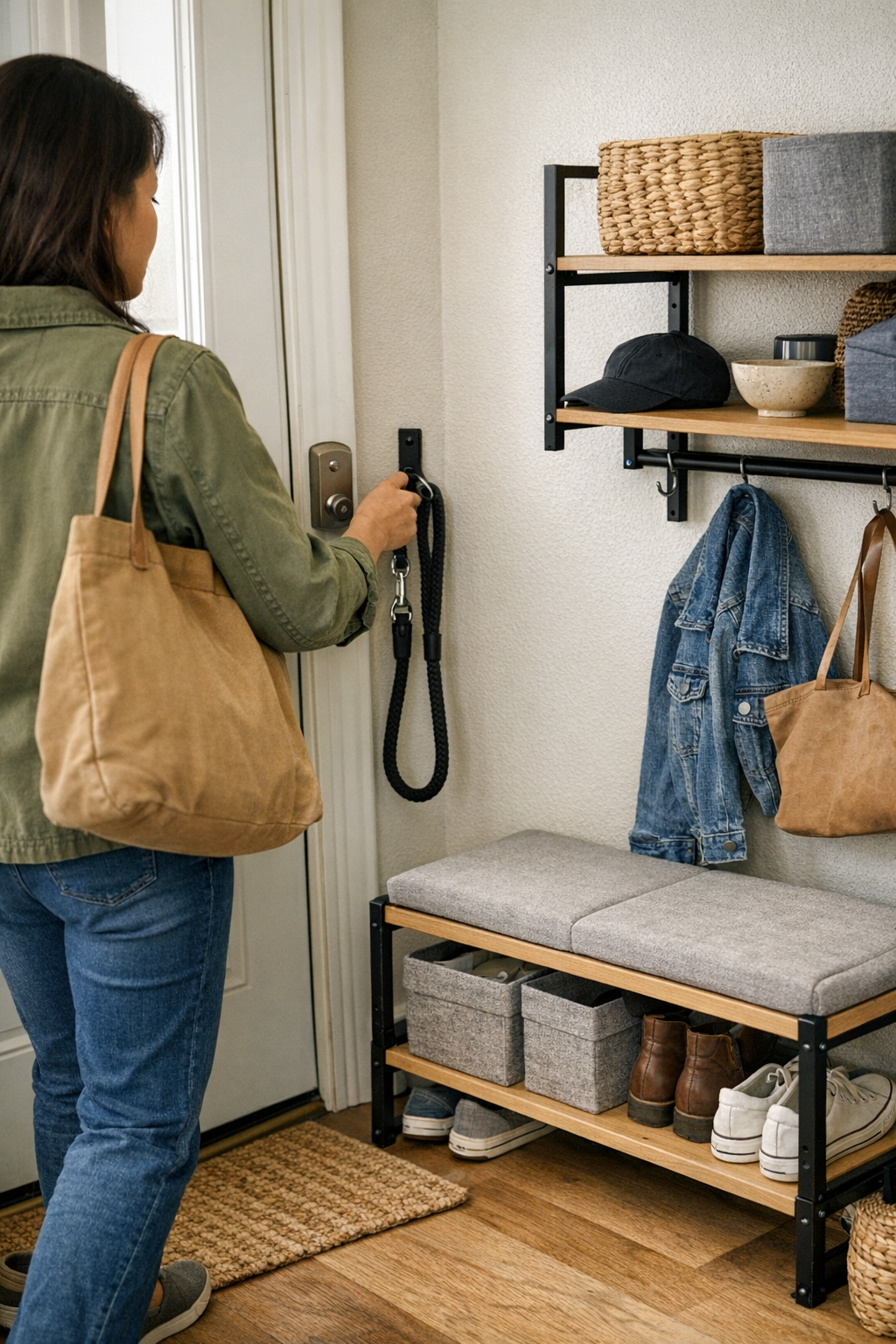
    In most entryways, the smallest mistake—like mounting your leash hook too far from the latch—quietly turns order into ongoing clutter. The difference shows up the first time you drop your groceries, reach for the leash, and realize it’s tangled in shoes or looped over a bench instead of where you actually need it. Between a routine that flows and a threshold that breaks down, the setup of your hardware decides if you walk out smoothly or stumble through daily reset.

    Threshold Storage Isn’t Decorative—It’s a Routine Lifeline

    Magazine entryways show tidy racks and “statement” hooks, but they never reveal what happens on a real Tuesday afternoon: your arms full, your dog already lunging, and the leash not where your hand lands. Install the hook flush with the door latch—squarely in your natural reach—and every exit gets faster, every return simpler. Miss that zone, and the leash rarely goes home: today on the bench, tomorrow buried under a bag, then looped around a knob, another object added to the daily trip hazard. Your “system” looks neat on paper and fails where routines meet real life.

    “Order” That Interrupts the Routine

    Even entryways with plenty of racks, bins, or cabinets end up failing after a week of normal use. Systems break down not from neglect, but from collision with how you actually move through the zone: shoes creep outward, yesterday’s bag lingers on a seat, the leash joins the clutter perimeter instead of returning to its “spot.” The weakness always appears when storage is designed to look contained but doesn’t map to real motion—especially those hasty, loaded entries and exits that blur any sense of control.

    Why Leash Hooks Drift (and How Placement Really Works)

    Most leash hooks get hung where the wall looks balanced or where they “fit” the decor. But two days in, the actual pattern sets in: if it’s even a panel away from your route, the leash stops making it back. On a rushed morning—with dog tugging, bag sliding off, shoe rack crowding the way—the hook too far is just another unused prop. The leash lands on the bench edge or a knob as a stopgap. As this repeats, the intention behind the setup fades, replaced by whatever object is easiest to grab or drop at the moment.

    The Slow Creep of Threshold Clutter

    What starts as a clean bench edge and lined shoe row warps fast. Each return brings a bag left “just for now,” shoes spreading until they block the flow, and the leash looped on any knob in arm’s reach. These detours pile up, forcing you or your family to step over last night’s shuffle just to cross the threshold. The original setup isn’t guiding the routine—it’s quietly being pushed aside by the pattern of actual use.

    Arm’s Reach from the Latch: Where the Fix Actually Sticks

    Sustainable order comes down to one simple placement: mount the leash hook right at the door latch, at waist height, inline with your step-through path. That way, you don’t detour around bags or shoes—your hand finds the hook in one move, making cleanup a non-decision for kids, guests, and whoever else passes through. The difference is immediate: clip, hang, go. No re-training, no elaborate system to remember—just a routine that reinforces itself by matching how you actually enter and exit.

    One Small Change, Noticeable Difference

    The instant the hook shifts to the proper spot, the overflow drops. On a crowded morning, you’re not hunting for the leash under a coat or shoe pile; it’s always where your hand expects. The bench stays free for sitting, not for overflow storage. Shoes line up instead of drifting wider, because the leash no longer floats, claiming random real estate. The threshold clears itself by design, not by luck or repeated resets.

    Missed Hooks Become Set Dressing, Not Storage

    Hooks or racks even a foot off-route slowly go unused. Everyone defaults to whatever’s in their path—bench, knob, shelf edge—and the original fixture becomes part of the background, a “storage” feature observed but rarely used. That gap between where things should live and where they actually land is the source of most daily entryway mess, making every reset a bigger job than it should be.

    Practical Tips from Real-World Use

    • Install at waist height, lining up with the latch. Anyone from adults to older kids can use it without stretching or stooping, and it matches your entry motion.
    • Choose wall-mounted hooks for reliability. A fixed hook doesn’t wiggle, get buried, or fall behind jackets like flimsy over-the-door solutions after a week of real pressure.
    • Make the hook single-purpose. Hold just the leash (maybe one essential), and resist piling on extras—more hooks often invite more sprawl, not less.

    Small Moves, Fewer Roadblocks

    Entryways are built-in bottlenecks, especially in homes with families, pets, or tight hallways. One misplaced hook or drifting storage fixture ripples into blocked paths and routine detours by day three. The right fix isn’t about aiming for perfect order, but letting your setup absorb repeated chaos and snap back—ready for whatever tomorrow’s entrance brings.

    If you want less clutter and fewer resets, start with one change that matters every time you walk through: place the leash hook as close to the latch as habit allows. That quiet shift keeps mess one move further away, making your entry zone do its job, day after day—no extra ritual, no fresh round of frustration.

    http://www.betweenry.myshopify.com

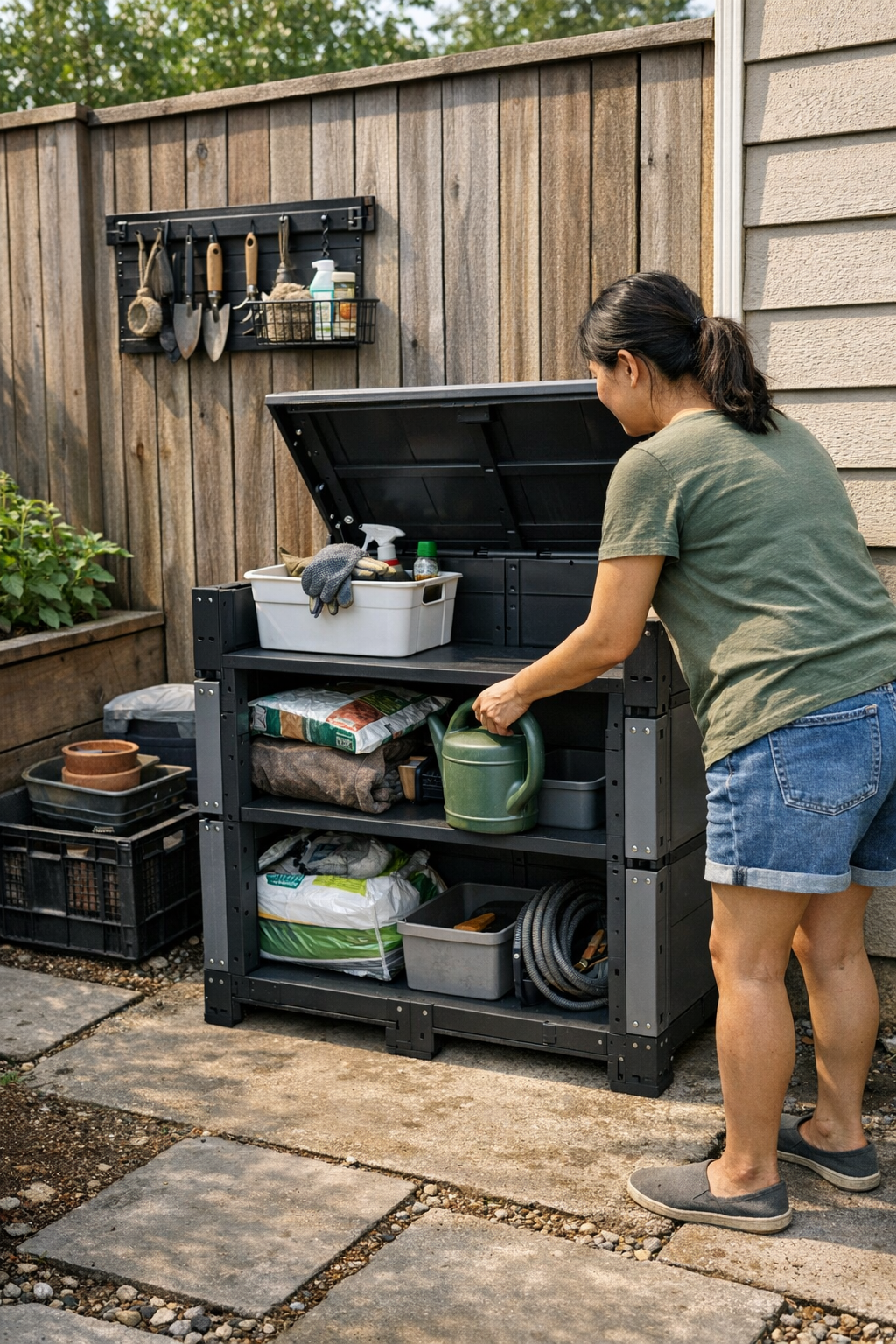
  • Choosing Between Wall Systems and Storage Units for Outdoor Organization

    Right after you set up new backyard storage, it can feel like you’ve solved the chaos for good. Side-yard walkways are clear, rakes perch on hooks, and patio cushions finally have a home. But it only takes a couple of weekends—a forgotten garden glove near the compost bin, a pile of soccer balls wedged against the fence, the trash bin blocked by a hastily dropped bucket—for the slow creep back to clutter to begin. The storage looked efficient on install day; a few cycles of real life show what the setup can’t quite handle.

    When Storage Solutions Start to Block Your Routine

    The first big shift isn’t lack of space. It’s everyday movement getting more awkward. A tool bin encroaches on your path to the gate. Floor space, which seemed ample, tightens up as hoses or outdoor toys migrate from their original spots. Suddenly, returning one thing—like finding a place for the pruning shears—means shifting buckets, lifting bins, or sidestepping piles you meant to sort out “later.” Storage starts demanding constant rearrangement just to keep the walkways usable.

    The friction builds quietly. No one plans for that “temporary” overflow zone behind the garage or for the cluster of items waiting by the back door. Corners you imagined would stay empty become the default parking zone for whatever doesn’t fit or is too much trouble to return “properly.”

    Wall Systems: Everything Exposed, Nothing Hidden

    Wall-mounted setups promise one big advantage: clutter can’t hide. Rakes and hoses either hang up or immediately betray themselves as out of place. The best wall systems are obvious in their demands—if someone leans a shovel instead of mounting it, the blocked path or lopsided tool rack nags until it’s fixed. In a narrow side yard or garage threshold, this visibility tightens the reset loop, pushing faster corrections and making the difference between an accidental obstacle and a clear walkthrough.

    The tradeoff: when you’re tired, dropped items stand out even more. Wall storage leaves no room for “just for now.” A forgotten pair of gloves or a stray soccer ball turns instantly into visual static, a reminder that the system only works if you cooperate every single time. There’s no door to mask drift—mess is either fixed or on display, never quietly swept aside.

    Closed Storage Units: The Trap of Hidden Piles

    Sheds and big outdoor bins sell the dream of a clean slate—tuck it out of sight, shut the lid, and the job is done. Over weeks, their practical flaw becomes clear: returning items gets slower and less appealing every time. Putting a hose back means dealing with whatever got tossed in front last. Restacking, reaching, bending—and the next time you’re in a rush, it’s easier to leave things sitting just outside, telling yourself you’ll put them back properly next time.

    Classic scene: you open the bin to drop in garden tools and discover folding chairs (delivered by a helpful neighbor) wedged in sideways, a broken watering can wedged behind, and last week’s pool toys blocking any hope of a clean return. Over time, the system that hid clutter just migrates it—first inside, then spilling out again in a line of overflow that clutters the fence or walks the storage unit’s footprint out into your movement path.

    Every square foot matters in compact zones. Space blocked by a box or shed is space you walk around. As the contents get jumbled, the “out of sight” solution just means outsized inconvenience the next time you try to use the area for anything else—retrieving, returning, even just passing by turns into a little project each time.

    Mixed-Use Zones: Where Setups Fall Apart

    Most real outdoor spaces play double—or triple—duty. The patch behind the garage handles gardening, sports, pets, extra chairs, and whatever needs cover this week. This is where storage plans get stress-tested. Toys blend with tools. The hose coils on soccer balls. An old bike blocks the compost fork. Wall systems make these mistakes obvious and annoying, while closed units let them pile up out of mind—until the spillover reemerges in new trouble spots along your fence line.

    You’ll know your setup’s unraveling if every reset seems to spill “temporarily” into some awkward clearance zone you never intended to use. Those piles aren’t clutter—they’re visible proof your system hasn’t met the reality of mixed use or the demands of quick, unplanned returns.

    Modular and Mobile: The Treadmill of Adjustments

    Mobile bins and modular cubes offer flexibility up front. But in practice, they introduce a maintenance tax. A rolling unit hits a paving stone and gets left askew. Stacked cubes “just for this week” block each other after one hurried swap. Every clever reconfiguration adds friction. Movement through the area slows, resets get sticky, and modular “solutions” become another set of puzzles to solve every time your routine changes.

    It’s easy to spot a modular zone that’s lost its balance: bins half-moved, cubes half-stacked, the whole setup answering last week’s problem while quietly creating this week’s fresh obstacle. The question to ask isn’t “how many arrangements are possible?” It’s “how many resets does it take to keep this path truly clear?”

    Setup Strain: Real-World Warning Signs

    • The walk from the back door is now a zig-zag through shoes, buckets, or stray bags.
    • Every attempt to put away a tool means moving two other things first.
    • Overflow forms in the quietest corner—like the fence next to the compost—because nothing else feels easy to access.
    • Seasonal gear lingers in awkward limbo, never returning to deep storage or finding a real spot outside.
    • You catch yourself dreading the simple act of picking up or returning a single item.

    Even the most orderly wall grid sags under too many non-matching items. Closed storage units start as hideaways and end as blockades if what goes in never cycles out. Friction isn’t a fluke—it’s the day-to-day sign your setup needs a new map.

    Real Fixes: Match Storage to Movement

    The real test isn’t how your setup looked on day one—it’s what stays easy months later. If you’re endlessly nudging, reshuffling, or working around awkward bulk after simple routine tasks, the system is failing the space. Wall racks pay off when fast access and instant return matter; they’re best for narrow strips, laundry cut-throughs, or garage edges where every pass counts. Closed bins and sheds handle off-season or backup gear, but they make everyday returns slower. Modular setups have their place—but only when you’re willing to keep up with their demands, or risk swapping one type of clutter for another.

    Test Your System: Walk Back Just Once

    If you’re unsure what’s not working, do a simple walk-through after a real outdoor task. Return each item to its assigned spot. If you have to move something else, detour, or settle for a halfway “temporary” resting place, you’ve caught the exact spot where your organization and real habits don’t line up. Usually, that spot keeps pulling clutter back in no matter how tidy things look after a big reset.

    Improvement almost always starts with granting honest space for the one tool or supply that defies all routines, or carving a lane that stays permanently open, no matter what shifts elsewhere.

    Storage That Survives Real Life Outdoors

    The difference isn’t decorative—it’s practical. Outdoor storage that keeps up with the messes, short-cuts, and adaptations of daily use feels different in motion: fewer pauses, less bumping, faster corrections, and almost no reason to step over a pile that wasn’t there the day before. If your side yard or patio edge keeps falling back into slow-motion disorder, it’s not a personal failure. Usually, it’s a sign the storage doesn’t match the movement—and there are solutions that can change that pattern for good.

    Find backyard storage solutions at http://www.tidyyard.myshopify.com

  • How an Umbrella Tray Transforms Entryway Maintenance During Rainy Days

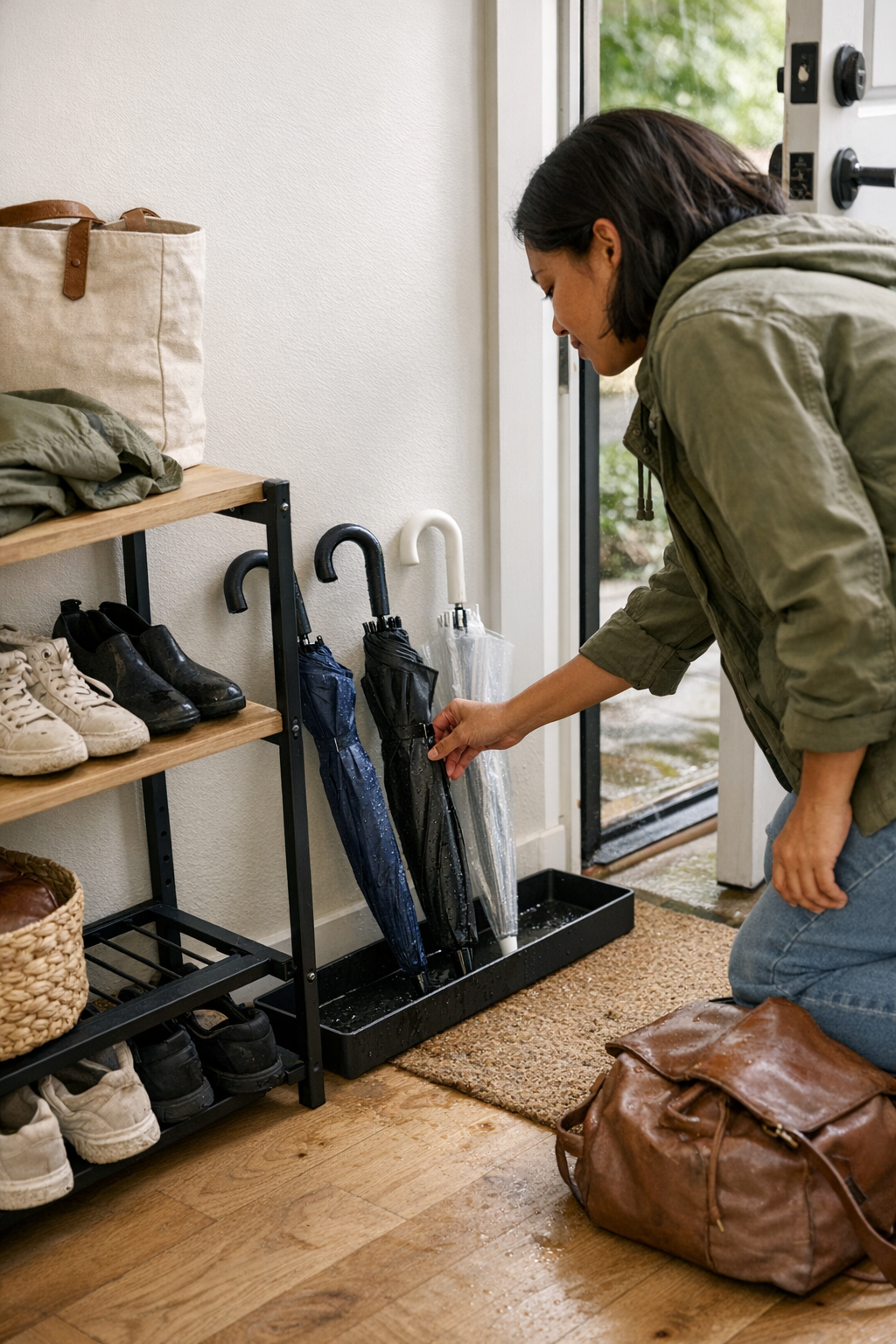
    If you walk in from a downpour with no umbrella tray, you don’t just carry in water—you set off a slow, spreading mess that’s almost impossible to contain. Drips stream from your umbrella, slide down the doormat, sneak under shoes, and edge into baseboard seams. The chaos isn’t dramatic, but it’s relentless: a tidy entry mutates fast. What started as daily routine—drop bag, step out of wet shoes, move on—becomes friction. One rainy day means a damp mat. Two or three, and the “quick reset” dissolves: shoes wick up water along the row, bags brush into soaked corners, and bench legs get splotched, with new stain marks forming where the wall meets the floor. Instead of a functional entry, you’re stuck repeating cleanup cycles just because water has nowhere specific to go.

    The Unraveling of Entryway Order: When Rain Becomes Routine

    Most clutter problems creep in quietly, but water announces every weak point after one storm. Wet umbrellas land “just for now” by the bench, against the wall, or hiding in a catch-all bin—each placement starts a new patch of seep and spread. From the first misstep, zone lines blur: shoes edge out to dodge puddles, bags lose their drop zone to moist intrusions, and what “worked” on a clear day now wastes time and patience every time multiple people come home at once. The more this repeats, the more the original layout crumbles—invisible on sunny days, unavoidable when wet weather sets in.

    The trouble gets sharper with repetition. Monday’s damp spot is a warning. By Thursday, your “organized” entry is a shifting puzzle of soggy shoes, overtopped mats, bag bottoms never quite dry, and unpredictable streaks along the walkway. Each return trip forces you to guess: Will the only dry spot be covered by someone else’s umbrella? Should the bag go higher? The threshold is no longer a reset point; it’s a bottleneck people step around, stall at, or—worse—start ignoring, letting damage spread further each week.

    Pretend Order: Open Storage’s Hidden Trap

    Open storage feels adequate—until the first stretch of wet weather proves otherwise. Lining umbrellas along a wall, tossing them in a decorative basket, or assuming that “open space” absorbs extra gear only works when everything’s dry. On a rainy streak, the system breaks: shoes get pushed wider and wider to avoid dampness; bins become soggy catch-alls; and that “show-ready” bench tops out as overflow, making each pass-through clumsy. Open storage blurs the problem just enough that resets get skipped, and the zone’s original separation of wet and dry is erased by slow, random movement and water drift.

    A Relatable Threshold Scene

    Picture this: three people rush in from rain, no umbrella tray in sight. Wet umbrellas collapse wherever there’s room—across the doormat, propped on a bench, or leaning at the edge of a shoe row. Without a real landing spot, drips disperse underfoot and sideways. Shoes, lined up for order, start creeping along the wall for safety, taking up twice the intended space. Bags dropped on semi-dry corners catch the runoff, silently soaking through the bottom. After a few cycles, the “entry zone” is more guesswork than system—every pickup clogs the path, and the original layout has vanished into a patchwork of awkward placements and avoidable mess.

    By your next departure, you’re dodging soaked runner edges, checking benches for wet spots before sitting, and resigned to starting the morning with “clean-up before go.” The open basket or the lucky “free spot” by the door wasn’t neutral; it slowly multiplied the reset burden, making what once felt like short-term convenience an ongoing maintenance problem.

    How a Good Tray Puts Water in Its Place

    Adding a purpose-built umbrella tray isn’t about achieving visual perfection—it’s about containing chaos at the entry point before it invades the rest of your setup. Put a slim tray tight to the door, and suddenly umbrellas no longer crowd shoes or force wet acrobatics. The tray draws the mess to one predictable zone, so the entire movement through the threshold changes: instead of constant shifting—mats, shoes, bags—it’s one action, one destination. Your reset shrinks from a full mop-and-repeat cycle to a check—empty the tray if needed, and move on, with the rest of the threshold under control.

    The full value is visible at the boundary. Raised tray edges lock water where it lands, keeping every drip in sight and off the rest of the floor. The next morning, shoes are dry, the bag drop zone is unmistakable, and no one has to risk a wet bench. The difference isn’t abstract: with water isolated in a defined space, the entry stays clean in function even when chaos repeats outside. “Reset” moves from scrambling to a one-boundary wipe down.

    The Importance of Fit and Flow

    Tray dimensions matter. Too small—a single storm leaves puddles that escape the first use. Too big—and you crowd the pass-through, trading one problem for another. A realistic choice: a slim, roughly foot-wide tray that sits flush along the wall and matches the real umbrella count. If it fills, it’s an immediate cue to empty—not an invitation to let things build up. Entry routines stay simple and maintainable, not stretched by a bin that can hide neglect or a tray that creates new obstacles.

    What Doesn’t Work: Common Workarounds That Fail in Real Use

    Multi-use bins? Water seeps downhill, undoing both organization and cleanliness. Wall racks without trays look tidy at eye-level, but drips collect at the base—wet spots that turn up as surprise staining, warped boards, or hidden mold. Decorative baskets just delay disorder: the first storm, and water runs right through, forcing you to clean three spots instead of one. These fixes don’t just “work less well”—they multiply the friction that a good tray eliminates in real conditions.

    Everyday Setbacks Without a Tray

    • Bag drop zone disappears: Bags edge into wet territory, and there’s no reliable spot that stays dry after a rain cycle.
    • Shoe rows creep across the floor: Dodging puddles forces the lineup wider and less accessible, tightening pathways—or creating trip risks.
    • Benches become the backup landing zone: Finding a dry seat means scanning for water shadows, not just tying shoes and heading out.
    • Thresholds clog up: Grabbing an umbrella or shoes means shifting a pile, slowing every routine departure.
    • Resets bog down: One quick tidy turns into rounds of mopping, drying, and re-lining every zone after each wet return.

    A Small Fix Makes a Big, Repeatable Difference

    Umbrella trays don’t create entryway magic—they create predictable boundaries that survive repeated, imperfect routines. Instead of water drifting unchecked, containment becomes automatic: wet goes where it should, and dry stays reliable. The real gain is in reduced reset time, easier movement, and a threshold that stays workable—especially when the weather refuses to cooperate and the sequence of entries and exits is never neat. The difference isn’t in perfection, but in how few problems you’re forced to solve each week.

    Shop Betweenry for practical entryway and transition-space storage solutions.

  • Slim Wall-Mounted Cabinets Transform Narrow Hallways Into Open Spaces

    The wrong hallway cabinet doesn’t just look out of place—it turns daily routines into a series of small, irritating setbacks. If you’ve ever caught your coat on a corner or hesitated to grab your bag because the storage blocks the doorway, you’ve met the real consequence of a poor hallway setup. Hallway cabinets seem like a fix for clutter, but too much depth or the wrong footprint means every busy morning becomes a shuffle: keys nearly dropped, shoe piles edging into the walkway, movement slowed by forced side-steps. In a space built as a pass-through, a mistimed storage unit becomes the silent cause of repeated bottlenecks and default mess. The promise of order collapses into a cycle of reset and workaround, all because the storage itself fights the way the hallway’s actually used.

    Why Cabinet Depth Influences the Whole Hallway

    Cabinet depth is rarely the first thing people measure, but it decides whether a hallway supports movement or quietly sabotages it. A unit that extends even a few inches too far into the corridor forces everyone—adults, kids, guests—to negotiate for space. Shoulders angle awkwardly. Bags collide with cabinet edges. Grocery totes snag on handles. Routines slow as you angle around corners or invent alternate routes. The hallway starts behaving less like open flow and more like a crowded queue, especially at peak hours.

    This friction is cumulative: Each sidestep for a sticking door or rogue shoe isn’t forgotten—it builds. The floor in front of a deep cabinet often becomes a collection zone no one wants to touch: shoes form haphazard rows, umbrellas wedge at random angles, loose gloves wait to be stepped on. Instead of anchoring the room, the cabinet makes clutter spread farther and harder to reclaim each day.

    Wall-Mounted Slim Cabinets: Clearing the Floor, Clearing Your Head

    The fastest improvement isn’t adding more storage, but reclaiming floor space with a slim, wall-mounted unit. Remove the deep, blocky cabinet and suddenly you move through the space without pausing. Two people can pass at the same time; doors swing without sticking. The act of returning shoes or bags becomes a single clean gesture—not a shuffle, duck, and reset around intrusive corners.

    In real use, the change is clear by week’s end. Morning exit routines stop collapsing into a pile of shoes at the cabinet’s feet. The base no longer invites overflow or lost mitts. Things stay at hand and at reach, not layered and lost beneath blind spots. Visual order lasts: you see the floor, you use the wall, and the return flow of gear—coats, bags, shoes—becomes self-evident. Resetting the zone after rush hour takes half the energy, because there’s less to sink below the surface or slide off-track.

    When Storage Invites Clutter (Instead of Containing It)

    The catch with deep hallway storage? More depth doesn’t stop mess; it only hides it. Every inch further from the wall is another chance for boots to crawl past the intended boundary and for backpacks to start new piles away from their zones. Items mix and drift—gloves end up wedged with bags, old hats slip behind the doors, water bottles migrate out of sight. The deeper the cabinet, the easier it is for categories to blur and for essentials to go missing exactly when you need them.

    A slim wall-mounted cabinet changes the retrieval logic. Items stay at arm’s length with no blind spots. You reach in once and find what you expect, not a mess layered out of sight. The difference is immediate: less digging, fewer repeat searches, and no invisible pile-ups under the lowest shelf. There’s simply nowhere for “just for now” clutter to hide.

    Real Routines, Real Reset: How Depth Translates Into Daily Flow

    Picture three people trying to leave at once in a narrow hallway. A bulky cabinet means each person waits, shuffles sideways, or jostles to reach shoes at the back. Over several days, small missteps—shoulder bumps, blocked access, builds of returned-but-not-sorted items—add up. By Friday, the “overflow zone” in front of the cabinet needs clearing before you can find anything at all. Foot traffic slows, and the hallway feels more like an obstacle course than an entry route.

    Swap in a cabinet under 10 inches deep and every pathway opens. Doorways clear; shoes line up, not out. The return loop—putting things back after use—doesn’t break down as quickly or leave piles to be sorted later. Essentials land where they belong, not at the edge or wedged under another shelf. Suddenly, resetting the hallway isn’t a weekly project. It happens almost by default, making the space feel bigger even with the same number of people using it.

    Foot Traffic and Fit: Small Tweaks, Major Gains

    Most hallways begin to feel boxed in if any cabinet exceeds 12 inches deep. Move to a slimmer profile—under 10 inches—and the effect reaches beyond aesthetics: walking becomes uninterrupted again, side-steps vanish, and group movement at peak hours feels less tense. The difference isn’t theoretical; it’s visible each time someone rushes through or bends down for a shoe.

    Measure your tightest spot. Count how many pass through at once, and compare how often you find yourself shuffling piles just to get out the door. For shared or narrow spaces, choosing a wall-mounted shallow cabinet is less about minimalism and more about owning back those lost minutes and blocked paths. It’s the difference between a hallway that just stores things and one that restores your routine.

    From Looked Sorted to Lasting Usability

    A hallway that merely looks tidy on install often unravels after a week of real use. Usability hinges on setup, not first impressions. Systems that just corral clutter for a day-one photo won’t keep their shape as routines pile up and categories begin to blend. The best hallway storage doesn’t just clear the surface—it absorbs the pressure of daily churn: comings, goings, gear switches, and the slow drift of “I’ll handle it later” items building up. If it’s too deep, too hidden, or too awkward to reach, the need to constantly reset never disappears.

    Choosing slim, wall-based storage that matches the zone’s actual flow means you’re supporting the hallway’s most basic purpose: quick movement, visible order, and easy return for everyone using it—no matter how frenetic the week gets. Order lasts because the setup fits both the room and the way you live in it.

    Find slim, wall-hugging hallway storage systems and other inside-organization solutions at Gridry.

  • How Visible Tool Storage Transforms Shared Yard Maintenance Efficiency

    In a shared backyard, tool storage rarely stays invisible for long. The fix always sounds simple—just toss everything in bins or behind closed doors—but within a week the “neat” solution quietly turns into small, daily messes. Gloves disappear under hoses, bikes get trapped behind bins, and someone is always kneeling in cactus mulch just to dig out the hand trowel. What promises to keep the yard looking tidy quickly becomes the daily circuit of shifting, unstacking, and searching—while actual yard work waits its turn.

    Why Shared Yard Storage Slides Into Clutter

    Even the most organized shed or patio box refuses to stay neat under routine, shared use. One person crams clippers between pool toys, another stuffs gloves behind a seed bag, and after just a few days the inside of the storage bench is a game of memory no one wants to play. Closed storage hides each shortcut, saving appearances for neighbors while quietly making every return harder the next time.

    It’s the endless reset loop: rush to grab a rake, wedge it back wherever it fits, and tell yourself you’ll re-stack it “later.” Later never comes. By Friday, the setup looks fine from the fence but is primed for frustration—each shortcut lays a trap for the next person, and every “quick tidy-up” turns into another reshuffle that slows everyone down.

    Closed Storage: Tidy Façade, Tangled Reality

    Closed bins, benches, and sheds seem like the path to order, but inside they create hidden chokepoints that build pressure all week. One oversized lopper sticks out of a bench that won’t close. Children shove soccer balls until hand tools vanish. The closed lid blocks returns—“do I really want to wrestle everything out, just to drop in this one trowel?” Most days, the answer is no, and things get propped or wedged wherever they land.

    These setups clog up fast. A storage bench sits flush against the patio, but after a weekend, long-handled tools lean at odd angles, smaller pieces disappear under bags, and soon the overflow creeps onto the walkway. To grab a hose, you wind up emptying half the unit or dragging stray bins out of the way—performance never matches the clean plan. Every inch of storage is used, but that just means more items blocking your path next time someone uses the space.

    Side Yard Interruptions: The Real Blockages

    Pictured: a narrow side yard behind a gate, with bikes mounted to a fence, hoses looping around a sagging bin, and a growing pile of lost tools. Monday, it looks under control. By Wednesday, a rake blocks the path because no one bothered with the bin. A helper “puts away” smaller tools behind heavy bags. Eventually, an overflow cluster forms around the bench, and just walking through now means scooting buckets and balancing tools along the fence. Resetting means fixing someone else’s shortcuts—and still not getting that feeling of a space finally “ready” for use. The clogs creep back days after each clean-up.

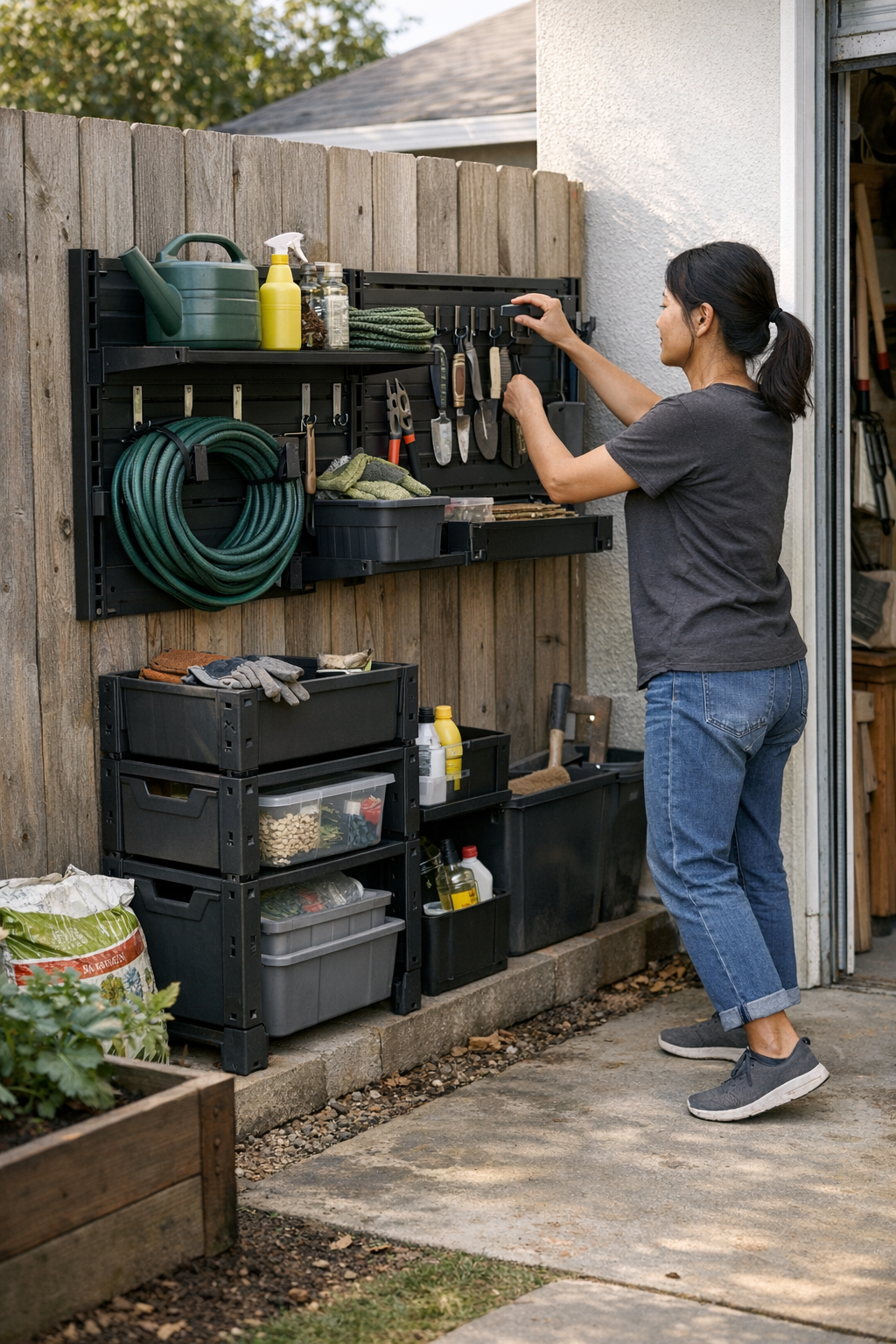
    Visible Wall Storage: Choosing Useful Over “Hidden”

    The moment you swap bins for open wall racks, the dynamic changes—because every shortcut gets called out in public view. When a shovel is missing, its slot signals it loud and clear; when tools pile up, you notice before they bury the space. Instead of letting messes accumulate inside a box, the open setup quietly polices itself. Each item has a place, and the visual reminder creates just enough pressure for returns—even from the least organized member of the crew.

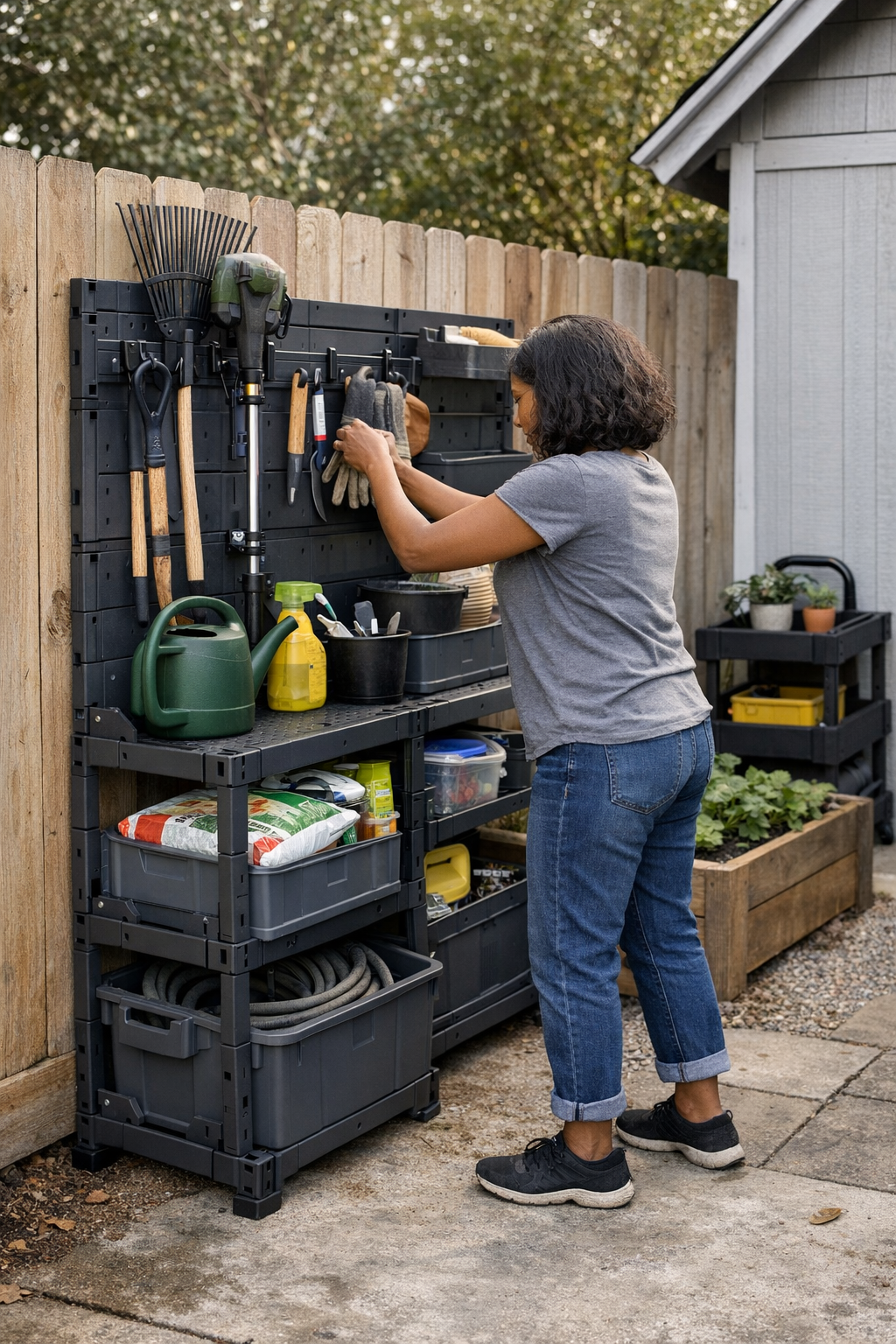
    A single week with a wall rack system: every tool—hoe, rake, loppers—gets its own obvious hook. Floor clutter vanishes. Bins are no longer blocking bikes or the gate. Tools out of place stand out instantly, meaning fewer “where did you put it?” headaches and less wasted time sifting through a mystery pile. Even kids are more likely to return gear when the answer is “hook it there” instead of “find a gap in that stacked bin.”

    Turning Point: Open Rack, Open Path

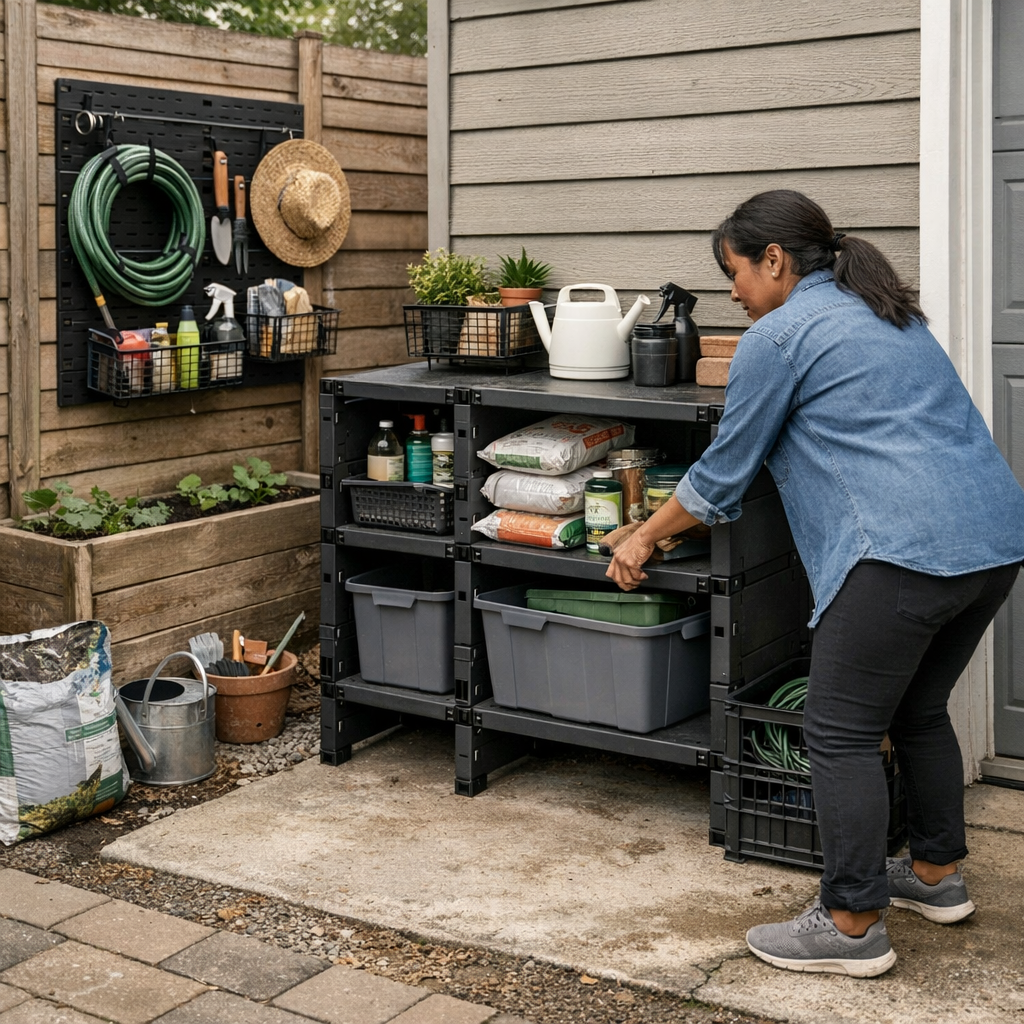
    One simple change—hanging a six-foot wall bracket on the fence—can flip the entire setup. Bikes roll straight through instead of weaving between bins. Hoses uncoil without being trapped beneath overflow. Resetting means five minutes replacing tools on hooks, instead of a half-hour rescue from the bottom of a storage bench. Side-yard corners stop collecting what won’t fit elsewhere. The system doesn’t need perfection; it just resists the slide back into daily chaos, no matter who’s on return duty that week.

    The Honest Tradeoff: Visibility Isn’t Perfect, but It’s Lighter

    Open wall storage isn’t a magic fix. Exposed tools wear faster unless they’re under eaves or covered with a tarp. And yes, when someone skips a return, the slip is obvious—no hiding a missing rake in a bin. Still, these minor hassles are no match for the daily gains: quick checks instead of long hunts, returns that fit the real rhythm of outdoor life, and—critically—a path that stays open for the next round of use instead of becoming a staging zone for the last ten jobs.

    Improvements don’t require perfection. A basic rain cover or awning keeps gear protected. Breaking up wall space into clear categories—long tools, garden hand tools, gloves or bags—shrinks the return decision to a few seconds. Corners that used to trap overflow can finally be reclaimed for things that actually move in and out every week.

    The Setup That Actually Changes Routine

    The best system doesn’t just look organized in a photo—it fits real movement and real outdoor behavior, so fewer things get blocked or lost. The aim isn’t spotless order; it’s the difference between fighting the setup every week and having resets fall into place almost automatically. When every hook signals what’s missing, order is harder to avoid. No setup stops every shortcut, but the good ones make it easier to do the right thing and harder for clutter to hide. Shared yards need simple visual rules, not hope that closed boxes will work out better next time.

    If your fence line still bottlenecks, if floor space keeps filling with awkward spillover, or if every “quick reset” spirals into another mini-project, it’s time to admit the problem isn’t you—it’s your storage flow. Wall systems, open racks, and real categorization shift daily use from a mess in waiting to a path that finally keeps pace with real habits.

    Explore more practical outdoor organization options at TidyYard.

  • How a Package Basket Transforms Entryways Into Organized Spaces

    Step through your front door and see what really greets you: a maze of dropped bags, kicked-off shoes fanned wide, and packages wedged anywhere there’s a gap—not a clear path, but an accumulation zone. That newly delivered box pushes yesterday’s shoes off the rack; a bench becomes overflow, not a seat. What divides a passable entryway from a routine-blocking bottleneck? It’s simple: the instant a package or bag arrives, does it land in a dedicated spot—or does it drift and multiply, squeezing your threshold a little tighter with every crossing?

    Threshold Tension: Why Entry Clutter Happens Over and Over

    Your entryway isn’t just for show—it’s ground zero for every item you bring in, and every shortcut or “just for now” drop off builds up friction fast. When bags, boxes, and shoes mix together without structure, routines grind down. The signs are easy to recognize: parcels spill onto shoe mats, bag straps tangle in the path of the door, shoes that started in a neat row splay out to make room for whatever just arrived. Even one week of “wherever fits” deliveries, and that threshold becomes slow: not just cluttered, but a real obstacle every time someone comes or goes.

    This friction doesn’t stay invisible. Overflowed drop zones force you to sidestep, reroute, or hesitate—micro-delays that add up. Each “just put it there” decision quickly fossilizes into routine, so the open floor at the threshold quietly fills. Every new item is pulled into a pile that gets harder to resolve, until the line between “put away” and “in the way” disappears entirely.

    Why “Open” Entryways Break Down During the Week

    Minimal entryway setups look promising: slim shoe racks, an uncluttered bench, a narrow console or shelf. But open surfaces attract “temporary” use like magnets. Today’s delivery lands on the bench; tomorrow’s box stacks behind the door; bags cluster in front of the shoe rack. These spots were supposed to create space, but instead they become collection points for anything unsettled—every item that’s awkward to put away right now.

    Small parcels are the repeat offenders. They wedge under benches, push shoes aside, and break the line of whatever system you started with. If there isn’t a fixed basket or bin, every morning sees more friction: the floor gets visually crowded by midweek, and by Saturday, weaving around unsorted piles is second nature.

    Real-World Friction: How Clutter Spirits Itself Across the Threshold

    Picture a busy Tuesday: packages left at noon and again in the afternoon, with no container near the door. One box gets nudged onto the shoe mat; another squats beside the bench. Later, someone drops a bag right over both, locking up the clear path. By evening, shoes go missing, movement slows to tiptoeing, and the act of coming home takes more navigation than it should. These are not theoretical problems—resetting now requires gathering scattered items, restacking, bending, unblocking, and questioning why the bench is never clear when you want to sit.

    Over time, reset chores expand. What could be a minute’s tidy-up stretches into ten. If drop-offs are random or shared—think roommates with staggered schedules, kids, or neighbors leaving parcels—confusion multiplies, not just at the surface, but in every step through the space.

    The Power of a Defined Package Basket

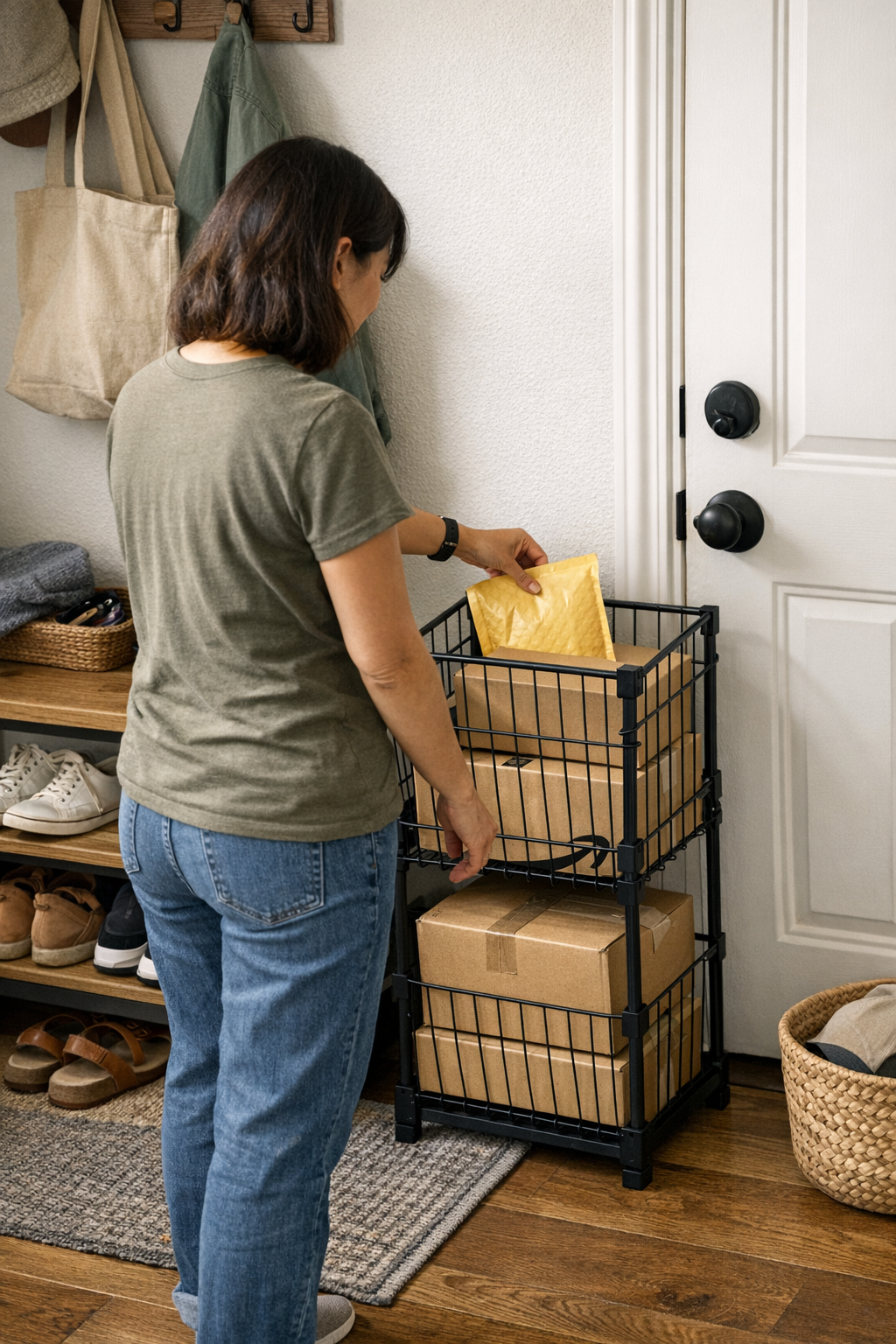
    Containment isn’t about hiding mess—it’s about protecting flow. Place a waist-high basket right inside the door’s swing, and every arrival is directed upward, not spread outward. Instead of parcels claiming every spare surface, they funnel into one visible, vertical queue. Shoes stay lined up, benches remain available for sitting, and the transition zone starts acting like a controlled access point rather than a lost-and-found. Suddenly, coming or going happens with fewer hesitations—you’re no longer juggling where to step or put things down in the rush of entry.

    Stacked, Not Spread: How a Basket Changes Daily Use

    For active households or anyone with busy weeks, the effect is clear: you build a drop-off habit that targets one spot. Boxes go in the basket, shoes hold their line, and overlooked clutter can’t invade the floor. In tight or shared entryways, the vertical space of a basket stops the threshold from shrinking under clutter pressure—it buys you floor freedom, even when there’s not much floor to begin with.

    Neglect the basket for a day and the drift returns instantly—overflow spreads to bench edges, under racks, behind the door. This isn’t about visual style, but routine survival. When the container disappears from the sequence, friction and pile-up are back by evening—proof that transition storage isn’t an “extra” feature, but the structure holding your routine together.

    Close the Loop: Reset Speed and Lasting Order

    Efficient setups aren’t about perfection—they’re about making resets so fast and so obvious they barely become tasks at all. A visibly placed package basket takes the randomness out of drop-offs. Instead of playing daily catch-up, new arrivals are quarantined before they invade your path or shoe zone. When you used to waste five minutes clearing space, now thirty seconds does the job—and that time is reclaimed, not just on cleaning day, but every single time you walk through the door.

    This keeps the rest of your setup honest. Shoes don’t get blocked by surprise packages, the bench is free for sitting not stacking, and bag hooks or cabinets avoid turning into a graveyard for delayed pickups. The “clear” look comes not from hiding things, but from never letting clutter settle.

    Practical Pointer: Match Container Size to Your Volume

    If you catch your basket regularly overflowing midweek, adjust: add another container for returns or scale up to a stackable model that takes the real pace of deliveries. Choose based not only on floor space, but on how much comes in and how often it moves out—your storage shouldn’t lag behind your routine.

    Recognizing the Signs: When Your Setup Isn’t Working

    Even with a storage solution, cracks appear. Watch for these signals:

    • Detouring or pausing to move something blocking the way—again
    • Items hopping from floor to bench to shoe mat in endless rotation
    • Resets dragging out beyond a quick minute’s work
    • The task of “just keeping up” turning into its own source of frustration

    If you see these cues, it’s time to rework your drop zone placement or container fit. Sometimes, the right unit in the wrong spot is just as ineffective as no unit at all—and every skipped use invites the friction right back in.

    The Everyday Difference: Less Shuffling, More Flow

    At the threshold, even a few saved steps—or seconds—multiply over a week. A single, visible package basket isn’t a miracle fix, but it quietly stops the slow creep of daily detours, bench spillover, and shoe spillways. The difference isn’t style; it’s ease. Shoes don’t sprawl; benches stay clear; resets don’t eat into your evening—and movement through your entry regains a sense of flow, even on the busiest days.

    Find entryway and threshold storage that makes your routines easier at Betweenry.

  • Choosing Storage Ottomans That Keep Blankets Neatly Hidden and Accessible

    The day you bring home a storage ottoman, it’s all promise—a clean room, every blanket and throw tucked out of sight, surfaces finally free from clutter. But as soon as routines settle in, the real test starts. You fetch the same blanket three nights running, reach for the lid with full hands, and suddenly that “solution” becomes a source of friction that doesn’t show up in the catalog photos. The disconnect between showroom order and day-to-day use is where most living room storage makes or breaks itself.

    Where a Storage Ottoman Begins to Slip

    The trouble rarely appears in the first week. You watch a movie, toss a blanket back when you’re done, close the lid. It works until it doesn’t: a lid that won’t stay propped up, a box that swallows blankets in a single tangled heap, or an interior that’s just deep enough to make folding pointless—but never deep enough for your thickest throw. Returning items starts taking more effort than grabbing them did. Soon, the put-away step gets skipped, and the ottoman’s “hidden” storage turns into a half-reset pile, one that grows a little messier with every day’s cycle.

    Real-world breakdowns show up on ordinary evenings—arms stuffed with throws, one hand free, and a hinged lid that lurches shut or needs balancing on a knee. You end up wedging the lid against the wall, trying not to drop three things at once. Eventually, a blanket lands on the sofa edge with the silent intention to put it away “next time.” After a month, the ottoman’s clean look depends less on your storage system and more on your willingness to keep hiding the evidence.

    The Tidy Illusion vs. the Everyday Cycle

    From across the room, two ottomans can look equally sorted. Wait a week, and only one stays that way through real use. In one, blankets stack flat—each one reachable, foldable, and replaceable without moving the rest. In the other, evening resets mean shoving and refolding as the pile bulges, lids catch, and eventually overflow migrates to armrests and chair backs. The pristine surface is just a lid over silent category chaos, and the time it takes to restore order quietly increases until the organization isn’t worth the extra step.

    This breakdown isn’t dramatic; it’s incremental. Each failed return means the flow of your system slows, and the ottoman becomes a staging zone for items that don’t have a real home to return to. Surfaces fill up around its edges. Instead of controlling clutter, the ottoman rebrands it: not gone, just moved out of sight—for now.

    Design Choices That Change the Routine

    Lid design is the dividing line between a system that keeps pace and one that wears you out. An ottoman with a counterbalanced or soft-close hinge—one that props open and stays put—means that even with full arms, you can drop in covers one-handed, and it closes without drama. When the lid’s loose, heavy, or refuses to stay open, you end up juggling or skipping the reset altogether. Small failures multiply: one extra step, one more reason not to bother.

    Interior depth matters just as much. If the internal space gives you a two-inch margin after stacking your largest blanket, you can toss in bulky throws without cramming. If the cavity is too shallow or awkwardly proportioned, every return feels like wrestling laundry into a too-small drawer: folds come undone, things catch under the lid, and closing up leaves the pile uneven or the lid half propped. It’s not just about storage volume—it’s about whether you can use it at real-life speed.

    Typical Real-World Friction

    • Reaching twice for the same blanket because everything inside gets twisted or buried
    • Shifting stacks of covers to dig out the one you actually want
    • Spillover builds up fast—blankets on sofa arms, pillows migrating out, the ottoman almost always partway open
    • Category drift: toys or chargers stashed inside “just until tomorrow,” then never restored
    • The area feels more blocked, less open, with every week—extra storage that quietly tightens the path

    Small Adjustments, Lasting Improvement

    Category discipline is the key to clarity. Locking the ottoman to just blankets and throws—and ruthlessly ejecting stray items as soon as they show up—cuts off the slow drift into “miscellaneous storage.” The first time a remote, headphones, or magazine lands inside, it’s the sign to reset before the system blurs. That’s when the hidden clutter starts taking over.

    If resets get slower, or you find yourself leaving items outside the ottoman more often than not, don’t ignore it. Usually, it means one piece of design isn’t keeping up with reality: either the lid is a fight every night, or the box is too cramped for your current habits. Sometimes the fix is as simple as sizing up to gain a crucial couple of inches, or swapping out the hardware so the lid finally moves at the same speed you do.

    Inside-Storage Meets Daily Flow

    The right ottoman isn’t just a box—it’s infrastructure that makes the rest of the room work smoother without anyone thinking about it. When you can store throws with one hand and never pause to wrestle the lid, you reduce both clutter and effort. The visible cues: room pathways stay clear, no backup piles form, and there’s no last-minute clutter grab before guests arrive. If your storage interrupts more than it streamlines, the real problem isn’t your willpower—it’s a design mismatch with your daily routine.

    Whether you’re comparing ottomans, fighting with reset overflow, or simply tired of abandoned piles each weekend, pay attention to the small mechanics: a lid you don’t have to fight, enough surplus space to skip folding marathons, and a single-purpose policy that keeps clutter from drifting in. Get these right, and inside storage actually pays off—by being invisible, not by making you work harder just to keep up.

    Browse more daily-tested storage solutions at Gridry.

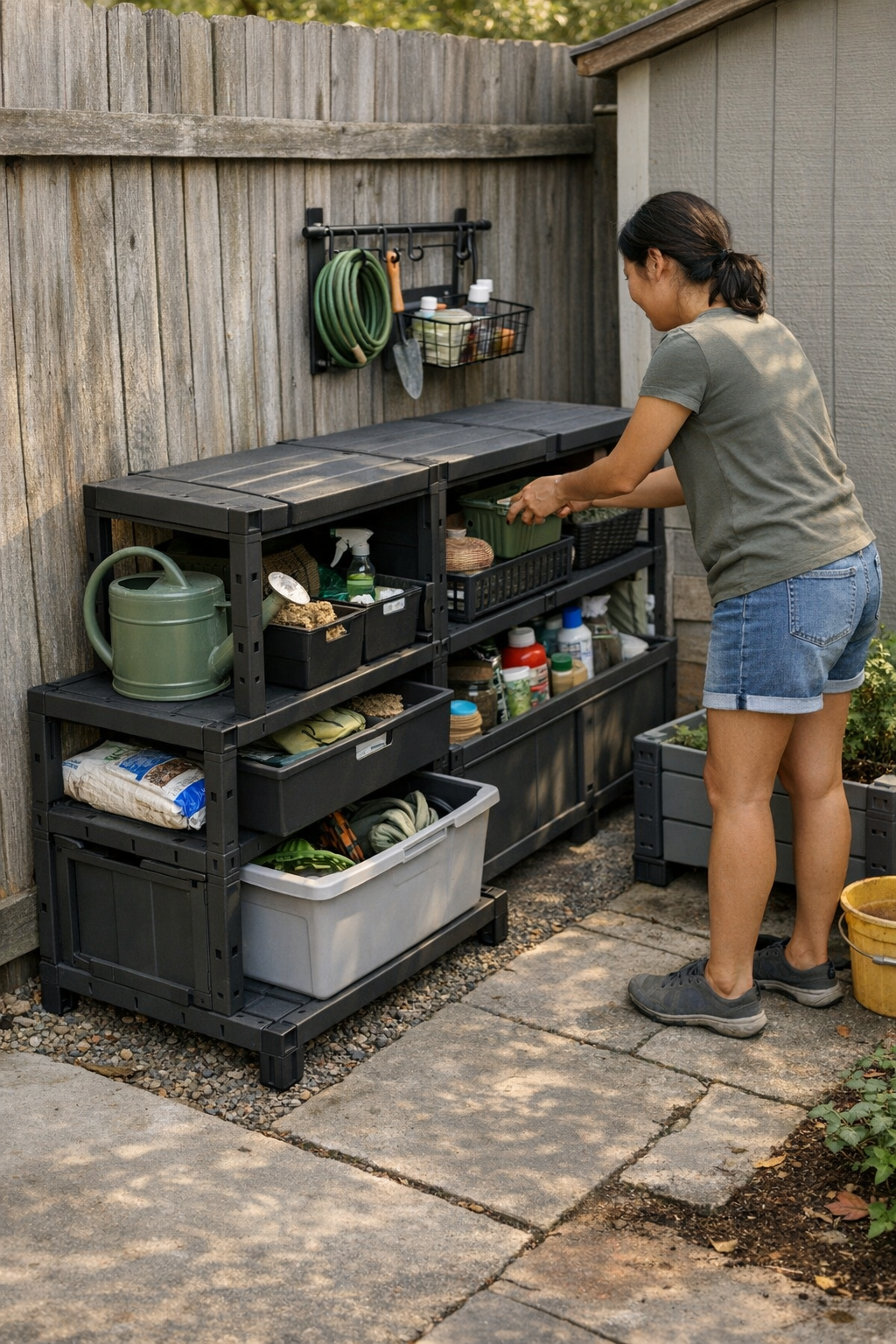
  • Transforming Shared Outdoor Storage with Wall-Mounted Systems

    A storage setup that looks sharp at 11 a.m. on Saturday can turn into a choke point by dusk. In backyards, side-yard strips, and patio corners, the trouble isn’t just cramming gear into a bin—it’s wrestling with what happens when everyone goes looking for something at once and returns it later, never quite where it started. Chairs wedge behind tubs. Buckets slide into walkways. You step over a rake just to close the gate. “Organized” on paper, but in real life, the layout keeps working against you—and against everyone moving through the space.

    Routines Collide When Storage Doesn’t Flex

    Most outdoor storage starts with stacking: crates, floor racks, and a tall cabinet if there’s a wall to lean one against. At first, it feels modular. Everything’s got a slot, and the path looks open enough for a few passes a day. But the logic only survives until muddy boots hit Saturday. Someone leaves hedge trimmers balanced on a bin because unlatching the cabinet takes too long. Gloves are tossed into a new pile by the door. Every “temporary” drop-off is a leak, and by midweek the floor is clogged with equipment that never found its way back.

    This is where you see the gap between nice-looking and truly usable. Floor racks that seemed space-saving become a shuffling nuisance, blocking the routes you walk most.

    How Clutter Creeps Back In

    Returning One Thing, Blocking Two

    Scenario: you finally track down the hand saw and put it away in its bin—only to realize the chair you set down has now barricaded the passage. You push the chair aside, but now there’s a tub of sports balls crowding the edge of the walkway. What felt like a thirty-second return turns into a small puzzle, multiplied by everyone who comes and goes. The setup demands rearrangement for even the simplest task.

    Zones That Magnetize Mess

    When storage units live on the ground, overflow has nowhere to go but out. A blank side wall near the gate is clear on Friday, then by Sunday is a drop point for hoses, rain boots, bats, bags, things too awkward or dirty to put “away” properly. That collection turns accidental—a permanent backlog, both hiding clutter and making it harder to get through. The idea of a tidy corner gives way to a real, growing pile that proves the system isn’t keeping up.

    Repeat Resets That Don’t Really Reset

    The myth: one routine to rule them all. Reality: every family weekend breaks the pattern—mower out, trowel in, folding table borrowed and returned late. By Sunday afternoon, gear for three different projects sits scattered or wedged behind bins. The “reset” is never quick. Each pile that forms demands a total reshuffle. One disorganized moment can ripple all week, as that bin in the corner stays blocked until someone has the time—and patience—to start from scratch.

    Why “Flexible” Floor Storage Bogs Down

    Freestanding racks, stackable bins, tall cabinets—all sell you on flexibility. They work on a floor plan, but not in a lived-through yard. Real life means hasty returns and weather dictating the fastest route from garden to door. When storage sits low and deep, the easiest surface wins—usually the path or the nearest bin lid, not the actual slot. Items up front get used and returned; everything else drifts to the sides or gets buried until next season.

    Eventually, the so-called flexible setup gets rigid—locked into a loop of shifting, stacking, and stepping over gear just to keep doing what you already do every week.

    Wall Systems Change the Flow, Not Just the Look

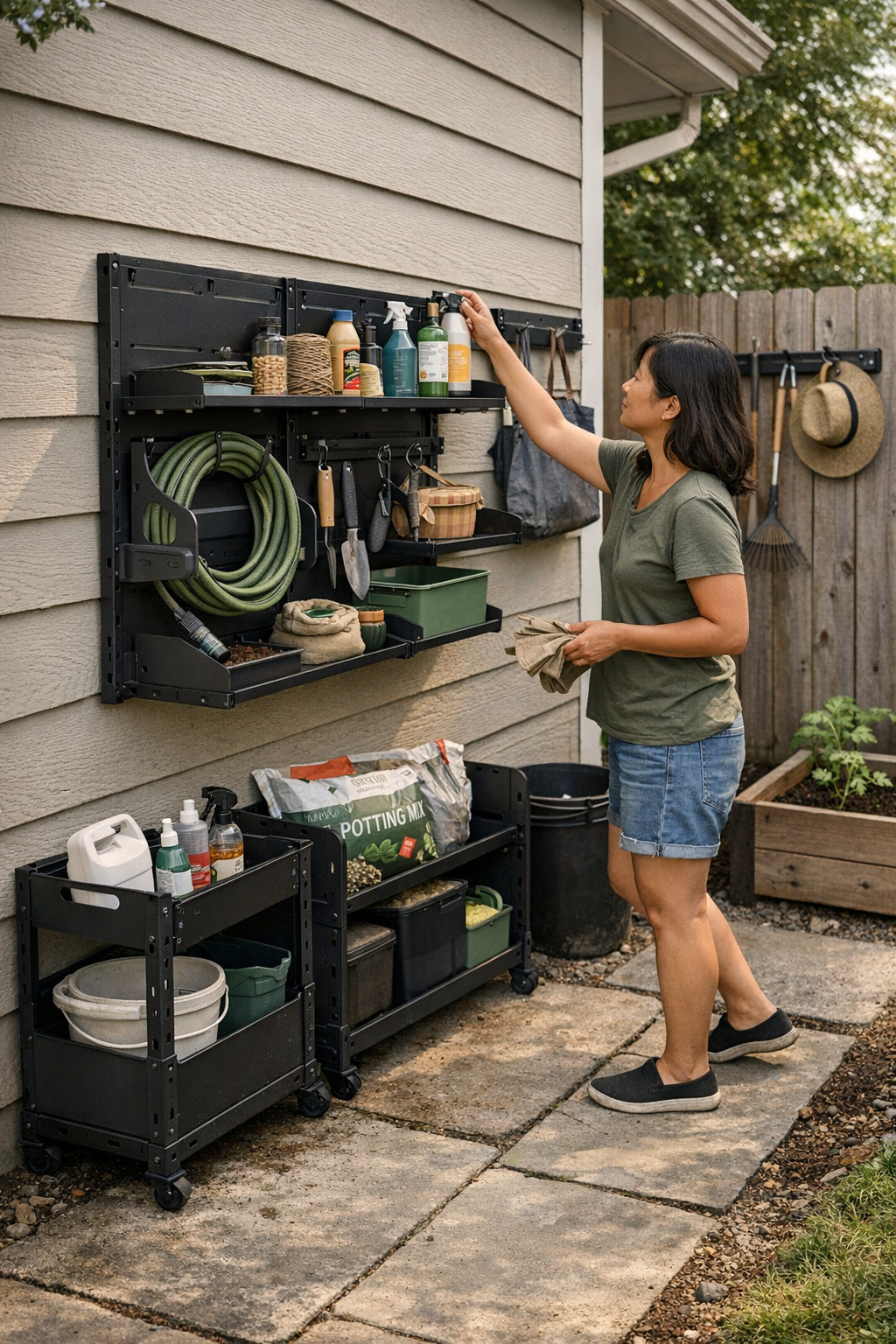
    After too many weekends spent hopping over garden forks and scraping paint on bins, the big shift was mounting a wall panel along a narrow stretch by the gate. No more tripping over toolbox handles in a foot-wide lane. Gear lifts off the ground, tools hang at eye level or arm’s reach, and put-back routines become obvious—not perfect, but impossible to ignore. Now, even when someone rushes in with muddy boots, the “easiest” option is usually right: hang it up, move on. The ground stays clear by default, not as an exception.

    The win isn’t dramatic. Walkways are open—often, not always, but open enough. Overflow shrinks naturally instead of collecting warnings and reminders. The return flow improves because the right spot is visible and reachable. Neighbors bring gear back and know where it goes. Even when the afternoon ends with tools orphaned here and there, the next fix-up is minutes instead of a full clean-out. Blocking gives way to movement, and the old pattern of staging piles at the gate starts fading.

    Wall Systems Absorb Mess—Without Demanding Perfection

    Good wall setups don’t force better habits—they ease them in. Hooks, rails, and standing-height panels make correct returns the path of least resistance, so even the laziest “I’ll put it back later” has less impact. These systems also clarify boundaries. They telegraph: overflow goes here—or doesn’t, at all. Early warning before mess piles up means small problems get fixed before they turn into a full reset job.

    If you compare this with floor cabinets, the advantage is clear. Cabinets hide mess until the doors fill up, but eventually, the old pattern repeats: stuff lands at your feet. Tall racks only stay clear if the ground below isn’t a tripping hazard, and most modular shelves just create a new obstacle course if they’re not raised and spaced for real movement.

    Smaller Tweaks, Bigger Impact

    Don’t treat every wall as a blank slate. Break panels into zones: shovels and gloves by the entry, lawn gear around the corner, seasonal tools out of prime traffic lanes. This funnels quick-use items to where they’re actually used, slashing the back-and-forth of searching and jockeying for position each time you return something.

    Leave deliberate gaps below panels—a true walking strip, not surprise storage. The floor underneath isn’t wasted space. It’s safe, open, keeps trips down, and lets everyone move gear without restarting the storage shuffle.

    What Really Holds Up Outdoors

    The best backyard setup isn’t the one that impresses on a fresh-clean Saturday, but the one you can put back together after a rainy, crowded, gear-heavy week—without dreading it. The shift to wall systems doesn’t erase chaos, just soaks up more of it. Blockages clear in minutes, not half a day. No one waits for the “organization fairy”—the layout supports the quickest, most obvious move, for everyone.

    The test is simple: fewer things to step over, fewer rituals just to find the spade, a path that stays open, and resets that don’t cost your entire Sunday. That’s a yard or side strip that actually works—and a reason to rethink what “organized” should look like in a real, shared, messy, everyday outdoor space.

    Visit TidyYard to find storage solutions that work for real outdoor spaces.

  • How a Shallow Shelf Transforms Entryway Organization and Key Management

    The entryway key shelf is where the daily difference between order and low-grade chaos is decided—often before you realize it. In real homes, the absence of a visible, single-purpose spot for keys means every threshold crossing invites a new delay. One day it’s keys vanished under a jacket on the bench, the next it’s another detour—searching pockets or rifling inside a catch-all bowl stuffed with mail, earbuds, and coins. As these tiny disruptions repeat, the whole area shifts: benches swallow overflow, shoes break formation and sprawl toward the hallway, and the reset zone—the space where you should walk straight in or out—clogs up. Failure isn’t dramatic; it’s a slow, stubborn spread, one misplaced key at a time.

    Why Do Keys Go Rogue? Recognizing the Real Trouble Spots

    Lost keys are just the first domino—entryway friction quickly multiplies if the storage setup is wrong. Baskets and deep trays look like solutions, but in repeated use, they breed confusion. Drop your key, and by morning it’s under old receipts or tangled with a dog leash. The surface that’s meant to clear clutter turns into a black hole where categories blur. What seemed tidy is now a sorting project every time you leave. Each search adds another reset, stalling your flow when you least want it—rushing out the door, already late. The mess isn’t just visual; it interrupts how the whole entry moves and recovers between uses.

    Threshold Turbulence: How Clutter Starts to Spread

    Here’s the pattern: you set your bag on the bench “just for tonight.” Next, the shoes you lined up last weekend drift sideways, the mail pile creeps along the wall, and your keys vanish beneath the lot. The entryway’s clear lane narrows after each rushed drop or short-term fix. Temporary placements—bags perched on benches, packages balanced on shoes—stick around, gradually jamming the path. Each person adds a fresh layer, and resets get slower, not easier. Instead of a smooth exit, you end up dodging obstacles and shuffling piles just to get through. The threshold stops being a passage and becomes a recurring headache.

    The Shallow Shelf Advantage: Simplicity in Repeated Use

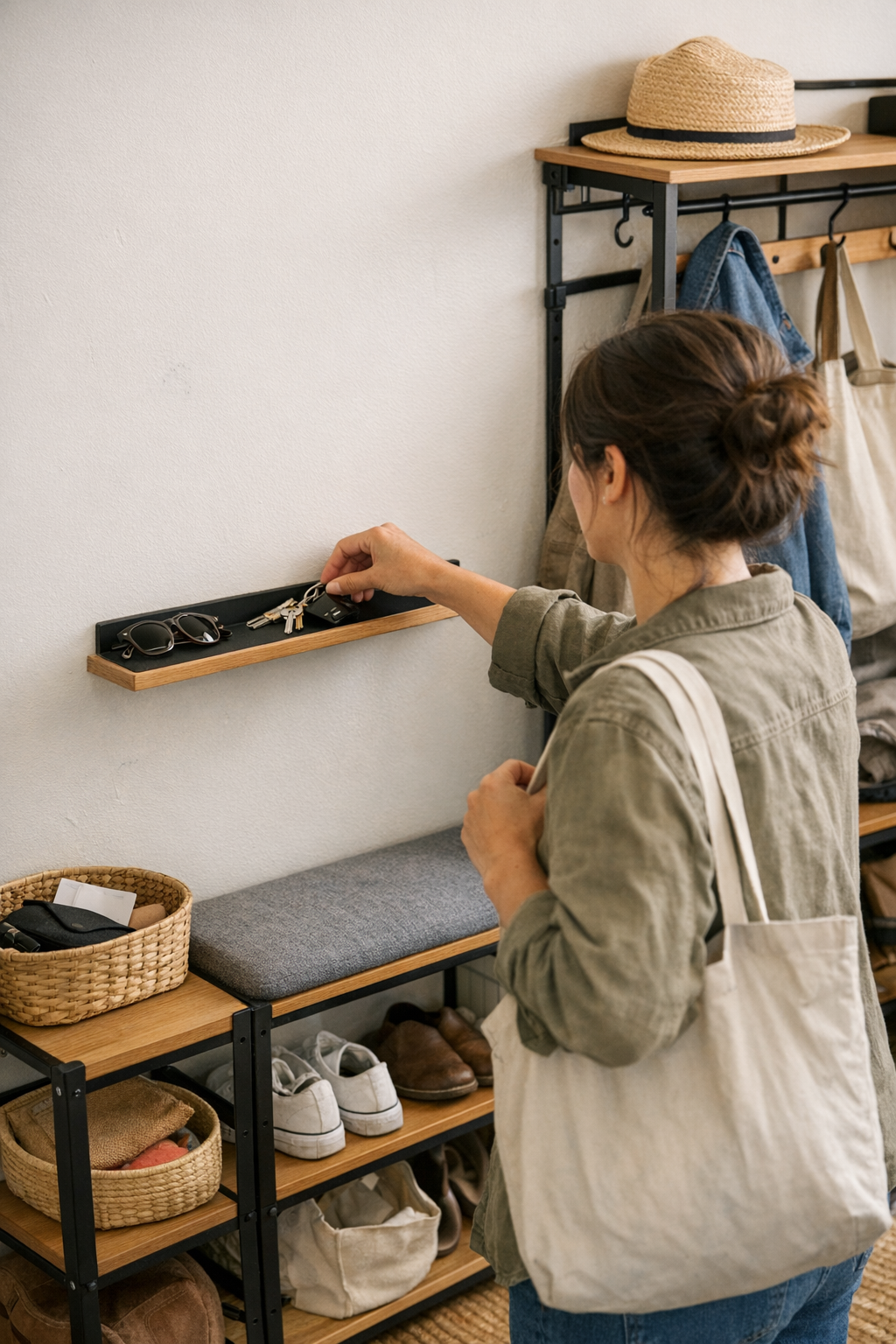
    The best entryway storage isn’t about maximum capacity—it’s about never having to think twice. Deep trays and bowls hide your keys; a slim, wall-mounted shelf gives you a single visible target. No guessing, digging, or late-night pocket checks. The action changes: open the door, drop the keys, done—every time. The shelf edge becomes a built-in warning: if something else crowds your keys off, you notice fast, before it becomes a reset problem. The boundary is clear. Overflow can’t sneak in for days before anyone reacts. Instead, the shelf signals when it’s full—and makes fixing it instantaneous instead of another delaying task.

    Real-World Reset: What Changes After Installation

    Picture the actual rush: your hands are full, the dog’s leaping, phone buzzing in your bag. If there’s no shelf, keys get dumped wherever—banister, kitchen counter, balanced on a stack of mail. Each improvisation invents a new reset step for tomorrow’s routine. But a wall-mounted, shallow shelf stops drift cold. Now, there’s only one drop zone. The return flow clears up: you walk in, drop keys, move on—no reshuffling, no search detour. Even if the bench picks up overflow, the shelf doesn’t. Its only job never gets diluted. The weakest link—key access—is solved, so everything else gets less jammed, no matter how busy the week gets.

    Invisible Efficiency: The Difference Between Looking Neat and Working Well

    Entry setups that “look” organized—rows of baskets, deep communal trays—hide their downsides until the first crowded morning. Any deep container turns into a shuffle box. Wide trays become clutter magnets for everyone’s stuff. A narrow ledge with a visible stopping point—a 40 cm shelf right by the door—cuts through that. Keys are always out front, never pushed under mail or sunglasses. Even after five returns in a day, you see what’s crowding the edge and clear it on impulse instead of making a weekend project out of it. The shelf resets fast, stays predictable, and gives you a safety net when every other surface collects overflow. In a well-used entry, that difference becomes visible—and felt—by the end of the week.

    Shared Space, Fewer Headaches

    In families, shared apartments, or high-traffic entryways, one missing key can throw off everyone’s timing. The open shelf changes the dynamic: its position makes the routine obvious. No need to explain, nag, or retrain anyone—put keys here, pick them up here. The wrong setup—a communal drawer or deep tray—spreads blame and scavenger hunts. The visible shelf contains confusion before it starts: everyone adapts, and fewer resets are needed just to keep the threshold moving.

    Keeping the Entryway in Motion

    Swapping out that over-stuffed bowl or generic tray for a dedicated shallow shelf changes more than the look—it shifts the entryway’s entire rhythm. Bags no longer sprawl, because the shelf marks where the landing zone ends. Shoes don’t take over the walkway while you hunt for keys. Instead of constant micro-fixes, the area forms a flow that fits natural daily movement. It’s not about perfection—it’s about repeatable access. Once the shelf sets the rule, the entire transition space gets easier to re-enter and restore, day after day—even when the routine is at its busiest.

    One Quick, Useful Habit Tip

    Keep the shelf’s edge sharp: pair your reset with a regular action such as hanging your coat or opening the mail. That extra second to clear a receipt or stray glove prevents the shelf from dissolving back into random surface territory. Make the reset automatic, and clutter never gets a foothold.

    Small, honest tweaks in the entryway do more than cut lost-key drama—they build a routine you can actually keep pace with. Nail access and return flow right at the threshold, and the entire zone stops fighting your movements, no matter how many times you come and go.

    Betweenry Entryway and Transition-Space Storage