
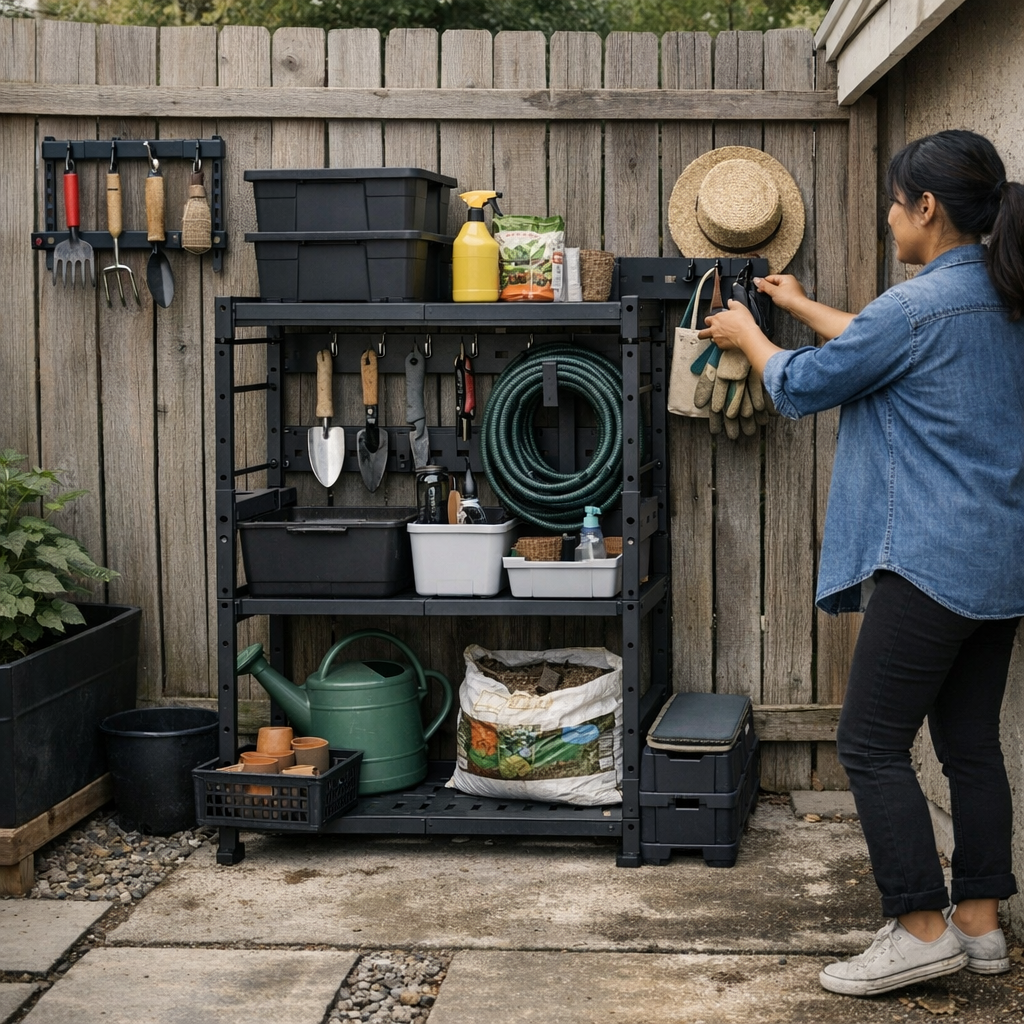
Most backyard storage fails in the same spot: not when you run out of room, but right after you put the tools down and walk away. That perfect “reset” you did on Sunday slips the moment returning gloves or a hose means navigating around jumbled bins or sidestepping stray gear. If tossing tools on the nearest flat surface feels faster than actually putting them away, that “organized” zone turns into a daily obstacle course that slows you down and builds new clutter almost instantly. Every parted pile or blocked path quietly signals: this setup isn’t helping—resetting is just one more task, not part of the flow.
Why Does the System Start Slipping?
Freshly cleaned corners and crisp bin rows look good for a single morning. But step back into real use: ten minutes clearing leaves, then carting grass clippings with muddy gloves, distracted by a neighbor or chasing a restless kid. Suddenly, that line of baskets along the fence is already breaking down. One item dropped “just for now,” then another left balanced on top—and by the middle of the week, the bins are a jumble, the paths are blocked, and the Sunday order is gone.
The problem isn’t lack of space—it’s the gap between neat storage and how the area gets used. A row of bins, shelves, or patio cabinets lasts exactly as long as nobody’s in a hurry, and everyone’s hands are clean. During real days—with surprise rain, rushed afternoons, or too many hands searching for the same trowel—there’s no patience for careful returns. The spot made for easy access becomes inconvenient just when you need it most.
The Return Flow Breakdown
Outdoor organization doesn’t collapse in a dramatic mess—it quietly unravels every time a return is just a little too annoying. If getting the hose back in its bin means dragging past soccer balls or shifting a pile of rakes, “back where it came from” turns into “anywhere for now.” Blocked walkways, jammed entryways, and junked-up corners multiply in places where the return path takes too much thought or too many steps. These friction points feed small, persistent messes: that dead patch between house and fence, the side of the garage door where brooms pile up, or the end of the wall rack you can’t reach without moving a planter.
Picture this: You push through the side yard, already loaded down, only to find the secateurs wedged under someone else’s boots. You don’t fetch them; you grab the hand fork that’s loose on the shelf instead. When wrapping up, you skip finding any bin at all—just drop the tool on top of the nearest pile, promising yourself you’ll “fix it later.” By Friday, fixing anything feels pointless; the routine break has become the new routine.
Invisible Bottlenecks and Overflow Traps
The worst clutter magnets aren’t designed—they just happen:
- The footpath from back door to gate, always snagging jackets, boots, or yard toys nobody wants to wrangle back inside.
- A corner where a rolling cart should make things easier, but now can’t budge because it’s boxed in by soil bags and buckets holding “project leftovers.”
- The fence line loaded with hooks, yet half of them hang empty because returning tools there means detouring behind a stack of planters or tripping over a hose.
These aren’t storage shortages; they’re weak return routes and awkward movement paths. Even when there’s empty wall and floor, people dodge the setup instead of using it. “Visible” organization means nothing if there’s a step, shuffle, or squeeze before every return. Clutter always collects first in the places where the walking route gets blocked.
Movement Before Measurement
Most outdoor storage looks like it fits—until you use it. The setup that squeezed three bins into the side yard now means sidestepping with a rake or garden bag, and reopening the lid means moving something else first. Modular cabinets along the garage wall seem perfect—but only when the path is empty. As soon as a bike gets leaned against them or a week of rain throws gear everywhere, opening a cabinet feels like restaging the whole yard.
Try the after-rain reset: soggy gloves, muddy trowels, and scattered dog toys dumped “for now” onto the closest lid, or wedged at the gate. Every extra movement—lifting a bin, shifting a planter, reaching around a tarp for a hook—makes the return more likely to get skipped. These aren’t big failures, just small, repeated delays that add up to rooms and corners filling with spillover before the week is half over.
What Actually Changes the Flow?—The Side Yard Example
Visualize the no-man’s-land between your house and the fence. Early on, you lined the ground with storage cubes and, for good measure, installed shelves above head height. But after two weekends, the cubes are jammed with mixed tools, the shelves hold old flower pots, and the ground itself is half-blocked by a weed trimmer and hose. The flaw: nothing you use daily has a quick, visible landing spot—returns get jammed into whatever happens to be loose space.
Replace the floor cubes with a row of wall hooks, all at shoulder height and right next to the gate. Now, there’s no bending, no sorting, no guessing where things go. Gloves, pruners, and the trimmer hang in plain sight. Returning them takes a single, obvious motion—not an act of willpower. If an item doesn’t make it back, it stands out, easy to fix. The shift isn’t in looks—it’s in the rhythm: returns are almost automatic instead of awkward, and resets never pile up.
Setup Tweaks That Shift the Routine
The right change is usually small, but targeted:
- Single-purpose, visible “homes” for the most-used gear: Wall hooks, mini racks, or labeled cubbies at arm’s reach. If you use it every day, it should have a dedicated spot you see from where you stand when you finish.
- Closed, consolidated storage for rarely-moved items: Cabinets or chests belong in the background, not as the main return path. Daily essentials need to be as open as possible—no lids to lift, no doors to open, no stacks to sort.
- Short and direct return zones: Place return spots no more than a couple of steps from the work zone—inside the gate, beside the path, at the patio edge. Anything further encourages the “just drop it” habit.
- No reshuffling needed: Avoid setups that force you to lift or move one thing to put away another. Make sure nothing “blocks” the daily flow—if you find yourself shuffling pieces after any normal use, it’s a sign the layout isn’t matching the rhythm.
Real Setup, Real Difference
Outdoor areas work best when storage follows movement, not just measurement. Systems that support quick, in-passing returns beat anything that looks tidy but interrupts use. When the setup makes the most-used path obvious, resets shrink from a dedicated chore to a 10-second habit, no matter how hectic or muddy the day gets. Even on the messiest afternoon, you’re only one or two small moves away from “ready to go” again, not a full reorganization.
This isn’t about showroom looks or perfect lines. The win is in a storage corner, garage edge, or fence zone that shrugs off resets and never needs a round-two cleanout. Place what you use most right where you naturally walk. If movement feels easier, if returns happen without afterthought, the setup is doing its job—spare yourself the slow returns, constant reshuffling, and those nagging overflow piles.
See real outdoor storage built around how your space actually works at TidyYard.