
By Wednesday, most entryways expose the lie: a single laundry bin that “contains” dirty clothes has quietly become the hardest obstacle in the transit path. Shoes edge wider, bags pile on, and the hamper you hoped would organize everything slowly colonizes the space you actually need to get through. The problem isn’t just a little visual mess—it’s that every pass-through gets slower, each reset heavier, especially when the laundry corner sits right at the daily threshold. In a space already under pressure from bags, shoes, and weather, the wrong bin turns a busy entry into a repeating hassle, not a help.
The Repeated Friction of Static Laundry Bins
The friction builds with barely any warning. The first load lands: jeans, shirts, maybe towels—plenty of room left, or so you think. But soon, small items vanish at the bottom, socks wedge themselves where you can’t reach, and before long, there’s a skirt dangling halfway out or a hoodie propped against the bench. That “contained” pile is now half on the floor, half blocking the bench edge. On laundry day, just stepping into the drop zone means sidestepping sneakers, shifting a bag, then grunting to haul an awkward, lopsided bin. No matter how you try to line things up, something ends up blocking the path or piling up for someone else to trip over. The once-simple solution is now the main challenge resetting your flow through the door.
Movement vs. Storage: Where Entryways Clog
Shoes and bags always migrate—nobody expects perfection. But once your laundry storage starts swelling past its line and pulling the whole zone into chaos, the original fix backfires. In shared spaces or on wet days, grit gets dragged in and collects where the overflow lands. What used to be a bench for lacing shoes or unloading bags has become overflow central—a makeshift table for anything that doesn’t fit in the bin. “Good enough” storage blends in visually but creates a landscape that you have to rework, shuffle, or step around. Before long, the only way to keep using the area is to accept minor resets several times a week. What’s organized on paper is stubbornly inefficient on the ground.
How a Slim Rolling Cart Changes the Transition Zone
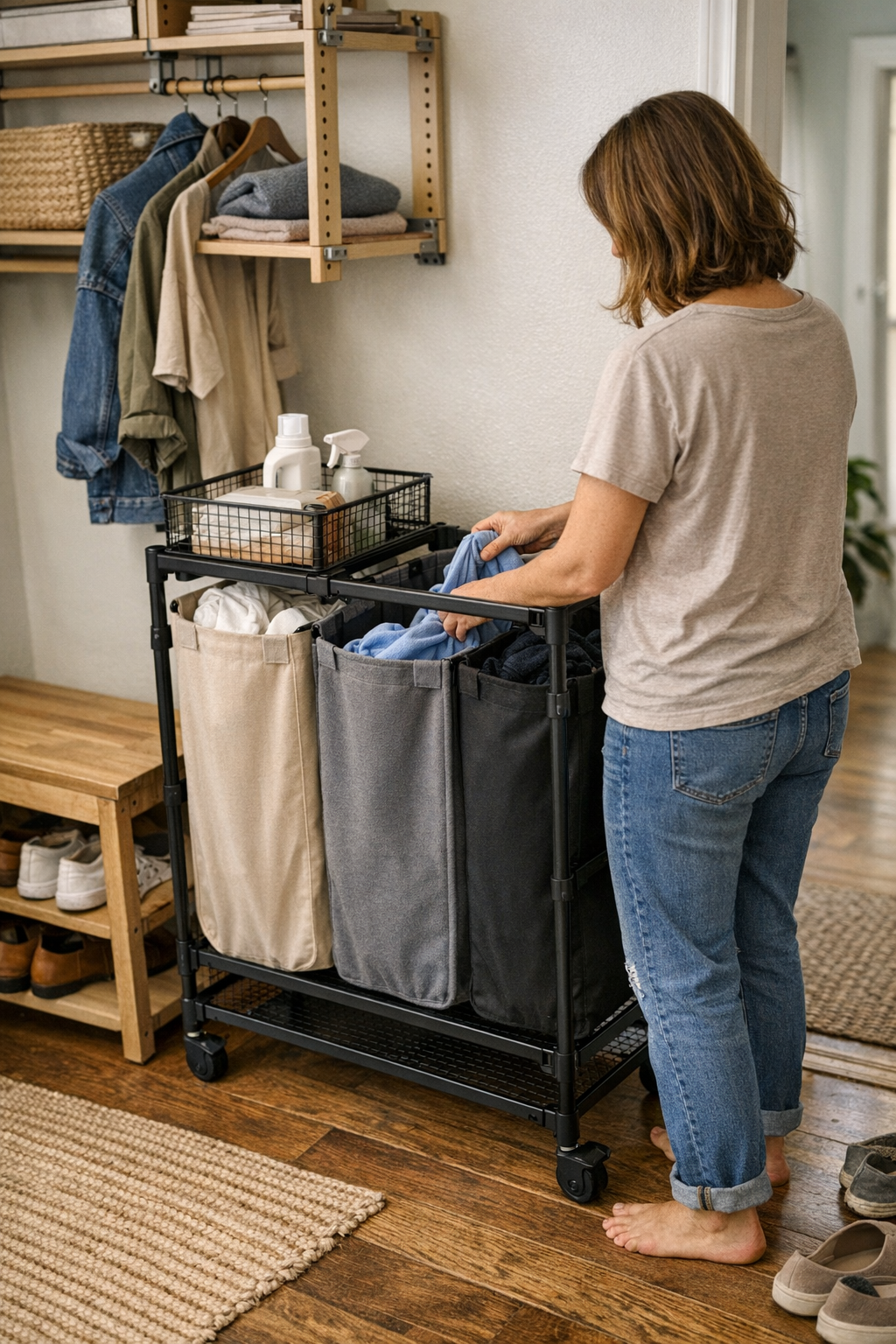
Looks organized isn’t the same as works under pressure. Replace the usual one-piece hamper with a slim rolling cart designed for tight-through traffic, and you get immediate leverage. The cart’s upright design fits right against the bench or wall, no wider than a stationary bin, but gains power through movement and separation. Instead of mixing everything into an unstable mound, the cart keeps socks, shirts, towels, and linens in their own lanes—no crawling on the rug to rescue one pair of shorts.
One Move, Fewer Trips
Static bins make you work in halves—haul it out, sort in piles, then rush muddy socks and shirts down the hall in overloaded arms, risking dropped laundry and blocked access for anyone else. A rolling cart flips that habit: three sections, sorted as you go, and wheels that follow one-handed. Even during the week’s worst scramble, the cart rolls past shoes, skirts tight hall corners, and can be nudged with a knee, leaving both hands free for doors, bags, or wrangling a toddler. A process that used to take several awkward trips contracts into one clean pass. Floor stays clear, and return movement gets smoother for everyone who lives there—not just the person doing laundry.
Setup Under Pressure: What Happens in Real Use
Congestion at the threshold isn’t a one-off accident; it’s a loop. Sit at the bench in the morning, and you’ll catch a laundry pile pressing up against your foot, forcing you to shift and rebalance just to get your shoes on. Come in with backpacks and shopping, toss a bag quickly—and half the drop zone is crowded, with the laundry bin anchoring half the mess. A static, overstuffed bin can’t flex: one return of clean clothes or an extra guest’s jacket, and the path is squeezed to a shuffle. These friction points kill momentum, reset enthusiasm, and quickly drain the sense of order you fought for on day one.
Separating the Drop Zone from the Bottleneck
The rolling cart’s edge comes from its ability to stay out of the way until needed—and move easily when routines mess with the plan. Instead of laundry flowing into the drop zone, then merging with shoes and bags, the cart divides and conquers: sorted loads, quick access, and the freedom to angle it away with your foot rather than drag and lift. For families, couples, or anyone juggling schedules, even a small shift—like rolling the cart aside before breakfast—keeps traffic flowing and the reset light. The less you fight the setup, the more you trust it to support fast changes, not just look tidy once in a while.
Practical Tips for Adapting Your Entry
Match the cart to the pressure points, not the catalog photo. In crowded entries or narrow halls, a slim cart brings real order without adding new hazards. Too wide, and it jams the already-tight path; too small, and you’re back to awkward overflow by midweek. Prioritize models that run close to the wall or bench but give true segmenting—vertical dividers and compartments you’ll actually use. Skipping the urge for “extra capacity” is smarter here: narrow carts empty faster, which means less chance for mess to pile up and less effort required on reset days.
Sort right at the drop, every time. With compartments ready, you solve half the week’s work in three seconds—toss whites, colors, and towels where they belong as you cast off dirty clothes. No kneeling, no panic sorting, no lost pairs. Over weeks, these tiny pre-sorts cut reset times and remove the small frustrations that clog entryways but never show up in “after” photos. It’s the multiplying effect that’s worth it: less time stuck fixing the path, more time just walking through it.
The Lived Impact: Not Just Tidy, But Usable
The real test is a normal week—not when you organize, but when you trek through the door three times a day. A rolling cart isn’t a miracle: shoes will still drift, bags always find the easiest resting place, and some days, overflow comes for the bench anyway. But a mobile cart narrows bottlenecks, shortens resets, and keeps the path workable even during the worst pileups. It doesn’t just hold laundry—it reshapes movement, turning what used to be a daily reset into a much smaller interruption.
This is the difference that lasts. Easier resets mean less griping, less sidestepping, and less wasted effort on what’s supposed to get you in and out. Over months, you notice the area stays usable, not just passably neat, and the basic friction at your home’s busiest threshold gets smaller rather than disguised. It isn’t perfect, but it’s a change you feel every single day.
For smart entryway fixes that handle the wear of real routines, explore Betweenry’s collection at Betweenry.