
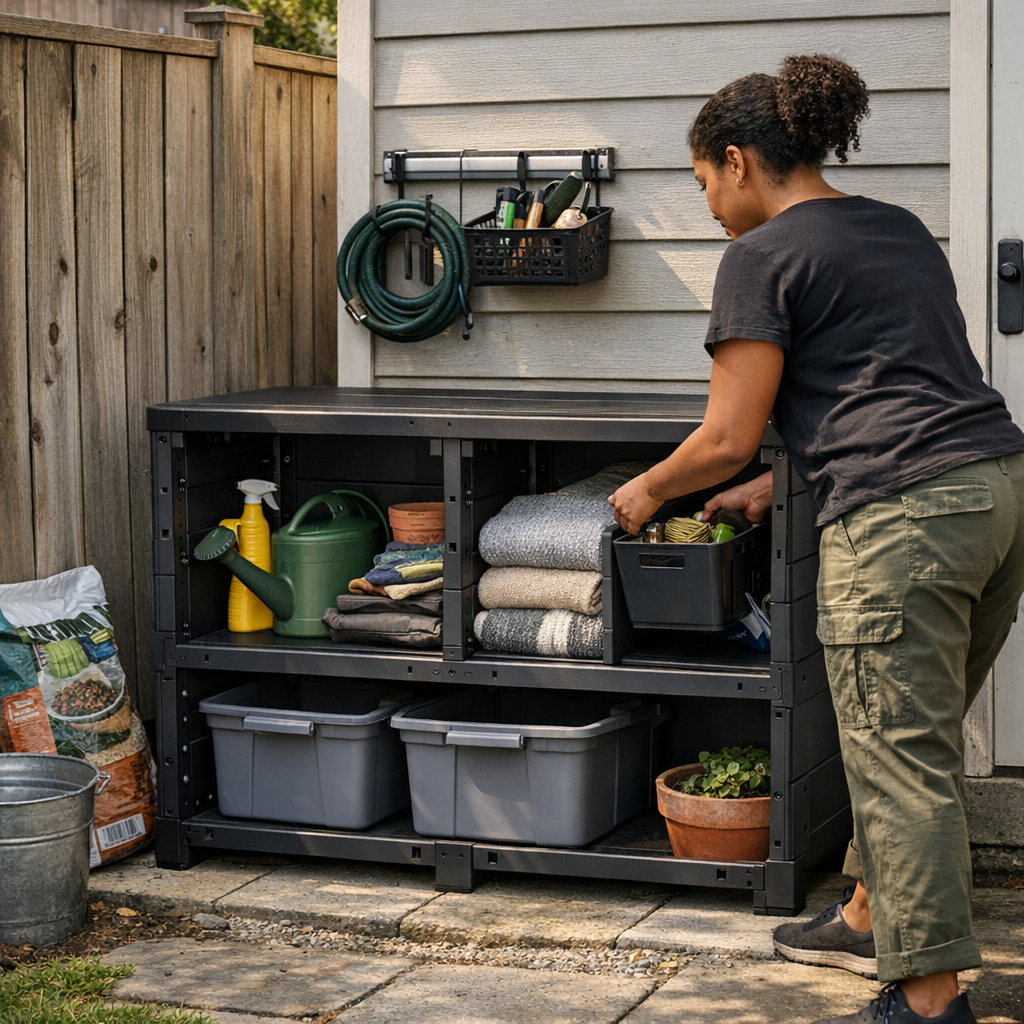
Window seat storage benches promise calm, but in real homes, their convenience can collapse fast. The same bench that hides bedding and throws so cleanly on day one often turns into a deep, semi-chaotic vault by week six—each blanket pulled from below the pile means a full, awkward reshuffle just to get what you need. “Out of sight” turns into “buried somewhere”—and the space designed to contain clutter ends up generating its own low-level mess. You notice the shift as seasons change or guests visit: what felt organized at first is suddenly three steps away from useful, with blankets camped on chair backs and essentials trapped at the very bottom.
Where Good Intentions Fall Apart: Inside the Everyday Bench Routine
The first setup—fold, stack, close—works until the first real weather swing or the first hurried grab. Heavy throw on the bottom, light blanket on top: the order makes sense, until you reach for that heavier throw in a hurry and find yourself pulling everything out, scraping across the inside finish, and balancing an unstable pile on the window sill. Every time you return things, the neat line slides further out of order. A few throws never quite make it back in, instead floating onto nearby furniture as “in easy reach” leftovers.
This isn’t a once-in-a-while hassle—it’s what single-cavity benches guarantee in actual use. Each layer added or removed scrambles the whole pile, and the simple act of grabbing what you need quietly creates a new project: a pile to re-sort, a lid half-open and blocking the seat, and a routine reset that takes twice as long as planned. Hidden storage, misapplied, actively creates the friction it was supposed to erase.
Hidden Storage: Calming or Complicating Your Space?
The line between looking organized and staying organized shows up after just a few uses. Deep, undivided benches force a game of category roulette—throws filtered by last use, not actual need. You realize you’re storing by accident: forgotten items pressed flat at the bottom, daily-use blankets migrating outside the bench, no clear plan surviving real-life pace. Suddenly, the bench is never closed with true order inside—just closed enough not to see the drift.
In shared spaces, quick resets become slow chores, especially when others toss things in without thinking about zones. One hasty return scrambles tidy piles; the bench becomes a permanent “almost-organized” buffer, technically hiding clutter but quietly leaking items to ledges, nearby baskets, and any other open surface in range. “Just toss it in” becomes a shortcut to semi-permanent chaos.
The Slow Creep of Overflow
Overflow announces itself: two seats, but only one clear, the rest lined with stray throws and half-folded extras. The zone next to the bench becomes a holding pen for delayed decisions—items too frustrating to return properly, now blocking passage or crowding the foot traffic line. Each reset skipped means floor space tightens; the original bench is just a backdrop for the overwhelm it was built to fix.
Dividers, Split Lids, and Practical Sectioning: Small Changes, Big Impact
Shifting to a bench with built-in dividers or a split lid changes the entire routine. Now, instead of digging through a single, shifting heap, every section earns its own purpose: winter layers in one slot, summer throws in another, a skinny slice for the spare guest blanket. The act of retrieving is contained—lift half the lid, grab one throw, leave the rest perfectly undisturbed. Return-flow stays simple; you’re not refolding five things for the sake of one.
A shallow divider or removable insert does more to kill everyday friction than any deep cavity ever could. Reset isn’t a Sunday chore—it’s two movements and the space stays reset after every use. Real structures reward repeat behavior. The energy you save not having to do damage control after each guest visit adds up, turning the storage zone from a bottleneck into a reliable, background function.
Why Bench Depth Matters
Even small structural details change behavior. A bench too deep means you bend, shuffle, and remove nearly everything on top to reach what’s lost at the bottom. Usable depth means you can sit on the bench, reach all the way down, and pull out a throw in one motion—no lost items, no excuses to “deal with it later.” Depth sets the upper limit for how annoying it is to reset the zone. If you avoid the bench entirely just to save time, that’s the clearest sign it’s the wrong depth for the room’s real pace.
Room Use in Motion: When Storage Interrupts the Routine
The real test for a storage bench isn’t capacity—it’s how fast it lets the room change modes. In a high-traffic family room or any hybrid zone, storage that demands a chain reaction (remove, dig, rearrange, replace) puts every quick switch on delay. A split-lid or divided bench supports the motion you actually need: grab a throw in seconds before a call, return it without reconstructing the closet, never block the area path or re-trigger a pileup. Keeping storage backgrounded—never demanding a “reset” meeting—keeps the room genuinely ready for what’s next.
If you notice throws or pillows starting to pile outside the bench, that’s the domino pattern in motion. Each missed reset spreads, making the tidy zone less likely to recover (“I’ll just grab one from the chair instead”). The intended storage becomes an afterthought, and reclaiming the original system becomes harder with every extra item left on the edge or migrated to secondary furniture.
Mixed Storage: A Recipe for Returning Chaos
Every soft thing in the house wants to end up in a bench—pillows, toys, sheets, throws. But real order only lasts if categories are enforced by physical zone, not just intention. Even a simple summer/winter divide raises the odds that a quick return means a real reset. Without this, every “just for now” toss becomes a category spill; reset times balloon, no one remembers where anything goes, and the bench drifts away from its original promise dimensionalized by lived-in mess.
Long-Term Order: Low–Effort Reset and Setup That Lasts
Enduring order is built on clear sectioning and direct access—not box volume or aesthetic first impressions. A bench with integrated or modular dividers keeps pathways obvious, routines light, and return flow frictionless. The extra effort to structure compartments pays off by making reset the smallest part of the routine, not an avoided chore.
In any real-world shared space or high-movement zone, these small changes spare you the multiplying aftermath: spillover vanishes, retrieval stays direct, and “where did that blanket go?” vanishes from daily life. Anyone can return things to the right zone, resets happen on the fly, and if clutter starts to creep back to the floor, it’s a visible cue the setup is ready for another tweak—not a reason to give up on the storage completely.
The signal is in your actions: Do you avoid using the bench just to spare the collapse of order? If so, it’s the bench structure—not your habits—that needs reworking. Window seat storage isn’t about “hiding” so much as keeping storage in the background—unseen, unfussy, and still working every day, even as routines and seasons shift.