
Entryway order fails fast—and always at the worst times. That first week with a flat cart parked by the door feels controlled: surfaces are clear, bags stacked neatly, keys dropped in one spot. But give it three hectic days—grocery runs, kids back from practice, weather swinging—and suddenly: keys slide behind a gym bag, shoes wedge under mail, and the cart that once worked becomes a scramble zone. Instead of a smooth transition, you get the familiar stall—searching, shifting, and reshuffling just to step out or come back in.
Why Flat Entryway Carts Feel Helpful—But Fall Short
Open carts dominate threshold areas for a reason: they soak up everything at once. Shoes, coats, bags, daily odds-and-ends—drop and go. For a family or housemates, that “catch-all” feels flexible. But it’s a surface that resets itself against you. Drop one oversized duffel or winter coat, and yesterday’s mail, keys, or lunch sack slip underneath. On the first day, maybe a minute fixes it. By midweek, layered routines—one person hurrying in, another heading out—mean stuff piles up, and you’re not grabbing what you need without digging.
As each person grabs a different item at a different time, the zone blurs. The cart itself becomes a moving target; quick exits turn into impromptu archaeology. That “adaptable” setup blocks the way, requiring everyone to filter through unrelated layers or tip the whole stack. The more varied the flow, the worse the mixing—and the slower the reset gets each time.
Everyday Friction Points: What Actually Happens in Entry Zones
A Cycle of Hidden Essentials
Start with everything in line. Forty-eight hours later: keys are somewhere beneath a sagging backpack, a stray hoodie flattens the day’s mail, and what you thought you left on top now lives under a flap or jacket sleeve. The search routine gets repeated. Every exit, every return: a hand slides under the pile, looking for earbuds, then comes up with extra chargers or old receipts. Even a short, ten-second scan—multiplied by each person—turns into a bottleneck where entryway flow should be automatic.
Clutter Drifts, Zone Boundaries Blur
No setup drifts faster than a single open cart. At first, clutter seems contained, but “just for now” placements always sprawl—shoes nudge the edge, a backpack blocks one side, the bench next to the cart becomes the new drop spot. Sit down to put on boots, and in seconds, overflow claims your seat. The walking line narrows, forcing one person to squeeze past a half-blocked path. True routines—grab-and-go, kids loading up, swapping shoes, hauling groceries—put constant pressure on every inch. Movement slows as soon as you must move one thing just to reach another. Meanwhile, that reset you keep meaning to do only gets heavier.
The Real Cost: Reset Fatigue and Slowed Flow
Daily clutter isn’t about one mess—it’s the grind of decisions that never end. Toss a jacket here, dump a bag there, promise yourself to “sort it later.” Flat carts let this pile-up happen invisibly at first, but the cost is cumulative. With each pass-through, the stack grows and category lines blur, making every reset a full-scale reshuffle. Short-term convenience becomes long-term reset drag. Instead of a grab-and-go threshold, you’re hesitating, retracing, or skipping the reset entirely—until the next rerouted morning or lost item slows down everyone again.
What Actually Works Better in Heavy-Traffic Entryways?
Breaking the Stacking Cycle: Vertical and Divided Storage
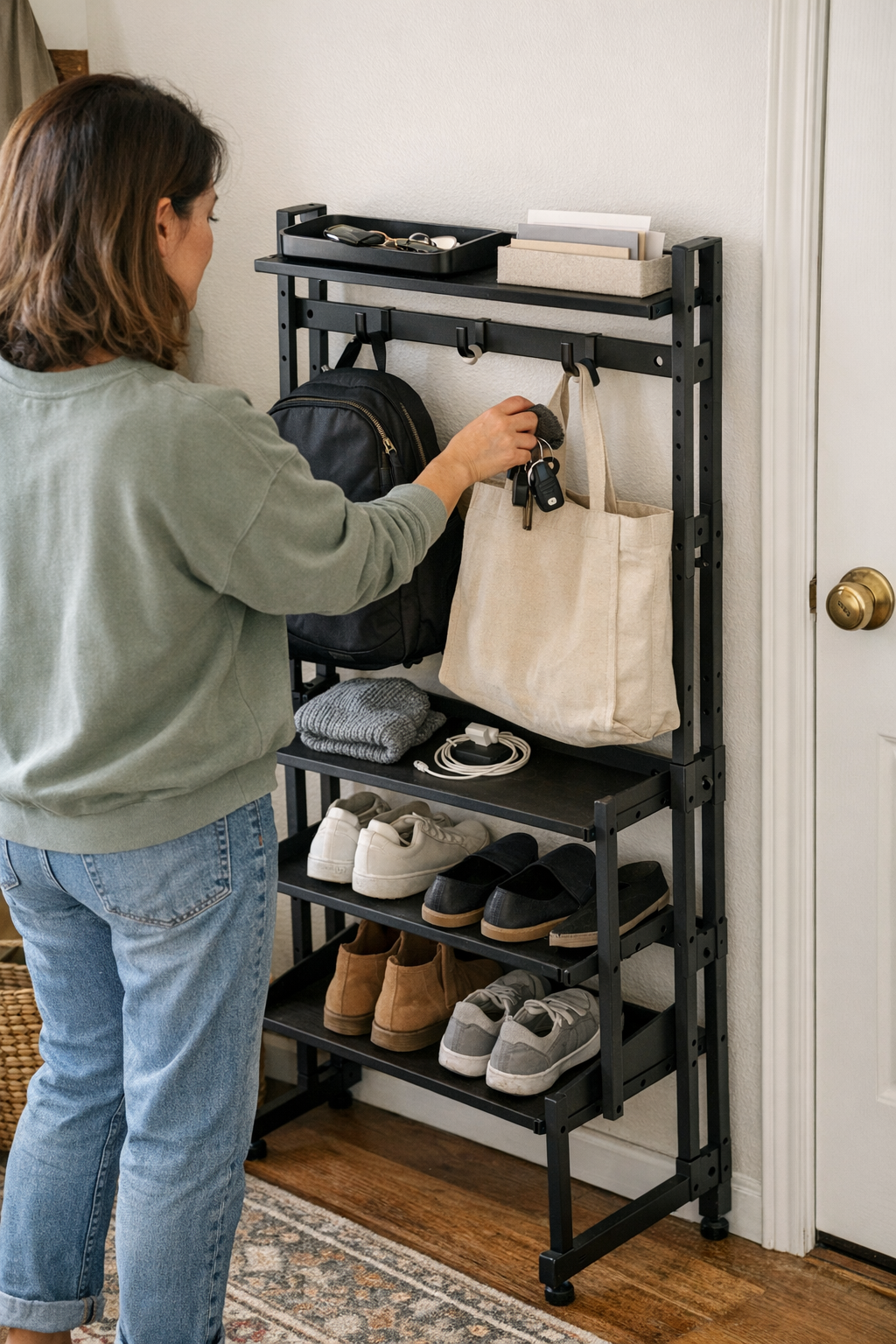
Divided zones flip the script. Slim racks, wall hooks, tiered organizers—they force one category per lane, breaking up the pile. Shoes stay on the floor, keys live at eye level, bags hang above the clutter zone without blocking the walkway. Imperfect as it looks, every item has a first-grab slot, and fewer things hide each other. It’s not just about looking organized: you touch only the essentials, pull one thing without moving three others, and see the clutter before it overflows.
After a standard week—wet boots, hurried departures, late returns—a flat cart is crushed under accumulation. A vertical or divided setup, even if not pristine, keeps everyone’s everyday items visible and easy to retrieve. Reset is no longer an overhaul but a fast scan. When overflow happens, it’s obvious and contained, not quietly blocking the passage.
How Everyday Flow Changes with Vertical Organization
Switch to a tiered rack: now, the key tray sits up top, shoes land in a visible row below, and bags hang ready to grab. Drop-off is direct—no more fighting a heap to make space. Departures mean actually spotting what you need: keys right up front, shoes not sprawled under the path, mail waiting in the pocket. Even when multiple people move through at once, traffic lines stay clear. Overflow stands out instead of hiding below something larger, so a rescue reset takes seconds, not a half-hour block. Your “clean” zone stops being just a project; it becomes the unblocked path you actually use, whether it’s a busy Monday or a muddy Saturday.
Tips for Smoother Setups in Real-Life Thresholds
Real entryways aren’t showrooms—they live under pressure. These behaviors help more than endless re-straightening:
- Divide by type, not just space: Force separation—shoes in one row, keys or mail in their own tray, bags up off the floor. Consider a less uniform look in favor of grab-and-go reliability.
- Put storage on the wall, clear the walking path: Mount hooks and shelves at various heights; make sure nothing narrows your main entry line, even during busy mornings.
- Assign a “just for now” tray: Prevent pileups with a high-visibility pocket or tray for daily drop-off. Even a small container at the threshold will curb spillover.
- Expect drift—and design resets for speed: Don’t fight overflow; accept it’s coming and make sure clutter is easy to see (and fix) with one quick sweep, not a major overhaul.
From Clean Appearance to Reliable Performance
A flat cart and a divided setup might look similar for a day. The difference shows up by the end of a real week: vertical and modular solutions keep retrieval and return fast, block less movement, and make clutter stand out before it blocks your entry. What looks managed is only half the battle; what stays usable is what changes exit and entry from slow shuffle to actual flow.
See real-world entryway and threshold storage options at Betweenry.