Category: Yard & Utility

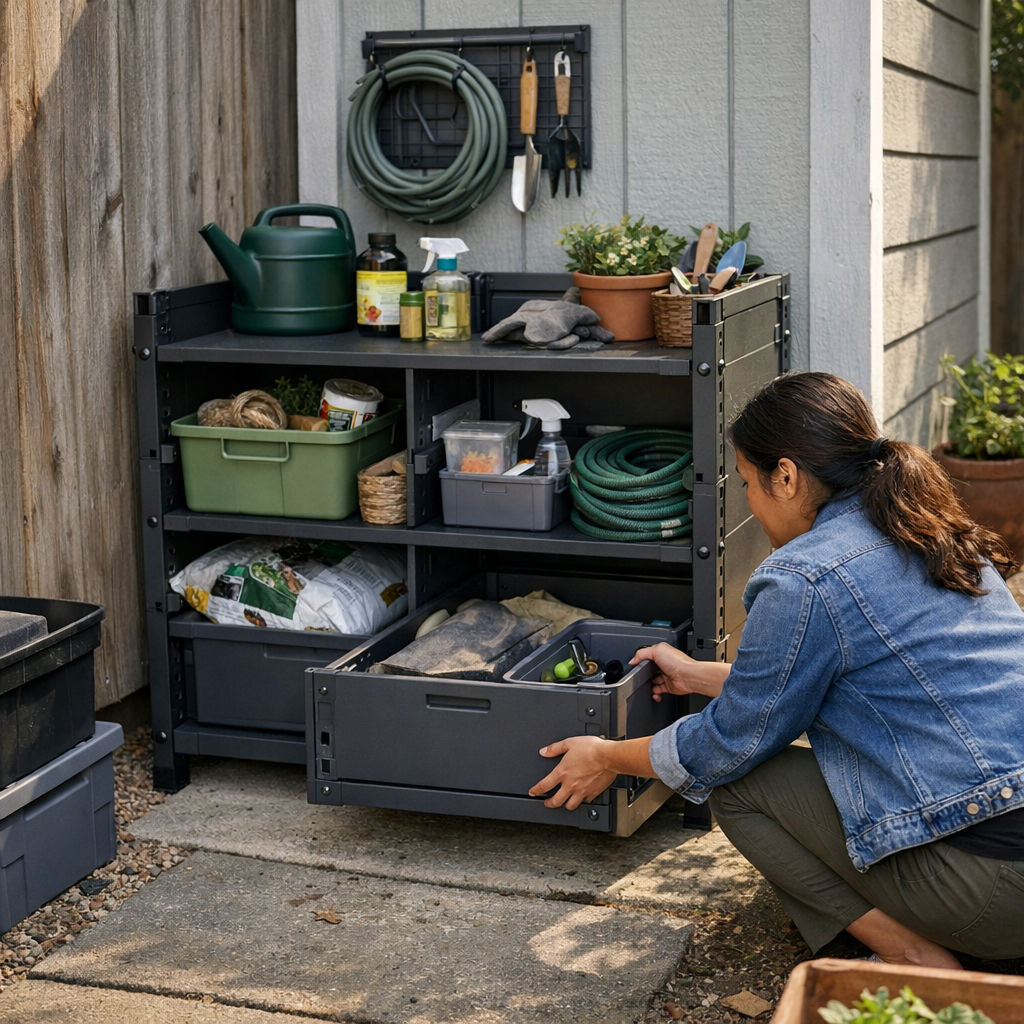
  • How a Simple Outdoor Cabinet Transforms Shared Yard Organization

    It’s always the outdoor dead zone—the side strip, the fence run, the garage threshold—where storage setups quietly decide how broken or frictionless your routine feels. On move-in day, any storage unit looks like progress. But once real life sets in, the wrong setup—especially a too-wide bin or an open rack—leaks into the path, tangles the shoes, and makes you reset the same four trouble spots over and over. At first the bin looks generous. By week six, you’re kicking gear out of the way or wading through a cluster that never leaves the “not quite put away” phase. The frustration is never about the volume of stuff; it’s about the repeated, clumsy ballet of returns and resets, and how quickly “looks organized” unravels under actual use.

    The Repeated Return Problem: Where Clutter Sneaks In

    The outdoor storage trap always shows up at the return: when real people, on their own schedule, toss something back. An early gardener slips pruning shears in before work. Someone else dumps cleats after dark. Kids wedge soccer balls right by the bin, hoping it counts. Even with good intentions, the comfortable layout on paper can go sideways midweek: handles spill out over the walkway, gloves topple off the edge, stray boots block the gate latch. Overflow isn’t a one-time event—the layout turns repeated returns into a slow-motion spill that creeps into every movement path.

    Most outdoor storage fails not by running out of space, but by making it too easy to return things badly, stacking and drifting mess back into circulation almost overnight.

    Open Racks, Deep Bins: The Trap of Easy Access

    A deep bin or open rack seduces you with the quick drop: faster to toss in boots, easier to shove a rake, “good enough” when hands are full. But access comes at a cost—stuff never truly gets put away. The first item blocks the next. A broom never really fits; its handle juts into the path, forcing a detour. Someone hangs a shovel horizontally rather than lifting everything else out. After three days of normal use, the bin is just a messy pile with a sun-hardened web of small tools inching closer to the path every time someone walks by.

    Unlike closed storage, open systems have no off switch for accumulation. Movement paths that seemed wide enough suddenly shrink as the gear forms a permanent barricade. What looked like “flexible storage” now makes you side-step carrying the trash, or inch sideways just to find the hose nozzle. The setup visually says “organized,” but in reality, it keeps tripping routines and bottlenecking daily flow.

    The Case for a Simple Outdoor Cabinet

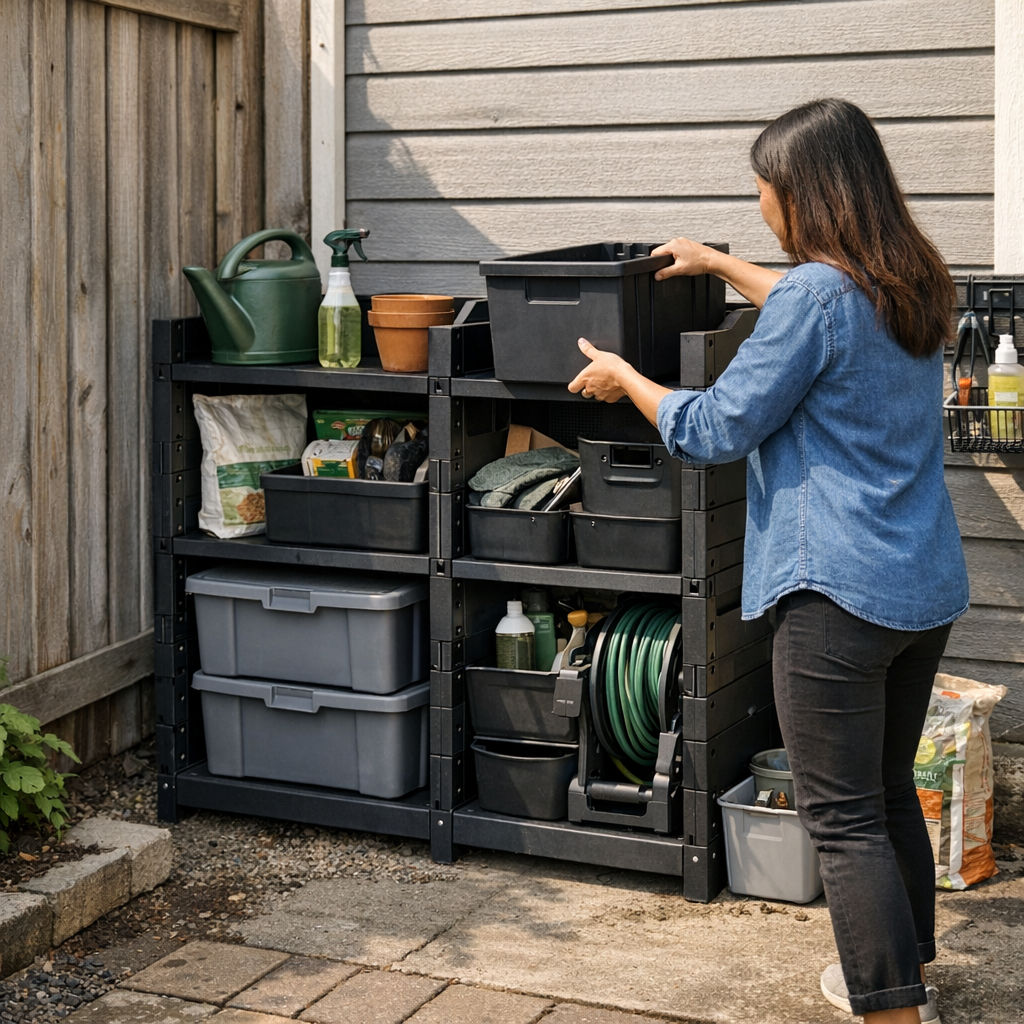
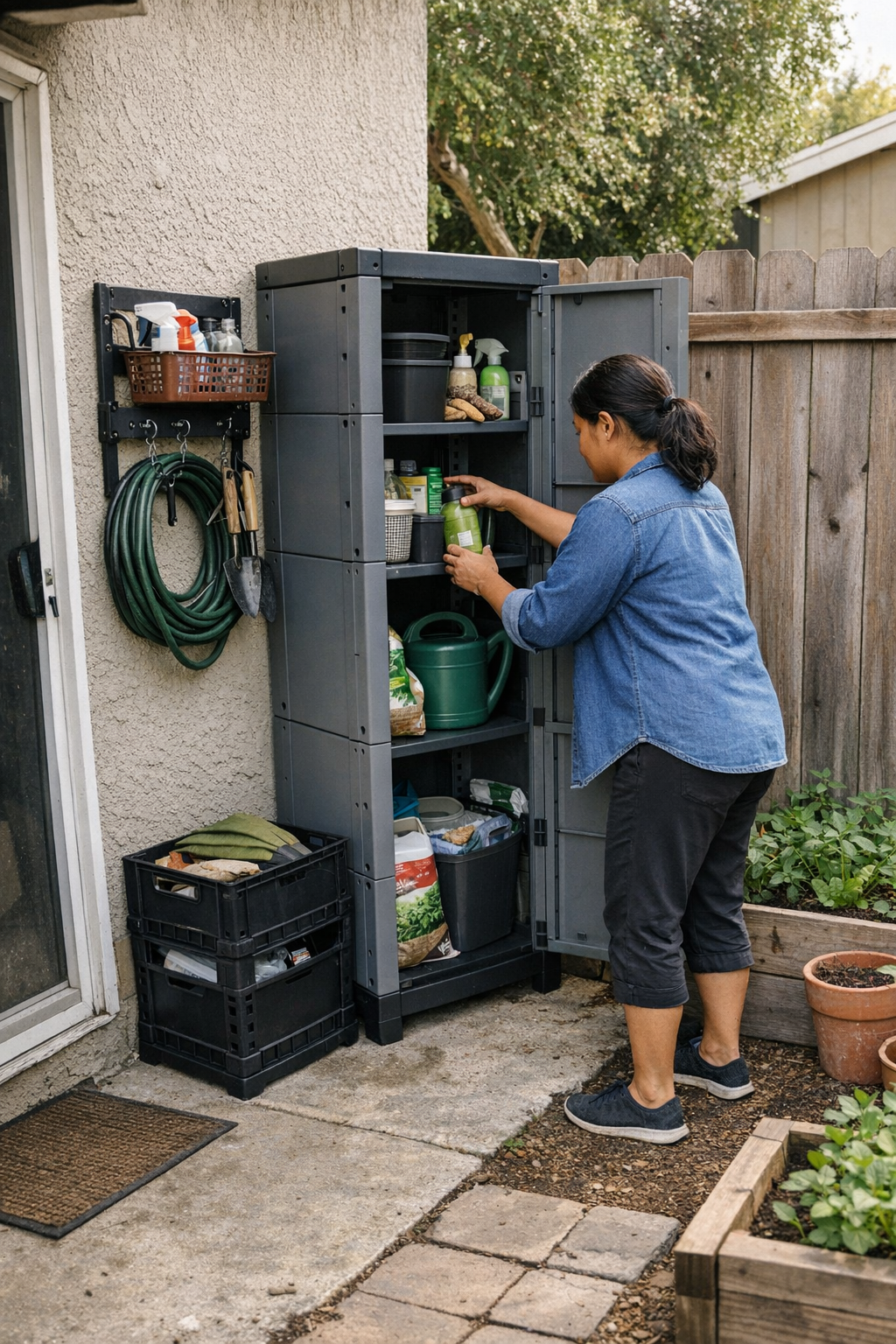
    A basic cabinet does what open bins can’t: it kills the slow spill-over before it ever invades your walking zone. Doors force a decision. If something isn’t all the way inside, the door simply won’t close—and you (or the next frustrated person) has to reset before the mess leaks outward. This tiny friction point stops the cycle. Handles, stray gloves, or muddy boots can’t linger half-in, half-out. Visual clutter stays shut away from every passerby. The path regains its full width; you don’t have to shift anything just to get through.

    • No more shovel handles stiff-arming every leg passing by
    • No boots tipping into the gate track
    • Loose gear lands inside or gets noticed, not ignored
    • Resets become short and obvious—open the door, see the job, close it, done

    I swapped an open bin for a shallow, vertical cabinet along a 24-inch backyard run. Within the first week, the awkward sidesteps were gone. Returns became binary: the door shut or it didn’t. No amount of rushing could stack stuff in the path or let items dangle halfway in. The difference wasn’t how tidy everything looked after a fresh reset—it was how little effort it took to keep the zone clear during the chaos of normal use, even when that meant wet gear at the end of a rainy day.

    Everyday Scenes: How the Setup Shifts Daily Life

    Morning Rushes and Evening Returns

    Early mornings, a clammy shovel is snagged; late night, someone carelessly drops cones and soccer gear after practice. The old open rack would choke with half-sorted piles, the next person through forced to tiptoe or haphazardly shove more gear aside just to enter the yard. The pile migrates, then multiplies.

    With a cabinet, pile-ups stall at the door. If the cabinet gets full, it’s immediately, unmistakably visible. There’s nowhere to drop new gear except all the way inside—or not at all. Suddenly, the zone keeps its shape, even under heavy back-and-forth. The path stops feeling like a gauntlet of stray tools. The simple limit of a door keeps everything else from turning into a multi-step cleanup at the worst time.

    Searching, Shifting, Resetting

    Old routine: plan a garden task, then pull three bins, excavate a lost trowel, unearth a moldy glove under yard bags, waste ten minutes before ever starting. With the right cabinet, the sequence is different—a set of shelves (even makeshift or labeled with tape) and a vertical footprint mean you can see what’s there on first glance. “Tools” means tools, “supplies” means supplies; returns are automatic, and you spot what’s missing before you go hunting in frustration. The weekend reset drops from a 40-minute wallow in the mud to a three-minute check-in.

    Choosing the Right Cabinet—And Avoiding Common Pitfalls

    Not every cabinet solves the problem. Match it to the real-life rhythm, not the showroom ideal. Cabinets that are too deep simply eat gear in their dark corners, turning into a new wilderness. Too shallow, and nothing fits—instant overflow zones pop up outside. Look for a fit just big enough to stand up your longest shovel but slim enough to leave your walkway free. Shelves (even add-on ones) keep things from stacking horizontally and clogging the bottom. A strip of tape labeling zones means less arguing, less guessing—more things just end up where they should because it’s easy to remember and impossible to ignore.

    Why a Cabinet Holds Its Line—And Why Others Fail

    What makes the cabinet work isn’t just hidden storage—it’s the hard border. Unlike open racks or bins that hemorrhage mess at the edges, a cabinet draws a strict line: either it fits inside, or it’s time to rethink what gets stored here. Routines will get sloppy, and people will still forget, but it stays easy to see when the zone needs help. You’re no longer policing random piles; you’re just closing a door. Even after a rough week, it only takes one person a couple minutes to bring the area back to neutral.

    That’s the difference between chasing clutter around every outdoor space and having a setup that pulls things back to order—on its own, most of the time. For outdoor storage that works at the edge of real use—not just in a staged photo—see what TidyYard makes possible.
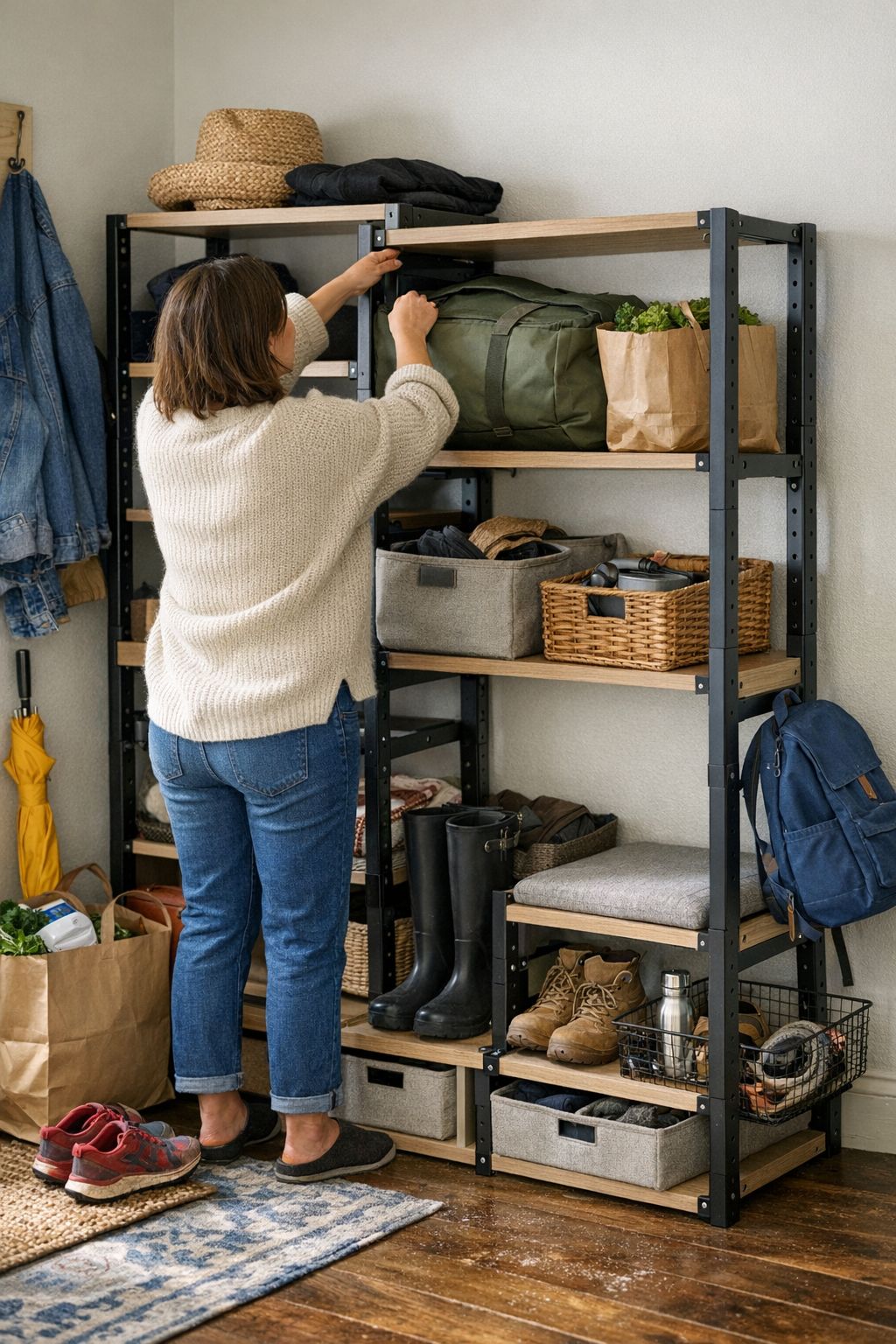
  • Why Fixed Shelf Heights Fail to Maximize Entryway Storage Space

    Most entryways look organized for a single moment—then the grind starts: Wet boots pool against the baseboard, backpacks wedge half-under the bench, and shoe rows double into the walkway by nightfall. Shelving promises order on day one, but by day three, the threshold packs tight. Resetting stalls, blocked by fixed shelf heights that never flex for real routines. In a live entry, nothing flows evenly: hockey gear collides with groceries, dripping coats smother dry hats, and every static structure turns retrieval into friction. The signals show up fast—the so-called “neat” setup slows you down every time real life hits the door.

    Where Fixed Shelves Start Failing: Recognizing the Early Warning Signs

    The giveaway isn’t clutter alone. Most clues emerge after a few days of use, not on day one. Boots worn through rain return sideways because they won’t fit as planned. Grocery bags snag and refuse to slide into cubbies sized for last month’s shoes. Every basic act—drop, grab, reset—drags, until items migrate from “their spot” to a pile at the threshold or spill into the walkway. Small crowding becomes blocking—especially on busy mornings or after a guest visit.

    If you keep:

    • Stacking shoes or boots to clear a walking path again
    • Cramming bags in whatever orientation fits, ignoring intended “zones”
    • Moving things a second time because their spot’s blocked by something newer
    • Watching last week’s overflow stay dumped near the door, never making it to a shelf

    —your shelves aren’t adjusting, so you’re still doing the work. The biggest red flag is bottlenecked movement: If you find yourself rerouting around your own storage, the structure is forcing the problem to repeat, not resolve.

    Drop Zones and Entryways in Real Use: Patterns That Keep Repeating

    Resetting is always temporary. You clear the area, but by the next influx—kids back from practice, a grocery haul, one muddy pet—it collapses. The bench you sat on this morning becomes overflow by evening; a packed tote perched at the edge blocks anything below. Shoes abandoned at the perimeter multiply, stretching the “put away” zone until it’s just a wider mess. The more the fixed structure resists new shapes and unexpected loads, the more disorder becomes routine. After a week, neatness is a memory; traffic lanes narrow, muddy boots cross turf with clean shoes, and temporary piles turn permanent by neglect.

    The cycle is blunt: reset, squeeze, overflow, reshuffle. Soon a dropped umbrella or grocery bag lives on the end of a bench for days. Each new season exposes mismatch—boots won’t fit in autumn cubbies, dripping rain jackets flop across dry shelves, and nothing bends to new patterns. Fixed-height shelving is a template for last month’s habits. Your real routines outgrow it almost immediately.

    Why Fixed Heights Waste Space and Time

    The order promised on install unravels fast under actual conditions. Fixed heights make design blind to real needs: shelves that force flattening, cubbies that leave gaps above unused, and setups where only certain items actually fit. Every time you flatten boots, wedge a bag, or rescue essentials trapped at the bottom, you lose time and patience. What looks tidy feels dysfunctional, especially as every misplaced item slows the next drop-off or pickup.

    The true overflow hits the floor—making each pass-through an obstacle course. Every “temporary” drop morphs into a permanent tripping hazard with no spot to claim, only a slot to clog. By midweek, fewer things make it back “home.” They pile at the edge, waiting for someone to get frustrated enough to clear the deck again.

    The Difference After Switching to Adjustable Storage

    Reconfigurable storage changes things on the first use. Raise a shelf by two inches—suddenly, boots stand up for winter, not lean and leak across the mat. Deep bags and wide totes slide into new zones without pushing out essentials. That daily catch-and-reset cycle lightens: shoe rows no longer creep wider, and the bench edge isn’t crammed with overflow each evening.

    The shift isn’t just visual; it’s fundamental. Instead of freezing at entry, you drop and reset in a single pass—no five-minute scramble or awkward bottleneck. Unplanned grocery trip? Adjust the shelf and drop the bags direct. Kids switch from rain to soccer? Change cubby height in seconds. Routine friction fades; reset becomes habit, not hassle.

    Setup in Practice: A True Transition Zone, Not a Showcase

    Real entryways succeed when they absorb the mess without stalling the flow. No one lines up shoes for a catalog; they angle them, shove them under the bench, or toss them wherever there’s space. A modular setup—adjustable, removable cubbies, flexible heights—gives outlets for these actual moves. Need vertical space for boots in January? Widen it. Want compact packing for sneakers or book bags in spring? Shrink it. The unit responds, not resists. Movement stays open, even as routines bend and re-bend with daily flow.

    Tips for Smoother Flow and Faster Resets

    • Test for stubborn return flow: If bags and boots always pause before making it “home,” try lowering a shelf, or pulling a divider—make actual movement easier than waiting.
    • Spot where overflow collects first: Reserve a loose “drop zone” near the entrance for outsized or in-process items, then ratchet it down once the rush clears.
    • Favor setups that adjust on the fly: The less work it takes to re-slot or move a shelf, the less likely reset will break down. If it needs a tool, it probably won’t get changed in real use.

    No zone erases chaos fully. But smart adjustments shrink bottlenecks and ease pass-through where most organizing theories break. When the setup bends, it keeps pace with real traffic, not just looks good once and then slows life down.

    What Lasts Is What Flexes with Real Life

    First-day order doesn’t survive a month of muddy entries and rushed exits. Lasting storage never expects perfection; it adapts to imperfect, repeated routines: shoes exchanged midweek, grocery drops, outgrown bags, gear that expands and contracts with the season. The more flex a setup allows, the less its bottleneck stalls your threshold. If passage narrows, resets drag, or you’re always rescuing items off the floor, it’s the structure that needs to shift—not your routine.

    See flexible, setup-aware storage options for real transition zones at Betweenry.

  • Bathroom Drawer Organizers That Keep Bottles Upright Every Time

    Most bathroom drawers aren’t disorganized—they’re just quietly unstable. The surface looks tidy: bottles upright, tubes lined up, every product inside the zone you expect. But actual use breaks that promise fast. By the second or third rushed morning, bottles have tipped or jammed diagonally, cotton pads have drifted to block the toothpaste, and the quick grab for a face wash becomes a small hunt through a crowd that doesn’t hold its shape. With every open and close, things shift—sometimes just a little, sometimes enough to wedge the whole drawer off track. Before you notice, you’re spending more time resetting than reaching, using up the last open inch of counter for overflow that won’t stay in its slot. The drawer claims order but demands upkeep—every single day.

    The Slow-Creeping Friction of “Almost” Organized Drawers

    A drawer that only looks organized is a daily decelerator hiding in plain sight. The earliest warning: one bottle down, two more nudged out of lines, a cleanser blending with eye creams at the back. In the beginning, it feels manageable—a chore for another day. But quickly, the rule takes hold: move one thing, scatter three more, and lose a little more control each time. The routine shifts from automatic to reactive. You open the drawer meaning to speed up your morning, only to lose time jostling bottles, righting jars, and returning the toothpaste to the elusive zone where it started. If bottles, tubes, or pads start living on the counter “just until tonight,” the drawer isn’t matching your actual use pattern.

    Why Most Bathroom Drawer Organizers Break Down Fast

    Most generic organizers—grids and open trays—separate items only in theory. Compartments outline space, but do nothing to control a real bottle’s bulk or rolling shape. The fit is always off: slots too wide or too shallow, dividers that look precise until you test them with a tall shampoo or a round jar. As soon as the drawer moves, bottles tip onto cotton pads, toothpaste tubes wedge sideways, and every shaky reset means you’re back to sorting by Friday. The organizer turns into a loose holding pen—good for a staged photo, but useless when you actually need to grab and return items at speed.

    Dividers: Not All Boundaries Are Equal

    Plastic inserts with lined slots only seem to solve the problem. Most are “pattern-rich, function-poor.” If the compartment can’t hold a bottle upright when you open the drawer fast, it fails—no matter how good it looks at first. The moment real life hits (leaky lids, jostled lines, rushed mornings), the clean grid blurs: bottles tilt, products leak, and the “after” photo is gone by lunchtime. If your organizer prizes symmetry over grip, you’re caught in an endless reset loop.

    The Tipping Point: When Drawers Start Creating Work

    The difference between an organized drawer and a maintenance trap is subtle but relentless. Every time you reach for a regular item—only to find it slumped behind another, or hidden in the back shadows—the friction grows. Two people sharing a drawer means doubled drift: morning essentials blur into grab-bag zones, crowding overflows into the same loose section. Eventually, the drawer stops storing—now it just gathers, and every fix feels like a miniature teardown.

    Every micro-reset steals real time. If your routine comes with constant straightening, extra searching, or a rotating pile of must-haves on the edge of the counter, the system isn’t holding under real-world pressure. Even a few seconds lost on every pass adds up to a routine that gets slower week by week.

    The Quiet Power of a Properly-Fitted Organizer

    A truly working organizer isn’t the one with the most boundaries—it’s the one with snug compartments that match the actual bottles and tools you use. The difference? A structure that holds each item at its base or midsection, so even after a week of quick pulls and rushed closings, nothing topples or wanders. Adjustable inserts beat “universal” slots every time: at the end of a real-use week, what stands out isn’t how organized things look, but how stable they stay. Bottles grip upright, small things stay separate, the hidden lint and residue disappear from corners. Instead of constant resetting, upkeep drops to a quick once-over and a wipe. Daily use doesn’t undo order each morning.

    Scene from an Improved Routine

    Day ten: You slide the drawer open without pausing, and every bottle is where you last used it. Toothpaste stands, moisturizer jar isn’t hiding behind the mouthwash, tweezers are visible—not angled behind a taller tube. No second reach is needed; the return flow is automatic. Even with another person’s essentials in the mix, each zone holds—not by separating for looks, but because the structure matches the actual items and how you move through your routine. The path clears itself by default.

    Common Setup Mistakes (and Telling Signals)

    Recognizing failure points keeps frustration lower than fix counts. Watch for these signs in any setup:

    • Compartments that don’t match bottle size or shape. If you can shake the drawer and hear rolling or thudding, something’s off—it only gets worse with use.
    • Mixing big and small items in a single loose grid. Bulky bottles knock over smaller tools, causing a cascade of shifting. The intended order melts instantly.
    • Poor depth arrangement. Tall bottles obscure short tubes, forcing reach-arounds or double pulls just to find one item. Pathways get blocked, not freed, by the grid.
    • Overflow that escapes onto counters. When the drawer can’t contain regular-use items, they find their way out—skirting the very system meant to help. Each escape adds a hidden reset job to your routine.

    Every one of these signals is a live warning: more resets, scrambled categories, and lost time on every pass—even if “order” seems almost there at first glance.

    Getting the Right Fit For Your Drawer

    The strongest solution starts with basics most people skip: Measure your drawer—width, depth, and, crucially, height. Stand up your tallest bottles and see if they sit straight without crunching the lid or forcing a slant. An organizer with adjustable dividers is non-negotiable; it lets you build compartments that stabilize real products, not showroom samples. Avoid the “one size fits all” trap; that’s how bottles start drifting, tumbling, and scraping the sides on every use.

    Diagnostic tip: Dedicate a section only for tall bottles, using a divider that rises up at least halfway—the only way to prevent lean and roll. Small items—cotton swabs, pads, razors—need tight, shallow pockets far from shifting bottles. Mixing categories in open trays guarantees category drift and daily scrambling.

    Why “Looking Organized” Isn’t Enough

    The right organizer never needs rescuing each morning. Looks fade; function reveals itself after a week. If your setup makes you fix, straighten, or hunt even once per day, it’s a maintenance project, not a solution. What passes the real test is a setup where every high-use item reappears instantly, stands stable, and slides back into place with zero extra thought. The structure absorbs routine bumps and messy hands—protecting the order instead of sacrificing it with every new bottle or hurried grab.

    Function that lasts: clear pathway, single-touch return, and nothing left out “for now.” You don’t have to think about location; the system organizes itself to your hand, not just to your eye. The return flow tightens, not slows, as the week goes on—and resets almost disappear.

    Keeping Your Drawer Ready, Not Waiting To Be Fixed

    No organizer is immune to mix-ups, and new bottles or odd shapes will always show up. But when the structure is built for the reality of your drawer—stabilizing bottles, reducing category drift, giving every essential its own snug zone—most of the friction, scrambles, and resets fall away. The real promise is a drawer that handles normal life without becoming another recurring task. Instead of a hidden mess waiting for the next overhaul, it turns into the rare storage zone that runs quietly, absorbing new changes without falling apart or demanding daily intervention.

    Explore storage solutions designed for lived-in spaces, not showroom stillness: Gridry

  • Why Wall-Mounted Outdoor Storage Beats Floor Bins for Small Yards

    Every outdoor setup promises order—until routine use exposes the shortcuts. The most obvious sign your backyard storage is failing: you’re shifting the same tools, hoses, or bins out of your own way again and again, just to walk a clear path. What starts as a clean setup turns into a slow-motion obstacle course: you stack, nudge, and reshuffle, but each pass steals more space. Five minutes to clean up turns into ten. Even returning a single trowel becomes a puzzle. The setup that once looked “organized” now drags against daily movement—reminding you, with every delayed reset, that ‘good enough’ storage only works until real life crowds in.

    When Good Floor Bins Go Stale

    At first, floor bins and deck chests feel straightforward—pile in your yard gear, shut the lid, and move on. But outdoor routines never hold still. Projects shift, weather swings, someone needs a last-minute cleanup, and what you need most keeps crawling to the top—or worse, sliding to the bottom. Suddenly, the only way to grab your main tool is rooting through whatever you tossed in last. Every retrieval becomes a disturbance: to unearth one thing, you push everything else aside, burying what comes next.

    The pattern is predictable. You dig for the hose, but hand tools wedge in the gap, and now the bucket you used last week is blocking the only walkway. You tidy a chest, but by next Saturday, the birdseed, pool toys, and trimmer line have re-shuffled themselves under the weight of “just for now” decisions. No chaos, just a daily tax: each step requires two more. The friction builds—quiet at first, then relentless—and before you notice, even minor resets are a chore.

    The Wall-Mounted Reset: Clearing Floors, Trapping Clutter

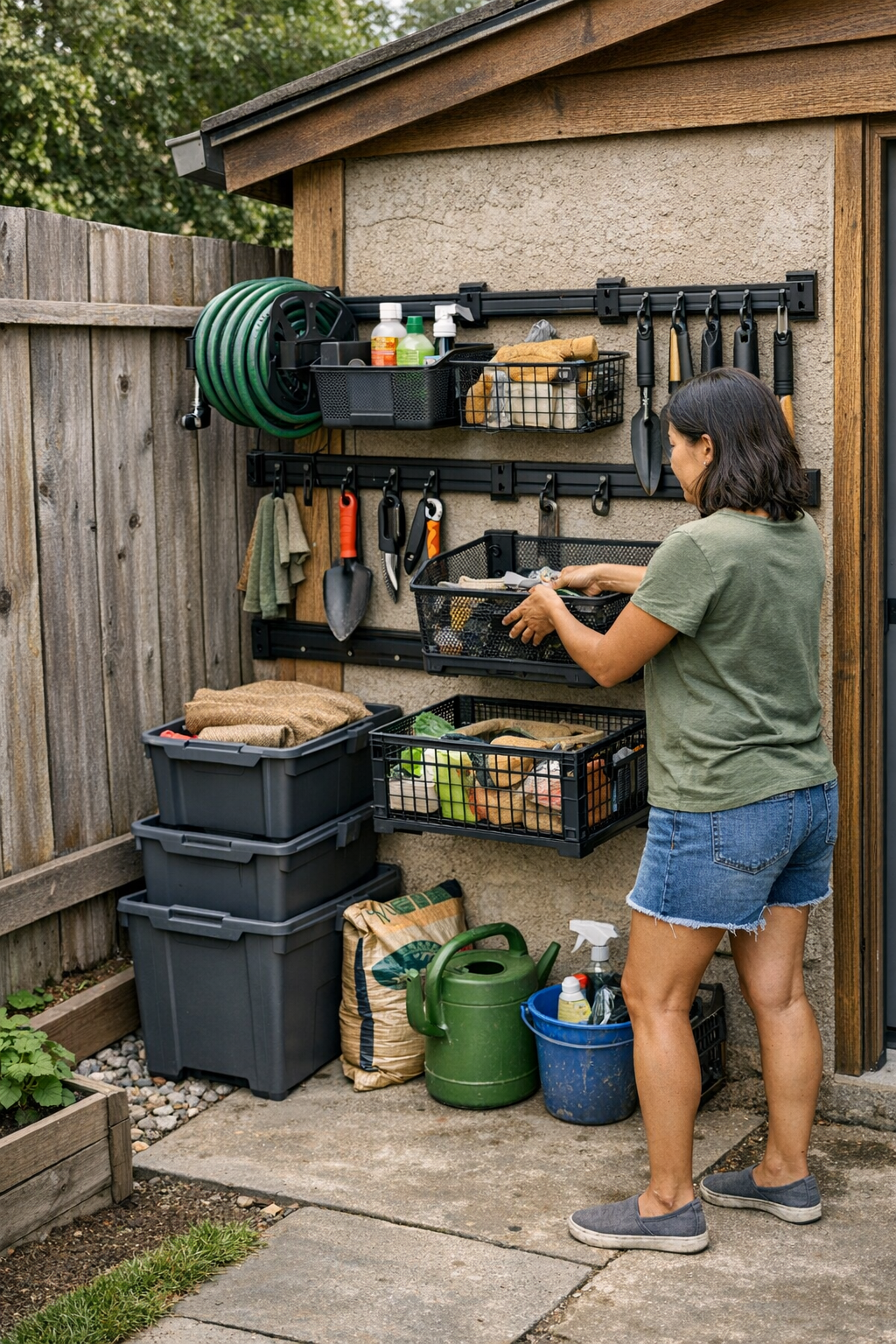
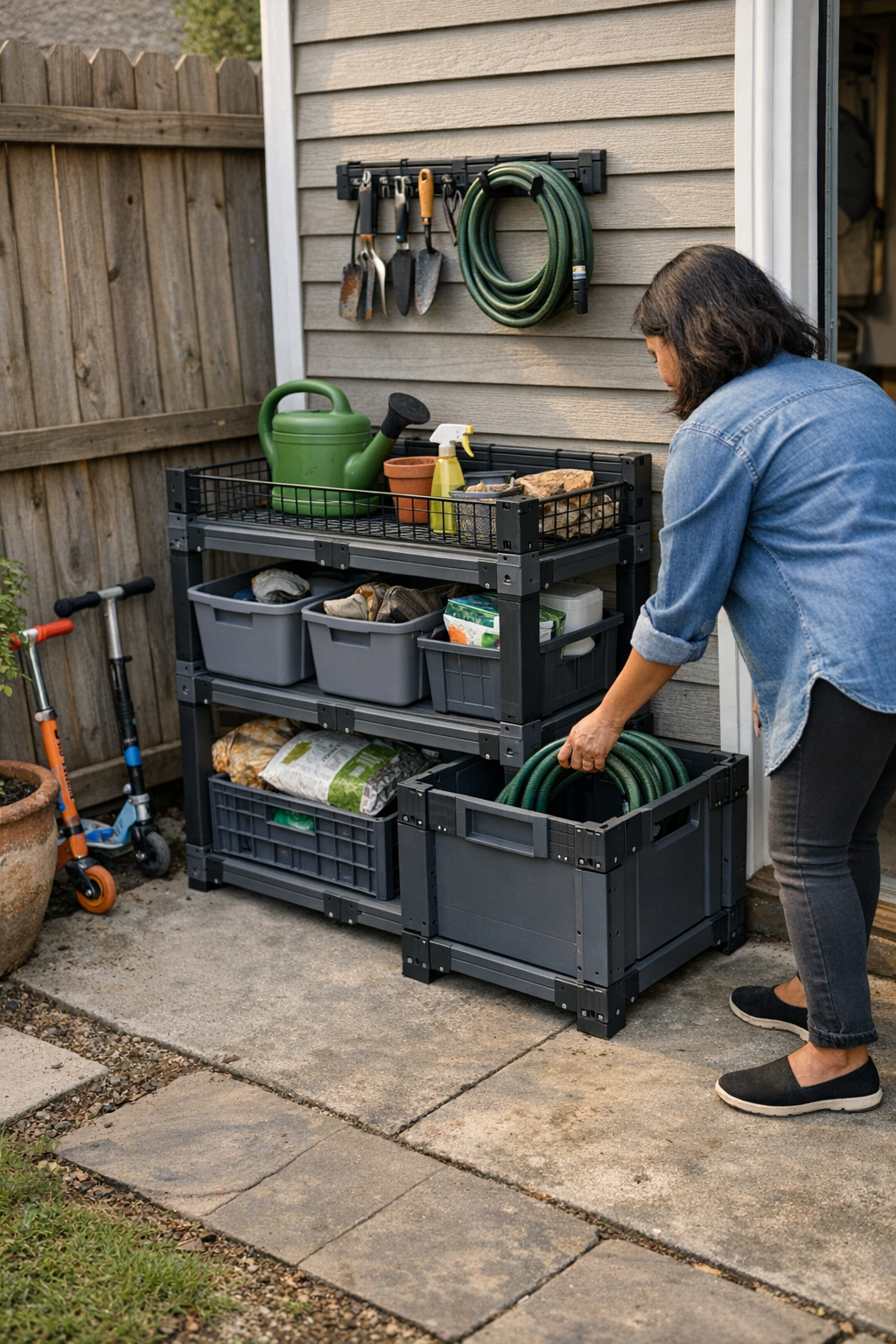
    The first time you lift everything off the ground with a wall-mounted system, the shift is immediate and visible: the path reappears, nothing blocks the doors, and every tool has its place in plain sight. Rows of hooks and rails along your fence or siding claim zero floor space, and even the clumsy items—rakes, hoses, fold-up chairs—hang in reach, not in the way. The biggest difference? You don’t have to hunt to see what’s missing. An empty hook, an off-balance basket, a loose shovel—all stand out on your next pass.

    This isn’t just about gaining square footage: with wall storage, there’s nowhere for messes to hide. Leave a trowel dangling or a hose debate unresolved, and you notice. That brief discomfort rewires your habits. There’s no “I’ll fix that later” pile swallowing your slip-ups; there’s now an unavoidable nudge to put things back in the only place they fit. Resets get faster because you either do them mid-stride—or they stare at you, waiting.

    Everyday Use Pressures the Setup—For Better or Worse

    For garages, side-yard strips, and patio-edges that double as work zones, repeated use reveals weaknesses instantly. The test isn’t whether things fit once; it’s whether they work without daily re-stacking. Say your side gate hosts both pet gear and yard tools, or the patio edge flexes between toy storage and pre-party cleanup. The line between “organizes” and “interrupts” shows up fast.

    Pushed for time? The floor bin setup fails under pressure: you move a bin to grab a broom, now the hose tangles, and the only free corner is jammed with what you used yesterday. Delay your reset and spillover increases—movement slows, clutter lingers, and it’s easier to just leave things out. Stress rises every time the setup turns a five-second return into a pileup.

    Wall-mounted layouts, especially modular rails with varied hooks and baskets, flip this scenario. Each tool is always just one reach away, and returning it takes as long as walking past. No lids to open, no stacks to disturb. Heavy, awkward gear gets a lower hook; lighter, frequent-use items go up top. If something’s missing or misplaced, you know immediately—and fixing it takes seconds, not another round of reshuffling.

    Footprint Reality: Floor Storage Pinches, Wall Storage Frees You

    True space feels bigger when you stop protecting every step. The overlooked win of wall-mounted storage is the preserved walkway: a side-yard that stays passable, a small patio that doesn’t shrink under its own organization. Floor bins and deck chests sprawl outward as gear piles up; corners fill, buckets get marooned, and you end up with a dead zone that only grows as the weather shifts. Overflow becomes easy to overlook until it blocks the door—or your next project.

    Get the setup right, and you break the cycle: no more shifting two things just to return a third, or unstacking in reverse every time you need the hand shears. Wall storage keeps each item accessible and out of the traffic flow. Now, resets are intuitive—one-out, one-back, glance and move—never a rebuild from scratch. No corners forgotten, no routes blocked, no creeping mound that swallows half your Saturday morning.

    Seen in Use: Real Outdoor Corners, Not Showroom Floors

    Think dailies: dog leash, grit scoop, or trash pickers hung low by the back gate—never trampled, never lost in a bin behind rakes and gasoline cans. Sunscreen, gloves, and yard towels live on an open basket; power tools, by contrast, migrate to the garage wall, not the party zone. With everything visible, resets are measured in seconds and the temptation to “just drop it for now” nearly vanishes. Gear comes off the wall, goes back, and unused items don’t drift toward trouble spots.

    But real setups aren’t flawless. Wall systems make every slip-up visible—and that’s healthy for your routine: a basket fills with odds and ends? You notice by Tuesday, not next month. A bulky tarp lands on the wrong hook? It’s out of place, not buried and forgotten. Instead of a crisis purge, you spot mess creep as it happens. Tweaking for season or function becomes natural—the setup reflects how your yard gets used, not just how it looked the morning after assembly.

    Reset Speed: The Real Test of a Working System

    Clutter never explodes overnight—it accumulates with a hundred tiny hesitations. Skip the reset and the next search takes longer. Floor bins mostly “look” organized, but the reality is a paper-thin order that shreds with actual use. By contrast, wall mounts drive immediate feedback: miss a return and it’s glaring. Every minor mess becomes a nudge, not a project deferred to some mythical future when there’s “more time.”

    Still, the best systems flex. Sudden rain or an unexpected yard project might mean a tool lands back on the wrong hook, or a basket acts as a catch-all for a day. But these mistakes surface quickly—they don’t crawl under the lid or vanish until next season. Fixing a slip is a matter of seconds, not sorting layers deep in a bin nobody wants to open.

    Practical Adjustments: Wall Storage Wins in Tight Quarters

    If your outdoor zone is half walkway, half storage, a few habits keep flow strong and friction low:

    • Lower hooks for heft: Heavy stuff—shovels, hoses, or spade forks—hang low so they aren’t falling into upper spaces and don’t turn the floor into a dumping ground.
    • Seasonal shifts matter: As weather changes, rotate what gets prime access. Summer’s soccer balls shouldn’t take up winter’s high-traffic hooks.
    • Designate a temp basket: One small bin as a “waystation” for overflow lets you corral midweek chaos without it spreading. As long as you clear it each week, the slow pileup never claims the whole system.

    The Noticeable Change: Mess in Plain Sight, Not Hidden

    The deepest shift isn’t just what you see—it’s what you do. Outdoor wall storage gives you nowhere to stash clutter where it won’t bother you. That’s the entire advantage. There’s no liberty to let “just for now” piles morph into permanent obstacles. Reset time really does shrink, blocked paths evaporate, and the dread of weekend overhauls fades. The system works because it refuses to hide your habits: you spot what’s off and fix it while you pass, not weeks later in damage control mode.

    Instead of a setup that goes out of style with the first busy month, you get storage that matches the pulse of your real outdoor life. That’s the break in the old cycle: space that actually works instead of pretending to, no matter what a day throws at it.

    See more practical solutions for real outdoor spaces at TidyYard.

  • How Proper Tall Bottle Clearance Transforms Entryway Storage Efficiency

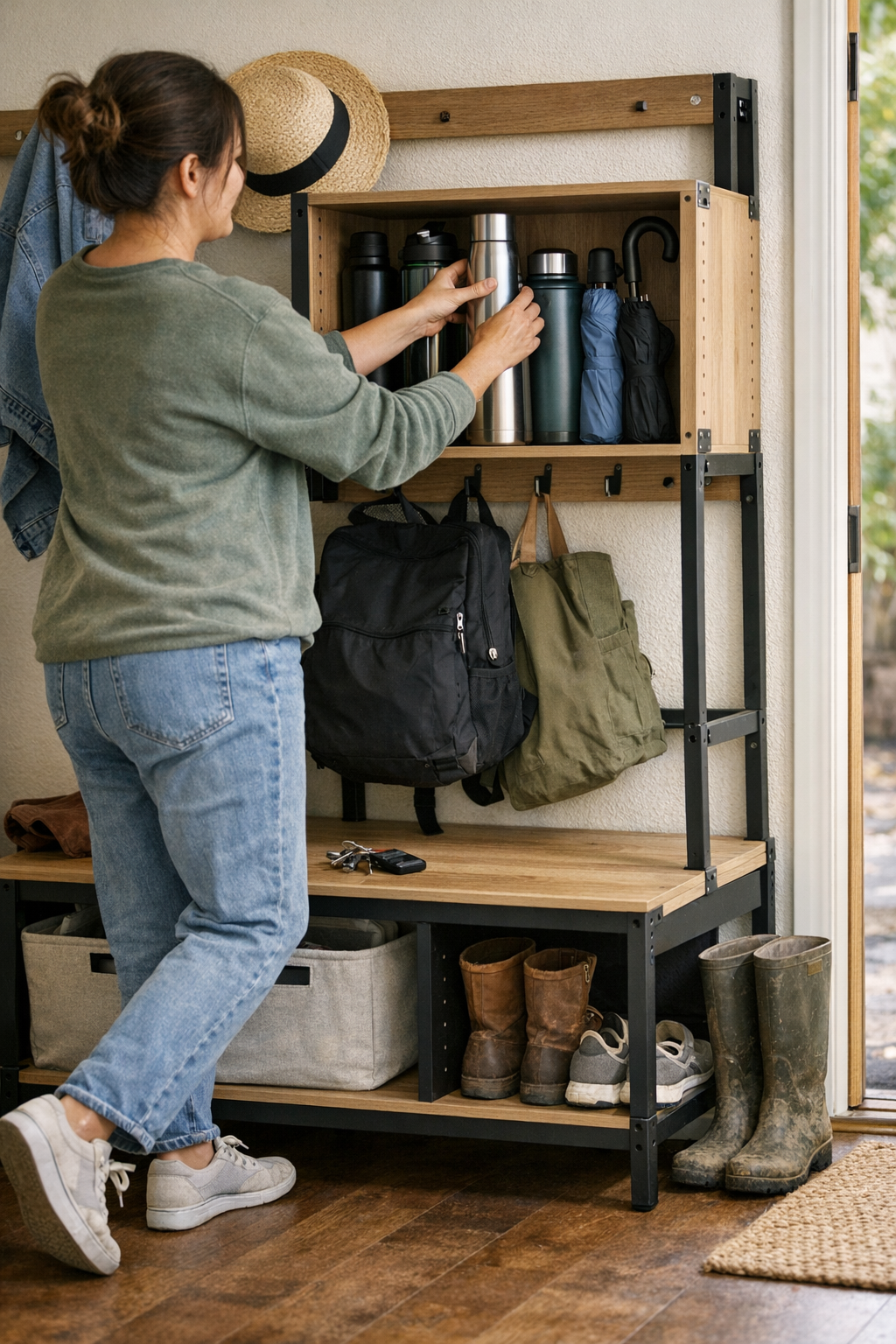
    Stand in any real entryway and it’s instantly clear: one tall bottle left sideways, and the “organized” zone collapses. You line up shoes, slot bags, hang a jacket—then a reusable thermos or umbrella lands with nowhere to go. The bench turns into a bottle parking lot. A cubby meant for shoes only half-contains a rain boot, which spills into the walkway. Each pass through the threshold—especially with other people trying to get out the door—becomes a shuffle, a pause, a quick decision to drop items wherever they’ll balance. What looked “neat” on move-in day turns unpredictable after a single morning in motion. The promise of a reset fades: one tall item pushes everything back out.

    When Vertical Clearance Turns Into Daily Friction

    Most entry benches and cubby racks claim to “catch it all”—until you actually use them with real gear. Watch it happen: you return home, drop your bag, and find your hands full with a tall bottle that won’t fit upright. The storage space that seemed generous on paper becomes a design mismatch—a half-inch too short means bottles fall sideways or get left balancing on the bench, inviting the next pass to knock them loose. You spot the signs: water bottles tilted, umbrellas at an angle, a sideways boot nudging into the path. The zone didn’t fill up; it got blocked. Every repeated attempt to tuck things away leads to floor overflow or a slow domino of “temporary” placements. The entry’s efficiency isn’t lost to one big mess, but to an unending series of micro-corrections: shifting, restacking, picking up what slid out of place.

    Real Scenarios: Daily Movement Reveals the Weak Point

    The limits of a setup show up fastest when routines collide. Picture these repeated-use standoffs, each exposing where vertical clearance falls short:

    • Two departures at once: A lunch bottle, taller than the shelf, sits on the only sitting spot. Now anyone tying shoes or grabbing a bag gets boxed in—one awkward bottle dictating the order of movement.
    • Returning at night: From a distance, the space looks put away. Up close, you see the truth: bottles propped, umbrellas wedged between baskets, a rain boot sticking out. Everyone sidesteps a pile that technically has a “home,” but only if you jam items in at an angle—and no one does, because it takes too much fiddling in real time.
    • Threshold squeeze: A stroller interrupts a tight entry path, and because a water bottle won’t store upright, it rolls into the gap. The walking line gets hacked down to a sideways shuffle. A little height mismatch, multiplied by shared routines, turns a wide entry into a bottleneck after a single busy run.

    Small failures become systemic: high-use items overflow into the walkway, clog resets, and spark tiny negotiations—does this bottle go back on the bench, onto the wall rack, or just get left by the door again? What seems like laziness is usually a setup that can’t handle tall, repeat-use items alongside the usual entry haul.

    Why “Looks Organized” Isn’t Enough in Transition Zones

    Entry storage that looks perfect after a deep clean rarely faces real traffic. Actual transition spaces flex with routine: kids drop muddy boots, someone brings home an oversized thermos, rain gear lingers after a storm. If the cubby or bench isn’t built for the tallest items, mess is secondary. The space simply doesn’t match the lived flow—forcing awkward splits, sideways placements, backtracking to get everything clear. The first clue isn’t always visible chaos, but a cascade of small, inefficient moves: a bottle left half-off a shelf, a bag wedging a boot, an umbrella always on the floor. In shared use, those double-handled routines add up fast—and what looked like storage becomes a daily puzzle to “fit” things instead of actually clearing the threshold.

    One Small Change: Building Enough Height for Tall Items

    The fixing principle is blunt but effective: match your vertical clearance to your tallest, most frequent threshold item—not just shoes. In one crammed household, removing a low shelf and adding a single 14-inch cubby for bottles and umbrellas snapped the space back into alignment. No more tilting, stacking, or pausing to play bottle Tetris. Routine return—two people, mixed gear—changed instantly: upright storage, one-motion resets, and no bottleneck at the bench edge. That slim margin of height absorbed real life: summer bottles, winter boots, umbrella grips. Side clutter shrank; the visual scramble disappeared. It wasn’t a transformation you notice once—it was the friction that stopped happening every single day.

    Small Real-World Tips for Smoother Return Flow

    • Check your fit before redesigning: Size vertical storage for the tallest bottle, umbrella, or boot you use weekly. Storing for “average” size repeats the same friction loop.
    • Build for “overflow” peaks: Extra height works as a buffer for seasonal gear—bigger bottles in summer, umbrellas during wet weeks, taller boots after snow. Underestimating peak use equals daily corrections.
    • Test with real rushes: Simulate two people moving through at once. If items snag, need to be angled, or interrupt the path, tweak the setup—not the routine.

    From “Looks Neat” to “Works On Repeat”

    Long-term function isn’t about picture-perfect staging. In every used threshold, the true test is how easily tall, odd-shaped repeat items actually flow back into place. The cost of poor clearance isn’t just visible mess, but the drag of constant course-corrections—tilting bottles, re-stacking gear, stepping around edge clutter—built into daily entry and exits. A system that absorbs tall everyday items in a single, upright movement makes the whole zone “feel” right, with less thought, less delay, and fewer complaints. That’s what makes organization stick—not one big change, but the little frictions you no longer deal with every day.

    Explore more transition-smart storage for real entryways at Betweenry.

  • How Routine-Based Bathroom Organizers Keep Skincare Counters Tidy and Efficient

    Bathroom counters rarely fail on day one. They fail after the third rushed morning, when your hand stalls in front of a wall of bottles—serum lost behind a larger cleanser, SPF nudging out of the lineup, half of your routine slowed by a micro-reshuffle. The surface might look “organized” after a fresh setup, but in real use, order gives way to daily friction: things migrate, overlap, block, and slow you down. If your storage isn’t mapped to the way you actually move through your routine, even the prettiest tray turns into an obstacle course by Wednesday.

    When “Organized” Isn’t the Same as Easy to Use

    The first night after reset, everything’s crisp—lined by height, brand, or color. But with two rushed routines, the system slides. Bottles crowd the front edge, smaller jars get pressed behind taller ones, and your evening treatment hides until you dig. In this clutter, steps blur: you’re reaching twice for a cleanser lost behind SPF, opening the wrong drawer to fish out a moisturizer, or shuffling three containers in and out just to reach the toner. “Organized” on the surface doesn’t stop the shuffle: cosmetics, creams, and tools drift faster than you expect—especially on shared counters or anywhere new items join midweek.

    Flat containers and open trays can’t hold the line. Even a simple bin loses shape once one item is out of sequence: SPF migrates to the night section, serums get blocked, and overflow collects at the one spot you use most. Under real-life pressure, visual alignment crumbles. The result: slower mornings, more resets, and a counter that demands maintenance simply to stay usable.

    The Real Friction: Routine Order vs. Visual Order

    Most storage solutions deliver “calm” at a glance, but not consistent clarity under pressure. The problem is structure: if storage doesn’t match the real sequence of your steps, retrieval slips. You grab for what was up front only to find it hidden, then have to double back, knocking other bottles aside. If you share the area, your return order interacts—morning routines blend into night routines, and soon the whole system is off track. Every “quick” reach becomes a minor delay. These aren’t just messy moments—they slow movement, break your flow, and replace small wins with repeated corrections.

    You can see it happening: you reach for your serum, find it behind a mask, nudge three tubes to get to moisturizer, or realize that your sunscreen drifted behind hair products. Sometimes you open a cabinet just to avoid a logjam at the counter. These micro-frictions are the warning signs—visible disorder pulling time and focus from your routine, making resets feel constant instead of occasional.

    Lived-In Chaos: Why Open Trays and Bins Slip

    Flat, open setups look fine on day one but fail the return flow test. Trays and bins trap order only when nothing moves out of line, which never lasts more than a few uses. With no built-in divisions, tall bottles lean and trap smaller items; small jars collect at the back, and the everyday shuffle collapses any logic you set. The result is a “sorted” surface broken by friction at every step: retrieval slows, resets multiply, and even simple categories become hard to keep apart. Under repeated use, showy neatness offers little defense against new clutter.

    Anchoring to Routine: What Really Keeps Order Under Pressure

    The setups that last map storage directly to your personal sequence: cleanse, treat, moisturize, protect. Divided organizers—with true sub-zones for each step—build in friction-proofing. When you reach, you grab the exact product, not just a random bottle from a grouped lineup. Sliding items back is almost automatic, since every spot is tuned to a repeated action. Shared zones hold up because the structure absorbs overlap: two people, different routines, same logic—each step protected from drift by its own division.

    This isn’t about looking organized; it’s about preventing drift before it happens. Over a week, you notice it: no pileups at the front, no digging for SPF at night, no wasted time re-clearing the path every day. Instead of a fake sense of order (that collapses on contact), you get tangible, real-world stability. Surfaces stay open for movement, even as products change or new routines join the flow.

    Real-World Example: Routine Flow vs. Return Chaos

    Picture sprinting through your routine, late again. You want to hit every step—cleanse to SPF—without doubling back once. A divided organizer lets your hand move left-to-right, item by item, with no jammed corners or blocked bottles. Returning each piece is almost mindless: you drop the tube back in its slot, not just wherever there’s room. No stack slides forward to block the faucet. No quick “I’ll reset this later”—because the reset’s built in. If you’ve watched your setup collapse from “sorted” to “fog of bottles” in four days, you know the cost: lost time, extra cleanup, and routines that feel heavier by Friday.

    Choosing Setups That Defend Against Drift

    Look for storage with actual divisions—adjustable slots, tiered trays, or modular compartments that fit your routine, not just your bottle count. Tall bottles won’t tip if their zones keep them upright. Short jars don’t get boxed in if dividers actually fit their footprint. Avoid relying on single trays: unless you rebuild the order every round, drift wins. Internal structure turns random drop-offs into predictable returns—even in the half-second put-backs that kill most systems. If your current organizer floods with overflow or never seems to keep categories straight, try simple inserts or small divider boxes: they create new boundaries for even the least disciplined return.

    A small upgrade—like adding subtle dividers or inserts—makes a real difference: less reset time, less frustration, more flow during repeat rush.

    Working with Shared and High-Use Counters

    Shared counters multiply the drift: what starts as a grouped back row quickly becomes a lumpy, double-stacked blockade around the sink. When people overlap—one putting items away, the other grabbing first-step products—category lines bleed, retrieval slows, and resets fall behind. Real defense comes from structure that absorbs overlap: mapped sequences and smaller, step-sized compartments mean one person’s mess can’t swallow the whole counter. If you always notice overflow at a specific section or find products gathering at the same trouble spot, it’s a sign: the zone’s too vague, or the layout doesn’t match the real pattern of use.

    The Line Between “Sorted” and “Stays Usable”

    Most counters pass the post-clean test. The real challenge comes four days in: can you find every item at first reach or do you have to chase down a toner that’s migrated or dig out an SPF buried under hair products? A setup built for actual habits—tuned to return flow, real retrieval, and shared pressure—doesn’t just look tidy, it holds up. Resets shrink from overhauls to a quick straighten. Movement through the area feels normal, not crowded out by drift or double-stacking. The payoff is real: more routine, less rescue, and a counter that actually fits the way you live.

    Gridry – practical storage for spaces you actually use

  • How Proximity of Outdoor Storage Transforms Small Yard Cleanup Efficiency

    In a cramped yard or along a busy patio edge, even the smallest setup flaw gets loud—fast. Walk any side-yard, narrow utility strip, or multi-use corner and you’ll spot it: storage sits just out of reach, a handful of steps too far from where things actually happen. And that gap—barely noticeable at first—repeats on every reset. A so-called “organized” space quietly turns into a pile zone: tools dumped beside bins, garden bags stacked where people cut through, one floor patch that fills up no matter how many times you clear it. By the end of the first week, the storage isn’t helping the flow—it’s quietly making routine work harder.

    Small Setup Choices, Persistent Friction

    The first day, everything looks contained. Maybe you placed a deck box along the fence or a couple of modular cubes by the back gate. Technically, the gear fits. But after a few rounds of real use—a gardening session, hauling out bikes, prepping for guests—you notice the cracks.

    Picture the scene: you’re carrying fertilizer to the shed, someone shoves past with a wheelbarrow, the kids are hunting for gloves before soccer practice. The box you set up is two feet off the main path, so tools land on its lid, not inside. “Just now” becomes later. Before long, the lid’s blocked, spillover piles up, and every return means juggling: move a rake to reach the pads, slide a cooler aside to shut the gate, unjam a hose because someone wedged a broom behind it last time.

    Where Floor Storage Eats Space—And Movement

    Floor storage claims more of your yard than you think—and eats it at the worst times. A low bin or storage bench tucked along the patio edge might feel out of the way, but when a project’s on or guests show up, that few inches stolen from the walkway becomes the reason for jams. Shuffling items to open the lid, double-stacking stuff that blocks the tools you actually need, making extra trips because the return flow never lines up—this isn’t rare. It’s the everyday reality when floor space fills before the workday ends. One “overflow” corner always seems to reappear, hosting half-used bags or lost toys you just relocated.

    Distance Defeats the Best Setup—Every Time

    The gap between “it fits” and “it works” becomes visible over a few daily resets. An outdoor cupboard at the yard’s edge makes sense for overflow—but once it needs an extra detour, stuff gets left by the door. It takes one awkward armload or a muddy afternoon before return trips start getting skipped. Layer by layer, the perimeter fills up: buckets left near the step, hedge clippers on the chair, hoses coiled one fence section short of where they actually belong. The official storage stays technically empty while clutter creeps back into the main walkways.

    Turning the Setup Around—Matching Storage to Movement

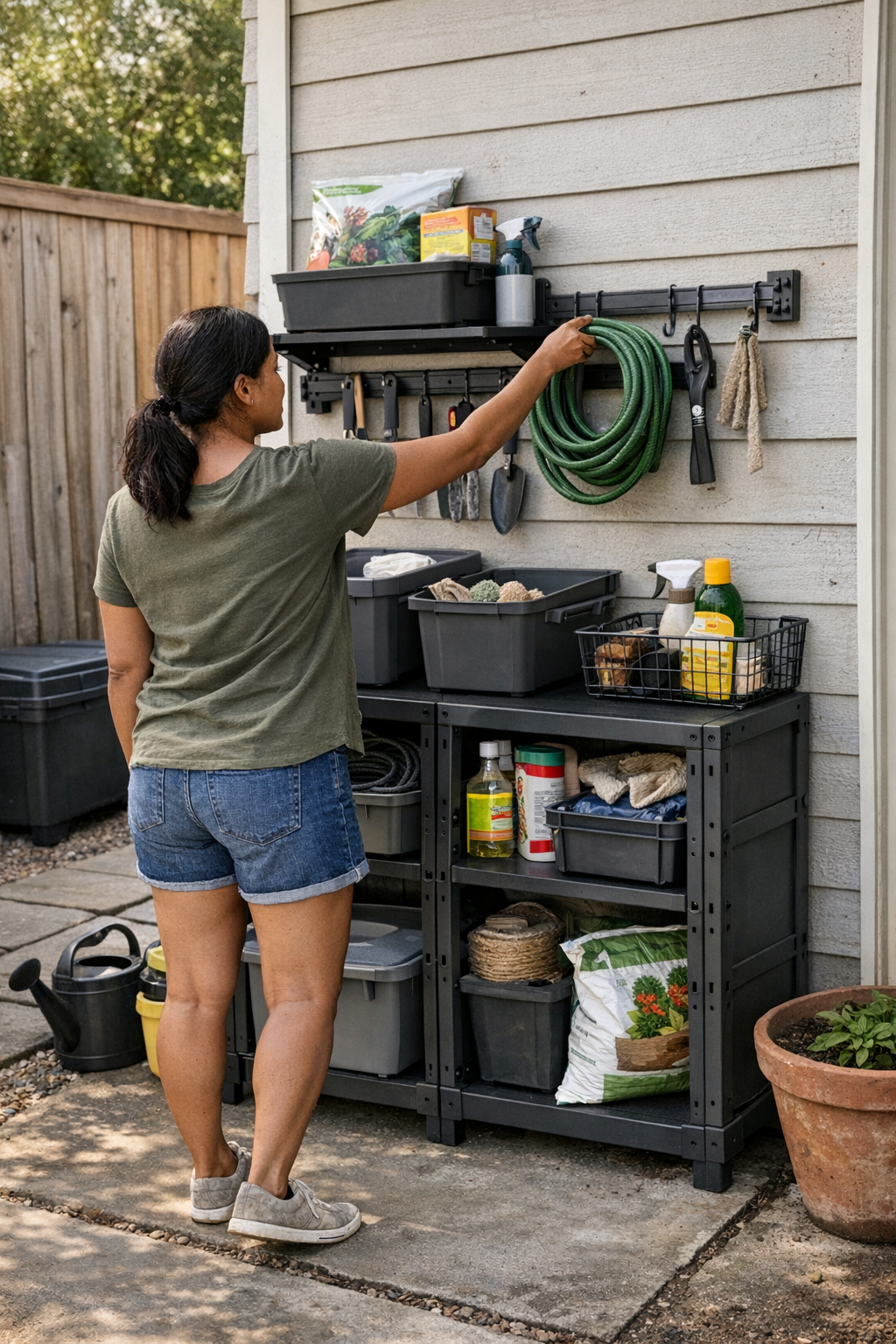
    Everything shifts when storage catches you mid-flow instead of waiting for you at the fringe. Install a low wall rack just inside the most-used door, or a slim hook system at the fence opening. Now, returning gloves or hanging up a hand trowel takes zero thought—you pass, you hang, you go. Any overflow is instantly visible, not buried in a box or behind the swing. Cleanup gets stitched into movement, so “I’ll get to it later” happens by default, not by exception. Reset stops being a chore—it becomes automatic, even if your hands are full.

    This isn’t theory. Try mounting a bar or peg strip at standing height, right where your routine turns from one area into the next. Suddenly, the spot that used to collect pileups becomes a checkpoint—gear gets returned before you lose momentum. Spaces with regular traffic (kids, guests, garden equipment) stay open because the buffer between “used” and “stored” just shrank to seconds, not minutes. Less shuffling, less time negotiating for elbow room, more clarity about what belongs where.

    Modular Storage: Flexible, or Just More to Move?

    It’s easy to believe a reconfigurable system will solve everything. But in tight or shared spots, flexibility without matching the real flow just means rearranging clutter again and again. You set up shelves that slide together, only to discover that the spot for buckets is still a few steps off route, and the stuff you use most ends up on the floor. The real test isn’t day one—it’s week three, when you’re still moving bins to reach a rake, or wishing you’d put the rack right by the door instead of near the back fence.

    Adjustment is the rule, not the exception. Before adding another piece, try swapping positions seasonally. Move a rack into the main pass-through for a week. Notice if things pile less and resets stay quick. The sweet spot is always where your hands pause naturally—where return flow is met, not forced. Forget maximizing volume or counting lids: make sure storage captures motion where it actually happens if you want routine friction to drop.

    Where Setup Breaks Down—And Where It Works

    Side-yard shortcuts: Every narrow access strip has a trap: the storage bin parked just beyond arm’s reach becomes a backlog point. Full hands make for great intentions—until the extra steps add up. “Temporary” becomes standard. Loops of hoses and garden shoes collect at the halfway mark. Eventually, the main walkway turns into a slalom with tools blocking the route and nothing where it should return.

    Patio-edge practicality: Mount storage beside the back door, and cushions or grilling tongs fall easily into place on the way inside. But if the area clogs with a swing or spare cart, even smart wall storage stops working—people start dropping items on benches again. When setup matches real movement instead of just filling blank space, you get clear floor, cleaner returns, and less end-of-day sorting.

    Dead zones: perpetual overflow: Not every nook needs filling. Watch which patch attracts castoffs week after week. If three categories (spare shoes, gloves, small tools) always land there, don’t drag them across the yard—set up a simple rack or hook where the overflow happens. Stop pretending that more bins will fix a zone that needs a smarter intercept, not more volume.

    Everyday Fixes, Real Routine Differences

    The win isn’t downsizing gear. It’s setting up the space so you aren’t moving things twice just to put them away. Storage within the lived flow—never more than two or three steps off your real path—unlocks time you used to spend retracing, reorganizing, or clearing way for someone else. Instead of collecting new clutter, the area returns to clear with each pass, not just at the weekend reset.

    That’s the shift most setups miss: the invisible friction between “looks structured” and “actually keeps up with life.” When the whole family or crew moves through a changing yard, storage needs to meet them mid-motion—not wait for the perfect cleanup moment. The right layout adapts as living patterns shift, keeping frustration low and the routine smooth—even as the season, activity, or users change in real time.

    Find practical outdoor storage tailored for real movement and real spaces at TidyYard.

  • Why Bare Entryway Shelves Fail and How Containment Transforms Clutter

    Entryway Storage: Why Open Shelves Fail When Daily Life Moves In

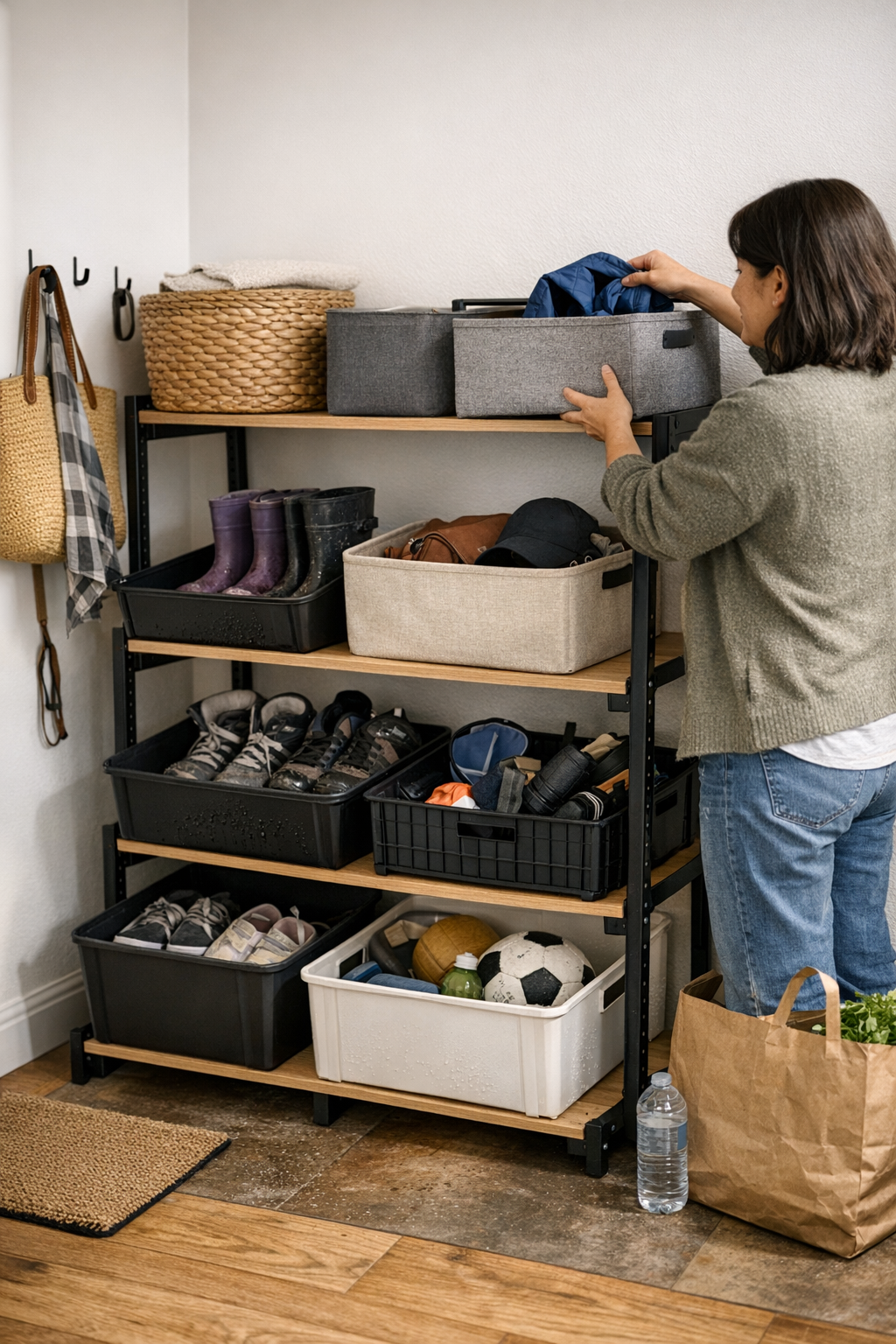
    On day one, open entryway shelves give the illusion of order—shoes arrayed in a tidy line, bags parked, every surface clear. Within a single week, that controlled image collapses under real use. Wet boots leave pools that stretch across the shelf; backpacks wedge awkwardly, blocking the path; loose mittens and keys start to edge off the surface. Every drop-and-go is a little reset failure, and soon the entry zone is less a pass-through and more a bottleneck—clutter stretches out, footpaths shrink, and it takes a full sweep just to make space for tomorrow’s commute.

    The Drift: How Entryway Shelves Lose Control

    Open shelves promise simplicity but rarely withstand weekday traffic. Small disruptions multiply: one shoe shifts out, another item hovers over the edge, a lunch box topples into the shoe row. By midweek, your threshold narrows—not because you intended clutter, but because every dropped item compromises the clearing you rely on. Without containers or clear boundaries, disorder spreads in slow motion: a puddle spreads across shoe soles, grit builds up in corners, and bags dangle half-on, half-off the shelf, daring anyone to restore order.

    Routine movement adds friction every time. Bringing in groceries? That extra bag gets wedged, and the shelf collects clutter faster than it’s cleared. Rainy morning? One muddy shoe streaks the edge; by week two, the shelving is ringed with water stains and scattered gear. The initial quick-grab setup is lost—a grab-and-go zone becomes a site of delay and detours, and resetting the area requires a full-blown cleaning event, not the two-minute tidy you imagined.

    Seeing Open Shelves Tested by Real Life

    Direct comparison exposes the cracks: two entry zones, one with bare shelves, one with bins or dividers. Both look neat at first—shoes aligned, baskets for hats. But friction builds:

    • A spill on an open shelf creeps, touching every nearby item. With trays or bins, the mess stays contained—the fix is to empty a tray, not scrub a whole shelf.
    • Shoes spread: without clear edges, they migrate until you’re tripping over a splayed line instead of walking cleanly through.
    • Small objects slide to the front, tip over, or disappear underfoot—what’s visible is never what’s actually reachable. Each missed recovery adds to the reset workload.

    It’s not about how much room you have, but whether your setup holds the line against daily disorder—or simply stages it for a messier collapse in a week.

    Crowded Days Expose Weak Spots

    After a busy afternoon, the system’s flaws spike: Several people arrive—muddy boots, armfuls of gear, dripping grocery bags. Open shelves let water and grit spread unchecked; towels, meant to help, get left behind as soggy evidence. Every arrival pushes untidiness outward—eventually you stop even noticing the creep, and resetting feels less realistic every time.

    One extra bag is often all it takes for shoes to block the threshold. Instead of a free pass-through, you’re now forced to reshuffle piles just to get inside. The clear traffic line dissolves into slow-motion clutter, and instead of a returned item, you inherit a new obstacle that lingers for days.

    Containment Adds Boundaries—and Real Relief

    Adding deep bins, trays, or modular containment means a subtle but firm shift: now each item has a designated zone, messes don’t leak into each other’s territory, and recovery shrinks from a major task to a quick fix.

    • Crumbs and debris are isolated in trays, not broadcast across an entire shelf.
    • Shoes stay grouped—lift the tray, dump, done—rather than hunting single shoes around the room.
    • Spills and dirt become localized cleanups, not silent, spreading backlogs.

    The reset stops feeling impossible. Instead of staging a whole-area rescue, you empty a single bin, wipe a tray, and the entryway’s clear path is back. The storage now works with daily traffic rather than losing to it, making the zone a lasting entry—not just a day-one illusion.

    Floor Space, Wall Storage, and the Illusion of Order

    It’s tempting to believe that lifting clutter off the floor onto wall shelves cures the entryway chaos. And wall-mounted shelves do open up tight passageways and reduce tripping. But without hooks, baskets, or closed compartments, even eye-level storage collects all the same drift—bag straps tangled, hats stacked, misplaced gloves migrating shelf-to-shelf. During a rushed morning, top shelves go unused, and whatever’s awkward to reach simply lands wherever there’s open space. Mixed solution works better: wall bins handle hats and gloves, lower trays catch shoes and wet gear, hooks anchor always-moving jackets—so the threshold holds up under traffic, not just in photos.

    Trouble Spots That Keep Coming Back

    • Shoes drift and sprawl: The row starts neat, then edges wider until the walking route is squeezed to the wall or crowded entirely.
    • Bench turns into overflow: The spot meant for sitting is lost under a pile of bags and coats left in passing. Now, tying shoes means balancing on one foot or clearing a mountain first.
    • The corner of no return: Mail, keys, and “for later” items build up in the same dead zone, forgotten until the next reset marathon.
    • Endless resetting: Every attempt to tidy up just pushes items from one zone to another—never really reclaiming openness for more than a few hours.

    Containment doesn’t erase these cycles, but it shortens the reset window. With every drop, there’s now a real destination—so messes stop becoming permanent squatters, and recovery happens in evening passes, not weekend overhauls.

    Quick Reference: Common Entryway Storage Questions

    Are wall-mounted shelves better than floor units for entry zones?

    Wall-mounted storage wins space and clears the entry path—especially in narrow hallways—but without bins, hooks, or divided sections, clutter simply migrates upward. For cleaning speed and everyday reach, combine wall-mounted racks with baskets or hooks, then use floor bins below to capture overflow and wet gear.

    How can I keep rain boots from spreading mud or puddles?

    Assign a watertight tray or deep bin directly for boots. This holds mud and water in one place, letting you dump or rinse the mess after storms instead of letting it reach the rest of the shelf. Make the habit: dump the tray regularly—otherwise, moisture still escapes the bin and spreads out again.

    Should I use closed cabinets or open shelving for drop zones with mixed use?

    Closed cabinets hide clutter but slow retrieval, especially when multiple people use the space. Open shelves increase speed—but only if you prevent overflow with bins or trays. For mixed, repeated family use, pair open shelving with deep or modular containers, or position the most-used bins inside lower cabinets for a balance of speed and containment.

    The Takeaway: Make the Reset Realistic

    In real transition zones—the “Betweenry” of household life—minimalist arrangements dissolve under the pressure of actual routines. Every dropped item tests your setup’s boundaries. Choosing bins, trays, and smart dividers prevents that slow slide from controlled threshold to daily obstacle course. An entryway that rebounds quickly after a messy day—a setup that clears with a five-minute reset, not an hour—keeps the threshold functional for the next round of entries. Every solution that shrinks the reset burden brings the zone closer to something you actually use every day, not just on move-in day.

    http://www.betweenry.myshopify.com

  • Shelf Liners Transform Entryway Cleanup Into Quick, Effortless Tasks

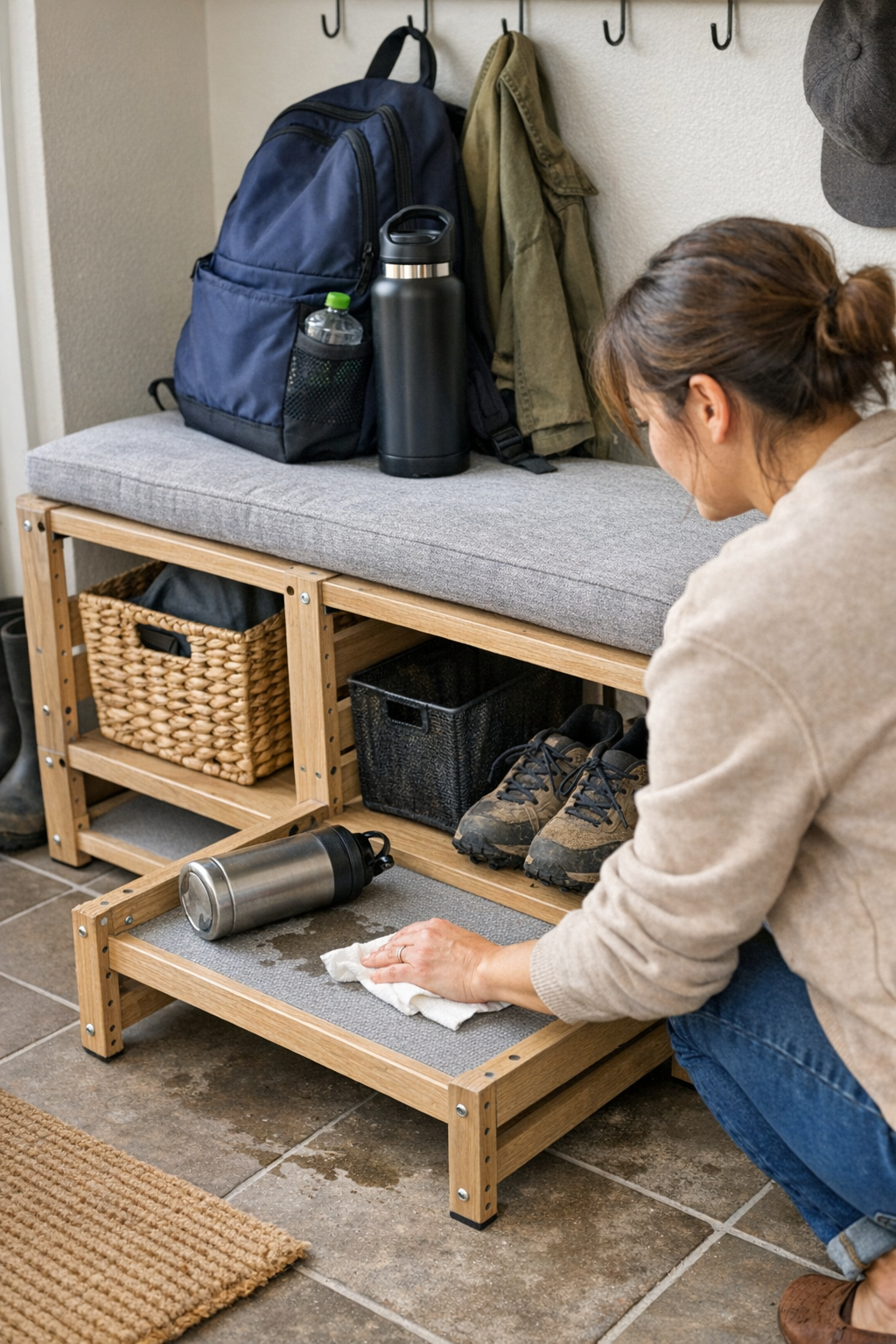
    No entryway setup stays manageable for long—especially when real life rushes through it. The baskets may sit straight and the bench may look clear after a weekend reset, but the order slips the moment someone crosses the threshold with rain-soaked shoes, a runaway water bottle, or an armful of gear. One muddy drop or missed spill is enough to shift your storage from “reset-ready” to “clogged and stained”—with dirt pressed into paint, seams swelling under leaks, and sticky patches you dread tackling. The illusion of control fades fast. If your entry zone isn’t built to withstand daily friction, every cleanup slows down, and each pass-through leaves the space less usable the next time.

    Mistakes That Don’t Show Up Until You’re Rushing Out the Door

    Most so-called smart storage plans seem fine at first—but they rarely keep up with real, repeated use. The difference becomes obvious only after routines collide day after day. A bench that once fit three pairs of shoes is now ringed by double that number—mud trailing off the soles, extra pairs crowding the path. Baskets underneath fill with umbrellas and backpacks, but one slow leak from a forgotten bottle stains the bottom and starts a chain of delayed resets. Soon, what was meant to speed your mornings just blocks the route out. Order that looked “set” begins to resist maintenance—reset times climb, and the urge to ignore messes grows stronger.

    Where Shelf Liners Change the Game

    The real test of an entryway isn’t how neat it looks right after a reset—it’s how quickly you can undo the mess when a spill or splash strikes. Shelf liners draw a hard line between daily mess and permanent damage, turning a messy drop zone into a manageable, wipe-and-go surface. When someone drops a dripping raincoat, or a yogurt tube leaks inside a bag, a liner means a fast cleanup—no basket-pulling, no scrubbing. The threat of water stains creeping under storage or dirt biting into painted wood simply disappears.

    Skip liners, and every reset multiplies in effort. Stains get worked into seams, sticky zones demand a full scrub, and “just a wipe” turns into a full job. You start letting cleanup slide. Over time, a small mess grows into a larger, more permanent obstacle—and even a quick reset feels out of reach.

    Real-Life Reset: A Scene from the Side Entry Zone

    The reality of any in-use entry is pressure at the busiest moments—bags dropped on the seat, shoes overflowing onto the floor, and a bottle tumbling until its cap pops free. At that critical moment, your storage either holds up or becomes a bottleneck.

    • With liners: You notice the spill, grab a towel, do one pass, done—no checking for water pooled under baskets or damage at the seams.
    • Without liners: Moisture seeps into corners, sticky patches turn into stubborn stains, and resets drag out as you dig out baskets, hoping the swelling hasn’t already started.

    The real friction isn’t the mess itself—it’s the added reset burden that compounds. Eventually, anyone in a hurry sidesteps the whole area, and the original flow of bags, shoes, and people is blocked at the threshold. The supposed “system” quietly shifts from help to hassle.

    How Liners Shorten Cleanup and Save the Setup

    The difference a liner makes is lived, not imagined—especially during the peak moments after storms or on heavy-use weeks. Each minute you save on cleanup is a minute the storage actually works under pressure. In direct use, swapping to removable, slightly textured liners cut one family’s muddy shelf reset from ten minutes down to two on a 32” shelf. That payoff matters—not just for neatness, but for reclaiming the entry as a through-zone, not a work zone, even with crowding and back-to-back arrivals.

    Instead of dreading the stubborn gray line at the shelf edge, you clean once and move on. Drips and pools no longer set the timer on long-term damage. The real win: you keep up daily, so the mess never builds high enough to reshape routines around it.

    Where Liners Help—And Where They Don’t

    Liners solve the mess—not the overflow. They defend against mud, salt, and routine leaks, essentially giving your entry shelf an armor against repeat abuse. If your threshold is hit daily with wet boots, open lunch boxes, or sandy gear, liners keep the reset simple and keep the underlying surface ready for another round without a full teardown.

    But liners don’t control accumulation or flow. They can’t make kids put boots on racks or stop bags from taking over the bench. System drift—where temporary drops become permanent piles—still happens if the structure doesn’t match your actual use. Liners just keep a small mess from turning into a job you start avoiding.

    Tips for a Smoother Threshold Flow

    • Pick removable liners: Quick to shake out or swap—even after a season of mud and grit.
    • Get texture with restraint: Enough to grip gear but not so much it holds grit beneath surface wipes.
    • Cover seams and corners: The first places water creeps and grit eats through paint—skip these and resets get longer, fast.

    The Practical Payoff: Reset That Matches Reality

    Shelf liners in transition spaces won’t impress guests—they’re there to defend the zone you actually use. The setups that last are always the ones that make resets short, storage accessible, and friction invisible. If you can clear soaked sand, salt, and spilled drinks in seconds—not minutes—the path stays open, routines keep moving, and the “system” stays a tool, not a time sink. The real advantage comes not in show, but in reclaiming the entryway as a true transition space—one you reset easily, so blockages and workarounds never become a permanent feature.

    Find practical entryway and threshold storage solutions at Betweenry.

  • How a Return Spot Near Your Door Transforms Outdoor Organization

    Here’s how most outdoor storage setups really get tested: it’s not storms, not big projects, just the daily shuffle of gloves, tools, balls, and chores streaming out and back through the main door—on repeat, week after week. You grab a trowel before coffee, stash muddy gloves “just for now,” step past your kid’s bike helmet, and promise yourself you’ll put it all back after one more trip. By sunset, what started as clear turns crowded—the threshold jammed, paths shrinking, and a setup that once looked organized quietly devolving into a bottleneck you can’t ignore.

    How the Outdoor Door Becomes Clutter’s Landing Zone

    You’ve seen it before: stand in your side yard or at the back step and realize another pile showed up while you weren’t looking. Spare seed packets, faded garden gloves, a shovel caked with last week’s dirt—all gather at ground level, inches from the door. Not because you’re out of storage, but because the nearest bin or rack sits just far enough away that “later” keeps winning. Each rushed return breeds the next one, until temporary drop-offs settle in like they belong there.

    This isn’t just mess—it’s routine drag. With storage shoved to the fence or buried at the garage edge, the return path feels like a detour. You weigh every trip: is it worth the full trek, or should you just leave it for the next round? Without a spot right there, the flow breaks. Reset fatigue sets in fast, grinding down your good intentions into a collection of almost-finished cleanups.

    When the Return Zone is Out of Place

    Two yards might look equally neat from a distance: bins squared off behind the shed, cabinets lining the garage. But spend a day moving in and out, and one difference gets loud. Stores-at-a-distance setups ask for back-and-forth journeys every time you finish a job or retrieve a toy. In practice, that means armfuls get set down “for a second,” stray boots jam the walkway, a soccer cone multiplies into an end-of-day trip hazard. Yesterday’s clean stretch fills up by lunchtime, then clogs entirely by dinner.

    Move a simple crate or open rack within arm’s reach of the door and the pattern snaps. Suddenly, it’s hand-off, toss, done. Garden gloves drop into the bin, wayward balls land without fuss. The loop tightens: every reset shorter, every pass-through smoother. What felt like a series of little chores fades into instinct—and the exit zone stays open without feeling like one more task to dread.

    The Hidden Cost of Distance: Chores Get Stickier, Movement Gets Blocked

    Picture a weekend morning: the pruning shears get left by the fence, skateboard helmets line up against the garage, and stray buckets pile up by the gate. Storage that made sense on paper—a big tub tucked “out of the way”—makes routine cleanup harder. Instead of a direct path inside, it’s detours around furniture, shuffling gear just to get a clear stretch. Midday, you’re threading through laundry baskets and tarp rolls that should have gone somewhere else. By evening, it’s a tangle—resetting means pausing, picking up after someone else, losing track of what’s out or put away.

    Flip it: add one rack, open tote, or bench right at the main crossing and watch reset friction drop. Suddenly, gear lands where you’re already walking. Tools, gloves, sports junk—all get returned in the right direction without a detour. The path to the house stays open; quick drop-offs replace long cleanup.

    One Small Shift = A Faster Reset, Less Crowding

    Here’s a real test: leave a crate just two steps from your main threshold instead of tucking it behind a utility cabinet. Instantly, pickups get faster; end-of-day sweep is a single motion, not a multi-stop runaround. Even in a cramped entry zone, swapping a closed box for an open rack means no lifting lids, no weird stacking—just toss and move on. Faster in, faster out, less stuff stuck in the way.

    These fixes don’t call for massive storage—just a handoff point that fits your route. Now, putting things away isn’t an ideal to aim for; it’s the default, even if everyone’s busy or distracted. The payoff comes in small wins: Saturday chaos doesn’t block the entry, weekday routines don’t grind to a halt. “Neat” stops being a one-day event and becomes the background, not the project.

    Skip the Shortcut Return—Pay the Daily Cost

    You know the look: piles pressed to the doorframe, pathways reduced to slaloms, little things sucking up more time than they should. Resetting the area becomes a background job you never quite finish. No clear handoff spot? The blur between “in use” and “put away” gets wider, and the daily drain gets heavier—one zigzag exit at a time.

    Floor vs. Overhead: Why Quick-Return Storage Wins Low

    No contest—open bins and low racks beat overhead shelves for outdoor handoff zones. When you’re moving fast, storage above eye level means friction—no one wants to lift a muddy tool or wet glove overhead. No surprise: gear that should be out of the way just piles up below, eating floor space, making resets clunkier, and hiding the “order” you thought you built in. Wall hooks, floor-level bins, and grab-and-go racks almost always work better where the return loop stays short.

    What Changes in Tight Setups—Side Yards, Garage Edges, Narrow Zones

    Space gets tight, movement matters more. Along a garage, squeezed behind a gate, or running the length of a thin side-yard strip, a well-placed return point is the difference between gliding through and getting stuck. Miss the drop zone by just a step, and every entry piles up: a rake blocks the hose, a bucket eats the last walkable strip, a corner becomes a slow spillover graveyard. It’s not more storage that fixes this—it’s moving the return spot to where the flow actually runs, so resets are part of the routine instead of their own event.

    Real Routine Change: Closer, Smarter Returns, Less Daily Grind

    Adding a return point close to your main outdoor door won’t double your storage, but it quietly chops away at the friction points that kill real-world routines. Garages and yard strips run longer without bursting with overflow. Full cleanups shrink to a few direct sweeps instead of an hour of backtracking. You get less shuffling, less resentment, less “it looks organized but still trips us up.” Smart, near-door handoff zones make the whole area feel functional again—so you use the space, not dodge around it.

    See more practical outdoor reset solutions at TidyYard.