
Entryways don’t get messy by accident—they unravel because real routines push every bin, bench, and basket past its promise. That clean line of shoes splays out by Thursday; the storage bench that looked organized last weekend is now buried under backpacks and umbrellas. Everyone rushes in and drops everything, and within days the path narrows, you’re stepping sideways, and the “simple fix” becomes a slow and frustrating reset. The storage setup you pick isn’t just about looks—it’s about whether you keep tripping over the same clutter or actually move through the threshold without pause.
Where Clutter Hides: The Tradeoff Between Closed Bins and Tiered Carts
Closed bins and oversized baskets promise order at the surface. Pile everything inside, close the lid, and for a moment the entryway looks calm. But after a few busy days, the hidden truth appears. Shoes migrate beneath scattered mail and hats. That water bottle you need for the gym vanishes under grocery bags. Bins mask the chaos but bury the everyday essentials, so you go from “grab and go” to “stop, search, and dig,” especially during those morning scrambles or last-minute dashes out the door.
The real breakdown happens when each new arrival—shoes, gloves, mail—pushes everything down and deeper. Most bins aren’t sorted, just loaded. That second glove, the car key, the fast pass—they sink out of sight. When you’re late, the cost isn’t clutter you see, it’s the routine you lose: delay, backtracking, and a reset that always takes longer than you want to admit.
Tiered Carts: Visible Layers Make Mess Manageable
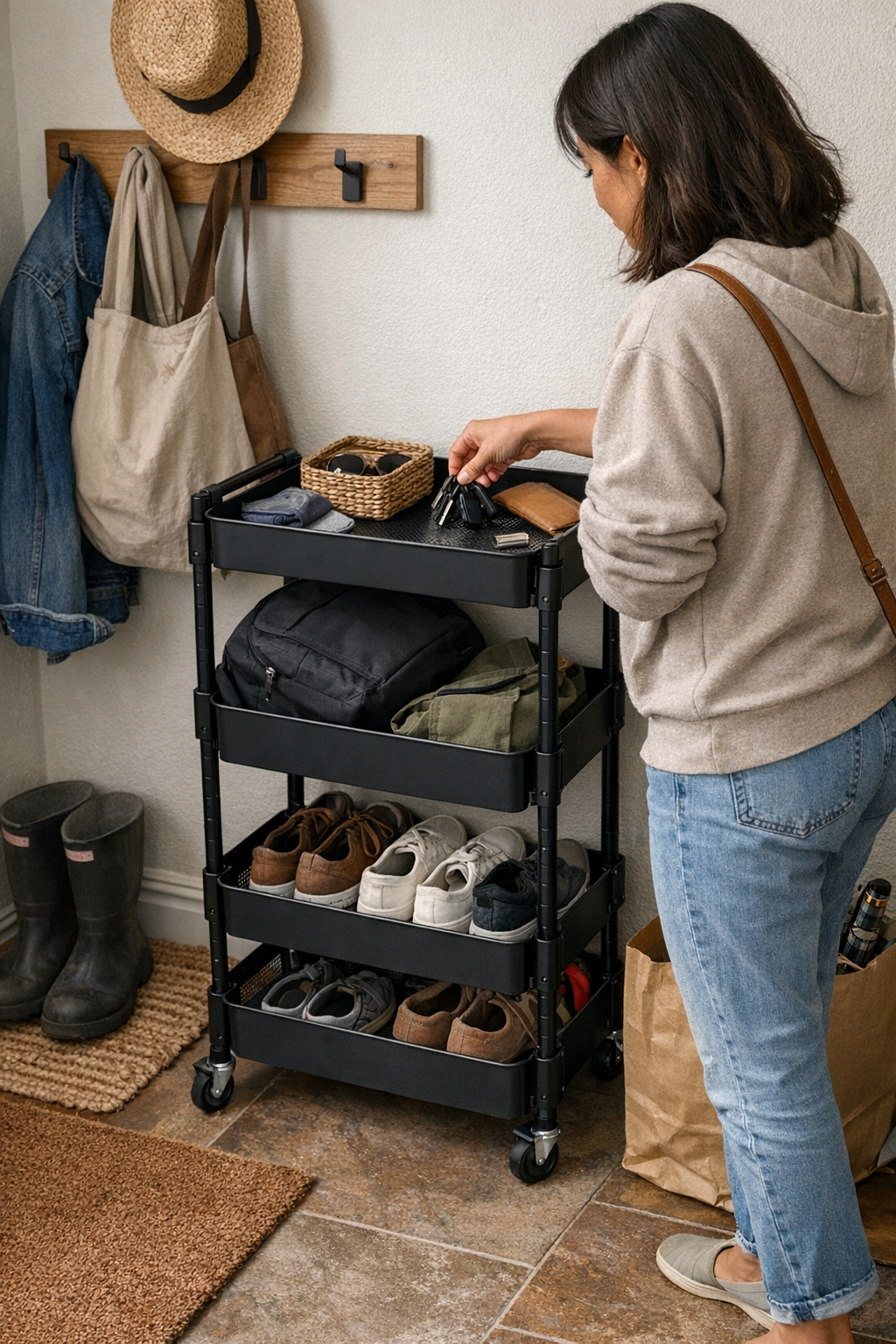
Tiered carts break the cycle by forcing everything to the surface. Instead of layering items blindly in a bin, you get low open trays that make every shoe, bag, or water bottle easy to see and easy to grab. Shoes stack in a row, bags land in their own lane, small items sit on top. The benefit is immediate when life gets busy: groceries in one hand, lunchbox in the other, no stopping to dig or reshuffle. Clear layers mean friction—when you see socks drifting or that last tier overflowing, it’s visible before it spreads everywhere else. The reset becomes a quick shuffle, not a buried excavation.
This setup isn’t flawless. Use it as a free-for-all, and the lines blur—hats drift into the shoe row, a jacket ends up sprawled beside bags. But the logic of the cart pushes spillover to the edges, not the bottom. You’ll see problems forming before someone turns it into a dumping ground or blocks the entry completely. The mess surfaces early, so course corrections are smaller and faster.
Real Life in the Threshold: What Actually Changes?
Closed bins compress everything into a single mystery pile. One kid drops a jacket on top, another buries a shoe underneath, and soon the routine is slowed by minor but multiplying bottlenecks: stepping over piles, circling the bench to reach the wall hooks, or nudging aside something you forgot was even there. By midweek, the threshold shrinks and the entry starts backing up.
With tiered carts, the routine shifts: You enter, drop your bag in its own lane, shoes go onto their row, keys or mail stay visible up top. If something drifts—a scarf droops off the edge or a hat teeters on a corner—you spot it in a glance. Nothing disappears, and fixing it rarely takes more than a few seconds. The path through the entry stays clear. Moving in and out isn’t a project—it’s a habit supported by the setup, not slowed by it.
When Setups Break Down: Recognizing the Weak Spots
Every entryway setup breaks down eventually, but some fail faster under pressure. Temporary drops—a week’s worth of mail, a shopping haul, or wet shoes—solidify into permanent clutter if the layout hides instead of sorts. Bins give a false sense of order: everything looks contained, but items get harder to retrieve the deeper the pile grows. Even wall hooks or benches start as helpers but turn useless once the overflow finds their edge.
This is where carts with open, layered design hold up better. Problems announce themselves: when bags spread across two tiers, or the shoe row is close to spilling, the fix is clear and quick—right as you see it. Visibility isn’t meant to call out your mess, but to keep the routine recoverable. Micro-resets—grabbing stray items or re-sorting shoes—are simple, not disruptive. Bins bury the clues until chaos is baked in; carts let you intervene at the edge, not after a crisis.
Small Adjustments, Big Impact: Practical Tips for Everyday Entryways
1. Give each tier a single job. Map it out once: shoes on the lowest level, bags in the middle, keys, sunglasses, or returns on top. Once everyone knows the logic, return flow is automatic, not a constant explanation. What fits becomes obvious—so do the items that don’t.
2. Pair with wall hooks to cover both quick-grab and hidden clutter. Hang coats, bags, or hats at eye level for fastest access, while the lower cart handles shoes, bottles, small gear. This combo clears the floor and reduces path-tightening, making rush-hour movement easier.
3. Keep it underfilled—don’t overload tiers or overpack with odd-shaped items. When the cart is more than 80% full, categories blur, things topple, and daily resets start to stall. Leave enough space for sudden arrivals, resist the urge to fill every gap, and run a one-minute scan at the end of the day. The edge of order stays visible, and the setup lasts longer with less effort.
Seeing Past the Surface: The Real Function of Storage at the Door
It’s easy to buy into the illusion that closed bins mean a controlled entryway—but the real cost surfaces in lived routines. Transition spaces don’t just need to look organized for a single reset; they have to withstand dozens of passes, returns, and threshold scrambles every week. The right layout doesn’t just store things—it keeps them in sight, in reach, and out of the path.
- Shoes that stick to a single, visible row instead of spilling into tripping hazards.
- Bags and gear that hold their spot, so each family member can claim a tier instead of merging into an untrackable pile.
- Entry paths that stay clear even when the week gets messy—and still open up fast for cleanup.
- Resets that take moments and never mean dumping everything out just to find one missing item.
Switching to a tiered cart won’t erase clutter forever. Rushes and overflow still happen, and not every item will stay in its lane. But the reset is visible, nearly instant, and never spirals into a multi-hour project. Entryways stay workable; routines stay intact. The difference is small at first—an easier exit, a clear path, five fewer frustrating searches—but cycle after cycle, it’s the difference between wrestling with your space and finally moving through it with less effort.