
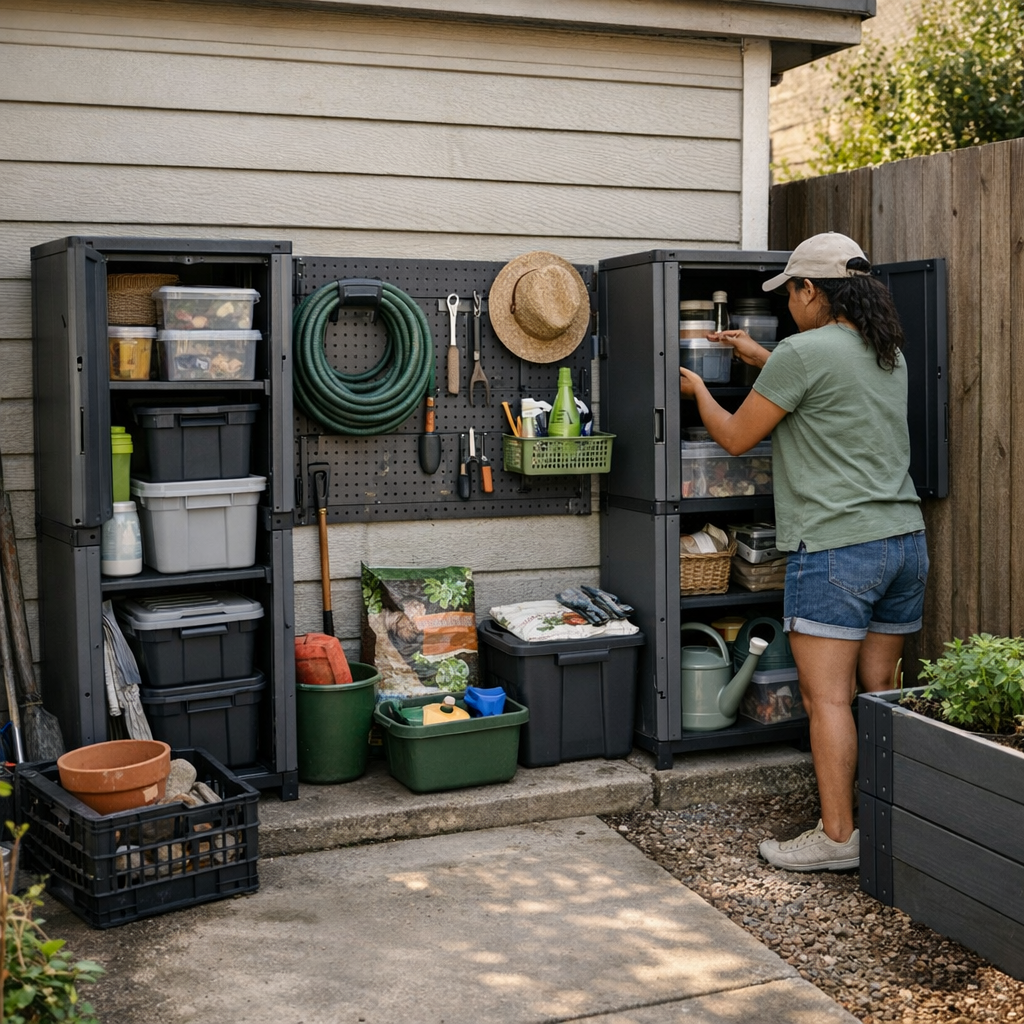
The first time you clear a cluttered walkway with a new set of outdoor storage units, the difference nearly smacks you in the shins: suddenly, you’re not hopping over rakes or catching your foot in garden hoses just to cross from the back door to open yard. The path is clear, the mess swallowed by a neat wall of bins and racks lined up along the garage or side fence—and it feels like a win. But the relief is short-lived. Over a few busy weeks, a different pattern takes over. Bins bulge, tools wedge together, random bags get balanced until the order is fragile at best. The footprints may be streamlined, but the routine is still jammed. You find yourself circling storage edges, stepping around new piles, and bracing every time you need a tool at the back.
When Clearing the Path Just Shifts the Friction
Shoving clutter to the edge isn’t the same as solving it. Most of us—eager for quick progress—push what’s loose to the far fence, garage wall, or shed corner. It looks clean, for a weekend. Lines are straight, the ground is open, and there’s nothing ankle-high to trip you up. But almost immediately, the routine hits resistance. Every retrieval adds another item that can’t quite go back where it started. Bin lids stop closing. Tools go back out of order. Soon, instead of an open walkway, you’re navigating a wall of compressed stuff that slows every reset and multiplies new messes where space is tightest.
Real use reveals the flaw. You roll the mower out, but block the step ladder. You drop garden forks into the nearest bin—then wedge in muddy gloves because you’ll “deal with it later.” School bags end up balanced on empty planters, and every new return blocks something else you know you’ll need before week’s end. The surface order collapses as fast as routines demand access, and what’s “out of the way” becomes the main place you get stuck.
Edge Compression: The Slowdown You Stop Noticing
If you’ve ever found yourself digging for a trowel behind soccer balls or dragging winter boots off a shelf just to reach a hose, you know “order by compression” only lasts on camera. As each day piles up, access gets slower. The temptation to drop things “just for now” grows—and it becomes genuinely harder to put anything away right, since the whole edge is full of misplaced returns.
The routine grinds. You’re rushing to water plants before dinner, but need the hose head buried behind folded chairs and a stack of bins that never got closed. After a rushed grab, you stuff everything back, but the arrangement is now worse than before. The setup’s real failure isn’t the first clean—it’s how little it absorbs real habits without falling apart.
Overflow Moves—It Doesn’t Disappear
Walk the storage line a week later and you’ll spot the shift: gardening gloves between boxes, low corners stuffed with balls, half-dead planters back where boots should go. The places that stay just out of direct sight become quick drop zones. What looks organized in a snapshot gradually blocks daily flow and movement, until the path is less practical than when you started.
The Difference Between Looking Organized and Working Clean
Shoulder-to-shoulder storage walls may impress guests, but they become catch-basins for lost-and-found and overflow. Sharp visual lines mask the chaos underneath: a neatly stacked edge where every trip to retrieve the hedge trimmer means tugging out three tarps and a camp chair. Each “just for now” return makes proper resets less likely, and after a few busy weeks, no one wants to tackle the repair. Actual routine suffers most—simple jobs turn into tedious shuffling, and nobody wants to be the one to fix yesterday’s shortcut.
The Tuesday Test
Picture a Tuesday evening: you just want the hand spade, but a collapsed pile of sports gear is blocking it. You move a tote, juggle two buckets, and finally pull the spade from the back—knowing the stack you leave is teetering. The reset gets skipped again. By Friday, the edge is so crammed that returning one thing means moving three just to finish. So the area stays blocked, and slow resets become the new baseline.
Physical Gaps: Breaking the Wall That Blocks You
The practical fix isn’t intuitive, but it works: don’t fill every inch of the wall or fence. Gap your storage deliberately. Leave open spaces—just the width of a shelf or a bin—between major pieces. These “pressure valves” aren’t wasted space. Instead, they give overflow a visible landing zone, so new piles don’t jam the main storage. The mess is in the open, easy to spot, and—critically—doesn’t block everything else.
I gave this a try along my own garage wall: two mid-sized cabinets, a shelf apart. Suddenly, after a soccer practice or a garden cleanup, temp items landed in the buffer. I could grab what I needed from either cabinet without moving a single pile. That gap became a blinking warning light—anything left there needed a real home, so nothing hid and nothing blocked the routine. Instead of returning things to the nearest squeeze, I returned them cleanly or left them where fixing was visible and easy that weekend.
Why Short Breaks Beat Maxed-Out Storage
Small, clear breaks made resets almost automatic. After a messy Saturday, I’d deal only with what overflowed into the gap—not an entire compressed wall. Five minutes fixed the flow instead of losing a whole morning pulling out avalanche piles. The rest of the week, movement was easy: access always clear, nothing pushed deep enough to be forgotten. The space stayed useful after real use, not just after a deep clean.
Setup Tweaks That Actually Hold Up
Create clear overflow zones—short gaps, visible drop spots, or a few inches of open floor where temporary items obviously belong. Whether between racks or beneath a shelf, these small “dead spaces” actually preserve usable area by keeping chaos in check. Refresh the gap once a week, and you’ll spot what’s out of place before things snowball.
Another adjustment that pays for itself: keep high-use items toward the front, with their own access buffer. Put garden gloves, leashes, or the kids’ balls where they can be grabbed without obstacle courses. If two items keep blocking each other, split them up before “just for today” becomes the default—and makes resets drag out even longer.
Getting Beyond the Showroom Setup
The setups that hold up for months—not just a photo day—aren’t crammed to max capacity and don’t treat every inch of wall like prime storage. A real-world layout gives back circulation: you can move through the corner, grab gear, and put it back without reshuffling the lineup. The “right” footprint is the one that keeps movement simple and overflow obvious—and minimizes hidden friction that turns every reset into another round of shoving, balancing, and hoping nothing tumbles down.
If your side yard, utility corner, or fence line feels stuck in permanent half-order, look for which zones never stay clear. Breaking up a solid row—by a foot, a bin, or even a bare patch—can flip the space from always blocked to surprisingly easy. The setups that save you time aren’t just organized; they work with real habits, stay open between uses, and leave you less to juggle at the end of the week—regardless of how much clutter you started with.
Find practical outdoor storage solutions at TidyYard.