
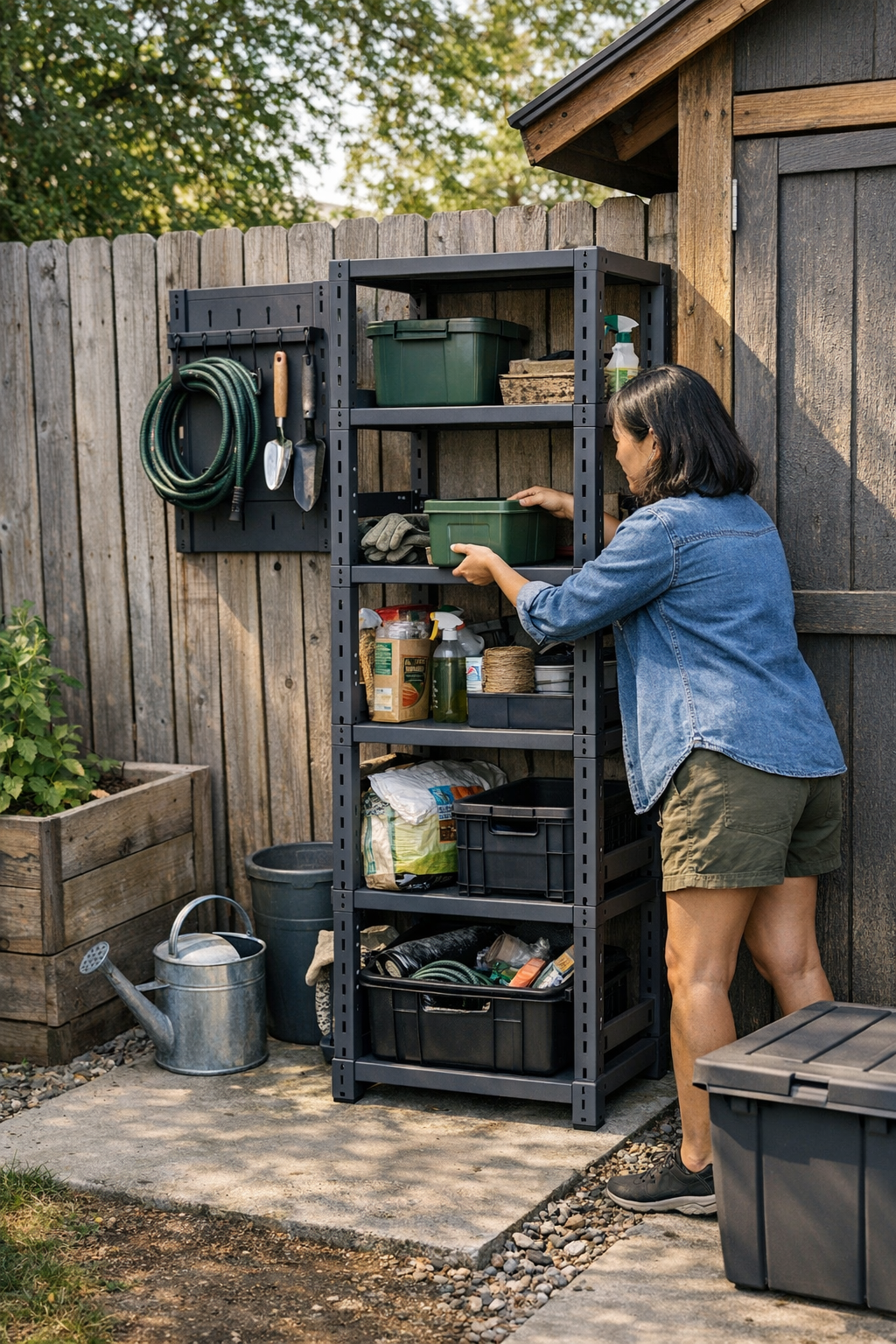
That empty strip of wall or narrow gap by the closet looks perfect for a tall slim storage tower—until you live with it for a week. At first, the extra shelving promises order, but daily use exposes weak spots: upper shelves go untouched, lower tiers collect whatever doesn’t quite fit elsewhere, and before long the “organized” tower is another bottleneck in the routine. Vertical space alone doesn’t solve storage problems; in real life, you notice the same annoyances crop up, just stacked higher out of reach or pressed further into corners.
Where Tall Slim Towers Help—And Where They Fall Short
These thin, vertical units seem ideal for squeezing storage into leftover wall space near entryways, closet ends, or beside the bathroom door. The theory: you get more shelves and less wasted floor area. The reality: after days of actual use—especially on busy, high-traffic mornings—the friction shows. Anything placed above eye level fades from reach and memory. Bottom shelves fill with overflow, mixing shoes with scarves or bags nobody wants to stoop and sort. Instead of organizing, the tower now absorbs clutter you can’t or won’t put anywhere else.
This isn’t a discipline problem. It’s built-in friction:
- High or deep shelves slide into being dead space, only reached for seasonal or rarely used items.
- Tightly packed shelves turn quick retrieval into awkward shuffling, especially for things you actually use daily.
- Deep shelves look generous but end up hiding things behind the front row. Soon, the only way to find that missing glove or umbrella is to empty two other shelves first.
So while the tower looks like it can “hold a lot,” real-life use divides the unit: some shelves are overworked, others ignored. Suddenly, half the tower is just there for show.
Everyday Routines vs. Storage Tower Reality
Picture this: you install a tall slim tower right by the door, hoping to tame hallway clutter. First day, it works—each bag and pair of shoes in perfect order. But by Friday, the system has buckled: easy-to-reach shelves overflow with daily shoes, jackets get jammed in the center, loose scarves retreat to the bottom, and upper shelves are undisturbed except for the dust. Good intentions get swamped by routine:
- You move the same boots twice just to get your gym bag into place.
- Only the shelves roughly at standing reach see daily action; anything higher or lower sits untouched for days.
- Categories slip: umbrellas mingle with backpacks, gloves migrate to strange baskets, and any attempt to “reset” means pulling half the contents out first.
In tight spaces, these losses add up. The “quick grab” routine turns into dodging, bending, and reshuffling. Instead of freeing movement, the tower becomes one more obstacle—not a help, but a slow, movable bottleneck in your path.
Why “Looking Organized” Isn’t Enough
Freshly emptied or restyled, most tall towers look sharp. But the test isn’t how clean it looks on day one—it’s how well you can actually put things back without creating new work. If drop-off and retrieval aren’t instant, resets take longer, corners fill up, and items creep back onto the floor. Well-dressed shelves soon slide into a sort-and-shuffle cycle that costs time every week. A storage solution that’s only organized when it’s empty usually signals the core problem: flow, not space, is what’s missing.
Small Adjustments, Big Difference
Fixing this isn’t about squeezing in another shelf. It’s about aligning the structure with the way you actually reach, move, and reset. For instance, moving a shelf up or down by just one slot—to where your hand naturally lands—can turn a “dead zone” into the shelf you use every morning. This adjustment stops crowding at the bottom and makes it easier to sort at eye level, cutting out the constant bending or overreaching.
It’s not about maxing out storage but about reducing friction. When the tower adapts to your reach and return flow, you spend less time reshuffling—and less energy sidestepping overflow piles or digging for lost things at odd heights.
Questions to Quietly Test in Your Own Space
- Do you have to move something else every time you put an item away?
- Are top and bottom shelves gathering overflow you never bother to sort?
- Can you walk by comfortably, or are you always stepping aside?
- Does one shelf turn into a magnet for whatever doesn’t fit elsewhere?
Spotting these pressure points reveals exactly where your tower works—and where it’s failing you. Instead of rushing to fill shelves, experiment with spacing first. Use prime, easy-reach shelves for daily items; relegate high, deep, or tucked-away spaces to what you almost never need. Skip narrowly stacked shelves unless you’re fine with constant shuffling and category drift.
Wall-Mounted vs. Floor-Based: Impact on the Routine
Wall-mounted towers offer a way to keep floors clearer, which matters in tight halls or small bedrooms: less underfoot means no bumping or tripping. But every advantage depends on measurement—if daily-use shelves end up too high or too far back, out-of-sight quickly becomes never-used. Floor-based towers are sturdier for heavier things and adapt better to shifting needs, but only if you can actually walk around them; even a small shift can block traffic, forcing a detour 20 times a day. Every inch of placement counts when movement is tight and routines repeat.
Reset Without the Chore—Making Zones That Work
The best tall towers learn from repeated reset, not a perfect first setup. Strong setups share three traits:
- Shelves match where hands naturally reach—ignoring unused height in favor of practical return flow.
- There’s enough vertical space to pull or drop something back without shuffling everything else.
- Deepest shelves are used for containers or bins that contain a single category, not as open dumping grounds buried behind daily-use items.
Even small misalignments—an inch too high, a shelf too deep—compound into daily frustration and longer resets. The tower is working when you reset without friction, not just when it stands empty and neat.
A Useful Real-World Reset Tip
Before you load up your tower, mimic a week’s flow: place, retrieve, and “reset” a few imaginary cycles. If you must stop, stoop, or move around another item during this drill, that’s a cue to reconfigure the shelves before real habits crystalize and block easy use.
The real job of a tall, slim storage tower isn’t to fill a blank wall with shelves at all available heights. It’s to absorb the brunt of daily movement without introducing new bottlenecks—by matching shelf position, depth, and return flow to the way your home actually runs, not just how you hope it looks on clean-out day.
For storage systems designed to make your everyday routines easier and your inside spaces calmer, visit Gridry.