
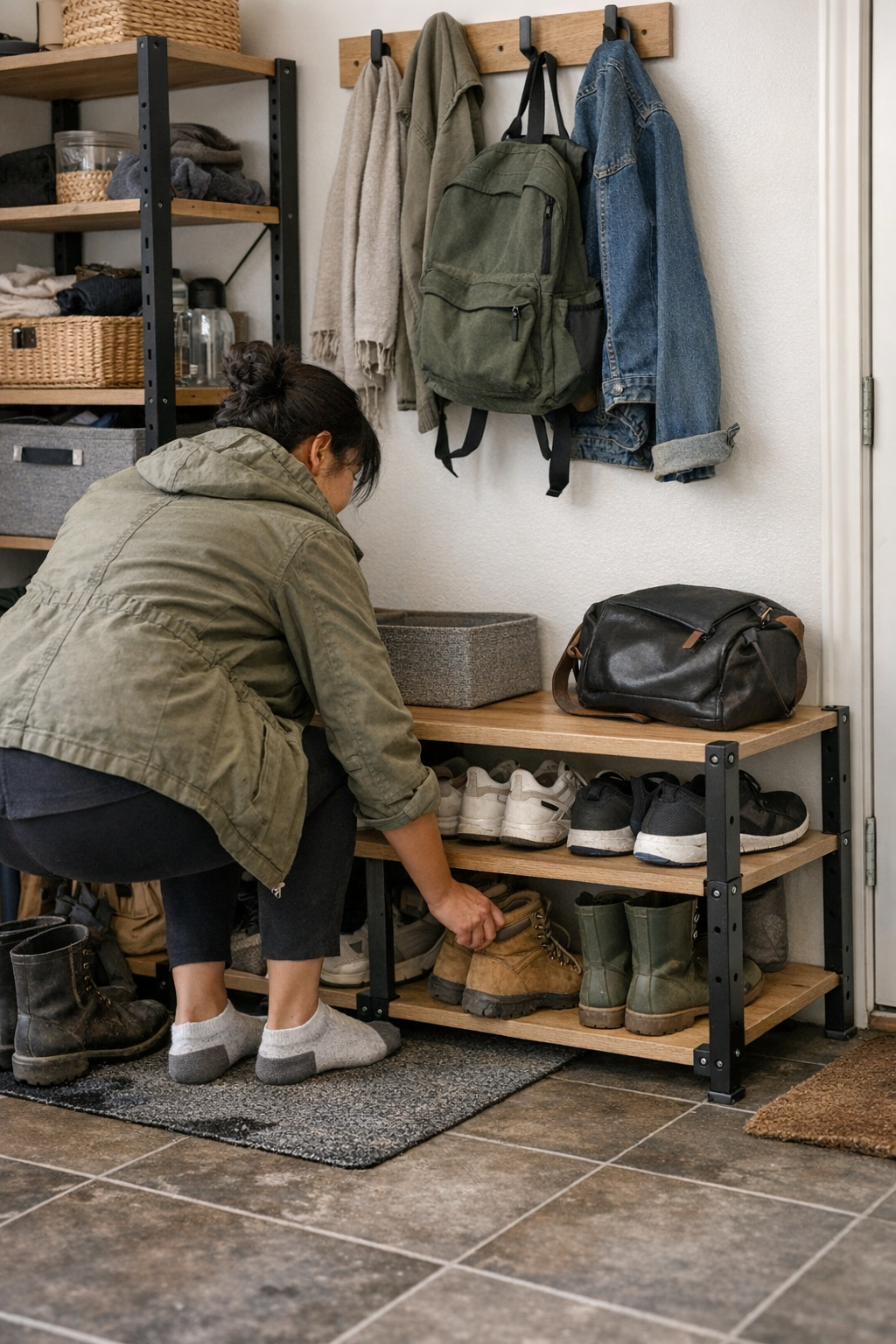
Every household with an entryway bench or shoe rack knows the cycle: The system looks sharp for a few days—until real routines hit. Bags go up, shoes come off, hooks handle more weight, and by week’s end, movement through the threshold starts to jam. A bench edge wobbles. Shoe racks loosen, rows blur, and hooks tilt as backpacks pull harder than the hardware wants to handle. It’s not just mess—it’s daily disruption. The underlying issue: storage joints drift or fail when exposed to the sideways pressure and constant motion of real, repeated entryway use. That first moment something shifts, the promise of a controlled transition zone starts slipping away, turning reset into repair.
The Problem Hiding in Plain Sight: Shifting Joints and Daily Drift
The subtle creep of loosened storage is easy to miss—until it turns keeping order into extra work. The typical rundown: you drop your bag, toss your shoes aside, hang a coat, and hope the setup absorbs the shock. But transition-space storage built to be modular or tool-free rarely stays rigid. Each sideways shove and quick drop—barely noticed in the moment—forces joints to flex. What starts level and aligned goes off-plumb. One morning the rack has a gap; one evening the whole bench feels tilted. This slow drift collects: shoes spill into the path, lines collapse, and resets drag on as you realign what was supposed to save you time.
The Visual vs. the Actual: When Looks Backfire
Easy-assemble benches and mobile shoe racks grab attention on day one. They fit against any wall, slide into open corners, and promise instant organization. But real use exposes a different story. Over a week or two—sometimes after just a weekend of real traffic—you’ll notice:
- The bench nudging too close to the swing of the door, forcing a shuffle at entry.
- Shoe racks creeping outward, shoes scattering past their line and into walkways.
- Hooks or shelves pulling at their anchors, breaking up categories and feeding clutter instead of containing it.
Once storage flexes or drifts, temporary items linger—one pair of boots left out becomes a magnet for bags or coats, and what was meant to be a staging zone collapses into a semi-permanent pileup. The threshold doesn’t just look untidy; it slows everyone down, breaking the promise of a quick reset.
Real Moments: Where Threshold Storage Breaks Down
The shift from anchored storage to mobile units reveals itself in daily friction, not at unboxing. The cracks appear in the ordinary moments:
1. The After-Work Pileup
Weeknights bring repeat pressure. Everyone piles shoes, slings bags, and drapes outerwear—quickly crowding a portable bench. Sit to tie a shoe and the unit shudders, sometimes shifting so much that you have to stop, drag it back, or restack the fallen row before the aisle clears again. What looked like a neat solution now trips up the routine.
2. The Weekend Reset Spiral
What used to be a two-minute clear-and-restore turns into a multi-step shuffle. You realign the shoe rack, nudge the bench, pick up scattered items, and still find that things look off—because the storage itself can’t hold its ground. Sweeping or mopping becomes awkward as units skate across the floor, undoing any order gained just moments earlier. Cleanup that should be automatic now depends on wrestling drifting furniture back into place.
3. Door Blockage and Traffic Jams
The most persistent culprit is subtle migration: a bench inching into the door’s path, forcing each person to sidestep—or worse, nudge shoes deeper into the walkway. In tight entryways, losing even a half-inch turns passage into a test of patience. Over a few days, misalignment multiplies: stored items spill wider, foot traffic narrows, and the quick in/out flow is quietly interrupted by stuff that will not stay in its place. The whole point of the organizing effort—making movement smoother—gets erased by stealthy drift.
Why Anchored Storage Holds Up Under Real Routine
Stability in transition spaces depends on real connection. Wall-anchored benches, doweled cabinets, and bracket-mounted shoe racks take more effort to install, but they change the stakes for everyday use. Anchored storage stands up to repeat stress: bags land hard, shoes scrape forward, kids push or pull, and the structure absorbs the force instead of passing it along as wobbles or gaps.
Example in Practice: Replacing a loose bench with a wall-mounted, bracketed unit changed the cycle overnight. Shoes stayed put even during family rush-hour, bags held their zone, and quick resets became routine—no more detours to straighten sliding storage or untangle shoe rows. The anchored structure kept its line, giving everything else a chance to return where it belonged no matter the weather or how crowded the threshold got. Resets were about actual tidying, not recovering from slow system failure.
Testing for Trouble: How to Spot Weak Joints Early
Most new storage feels steady, but repeated use tells the truth. To find weak points, run a check: press down or wiggle the edge of a bench or rack. Pay attention to:
- Wobbling or rocking? Indicates play at the joints that will worsen with use.
- Creaks or joints needing monthly tightening? Hardware is giving out under normal load.
- Gaping where joints once fit flush? Ongoing stress is bending the structure beyond its limits.
Anchored units almost never show these issues under daily use, and if they do, it’s usually a quick fix—not a cycle of constant repair or adjustment.
When Mobility Makes Sense (and When It Backfires)
Mobile or modular storage has its place—temporary setups, light use, or situations that change often. But in real entryways with multiple users, kids, weather cycles, or gear-heavy days, mobile units shift the reset burden directly to you. The flexibility that feels smart at first becomes upkeep you never signed up for: more resets, more straightening, more time spent fixing the zone between living space and everywhere else. Anchored storage may cost an extra hour to install, but wins it back dozens of times in skipped hassles and stable order.
Toward Smoother Routines: Anchoring for Real-World Use
Entryway storage shouldn’t measure its success by how clean it looks when nothing’s happening. The test comes during a week of actual life—bags flying in, shoes changing daily, guests crowding the space, rain or grit underfoot. Storage that creeps or slips just adds to the routine’s friction; storage that holds its line quietly resets itself. The payoff is speed, predictability, and a zone that works with you instead of asking for constant correction. Don’t settle for a setup that only looks right once. Choose the version that handles reality—so you don’t have to rebuild order after every use.