
That tidy treat jar by the food mat feels smart—until day three, when your cat’s meows hijack your entire morning routine. In theory, a visible snack spot should streamline everything: you reach, reward, move on. But indoor cat life isn’t theory. That jar may match your kitchen, yet after a couple of mornings, you’re refilling it earlier and bracing for relentless reminders. You bend to wipe spilled kibble or grab a napkin, and the sound triggers a rush: paws on counters, eyes locked, volume up. What looked organized now builds friction—more interruptions, more vocal demands, less actual calm. Too accessible, and a single setup tweak keeps splintering your day in small, persistent ways. The promise of tidy storage slips into another maintenance headache you didn’t need.
When Treats Stop Rewarding Calm (and Start Fueling Vocal Demand)
It starts quietly. You want treats ready at hand—maybe beside the food tray, maybe on a reachable shelf. Simple enough, until the routine turns. By day four, the treat jar becomes a signal, not just a container. The cat starts treating the spot as a trigger—a slight clatter or hand motion sparks urgency, not patience. Early risers notice first: the kitchen’s rhythm is dictated by meows before the coffee even starts. Those reminders ramp up; a visible jar teaches the cat that demand, not silence, gets results. Instead of the treat being a rare reward, you end up reinforcing every prompt. It’s not personality. It’s a feedback loop built into your living space.
This shift isn’t just about noise. A setup that felt efficient turns the room into a negotiation zone. You lose control over timing. Every time you pass the jar or reach across the counter, you’re drawn into a new standoff. Quiet anticipation gets replaced by habit-formed interruptions—your after-work reset, your short pause between chores, even your evening routine. Normal movement becomes bargaining. One setup choice sets a pattern: accessible treats, in plain sight, mean the day starts breaking before the first real task is finished.
The Hidden Cycle: Visibility Breeds Interruption
This is pure cause and effect. Cats notice every micro-movement: did you open this jar right after picking up your mug? Did you drop treats last time you walked by? They log these patterns fast. Soon, the treat container isn’t just a background object—it’s a cue that warps the entire room flow. Instead of mealtimes, you get opportunistic reminders every time you cross the kitchen. It’s a hidden cycle: the more visible and handy you make the treat zone, the more you teach your cat that anything can be turned into a snack request.
The supposed convenience costs you peace. The treat setup calls the shots: louder reminders, more interruptions, tasks sliced into smaller segments because you’re managing the next round of begging. Usually, it takes three countertop sweeps—or just one late-night treat session—to realize your own routine is being run by a container. Instead of structure, you get a schedule shaped by interruption. “Organized” turns out to be a temporary look.
Setup Friction in Real Rooms: Small Choices, Big Consequences
No, it’s not your cat “acting out.” The problem is the setup—a practical home structure that backfires. Visual placement matters more than style. A spotless jar in a busy visual line (by walkways, on top of food mats) turns organization into a magnet for disruption. It’s the home flow that suffers: quick stops for water, reaching for a cleanup cloth, or just passing the fridge start launching new demands every time. The treat system reprograms routines, even when everything looks put together in the morning.
Consider the reset cycle: You’re prepping breakfast, hand darts past the treat jar, the cat yowls—now you’re pausing, negotiating, scrambling for quiet. You didn’t plan a snack break, but the accessibility of the jar has just written one in. One movement, two minutes lost, three minor tasks derailed. That’s the self-reinforcing part: the easier the reach, the more disrupted your regular steps. Organization can mask a loop of micro-interruptions that only become obvious after the third—or fifth—reset.
The False Sense of “Organized”
At first glance, the jar by the food mat sells a picture of order—clean, coordinated, within reach. For three days, it almost is. Then the cat parks itself in the kitchen, watching, tracking your every gesture. A quick hand toward the counter sparks a call; leaning for coffee summons a stare. In theory, the room’s tidy; in lived reality, you’re stuck in a loop of shuffling the jar left, right, back behind something, hoping you can trick the system back into silence. The “tidy” corner becomes a moving target, impossible to settle.
The Evening Reset: When Treat Placement Hijacks Quiet Time
And it doesn’t stop with breakfast. You’re ready to stop for the day—drop into a chair, reach for a blanket—and the jar, still visible, sets off a whole new round. One tap, a chirp, a yowl: your reset hour flips into a soft-motion bidding war. Evening calm gets split by one physical cue left in the wrong sightline. Your attention shifts from unwinding to managing the next expectation. Instead of peace, you get small rations of focus, traded again and again for quiet that never really lands.
The problem isn’t even the volume—it’s the chronic adjustment. Your routine bends to the placement, the interruption, the attention shift. What was supposed to be a neutral background item now runs the room’s tempo. Cat and person both shape their habits around a misplaced jar, until every break and pause is a chance for a new demand.
Breaking the Cycle: Hiding the Jar, Restoring the Rhythm
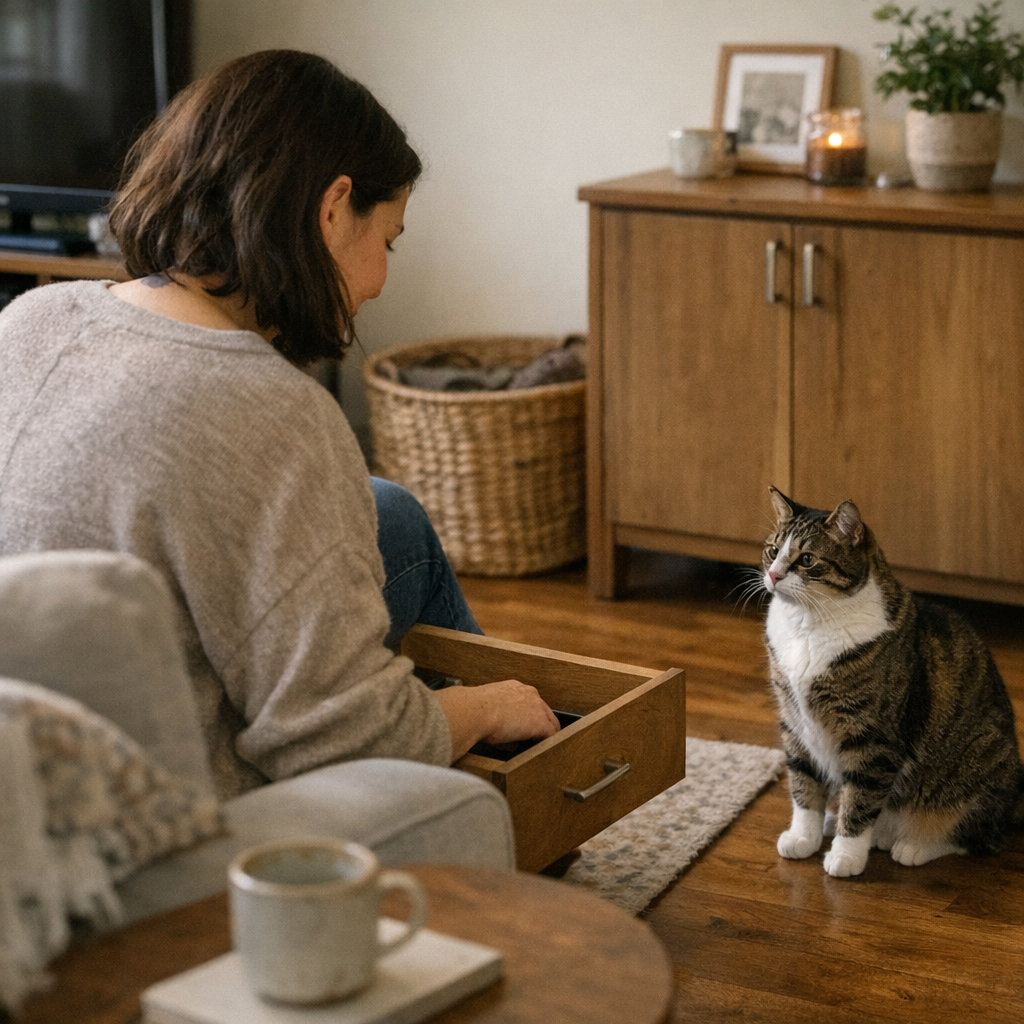
In real homes, breaking the demand cycle comes down to changing one structural detail: visual control. Shift the jar out of direct sight—into a drawer, a high cabinet, a spot behind something less cat-enticing. You’re not locking away the treats forever; you’re cutting off the reflex chain. Suddenly, a meow gets no echo. No jar periphery, no quick hand flick, no predictable shake. After just a few tries, the cat’s reminders lose their edge. Instead of pausing your routine each time, you move through the kitchen cleanly. By the end of the week, the new normal is less pressured, the old loop broken. Treats are still there for real rewards, but not on the cat’s constant terms.
The benefit isn’t just quiet—it’s a smoother day. Now, a routine is just that: not a series of negotiations, but a flow you actually control. The little friction you add—an extra step to reach the jar—pays out in hours free of repetition and distraction. The home doesn’t just look calmer. It stays that way, for both sides of the food bowl.
The Slightly Inconvenient Drawer (and Why It’s Worth It)
Sure, stashing treats in a drawer turns a quick grab into a short pause. But the change flips the room’s dynamic. Less noise, fewer mealtime shadowings, and a treat ritual that regains its status as a reward—not a standing negotiation. One changed physical cue is enough. After a week, the cat waits during meals instead of every step. You control the rhythm, not the jar. The minor extra reach is real; the payoff is space for everything else that matters in your day.
Room Flow, Clutter, and Treat-Driven Interruptions
This treat tension is only one part of the broader setup cycle in indoor-cat homes. Leave litter scoops too close to beds, or water bowls tucked behind towels, and clutter trades places with daily flow. Every “neat” corner can be a stress point if its placement invites the wrong use at the wrong moment. The best setups aren’t just visually ordered—they’re tested by how little they interrupt you. The difference isn’t in how things look after a reset, but how the space behaves after you’ve repeated your routine twenty times. Convenience that triggers constant action is a hidden cost; structure that guides calm, easy resets holds up better in real use.
The practical rule: a better home setup isn’t just about what’s tidy—it’s about structures that make less friction, less reshuffling, fewer reminders, and more room for genuine quiet. The setups that feel easy after the first week are the setups that quietly reduce pressure, restore forgotten calm, and let you own your routine again—without a new interruption every time you cross your own kitchen.
You can find practical, real-world setups for every daily cat-and-human routine at StillWhisker.