
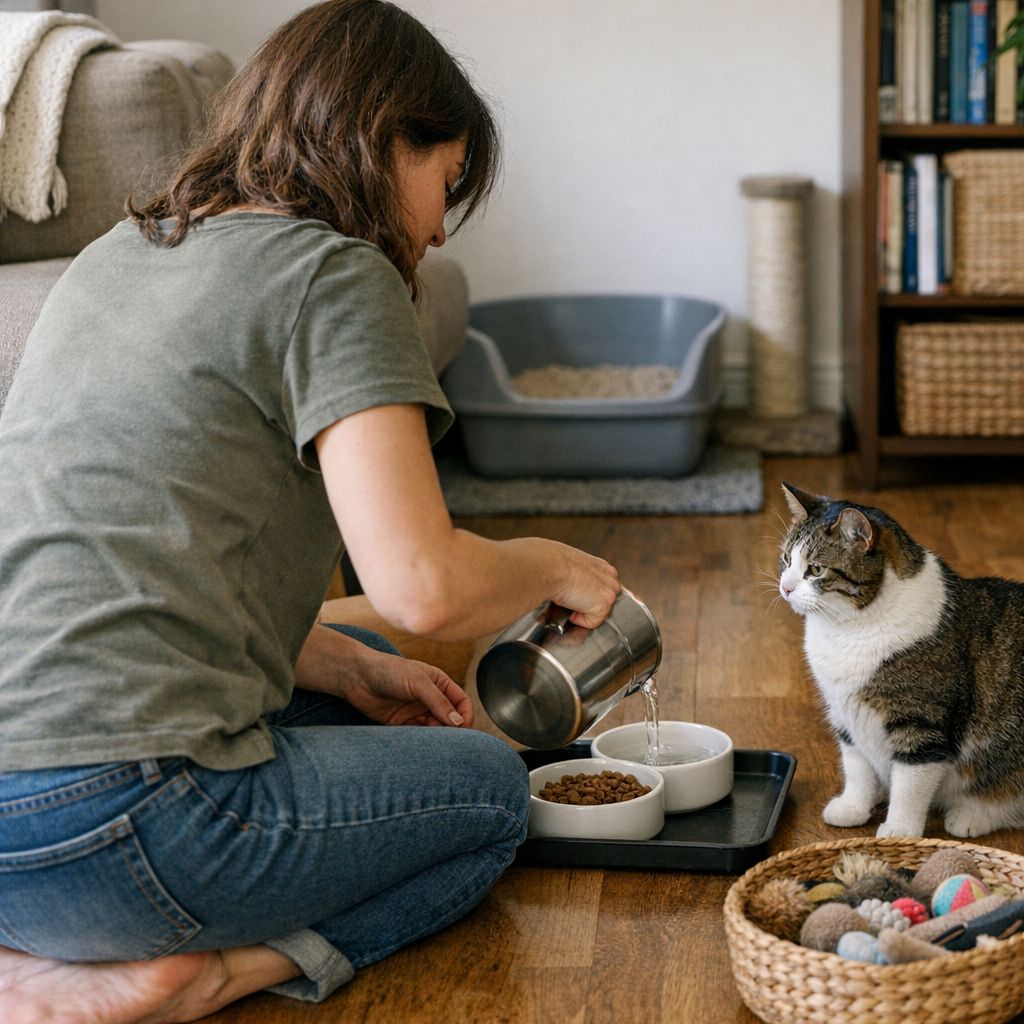
A cat feeding area can look stable—a pair of bowls straight against the wall, the litter box tucked behind a chair, toys stacked neatly in one corner. But if you actually spend your days refilling bowls, scooping litter, and stepping over cushions, the hidden friction surfaces fast. Refilling a water dish turns into a wrist-twist around a cabinet, cleaning means dragging bowls back to the right place, and even a simple toy return ends with a crawling search under the sofa. A setup that looks “together” for a walkthrough breaks down the minute your routine hits the same snag three times in one week. That’s where StillWhisker’s world of trays, catch mats, and sensible structures starts to matter—because real relief shows up not in the first hour, but the fiftieth reset.
When “Looks Tidy” Isn’t the Same as “Works Smoothly”
A clean visual line can actually mean more work, not less. At first, a tucked-in water bowl just seems orderly, but by midweek the bowl has scuffed marks and you’re wiping up a puddle pressed tight against the trim—harder to reach, slower to dry. That same toy basket seems fine until favorite toys migrate behind legs and sofas, pulling you into late-night scavenger runs. On paper, nothing looks amiss; in practice, it’s invisible chores stacked into your evening. Tidy looks give way to high-frequency fidgeting, with just enough extra steps to drag your pace every time you’re supposed to move on.
This isn’t about mess or neglect. You measure your space, lay out mats, and press the box flush with a wall—only to sweep stray litter into the hallway again, nearly every morning. Some setups look organized at first glance, but friction shows up in each moment you hesitate or do the same reset. Water bowls nudge out just far enough to need a whole wipe-down, mats catch most but not all of the litter trail, and every shortcut adds a detour next time you walk by. Small signals add up fast.
Friction Repeats: The Difference a Real-World Setup Makes
What most owners face isn’t a battle with clutter—it’s a daily grind with their routine’s weak points. Litter mats that never hold enough, water bowls always drifting, toy collections breaking formation by day’s end. These aren’t single missteps, but source points for routine micro-stalls. Instead of flowing from feeding to clean-up, you zigzag around new mess or misplaced supplies, doubling back after every pause. Over time, even the cleanest-looking setups start costing you: more interruptions, more sidesteps, more overlaps in the routes you walk most.
Spotlight on Daily Snags
- Bowl traffic jams: Water bowls slide just far enough into your path that you need to move them before refilling, drying, or wiping around them.
- Litter creep: Mats promise coverage, but grains still escape—showing up in the next room, or working their way into your socks.
- Toy migration: “Contained” toys disappear under furniture, forcing crouches and stretches for recovery on repeat nights.
- Shared space slowdowns: Mats, cushions, or scratchers drift into walkways and prep areas, demanding more sidesteps during daily routines than most setups admit.
What’s minor at first becomes background stress. You pad your day with tiny check-backs—one more scan after feeding, or a dustpan run after resetting the mat—just to prevent the same mess creeping further. A “neat” room extracts a quiet upkeep tax.
Room for Improvement: Recognizing Setup Weak Points
Even the best intentions can fade fast. Organizing bowls on a kitchen mat or tucking away the litter box works until a cushion becomes a blockade, or you start stacking bowls and toys for every single refill. The real cost? When a five-second cleanup turns into a whole string of micro-moves—shifting a rest mat, lifting bowls, pushing toys aside each time you run the reset.
The “Reset” Problem
How often do you find yourself putting the same things back, over and over, even after rethinking your layout? Frequent resets are not a personal failing—they point to a setup that quietly asks for too much correction. Good organization lasts through the day; a setup that demands daily rebuilding is leaking time. The best structures don’t just look settled—they cut off the spiral of resets by making each routine stick without fidgeting.
Contrast: How Small Adjustments Change the Feel of the Room
Minor placement changes can flip your experience almost overnight. Move bowls from a mat to a tray with a shallow lip and you stop cleaning up after every refill—drips stay contained, and nothing sticks to the floor behind the bowl. Place the tray not jammed by the wall, but just out of the walkway, and now both you and your cat reach it freely—no more stretching over baseboards or maneuvering around cabinets. It isn’t new gear, it’s structure applied right where the old “look” failed in use.
Same for toys: one basket—positioned in easy arm’s reach but out of the walk zone—turns retrieval from a nightly crawl under chairs into a fast drop-in. The “scattered toys” look becomes a predictable, painless pickup at the end of each night. Neither a bin nor a mat is magic, but each shifts the routine from scavenging or stooping to a single step that holds, day after day.
Litter Setup Realities
Litter management is a stress test for any setup. A mat that lines up visually with the box may still miss where your cat exits—if the mat’s light, it shifts, if the grain escapes, you’re chasing bits across tile and carpet weekly. Even a slight reposition—pulling the box forward, separating it from a cushion, or setting the mat heavy side-down—can mean the difference between a cleanup that takes seconds and one that starts a chain reaction into the next room. A neat first placement means little if every scoop starts with dragging something else out of the way.
Shared Space Is Living Space
Cat comfort can quietly claim more of your life than you expect. Rest mats migrating into the hallway, feeding bowls inching closer to the kitchen path, or scratchers edging toward high-traffic corners—all eat into the liveable part of your day. A setup shouldn’t make you trade real comfort for constant rerouting. If you find yourself adding extra sidesteps or repeated micro-adjustments, the comfort zone may be working for your cat, but it’s costing you flow. Stable structure beats invisible buildup. The real win is keeping overlap rare and easy—not just out of sight.
Cleanup and Access: Supplies When and Where You Need Them
Fast resets depend less on supplies and more on reach. If wipes and a small dustpan are out of sight or across the room, even the best equipment goes underused. A low, open container positioned next to the main friction point—right by the litter exit or under the feeding tray—makes cleanup a one-step act, not another roundtrip. The key: place, don’t store. Rely on speed and proximity to turn what used to stack up for later into part of the routine as it happens.
Testing for Real Usability: The Everyday Stress Test
Your setup works for you only if it saves time and movement, not just looks clean. Notice the sticking points:
- Are water or food bowls always in arm’s reach, or do you twist around the same barrier each refill?
- Do toys land in their spot on the first try, or do you hunt for strays mid-cleanup?
- Does litter travel stop at the mat, or make its way to the next room thanks to one missed corner?
- Is there a spot you sweep daily that never stays clean, no matter how many times you try?
Repeat hesitations and detours expose which part of your structure isn’t working. These aren’t dramatic failures—they’re the micro-losses that keep stealing comfort and time right out of your day. Spot them early and the path to better routine is obvious.
Making Practical Adjustments That Last
Improvement is not about a complete overhaul or a pretty new bin; it’s about fixing the choke points that demand attention again and again. Simple structural moves make the biggest impact:
- Bowls grouped on a lipped tray, clear of main walkways but not buried—making refills, cleans, and resets one movement instead of three.
- Toys collected in a roomy, visible basket—no crawling on the floor, no pile-ups in shared zones, just a fast drop and done.
- Litter mats chosen by your cat’s preferred exit, not only by shape, with placement that avoids moving other items to scoop or sweep.
- Daily-use wipes and tools in plain sight, set at trouble spots where cleanup wants to happen—never buried “for neatness.”
If your routine still feels clunky,