
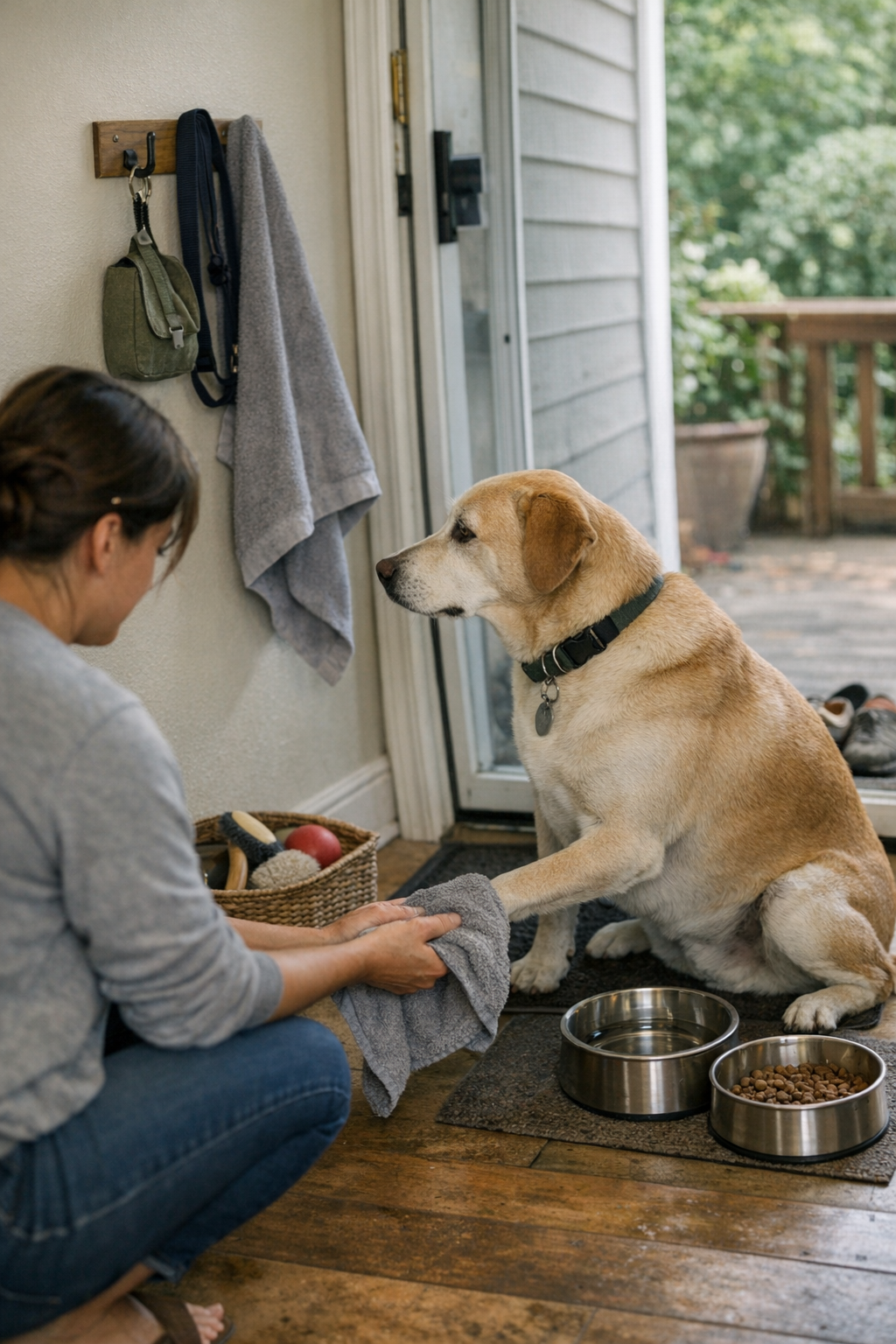
On paper, a pet care space looks ready—bowls lined up, towel folded, leash in sight. But put the setup to work, and the cracks show fast. Every dog owner recognizes the moment: your hands are busy, your dog is already halfway inside with wet paws, and the towel you counted on is missing. Or you bend down to fill the water bowl, only to realize it’s dry because nobody remembered the last refill. In theory, these are simple fixes; in real life, the smallest gap in routine keeps returning at the worst moment. The CalmPetSupply world starts where most neat setups fail—repeated use, fast resets, and last-minute friction that never really goes away unless the basics stay visible and reachable.
Repeated Friction in Daily Routines
Most setups work until the first real rush. A food scoop slides behind dishes, a towel that started by the door ends up across the room, the cleaning spray sits just out of sight—or buried behind shoes. You’re not dealing with single accidents, but the quiet annoyance of pausing to find what you need whenever the pattern repeats. These aren’t flukes: the more often you use the space, the more the missing or misplaced basics interrupt the supposed “flow.” What feels organized at 8 a.m. looks scrambled by noon.
When the Routine Slows Down
The breakdown hits exactly when time matters. You’re leaving, hands full—leash, waste bags, your own keys—and pause for muddy paws, but the towel is somewhere else. Or you scoop dog food, only to find a crusted bowl from last night and another pause while you make it useable again. Water refill becomes a juggling act because the bowl shares countertop space with a bag of treats and yesterday’s mug. Routine hardship isn’t dramatic—it’s the persistent drag of starting and stopping. Every two-minute job picks up two extra steps, and the dull frustration builds.
The Unseen Cost of “Good Enough” Organization
The Sunday-night reset, the lineup of “essentials”—both deteriorate as days roll on. Tools drift. A brush ends up in the catchall tray, the leash joins a pile near the shoes, toys shift under the couch or coffee table. By Thursday, the once-tidy setup takes an extra minute for every basic task. Wiping paws, finding the scoop, grabbing the leash—all become scavenger hunts, not reflexes. “Good enough” order hides new points of friction: mess piles up, steps get skipped, and real routine demands expose the weak link over and over.
How One Simple Change Reduces Strain
The turning point almost always comes from placement, not aesthetics. Mount a towel hook exactly where paws meet floor—now the right towel is always there, not drifting or damp or doubled as a dish rag. Bowls stacked by the door, not a cabinet—suddenly water is easy to dump, wipe, and refill. The leash on a visible hook ends the scramble through jackets or the mail heap. These are not upgrades for neatness—they’re anchors for speed and endurance. Every micro-delay you cut is one more routine that stays on track, instead of collapsing into improv and mess.
The Difference Between Tidy and Functional
A pretty surface doesn’t hold up under rush or fatigue. Bowls out of the way do nothing if you have to walk across the room for the next meal. A grooming brush on a shelf means nothing if you skip a quick brush midday because you dread climbing for it. Supplies that blend into the décor often vanish when you need them most—turning a five-second task into another round of searching. Function means each tool actually supports your real routine, not just your sense of order.
Scenes from Real-Life Routine
Monday morning, your dog sits by the door—leash in hand, bowl still grimy from last night, cleaning spray hidden behind the coffeemaker. The towel is missing. After the walk, you’re left juggling a muddy towel, half-closed bins, leash, and an impatient dog—none of it resetting fast, even though it looked organized at the start. By midweek, it’s clearer: tools are never back in place, feeding means hunting for the scoop, the reset feels more like a daily rescue operation than a routine. The “ready” space is a memory by Friday.
Habits That Hold Up—Not Just Look Good
The real lasting fix is physical boundaries. Visible hooks for the leash and towel, a bin that always holds every brush, a canister for kibble right at arm’s reach—these are setups that stop the daily drift. Efficiency builds quietly: you reach for a towel and it’s always there, never ask where the leash went, refill without detouring around kitchen clutter. Each fraction of effort saved in the background means fewer interruptions, less tension, and a routine that doesn’t need constant rescue.
Why Repeated-Use Resilience Matters
Pet care setups fail or succeed in the grind of repeated daily use. Surface order fades fast under real pressure. Systems that give you what you need within reach—every time—shrink mess, slash delays, and keep the day moving. It’s not just less visible mess; it’s a routine that works even when your patience is thin and the clock is ticking. Your setup should deliver stability not just on the most organized day, but every rushed, mud-splattered, late-evening reset that dog and owner go through together.
For more insight into practical daily pet care, visit CalmPetSupply.