
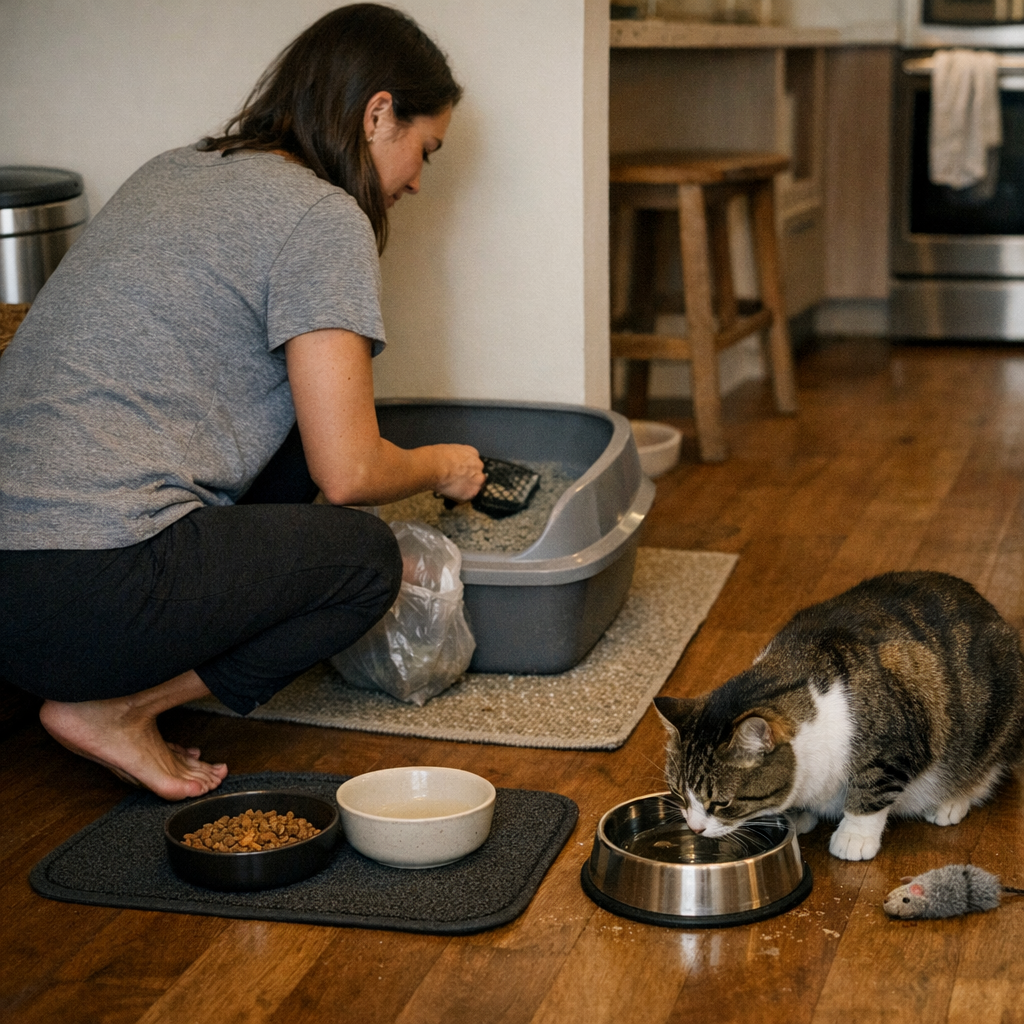
The difference between an indoor-cat space that looks organized and one that actually works is painfully clear the second you reset after breakfast. The bowls seem lined up, the mat looks fresh, but you’re already nudging scattered kibble off the edge, bending to reclaim a hacky toy from under the couch, or spotting new litter grains escaping the box with every cat lap. What passes for order at early morning inspection falls apart by noon—splashes spreading past mats, bowls drifting out of place after each refill, supplies always an arm’s reach away right when messes show up. A cat setup that looks sorted can still put you five steps behind, stacking annoyance with every cycle and dragging down the day’s flow. The real pressure isn’t in how the setup looks at rest—it’s in the small, repeated failures that turn every routine into a slow war of resets.
Why “Neat Enough” Setups Drift Off Track—Fast
No one chooses a daily routine built on patching up cat zones—but that’s exactly what happens when setups stop at surface order. A visually neat space collapses quickly when its logic fails under repetition. It shows up every time you reach for a bowl and shoulder another aside, or when you come back for the scoop only to find it stranded on the wrong shelf. If every refill or wipe-down asks you to untangle mats, step over gear, or retrace steps, the routine multiplies friction instead of removing it.
The failed promise isn’t visible at first—only after enough cycles do you spot the peripheral scatter, the edge puddles never caught in time, the “big enough” mat that always seems to miss the real aftermath. These aren’t big messes but ongoing slow leaks: seconds and steps that add up until the cat’s stuff feels like it controls your schedule. Instead of just feeding or cleaning, you’re reorganizing on repeat.
Daily Reset Friction: Where Annoyance Emerges
Scattered Food and the Endless Mat Shuffle
The standard feeding zone—bowls nested on a mat, corners swept, everything in alignment—looks “solved” for about a day. By round three, crumbs and slush outpace the mat’s rim, turning each refill into a full shuffle: mat scooted back in place, crumbs brushed sideways, bowls re-nested after another food attack. The “quick feed” turns into a multipart reset—again—before you’ve even uncapped the bag.
Litter Drift That Creeps Farther Out
Litter setups break down on repeat use. A mat might corral the first footsteps, but grains soon leap beyond the intended line—especially if the box empties into a busy corner. Each cat exit trails a wider scatter, pulling you into a sweep-and-repeat: here, three steps out, and—on unguarded days—clear to the next room. If the litter sits near any main traffic, the track-out doubles: what started as a “contained” zone becomes a chain reaction across shared flooring.
Water Zones That Blur the Boundary
Water bowls introduce chaos far more quietly. If they share space with the food mat, you’re one excited drink away from a sticky mash of food, water, and debris. Every refill, the bowl drifts a little—and suddenly you’re mopping water that creeps toward high-traffic paths, threatening socks and floorboards. “Quick access” disappears when zones start bleeding together and cleanup loses its boundaries.
When Tidy Zones Take Over the Room—And Your Routine
The corner setup that makes sense at first soon sprawls. Feeding areas edge into kitchens meant for people. Litter corner “solutions” start to overflow, and living room toy spread becomes its own layer underfoot. Give a bowl a few inches’ drift, and soon you’re hauling out the vacuum for crumbs and debris that now dominate the walking lane. The original plan collapses not with one big mess but with gradual, routine creep—nudging you to adjust, reset, and negotiate room use with every round.
Blocked Paths and Shared-Space Slowdowns
Attempting to cluster feeding, water, litter, and rest in one corner can feel efficient—until you start reaching, bending, and sliding everything aside just to perform a basic reset. Each small obstacle multiplies: mat in the way of storage, bowl blocking the litter scoop, a trail that never syncs with where cleanup gear is actually needed. Life in the room shifts from ease to low-level disruption—room for the cat, less for you.
Breaking the One-Corner Habit: What Actually Changes the Daily Flow
The real game-changer? Structural separation—not surface upgrades. Moving just one item can shift everything:
- Offset the water bowl nine inches from the food station. Now, water drips and food debris land on their own mats—not as an inescapable puddle of mush you have to wipe off both zones at once.
- Place the litter box away from major walkways. Tracked grains stall well before reaching the busiest thoroughfares, and you’re not sweeping half the home for one cat trip.
- Use mats sized for the mess, not just the item. A bowl that always pushes over the mat edge? Switch to a mat that extends past where food actually lands—or add a separate one if clutter starts merging the stations.
It’s not “prettier.” But this small split cuts out double- and triple-work in every reset. Less debris chasing, less mat scooting, fewer re-alignments—and a sense that your living space finally holds up to real use.
Managing Mess at the Source: Mats, Placement, and Spill Flow
Choose Mats for the Real Mess, Not Just the Gear
Softness or style makes mats look right, but daily use exposes their actual performance. A lightweight mat slides away; one too small demands constant policing. Sturdy mats with enough border hold the mess where it happens—and if they’re placed away from main walk routes, messes don’t ride out with every step. Run separate mats for each station—close, but not merged. That’s the real leak-stopper, not the design alone.
Reach and Reset: Trim the Micro-Delays
With every daily task—refilling, scooping, straightening—you’ll notice if you’re always blocked by a misplaced item or supply stashed out of instant reach. Tiny shifts work: hang the litter scoop above the box, keep towels or sprays in an open basket right where you stand, choose bowl weights that don’t skate with every refill. These aren’t big changes, but they peel off the seconds and hesitations that drain routines over time.
Shared Home Space vs. Cat Zone: Keeping Both Usable
A working cat setup isn’t a catalog shot. The best ones:
- Break up cluster traps; don’t let one “neat” area turn into a mess-magnet that dominates the floor.
- Use color, mat shape, or surface marker to set clear visual separations between feeding, water, litter, and play—so every person (and cat) knows the map.
- Let each piece settle where it works without demanding you shuffle others first—good placement beats good storage every time in day-to-day survival.
Perfect-looking setups fall apart by day ten. Spaces that separate cat jobs hold longer—they don’t keep re-commandeering rooms or interrupting flow when you least need the extra work.
Cleanup That’s Actually Quick—Not Just in Theory
Reset Should Mean “Done”—Not a Hidden To-Do List
A strong setup makes daily cleanup direct: sweep, wipe, reset—done. The proof? No surprises lurking an hour later. Separate mats and split stations show you what to tackle and stop debris from ghosting into the rest of the home. Deep cleans need less panic; daily resets need fewer double-backs—so upkeep falls to minutes, not half-hour grinds.
Don’t Dress Up a Weak Point. Move It.
Notice where the cycle always trips up: maybe it’s a sliding bowl, or the scatter always escaping one mat. The first impulse is to buy a better style, but what actually fixes the routine is moving the weak link out of collision. Shift the water station out of the food splash zone, upgrade a mat only if it holds firm, store supplies right where the mess starts. What seemed like a constant “cat problem” usually stems from structure, not decoration—and changing setup position closes out the loop of fixes that never quite held last time.
The Setup That Holds: Practical Adjustments for Real Days
The setups that last go beyond looking tidy—they remove repeat friction from daily cat life and make ordinary resets actually stick. When mats, bowls, and boxes live where resets happen fastest—not just where they look straight—the routine shrinks to size, and the rest of your day stays yours.
Explore more indoor-cat setups that don’t give up under real pressure at StillWh