
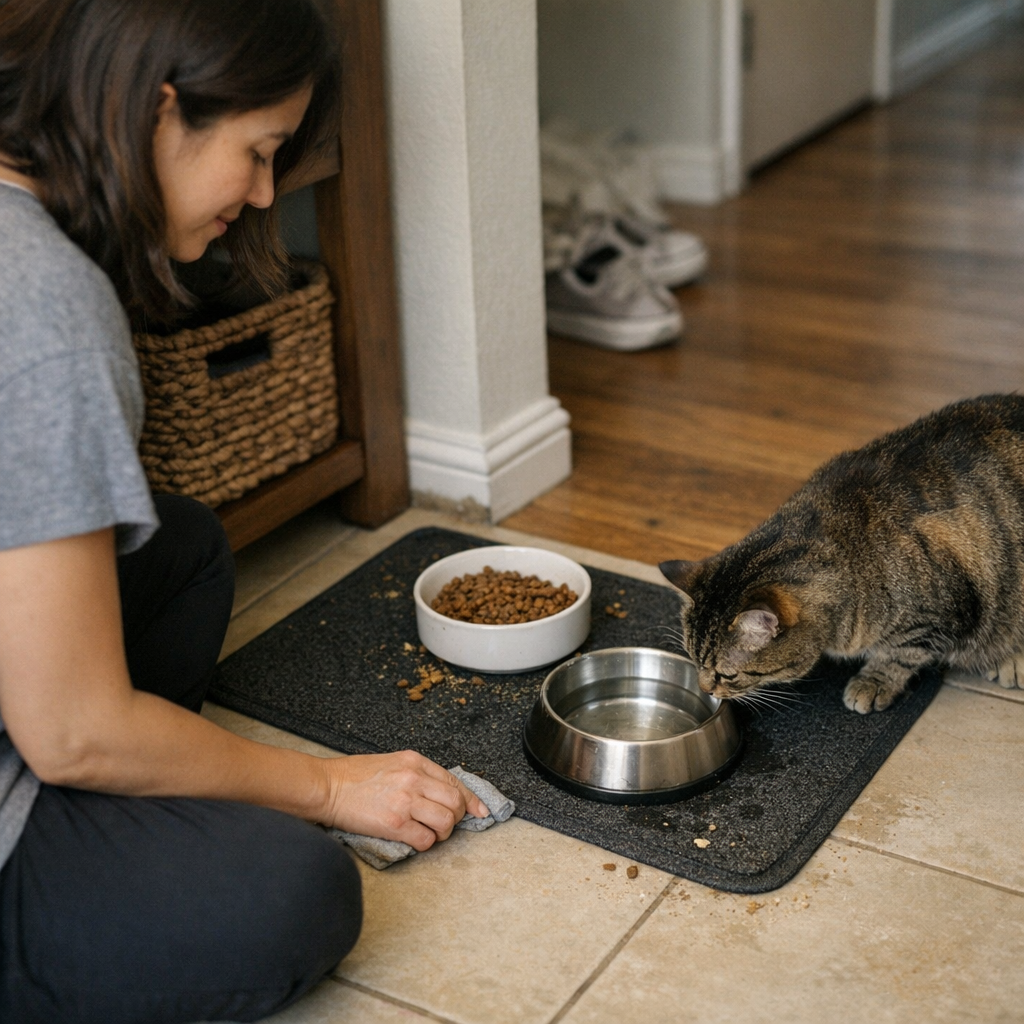
A cat feeding area can fool you. The mat looks clean, the bowl is where it should be, and nothing stands out as wrong—that is, until your socks catch a stray puddle or you kneel down and find a trail of crumbs hiding behind the bowl. The first setup might work for a week, maybe two, but the real test is not whether it looks tidy at a glance. It’s whether the design holds up under repeated use—refills, resets, half-done wipe-downs—and daily habits that never seem to line up with “just once and done.” StillWhisker’s world is full of these quiet frictions: the feeding corner that seems stable, then quietly spills into the rest of the room, the mat that claims ‘containment’ but spreads work into your routine instead of reducing it.
When “Tidy Enough” Turns Into Trouble
A feeding station that appears calm on day one rarely stays low-maintenance. Quick sweeps may push mess out of sight, but after a few routines—top-up, cat circles back, water slops—the flaws begin to show. Crumbs edge toward the cabinet base, cling to the textured mat, or get mashed into the grout underfoot. Water bowls with lower rims mean splash marks creep outward; they aren’t obvious until you cross the kitchen, socks suddenly damp. Mats with patterns disguise debris, but don’t keep it localized. Every supposed improvement—a more “grippy” surface, a mat with a raised perimeter—tends to shuffle the mess rather than solve it. Instead of staying easy, every setup you try starts feeling like a setup for extra work.
That’s the trap: a space looks calm, but the quiet drift of debris multiplies the job. You’re not cleaning a single spill, but tracking the same stubborn spot from morning to night—usually because a “tidy enough” setup lets invisible mess radiate outward, only to become impossible to ignore when it finally crosses into main home space.
Minor Messes, Major Repeats: The Endless Loop
Lift the bowl, and you’re just as likely to drag crumbs as to clean them. Poke at a corner, and kibble slips further out of sight. The feeding routine spawns its own repeat tasks: a crumb chase under the fridge, damp patches connecting hall to kitchen, or a quick rescue run for a toy that ricocheted off the bowl and now rolls into a clean zone. Most owners find this annoyance routine—every time you skip a reset, the radius of the mess increases. Damp prints appear along threshold lines. The “just a little” wipe becomes a series of hand vac runs, spot fixes, and half-hearted promises to deep-clean—later.
Especially when the food station sits near a shared path, every skipped step comes back: a few crumbs picked up on the way to refill water, a sticky patch rediscovered at dinnertime, another tiny mop-up that interrupts whatever else you were doing.
Real Use Friction: Feeding Area vs. Daily Movement
No feeding setup is neutral. Each layout either adds or subtracts friction every time you touch it. Maybe you reach for the bowl and have to wiggle it free, dragging mat and crumbs together. Maybe you try to pour in food without blocking the footpath, but shoes and bags pile up and leave you stretching awkwardly just to pour. Bowls that promise anti-splash effects become pointless the moment the mat beneath them soaks up a spill and starts smelling by day two. “Grippy” mats keep the bowl in place—until those same features cause crumbs to wedge themselves just out of reach, so quick resets turn into full cleanups later.
The problem isn’t just one of looks; it’s the lived experience—scattered debris by late afternoon, unexpected sticky patches, detours to grab wipes or vacuums you wish were closer. Even the visually neatest spot quickly demands extra attention as everyday movement—yours and your cat’s—pulls mess back into the shared space.
Mat and Bowl Details: Not All Solutions Are Equal
Every detail changes maintenance. A blended-pattern mat looks clean while dirt quietly accumulates, forcing deeper scrubbing later. Lipped edges on mats might hold in bigger spills, but also force you to pry out hidden clumps. Textured surfaces trap grime, while slick mats let splashes escape. Bowls with higher rims limit spill—unless refilling means shoving the bowl, loosening crumbs, and pushing moisture under the edge. Some fixes just mask mess for longer; others shift the work to a different part of the routine.
No “miracle” layout exists—the right answer for one household might create headaches in another. A mat that solves one overspill issue in a small kitchen might create sticky corners in a bigger space. If the bowl sits near a main walkway, you either block human movement or end up reshuffling the setup after every feeding. Perfection is impossible, but some setups shrink the cleaning burden, while others only spread it wider.
The Hidden Margin: Where Mess Hides
Mess piles up along the invisible borders: in a ring just beyond the bowl, or the outer inch of the mat—precisely where quick passes always miss. These margins collect both crumbs and moisture, then launch the problem the moment feet or paws brush past. Mats that “trap” debris very often simply disguise the inevitable: sooner or later, that buildup bursts into visible space, multiplying cleanups and interruptions.
Reset Scenes: One Extra Step is the Game Changer
Adding a short, direct reset after each feeding is the small habit that keeps mess local. Instead of automatic refills and forget-it, a single swipe around the bowl’s base and mat’s outside line—the three-inch buffer that soaks up most strays—delivers disproportionate impact. No need for special scrubbers: just a nearby towel or wipe, used before you walk away. Missing this pause lets crumbs spread; landing it keeps cleanup tightly contained.
Over a week, that single margin pass means fewer drop-to-the-floor moments, fewer trips for the hand vac, and much less run-on work bleeding past the feeding station. Homeowners don’t notice the effect as a sparkling mat, but as fewer annoying interruptions, less stress over “where did that sticky spot come from?” and faster resets between routines. Skip the habit, and even the best setup leaks back into chaos by Friday.
Less Drama, Fewer Interruptions
The payoff isn’t dramatic but shows in the cracks: not in spotless looks, but in routines that stay contained and don’t drag chores into the rest of your day. That margin reset shrinks disruption, buys time, and stops mess from hijacking the energy meant for something else. Optimized bowls, lipped mats, and easy-clean surfaces all help, but without that repeatable pause, every system backslides. Even strong gear can’t outpace a shortcut cleanup habit for long.
Real-Life Tweaks That Reclaim the Day
- Cleanup within reach: If wipes or towels live across the room, you’ll delay the reset and let the mess travel. Locating supplies within arm’s reach of the feeding area blocks this excuse and keeps resets automatic.
- Focus on borders, not just surface: Most debris slips out around the edges. A quick margin check beats a bulk clean every single time and actually shrinks the radius of each chore.
- Placement trumps perfection: If the station lives right in a traffic lane, you’ll keep tracing debris deeper into the house. Nudge it just outside the main path so resets don’t collide with daily movement.
- Frequent small resets over rare big ones: More frequent, minimal cleanups keep mess from compounding and make deep cleans rare—not weekly punishment.
The biggest weak point is how many return trips you have to make within a single day. If you’re circling back to the same corner two or three times—because a mat dragged, a bowl stuck, or you missed the outer edge—it’s a sign your “contained” zone still leaks work into the rest of home life. That’s the margin worth closing.
How an Intentional Setup Changes the Routine—But Stays Imperfect
No feeding area eliminates work, and no layout—no matter how clever—stays effortless for more than a few cycles. But upgrading the setup and the habit together narrows the chore field. An intentional arrangement isn’t about picking the fanciest accessory; it’s about choosing a bowl, mat, and spot that not only look better, but make the daily margin swipe faster. Every system reverts if you let resets slide. Ordinary indoor-cat setups don’t need to be flawless, but the right structure plus a short, reliable post-feed reset can contain the spread and keep interruptions from taking over the day.
This isn’t about buying the fanciest accessories or adopting a complex cleaning ritual.
Explore more practical feeding setups and containment ideas at StillWhisker.