Author: jaesoon_admin

  • How Proper Stairway Lighting and Support Enhance Daily Safety and Confidence

    When you pause at the top of the stairs, double-checking your footing, the problem isn’t bulb wattage. It’s a mismatch between lighting placement, support logic, and how you actually move through the space. Ceiling fixtures may look tidy overhead, but on lived-in stairways, they leave steps half-shadowed, bounce glare into your eyes, and let exposed cables or loose brackets turn familiar routines into moments of unease.

    Why “More Light” Doesn’t Fix Awkward, Hesitant Stairs

    At first, most stair layouts seem fine: a broad ceiling light gives the illusion of coverage. But as daylight fades or tasks pile up—carrying laundry, heads full of after-dinner plans—shadows start creeping in. The lower steps become a guessing game; half-lit treads steal confidence, and you catch yourself hesitating, glancing down, or reaching for the wall at landings. Every missed edge or uncertain corner isn’t just a small annoyance—it’s friction that builds, making simple movement less automatic and adding invisible strain to ordinary routines.

    These stalls and second-guesses are a built-in warning: your fixture and support aren’t tuned for how stairs really get used, especially at night or under pressure.

    The Ceiling Light Trap: Looks Orderly, Feels Patchy

    Flush-mount ceiling fixtures might promise simplicity, but their weaknesses show up fast under regular use. Their broad, generic spread leaves critical edges dim—especially on twists, steep rises, or at entry/exit steps. Glare from shiny risers can blind you to where one tread ends and the next begins. Exposed cabling or awkward wire runs—maybe a “temporary” LED strip or retrofitted fixture—catch the eye for all the wrong reasons. Each dangling loop or makeshift mount is one more thing to snag a shoe, trip up a sleeve, or add visual mess right when you’re rushing or distracted.

    This isn’t a style flaw—it’s repeated routine disruption: glare burns, fuzzy step outlines, cables that pull attention, support points that complicate every climb or descent.

    Support and Position Change Everything

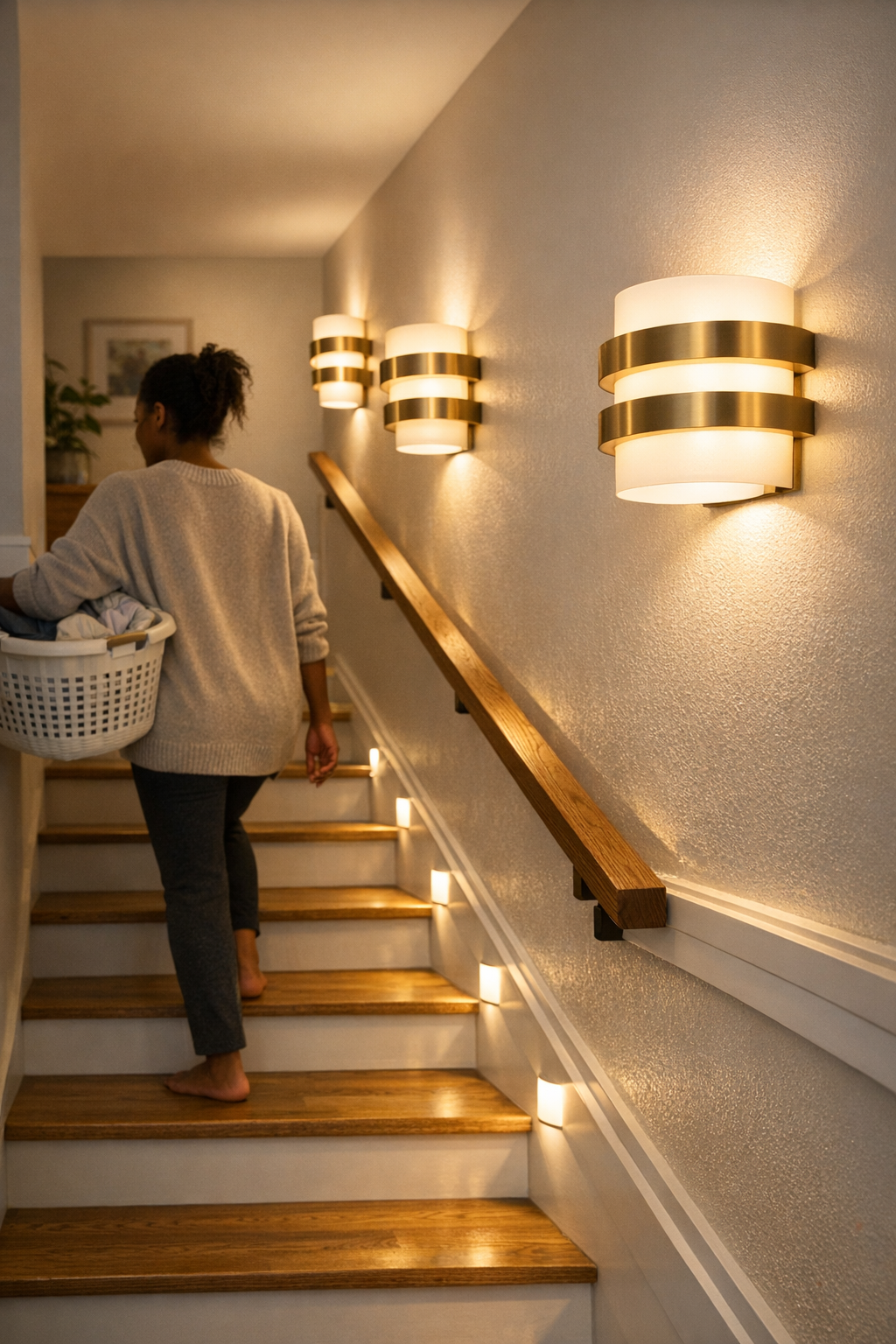
    The most effective stair lighting setups start with ruthless honesty: where do shadows, lost edges, or stray cables trip you up? Wall-level LEDs or step-focused fixtures, solidly bracketed and cable-disciplined, bring light right to the tread—making each step’s edge visible and cutting glare to the eyes. With cabling tucked inside trim or routed flush behind skirting, you move without thinking about what snags or shifts below the line of sight. Real clarity isn’t “brighter”—it’s predictable, unbroken edges underfoot and no visual noise at the periphery. That shift is startling the first time you tackle the stairs half-asleep or hands full—no more halting or overcompensating for hidden steps.

    Get the height, angle, or bracket wrong, and disjointed lighting returns: uncertain corners, jarring transitions at the landing, and a routine that still feels half-resolved. Support placement and cable discipline are what split setups that just photograph cleanly from those that actually remove friction every time you pass through.

    Everyday Scenarios Where Setup Fails (or Succeeds)

    • After-midnight water run: The ceiling bulb throws harsh shadows, and a loose cable at the landing turns a sleepy trip into a careful scan for cleared paths and secure footing.
    • Laundry-day climb: Arms full, you notice the patch between step lights—one dark edge forces a pause, and a barely-secured bracket catches on your jeans or forces you sideways.
    • Return home after dusk: Overhead glare flattens the stairs, and you find yourself freezing on the threshold just to make out where the drop begins, even though you walked this path a thousand times.

    Each missed cue or clumsy moment comes back to the same causes: inadequate support, careless positioning, and cables or hardware left to fight attention rather than disappear behind daily use.

    Making the Switch: It’s All Structure, Not Just Bulbs

    Replacing a broad ceiling light with four tightly-set, wall-mounted LEDs anchored by sturdy brackets gives each step its own clarity. No shadow gaps, no hunting for the tread, no flash of exposed wire to catch the eye or a shoe. The change isn’t just the light—it’s the cable run, discipline in support choice, and whether everything sits flush and vanishes into the background. When light is routed along the skirting or hidden in a trim channel, there’s no loose loop at the landing, no trip hazard or visual disruption, and the awkward, slow-motion stair-climb disappears. Movement shifts back to memory, not caution.

    The real win is absence: the vanished hesitation, the silence around cables, and the confidence that lets you trust your steps instead of thinking about where the light or wires fall next.

    When “Tidy” Isn’t Enough

    Not every cleaner-looking upgrade helps. A cable neatly out of view—if left loose or in the strike zone for bags or feet—still disrupts every trip. Brackets that look integrated but are positioned too high or low create their own recurring bumps or shadows. The true test isn’t how resolved the stairs look, but whether use after use, with hands full or eyes half-open, you forget the setup entirely. If you still notice the lighting as you move, something in the support or placement needs work.

    Common Mistakes and Quiet Fixes

    Bumping up brightness with a higher-wattage bulb—or swapping for a bolder fixture—often backfires, multiplying glare and washing out the visual cues that signal step depth. Downplaying cable routing or settling for “good enough” mounting breeds new issues: new places to snag, subtle but unpredictable shadows, or wobbly brackets that seem harmless until a nightly routine is interrupted. The best fixes are boringly practical: untangling cable runs, ratcheting brackets tight to the angle, and spacing lights so step edges never slip into darkness but don’t blind you along the way. This invisible work is what finally lets the hardware disappear and routine become automatic.

    Quick, Real Tips That Hold Up

    • Keep lighting tight to the action: Wall-mounted lights hugging the treads erase guesswork and keep cables managed and out of mind.
    • Force cable calm, not just order: Channel wires inside trim or route them behind skirting. Brackets hold everything flush—no play, no distractions, no contact between hardware and limbs in passing.
    • Stop chasing raw output: Brighter doesn’t mean better; too much light erases depth and hammers glare where you least want it. Even, focused coverage at the right height always beats blanket brightness.

    Let Real Use Dictate Your Lighting Choices

    When stair lighting is right, it goes unnoticed—you reach for nothing, spot every edge in stride, and never think about cords or where the fixture sits. The best setups solve for absent-minded use: when you’re loaded down or moving on autopilot, the setup quietly keeps hazards invisible and movement smooth. Forget “more light”—better placement, disciplined support, and invisible cable management trump extra LEDs or another stylish fixture for lasting ease. Only lighting setups that make themselves vanish stand up to the wear of real life and keep stairs safe, comfortable, and frictionless—no matter the late hour or how many hands you’ve got free.

    For practical lighting kits, mounting support, cable management, and all the real parts that make a difference, visit LightSupport.

  • How Thoughtful Pet Travel Gear Eases Stress During Frequent Stops

    Most pet travel setups fall apart the moment your day starts moving. The look of a tidy carrier at home means little the second you pull into a busy parking lot or try to grab wipes at a muddy roadside stop. What actually matters isn’t how clean your kit appears before leaving—it’s how fast you can grab that water bowl, cleanup bag, or leash exactly when you need it, without blind rummaging or forced reshuffling while your pet squirms nearby.

    The Hidden Weakness: Looks Ready, Feels Awkward

    Many pet travel bags give off a false sense of readiness. Blankets folded, wipes zipped, bowl stacked. The problem is structural: by the first or second real stop—seat-side leash moments, curb unloads, quick pull-overs—the order that made sense at home becomes the reason you get slowed down. Actual friction shows immediately:

    • Water bowls are buried under leash knots or tucked beneath comfort gear you don’t want to unpack yet
    • Muddy paw wipes sit behind two other zippers, forcing you to fish through layers mid-mess
    • A quick grab for waste bags leads to a spillover of everything else, turning a ten-second reach into a scattered re-pack

    What’s missing isn’t equipment; it’s efficient access. Each stop, the order in your bag blocks the very speed you need—making even short pauses a hassle to get through.

    One Problem Repeats: Reach, Pause, Reshuffle

    Pet travel exposes the same structural flaw every cycle: move, stop, handle, move again. The real test isn’t a single long trip—it’s how quickly your setup cooperates after four or five stops, especially when you or your pet are impatient.

    • You open the “right” zipper but hit the wrong pocket, hand landing on a comfort item instead of wipes
    • Your dog pulls at the limits while you dig; the longer you fumble, the more restless the pet (and more obvious the scramble)
    • Even when you finally fish out the bowl, the leash is wedged and you’re left rearranging half the bag just to serve water

    Each of these moments translates into real tension—not just lost time. As the day continues, the friction rises for both you and your pet, revealing that it’s not the “missing item” that breaks travel flow, but the repeated disruption at every pause.

    “More Organized” Doesn’t Always Mean “Easier”

    No amount of internal pockets or nesting solves a broken grab-flow. On the move, order doesn’t equal speed if:

    • Your most-used items—wipes, waste bags, and water bowls—sit deeper than things used maybe once per trip
    • Stuffed pockets block seat-side access, and just pulling a bag out means shifting the layout every time
    • Pet and owner items are stacked together, leading to overlap and confusion the second you need either without thinking
    • That “easy” pouch at home becomes impossible to reach when the carrier sits awkwardly in the footwell or behind a seatbelt

    The repeat problem: small friction grows as the trip goes on. What seems organized during packing slows everything down in real use. By the third stop, the urge to repack mid-trip becomes a quiet regret, not a solution. A tidy bag isn’t a fast one under real seat-side pressure.

    The Real-Life Scenario: How It Unfolds

    After an hour’s drive, you park in a shaded lot. Your dog shifts, ready to go. As you half-juggle a leash and flip open the bag, your hand finds a blanket first, then the water bowl jammed under it, then a tangle around the waste bags. The quick reset you pictured now turns into awkward shifting and a pet growing restless. Every second you spend rummaging in a tangle of your own organization, the “prepared” look of your carrier doesn’t matter; routine motion is gone, replaced by minor stress and a messier seat than you started with.

    This isn’t a simple checklist issue—it’s what happens when the real movement of the trip breaks down. Every stop you make re-exposes bad structure, making the flow slower instead of smoother.

    Why Some Setups Keep Getting in Their Own Way

    Most travel kits start neat and end up layered in frustration. The warning signal isn’t always visible at the beginning—it’s how often you have to move something out of the way just to keep going. Over time, these reveal themselves:

    • You’re close to being ready, but there’s always something blocking what’s needed most
    • Cleanup is possible, but never quick—each muddy surprise means a scramble through half the kit
    • Comfort items for your pet force you to unsettle essentials for yourself, disrupting both sides of the trip

    The flaw is structural, not visual: real use exposes setups that only look prepared, not ones that truly allow you to move, reach, reset, and go again. When delays and annoyance stack up, the difference between “organized” and “actually easy” is hard to deny.

    Recognizing True Access: Small Tweaks, Real Relief

    Where does the daily cycle finally break? It’s when a travel setup stops just being organized and starts working with repeated action. Kits with dedicated seat-side access—leash anchor close-by, wipes unzipped and at the edge, quick-pull bowl location—make it possible to handle a pet with one hand and snag a cleanup bag with the other, without crawling into the back seat or dumping everything out. Bowls stay in outer pockets; essentials stay high, never under comfort gear. Routine reshuffles vanish. Water, wipes, and bags simply land where your hand expects, even mid-movement.

    It’s not more features—it’s smarter order: cleanup on the outside, comfort items stable but never obstructing, owner and pet access points separated. That means:

    • Seat-side pouches for waste bags and wipes, always at arm’s reach
    • Leashes clipped or anchored to avoid tangling with anything else in the bag
    • Soft items kept stable but never blocking high-use gear

    The real payoff isn’t just a few seconds saved—it’s less agitation, smoother resets, and a pet who settles instead of squirming while you sort. Quick access means the whole trip moves, not just the bag’s contents.

    Real Improvement Is About Ease, Not Perfection

    No kit is flawless for every road and every stop. But the setups that win out aren’t the most complicated—they’re the ones that treat every repeated pause as the main event, not a background problem. When high-use items land in the right spots, and every reach matches a real moment in the routine, interruption turns into flow. The trick isn’t hoping for less mess; it’s building in less friction, so the trip’s rhythm survives every short stop and reset.

    Explore practical, rhythm-tested pet travel setups at PawGoTravel.

  • Why Grooming Tools Clutter Chairs and How to Fix It Easily

    Why Grooming Tools Drift—and How It Impacts Your Daily Pet Care

    Most pet owners know this scene: you reach for the brush mid-routine, and it’s missing again—tucked under yesterday’s mail, mixed in with chewed toys, or left sitting on the hallway bench from last night’s after-walk cleanup. Tools that seemed “right there” in the morning now block fast feeding, slow down the next cleanup, and force you to retrace your steps just to handle the basics. This isn’t just random clutter; it’s the point where daily grooming starts to drag. One lost comb means one skipped brush. One misplaced towel means tracked water from a rushed refill. CalmPetSupply is about setups that actually work when routines repeat—and about stopping the drift before it multiplies into daily friction.

    At first, leaving the brush on a chair seems harmless—a product of a busy night or an interrupted morning. But as the habit repeats, every forgotten tool builds into a pattern: more detours, more reshuffling, and eventually a routine that feels twice as long as it should. That low-level “where is it this time?” grind breaks the flow of even the simplest care tasks.

    How Convenience Turns Into Clutter

    Cutting corners in a rush feels smart in the moment—dropping the brush where you last used it, cracking open a wipe and setting it down “just for now.” But with each shortcut, pet items bleed into general home clutter. The next time you go to refill the water bowl or settle your dog after a walk, routine stalls: a grooming tool buried under toys, a cleaning cloth wedged between surfaces. What felt efficient on one day becomes an obstacle course by the end of the week.

    Picture grooming the dog on the living room rug, then leaving the brush on the coffee table, thinking you’ll put it away later. Tomorrow, you’re halfway through a feeding sprint before realizing the brush has vanished—now under paperwork. A chain reaction begins: every task stretches just a bit further from smooth.

    Real-World Scenes of Pet-Care Delay

    Consider a weekday morning routine: you scoop food, notice fur on the cat’s blanket, reach for the brush—and it’s missing. Suddenly, the simple order of “brush, feed, wipe” breaks down. The dog is pawing at the door, the cat is impatient, and you’re circling three rooms instead of making a single handoff. Each piece out of place splits up the flow, forcing interruptions where there should be none.

    Or you spot a water spill by the food station after breakfast—a minor mess that now takes double the time to clean because the towel is lost behind yesterday’s scattered brush and a toy left from playtime. Instead of grabbing and wiping, you’re sorting and searching, and water tracks right into high-traffic space.

    The Impact on Shared Spaces

    This drift rarely stops at pet zones. Brushes turn up in hallway piles, combs land on kitchen chairs, and the visual mess quietly blends with shoes, chargers, or kids’ art projects. It’s not always obvious, but the repeated need to move pet stuff “out of the way” disrupts both pet care and everyday household flow—as if every shared surface doubles as a staging area for routine resets you didn’t plan for.

    Shared areas become friction points—entryways crammed with stray fur, kitchen counters blocked by a brush in the path of the food scoop, hallway benches cluttered with cleaning rags that never made it back. Each time you go to grab one thing, you move another, stacking interruptions into what should be low-pressure, autopilot routines. Over time, every reset takes longer: not because the tools are missing entirely, but because they’re always a step away from where they need to be.

    Why Organization Alone Doesn’t Always Help

    Decluttering or adding bins helps—until you need to put something away in the middle of a lived-in moment, and the real storage is never where you actually use the item. If the stash spot isn’t close to the finish line of the routine, tools slide back to the nearest surface. The root problem is not disorder, but mismatch: storage steps that make sense on paper, but get skipped when the day gets busy.

    Even when a space looks “organized,” a buried brush or distant bin means that, sooner or later, you’ll revert to dropping things in reach instead of putting them back properly. With every rushed morning or late-night check-in, the same invisible drag creeps back. The setup looks managed—but feels harder to use every time routines speed up.

    The Tidy-Looking Setup vs. the Smooth-Flowing Routine

    It’s possible for a home to look in order while every pet-care step still feels cumbersome. Brushes stowed in a bin across the room, towels stacked behind a closed door, supplies hidden in baskets—all clear the surface briefly, but add extra steps that slow down the action. The deeper issue is the disconnect between where tools rest and where they’re actually needed, especially as routines get repeated.

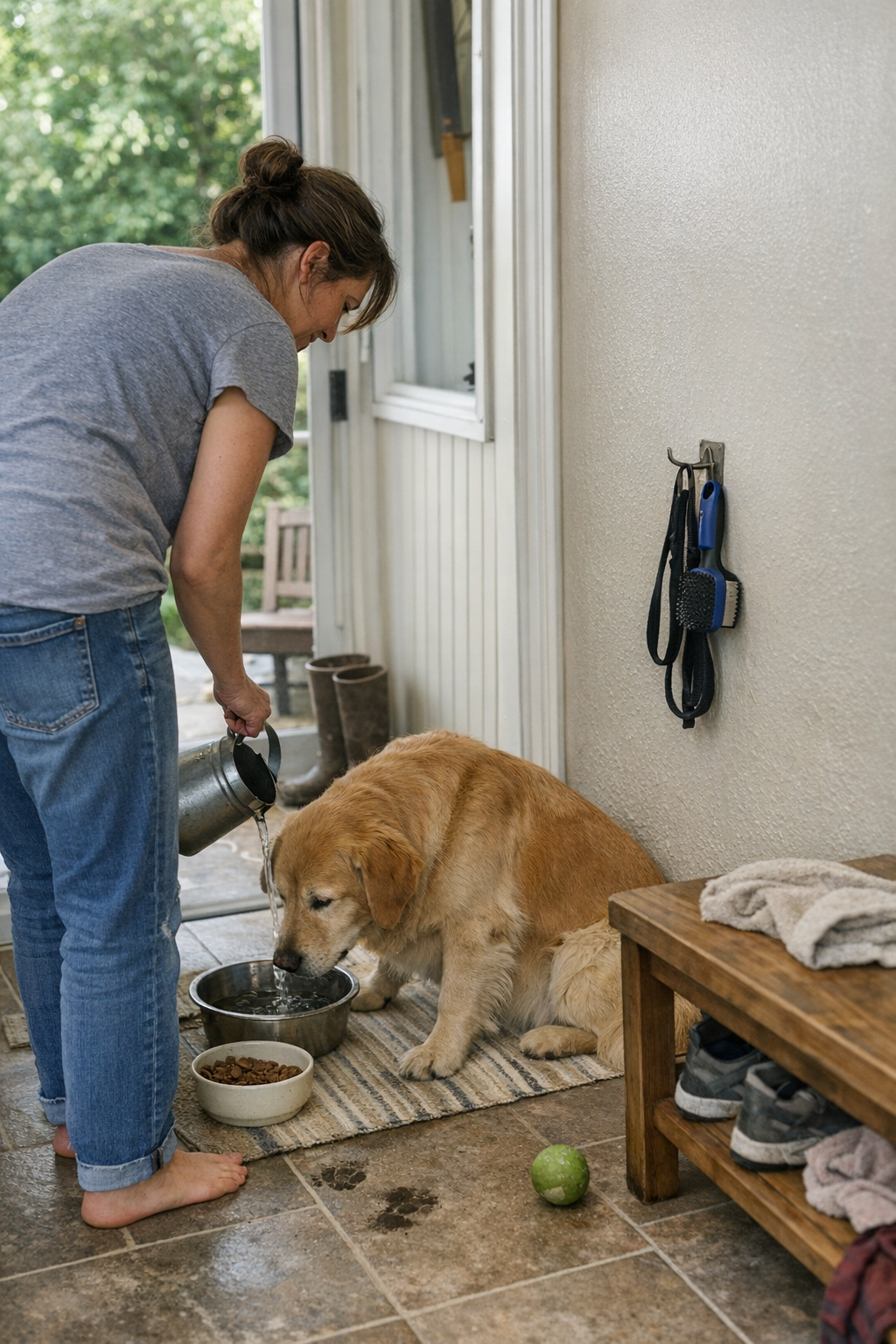
    The turning point isn’t sweeping organization, but a storage detail that lines up with reality: a simple hook above the food station, a bin by the grooming corner, a rack at the porch exit. Suddenly, returning the brush or wipe-down towel becomes automatic—not because you’re extra tidy, but because the setup works for the exact spot you use, not a theoretical clean-up at the end of the day. Steps run faster, routines chain together, and cleanup becomes a reflex instead of a chore.

    Making Small Adjustments That Stick

    When grooming tools or cleanup supplies are technically “in the house” but never where your hand needs them, friction sneaks in with every repeat. The fix is rarely a system overhaul—it’s a specific anchor: a single hook, a mounted bin, a reachable basket right where habits drive your routine. This isn’t about perfect order, but about making it easier to do the right thing without extra steps.

    Storage that follows your daily pattern means you handle less reshuffling and more autopilot. Tools stay in place, resets become rare, and your pet’s routine doesn’t get split by backtracking or frustration. The change is immediate: less hunt, less delay, more flow—one less weak spot for friction to return.

    Keeping Pet Care Practical at Home

    The daily difference is visible not in the state of your closet, but in the spot where you put the brush after every use. When your setup matches the real handoff points—after feeding, after a walk, mid-cleanup—the routine feels lighter, not just neater. Fixing one repeated reset pays off across every part of pet care: fewer detours, faster check-ins, and more time for the comfort that counts. For more ideas and practical solutions, visit calmpetsupply.myshopify.com.

  • How Organized Gear Transforms Your Dog’s Public Greeting Routine

    Why Small Frictions Add Up in Daily Pet Care

    A solid pet-care routine breaks down in the details. You pause for a water refill and bump into a pile of shoes blocking the bowl. You reach for the cleaning rag but find it buried under breakfast leftovers. Every missed grab, blocked corner, or hidden treat pouch is a signal: what looks manageable on paper keeps turning into a scramble during real-life care. The actual drag doesn’t come from your pet but from repeated, minor obstacles each time you reset, refill, or clean up—small hitches that pile up, leaving you with a routine that’s less smooth, less predictable, and quietly draining to maintain. CalmPetSupply is built for these exact moments, where everyday care should feel easy, not like an obstacle course.

    When “Mostly Ready” Still Creates Chaos

    Being “almost set up” is exactly the problem: every time you reach to refill the water, a pair of shoes blocks the way. The cleaning cloth has drifted—again—to the far side of a cabinet, under last night’s dish pile. What should be a thirty-second refill becomes another reshuffle. After a walk, you’re balancing a leash over the banister and guessing which zipped pouch holds the treats and which has your headphones. Each pause isn’t dramatic, but your flow is gone. Instead of moving through a simple sequence, you adjust, hunt, backtrack, and lose track—sometimes three or four times before the routine is done.

    Hidden Delays Change How the Day Feels

    The time lost is rarely glaring. It’s the pattern that wears at you—grabbing the wrong towel, nearly slipping on a stray chew toy, needing to search for the brush just for a quick grooming swipe. Each small trip-up nudges the whole day off schedule. The feeding corner sits unwiped because you couldn’t grab the cloth when it mattered. The afternoon walk doesn’t happen on time because bags and gear are scattered, clogging up shared hallways. In the moment, each delay is minor; across a week, you’re always just behind.

    When an Organized Area Doesn’t Mean Smoother Care

    Baskets, hooks, and labeled bins promise to solve pet mess. For a while, they do. But one weak spot keeps returning—treats stored a shelf too high, the leash right where jackets pile, feeding supplies drifting until mornings start to feel crowded again. The space looks better, but beneath the surface, minor resets never stop: shifting things, replacing, doubling back mid-task. If you find yourself moving two items just to grab one, your “system” is only tidy; it still interrupts real care. Actual ease means the right item stays at arm’s reach exactly when needed.

    Real Scenes from the Everyday Flow

    • After-Meal Shuffle: Halfway through breakfast cleanup, you need the food dispenser, only to find it wedged behind the week’s recycling. Your pet presses in closer as you dig for it—another reset that should have been effortless.
    • Night Check-In: Just before bed, you try to freshen the water. Spare towels are tangled with laundry from walks past. A “one-minute” task turns into an unplanned rummage through piles you thought were sorted.
    • After-Walk Care: Coming in from outside, the drying towel is buried in clutter by the door, sanitizer spray out of reach. Both were meant to be grab-and-go, but setup failure stalls an otherwise quick reset.
    • Blocked by Shared Space: During work hours, pet toys and gear creep into hallways or underfoot near your workspace. The feeding mat shifts into your path, so getting by without stopping becomes its own micro-challenge.

    Why Repeated Friction Is the Real Problem

    It’s not one mess or missed grab—it’s how the small interruptions keep your routine unstable. The system quietly demands more attention than you budgeted, pulling you into repeated mini-pauses, backtracks, and mid-task resets. Even after you tidy, if grabbing what you need still takes an extra move, you’re stuck in a loop. The difference between an easy day and a frazzled one is often just a towel that’s reachable, a bowl unblocked, or the nearest leash not swallowed by clutter. Until those basics stay fixed and ready, that undercurrent of friction keeps dragging the routine back toward clutter and repeat work.

    One Fix That Changed the Flow

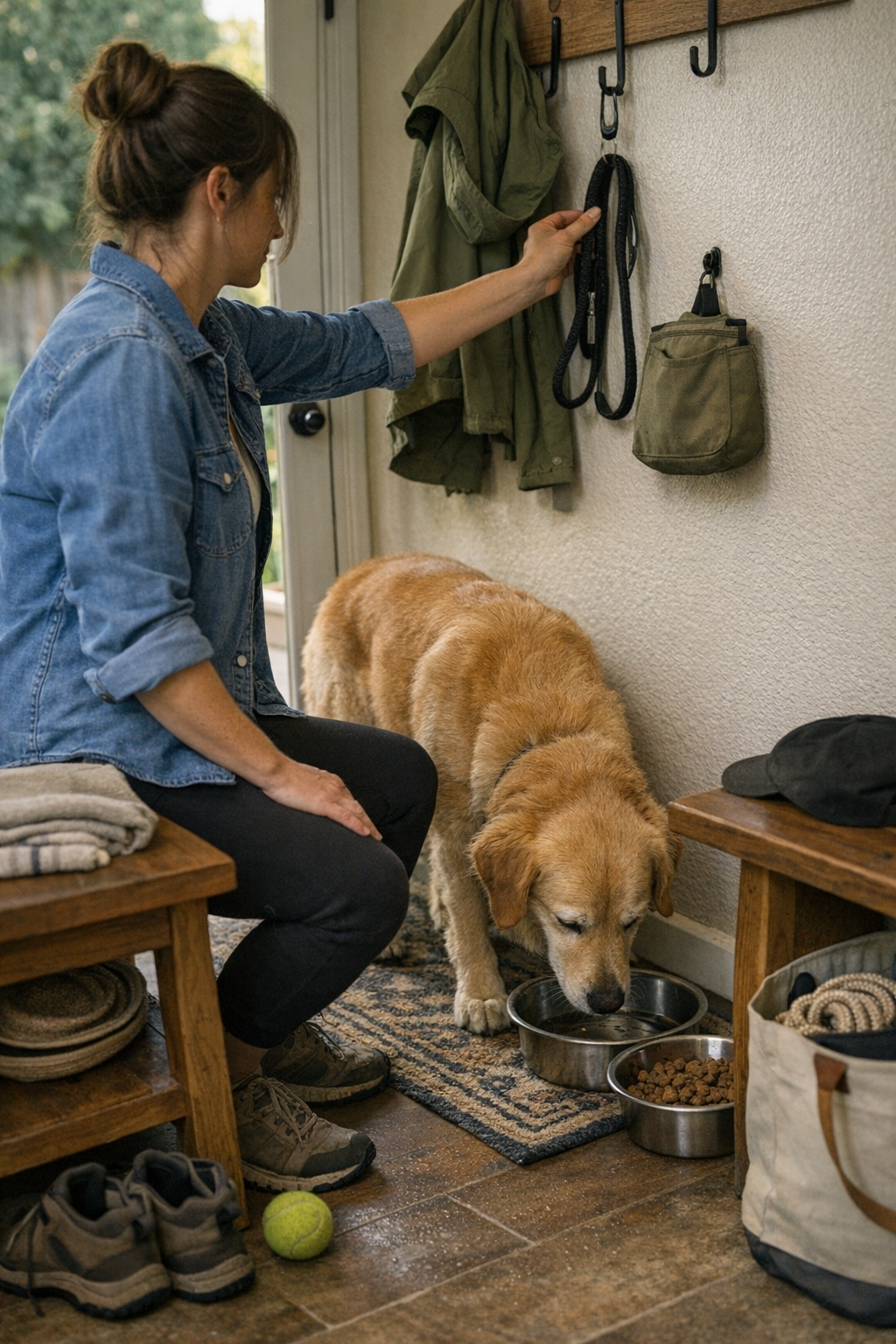
    The biggest shift came from a single, repeatable setup—a hook at shoulder height by the door. The leash hangs ready, treat pouch next to care wipes. Now, whenever you step in or out, there’s no hunt, no pile to move. Each block of care—wait, greet, clean, reset—happens with almost no friction. The difference isn’t a nicer-looking corner; it’s the end of missing basics and repeated scrambling. The routine, finally, can be done in sequence, not in survival mode. One physical change replaced a dozen repeated delays, making both your day and your pet’s care easier to keep up without effort.

    The Difference Between Looking Tidy and Functioning Smoothly

    What seems organized at first glance often hides the problems that keep routines slow: a towel hidden under laundry, feeding items drifting out of reach, or a leash always a step too far. True calm in daily pet care comes from cutting out those micro-pauses—the little backtracks and blocked reaches that a “tidy” setup fails to solve. The result isn’t just visual order, but less repeat work, fewer interruptions, and a routine that finally fits without constant adjustment. For pet care that actually feels easier, it’s not about a neater look—it’s about setups that stay ready when your real day demands it.

    Explore daily-ready pet care setups at CalmPetSupply

  • How a Simple Boundary Transforms Indoor Cat Spaces and Reduces Mess

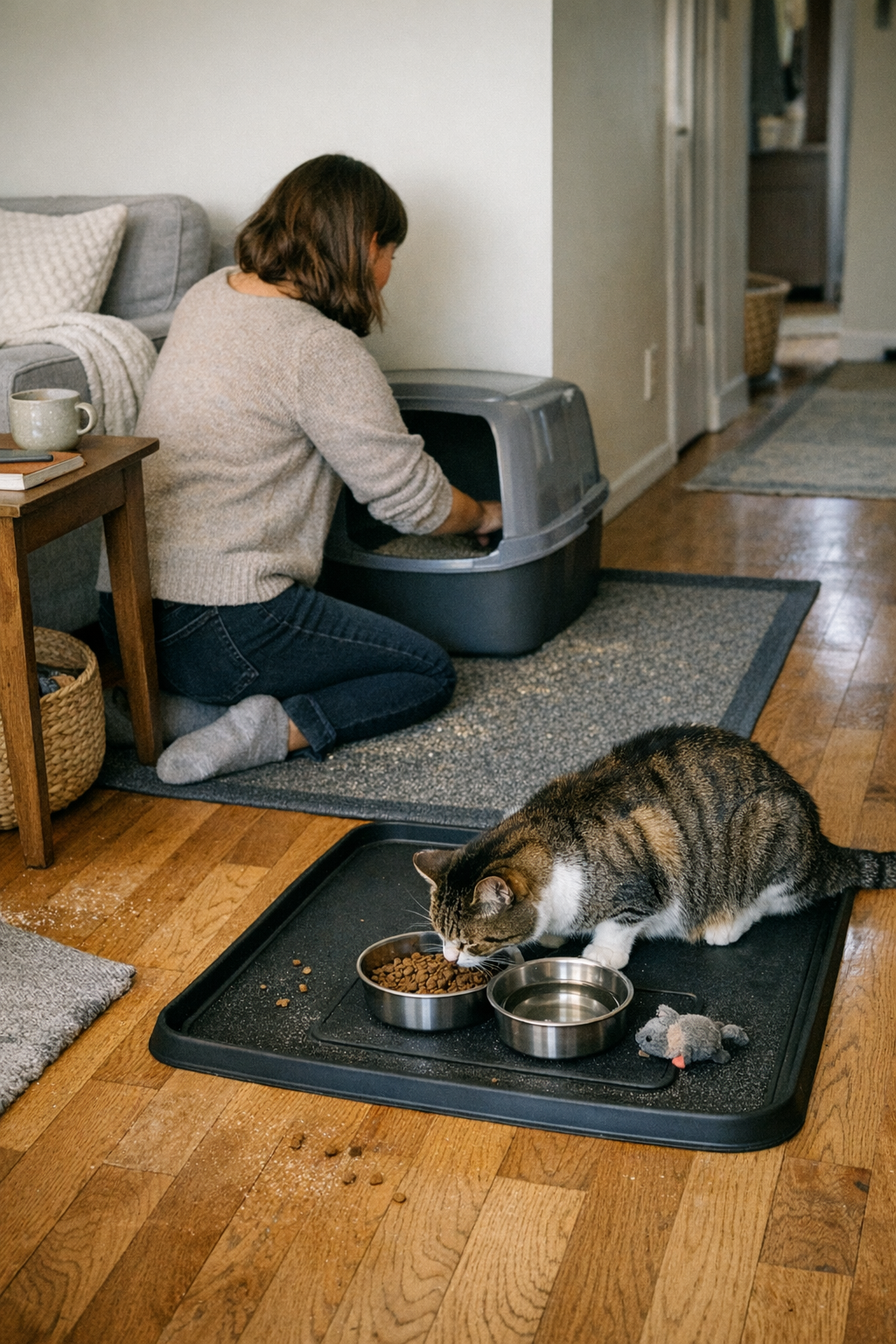
    Most indoor cat setups look calm for a day—then the breakdown starts. Food bowls line up, water dishes nestle on a mat, and the litter box sits in its assigned corner. But after a few feeding cycles, cracks show: dry kibble escapes just past the mat, water spreads with every refill, and litter drifts, dotting the hallway. What started as a “neat cat area” quickly becomes a shifting mess zone. The difference isn’t subtle—the line between cat space and shared living space blurs, demanding more resets than you counted on. The StillWhisker world isn’t about decor. It’s about structure that survives the real routine.

    When the Boundary Blurs: Real Cat-Life Friction

    Most owners miss the slow failure, not a sudden disaster. The debris creeps: kibble migrates under the chair, water marks the floor an inch beyond where you wiped, and a tracked litter sprinkle reaches the hallway before you even notice. Pick up a toy under the table? There’s always a trail—food bits, dust, last night’s treat—lurking nearby. After a week, quick swipes aren’t enough. Routine resets drag out: you’re scooping, sweeping, and finding a damp spot long after “tidy-up” was meant to be done. The zone doesn’t hold—it expands, pulling your time with it.

    Why Visual Order Isn’t Enough

    The standard fix looks organized but acts like a false promise: A slim mat below the bowls, a towel by the fountain, maybe a thin rug at the litter box exit. It looks contained—for now. Then repeated use exposes every weak spot.

    Spotting the Breakdown Before It Spreads

    Within days, crumbs hide at the mat’s back edge. Litter dust advances past its supposed stop-point, leaving rough spots to step on. Cat traffic turns those borders into suggestions rather than boundaries. By then, “contained” just means out of direct sight—until your next walk-through ends with litter crunch underfoot or a damp sock from quiet water creep. Visual order cracks under daily pressure.

    The Daily Impact of an Imperfect Edge

    Between “it looks fine” and “it’s easy to live with” is a gap measured in extra wipes and repeated finds. If you’re dragging the mat out to catch what’s hiding underneath or making multiple passes with a towel, you’re in the same fix as most indoor-cat owners:

    • Resetting slows down. What used to take two minutes—quick straighten, wipe, refill—now interrupts other tasks with extra rounds of picking, mopping, or bending.
    • Cleanup piles up outside the zone. Spills and debris spread to new spots, crossing into your walkways and living corners.
    • The rest of the room gets involved. What began as a single corner now claims the space in front of the sofa or the path to the hallway—routine paths turn into detours for cleanup.

    Practical Example: The Family Room Drift

    Start the week with feeding and water neatly stationed on a mat just off the main walkway. By midweek, a sprinkle of food makes the line fuzzy, a puddle seeps out just under the dish, and a stray toy disappears beneath the chair—dragging dry food with it. Every reset becomes a pattern: sweep, scoop, hunt for one last bit of kibble hidden below. The time adds up, the mess spreads, and the problem never fully resets—just reshuffles.

    The Consequence: Chores Multiply Across the Room

    This isn’t about how it looks. A weak boundary turns a minor zone into a room-wide intrusion. The litter mat’s short edge lets particles escape—now there’s a faint dusting across the entryway. Post-dinner water overflow quietly soaks through hardwood, forcing a real mop-up hours later. Cat area becomes house area, and the “contained” solution quietly invades until every room stands in as the backup cleanup zone.

    Mechanical, Not Decorative: Upgrading the Boundary

    Past a certain point, you stop caring about cute prints or colors and start looking for actual containment. Swap a light mat for a weighted, rubber-backed version with a raised lip—suddenly, stray kibble stops dead, water pools instead of escaping, and the mess never makes it to open floor. Reset speed doubles: scoop the pile, wipe the puddle, done. The shape of the cat area holds up—not just in photos, but on a Thursday night after a triple refill run.

    Containment That Just Works

    The right structure matters more than the look. Start using a mat with real edges and the drama collapses—reset slips into the background, cleanup tools stay in their place, and the “problem zone” shrinks. You’re not fussing with corners or chasing scatter to the far wall. The gains aren’t decorative—they’re mechanical and they last longer than a tidy-up for company.

    Choosing and Positioning: What Actually Makes a Difference?

    Real edges stop real mess. Mats with raised lips and weight block debris from rolling or sliding out. Thin, lightweight, or foldable mats can look organized but shift, letting the problem get worse. Textured mats grab stray litter and food long before those bits crawl to the other side of the room.

    • Reduce open floor gaps. Push boundaries against furniture or the wall—don’t leave bare floor patches between the setup and the rest of the room.
    • Litter tracking? A heavy, textured runner right at the exit stops most of it; if you spot dust lines beyond, add height or reposition the entry for less spillage into the main lane.
    • Repeat offenders matter. If you keep finding food under mats, dust scattered out of reach, or the same damp line by the bowl, you’re seeing a structure problem—not a fluke. The fix isn’t more wiping; it’s a better barrier.

    Cleanup Burden: When Supplies Help or Hurt

    Supplying wipes and paper towels nearby sounds smart—but if you’re still reaching for them after every routine refill or reset, the underlying setup is failing. A mat or tray that actually catches debris lets cleaning supplies rest more than they’re used. When cleanup gear becomes background, not your plan A, the setup is finally doing its real job.

    Comfort vs Reset: The Tradeoff That Catches Everyone

    Your cat loves a soft mat or blanket, but comfort alone doesn’t hold the line. Edges that fold or cushions that shift undo a fast reset—they spread, bunch, and expose open floor after every nap or leap. Before picking the fluffiest bed, check: will this need readjusting every time the cat moves? The best setups balance softness with a defined stop. If you’re always straightening, the convenience failed.

    Recognizing The Real Upgrade: Looks Versus Lasts

    If your feeding zone looks organized but debris shows up in new places after almost every meal, the setup only works for appearances. A weighted mat, raised lip, or strategic runner cuts daily friction and locks the mess to its corner—no extra resets needed. When debris keeps coming back, you don’t need more effort. You need a solution built for the cycle itself, not just the initial look.

    Tips and Adjustments: Making Containment Part of the Routine

    Containment isn’t a set-and-forget deal. If edges are too low, size up; if drift returns, double up the barrier. Shared spaces call for mats that grip the floor and sit flush to furniture—otherwise, the mess migrates again. The goal isn’t just to clean faster, but to make messes stop traveling entirely. When the structure fits, resets are fast, stray mess stays local, and your day stops revolving around chasing the edge of the cat zone.

    StillWhisker Indoor Cat-Life Store

  • Why Fixed Entryway Storage Beats Mobile Carts for Everyday Clutter Control

    Mobile storage starts off as a quick fix—and quickly becomes a slow obstacle when your entryway routine piles up. Sliding a wheeled cart into place for shoes, bags, and jackets promises flexibility and easy resets. But within days, that “convenient” cart jams the path, edges into walking space, and attracts overflow. Shoes spill from shelves, backpacks dangle, and yesterday’s mail settles in for a longer stay. Instead of a clear threshold, you get a high-traffic detour: maneuvering around wheels, nudging piles aside, inching past a bottleneck that only grows with every “just for now” drop-off. The real friction isn’t the mess—it’s the sticky, daily slowdown right where you need speed and clarity most.

    That First Week: Where Flexibility Turns Into Friction

    Day one with a new cart feels like you’ve cracked the entryway code. Shoes land on a shelf. Backpacks rest on top, keys tossed where you can find them again. It’s not just organized—it’s mobile, ready to shift for vacuuming, groceries, or a quick rearrange.

    But daily use unravels control faster than expected. Shoes barely stacked in the morning begin crowding the path by evening. A “temporary” bag lingers, crowding out space for mail and essentials. The cart drifts as it’s nudged out of the way for cleaning—and never quite returns. As the week ticks by, every new arrival finds less room, reshuffles more, and pushes the cart itself into high-traffic territory. What started as open access soon blocks the route, until you find yourself squeezing past and searching for what’s missing underneath the overflow.

    Why Carts Drift and Clutter Spreads

    Wheels invite you to adapt—but rarely to reset. The cart’s mobility, meant for flexibility, encourages you to shift things “just for a minute,” often without clearing them properly. Shoes, dropped as pairs, quietly spread sideways until they’re in the walkway. Keys and sunglasses land wherever there’s space. That early shelf order blurs as categories overlap and the cart’s boundaries dissolve.

    Pushing the cart aside clears floor space for a delivery or quick sweep, but never truly resets the entry. Instead, you get drifting piles and a container that keeps changing position, never grounded enough to anchor the routine. By midweek, the cart is half staging area, half clutter magnet—blocking the entry, absorbing everything, and requiring a mini-decision every time you pass through.

    Contrast with a Fixed Home Base: More Routine, Less Reshuffling

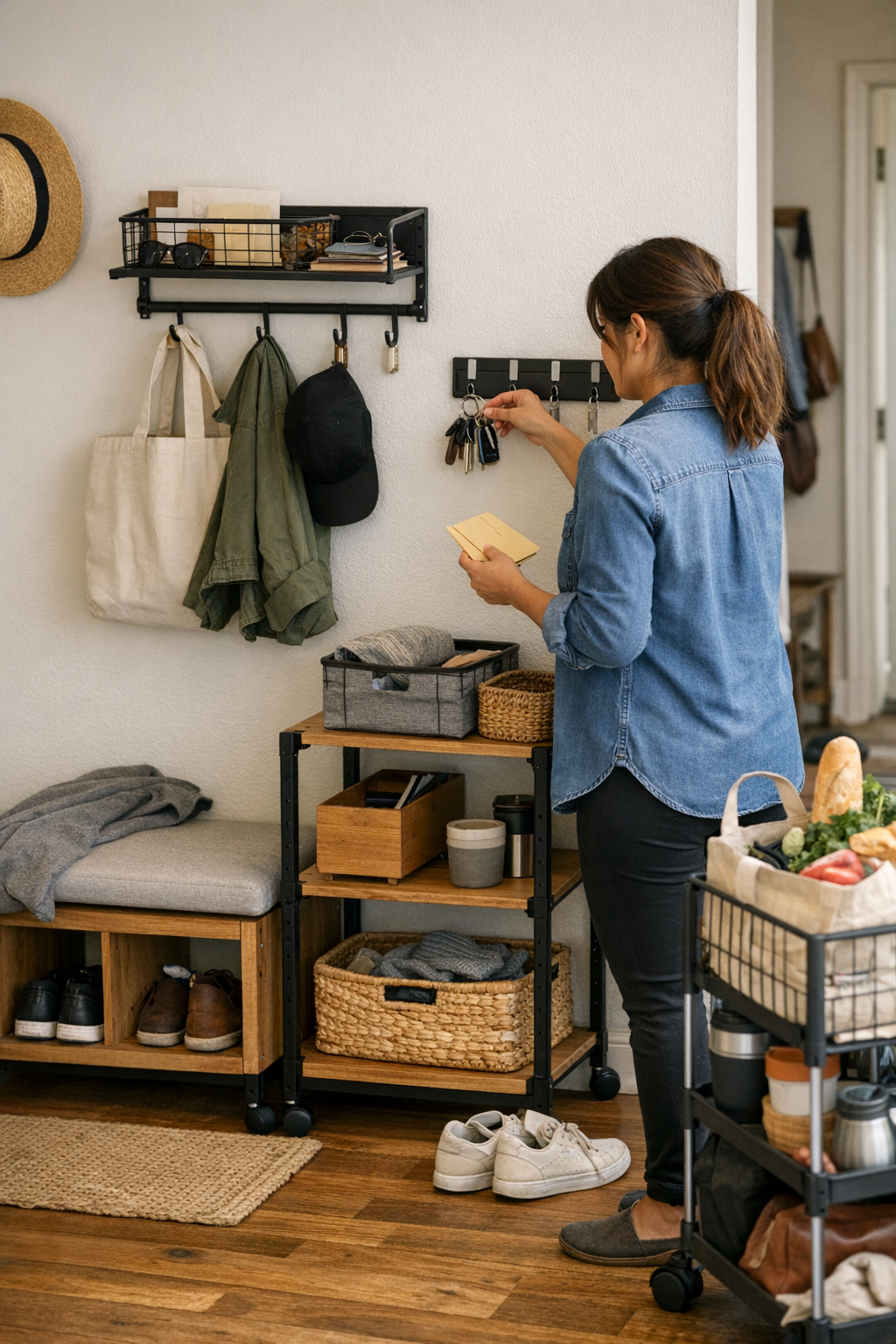
    Replace the cart with a fixed zone—bench with cubbies, wall rack, vertical tray—and you get instant routine. Each item has a natural landing spot. Shoes off? Straight into a cubby. Bag? Onto a designated hook. Mail and keys? Clear, predictable drop-point, not a free-for-all. With a bench or rack, the path stays open: no wheels nudged sideways, no shifting piles, no rolling unit blocking your next step.

    The change is visible by midweek. A bench’s full cubby signals “time to tidy” before clutter hits the floor. Wall-mounted setups keep footpaths wide, prevent drift, and make it obvious when something’s out of place. Every return or pickup becomes one move, not a negotiation. Instead of arranging each day, you reset again without thinking—not because it looks perfect, but because it works with your real movement, not against it.

    Scenes from a Real-World Entryway: Where the Difference Shows

    • The Drop-Off Tension: Coming home with arms full, you reach the threshold and realize every hook and shelf is blocked—bags, coats, shoes all tangled around a cart too crowded to help.
    • Shoes in Escape Mode: Rainy days double the number of shoes; soon they leak off the cart onto main walkways. The entry narrows. Every pass becomes a shuffle and a search for a dry spot to stand.
    • Reset Drag: Friday means peeling layers from a rolling pile—keys under a tote, one boot under two bags. What should take seconds turns into a search-and-sort session.
    • The Cubbied Upgrade: Swap in a bench with three cubbies; now every shoe is corralled, each trip means a clean step, and hooks actually signal when to put things away—stopping overflow before it starts.

    Why Carts Accumulate Instead of Organize

    Open-access wheels attract everyone’s “for now” drop-offs—especially with roommates, kids, or offset schedules. Instead of guiding what goes where, carts simply expand the area of what collects, blurring boundaries on every pass. One person moves it to sweep, another rolls it closer for charging a device, someone else fills it with “out again soon” gear, and nobody resets the whole pile. Multiply by a week, and each errand leaves residue; the rolling cart morphs from solution to speed bump, clutter spreading underfoot and blocking the quick exit you actually need.

    That flexibility costs routine: the cart drifts, categories merge, and the only signal to clean up is a bottleneck tight enough to force a clear-out. When the threshold is a moving target, your entryway becomes one big, accumulating tripping hazard—especially in small, high-use homes.

    Making Carts Work: The Role of Temporary Overflow

    Carts aren’t useless—but their real strength is backup, not everyday baseline. The right use is short and focused:

    • Wheeling in a load of groceries after a big trip
    • Batching tools or sports gear needed for a one-time event
    • Holding “out-the-door” items for a day, not a week

    To prevent drift, always pair a mobile cart with anchored storage—a bench, wall rack, or cubby system that absorbs routine daily items. Let the cart handle exceptions only. Notice shoes slipping off, bags hanging by straps, or a cart angled out across your main walking lane? That’s the sign to re-anchor with something fixed before the routine bogs down again.

    Anchoring the Threshold: Practical Tips for a More Workable Entryway

    1. Assign zones, not surfaces. Use fixed cubbies or vertical racks—return flow happens by location, not just available empty space. The right zone triggers the right reset.

    2. Keep carts limited in function. Store carts at the edge, not as the main access point, and limit them to handling bursts—never regular drop-offs.

    3. Pay attention to early warning signs. If a cart blocks passage or every “quick tidy” grows into a full reshuffle, your setup is overdue for a stable anchor.

    4. Prioritize smoother resets over visual perfection. The best entry isn’t empty; it’s one where the reset is automatic, the path always clear, and “where does this go?” never slows you down.

    The Real Test: Does Your Entryway Support Daily Transitions?

    Carts can help in a pinch, but as daily storage they turn into rolling archives for everything unsorted—and quietly jam your daily flow. Choose a structured entry base—bench, wall rack, or cubby—if you want clear returns, open movement, and a reset that really sticks. Flexibility has its place, but in the tight, repeated routines of real homes, anchored structure wins. The payoff shows every time you open the door and walk through unblocked, no search and rescue required.

    http://www.betweenry.myshopify.com

  • Why Mobile Storage Solutions Outlast Fixed Setups in Busy Workspaces

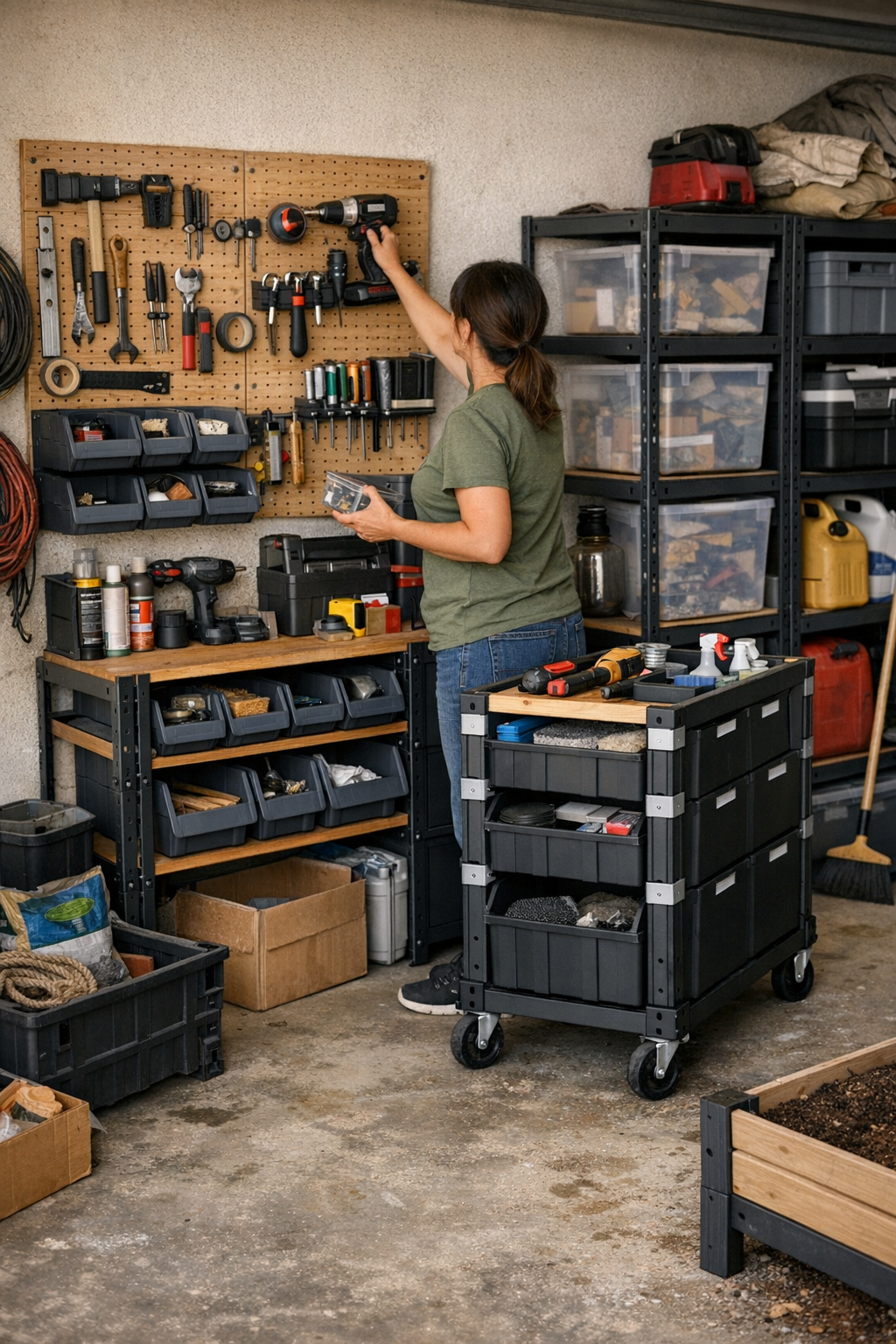
    The illusion of a perfectly organized garage, backyard, or workshop doesn’t last long. On setup day, it all looks immaculate: cabinets pressed to the wall, shelves aligned like a showroom, bins snapped flush into every corner. But the moment real life kicks in—hauling out heavy tools, dropping garden bags after a muddy job, or searching for that lost socket—the cracks show. Gear piles up in odd corners, paths get cluttered, and “organized” starts to feel like just another obstacle. Storage meant to make things easier turns into the main source of friction: blocked movement, constant reshuffling, and frustrating dead zones you never planned for.

    When Form Collides With Function

    The difference between “looks organized” and “actually works” sharpens with every use. Tightly packed cabinets are satisfying on day one—until you need to grab a leaf blower from behind two stacked bins, or squeeze into a corner to plug in the shop vac. The next day, you’re tiptoeing past a row of unmoving cabinets just to mop up a spill or retrieve hose fittings for the backyard. Searching for one rarely-used tool becomes a minor excavation; putting away a single item means shuffling three others first. The so-called finished system quickly exposes its weak spots once routine sets in and the space stops flexing to fit each job.

    It doesn’t take a major project to highlight the problem. Rolling out a mower from behind a fixed shelf, untangling an extension cord wedged between wall and bin, or trying to sweep up sawdust trapped behind a heavy cabinet—these “minor” frustrations add up. By week three, the friction of accessing what you need can undo the hours you spent getting organized in the first place.

    Fixed Storage: Why “Set and Forget” Doesn’t Work

    Walk into any garage with a wall of built-in cabinets, and you’ll spot it: the overflow. Stacks of odd-shaped boxes on top, seasonal gear squeezed into gaps, cords draping awkwardly over closed doors. Those static units become permanent blockers. Outlet hidden? Prepare to awkwardly reach around a cabinet edge—again. Need the pruning shears behind a stack of pool floaties? Move one thing, then another, then another. Returning items starts to feel like an extra chore rather than a reset, and every tidy-up after a project drags out as you negotiate cabinet footprints you can’t shift.

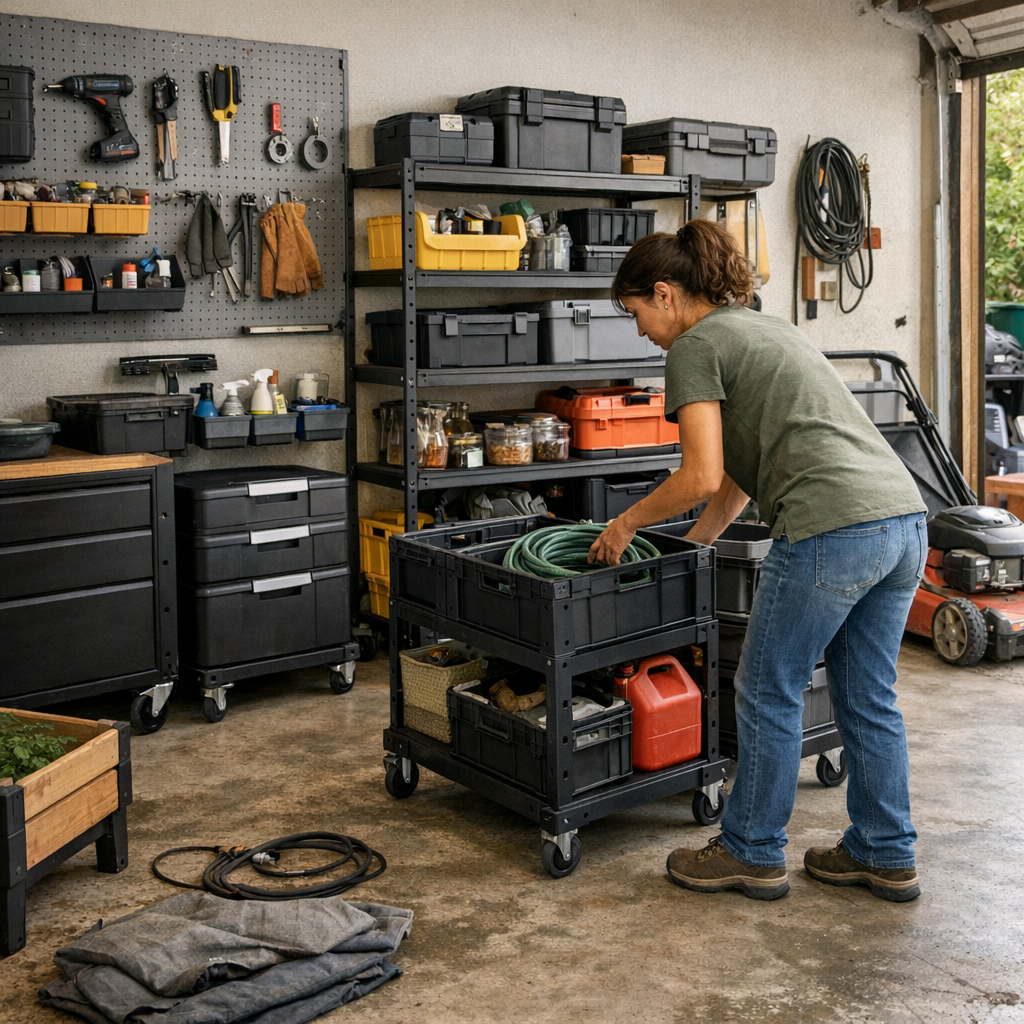
    The contrast with flexible storage is immediate. Need a clear route to the back wall? You simply roll the cart aside. Want the hose reel for an unplanned garden job? You can swing the shelving unit out of the way, no heavy lifting required. Adapting the zone for new equipment or rearranging for a seasonal change doesn’t mean tearing down your setup—just a quick adjustment. That means resetting after a long session is actually doable, not another hour lost to pushing heavy cabinets or repacking tight shelves.

    The Trouble with Dead Zones and Overflow

    Nearly every real-world garage or workshop hides at least one “catch-all” corner—a spot where items accumulate and never seem to migrate back. Look closely and you’ll see the pattern: these dead zones almost always form in the shadow of static, hefty storage pieces. That solid wall of cabinets creates awkward gaps along the floor and in corners that turn into unofficial dumping grounds for overflow—bags of mulch, last season’s decorations, extra hoses, or half-used paint trays. These are the opposite of high-use spaces; you end up bending awkwardly, shifting two things to reach another, or abandoning the cleanup entirely because it’s just too much work to unearth the bottom layer.

    The problem isn’t laziness—it’s the fixed footprint. When every storage unit feels bolted down, routine shifts become hassles. Bringing in a new tool means stacking it wherever it fits, not where it belongs. Sweeping up means working around everything instead of just clearing a lane. Over time, the thoughtful “layout” gets clogged, and you lose track of both space and stuff.

    Real Reset Speed: The Five-Minute Versus Fifty-Minute Cleanup

    A workshop owner once swapped a long wall of anchored cabinets for just a few sturdy rolling shelves and a fixed corner unit. Suddenly, the end-of-day reset went from a dreaded marathon to a breezy sprint. Paths could be cleared in moments; the back wall was within reach without a massive unload. Returning stray hand tools didn’t mean shuffling bins; zone swaps for the changing season became a matter of minutes. That small change—mobility over permanence—cut cleanup time in half, and made the space feel accessible again instead of hostile.

    Mobility and Modularity: The Routine Changer

    Too many people imagine mobility is just for light gear or small spaces. In reality, it’s the release valve that keeps busy zones from locking up. Wheels on a cart mean you can slide supplies to whatever project needs them today—and bring them back without a full reshuffle. Modular shelves let you squeeze in a last-minute plant haul or adapt for outdoor gear when the weather turns, without rearranging your whole setup. That ability to move things on your terms—without heavy lifting or frustration—is what makes a space workable in real life.

    Take the practical route: don’t fill every corner with something you’ll dread moving. Keep a lane open. Deploy carts and movable bins in “traffic” spots, not just off to the side. Notice which zones collect the most overflow, and swap those pieces for something on wheels or with handles. A handful of modular elements can clear persistent clogs and give you the flex to actually enjoy the space you worked hard to organize.

    Usable Organization Beats “Perfect” Organization

    Spaces with a pulse—garages, workshops, mudrooms—are never spotless for long. A smart storage system isn’t the one that stays photo-ready; it’s the one you can actually reset after a Saturday project or a storm-driven pile of gear. The true win isn’t about untouched surfaces, but about clearing your path quickly, keeping zones flexible, and avoiding the slow creep of permanent mess.

    Mobility and modularity might look unimpressive on setup day, but over time they keep your storage working instead of just sitting. The difference is obvious: less blocked space, less overflow, a layout where you can actually get stuff done. That’s not showroom-perfect, but it’s unmistakably better—and it’s a setup you’ll want to use, week after unpredictable week.

    Find practical, adaptable storage for garages, workshops, and backyards at StackNest.

  • Why Labeling Wires Transforms Indoor Lighting Maintenance Forever

    Indoor lighting rewires your routine—not just the room. In high-traffic areas like hallways, stair turns, and tight laundry work zones, a poorly labeled ceiling or wall fixture doesn’t just create a mess behind a cover plate. It leaves you guessing in every upgrade, repair, or late-night fix: which wire controls the stairway turn? Why is the mirror zone still shadowed, even after swapping a “brighter” vanity light? That quick bulb change or sconce replacement turns into a drawn-out process of trial and doubt—disrupting daily flow long after you’ve closed up the fixture.

    When “Looks Fine” Stops Working: Where Wire Confusion Begins

    Frustration surfaces at the worst moments: a hallway flush mount winks out just before guests arrive, and pulling it down reveals an unmarked jumble of wires. You try to upgrade laundry or under-cabinet lighting, but four indistinguishable leads appear—opacity, not clarity, hidden in the ceiling. What seemed handled years ago resurfaces:

    • Rush hour repair: The bathroom sconce is dead. You confront a blend of black and white wires with no hints—forced into slow deduction while time vanishes.
    • Mid-task frustration: Folding laundry in weak light, you pop open the fixture only to face a tangle that offers zero guidance. One wrong guess, and the whole room stays dim.
    • Stairway lighting mystery: Multi-switch setups mask “silent” wires. Changing a stair fixture unearths a surprise: the replacement throws shadow where safety used to be, undermining your confident routine at every step.

    The problem is invisible until it breaks your flow—forcing hesitation where you need clarity. “Looks fine” on install quickly becomes “why isn’t this working?” the next time real use exposes the missing logic.

    Labeling: The Small Habit That Pays Off Later (and Again… and Again)

    Wire labeling feels unnecessary during the first install—especially when colors look obvious, and new fixtures (like a utility-room flush mount or a stairway wall sconce) appear foolproof. In reality, even the most logical setup turns confusing once you can’t see behind the ceiling plate, especially years later or after a renovation shifts the wiring layout.

    Every high-use space develops its own quirks. A guest bathroom’s vent and light might share a hidden circuit, or a utility zone inherits mismatched splices. Skip labeling, and every revisit becomes a slow rediscovery, stalling basic fixes and injecting uncertainty into tasks you should finish in minutes.

    The difference is immediate for those who label wires at every open fixture—using durable tape and fading-proof ink before anything goes back in place:

    • Changing a mirror light isn’t a puzzle; it’s direct—no time wasted tracing invisible lines.
    • Under-cabinet task lighting upgrades finish fast, not in staggered sessions triple-checking connections by flashlight.
    • Stairway bulbs get replaced with confidence, never with a lingering doubt about which side controls the landing and which might leave a shadow at 2 a.m.

    Why Wire Mix-Ups Repeat—And Multiply

    The risk is cumulative: each guess at an unlabeled wire is a shortcut that compounds trouble. Color alone won’t save you—especially with past repairs, odd add-ons, or houses where codes changed mid-stream. Shared neutrals, recoded wires, and creative “fixes” lead to mismatched results, from stubborn shadows that won’t lift to flickering edges that make nighttime movement uncertain. It’s not only a technical problem—the visual toll persists for months: dim work surfaces, uneven mirror light, or a stair turn you cross with less certainty every time.

    When high-traffic corners—stairways, tight laundry tables, passageways—get locked into these compromises, routines shift: you fold clothes in shadow, move mirrors to chase clarity, or delay basic fixes out of wire confusion. Each missed match increases stress, not just maintenance.

    Labeling in Practice: Small Steps, Big Impact

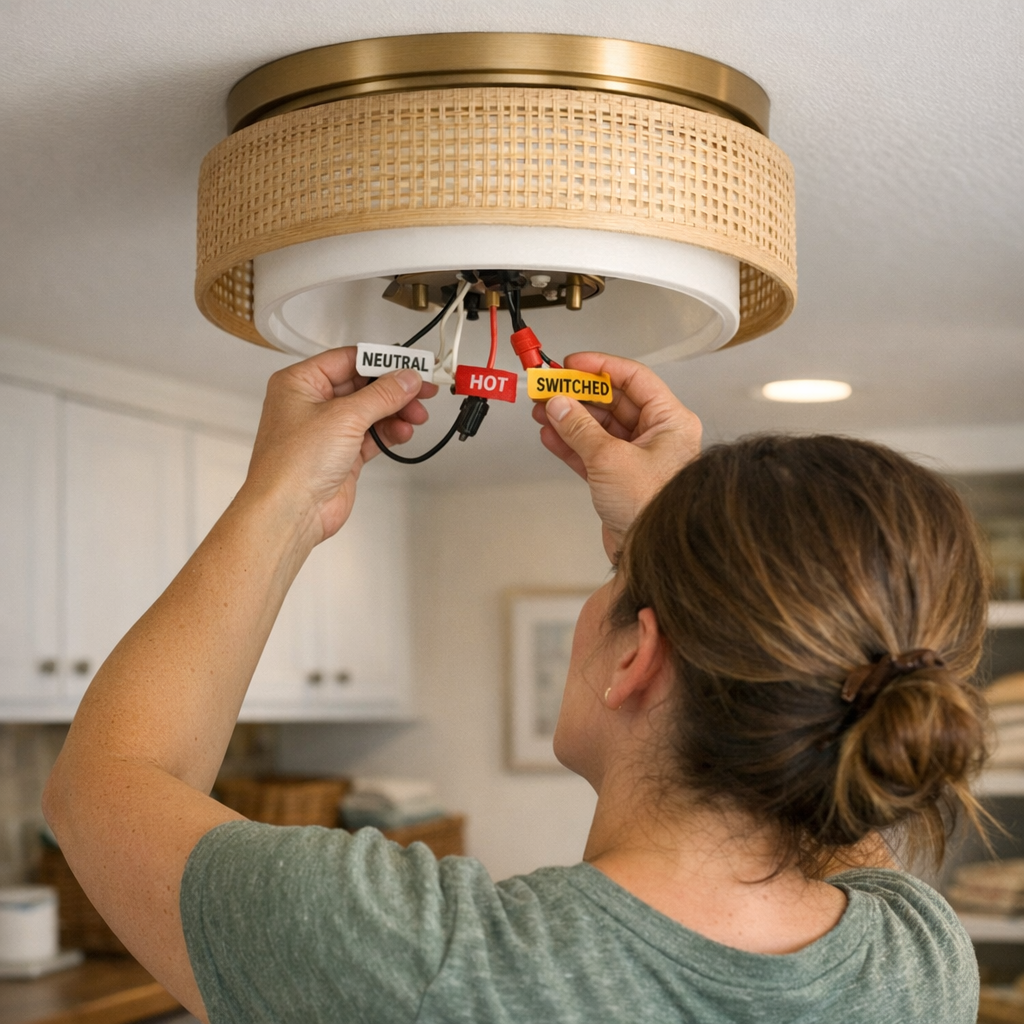
    One label at every connection flips the scenario: put the certainty at the wire, not in unreliable memory. Use robust tape with a permanent marker—write directly, “hot,” “neutral,” “switch leg,” or precise roles suited to the spot. Make tags easy to spot right by the connector so they survive both mounting and the next unscheduled repair.

    • Apply labels close to each join—don’t let them disappear behind plates or brackets where future-you won’t see them.
    • Mark clear abbreviations, fixture locations, or circuit hints if needed—short and unmistakable, not elaborate.
    • With fixtures upgraded often (like LED panels, bathroom sconces, stair lighting), check that labels remain visible—not just after install, but at every revisit, years later.

    This habit turns routine fixes—mirror swaps, under-cabinet improvements, bulb changes at the stair landing—into fast, confident tasks, not slow, risky evenings. Every zone that sees high use benefits: hesitation drops away, and maintenance fits into regular flow again.

    Lighting That’s Easier to Live With

    “Bright” isn’t the same as usable. Your home’s lighting lives and fails in everyday moves: missing labels mean shadows persist at the folding table, the hallway can’t be trusted for safe steps at night, or the bathroom mirror always needs adjustment for clarity. Real improvement comes not from dazzling lumens but from friction-free upkeep—every upgrade, replacement, or fix handled with certainty because the structure behind the fixture is clear.

    Labeling isn’t about technical perfection. It’s a basic step that keeps ordinary lighting frustrations from building up, especially in your most-used corners: laundry nooks, stair turns, hallways, baths. The payoff is visible—clarity and ease, right where routines depend on it.

    Find lighting made for real, repeatable use at LightHelper.

  • How Structured Pet Travel Bags Prevent Frustration on the Go

    The illusion lasts until the second stop. You set out with a travel bag that seems perfectly arranged—every leash, treat, and wipe in its own space. But the moment you reach for a waste bag while holding a leash at a busy curb, organization cracks: the wipes shift, the snack pouch spills into the comfort mat, your keys wedge under a folded bowl. What felt “ready” at home quickly mutates into blocked pockets and clumsy reshuffling. Real pet travel exposes these weak spots, not at the first stop, but over every repeated grab, dig, and quick restart—and the right structure makes all the difference in whether you’re stalled or moving.

    Where Pet Travel Setups Start to Fail

    Organization at home is easy—each accessory has a spot and nothing feels out of reach. But start moving, and the neat pack loses its logic. The leash goes in and out. Treats disappear between layers. One rushed stop and your wallet or phone is suddenly impossible to reach under a tangle of dog gear. Packing thoroughly only helps until the first real-world stop—after that, each new reach, return, or tuck makes the original layout less workable.

    The breakdown starts subtle. You dig for a waste bag and end up dragging out a leash. Grab a snack and a bowl catches on the zipper, holding everything else hostage. Even before anything’s truly missing, friction sneaks in—forcing you to reshuffle for every routine pause.

    The Repetition Problem: How Overlap Sneaks In

    Most travel setups don’t fail on the first use—they quietly unravel by the third. An outer pocket meant for wipes ends up stuffed with loose treats, collapsed bowls, or owner essentials you added in a hurry. The next time you’re in motion, grabbing one urgent item means clumsily nudging past several others—never the smooth, one-move access you expected.

    This overlap isn’t fixed by repacking: After each stop, you tell yourself you’ll reset the layout, but items slide together either way. Waste bags mingle with treat crumbs. The leash handle tangles with your phone cord. Suddenly, every restart includes a pit stop to dig for something basic—slowing things down even though everything technically “fits.”

    Real Travel Scenes: Where Organization Isn’t Enough

    Picture an ordinary day: a quick bathroom break, a city sidewalk pause, one coffee run. With each stop, your travel setup faces new pressure—wipes must be instantly at hand, snacks leap to the top, comfort gear shifts to make way for a last-minute bottle. The kit that felt seamless indoors now forces you to move three things to get to one, all while your dog waits and traffic builds.

    By the third restart, the bag starts fighting you. The comfort mat crowds the wipes pocket, so cleaning up becomes awkward. Shared access points mean your own wallet blocks the pet bowl. Redesigning the layout in your head becomes part of every stop—because no matter how neat things looked at home, the friction to move, grab, and restart piles up along the way.

    The Difference: Separation That Holds Up After Multiple Stops

    The real upgrade isn’t just a neater bag—it’s a structure built for repeat friction. True improvement comes from enforced separation and targeted access: outer pouches for wipes only, a zip section for just your wallet and keys, and fast-grab pet gear split away from anything bulky, slow, or not needed on the move.

    With compartments that don’t force tradeoffs, you get one-handed reach—nothing stacked, nothing blocking. You open a zip, pull wipes or treats, and nothing else shifts out of place. By the third cycle, you’re not silently dreading a repack. Friction drops, and you get actual easy movement, not just organized clutter.

    One Small Change, Big Repeated-Difference

    Just splitting out high-frequency items—like waste bags and foldable bowls—into their own, top-access pocket fixes much of the recurring mess. When blankets and comfort mats stay out of the way, your quick-grab section is always ready, not overloaded. The next time you reach mid-walk, you don’t hesitate or mis-grab; you just move, knowing nothing blocks what matters most.

    What Weakens Structure on the Move?

    Soft bags and “flexible” main sections inevitably allow drift: bottles sneak under blankets, treats vanish beneath towels, your own essentials get buried. Even zipped up and tidy, too many setups rely on stacking—fine when nothing moves, but weak the moment you actually use, return, or squeeze in a single late-arriving piece.

    No single collapse—just loss of speed, step by step. Each time a pocket handles too much, or shares space between pet and owner gear, a new sliver of friction forms. The difference between “seems prepared” and “stays fast” is painful after a trip or two: hesitation, digging, and unnecessary interruption built into every stop.

    Quick Access for the Real Moments

    The best systems split fast-access and comfort storage cleanly. Wipes and bags go in a top or outer zip—never with blankets, never under a bowl. If you can grab what you need with one hand, leash in the other, handling is fluid. One mixed pocket, and suddenly you’re juggling, not managing.

    Comfort matters only when it doesn’t block the urgent. The mat or towel is great for a long stop or car ride, but if it’s clogging the wipes pocket in motion, it just adds pressure. Rest gear should never compete for the spot you use mid-mess, mid-move, or mid-cleanup.

    Long-Term: Structure That Keeps Up With Your Routine

    Repeated-use performance—not just visual organization—makes pet travel less of a chore. The first trip shows nothing; by the third or fourth, you know whether friction is controlled or compounding. If you keep facing reshuffling, missed items, or slow restarts, it’s not the details of your packing—it’s the underlying structure refusing to separate high-use from slow-use items.

    Lasting improvement comes from setup logic, not checklist upgrades. Less time digging, less mental interruption, and a quiet sense that nothing’s falling behind at each handoff—that’s what separates “looks ready” from “actually ready” in real pet movement. If little scrambles and slowdowns keep creeping in, the next worthwhile fix is probably in your layout, not your effort.

    Find straightforward, practical gear for real pet travel at PawGoTravel.

  • Slim Utility Cabinets That Keep Cleaning Sprays Upright and Organized

    The early days with a new slim utility cabinet can be deceiving. Once the door swings shut, bottles appear lined up, labels turned, and all signs of mess out of sight—a sense of order accomplished in a single push. But this tidy look rarely survives real use. By the middle of the first week—after three laundry loads, a couple of rushed spray-and-wipe routines, and one haphazard guest-ready cleanup—the friction under the surface grows obvious. The slim cabinet turns crowded: bottles knock shoulders, tall sprays wedge against the shelf, and triggers snag under the lip just as you reach with one damp hand. Instead of smooth access, the cabinet begins to slow you down, demanding careful maneuvering every time you retrieve or return supplies.

    When Visible Order Hides Everyday Friction

    For laundry rooms, hallways, and utility zones with no extra floor space, a slim cabinet promises instant visual relief—clutter gone, mismatched bottles hidden, everything off the open shelf. The catch? Tidy fronts can hide brewing chaos. After the first few resets, new pain points emerge:

    • Bottles packed tightly, so pulling one bumps or spins another.
    • Tall containers scraping the inside of the door, flexing the shelf, or blocking full closure unless you wriggle them just right.
    • Triggers wedged beneath shelf bottoms, getting stuck when speed matters most.

    This isn’t a matter of preference—it’s a problem that plants itself in daily routines. When you need to swap sprays in the middle of a chore, a neat row that refuses to move with you becomes a source of hang-ups, not help. The cost shows up as lost seconds, repeated reshuffling, and a subtle buildup of frustration that spreads outward—bottles set aside elsewhere, drips on the floor, and avoidance of the very cabinet meant to restore order.

    The Real Test: Repeated Reach and Return

    You don’t judge a storage setup on day one, but on the fourth or fifth cycle—when your most-used bottles have migrated forward, the rarely-touched ones gather dust at the back, and every grab for a taller spray threatens a domino effect. In most routines, you reach for cleaning sprays with one hand while the other stays gloved, or doors nudge open just enough for a quick grab. Awkward layouts force you to tilt bottles, extract two to reach one, or store tall sprays on their side, inviting leaks that pool at the bottom—each retrieval gets incrementally stickier.

    The small annoyances compound: two steps for every one, bottle caps scraping the frame, sideways containers pushing against the door so it barely shuts. After a few weeks, cleanup isn’t just about refilling supplies—it’s fixing the side effects of a cabinet that can’t adapt to mixed sizes or repeated use. Storage stops being neutral and starts slowing your whole pattern.

    When the Setup Interrupts Instead of Assists

    Picture a typical weeknight reset: You’re midway through laundry, pulling three different cleaners. The all-purpose fits and returns easily, but the tallest glass spray jams—require you to slide two others aside, angle your hand, and then tuck everything back in just to close the door. By Friday, a sticky patch forms underleaking sprays laid on their side, and now the inside smells like cleaner even when closed. The cabinet that looked sleek last weekend is now a regular cause of drips and stalled cleanups.

    A cabinet that interrupts simple movements forces you into maintenance mode—not only cleaning what it stores, but cleaning the cabinet itself over and over again.

    Why Shelf Spacing—Not Just Slimness—Makes the Difference

    The appeal of a slim cabinet is floor space saved and clutter hidden. But inside, shelf height and usable depth matter more than outward neatness. Squeezed shelf gaps force you to store bottles only as tall as the gap allows, lay tall sprays sideways (inviting leaks), or shuffle the lineup every single time. Shelf crowding means triggers get trapped and caps scrape the frame—and with every awkward movement, the promise of order evaporates into daily friction.

    The real divider: Can your tallest sprays stand upright, uncrowded, without bumping shelves or doors? If not, a slim cabinet turns into a source of slow-down, hidden spills, and reluctance to use what’s inside. Floor space is saved, but useability drops every time you need to reach in during a real, messy week.

    Practical Adjustments That Change the Routine

    Cabinet friction isn’t inevitable. Sometimes a single shelf adjustment—lifting one by a few centimeters—unlocks upright storage for the tallest spray bottle. Suddenly, retrieval becomes smooth, no bottles leak, and resets happen in a quick, confident cycle: out, spray, return, done. Nothing else changes, yet the cabinet is no longer a puzzle or a drip hazard. For homes juggling variable bottle shapes or switching cleaning brands, the jump from “cramped fit” to “easy fit” plays out dozens of times a week, shrinking cleanup and discouraging overflow to other shelves or corners.

    Don’t let your cabinet layout trap you in a cycle of reshuffling. Always check the height of your tallest product before settling shelf positions. Sometimes, removing one shelf and allowing extra vertical space does more for flow and sanity than squeezing in another row that gets half-used and half-cleaned.

    Avoiding the ‘Hidden Overflow’ Trap

    Overflow is the silent enemy of enclosed storage. If a bottle doesn’t fit, it migrates—to the floor, the top, or a different shelf. Every item relocated outside the cabinet is a sign that the setup isn’t genuinely matching real use. Overflow grows quietly, visible only in the run-up to a big reset, and drags chaos across zones you meant to keep clear. The function of a cabinet disappears when it creates spillover, turning one organized section into two problem corners.

    Small Real-World Tips for Smoother Use

    • Depth matters as much as width. Too-shallow cabinets make triggers catch or bottles tip—even if everything technically fits side by side. Test retrieval, not just storage.
    • Give the tallest bottle priority on vertical space. It’s better to have extra headroom than recurring leaks from containers laid flat or crammed in sideways.
    • Keep most-used and heaviest items in the direct access zone. This shrinks return friction and discourages category drift or overflow throughout the cleaning week.

    Organization That Lasts Beyond Day One

    Slim utility cabinets can bring calm to small spaces, but only if shelf structure matches the real movement and pressure of daily routines. Organization that’s only strong in photos falls apart during fast resets or busy weeks. Upright storage, shelf height that fits your actual supplies, and true usable depth aren’t luxuries—they are what keep a system working instead of becoming another slow spot or cleaning burden. Function lasts only as long as the setup tracks with actual usage patterns—not just a plan on paper.

    For storage that actually works—remaining resettable, storing what you use most, and preventing chaos spillover—cabinet structure must fit real-life routines, not just fill a corner neatly. When the storage flows with your actual habits, the whole cleaning process runs faster—and your cabinet stops being another hidden source of frustration or drip-prone corner.

    Gridry storage systems